
Regulatory Sandbox Reg Tech Fintech Perth Meetup 19

Regulatory Sandbox & Reg. Tech Fintech Perth Meetup 19 April 2017 JOHN PRICE Commissioner | ASIC
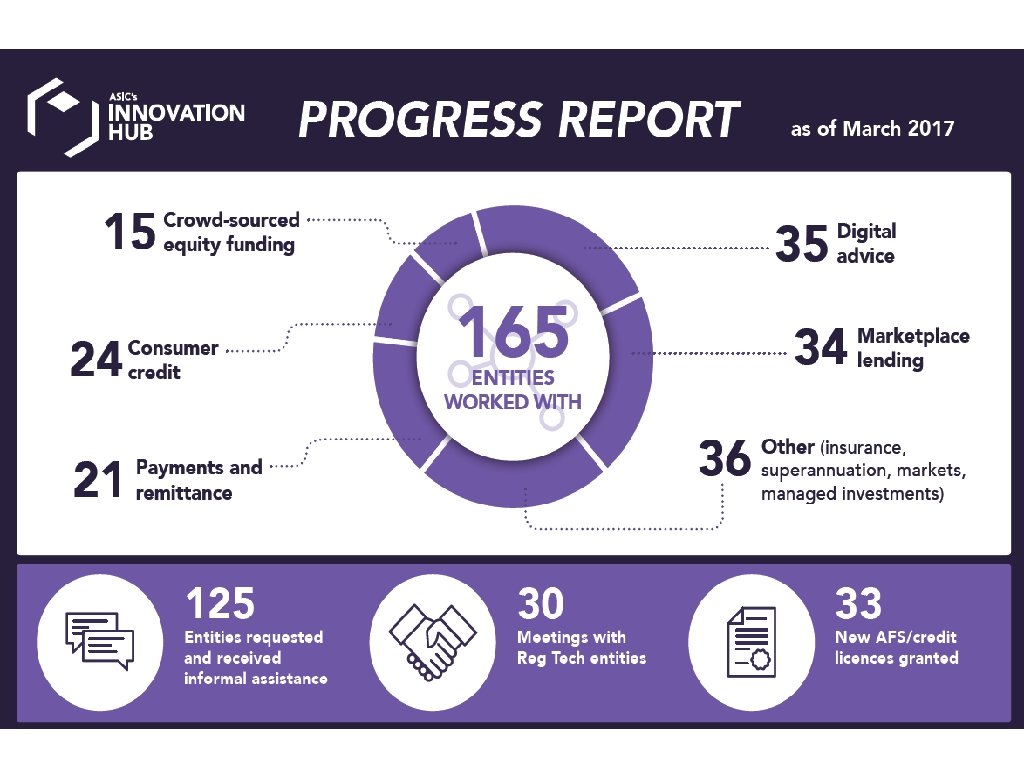
Outline Part 1: About ASIC • ASIC’s objectives • ASIC’s Innovation Hub – approach and outcomes • Progress Part 2: Regulatory Sandbox Part 3: Reg. Tech Part 4: Questions
ASIC’s strategic objectives • Promote confident and informed financial consumers and investors • Promote fair and efficient financial markets
ASIC’s approach to regulating fintech Our challenge is finding the balance between: ü Encouraging fintech and innovation, and ü Not compromising on our core goals of promoting investor and consumer trust and confidence; and ensuring markets operate in a fair, orderly and transparent way
ASIC’s approach to regulating fintech • Being flexible and adaptable to the speed and nature of change • Resisting the temptation to jump before we properly understand developments • Ensuring that we respond in a technologically neutral way • Ensuring we have the skills and expertise to be an effective regulator in this space
How does the Innovation Hub help fintechs? • Provides access to senior ASIC staff • Offers informal guidance and pointers • Helps fintechs learn about the existing framework and meeting good consumer outcomes
Fintech start-up barriers • Speed to market • Organisational competence • Access to capital
The balance for ASIC • Additional flexibility and guidance • Limit activities with consumer outcomes » Satisfy the fundamental principles of regulation and licensing in alternative ways
Current flexible framework • Modular licensing frameworks • Option to operate as a representative • Assessment of organisational competence – ASIC discretion • Waivers and no-action policy and exemptions (e. g. marketplace lending)
ASIC’s Regulatory Sandbox framework • Additional guidance – organisational competence • Limited licence – alternative organisational competence • Limited licensing exemption – the ‘regulatory sandbox’ exemption
How can the Regulatory Sandbox help? • Speed to market – providing and environment for testing without a licence • Organisational competency – more examples and greater flexibility • Access to capital – reducing testing costs
Additional guidance - competence • ASIC’s existing discretion – organisational competence • Application of discretion in practice • Having considered: o the nature, scale and complexity of the applicant’s proposed business o the nature of a responsible manager’s role
Alternative - automated services • Proposed alternative – organisational competence • Heavily automated business models • Regular sign-off on the licensee’s processes and systems • Not require significant day-to-day involvement
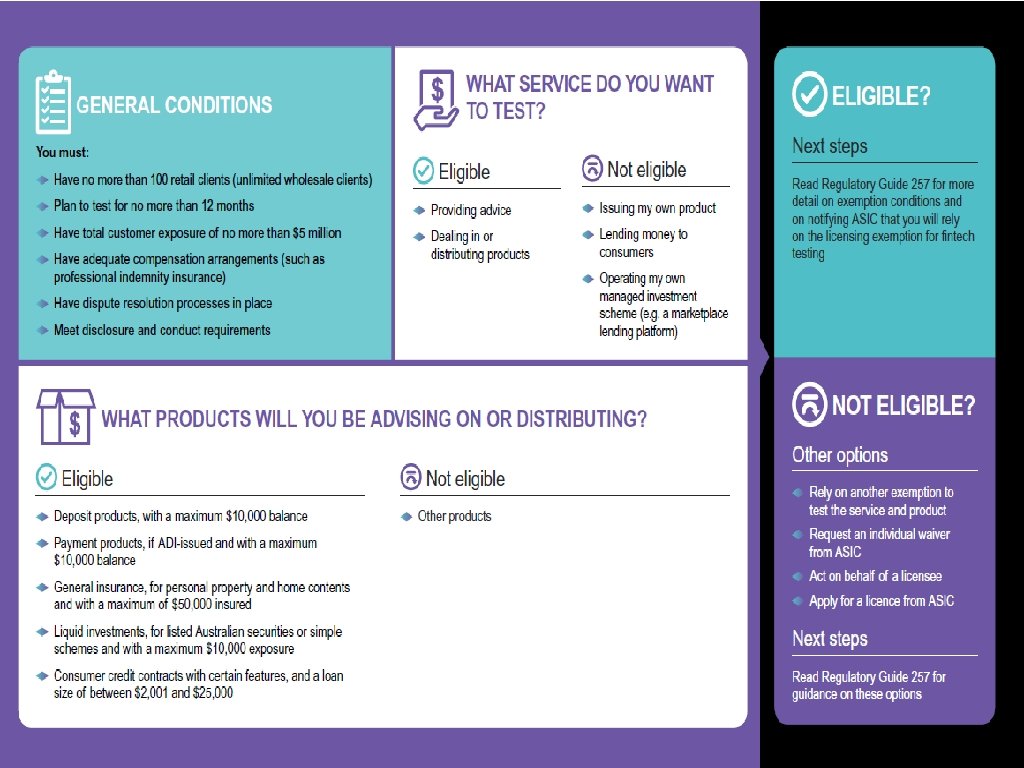
The ‘regulatory sandbox’ exemption • 12 months duration • Limited financial intermediary services only • Caps – retail clients and exposures • Consumer protection - conditions on the exemption
The ‘regulatory sandbox’ exemption – conditions • Adequate compensation arrangements • External dispute resolution arrangements • Core conduct and disclosure obligations • Notification and report requirements
Reg. Tech developments • Reg. Tech refers to the accelerating use of technology solutions to address regulatory requirements. • Some examples: Ø • Identity verification, fraud prevention, AML/KYC Some Common features: Ø Highly automated, real-time data collection, machine learning
ASIC’s approach to Reg. Tech • Engaging with the Reg. Tech community; • Meeting with our international regulatory counterparts; • Providing informal guidance to Reg. Tech businesses.
Regulatory Round Table • ASIC hosted its first 'Reg. Tech Roundtable' • Key themes: Ø Reg Tech developments, benefits and risks; Ø Reg. Tech: Issues, barriers and potential responses
How will we test Reg. Tech? • Developing our own in-house Reg. Tech capabilities; • Conducting trails of Reg. Tech technologies;
Further discussion and questions Web: asic. gov. au/for-business/yourbusiness/innovation-hub/ Email: innovationhub@asic. gov. au

- Slides: 23