Citizens Energy Groups Septic Tank Elimination Program STEPin

- Slides: 34
Citizens Energy Group’s Septic Tank Elimination Program: STEPin’ Forward to Cost-Efficiently Eliminate Septic Tanks
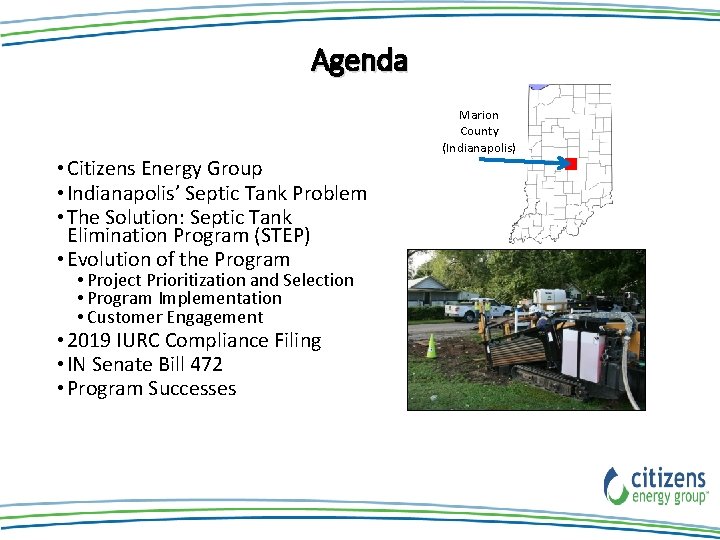
Agenda • Citizens Energy Group • Indianapolis’ Septic Tank Problem • The Solution: Septic Tank Elimination Program (STEP) • Evolution of the Program • Project Prioritization and Selection • Program Implementation • Customer Engagement • 2019 IURC Compliance Filing • IN Senate Bill 472 • Program Successes Marion County (Indianapolis)
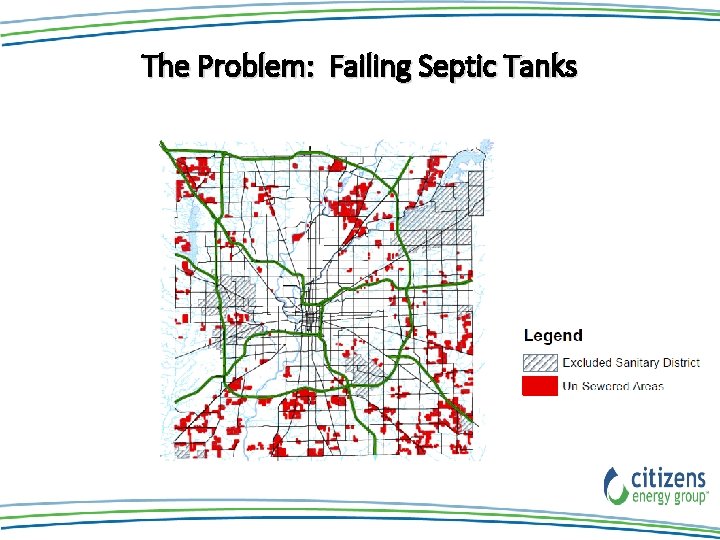
The Problem: Failing Septic Tanks • Originally, approximately 30, 000 homes on septic systems in Indianapolis • Failing septic systems discharge human waste into inhabited areas • Can create contaminated areas • Impact ditches and streams • Impact quality of life • Impact floodplain areas • Impact well field areas Indianapolis is one of the largest cities in the US with respect to the number of septic systems per capita
The Problem: Failing Septic Tanks
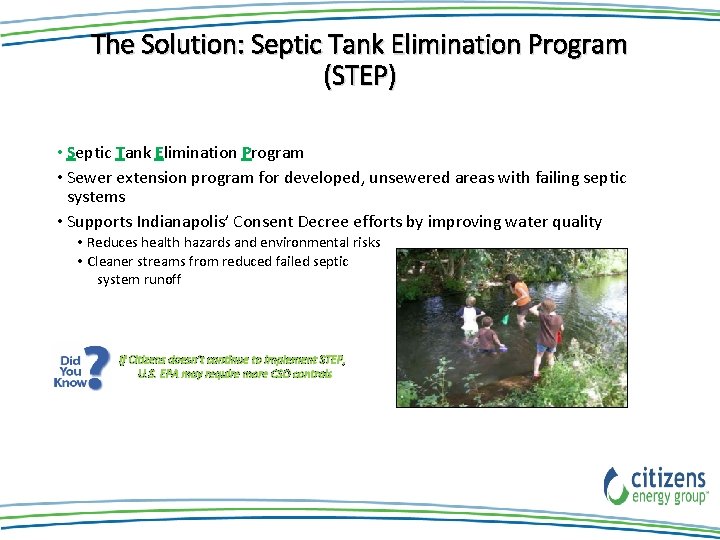
The Solution: Septic Tank Elimination Program (STEP) • Septic Tank Elimination Program • Sewer extension program for developed, unsewered areas with failing septic systems • Supports Indianapolis’ Consent Decree efforts by improving water quality • Reduces health hazards and environmental risks • Cleaner streams from reduced failed septic system runoff If Citizens doesn’t continue to implement STEP, U. S. EPA may require more CSO controls
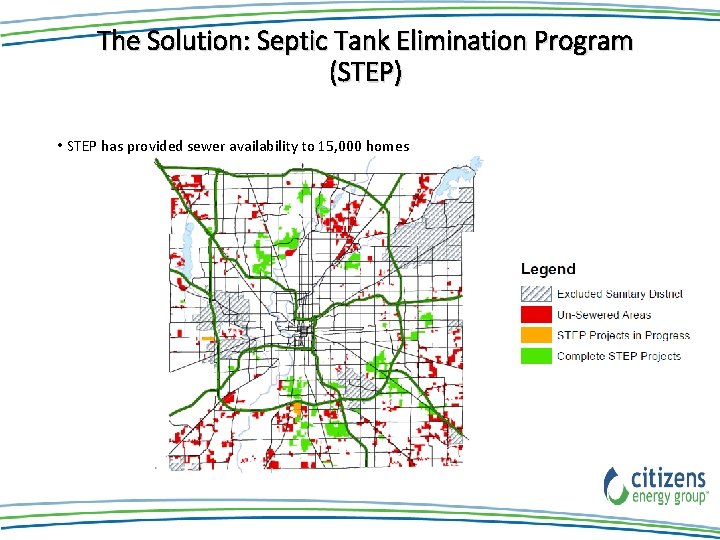
The Solution: Septic Tank Elimination Program (STEP) • STEP has provided sewer availability to 15, 000 homes
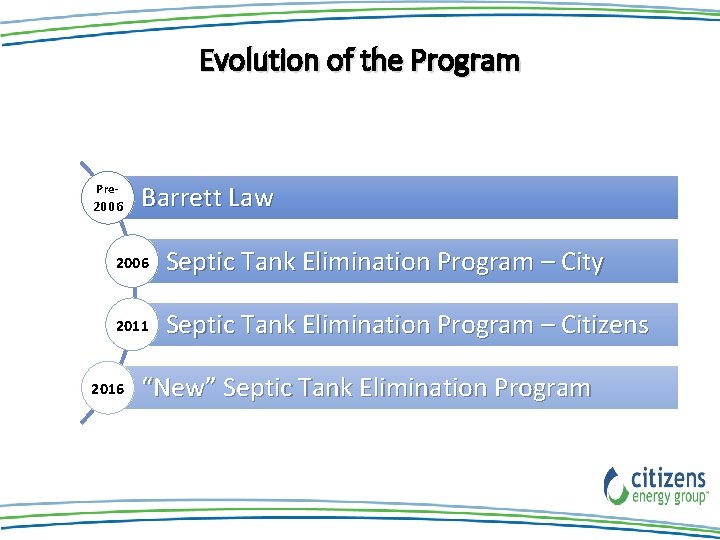
Evolution of the Program Pre- 2006 Barrett Law 2006 Septic Tank Elimination Program – City 2011 Septic Tank Elimination Program – Citizens 2016 “New” Septic Tank Elimination Program
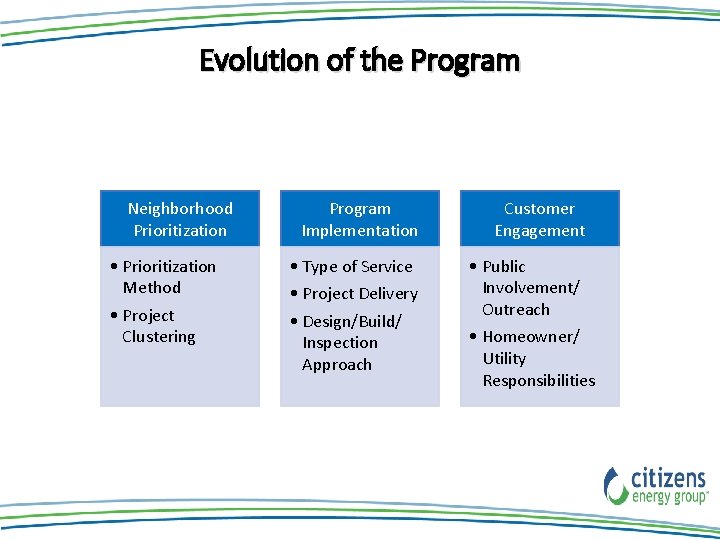
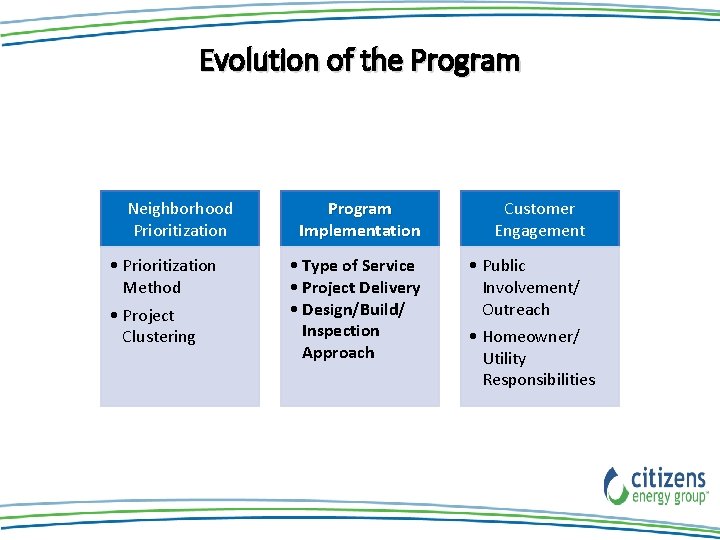
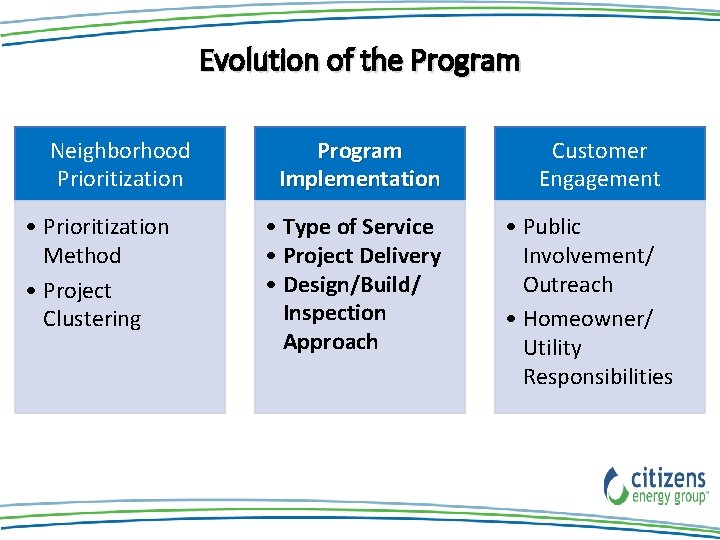
Evolution of the Program Neighborhood Prioritization • Prioritization Method • Project Clustering Program Implementation • Type of Service • Project Delivery • Design/Build/ Inspection Approach Customer Engagement • Public Involvement/ Outreach • Homeowner/ Utility Responsibilities
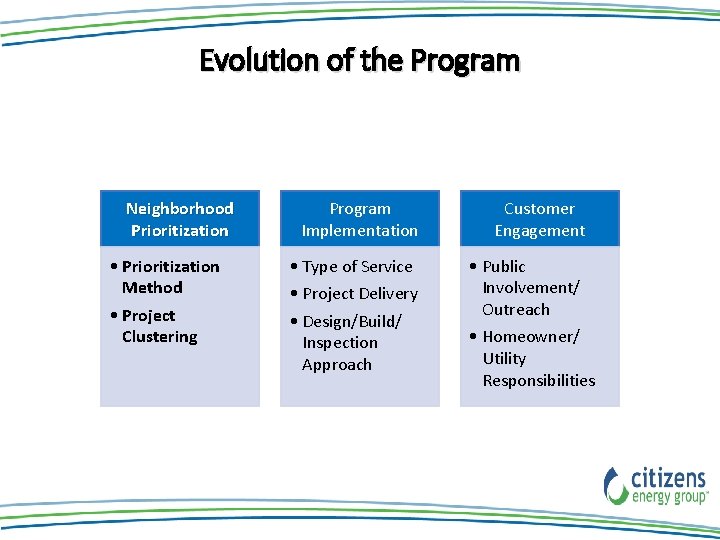
Evolution of the Program Neighborhood Prioritization • Prioritization Method • Project Clustering Program Implementation • Type of Service • Project Delivery • Design/Build/ Inspection Approach Customer Engagement • Public Involvement/ Outreach • Homeowner/ Utility Responsibilities
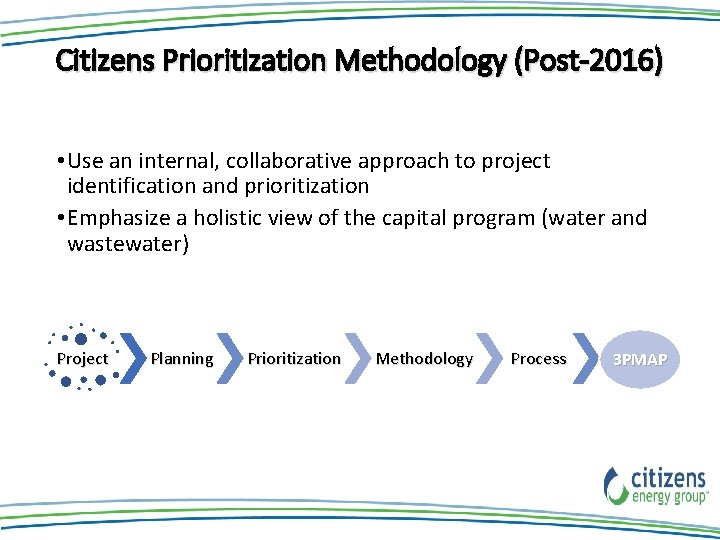
Citizens Prioritization Methodology (Post-2016) • Use an internal, collaborative approach to project identification and prioritization • Emphasize a holistic view of the capital program (water and wastewater) Project Planning Prioritization Methodology Process 3 PMAP
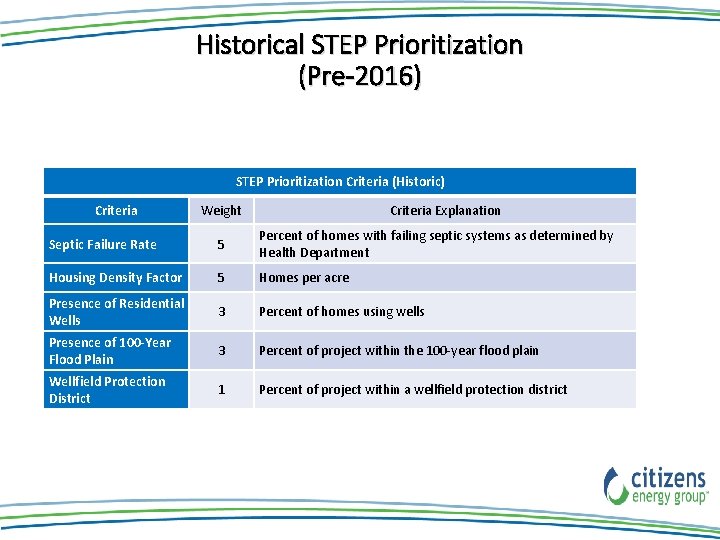
Historical STEP Prioritization (Pre-2016) STEP Prioritization Criteria (Historic) Criteria Weight Criteria Explanation Septic Failure Rate 5 Percent of homes with failing septic systems as determined by Health Department Housing Density Factor 5 Homes per acre Presence of Residential Wells 3 Percent of homes using wells Presence of 100 -Year Flood Plain 3 Percent of project within the 100 -year flood plain Wellfield Protection District 1 Percent of project within a wellfield protection district
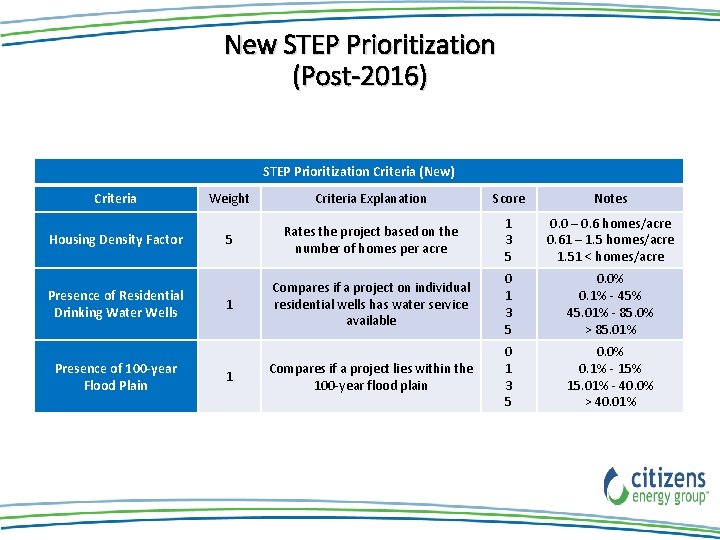
New STEP Prioritization (Post-2016) STEP Prioritization Criteria (New) Criteria Housing Density Factor Presence of Residential Drinking Water Wells Presence of 100 -year Flood Plain Weight Criteria Explanation Score Notes 5 Rates the project based on the number of homes per acre 1 3 5 0. 0 – 0. 6 homes/acre 0. 61 – 1. 5 homes/acre 1. 51 < homes/acre 1 Compares if a project on individual residential wells has water service available 0 1 3 5 0. 0% 0. 1% - 45% 45. 01% - 85. 0% > 85. 01% Compares if a project lies within the 100 -year flood plain 0 1 3 5 0. 0% 0. 1% - 15% 15. 01% - 40. 0% > 40. 01% 1
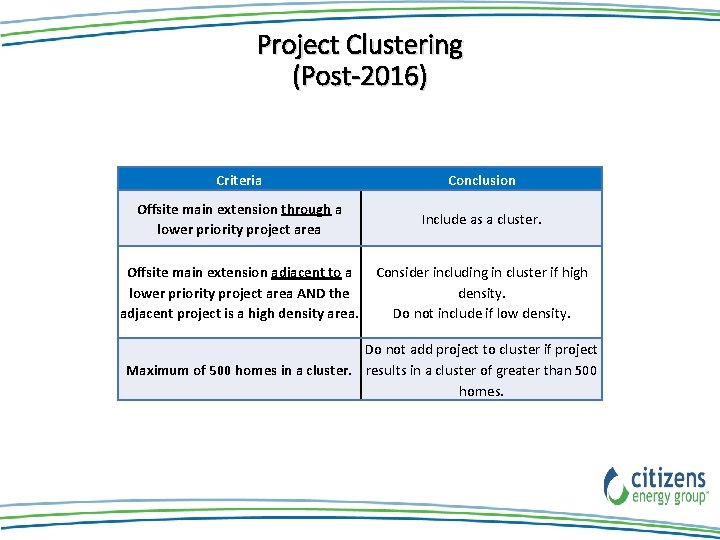
Project Clustering (Post-2016) Criteria Conclusion Offsite main extension through a lower priority project area Include as a cluster. Offsite main extension adjacent to a lower priority project area AND the adjacent project is a high density area. Consider including in cluster if high density. Do not include if low density. Do not add project to cluster if project Maximum of 500 homes in a cluster. results in a cluster of greater than 500 homes.
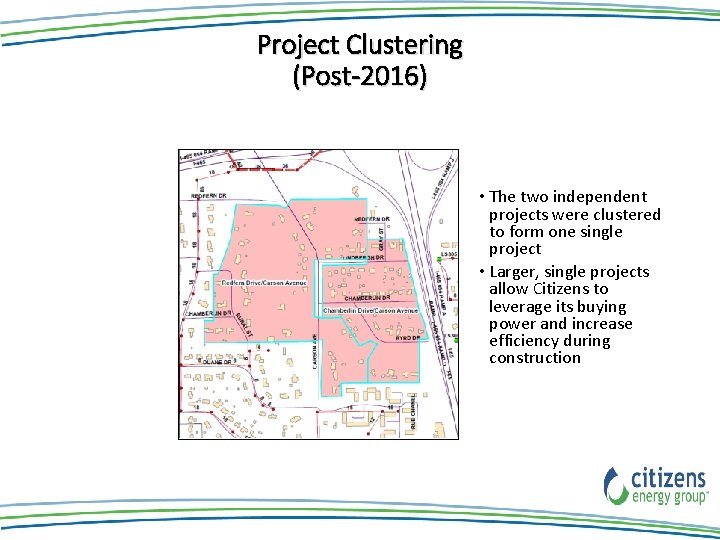
Project Clustering (Post-2016) • The two independent projects were clustered to form one single project • Larger, single projects allow Citizens to leverage its buying power and increase efficiency during construction
Evolution of the Program Neighborhood Prioritization • Prioritization Method • Project Clustering Program Implementation • Type of Service • Project Delivery • Design/Build/ Inspection Approach Customer Engagement • Public Involvement/ Outreach • Homeowner/ Utility Responsibilities
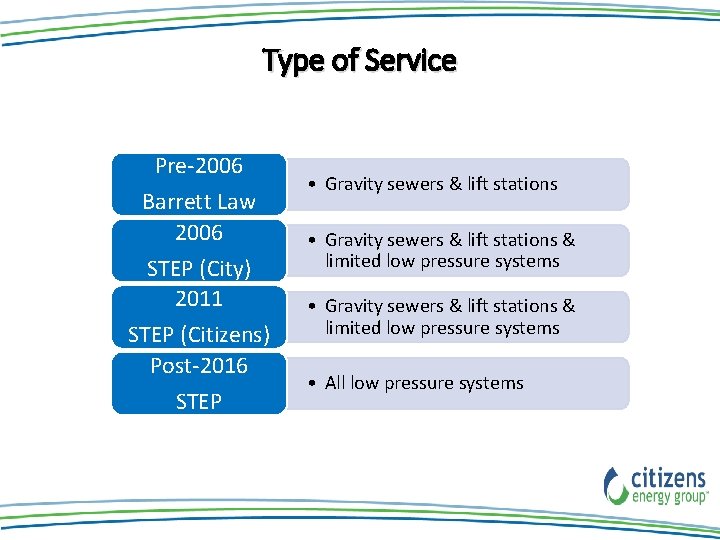
Type of Service Pre-2006 Barrett Law 2006 STEP (City) 2011 STEP (Citizens) Post-2016 STEP • Gravity sewers & lift stations & limited low pressure systems • All low pressure systems
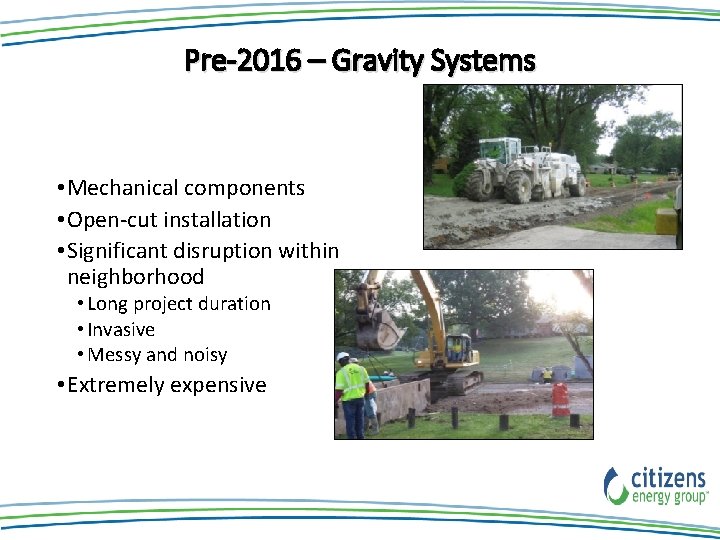
Pre-2016 – Gravity Systems • Mechanical components • Open-cut installation • Significant disruption within neighborhood • Long project duration • Invasive • Messy and noisy • Extremely expensive
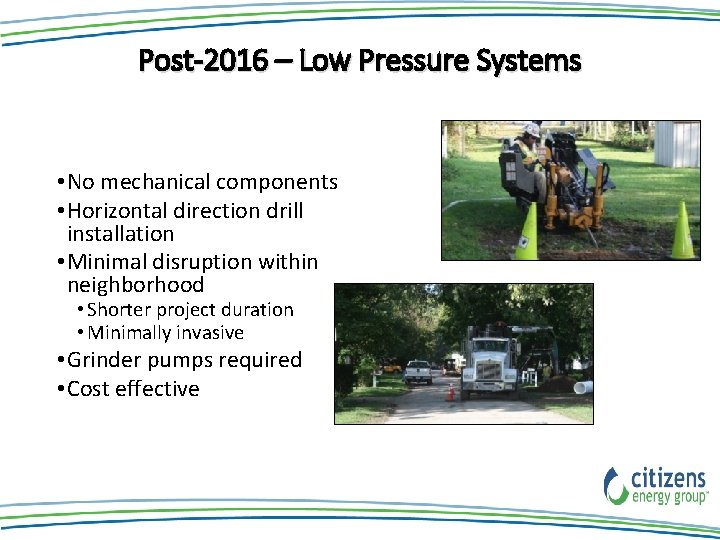
Post-2016 – Low Pressure Systems • No mechanical components • Horizontal direction drill installation • Minimal disruption within neighborhood • Shorter project duration • Minimally invasive • Grinder pumps required • Cost effective
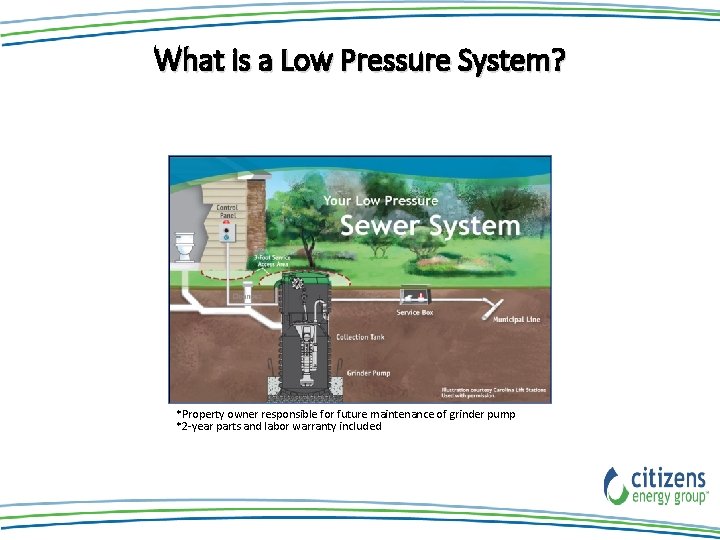
What is a Low Pressure System? *Property owner responsible for future maintenance of grinder pump *2 -year parts and labor warranty included
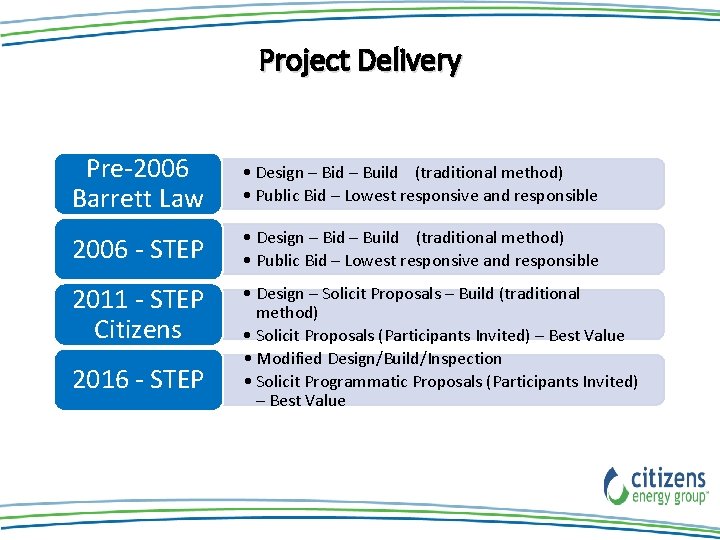
Project Delivery Pre-2006 Barrett Law • Design – Bid – Build (traditional method) • Public Bid – Lowest responsive and responsible 2006 - STEP • Design – Bid – Build (traditional method) • Public Bid – Lowest responsive and responsible 2011 - STEP Citizens • Design – Solicit Proposals – Build (traditional method) • Solicit Proposals (Participants Invited) – Best Value • Modified Design/Build/Inspection • Solicit Programmatic Proposals (Participants Invited) – Best Value 2016 - STEP
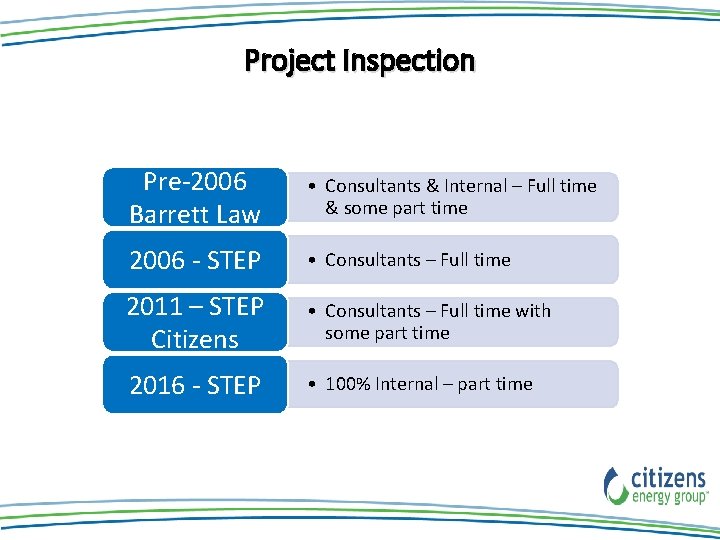
Project Inspection Pre-2006 Barrett Law • Consultants & Internal – Full time & some part time 2006 - STEP • Consultants – Full time 2011 – STEP Citizens • Consultants – Full time with some part time 2016 - STEP • 100% Internal – part time
Evolution of the Program Neighborhood Prioritization • Prioritization Method • Project Clustering Program Implementation • Type of Service • Project Delivery • Design/Build/ Inspection Approach Customer Engagement • Public Involvement/ Outreach • Homeowner/ Utility Responsibilities
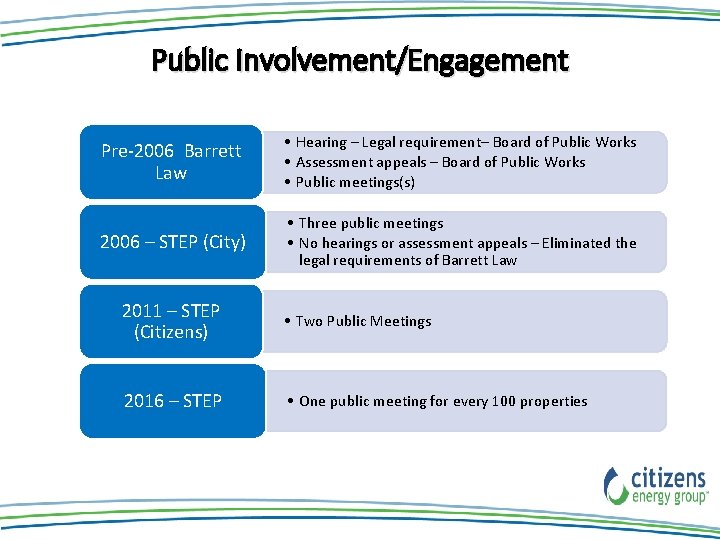
Public Involvement/Engagement Pre-2006 Barrett Law • Hearing – Legal requirement– Board of Public Works • Assessment appeals – Board of Public Works • Public meetings(s) 2006 – STEP (City) • Three public meetings • No hearings or assessment appeals – Eliminated the legal requirements of Barrett Law 2011 – STEP (Citizens) • Two Public Meetings 2016 – STEP • One public meeting for every 100 properties
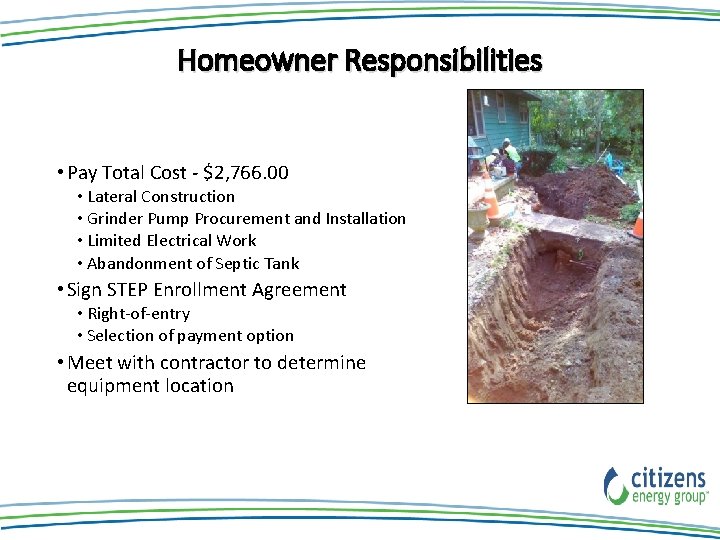
Homeowner Responsibilities • Pay Total Cost - $2, 766. 00 • Lateral Construction • Grinder Pump Procurement and Installation • Limited Electrical Work • Abandonment of Septic Tank • Sign STEP Enrollment Agreement • Right-of-entry • Selection of payment option • Meet with contractor to determine equipment location
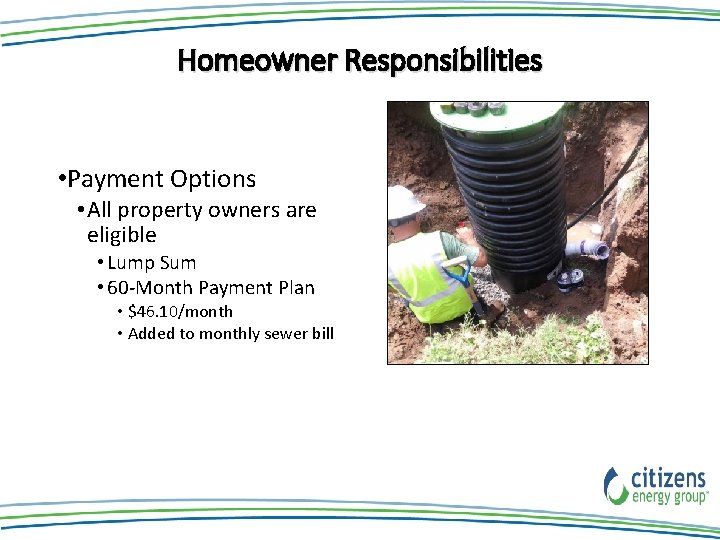
Homeowner Responsibilities • Payment Options • All property owners are eligible • Lump Sum • 60 -Month Payment Plan • $46. 10/month • Added to monthly sewer bill
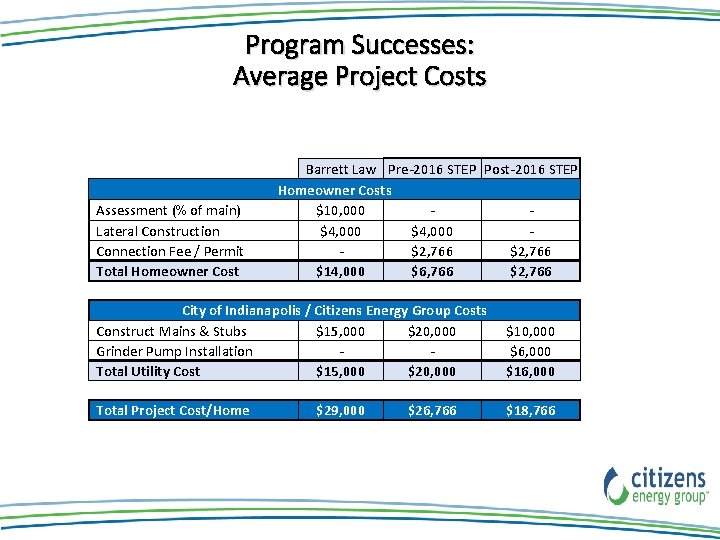
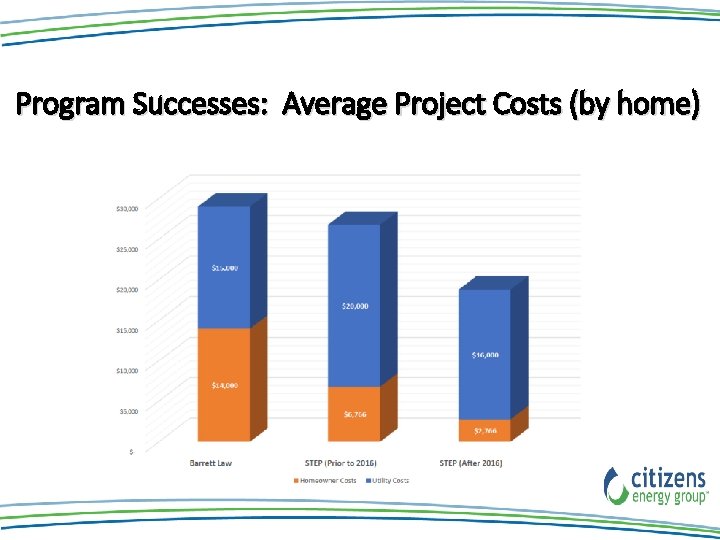
Program Successes: Average Project Costs Assessment (% of main) Lateral Construction Connection Fee / Permit Total Homeowner Cost Barrett Law Pre-2016 STEP Post-2016 STEP Homeowner Costs $10, 000 $4, 000 $2, 766 $14, 000 $6, 766 $2, 766 City of Indianapolis / Citizens Energy Group Costs Construct Mains & Stubs $15, 000 $20, 000 Grinder Pump Installation Total Utility Cost $15, 000 $20, 000 $10, 000 $6, 000 $16, 000 Total Project Cost/Home $18, 766 $29, 000 $26, 766
Program Successes: Average Project Costs (by home)
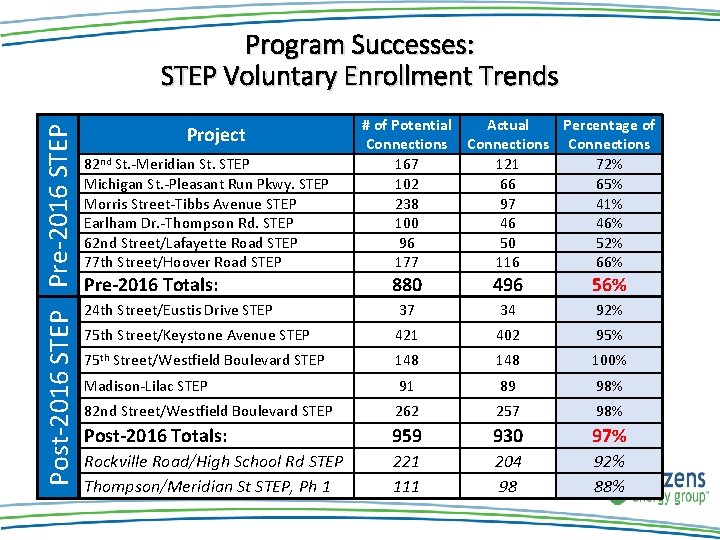
Post-2016 STEP Pre-2016 STEP Program Successes: STEP Voluntary Enrollment Trends Project 82 nd St. -Meridian St. STEP Michigan St. -Pleasant Run Pkwy. STEP Morris Street-Tibbs Avenue STEP Earlham Dr. -Thompson Rd. STEP 62 nd Street/Lafayette Road STEP 77 th Street/Hoover Road STEP Pre-2016 Totals: # of Potential Actual Percentage of Connections 167 121 72% 102 66 65% 238 97 41% 100 46 46% 96 50 52% 177 116 66% 880 496 56% 24 th Street/Eustis Drive STEP 37 34 92% 75 th Street/Keystone Avenue STEP 421 402 95% 75 th Street/Westfield Boulevard STEP 148 100% Madison-Lilac STEP 91 89 98% 82 nd Street/Westfield Boulevard STEP 262 257 98% Post-2016 Totals: 959 930 97% Rockville Road/High School Rd STEP Thompson/Meridian St STEP, Ph 1 221 111 204 98 92% 88%
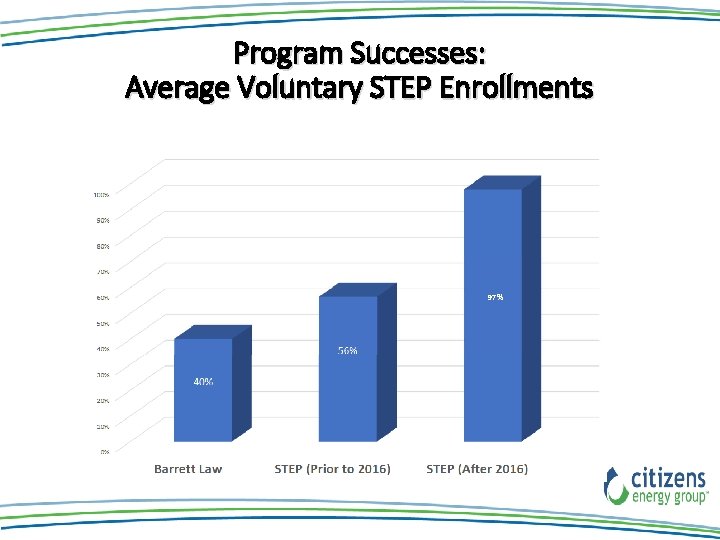
Program Successes: Average Voluntary STEP Enrollments 97%
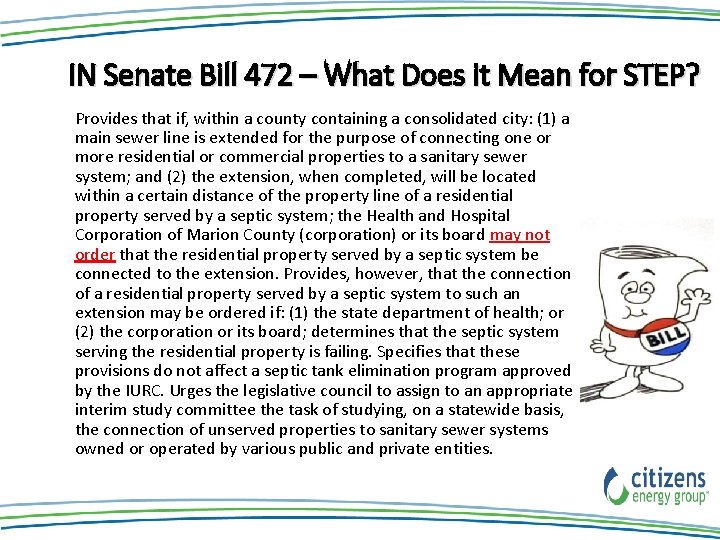
IN Senate Bill 472 – What Does it Mean for STEP? Provides that if, within a county containing a consolidated city: (1) a main sewer line is extended for the purpose of connecting one or more residential or commercial properties to a sanitary sewer system; and (2) the extension, when completed, will be located within a certain distance of the property line of a residential property served by a septic system; the Health and Hospital Corporation of Marion County (corporation) or its board may not order that the residential property served by a septic system be connected to the extension. Provides, however, that the connection of a residential property served by a septic system to such an extension may be ordered if: (1) the state department of health; or (2) the corporation or its board; determines that the septic system serving the residential property is failing. Specifies that these provisions do not affect a septic tank elimination program approved by the IURC. Urges the legislative council to assign to an appropriate interim study committee the task of studying, on a statewide basis, the connection of unserved properties to sanitary sewer systems owned or operated by various public and private entities.
IN Senate Bill 472 – What Does it Mean for STEP? • Led to many questions and few answers • Specifically excludes Citizens’ STEP Projects • Impacts enforcement approach from Marion County Health and Hospital • Future state of collaboration is currently unknown
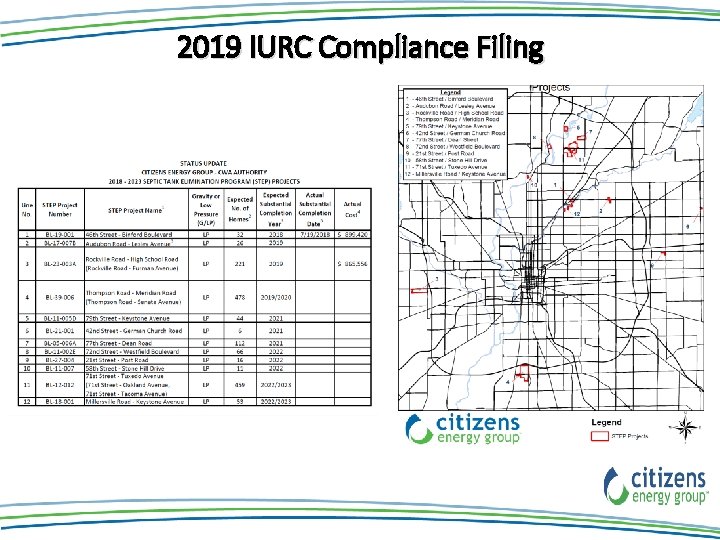
2019 IURC Compliance Filing
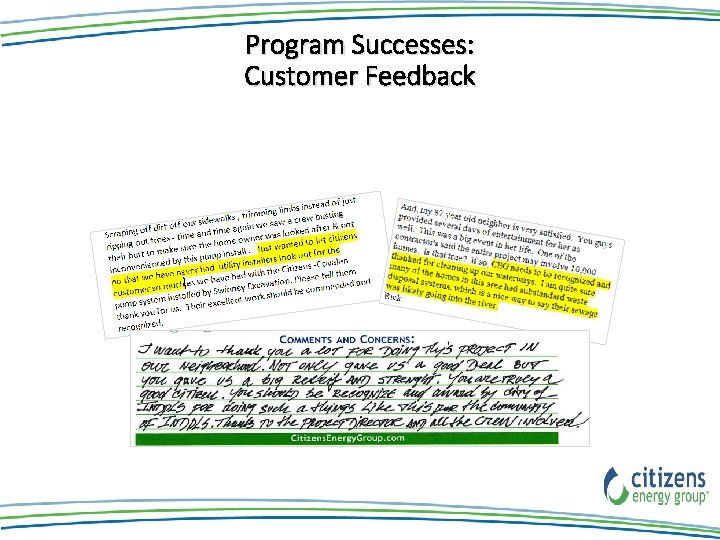
Program Successes: Customer Feedback
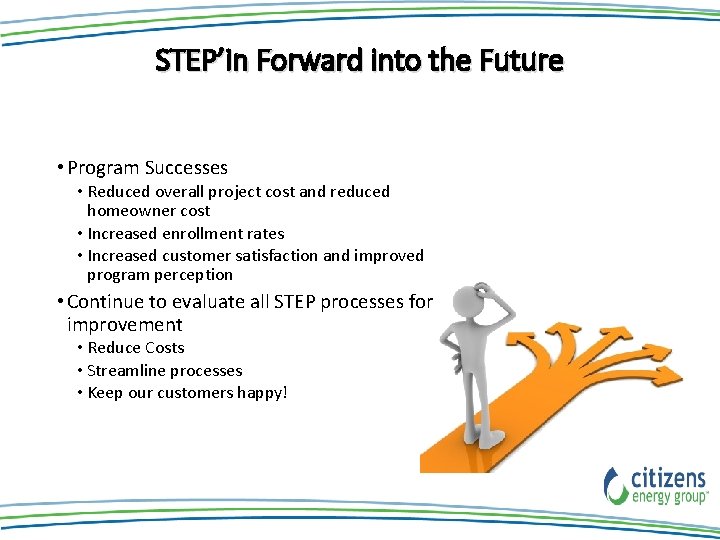
STEP’in Forward into the Future • Program Successes • Reduced overall project cost and reduced homeowner cost • Increased enrollment rates • Increased customer satisfaction and improved program perception • Continue to evaluate all STEP processes for improvement • Reduce Costs • Streamline processes • Keep our customers happy!