Chemistry Faculty La Jolla Campus Total Synthesis and




- Slides: 32
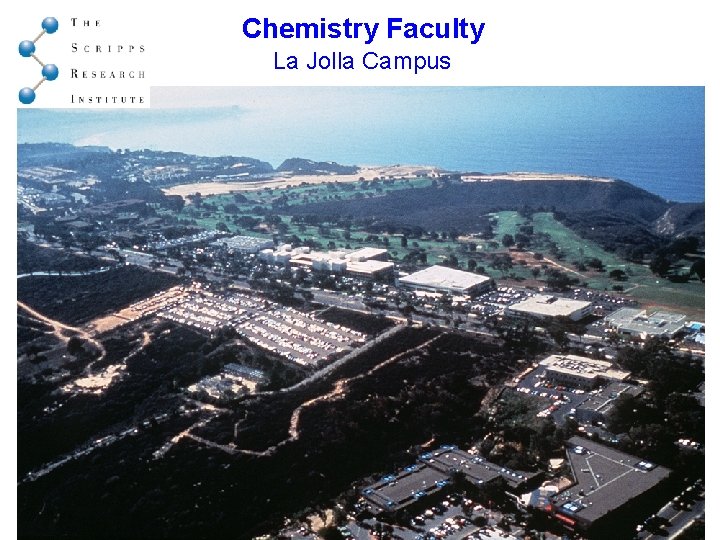
Chemistry Faculty La Jolla Campus
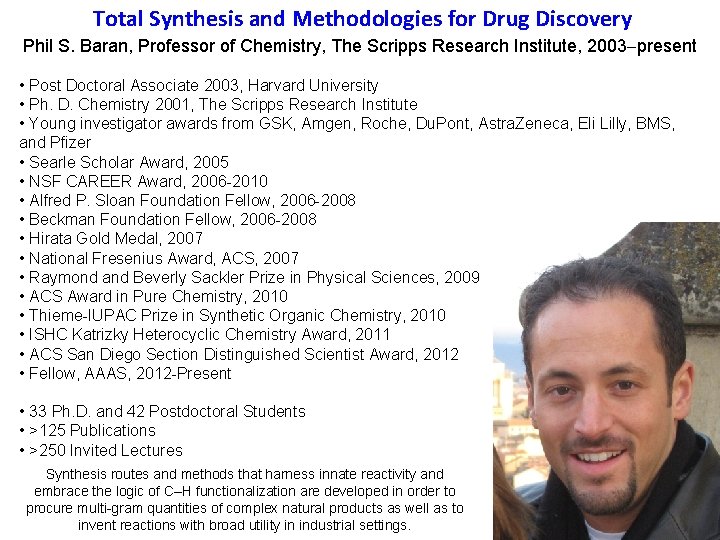
Total Synthesis and Methodologies for Drug Discovery Phil S. Baran, Professor of Chemistry, The Scripps Research Institute, 2003 -present • Post Doctoral Associate 2003, Harvard University • Ph. D. Chemistry 2001, The Scripps Research Institute • Young investigator awards from GSK, Amgen, Roche, Du. Pont, Astra. Zeneca, Eli Lilly, BMS, and Pfizer • Searle Scholar Award, 2005 • NSF CAREER Award, 2006 -2010 • Alfred P. Sloan Foundation Fellow, 2006 -2008 • Beckman Foundation Fellow, 2006 -2008 • Hirata Gold Medal, 2007 • National Fresenius Award, ACS, 2007 • Raymond and Beverly Sackler Prize in Physical Sciences, 2009 • ACS Award in Pure Chemistry, 2010 • Thieme-IUPAC Prize in Synthetic Organic Chemistry, 2010 • ISHC Katrizky Heterocyclic Chemistry Award, 2011 • ACS San Diego Section Distinguished Scientist Award, 2012 • Fellow, AAAS, 2012 -Present • 33 Ph. D. and 42 Postdoctoral Students • >125 Publications • >250 Invited Lectures Synthesis routes and methods that harness innate reactivity and embrace the logic of C–H functionalization are developed in order to procure multi-gram quantities of complex natural products as well as to invent reactions with broad utility in industrial settings.
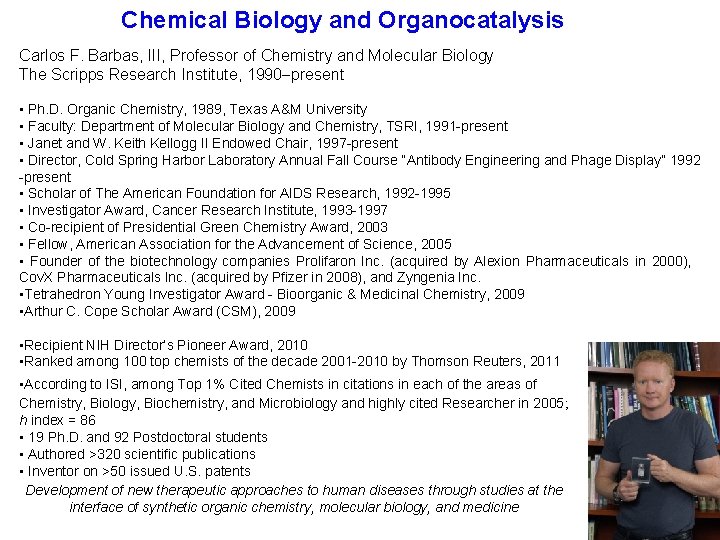
Chemical Biology and Organocatalysis Carlos F. Barbas, III, Professor of Chemistry and Molecular Biology The Scripps Research Institute, 1990 -present • Ph. D. Organic Chemistry, 1989, Texas A&M University • Faculty: Department of Molecular Biology and Chemistry, TSRI, 1991 -present • Janet and W. Keith Kellogg II Endowed Chair, 1997 -present • Director, Cold Spring Harbor Laboratory Annual Fall Course “Antibody Engineering and Phage Display” 1992 -present • Scholar of The American Foundation for AIDS Research, 1992 -1995 • Investigator Award, Cancer Research Institute, 1993 -1997 • Co-recipient of Presidential Green Chemistry Award, 2003 • Fellow, American Association for the Advancement of Science, 2005 • Founder of the biotechnology companies Prolifaron Inc. (acquired by Alexion Pharmaceuticals in 2000), Cov. X Pharmaceuticals Inc. (acquired by Pfizer in 2008), and Zyngenia Inc. • Tetrahedron Young Investigator Award - Bioorganic & Medicinal Chemistry, 2009 • Arthur C. Cope Scholar Award (CSM), 2009 • Recipient NIH Director’s Pioneer Award, 2010 • Ranked among 100 top chemists of the decade 2001 -2010 by Thomson Reuters, 2011 • According to ISI, among Top 1% Cited Chemists in citations in each of the areas of Chemistry, Biology, Biochemistry, and Microbiology and highly cited Researcher in 2005; h index = 86 • 19 Ph. D. and 92 Postdoctoral students • Authored >320 scientific publications • Inventor on >50 issued U. S. patents Development of new therapeutic approaches to human diseases through studies at the interface of synthetic organic chemistry, molecular biology, and medicine
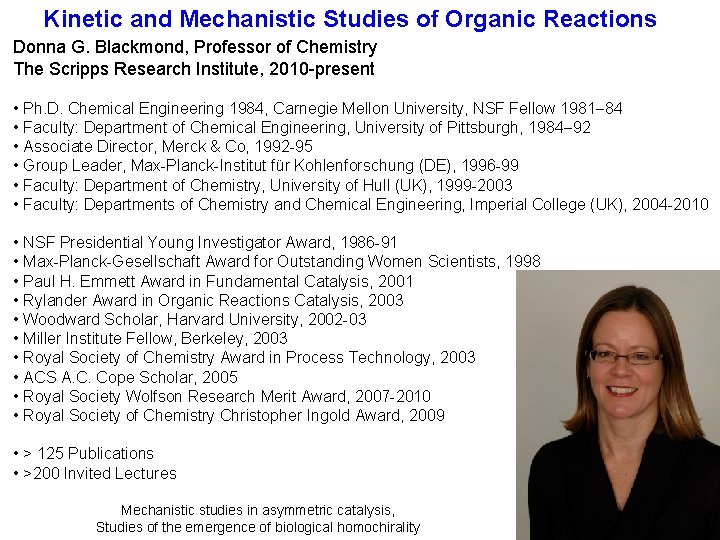
Kinetic and Mechanistic Studies of Organic Reactions Donna G. Blackmond, Professor of Chemistry The Scripps Research Institute, 2010 -present • Ph. D. Chemical Engineering 1984, Carnegie Mellon University, NSF Fellow 1981 -84 • Faculty: Department of Chemical Engineering, University of Pittsburgh, 1984 -92 • Associate Director, Merck & Co, 1992 -95 • Group Leader, Max-Planck-Institut für Kohlenforschung (DE), 1996 -99 • Faculty: Department of Chemistry, University of Hull (UK), 1999 -2003 • Faculty: Departments of Chemistry and Chemical Engineering, Imperial College (UK), 2004 -2010 • NSF Presidential Young Investigator Award, 1986 -91 • Max-Planck-Gesellschaft Award for Outstanding Women Scientists, 1998 • Paul H. Emmett Award in Fundamental Catalysis, 2001 • Rylander Award in Organic Reactions Catalysis, 2003 • Woodward Scholar, Harvard University, 2002 -03 • Miller Institute Fellow, Berkeley, 2003 • Royal Society of Chemistry Award in Process Technology, 2003 • ACS A. C. Cope Scholar, 2005 • Royal Society Wolfson Research Merit Award, 2007 -2010 • Royal Society of Chemistry Christopher Ingold Award, 2009 • > 125 Publications • >200 Invited Lectures Mechanistic studies in asymmetric catalysis, Studies of the emergence of biological homochirality
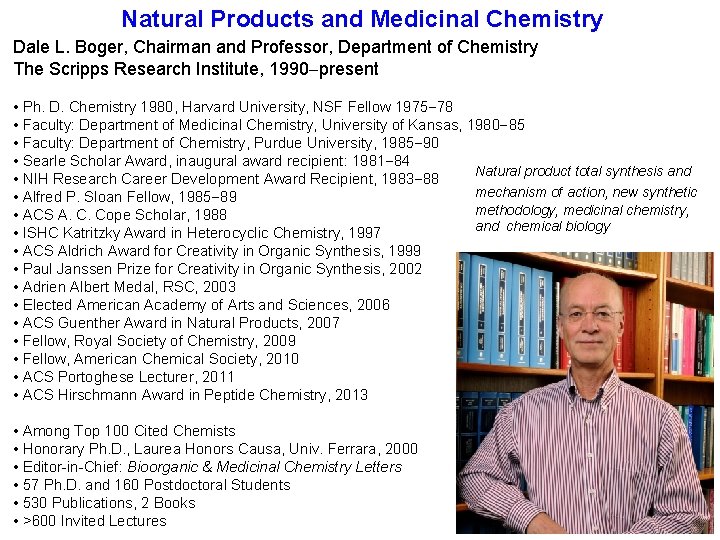
Natural Products and Medicinal Chemistry Dale L. Boger, Chairman and Professor, Department of Chemistry The Scripps Research Institute, 1990 -present • Ph. D. Chemistry 1980, Harvard University, NSF Fellow 1975 -78 • Faculty: Department of Medicinal Chemistry, University of Kansas, 1980 -85 • Faculty: Department of Chemistry, Purdue University, 1985 -90 • Searle Scholar Award, inaugural award recipient: 1981 -84 Natural product total synthesis and • NIH Research Career Development Award Recipient, 1983 -88 mechanism of action, new synthetic • Alfred P. Sloan Fellow, 1985 -89 methodology, medicinal chemistry, • ACS A. C. Cope Scholar, 1988 and chemical biology • ISHC Katritzky Award in Heterocyclic Chemistry, 1997 • ACS Aldrich Award for Creativity in Organic Synthesis, 1999 • Paul Janssen Prize for Creativity in Organic Synthesis, 2002 • Adrien Albert Medal, RSC, 2003 • Elected American Academy of Arts and Sciences, 2006 • ACS Guenther Award in Natural Products, 2007 • Fellow, Royal Society of Chemistry, 2009 • Fellow, American Chemical Society, 2010 • ACS Portoghese Lecturer, 2011 • ACS Hirschmann Award in Peptide Chemistry, 2013 • Among Top 100 Cited Chemists • Honorary Ph. D. , Laurea Honors Causa, Univ. Ferrara, 2000 • Editor-in-Chief: Bioorganic & Medicinal Chemistry Letters • 57 Ph. D. and 160 Postdoctoral Students • 530 Publications, 2 Books • >600 Invited Lectures
Synthetic Protein Chemistry Philip E. Dawson, Associate Professor of Chemistry Associate Dean of Graduate and Postdoctoral Studies The Scripps Research Institute, 1997 -present • • • Ph. D. Protein Chemistry, The Scripps Research Institute, 1996 Postdoctoral Associate, California Institute of Technology, 1997 Faculty, The Scripps Research Institute, 1997 Alfred P. Sloan Fellow, 1999 -2001 Elected Councilor, American Peptide Society, 2006 -2012 Vincent du Vigneaud Award for outstanding achievement in peptide research, 2010 Gold Medal of the Max Bergmann Kreis, 2011 Chairman, American Peptide Symposium, 2011 Elected Chairman, Gordon Research Conference, 2016 • • • >75 Invited lectures 4 Scientific Advisory Boards 4 Journal Editorial Boards >100 Peer Reviewed Publications >1, 400 citations (ISI) for publication on Native Chemical Ligation >30 graduate and postdoctoral students Development of new methods for the chemical synthesis of proteins and chemoselective protein bioconjugation with applications focused on the development of antiviral agents and vaccines; biological imaging with nanoparticles and basic research into protein folding and catalysis.
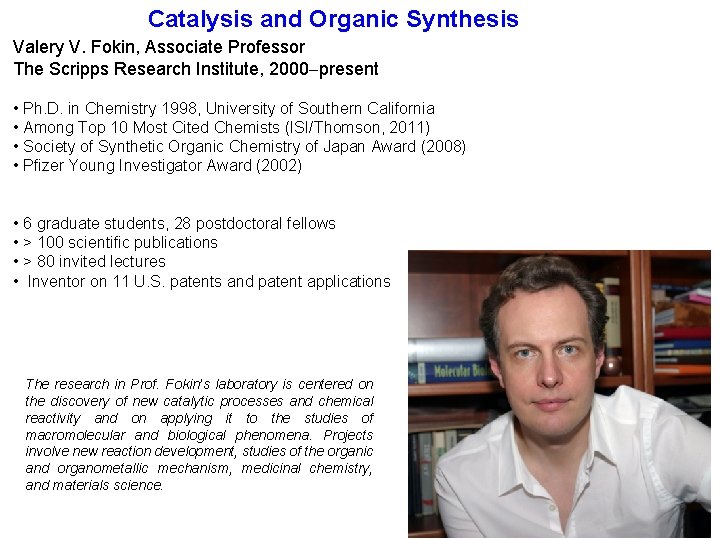
Catalysis and Organic Synthesis Valery V. Fokin, Associate Professor The Scripps Research Institute, 2000 -present • Ph. D. in Chemistry 1998, University of Southern California • Among Top 10 Most Cited Chemists (ISI/Thomson, 2011) • Society of Synthetic Organic Chemistry of Japan Award (2008) • Pfizer Young Investigator Award (2002) • 6 graduate students, 28 postdoctoral fellows • > 100 scientific publications • > 80 invited lectures • Inventor on 11 U. S. patents and patent applications The research in Prof. Fokin’s laboratory is centered on the discovery of new catalytic processes and chemical reactivity and on applying it to the studies of macromolecular and biological phenomena. Projects involve new reaction development, studies of the organic and organometallic mechanism, medicinal chemistry, and materials science.
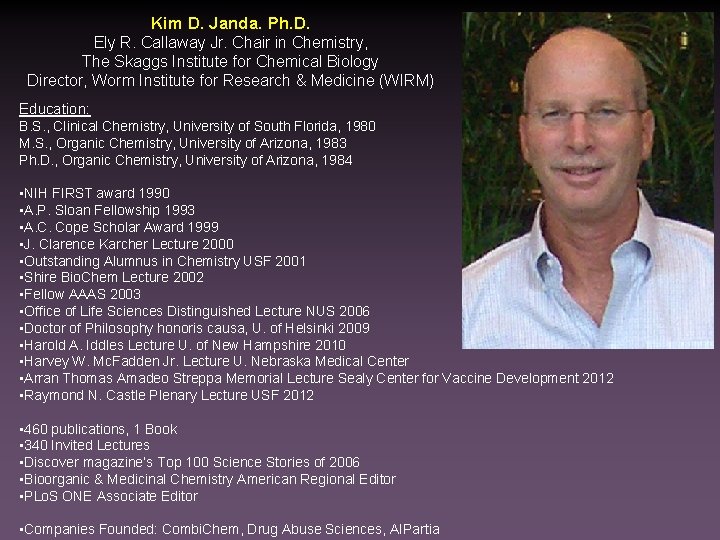
Kim D. Janda. Ph. D. Ely R. Callaway Jr. Chair in Chemistry, The Skaggs Institute for Chemical Biology Director, Worm Institute for Research & Medicine (WIRM) Education: B. S. , Clinical Chemistry, University of South Florida, 1980 M. S. , Organic Chemistry, University of Arizona, 1983 Ph. D. , Organic Chemistry, University of Arizona, 1984 • NIH FIRST award 1990 • A. P. Sloan Fellowship 1993 • A. C. Cope Scholar Award 1999 • J. Clarence Karcher Lecture 2000 • Outstanding Alumnus in Chemistry USF 2001 • Shire Bio. Chem Lecture 2002 • Fellow AAAS 2003 • Office of Life Sciences Distinguished Lecture NUS 2006 • Doctor of Philosophy honoris causa, U. of Helsinki 2009 • Harold A. Iddles Lecture U. of New Hampshire 2010 • Harvey W. Mc. Fadden Jr. Lecture U. Nebraska Medical Center • Arran Thomas Amadeo Streppa Memorial Lecture Sealy Center for Vaccine Development 2012 • Raymond N. Castle Plenary Lecture USF 2012 • 460 publications, 1 Book • 340 Invited Lectures • Discover magazine’s Top 100 Science Stories of 2006 • Bioorganic & Medicinal Chemistry American Regional Editor • PLo. S ONE Associate Editor • Companies Founded: Combi. Chem, Drug Abuse Sciences, AIPartia
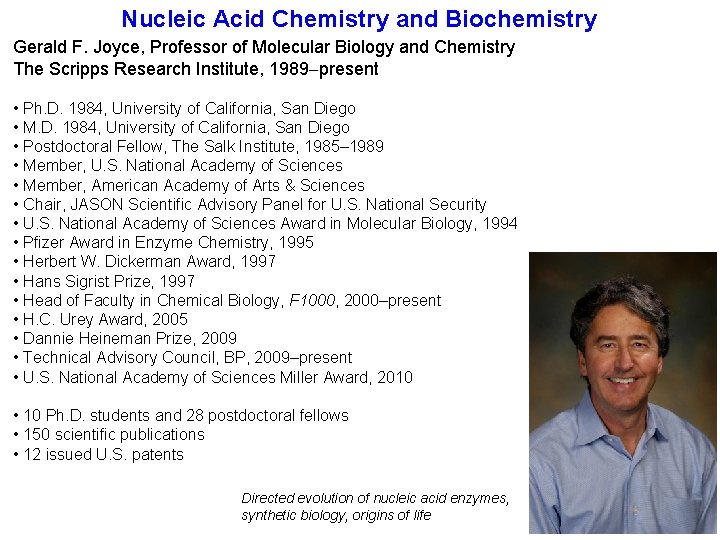
Nucleic Acid Chemistry and Biochemistry Gerald F. Joyce, Professor of Molecular Biology and Chemistry The Scripps Research Institute, 1989 -present • Ph. D. 1984, University of California, San Diego • M. D. 1984, University of California, San Diego • Postdoctoral Fellow, The Salk Institute, 1985– 1989 • Member, U. S. National Academy of Sciences • Member, American Academy of Arts & Sciences • Chair, JASON Scientific Advisory Panel for U. S. National Security • U. S. National Academy of Sciences Award in Molecular Biology, 1994 • Pfizer Award in Enzyme Chemistry, 1995 • Herbert W. Dickerman Award, 1997 • Hans Sigrist Prize, 1997 • Head of Faculty in Chemical Biology, F 1000, 2000–present • H. C. Urey Award, 2005 • Dannie Heineman Prize, 2009 • Technical Advisory Council, BP, 2009–present • U. S. National Academy of Sciences Miller Award, 2010 • 10 Ph. D. students and 28 postdoctoral fellows • 150 scientific publications • 12 issued U. S. patents Directed evolution of nucleic acid enzymes, synthetic biology, origins of life
Chemical Biology Michael A. Marletta, Professor of Chemistry, The Scripps Research Institute 2012 -present • Ph. D. , Pharmaceutical Chemistry 1978, University of California, San Francisco • NIH Postdoctoral Fellow, MIT, 1978 -80 • Faculty: Department of Applied Biological Sciences, MIT, 1980 -87 • Faculty: Departments of Medicinal Chemistry (Pharmacy) and Biological chemistry (Medical School), University of Michigan 1987 -2001 • Investigator: HHMI, 1997 -2001 • John G. Searle Chair, University of Michigan, 1991 -2001 • Faculty: Departments of Chemistry and Molecular and Cell Biology, University of California, Berkeley, 2001 -2012 • Aldo De. Benedictis Distinguished Professor of Chemistry, UCB, 2001 -12 • President and CEO, The Scripps Research Institute, 2012 -present • Mac. Arthur Fellowship, 1995 • Institute of Medicine, 1997 • Harrison Howe Award, ACS, 2004 • National Academy of Sciences, 2006 • Repligen Award, ACS, 2007 • Kaiser Award, Protein Society, 2007 • Esselen Award for Chemistry in the Public Interest, ACS, 2007 • Fellow, Royal Society of Chemistry 2009 • >200 papers • 41 Ph. D. and 35 Postdoctoral Students • Editorial Board, PNAS Chemistry of novel enzyme reactions, protein structure and function
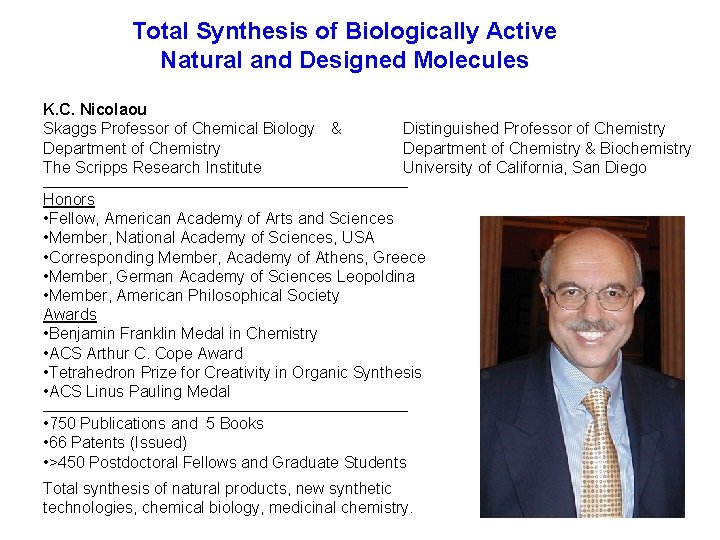
Total Synthesis of Biologically Active Natural and Designed Molecules K. C. Nicolaou Skaggs Professor of Chemical Biology & Distinguished Professor of Chemistry Department of Chemistry & Biochemistry The Scripps Research Institute University of California, San Diego _____________________ Honors • Fellow, American Academy of Arts and Sciences • Member, National Academy of Sciences, USA • Corresponding Member, Academy of Athens, Greece • Member, German Academy of Sciences Leopoldina • Member, American Philosophical Society Awards • Benjamin Franklin Medal in Chemistry • ACS Arthur C. Cope Award • Tetrahedron Prize for Creativity in Organic Synthesis • ACS Linus Pauling Medal _____________________ • 750 Publications and 5 Books • 66 Patents (Issued) • >450 Postdoctoral Fellows and Graduate Students Total synthesis of natural products, new synthetic technologies, chemical biology, medicinal chemistry.
Molecular Recognition and Self-Assembly Julius Rebek, Jr. , Director, Skaggs Institute for Chemical Biology and Professor of Chemistry, The Scripps Research Institute, 1996 -present • Ph. D. Chemistry 1970, MIT; NSF Fellow 1967 -70 • Faculty: Department of Chemistry, UCLA, 1970 -76 • Faculty: Department of Chemistry, Univ. of Pittsburgh, 1976 -89 • Faculty: MIT, Camille Dreyfus Professor 1989 -96 • Alfred P. Sloan Fellow, 1976 -78 Molecular self-replication, • Guggenheim Fellow, 1986 encapsulation and assembly; • ACS A. C. Cope Scholar, 1991 antidotes and sensors for nerve agents. • American Academy of Arts and Sciences, 1993 • National Academy of Science, 1994 • NIH Merit Award, 1996 -2006 • ACS Norris Award for Physical Organic Chemistry, 1997 • Hungarian Academy of Science, 2001 • ACS Breslow Award in Biomimetic Chemistry, 2004 • European Academy of Science, 2005 • Distinguished Scientist Award, ACS, San Diego, 2006 • Fellow, Royal Society of Chemistry, 2009 • Humboldt Senior Scientist Award, Germany, 2009 • Honorary Doctorate, University of Bonn, 2010 • Nichols Medal, ACS New York 2011 • Prelog Medal, ETH Zurich, 2012 • Among Top 100 Cited Chemists • >50 Ph. D. and > 220 Postdoctoral co-workers • 550 Publications • >60 Named Lectureships
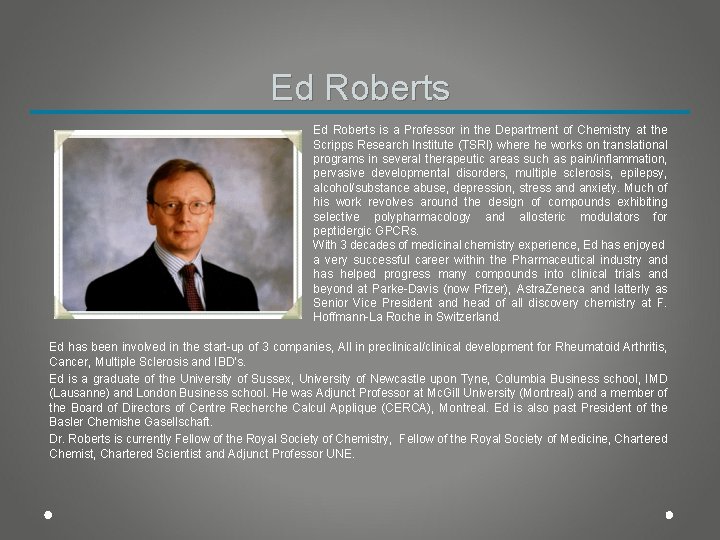
Ed Roberts is a Professor in the Department of Chemistry at the Scripps Research Institute (TSRI) where he works on translational programs in several therapeutic areas such as pain/inflammation, pervasive developmental disorders, multiple sclerosis, epilepsy, alcohol/substance abuse, depression, stress and anxiety. Much of his work revolves around the design of compounds exhibiting selective polypharmacology and allosteric modulators for peptidergic GPCRs. With 3 decades of medicinal chemistry experience, Ed has enjoyed a very successful career within the Pharmaceutical industry and has helped progress many compounds into clinical trials and beyond at Parke-Davis (now Pfizer), Astra. Zeneca and latterly as Senior Vice President and head of all discovery chemistry at F. Hoffmann-La Roche in Switzerland. Ed has been involved in the start-up of 3 companies, All in preclinical/clinical development for Rheumatoid Arthritis, Cancer, Multiple Sclerosis and IBD’s. Ed is a graduate of the University of Sussex, University of Newcastle upon Tyne, Columbia Business school, IMD (Lausanne) and London Business school. He was Adjunct Professor at Mc. Gill University (Montreal) and a member of the Board of Directors of Centre Recherche Calcul Applique (CERCA), Montreal. Ed is also past President of the Basler Chemishe Gasellschaft. Dr. Roberts is currently Fellow of the Royal Society of Chemistry, Fellow of the Royal Society of Medicine, Chartered Chemist, Chartered Scientist and Adjunct Professor UNE.
Chemical, Biological, and Biophysical Approaches to Understanding and Manipulating Evolution Floyd E. Romesberg, Associate Professor of Chemistry, The Scripps Research Institute, 1999 -present • Ph. D. Chemistry 1994, Cornell Univ. , NIH Fellow 1994 -1996 • Baxter Foundation Award, 2002 • Camille Dreyfus Teacher Scholar Award, 2003 • Susan B. Komen Breast Cancer Foundation Award, 2003 -2006 • Discover Magazine Technology Innovation Award, 2004 • NSF CAREER Award, 2004 – present • Member, Institute for Defense Analysis, Defense Science Study Group, 2008 -2009 • PLo. S One Editorial Board, 2006 – present • CPCh Current Protocols Editorial Board, 2010 – present • Founder of the biotechnology companies Achaogen, Inc. and RQx Pharmaceuticals, Inc. • 17 Ph. D. and 34 Postdoctoral Students • >100 Publications • > 80 Invited Lectures Chemical biology, microbiology, molecular biology, and biophysics are used as part of an effort to expand the genetic alphabet and create a semisynthetic organism, develop novel broad-spectrum antibiotics, and understand how the evolution of protein dynamics contributes to biological function.
New Chemical Biology from Ancient Enzymes (Aminoacyl t. RNA Synthetases) Paul Schimmel, Ernest and Jean Hahn Professor of Molecular Biology and Chemistry • Ph. D. Biophysical Chemistry, MIT 1966, Postdoctoral Fellow, Stanford University 1966 -1967 • Faculty: MIT Department of Biology 1967 -1997 (last position, John D. and Catherine T. Mac. Arthur Professor of Biochemistry and Biophysics) • Faculty: The Scripps Research Institute, Departments of Molecular Biology and Chemistry (current position, Ernest and Jean Hahn Professor of Molecular Biology and Chemistry) 1997 -present • Faculty, Visiting Professor, Institute for Advanced Study, Hong Kong University of Science and Technology 2008 present • Alfred P. Sloan Fellow, 1970 -72 • Pfizer Award in Enzyme Chemistry, 1978 • Elected American Academy of Arts and Sciences, 1987 • Elected US National Academy of Sciences, 1990 • Elected American Philosophical Society, 1999 • Biophysical Society Emily M. Gray Award for Significant Contributions (co-recipient), 2000 • Nucleic Acids Award, British Biochemical Society and Royal Society of Chemistry, 2004 • Elected Institute of Medicine of US National Academy of Sciences, 2005 • David Perlman Award, The American Chemical Society, 2005 • Chinese Biopharmaceutical Association Brilliant Achievement Award, 2006 • Ohio Wesleyan University Distinguished Achievement Award, 2007 • Stein and Moore Award, The Protein Society, 2007 • San Diego Bio. Pharma Award, 2011 • Frank H. Westheimer Medal, Harvard University, 2012 • Author or co-author of over 450 scientific publications • Co-author of widely used 3 -volume textbook on Biophysical Chemistry • Service on 11 journal editorial boards • Service (including chairmanships) on 25 corporate boards for profit and non-profit enterprises • Chairmanships and memberships on 33 committees for outside academic, scientific and government organizations
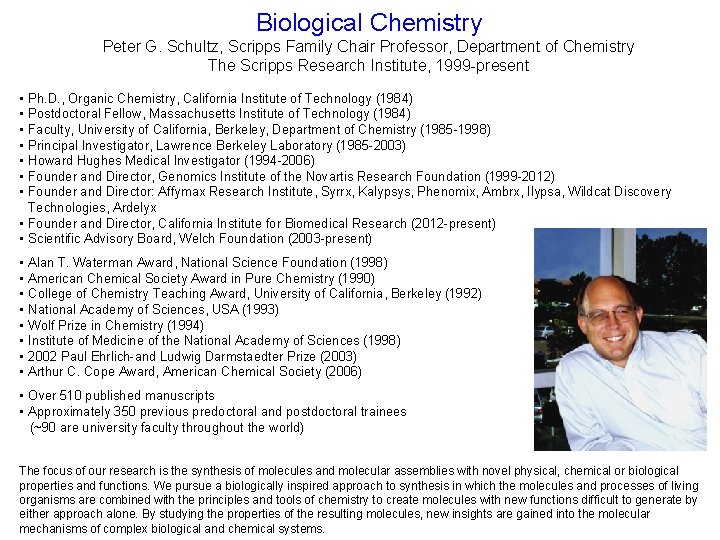
Biological Chemistry Peter G. Schultz, Scripps Family Chair Professor, Department of Chemistry The Scripps Research Institute, 1999 -present • • Ph. D. , Organic Chemistry, California Institute of Technology (1984) Postdoctoral Fellow, Massachusetts Institute of Technology (1984) Faculty, University of California, Berkeley, Department of Chemistry (1985 -1998) Principal Investigator, Lawrence Berkeley Laboratory (1985 -2003) Howard Hughes Medical Investigator (1994 -2006) Founder and Director, Genomics Institute of the Novartis Research Foundation (1999 -2012) Founder and Director: Affymax Research Institute, Syrrx, Kalypsys, Phenomix, Ambrx, Ilypsa, Wildcat Discovery Technologies, Ardelyx • Founder and Director, California Institute for Biomedical Research (2012 -present) • Scientific Advisory Board, Welch Foundation (2003 -present) • • Alan T. Waterman Award, National Science Foundation (1998) American Chemical Society Award in Pure Chemistry (1990) College of Chemistry Teaching Award, University of California, Berkeley (1992) National Academy of Sciences, USA (1993) Wolf Prize in Chemistry (1994) Institute of Medicine of the National Academy of Sciences (1998) 2002 Paul Ehrlich-and Ludwig Darmstaedter Prize (2003) Arthur C. Cope Award, American Chemical Society (2006) • Over 510 published manuscripts • Approximately 350 previous predoctoral and postdoctoral trainees (~90 are university faculty throughout the world) The focus of our research is the synthesis of molecules and molecular assemblies with novel physical, chemical or biological properties and functions. We pursue a biologically inspired approach to synthesis in which the molecules and processes of living organisms are combined with the principles and tools of chemistry to create molecules with new functions difficult to generate by either approach alone. By studying the properties of the resulting molecules, new insights are gained into the molecular mechanisms of complex biological and chemical systems.
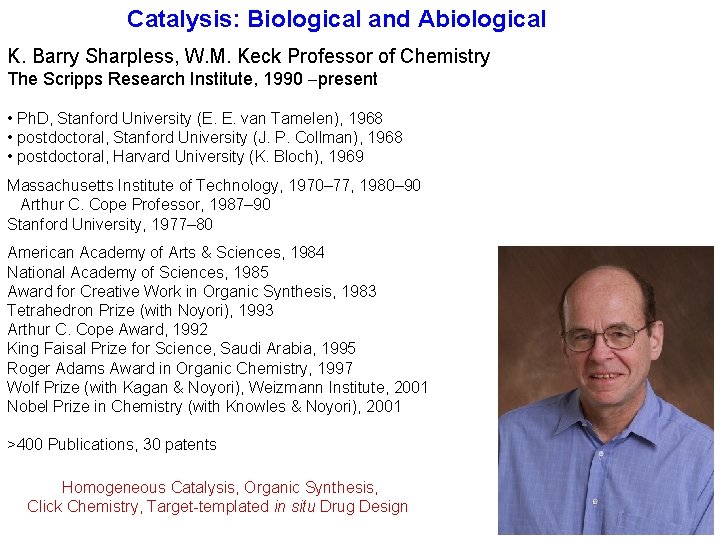
Catalysis: Biological and Abiological K. Barry Sharpless, W. M. Keck Professor of Chemistry The Scripps Research Institute, 1990 -present • Ph. D, Stanford University (E. E. van Tamelen), 1968 • postdoctoral, Stanford University (J. P. Collman), 1968 • postdoctoral, Harvard University (K. Bloch), 1969 Massachusetts Institute of Technology, 1970– 77, 1980– 90 Arthur C. Cope Professor, 1987– 90 Stanford University, 1977– 80 American Academy of Arts & Sciences, 1984 National Academy of Sciences, 1985 Award for Creative Work in Organic Synthesis, 1983 Tetrahedron Prize (with Noyori), 1993 Arthur C. Cope Award, 1992 King Faisal Prize for Science, Saudi Arabia, 1995 Roger Adams Award in Organic Chemistry, 1997 Wolf Prize (with Kagan & Noyori), Weizmann Institute, 2001 Nobel Prize in Chemistry (with Knowles & Noyori), 2001 >400 Publications, 30 patents Homogeneous Catalysis, Organic Synthesis, Click Chemistry, Target-templated in situ Drug Design
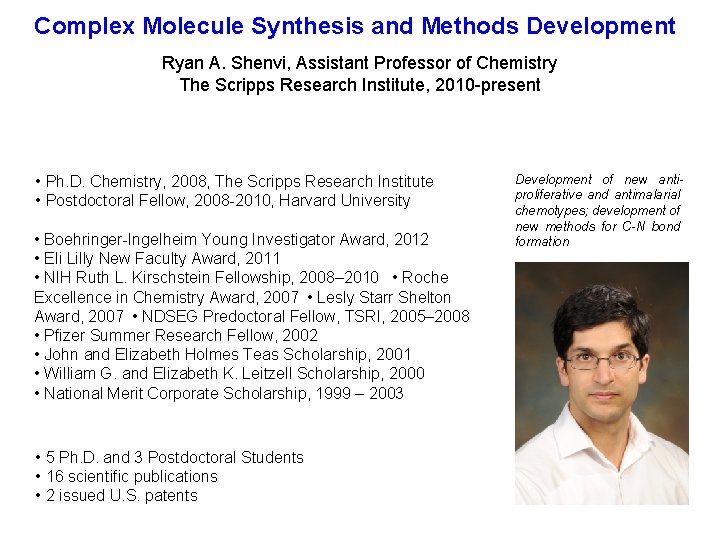
Complex Molecule Synthesis and Methods Development Ryan A. Shenvi, Assistant Professor of Chemistry The Scripps Research Institute, 2010 -present • Ph. D. Chemistry, 2008, The Scripps Research Institute • Postdoctoral Fellow, 2008 -2010, Harvard University • Boehringer-Ingelheim Young Investigator Award, 2012 • Eli Lilly New Faculty Award, 2011 • NIH Ruth L. Kirschstein Fellowship, 2008– 2010 • Roche Excellence in Chemistry Award, 2007 • Lesly Starr Shelton Award, 2007 • NDSEG Predoctoral Fellow, TSRI, 2005– 2008 • Pfizer Summer Research Fellow, 2002 • John and Elizabeth Holmes Teas Scholarship, 2001 • William G. and Elizabeth K. Leitzell Scholarship, 2000 • National Merit Corporate Scholarship, 1999 – 2003 • 5 Ph. D. and 3 Postdoctoral Students • 16 scientific publications • 2 issued U. S. patents Development of new antiproliferative and antimalarial chemotypes; development of new methods for C-N bond formation
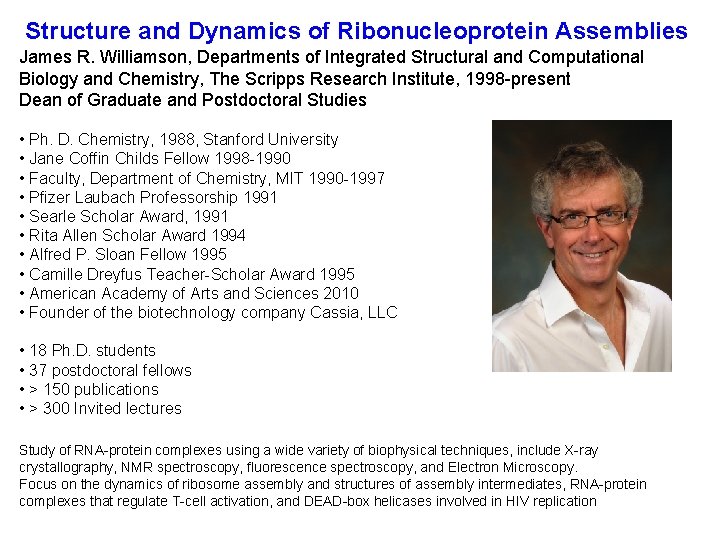
Structure and Dynamics of Ribonucleoprotein Assemblies James R. Williamson, Departments of Integrated Structural and Computational Biology and Chemistry, The Scripps Research Institute, 1998 -present Dean of Graduate and Postdoctoral Studies • Ph. D. Chemistry, 1988, Stanford University • Jane Coffin Childs Fellow 1998 -1990 • Faculty, Department of Chemistry, MIT 1990 -1997 • Pfizer Laubach Professorship 1991 • Searle Scholar Award, 1991 • Rita Allen Scholar Award 1994 • Alfred P. Sloan Fellow 1995 • Camille Dreyfus Teacher-Scholar Award 1995 • American Academy of Arts and Sciences 2010 • Founder of the biotechnology company Cassia, LLC • 18 Ph. D. students • 37 postdoctoral fellows • > 150 publications • > 300 Invited lectures Study of RNA-protein complexes using a wide variety of biophysical techniques, include X-ray crystallography, NMR spectroscopy, fluorescence spectroscopy, and Electron Microscopy. Focus on the dynamics of ribosome assembly and structures of assembly intermediates, RNA-protein complexes that regulate T-cell activation, and DEAD-box helicases involved in HIV replication
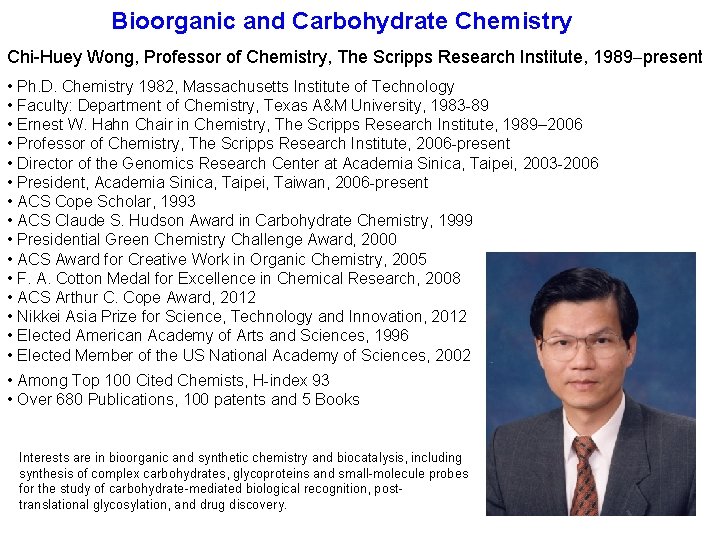
Bioorganic and Carbohydrate Chemistry Chi-Huey Wong, Professor of Chemistry, The Scripps Research Institute, 1989 -present • Ph. D. Chemistry 1982, Massachusetts Institute of Technology • Faculty: Department of Chemistry, Texas A&M University, 1983 -89 • Ernest W. Hahn Chair in Chemistry, The Scripps Research Institute, 1989– 2006 • Professor of Chemistry, The Scripps Research Institute, 2006 -present • Director of the Genomics Research Center at Academia Sinica, Taipei, 2003 -2006 • President, Academia Sinica, Taipei, Taiwan, 2006 -present • ACS Cope Scholar, 1993 • ACS Claude S. Hudson Award in Carbohydrate Chemistry, 1999 • Presidential Green Chemistry Challenge Award, 2000 • ACS Award for Creative Work in Organic Chemistry, 2005 • F. A. Cotton Medal for Excellence in Chemical Research, 2008 • ACS Arthur C. Cope Award, 2012 • Nikkei Asia Prize for Science, Technology and Innovation, 2012 • Elected American Academy of Arts and Sciences, 1996 • Elected Member of the US National Academy of Sciences, 2002 • Among Top 100 Cited Chemists, H-index 93 • Over 680 Publications, 100 patents and 5 Books Interests are in bioorganic and synthetic chemistry and biocatalysis, including synthesis of complex carbohydrates, glycoproteins and small-molecule probes for the study of carbohydrate-mediated biological recognition, posttranslational glycosylation, and drug discovery.
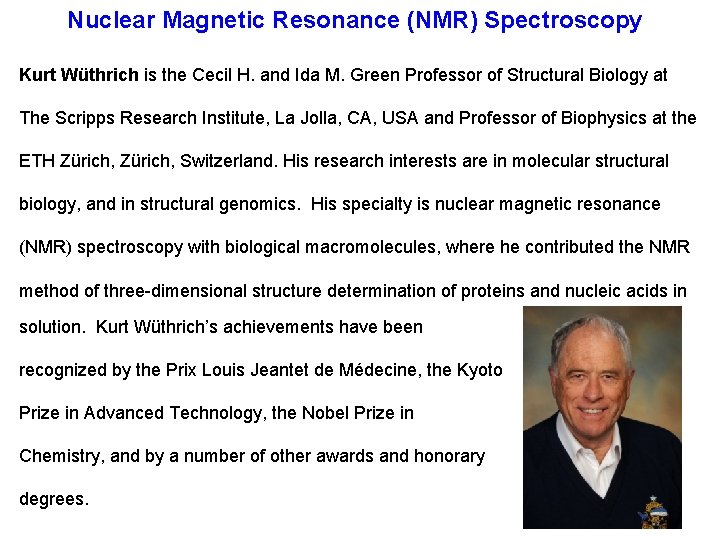
Nuclear Magnetic Resonance (NMR) Spectroscopy Kurt Wüthrich is the Cecil H. and Ida M. Green Professor of Structural Biology at The Scripps Research Institute, La Jolla, CA, USA and Professor of Biophysics at the ETH Zürich, Switzerland. His research interests are in molecular structural biology, and in structural genomics. His specialty is nuclear magnetic resonance (NMR) spectroscopy with biological macromolecules, where he contributed the NMR method of three-dimensional structure determination of proteins and nucleic acids in solution. Kurt Wüthrich’s achievements have been recognized by the Prix Louis Jeantet de Médecine, the Kyoto Prize in Advanced Technology, the Nobel Prize in Chemistry, and by a number of other awards and honorary degrees.
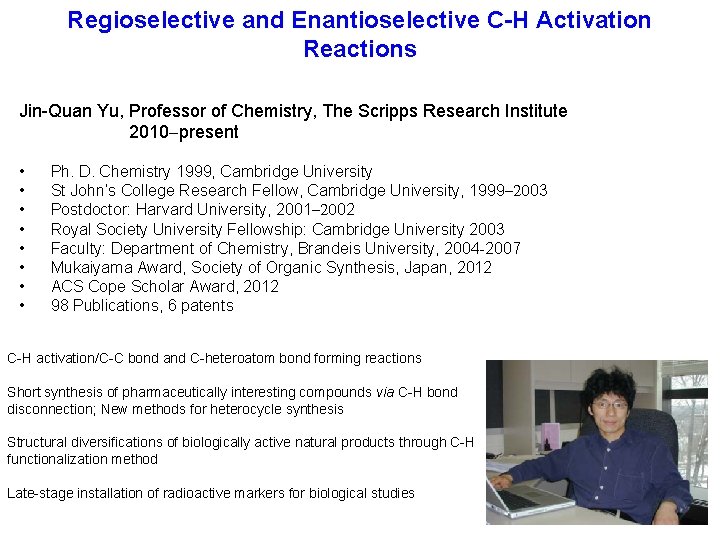
Regioselective and Enantioselective C-H Activation Reactions Jin-Quan Yu, Professor of Chemistry, The Scripps Research Institute 2010 -present • • Ph. D. Chemistry 1999, Cambridge University St John’s College Research Fellow, Cambridge University, 1999 -2003 Postdoctor: Harvard University, 2001 -2002 Royal Society University Fellowship: Cambridge University 2003 Faculty: Department of Chemistry, Brandeis University, 2004 -2007 Mukaiyama Award, Society of Organic Synthesis, Japan, 2012 ACS Cope Scholar Award, 2012 98 Publications, 6 patents C-H activation/C-C bond and C-heteroatom bond forming reactions Short synthesis of pharmaceutically interesting compounds via C-H bond disconnection; New methods for heterocycle synthesis Structural diversifications of biologically active natural products through C-H functionalization method Late-stage installation of radioactive markers for biological studies
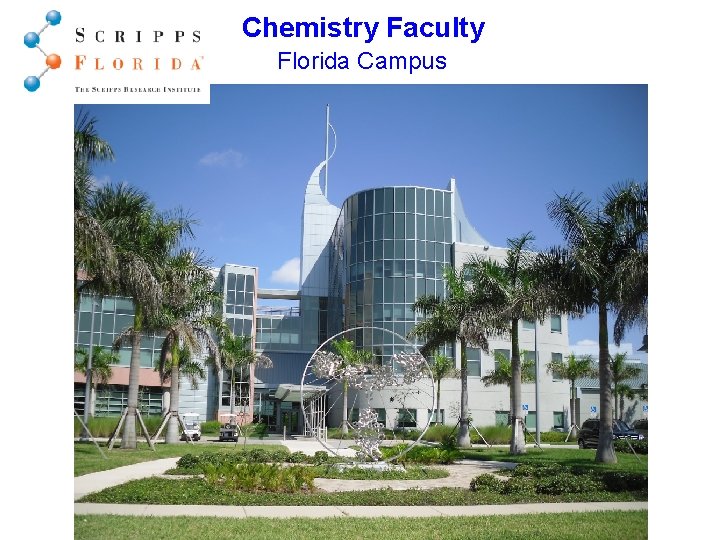
Chemistry Faculty Florida Campus
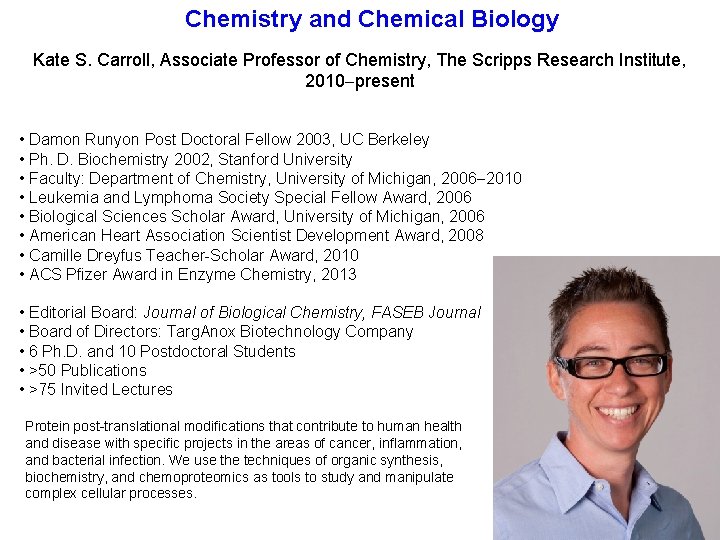
Chemistry and Chemical Biology Kate S. Carroll, Associate Professor of Chemistry, The Scripps Research Institute, 2010 -present • Damon Runyon Post Doctoral Fellow 2003, UC Berkeley • Ph. D. Biochemistry 2002, Stanford University • Faculty: Department of Chemistry, University of Michigan, 2006 -2010 • Leukemia and Lymphoma Society Special Fellow Award, 2006 • Biological Sciences Scholar Award, University of Michigan, 2006 • American Heart Association Scientist Development Award, 2008 • Camille Dreyfus Teacher-Scholar Award, 2010 • ACS Pfizer Award in Enzyme Chemistry, 2013 • Editorial Board: Journal of Biological Chemistry, FASEB Journal • Board of Directors: Targ. Anox Biotechnology Company • 6 Ph. D. and 10 Postdoctoral Students • >50 Publications • >75 Invited Lectures Protein post-translational modifications that contribute to human health and disease with specific projects in the areas of cancer, inflammation, and bacterial infection. We use the techniques of organic synthesis, biochemistry, and chemoproteomics as tools to study and manipulate complex cellular processes.
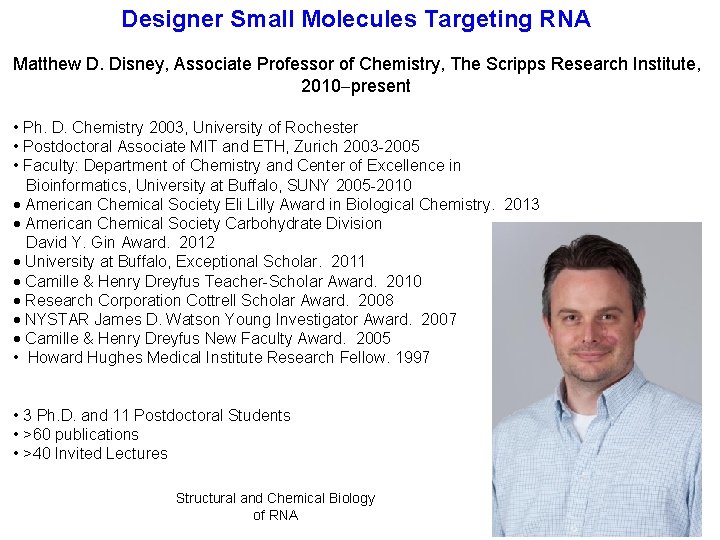
Designer Small Molecules Targeting RNA Matthew D. Disney, Associate Professor of Chemistry, The Scripps Research Institute, 2010 -present • Ph. D. Chemistry 2003, University of Rochester • Postdoctoral Associate MIT and ETH, Zurich 2003 -2005 • Faculty: Department of Chemistry and Center of Excellence in Bioinformatics, University at Buffalo, SUNY 2005 -2010 · American Chemical Society Eli Lilly Award in Biological Chemistry. 2013 · American Chemical Society Carbohydrate Division David Y. Gin Award. 2012 · University at Buffalo, Exceptional Scholar. 2011 · Camille & Henry Dreyfus Teacher-Scholar Award. 2010 · Research Corporation Cottrell Scholar Award. 2008 · NYSTAR James D. Watson Young Investigator Award. 2007 · Camille & Henry Dreyfus New Faculty Award. 2005 • Howard Hughes Medical Institute Research Fellow. 1997 • 3 Ph. D. and 11 Postdoctoral Students • >60 publications • >40 Invited Lectures Structural and Chemical Biology of RNA
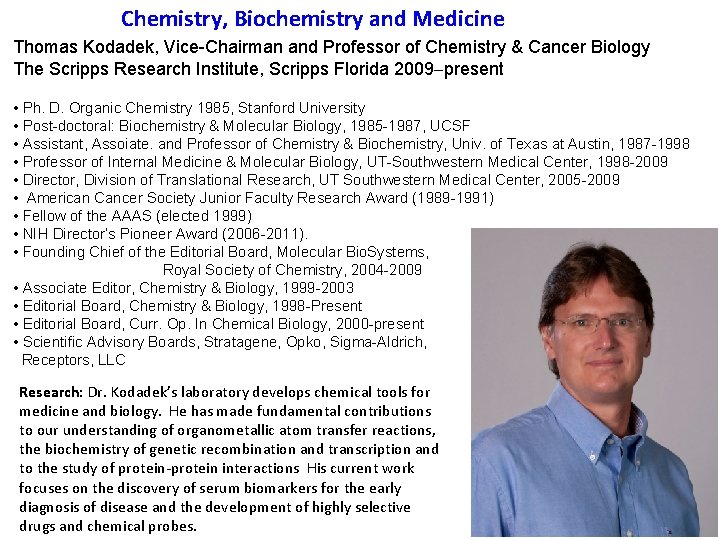
Chemistry, Biochemistry and Medicine Thomas Kodadek, Vice-Chairman and Professor of Chemistry & Cancer Biology The Scripps Research Institute, Scripps Florida 2009 -present • Ph. D. Organic Chemistry 1985, Stanford University • Post-doctoral: Biochemistry & Molecular Biology, 1985 -1987, UCSF • Assistant, Assoiate. and Professor of Chemistry & Biochemistry, Univ. of Texas at Austin, 1987 -1998 • Professor of Internal Medicine & Molecular Biology, UT-Southwestern Medical Center, 1998 -2009 • Director, Division of Translational Research, UT Southwestern Medical Center, 2005 -2009 • American Cancer Society Junior Faculty Research Award (1989 -1991) • Fellow of the AAAS (elected 1999) • NIH Director’s Pioneer Award (2006 -2011). • Founding Chief of the Editorial Board, Molecular Bio. Systems, Royal Society of Chemistry, 2004 -2009 • Associate Editor, Chemistry & Biology, 1999 -2003 • Editorial Board, Chemistry & Biology, 1998 -Present • Editorial Board, Curr. Op. In Chemical Biology, 2000 -present • Scientific Advisory Boards, Stratagene, Opko, Sigma-Aldrich, Receptors, LLC Research: Dr. Kodadek’s laboratory develops chemical tools for medicine and biology. He has made fundamental contributions to our understanding of organometallic atom transfer reactions, the biochemistry of genetic recombination and transcription and to the study of protein-protein interactions His current work focuses on the discovery of serum biomarkers for the early diagnosis of disease and the development of highly selective drugs and chemical probes.
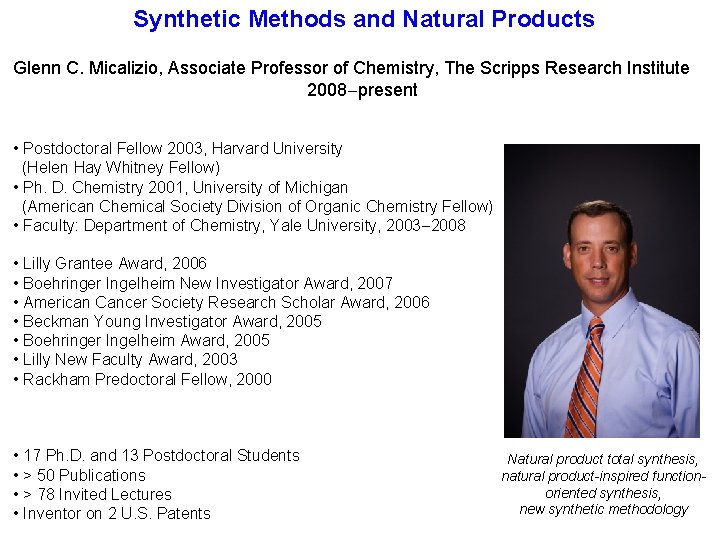
Synthetic Methods and Natural Products Glenn C. Micalizio, Associate Professor of Chemistry, The Scripps Research Institute 2008 -present • Postdoctoral Fellow 2003, Harvard University (Helen Hay Whitney Fellow) • Ph. D. Chemistry 2001, University of Michigan (American Chemical Society Division of Organic Chemistry Fellow) • Faculty: Department of Chemistry, Yale University, 2003 -2008 • Lilly Grantee Award, 2006 • Boehringer Ingelheim New Investigator Award, 2007 • American Cancer Society Research Scholar Award, 2006 • Beckman Young Investigator Award, 2005 • Boehringer Ingelheim Award, 2005 • Lilly New Faculty Award, 2003 • Rackham Predoctoral Fellow, 2000 • 17 Ph. D. and 13 Postdoctoral Students • > 50 Publications • > 78 Invited Lectures • Inventor on 2 U. S. Patents Natural product total synthesis, natural product-inspired functionoriented synthesis, new synthetic methodology
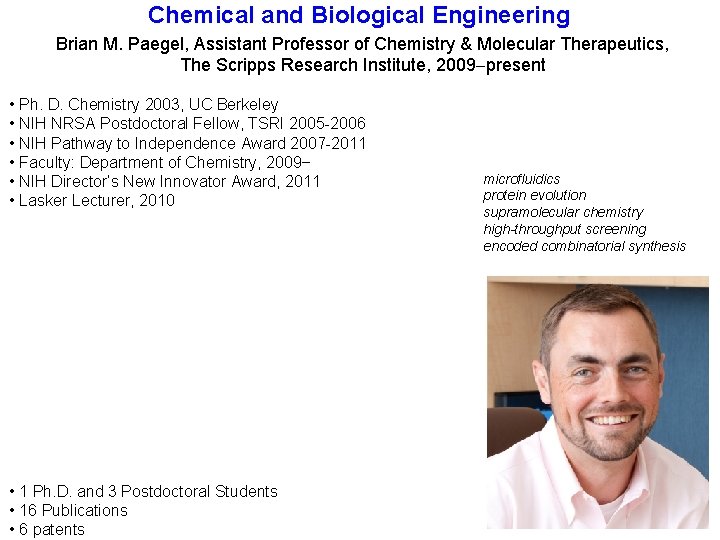
Chemical and Biological Engineering Brian M. Paegel, Assistant Professor of Chemistry & Molecular Therapeutics, The Scripps Research Institute, 2009 -present • Ph. D. Chemistry 2003, UC Berkeley • NIH NRSA Postdoctoral Fellow, TSRI 2005 -2006 • NIH Pathway to Independence Award 2007 -2011 • Faculty: Department of Chemistry, 2009− • NIH Director’s New Innovator Award, 2011 • Lasker Lecturer, 2010 • 1 Ph. D. and 3 Postdoctoral Students • 16 Publications • 6 patents microfluidics protein evolution supramolecular chemistry high-throughput screening encoded combinatorial synthesis
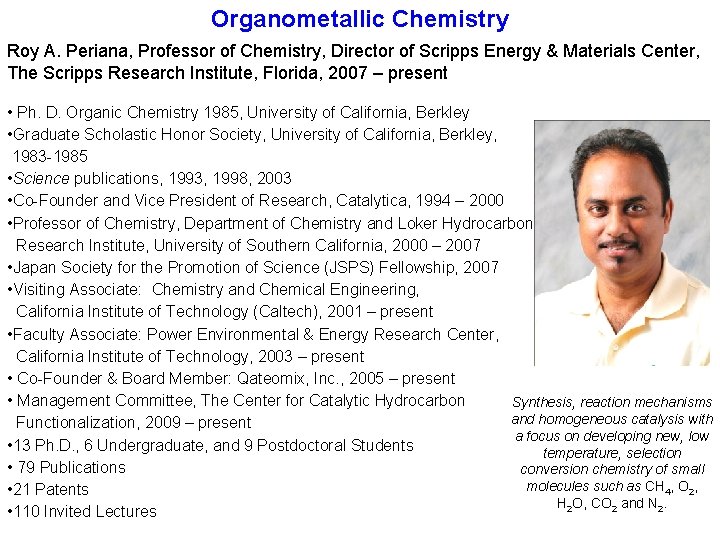
Organometallic Chemistry Roy A. Periana, Professor of Chemistry, Director of Scripps Energy & Materials Center, The Scripps Research Institute, Florida, 2007 – present • Ph. D. Organic Chemistry 1985, University of California, Berkley • Graduate Scholastic Honor Society, University of California, Berkley, 1983 -1985 • Science publications, 1993, 1998, 2003 • Co-Founder and Vice President of Research, Catalytica, 1994 – 2000 • Professor of Chemistry, Department of Chemistry and Loker Hydrocarbon Research Institute, University of Southern California, 2000 – 2007 • Japan Society for the Promotion of Science (JSPS) Fellowship, 2007 • Visiting Associate: Chemistry and Chemical Engineering, California Institute of Technology (Caltech), 2001 – present • Faculty Associate: Power Environmental & Energy Research Center, California Institute of Technology, 2003 – present • Co-Founder & Board Member: Qateomix, Inc. , 2005 – present • Management Committee, The Center for Catalytic Hydrocarbon Synthesis, reaction mechanisms and homogeneous catalysis with Functionalization, 2009 – present a focus on developing new, low • 13 Ph. D. , 6 Undergraduate, and 9 Postdoctoral Students temperature, selection • 79 Publications conversion chemistry of small molecules such as CH 4, O 2, • 21 Patents H 2 O, CO 2 and N 2. • 110 Invited Lectures
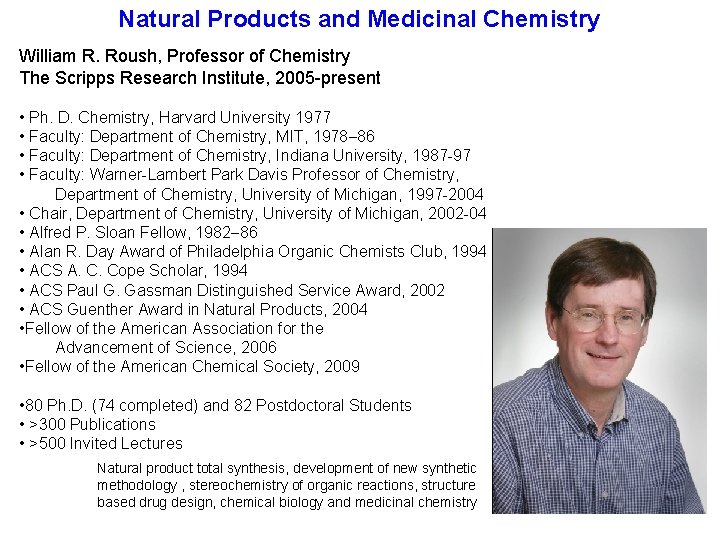
Natural Products and Medicinal Chemistry William R. Roush, Professor of Chemistry The Scripps Research Institute, 2005 -present • Ph. D. Chemistry, Harvard University 1977 • Faculty: Department of Chemistry, MIT, 1978 -86 • Faculty: Department of Chemistry, Indiana University, 1987 -97 • Faculty: Warner-Lambert Park Davis Professor of Chemistry, Department of Chemistry, University of Michigan, 1997 -2004 • Chair, Department of Chemistry, University of Michigan, 2002 -04 • Alfred P. Sloan Fellow, 1982 -86 • Alan R. Day Award of Philadelphia Organic Chemists Club, 1994 • ACS A. C. Cope Scholar, 1994 • ACS Paul G. Gassman Distinguished Service Award, 2002 • ACS Guenther Award in Natural Products, 2004 • Fellow of the American Association for the Advancement of Science, 2006 • Fellow of the American Chemical Society, 2009 • 80 Ph. D. (74 completed) and 82 Postdoctoral Students • >300 Publications • >500 Invited Lectures Natural product total synthesis, development of new synthetic methodology , stereochemistry of organic reactions, structure based drug design, chemical biology and medicinal chemistry
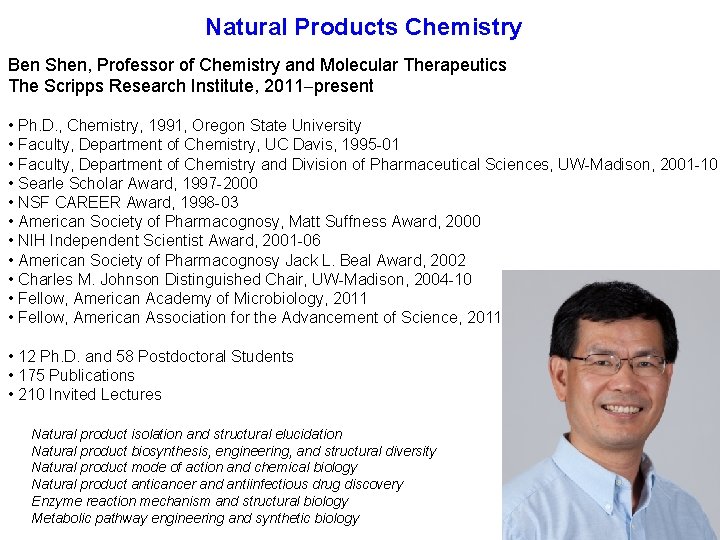
Natural Products Chemistry Ben Shen, Professor of Chemistry and Molecular Therapeutics The Scripps Research Institute, 2011 -present • Ph. D. , Chemistry, 1991, Oregon State University • Faculty, Department of Chemistry, UC Davis, 1995 -01 • Faculty, Department of Chemistry and Division of Pharmaceutical Sciences, UW-Madison, 2001 -10 • Searle Scholar Award, 1997 -2000 • NSF CAREER Award, 1998 -03 • American Society of Pharmacognosy, Matt Suffness Award, 2000 • NIH Independent Scientist Award, 2001 -06 • American Society of Pharmacognosy Jack L. Beal Award, 2002 • Charles M. Johnson Distinguished Chair, UW-Madison, 2004 -10 • Fellow, American Academy of Microbiology, 2011 • Fellow, American Association for the Advancement of Science, 2011 • 12 Ph. D. and 58 Postdoctoral Students • 175 Publications • 210 Invited Lectures Natural product isolation and structural elucidation Natural product biosynthesis, engineering, and structural diversity Natural product mode of action and chemical biology Natural product anticancer and antiinfectious drug discovery Enzyme reaction mechanism and structural biology Metabolic pathway engineering and synthetic biology
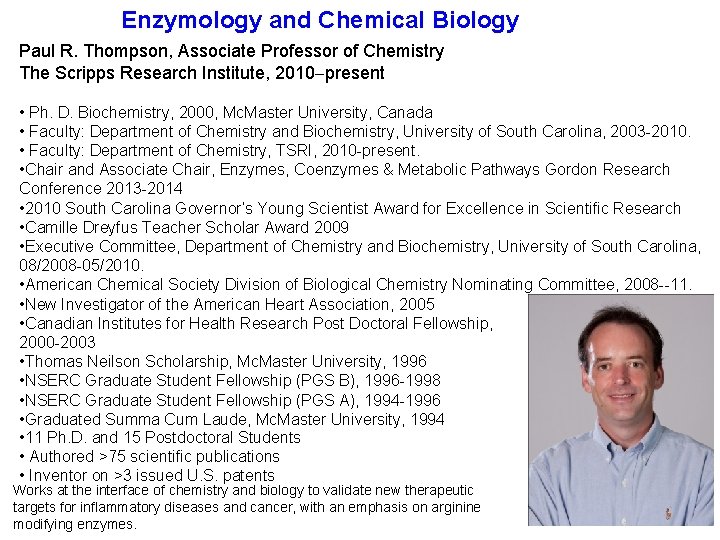
Enzymology and Chemical Biology Paul R. Thompson, Associate Professor of Chemistry The Scripps Research Institute, 2010 -present • Ph. D. Biochemistry, 2000, Mc. Master University, Canada • Faculty: Department of Chemistry and Biochemistry, University of South Carolina, 2003 -2010. • Faculty: Department of Chemistry, TSRI, 2010 -present. • Chair and Associate Chair, Enzymes, Coenzymes & Metabolic Pathways Gordon Research Conference 2013 -2014 • 2010 South Carolina Governor’s Young Scientist Award for Excellence in Scientific Research • Camille Dreyfus Teacher Scholar Award 2009 • Executive Committee, Department of Chemistry and Biochemistry, University of South Carolina, 08/2008 -05/2010. • American Chemical Society Division of Biological Chemistry Nominating Committee, 2008 --11. • New Investigator of the American Heart Association, 2005 • Canadian Institutes for Health Research Post Doctoral Fellowship, 2000 -2003 • Thomas Neilson Scholarship, Mc. Master University, 1996 • NSERC Graduate Student Fellowship (PGS B), 1996 -1998 • NSERC Graduate Student Fellowship (PGS A), 1994 -1996 • Graduated Summa Cum Laude, Mc. Master University, 1994 • 11 Ph. D. and 15 Postdoctoral Students • Authored >75 scientific publications • Inventor on >3 issued U. S. patents Works at the interface of chemistry and biology to validate new therapeutic targets for inflammatory diseases and cancer, with an emphasis on arginine modifying enzymes.