Chapter 5 Audience Analysis Audience Analysis Introduction When
- Slides: 33
Chapter 5 Audience Analysis
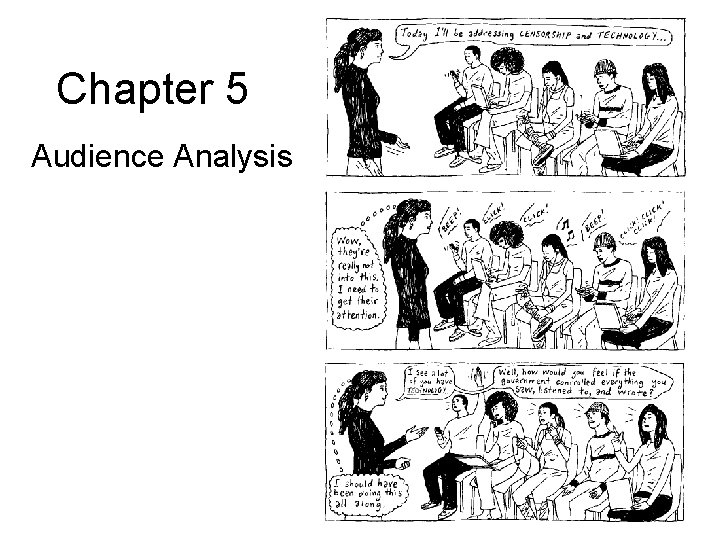
Audience Analysis: Introduction • When speakers tailor messages to audiences, audience members – Become more attentive to the speech. – Experience positive feelings toward the speaker. – Open their minds to ideas that target their needs, interests, and values. – Are more open to being persuaded.
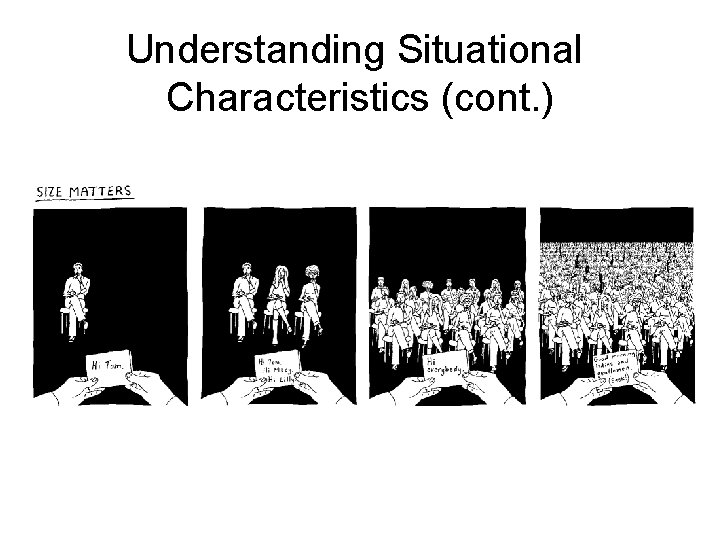
Understanding Situational Characteristics • Situational characteristics are factors in a specific speech setting that you can observe or discover before a speech. • Size – The smaller the audience size, the greater the opportunity for interaction. – The larger the group, the harder you’ll have to work to anticipate listeners’ questions and craft a generally accessible message.
Understanding Situational Characteristics (cont. )
Understanding Situational Characteristics (cont. ) • Time – Presentation time is the length of time you have to deliver your presentation. • Short speeches need to be concise. • Longer speeches can take more time to develop a message but need to be cautious of digressing.
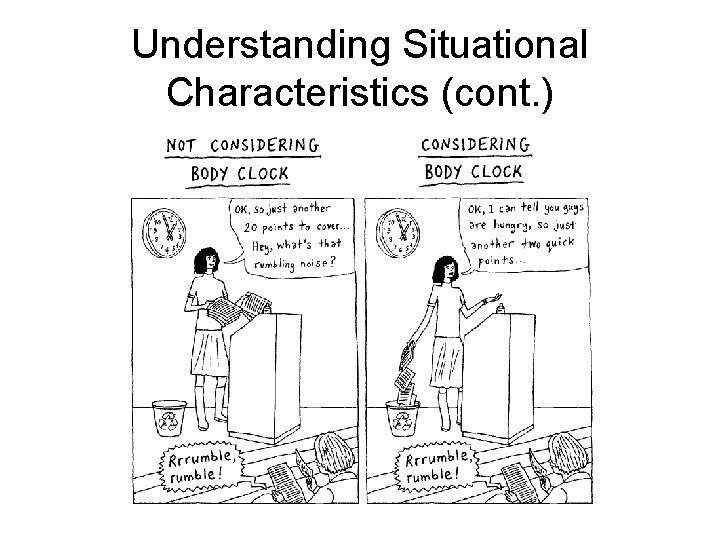
Understanding Situational Characteristics (cont. ) – Body clock or chronemics refers to the time of day or day of the week the speech is given. • Certain times can impede audience attention. • Be sensitive to body clock, and adjust your speech as needed.
Understanding Situational Characteristics (cont. )
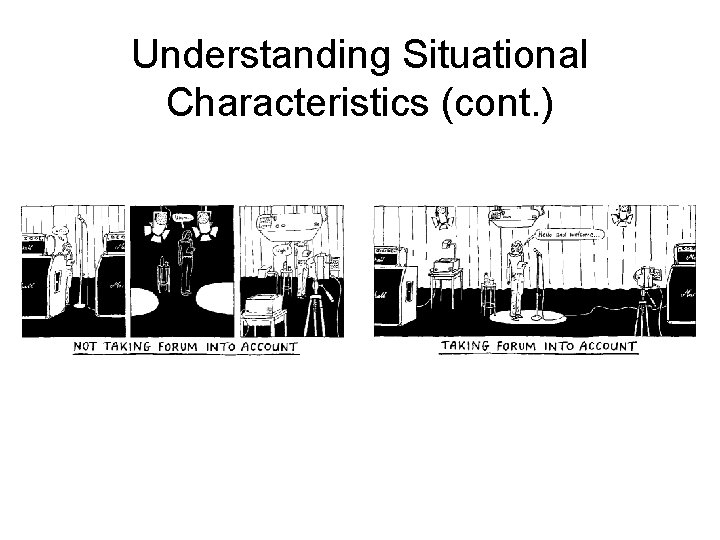
Understanding Situational Characteristics (cont. ) • Location (also known as forum) is the setting where your audience will listen to your speech. – Take into account • • Acoustic characteristics Availability and level of technology Lines of sight Lighting
Understanding Situational Characteristics (cont. )
Understanding Situational Characteristics (cont. ) • Mobility is the degree to which listeners move around during a speech. – A stationary audience • Sits or stands. • Is captive as you are talking. – A mobile audience • Strolls by, stopping briefly. • Requires extra work to capture their attention.
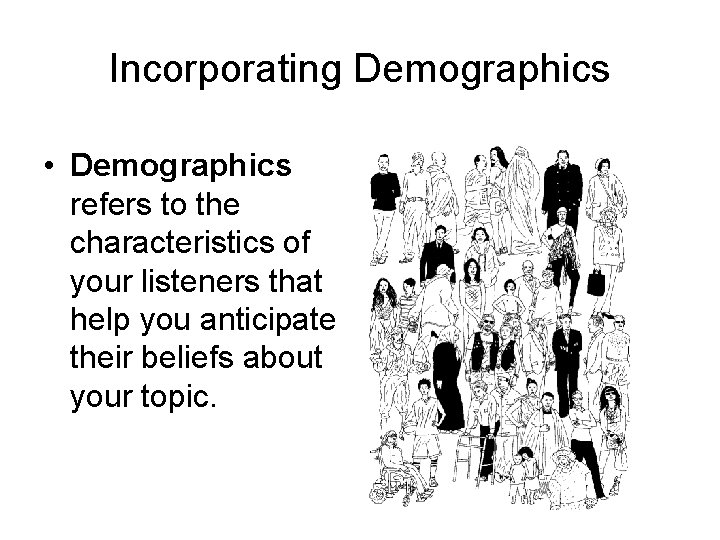
Incorporating Demographics • Demographics refers to the characteristics of your listeners that help you anticipate their beliefs about your topic.
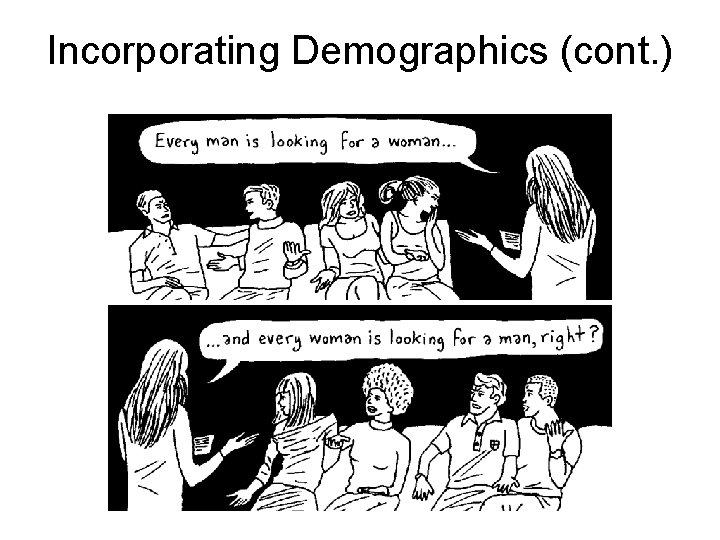
Incorporating Demographics (cont. ) • Age – For audiences with diverse ages, tailor supporting materials to varied experiences. – Contextualize unfamiliar historical details. • Gender composition – Craft messages that will appeal to the needs of people regardless of gender. – Do not use gender stereotypes or sexist language.
Incorporating Demographics (cont. ) • Sexual orientation – Don’t assume everyone is heterosexual. – LGBTQ stands for lesbian, gay, bisexual, transgendered, and queer individuals. • Acknowledging this demographic is an ethical responsibility. – Overt acknowledgement includes LGBTQ examples. – Passive acknowledgement uses inclusive word choice (gay couple, loving partners).
Incorporating Demographics (cont. )
Incorporating Demographics (cont. ) • Race and ethnicity – Race is a common heritage based on genetically shared physical characteristics. – Ethnicity is cultural background. – Be sensitive to racial and ethnic backgrounds. – Do not assume that all people from the same backgrounds think alike.
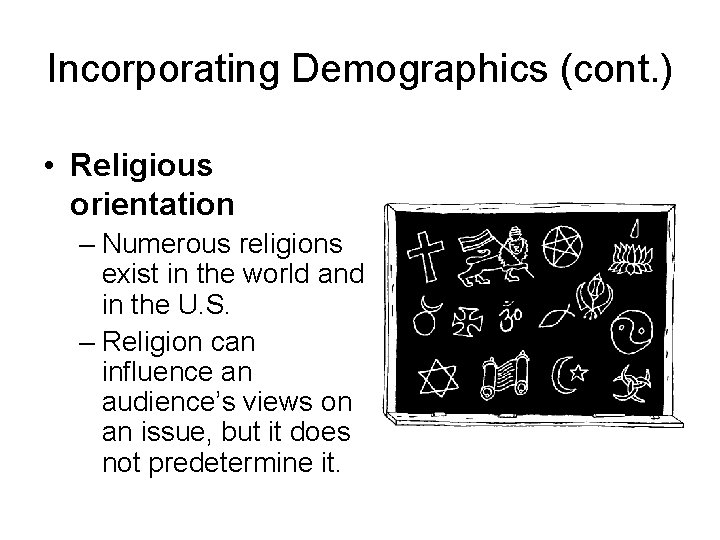
Incorporating Demographics (cont. ) • Religious orientation – Numerous religions exist in the world and in the U. S. – Religion can influence an audience’s views on an issue, but it does not predetermine it.
Incorporating Demographics (cont. ) • Socioeconomic background – Socioeconomic status is a measure of where individuals stand in terms of • Financial resources • Education • Occupation – Consider your audience’s socioeconomic status and how it might influence their individual and collective concerns.
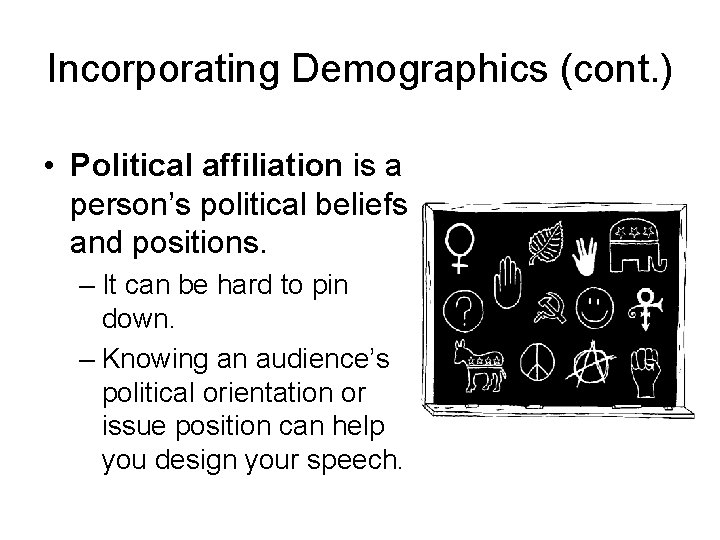
Incorporating Demographics (cont. ) • Political affiliation is a person’s political beliefs and positions. – It can be hard to pin down. – Knowing an audience’s political orientation or issue position can help you design your speech.
Incorporating Demographics (cont. ) • Putting the demographic pieces together – Every audience is unique. – Analyzing shared audience characteristics can help you frame your message effectively. – By identifying characteristics that many of your listeners share, you gain insights into how they might respond to your message.
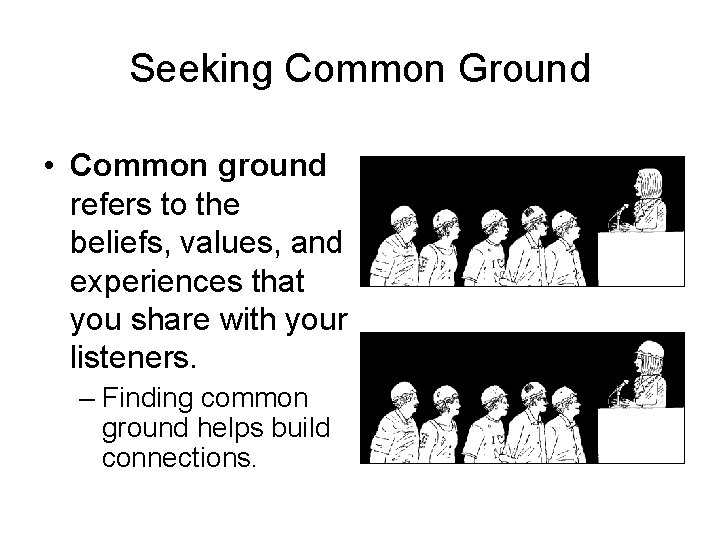
Seeking Common Ground • Common ground refers to the beliefs, values, and experiences that you share with your listeners. – Finding common ground helps build connections.
Identifying Prior Exposure • Prior exposure is the extent to which the audience has already been exposed to your message. • Listeners’ prior exposure can change how you present a message. • Speakers should answer the three following questions ahead of time.
Identifying Prior Exposure (cont. ) – Has my audience heard this message before? • If the answer is no, craft the message you want, as few will have strong prior beliefs. • If yes, move on to the next question. – Has my audience responded positively to the message? • If the answer is yes, use this speech to reinforce the previous message and motivate your audience to take action. • If no, move on to the next question.
Identifying Prior Exposure (cont. ) – Why did the previous message fail? • Assess what went wrong the last time your audience heard the message. • Use the resulting insights to tailor a more successful approach. • If your audience has had a major change in perspective since the previous presentation, consider whether you need to adjust your message to accommodate the listeners’ new viewpoint.
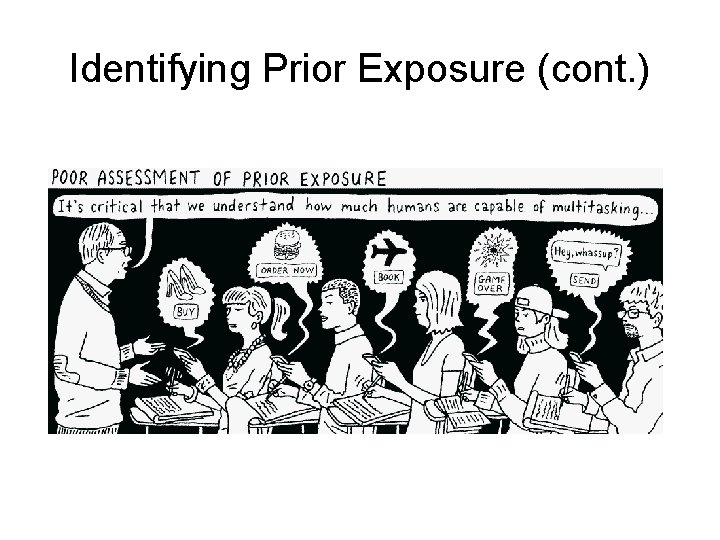
Identifying Prior Exposure (cont. )
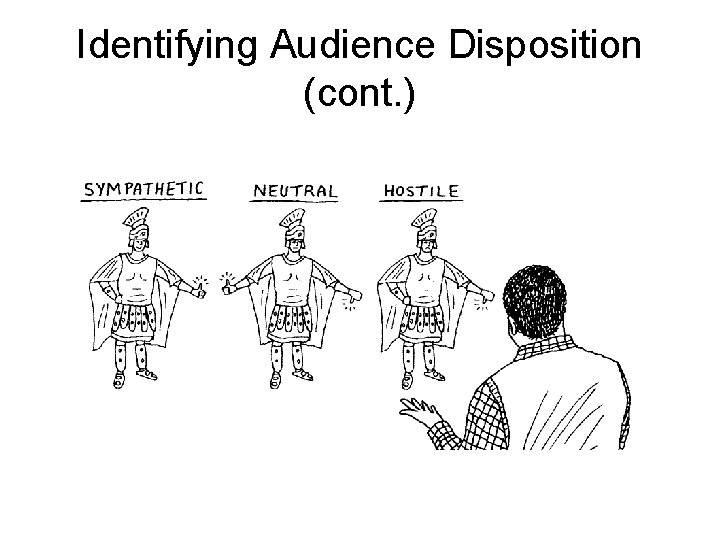
Identifying Audience Disposition • Disposition is the audience’s likely attitude toward your message. • A sympathetic audience –Already holds you in high personal esteem or agrees with your message and will respond favorably to your speech. –Allows you to push for commitment rather than try to convince them your ideas have merit.
Identifying Audience Disposition (cont. ) • A hostile audience – Opposes your message or you personally and will resist listening to your speech. – Requires you to define realistic goals. • A neutral audience – Has neither negative nor positive opinions about you or your message. – Requires you to determine the source of their neutrality and figure out how to overcome it so that they support you.
Identifying Audience Disposition (cont. )
Gathering Information about Your Audience • Surveying your audience – A survey is a set of written questions asked prior to your speech. – There are three common forms of survey: • Fixed-response questions give a set of specific answers (multiple choice, true/false). • Scaled questions measure intensity of feelings (from strongly agree to disagree). • Open-ended questions invite respondents to write what they want.
Gathering Information about Your Audience (cont. ) • Interviewing your audience – An interview is a face-to-face or phone interaction with an audience member to obtain in-depth information. • • Interview a few audience members. Ask any type of survey question. Interview a range of audience members. Be sure to use good listening skills and to thank the interviewee.
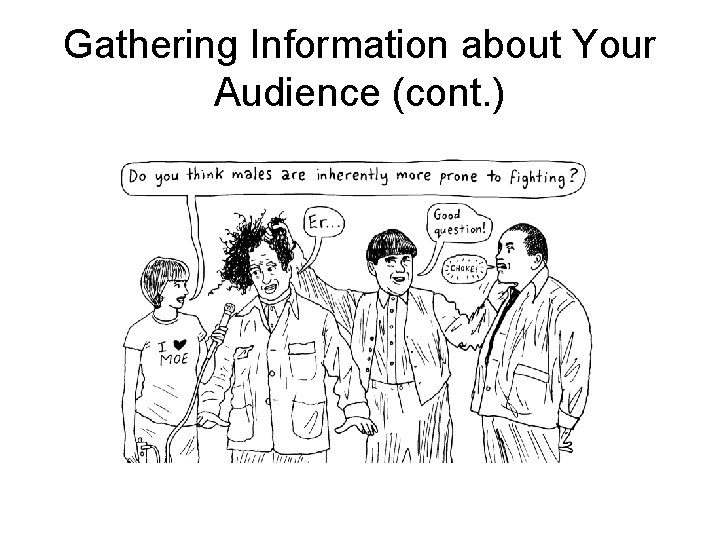
Gathering Information about Your Audience (cont. )
Gathering Information about Your Audience (cont. ) • Considering and observing your audience – Ask yourself why the audience will be attending the speech. – Ask yourself questions about what the forum or event tells you about the audience. • Stationary or mobile audience? • Sympathetic, hostile, or neutral audience? – Seek out literature about the organization or audience you will be addressing.
Situational Audience Analysis • Situational audience analysis is the skill of analyzing the audience in the moment. ‒ Don't act surprised. ‒ Check your outline, and adjust it if necessary. ‒ Consider whether your assumptions about the audience still apply.
Situational Audience Analysis (cont. ) ‒ Consider whether your presentation aids make sense for the new audience configuration. ‒ Use audience feedback to adjust. ‒ If an audience unexpectedly appears hostile, seek common ground.