
Selecting Your Topic Audience Analysis CHAPTER 4 Steps




- Slides: 16
Selecting Your Topic & Audience Analysis CHAPTER 4
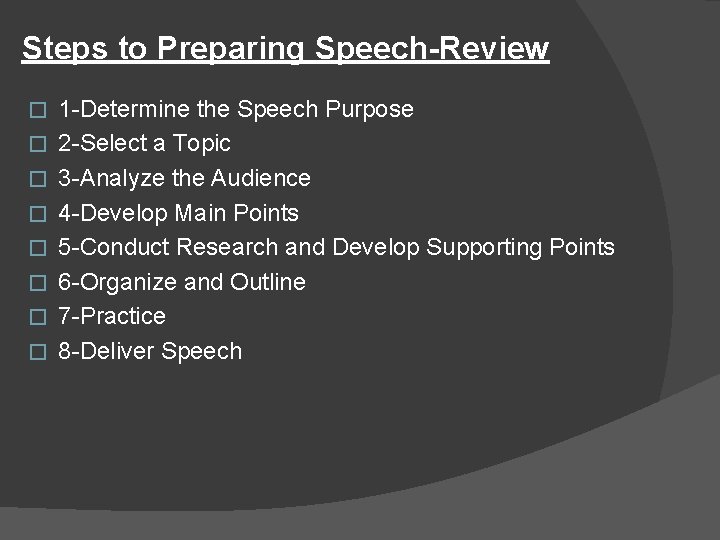
Steps to Preparing Speech-Review � � � � 1 -Determine the Speech Purpose 2 -Select a Topic 3 -Analyze the Audience 4 -Develop Main Points 5 -Conduct Research and Develop Supporting Points 6 -Organize and Outline 7 -Practice 8 -Deliver Speech
Analyzing Audience • Audience analysis-Learning about the audience in order to adapt speech to their needs and appeal to them • Audience Centered Approach-keeping audience in mind throughout entire speechmaking process
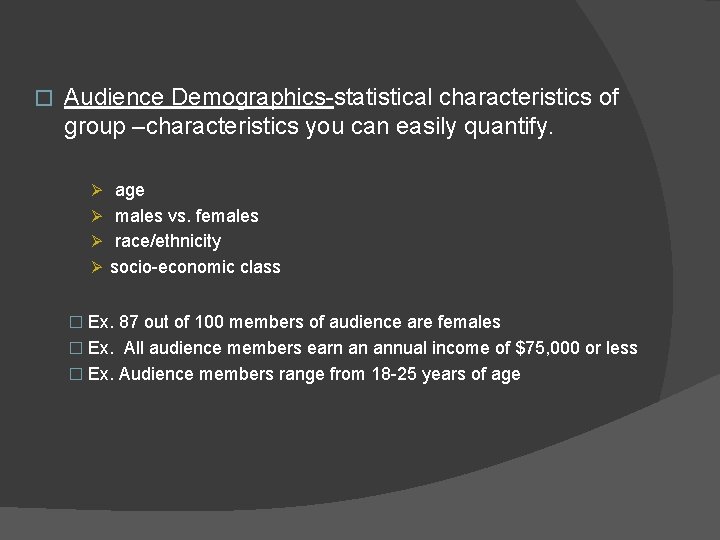
� Audience Demographics-statistical characteristics of group –characteristics you can easily quantify. Ø age Ø males vs. females Ø race/ethnicity Ø socio-economic class � Ex. 87 out of 100 members of audience are females � Ex. All audience members earn an annual income of $75, 000 or less � Ex. Audience members range from 18 -25 years of age
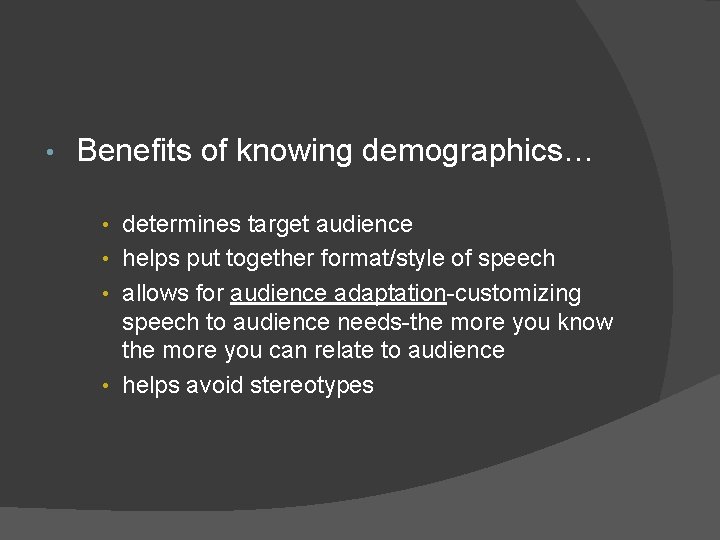
• Benefits of knowing demographics… • determines target audience • helps put together format/style of speech • allows for audience adaptation-customizing speech to audience needs-the more you know the more you can relate to audience • helps avoid stereotypes
• Target audiences -distinct groups or segments of population that you are trying to reach Ø Knowing TA will allow you to deliver message in a way that audience will respond to best Ø Beneficial in marketing/persuasion Pandering-Abandoning views and beliefs just to please the audience-should be avoided
Researching your audience Informally-observing/asking questions beforehand �Helps determine basic demographic characteristics FormallyØ 1 -Interview- one on one / focus groups Ø 2 -Survey/Questionnaires-open or close ended Ø 3 -Published Sources-books, journals, internet
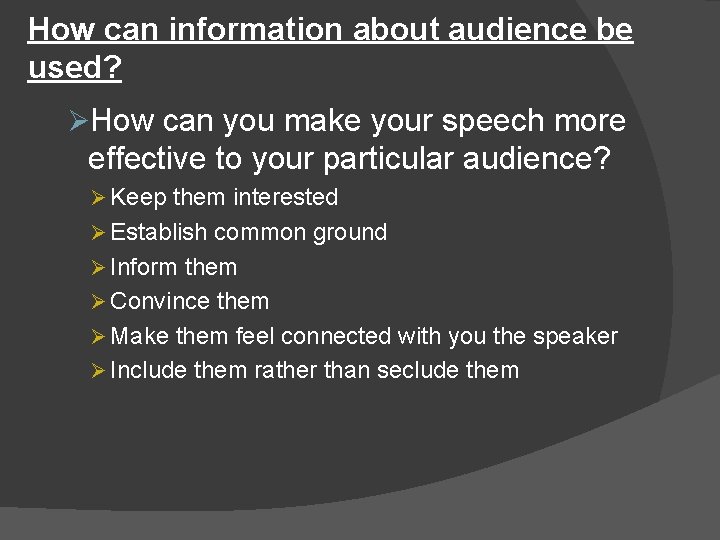
How can information about audience be used? ØHow can you make your speech more effective to your particular audience? Ø Keep them interested Ø Establish common ground Ø Inform them Ø Convince them Ø Make them feel connected with you the speaker Ø Include them rather than seclude them
6 basic demographic characteristics 1. Age-allows you to know interests, values and generational patterns of different age groups Aristotle noted that a good speaker knows how to adapt to audiences of different age levels.
Summary of Generational Characteristics http: //www. wmfc. org/uploads/Generational. Differences. Chart. pdf http: //www. marketingteacher. com/the-six-living-generations-in-america/
2. Gender- Ø Helps avoid sexist language or remarks Ø Make sure speech relates to whichever gender in needs to Ø Avoids gender based assumptions-ex. Women=emotional
3. Sexual OrientationØ Helps avoid stereotypes and the alienation of members of audience due to sexuality Ø Overall allows you to be more sensitive
4. Group Membership Ø Religious Groups, Political Groups, Work Groups, Social Groups, Service Groups
5 -Socioeconomic status (income, occupation, education) �Income-determines exposure to experiences and lifestyles �Occupation-determines interests, attitudes, beliefs, and goals �Levels of education-determines ideas, perspectives, etc. .
6. Culture and ethnic background Knowing cultural differences /patterns helps avoid ethnocentrism Ø The cultural, ethnic, or racial background of your audience influences the way they perceive your message Ø An effective speaker adapts to differences in culture, race, and ethnicity Ø Ø Individualistic Cultures vs. Collectivistic Cultures
Cultural Differences Individualistic Culture Ø Cultural Characteristics Ø Individual achievement is emphasized more than group achievement Ø Independence important Ø How to Adapt to these characteristics Ø Stress the importance of individual rewards and recognition Ø Identify how audience members will benefit from our ideas or proposals Collectivist Culture Ø Cultural Characteristics Ø Group or team is emphasized more than individual Ø Sacrifice for greater good of group is common Ø How to Adapt to these characteristics Ø Stress importance of community values Ø Help audience members save face and be perceived in a positive way