Chapter 24 A World in Flames 1931 1941

- Slides: 46
Chapter 24: A World in Flames 1931 -1941
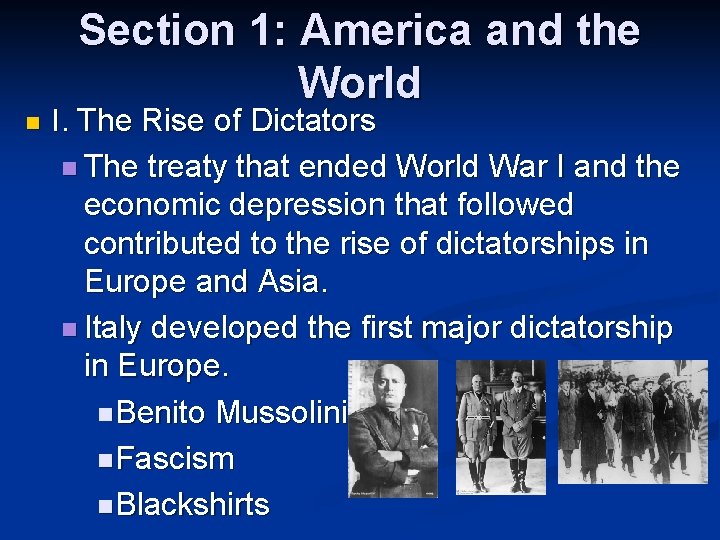
Section 1: America and the World n I. The Rise of Dictators n The treaty that ended World War I and the economic depression that followed contributed to the rise of dictatorships in Europe and Asia. n Italy developed the first major dictatorship in Europe. n Benito Mussolini n Fascism n Blackshirts
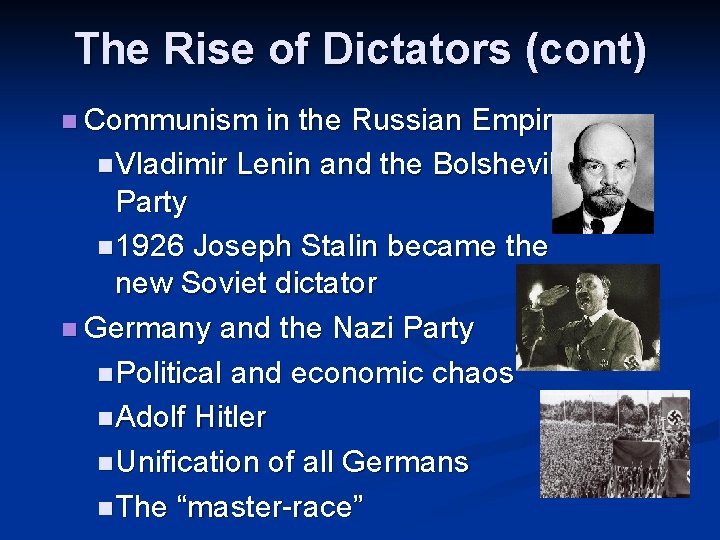
The Rise of Dictators (cont) n Communism in the Russian Empire. n Vladimir Lenin and the Bolshevik Party n 1926 Joseph Stalin became the new Soviet dictator n Germany and the Nazi Party n Political and economic chaos n Adolf Hitler n Unification of all Germans n The “master-race”
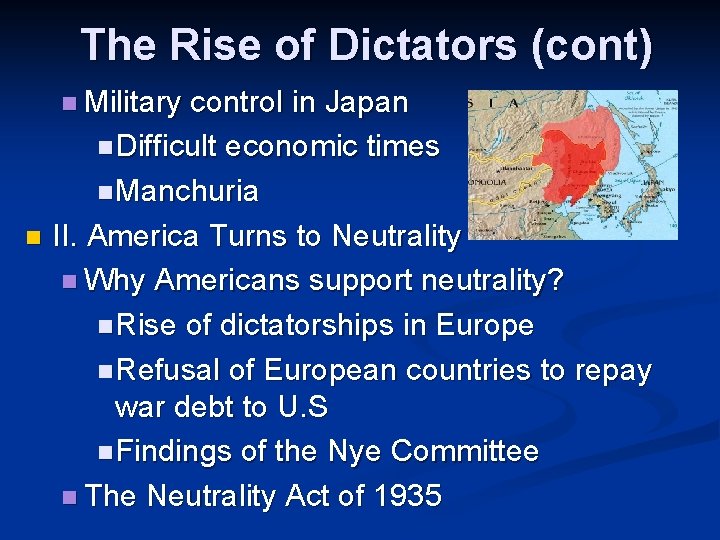
The Rise of Dictators (cont) n Military n control in Japan n Difficult economic times n Manchuria II. America Turns to Neutrality n Why Americans support neutrality? n Rise of dictatorships in Europe n Refusal of European countries to repay war debt to U. S n Findings of the Nye Committee n The Neutrality Act of 1935
Amer. Turns to Neutrality (cont) n The Spanish Civil War n The forming of alliances n Rome-Berlin Axis to the Axis Powers n The Neutrality Act of 1937 n “Cash and Carry” n President Roosevelt and internationalism n Japan attacks China n America sells arms to China
Section 2: World War II Begins n I. “Peace in Our Time” n Germany’s and Hitler’s aggression n Austria and Anschluss, March 1938 n The Sudetenland in Czechoslovakia n The Munich Conference n France, Soviet Union, and Britain n Appeasement n March 1939
n. Peace n Hitler’s in Our Time (cont) demands continue into Poland n Danzig, highways, and railroads across the Polish Corridor. n Britain and France wake-up n May 1939, Hitler orders the invasion of Poland n Nonaggression Treaty between Germany and the USSR n II. The War Begins n Britain and France declare war
The War Begins (cont) n The German assault on Poland n Blitzkrieg n Polish defeated on October 5 n April 9, 1940 Norway and Denmark attacked n Defeated within a month n The French defense n Maginot Line n Hitler’s alternative approach n Netherlands, Belgium, and
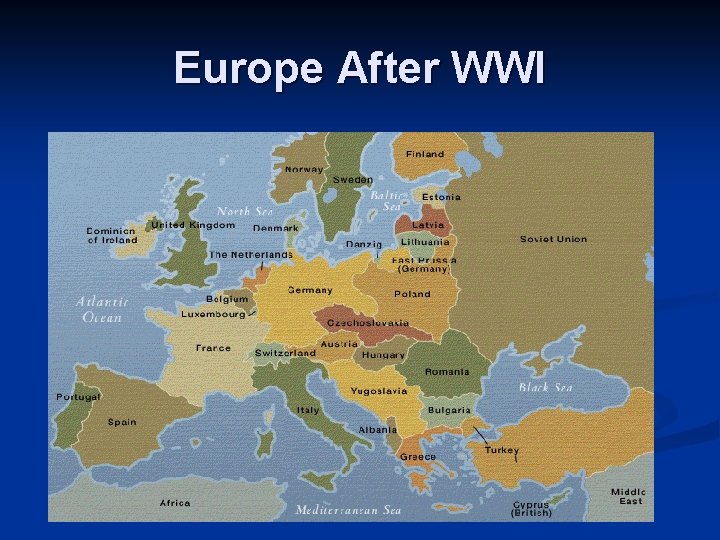
Europe After WWI
The War Begins (cont) n British and French troops become trapped n French miscalculate German approach n The Miracle at Dunkirk n June 22, 1940 France surrenders n Ironically the surrender happened in the same railway car in which German had surrendered at the end of WWI
Britain Remains Defiant (cont) n Churchill’s determination n Speech rallies British people and alerts America of Britain’s state n The invasion of Britain n The difficulties faced by Germany n Had to cross the English channel n Only had a few transport ships n British Royal Air Force was a great threat n German victory depended on Royal Air Force defeat
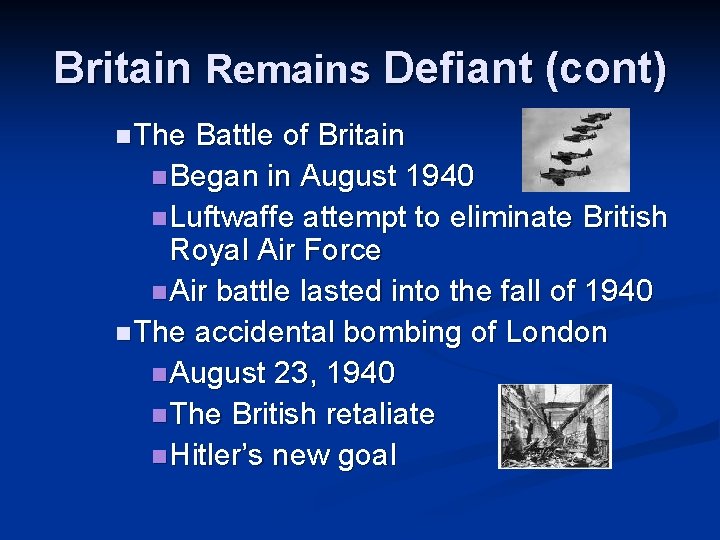
Britain Remains Defiant (cont) n The Battle of Britain n Began in August 1940 n Luftwaffe attempt to eliminate British Royal Air Force n Air battle lasted into the fall of 1940 n The accidental bombing of London n August 23, 1940 n The British retaliate n Hitler’s new goal
Britain Remains Defiant (cont) n Britain’s advantage versus it’s disadvantage in the air battle n Germany’s numbers versus British innovative technology n Radar n British fighters triumph n Churchill, “Never in the field of human conflict was so much owed by so many to so few. ” n October 12, 1940, Hitler cancelled the invasion of Britain
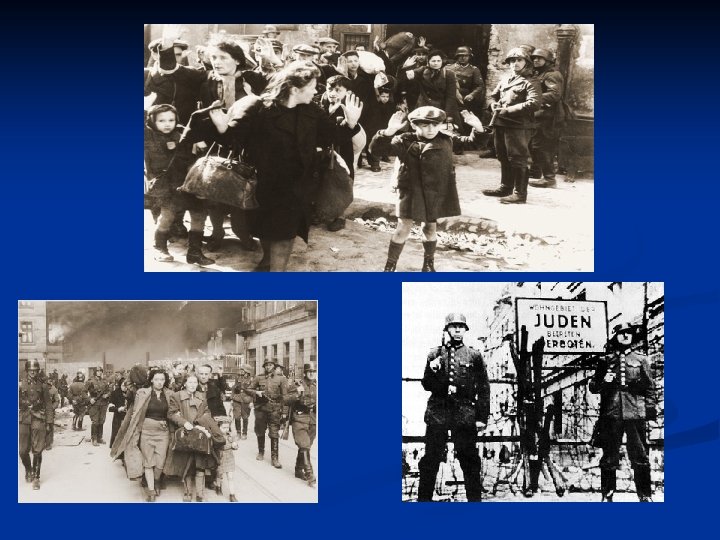
Section 3: The Holocaust n I. Nazi Persecution of the Jews n During the Holocaust the 6 million Jews were killed n Nazi ideology n Hitler’s Mein Kampf n Political racial policies n Aim of persecution n Those who oppose them, the disabled, Gypsies, homosexuals, and Slavic people
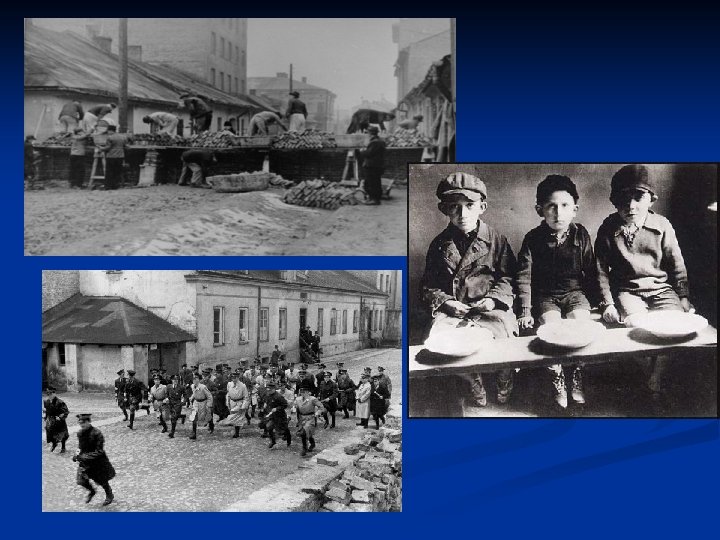
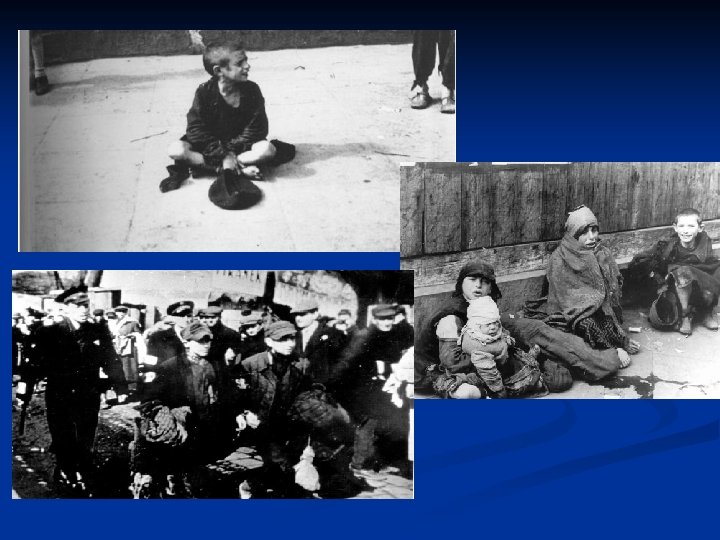
Nazi Persecution of the Jew (cont) n Strongest hatred reserved for the Jews n They saw all Jewish people as evil no matter their religion, occupation, or education. n The Nuremberg Laws of 1935 n Took citizenship away from Jewish Germans n Banned marriage between Jews and other Germans n Jews could not hold public office or vote
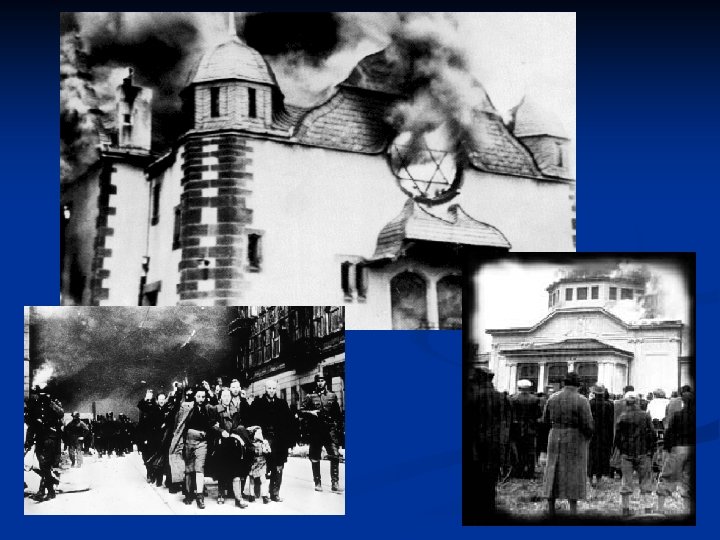
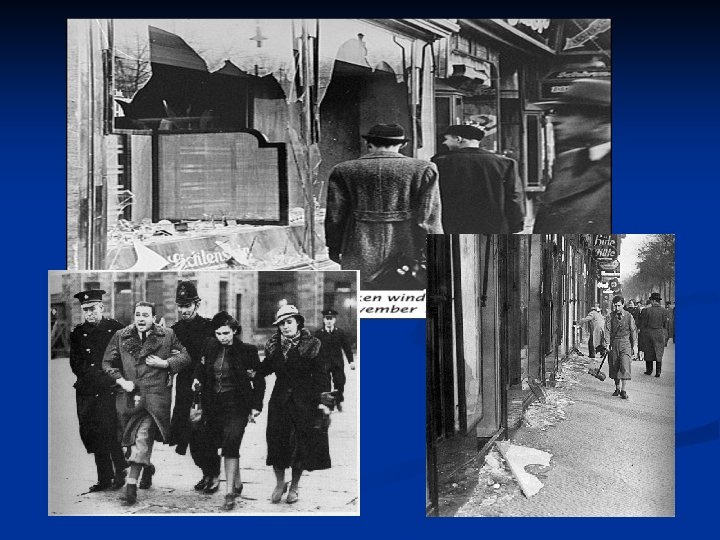
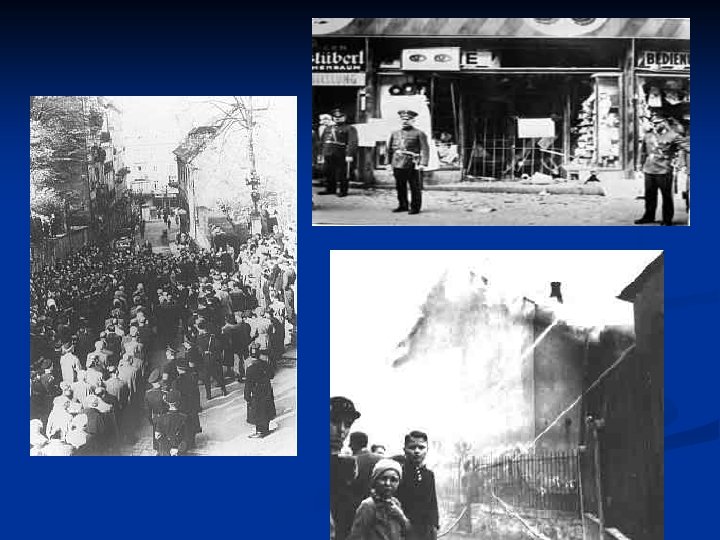
n Passports marked with a red “J” n By 1936 at least half of Germany’s Jew were jobless n Could not work as journalist, civil servants, farmers, teachers, or actors, and could not practice law, medicine, or operate businesses. n Kristallnacht n November 7, 1938 n Infuriated Hitler responds n Propaganda
Nazi Persecution of the Jew (cont) n Kristallnacht, “the night of broken glass” n Occurred throughout Germany and Austria n The terror continued into the next day n The Gestapo n Insult to injury
Nazi Persecution of the Jew (cont) n Jewish Refugees Try to Flee n Escalation of persecution following Kristallnacht n 1933 to 1939 n 350, 000 Jews escaped Nazi controlled Germany n Included Albert Einstein and Otto Frank
Nazi Persecution of the Jew (cont) n Jewish refugees overwhelm other countries n Especially following the Nazi Anschluss n Visas to the United States n 3, 000 applications a day from Jews in Austria n Many never received visas and remained trapped
Nazi Persecution of the Jew (cont) n Factors limiting Jewish immigration to the U. S n Jews were prohibited from taking more then $4 out of Germany n They would be depended on the country they arrived at n The economic depression n Unemployment was high and this would not help n Immigration quotas
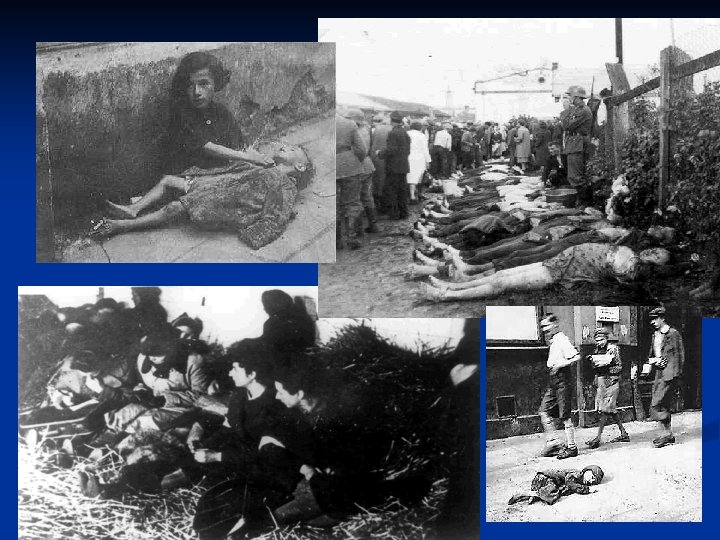
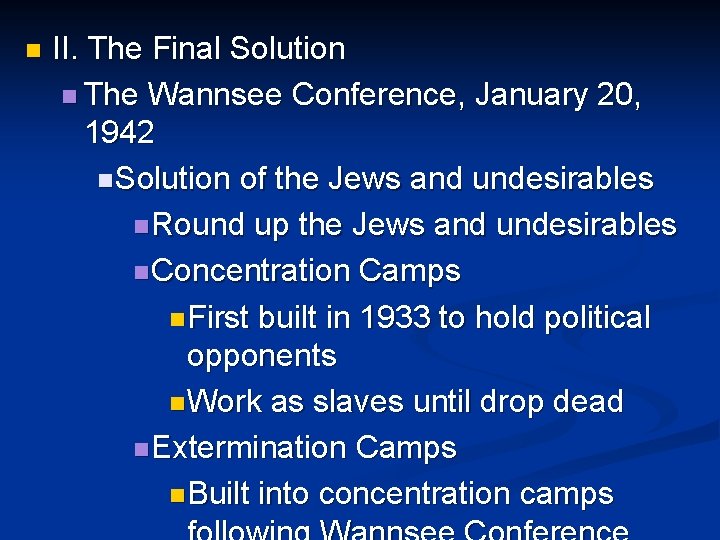
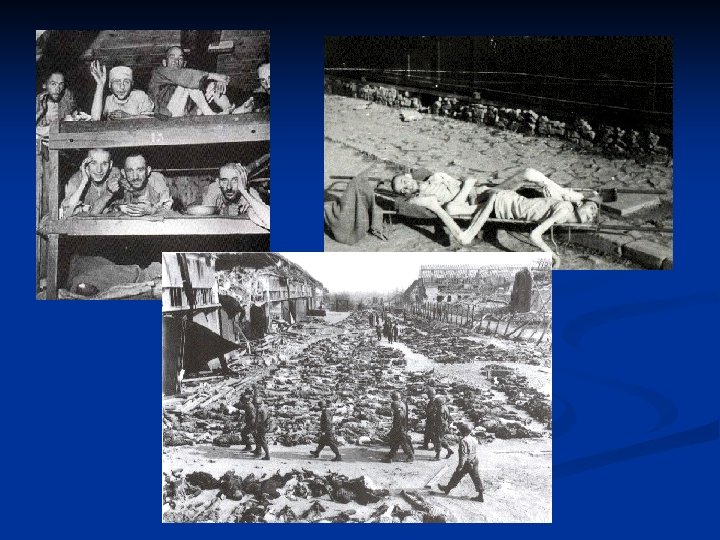
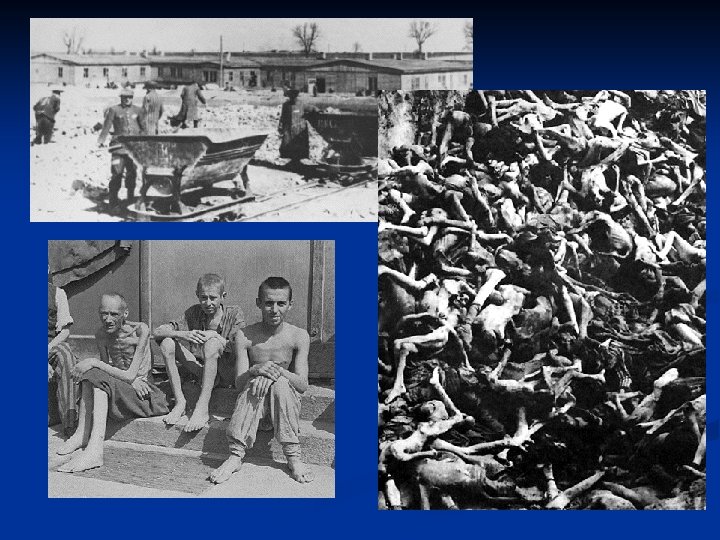
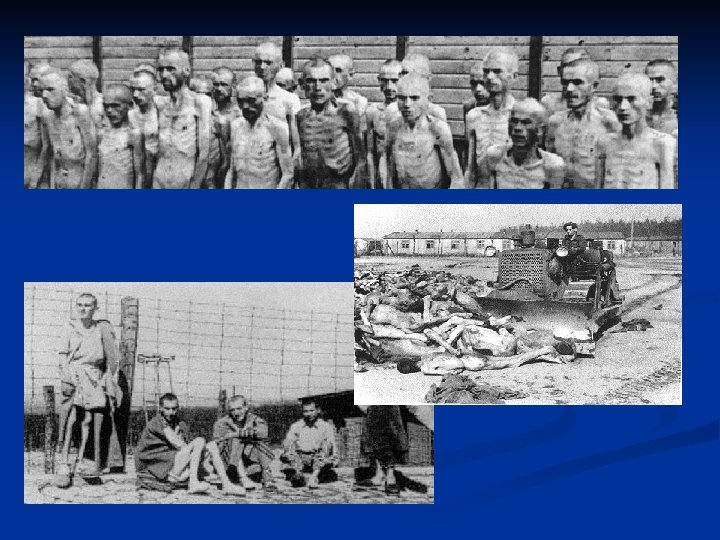
n II. The Final Solution n The Wannsee Conference, January 20, 1942 n Solution of the Jews and undesirables n Round up the Jews and undesirables n Concentration Camps n First built in 1933 to hold political opponents n Work as slaves until drop dead n Extermination Camps n Built into concentration camps
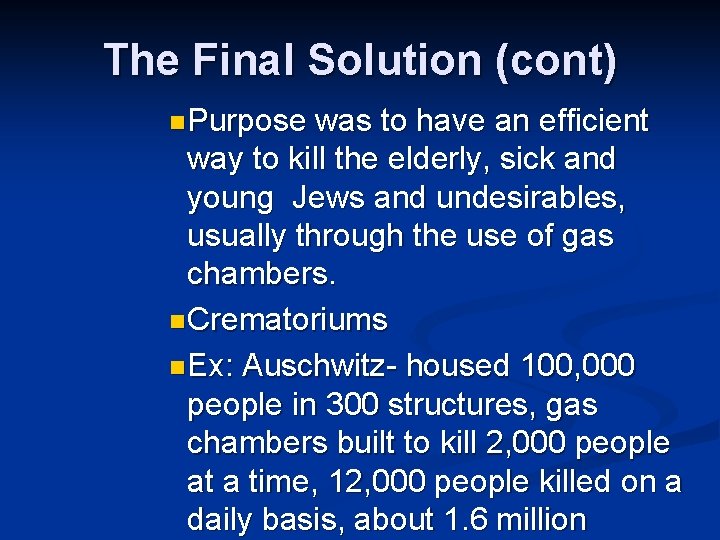
The Final Solution (cont) n Purpose was to have an efficient way to kill the elderly, sick and young Jews and undesirables, usually through the use of gas chambers. n Crematoriums n Ex: Auschwitz- housed 100, 000 people in 300 structures, gas chambers built to kill 2, 000 people at a time, 12, 000 people killed on a daily basis, about 1. 6 million
The Final Solution (cont) n Cultural Devastation n Jewish cultural around for over 1, 000 years n Controversy over why and how such an event could happen. n German people’s sense of injury after WWI n Severe economic problems n Hitler’s control over the German nation n German fear of Hitler’s secret police
n Section 4: America Enters the War I. FDR Supports England n The Neutrality Act of 1939 n FDR declared that the U. S was neutral n Revised the original neutrality acts n Could now sale arms to nations at war n Done to aid Britain n “Cash and Carry” n Test of American Neutrality n Britain’s need for destroyers n To protect cargo ships and repel possible invasion
FDR Supports England (cont) n Neutrality loopholes n Destroyers-for-Bases n Exchanged 50 old American destroyers for opportunity to build U. S bases on British land.
n II. The Isolationist Debate n American opinion shifts n Now supports aid to the Allies n Range of opinions n More involvement versus neutrality n Fight for Freedom Committee n Committee to Defend America by Aiding the Allies n America First Committee
The Isolationist Debate (cont) n The election of 1940 n The debate carries over n FDR’s and Willkie’s view n Both dance a fine line n FDR wins his unprecedented third term as president
n III. Edging Toward War n Roosevelt Pushes for Involvement n Britain is fighting for democracy n Four Freedoms: freedom of speech, freedom of worship, freedom from want, freedom from fear n Lend-Lease Act n Allowed U. S to lend or lease arms to any country considered “vital to the defense of the U. S. ” n Used to keep Britain strong
Edging Toward War (cont) n By the end we gave over $40 billion in weapons, vehicles, and supplies to the allies. n Hitler betrays nonaggression pact n June 1941 n Soviet Union welcomed into the Allies n The hemispheric defense zone n Lend-Lease program did not solve British problems n British Navy required more help
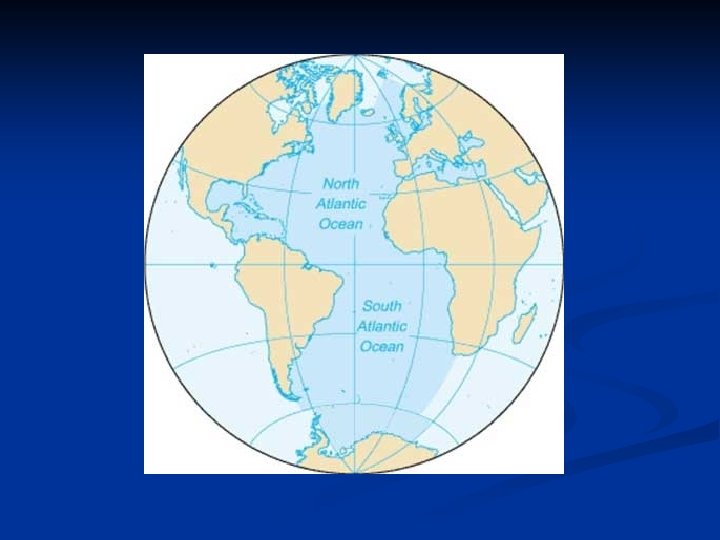
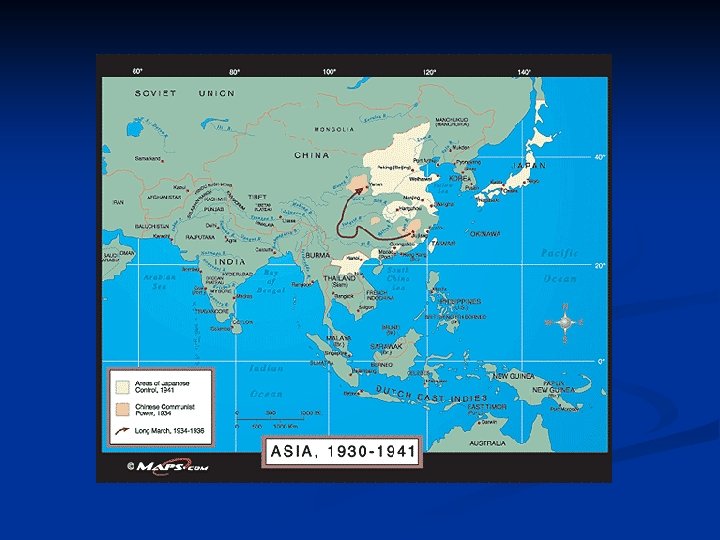
Edging Toward War (cont) n Western n half of the Atlantic n The Atlantic Charter n Roosevelt’s and Churchill’s commitments n FDR’s pledge n Standoff in the North Atlantic IV. Japan Attacks the United States n America Embargoes Japan n Japan becomes a threat to Britain n Export Control Act
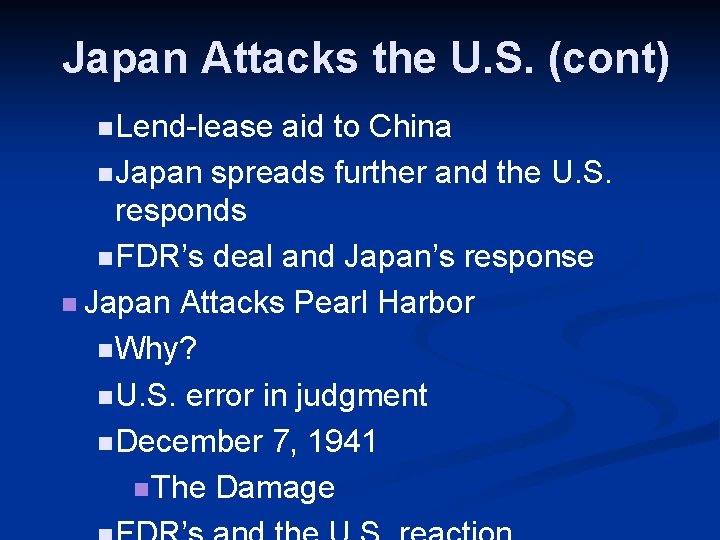
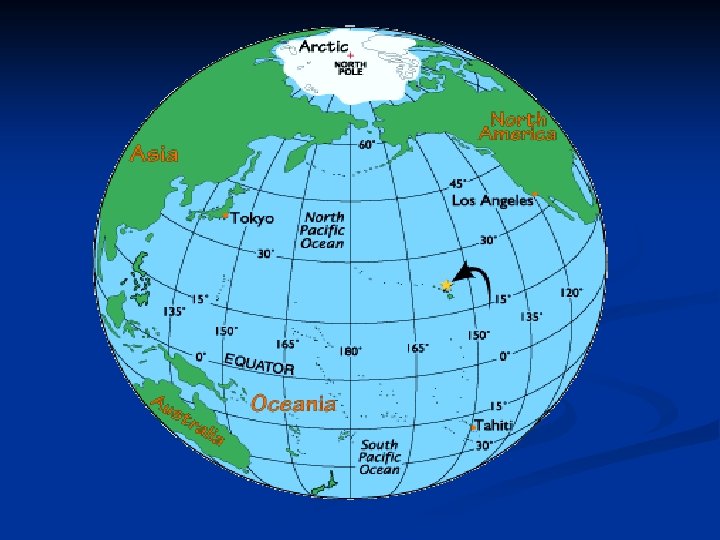
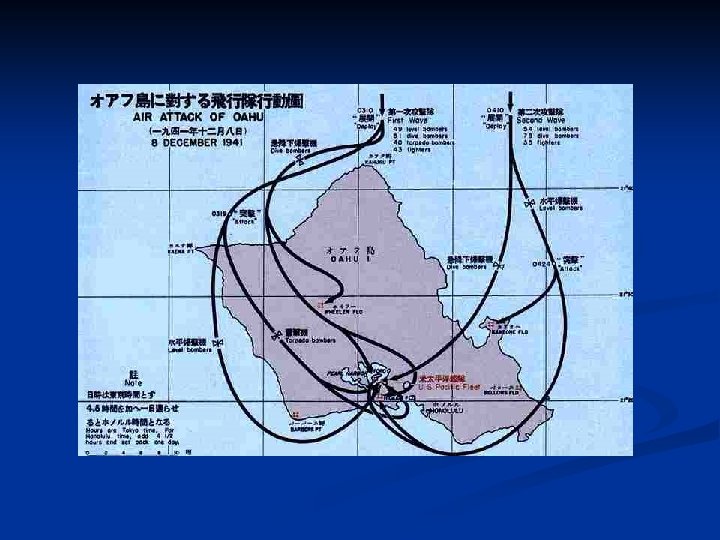
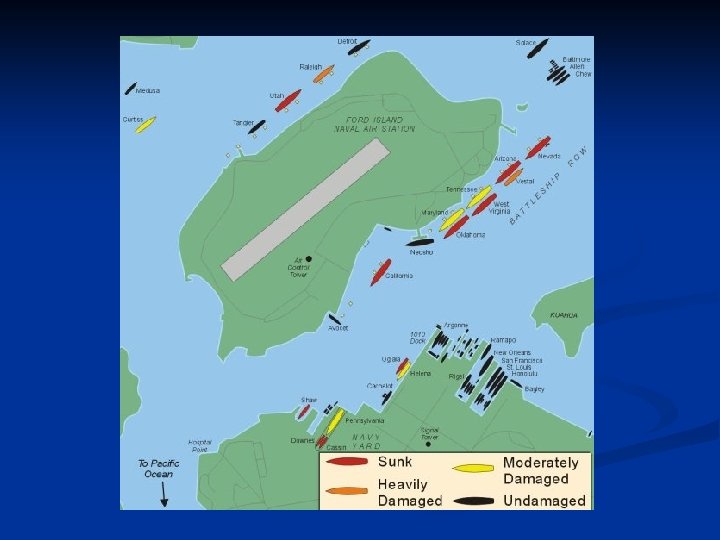
Japan Attacks the U. S. (cont) n Lend-lease aid to China n Japan spreads further and the U. S. responds n FDR’s deal and Japan’s response n Japan Attacks Pearl Harbor n Why? n U. S. error in judgment n December 7, 1941 n The Damage