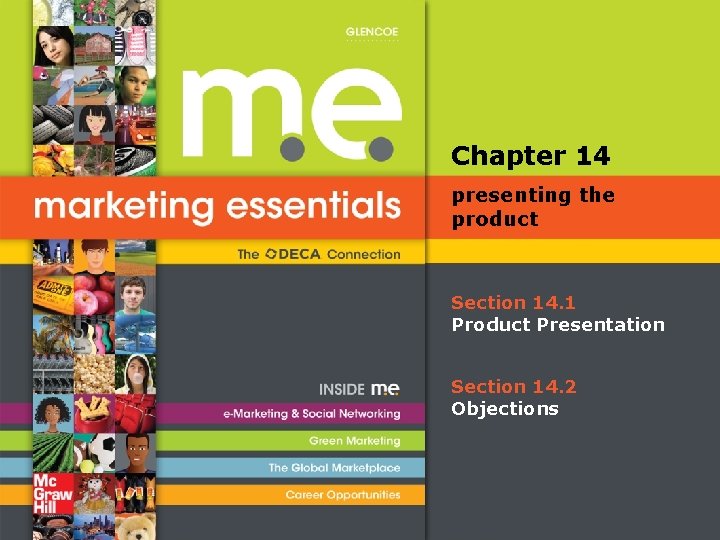
Chapter 14 presenting the product Section 14 1


- Slides: 39
Chapter 14 presenting the product Section 14. 1 Product Presentation Section 14. 2 Objections
Section 14. 1 Product Presentation CONNECT When have you had to effectively present something to an audience?
Section 14. 1 Product Presentation • Describe the goal of the product presentation. • Explain how products are selected for the presentation. • Explain what to say during the product presentation. • List techniques that help create effective product presentations.
Section 14. 1 Product Presentation The product presentation step of the sales process allows a salesperson to share product knowledge with customers. Customers’ needs and wants should be matched with product features and benefits.
Section 14. 1 Product Presentation • layman’s terms
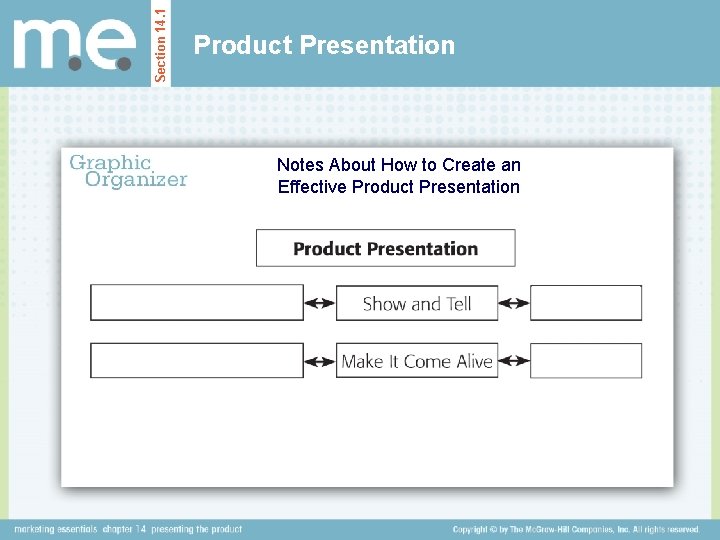
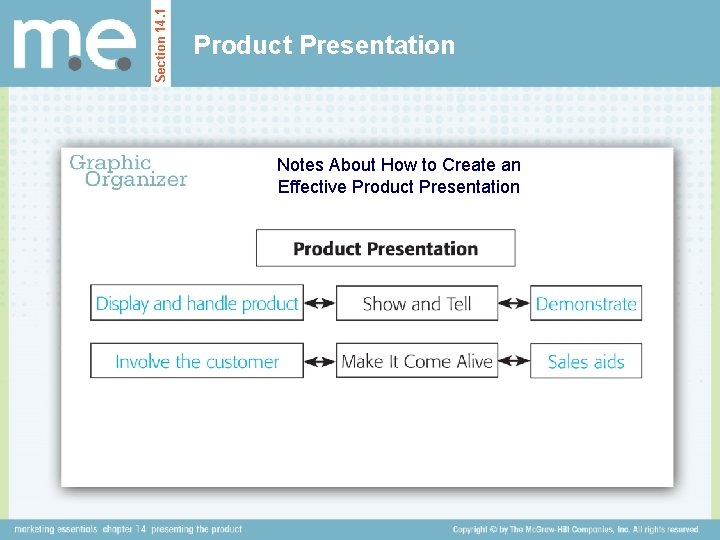
Section 14. 1 Product Presentation Notes About How to Create an Effective Product Presentation
Section 14. 1 Product Presentation Notes About How to Create an Effective Product Presentation
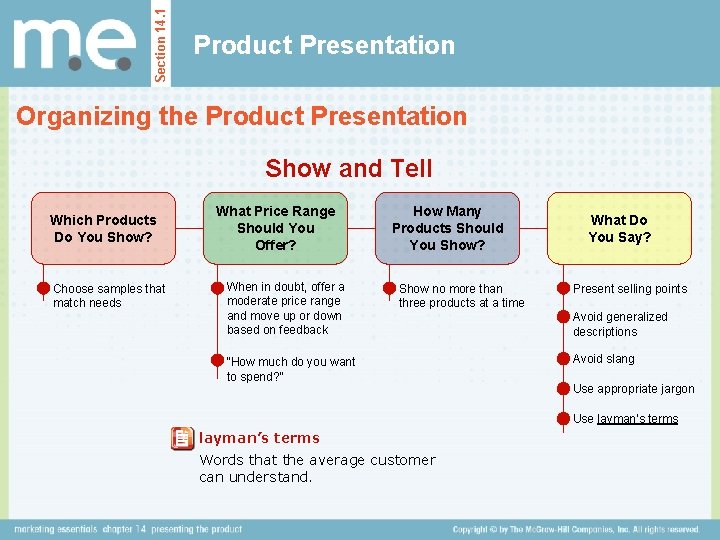
Section 14. 1 Product Presentation Organizing the Product Presentation Show and Tell Which Products Do You Show? Choose samples that match needs What Price Range Should You Offer? When in doubt, offer a moderate price range and move up or down based on feedback How Many Products Should You Show? Show no more than three products at a time “How much do you want to spend? ” What Do You Say? Present selling points Avoid generalized descriptions Avoid slang Use appropriate jargon Use layman’s terms Words that the average customer can understand.
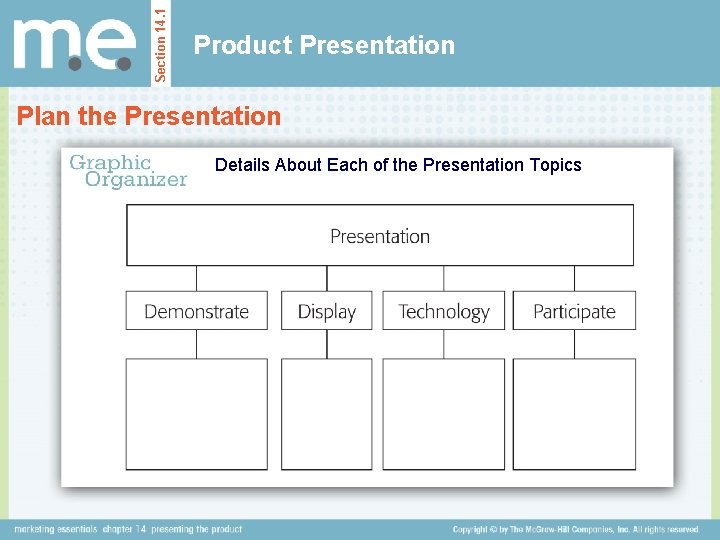
Section 14. 1 Product Presentation Plan the Presentation Details About Each of the Presentation Topics
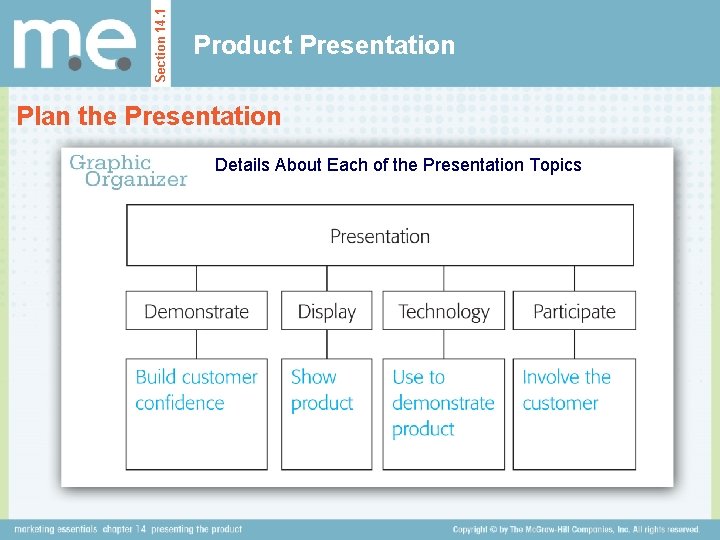
Section 14. 1 Product Presentation Plan the Presentation Details About Each of the Presentation Topics
Section 14. 1 Product Presentation Plan the Presentation Types of Sales Aids That Could Be Used During a Product Presentation
Section 14. 1 Product Presentation Plan the Presentation Types of Sales Aids That Could Be Used During a Product Presentation
Section 14. 1 Product Presentation Section 14. 1 1. Explain how to identify which priced product you should show when you cannot determine a customer’s intended price range. Show the medium-priced item so you can go up in price or down in price once you get feedback from the customer.
Section 14. 1 Product Presentation Section 14. 1 2. Explain how you might involve the customer in a product presentation about a high-tech product. After giving a basic demonstration, have the customer use the product. Give directions and have the customer follow them so they can see and feel how the product operates.
Section 14. 1 Product Presentation Section 14. 1 3. Describe how to involve a customer in the product presentation when selling fresh bread and pastries to a restaurant. To sell fresh bread and pastries to a restaurant, you must have the customer taste the products.
Section 14. 2 Objections CONNECT When have you had to respond to an objection?
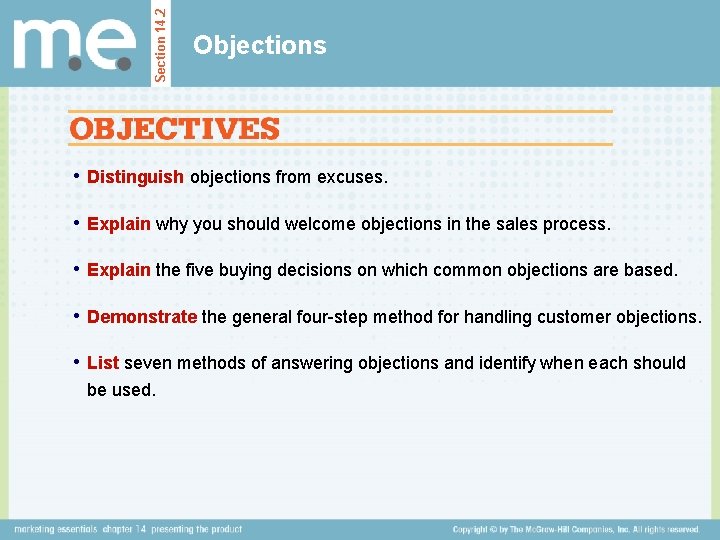
Section 14. 2 Objections • Distinguish objections from excuses. • Explain why you should welcome objections in the sales process. • Explain the five buying decisions on which common objections are based. • Demonstrate the general four-step method for handling customer objections. • List seven methods of answering objections and identify when each should be used.
Section 14. 2 Objections are helpful in the sales process because they provide an opportunity to further determine customers’ needs and problems. Objections are easily managed when you know the basis for them.
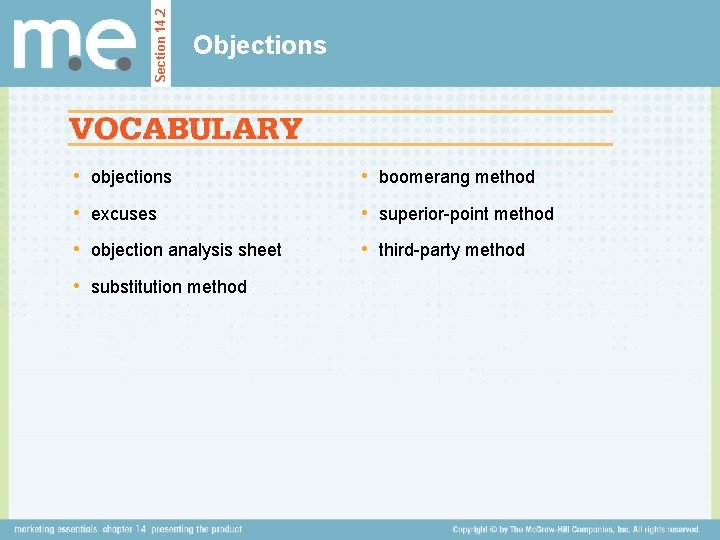
Section 14. 2 Objections • objections • boomerang method • excuses • superior-point method • objection analysis sheet • third-party method • substitution method
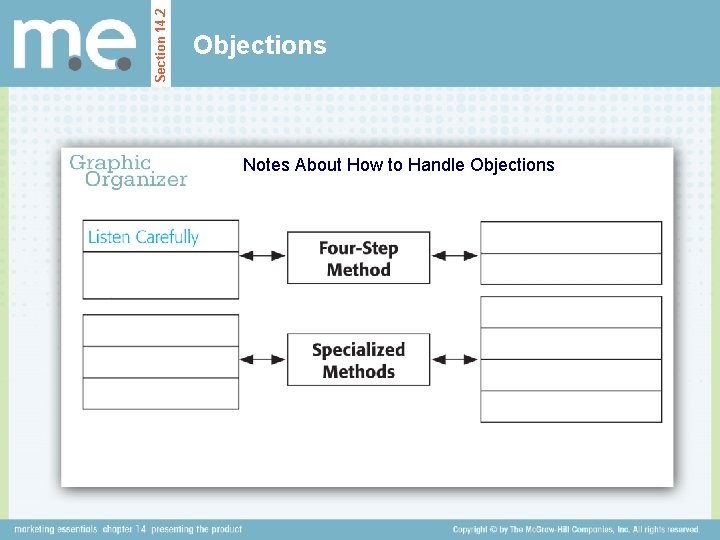
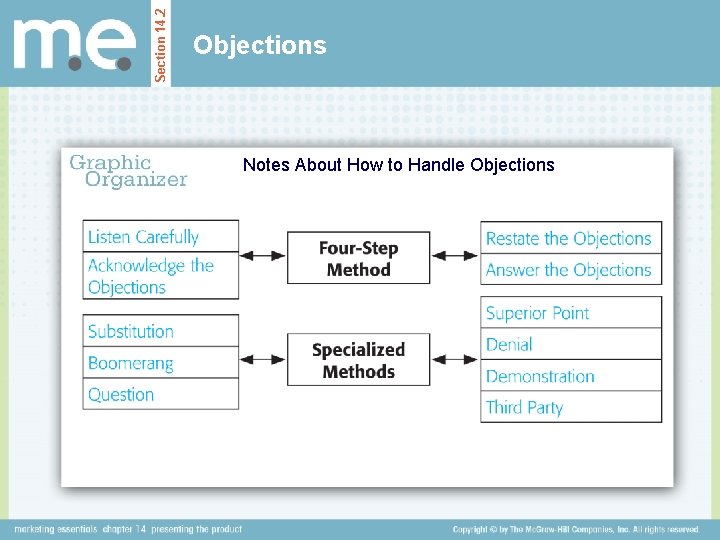
Section 14. 2 Objections Notes About How to Handle Objections
Section 14. 2 Objections Notes About How to Handle Objections
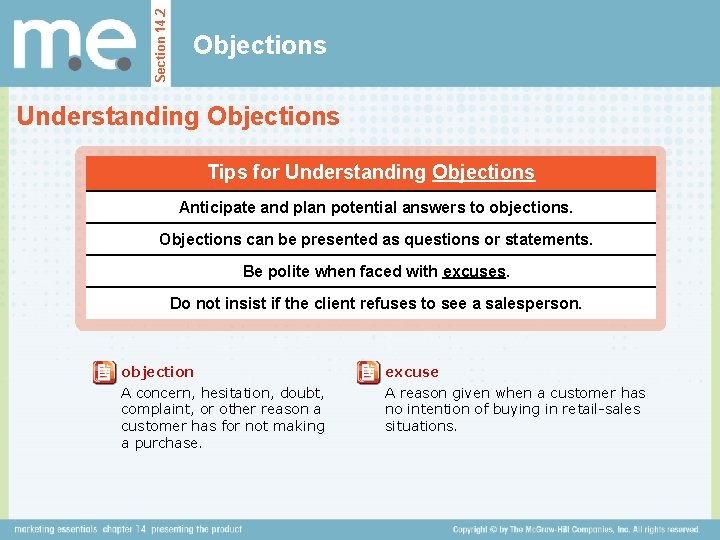
Section 14. 2 Objections Understanding Objections Tips for Understanding Objections Anticipate and plan potential answers to objections. Objections can be presented as questions or statements. Be polite when faced with excuses. Do not insist if the client refuses to see a salesperson. objection A concern, hesitation, doubt, complaint, or other reason a customer has for not making a purchase. excuse A reason given when a customer has no intention of buying in retail-sales situations.
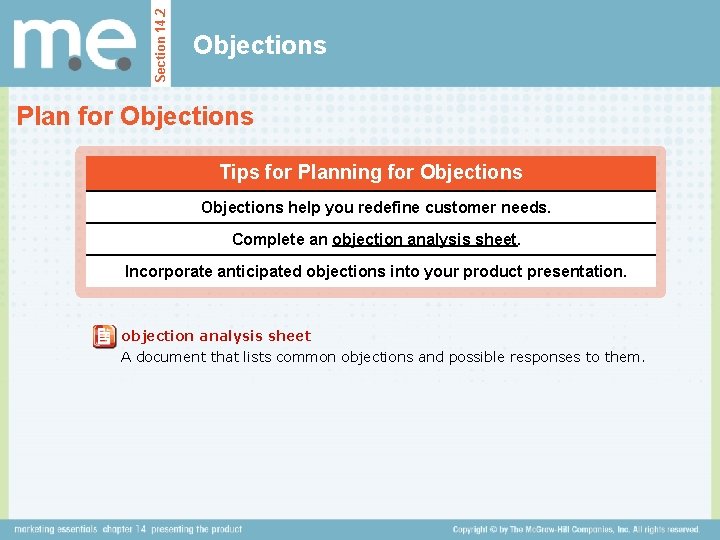
Section 14. 2 Objections Plan for Objections Tips for Planning for Objections help you redefine customer needs. Complete an objection analysis sheet. Incorporate anticipated objections into your product presentation. objection analysis sheet A document that lists common objections and possible responses to them.
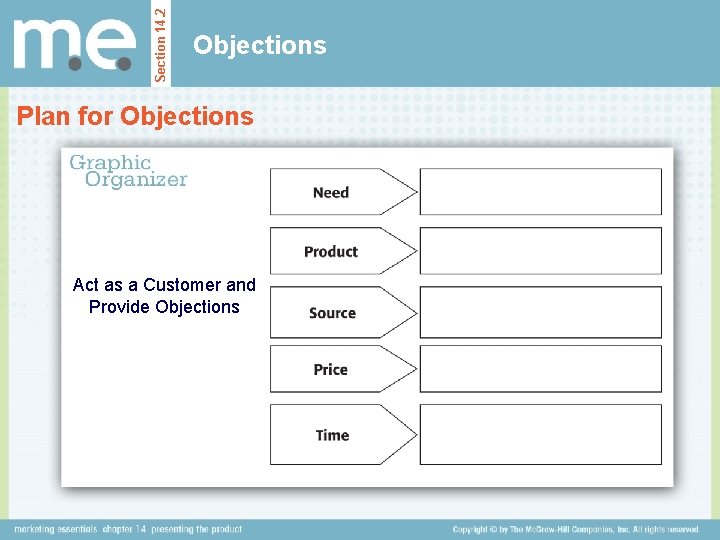
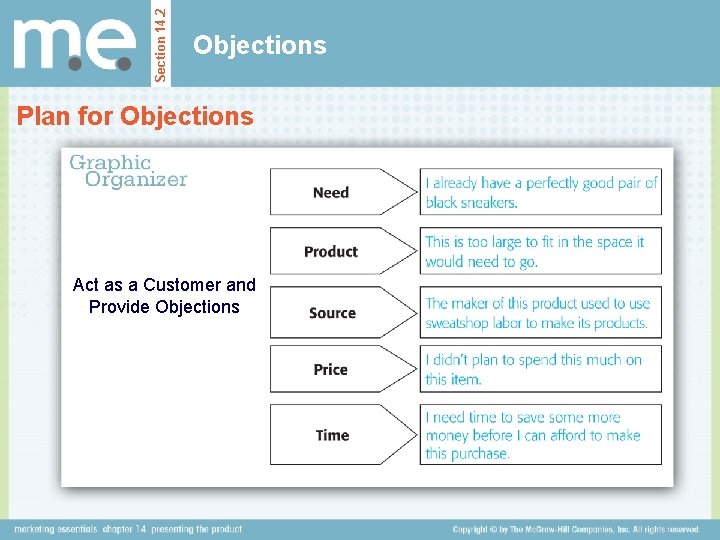
Section 14. 2 Objections Plan for Objections Act as a Customer and Provide Objections
Section 14. 2 Objections Plan for Objections Act as a Customer and Provide Objections
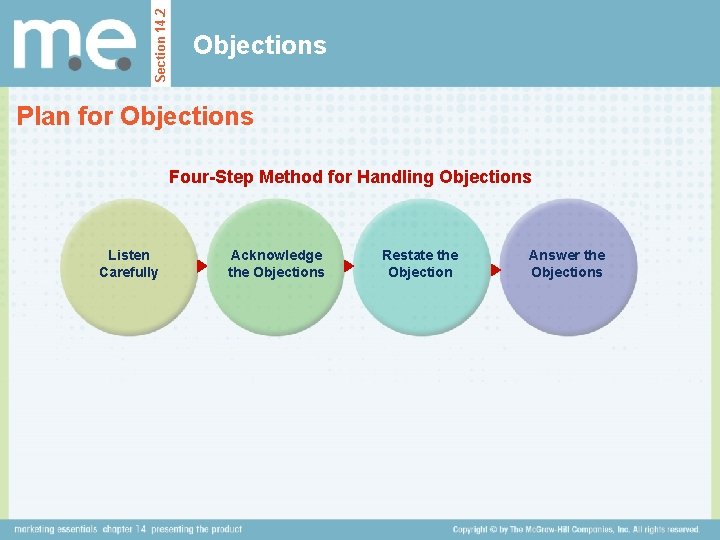
Section 14. 2 Objections Plan for Objections Four-Step Method for Handling Objections Listen Carefully Acknowledge the Objections Restate the Objection Answer the Objections
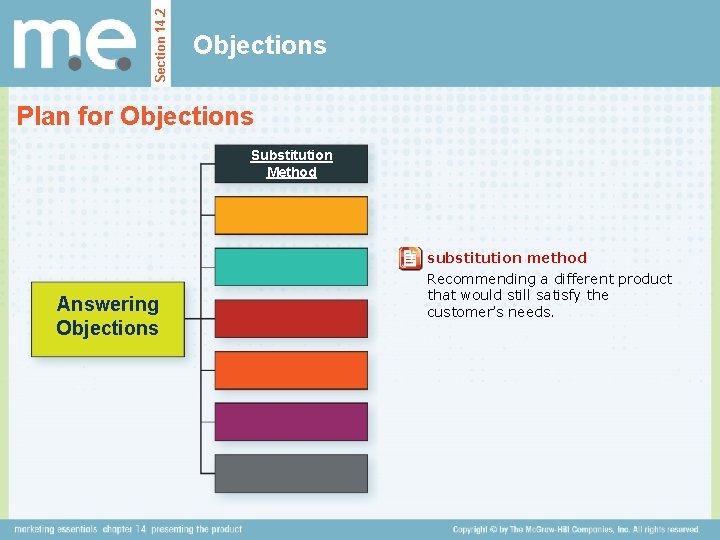
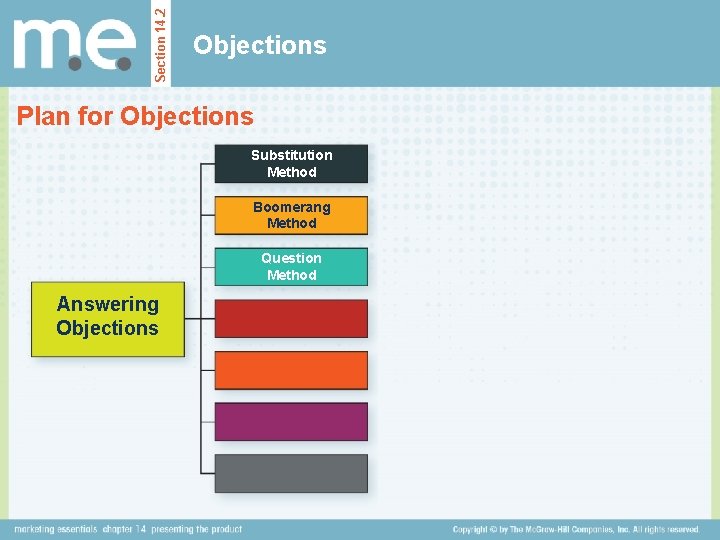
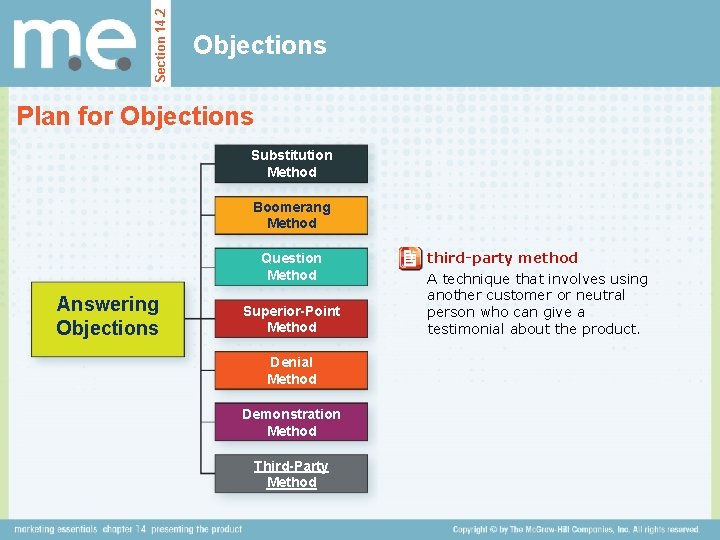
Section 14. 2 Objections Plan for Objections Substitution Method Answering Objections substitution method Recommending a different product that would still satisfy the customer’s needs.
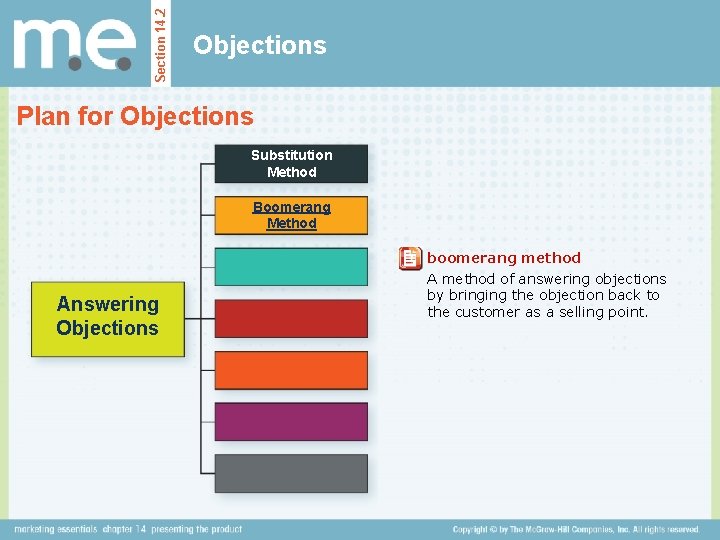
Section 14. 2 Objections Plan for Objections Substitution Method Boomerang Method Answering Objections boomerang method A method of answering objections by bringing the objection back to the customer as a selling point.
Section 14. 2 Objections Plan for Objections Substitution Method Boomerang Method Question Method Answering Objections
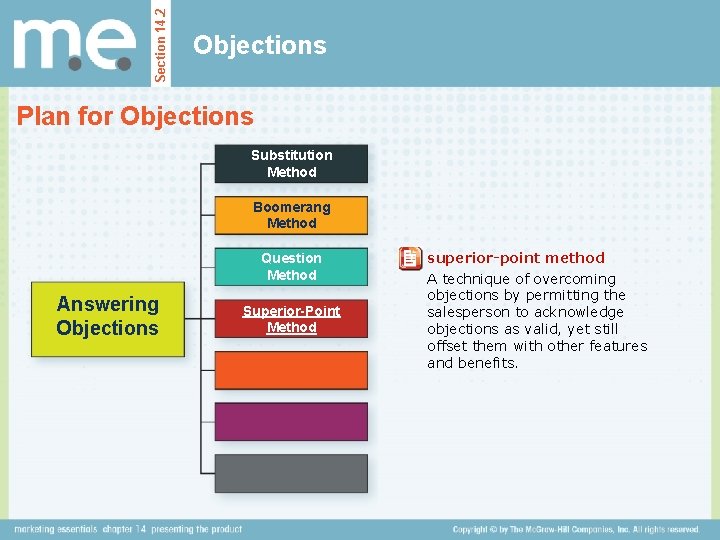
Section 14. 2 Objections Plan for Objections Substitution Method Boomerang Method Question Method Answering Objections Superior-Point Method superior-point method A technique of overcoming objections by permitting the salesperson to acknowledge objections as valid, yet still offset them with other features and benefits.
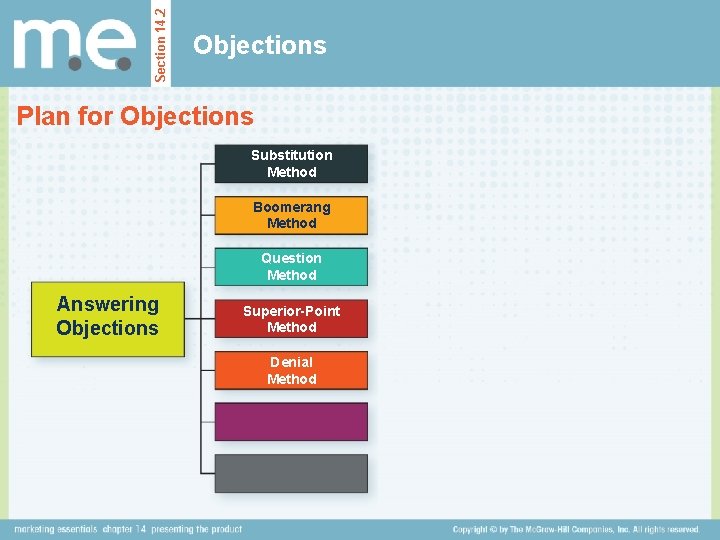
Section 14. 2 Objections Plan for Objections Substitution Method Boomerang Method Question Method Answering Objections Superior-Point Method Denial Method
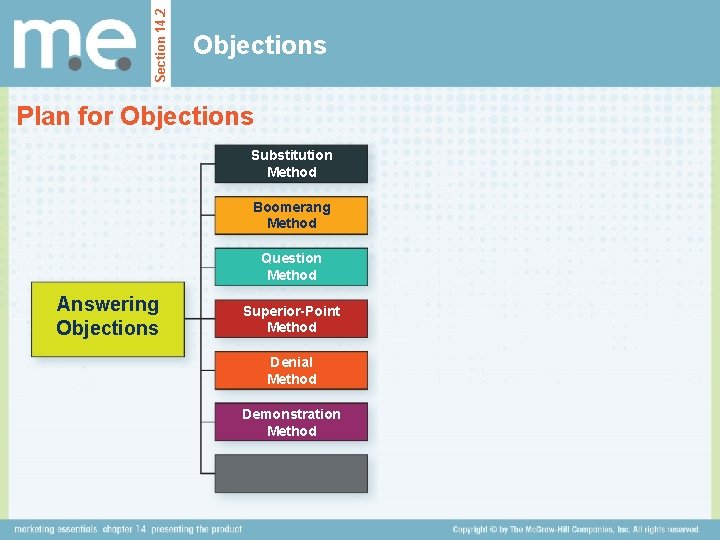
Section 14. 2 Objections Plan for Objections Substitution Method Boomerang Method Question Method Answering Objections Superior-Point Method Denial Method Demonstration Method
Section 14. 2 Objections Plan for Objections Substitution Method Boomerang Method Question Method Answering Objections Superior-Point Method Denial Method Demonstration Method Third-Party Method third-party method A technique that involves using another customer or neutral person who can give a testimonial about the product.
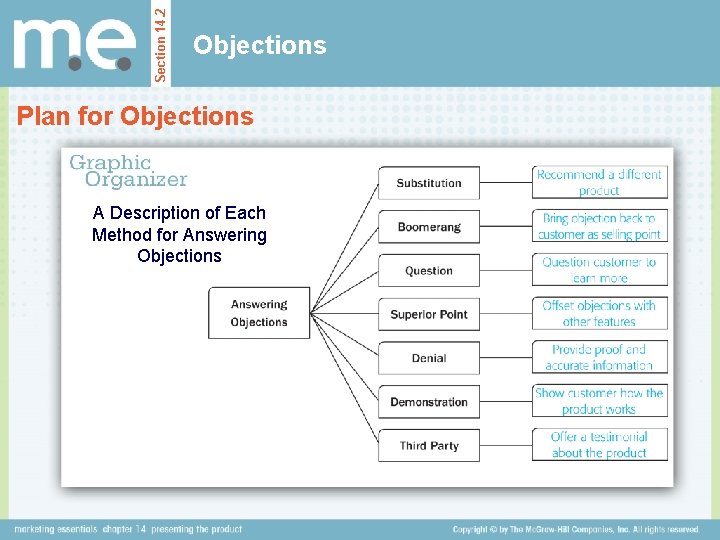
Section 14. 2 Objections Plan for Objections A Description of Each Method for Answering Objections
Section 14. 2 Objections Plan for Objections A Description of Each Method for Answering Objections
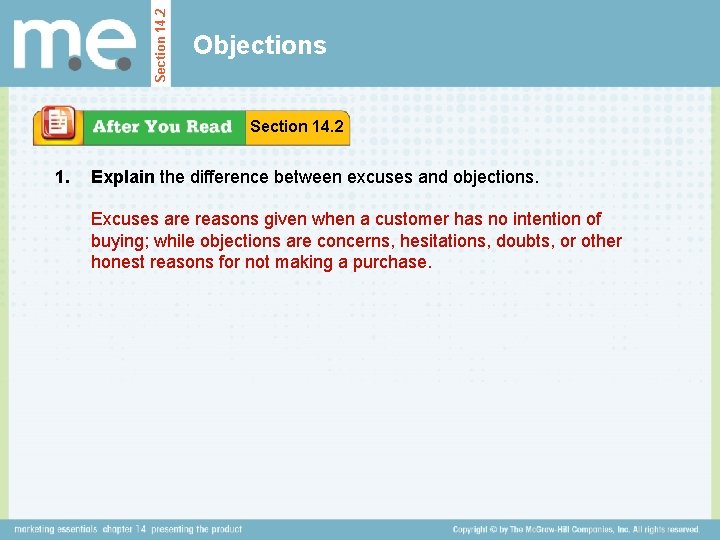
Section 14. 2 Objections Section 14. 2 1. Explain the difference between excuses and objections. Excuses are reasons given when a customer has no intention of buying; while objections are concerns, hesitations, doubts, or other honest reasons for not making a purchase.
Section 14. 2 Objections Section 14. 2 2. List what you can do to prepare for objections. To prepare for objections, you can prepare an objection-analysis sheet, which lists common objections and possible responses to those objections.
Section 14. 2 Objections Section 14. 2 3. Describe the four-step method for handling objections. The four-step method for handling objections is as follows: 1. listen carefully 2. acknowledge the objection 3. restate the objection; and 4. answer the objection.
End of Chapter 14 presenting the product Section 14. 1 Product Presentation Section 14. 2 Objections