
Cellular Respiration Adenosine Triphosphate H H O P

- Slides: 29
Cellular Respiration
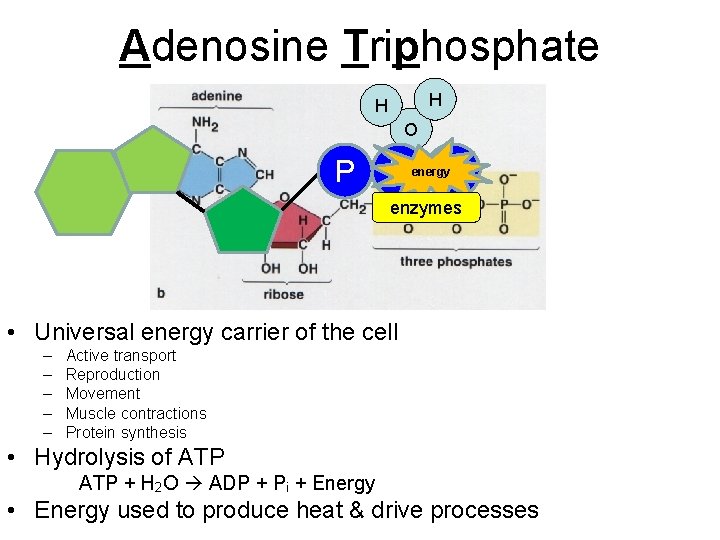
Adenosine Triphosphate H H O P P P energy enzymes • Universal energy carrier of the cell – – – Active transport Reproduction Movement Muscle contractions Protein synthesis • Hydrolysis of ATP + H 2 O ADP + Pi + Energy • Energy used to produce heat & drive processes
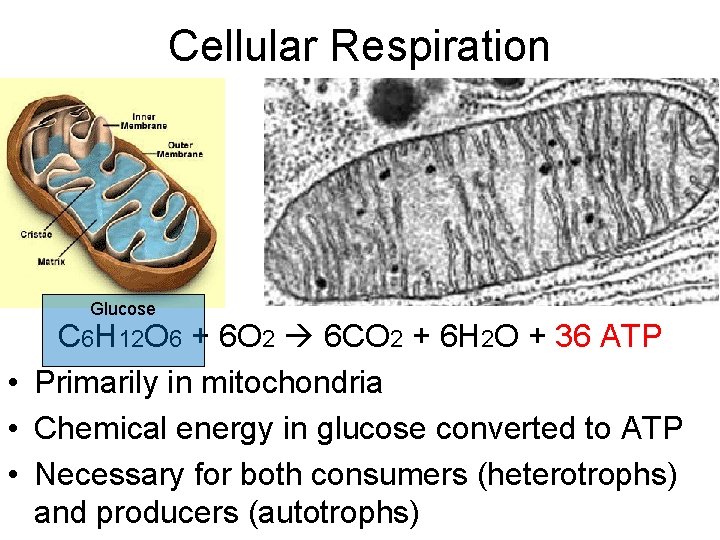
Cellular Respiration Glucose C 6 H 12 O 6 + 6 O 2 6 CO 2 + 6 H 2 O + 36 ATP • Primarily in mitochondria • Chemical energy in glucose converted to ATP • Necessary for both consumers (heterotrophs) and producers (autotrophs)
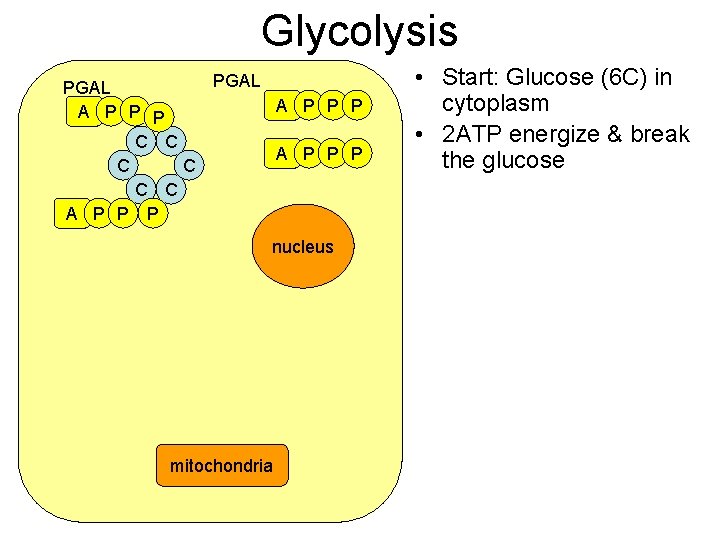
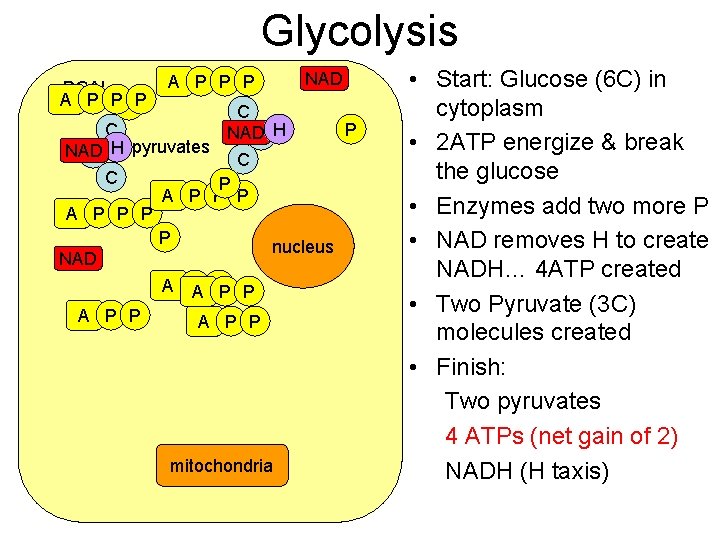
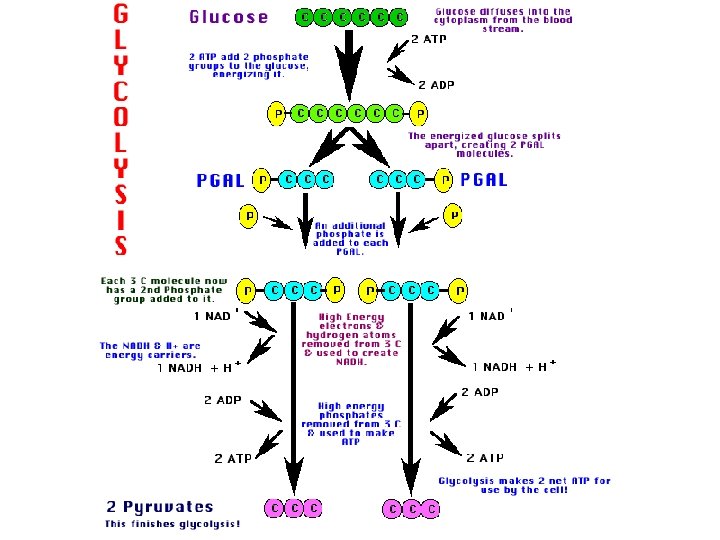
Glycolysis PGAL A P P P C C A P P P nucleus mitochondria • Start: Glucose (6 C) in cytoplasm • 2 ATP energize & break the glucose
Glycolysis PGAL A P PPP P P A P PGAL NAD C C P NAD CH NAD C H pyruvates C C P A P P P P nucleus NAD A PA PP P A P P mitochondria • Start: Glucose (6 C) in cytoplasm • 2 ATP energize & break the glucose • Enzymes add two more P • NAD removes H to create NADH… 4 ATP created • Two Pyruvate (3 C) molecules created • Finish: Two pyruvates 4 ATPs (net gain of 2) NADH (H taxis)
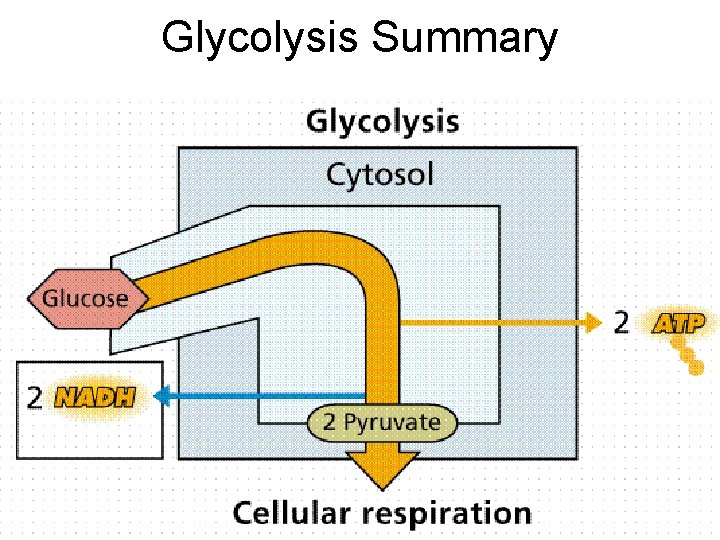
Glycolysis Summary
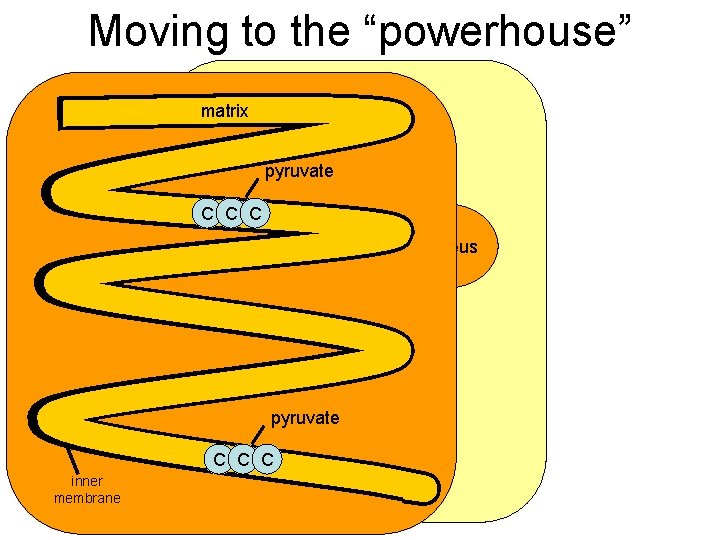
Moving to the “powerhouse” matrix C pyruvates C C pyruvate C C C nucleus A P P P pyruvate C C C inner membrane mitochondria
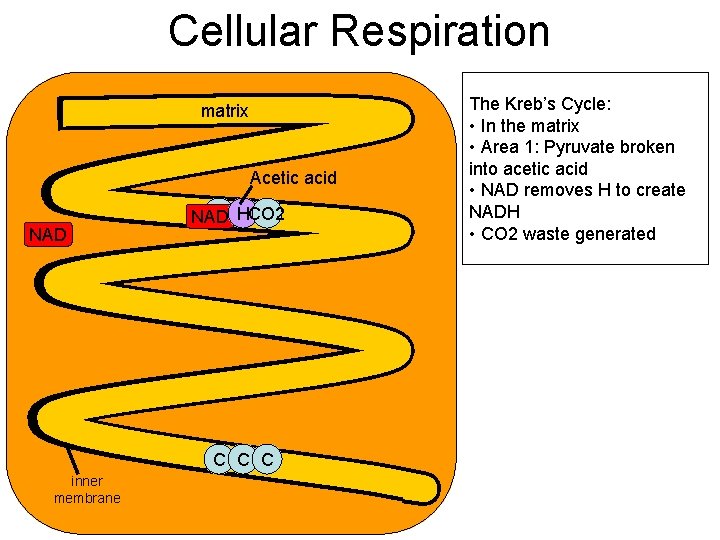
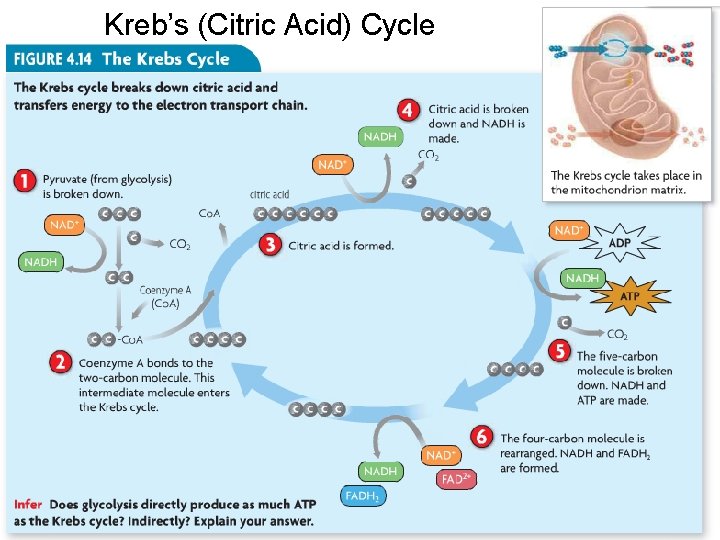
Cellular Respiration matrix Acetic acid NAD C HCO 2 C C NAD C C C inner membrane The Kreb’s Cycle: • In the matrix • Area 1: Pyruvate broken into acetic acid • NAD removes H to create NADH • CO 2 waste generated
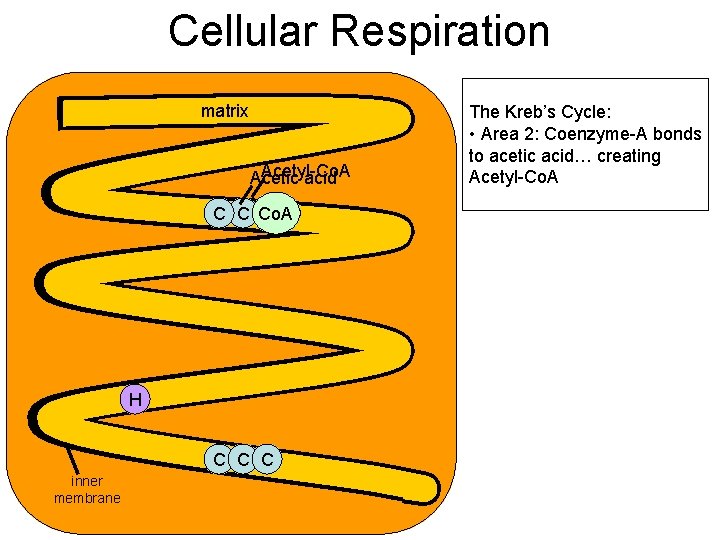
Cellular Respiration matrix Acetyl-Co. A Acetic acid C C Co. A H C C C inner membrane The Kreb’s Cycle: • Area 2: Coenzyme-A bonds to acetic acid… creating Acetyl-Co. A
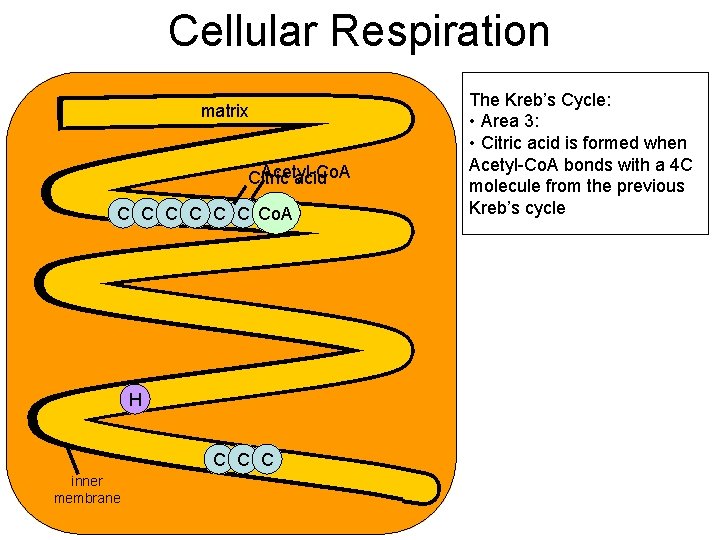
Cellular Respiration matrix Acetyl-Co. A Citric acid C C C Co. A H C C C inner membrane The Kreb’s Cycle: • Area 3: • Citric acid is formed when Acetyl-Co. A bonds with a 4 C molecule from the previous Kreb’s cycle
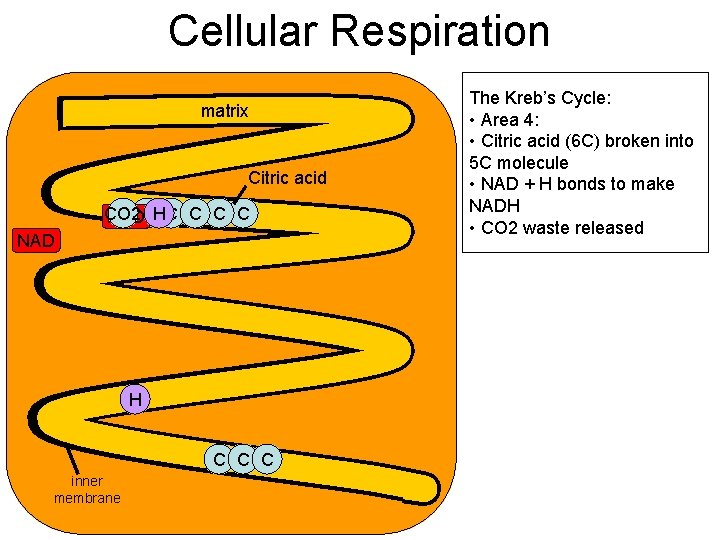
Cellular Respiration matrix Citric acid CO 2 C CHC C NAD H C C C inner membrane The Kreb’s Cycle: • Area 4: • Citric acid (6 C) broken into 5 C molecule • NAD + H bonds to make NADH • CO 2 waste released
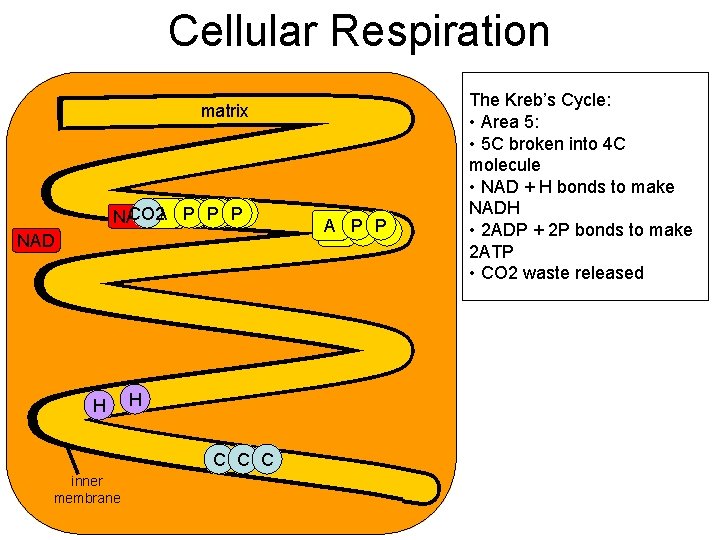
Cellular Respiration matrix P PC P A CO 2 CA H C PC NAD H H C C C inner membrane AA PP PP The Kreb’s Cycle: • Area 5: • 5 C broken into 4 C molecule • NAD + H bonds to make NADH • 2 ADP + 2 P bonds to make 2 ATP • CO 2 waste released
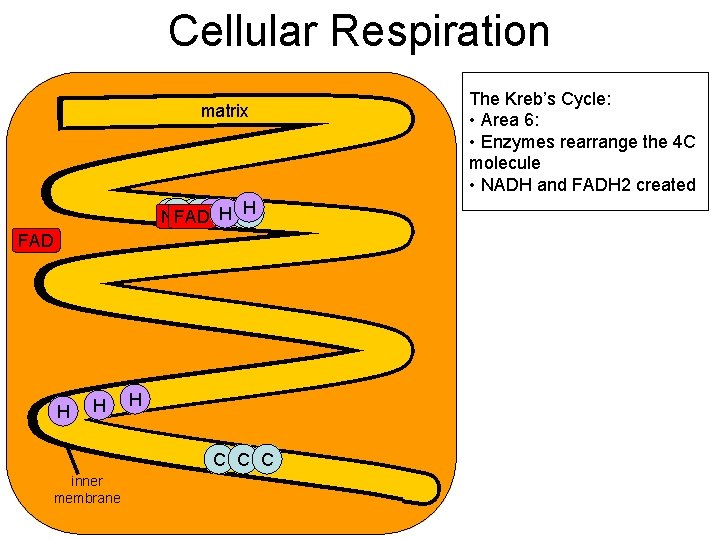
Cellular Respiration matrix CC CCHCH C NAD FAD H H H C C C inner membrane The Kreb’s Cycle: • Area 6: • Enzymes rearrange the 4 C molecule • NADH and FADH 2 created
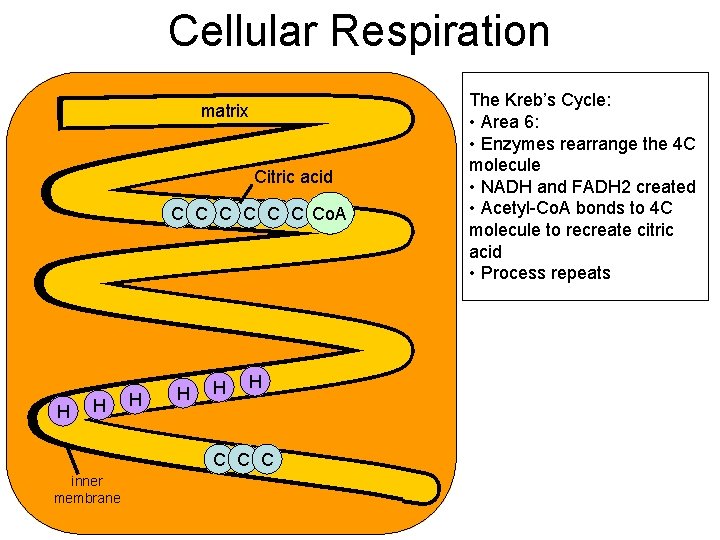
Cellular Respiration matrix Citric acid C C C Co. A H H H C C C inner membrane The Kreb’s Cycle: • Area 6: • Enzymes rearrange the 4 C molecule • NADH and FADH 2 created • Acetyl-Co. A bonds to 4 C molecule to recreate citric acid • Process repeats
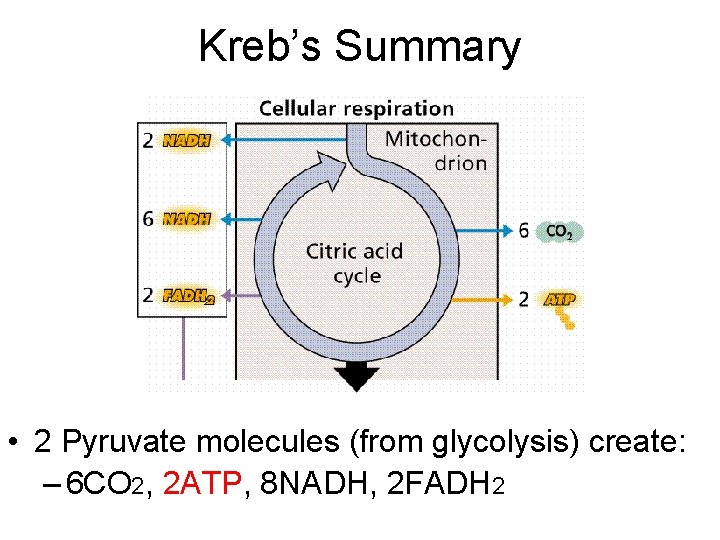
Kreb’s Summary • 2 Pyruvate molecules (from glycolysis) create: – 6 CO 2, 2 ATP, 8 NADH, 2 FADH 2
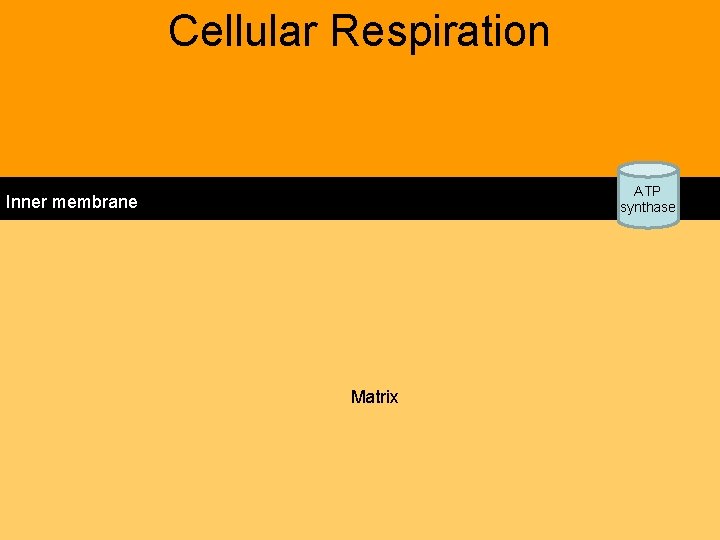
Cellular Respiration matrix ATP synthase Inner membrane H H H C C C inner membrane Matrix
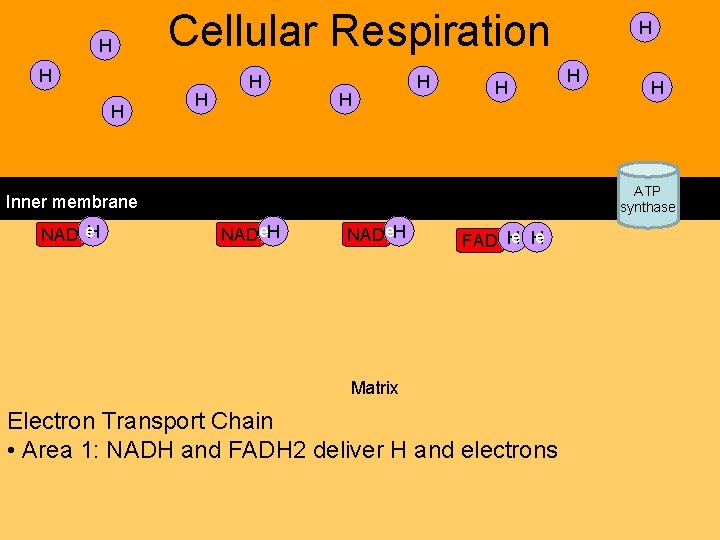
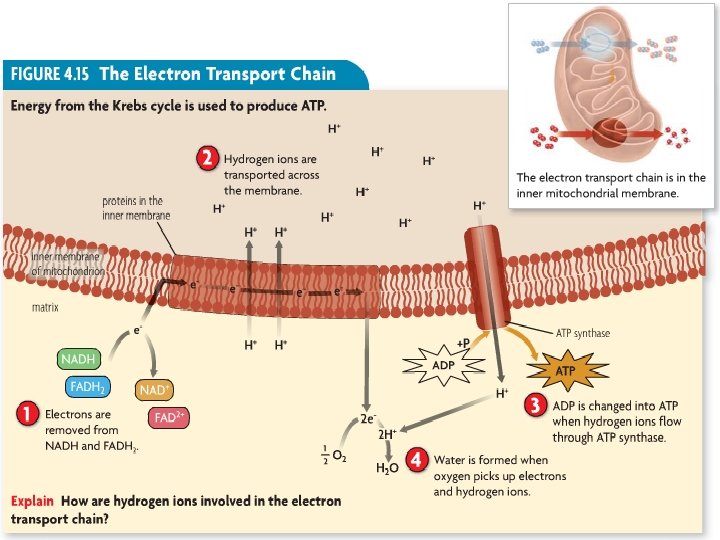
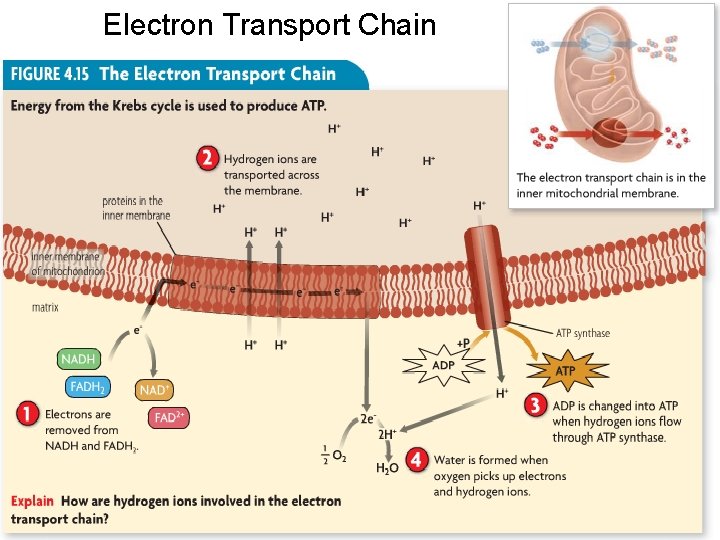
H Cellular Respiration H H H H H ATP synthase Inner membrane NAD e. H H NADe. H FAD He He Matrix Electron Transport Chain • Area 1: NADH and FADH 2 deliver H and electrons
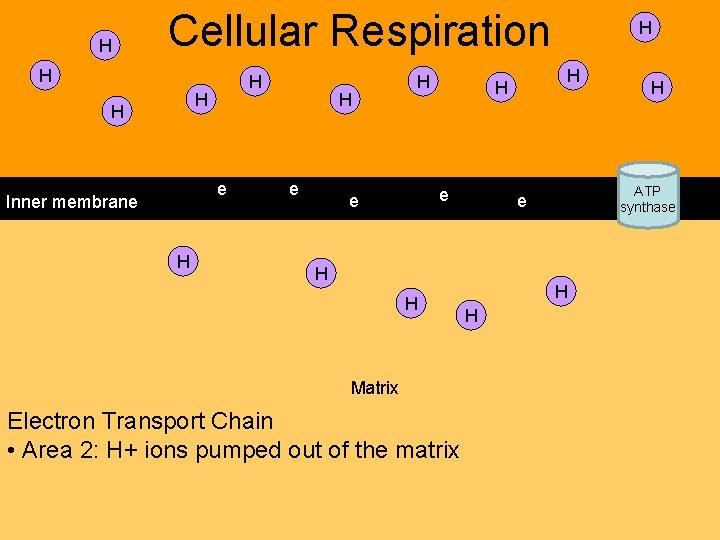
H Cellular Respiration H H e Inner membrane H H H e e Matrix Electron Transport Chain • Area 2: H+ ions pumped out of the matrix H H H ATP synthase e H H H
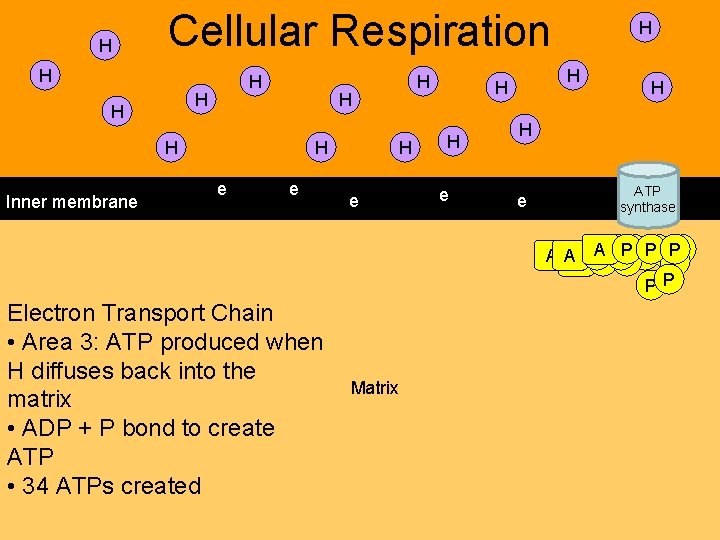
H Cellular Respiration H H H Inner membrane H e H H H e ATP synthase A PP PP PP A AAP APAP P PP PP Electron Transport Chain • Area 3: ATP produced when H diffuses back into the matrix • ADP + P bond to create ATP • 34 ATPs created Matrix
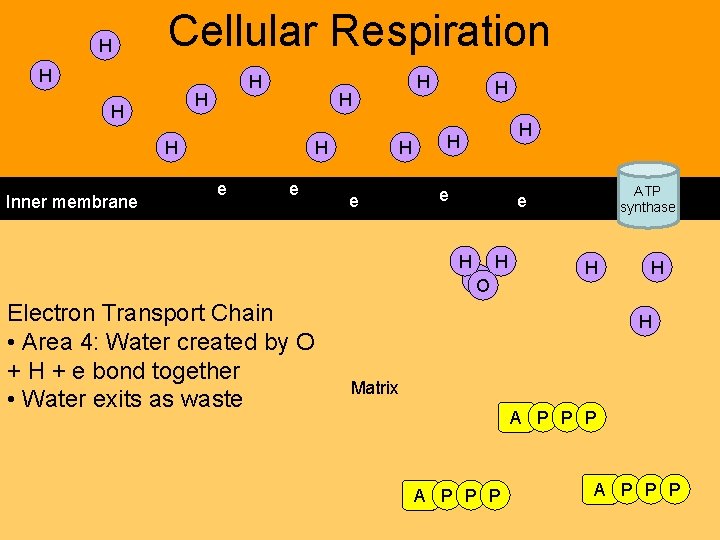
H Cellular Respiration H H H Inner membrane H e H H e ATP synthase e H H OO Electron Transport Chain • Area 4: Water created by O + H + e bond together • Water exits as waste H H Matrix A P P P
Your essay question on the next test! Trace the flow of energy, including ATP, from the sun to your muscles, after eating a green leaf salad.
Kobe Kuiz Place the following steps in order from start to finish. A) 2 ATP created when 5 C molecule broken apart B) Acetic acid bonds to coenzyme A C) 4 ATP molecules created in the cytoplasm D) NADH and FADH 2 deliver hydrogen electrons to mitochondria membrane E) Citric acid created F) Largest amount of ATP created when H travels through ATP synthase G) Glucose is broken into pyruvate molecules
Kobe Kuiz Place the following steps in order from start to finish. G) Glucose is broken into pyruvate molecules C) 4 ATP molecules created in the cytoplasm B) Acetic acid bonds to coenzyme A E) Citric acid created A) 2 ATP created when 5 C molecule broken apart D) NADH and FADH 2 deliver hydrogen electrons to mitochondria membrane F) Largest amount of ATP created when H travels through ATP synthase
Kreb’s (Citric Acid) Cycle
Electron Transport Chain
Electron Transport Chain
Kreb’s (Citric Acid) Cycle