
Brain Warmer 14 The correct answer is D
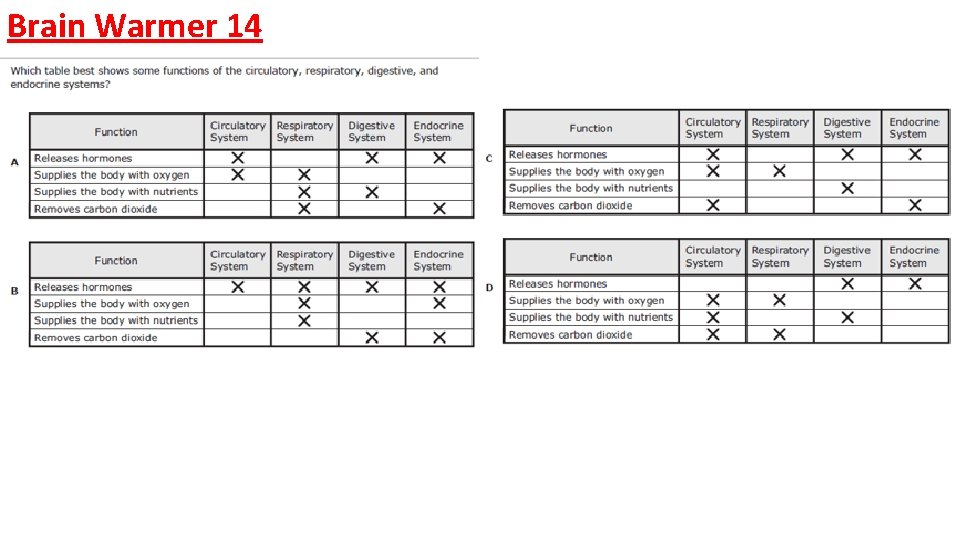
Brain Warmer 14
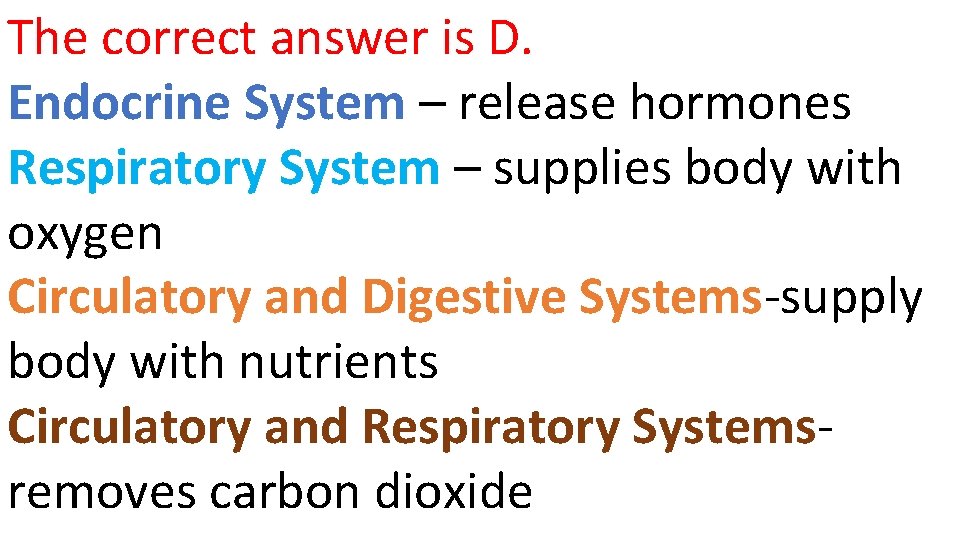
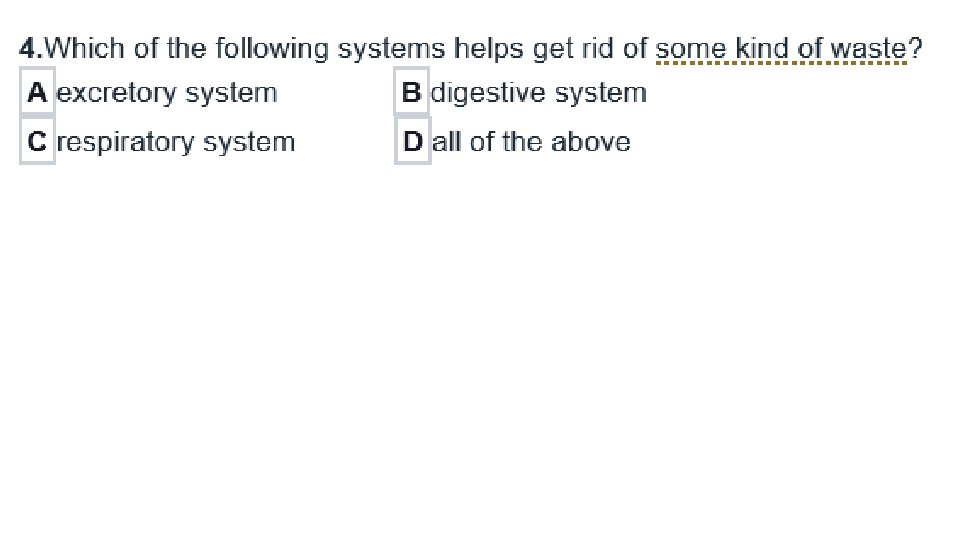
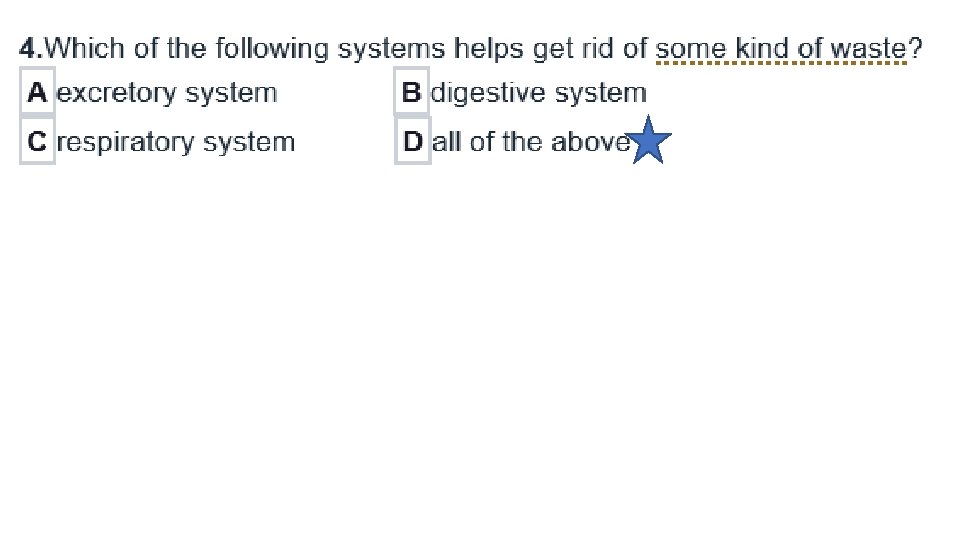
The correct answer is D. Endocrine System – release hormones Respiratory System – supplies body with oxygen Circulatory and Digestive Systems-supply body with nutrients Circulatory and Respiratory Systemsremoves carbon dioxide

Flocabulary video clip – Body Systems 3
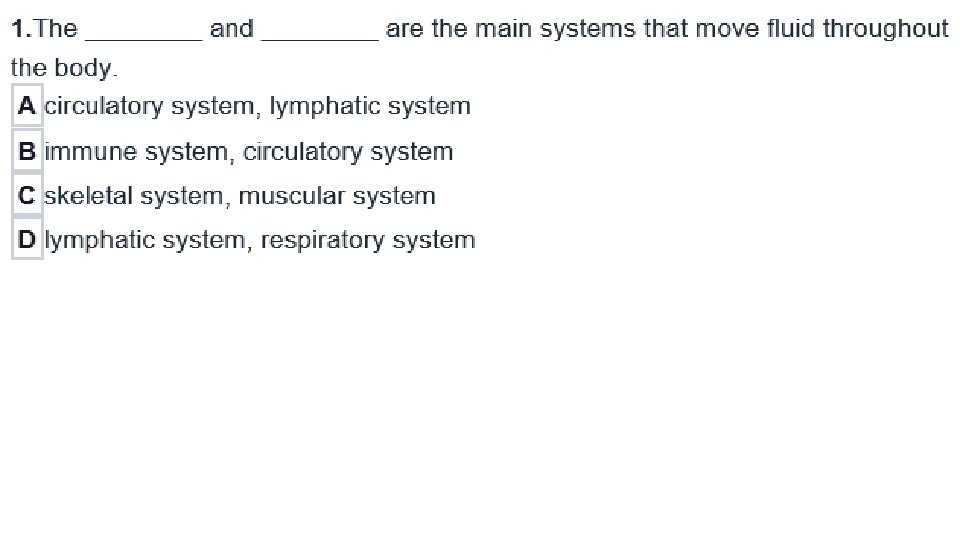
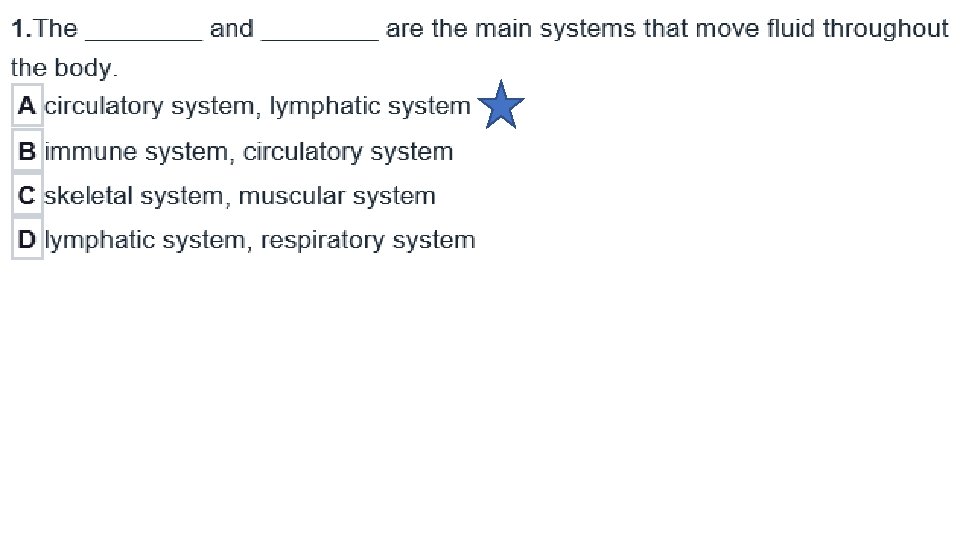
6
7
10
11
14
15
18
19
22
23
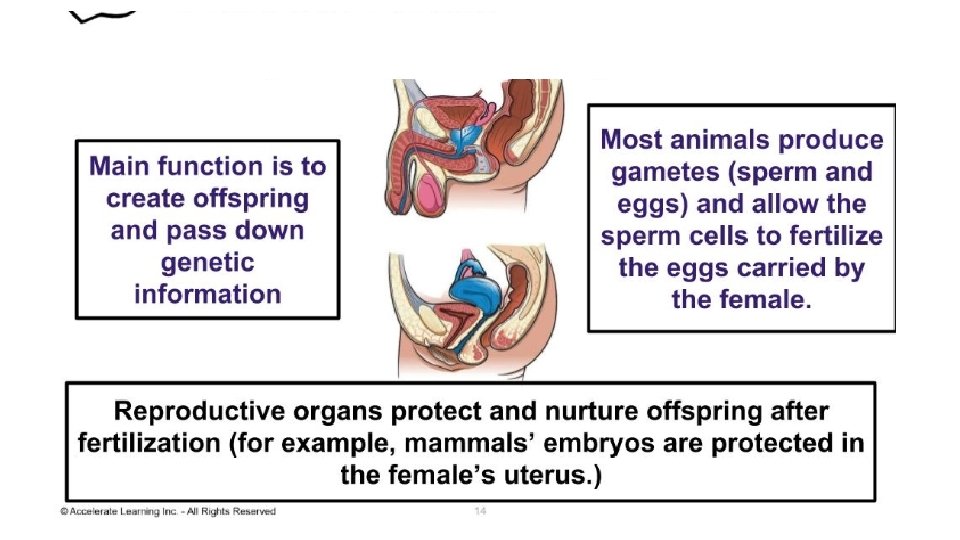
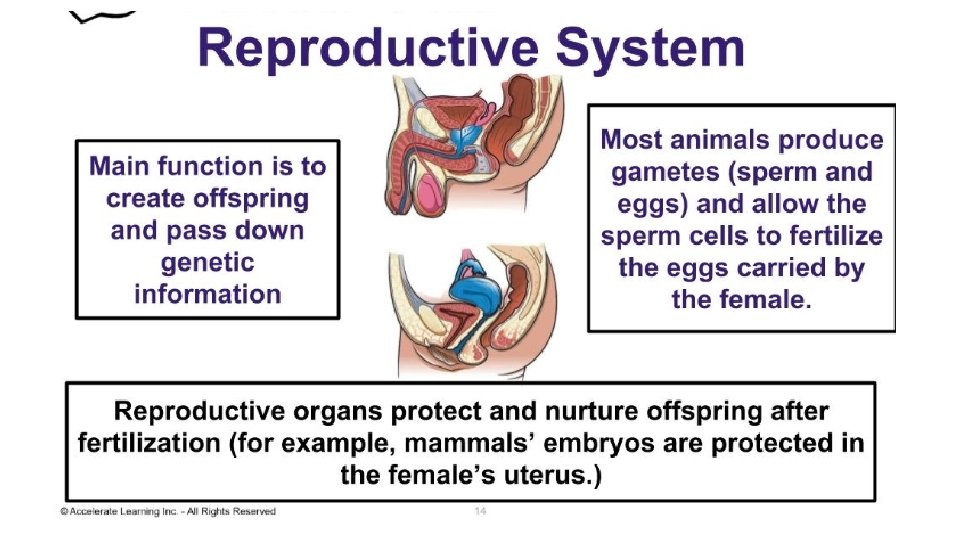
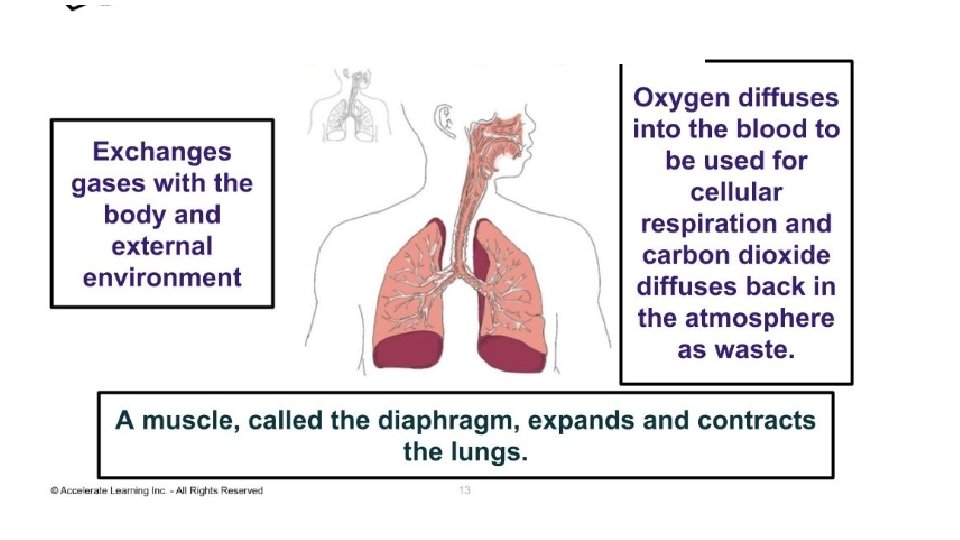
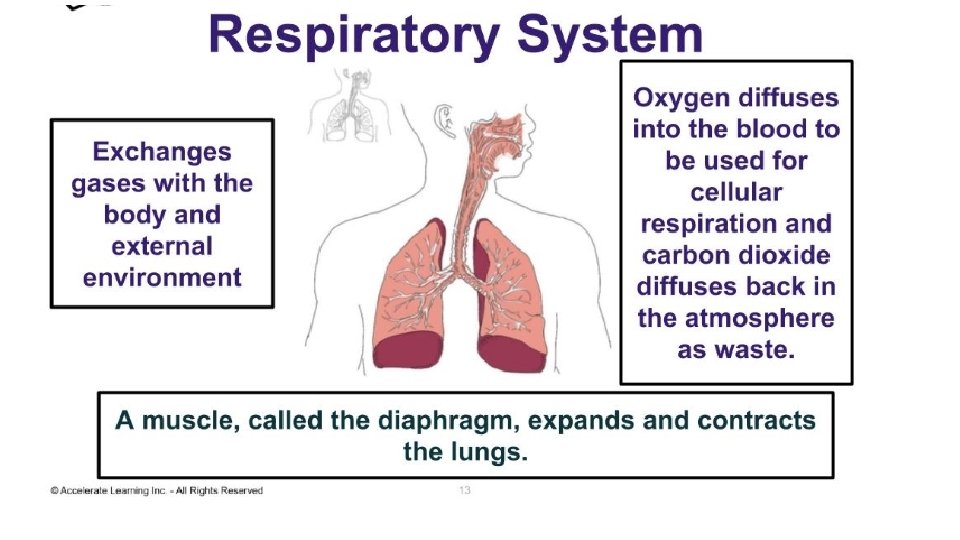
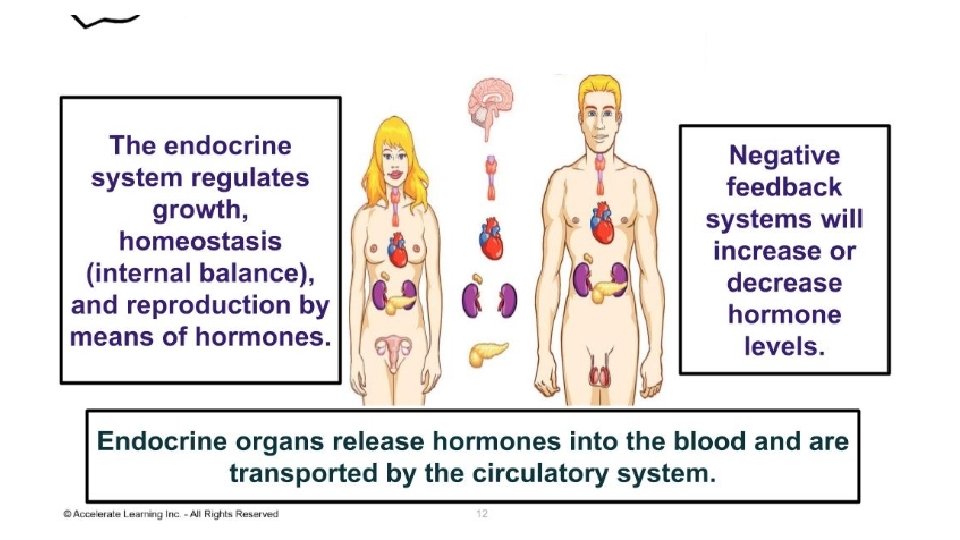
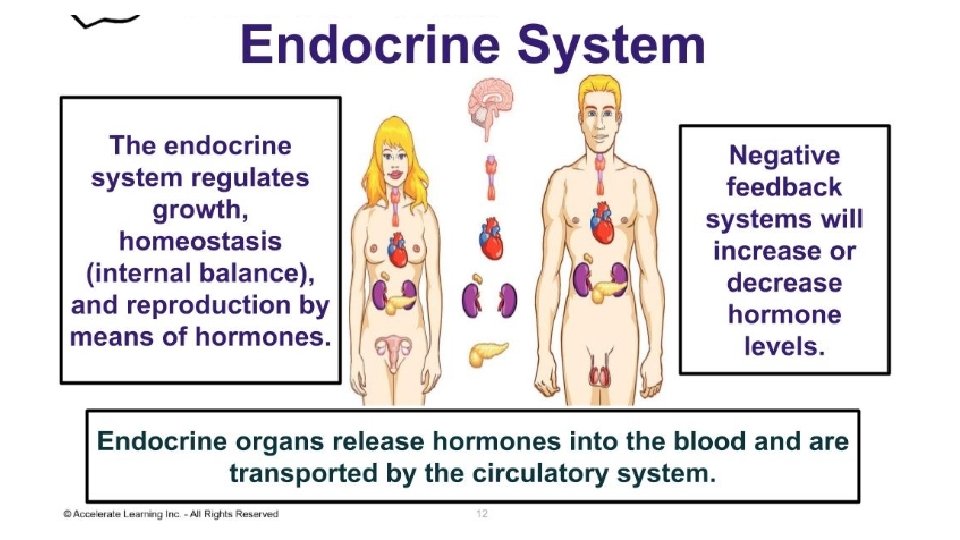
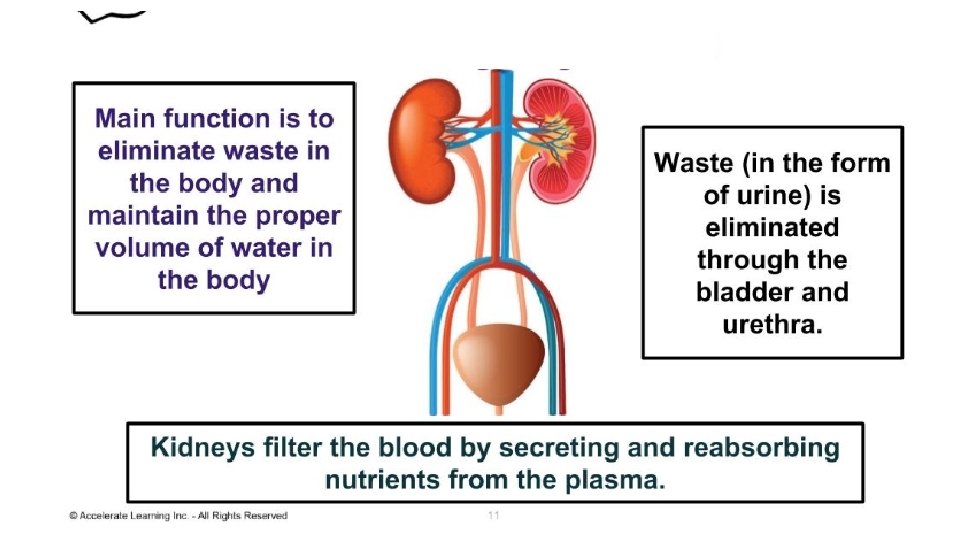
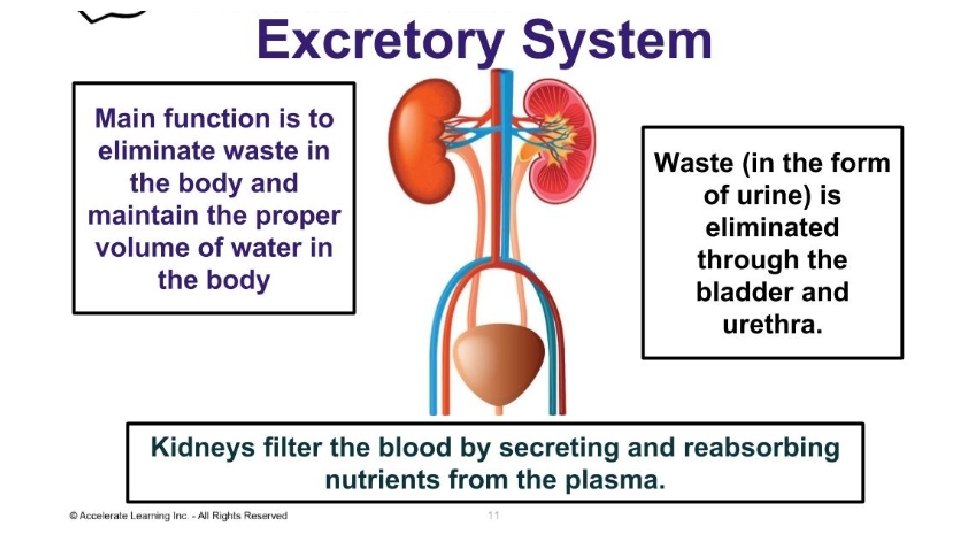
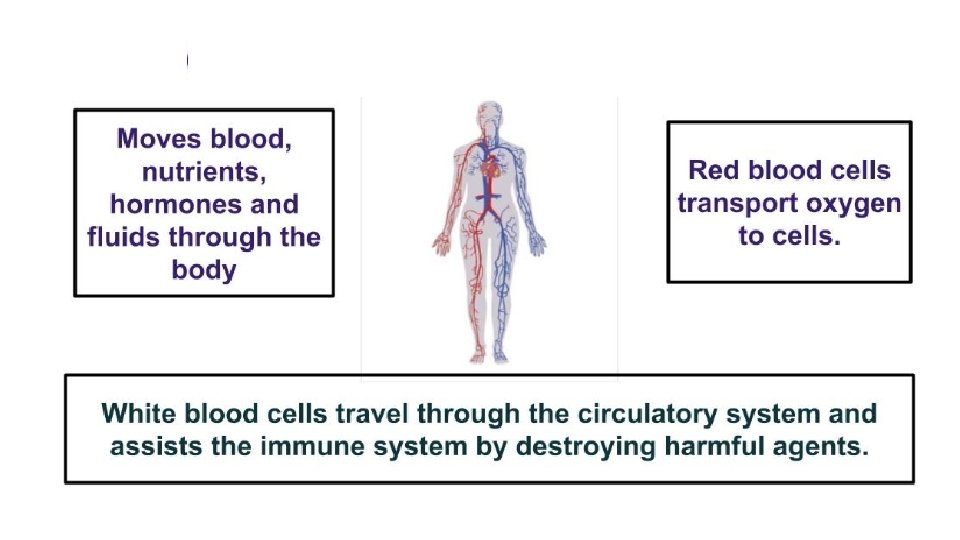
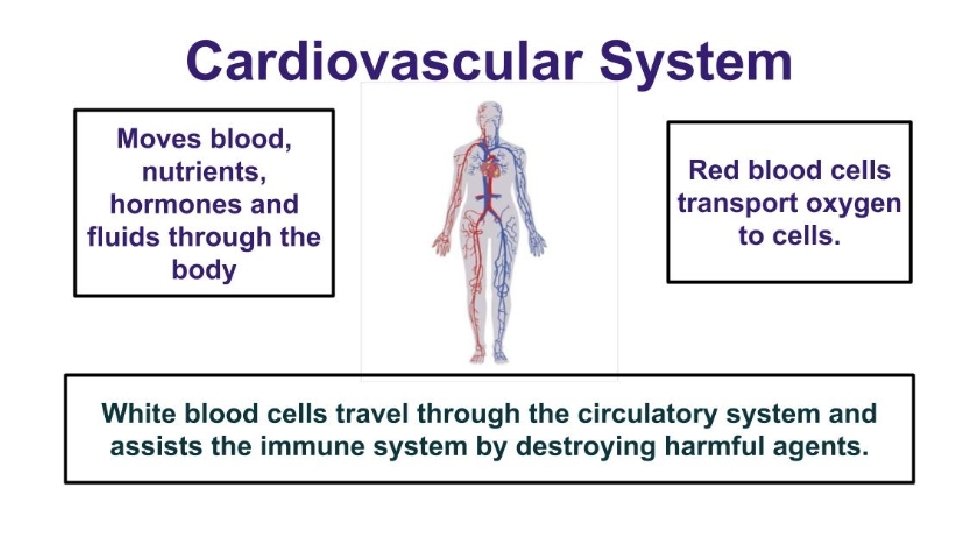
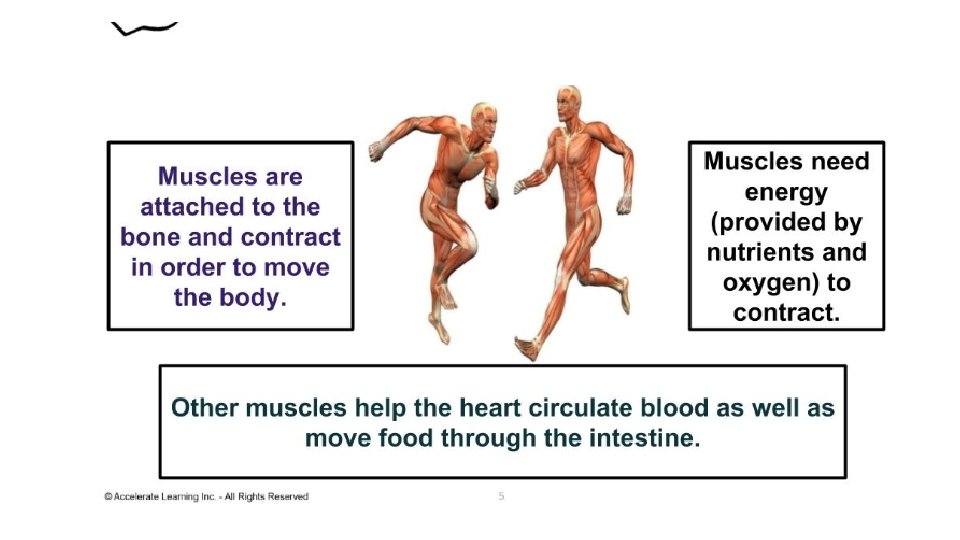
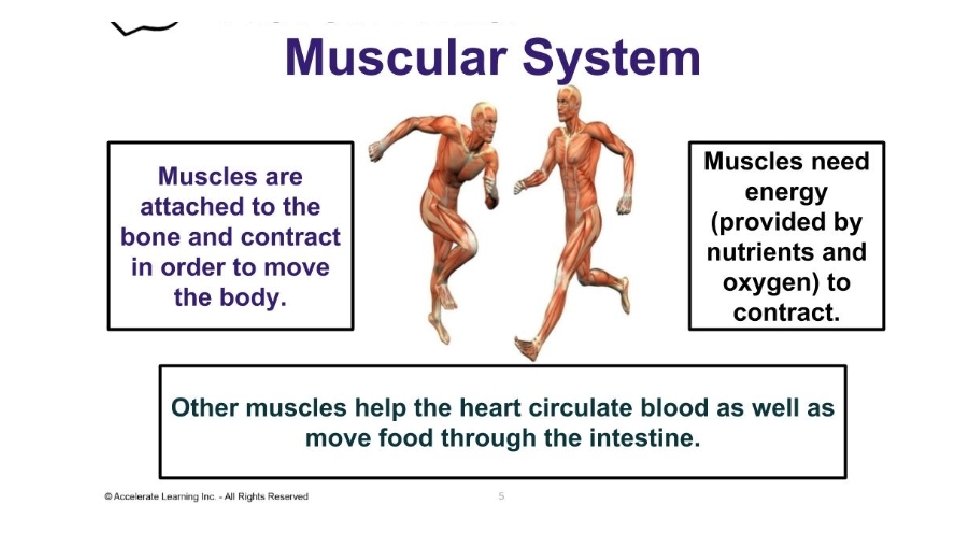
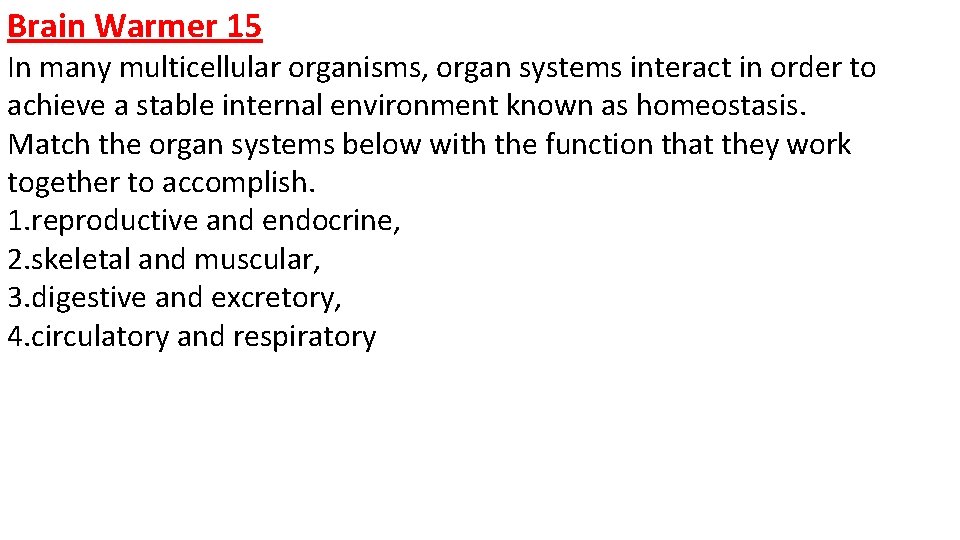
Brain Warmer 15 In many multicellular organisms, organ systems interact in order to achieve a stable internal environment known as homeostasis. Match the organ systems below with the function that they work together to accomplish. 1. reproductive and endocrine, 2. skeletal and muscular, 3. digestive and excretory, 4. circulatory and respiratory
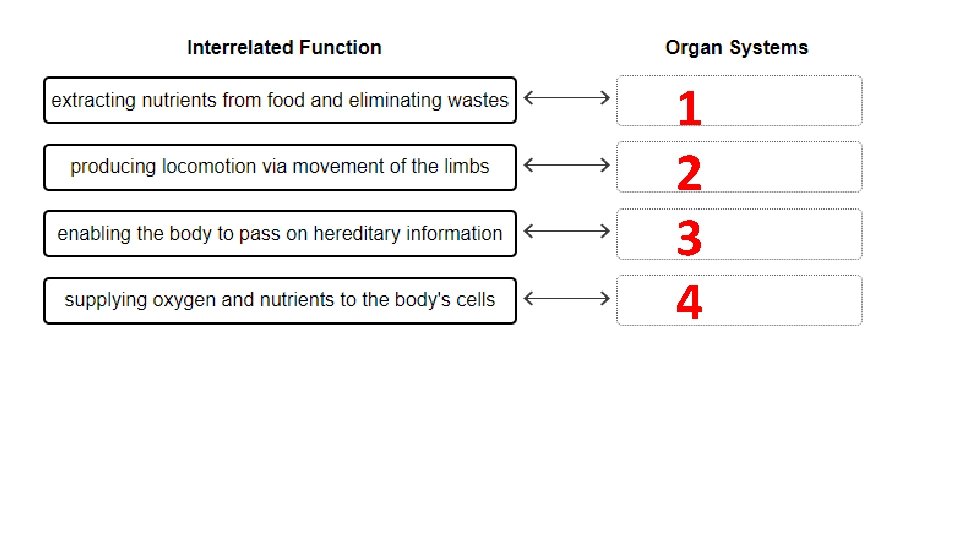
1 2 3 4
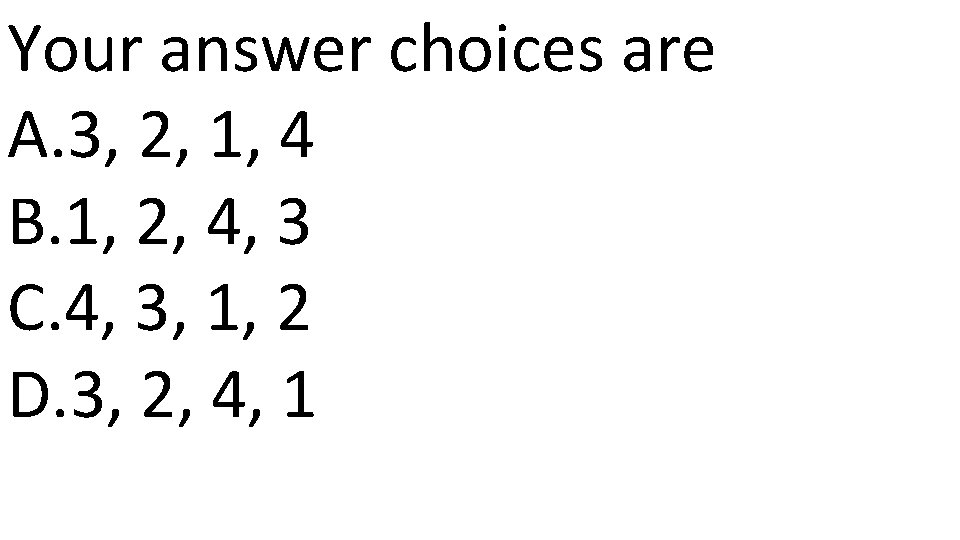
Your answer choices are A. 3, 2, 1, 4 B. 1, 2, 4, 3 C. 4, 3, 1, 2 D. 3, 2, 4, 1
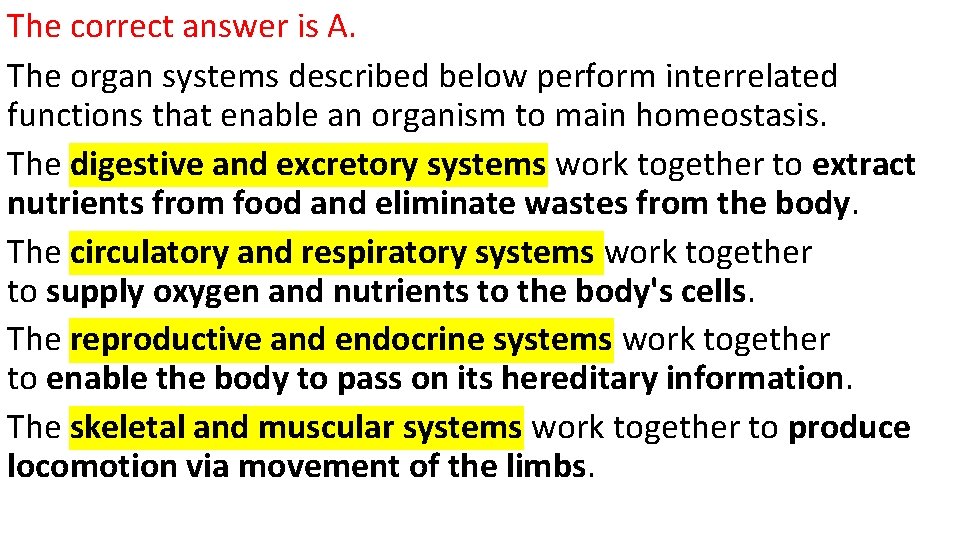
The correct answer is A. The organ systems described below perform interrelated functions that enable an organism to main homeostasis. The digestive and excretory systems work together to extract nutrients from food and eliminate wastes from the body. The circulatory and respiratory systems work together to supply oxygen and nutrients to the body's cells. The reproductive and endocrine systems work together to enable the body to pass on its hereditary information. The skeletal and muscular systems work together to produce locomotion via movement of the limbs.
Body Systems Interactions STAAR problems
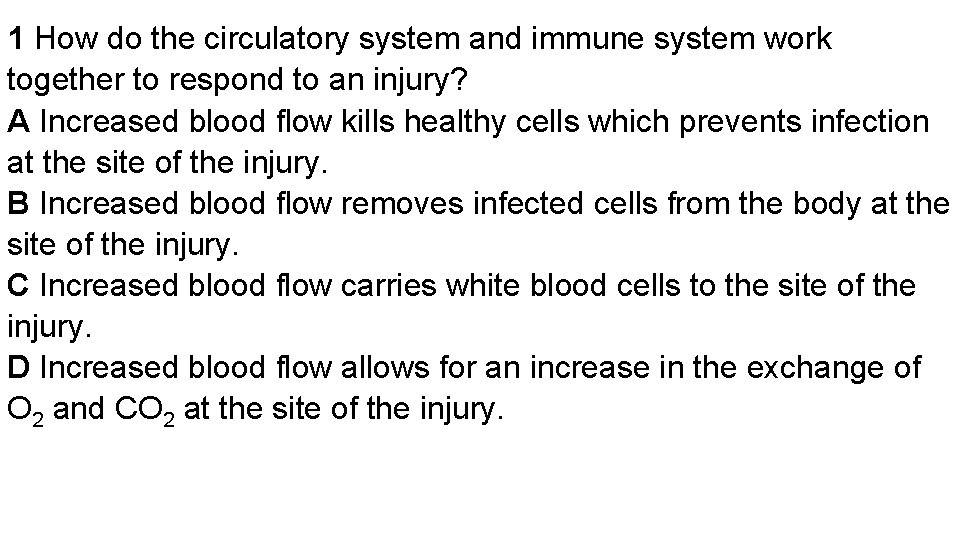
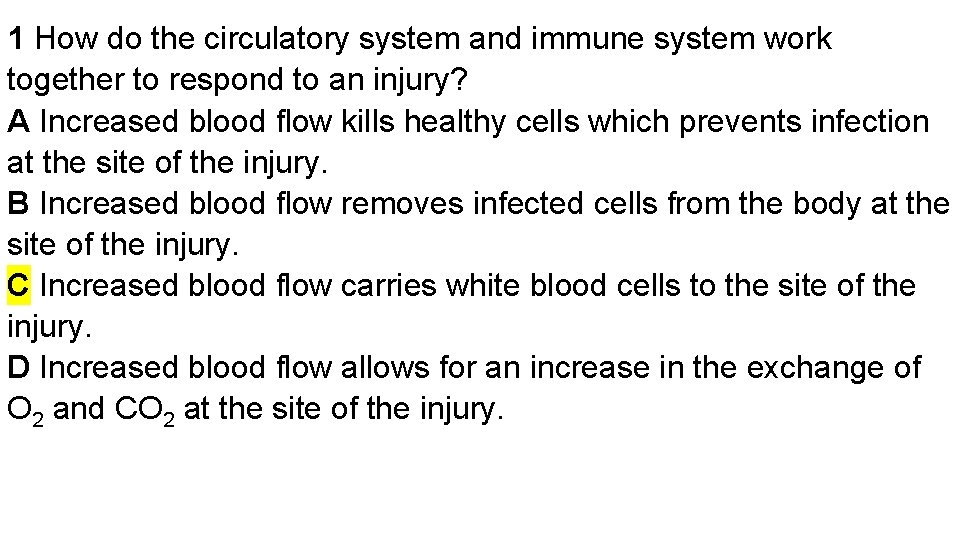
1 How do the circulatory system and immune system work together to respond to an injury? A Increased blood flow kills healthy cells which prevents infection at the site of the injury. B Increased blood flow removes infected cells from the body at the site of the injury. C Increased blood flow carries white blood cells to the site of the injury. D Increased blood flow allows for an increase in the exchange of O 2 and CO 2 at the site of the injury.
1 How do the circulatory system and immune system work together to respond to an injury? A Increased blood flow kills healthy cells which prevents infection at the site of the injury. B Increased blood flow removes infected cells from the body at the site of the injury. C Increased blood flow carries white blood cells to the site of the injury. D Increased blood flow allows for an increase in the exchange of O 2 and CO 2 at the site of the injury.
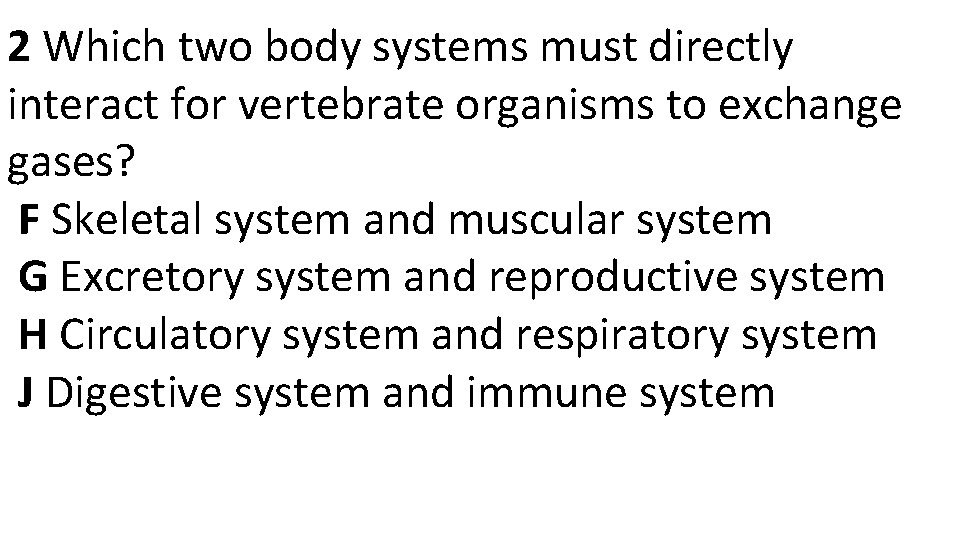
2 Which two body systems must directly interact for vertebrate organisms to exchange gases? F Skeletal system and muscular system G Excretory system and reproductive system H Circulatory system and respiratory system J Digestive system and immune system
2 Which two body systems must directly interact for vertebrate organisms to exchange gases? F Skeletal system and muscular system G Excretory system and reproductive system H Circulatory system and respiratory system J Digestive system and immune system
3 Which of the following is an example of the endocrine system directly interacting with the nervous system? A The vertebrae protect the spinal cord from injury. B Hormones provide feedback that affects neural processing. C Sensory receptors in bones send signals about body position to the brain. D The brain sends signals that control the speed at which food moves through the intestines.
3 Which of the following is an example of the endocrine system directly interacting with the nervous system? A The vertebrae protect the spinal cord from injury. B Hormones provide feedback that affects neural processing. C Sensory receptors in bones send signals about body position to the brain. D The brain sends signals that control the speed at which food moves through the intestines.
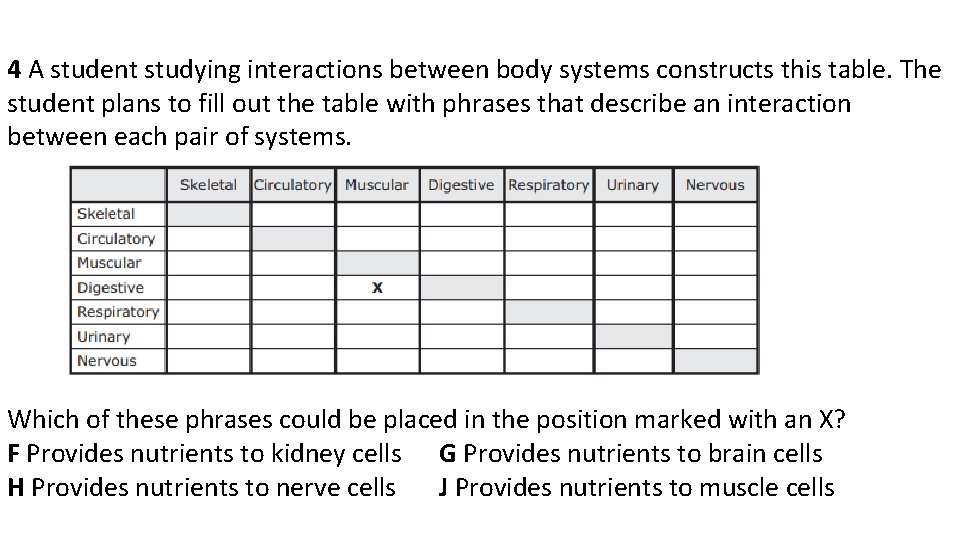
4 A student studying interactions between body systems constructs this table. The student plans to fill out the table with phrases that describe an interaction between each pair of systems. Which of these phrases could be placed in the position marked with an X? F Provides nutrients to kidney cells G Provides nutrients to brain cells H Provides nutrients to nerve cells J Provides nutrients to muscle cells
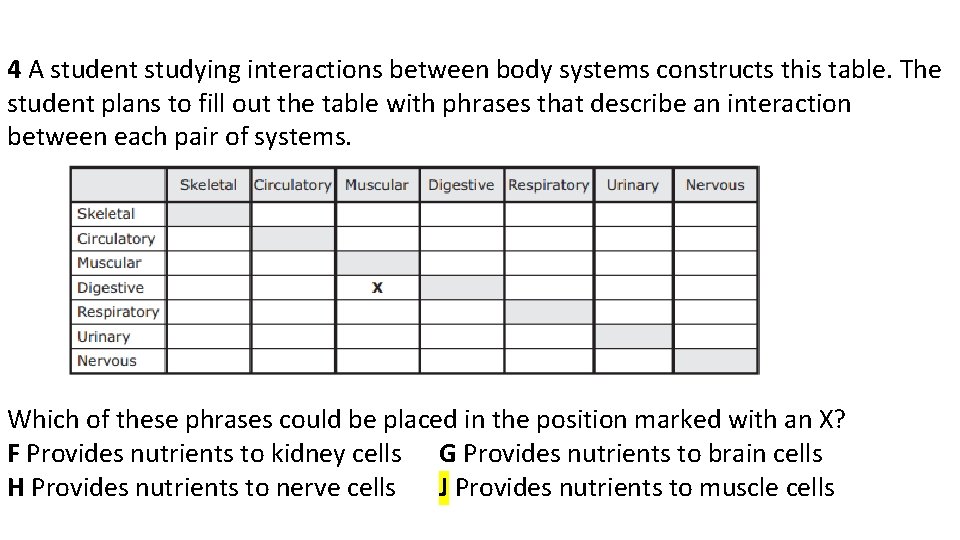
4 A student studying interactions between body systems constructs this table. The student plans to fill out the table with phrases that describe an interaction between each pair of systems. Which of these phrases could be placed in the position marked with an X? F Provides nutrients to kidney cells G Provides nutrients to brain cells H Provides nutrients to nerve cells J Provides nutrients to muscle cells
5 Kidneys are part of the excretory system in a human body. They purify the impure blood and send it back to the rest of the body. Which system is mainly responsible for the transport of plasma to the kidneys? F Respiratory system G Circulatory system H Muscular system J Nervous system
5 Kidneys are part of the excretory system in a human body. They purify the impure blood and send it back to the rest of the body. Which system is mainly responsible for the transport of plasma to the kidneys? F Respiratory system G Circulatory system H Muscular system J Nervous system
6 During the final stages of human gestation, receptors for the hormone oxytocin increase on the smooth muscle cells of the uterus. The release of oxytocin during labor stimulates the smooth muscle tissue in the wall of the uterus. The vigorous contraction of the uterine smooth muscle helps push the baby through the birth canal so that delivery can occur. This process involves the interaction of which organ systems? A Endocrine and muscular only B Endocrine and reproductive only C Endocrine, muscular, and reproductive D Endocrine, reproductive, and excretory
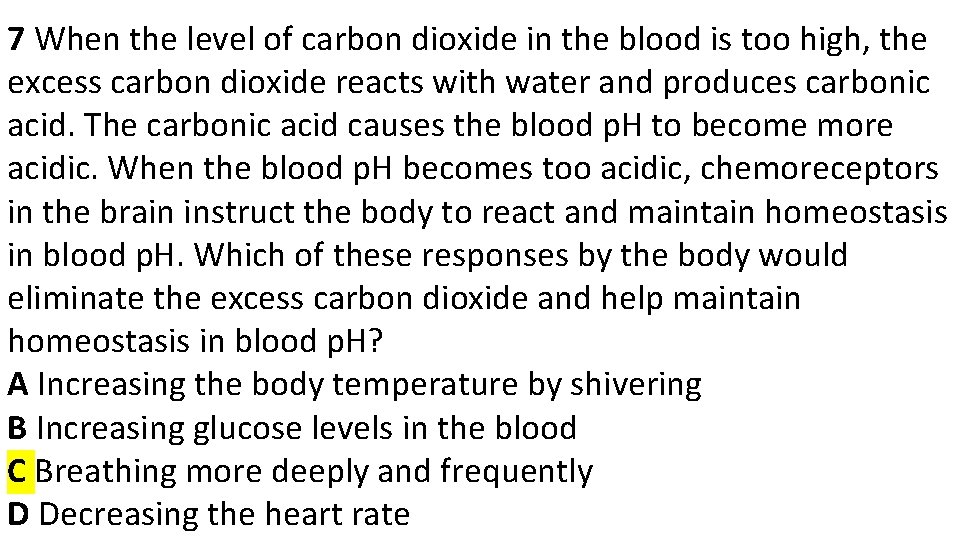
7 When the level of carbon dioxide in the blood is too high, the excess carbon dioxide reacts with water and produces carbonic acid. The carbonic acid causes the blood p. H to become more acidic. When the blood p. H becomes too acidic, chemoreceptors in the brain instruct the body to react and maintain homeostasis in blood p. H. Which of these responses by the body would eliminate the excess carbon dioxide and help maintain homeostasis in blood p. H? A Increasing the body temperature by shivering B Increasing glucose levels in the blood C Breathing more deeply and frequently D Decreasing the heart rate
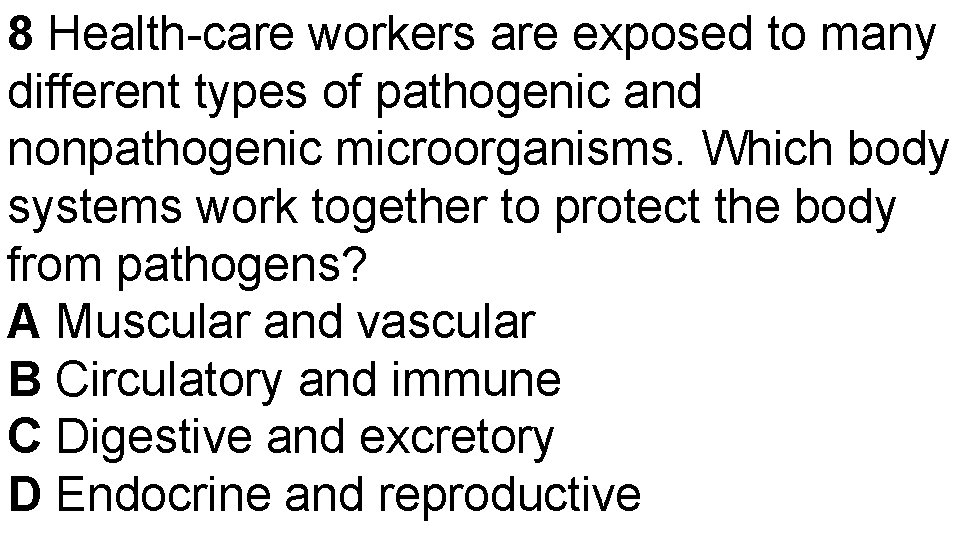
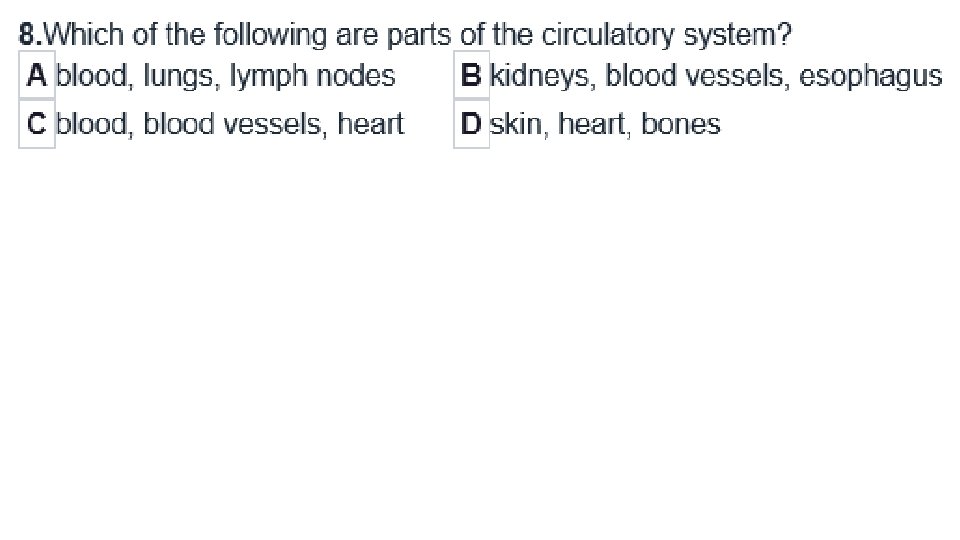
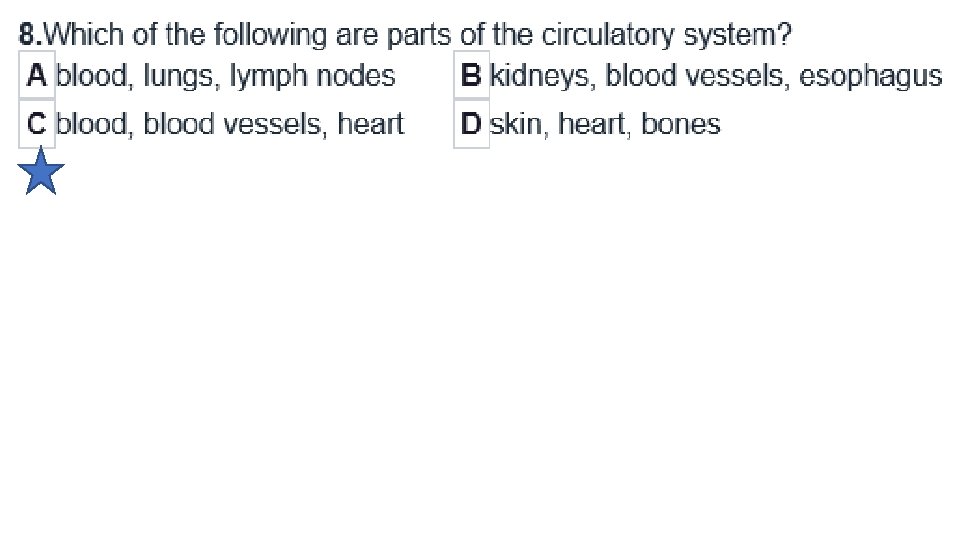
8 Health-care workers are exposed to many different types of pathogenic and nonpathogenic microorganisms. Which body systems work together to protect the body from pathogens? A Muscular and vascular B Circulatory and immune C Digestive and excretory D Endocrine and reproductive
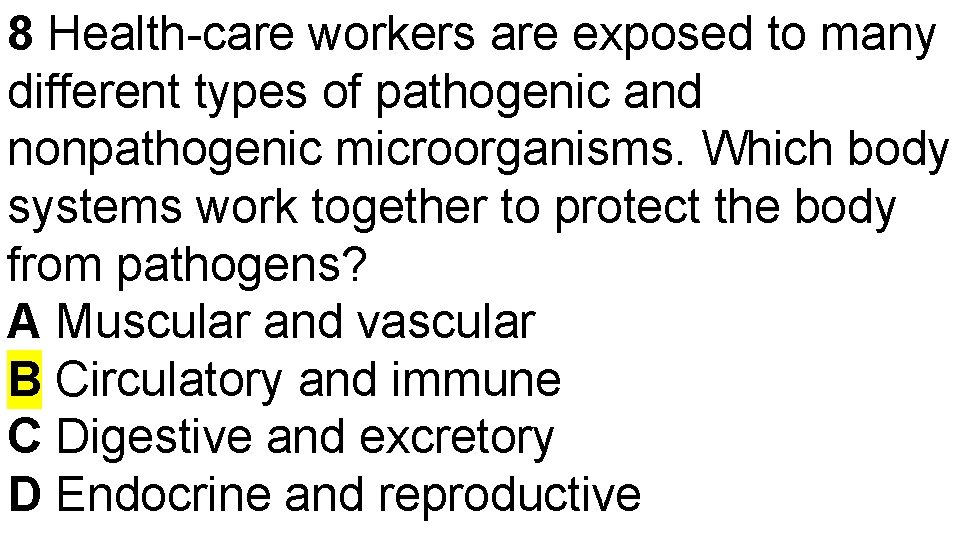
8 Health-care workers are exposed to many different types of pathogenic and nonpathogenic microorganisms. Which body systems work together to protect the body from pathogens? A Muscular and vascular B Circulatory and immune C Digestive and excretory D Endocrine and reproductive
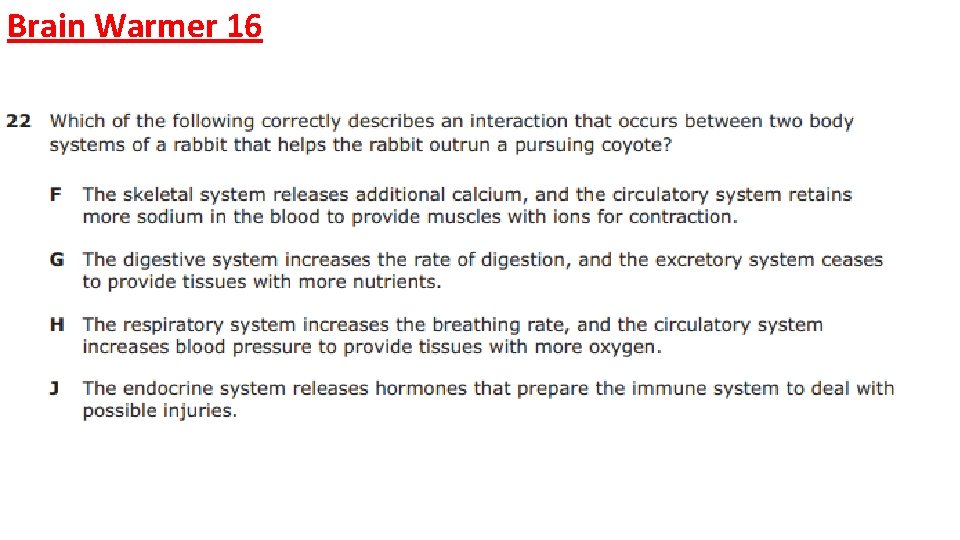
Brain Warmer 16
Scientific Explanation: H When the rabbit runs, it breathes faster because it needs more oxygen. That is why its heart beats faster.
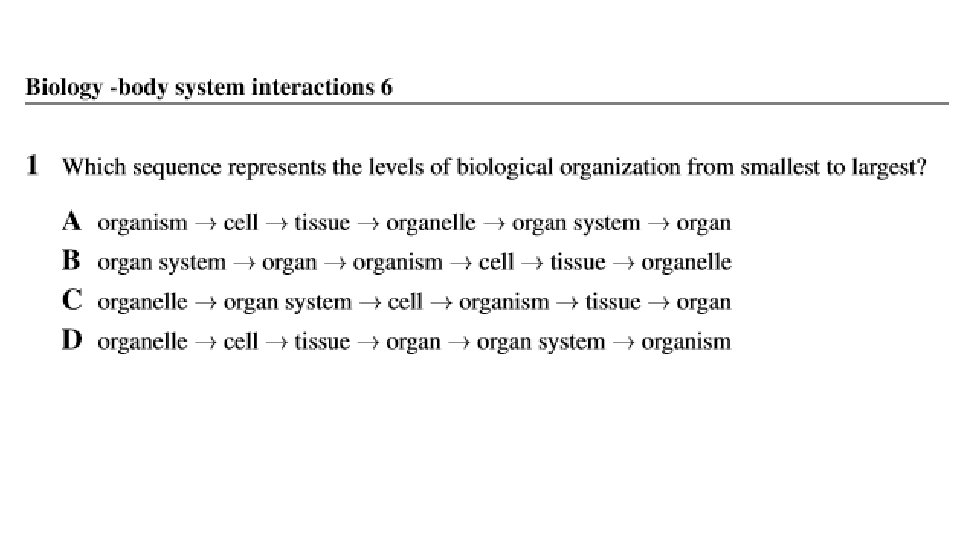
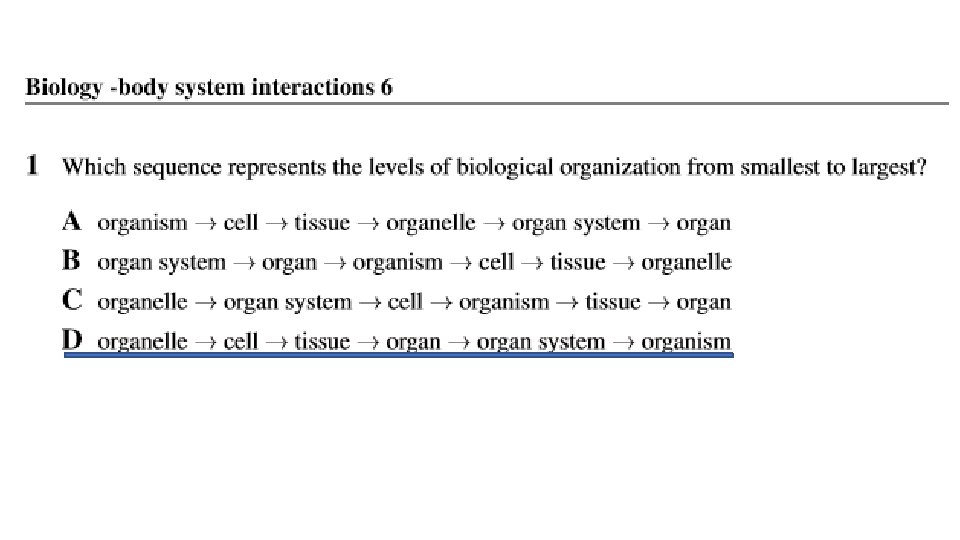
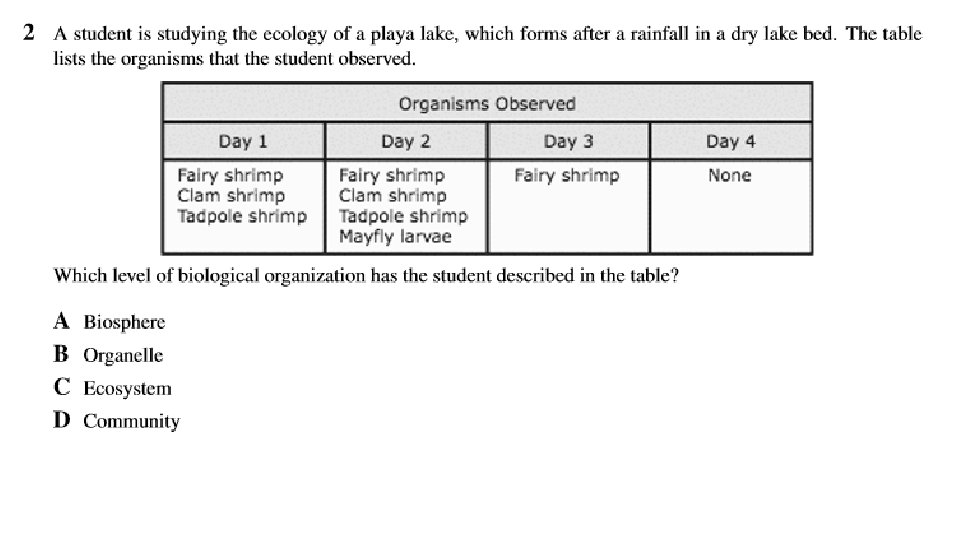
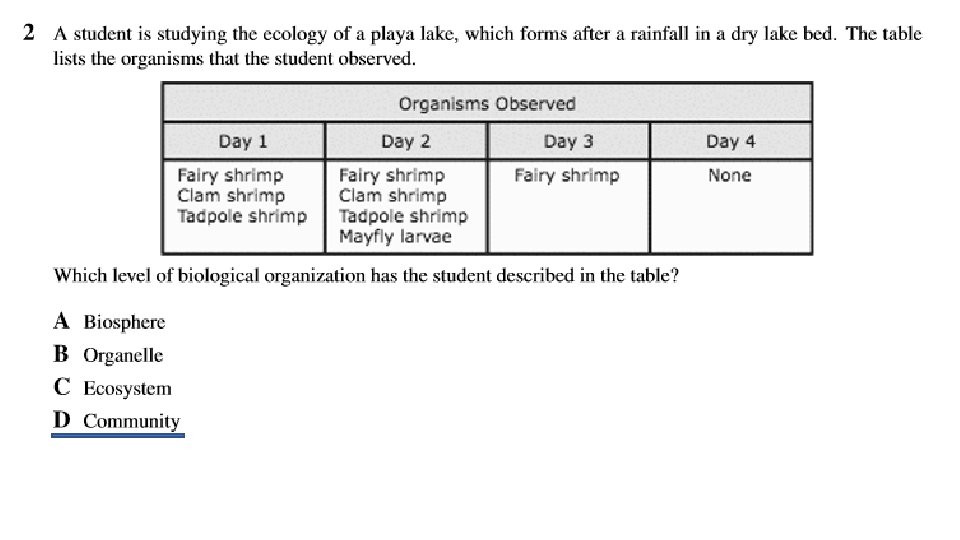
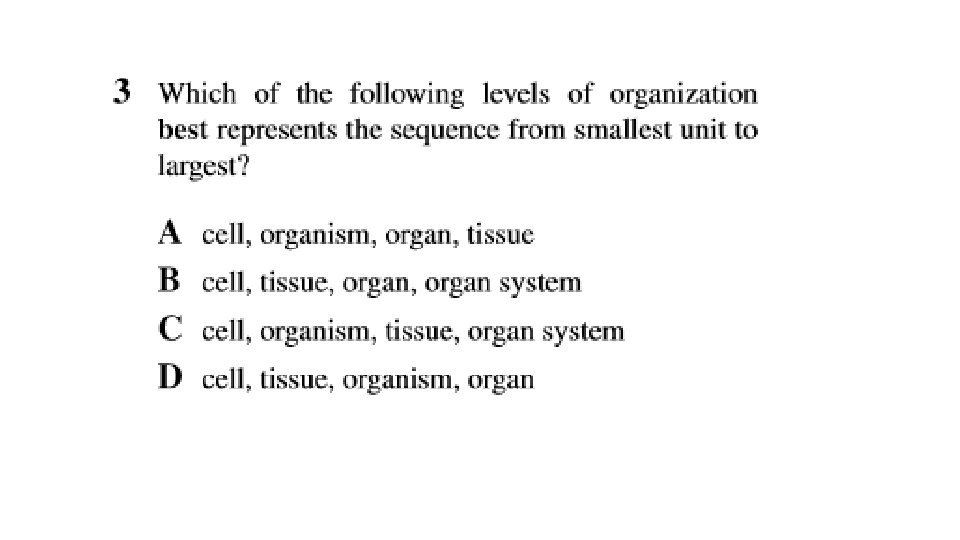
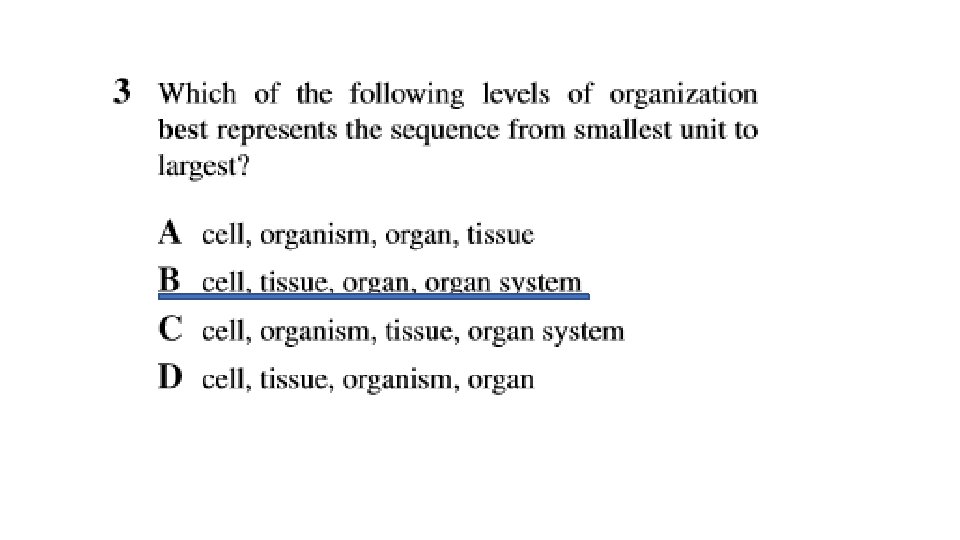
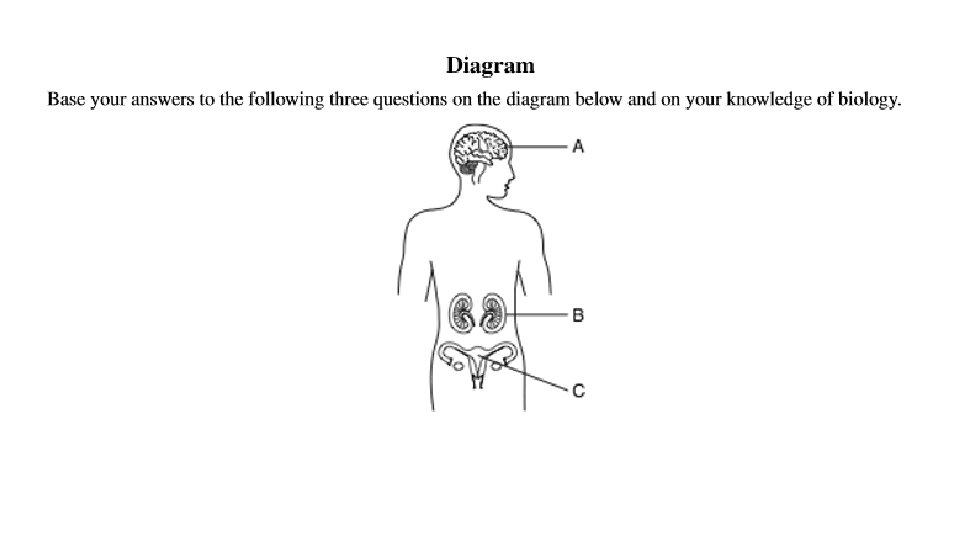
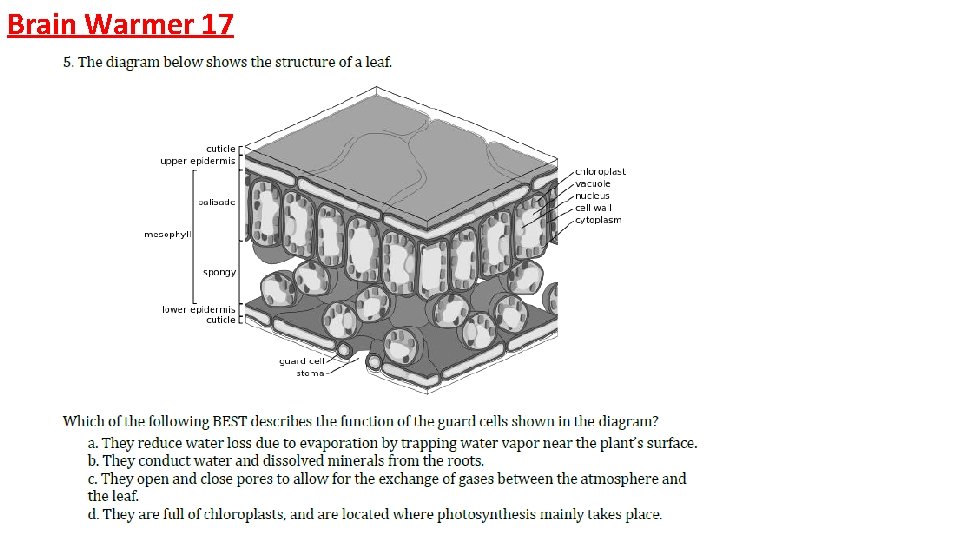
Brain Warmer 17
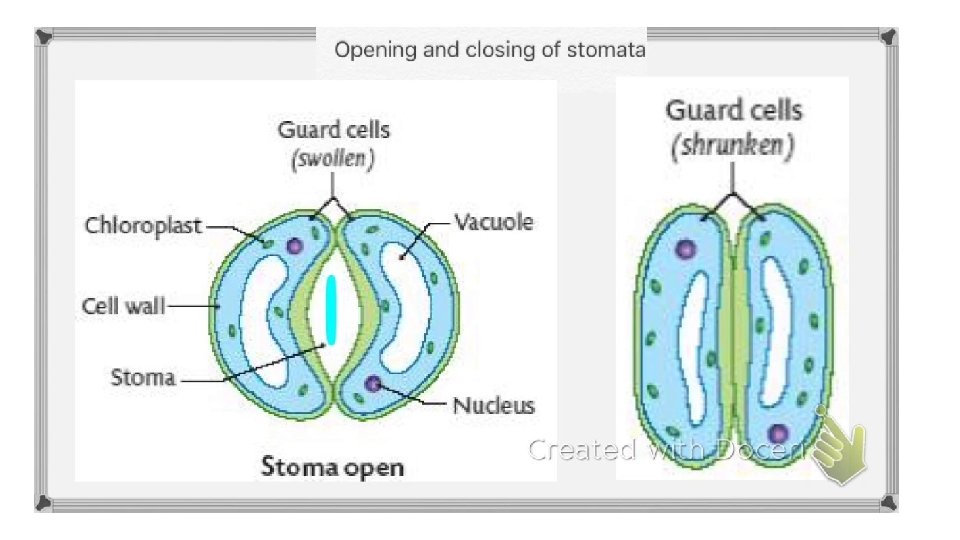
stomata - Taking in oxygen is very important because it allows your cells to do things, like make energy from the food you eat. Plants 'breathe' too, but they do it through tiny openings in leaves called stomata (singular: stoma). Stomata open and close to allow the intake of carbon dioxide and the release of oxygen.
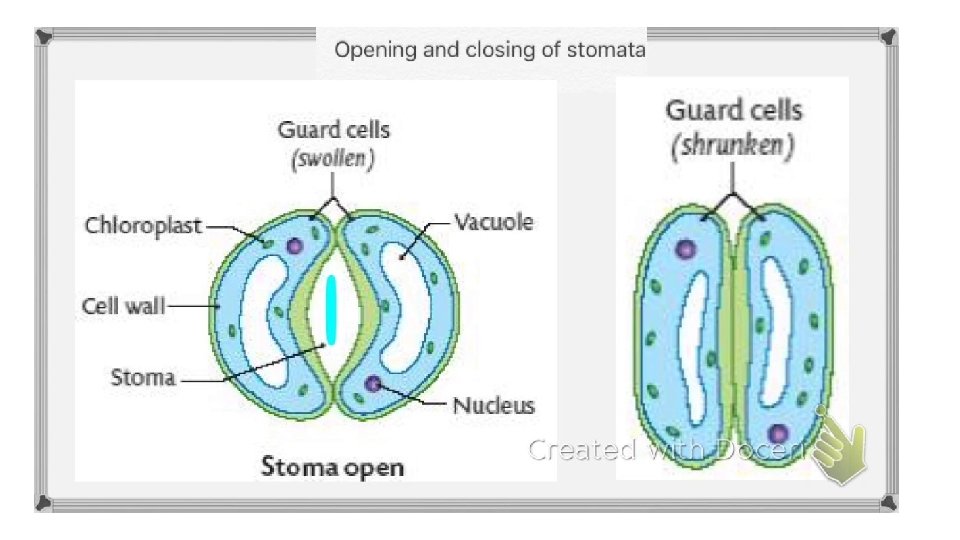
The correct answer is C. Guard cells open and close pores on the undersides of leaves that allow for the exchange of gases between the atmosphere and a plant’s leaves.
All about plants – STAAR academic vocabulary
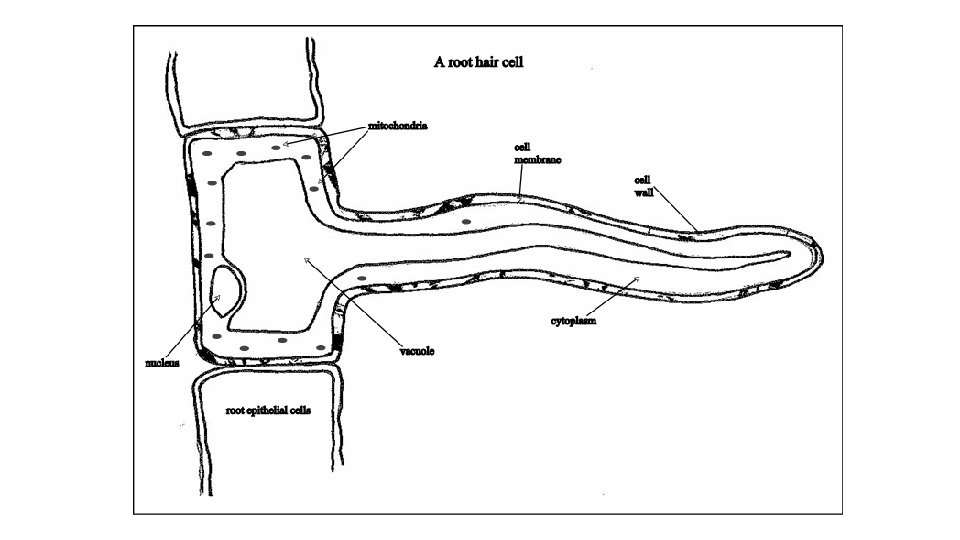
1. root hair - each of a large number of elongated microscopic outgrowths from the outer layer of cells in a root, absorbing moisture and nutrients from the soil
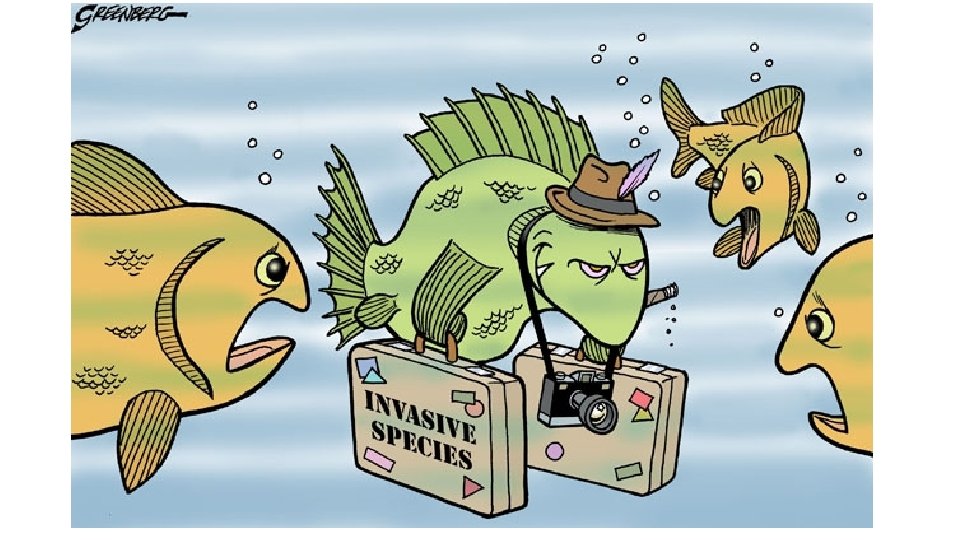
2. Invasive species - is defined as a species that is: 1) non-native (or alien) to the ecosystem under consideration and. 2) whose introduction causes or is likely to cause economic or environmental harm or harm to human health.
3. Vascular tissue is found in all the plant's vegetative organs, the roots, stems, and leaves. There are 2 types of vascular tissues – xylem, phloem Xylem transports and stores water and watersoluble nutrients in vascular plants. Phloem is responsible for transporting sugars, proteins, and other organic molecules in plants.
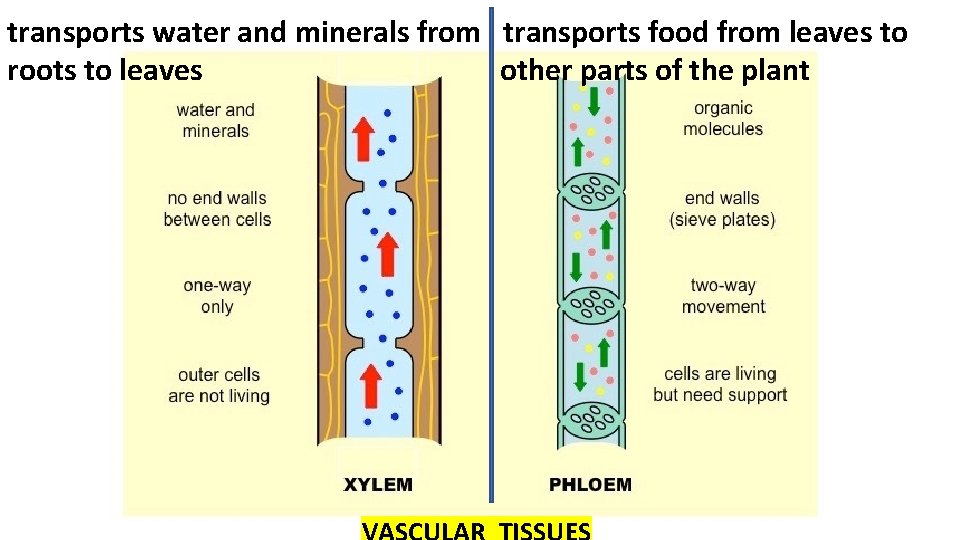
transports water and minerals from transports food from leaves to roots to leaves other parts of the plant
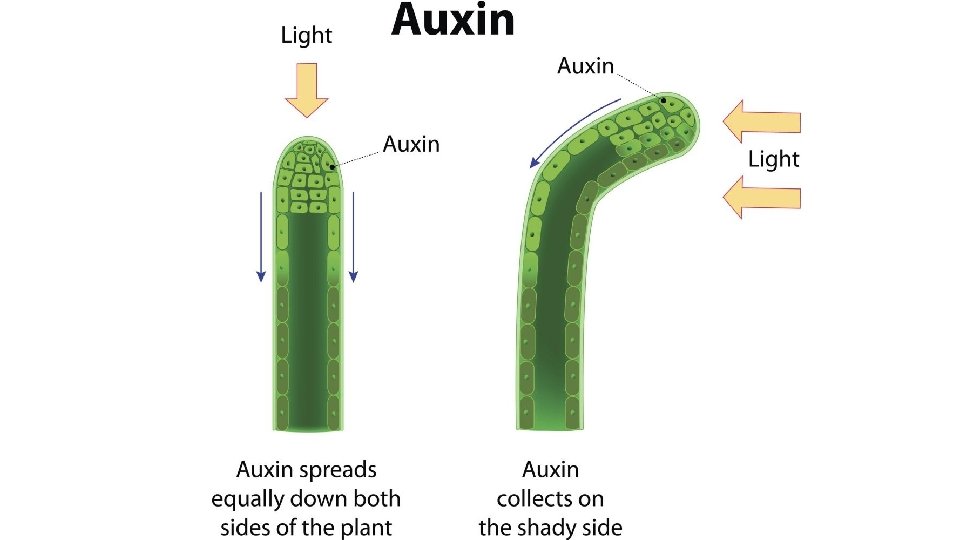
4. phototropism –is the orientation of a plant or other organism in response to light, either toward the source of light ( positive phototropism ) or away from it ( negative phototropism ).
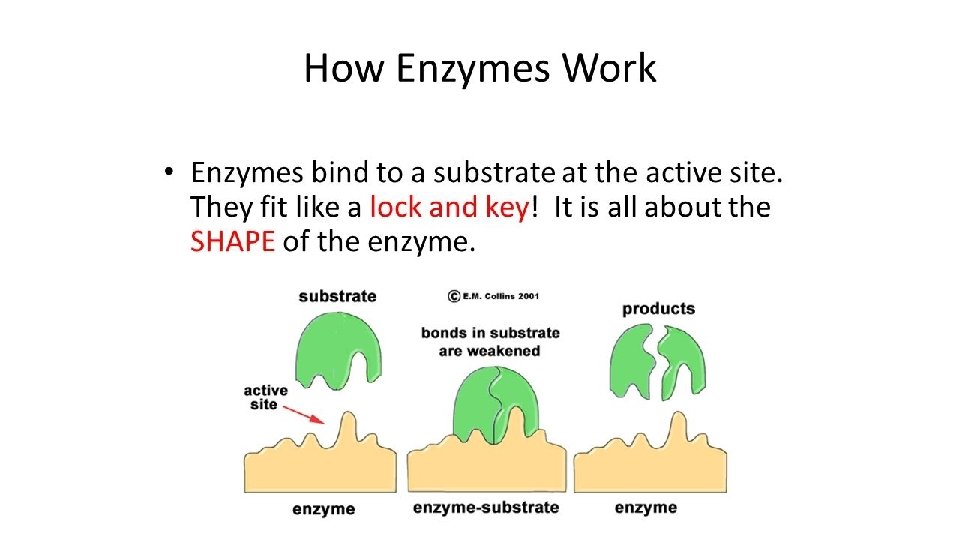
5. enzymes - a substance produced by a living organism which acts as a catalyst to bring about a specific biochemical reaction.
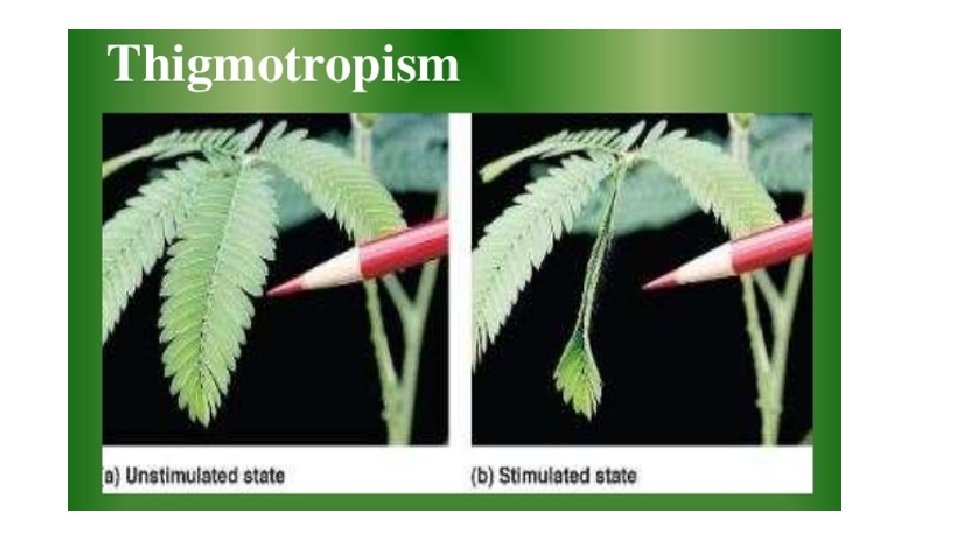
6. thigmotropism - the turning or bending of a plant or other organism in response to a touch stimulus
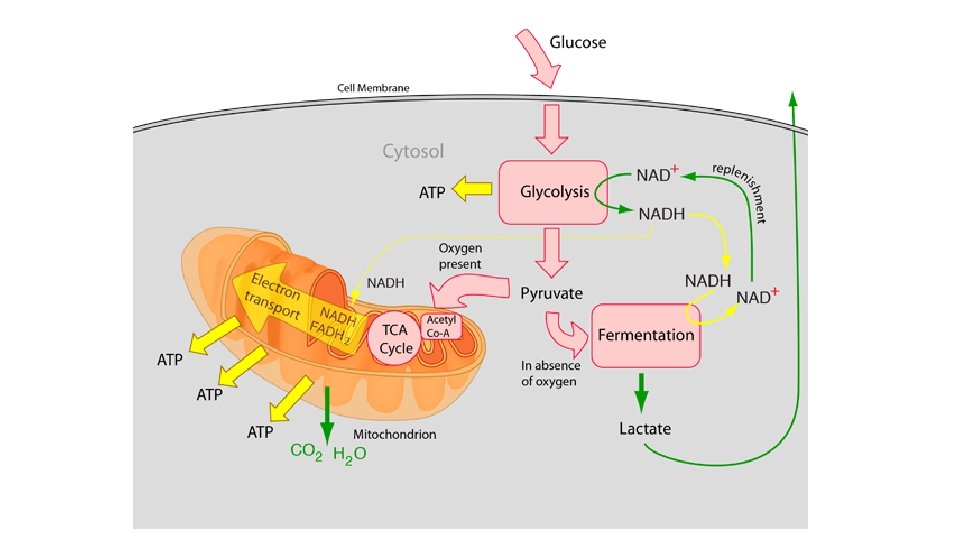
7. Cellular respiration is a set of metabolic reactions and processes that take place in the cells of organisms to convert biochemical energy from nutrients into adenosine triphosphate (ATP), and then release waste products
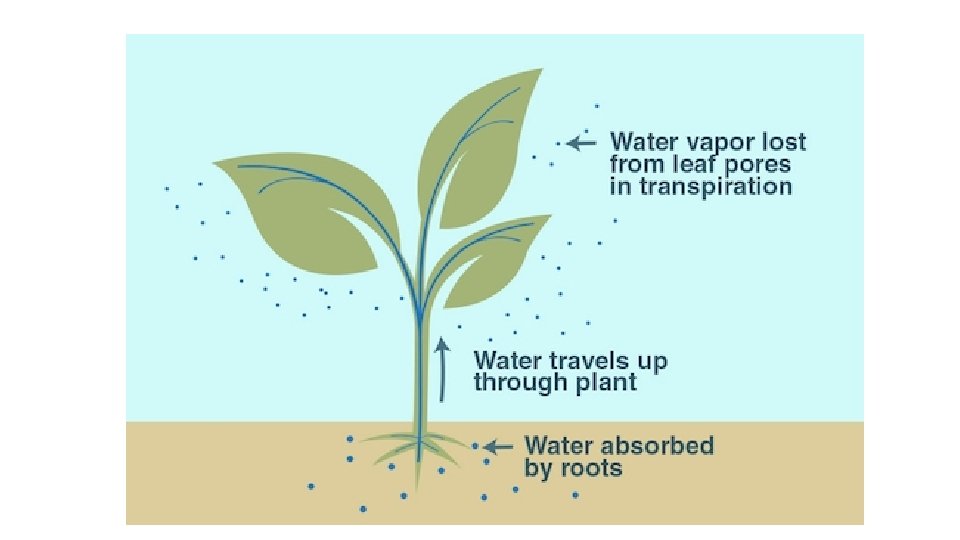
8. Transpiration is the process by which moisture is carried through plants from roots to small pores on the underside of leaves, where it changes to vapor and is released to the atmosphere. Transpiration is essentially evaporation of water from plant leaves.
9. stomata - Taking in oxygen is very important because it allows your cells to do things, like make energy from the food you eat. Plants 'breathe' too, but they do it through tiny openings in leaves called stomata (singular: stoma). Stomata open and close to allow the intake of carbon dioxide and the release of oxygen.
All about plants – STAAR problems
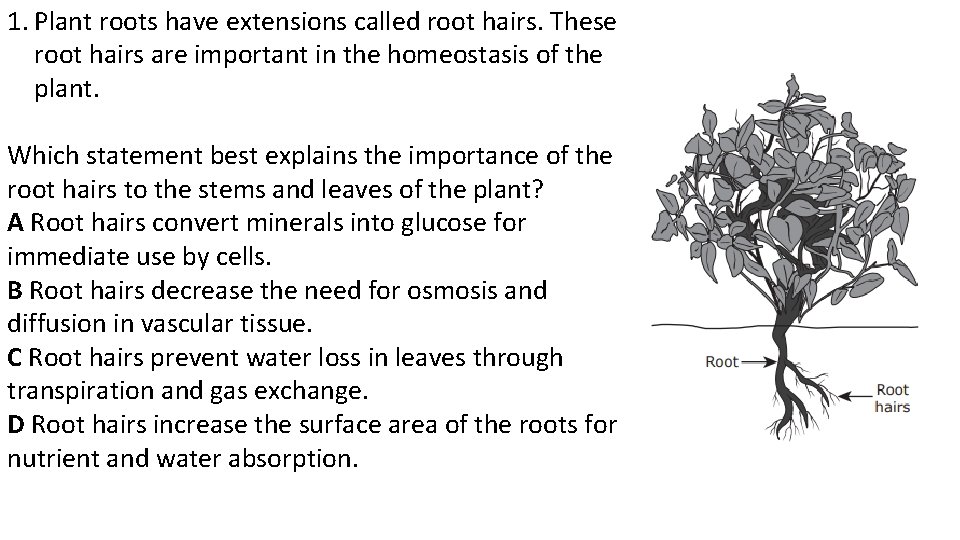
1. Plant roots have extensions called root hairs. These root hairs are important in the homeostasis of the plant. Which statement best explains the importance of the root hairs to the stems and leaves of the plant? A Root hairs convert minerals into glucose for immediate use by cells. B Root hairs decrease the need for osmosis and diffusion in vascular tissue. C Root hairs prevent water loss in leaves through transpiration and gas exchange. D Root hairs increase the surface area of the roots for nutrient and water absorption.

1. D
2. Invasive plant species affect the interactions of living and nonliving components of an ecosystem, so the removal of invasive plants is often necessary. The goal of most plant-control methods is to disrupt or inhibit the function of different plant systems. For example, insects can be used to chew through roots in order to reduce a plant’s ability to absorb water. Which of these functions would be most immediately affected by a reduction in water uptake by roots? F Disease resistance G Seed dispersal H Sunlight absorption J Photosynthesis

2. J
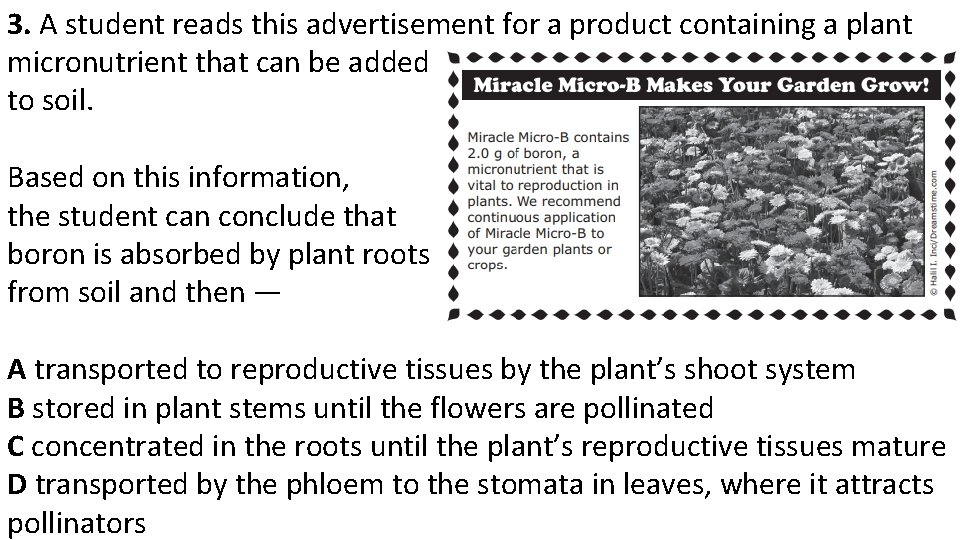
3. A student reads this advertisement for a product containing a plant micronutrient that can be added to soil. Based on this information, the student can conclude that boron is absorbed by plant roots from soil and then — A transported to reproductive tissues by the plant’s shoot system B stored in plant stems until the flowers are pollinated C concentrated in the roots until the plant’s reproductive tissues mature D transported by the phloem to the stomata in leaves, where it attracts pollinators

3. A
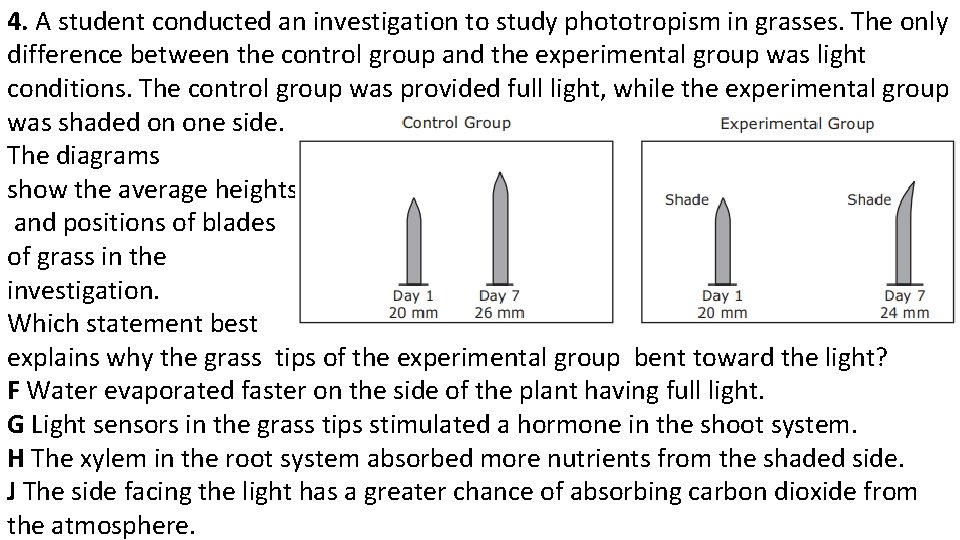
4. A student conducted an investigation to study phototropism in grasses. The only difference between the control group and the experimental group was light conditions. The control group was provided full light, while the experimental group was shaded on one side. The diagrams show the average heights and positions of blades of grass in the investigation. Which statement best explains why the grass tips of the experimental group bent toward the light? F Water evaporated faster on the side of the plant having full light. G Light sensors in the grass tips stimulated a hormone in the shoot system. H The xylem in the root system absorbed more nutrients from the shaded side. J The side facing the light has a greater chance of absorbing carbon dioxide from the atmosphere.

4. G
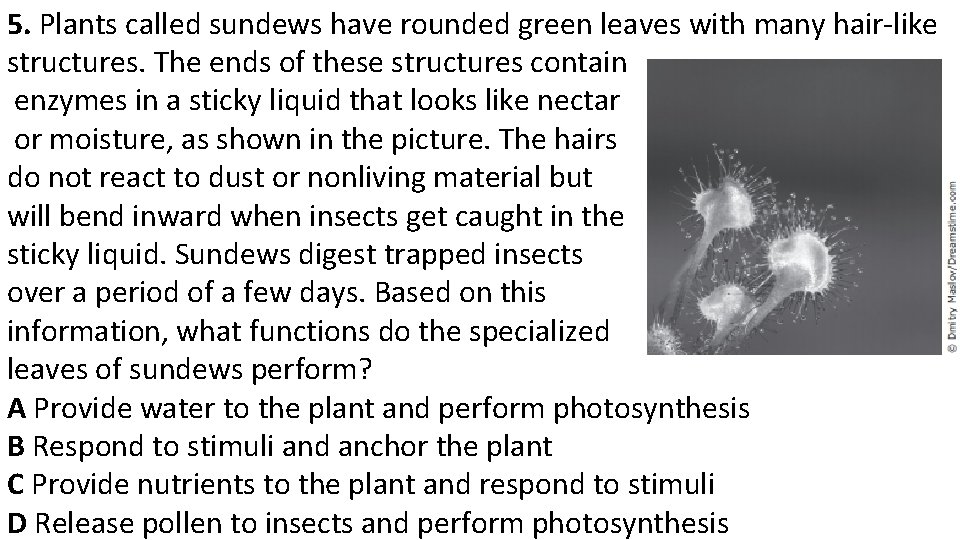
5. Plants called sundews have rounded green leaves with many hair-like structures. The ends of these structures contain enzymes in a sticky liquid that looks like nectar or moisture, as shown in the picture. The hairs do not react to dust or nonliving material but will bend inward when insects get caught in the sticky liquid. Sundews digest trapped insects over a period of a few days. Based on this information, what functions do the specialized leaves of sundews perform? A Provide water to the plant and perform photosynthesis B Respond to stimuli and anchor the plant C Provide nutrients to the plant and respond to stimuli D Release pollen to insects and perform photosynthesis

5. C
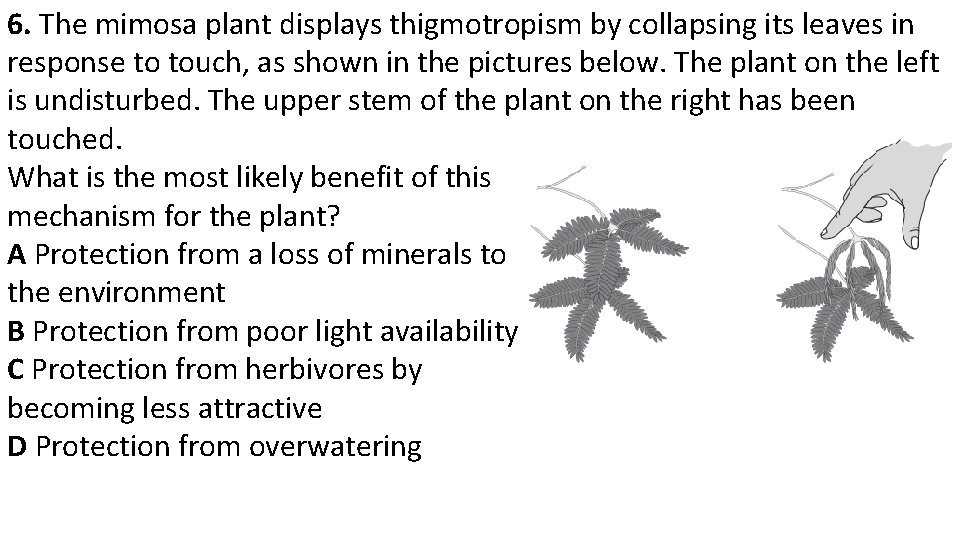
6. The mimosa plant displays thigmotropism by collapsing its leaves in response to touch, as shown in the pictures below. The plant on the left is undisturbed. The upper stem of the plant on the right has been touched. What is the most likely benefit of this mechanism for the plant? A Protection from a loss of minerals to the environment B Protection from poor light availability C Protection from herbivores by becoming less attractive D Protection from overwatering

6. C
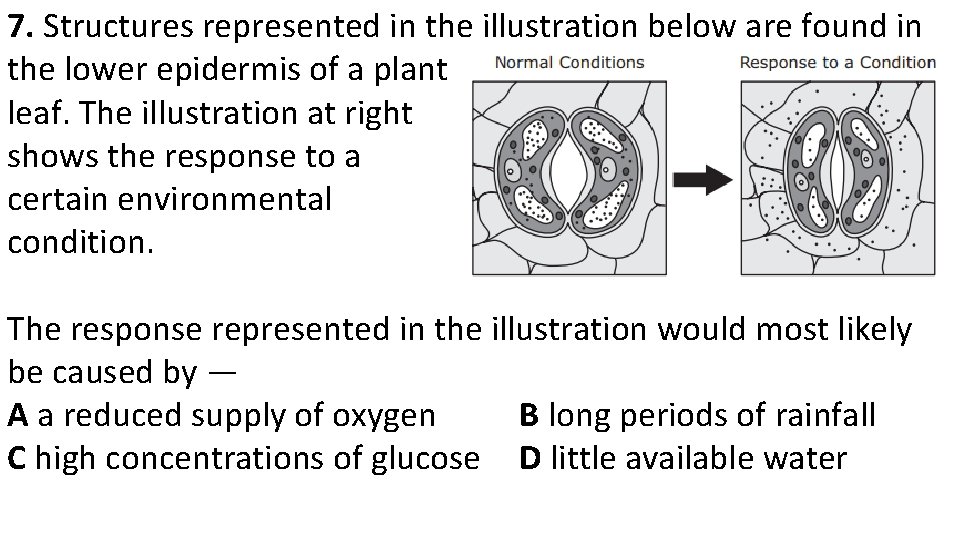
7. Structures represented in the illustration below are found in the lower epidermis of a plant leaf. The illustration at right shows the response to a certain environmental condition. The response represented in the illustration would most likely be caused by — A a reduced supply of oxygen B long periods of rainfall C high concentrations of glucose D little available water

7. D
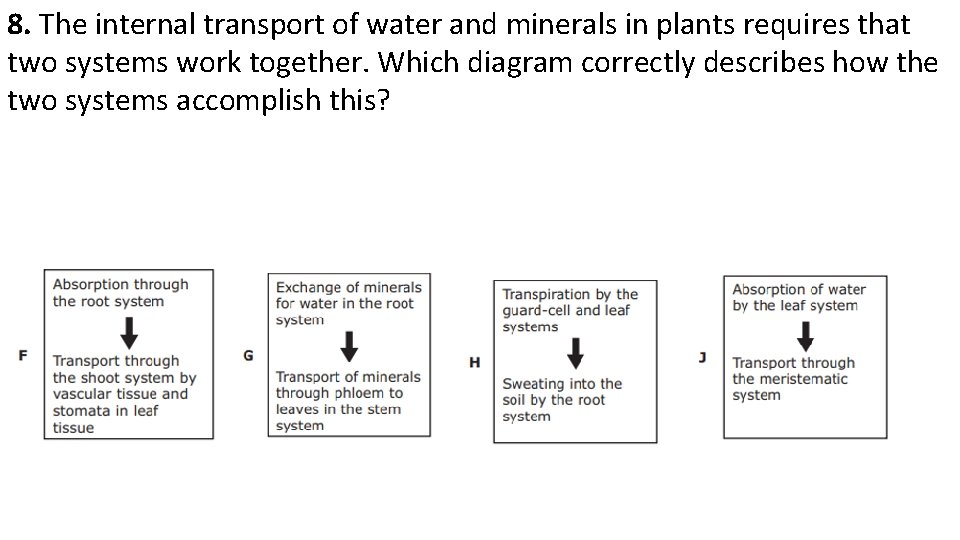
8. The internal transport of water and minerals in plants requires that two systems work together. Which diagram correctly describes how the two systems accomplish this?

8. F
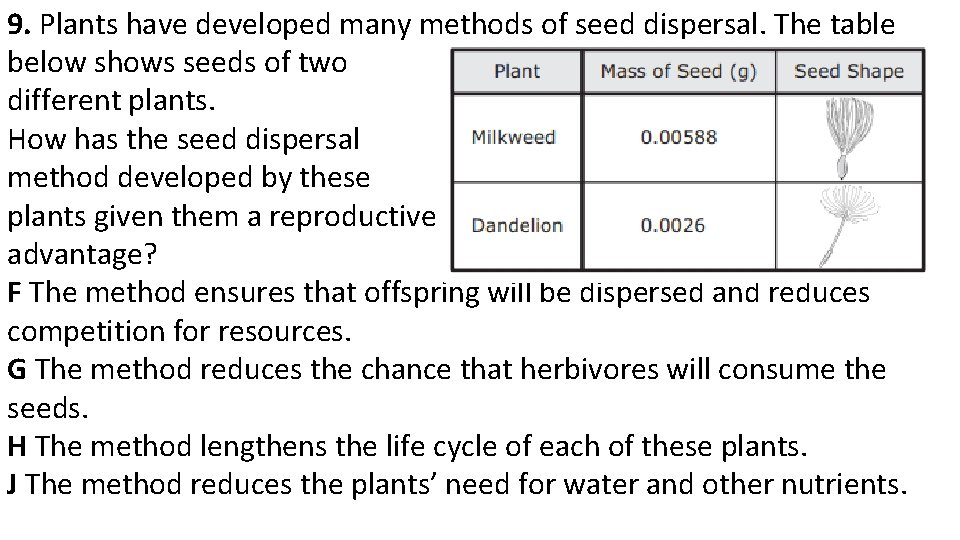
9. Plants have developed many methods of seed dispersal. The table below shows seeds of two different plants. How has the seed dispersal method developed by these plants given them a reproductive advantage? F The method ensures that offspring will be dispersed and reduces competition for resources. G The method reduces the chance that herbivores will consume the seeds. H The method lengthens the life cycle of each of these plants. J The method reduces the plants’ need for water and other nutrients.

9. F
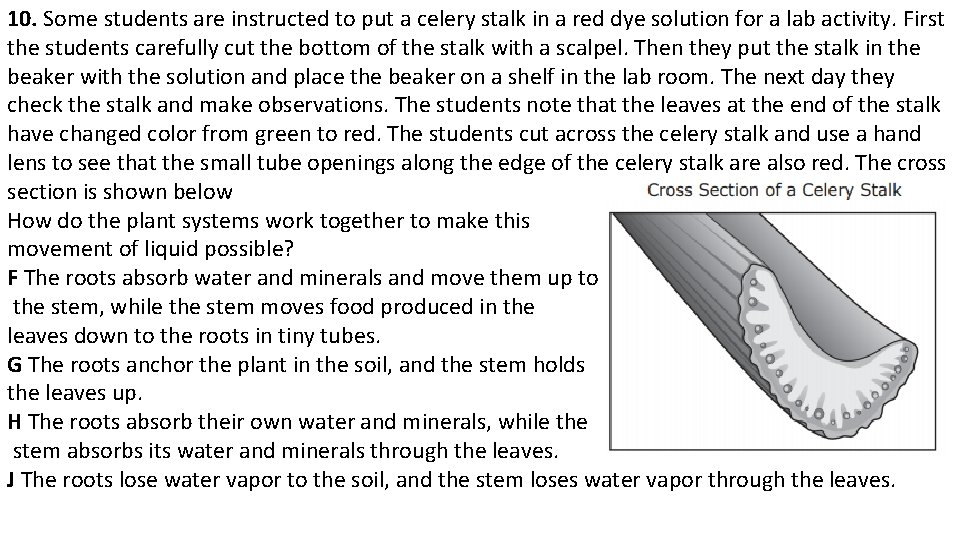
10. Some students are instructed to put a celery stalk in a red dye solution for a lab activity. First the students carefully cut the bottom of the stalk with a scalpel. Then they put the stalk in the beaker with the solution and place the beaker on a shelf in the lab room. The next day they check the stalk and make observations. The students note that the leaves at the end of the stalk have changed color from green to red. The students cut across the celery stalk and use a hand lens to see that the small tube openings along the edge of the celery stalk are also red. The cross section is shown below How do the plant systems work together to make this movement of liquid possible? F The roots absorb water and minerals and move them up to the stem, while the stem moves food produced in the leaves down to the roots in tiny tubes. G The roots anchor the plant in the soil, and the stem holds the leaves up. H The roots absorb their own water and minerals, while the stem absorbs its water and minerals through the leaves. J The roots lose water vapor to the soil, and the stem loses water vapor through the leaves.

10. F
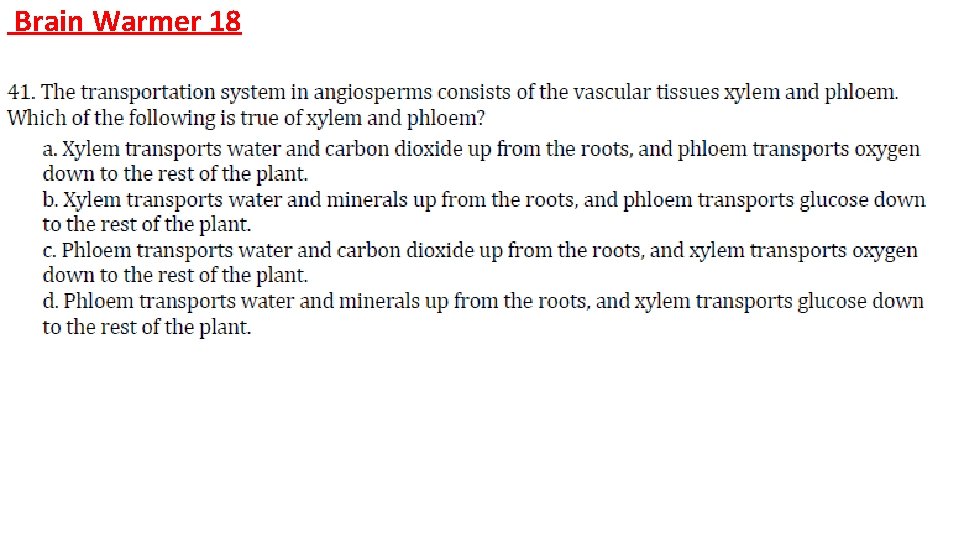
Brain Warmer 18
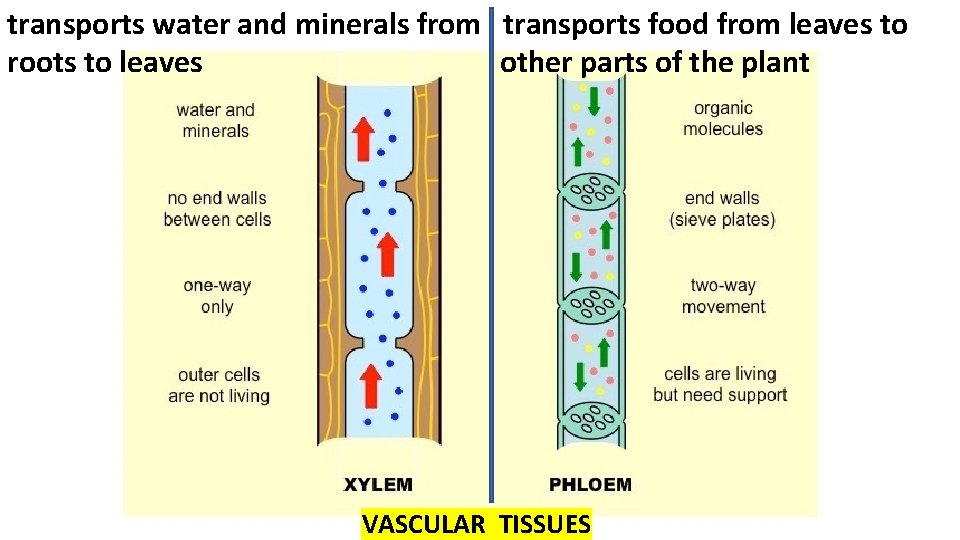
transports water and minerals from transports food from leaves to roots to leaves other parts of the plant VASCULAR TISSUES
The correct answer is B. Water and carbon dioxide are needed for photosynthesis. Xylem carries these reactants from the roots up to the leaves. Glucose is a product of photosynthesis, and is carried to the rest of the plant by phloem. 132
- Slides: 132