Cell Division and Mitosis Chapter 5 Chromosome n

- Slides: 30
Cell Division and Mitosis Chapter 5
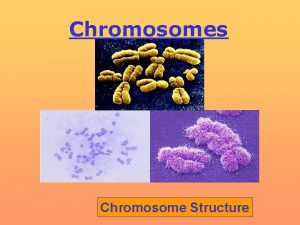
Chromosome n Chromosomes are tightly coiled DNA and protein n Chromatin is a mass of DNA and protein Chromatin coil up to form stages of cell division Chromosomes during the early The human chromosome contains about ½ billion nucleotides
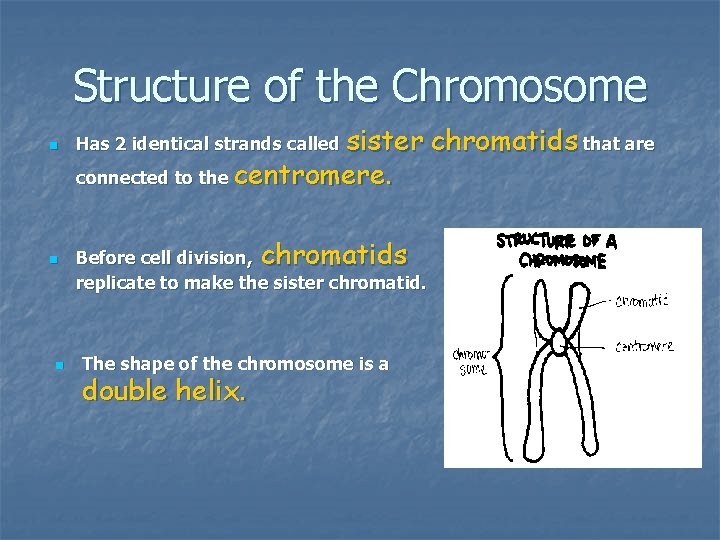
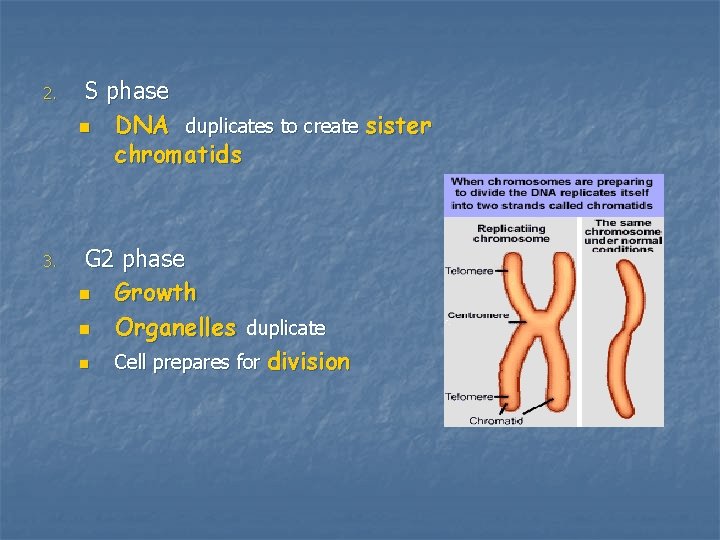
Structure of the Chromosome n n n Has 2 identical strands called sister connected to the centromere. Before cell division, chromatids replicate to make the sister chromatid. The shape of the chromosome is a double helix. chromatids that are
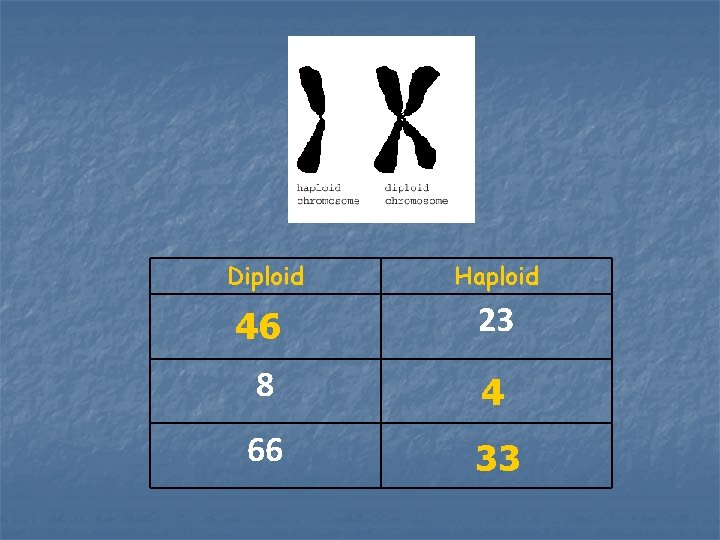
Chromosome number n In humans there are: n n 46 in normal cell 23 in sex cells The set of chromosomes for an organism is called a Diploid n karyotype 2 sets of chromosomes (pair), one from each parent Haploid - 1 chromosome
Diploid Haploid 46 23 8 4 66 33
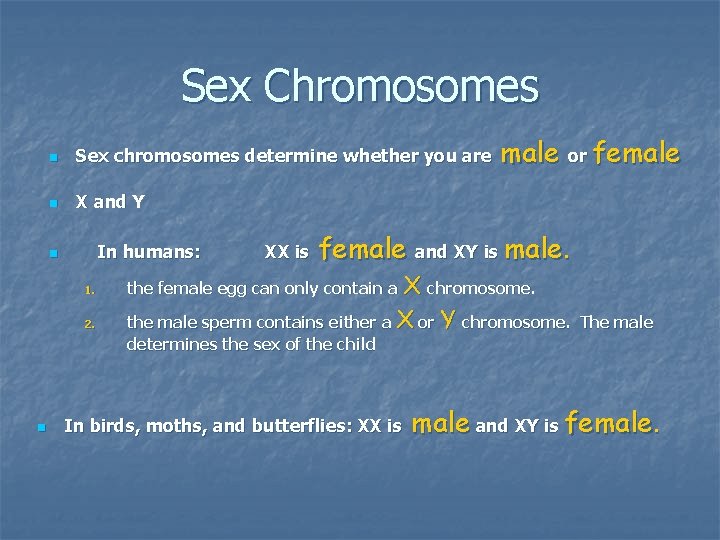
Sex Chromosomes n Sex chromosomes determine whether you are n X and Y In humans: n 1. 2. n XX is male or female and XY is male. the female egg can only contain a X chromosome. the male sperm contains either a X or Y chromosome. The male determines the sex of the child In birds, moths, and butterflies: XX is male and XY is female.
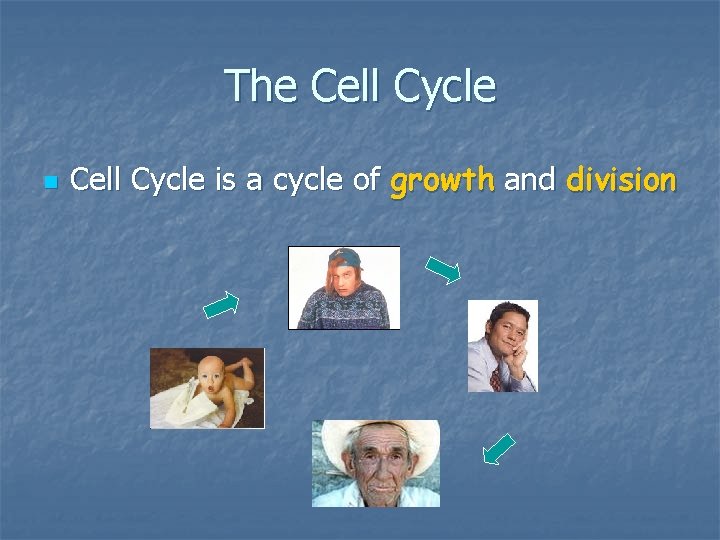
The Cell Cycle n Cell Cycle is a cycle of growth and division
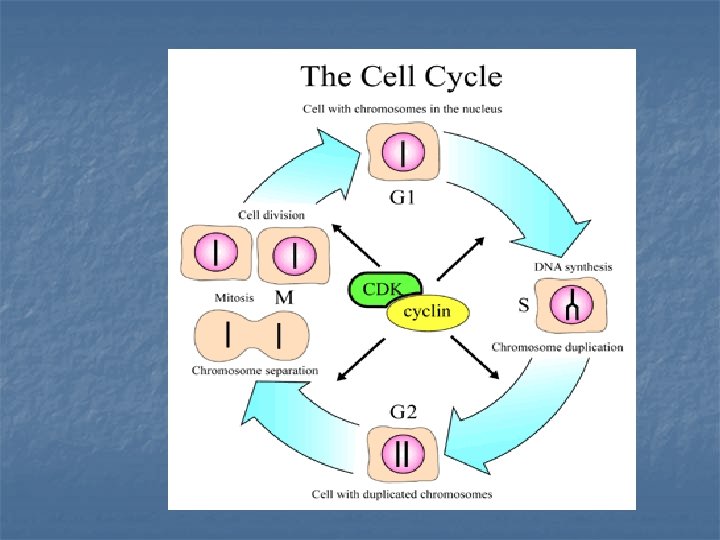
Three major parts of cell cycle n Interphase n Mitosis – nucleus division n Cytokinesis - cell division For all eukaryote cells the stages are the same, but the length of time the stages last varies.
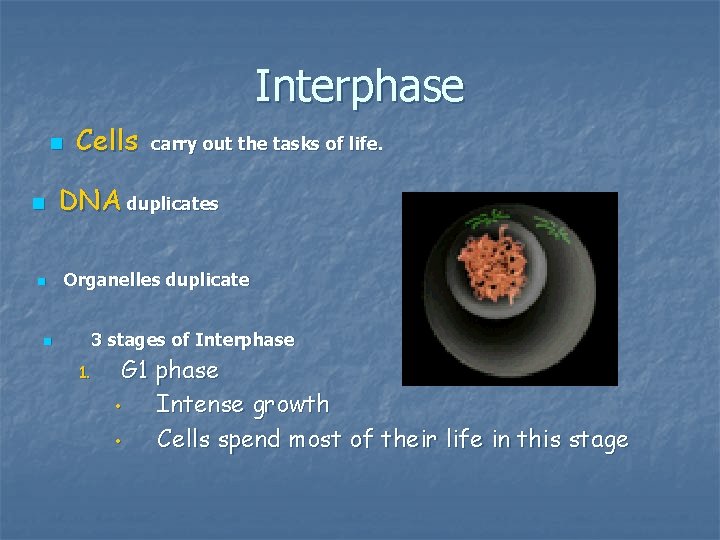
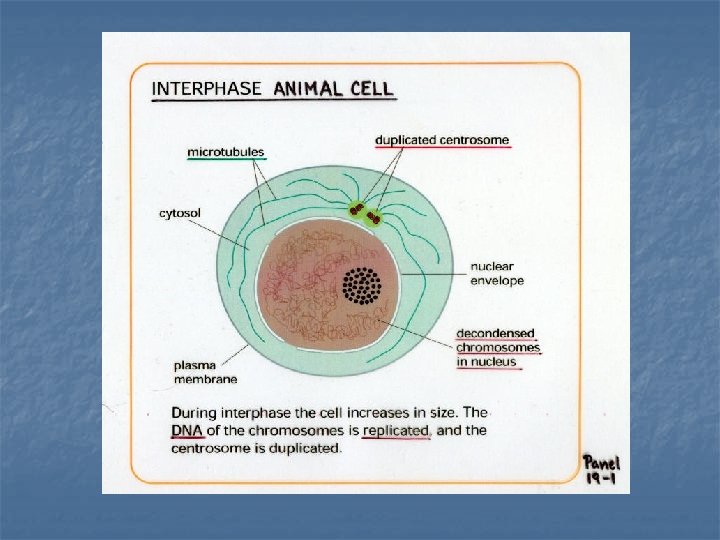
Interphase n n Cells carry out the tasks of life. DNA duplicates Organelles duplicate 3 stages of Interphase 1. G 1 phase • Intense growth • Cells spend most of their life in this stage
2. S phase n DNA duplicates to create sister chromatids 3. G 2 phase n Growth n Organelles duplicate n Cell prepares for division
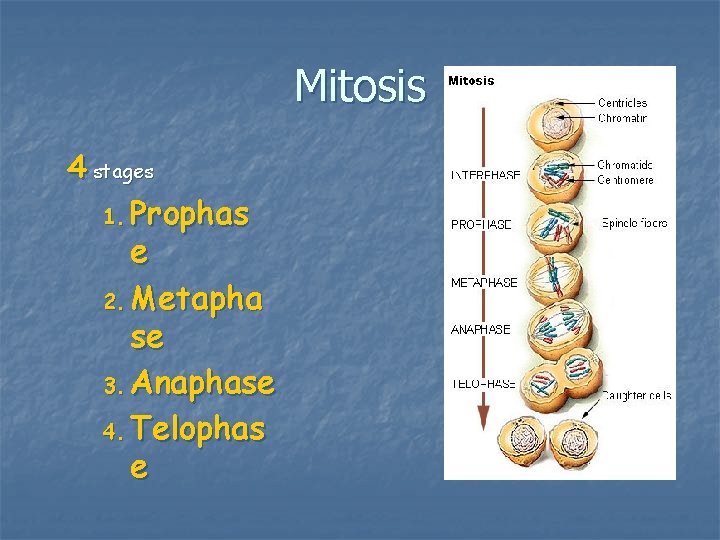
Mitosis 4 stages 1. Prophas e 2. Metapha se 3. Anaphase 4. Telophas e
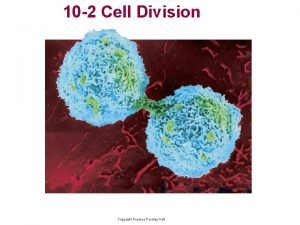
Cytokinesis n Cellular division n Cell divides in half and becomes 2 identical daughter cells
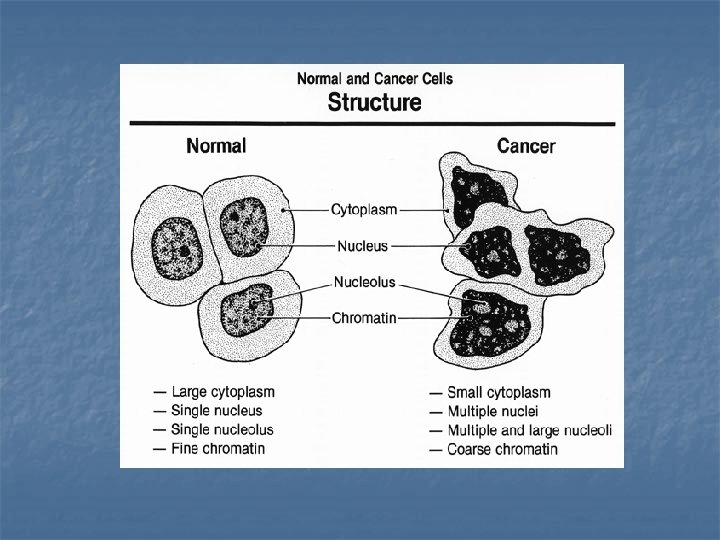
Controlling the cell cycle n. The cell cycle is controlled by proteins called cyclins. n. Cancer is the uncontrolled growth and division of cells. A clump of cells is called a n Factors that may cause cancer: 1. Mutation in genes 2. Radiation 3. Cigarette 4. Diet and smoke obesity tumor
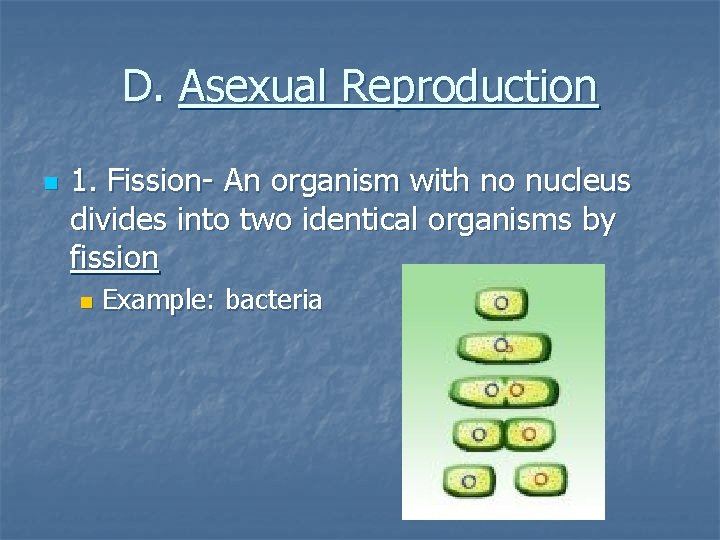
Cell Division n Cell division in Prokaryote cells (bacteria) n Bacteria grows n Circular DNA copies itself and attaches to the cell membrane n Cell n This pinches inward and splits is called binary fission
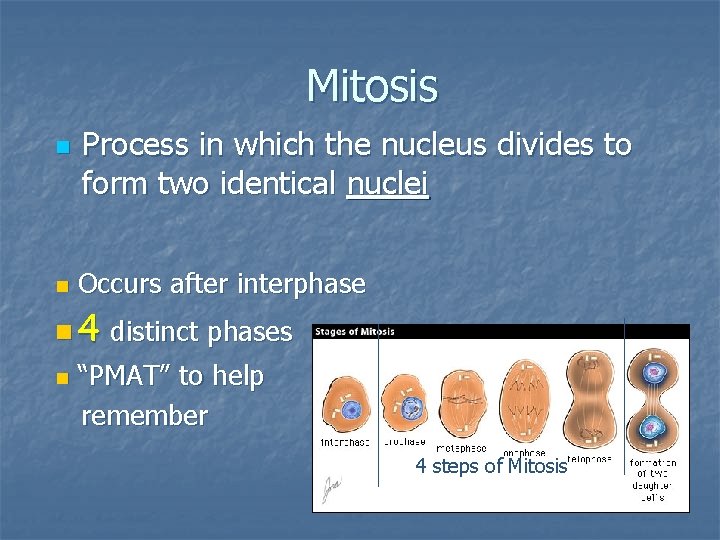
Mitosis n n Process in which the nucleus divides to form two identical nuclei Occurs after interphase n 4 distinct phases n “PMAT” to help remember 4 steps of Mitosis
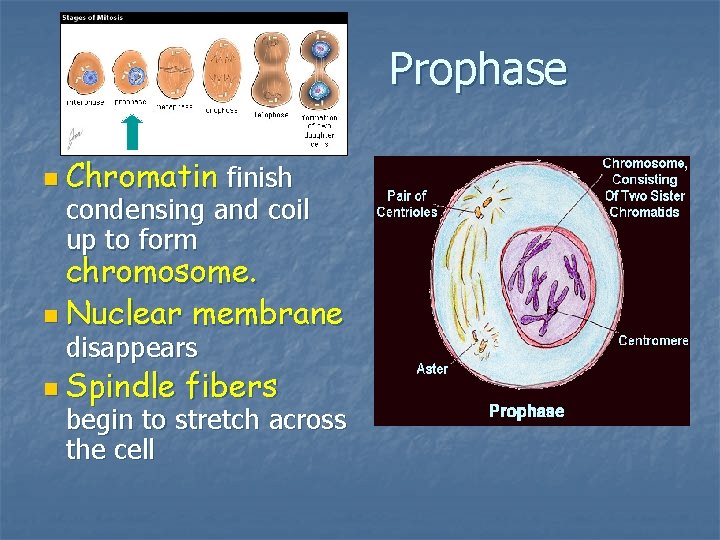
Prophase n Chromatin finish condensing and coil up to form chromosome. n Nuclear membrane disappears n Spindle fibers begin to stretch across the cell
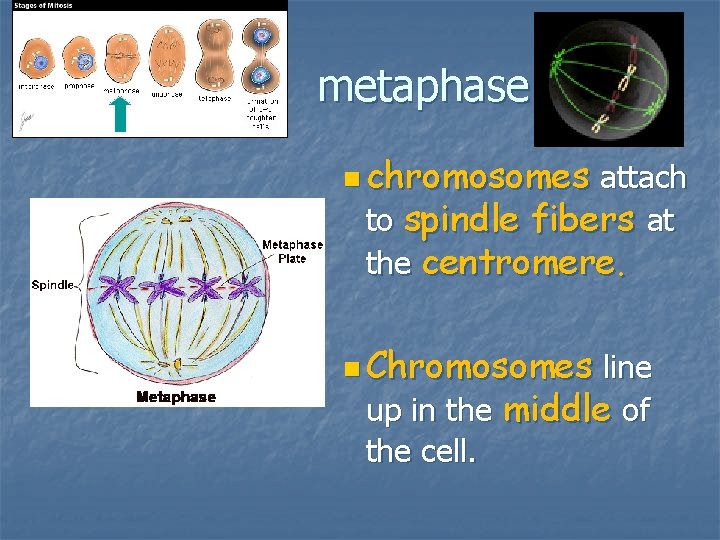
metaphase n chromosomes attach to spindle fibers at the centromere. n Chromosomes line up in the middle of the cell.
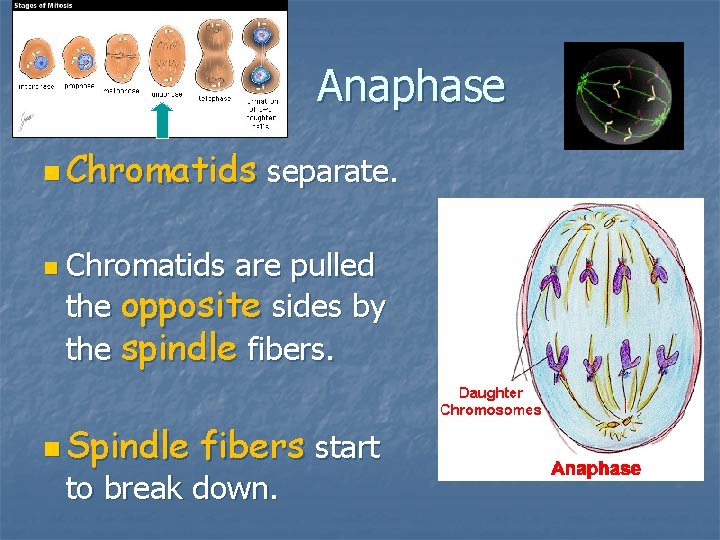
Anaphase n Chromatids separate. n Chromatids are pulled the opposite sides by the spindle fibers. n Spindle fibers start to break down.
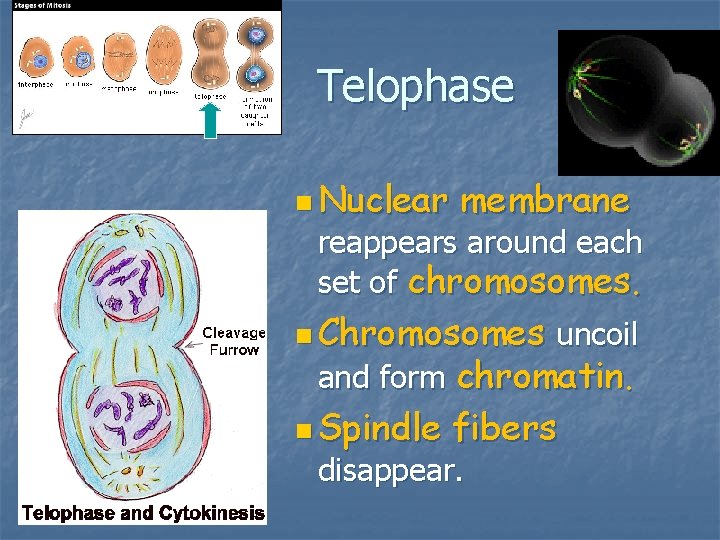
Telophase n Nuclear membrane reappears around each set of chromosomes. n Chromosomes uncoil and form chromatin. n Spindle fibers disappear.
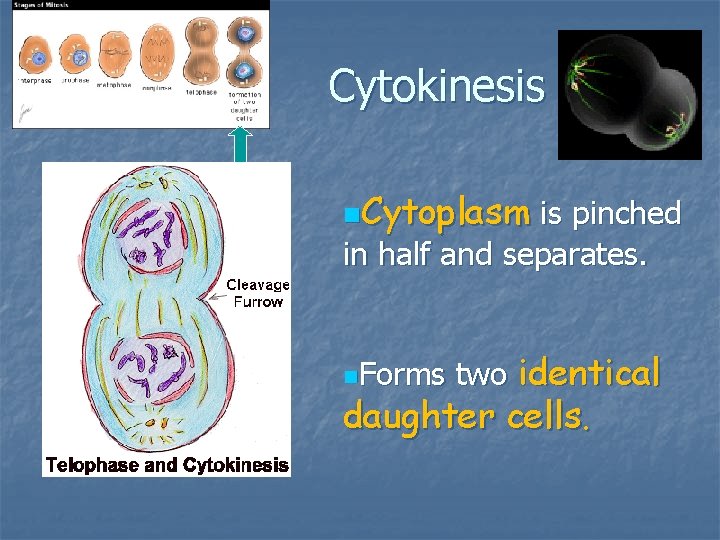
Cytokinesis n. Cytoplasm is pinched in half and separates. n. Forms two identical daughter cells.
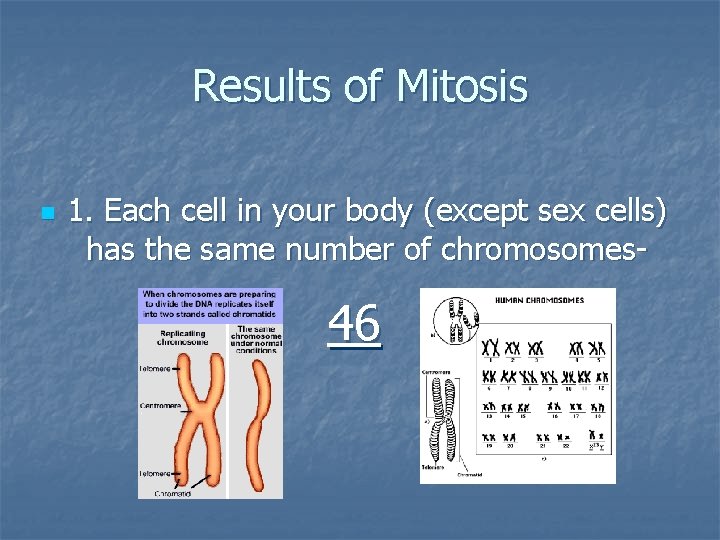
Results of Mitosis n 1. Each cell in your body (except sex cells) has the same number of chromosomes- 46
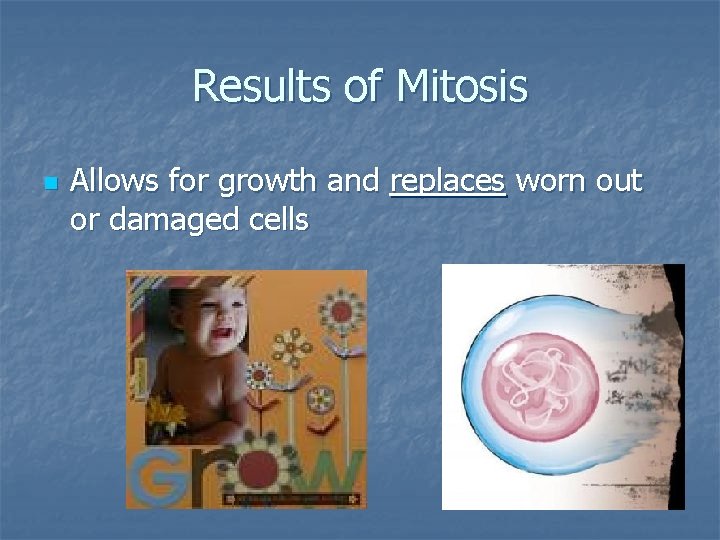
Results of Mitosis n Allows for growth and replaces worn out or damaged cells
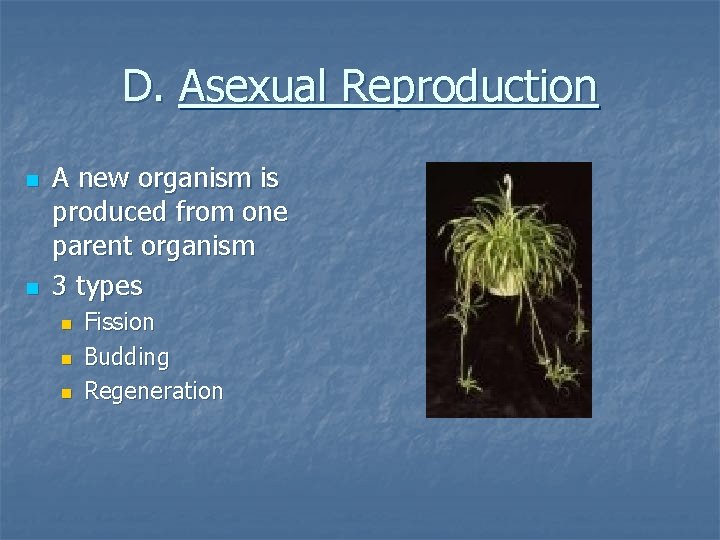
D. Asexual Reproduction n n A new organism is produced from one parent organism 3 types n n n Fission Budding Regeneration
D. Asexual Reproduction n 1. Fission- An organism with no nucleus divides into two identical organisms by fission n Example: bacteria
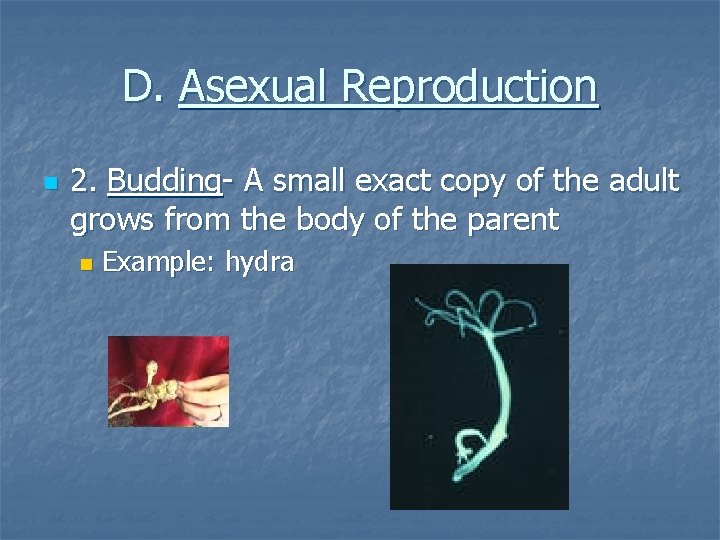
D. Asexual Reproduction n 2. Budding- A small exact copy of the adult grows from the body of the parent n Example: hydra
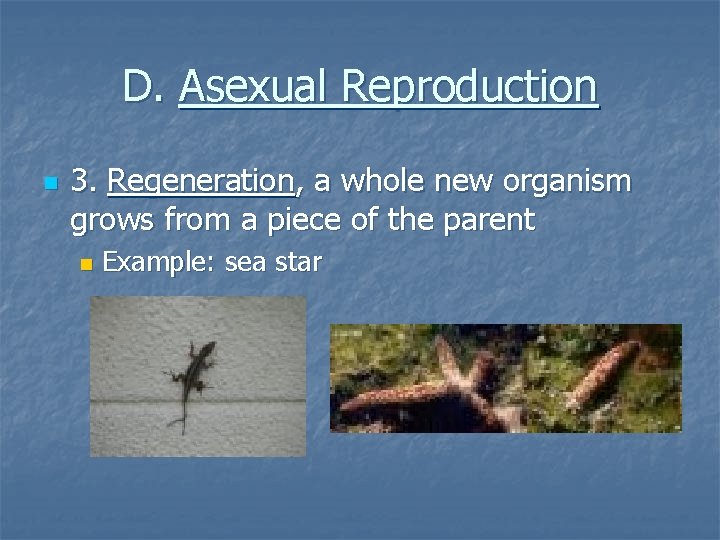
D. Asexual Reproduction n 3. Regeneration, a whole new organism grows from a piece of the parent n Example: sea star