Cancer Genetics for Primary Care Sara Levene Registered



- Slides: 42
Cancer Genetics for Primary Care Sara Levene Registered Genetic Counsellor
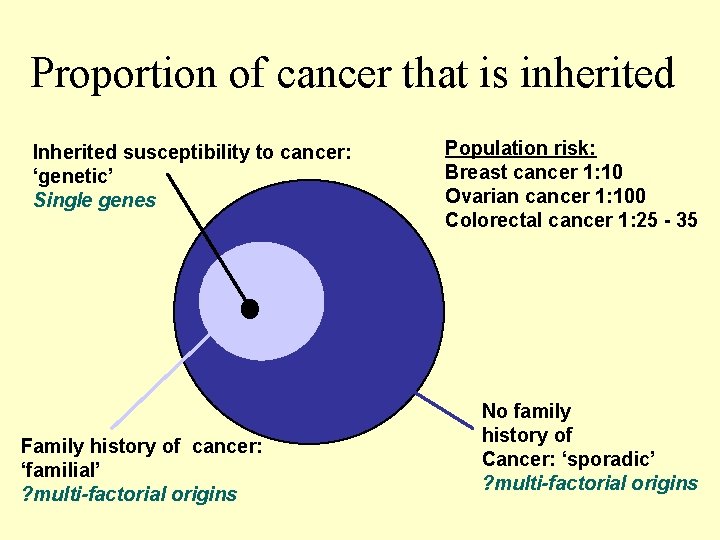
Proportion of cancer that is inherited Inherited susceptibility to cancer: ‘genetic’ Single genes Family history of cancer: ‘familial’ ? multi-factorial origins Population risk: Breast cancer 1: 10 Ovarian cancer 1: 100 Colorectal cancer 1: 25 - 35 No family history of Cancer: ‘sporadic’ ? multi-factorial origins
To make a long story short: All cancer is genetic Cancer is rarely inherited
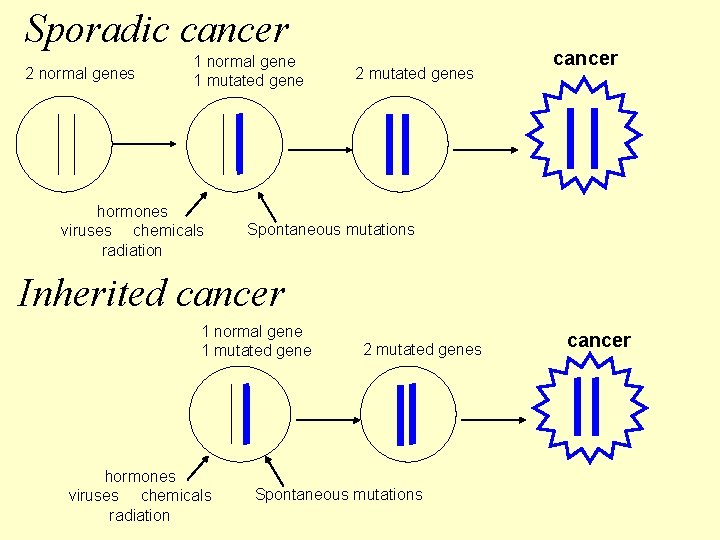
Sporadic cancer 2 normal genes 1 normal gene 1 mutated gene hormones viruses chemicals radiation 2 mutated genes cancer Spontaneous mutations Inherited cancer 1 normal gene 1 mutated gene hormones viruses chemicals radiation 2 mutated genes Spontaneous mutations cancer
Inherited Mutations and Cancer • Inherited mutations relating to cancer do not cause cancer • Mutations are often found in genes that are ‘tumour suppressors’ • Mutations mean that protection from cancer is lost or reduced • Mutations lead to increased susceptibility to certain types of cancer
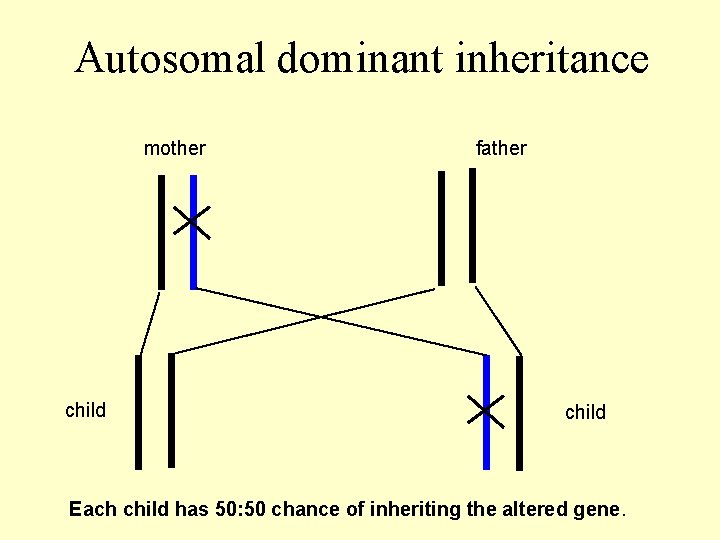
Autosomal dominant inheritance mother child father child Each child has 50: 50 chance of inheriting the altered gene.
Genetic testing
Cancer Genes Mendelian Inheritance (AD) • In the last 10 years several genes relating to specific cancer syndromes have been identified • There are more cancer genes waiting to be ‘discovered’ • It is difficult to locate the exact mutation in a cancer gene for a particular family
Cancer Genes Multi-factorial Inheritance • More recently the search for other AD genes has led to the discovery of some ‘lower risk’ genes eg. CHEK 2 – found in ~2% cases ca br – est doubles risk of ca br • ? Liability/threshold model with several similar genes (+ env factors) • This research is not yet applicable to clinical practice
Genetic Testing • Technically difficult • Can only be offered to high risk families • Can only search small number of high risk dominant genes • Can take more than a year to search for the mutation in a family • Often cannot locate the mutation for a family (? unknown genes)
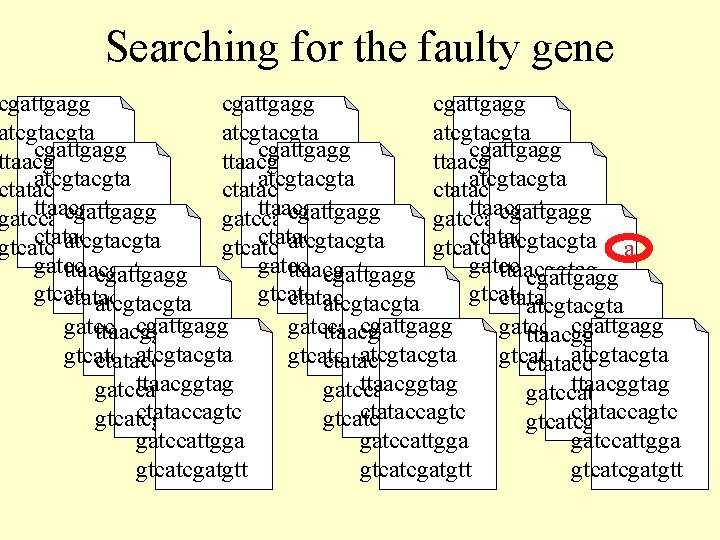
Searching for the faulty gene cgattgagg atcgtacgta atcgta cgattgagg ttaacggtag atcgtacgta atcgta ctataccagtc ttaacggtag cgattgagg gatccattgga ctataccagtc atcgtacgta atcgta a gtcatcgatgtt gatccattgga ttaacggtag cgattgagg gtcatcgatgtt ctataccagtc atcgtacgta atcgta cgattgagg gatccattgga ttaacggtag atcgtacgta atcgta gtcatcgatgtt ctataccagtc ttaacggtag gatccattgga ctataccagtc gtcatcgatgtt gatccattgga gtcatcgatgtt
Genetic Testing • First test in family always done on person who has had the cancer (mutation search test) • If no living affected relatives available – cannot offer genetic test for family • If a mutation is found predictive testing can be offered to at-risk relatives: – If relative doesn’t carry familial mutation they are not at increased risk of cancer (still at population risk) – If a person does carry the familial mutation they are at increased risk of developing cancer
Family History of Breast Cancer
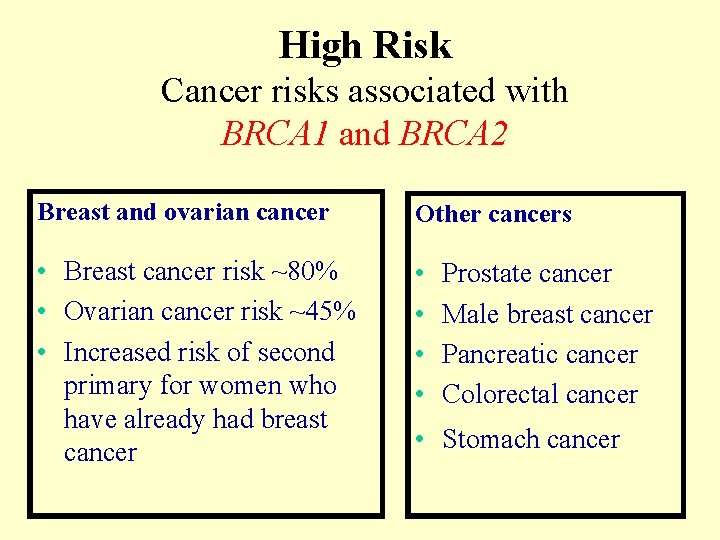
High Risk Cancer risks associated with BRCA 1 and BRCA 2 Breast and ovarian cancer Other cancers • Breast cancer risk ~80% • Ovarian cancer risk ~45% • Increased risk of second primary for women who have already had breast cancer • • Prostate cancer Male breast cancer Pancreatic cancer Colorectal cancer • Stomach cancer
Recent NICE Guidelines on Familial Breast Cancer • Women at or near population risk are cared for in primary care. • Women at moderate risk are cared for in secondary care. • Women at high risk are cared for in tertiary care.
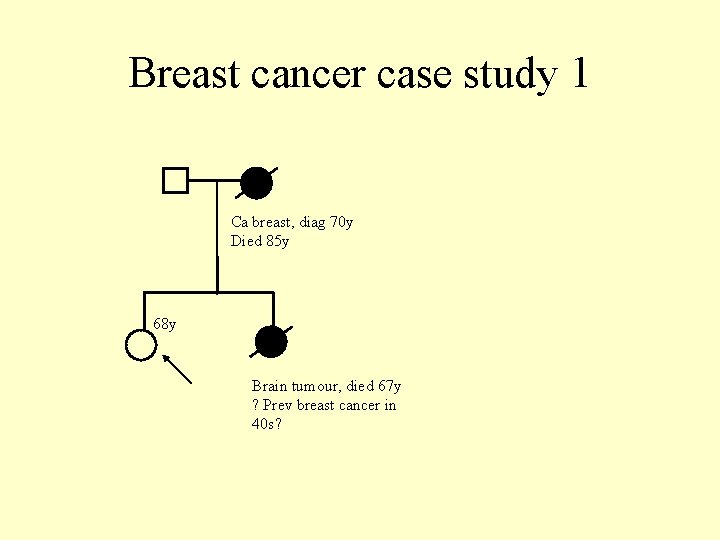
Breast cancer case study 1 Ca breast, diag 70 y Died 85 y 68 y Brain tumour, died 67 y ? Prev breast cancer in 40 s?
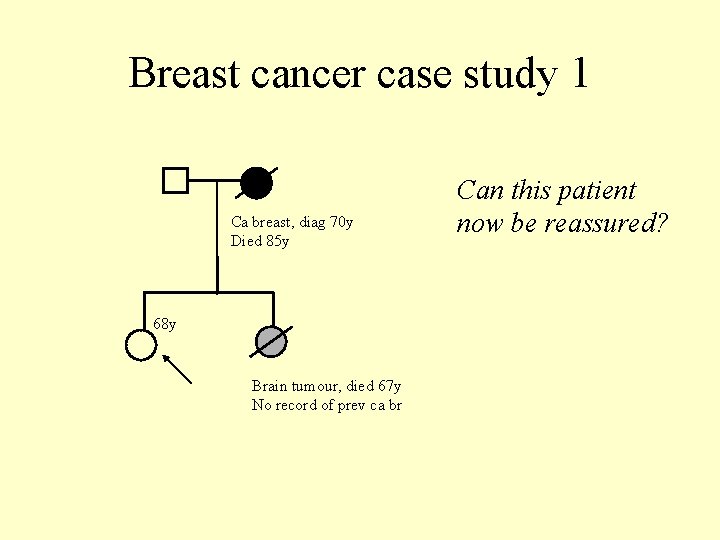
Breast cancer case study 1 Ca breast, diag 70 y Died 85 y 68 y Brain tumour, died 67 y No record of prev ca br Can this patient now be reassured?
Population risk Screening and management • National breast screening from 50 y • Breast awareness • Reassure patient: – For most women, increasing age is the greatest risk factor. – The great majority of women with a family history of breast cancer do not fall into a high-risk category and do not develop breast cancer.
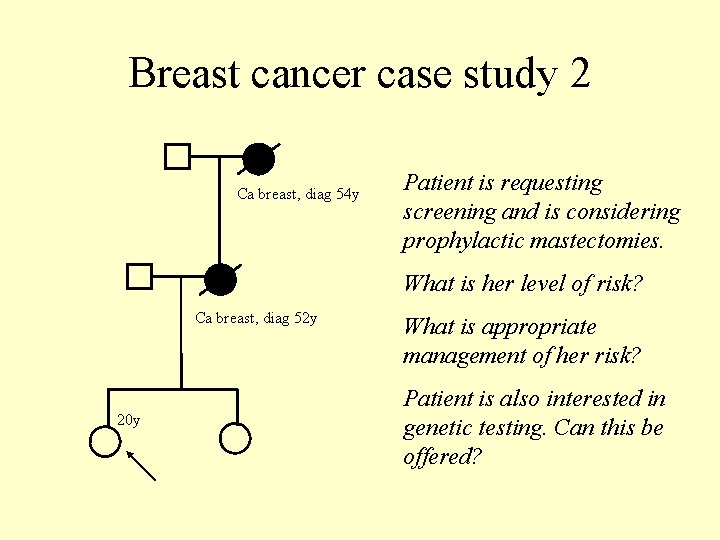
Breast cancer case study 2 Ca breast, diag 54 y Patient is requesting screening and is considering prophylactic mastectomies. What is her level of risk? Ca breast, diag 52 y 20 y What is appropriate management of her risk? Patient is also interested in genetic testing. Can this be offered?
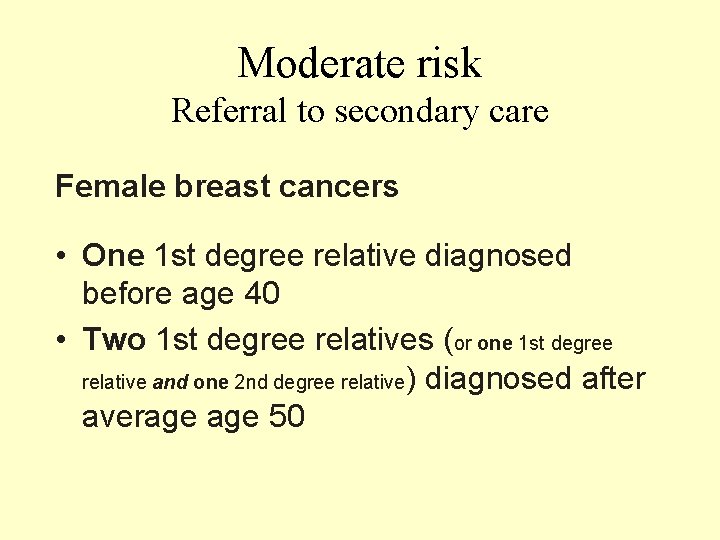
Moderate risk Referral to secondary care Female breast cancers • One 1 st degree relative diagnosed before age 40 • Two 1 st degree relatives (or one 1 st degree relative and one 2 nd degree relative) diagnosed after average 50
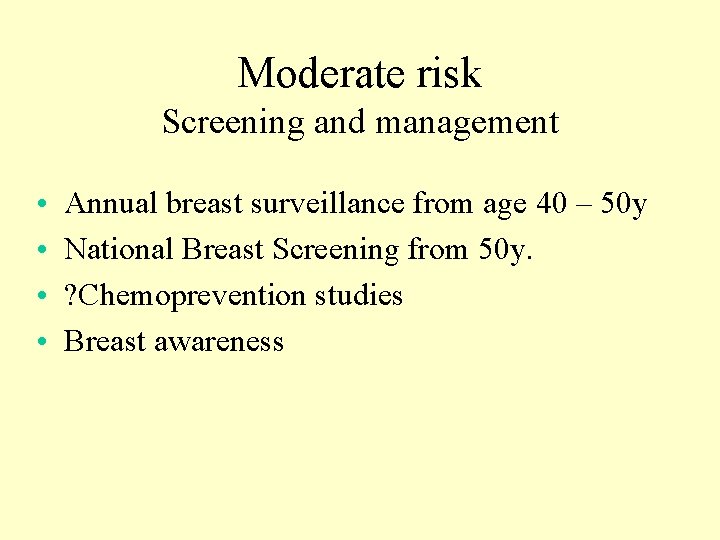
Moderate risk Screening and management • • Annual breast surveillance from age 40 – 50 y National Breast Screening from 50 y. ? Chemoprevention studies Breast awareness
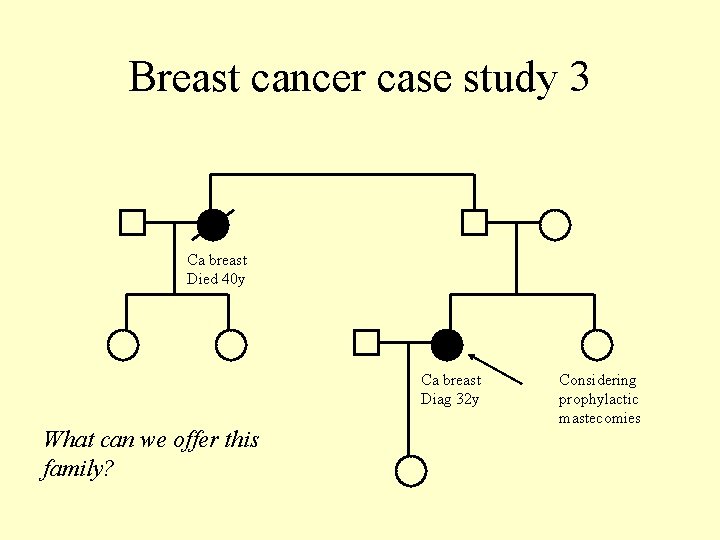
Breast cancer case study 3 Ca breast Died 40 y Ca breast Diag 32 y What can we offer this family? Considering prophylactic mastecomies
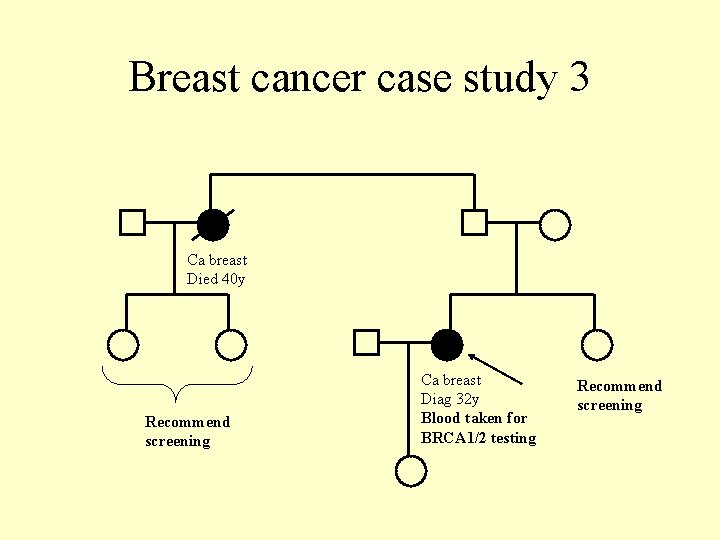
Breast cancer case study 3 Ca breast Died 40 y Recommend screening Ca breast Diag 32 y Blood taken for BRCA 1/2 testing Recommend screening
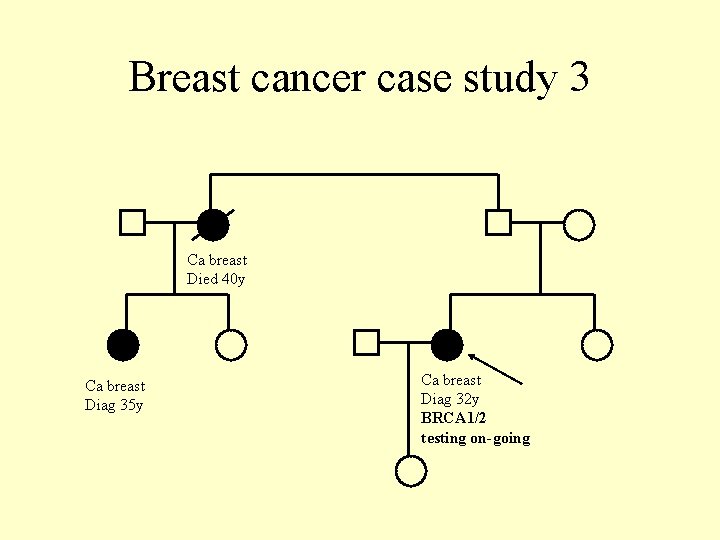
Breast cancer case study 3 Ca breast Died 40 y Ca breast Diag 35 y Ca breast Diag 32 y BRCA 1/2 testing on-going
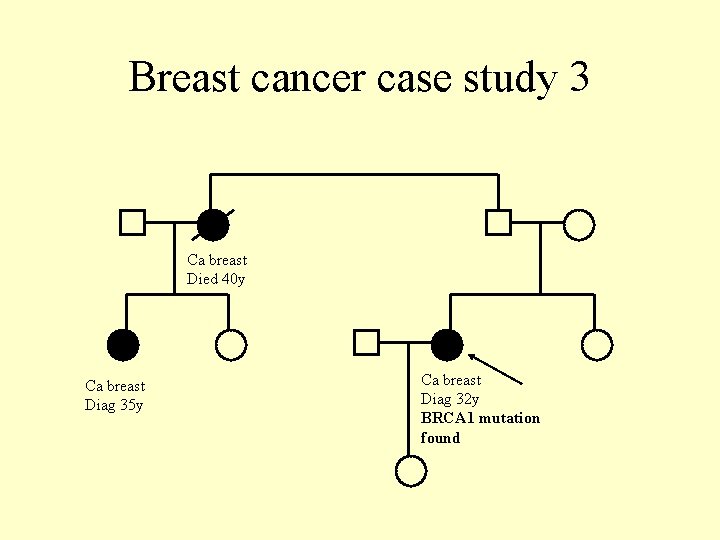
Breast cancer case study 3 Ca breast Died 40 y Ca breast Diag 35 y Ca breast Diag 32 y BRCA 1 mutation found
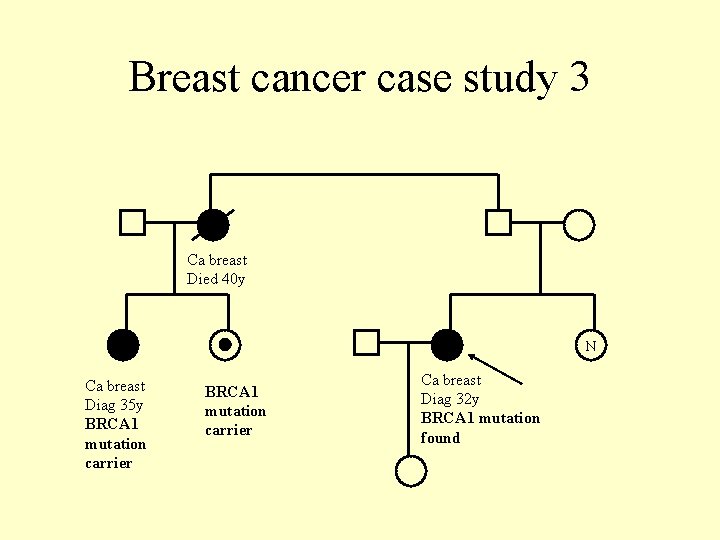
Breast cancer case study 3 Ca breast Died 40 y N Ca breast Diag 35 y BRCA 1 mutation carrier Ca breast Diag 32 y BRCA 1 mutation found
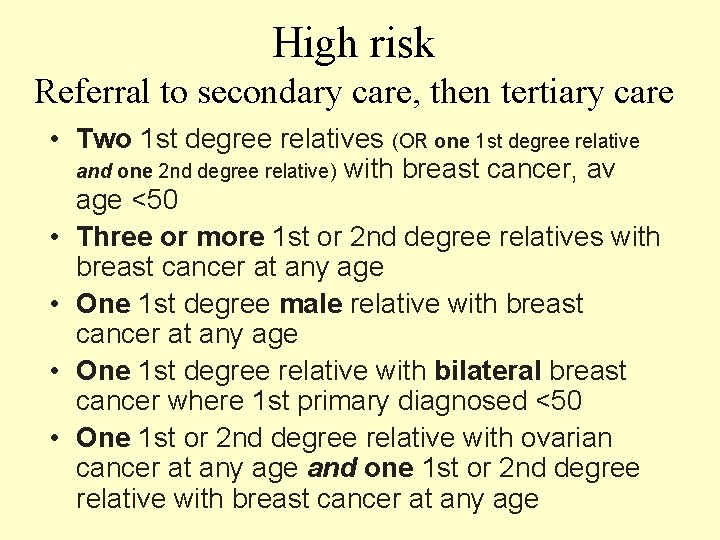
High risk Referral to secondary care, then tertiary care • Two 1 st degree relatives (OR one 1 st degree relative and one 2 nd degree relative) with breast cancer, av age <50 • Three or more 1 st or 2 nd degree relatives with breast cancer at any age • One 1 st degree male relative with breast cancer at any age • One 1 st degree relative with bilateral breast cancer where 1 st primary diagnosed <50 • One 1 st or 2 nd degree relative with ovarian cancer at any age and one 1 st or 2 nd degree relative with breast cancer at any age
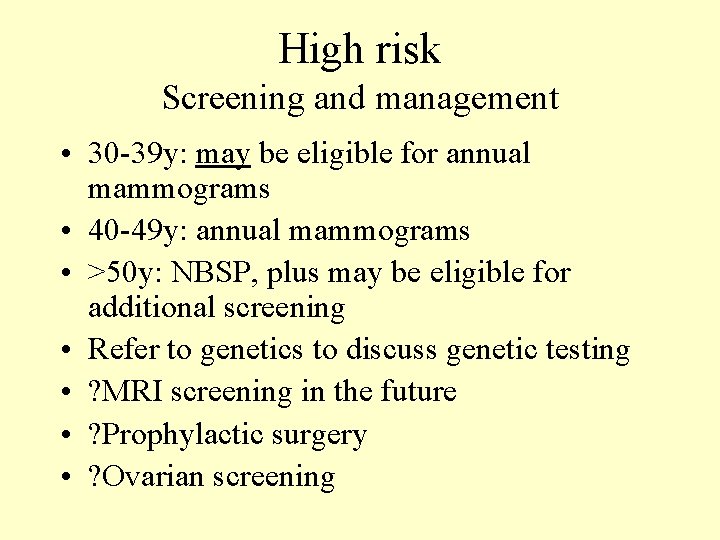
High risk Screening and management • 30 -39 y: may be eligible for annual mammograms • 40 -49 y: annual mammograms • >50 y: NBSP, plus may be eligible for additional screening • Refer to genetics to discuss genetic testing • ? MRI screening in the future • ? Prophylactic surgery • ? Ovarian screening
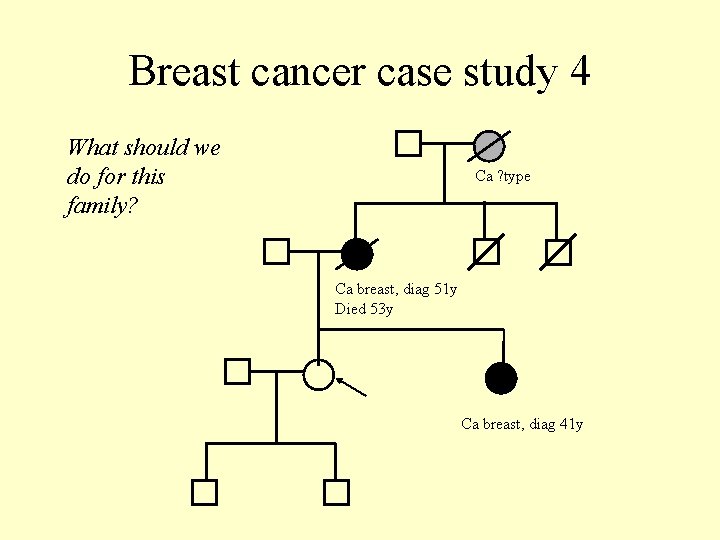
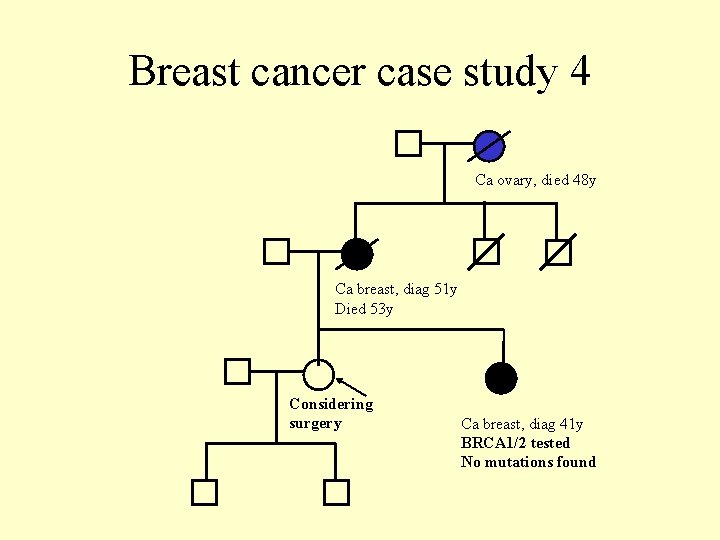
Breast cancer case study 4 What should we do for this family? Ca ? type Ca breast, diag 51 y Died 53 y Ca breast, diag 41 y
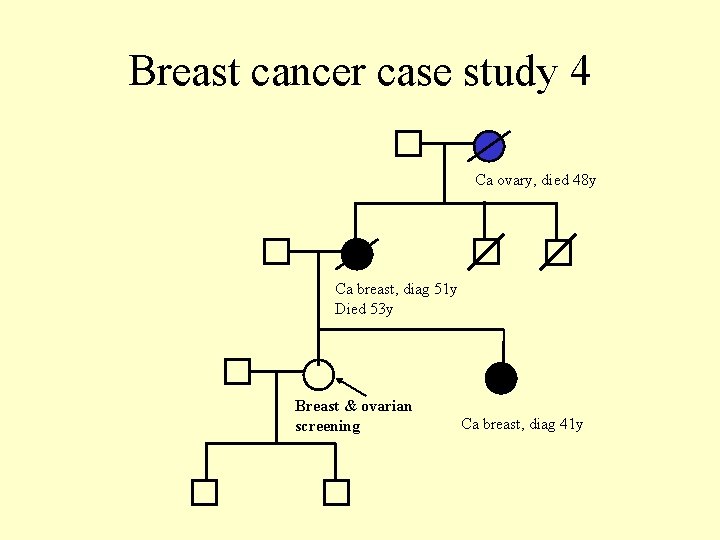
Breast cancer case study 4 Ca ovary, died 48 y Ca breast, diag 51 y Died 53 y Breast & ovarian screening Ca breast, diag 41 y
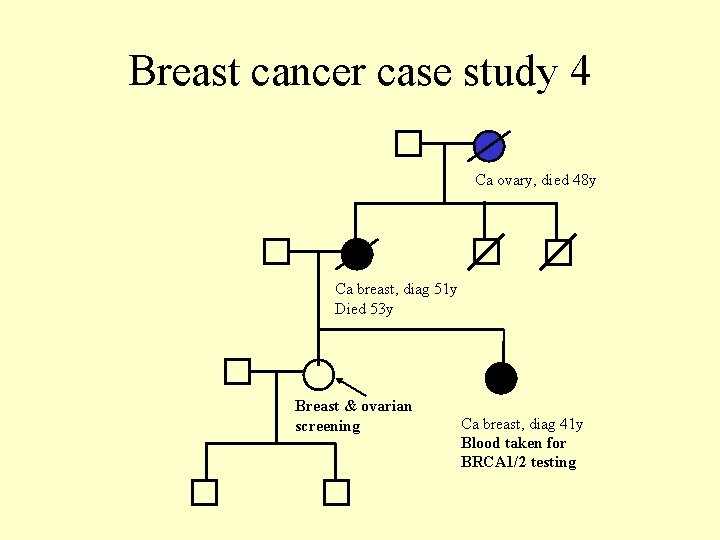
Breast cancer case study 4 Ca ovary, died 48 y Ca breast, diag 51 y Died 53 y Breast & ovarian screening Ca breast, diag 41 y Blood taken for BRCA 1/2 testing
Breast cancer case study 4 Ca ovary, died 48 y Ca breast, diag 51 y Died 53 y Considering surgery Ca breast, diag 41 y BRCA 1/2 tested No mutations found
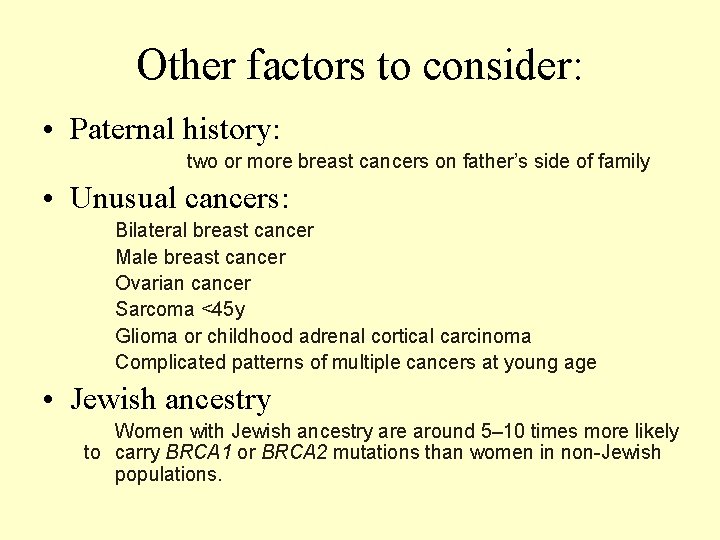
Other factors to consider: • Paternal history: two or more breast cancers on father’s side of family • Unusual cancers: Bilateral breast cancer Male breast cancer Ovarian cancer Sarcoma <45 y Glioma or childhood adrenal cortical carcinoma Complicated patterns of multiple cancers at young age • Jewish ancestry Women with Jewish ancestry are around 5– 10 times more likely to carry BRCA 1 or BRCA 2 mutations than women in non-Jewish populations.
Family History of Colorectal Cancer
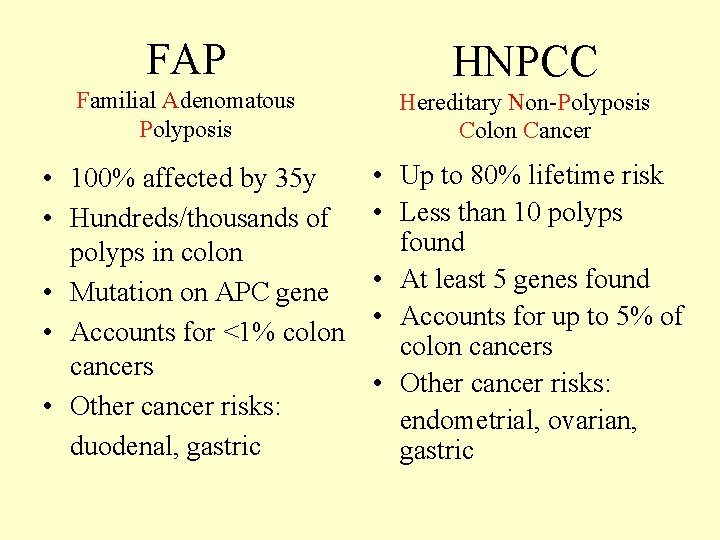
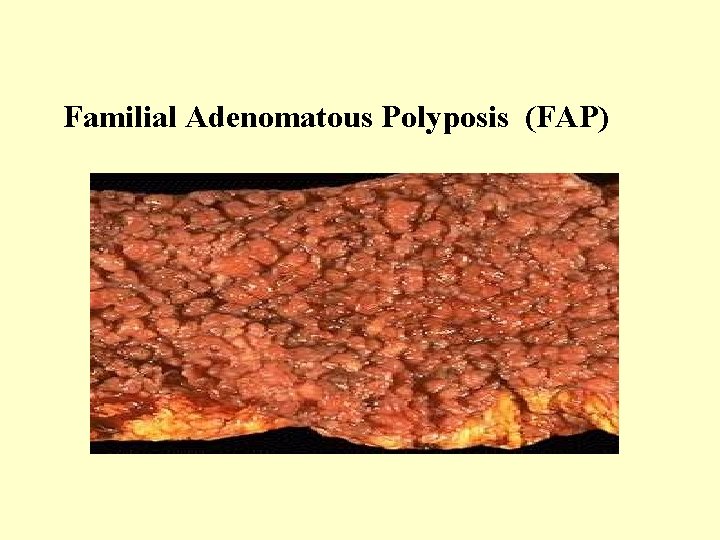
FAP HNPCC Familial Adenomatous Polyposis Hereditary Non-Polyposis Colon Cancer • 100% affected by 35 y • Hundreds/thousands of polyps in colon • Mutation on APC gene • Accounts for <1% colon cancers • Other cancer risks: duodenal, gastric • Up to 80% lifetime risk • Less than 10 polyps found • At least 5 genes found • Accounts for up to 5% of colon cancers • Other cancer risks: endometrial, ovarian, gastric
Familial Adenomatous Polyposis (FAP)
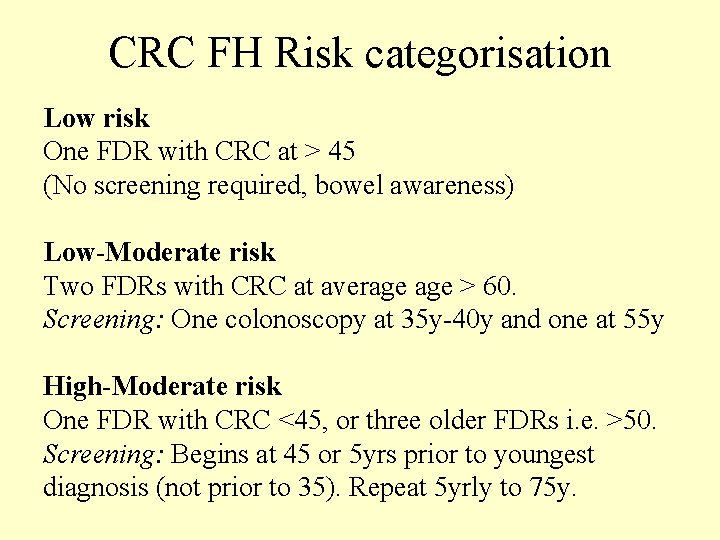
CRC FH Risk categorisation Low risk One FDR with CRC at > 45 (No screening required, bowel awareness) Low-Moderate risk Two FDRs with CRC at average > 60. Screening: One colonoscopy at 35 y-40 y and one at 55 y High-Moderate risk One FDR with CRC <45, or three older FDRs i. e. >50. Screening: Begins at 45 or 5 yrs prior to youngest diagnosis (not prior to 35). Repeat 5 yrly to 75 y.
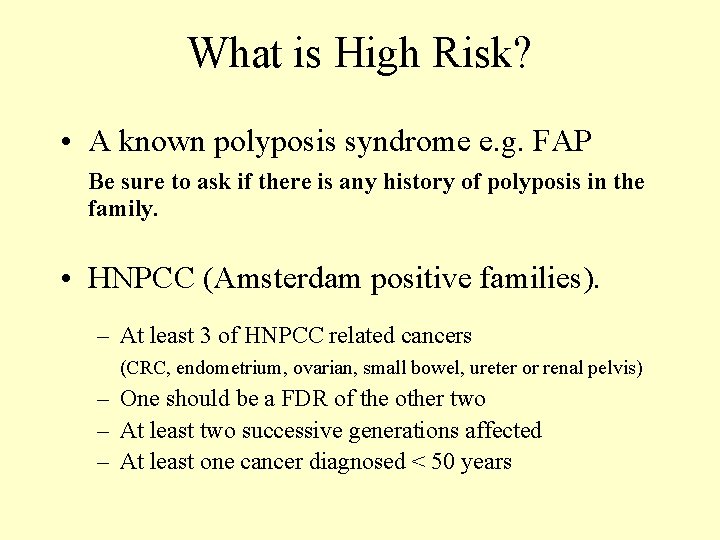
What is High Risk? • A known polyposis syndrome e. g. FAP Be sure to ask if there is any history of polyposis in the family. • HNPCC (Amsterdam positive families). – At least 3 of HNPCC related cancers (CRC, endometrium, ovarian, small bowel, ureter or renal pelvis) – One should be a FDR of the other two – At least two successive generations affected – At least one cancer diagnosed < 50 years
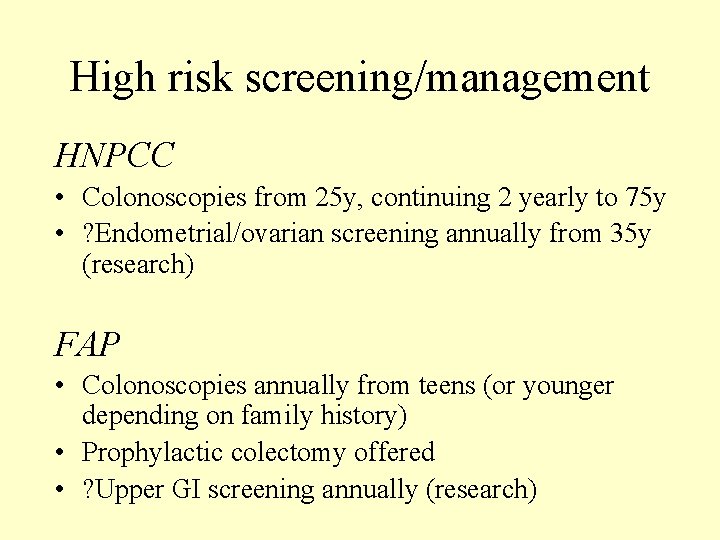
High risk screening/management HNPCC • Colonoscopies from 25 y, continuing 2 yearly to 75 y • ? Endometrial/ovarian screening annually from 35 y (research) FAP • Colonoscopies annually from teens (or younger depending on family history) • Prophylactic colectomy offered • ? Upper GI screening annually (research)
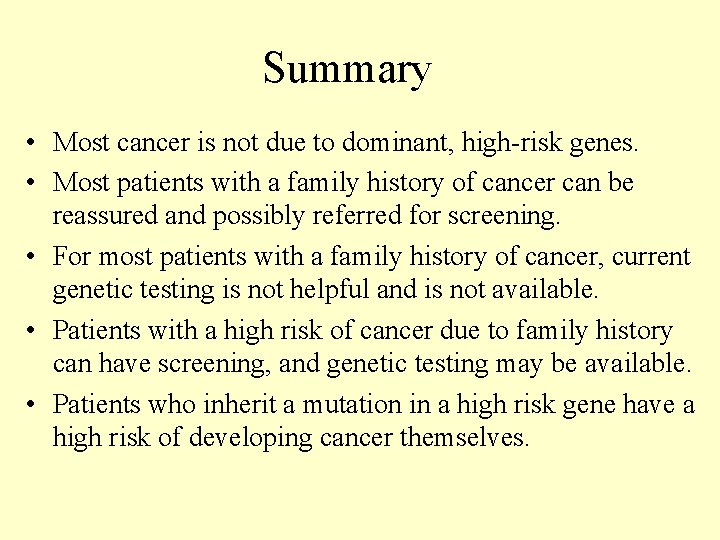
Summary • Most cancer is not due to dominant, high-risk genes. • Most patients with a family history of cancer can be reassured and possibly referred for screening. • For most patients with a family history of cancer, current genetic testing is not helpful and is not available. • Patients with a high risk of cancer due to family history can have screening, and genetic testing may be available. • Patients who inherit a mutation in a high risk gene have a high risk of developing cancer themselves.
Take-home messages • Young diagnoses of cancer (<45 y) may be significant • Three or more cases of the same / related types of cancer, in one family (even if older ages) may be significant • Genetic testing may or may not be available / informative for a given family • Genetic testing must start with a living affected relative • Screening may be available
If you have enquiries about a family history : Contact your local Clinical Genetics dept: Clinical Genetics Great Ormond Street Hospital London WC 1 N 3 JH Tel: 0207 905 2138 Clinics held at Barts and The London.