Author Ivan Maillard M D Ph D 2009
- Slides: 36
Author: Ivan Maillard, M. D. , Ph. D. , 2009 License: Unless otherwise noted, this material is made available under the terms of the Creative Commons Attribution–Non-commercial–Share Alike 3. 0 License: http: //creativecommons. org/licenses/by-nc-sa/3. 0/ We have reviewed this material in accordance with U. S. Copyright Law and have tried to maximize your ability to use, share, and adapt it. The citation key on the following slide provides information about how you may share and adapt this material. Copyright holders of content included in this material should contact open. michigan@umich. edu with any questions, corrections, or clarification regarding the use of content. For more information about how to cite these materials visit http: //open. umich. edu/education/about/terms-of-use. Any medical information in this material is intended to inform and educate and is not a tool for self-diagnosis or a replacement for medical evaluation, advice, diagnosis or treatment by a healthcare professional. Please speak to your physician if you have questions about your medical condition. Viewer discretion is advised: Some medical content is graphic and may not be suitable for all viewers.
Citation Key for more information see: http: //open. umich. edu/wiki/Citation. Policy Use + Share + Adapt { Content the copyright holder, author, or law permits you to use, share and adapt. } Public Domain – Government: Works that are produced by the U. S. Government. (17 USC § 105) Public Domain – Expired: Works that are no longer protected due to an expired copyright term. Public Domain – Self Dedicated: Works that a copyright holder has dedicated to the public domain. Creative Commons – Zero Waiver Creative Commons – Attribution License Creative Commons – Attribution Share Alike License Creative Commons – Attribution Noncommercial Share Alike License GNU – Free Documentation License Make Your Own Assessment { Content Open. Michigan believes can be used, shared, and adapted because it is ineligible for copyright. } Public Domain – Ineligible: Works that are ineligible for copyright protection in the U. S. (17 USC § 102(b)) *laws in your jurisdiction may differ { Content Open. Michigan has used under a Fair Use determination. } Fair Use: Use of works that is determined to be Fair consistent with the U. S. Copyright Act. (17 USC § 107) *laws in your jurisdiction may differ Our determination DOES NOT mean that all uses of this 3 rd-party content are Fair Uses and we DO NOT guarantee that your use of the content is Fair. To use this content you should do your own independent analysis to determine whether or not your use will be Fair.
HEMATOPOIESIS Ivan Maillard, MD-Ph. D Assistant Professor Center for Stem Cell Biology, Life Sciences Institute Division of Hematology-Oncology, Department of Medicine Department of Cell and Developmental Biology UM Medical School Winter, 2011
HEMATOPOIESIS Ø Topics of the course: l l l l Location of hematopoiesis during embryogenesis and in the adult Origins and properties of the hematopoietic stem cell Assessment of hematopoietic precursors Relationship of the stem cell to all classes of blood cells Development of lymphocytes Development of the erythroid, granulocytic, and megakaryocyte lineages Differences in hemoglobin during development
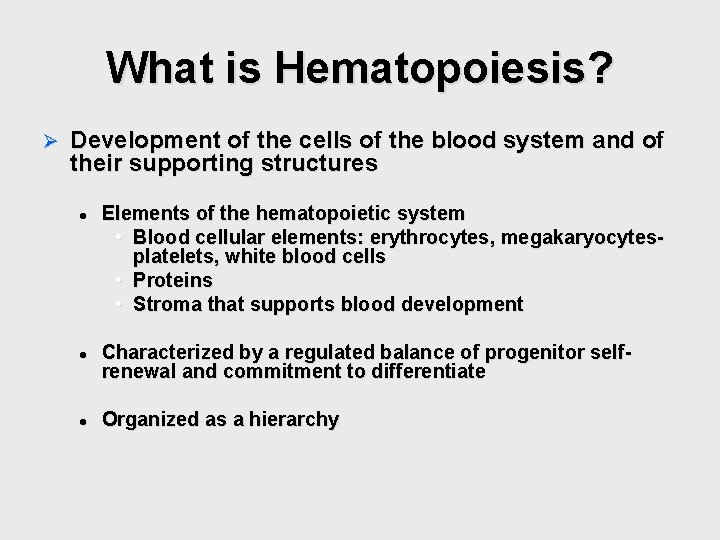
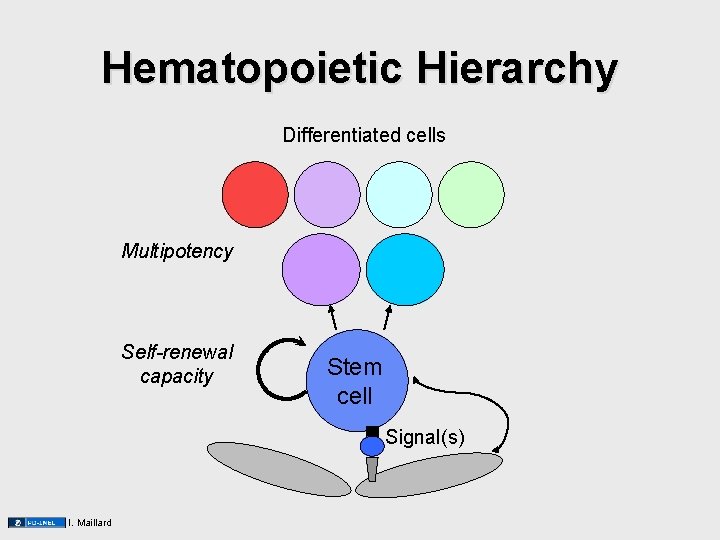
What is Hematopoiesis? Ø Development of the cells of the blood system and of their supporting structures l l l Elements of the hematopoietic system • Blood cellular elements: erythrocytes, megakaryocytesplatelets, white blood cells • Proteins • Stroma that supports blood development Characterized by a regulated balance of progenitor selfrenewal and commitment to differentiate Organized as a hierarchy
Hematopoietic Hierarchy Differentiated cells Multipotency Self-renewal capacity Stem cell Signal(s) I. Maillard
Why understand the details? Ø Narrow homeostasis of blood cell numbers l l Ø Hematopoietic response essential in many clinical situations l l Ø If not actively maintained, hematopoietic failure For example: 2 x 10⁶ new red cells produced every second! Infection, wound healing Hemorrhage Chemotherapy, bone marrow transplantation … Dysregulation of the hematopoietic program in hematological maligancies l Leukemia, lymphoma, multiple myeloma
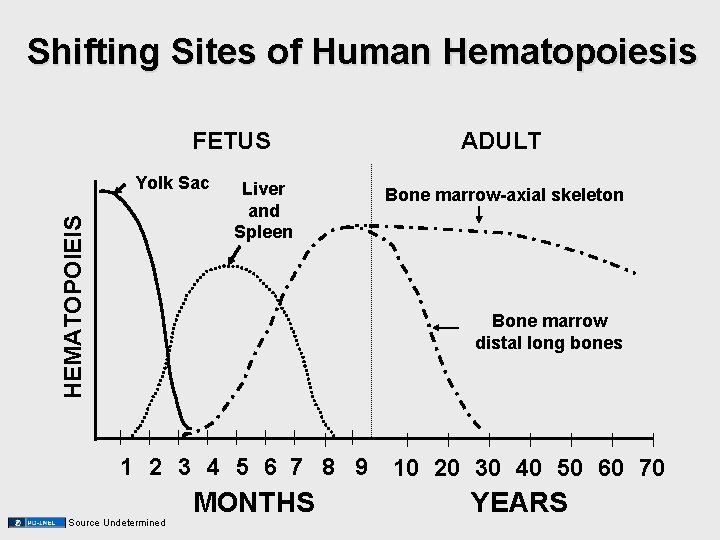
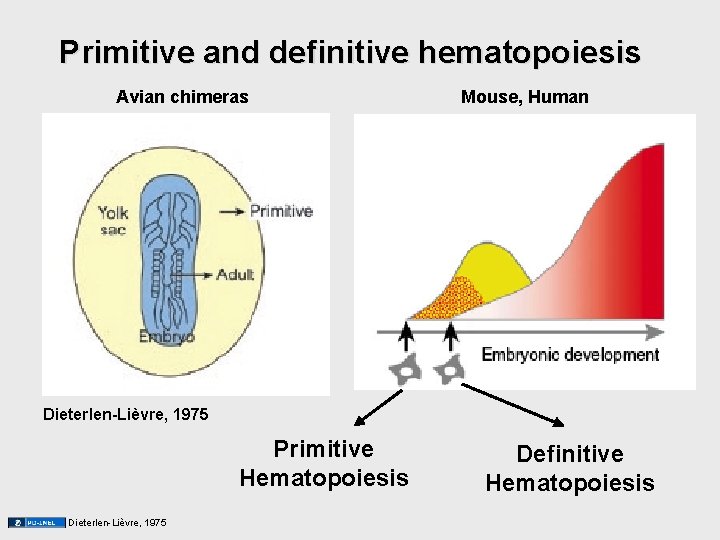
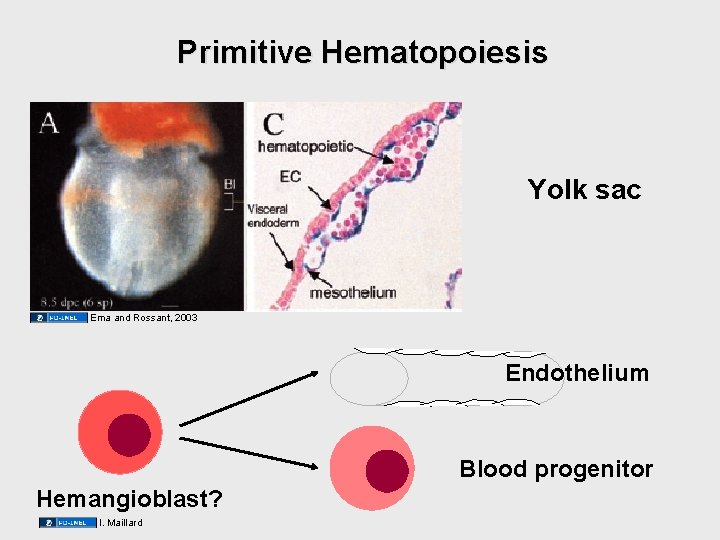
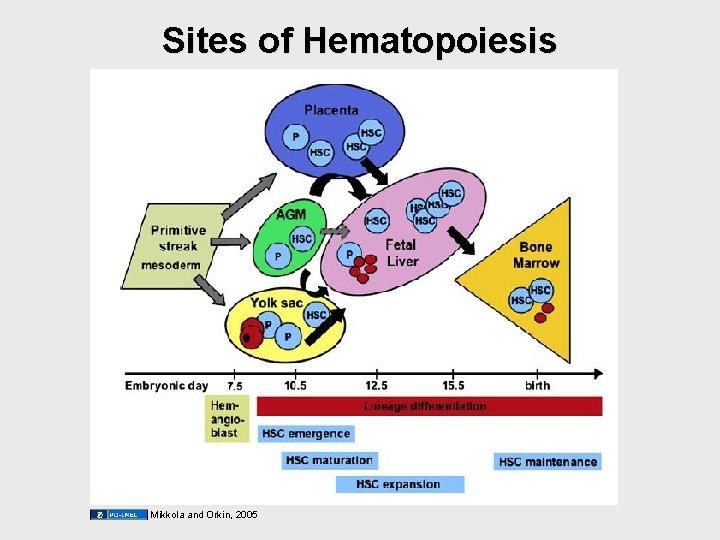
Origins of Hematopoiesis Ø Primitive Hematopoiesis l l l Ø Transient, primitive program Begins in early embryogenesis First 8 weeks: cells arise in the embryonic yolk sac Definitive Hematopoiesis l l What we see in the adult Begins during fetal life in association with vascular structures (fetal aorta, placenta) Expands in the fetal liver and spleen In the late fetus the bone marrow becomes the main site of hematopoiesis
Shifting Sites of Human Hematopoiesis FETUS HEMATOPOIEIS Yolk Sac Liver and Spleen ADULT Bone marrow-axial skeleton Bone marrow distal long bones 1 2 3 4 5 6 7 8 9 Source Undetermined MONTHS 10 20 30 40 50 60 70 YEARS
Primitive and definitive hematopoiesis Avian chimeras Mouse, Human Dieterlen-Lièvre, 1975 Primitive Hematopoiesis Dieterlen-Lièvre, 1975 Definitive Hematopoiesis
Primitive Hematopoiesis Yolk sac Ema and Rossant, 2003 Endothelium Blood progenitor Hemangioblast? I. Maillard
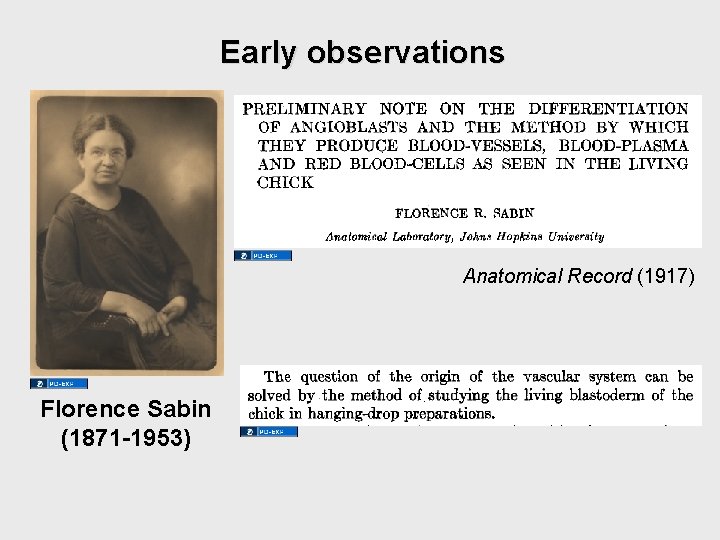
Early observations Anatomical Record (1917) Florence Sabin (1871 -1953)
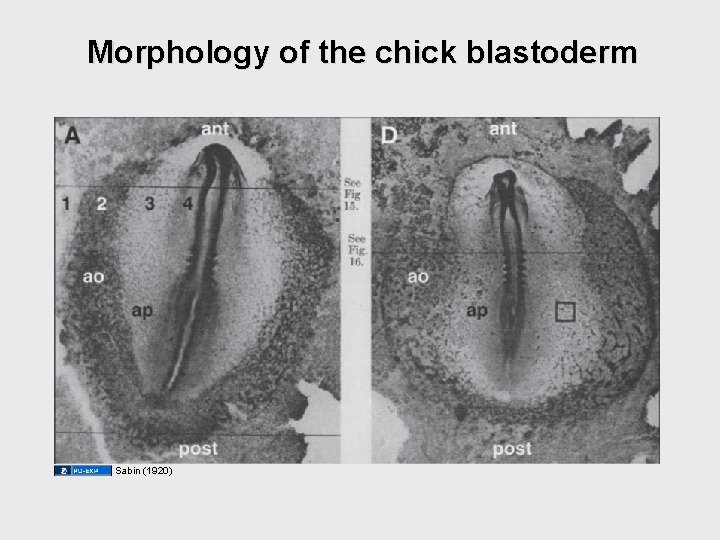
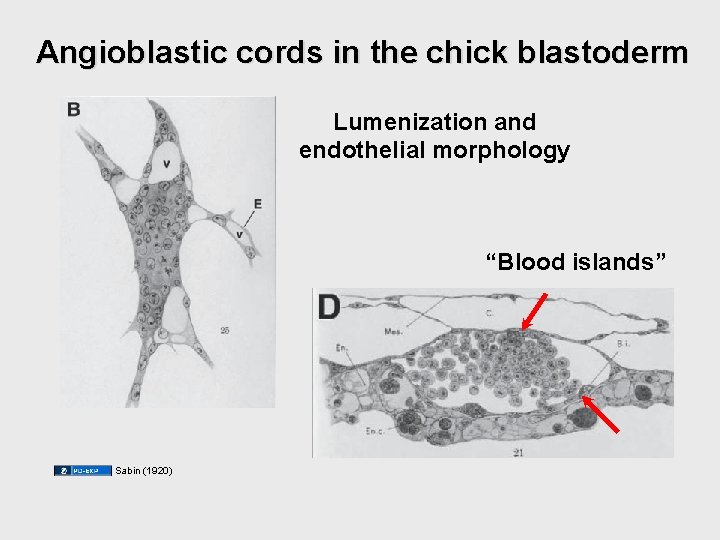
Morphology of the chick blastoderm Sabin (1920)
Angioblastic cords in the chick blastoderm Lumenization and endothelial morphology “Blood islands” Sabin (1920)
Sites of Hematopoiesis Mikkola and Orkin, 2005
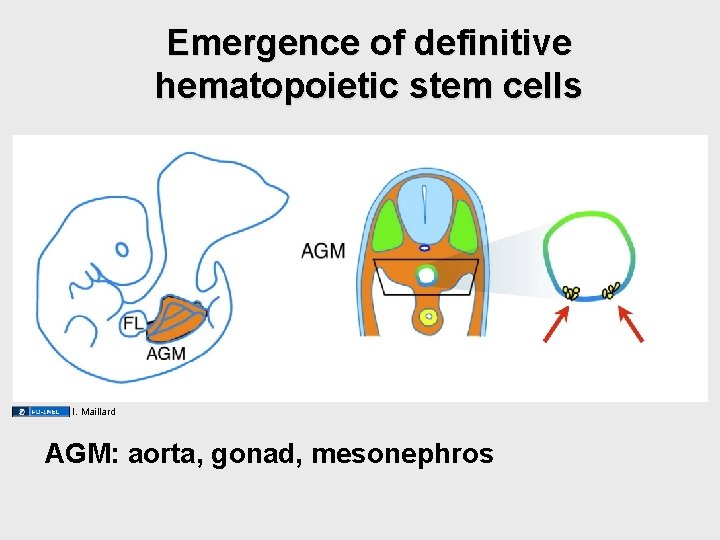
Emergence of definitive hematopoietic stem cells I. Maillard AGM: aorta, gonad, mesonephros
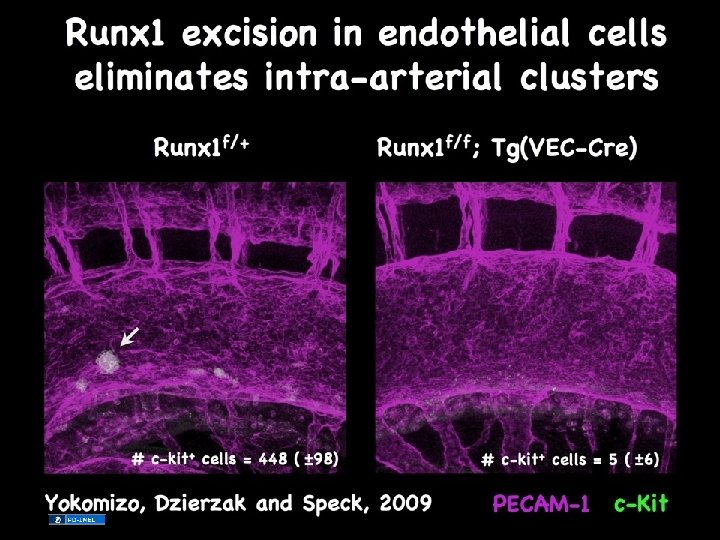
I. Maillard
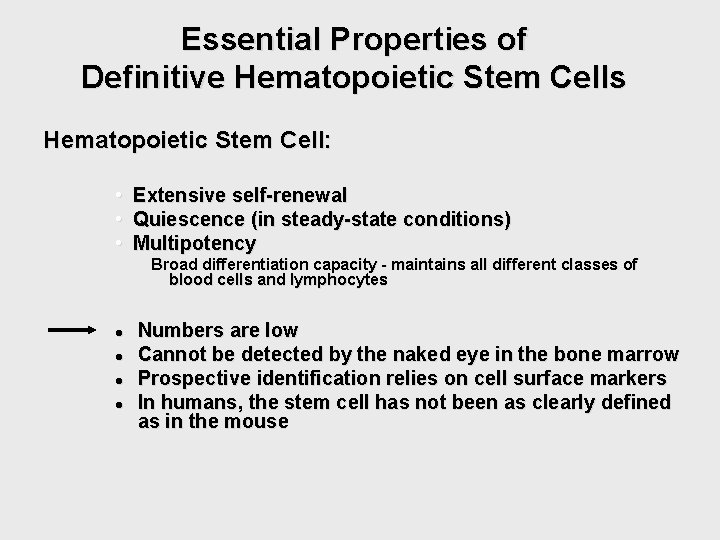
Essential Properties of Definitive Hematopoietic Stem Cells Hematopoietic Stem Cell: • Extensive self-renewal • Quiescence (in steady-state conditions) • Multipotency Broad differentiation capacity - maintains all different classes of blood cells and lymphocytes l l Numbers are low Cannot be detected by the naked eye in the bone marrow Prospective identification relies on cell surface markers In humans, the stem cell has not been as clearly defined as in the mouse
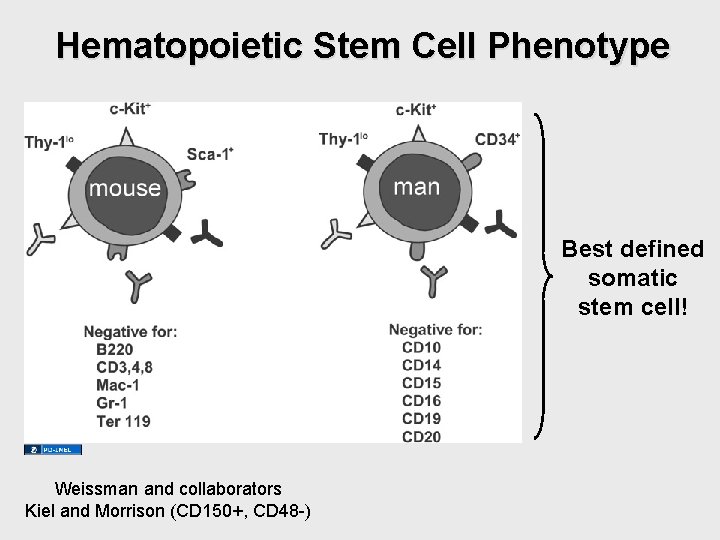
Hematopoietic Stem Cell Phenotype Best defined somatic stem cell! Weissman and collaborators Kiel and Morrison (CD 150+, CD 48 -)
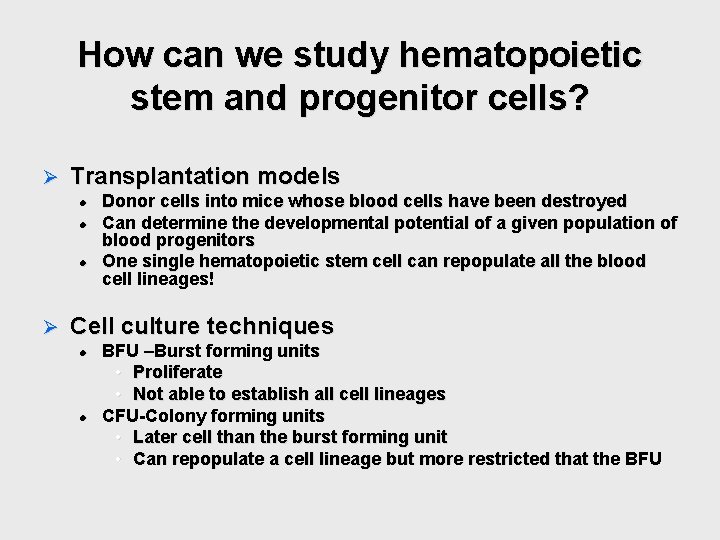
How can we study hematopoietic stem and progenitor cells? Ø Transplantation models l l l Ø Donor cells into mice whose blood cells have been destroyed Can determine the developmental potential of a given population of blood progenitors One single hematopoietic stem cell can repopulate all the blood cell lineages! Cell culture techniques l l BFU –Burst forming units • Proliferate • Not able to establish all cell lineages CFU-Colony forming units • Later cell than the burst forming unit • Can repopulate a cell lineage but more restricted that the BFU
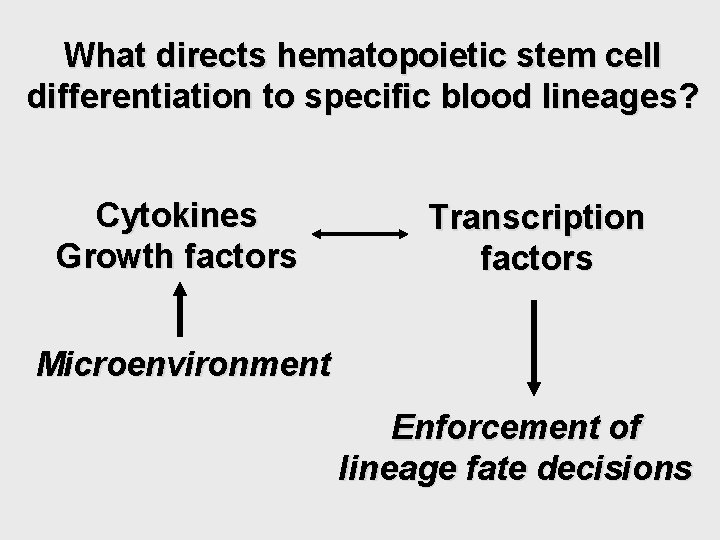
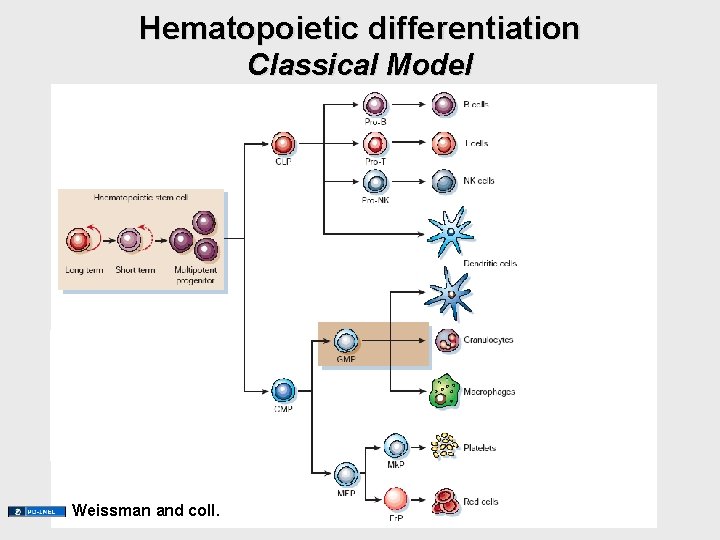
What directs hematopoietic stem cell differentiation to specific blood lineages? Cytokines Growth factors Transcription factors Microenvironment Enforcement of lineage fate decisions
Hematopoietic differentiation Classical Model Weissman and coll.
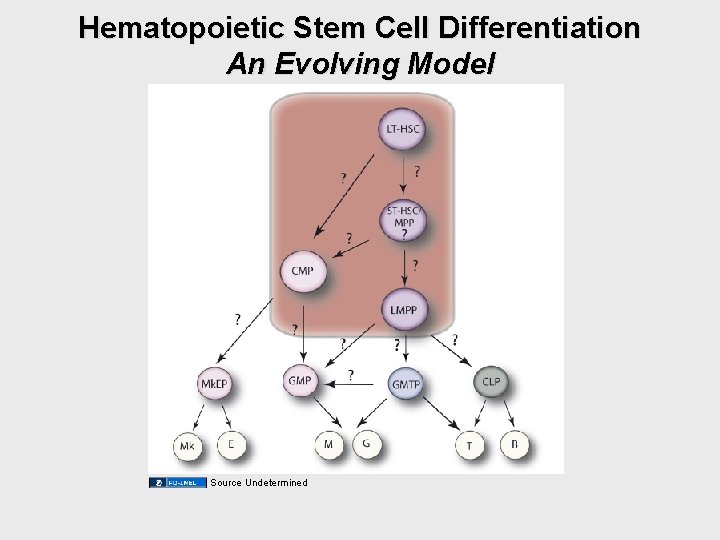
Hematopoietic Stem Cell Differentiation An Evolving Model Source Undetermined
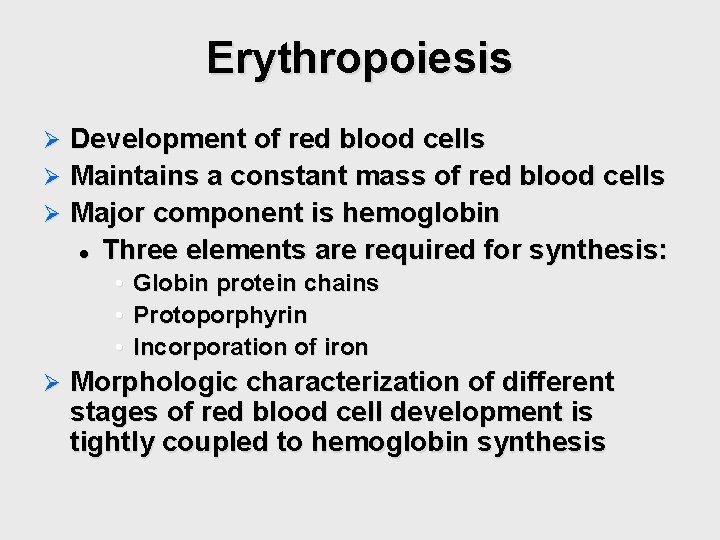
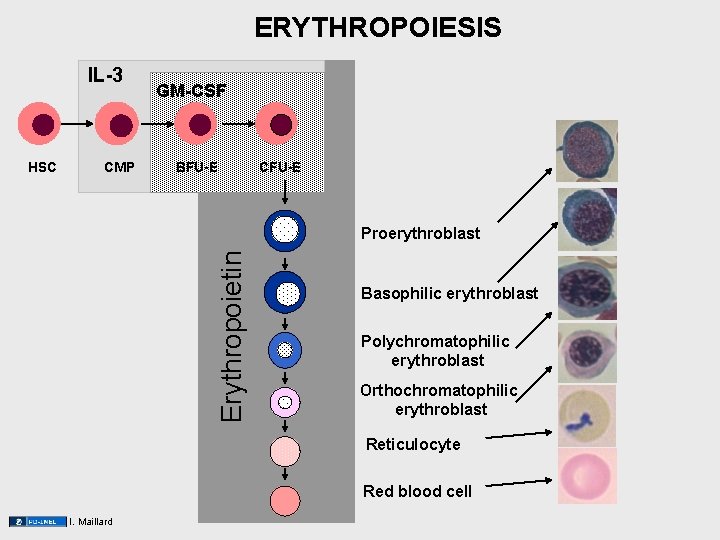
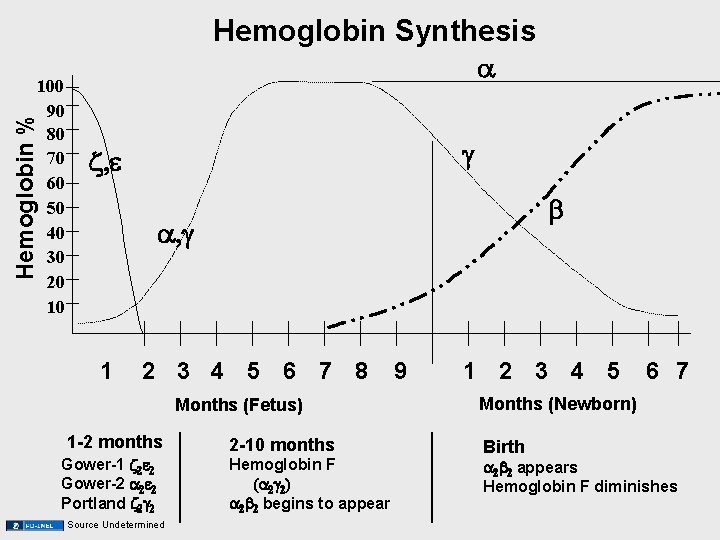
Erythropoiesis Development of red blood cells Ø Maintains a constant mass of red blood cells Ø Major component is hemoglobin l Three elements are required for synthesis: Ø • • • Ø Globin protein chains Protoporphyrin Incorporation of iron Morphologic characterization of different stages of red blood cell development is tightly coupled to hemoglobin synthesis
ERYTHROPOIESIS IL-3 GM-CSF CMP BFU-E CFU-E Proerythroblast Erythropoietin HSC Basophilic erythroblast Polychromatophilic erythroblast Orthochromatophilic erythroblast Reticulocyte Red blood cell I. Maillard
Hemoglobin Synthesis Hemoglobin % 100 90 80 70 60 50 40 30 20 10 a z, e b a, 1 2 3 4 5 6 7 8 Months (Fetus) 1 -2 months Gower-1 z e Gower-2 a e Portland z Source Undetermined 2 -10 months Hemoglobin F (a a b begins to appear 9 1 2 3 4 5 6 7 Months (Newborn) Birth a b appears Hemoglobin F diminishes
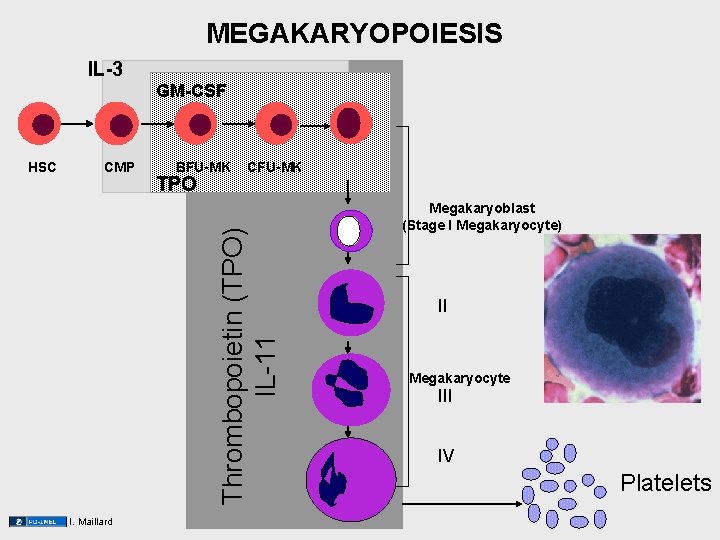
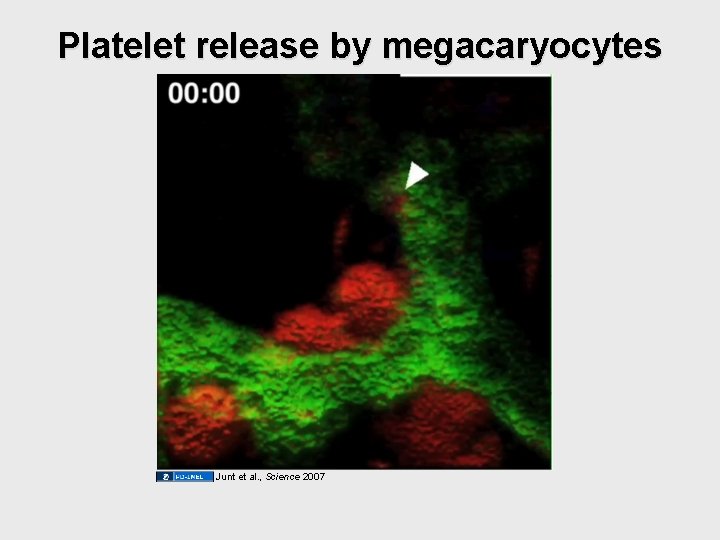
Megakaryopoiesis Generation of platelets that are critical for hemostasis l Small anucleate cells Ø Development characterized by endomitosis l Nucleus divides but cytoplasm does not Ø Single polyploid nucleus and increased cytoplasmic volume l Cytoplasm becomes demarcated at the end stage of megakaryopoiesis l Platelets are shed from mature megakaryocyte and leave behind nucleus Ø
MEGAKARYOPOIESIS IL-3 GM-CSF CMP BFU-MK TPO CFU-MK Thrombopoietin (TPO) IL-11 HSC I. Maillard Megakaryoblast (Stage I Megakaryocyte) II Megakaryocyte III IV Platelets
Platelet release by megacaryocytes Junt et al. , Science 2007
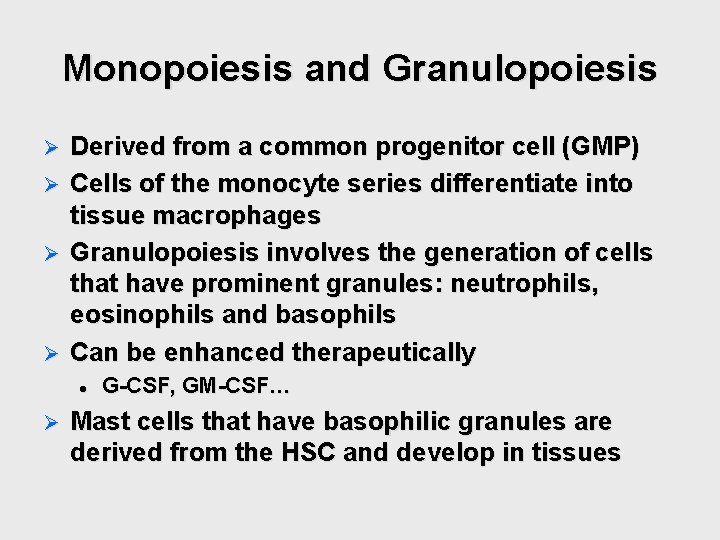
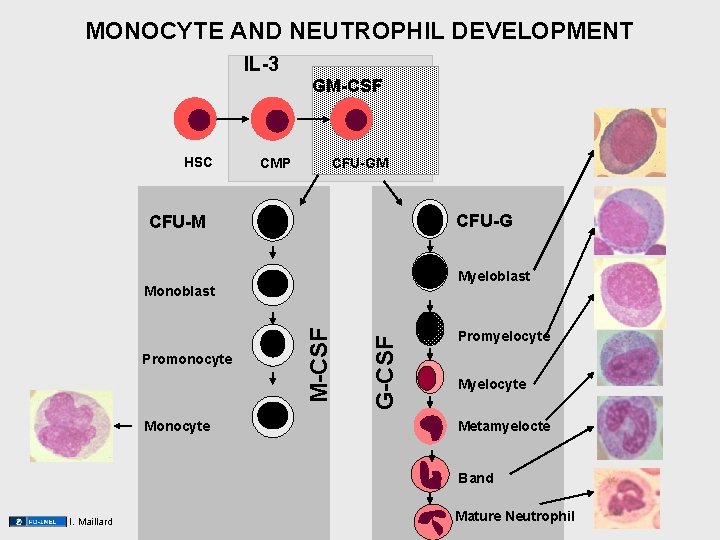
Monopoiesis and Granulopoiesis Derived from a common progenitor cell (GMP) Ø Cells of the monocyte series differentiate into tissue macrophages Ø Granulopoiesis involves the generation of cells that have prominent granules: neutrophils, eosinophils and basophils Ø Can be enhanced therapeutically Ø l Ø G-CSF, GM-CSF… Mast cells that have basophilic granules are derived from the HSC and develop in tissues
MONOCYTE AND NEUTROPHIL DEVELOPMENT IL-3 GM-CSF HSC CMP CFU-GM CFU-G CFU-M Myeloblast Monocyte G-CSF Promonocyte M-CSF Monoblast Promyelocyte Metamyelocte Band I. Maillard Mature Neutrophil
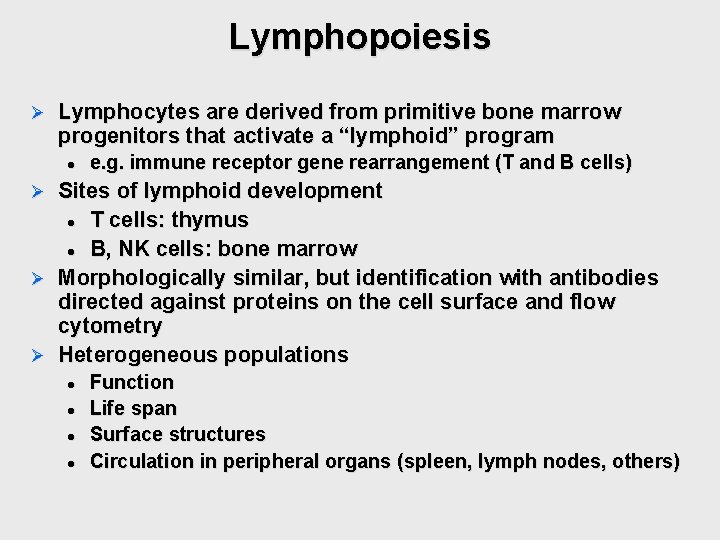
Lymphopoiesis Ø Lymphocytes are derived from primitive bone marrow progenitors that activate a “lymphoid” program l e. g. immune receptor gene rearrangement (T and B cells) Sites of lymphoid development l T cells: thymus l B, NK cells: bone marrow Ø Morphologically similar, but identification with antibodies directed against proteins on the cell surface and flow cytometry Ø Heterogeneous populations Ø l l Function Life span Surface structures Circulation in peripheral organs (spleen, lymph nodes, others)
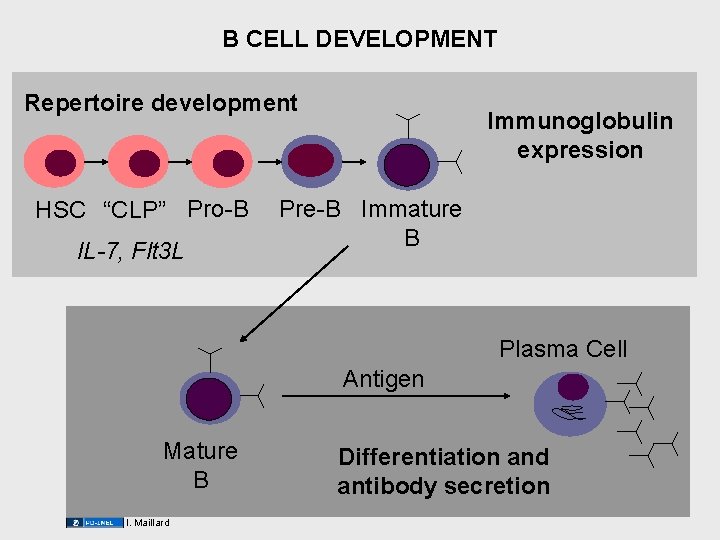
B CELL DEVELOPMENT Repertoire development HSC “CLP” Pro-B IL-7, Flt 3 L Immunoglobulin expression Pre-B Immature B Plasma Cell Antigen Mature B I. Maillard Differentiation and antibody secretion
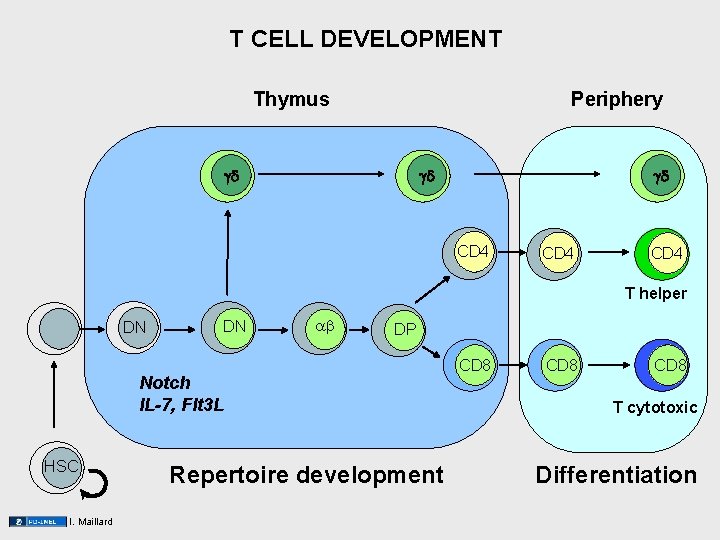
T CELL DEVELOPMENT Thymus Periphery CD 4 T helper DN DN DP Notch IL-7, Flt 3 L HSC I. Maillard Repertoire development CD 8 T cytotoxic Differentiation
HEMATOPOIESIS Ø Topics of the course: l l l l Location of hematopoiesis during embryogenesis and in the adult Origins and properties of the hematopoietic stem cell Assessment of hematopoietic precursors Relationship of the stem cell to all classes of blood cells Development of lymphocytes Development of the erythroid, granulocytic, and megakaryocyte lineages Differences in hemoglobin during development
Additional Source Information for more information see: http: //open. umich. edu/wiki/Citation. Policy Slide 6: Ivan Maillard Slide 9: Source Undetermined Slide 10: Dieterlen-Lièvre, 1975 Slide 11: Ivan Maillard; Ema and Rossant, 2003 Slide 13: Sabin (1920) Slide 14: Sabin (1920) Slide 15: Mikkola and Orkin, 2005 Slide 16: Ivan Maillard Slide 17: Yokomizo, Dzierzak, and speck 2009 Slide 19: Weissman and collaborators, Kiel and Morrison Slide 22: Weissman and collaborators, Kiel and Morrison Slide 23: Source Undetermined Slide 25: Ivan Maillard Slide 26: Source Undetermined Slide 28: Ivan Maillard Slide 29: Junt et al. , Science 2007 Slide 31: Ivan Maillard Slide 33: Ivan Maillard Slide 34: Ivan Maillard