AP Chemistry FUNdamentals Mr Guerrero SI Units of
- Slides: 25
AP Chemistry FUNdamentals Mr. Guerrero
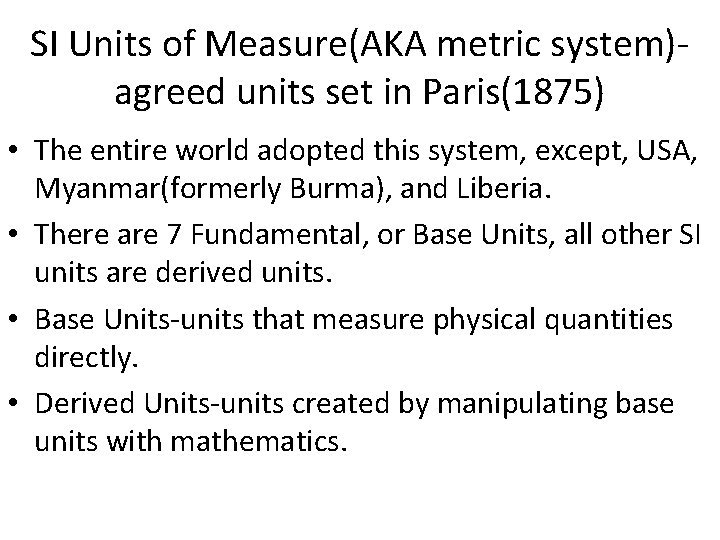
SI Units of Measure(AKA metric system)agreed units set in Paris(1875) • The entire world adopted this system, except, USA, Myanmar(formerly Burma), and Liberia. • There are 7 Fundamental, or Base Units, all other SI units are derived units. • Base Units-units that measure physical quantities directly. • Derived Units-units created by manipulating base units with mathematics.
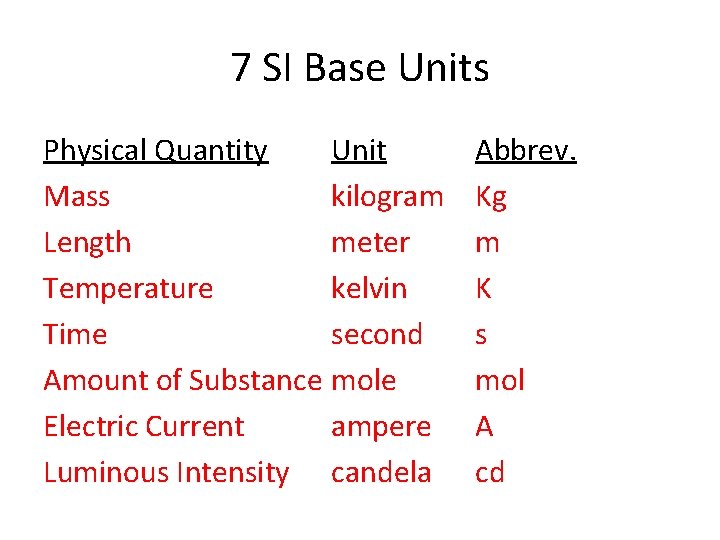
7 SI Base Units Physical Quantity Unit Mass kilogram Length meter Temperature kelvin Time second Amount of Substance mole Electric Current ampere Luminous Intensity candela Abbrev. Kg m K s mol A cd
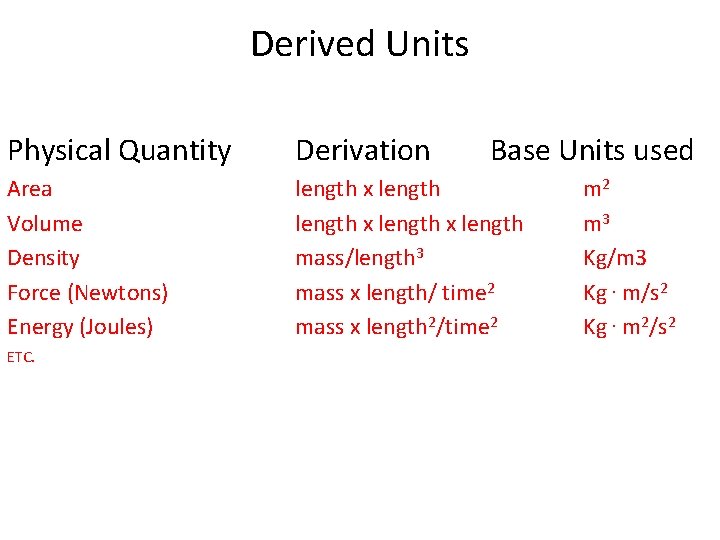
Derived Units Physical Quantity Derivation Base Units used Area Volume Density Force (Newtons) Energy (Joules) length x length mass/length 3 mass x length/ time 2 mass x length 2/time 2 ETC. m 2 m 3 Kg/m 3 Kg. m/s 2 Kg. m 2/s 2
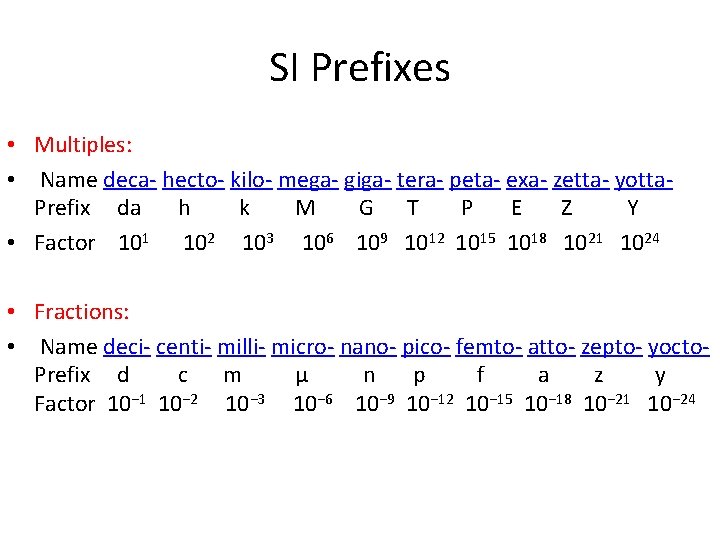
SI Prefixes • Multiples: • Name deca- hecto- kilo- mega- giga- tera- peta- exa- zetta- yotta- Prefix da h k M G T P E Z Y • Factor 101 102 103 106 109 1012 1015 1018 1021 1024 • Fractions: • Name deci- centi- milli- micro- nano- pico- femto- atto- zepto- yocto- Prefix d c m μ n p f a z y Factor 10− 1 10− 2 10− 3 10− 6 10− 9 10− 12 10− 15 10− 18 10− 21 10− 24
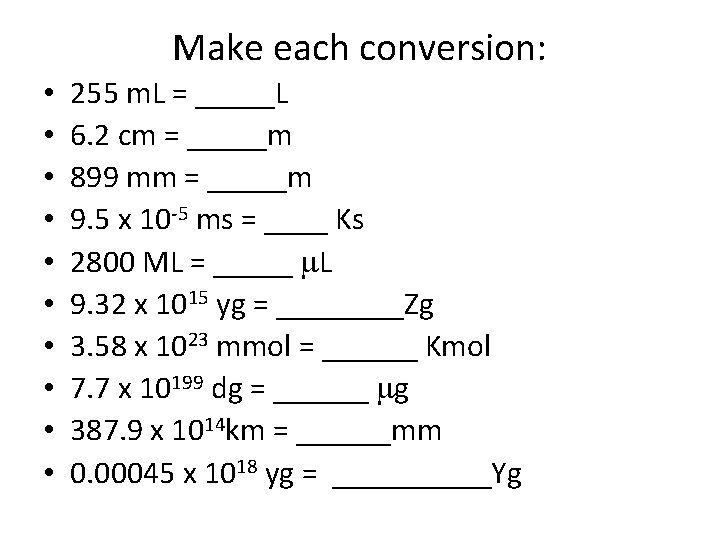
Make each conversion: • • • 255 m. L = _____L 6. 2 cm = _____m 899 mm = _____m 9. 5 x 10 -5 ms = ____ Ks 2800 ML = _____ m. L 9. 32 x 1015 yg = ____Zg 3. 58 x 1023 mmol = ______ Kmol 7. 7 x 10199 dg = ______ mg 387. 9 x 10¹⁴ km = ______mm 0. 00045 x 1018 yg = _____Yg
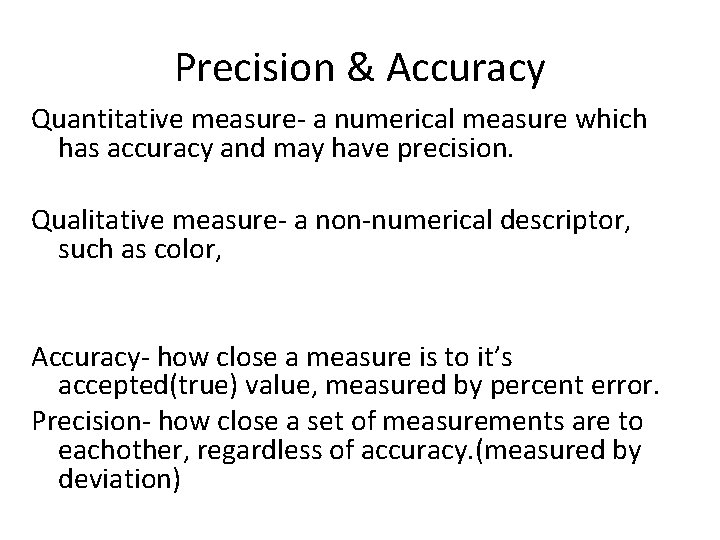
Precision & Accuracy Quantitative measure- a numerical measure which has accuracy and may have precision. Qualitative measure- a non-numerical descriptor, such as color, Accuracy- how close a measure is to it’s accepted(true) value, measured by percent error. Precision- how close a set of measurements are to eachother, regardless of accuracy. (measured by deviation)
• Accuracy & Precision link
Ch. 1 Homework • Zumdahl Text, 9 th Edition: p. 33, problems: 22, 28, 30, 32, 34, 36, 40 a-c, 60, 68, 82, 105 Due on Monday!!!! Write out all questions & you must show all work used to get math answers. Box all questions!!!
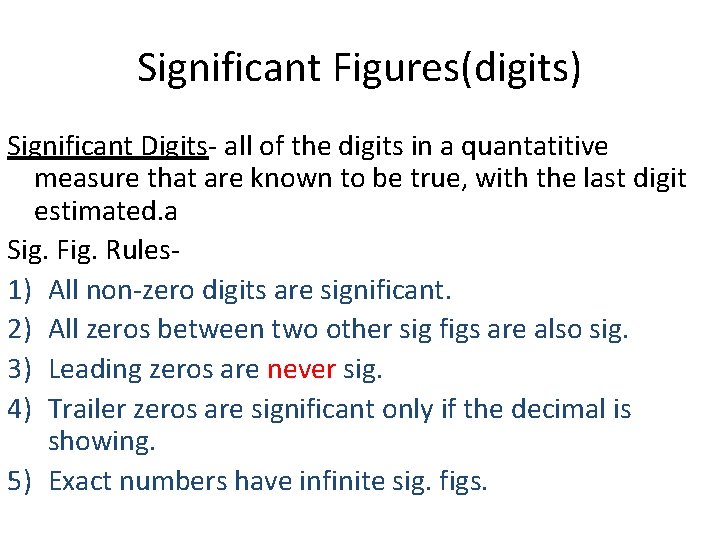
Significant Figures(digits) Significant Digits- all of the digits in a quantatitive measure that are known to be true, with the last digit estimated. a Sig. Fig. Rules 1) All non-zero digits are significant. 2) All zeros between two other sig figs are also sig. 3) Leading zeros are never sig. 4) Trailer zeros are significant only if the decimal is showing. 5) Exact numbers have infinite sig. figs.
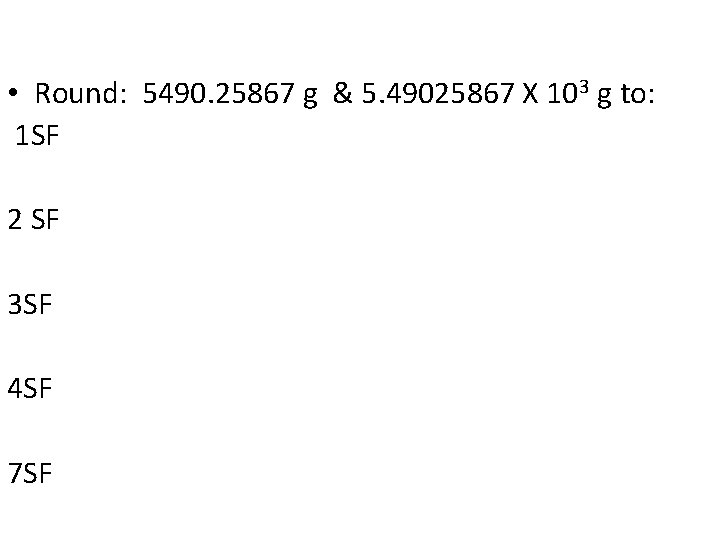
• Round: 5490. 25867 g & 5. 49025867 X 103 g to: 1 SF 2 SF 3 SF 4 SF 7 SF
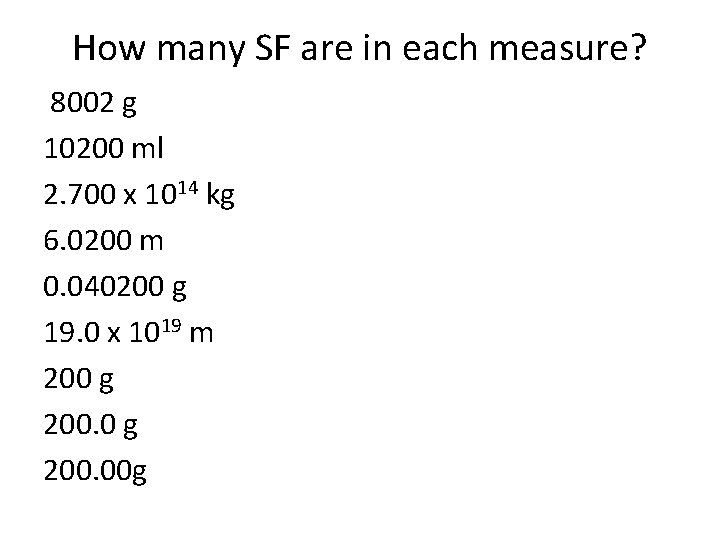
How many SF are in each measure? 8002 g 10200 ml 2. 700 x 1014 kg 6. 0200 m 0. 040200 g 19. 0 x 1019 m 200 g 200. 00 g
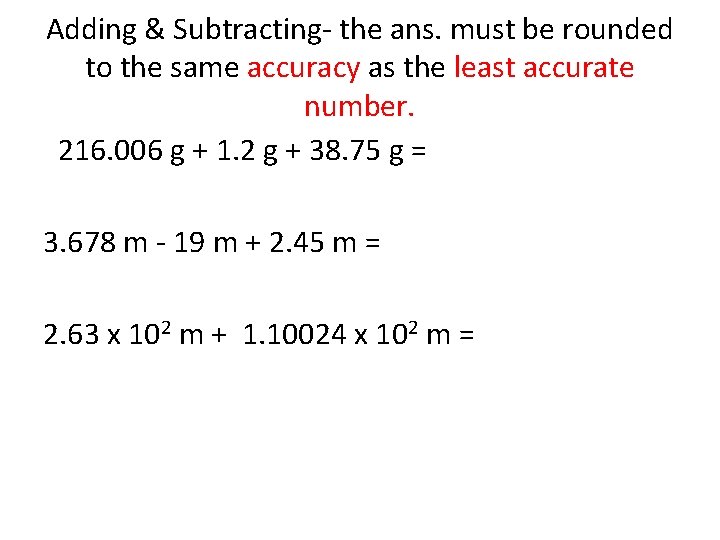
Adding & Subtracting- the ans. must be rounded to the same accuracy as the least accurate number. 216. 006 g + 1. 2 g + 38. 75 g = 3. 678 m - 19 m + 2. 45 m = 2. 63 x 102 m + 1. 10024 x 102 m =
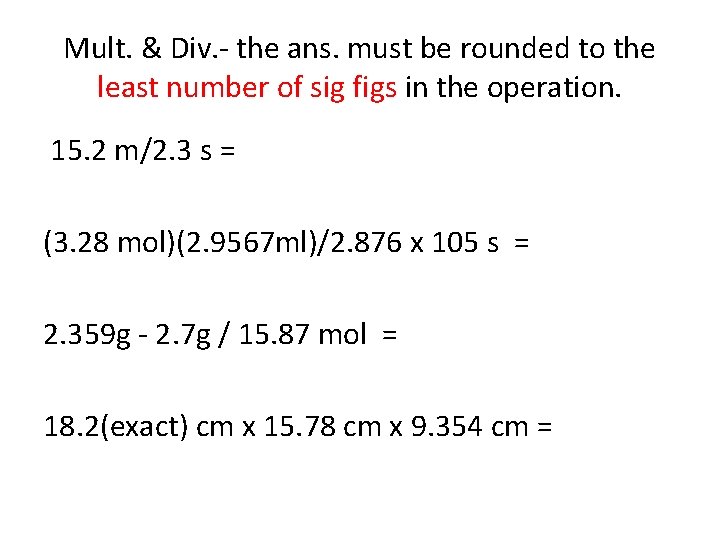
Mult. & Div. - the ans. must be rounded to the least number of sig figs in the operation. 15. 2 m/2. 3 s = (3. 28 mol)(2. 9567 ml)/2. 876 x 105 s = 2. 359 g - 2. 7 g / 15. 87 mol = 18. 2(exact) cm x 15. 78 cm x 9. 354 cm =
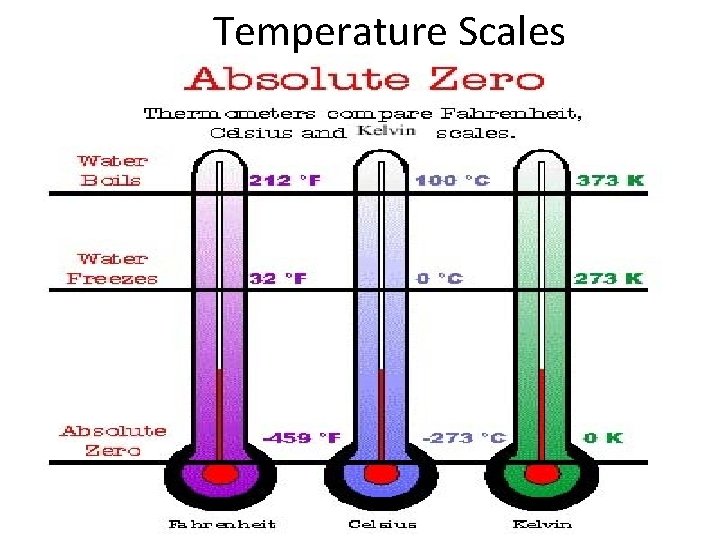
Temperature Scales
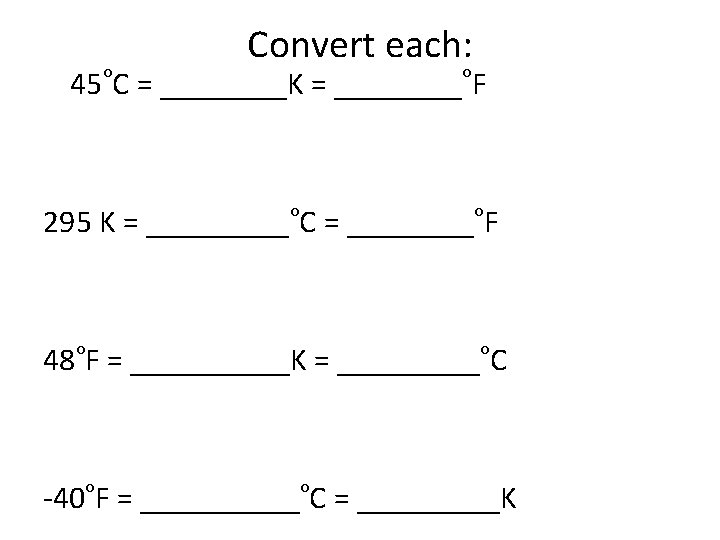
o Convert each: o 45 C = ____K = ____ F o o 295 K = _____ C = ____ F o o 48 F = _____K = _____ C o o -40 F = _____ C = _____K
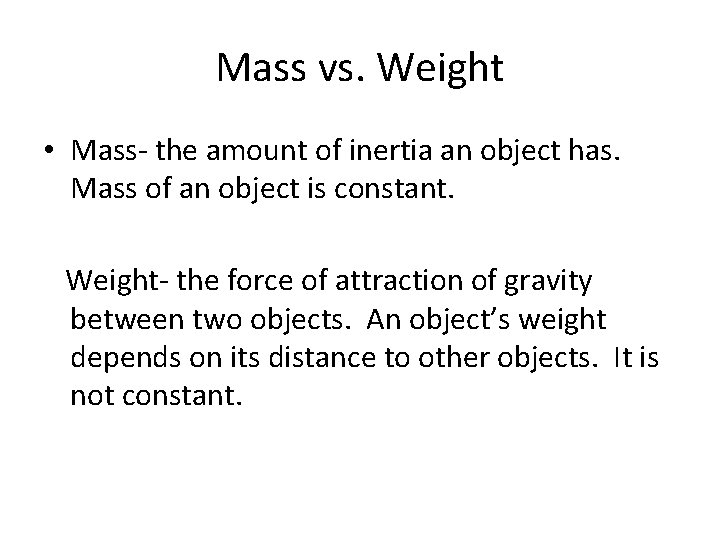
Mass vs. Weight • Mass- the amount of inertia an object has. Mass of an object is constant. Weight- the force of attraction of gravity between two objects. An object’s weight depends on its distance to other objects. It is not constant.
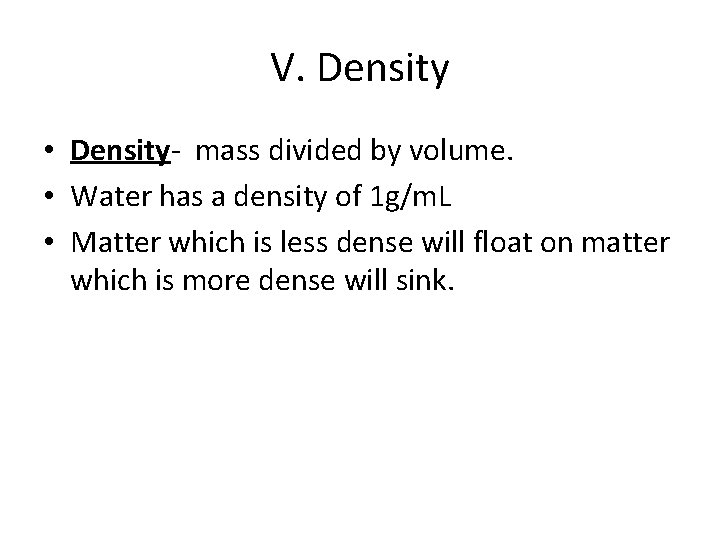
V. Density • Density- mass divided by volume. • Water has a density of 1 g/m. L • Matter which is less dense will float on matter which is more dense will sink.
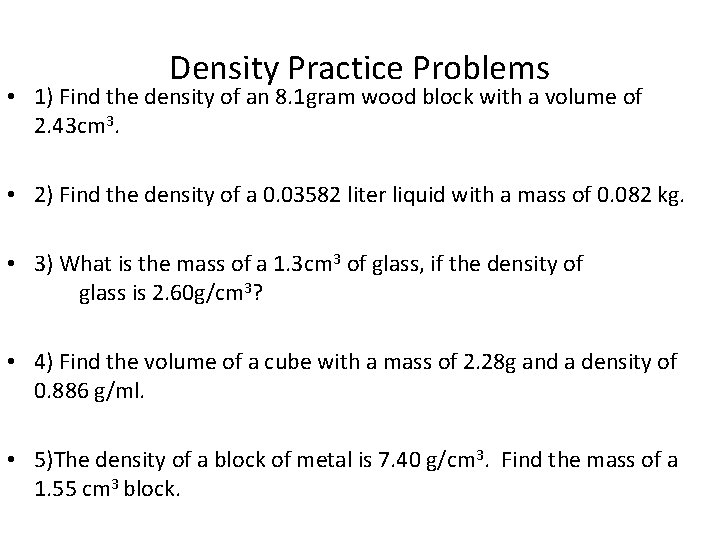
Density Practice Problems • 1) Find the density of an 8. 1 gram wood block with a volume of 2. 43 cm 3. • 2) Find the density of a 0. 03582 liter liquid with a mass of 0. 082 kg. • 3) What is the mass of a 1. 3 cm 3 of glass, if the density of glass is 2. 60 g/cm 3? • 4) Find the volume of a cube with a mass of 2. 28 g and a density of 0. 886 g/ml. • 5)The density of a block of metal is 7. 40 g/cm 3. Find the mass of a 1. 55 cm 3 block.
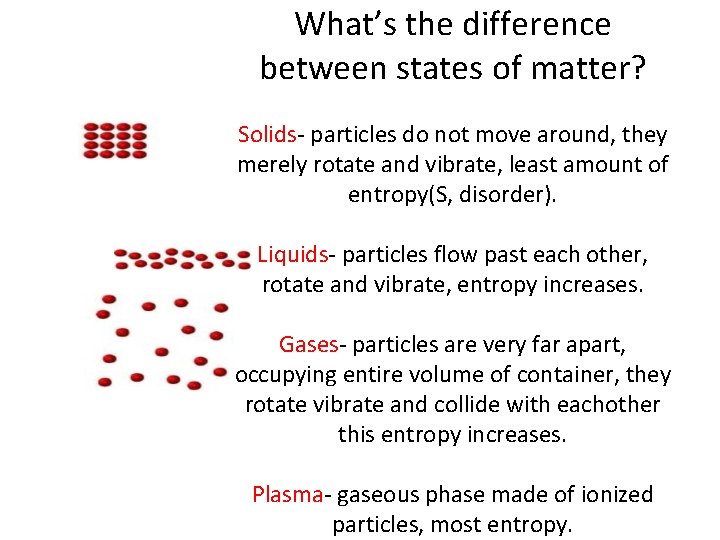
What’s the difference between states of matter? Solids- particles do not move around, they merely rotate and vibrate, least amount of entropy(S, disorder). Liquids- particles flow past each other, rotate and vibrate, entropy increases. Gases- particles are very far apart, occupying entire volume of container, they rotate vibrate and collide with eachother this entropy increases. Plasma- gaseous phase made of ionized particles, most entropy.
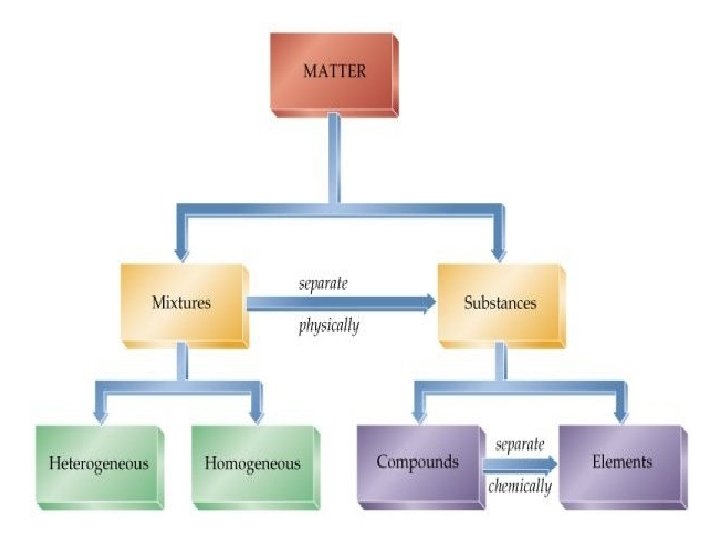
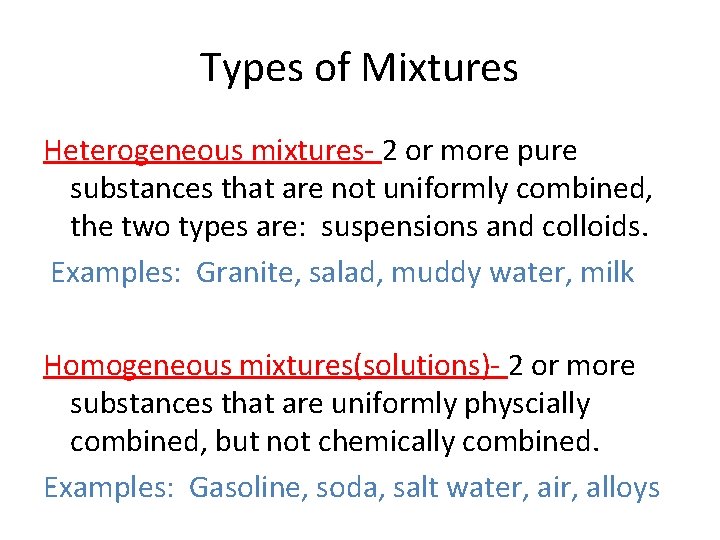
Types of Mixtures Heterogeneous mixtures- 2 or more pure substances that are not uniformly combined, the two types are: suspensions and colloids. Examples: Granite, salad, muddy water, milk Homogeneous mixtures(solutions)- 2 or more substances that are uniformly physcially combined, but not chemically combined. Examples: Gasoline, soda, salt water, air, alloys
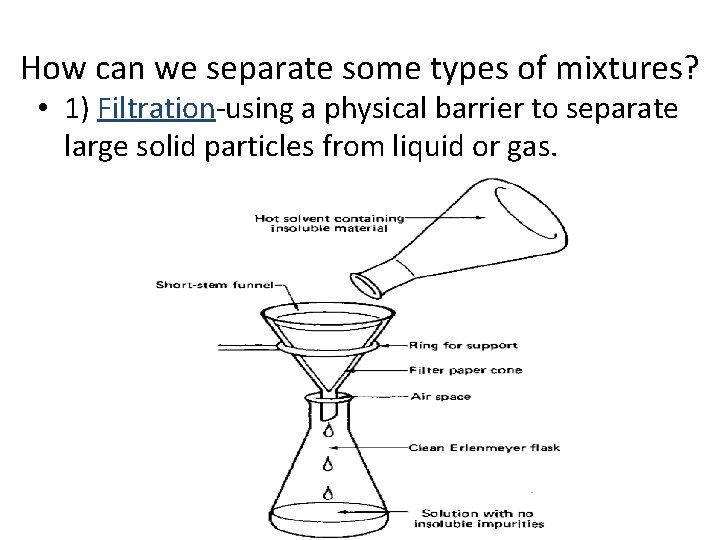
How can we separate some types of mixtures? • 1) Filtration-using a physical barrier to separate large solid particles from liquid or gas.
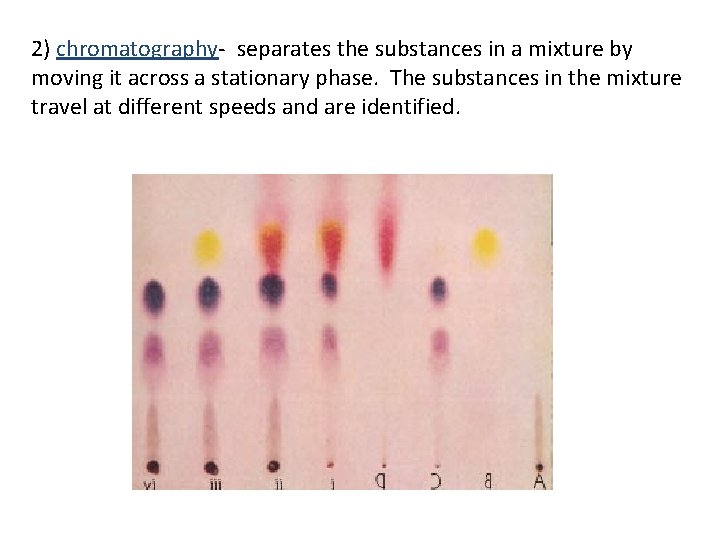
2) chromatography- separates the substances in a mixture by moving it across a stationary phase. The substances in the mixture travel at different speeds and are identified.
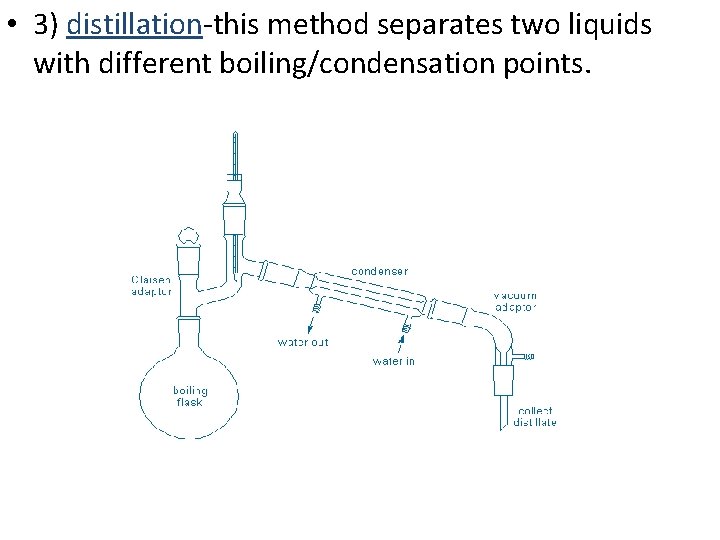
• 3) distillation-this method separates two liquids with different boiling/condensation points.