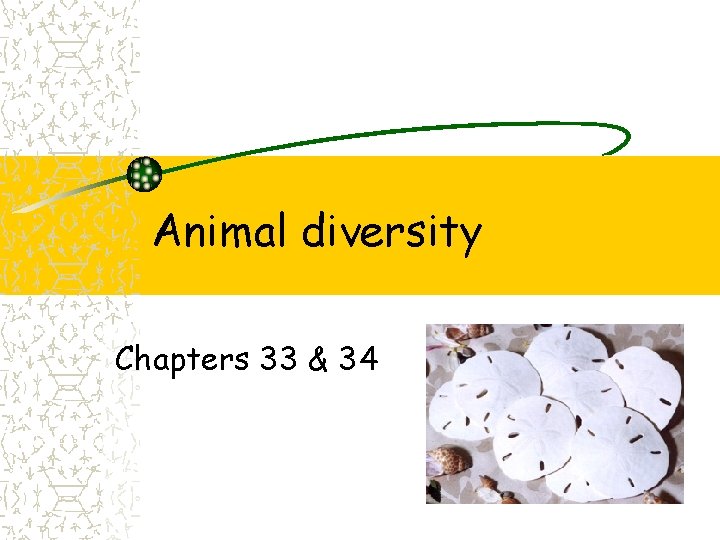
Animal diversity Chapters 33 34 Coelomates Deuterostome Endoskeleton
- Slides: 82
Animal diversity Chapters 33 & 34
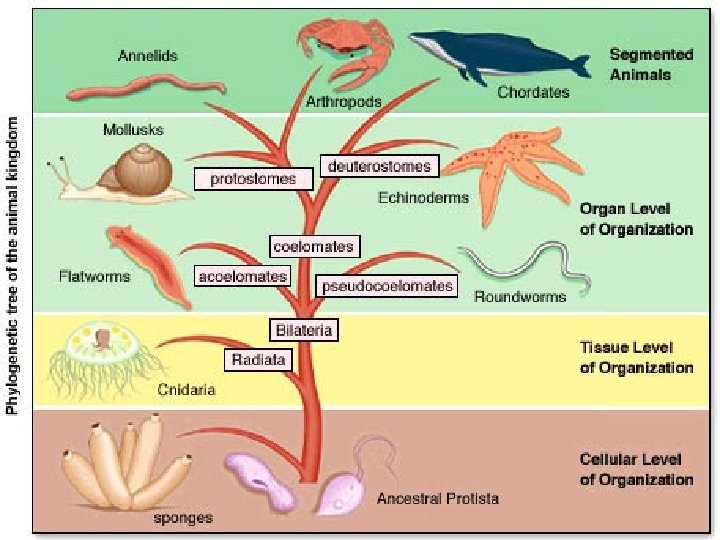
Coelomates Deuterostome Endoskeleton 2 phylum Enchinodermata & Chordata
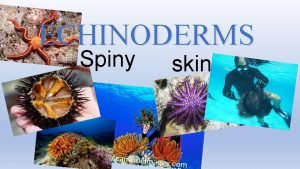
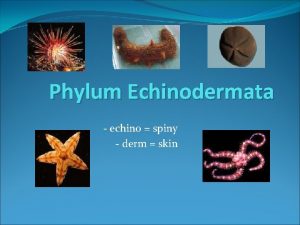
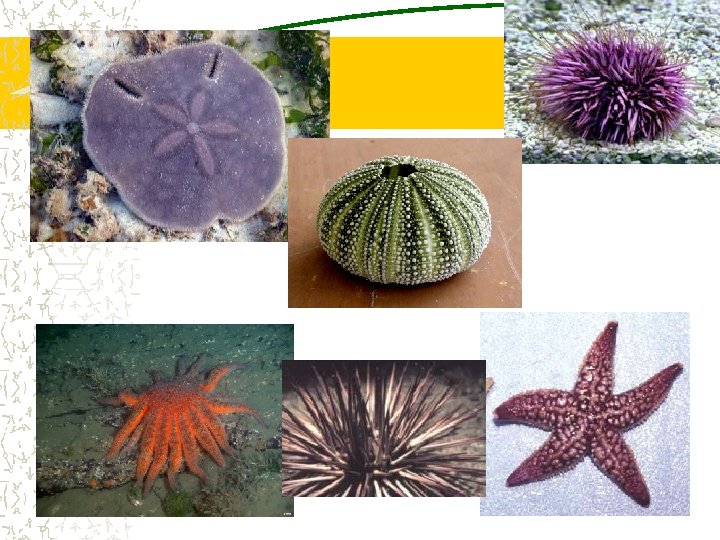
Enchinoderms 600 million years ago Starfish Brittle stars Sea urchins Sand dollar Sea cucumber
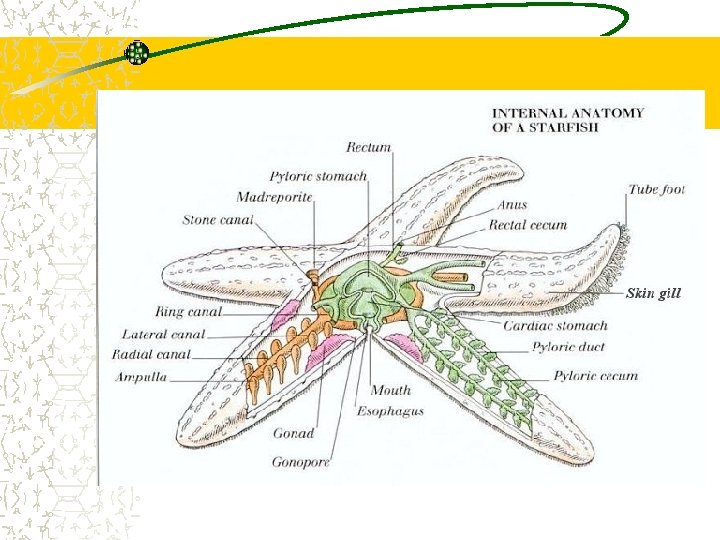
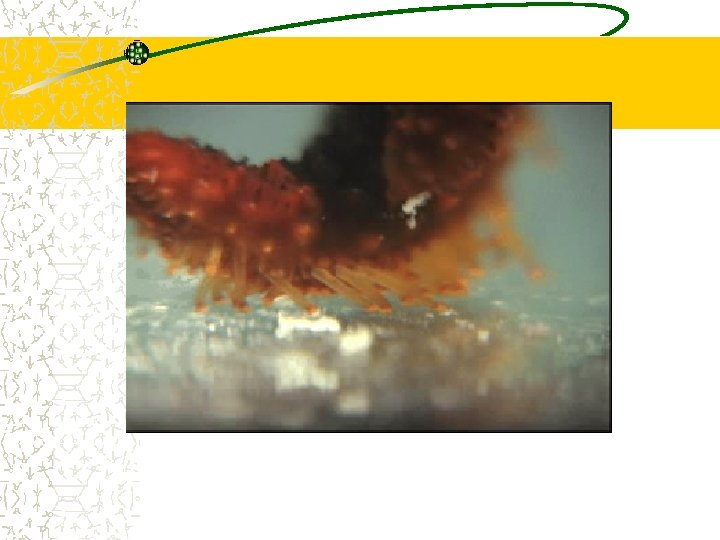
Enchinoderms “spiny” skin Endoskeleton made up of calcium Start as plates enclosed in living tissue Adults plates fuse Creates hard shell Water-vascular system helps them move Central ring canal with canals that extend into the arms
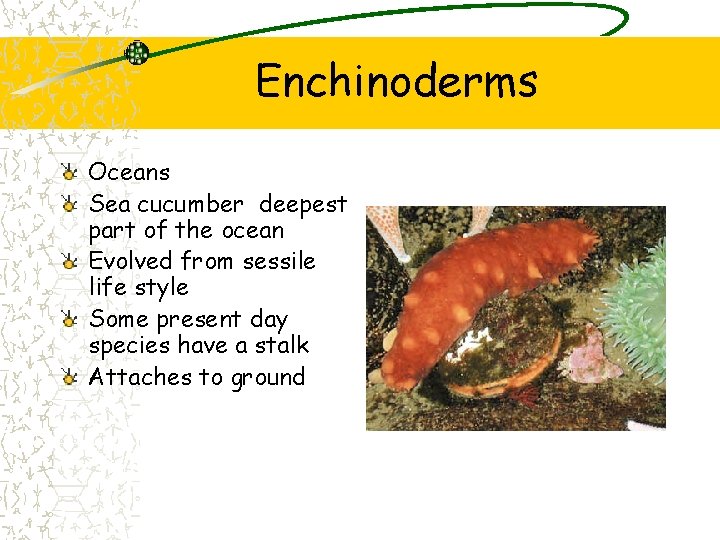
Enchinoderms Oceans Sea cucumber deepest part of the ocean Evolved from sessile life style Some present day species have a stalk Attaches to ground
Body plan Bilateral symmetry larva Develop-radial symmetry Nerve ring: central ring 5 branches arise from central ring Tube feet Part of water-vascular system Helps attach itself to something Reproduction, sexual & external Regenerate parts
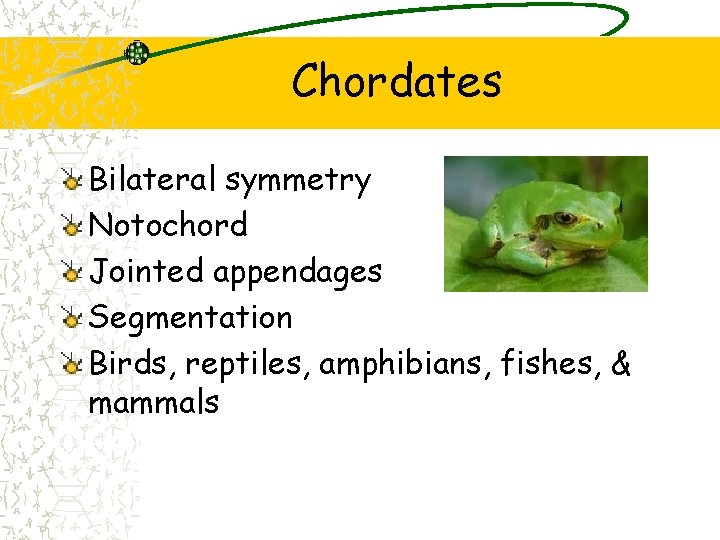
Chordates Bilateral symmetry Notochord Jointed appendages Segmentation Birds, reptiles, amphibians, fishes, & mammals
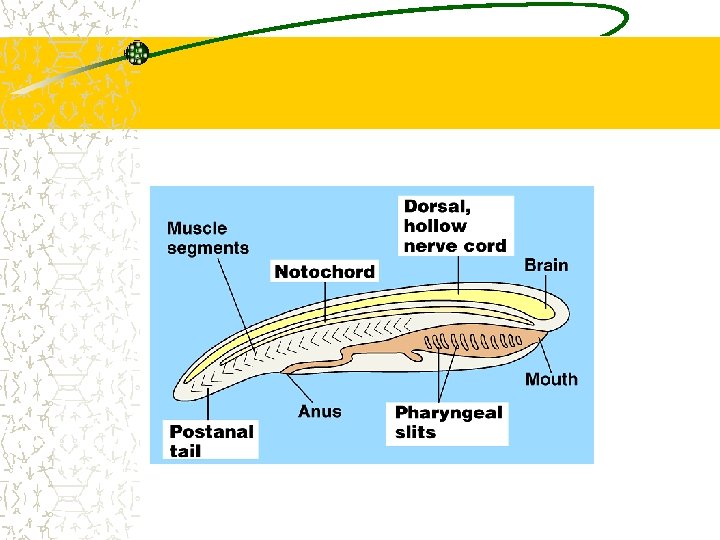
Chordates Common features of chordates 1. Nerve cord Hollow Ectoderm Beneath dorsal surface Vertebrates (brain & spinal cord)
Chordates 2. Notochord Dorsal side of primitive gut in embryo Fluid filled cells Enclosed in stiff fibrous tissue Persists in some Support Reduced to vertebral discs in others
Chordates 3. Pharyngeal slits: Connect pharynx & esophagus to outside Pharyngeal pouches: Terrestrial vertebrates slits do not connect to outside Pouches are present in embryos Gills stay connect to outside 4. Postanal tail At least during embryo development
Chordates All 4 characteristics at some point during development Humans Nerve cord stays Notochord is replaced by spinal column (discs) Pharyngeal pouches are lost Except one forms Eustachian tube Tail regresses tail bone
Chordates Other features Muscles are arranged in segmented blocks Work against internal skeleton Helps with movement
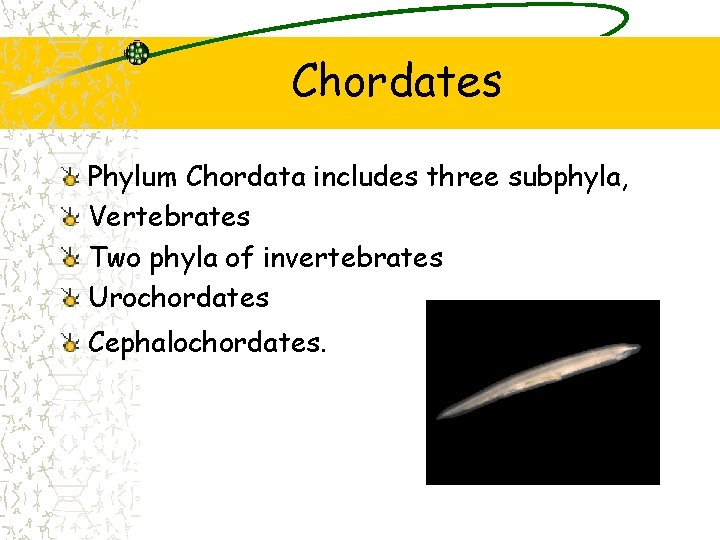
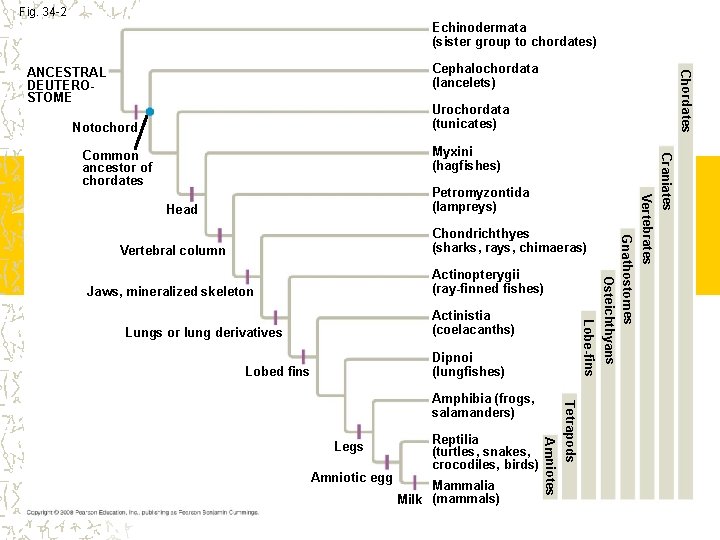
Chordates Phylum Chordata includes three subphyla, Vertebrates Two phyla of invertebrates Urochordates Cephalochordates.
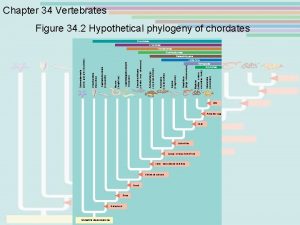
Fig. 34 -2 Echinodermata (sister group to chordates) Chordates Cephalochordata (lancelets) ANCESTRAL DEUTEROSTOME Urochordata (tunicates) Notochord Head Chondrichthyes (sharks, rays, chimaeras) Vertebral column Actinopterygii (ray-finned fishes) Jaws, mineralized skeleton Lungs or lung derivatives Lobe-fins Actinistia (coelacanths) Dipnoi (lungfishes) Lobed fins Amniotic egg Reptilia (turtles, snakes, crocodiles, birds) Mammalia Milk (mammals) Amniotes Legs Tetrapods Amphibia (frogs, salamanders) Vertebrates Gnathostomes Osteichthyans Petromyzontida (lampreys) Craniates Myxini (hagfishes) Common ancestor of chordates
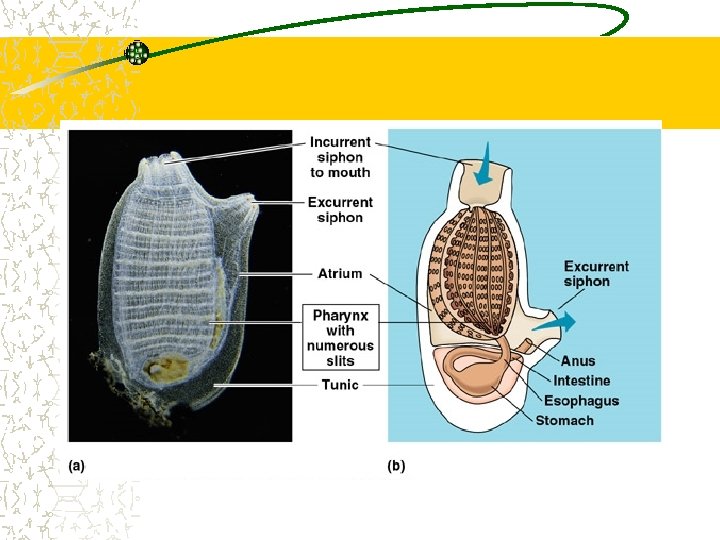
Chordates Nonvertebrates Notocord but no backbone Tunicates (urochordates) Marine, shallow waters Sessile Adults no cavity or segmentation Tadpole shows characteristics Tunic: sac of cellulose secreted by adults Surrounds the animal
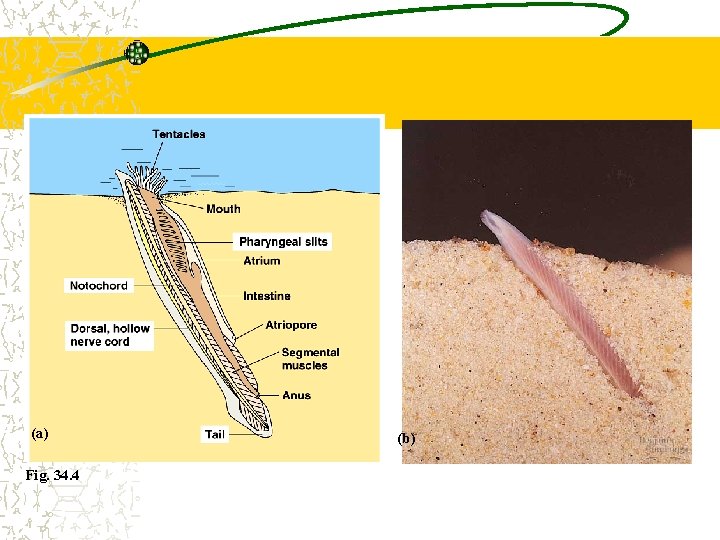
Chordates Lancelets (cephalochordata) Shallow waters in ocean Buried in sand with anterior end sticking out Plankton Gill slits Closest relative to vertebrate
(a) Fig. 34. 4 (b)
Vertebrates 1. Vertebral column 2. Head Brain is enclosed in a bony skull or cranium Craniate chordates
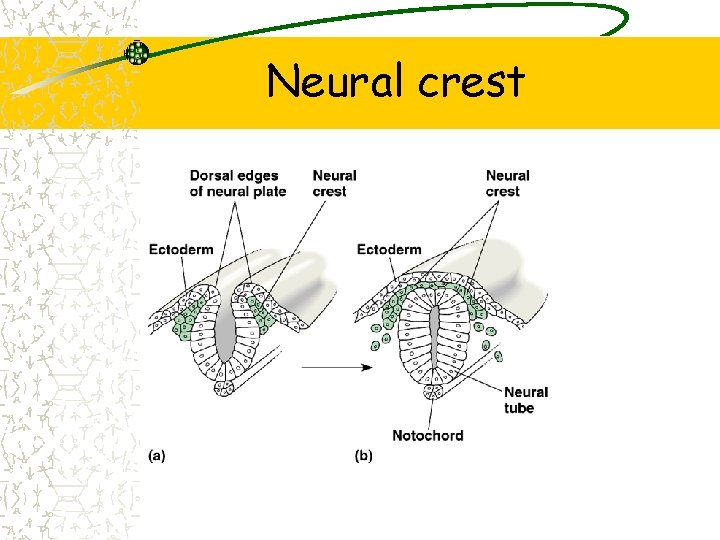
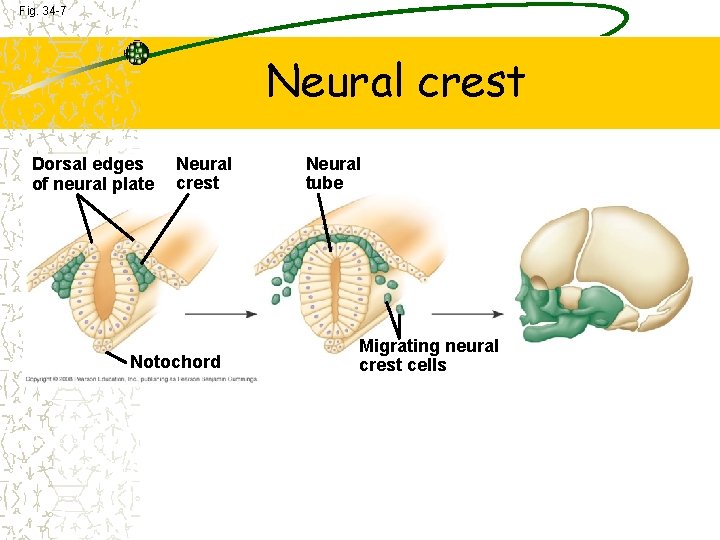
Vertebrates Other characteristics 1. Neural crest Cells that develop on crest of neural tube Form other structures (teeth, neurons, dermis) 2. Internal organs Liver, kidney, endocrine glands 3. Endoskeleton Cartilage & bone helps with movement
Neural crest
Fig. 34 -7 Neural crest Dorsal edges of neural plate Neural crest Notochord Neural tube Migrating neural crest cells
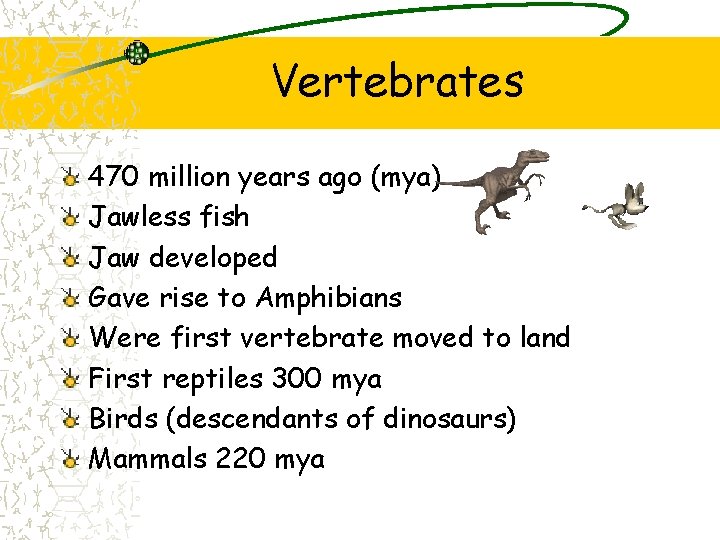
Vertebrates 470 million years ago (mya) Jawless fish Jaw developed Gave rise to Amphibians Were first vertebrate moved to land First reptiles 300 mya Birds (descendants of dinosaurs) Mammals 220 mya
Vertebrates 65 mya dinosaurs disappeared Gave rise to larger mammals Nine classes of vertebrae 5 fish (2 are extinct) 4 tetrapods (animals with 4 limbs) Amphibians, reptiles, birds, mammals
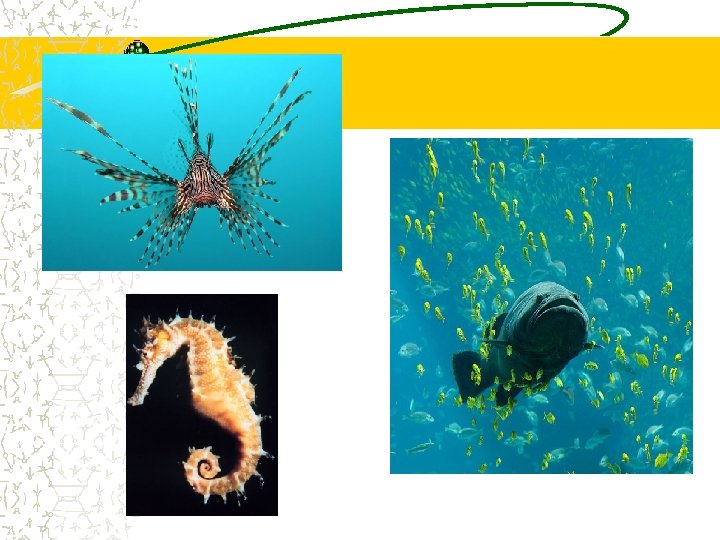
Fish Marine & freshwater 1. Vertebral column 2. Jaws & paired appendages Helps eat larger & active prey Paired fins help with swim
Fish 3. Gills Extract oxygen dissolved in water Vessels rich in blood Supported by cartilage 4. Single-loop blood circulation Blood pumped from heart to gills Oxygenated blood to body Then returns to heart
Fish 5. Nutritional deficiencies Cannot make certain aa Must consume them
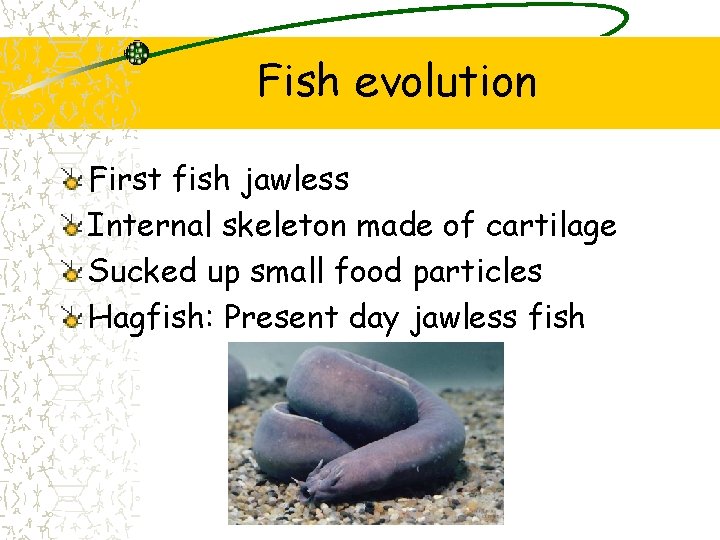
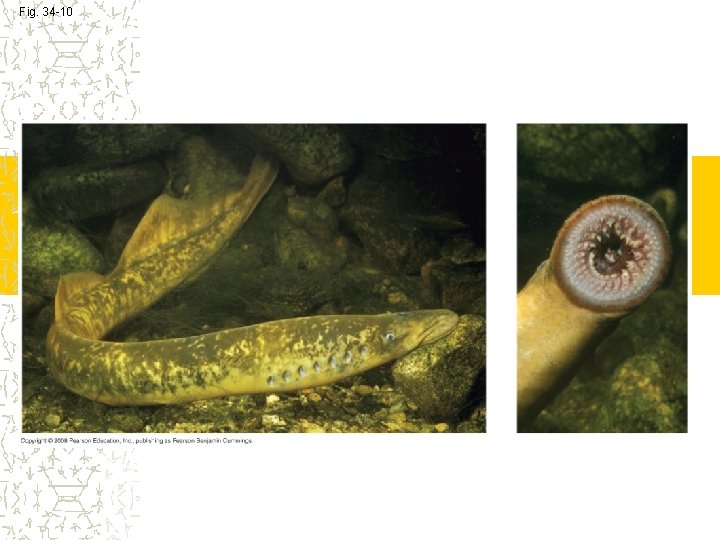
Fish evolution First fish jawless Internal skeleton made of cartilage Sucked up small food particles Hagfish: Present day jawless fish
Fig. 34 -10
Fish Jaw 410 million years ago Cartilage, supported gills Teeth evolved Spiny fish with scales had bone No longer exist Bony & sharks developed next Sharks dominated for awhile
Fish Skeleton cartilage with calcium carbonate Makes for a lighter skeleton Shark teeth first to be developed Not firmly attached so fall out easily Reproduction advanced with internal fertilization Most females give birth to pups
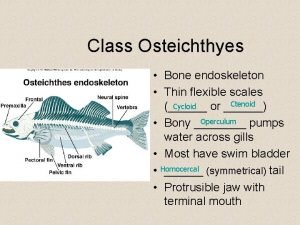
Fish Bony fish Cartilage is replaced by bone Ossification Early fish evolved in freshwater unlike shark First bony fish were small Fins of thin scales Symmetrical tails
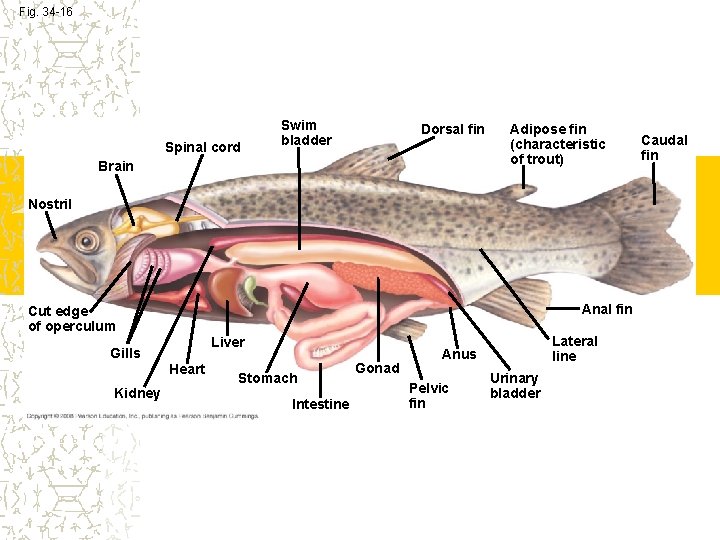
Fish Bony fish most dominant Swim bladder Gas filled sac-keeps them floating Sharks have to keep moving or they sink Lateral line system Helps fish detect movement of objects Helps orient the fish Gill cover
Fig. 34 -16 Spinal cord Swim bladder Dorsal fin Brain Adipose fin (characteristic of trout) Nostril Anal fin Cut edge of operculum Liver Gills Heart Kidney Stomach Intestine Gonad Lateral line Anus Pelvic fin Urinary bladder Caudal fin
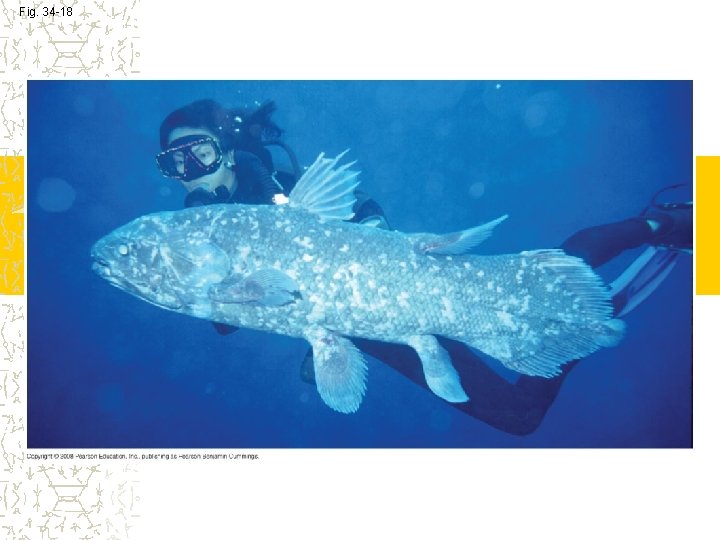
Fig. 34 -18
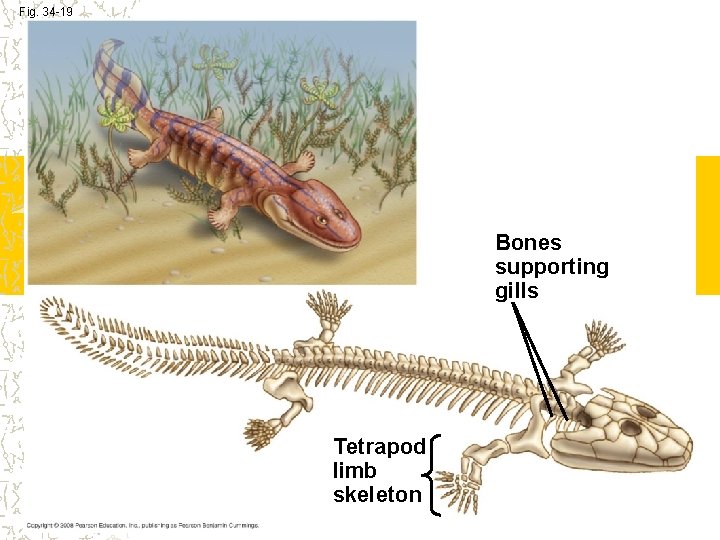
Fig. 34 -19 Bones supporting gills Tetrapod limb skeleton
Amphibians First vertebrae to walk on land Descendants of fish Small More species than mammals Frogs, salamanders & caccileans Key role in terrestrial food chains
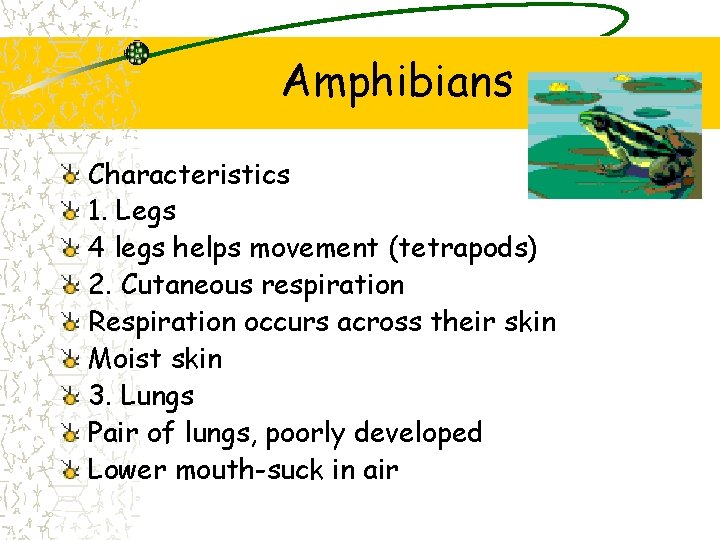
Amphibians Characteristics 1. Legs 4 legs helps movement (tetrapods) 2. Cutaneous respiration Respiration occurs across their skin Moist skin 3. Lungs Pair of lungs, poorly developed Lower mouth-suck in air
Amphibians 4. Pulmonary veins Return aerated blood to heart Re-pumps to body 5. Partially divided heart Two chambers separated Prevents un-aerated/aerated blood mixing
Amphibian evolution Amphibia Greek “both lives” Evolved from lobe-finned fish Adaptations due to movement on land 1. Legs 2. Lungs 3. Heart 4. Reproduction 5. Keep body from drying out
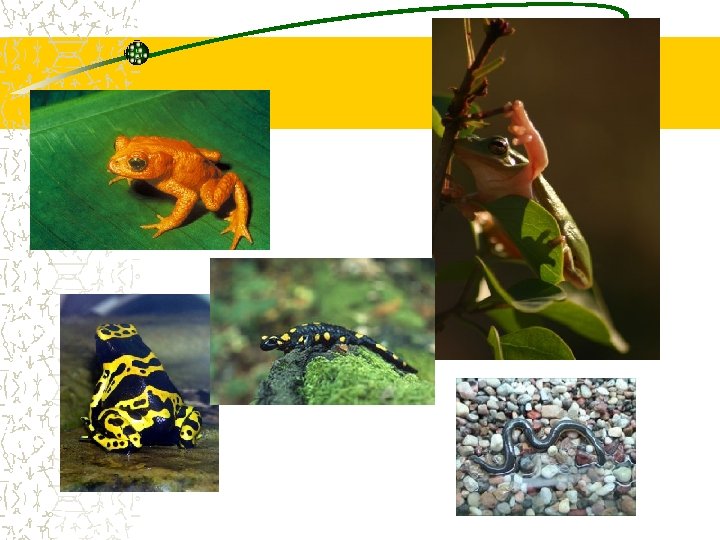
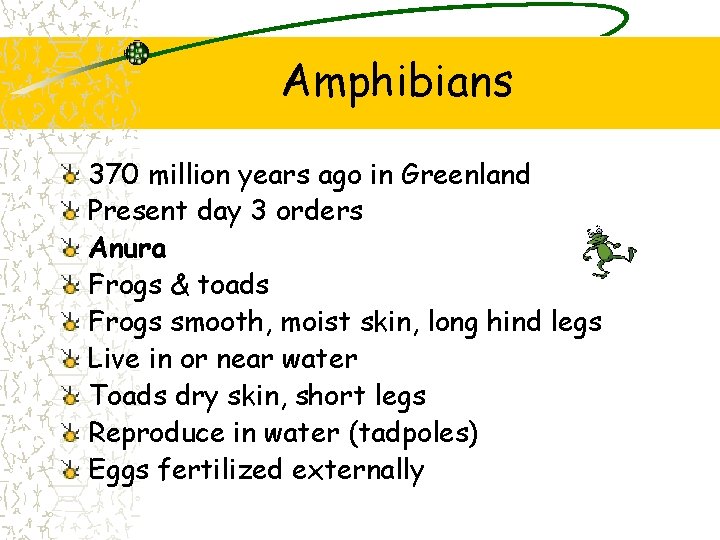
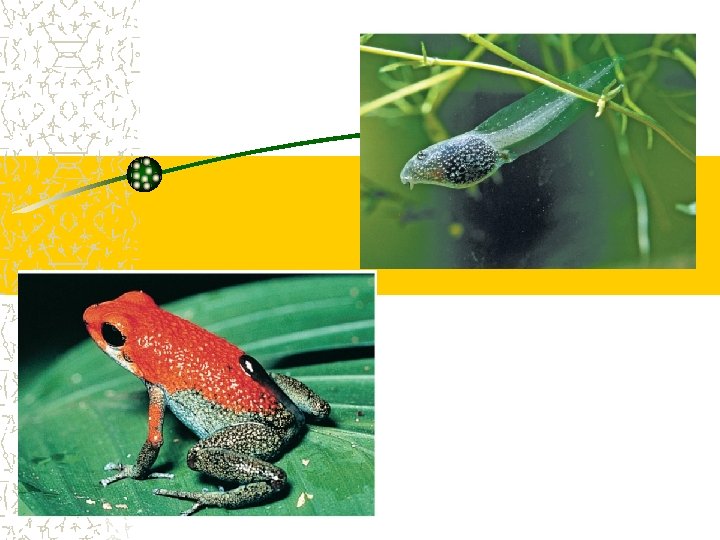
Amphibians 370 million years ago in Greenland Present day 3 orders Anura Frogs & toads Frogs smooth, moist skin, long hind legs Live in or near water Toads dry skin, short legs Reproduce in water (tadpoles) Eggs fertilized externally
Amphibians Urodela (Caudata) Salamanders Long tails, moist skin Fertilization external, eggs in water Apoda Tropical burrowing amphibians Resemble worms
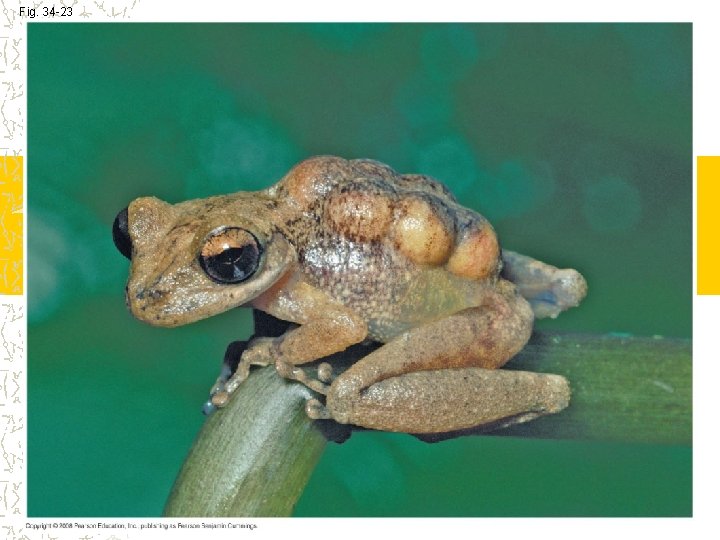
Fig. 34 -23
Reptiles
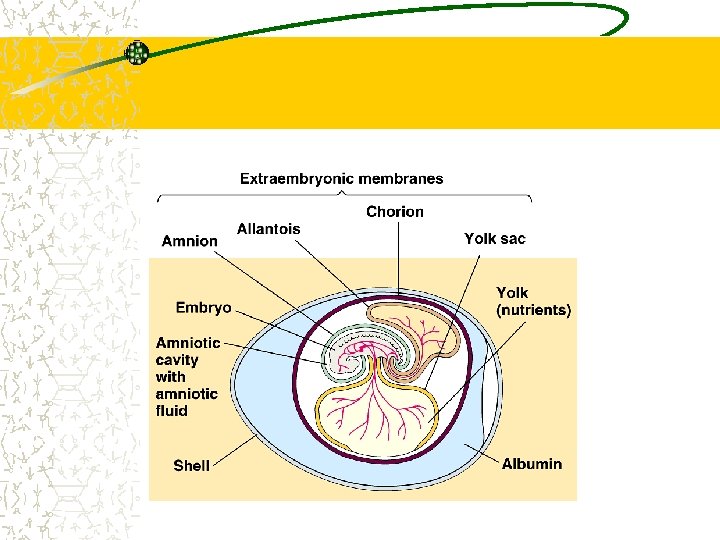
Reptiles Characteristics 1. Amniotic egg (Amniotes) Chorion: outer layer of egg Below shell (gas exchange) Amnion: encases the embryo (cushions) Yolk sac: supplies food (blood supply) Allantois: surrounds a cavity in which wastes from the embryo goes
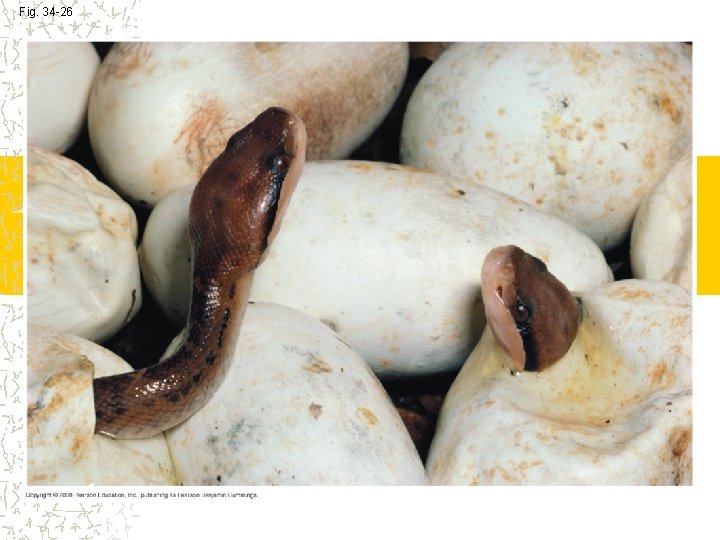
Fig. 34 -26
Reptiles 2. Dry skin Watertight skin Scales 3. Thoracic breathing Expand & contract rib cage Pulls air into lungs
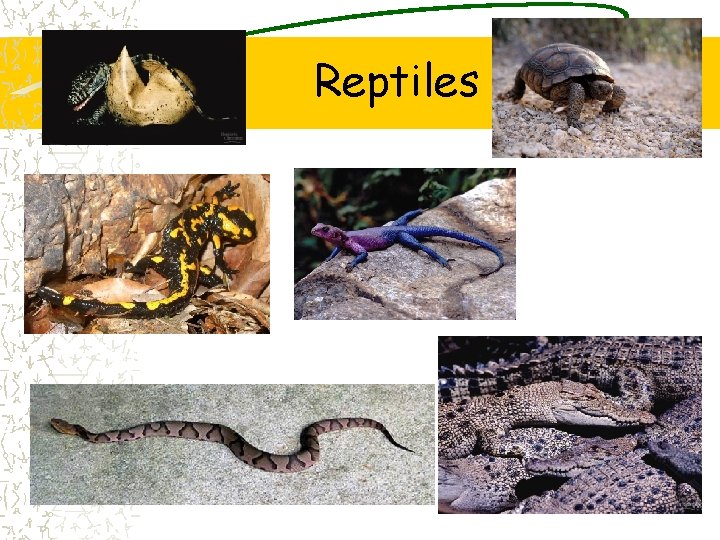
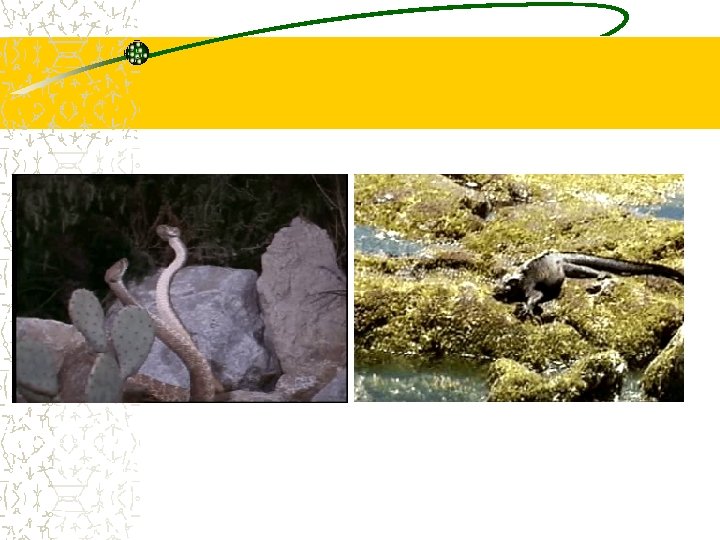
Reptiles Evolution 4 major groups of reptiles dominated for 250 million years Dinosaurs Present day reptiles Turtles, lizards and snakes, tuatarus, and crocodiles
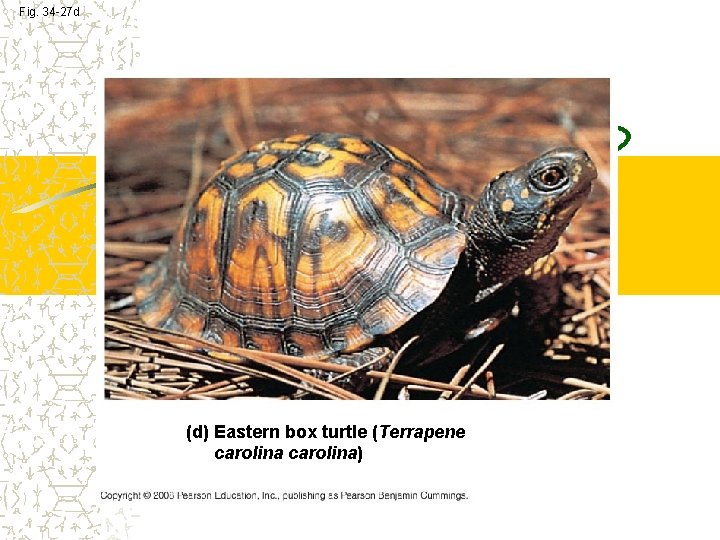
Fig. 34 -27 d (d) Eastern box turtle (Terrapene carolina)
Reptiles Other characteristics Internal fertilization 4 chambered heart Ectothermic: Body temperature determined by environment Regulate temperature by behavior
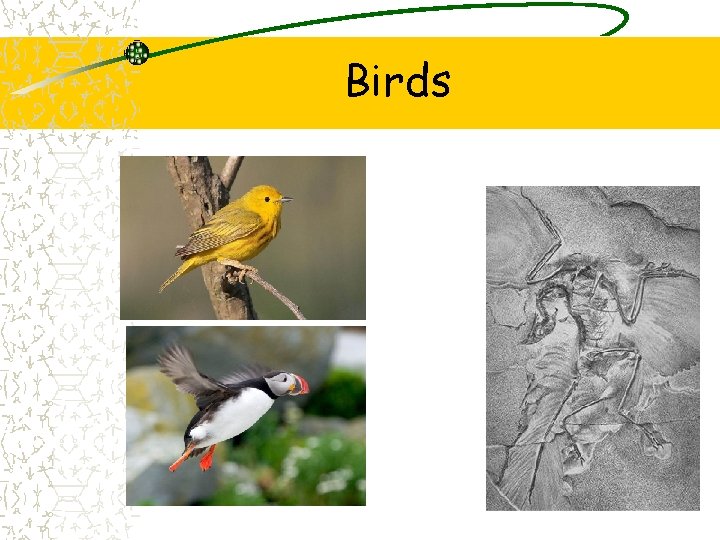
Birds
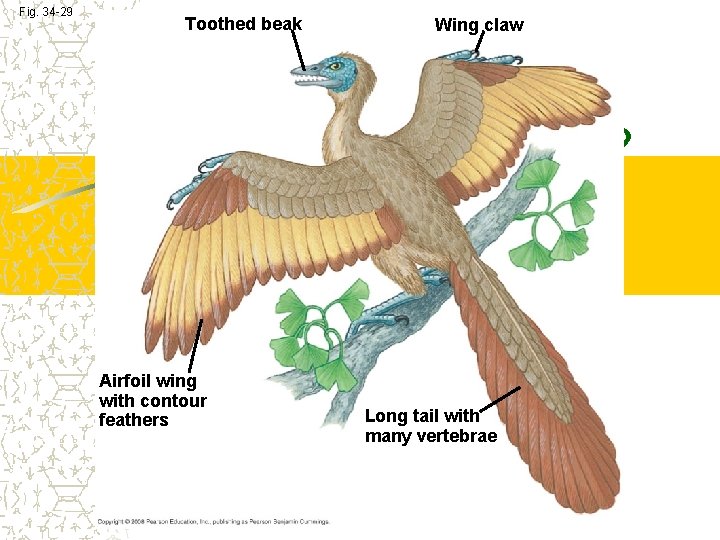
Fig. 34 -29 Toothed beak Airfoil wing with contour feathers Wing claw Long tail with many vertebrae
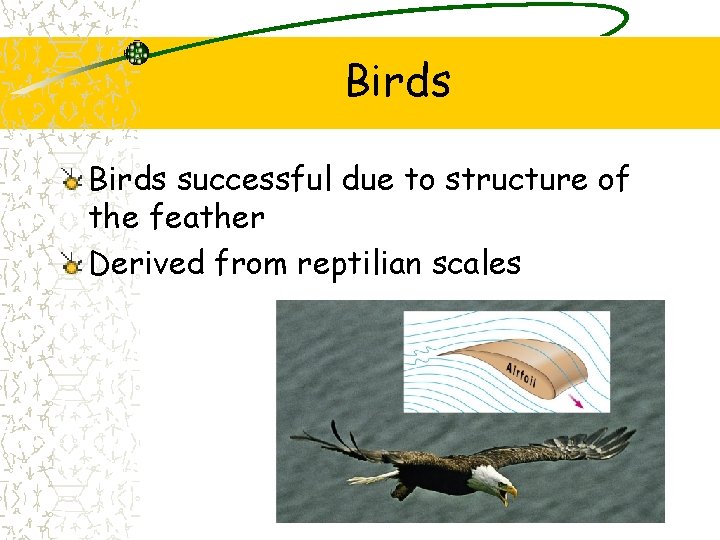
Birds successful due to structure of the feather Derived from reptilian scales
Birds Bird’s anatomy modified to enhance flight. Reduce weight Missing of some organs. Females-only one ovary. Modern birds-toothless Grind food in a muscular gizzard Near stomach.
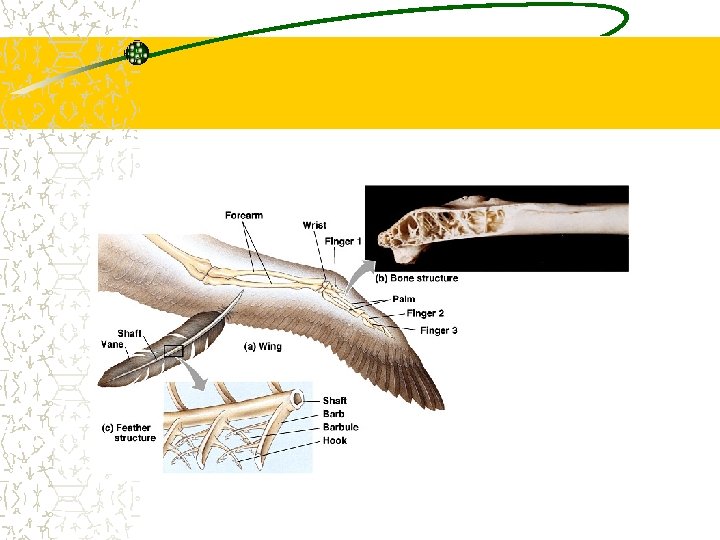
Birds Characteristics 1. Feathers 2. Flight skeleton Bones are thin Hollow
Birds Descended from dinosaurs Adaptations 1. Efficient respiration 2. Efficient circulation 3. Endothermy Generate heat internally 4. Amniotic egg
Mammals
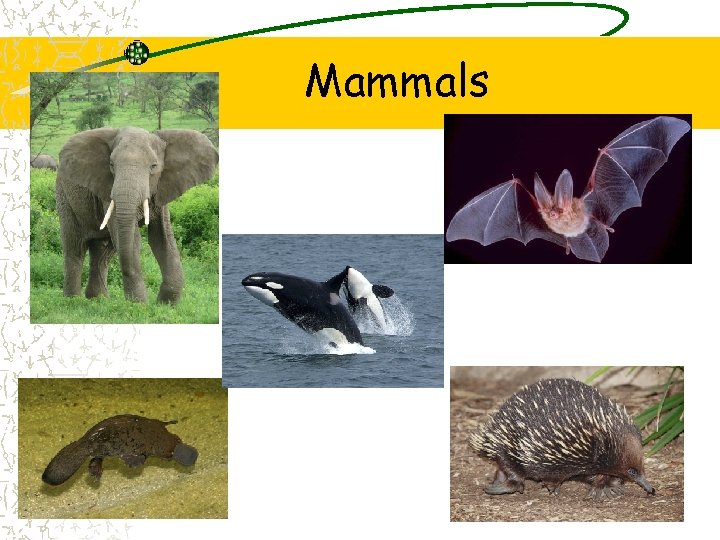
Mammals 5300 living species Smallest # of species of vertebrae Characteristics 1. Mammary glands Newborns nurse Milk is rich in fat, sugar, protein, vitamins & minerals
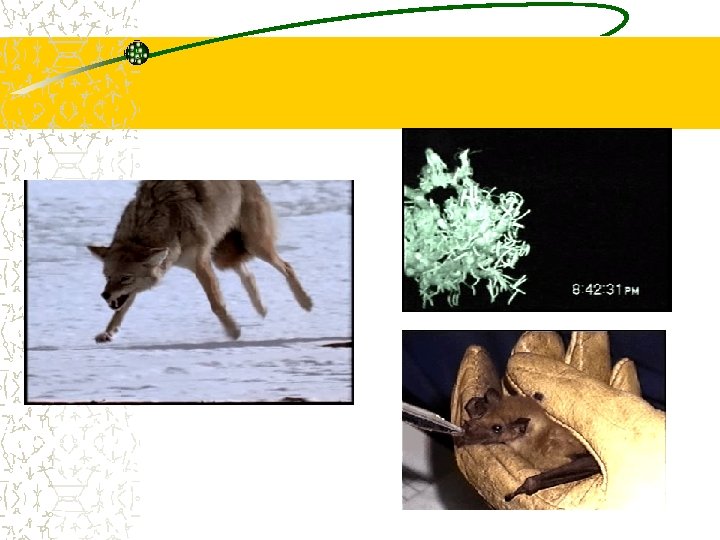
Mammals 2. Hair Consists of protein Sensitive to touch (cat) Avoid colliding with objects 3. Endothermy Fat layer under skin 4. Placenta Carry & nourish babies
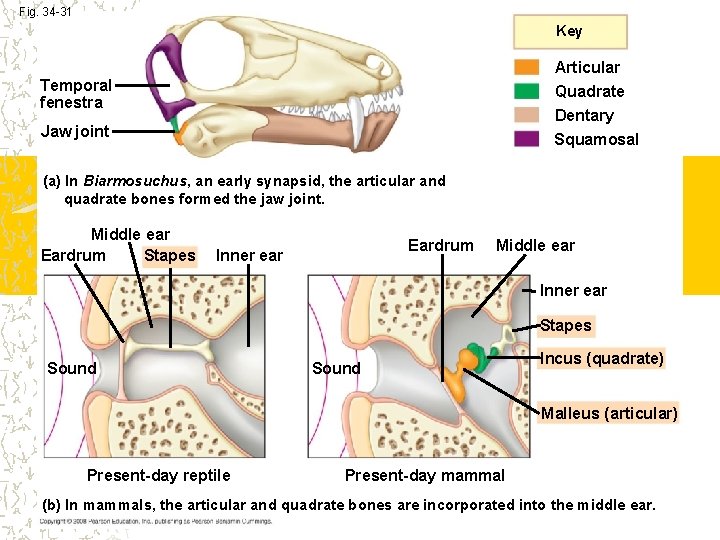
Mammals 5. Teeth Variety of teeth to match diet 6. Middle ear
Fig. 34 -31 Key Articular Quadrate Dentary Temporal fenestra Jaw joint Squamosal (a) In Biarmosuchus, an early synapsid, the articular and quadrate bones formed the jaw joint. Middle ear Stapes Eardrum Inner ear Middle ear Inner ear Stapes Sound Incus (quadrate) Malleus (articular) Present-day reptile Present-day mammal (b) In mammals, the articular and quadrate bones are incorporated into the middle ear.
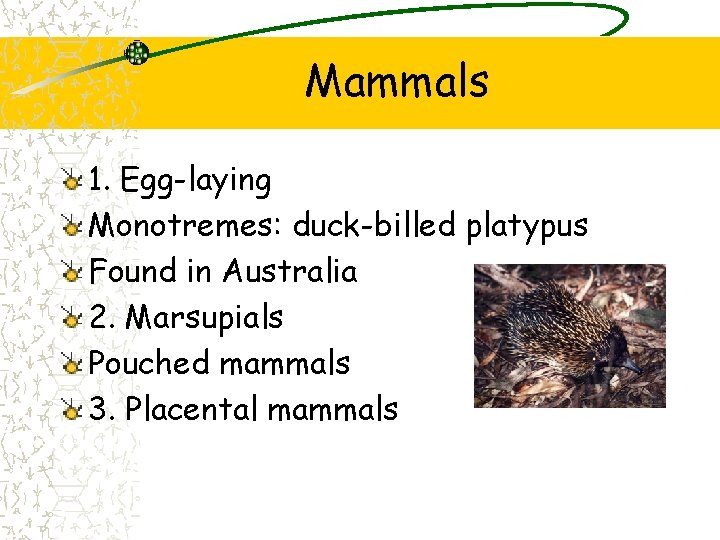
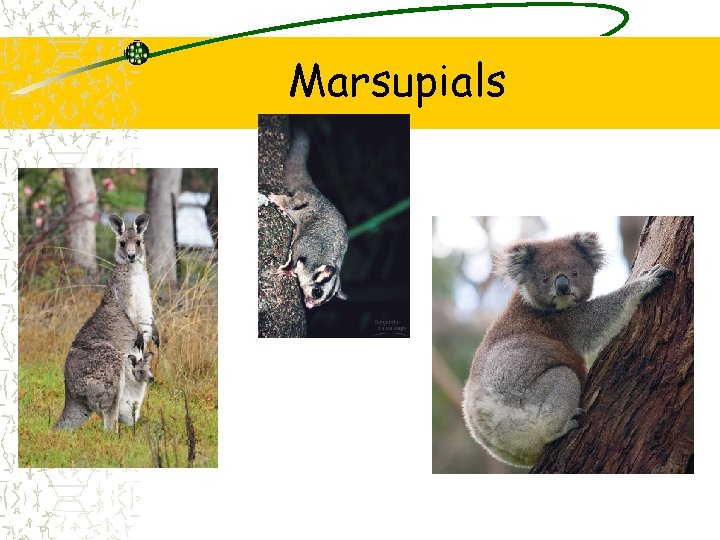
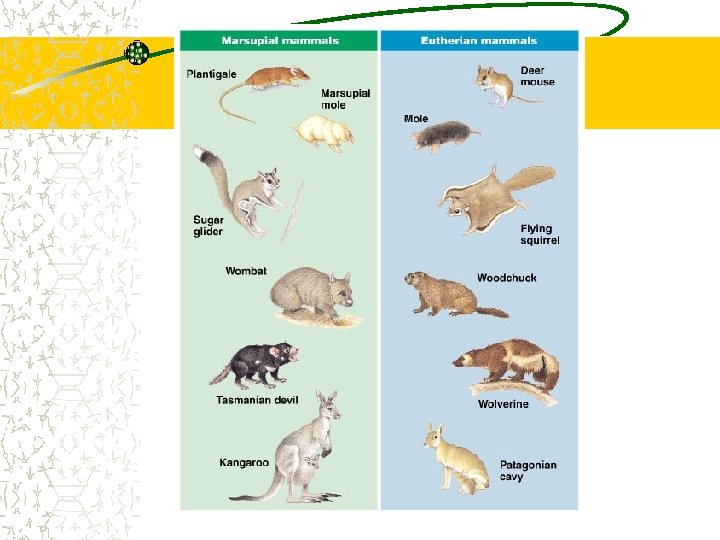
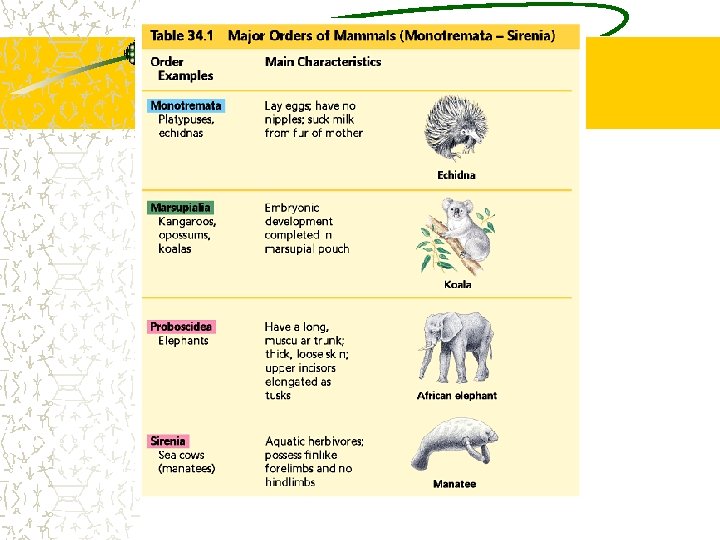
Mammals 1. Egg-laying Monotremes: duck-billed platypus Found in Australia 2. Marsupials Pouched mammals 3. Placental mammals
Marsupials