
PHYLUM ECHINODERMATA PHYLUM ECHINODERMATA Characteristics Endoskeleton Calcareous calcium
- Slides: 15
PHYLUM ECHINODERMATA
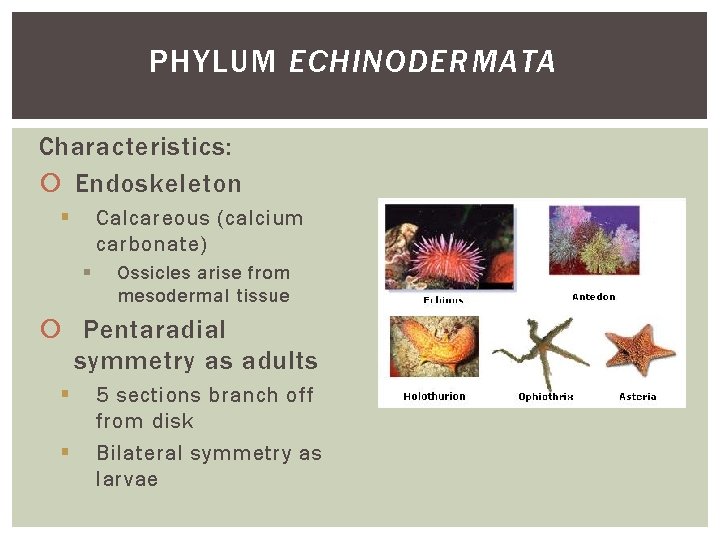
PHYLUM ECHINODERMATA Characteristics: Endoskeleton § Calcareous (calcium carbonate) § Ossicles arise from mesodermal tissue Pentaradial symmetry as adults § § 5 sections branch off from disk Bilateral symmetry as larvae
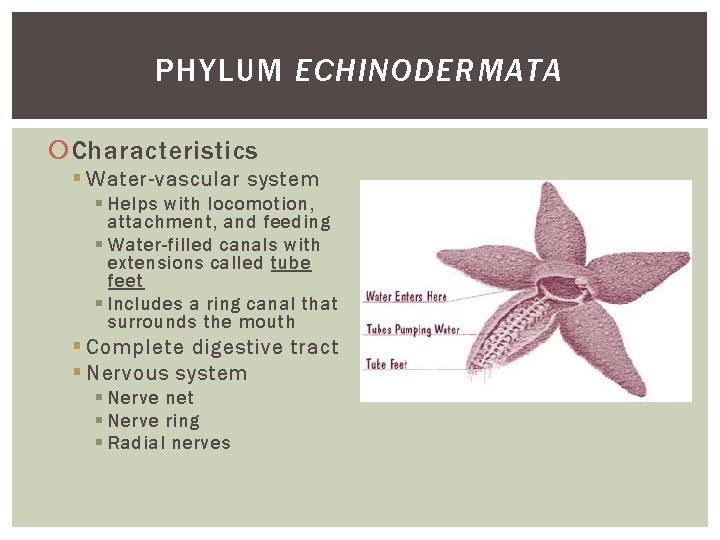
PHYLUM ECHINODERMATA Characteristics § Water-vascular system § Helps with locomotion, attachment, and feeding § Water-filled canals with extensions called tube feet § Includes a ring canal that surrounds the mouth § Complete digestive tract § Nervous system § Nerve net § Nerve ring § Radial nerves
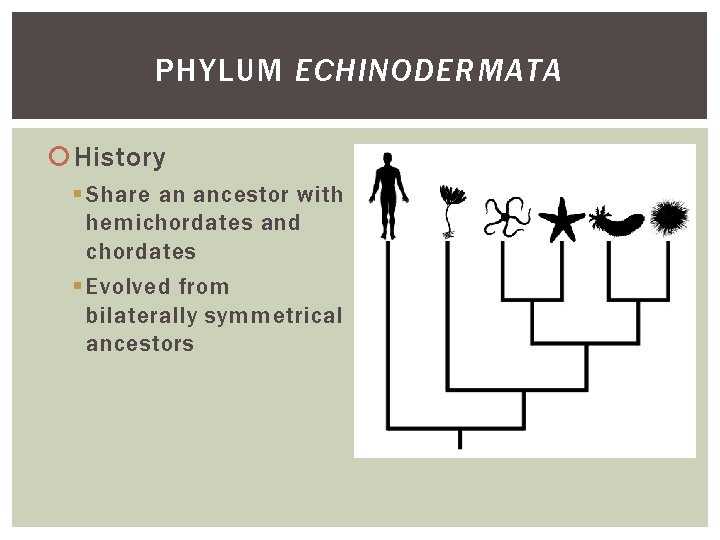
PHYLUM ECHINODERMATA History § Share an ancestor with hemichordates and chordates § Evolved from bilaterally symmetrical ancestors
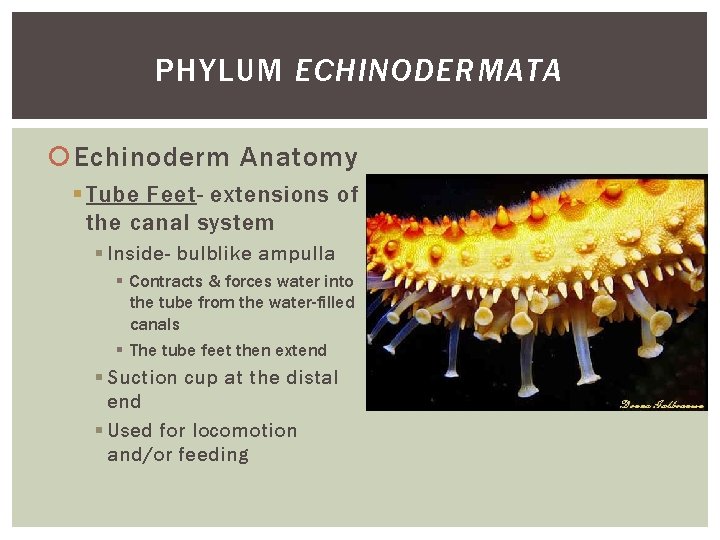
PHYLUM ECHINODERMATA Echinoderm Anatomy § Tube Feet- extensions of the canal system § Inside- bulblike ampulla § Contracts & forces water into the tube from the water-filled canals § The tube feet then extend § Suction cup at the distal end § Used for locomotion and/or feeding
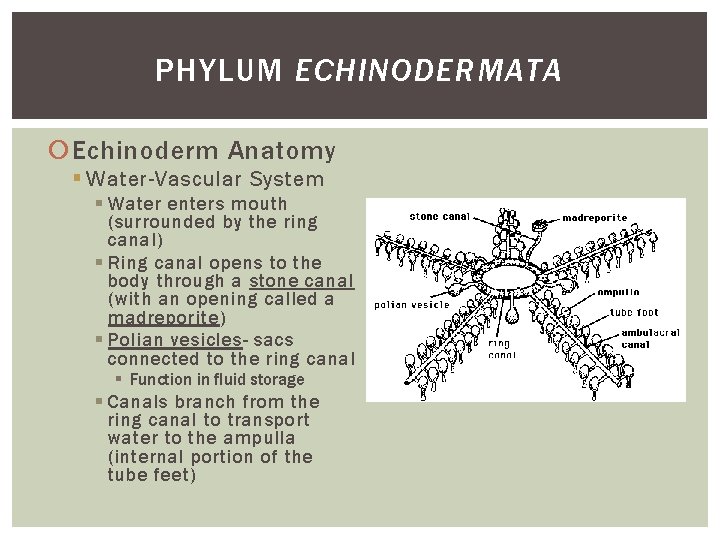
PHYLUM ECHINODERMATA Echinoderm Anatomy § Water-Vascular System § Water enters mouth (surrounded by the ring canal) § Ring canal opens to the body through a stone canal (with an opening called a madreporite) § Polian vesicles- sacs connected to the ring canal § Function in fluid storage § Canals branch from the ring canal to transport water to the ampulla (internal portion of the tube feet)
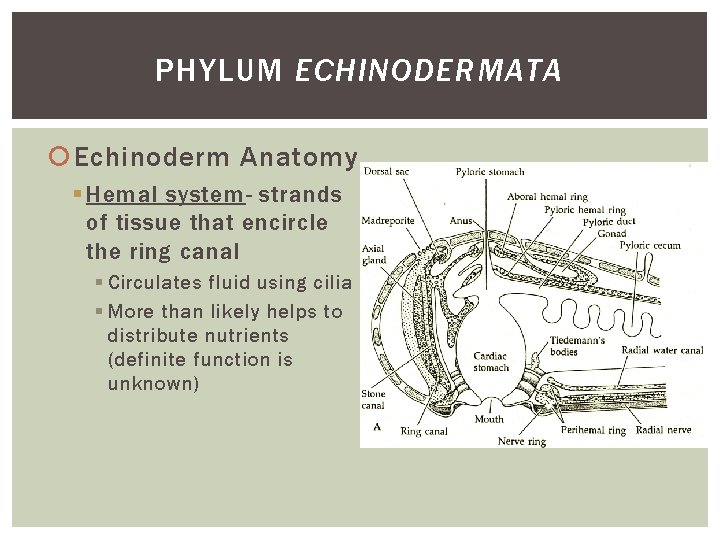
PHYLUM ECHINODERMATA Echinoderm Anatomy § Hemal system- strands of tissue that encircle the ring canal § Circulates fluid using cilia § More than likely helps to distribute nutrients (definite function is unknown)
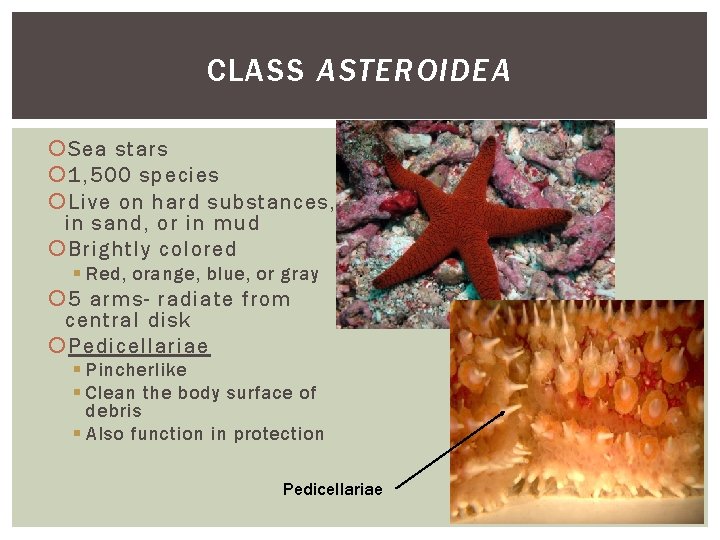
CLASS ASTEROIDEA Sea stars 1, 500 species Live on hard substances, in sand, or in mud Brightly colored § Red, orange, blue, or gray 5 arms- radiate from central disk Pedicellariae § Pincherlike § Clean the body surface of debris § Also function in protection Pedicellariae
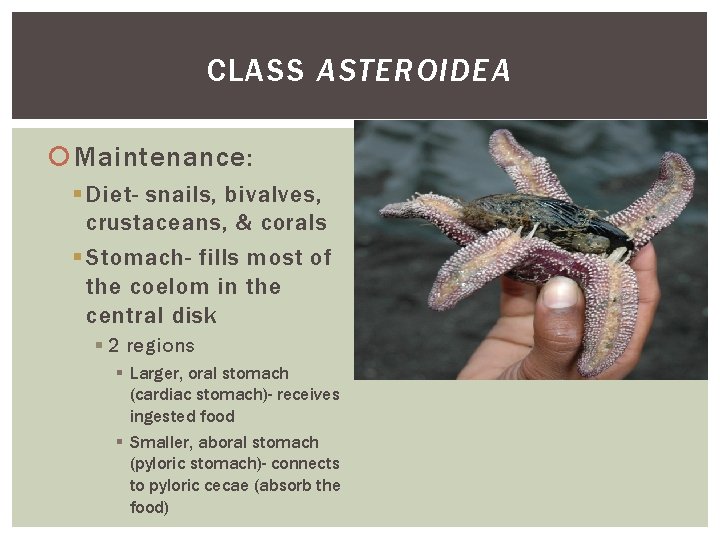
CLASS ASTEROIDEA Maintenance: § Diet- snails, bivalves, crustaceans, & corals § Stomach- fills most of the coelom in the central disk § 2 regions § Larger, oral stomach (cardiac stomach)- receives ingested food § Smaller, aboral stomach (pyloric stomach)- connects to pyloric cecae (absorb the food)
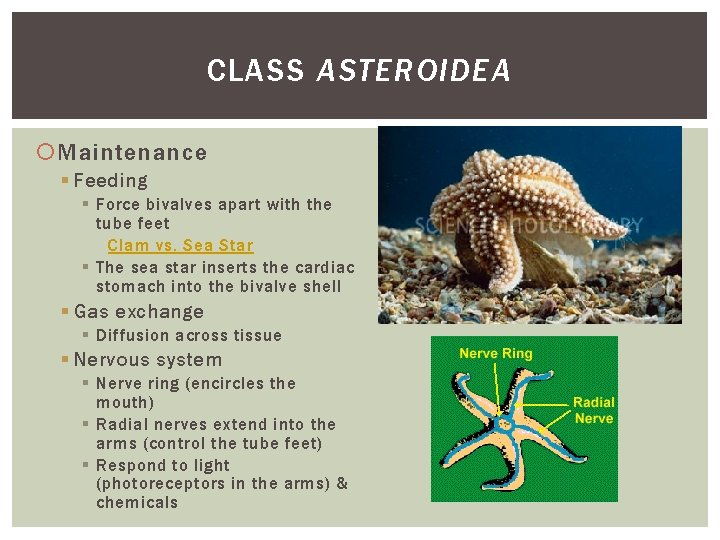
CLASS ASTEROIDEA Maintenance § Feeding § Force bivalves apart with the tube feet Clam vs. Sea Star § The sea star inserts the cardiac stomach into the bivalve shell § Gas exchange § Diffusion across tissue § Nervous system § Nerve ring (encircles the mouth) § Radial nerves extend into the arms (control the tube feet) § Respond to light (photoreceptors in the arms) & chemicals
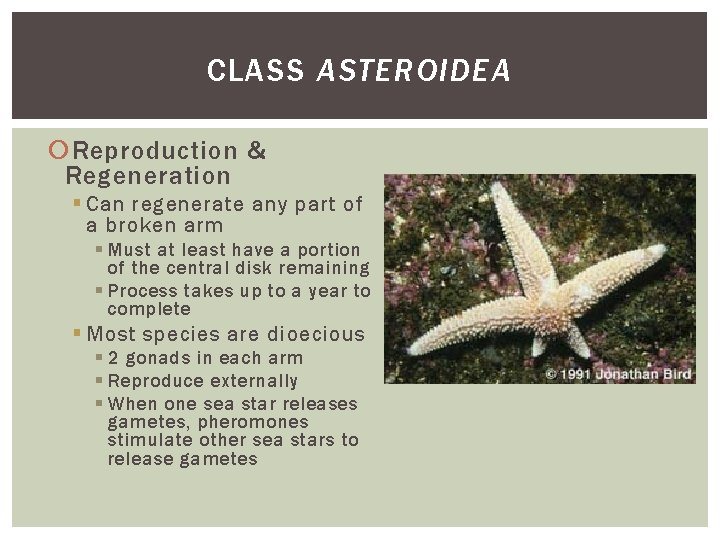
CLASS ASTEROIDEA Reproduction & Regeneration § Can regenerate any part of a broken arm § Must at least have a portion of the central disk remaining § Process takes up to a year to complete § Most species are dioecious § 2 gonads in each arm § Reproduce externally § When one sea star releases gametes, pheromones stimulate other sea stars to release gametes
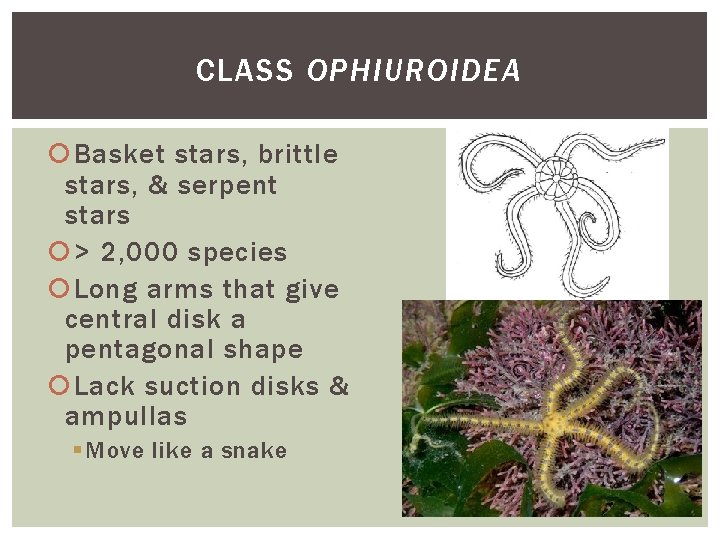
CLASS OPHIUROIDEA Basket stars, brittle stars, & serpent stars > 2, 000 species Long arms that give central disk a pentagonal shape Lack suction disks & ampullas § Move like a snake
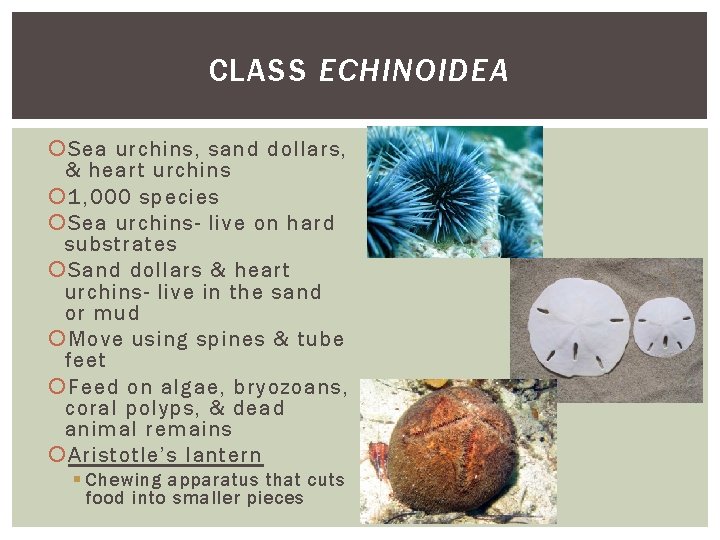
CLASS ECHINOIDEA Sea urchins, sand dollars, & heart urchins 1, 000 species Sea urchins- live on hard substrates Sand dollars & heart urchins- live in the sand or mud Move using spines & tube feet Feed on algae, bryozoans, coral polyps, & dead animal remains Aristotle’s lantern § Chewing apparatus that cuts food into smaller pieces
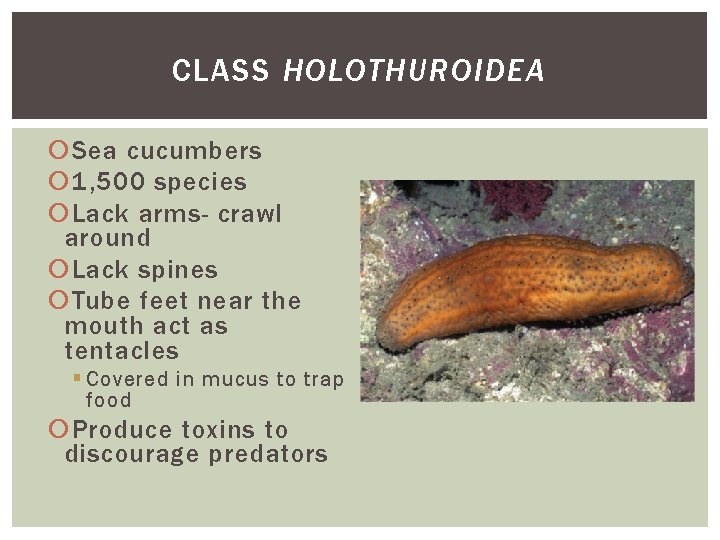
CLASS HOLOTHUROIDEA Sea cucumbers 1, 500 species Lack arms- crawl around Lack spines Tube feet near the mouth act as tentacles § Covered in mucus to trap food Produce toxins to discourage predators
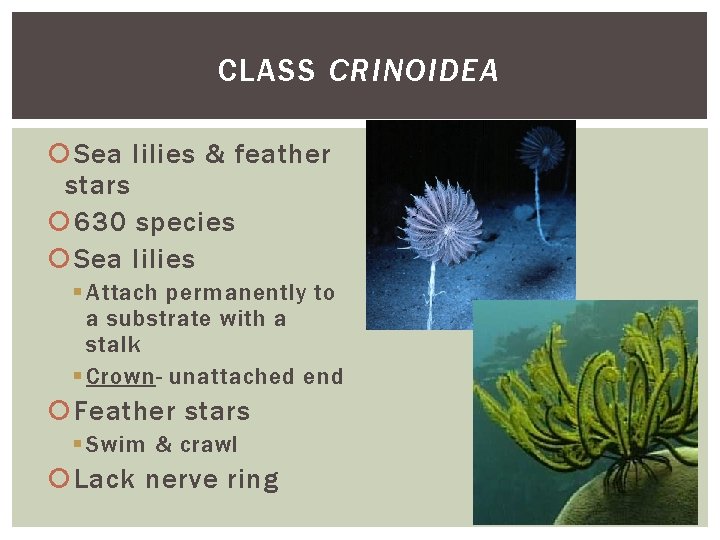
CLASS CRINOIDEA Sea lilies & feather stars 630 species Sea lilies § Attach permanently to a substrate with a stalk § Crown- unattached end Feather stars § Swim & crawl Lack nerve ring