
Week 7 Deuterostomes Review Protostomes vs Deuterostomes Similarities
- Slides: 41
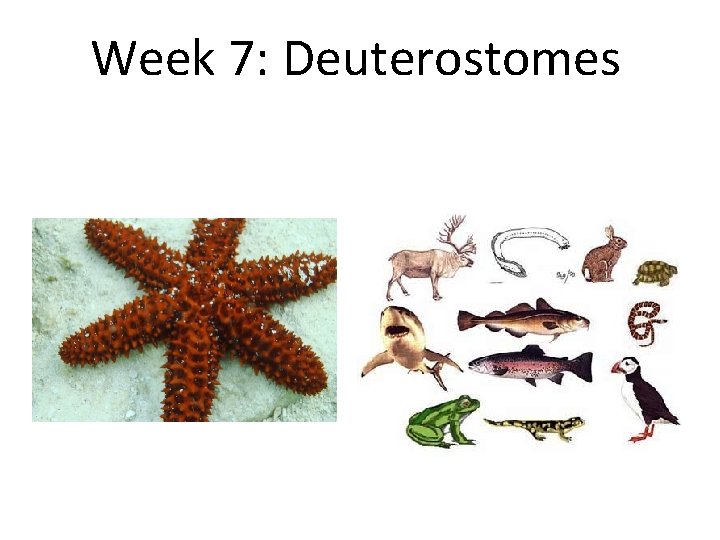
Week 7: Deuterostomes
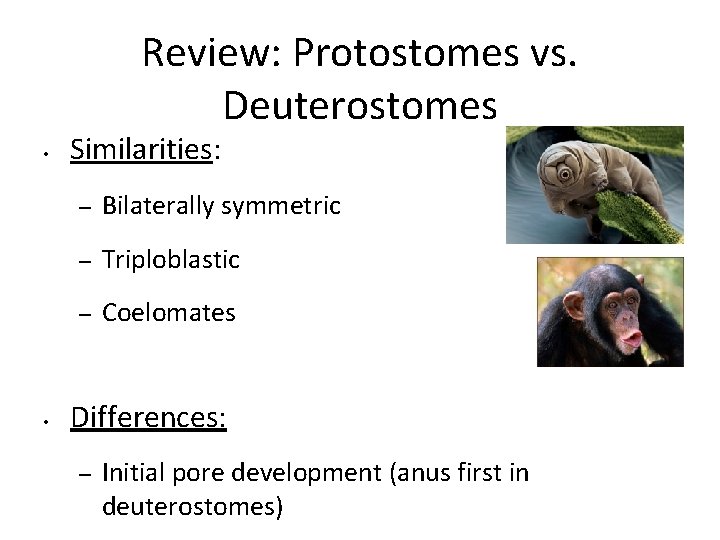
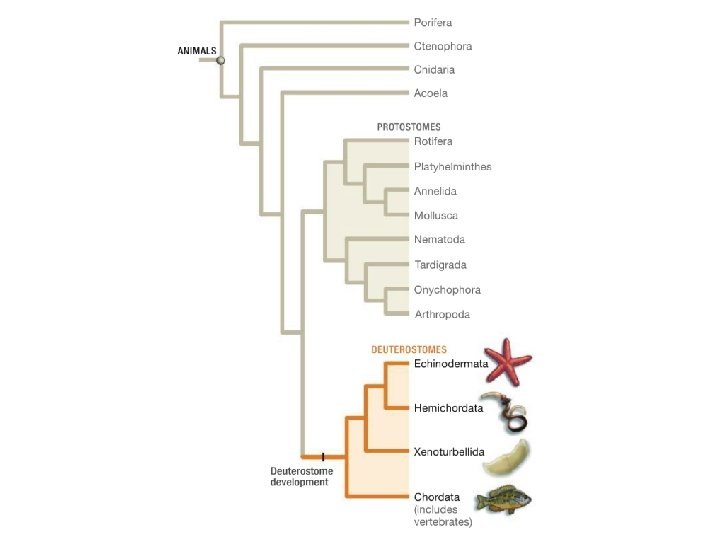
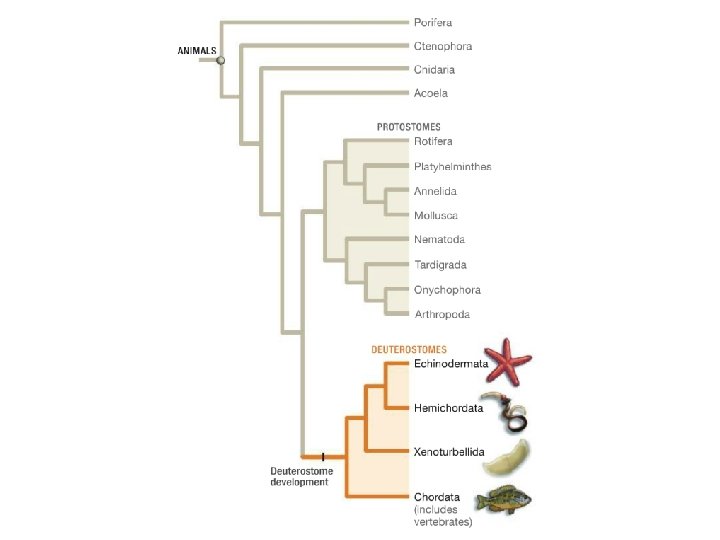
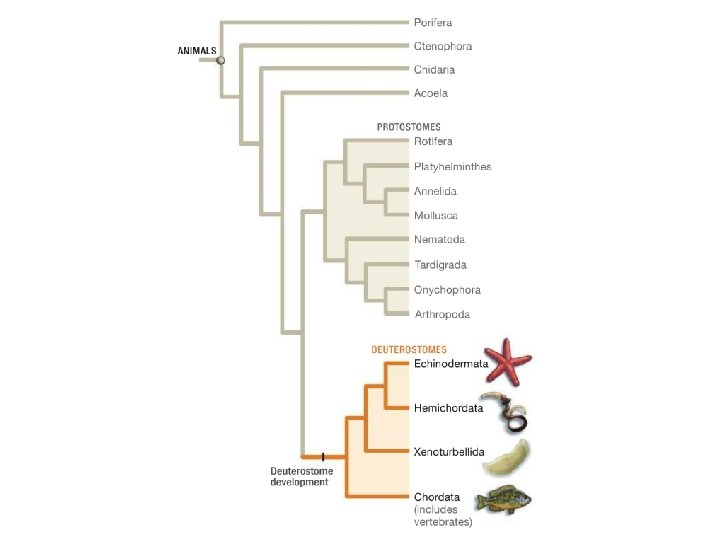
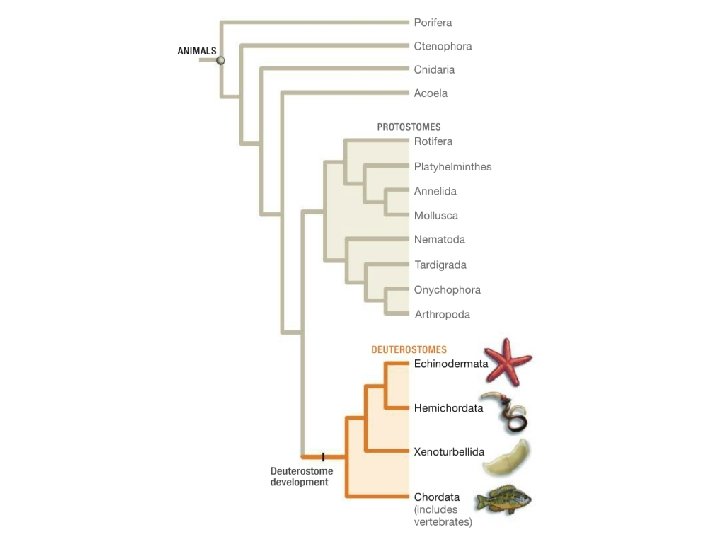
Review: Protostomes vs. Deuterostomes • • Similarities: – Bilaterally symmetric – Triploblastic – Coelomates Differences: – Initial pore development (anus first in deuterostomes)
Scientific Method: Important Questions • What are the big patterns? • What processes led to that pattern? • – Physiological mechanisms – Developmental processes – Understanding evolutionary history – Adaptive significance Why should we care?
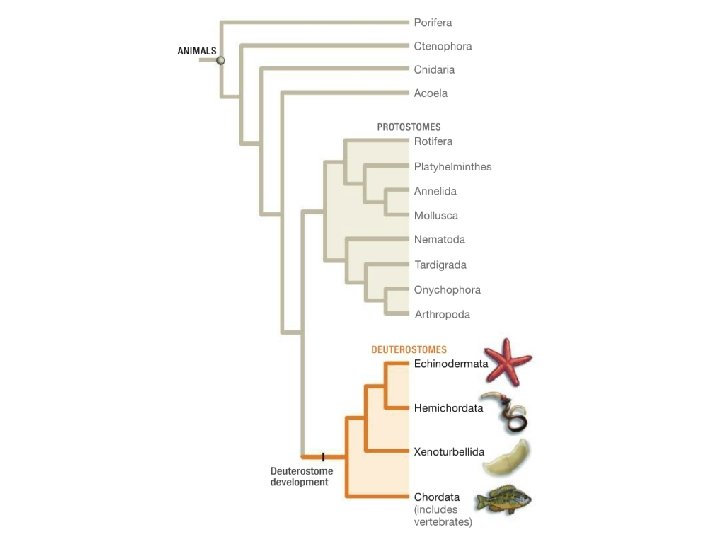
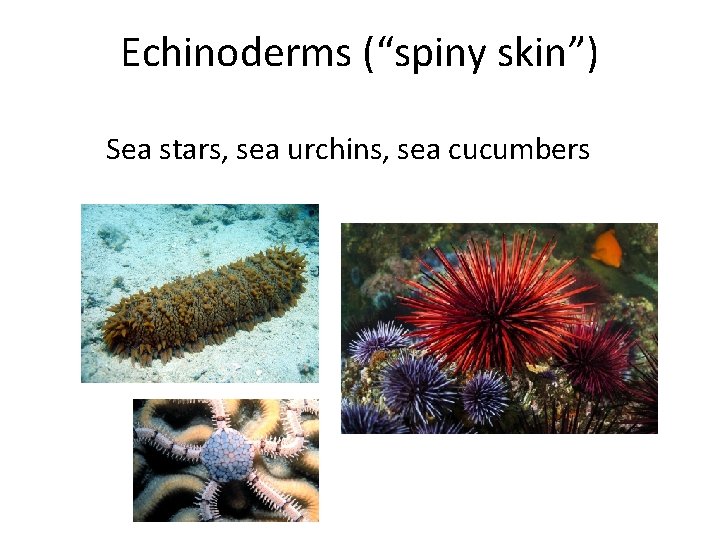
Echinoderms (“spiny skin”) Sea stars, sea urchins, sea cucumbers
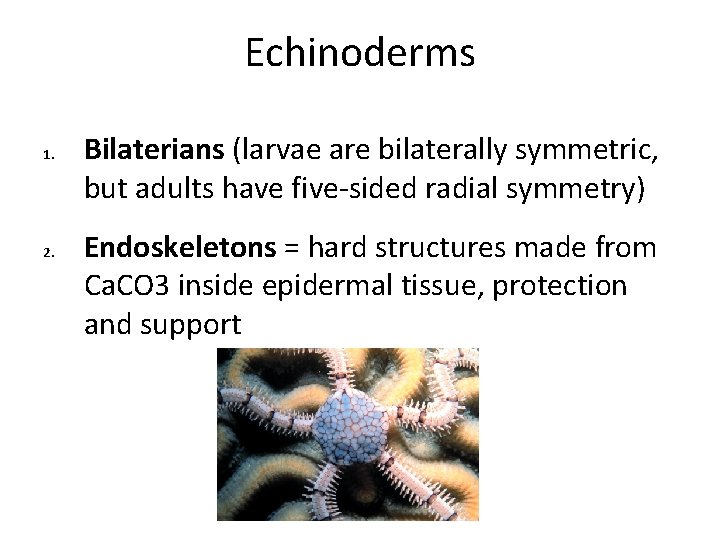
Echinoderms 1. 2. Bilaterians (larvae are bilaterally symmetric, but adults have five-sided radial symmetry) Endoskeletons = hard structures made from Ca. CO 3 inside epidermal tissue, protection and support
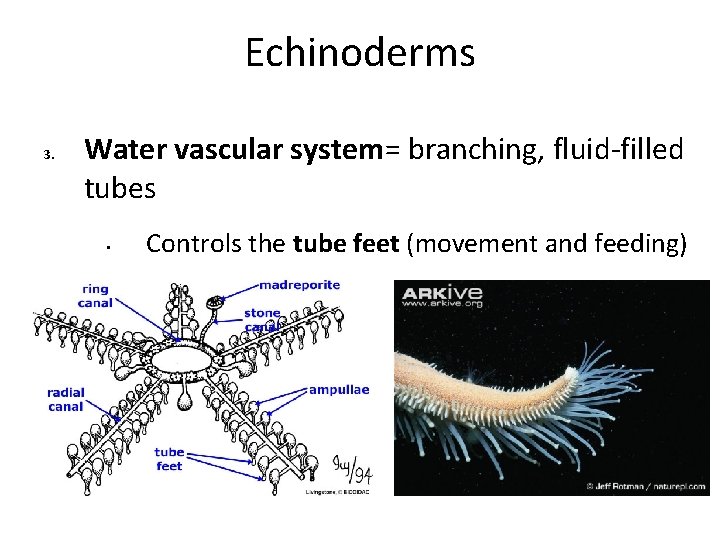
Echinoderms 3. Water vascular system= branching, fluid-filled tubes • Controls the tube feet (movement and feeding)
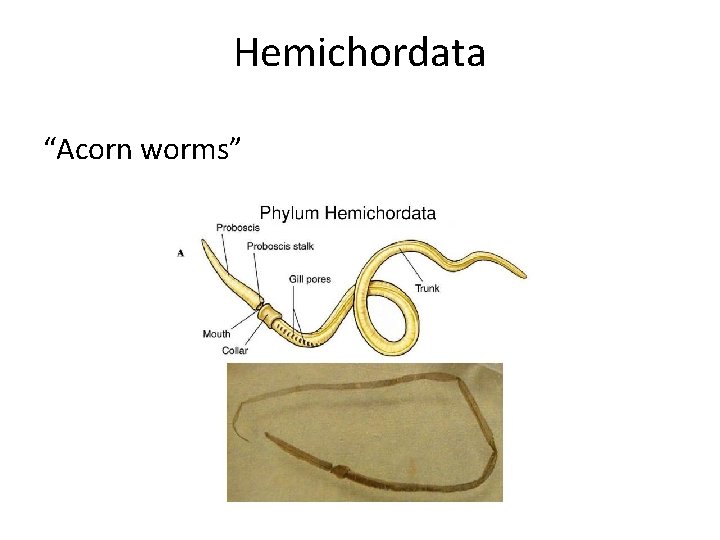
Hemichordata “Acorn worms”
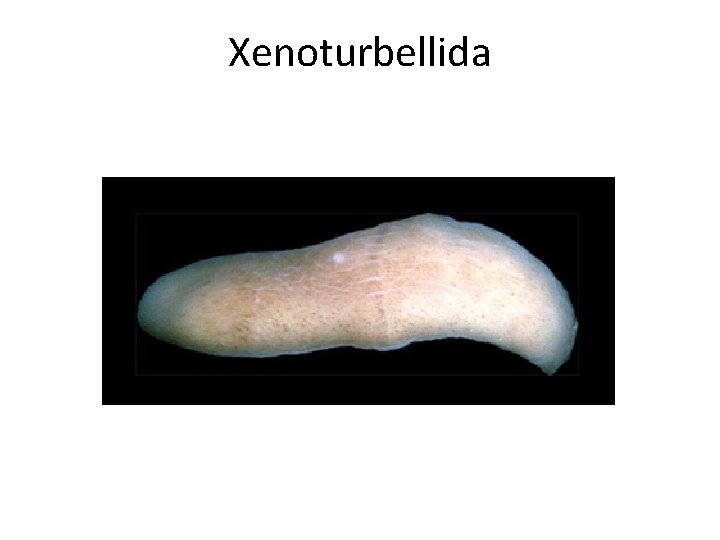
Xenoturbellida
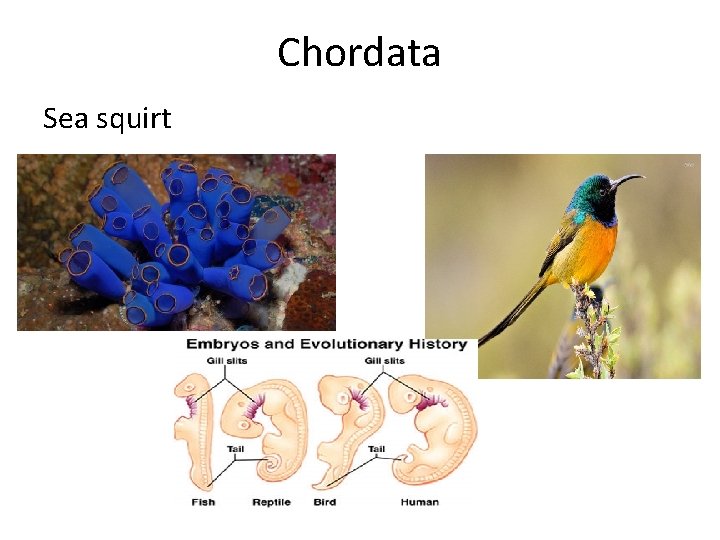
Chordata Sea squirt
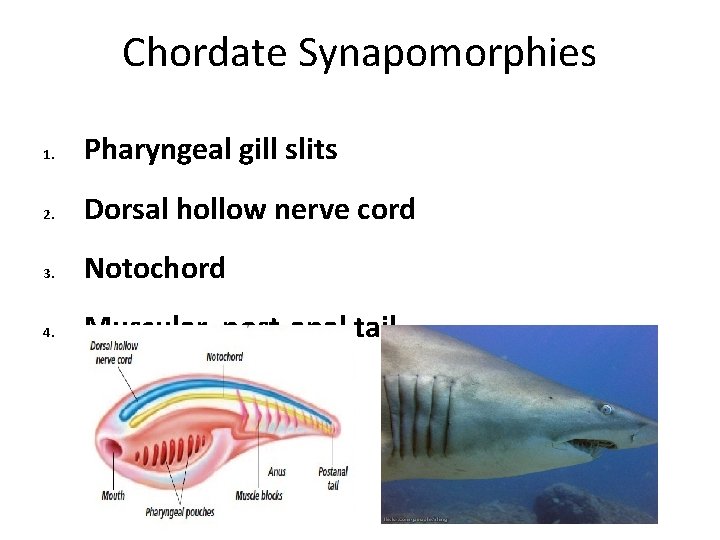
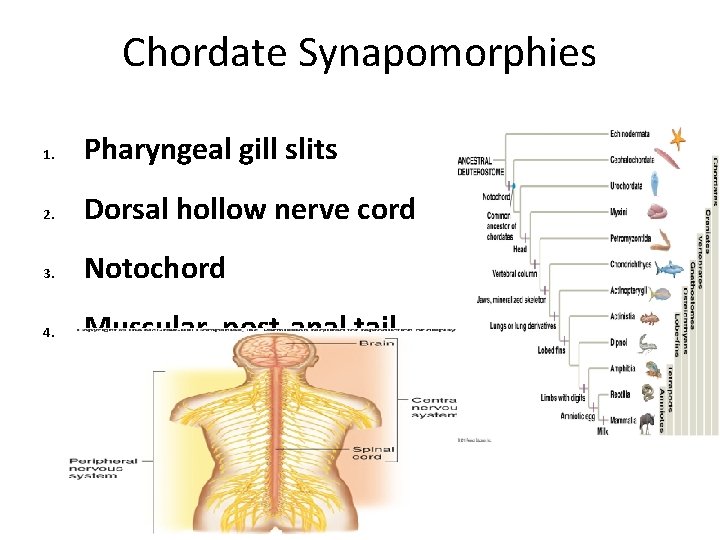
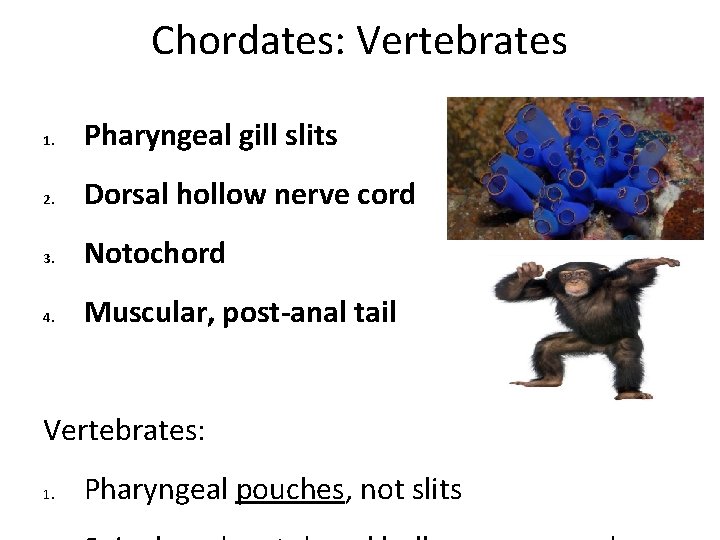
Chordate Synapomorphies 1. Pharyngeal gill slits 2. Dorsal hollow nerve cord 3. Notochord 4. Muscular, post-anal tail
Chordate Synapomorphies 1. Pharyngeal gill slits 2. Dorsal hollow nerve cord 3. Notochord 4. Muscular, post-anal tail
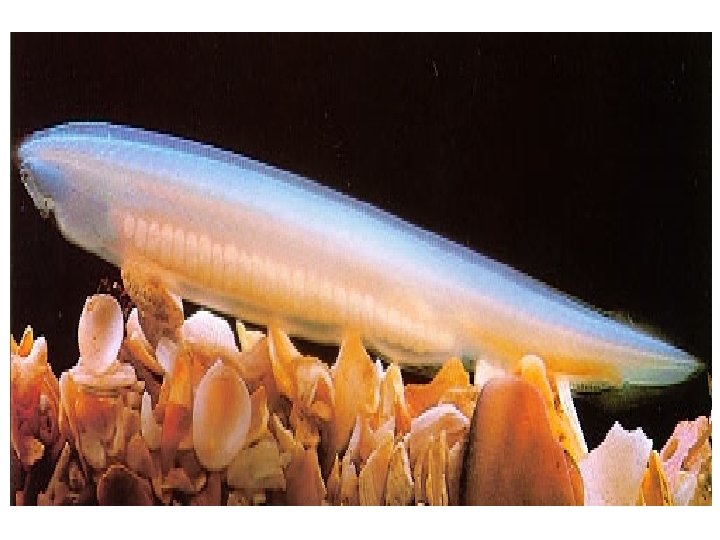
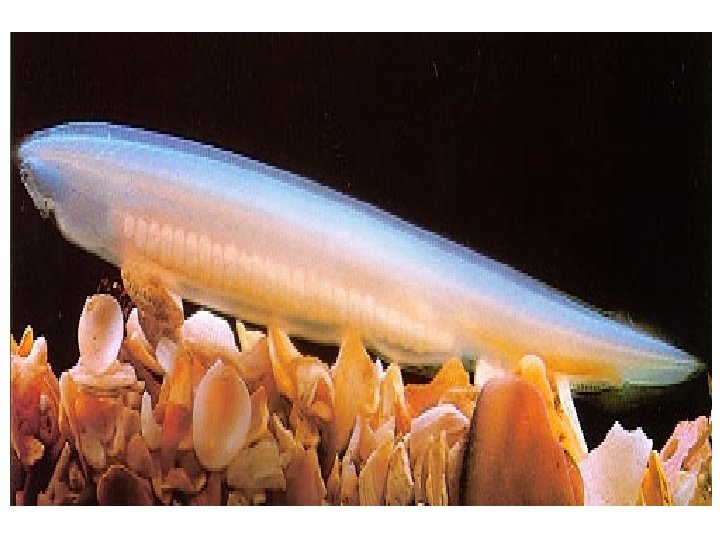
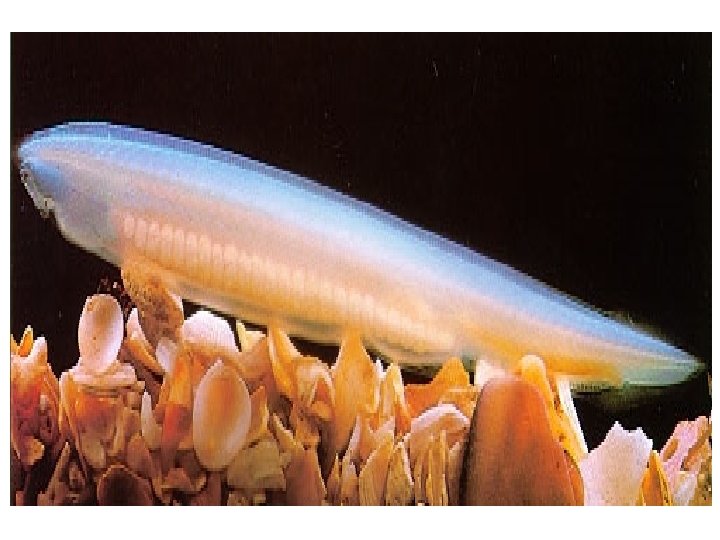
Cephalochordates (lancelets) • • “Fish-like, ” burrow in sand, suspension feed Muscle contractions on either side of notochord help with movement
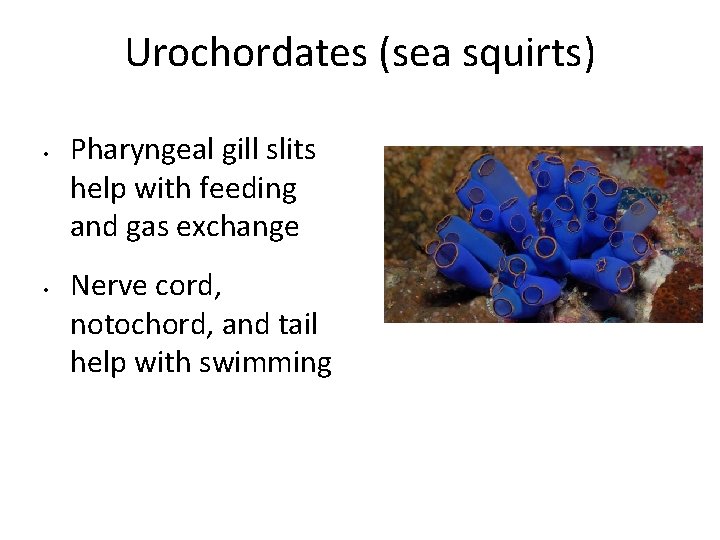
Urochordates (sea squirts) • • Pharyngeal gill slits help with feeding and gas exchange Nerve cord, notochord, and tail help with swimming
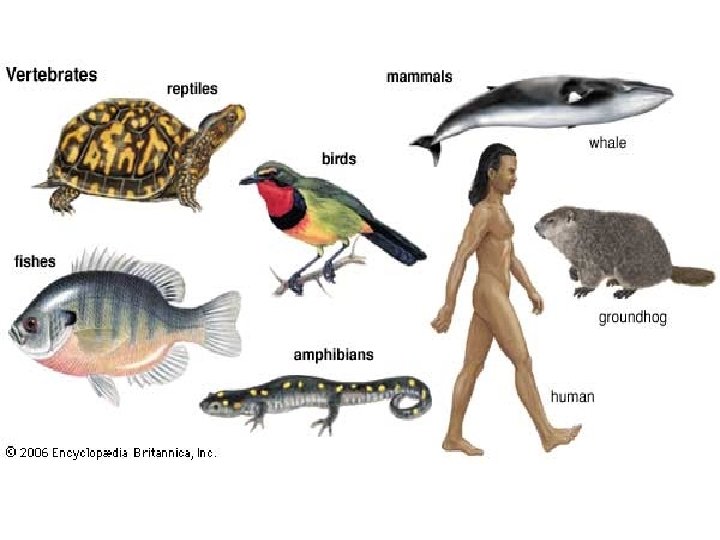
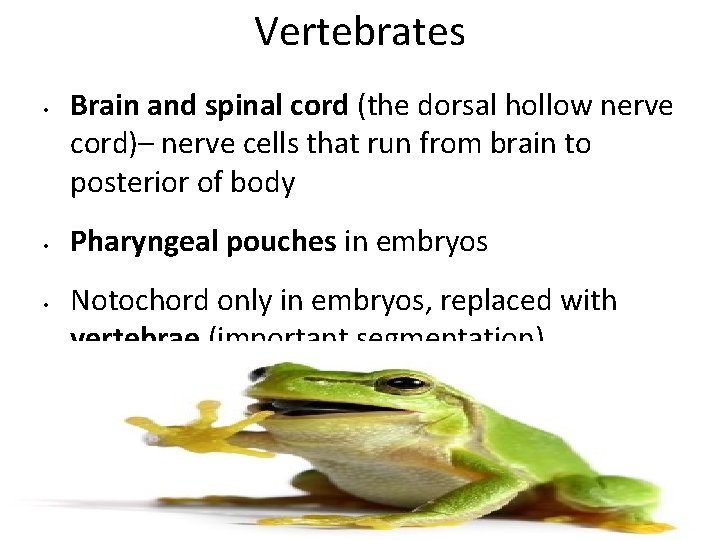
Vertebrates • • • Brain and spinal cord (the dorsal hollow nerve cord)– nerve cells that run from brain to posterior of body Pharyngeal pouches in embryos Notochord only in embryos, replaced with vertebrae (important segmentation)
Chordates: Vertebrates 1. Pharyngeal gill slits 2. Dorsal hollow nerve cord 3. Notochord 4. Muscular, post-anal tail Vertebrates: 1. Pharyngeal pouches, not slits
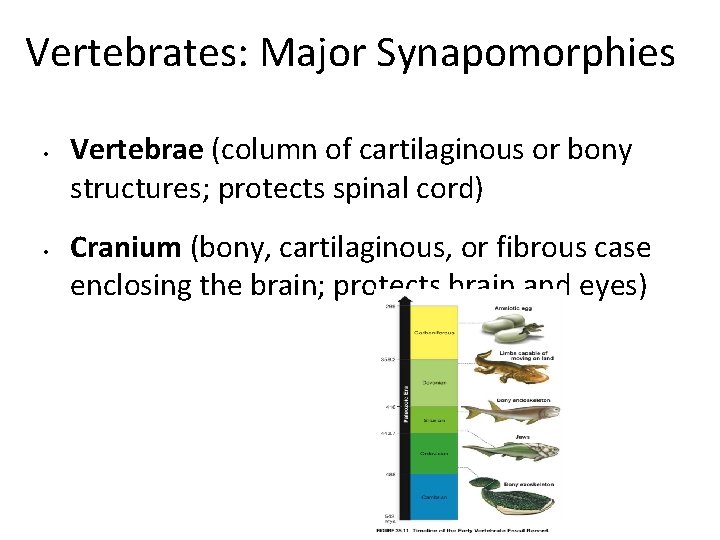
Vertebrates: Major Synapomorphies • • Vertebrae (column of cartilaginous or bony structures; protects spinal cord) Cranium (bony, cartilaginous, or fibrous case enclosing the brain; protects brain and eyes)
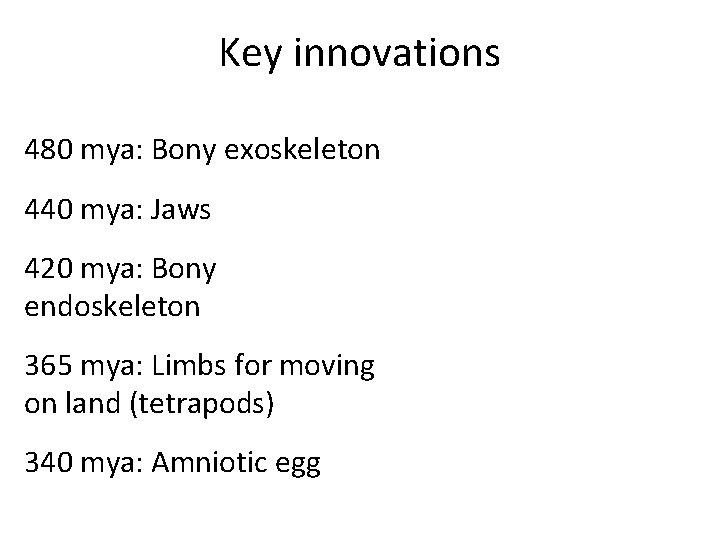
Key innovations 480 mya: Bony exoskeleton 440 mya: Jaws 420 mya: Bony endoskeleton 365 mya: Limbs for moving on land (tetrapods) 340 mya: Amniotic egg
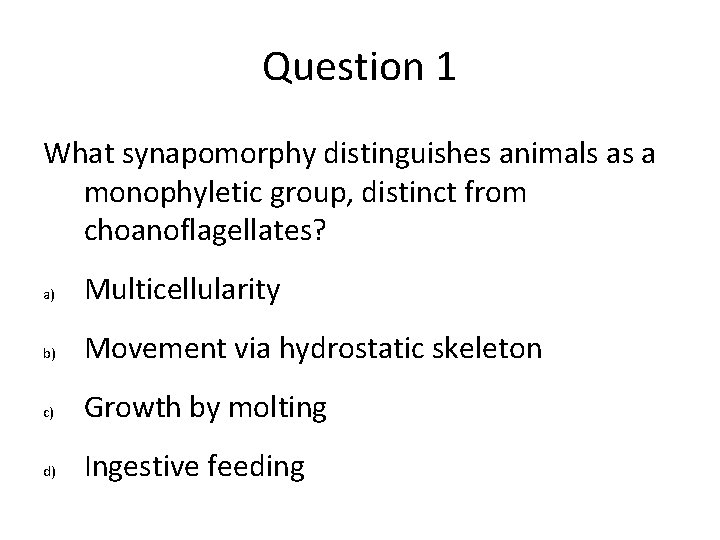
Question 1 What synapomorphy distinguishes animals as a monophyletic group, distinct from choanoflagellates? a) Multicellularity b) Movement via hydrostatic skeleton c) Growth by molting d) Ingestive feeding
Question 1 What synapomorphy distinguishes animals as a monophyletic group, distinct from choanoflagellates? a) Multicellularity b) Movement via hydrostatic skeleton c) Growth by molting d) Ingestive feeding
Question 2 Which of the following patterns in animal evolution is correct? a) b) c) d) All tripoblasts have a coelom All tripoblasts evolved from a common ancestor that had a coelom Sponges have epithelial tissues that line an enclosed fluid-filled cavity Bilateral symmetry and cephalization evolved
Question 2 Which of the following patterns in animal evolution is correct? a) b) c) d) All tripoblasts have a coelom All tripoblasts evolved from a common ancestor that had a coelom Sponges have epithelial tissues that line an enclosed fluid-filled cavity Bilateral symmetry and cephalization evolved
Question 3 Which of the following patterns in animal evolution is correct? a) Segmentation evolved once b) Coelom was lost or reduced in many lineages c) d) Sponges lack true tissue and are asymmetrical Radial symmetry evolved once
Question 3 Which of the following patterns in animal evolution is correct? a) Segmentation evolved once b) Coelom was lost or reduced in many lineages c) d) Sponges lack true tissue and are asymmetrical Radial symmetry evolved once
Question 4 In a “tube within a tube” what is the interior tube? a) Ectoderm b) Mesoderm c) The coelom d) The gut
Question 4 In a “tube within a tube” what is the interior tube? a) Ectoderm b) Mesoderm c) The coelom d) The gut
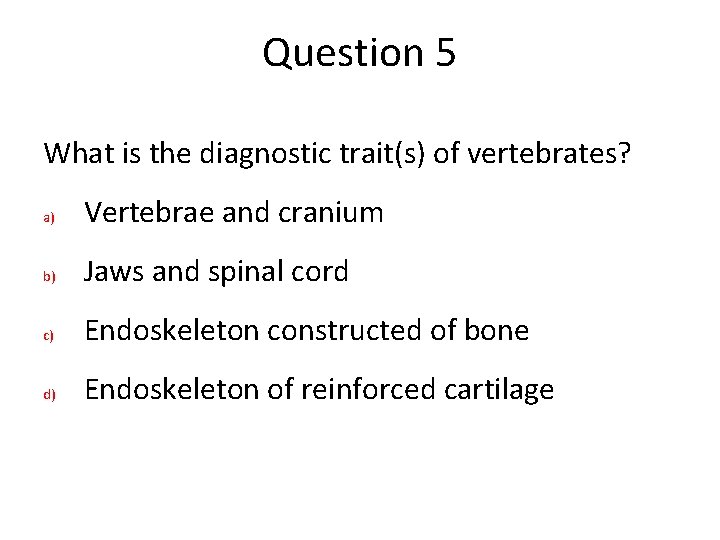
Question 5 What is the diagnostic trait(s) of vertebrates? a) Vertebrae and cranium b) Jaws and spinal cord c) Endoskeleton constructed of bone d) Endoskeleton of reinforced cartilage
Question 5 What is the diagnostic trait(s) of vertebrates? a) Vertebrae and cranium b) Jaws and spinal cord c) Endoskeleton constructed of bone d) Endoskeleton of reinforced cartilage
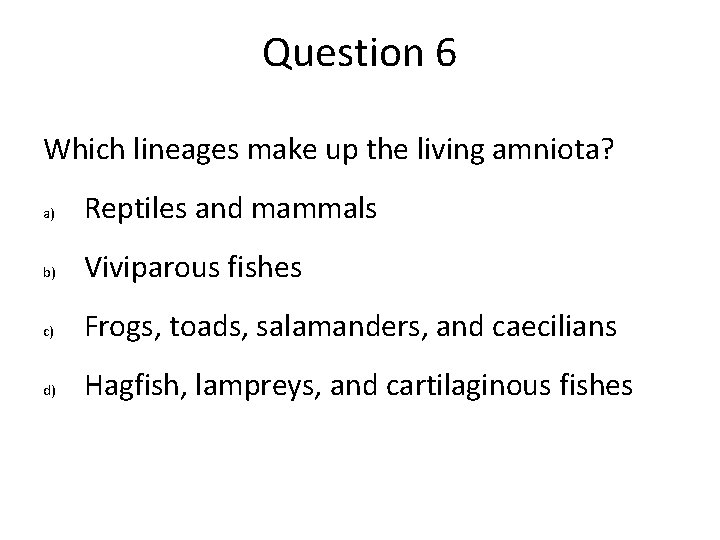
Question 6 Which lineages make up the living amniota? a) Reptiles and mammals b) Viviparous fishes c) Frogs, toads, salamanders, and caecilians d) Hagfish, lampreys, and cartilaginous fishes
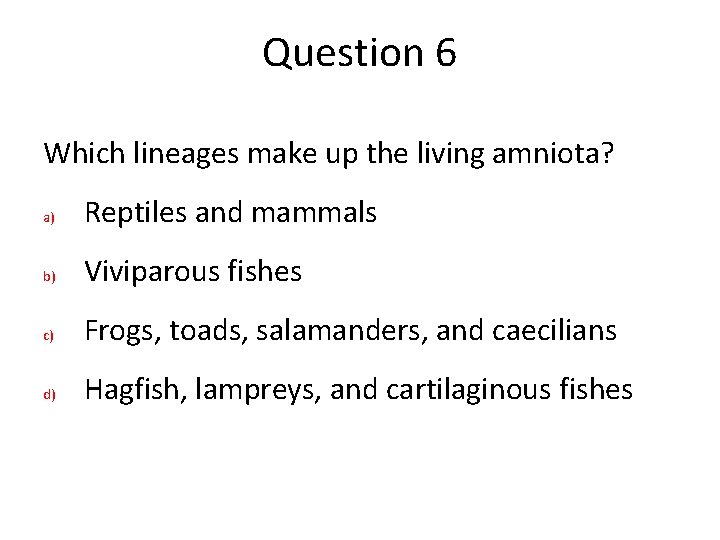
Question 6 Which lineages make up the living amniota? a) Reptiles and mammals b) Viviparous fishes c) Frogs, toads, salamanders, and caecilians d) Hagfish, lampreys, and cartilaginous fishes
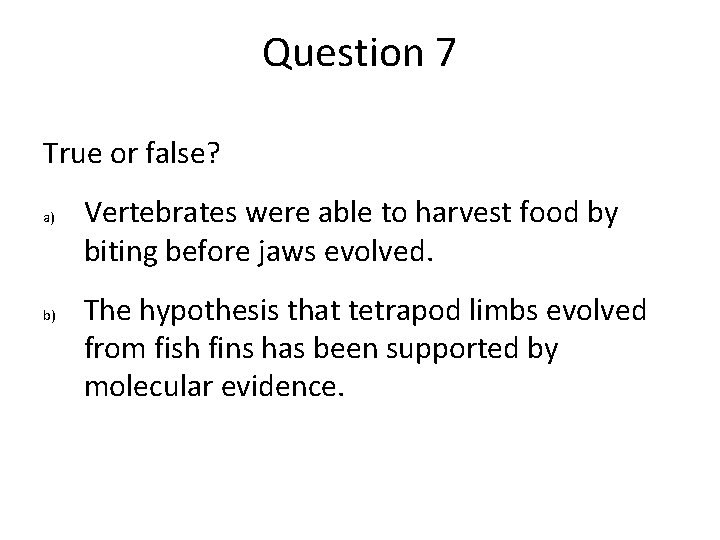
Question 7 True or false? a) b) Vertebrates were able to harvest food by biting before jaws evolved. The hypothesis that tetrapod limbs evolved from fish fins has been supported by molecular evidence.
Question 7 True or false? a) b) Vertebrates were able to harvest food by biting before jaws evolved. False The hypothesis that tetrapod limbs evolved from fish fins has been supported by molecular evidence. True