
Coelomates Mollusks and Annelids Coelomates Eucoelomates Have body
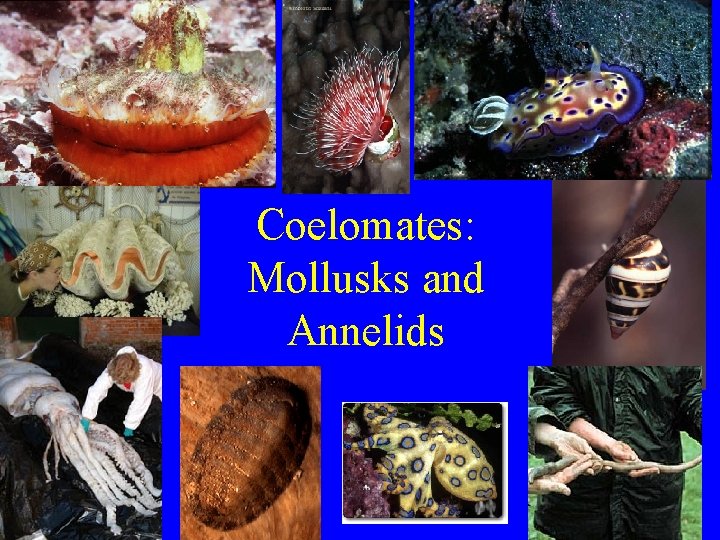
Coelomates: Mollusks and Annelids
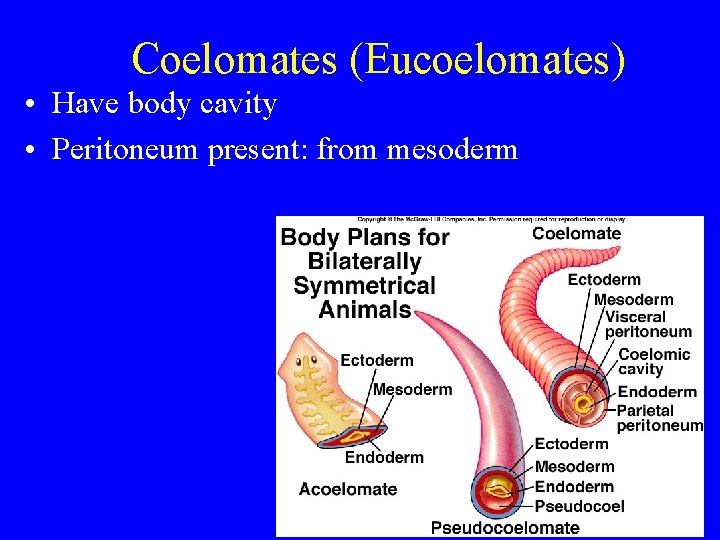
Coelomates (Eucoelomates) • Have body cavity • Peritoneum present: from mesoderm
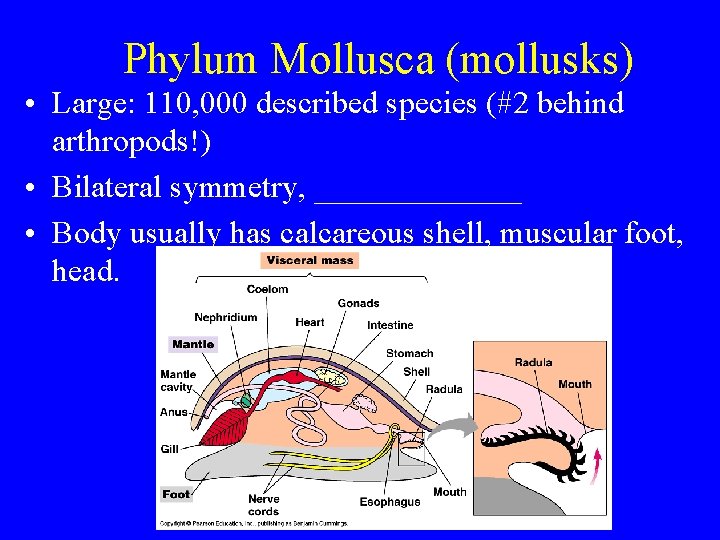
Phylum Mollusca (mollusks) • Large: 110, 000 described species (#2 behind arthropods!) • Bilateral symmetry, _______ • Body usually has calcareous shell, muscular foot, head.
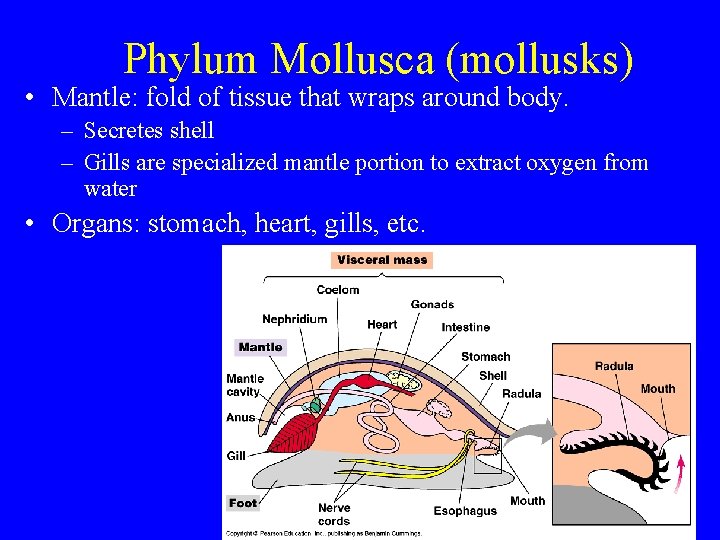
Phylum Mollusca (mollusks) • Mantle: fold of tissue that wraps around body. – Secretes shell – Gills are specialized mantle portion to extract oxygen from water • Organs: stomach, heart, gills, etc.
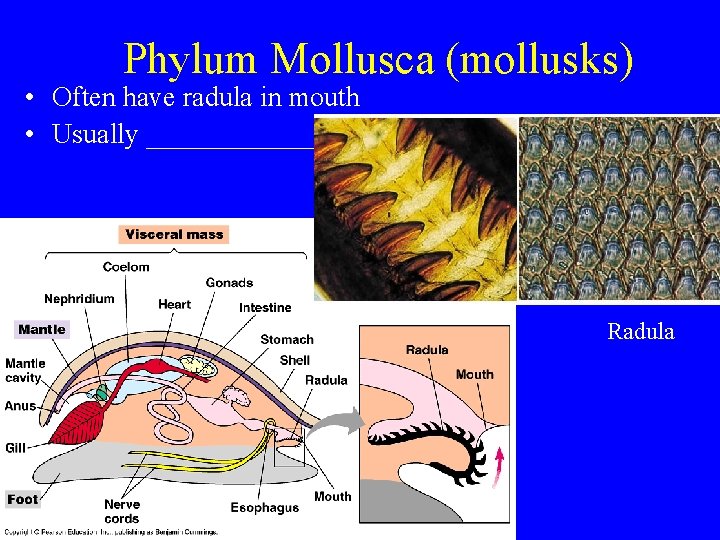
Phylum Mollusca (mollusks) • Often have radula in mouth • Usually ______ Radula

Phylum Mollusca (mollusks) • Circulatory system open. Heart 3 chambers (2 collect blood from gills, one pumps to body) • Coelom is cavity around heart.
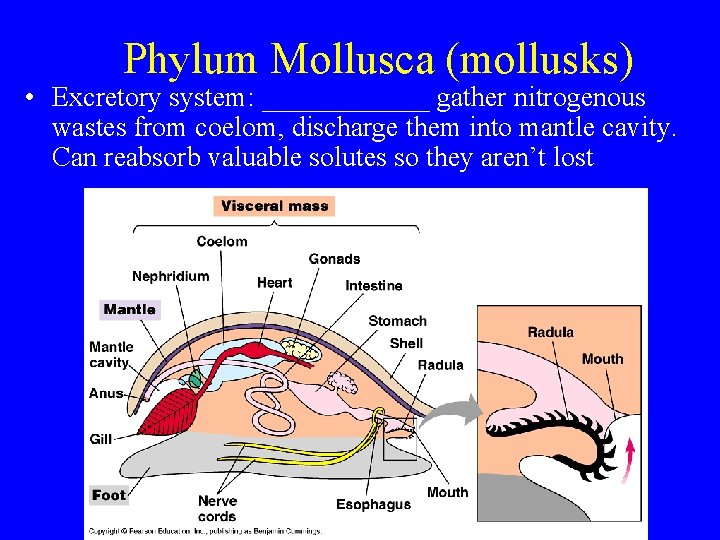
Phylum Mollusca (mollusks) • Excretory system: ______ gather nitrogenous wastes from coelom, discharge them into mantle cavity. Can reabsorb valuable solutes so they aren’t lost
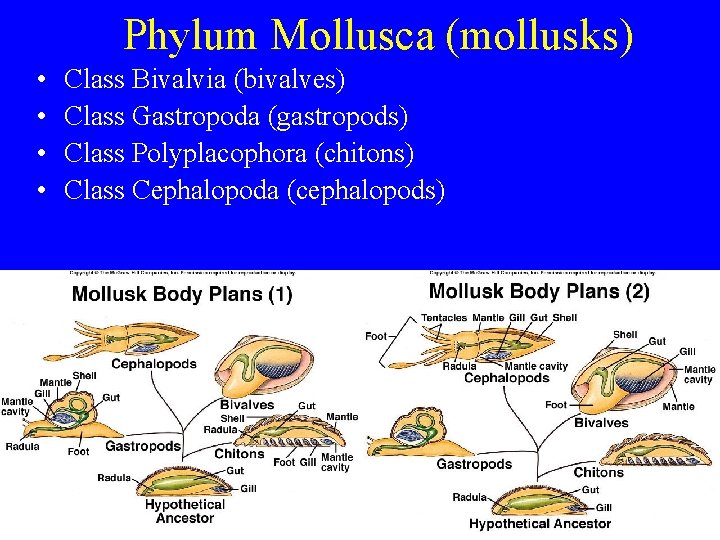
Phylum Mollusca (mollusks) • • Class Bivalvia (bivalves) Class Gastropoda (gastropods) Class Polyplacophora (chitons) Class Cephalopoda (cephalopods)
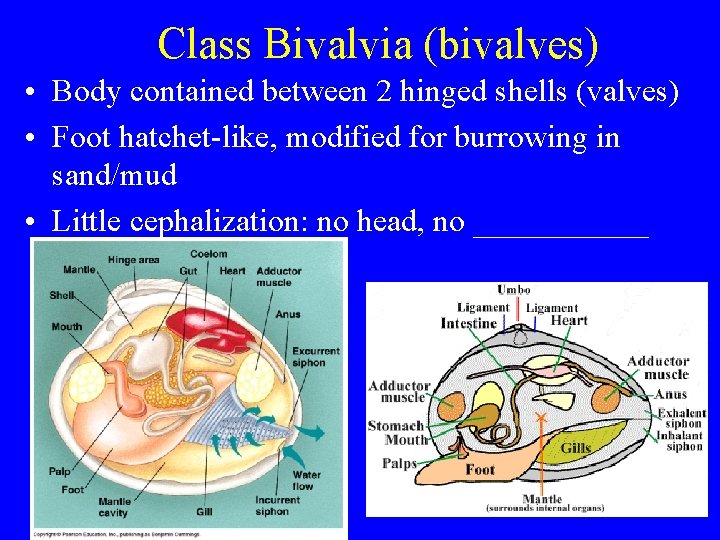
Class Bivalvia (bivalves) • Body contained between 2 hinged shells (valves) • Foot hatchet-like, modified for burrowing in sand/mud • Little cephalization: no head, no ______
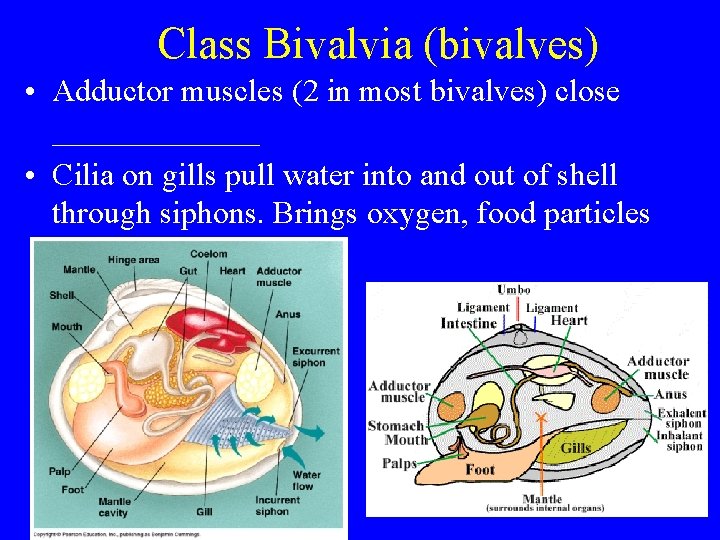
Class Bivalvia (bivalves) • Adductor muscles (2 in most bivalves) close _______ • Cilia on gills pull water into and out of shell through siphons. Brings oxygen, food particles
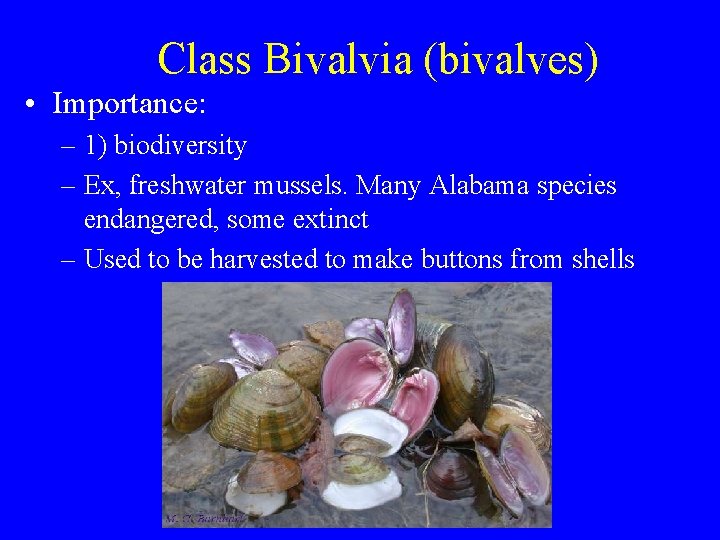
Class Bivalvia (bivalves) • Importance: – 1) biodiversity – Ex, freshwater mussels. Many Alabama species endangered, some extinct – Used to be harvested to make buttons from shells
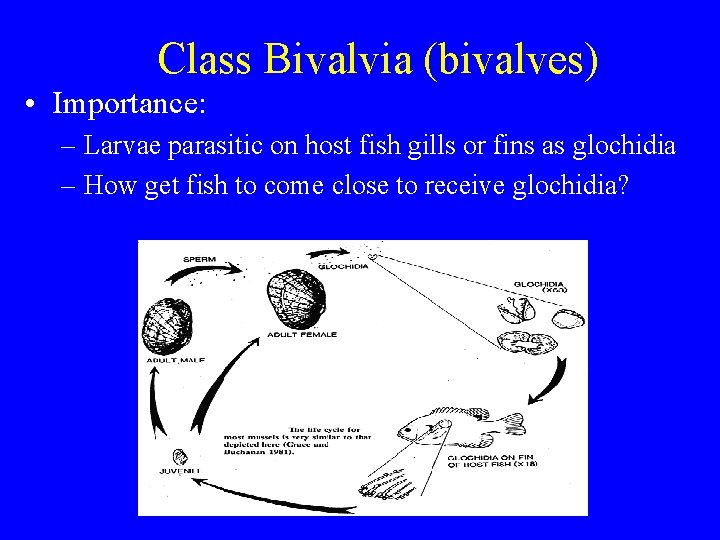
Class Bivalvia (bivalves) • Importance: – Larvae parasitic on host fish gills or fins as glochidia – How get fish to come close to receive glochidia?
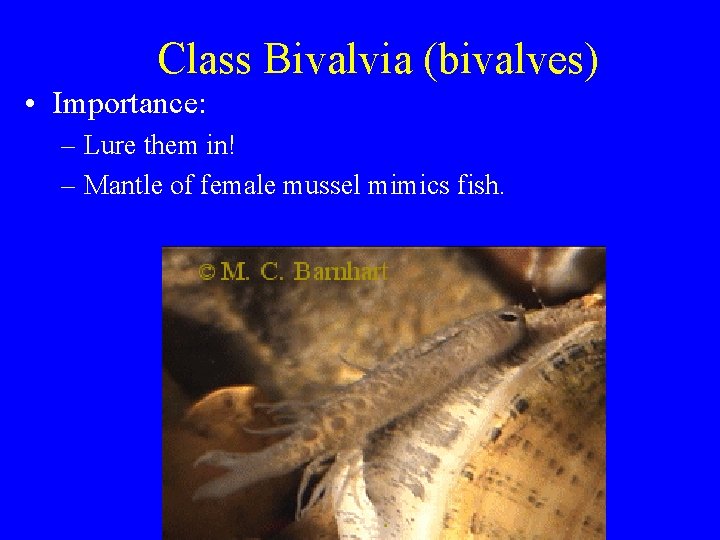
Class Bivalvia (bivalves) • Importance: – Lure them in! – Mantle of female mussel mimics fish.
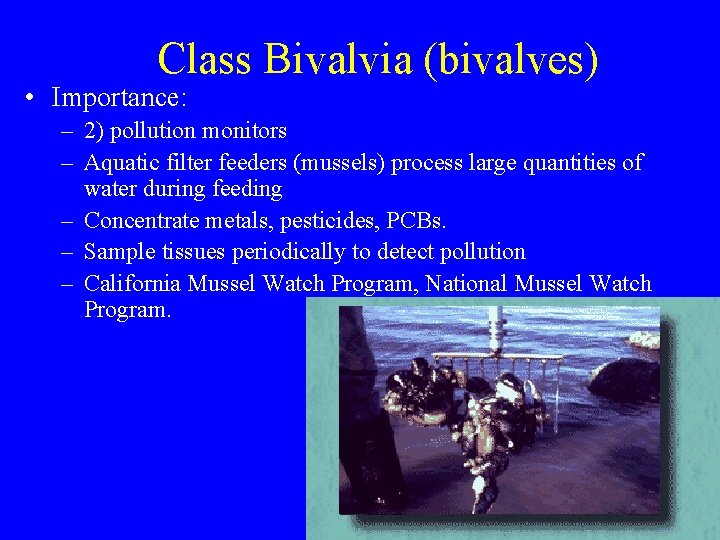
Class Bivalvia (bivalves) • Importance: – 2) pollution monitors – Aquatic filter feeders (mussels) process large quantities of water during feeding – Concentrate metals, pesticides, PCBs. – Sample tissues periodically to detect pollution – California Mussel Watch Program, National Mussel Watch Program.
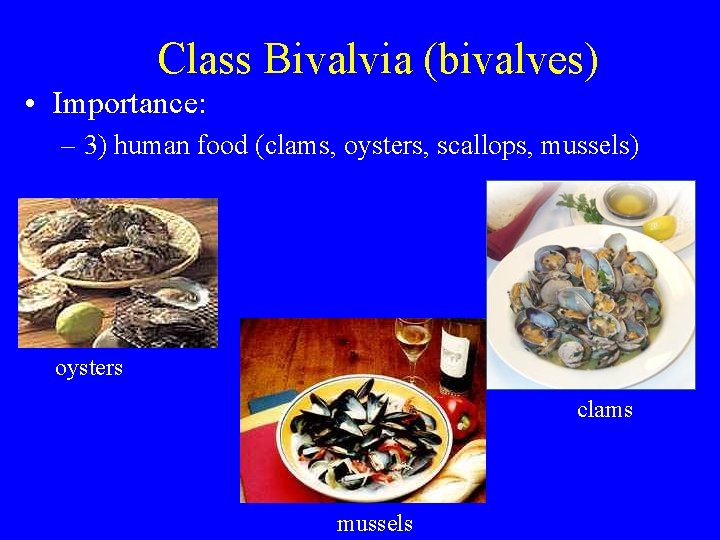
Class Bivalvia (bivalves) • Importance: – 3) human food (clams, oysters, scallops, mussels) oysters clams mussels
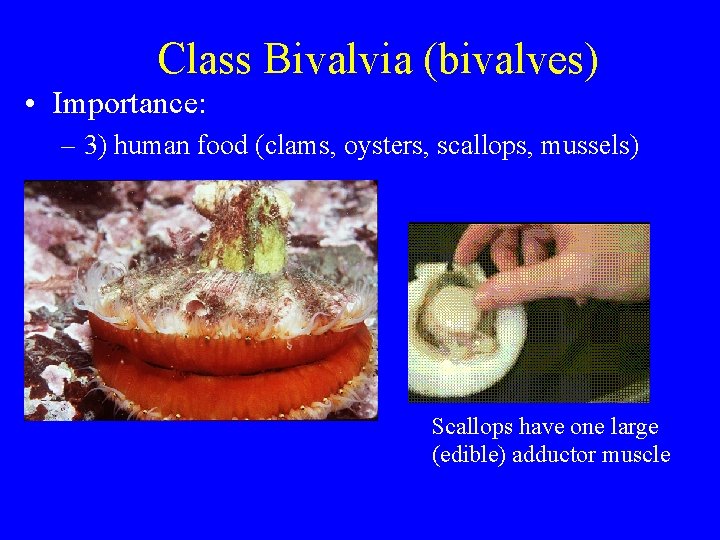
Class Bivalvia (bivalves) • Importance: – 3) human food (clams, oysters, scallops, mussels) Scallops have one large (edible) adductor muscle
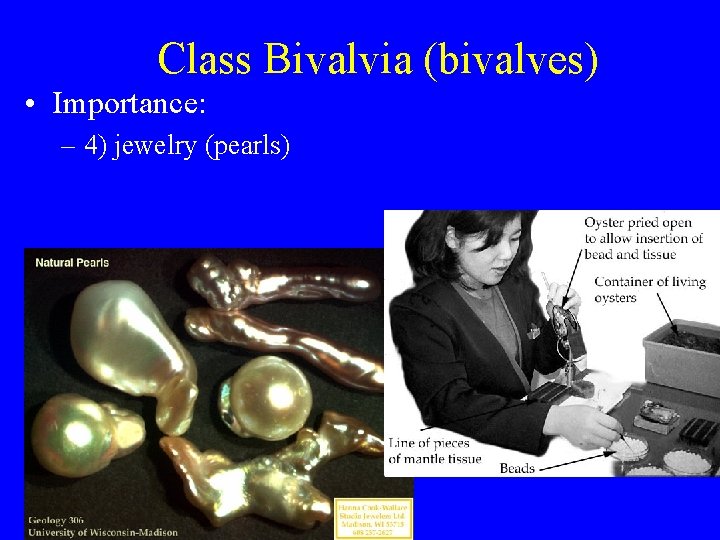
Class Bivalvia (bivalves) • Importance: – 4) jewelry (pearls)
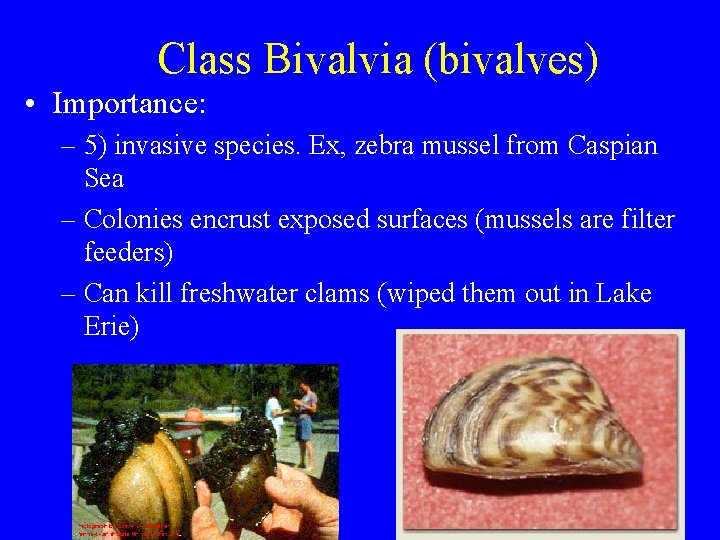
Class Bivalvia (bivalves) • Importance: – 5) invasive species. Ex, zebra mussel from Caspian Sea – Colonies encrust exposed surfaces (mussels are filter feeders) – Can kill freshwater clams (wiped them out in Lake Erie)
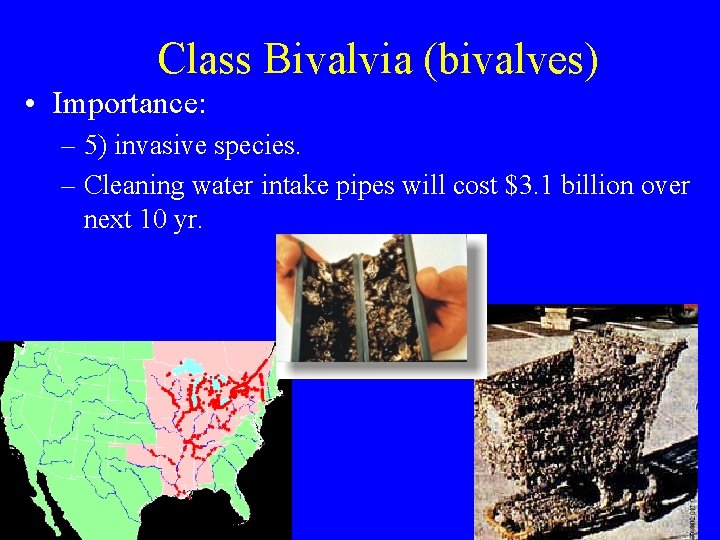
Class Bivalvia (bivalves) • Importance: – 5) invasive species. – Cleaning water intake pipes will cost $3. 1 billion over next 10 yr.
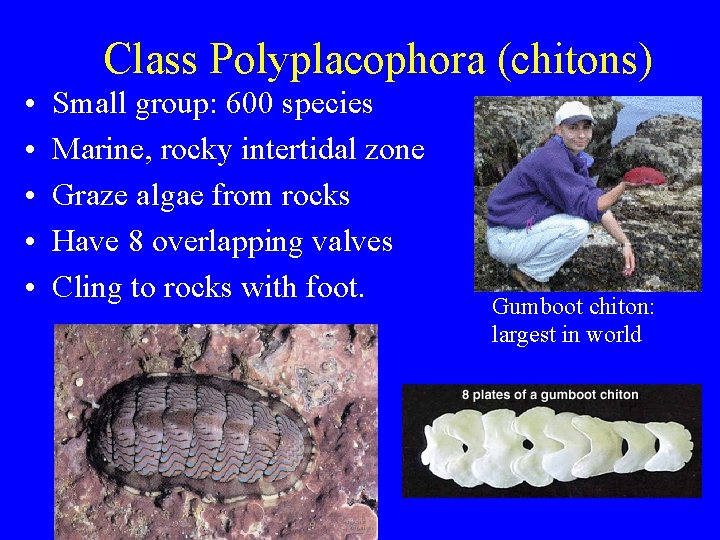
Class Polyplacophora (chitons) • • • Small group: 600 species Marine, rocky intertidal zone Graze algae from rocks Have 8 overlapping valves Cling to rocks with foot. Gumboot chiton: largest in world
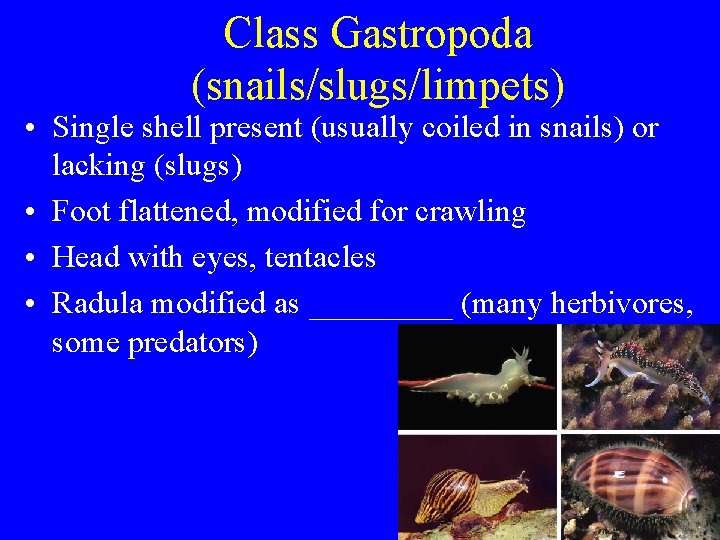
Class Gastropoda (snails/slugs/limpets) • Single shell present (usually coiled in snails) or lacking (slugs) • Foot flattened, modified for crawling • Head with eyes, tentacles • Radula modified as _____ (many herbivores, some predators)
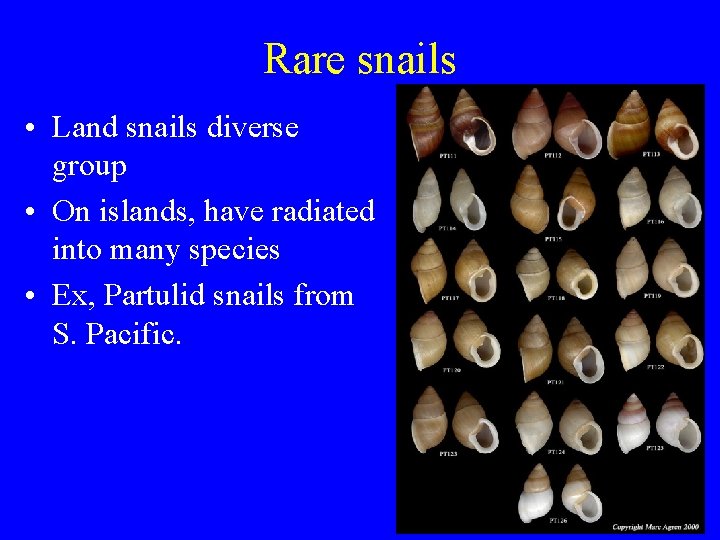
Rare snails • Land snails diverse group • On islands, have radiated into many species • Ex, Partulid snails from S. Pacific.
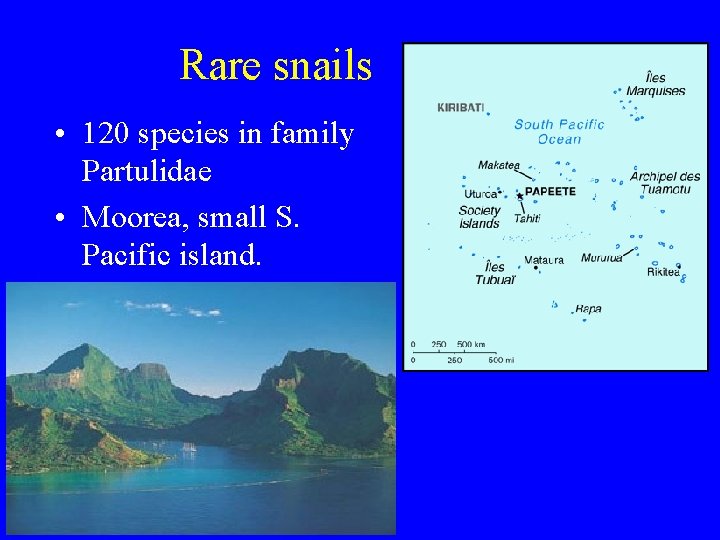
Rare snails • 120 species in family Partulidae • Moorea, small S. Pacific island.
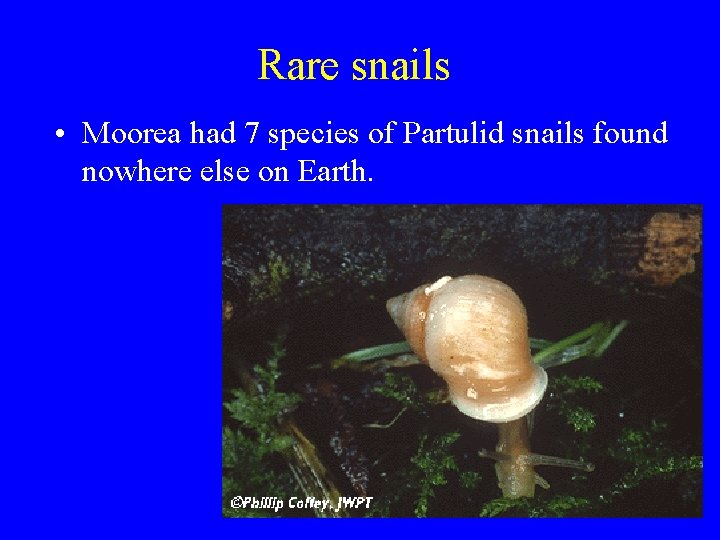
Rare snails • Moorea had 7 species of Partulid snails found nowhere else on Earth.
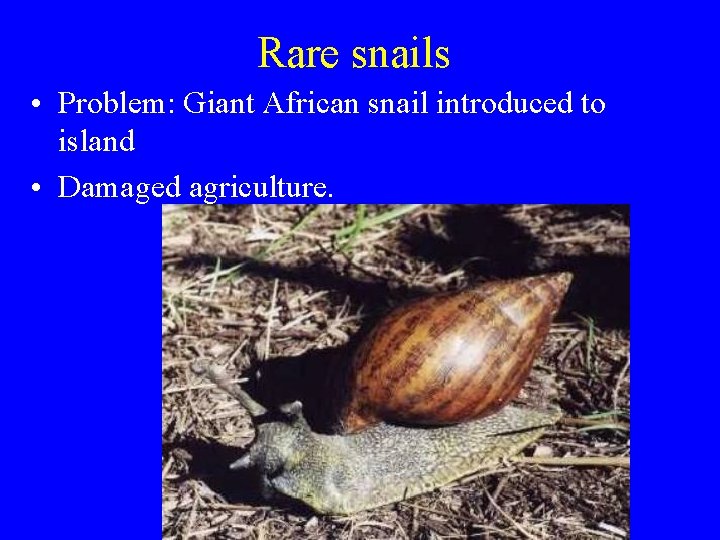
Rare snails • Problem: Giant African snail introduced to island • Damaged agriculture.
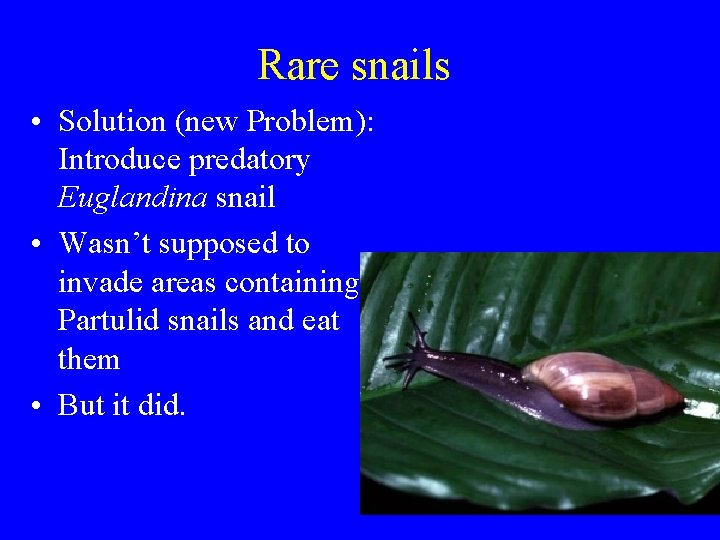
Rare snails • Solution (new Problem): Introduce predatory Euglandina snail • Wasn’t supposed to invade areas containing Partulid snails and eat them • But it did.
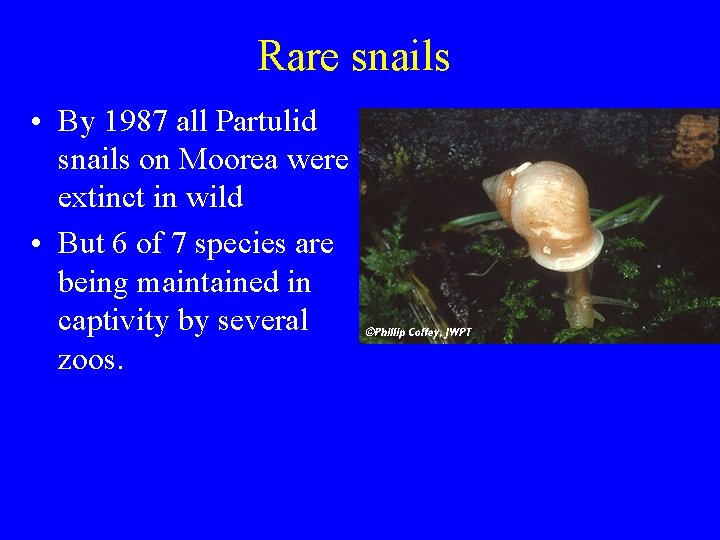
Rare snails • By 1987 all Partulid snails on Moorea were extinct in wild • But 6 of 7 species are being maintained in captivity by several zoos.
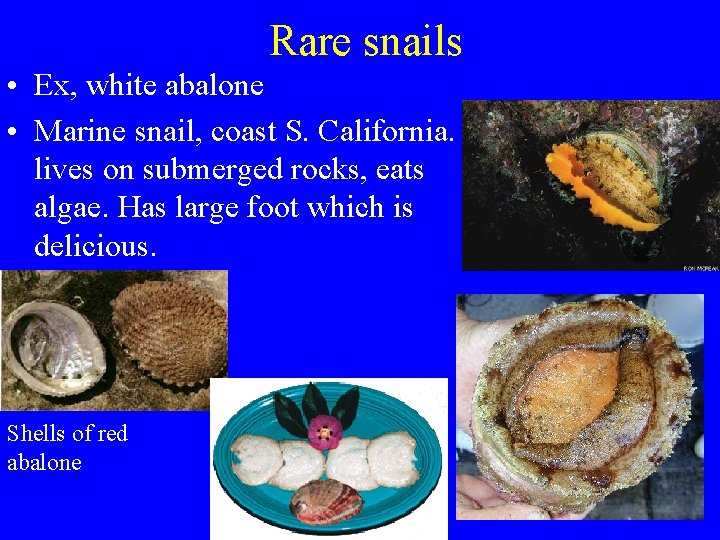
Rare snails • Ex, white abalone • Marine snail, coast S. California. lives on submerged rocks, eats algae. Has large foot which is delicious. Shells of red abalone
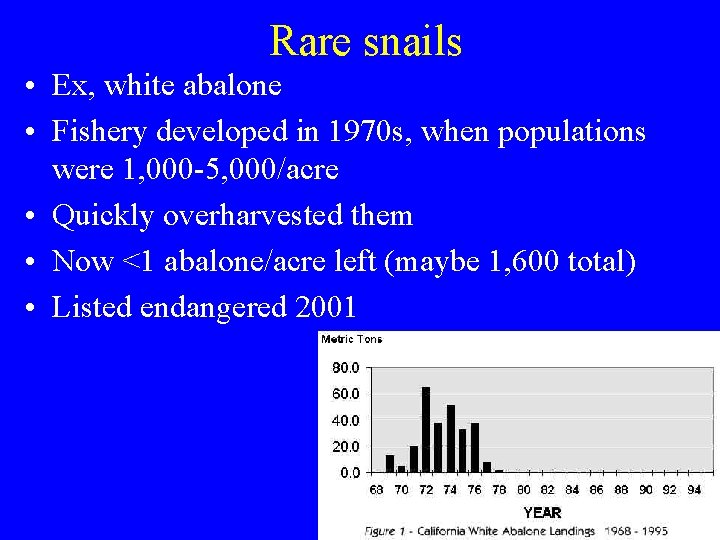
Rare snails • Ex, white abalone • Fishery developed in 1970 s, when populations were 1, 000 -5, 000/acre • Quickly overharvested them • Now <1 abalone/acre left (maybe 1, 600 total) • Listed endangered 2001
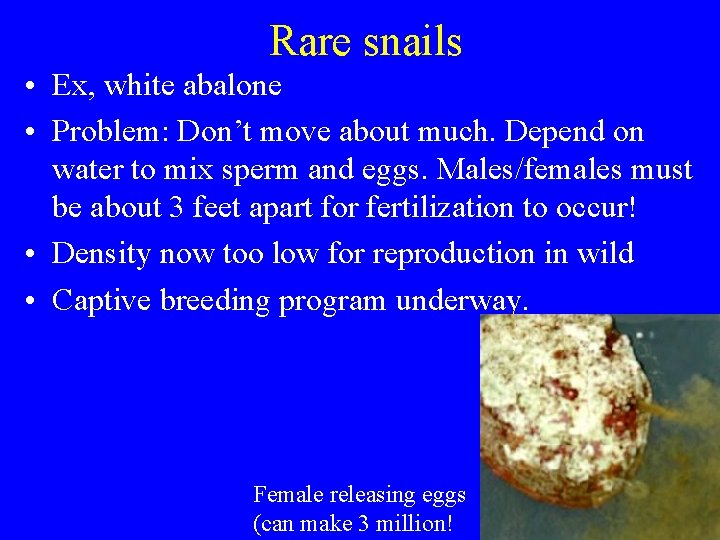
Rare snails • Ex, white abalone • Problem: Don’t move about much. Depend on water to mix sperm and eggs. Males/females must be about 3 feet apart for fertilization to occur! • Density now too low for reproduction in wild • Captive breeding program underway. Female releasing eggs (can make 3 million!
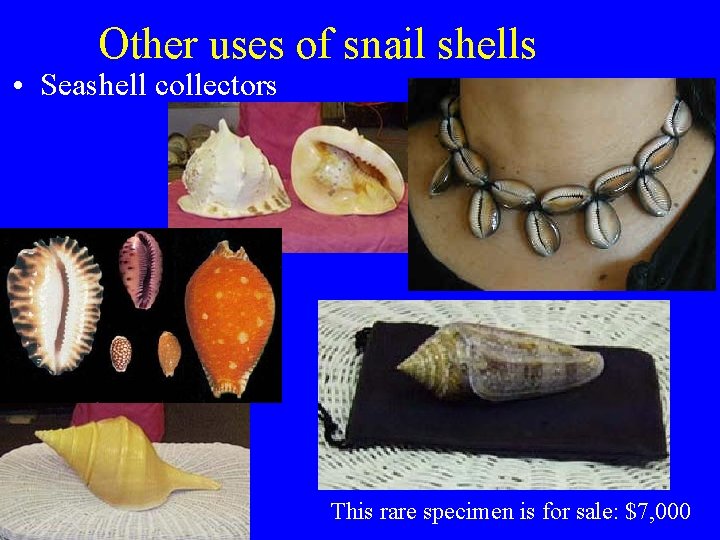
Other uses of snail shells • Seashell collectors This rare specimen is for sale: $7, 000
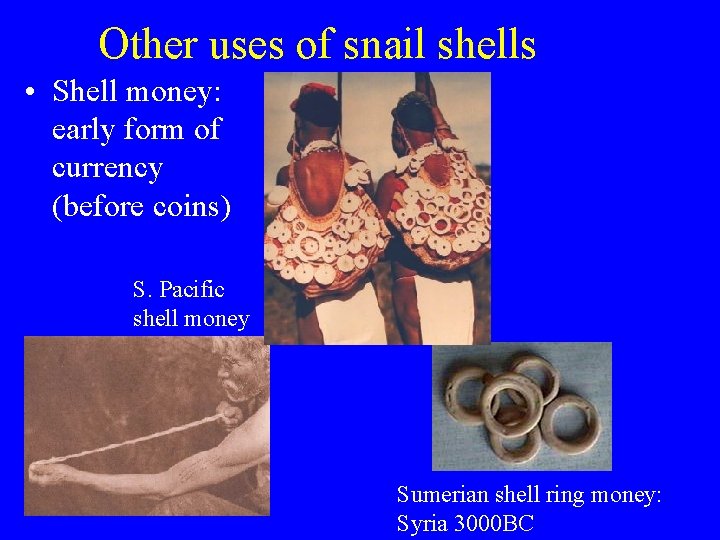
Other uses of snail shells • Shell money: early form of currency (before coins) S. Pacific shell money Sumerian shell ring money: Syria 3000 BC
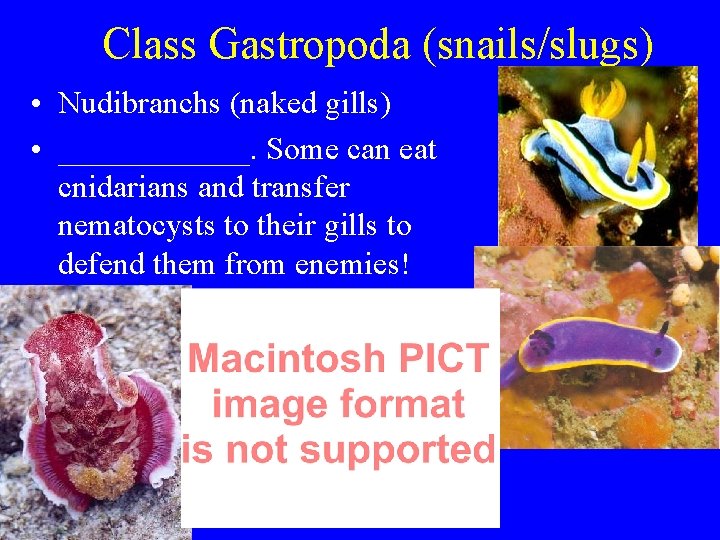
Class Gastropoda (snails/slugs) • Nudibranchs (naked gills) • ______. Some can eat cnidarians and transfer nematocysts to their gills to defend them from enemies!
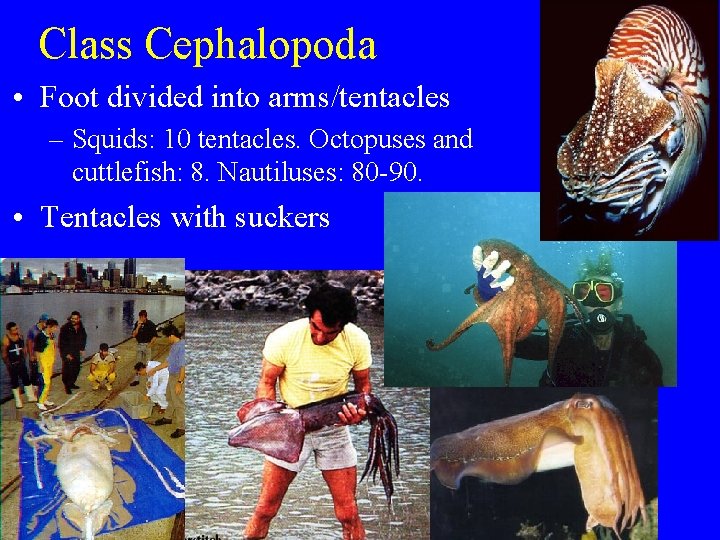
Class Cephalopoda • Foot divided into arms/tentacles – Squids: 10 tentacles. Octopuses and cuttlefish: 8. Nautiluses: 80 -90. • Tentacles with suckers
Class Cephalopoda (octopuses, squids, nautilus) • Have _______ • Have extreme cephalization • Shell absent (octopus, squid), internal (cuttlefish: cuttlebone), or present (nautilus) • Swim by taking water into mantle cavity and expelling it through siphon (jet propulsion)
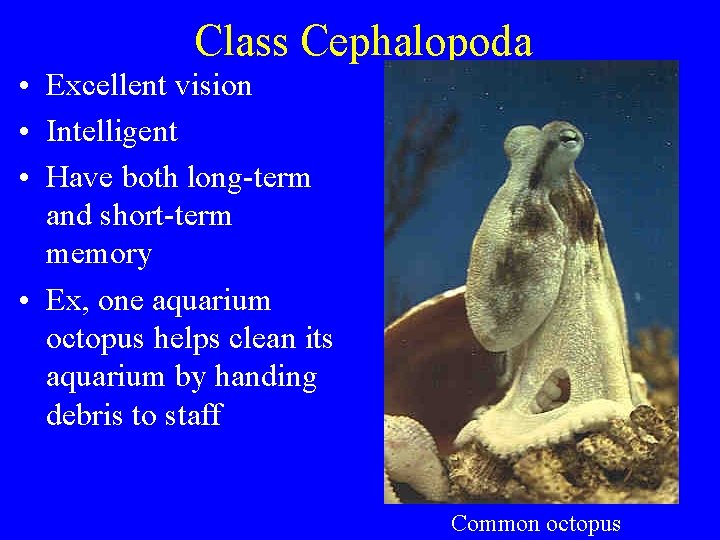
Class Cephalopoda • Excellent vision • Intelligent • Have both long-term and short-term memory • Ex, one aquarium octopus helps clean its aquarium by handing debris to staff Common octopus
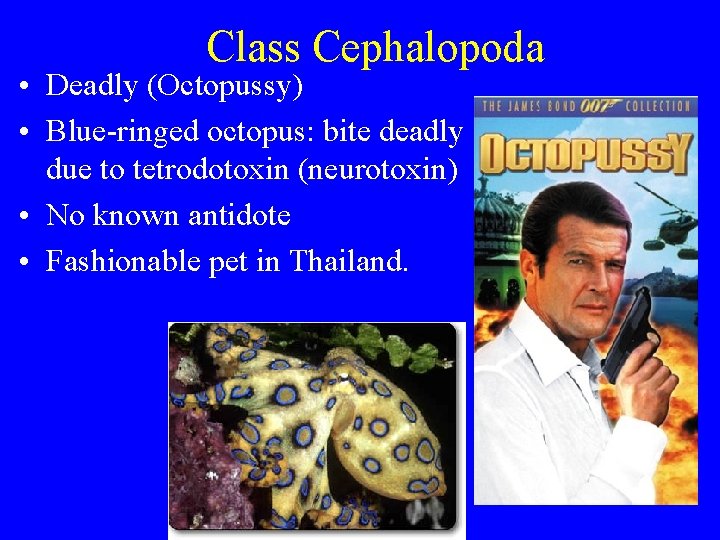
Class Cephalopoda • Deadly (Octopussy) • Blue-ringed octopus: bite deadly due to tetrodotoxin (neurotoxin) • No known antidote • Fashionable pet in Thailand.
Phylum Annelida (segmented worms) • • 11, 000 species (2/3 marine) Bilaterial symmetry, triploblastic Protostomes Eucoelomates: Coelom fluid-filled and pressurized. Provides hydrostatic skeleton
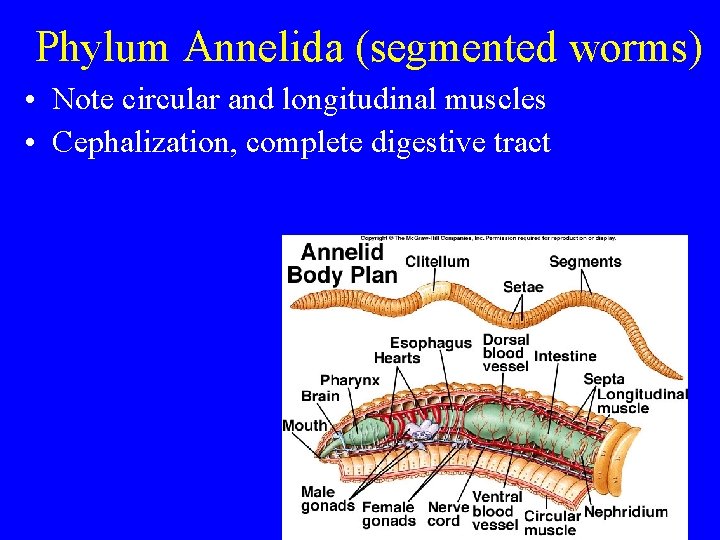
Phylum Annelida (segmented worms) • Note circular and longitudinal muscles • Cephalization, complete digestive tract
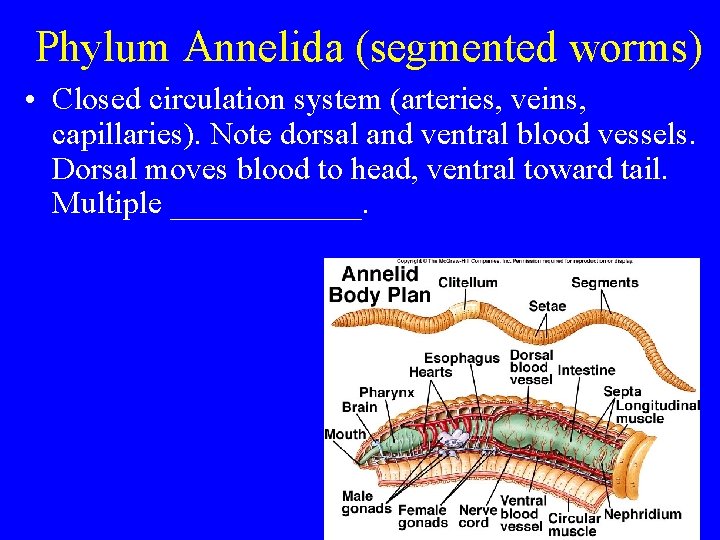
Phylum Annelida (segmented worms) • Closed circulation system (arteries, veins, capillaries). Note dorsal and ventral blood vessels. Dorsal moves blood to head, ventral toward tail. Multiple ______.
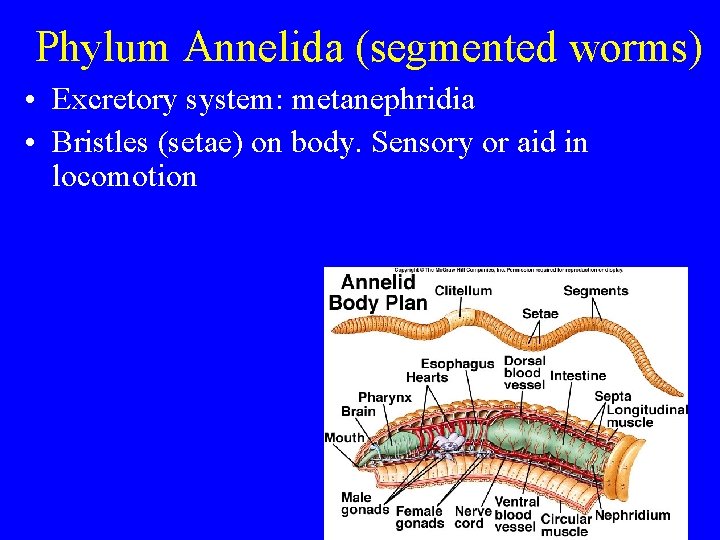
Phylum Annelida (segmented worms) • Excretory system: metanephridia • Bristles (setae) on body. Sensory or aid in locomotion
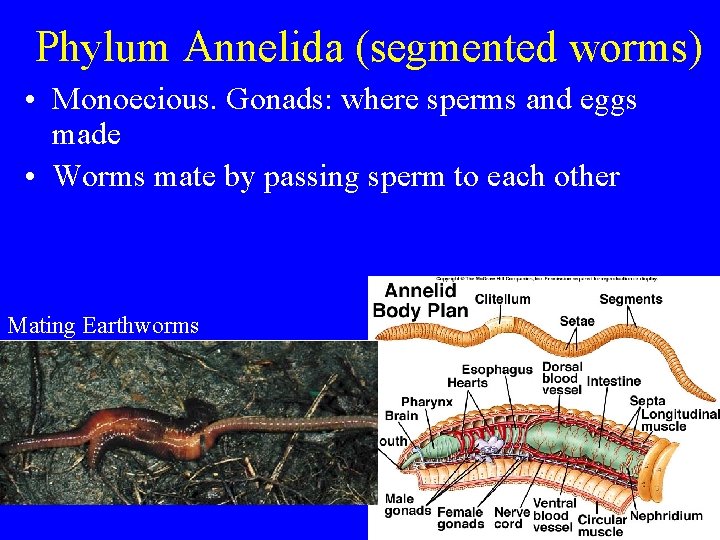
Phylum Annelida (segmented worms) • Monoecious. Gonads: where sperms and eggs made • Worms mate by passing sperm to each other Mating Earthworms
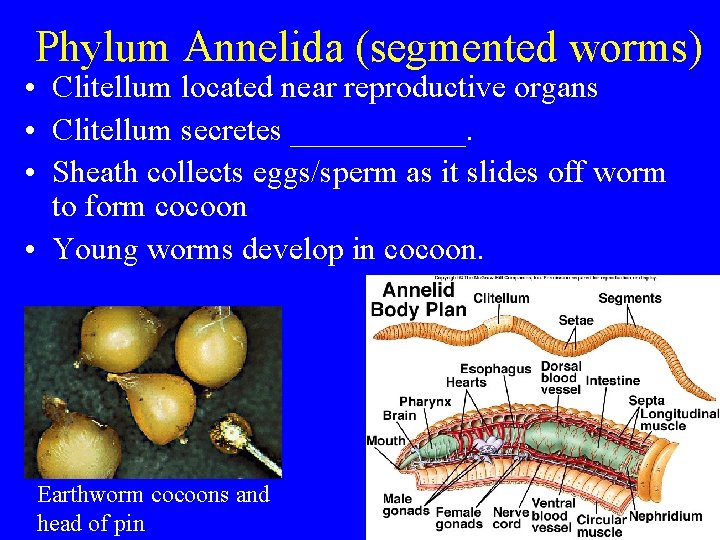
Phylum Annelida (segmented worms) • Clitellum located near reproductive organs • Clitellum secretes ______. • Sheath collects eggs/sperm as it slides off worm to form cocoon • Young worms develop in cocoon. Earthworm cocoons and head of pin

Phylum Annelida (segmented worms) • Segmented body: Key characteristic. Body series of compartments with similar systems in each • Advantages – 1) Allows adjacent segments to operate independently, give precise control of body movement (expand contract segments) – 2) System redundancy: if one segment injured, others contain muscles, nerves, excretory, circulatory systems that can continue to function.
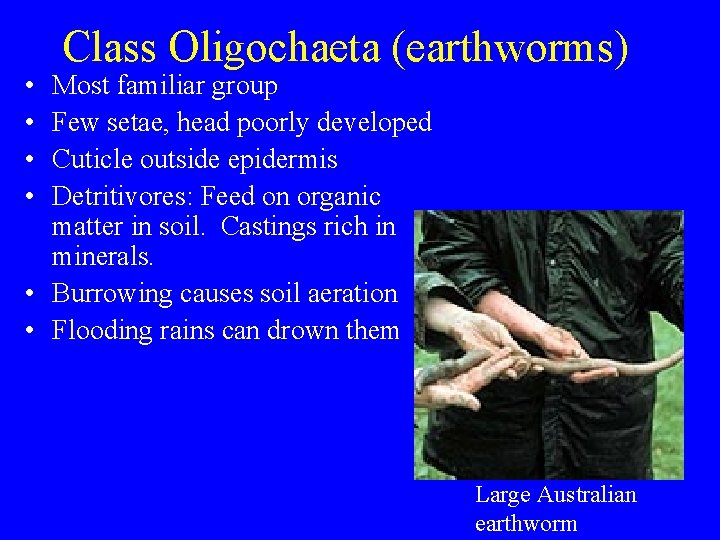
• • Class Oligochaeta (earthworms) Most familiar group Few setae, head poorly developed Cuticle outside epidermis Detritivores: Feed on organic matter in soil. Castings rich in minerals. • Burrowing causes soil aeration • Flooding rains can drown them Large Australian earthworm
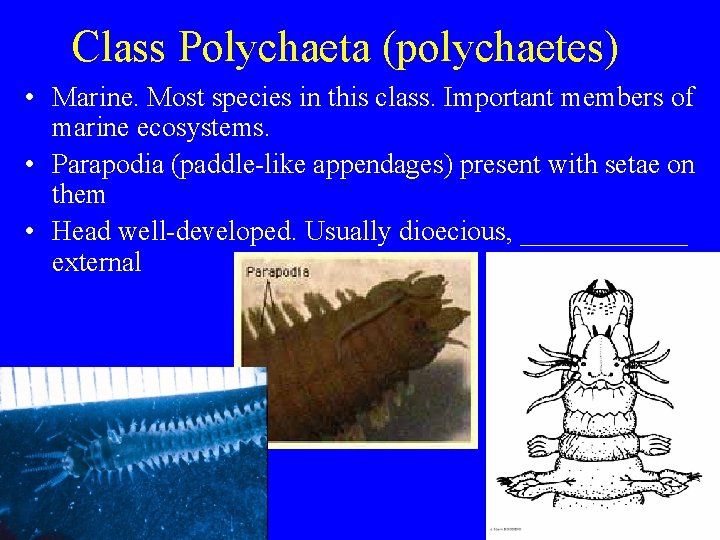
Class Polychaeta (polychaetes) • Marine. Most species in this class. Important members of marine ecosystems. • Parapodia (paddle-like appendages) present with setae on them • Head well-developed. Usually dioecious, ______ external
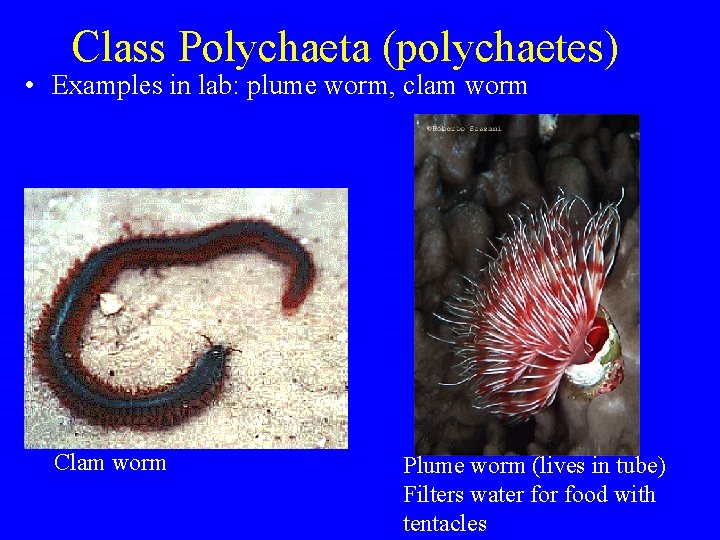
Class Polychaeta (polychaetes) • Examples in lab: plume worm, clam worm Clam worm Plume worm (lives in tube) Filters water food with tentacles
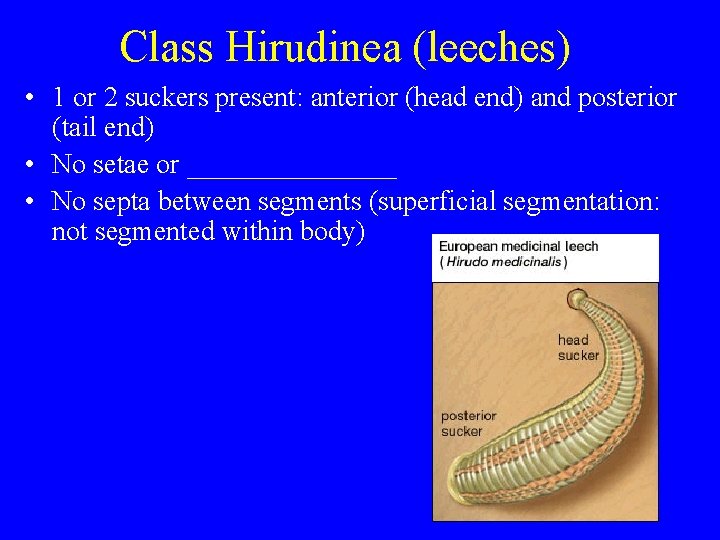
Class Hirudinea (leeches) • 1 or 2 suckers present: anterior (head end) and posterior (tail end) • No setae or ________ • No septa between segments (superficial segmentation: not segmented within body)
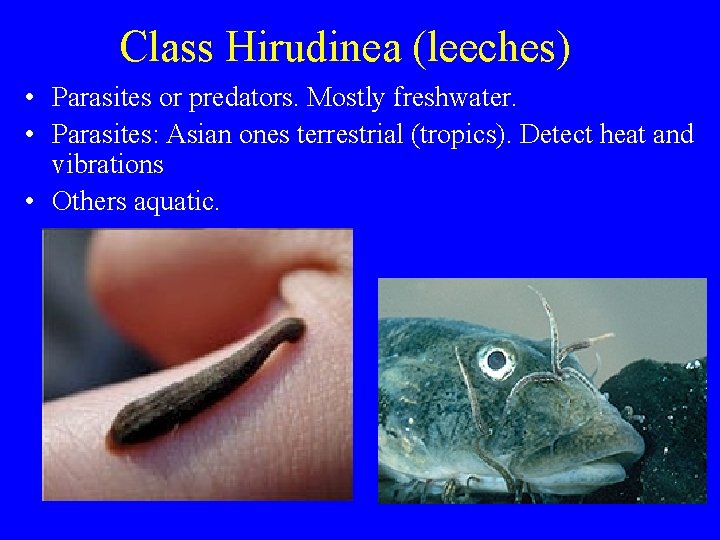
Class Hirudinea (leeches) • Parasites or predators. Mostly freshwater. • Parasites: Asian ones terrestrial (tropics). Detect heat and vibrations • Others aquatic.
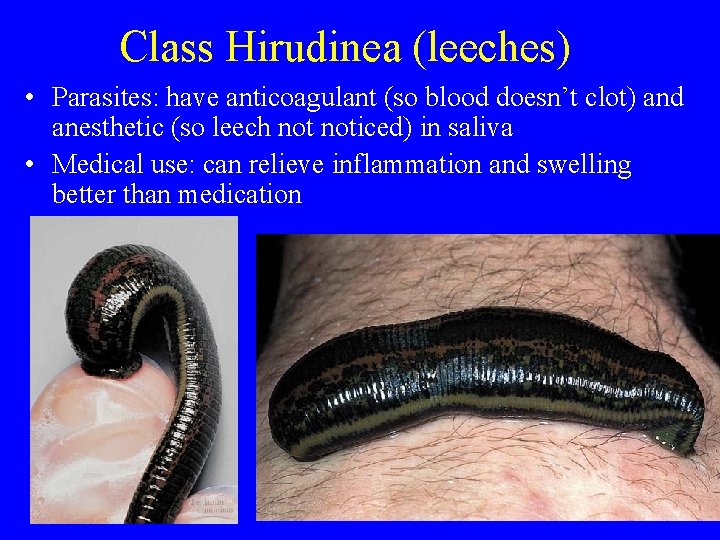
Class Hirudinea (leeches) • Parasites: have anticoagulant (so blood doesn’t clot) and anesthetic (so leech noticed) in saliva • Medical use: can relieve inflammation and swelling better than medication
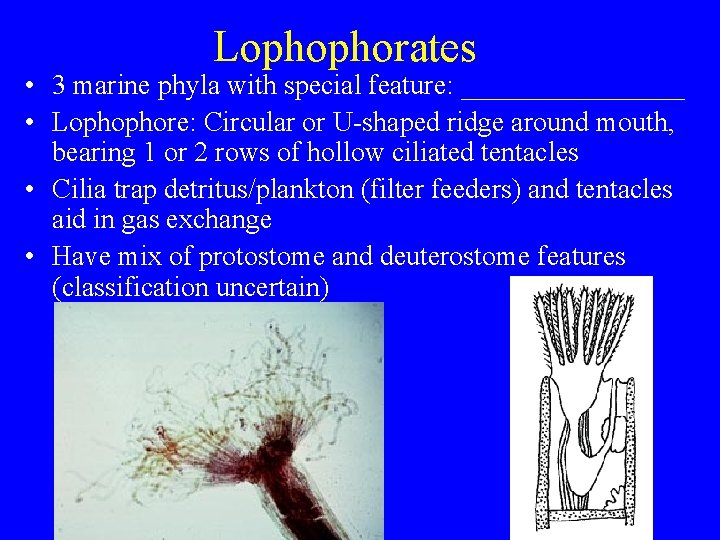
Lophophorates • 3 marine phyla with special feature: ________ • Lophophore: Circular or U-shaped ridge around mouth, bearing 1 or 2 rows of hollow ciliated tentacles • Cilia trap detritus/plankton (filter feeders) and tentacles aid in gas exchange • Have mix of protostome and deuterostome features (classification uncertain)
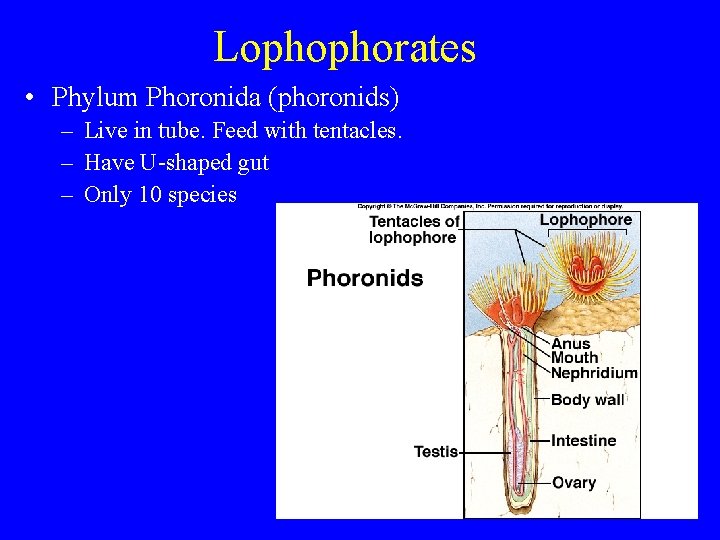
Lophophorates • Phylum Phoronida (phoronids) – Live in tube. Feed with tentacles. – Have U-shaped gut – Only 10 species
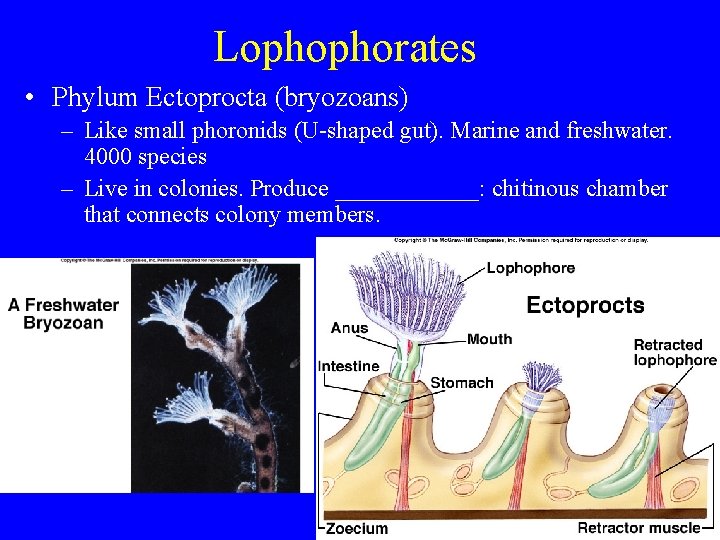
Lophophorates • Phylum Ectoprocta (bryozoans) – Like small phoronids (U-shaped gut). Marine and freshwater. 4000 species – Live in colonies. Produce ______: chitinous chamber that connects colony members.
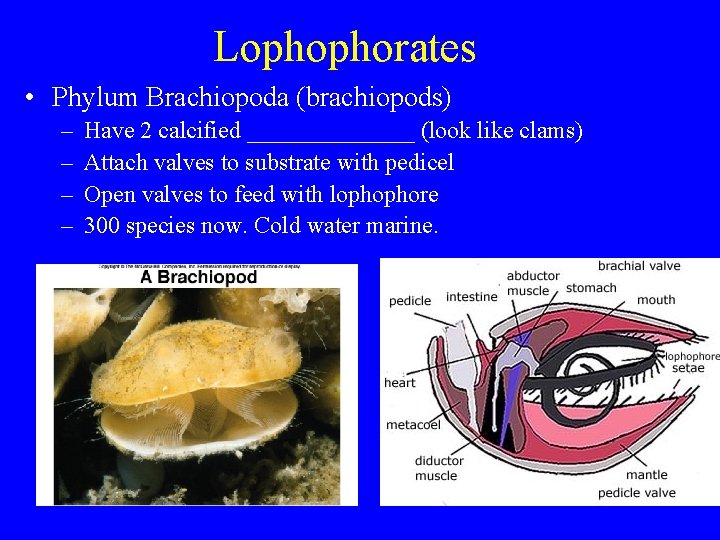
Lophophorates • Phylum Brachiopoda (brachiopods) – – Have 2 calcified _______ (look like clams) Attach valves to substrate with pedicel Open valves to feed with lophophore 300 species now. Cold water marine.
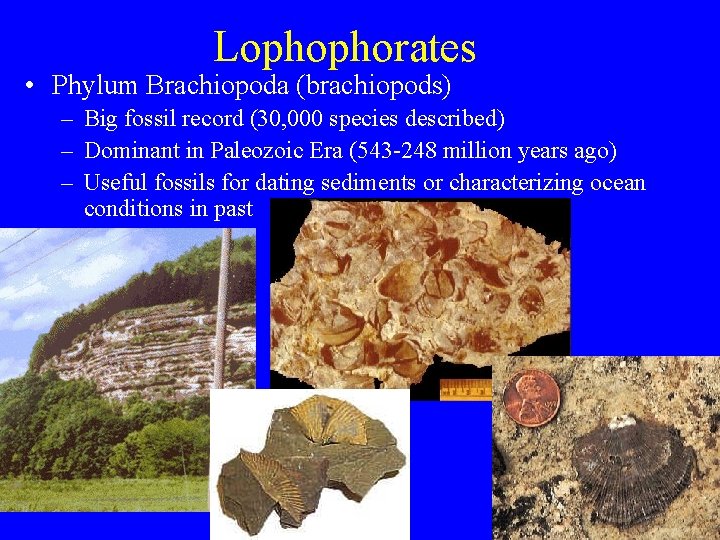
Lophophorates • Phylum Brachiopoda (brachiopods) – Big fossil record (30, 000 species described) – Dominant in Paleozoic Era (543 -248 million years ago) – Useful fossils for dating sediments or characterizing ocean conditions in past
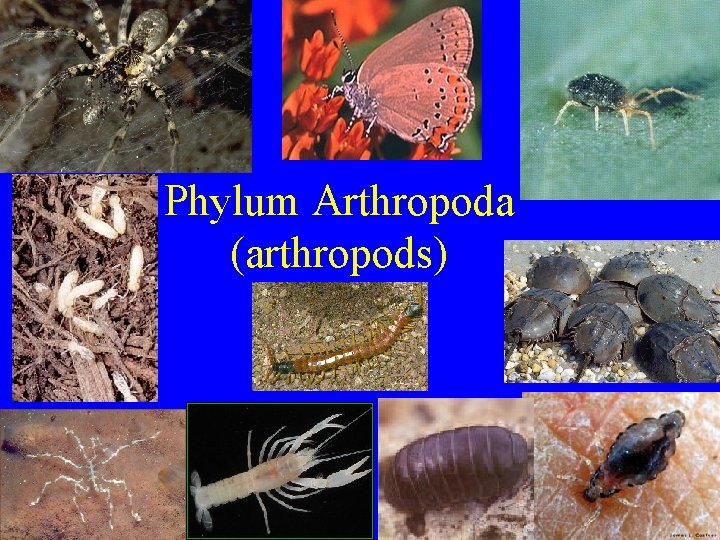
Phylum Arthropoda (arthropods)
Phylum Arthropoda (arthropods) • Most successful of all animal phyla • Everywhere: Terrestrial, aquatic
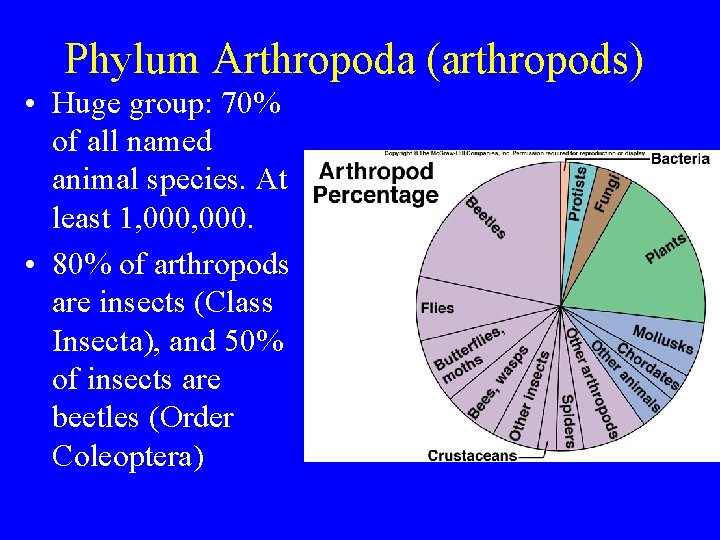
Phylum Arthropoda (arthropods) • Huge group: 70% of all named animal species. At least 1, 000. • 80% of arthropods are insects (Class Insecta), and 50% of insects are beetles (Order Coleoptera)
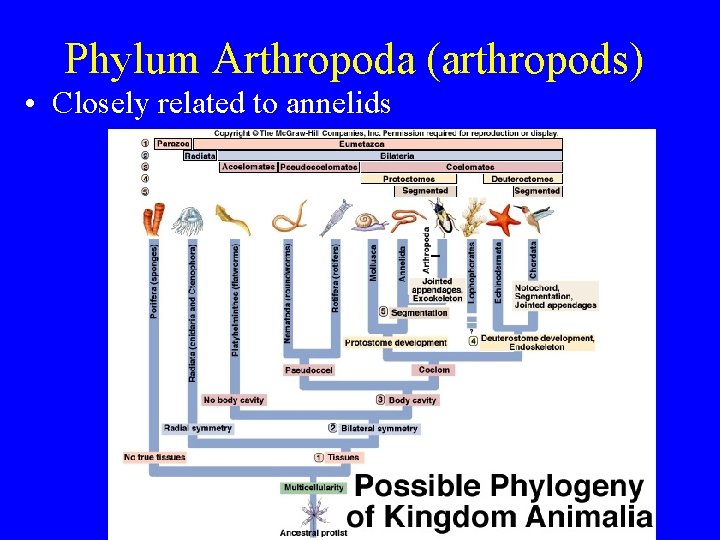
Phylum Arthropoda (arthropods) • Closely related to annelids
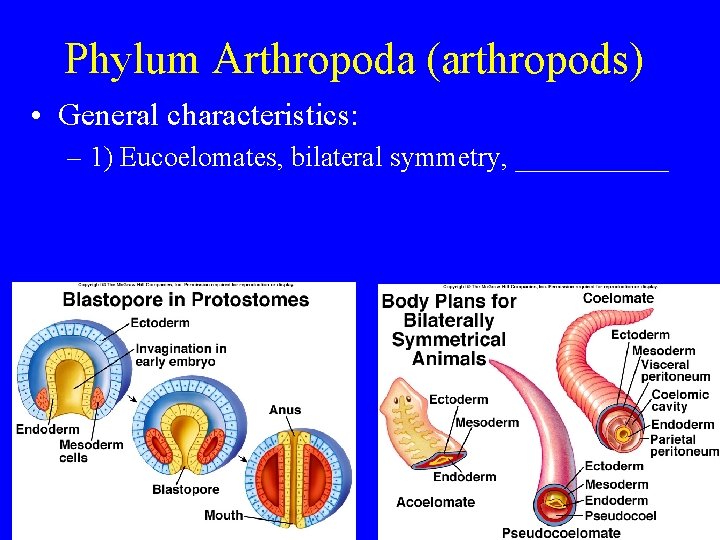
Phylum Arthropoda (arthropods) • General characteristics: – 1) Eucoelomates, bilateral symmetry, ______
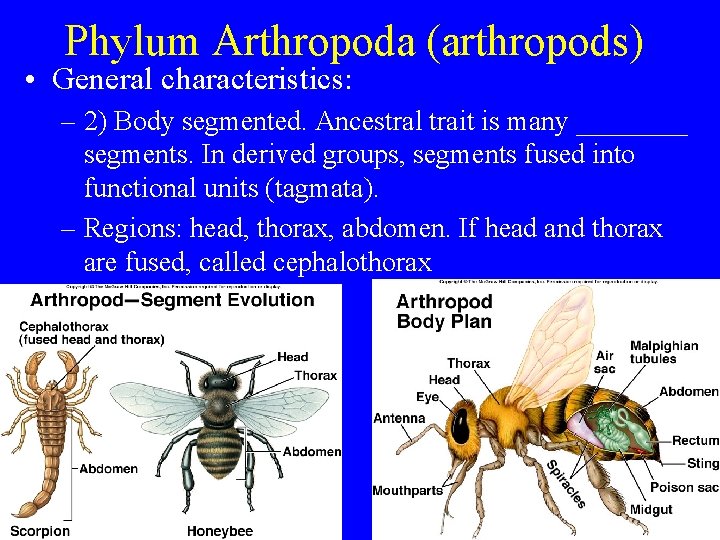
Phylum Arthropoda (arthropods) • General characteristics: – 2) Body segmented. Ancestral trait is many ____ segments. In derived groups, segments fused into functional units (tagmata). – Regions: head, thorax, abdomen. If head and thorax are fused, called cephalothorax
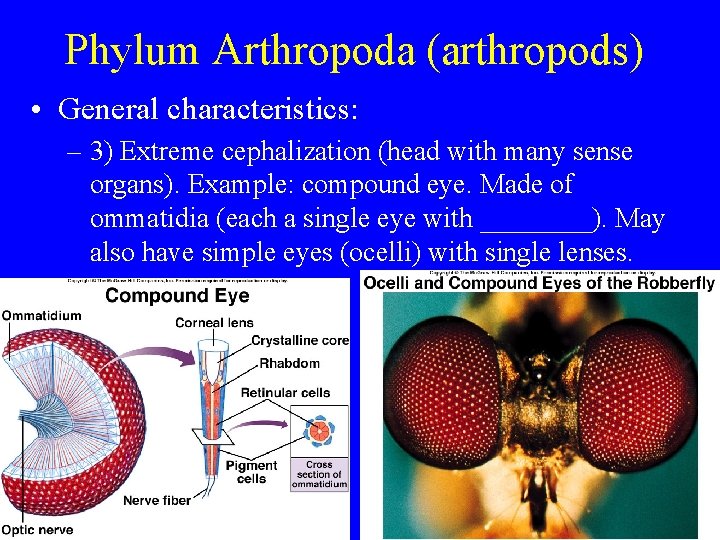
Phylum Arthropoda (arthropods) • General characteristics: – 3) Extreme cephalization (head with many sense organs). Example: compound eye. Made of ommatidia (each a single eye with ____). May also have simple eyes (ocelli) with single lenses.
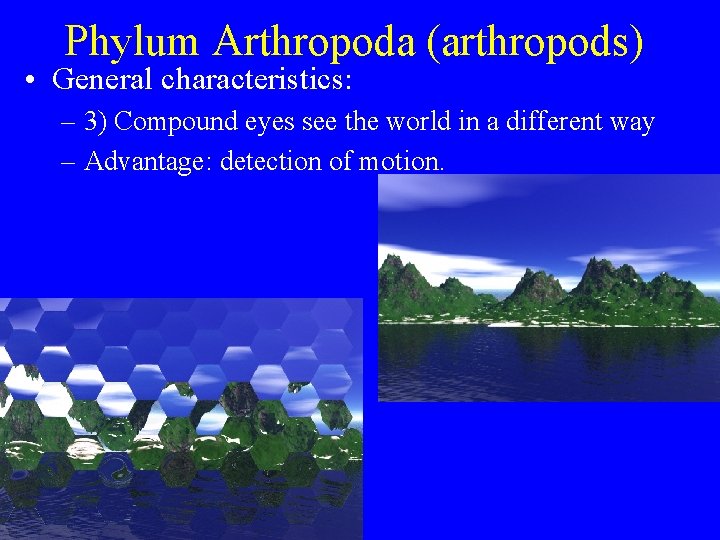
Phylum Arthropoda (arthropods) • General characteristics: – 3) Compound eyes see the world in a different way – Advantage: detection of motion.
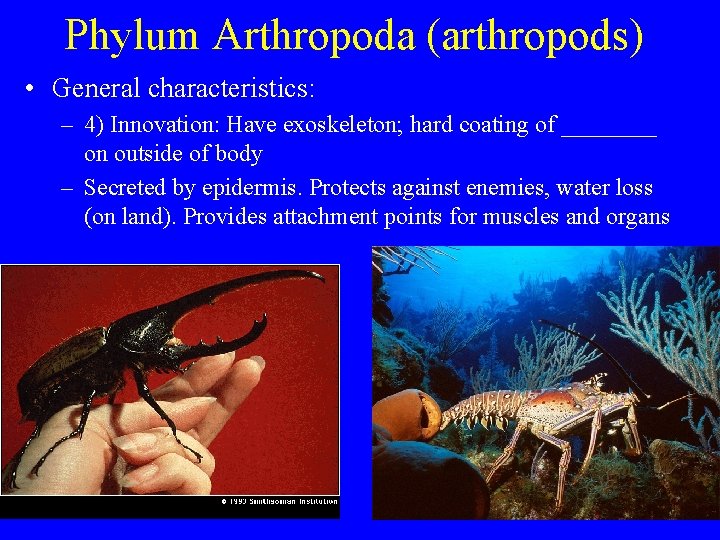
Phylum Arthropoda (arthropods) • General characteristics: – 4) Innovation: Have exoskeleton; hard coating of ____ on outside of body – Secreted by epidermis. Protects against enemies, water loss (on land). Provides attachment points for muscles and organs
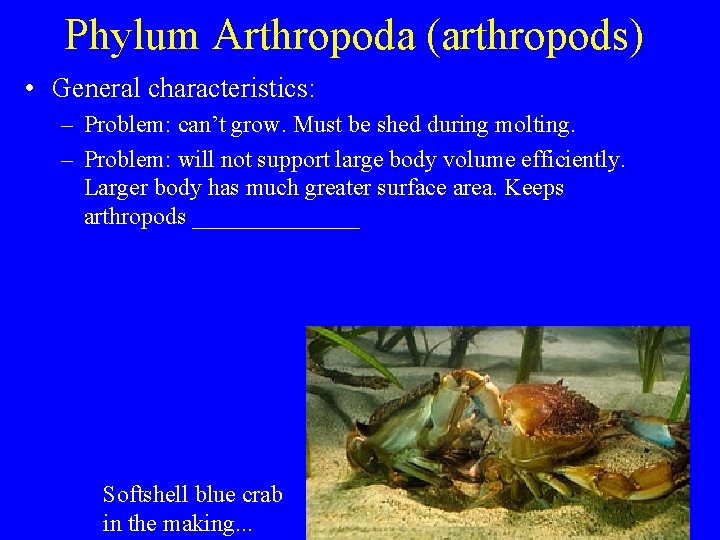
Phylum Arthropoda (arthropods) • General characteristics: – Problem: can’t grow. Must be shed during molting. – Problem: will not support large body volume efficiently. Larger body has much greater surface area. Keeps arthropods _______ Softshell blue crab in the making. . .
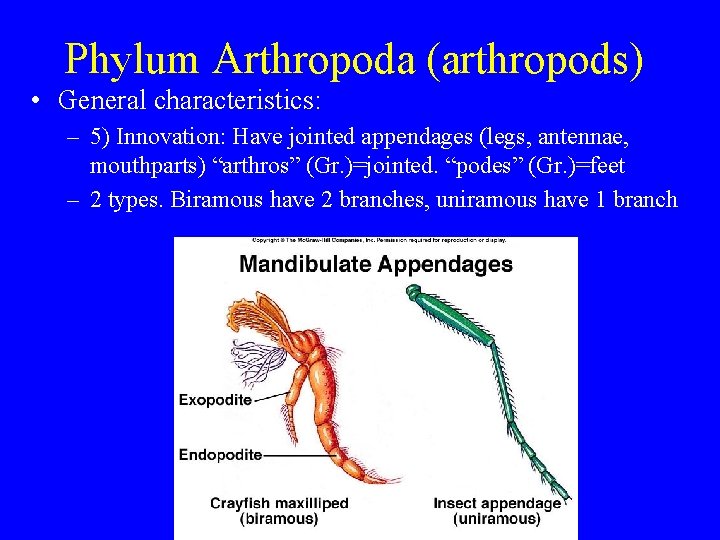
Phylum Arthropoda (arthropods) • General characteristics: – 5) Innovation: Have jointed appendages (legs, antennae, mouthparts) “arthros” (Gr. )=jointed. “podes” (Gr. )=feet – 2 types. Biramous have 2 branches, uniramous have 1 branch
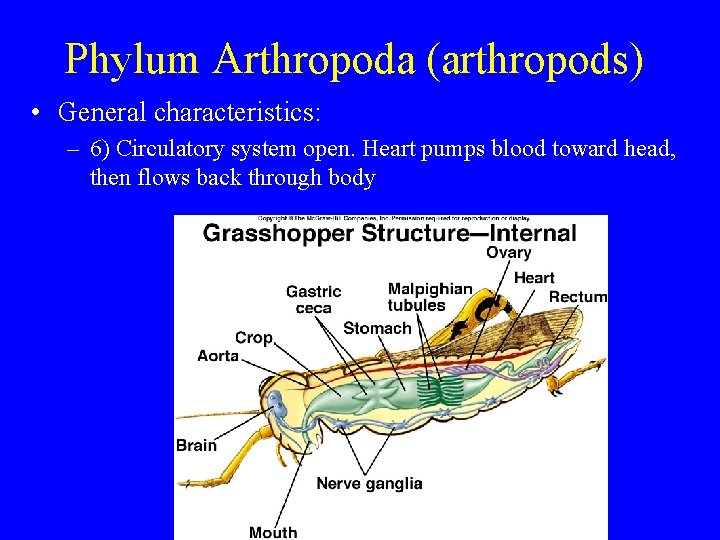
Phylum Arthropoda (arthropods) • General characteristics: – 6) Circulatory system open. Heart pumps blood toward head, then flows back through body
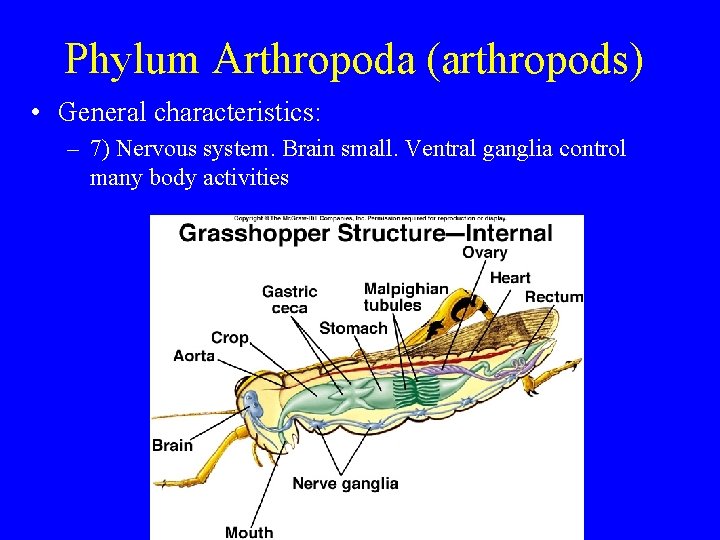
Phylum Arthropoda (arthropods) • General characteristics: – 7) Nervous system. Brain small. Ventral ganglia control many body activities
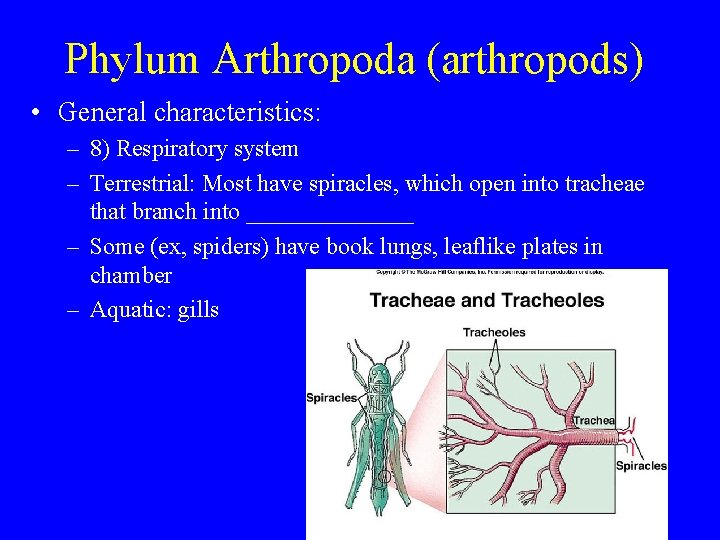
Phylum Arthropoda (arthropods) • General characteristics: – 8) Respiratory system – Terrestrial: Most have spiracles, which open into tracheae that branch into _______ – Some (ex, spiders) have book lungs, leaflike plates in chamber – Aquatic: gills
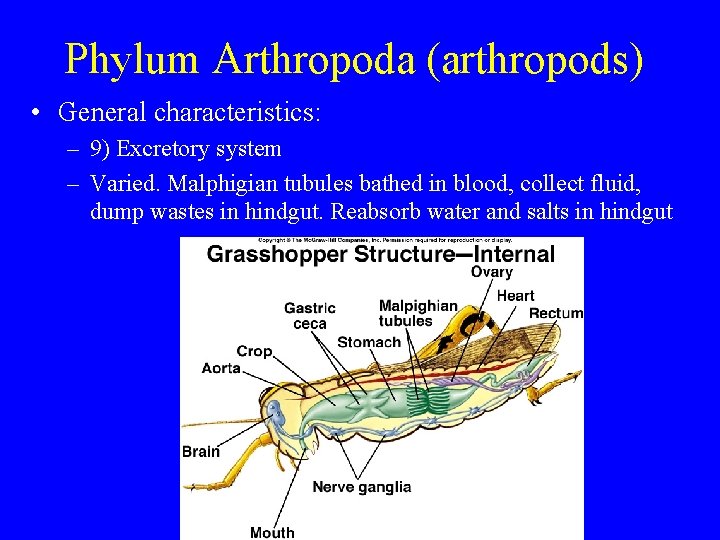
Phylum Arthropoda (arthropods) • General characteristics: – 9) Excretory system – Varied. Malphigian tubules bathed in blood, collect fluid, dump wastes in hindgut. Reabsorb water and salts in hindgut
- Slides: 70