
Invertebrate Diversity II The coeomate protostomes Ph Mollusca
Invertebrate Diversity II The coeomate protostomes: Ph. Mollusca Ph. Annelida Ph. Arthropoda
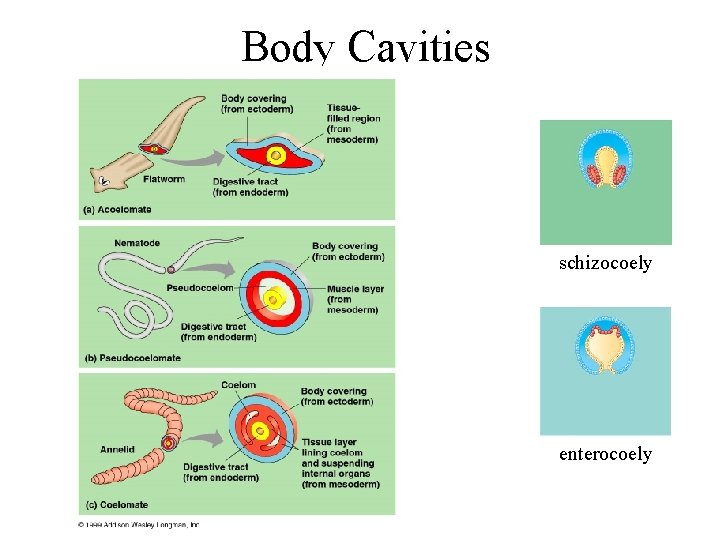
Body Cavities schizocoely enterocoely
Q 1: Pseudocoelous animals lack 1) 2) 3) 4) Body symmetry A body cavity A mesodermal cavity lining True tissues
Two kinds of coelomates • Protostomes vs. Deuterostomes • Distinguished by their patterns of embryonic development • (Note: developmental patterns are highly conservative, evolutionarily, but may reflect convergent evolution)
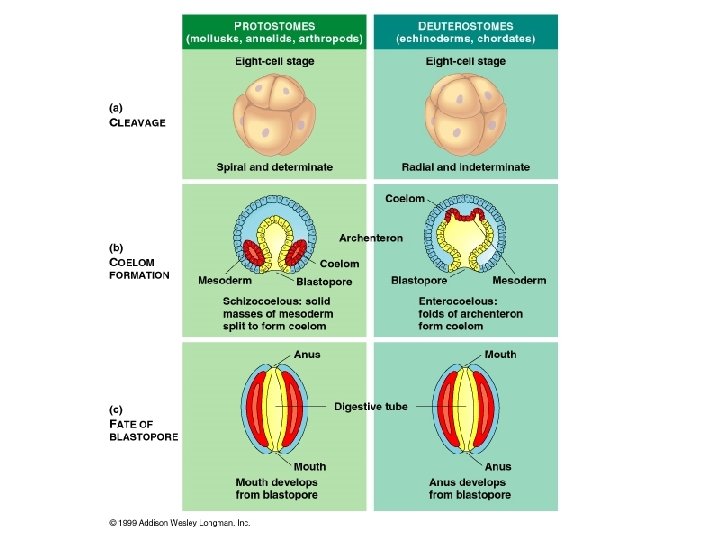
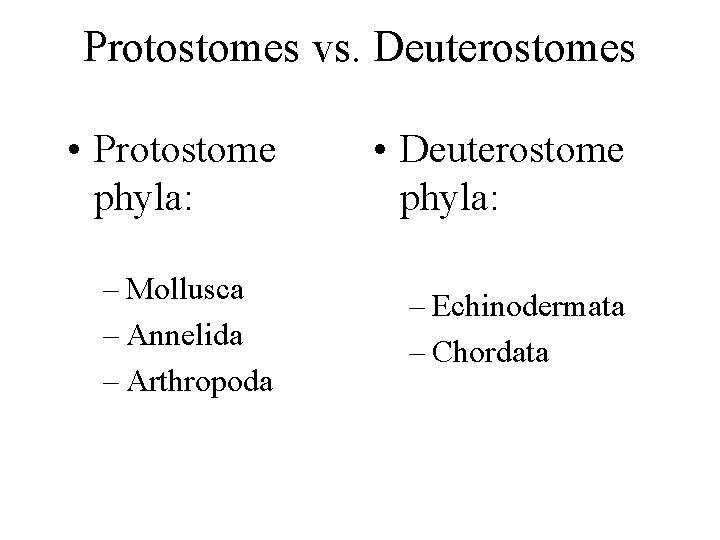
Protostomes vs. Deuterostomes • Protostome phyla: • Deuterostome phyla: – Mollusca – Annelida – Arthropoda – Echinodermata – Chordata
Ph. Mollusca: mollusks • 2 nd largest phylum in the Animal kingdom • (e. g. , there are more species of terrestrial mollusks than there are vertebrates!) • Body plan -- 3 regions: – ventral muscular foot – visceral mass – mantle -- surrounds internal organs • Radula • Torsion
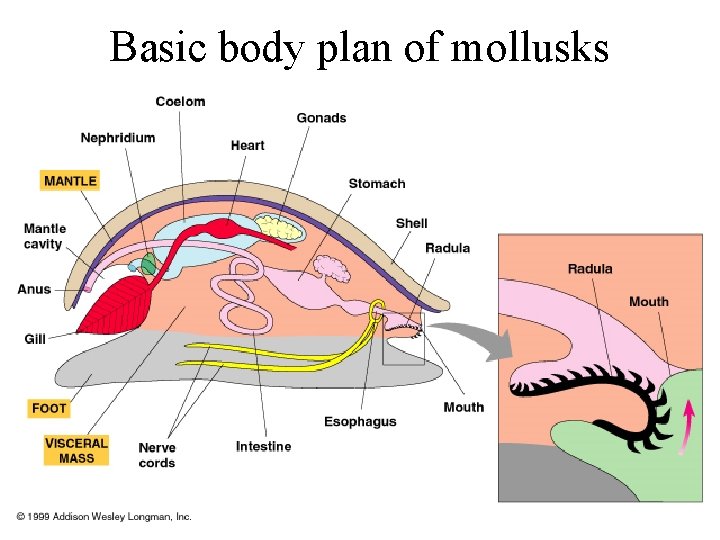
Basic body plan of mollusks
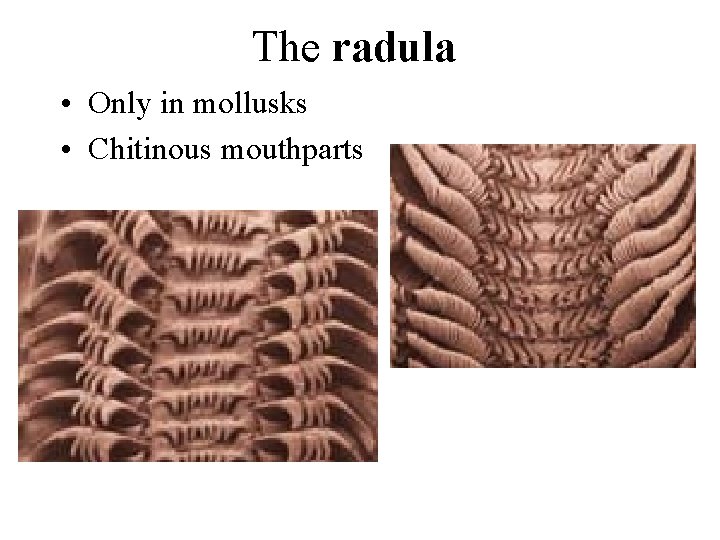
The radula • Only in mollusks • Chitinous mouthparts
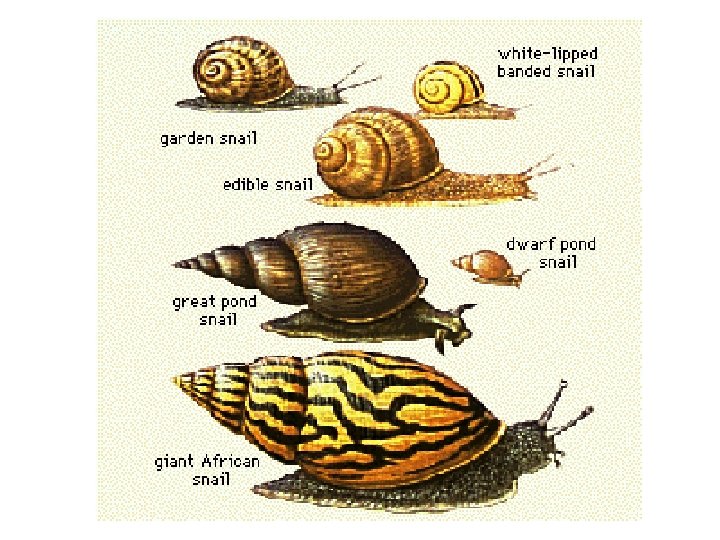
4 Classes of Mollusks • Cl Polyplacophora -- chitons • Cl. Gastropoda -- snails, slugs, nudibranchs • Cl. Bivalvia -- clams, mussels, oysters. . . • Cl. Cephalopoda -- octopus, squid, cttlefish, nautilus, etc.
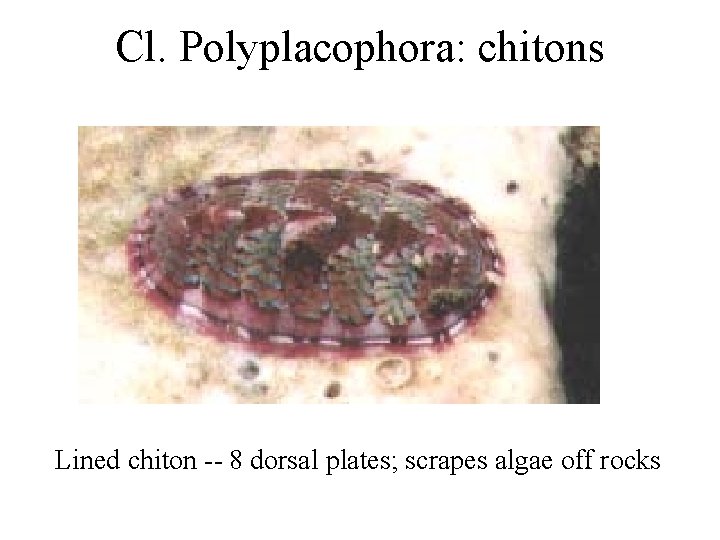
Cl. Polyplacophora: chitons Lined chiton -- 8 dorsal plates; scrapes algae off rocks
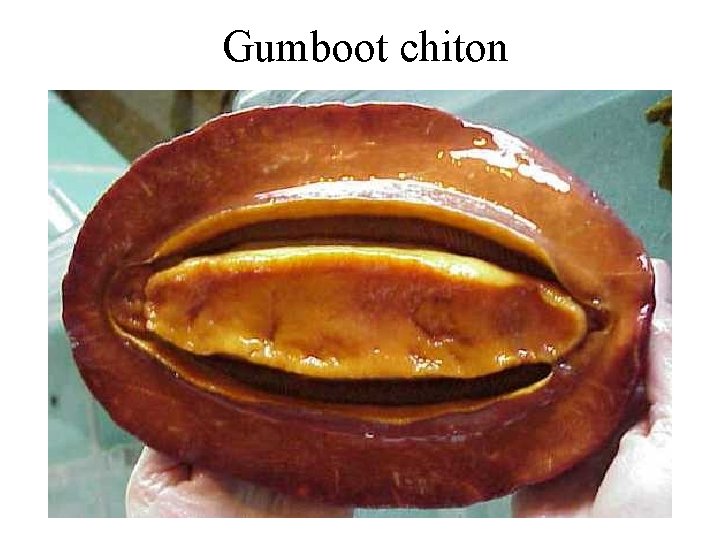
Gumboot chiton
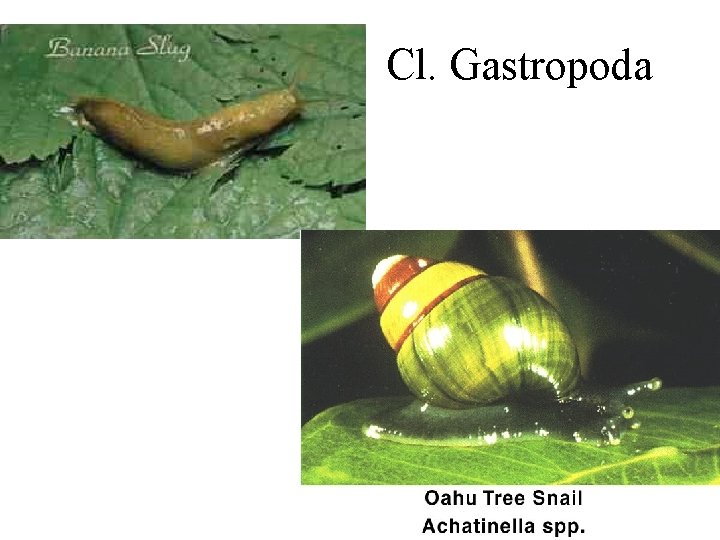
Cl. Gastropoda
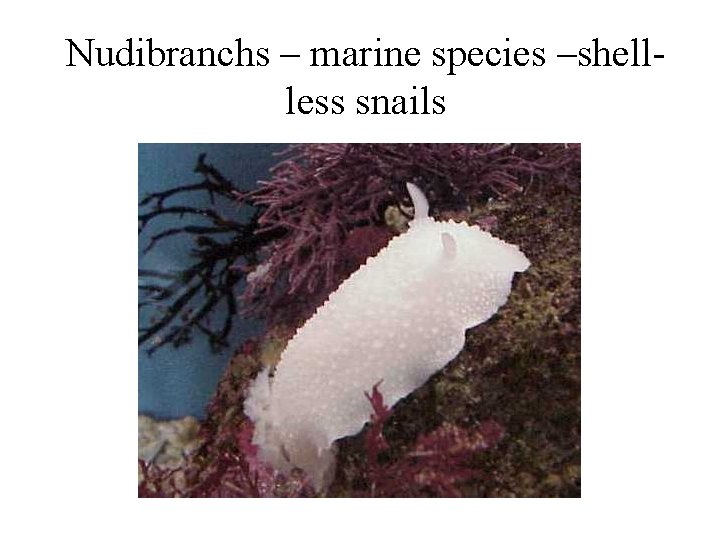
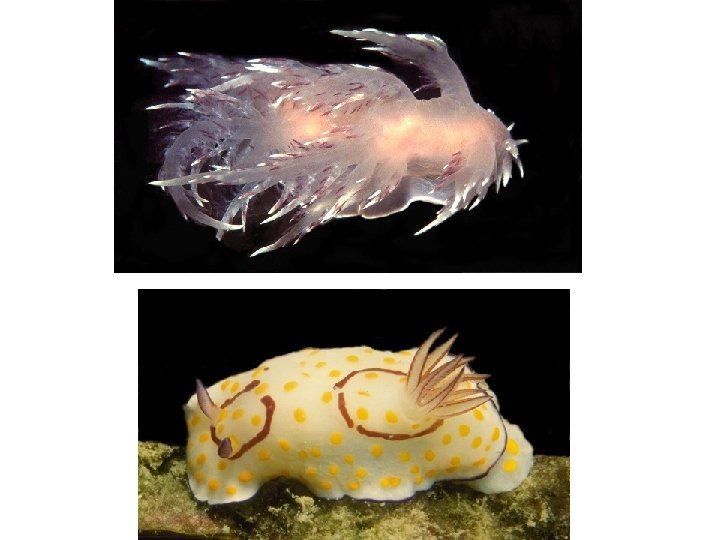
Nudibranchs – marine species –shellless snails
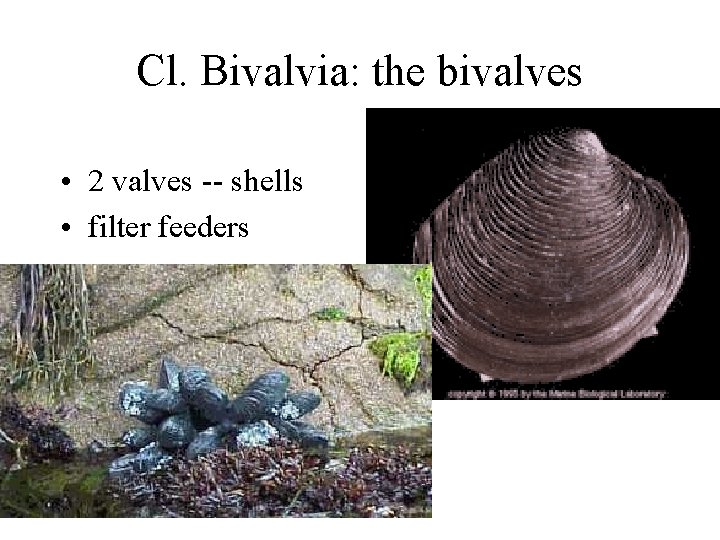
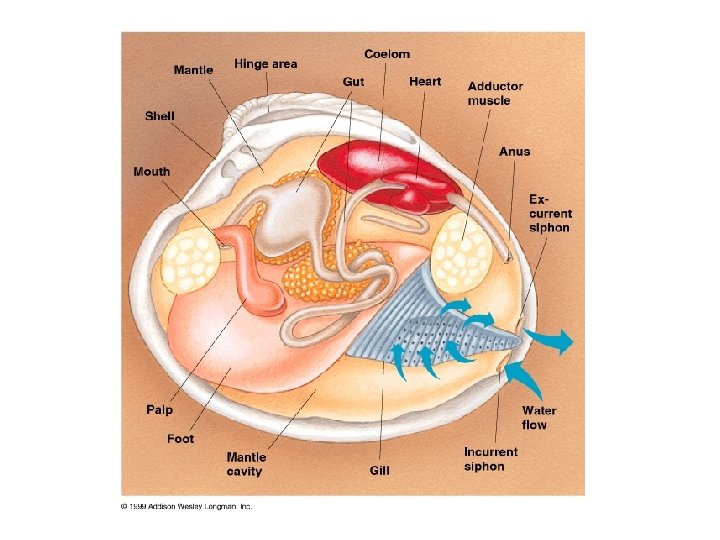
Cl. Bivalvia: the bivalves • 2 valves -- shells • filter feeders
Q 2: Mollusks are 1) 2) 3) 4) Segmented Deuterostomes Pseudocoelomate Schizocoelous
Q 3: The group of modern mollusks which most closely resembles the ancestral form is 1) 2) 3) 4) Polyplacophora Gastropoda Bivalvia Cephalopoda
Cl. Cephalopoda • • • Squid, octopus, nautilus, cuttlefish Nautilus – external shell Cuttlefish – internal shell (the “cuttlebone”) Others have lost shells, evolutionarily Excellent vision, big brains (for inverts!) Good at predicting soccer matches
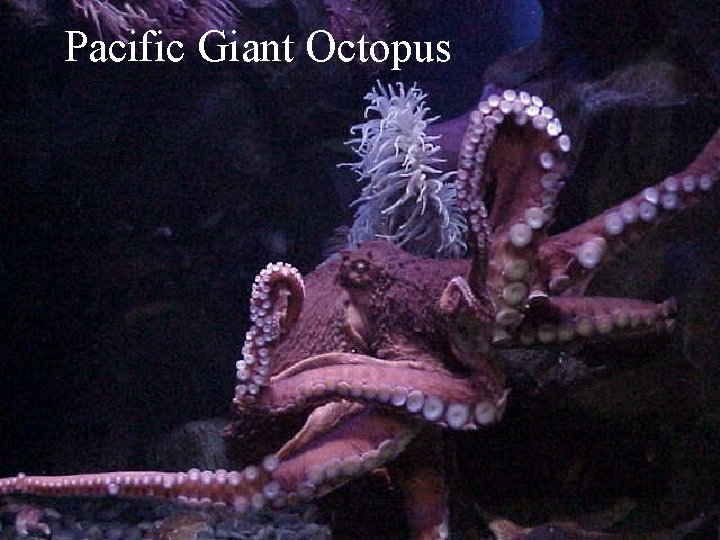
Pacific Giant Octopus
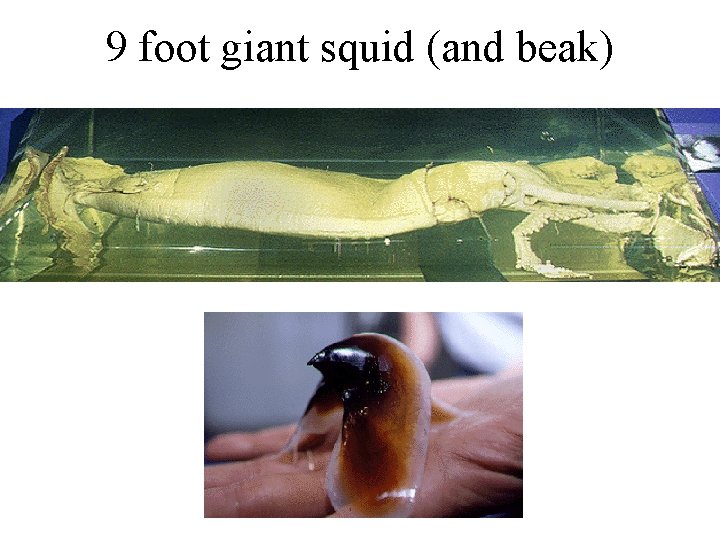
9 foot giant squid (and beak)
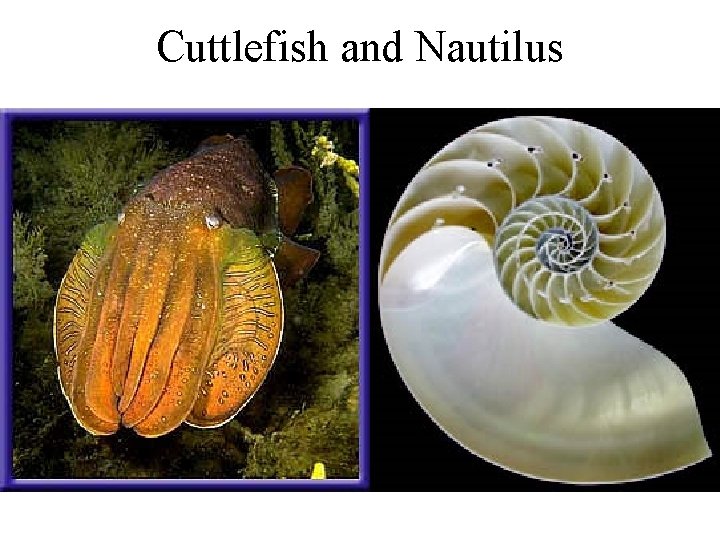
Cuttlefish and Nautilus
Q 4: “Cephalopod” means literally 1) 2) 3) 4) Ten-legged Head-foot Stomach-foot Mantle shell
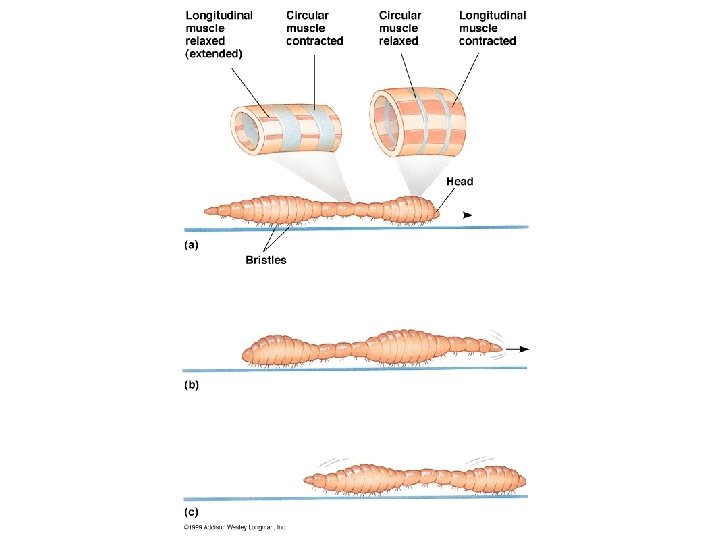
Ph. Annelida • • Segmented worms Most have septa between segments Allows for controlled movement 3 classes: – Cl. Polychaeta -- polychaetes – Cl. Oligochaeta -- earthworms – Cl. Hirudinea -- leeches
Q 5: Annelids are: 1) 2) 3) 4) Deuterostomes Schizocoelous Radially symmetrical Triploblastic
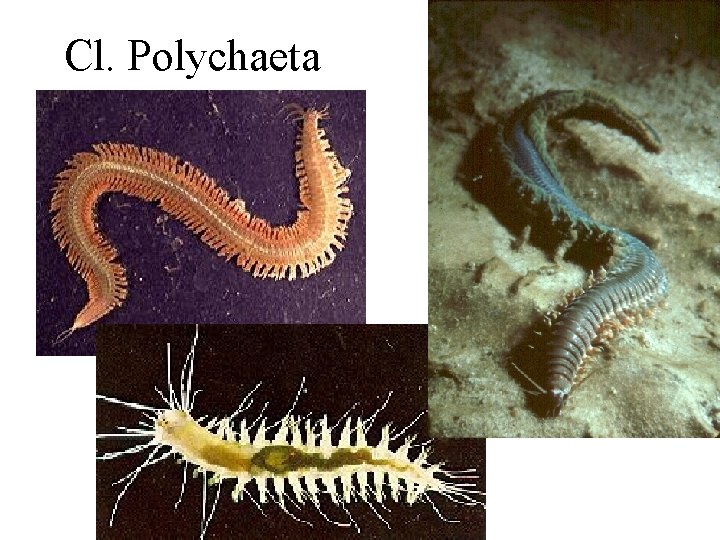
Cl. Polychaeta
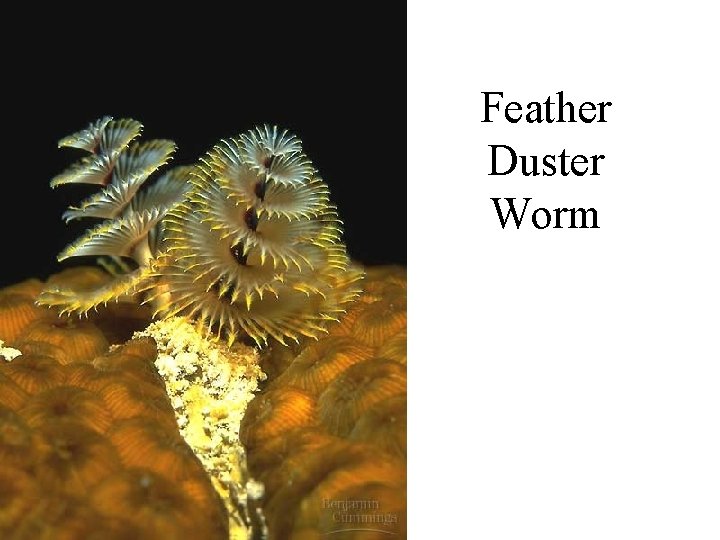
Feather Duster Worm
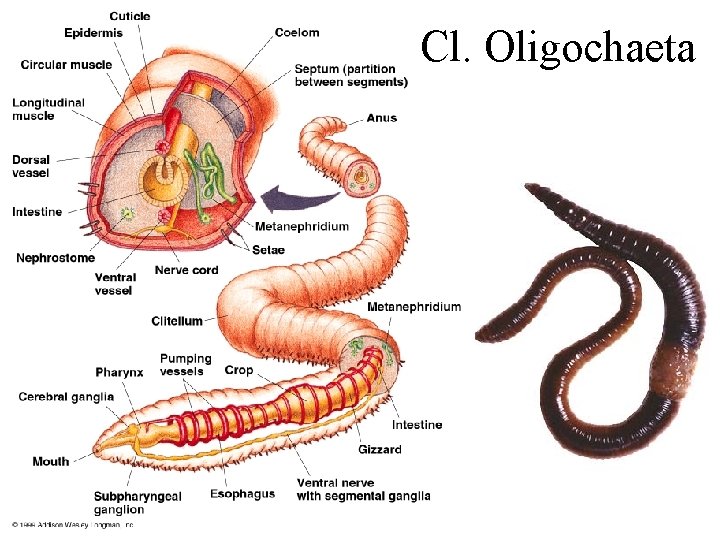
Cl. Oligochaeta
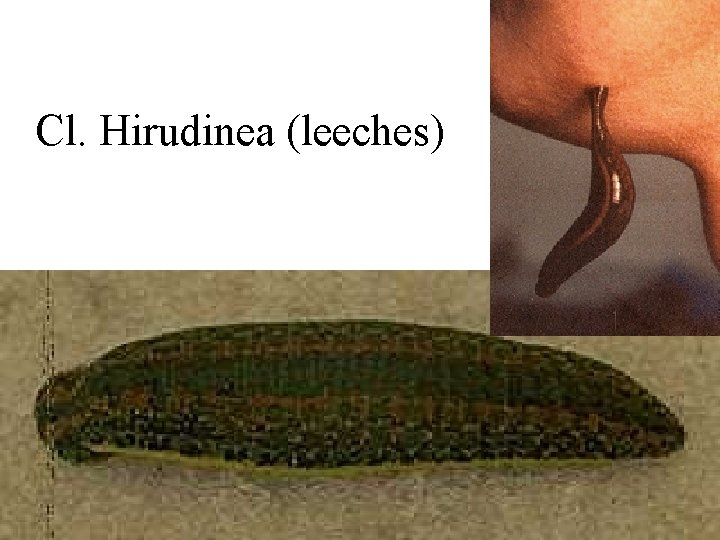
Cl. Hirudinea (leeches)
Q 6: Marine annelids belong to Class 1) 2) 3) 4) Hirudinea Polyplacophora Scyphozoa Polychaeta
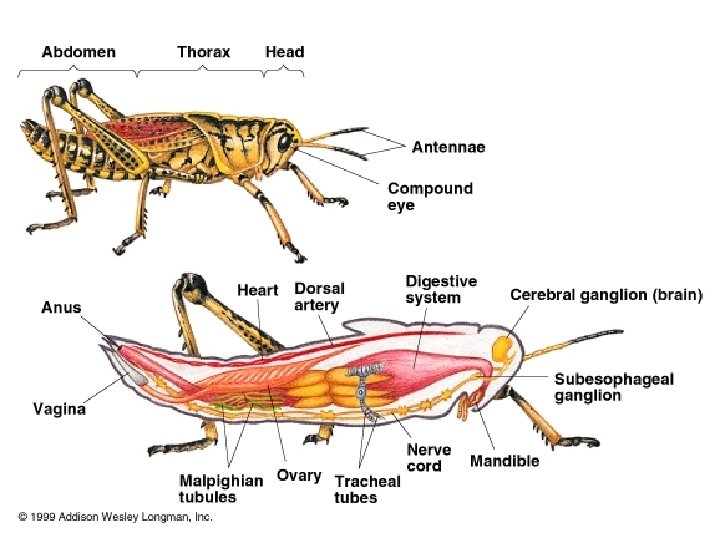
P. Arthropoda: Arthropods • Most species rich phylum on earth! • segmented bodies, but segments fused into tagmata (functional units): head, thorax, abdomen • exoskeleton of chitin • jointed appendages: “Arthro-” + “pod”
Q 7: Traditional phylogeny regards annelids and arthropods as being closely related because both phyla 1) 2) 3) 4) Have determinate, spiral cleavage Are schizocoelous protostomes Are segmented with ventral, solid nerve chords All of the above
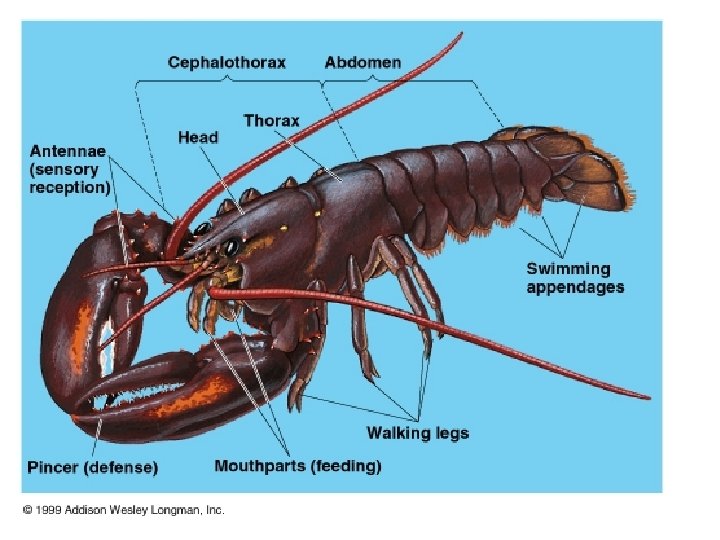
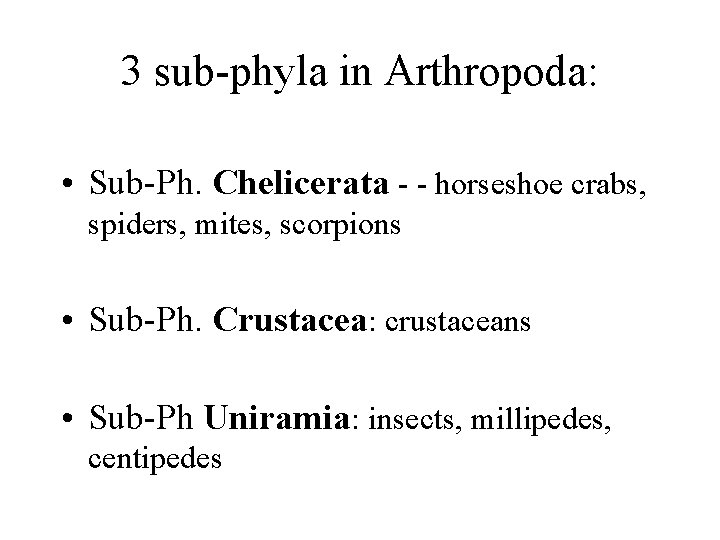
3 sub-phyla in Arthropoda: • Sub-Ph. Chelicerata - - horseshoe crabs, spiders, mites, scorpions • Sub-Ph. Crustacea: crustaceans • Sub-Ph Uniramia: insects, millipedes, centipedes
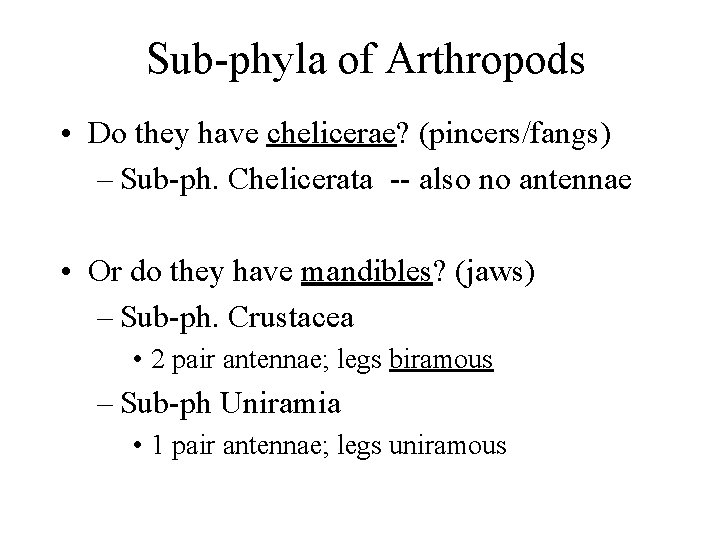
Sub-phyla of Arthropods • Do they have chelicerae? (pincers/fangs) – Sub-ph. Chelicerata -- also no antennae • Or do they have mandibles? (jaws) – Sub-ph. Crustacea • 2 pair antennae; legs biramous – Sub-ph Uniramia • 1 pair antennae; legs uniramous
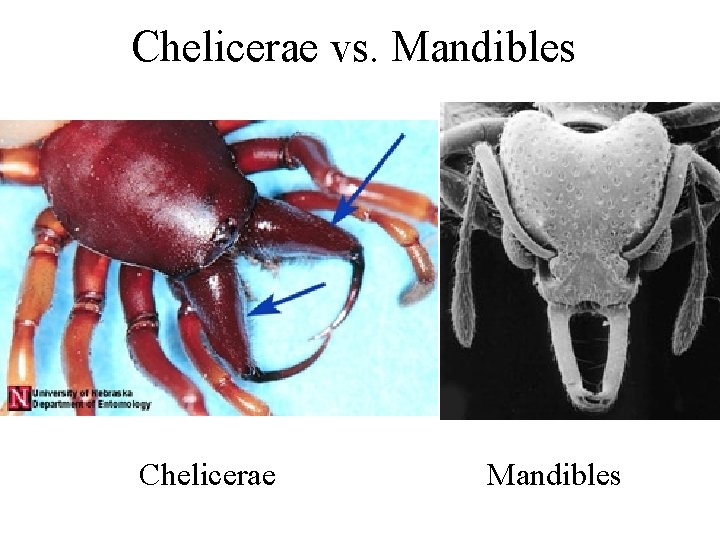
Chelicerae vs. Mandibles Chelicerae Mandibles
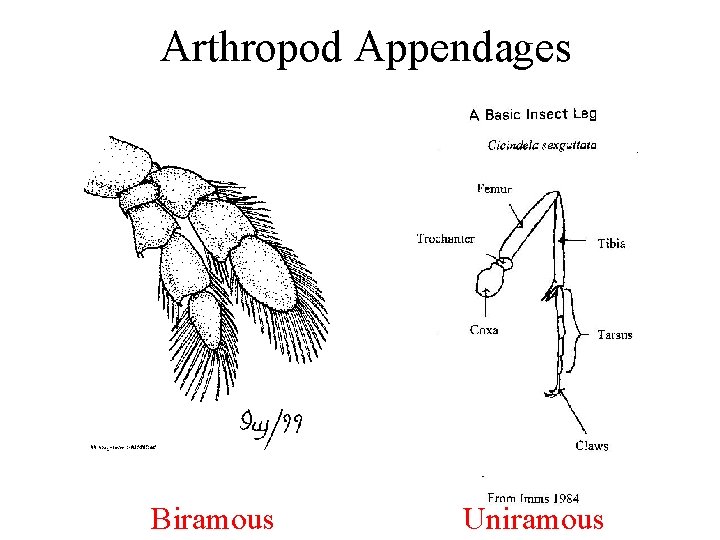
Arthropod Appendages Biramous Uniramous
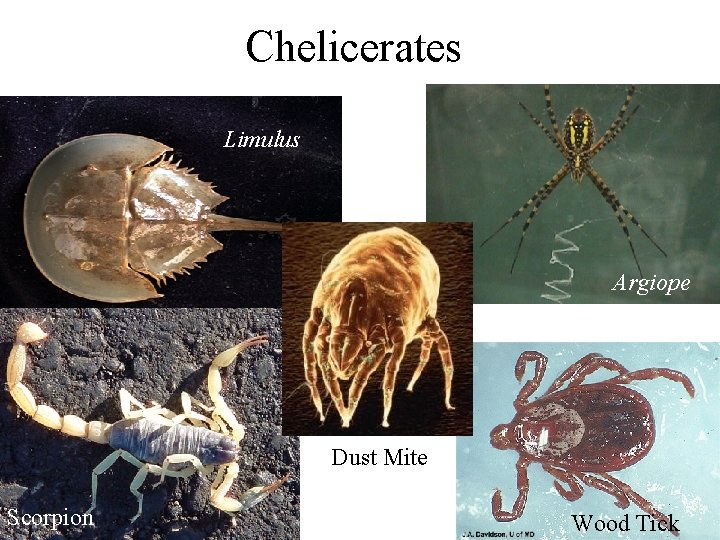
Chelicerates Limulus Argiope Dust Mite Scorpion Wood Tick
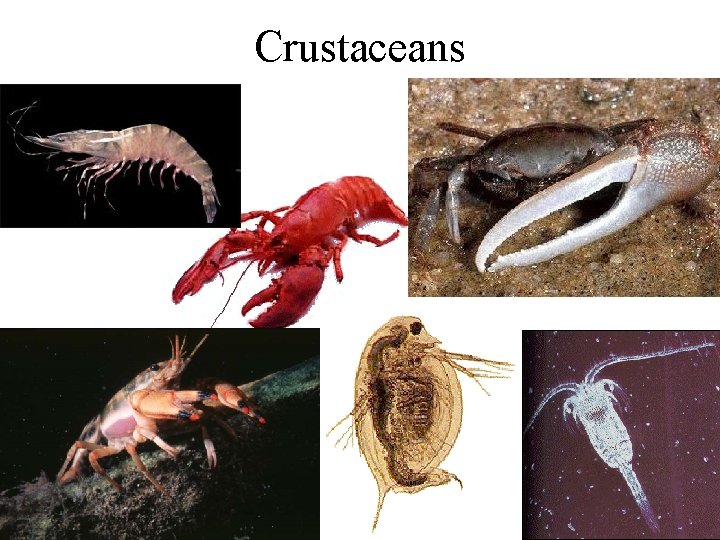
Crustaceans
Q 8: Horseshoe crabs are grouped with spiders rather than true crabs because horseshoe crabs have 1) 2) 3) 4) chelicera eight legs gills antennae
3 classes in Uniramia • Cl. Chilopoda (centipedes) • Cl. Diplopoda (millipedes) • Cl. Insecta (insects)
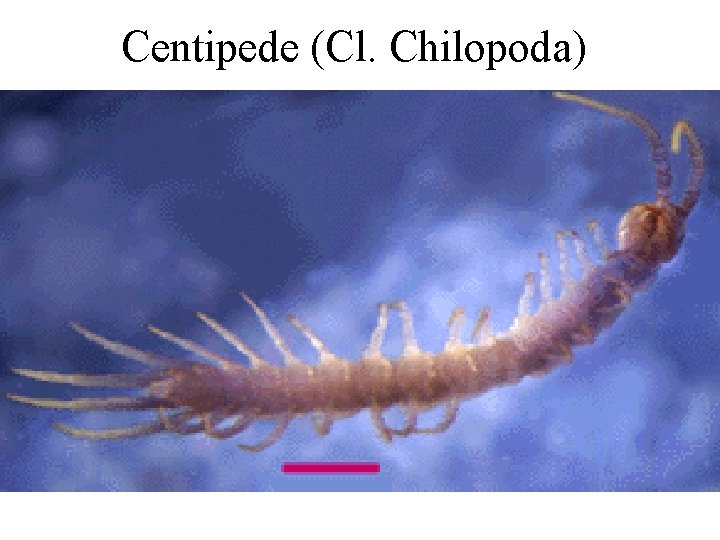
Centipede (Cl. Chilopoda)
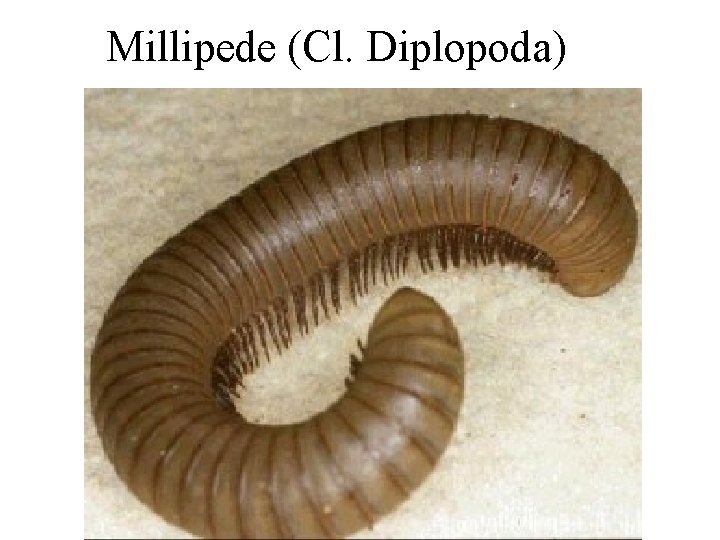
Millipede (Cl. Diplopoda)
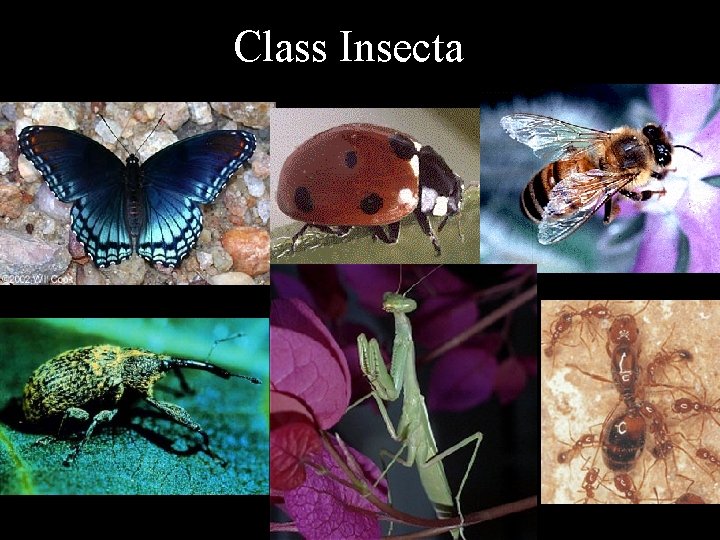
Class Insecta
Q 9: The most speciose class of animals on earth is 1) 2) 3) 4) Insecta Crustacea Bivalvia Oligochaeta
Q 10: Insects differ from annelids in having 1) 2) 3) 4) A cephalized nervous system A segmented body plan An open circulatory system A pseudocoelom
- Slides: 51