Andrew N Pollak MD Program Director and Head


- Slides: 34
Andrew N. Pollak, MD Program Director and Head Division of Orthopaedic Trauma University of Maryland School of Medicine Associate Director of Trauma R Adams Cowley Shock Trauma Center Medical Director Baltimore County Fire Department Special Deputy United States Marshal Commissioner – Maryland Health Care Commission
Maryland vs. Georgia § Maryland – – 5. 6 million people 12, 500 sq miles $68, 000 median income Density – 5 th in US § Georgia – – 9. 6 million people 60, 000 sq miles $43, 000 medial income Density – 18 th in US
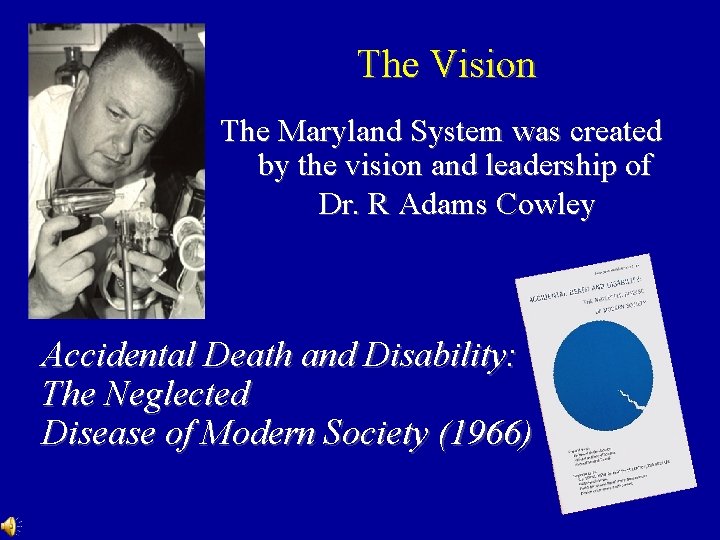
The Vision The Maryland System was created by the vision and leadership of Dr. R Adams Cowley Accidental Death and Disability: The Neglected Disease of Modern Society (1966)
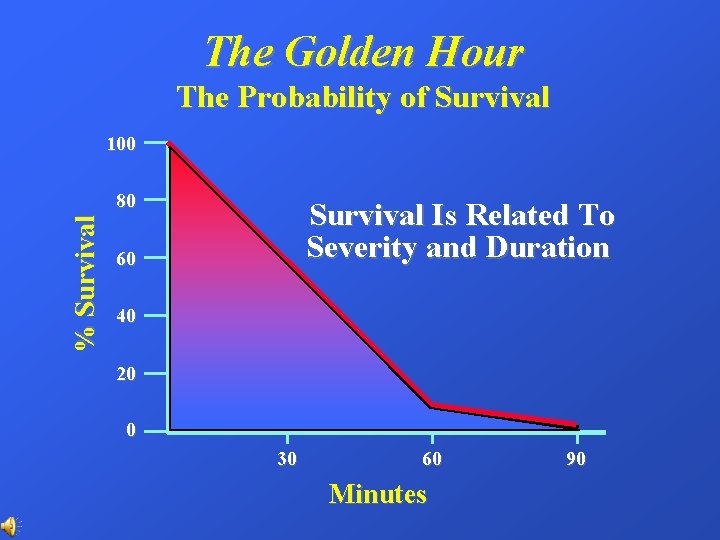
The Golden Hour The Probability of Survival 100 % Survival 80 Survival Is Related To Severity and Duration 60 40 20 0 30 60 Minutes 90
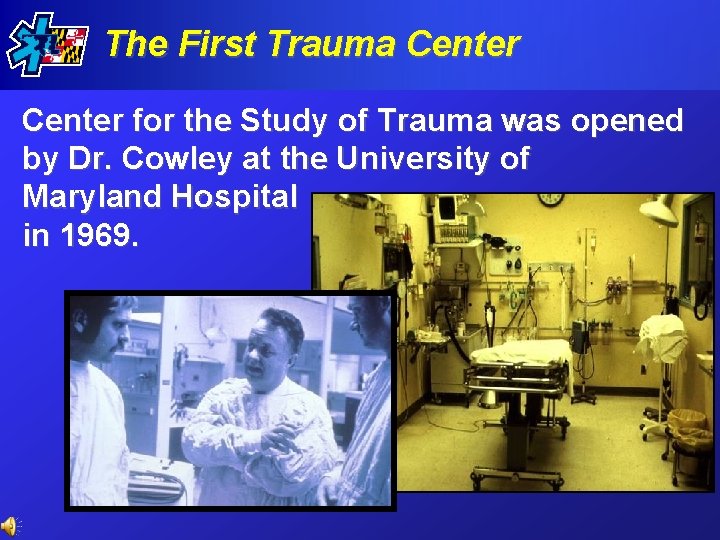
The First Trauma Center for the Study of Trauma was opened by Dr. Cowley at the University of Maryland Hospital in 1969.
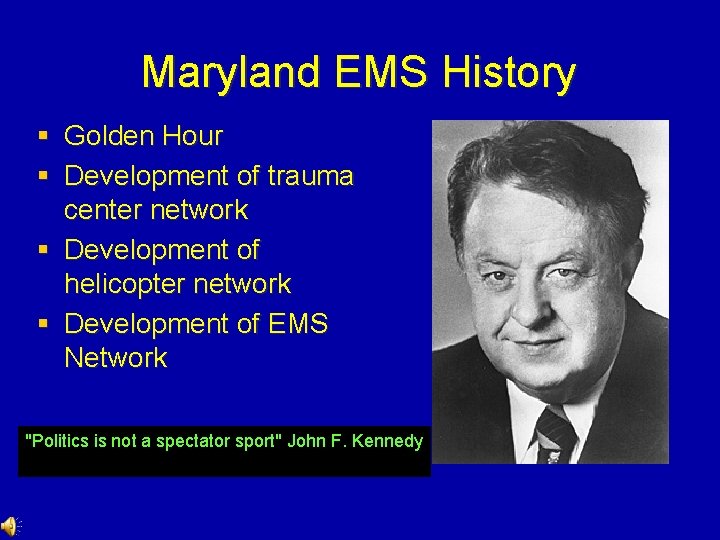
Maryland EMS History § Golden Hour § Development of trauma center network § Development of helicopter network § Development of EMS Network "Politics is not a spectator sport" John F. Kennedy
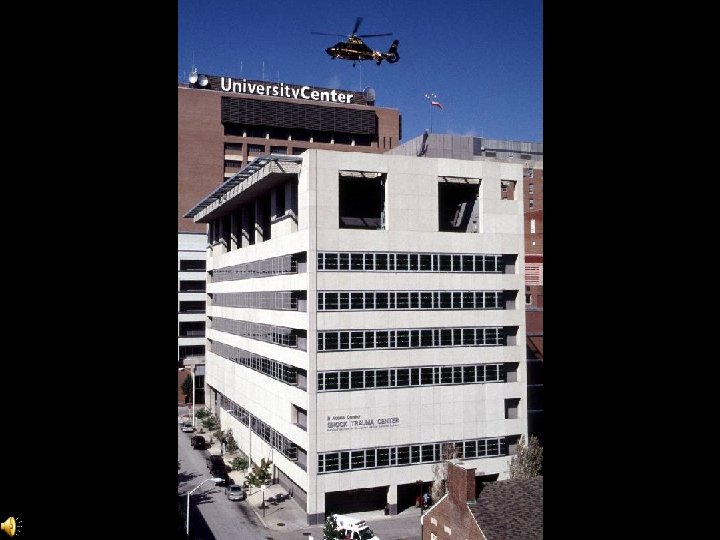
R Adams Cowley Shock Trauma Center § 7500 Admissions per year § Approx 40% by air & 60% by ground § Primary trauma referral center for 1. 5 million people § Secondary trauma referral center for 6 million people § 4200 Surgical Cases § ALOS 4. 65 days – ALOS for isolated femur fracture less than 48 hours § 90 total overnight beds (36 critical care)
Division of Orthopaedic Trauma § § § Research – Education – Clinical Care 7 Full time faculty members 10 Orthopaedic residents 4 Orthopaedic trauma fellows – Expanding to 5 § § 3000 orthopaedic trauma cases annually 400 pelvis and acetabulum cases annually $500, 000 per year research funding 20 -30 Academic peer reviewed publications per year
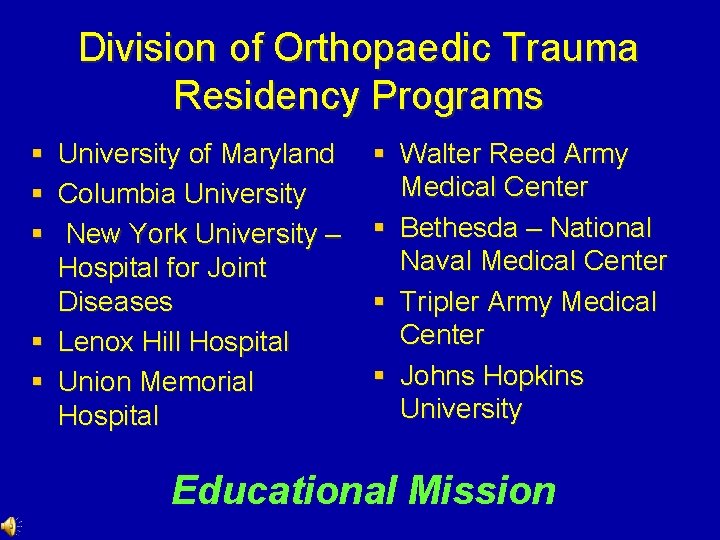
Division of Orthopaedic Trauma Residency Programs § § § University of Maryland Columbia University New York University – Hospital for Joint Diseases Lenox Hill Hospital Union Memorial Hospital § Walter Reed Army Medical Center § Bethesda – National Naval Medical Center § Tripler Army Medical Center § Johns Hopkins University Educational Mission
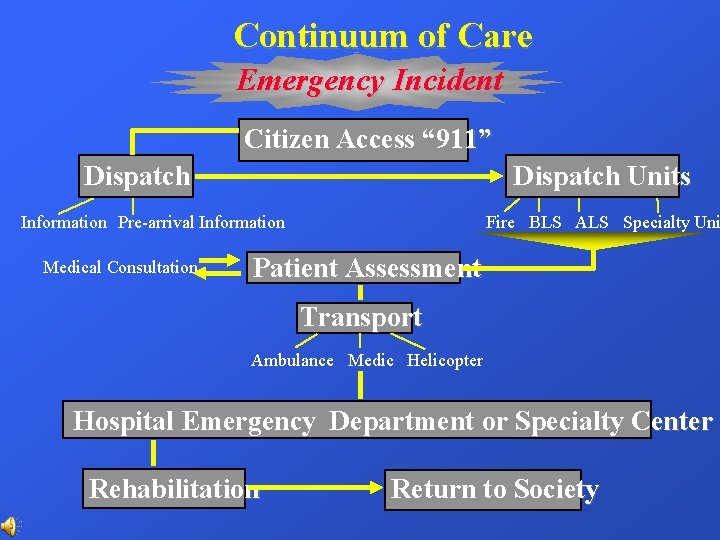
Continuum of Care Emergency Incident Citizen Access “ 911” Dispatch Units Information Pre-arrival Information Medical Consultation Fire BLS ALS Specialty Uni Patient Assessment Transport Ambulance Medic Helicopter Hospital Emergency Department or Specialty Center Rehabilitation Return to Society
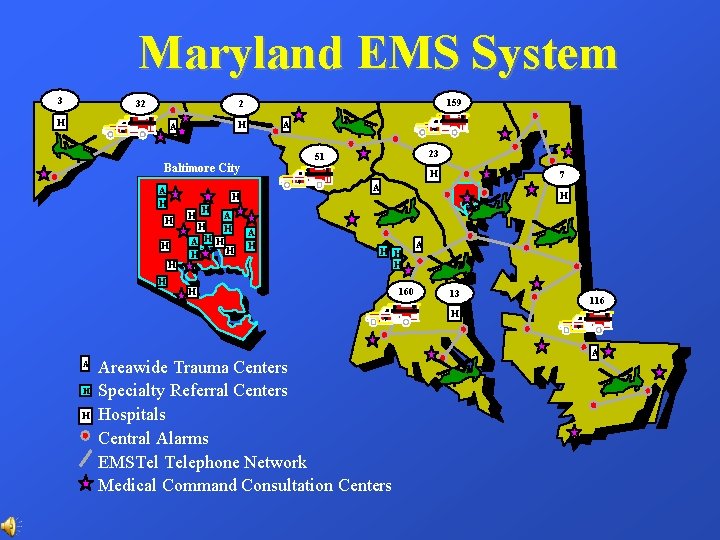
Maryland EMS System 3 32 159 2 H H A A A H H H 7 A H H 23 51 Baltimore City H H A H H H 160 A 13 116 H A H H Areawide Trauma Centers Specialty Referral Centers Hospitals Central Alarms EMSTel Telephone Network Medical Command Consultation Centers A
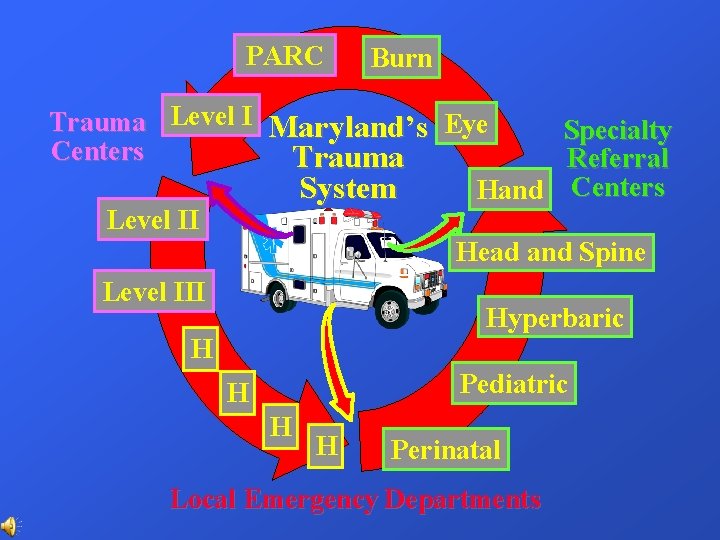
PARC Burn Trauma Level I Maryland’s Eye Specialty Centers Trauma Referral System Hand Centers Level II Head and Spine Level III Hyperbaric H Pediatric H H H Perinatal Local Emergency Departments
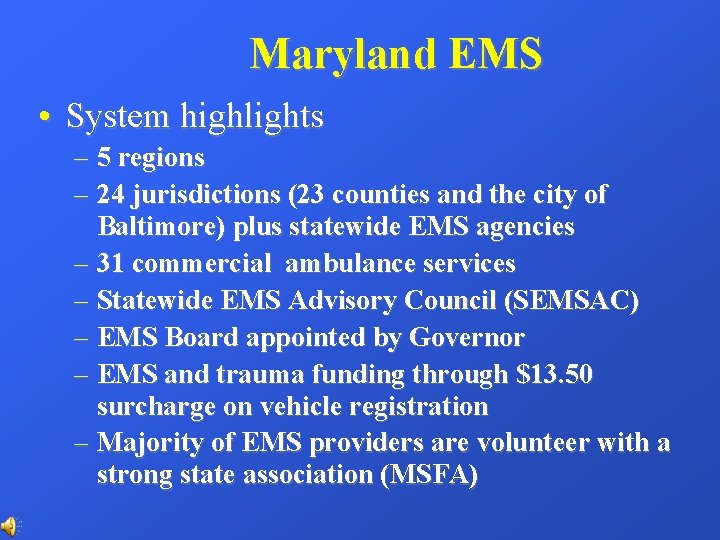
Maryland EMS • System highlights – 5 regions – 24 jurisdictions (23 counties and the city of Baltimore) plus statewide EMS agencies – 31 commercial ambulance services – Statewide EMS Advisory Council (SEMSAC) – EMS Board appointed by Governor – EMS and trauma funding through $13. 50 surcharge on vehicle registration – Majority of EMS providers are volunteer with a strong state association (MSFA)
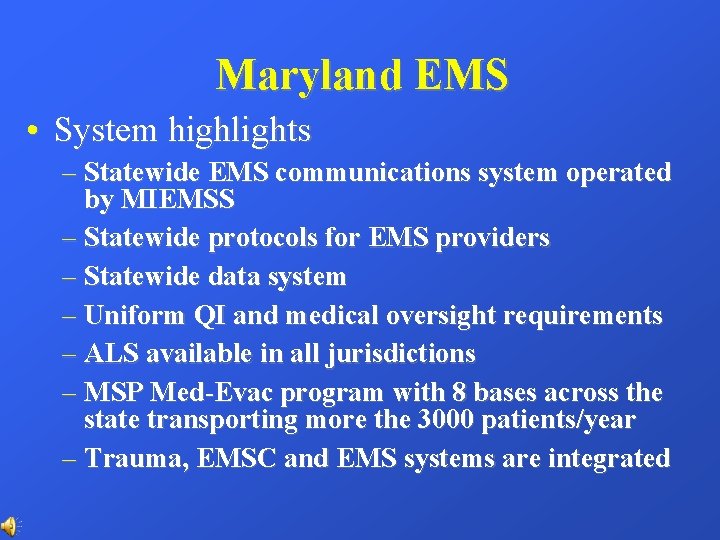
Maryland EMS • System highlights – Statewide EMS communications system operated by MIEMSS – Statewide protocols for EMS providers – Statewide data system – Uniform QI and medical oversight requirements – ALS available in all jurisdictions – MSP Med-Evac program with 8 bases across the state transporting more the 3000 patients/year – Trauma, EMSC and EMS systems are integrated
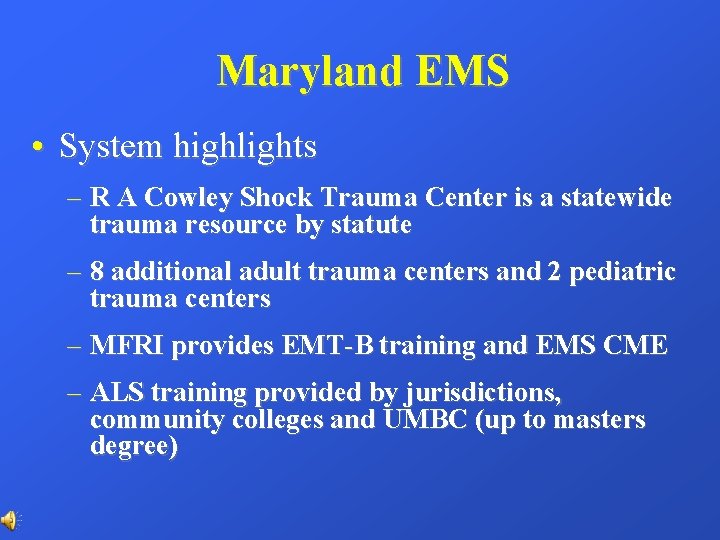
Maryland EMS • System highlights – R A Cowley Shock Trauma Center is a statewide trauma resource by statute – 8 additional adult trauma centers and 2 pediatric trauma centers – MFRI provides EMT-B training and EMS CME – ALS training provided by jurisdictions, community colleges and UMBC (up to masters degree)
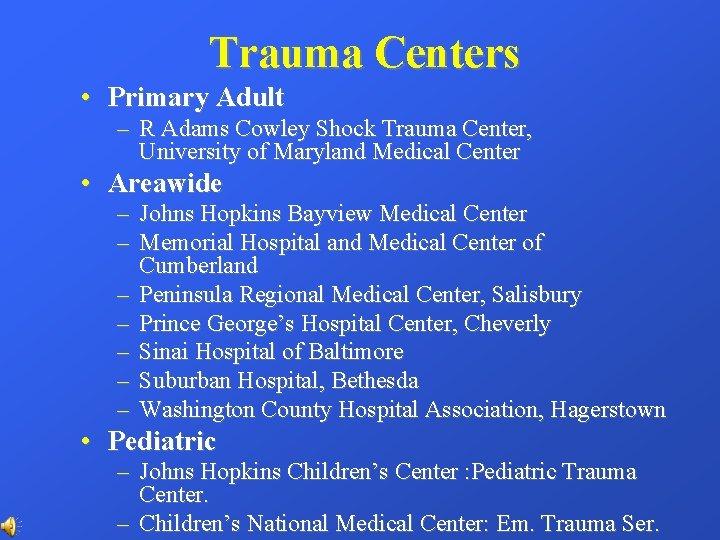
Trauma Centers • Primary Adult – R Adams Cowley Shock Trauma Center, University of Maryland Medical Center • Areawide – Johns Hopkins Bayview Medical Center – Memorial Hospital and Medical Center of Cumberland – Peninsula Regional Medical Center, Salisbury – Prince George’s Hospital Center, Cheverly – Sinai Hospital of Baltimore – Suburban Hospital, Bethesda – Washington County Hospital Association, Hagerstown • Pediatric – Johns Hopkins Children’s Center : Pediatric Trauma Center. – Children’s National Medical Center: Em. Trauma Ser.
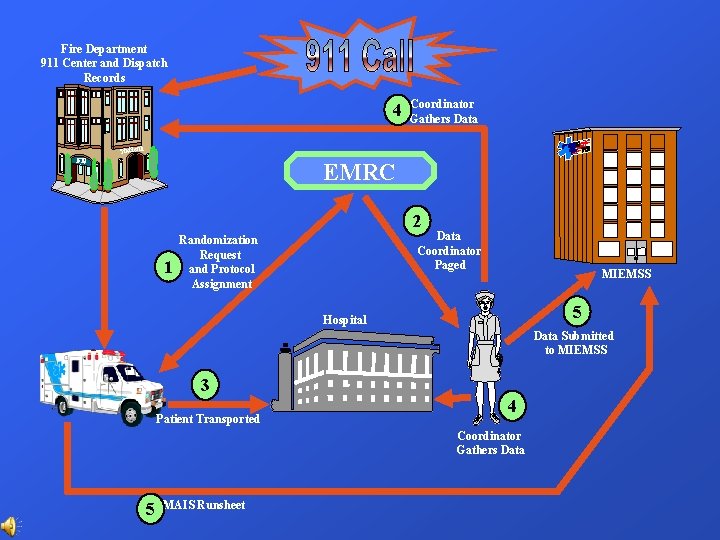
Fire Department 911 Center and Dispatch Records 4 Coordinator Gathers Data Station 1 FD EMRC 2 1 Data Coordinator Paged Randomization Request and Protocol Assignment MIEMSS 5 Hospital Data Submitted to MIEMSS 3 Patient Transported 4 Coordinator Gathers Data 5 MAIS Runsheet
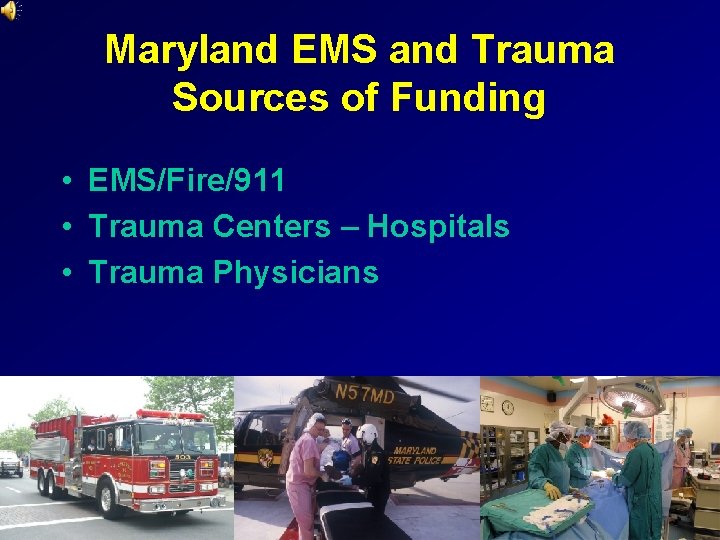
Maryland EMS and Trauma Sources of Funding • EMS/Fire/911 • Trauma Centers – Hospitals • Trauma Physicians
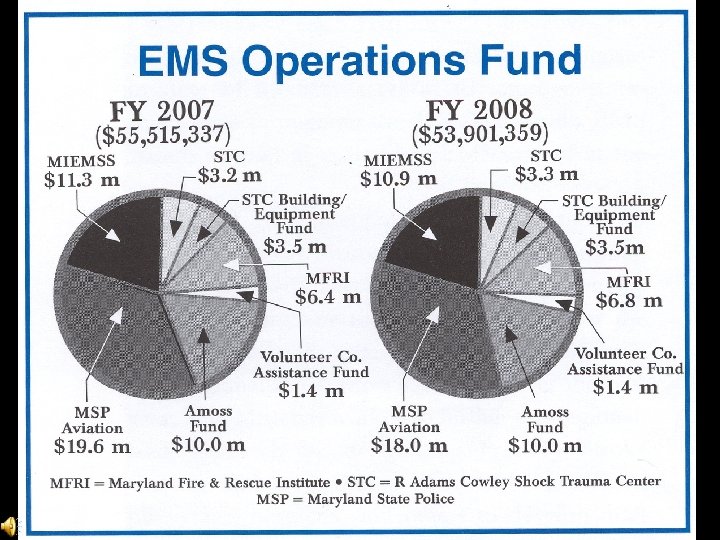
Funding of Trauma Services • Emergency Medical Services Operating Fund (EMSOF) – Helicopter Services – MSFA low-interest loan fund for fire/EMS apparatus for volunteer organizations – STC Stand-by costs/equipment costs unique to role as PARC – MFRI Support
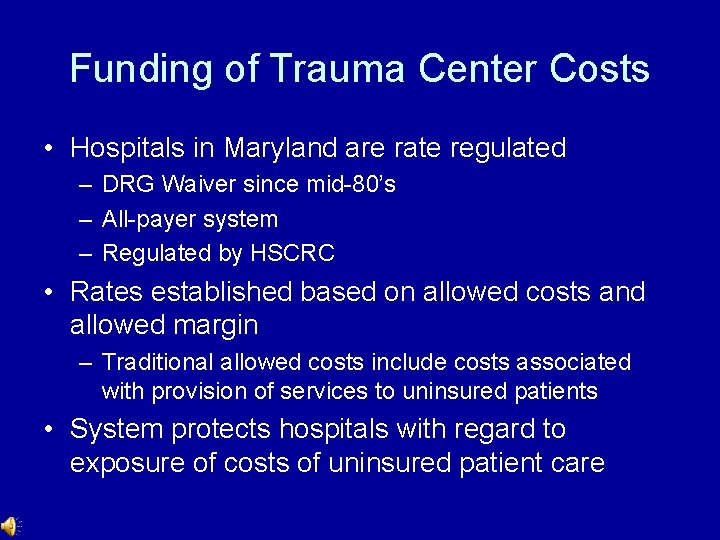
Funding of Trauma Center Costs • Hospitals in Maryland are rate regulated – DRG Waiver since mid-80’s – All-payer system – Regulated by HSCRC • Rates established based on allowed costs and allowed margin – Traditional allowed costs include costs associated with provision of services to uninsured patients • System protects hospitals with regard to exposure of costs of uninsured patient care
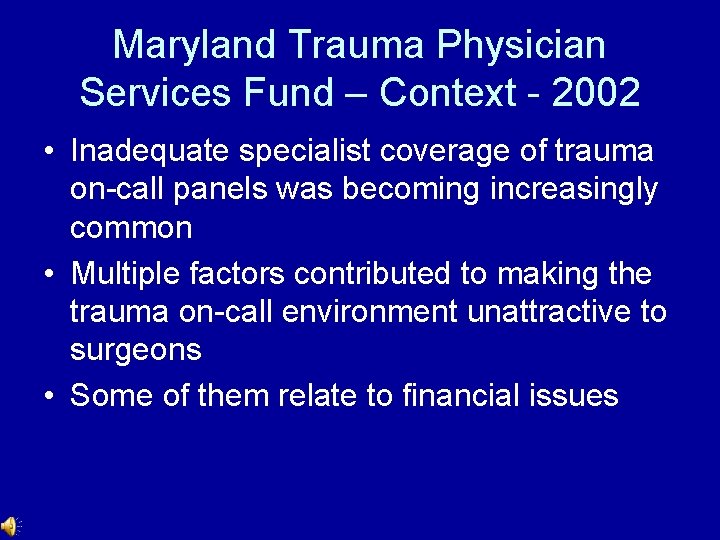
Maryland Trauma Physician Services Fund – Context - 2002 • Inadequate specialist coverage of trauma on-call panels was becoming increasingly common • Multiple factors contributed to making the trauma on-call environment unattractive to surgeons • Some of them relate to financial issues
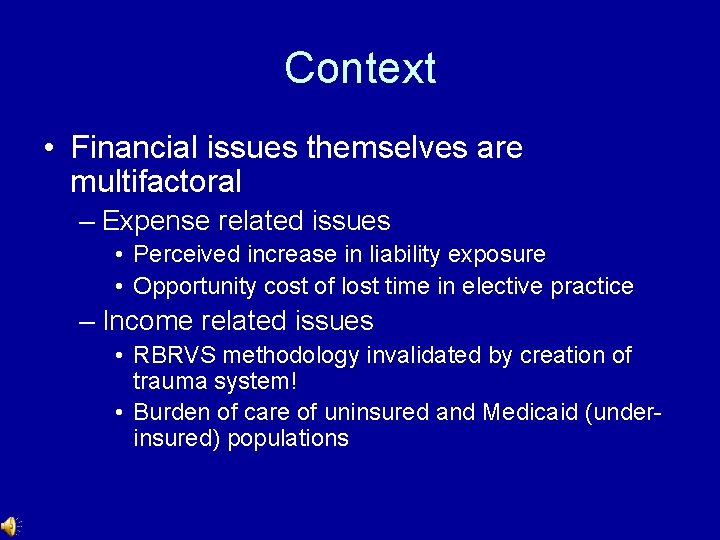
Context • Financial issues themselves are multifactoral – Expense related issues • Perceived increase in liability exposure • Opportunity cost of lost time in elective practice – Income related issues • RBRVS methodology invalidated by creation of trauma system! • Burden of care of uninsured and Medicaid (underinsured) populations
Maryland Trauma System • One model to address one component of the problem of physician coverage at State designated trauma centers – Successful – Links physician care at trauma centers to EMS/Fire/Rescue services – Recognizes trauma care as an essential public service distinct from remainder of traditional health care
Trauma Physician Services • Richly funded statewide trauma EMS system ultimately dependent on quality of physician services provided at trauma centers. • 2001 -2002 Crisis in coverage at Hagerstown led to recognition of need to fund trauma physician services to tip balance back toward facilitation of participation in on-call panels
Maryland Trauma Physician Services Fund • Funded by $2. 50 per year surcharge to state vehicle registration fee • Administered by Maryland Health Care Commission • Provides payment for physician services for trauma patients in trauma registry at state designated trauma centers at Medicare rates
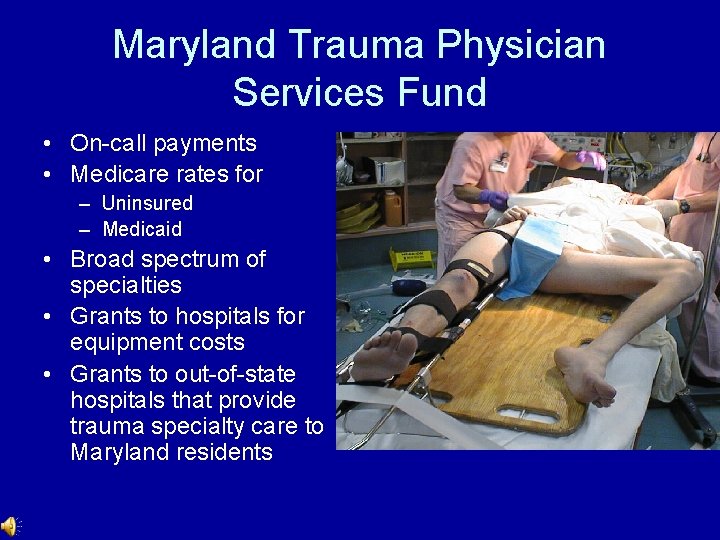
Maryland Trauma Physician Services Fund • On-call payments • Medicare rates for – Uninsured – Medicaid • Broad spectrum of specialties • Grants to hospitals for equipment costs • Grants to out-of-state hospitals that provide trauma specialty care to Maryland residents
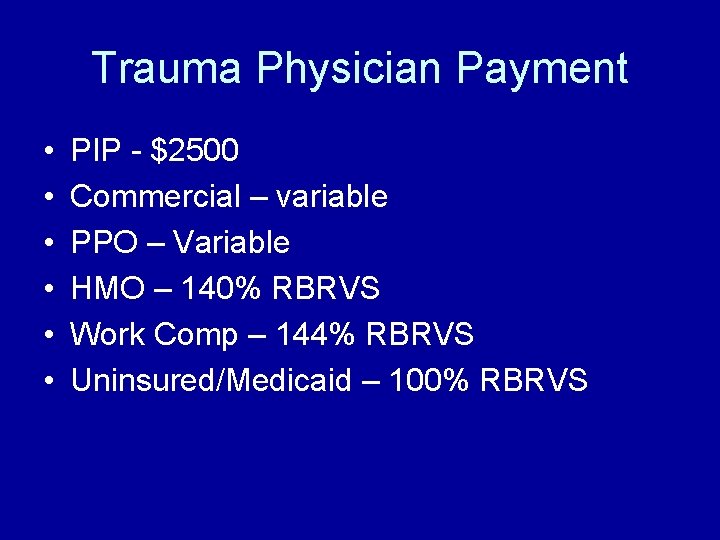
Trauma Physician Payment • • • PIP - $2500 Commercial – variable PPO – Variable HMO – 140% RBRVS Work Comp – 144% RBRVS Uninsured/Medicaid – 100% RBRVS
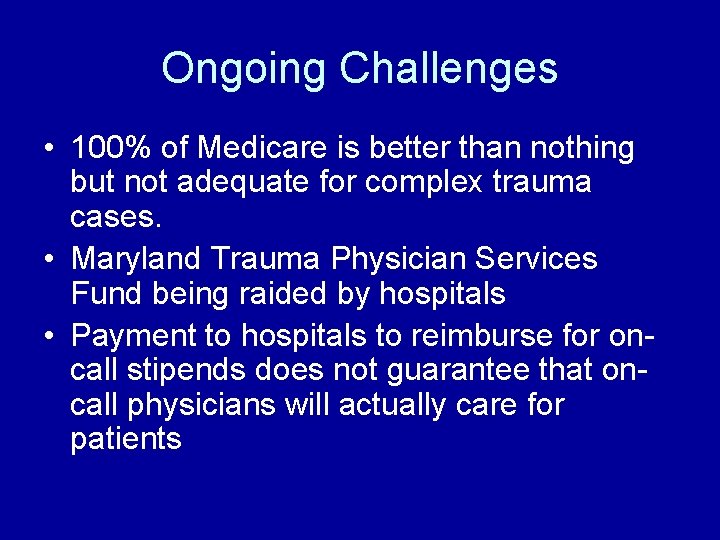
Ongoing Challenges • 100% of Medicare is better than nothing but not adequate for complex trauma cases. • Maryland Trauma Physician Services Fund being raided by hospitals • Payment to hospitals to reimburse for oncall stipends does not guarantee that oncall physicians will actually care for patients
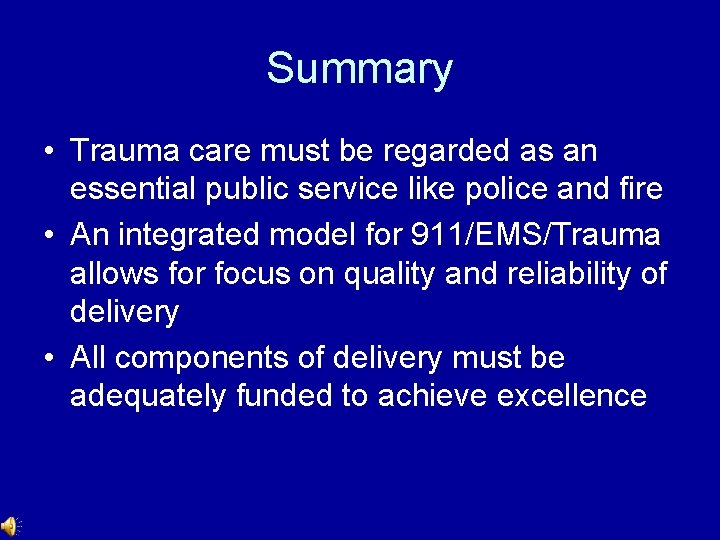
Summary • Trauma care must be regarded as an essential public service like police and fire • An integrated model for 911/EMS/Trauma allows for focus on quality and reliability of delivery • All components of delivery must be adequately funded to achieve excellence
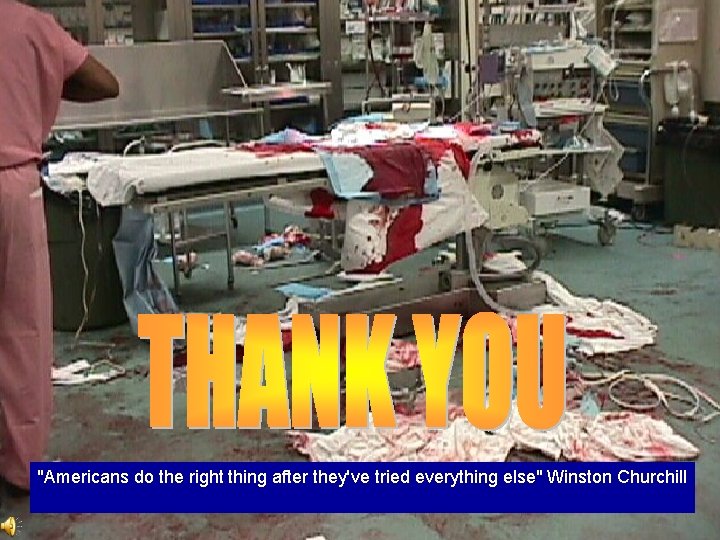
"Americans do the right thing after they've tried everything else" Winston Churchill