A Mathematical Theory of Automatic Target Recognition Aaron

- Slides: 44
A Mathematical Theory of Automatic Target Recognition Aaron D. Lanterman (lanterma@ece. gatech. edu) School of Electrical and Computer Engineering
What Makes ATR “Harder” than Factoring Large Numbers? • Factoring large numbers may be NPhard, but. . . • At least it’s easy to precisely specify what the problem is! • Not so easy in ATR – Subject to controversy
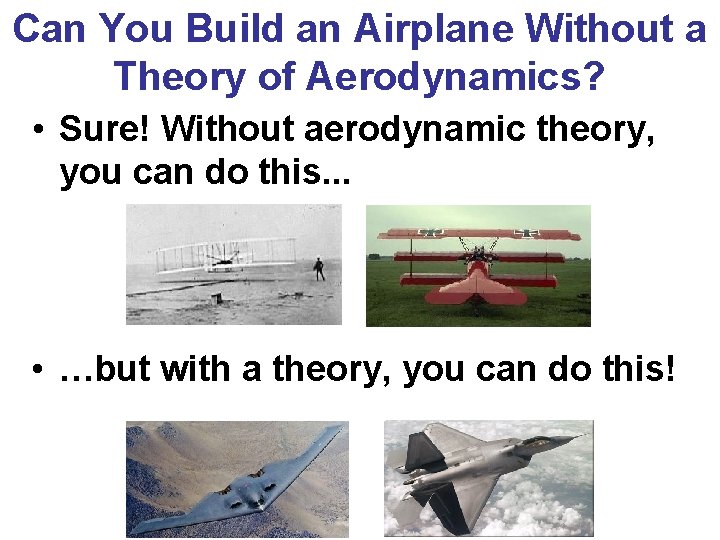
Can You Build an Airplane Without a Theory of Aerodynamics? • Sure! Without aerodynamic theory, you can do this. . . • …but with a theory, you can do this!
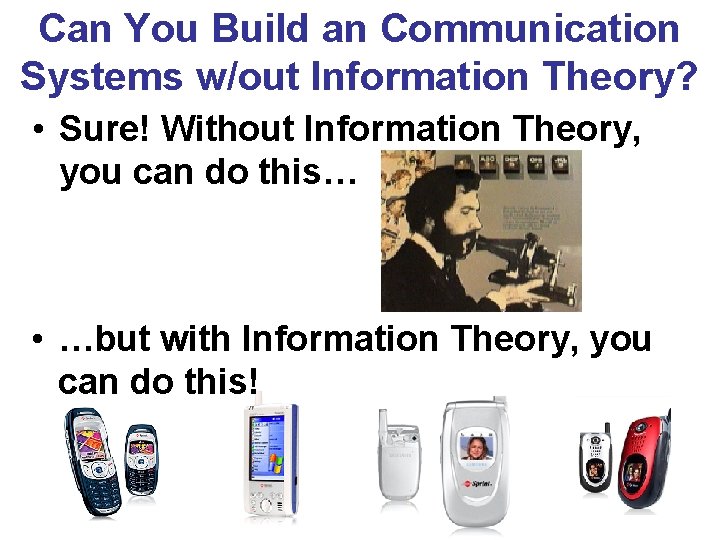
Can You Build an Communication Systems w/out Information Theory? • Sure! Without Information Theory, you can do this… • …but with Information Theory, you can do this!
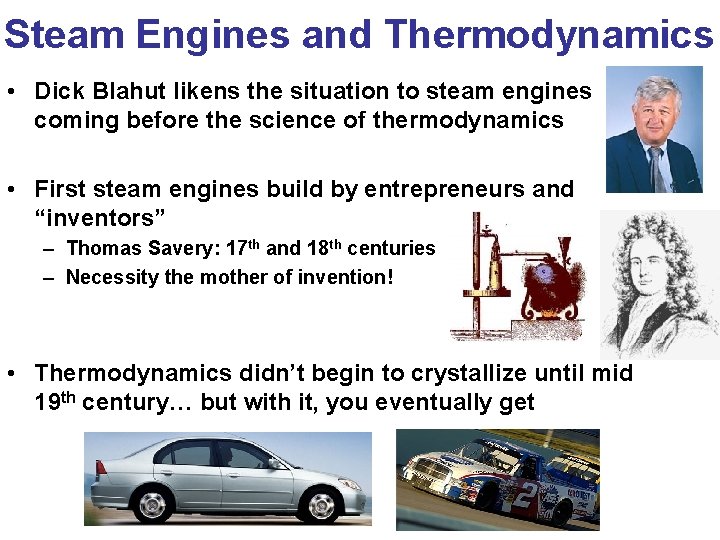
Steam Engines and Thermodynamics • Dick Blahut likens the situation to steam engines coming before the science of thermodynamics • First steam engines build by entrepreneurs and “inventors” – Thomas Savery: 17 th and 18 th centuries – Necessity the mother of invention! • Thermodynamics didn’t begin to crystallize until mid 19 th century… but with it, you eventually get
Shannon’s Lightning Bolt • 1948: Claude Shannon’s “A Mathematical Theory of Communication” (1948) – Later renamed “The Mathematical Theory of Communication” • Found fundamental limits on what is possible, i. e. channel capacity • Before Shannon, your boss might ask you to do the impossible, and fire you if you failed to do it! shouldn’t • Your boss cannot fire your for failing to exceed channel capacity! • You can tell your boss you need a better channel
Theory and Technology • Advances in theory are not enough; also need the technology – Aerodynamic theory alone won’t get you a B-2; need advances in materials, manufacturing – Information theory along won’t get you cell phones; need fast DSP chips, good batteries, even more theory (i. e. coding theory) • Theory tells you what’s possible, but sometimes only hints at how to get there – Quantum computing folks: does this sound familiar?
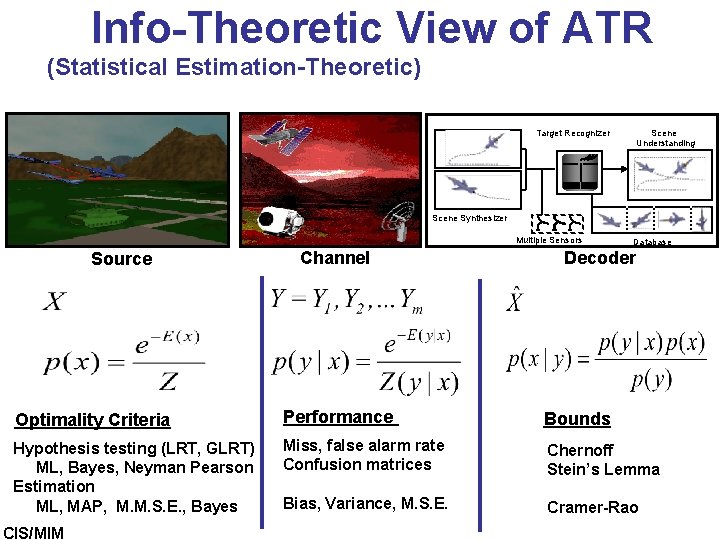
Info-Theoretic View of ATR (Statistical Estimation-Theoretic) Target Recognizer Scene Understanding � Scene Synthesizer Multiple Sensors Source Channel Database Decoder Optimality Criteria Performance Bounds Hypothesis testing (LRT, GLRT) ML, Bayes, Neyman Pearson Estimation ML, MAP, M. M. S. E. , Bayes Miss, false alarm rate Confusion matrices Chernoff Stein’s Lemma Bias, Variance, M. S. E. Cramer-Rao CIS/MIM
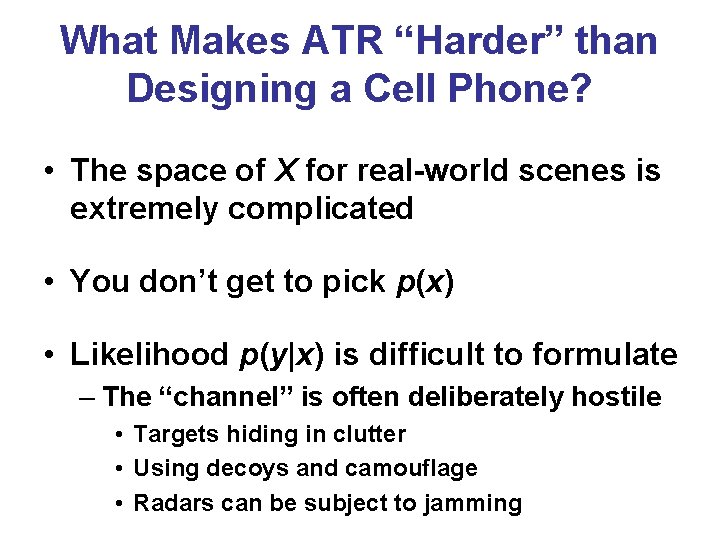
What Makes ATR “Harder” than Designing a Cell Phone? • The space of X for real-world scenes is extremely complicated • You don’t get to pick p(x) • Likelihood p(y|x) is difficult to formulate – The “channel” is often deliberately hostile • Targets hiding in clutter • Using decoys and camouflage • Radars can be subject to jamming
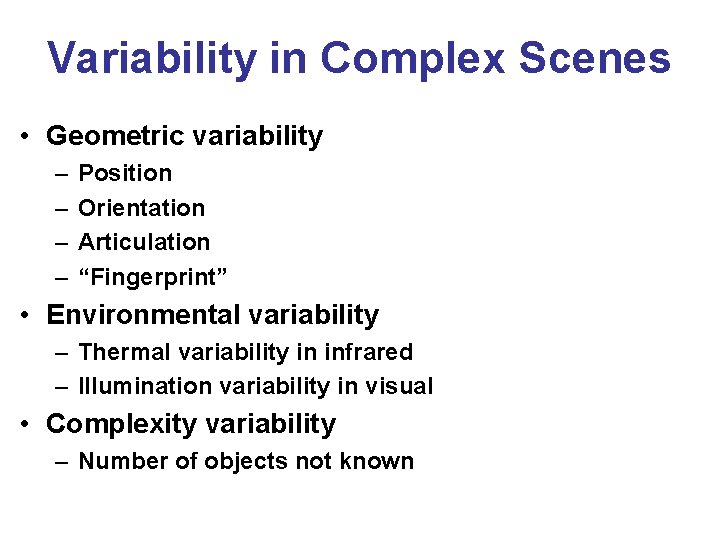
Variability in Complex Scenes • Geometric variability – – Position Orientation Articulation “Fingerprint” • Environmental variability – Thermal variability in infrared – Illumination variability in visual • Complexity variability – Number of objects not known
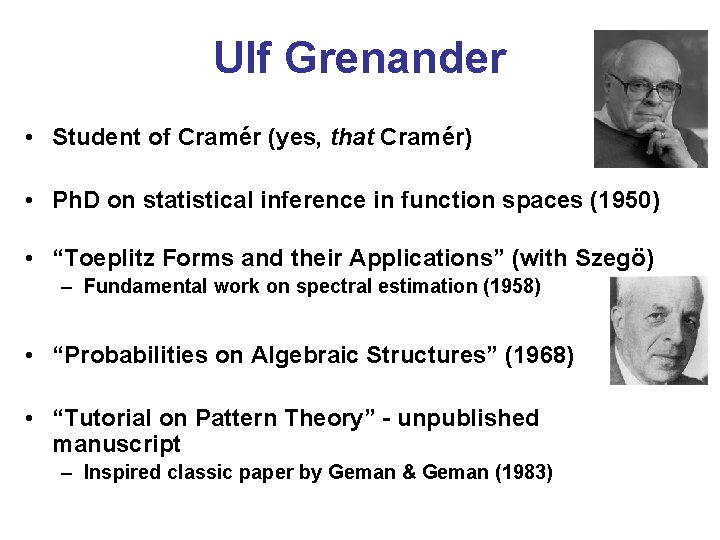
Ulf Grenander • Student of Cramér (yes, that Cramér) • Ph. D on statistical inference in function spaces (1950) • “Toeplitz Forms and their Applications” (with Szegö) – Fundamental work on spectral estimation (1958) • “Probabilities on Algebraic Structures” (1968) • “Tutorial on Pattern Theory” - unpublished manuscript – Inspired classic paper by Geman & Geman (1983)
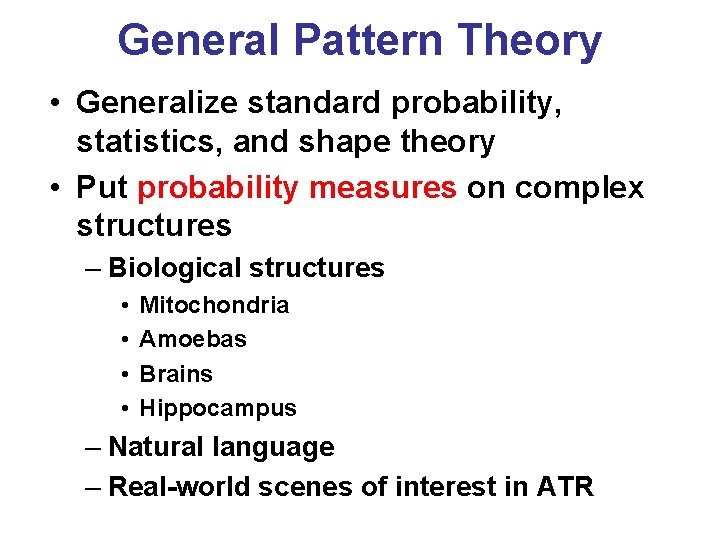
General Pattern Theory • Generalize standard probability, statistics, and shape theory • Put probability measures on complex structures – Biological structures • • Mitochondria Amoebas Brains Hippocampus – Natural language – Real-world scenes of interest in ATR
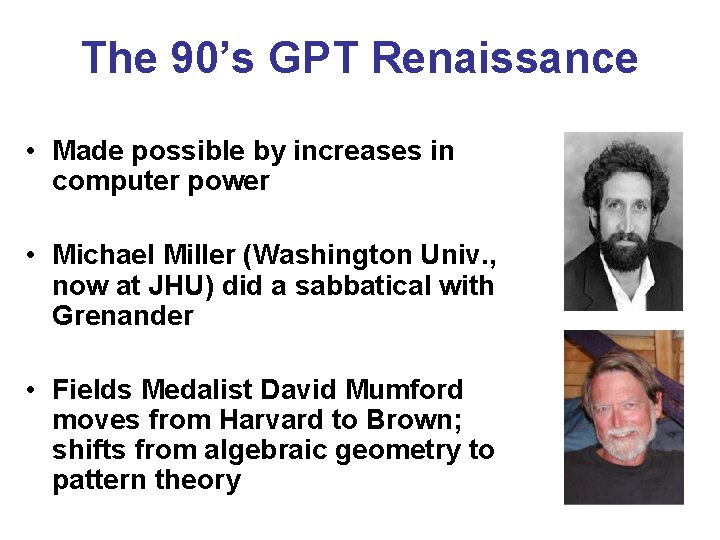
The 90’s GPT Renaissance • Made possible by increases in computer power • Michael Miller (Washington Univ. , now at JHU) did a sabbatical with Grenander • Fields Medalist David Mumford moves from Harvard to Brown; shifts from algebraic geometry to pattern theory
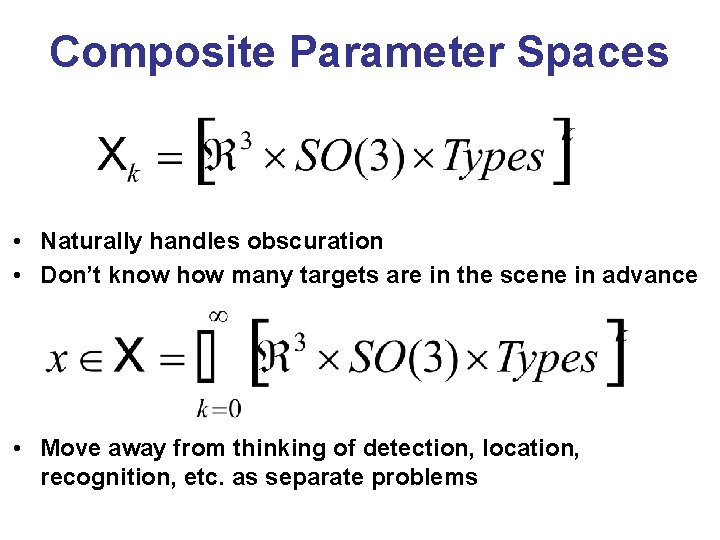
Composite Parameter Spaces • Naturally handles obscuration • Don’t know how many targets are in the scene in advance • Move away from thinking of detection, location, recognition, etc. as separate problems
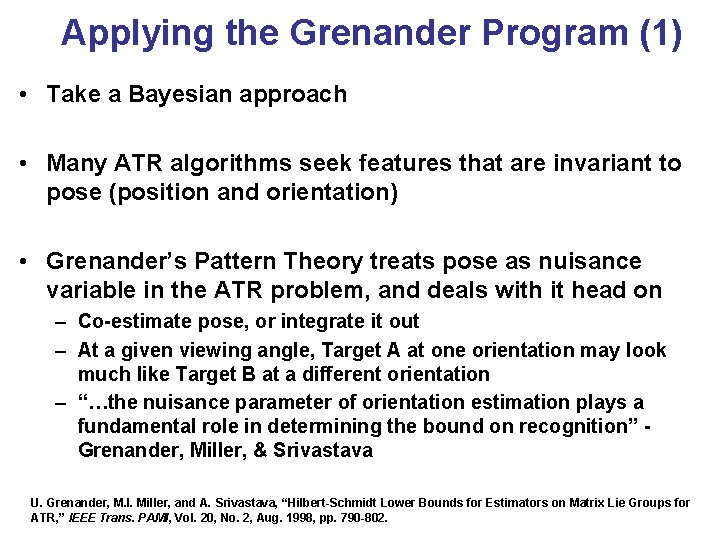
Applying the Grenander Program (1) • Take a Bayesian approach • Many ATR algorithms seek features that are invariant to pose (position and orientation) • Grenander’s Pattern Theory treats pose as nuisance variable in the ATR problem, and deals with it head on – Co-estimate pose, or integrate it out – At a given viewing angle, Target A at one orientation may look much like Target B at a different orientation – “…the nuisance parameter of orientation estimation plays a fundamental role in determining the bound on recognition” Grenander, Miller, & Srivastava U. Grenander, M. I. Miller, and A. Srivastava, “Hilbert-Schmidt Lower Bounds for Estimators on Matrix Lie Groups for ATR, ” IEEE Trans. PAMI, Vol. 20, No. 2, Aug. 1998, pp. 790 -802.
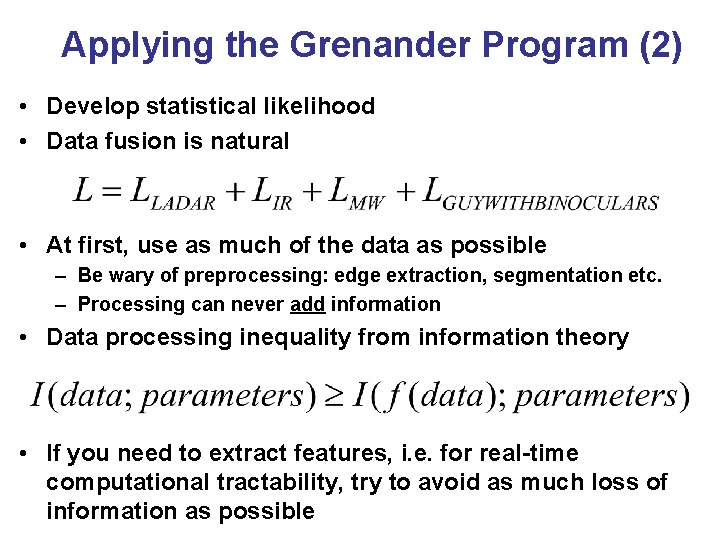
Applying the Grenander Program (2) • Develop statistical likelihood • Data fusion is natural • At first, use as much of the data as possible – Be wary of preprocessing: edge extraction, segmentation etc. – Processing can never add information • Data processing inequality from information theory • If you need to extract features, i. e. for real-time computational tractability, try to avoid as much loss of information as possible
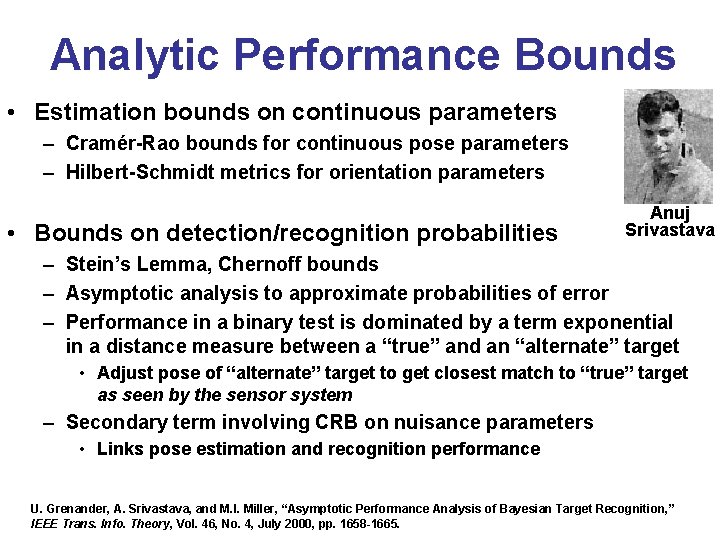
Analytic Performance Bounds • Estimation bounds on continuous parameters – Cramér-Rao bounds for continuous pose parameters – Hilbert-Schmidt metrics for orientation parameters • Bounds on detection/recognition probabilities Anuj Srivastava – Stein’s Lemma, Chernoff bounds – Asymptotic analysis to approximate probabilities of error – Performance in a binary test is dominated by a term exponential in a distance measure between a “true” and an “alternate” target • Adjust pose of “alternate” target to get closest match to “true” target as seen by the sensor system – Secondary term involving CRB on nuisance parameters • Links pose estimation and recognition performance U. Grenander, A. Srivastava, and M. I. Miller, “Asymptotic Performance Analysis of Bayesian Target Recognition, ” IEEE Trans. Info. Theory, Vol. 46, No. 4, July 2000, pp. 1658 -1665.
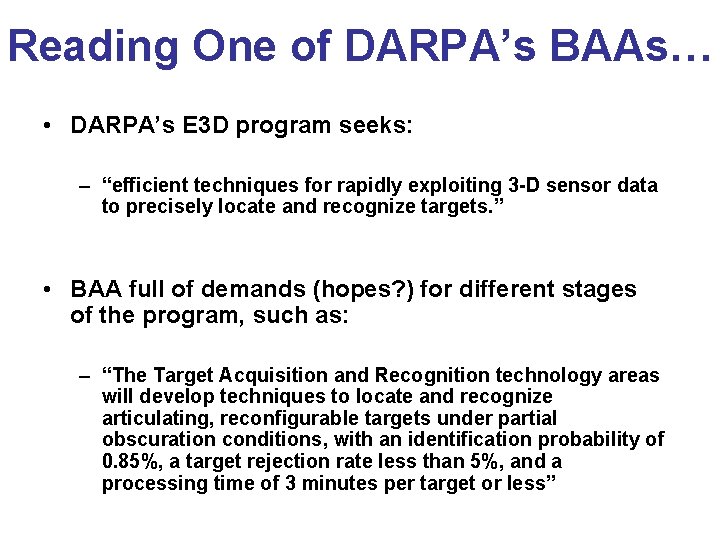
Reading One of DARPA’s BAAs… • DARPA’s E 3 D program seeks: – “efficient techniques for rapidly exploiting 3 -D sensor data to precisely locate and recognize targets. ” • BAA full of demands (hopes? ) for different stages of the program, such as: – “The Target Acquisition and Recognition technology areas will develop techniques to locate and recognize articulating, reconfigurable targets under partial obscuration conditions, with an identification probability of 0. 85%, a target rejection rate less than 5%, and a processing time of 3 minutes per target or less”
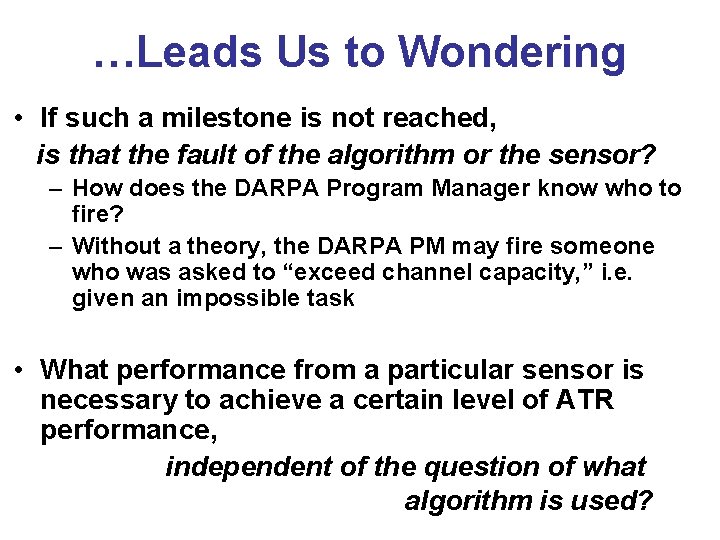
…Leads Us to Wondering • If such a milestone is not reached, is that the fault of the algorithm or the sensor? – How does the DARPA Program Manager know who to fire? – Without a theory, the DARPA PM may fire someone who was asked to “exceed channel capacity, ” i. e. given an impossible task • What performance from a particular sensor is necessary to achieve a certain level of ATR performance, independent of the question of what algorithm is used?
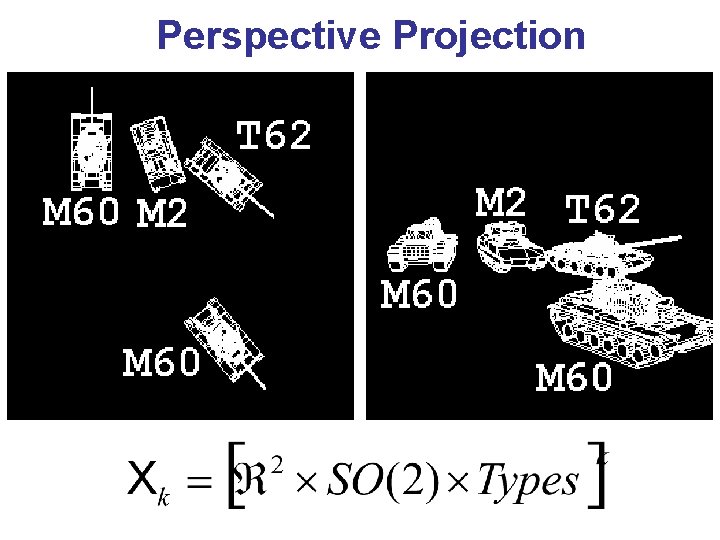
Perspective Projection
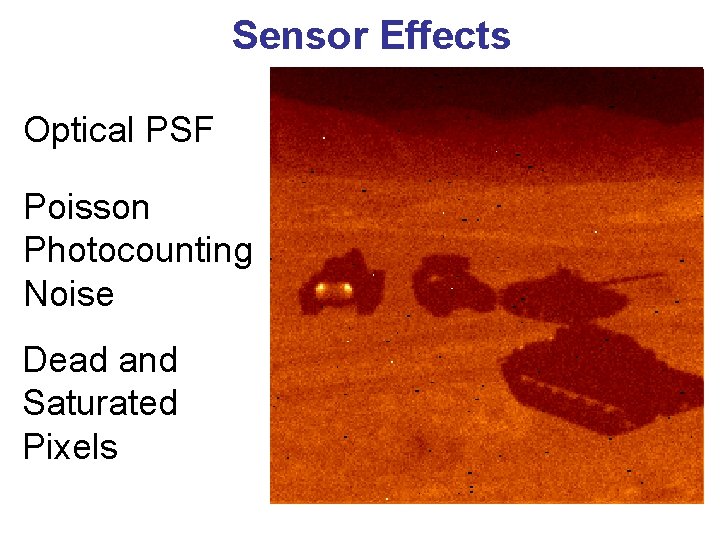
Sensor Effects Optical PSF Poisson Photocounting Noise Dead and Saturated Pixels
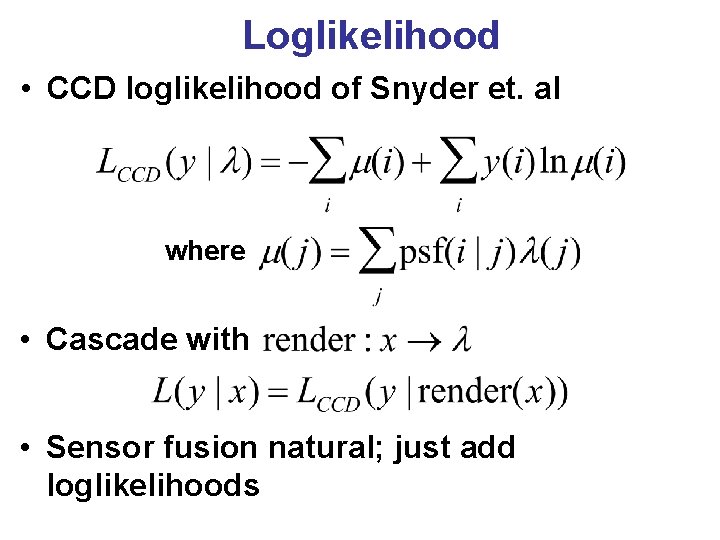
Loglikelihood • CCD loglikelihood of Snyder et. al where • Cascade with • Sensor fusion natural; just add loglikelihoods
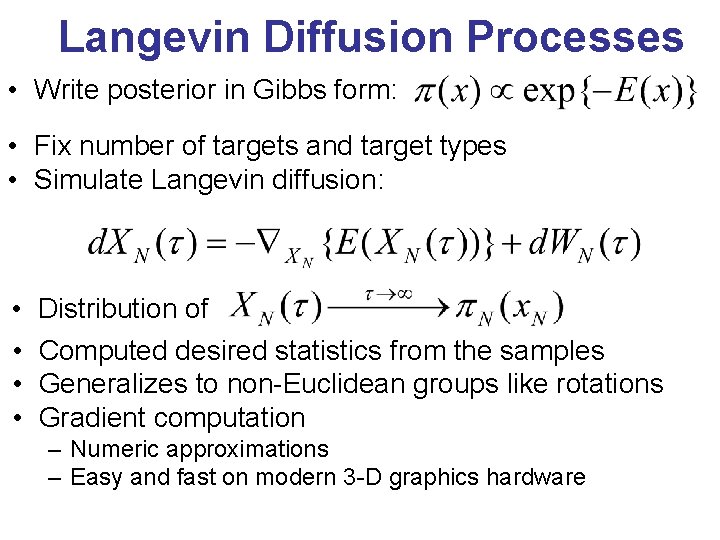
Langevin Diffusion Processes • Write posterior in Gibbs form: • Fix number of targets and target types • Simulate Langevin diffusion: • • Distribution of Computed desired statistics from the samples Generalizes to non-Euclidean groups like rotations Gradient computation – Numeric approximations – Easy and fast on modern 3 -D graphics hardware
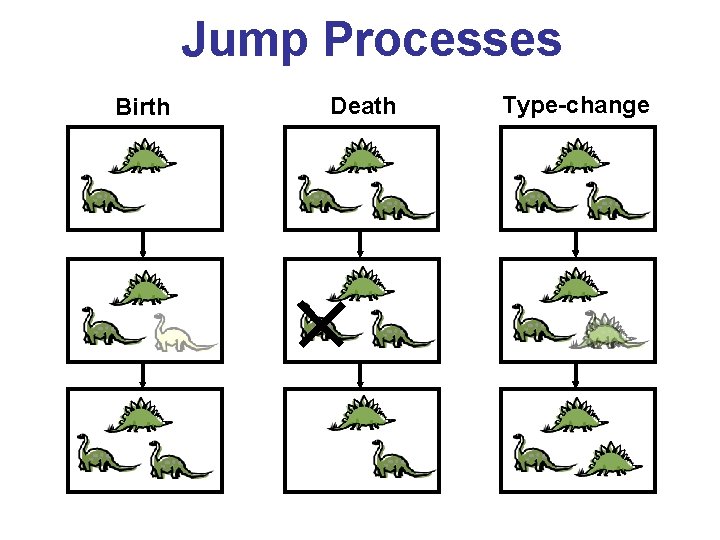
Jump Processes Birth Death Type-change
Jump Strategies • Gibbs style – Sample from a restricted part of the posterior • Metropolis-Hastings style – Draw a “proposal” from a “proposal density” – Accept (or reject) the proposal with a certain probability
Example Jump-Diffusion Process
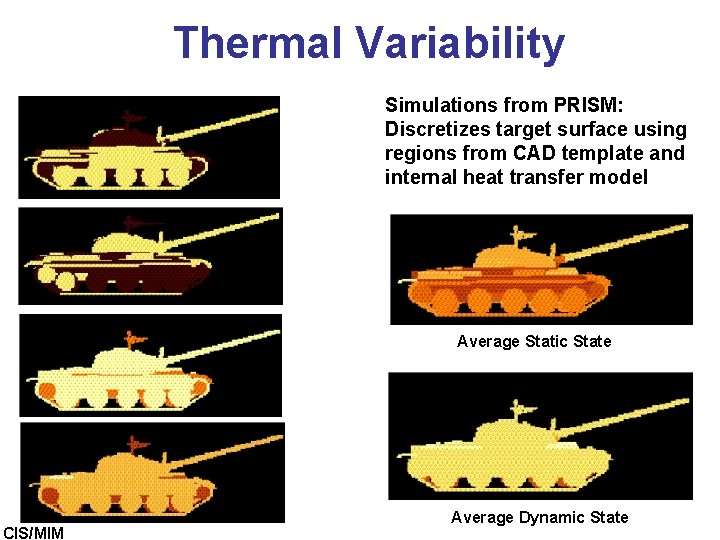
Thermal Variability Simulations from PRISM: Discretizes target surface using regions from CAD template and internal heat transfer model Average Static State CIS/MIM Average Dynamic State
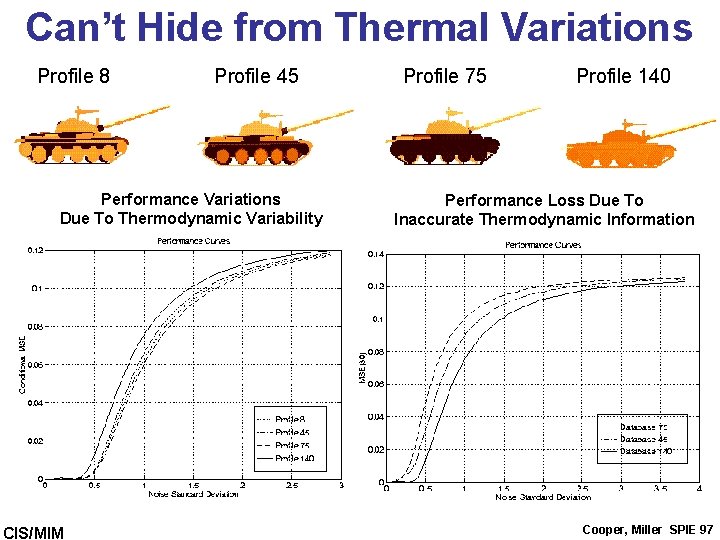
Can’t Hide from Thermal Variations Profile 8 Profile 45 Performance Variations Due To Thermodynamic Variability CIS/MIM Profile 75 Profile 140 Performance Loss Due To Inaccurate Thermodynamic Information Cooper, Miller SPIE 97
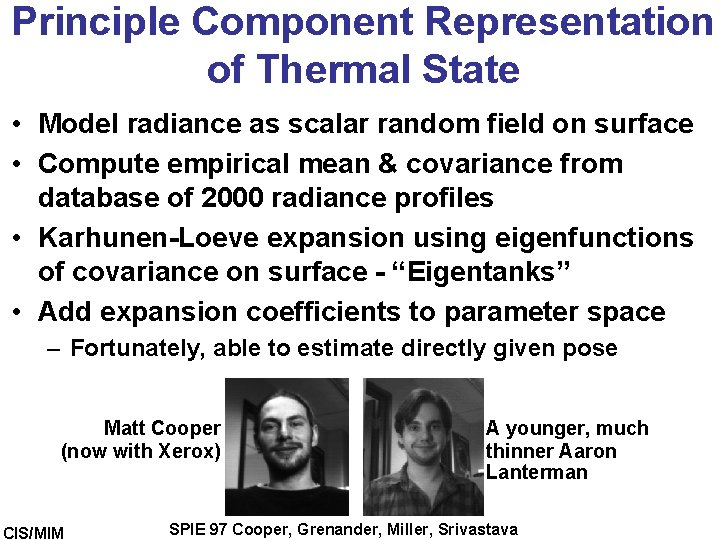
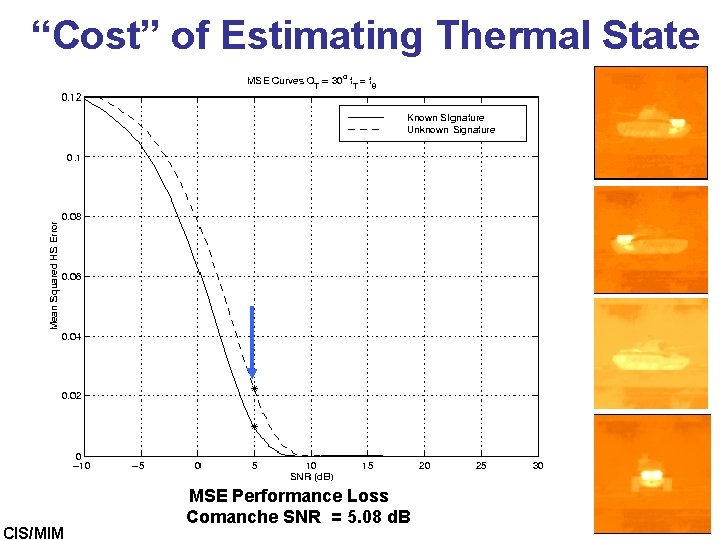
Principle Component Representation of Thermal State • Model radiance as scalar random field on surface • Compute empirical mean & covariance from database of 2000 radiance profiles • Karhunen-Loeve expansion using eigenfunctions of covariance on surface - “Eigentanks” • Add expansion coefficients to parameter space – Fortunately, able to estimate directly given pose Matt Cooper (now with Xerox) CIS/MIM A younger, much thinner Aaron Lanterman SPIE 97 Cooper, Grenander, Miller, Srivastava
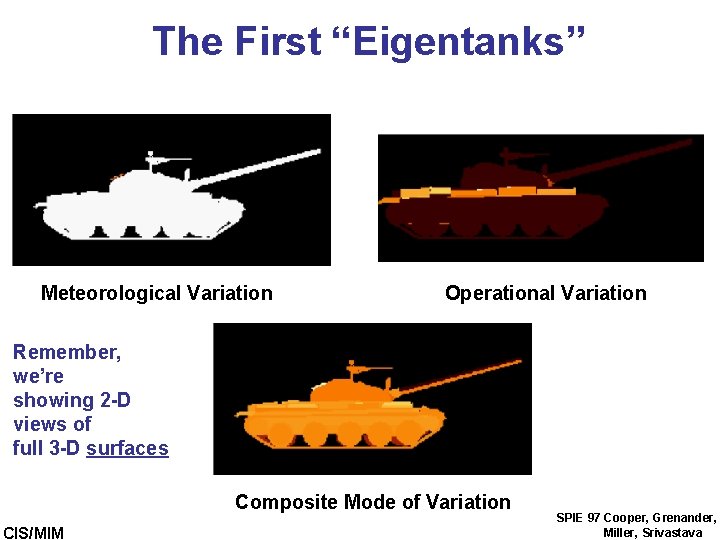
The First “Eigentanks” Meteorological Variation Operational Variation Remember, we’re showing 2 -D views of full 3 -D surfaces Composite Mode of Variation CIS/MIM SPIE 97 Cooper, Grenander, Miller, Srivastava
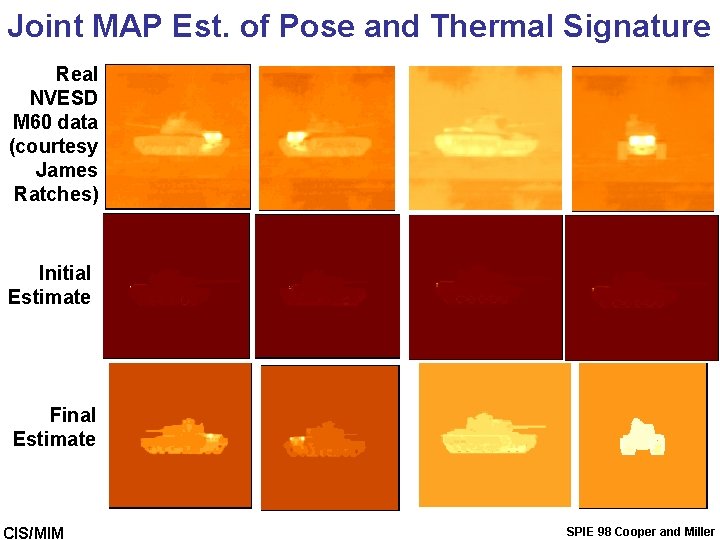
Joint MAP Est. of Pose and Thermal Signature Real NVESD M 60 data (courtesy James Ratches) Initial Estimate Final Estimate CIS/MIM SPIE 98 Cooper and Miller
“Cost” of Estimating Thermal State CIS/MIM MSE Performance Loss Comanche SNR = 5. 08 d. B
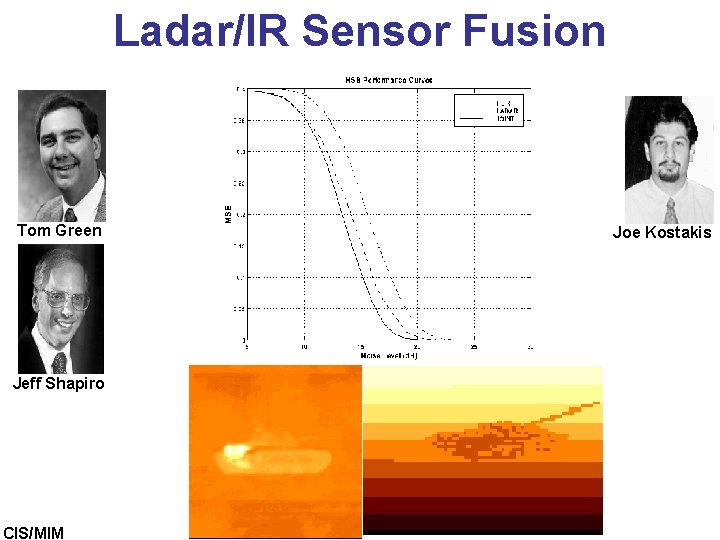
Ladar/IR Sensor Fusion MSE Performance Bound Information Bound Tom Green Joe Kostakis Jeff Shapiro FLIR (intensity) CIS/MIM LADAR (range)
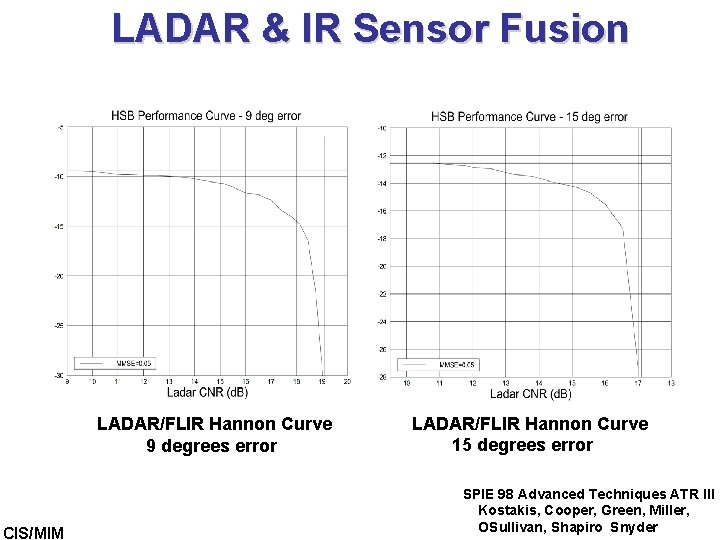
LADAR & IR Sensor Fusion LADAR/FLIR Hannon Curve 9 degrees error CIS/MIM LADAR/FLIR Hannon Curve 15 degrees error SPIE 98 Advanced Techniques ATR III Kostakis, Cooper, Green, Miller, OSullivan, Shapiro Snyder
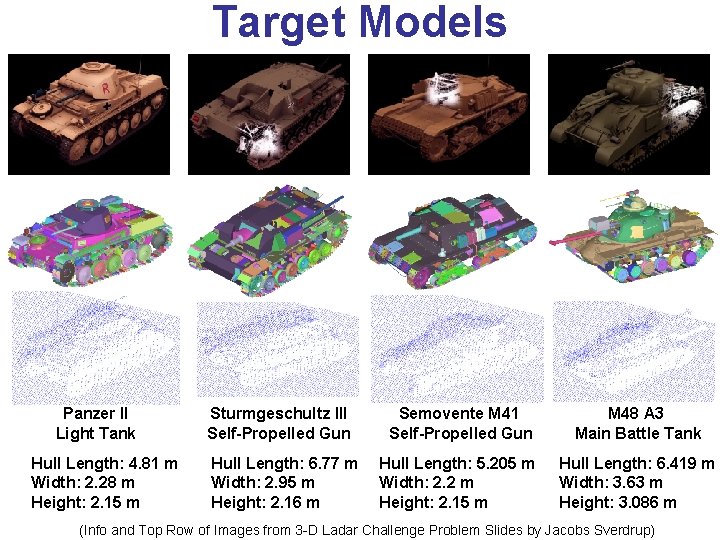
Target Models Panzer II Light Tank Hull Length: 4. 81 m Width: 2. 28 m Height: 2. 15 m Sturmgeschultz III Self-Propelled Gun Hull Length: 6. 77 m Width: 2. 95 m Height: 2. 16 m Semovente M 41 Self-Propelled Gun M 48 A 3 Main Battle Tank Hull Length: 5. 205 m Width: 2. 2 m Height: 2. 15 m Hull Length: 6. 419 m Width: 3. 63 m Height: 3. 086 m (Info and Top Row of Images from 3 -D Ladar Challenge Problem Slides by Jacobs Sverdrup)
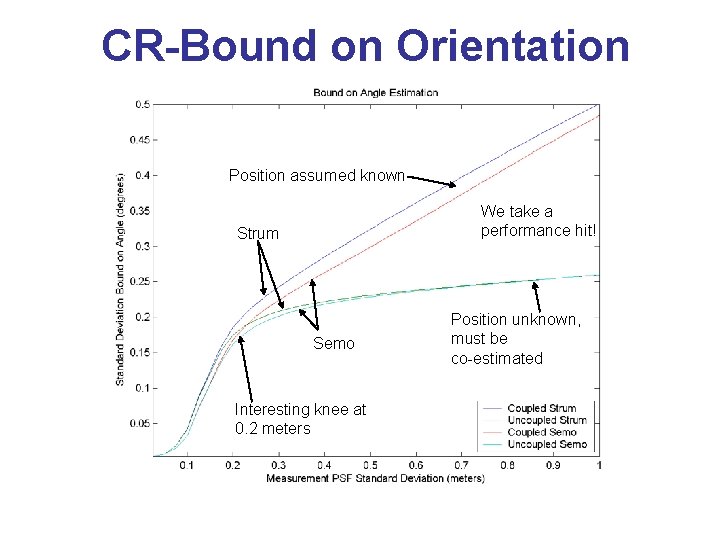
CR-Bound on Orientation Position assumed known We take a performance hit! Strum Semo Interesting knee at 0. 2 meters Position unknown, must be co-estimated
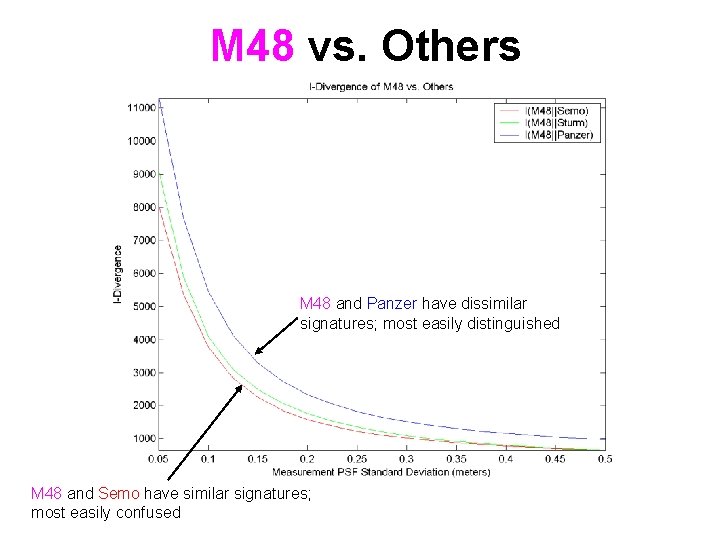
M 48 vs. Others M 48 and Panzer have dissimilar signatures; most easily distinguished M 48 and Semo have similar signatures; most easily confused
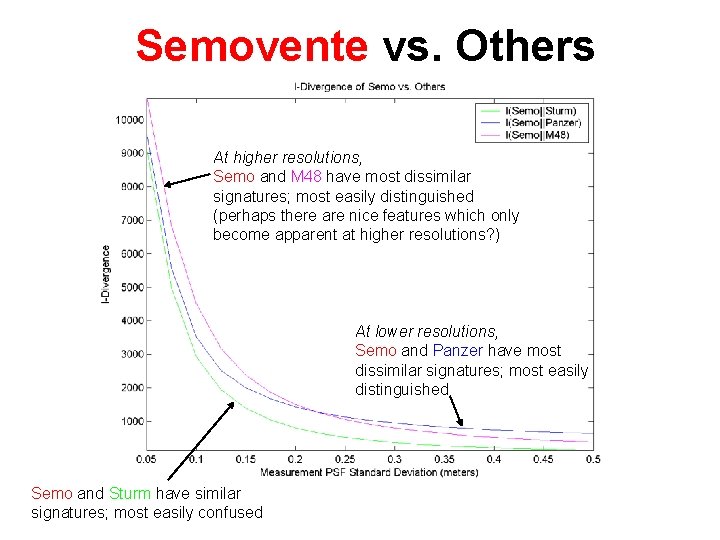
Semovente vs. Others At higher resolutions, Semo and M 48 have most dissimilar signatures; most easily distinguished (perhaps there are nice features which only become apparent at higher resolutions? ) At lower resolutions, Semo and Panzer have most dissimilar signatures; most easily distinguished Semo and Sturm have similar signatures; most easily confused
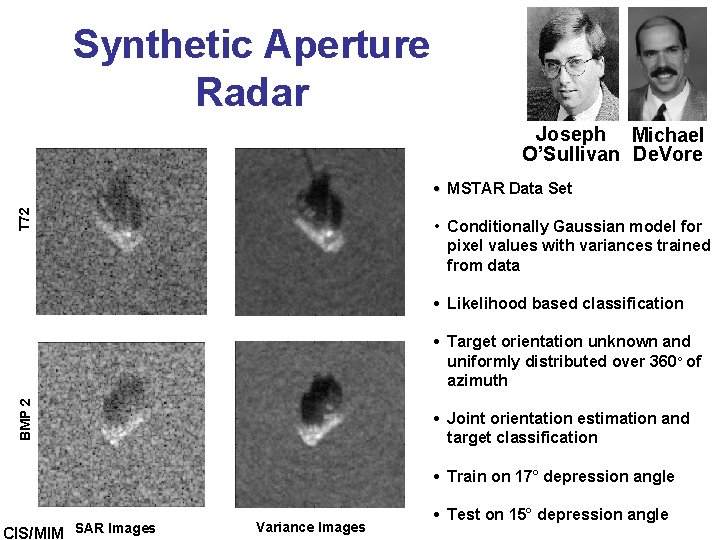
Synthetic Aperture Radar Joseph Michael O’Sullivan De. Vore T 72 • MSTAR Data Set • Conditionally Gaussian model for pixel values with variances trained from data • Likelihood based classification BMP 2 • Target orientation unknown and uniformly distributed over 360° of azimuth • Joint orientation estimation and target classification • Train on 17° depression angle CIS/MIM SAR Images Variance Images • Test on 15° depression angle
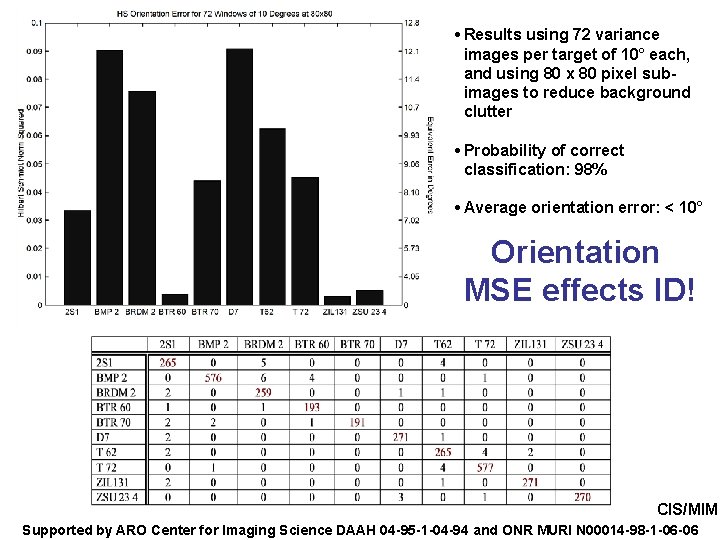
• Results using 72 variance images per target of 10° each, and using 80 x 80 pixel subimages to reduce background clutter • Probability of correct classification: 98% • Average orientation error: < 10° Orientation MSE effects ID! CIS/MIM Supported by ARO Center for Imaging Science DAAH 04 -95 -1 -04 -94 and ONR MURI N 00014 -98 -1 -06 -06
Caveat Do not confuse the model with reality.
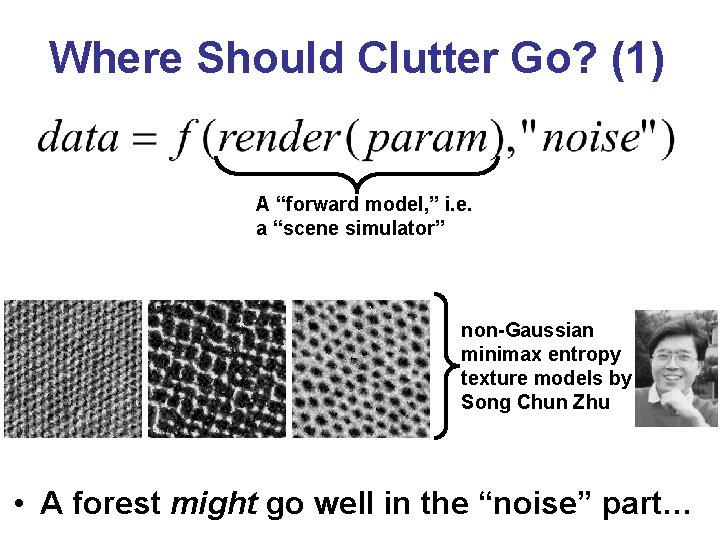
Where Should Clutter Go? (1) A “forward model, ” i. e. a “scene simulator” non-Gaussian minimax entropy texture models by Song Chun Zhu • A forest might go well in the “noise” part…
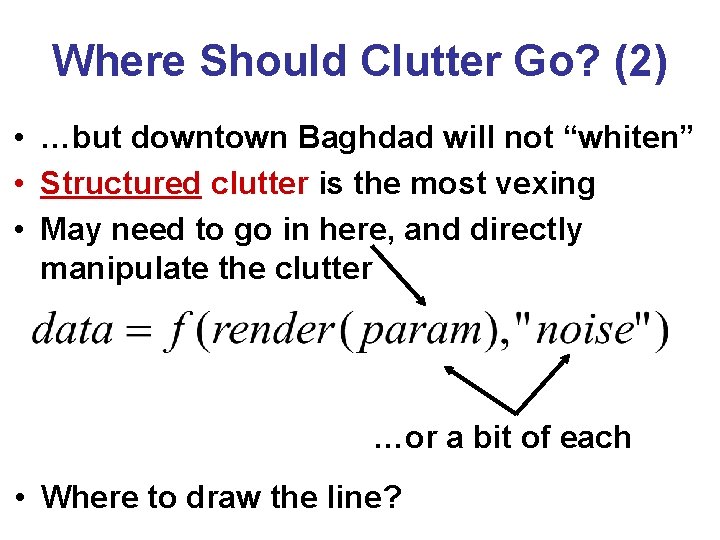
Where Should Clutter Go? (2) • …but downtown Baghdad will not “whiten” • Structured clutter is the most vexing • May need to go in here, and directly manipulate the clutter …or a bit of each • Where to draw the line?
Acknowledgments • Much of the work described here was funded by the ARO Center for Imaging Science • Also ONR (William Miceli) and AFOSR (Jon Sjogren) • Slides with CIS/MIM tag were adapted from slides provided by Michael Miller