ZOONOSES AND PARASITIC DISEASES TW apiski Department of



- Slides: 34
ZOONOSES AND PARASITIC DISEASES. TW Łapiński Department of Infectious Diseases and Hepatology Medical University of Bialystok
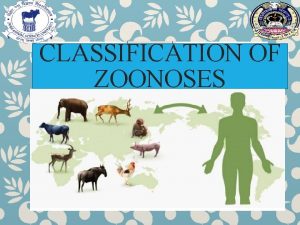
PARASITISM It is a form of antagonistic coexistence of two organisms, one of which benefits from intercourse and the other suffers harm. ZOONOSIS These are diseases that are transmitted to humans through direct contact, products of animal origin, and occasionally also by air
HUMAN PARASITES - QUALIFICATION In terms of living place internal parasites external parasites Dependence of the parasite on the host absolute parasites (broad furrow, dab bum) relative or accidental parasites (intestinal nematode) The necessities of parasitism during individual development solid parasites live throughout the life in the same host (Trichinella spiralis, Toxocara sp. ) periodic parasites (Ancylostoma duodenale - hookworm duodenal) According to the systematics Protozoa (Giardia lamblia, Entamoeba histolytica) Platyhelminths (flukes, tapeworms) Roundworms (Enteriobius vermicularis, Ascaris lumbricoides, Trichiuris trichiura, Trichinella spriralis, Ancylostoma duodenale) Arthropods (scabies, human lice, bedbugs, insects "biting" like flies or mosquitoes)
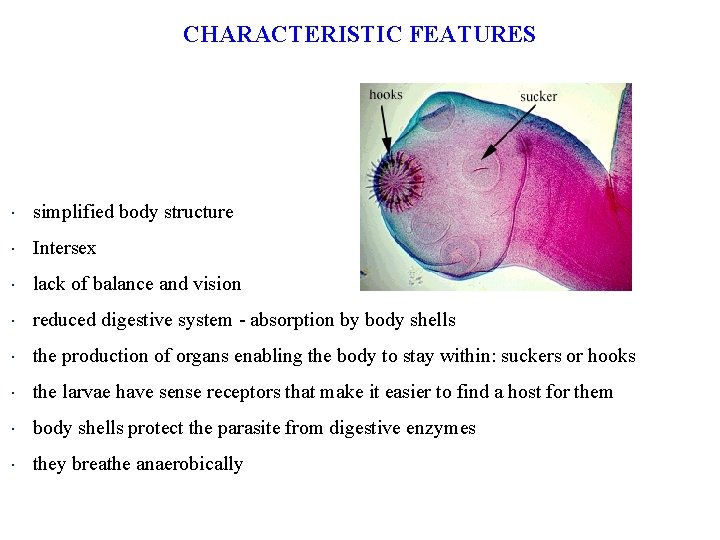
CHARACTERISTIC FEATURES simplified body structure Intersex lack of balance and vision reduced digestive system - absorption by body shells the production of organs enabling the body to stay within: suckers or hooks the larvae have sense receptors that make it easier to find a host for them body shells protect the parasite from digestive enzymes they breathe anaerobically
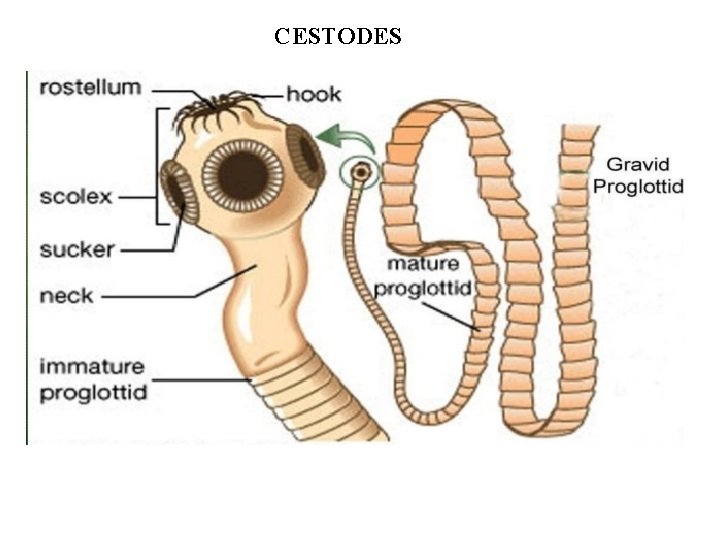
CESTODES
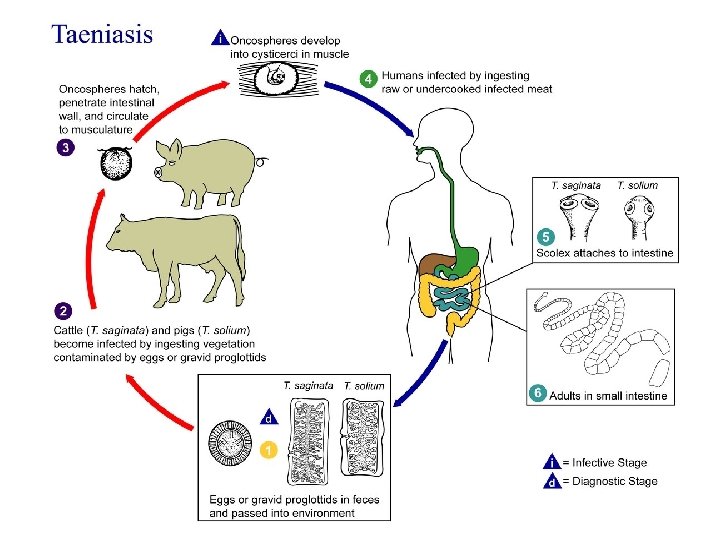
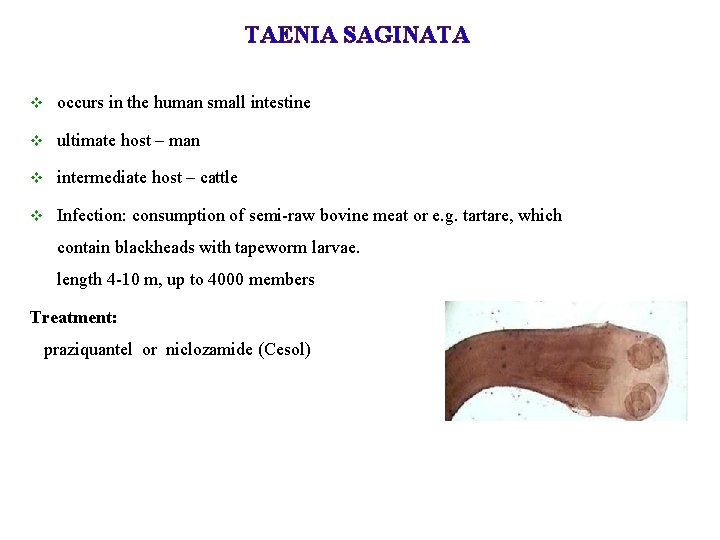
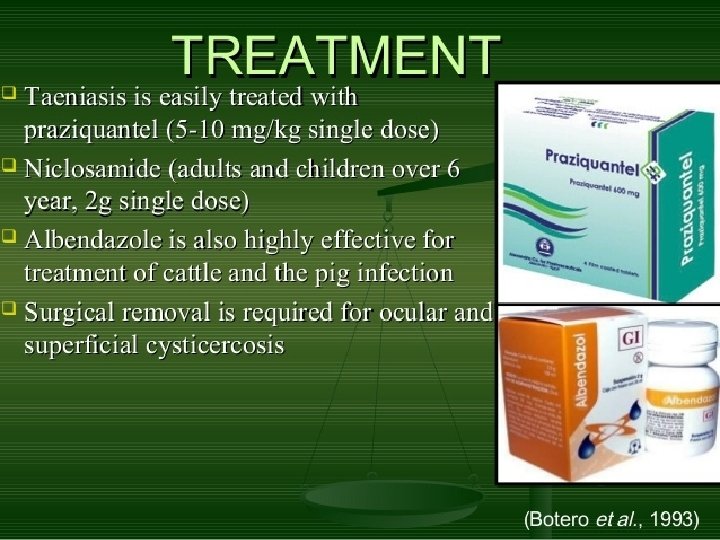
TAENIA SAGINATA v occurs in the human small intestine v ultimate host – man v intermediate host – cattle v Infection: consumption of semi-raw bovine meat or e. g. tartare, which contain blackheads with tapeworm larvae. length 4 -10 m, up to 4000 members Treatment: praziquantel or niclozamide (Cesol)
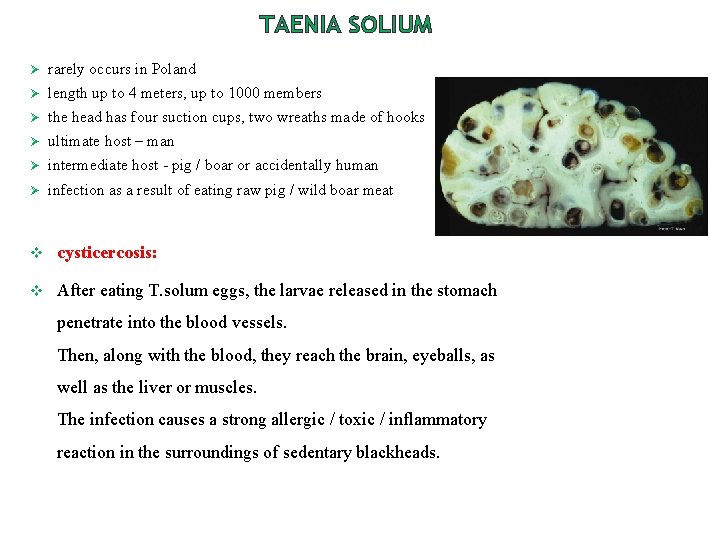
TAENIA SOLIUM Ø rarely occurs in Poland Ø length up to 4 meters, up to 1000 members Ø the head has four suction cups, two wreaths made of hooks Ø ultimate host – man Ø intermediate host - pig / boar or accidentally human Ø infection as a result of eating raw pig / wild boar meat v cysticercosis: v After eating T. solum eggs, the larvae released in the stomach penetrate into the blood vessels. Then, along with the blood, they reach the brain, eyeballs, as well as the liver or muscles. The infection causes a strong allergic / toxic / inflammatory reaction in the surroundings of sedentary blackheads.
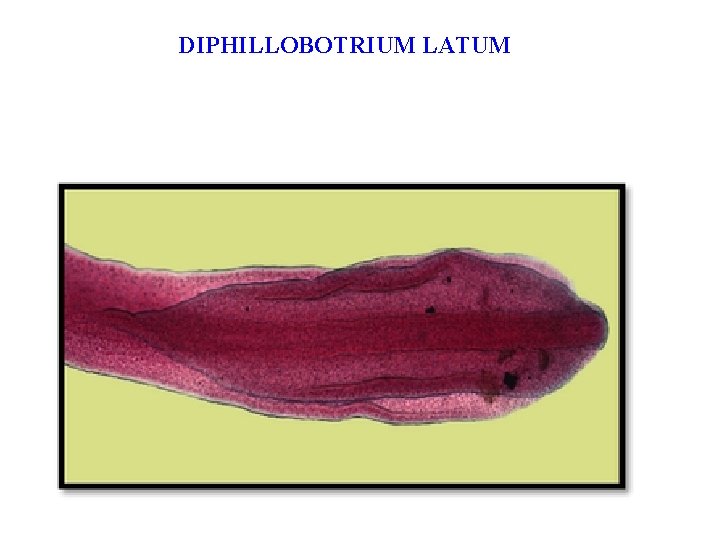
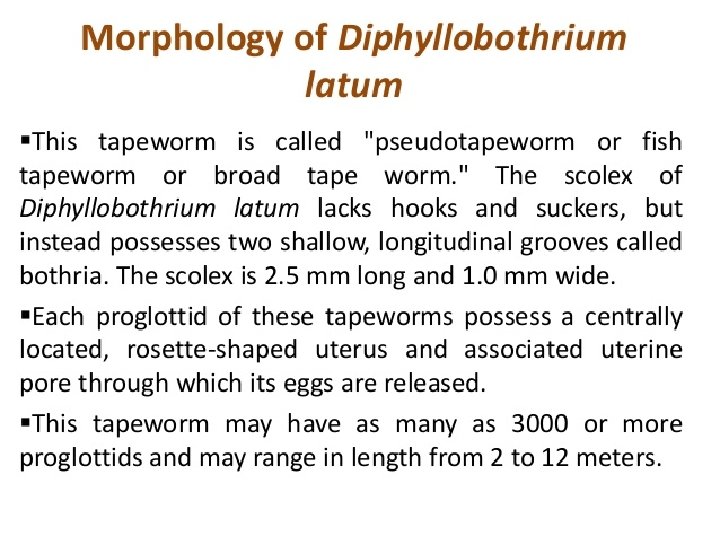
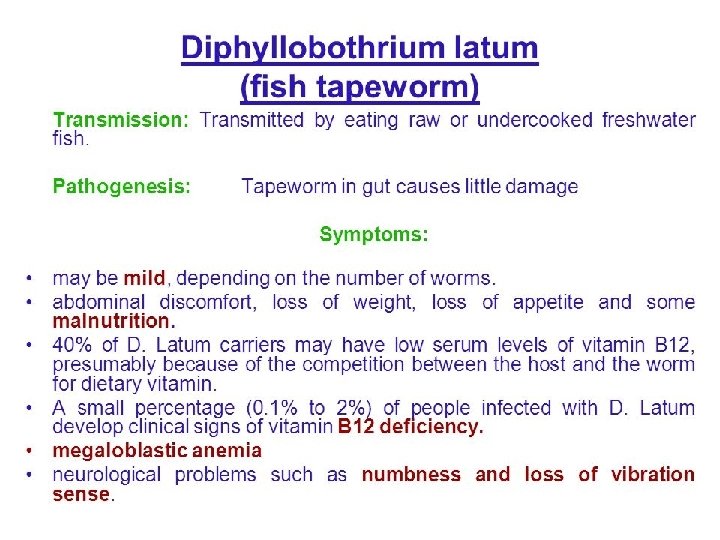
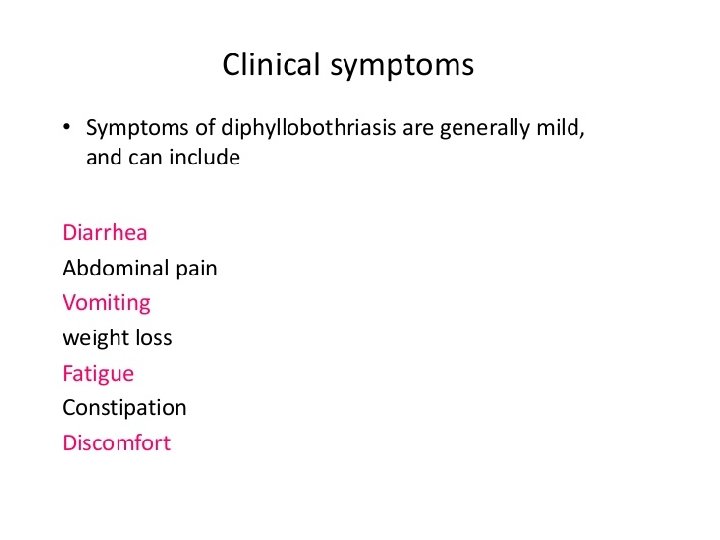
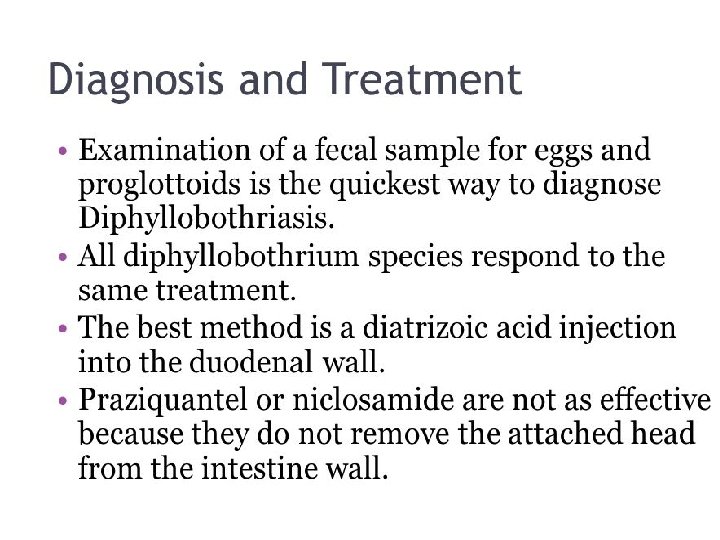
DIPHILLOBOTRIUM LATUM
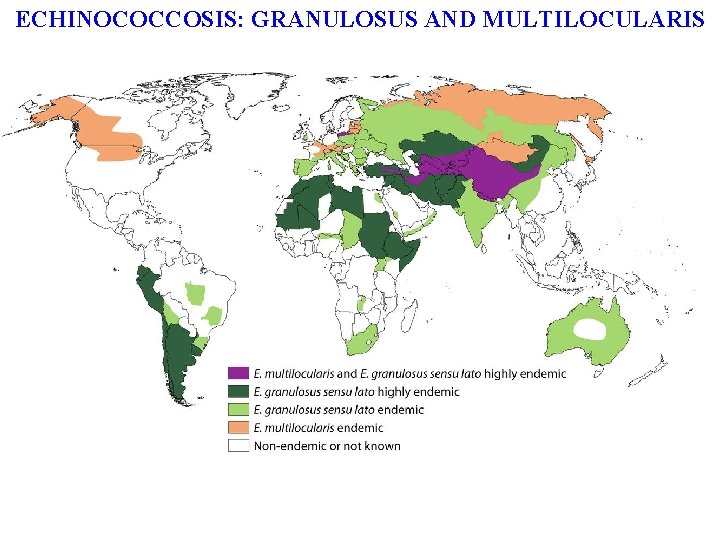
ECHINOCOCCOSIS: GRANULOSUS AND MULTILOCULARIS
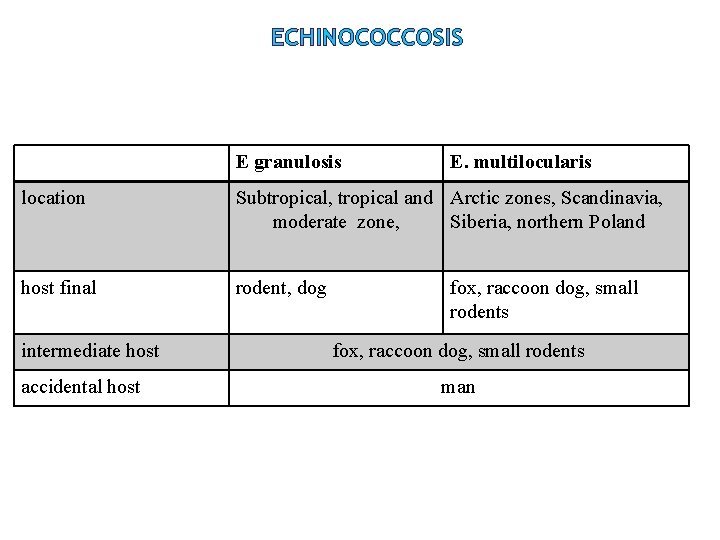
ECHINOCOCCOSIS E granulosis E. multilocularis location Subtropical, tropical and Arctic zones, Scandinavia, moderate zone, Siberia, northern Poland host final rodent, dog intermediate host accidental host fox, raccoon dog, small rodents man
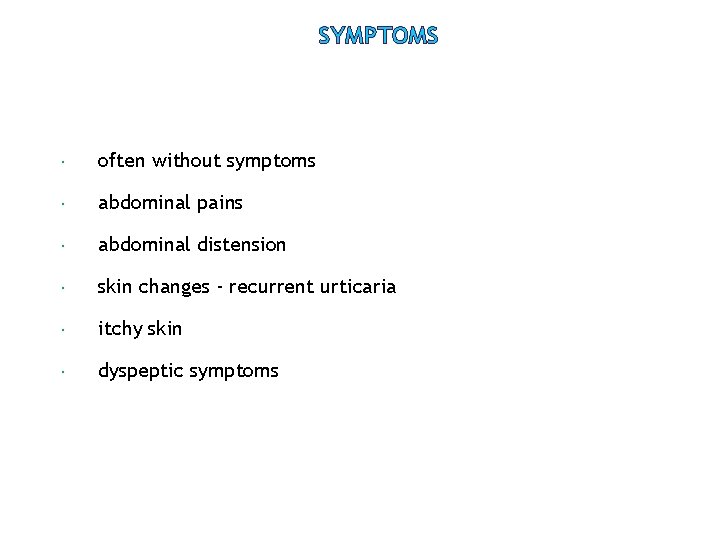
SYMPTOMS often without symptoms abdominal pains abdominal distension skin changes - recurrent urticaria itchy skin dyspeptic symptoms
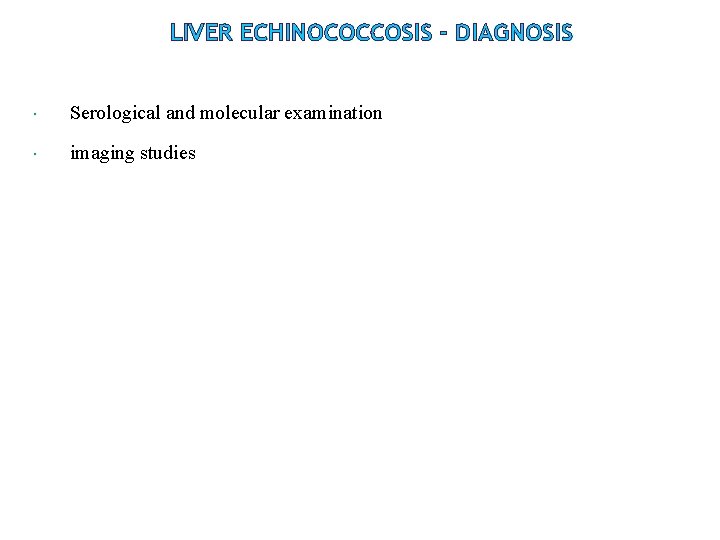
LIVER ECHINOCOCCOSIS - DIAGNOSIS Serological and molecular examination imaging studies
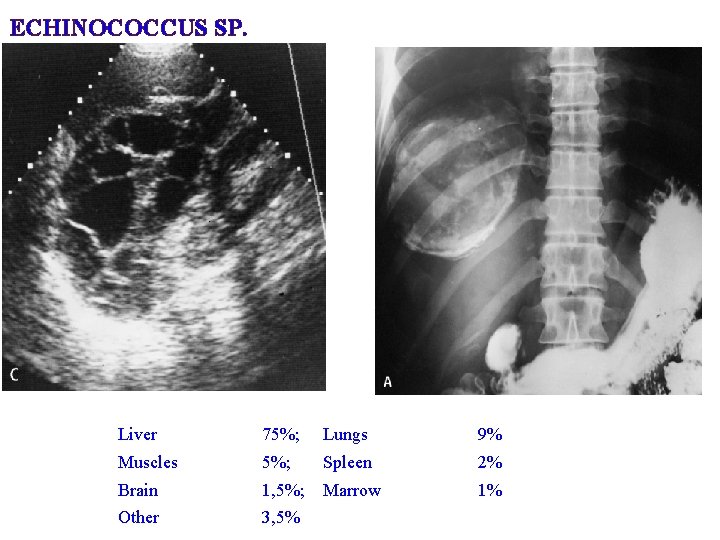
ECHINOCOCCUS SP. Liver 75%; Lungs 9% Muscles 5%; Spleen 2% Brain 1, 5%; Marrow 1% Other 3, 5%
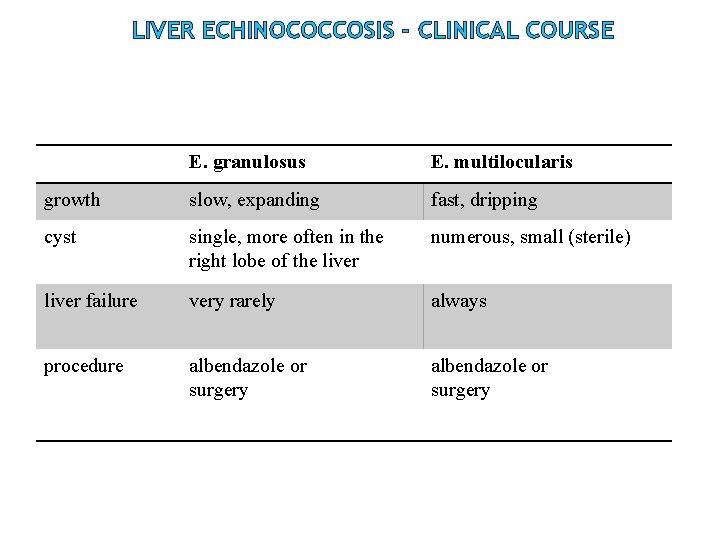
LIVER ECHINOCOCCOSIS - CLINICAL COURSE E. granulosus E. multilocularis growth slow, expanding fast, dripping cyst single, more often in the right lobe of the liver numerous, small (sterile) liver failure very rarely always procedure albendazole or surgery
NEMATODES Enterobius Ascaris vermicularis lumbricoides Trichinella Filariidae spirali
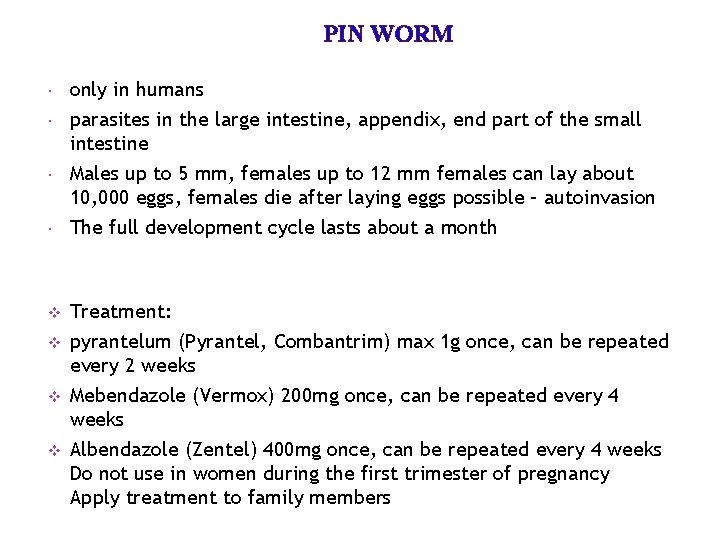
PIN WORM v v only in humans parasites in the large intestine, appendix, end part of the small intestine Males up to 5 mm, females up to 12 mm females can lay about 10, 000 eggs, females die after laying eggs possible – autoinvasion The full development cycle lasts about a month Treatment: pyrantelum (Pyrantel, Combantrim) max 1 g once, can be repeated every 2 weeks Mebendazole (Vermox) 200 mg once, can be repeated every 4 weeks Albendazole (Zentel) 400 mg once, can be repeated every 4 weeks Do not use in women during the first trimester of pregnancy Apply treatment to family members
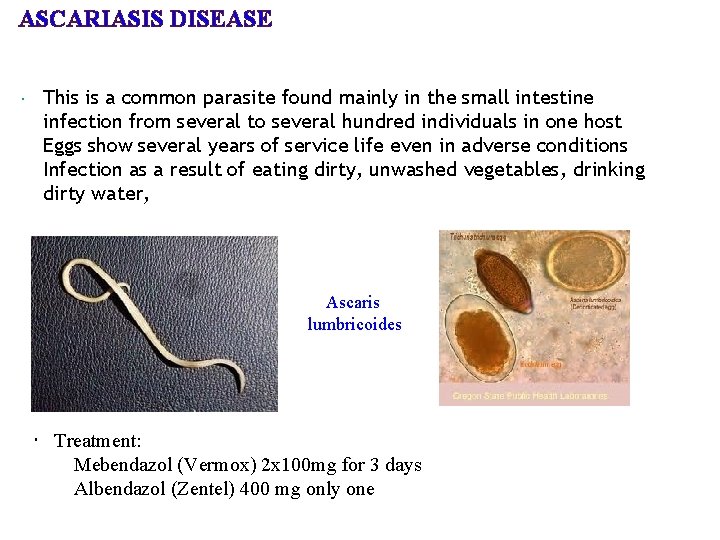
ASCARIASIS DISEASE This is a common parasite found mainly in the small intestine infection from several to several hundred individuals in one host Eggs show several years of service life even in adverse conditions Infection as a result of eating dirty, unwashed vegetables, drinking dirty water, Ascaris lumbricoides Treatment: Mebendazol (Vermox) 2 x 100 mg for 3 days Albendazol (Zentel) 400 mg only one
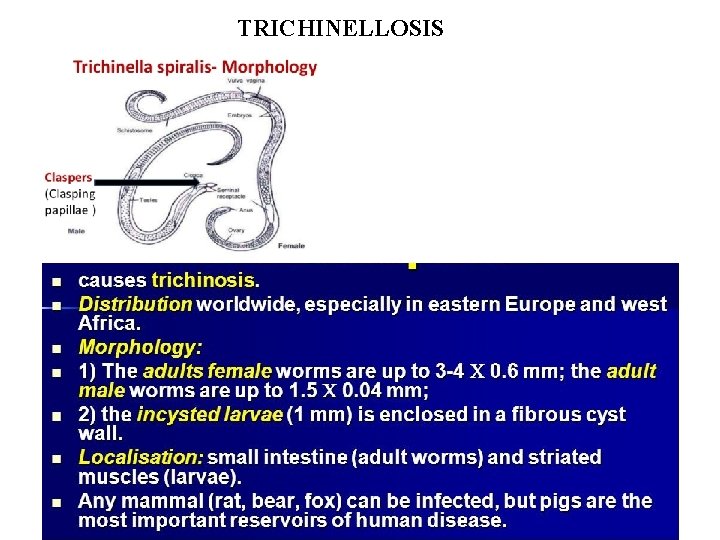
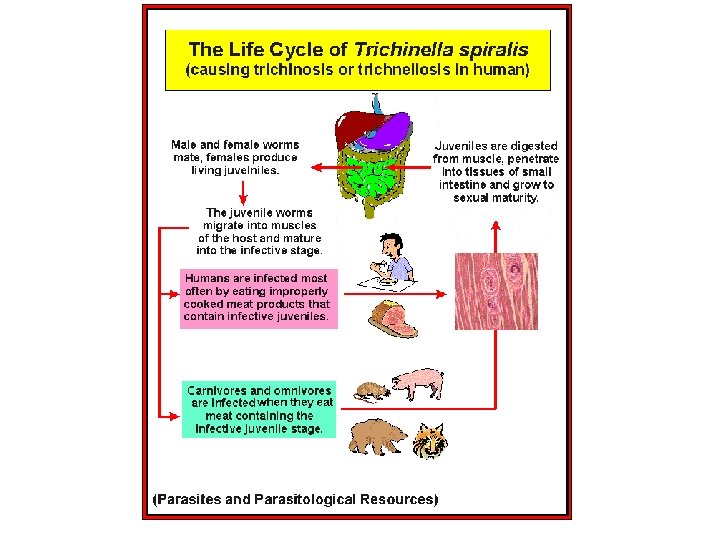
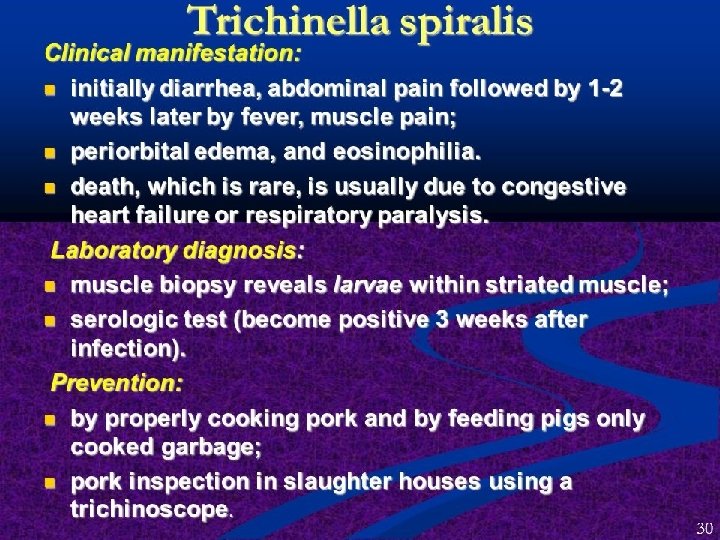
TRICHINELLOSIS
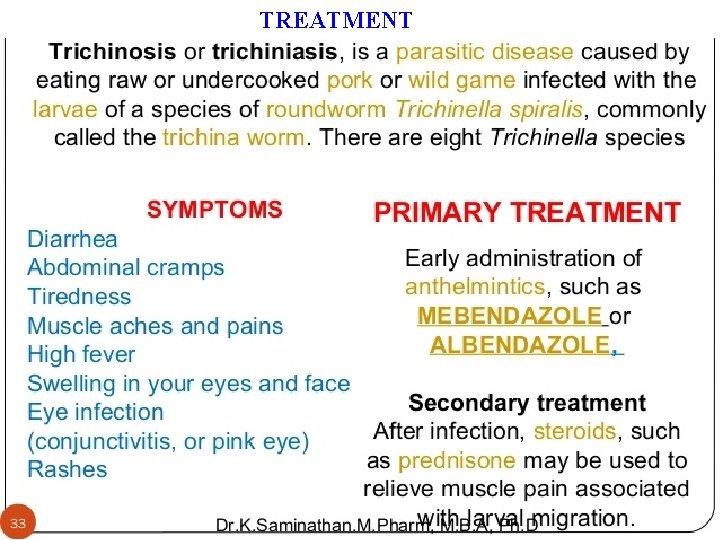
TREATMENT
DIROFILARIA SP. o Dirofilaria sp. is transmitted by over 60 species of mosquitoes - also found in Poland It is a cosmopolitan parasite The ultimate host is usually canine, sporadically cats, bears and other animals Man can become the host of an accidental parasite Niziołek R, Rutkowska K. Dirofi larioza u psow i kotow. Życie Weterynaryjne • 2009 • 84(10)
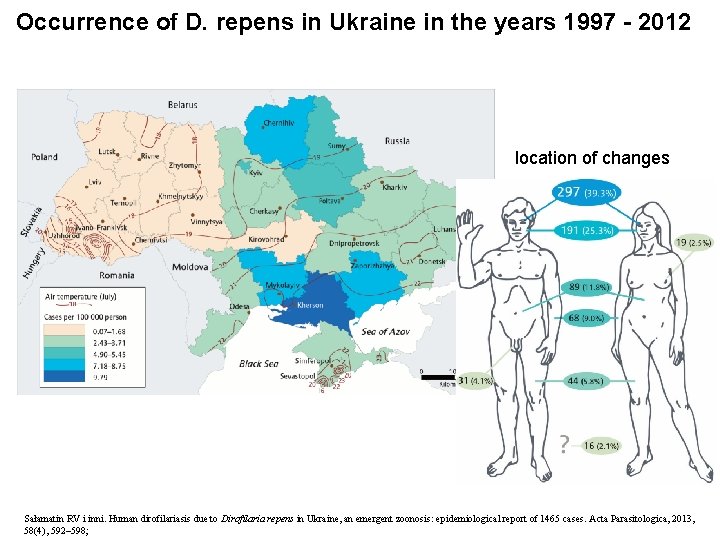
Occurrence of D. repens in Ukraine in the years 1997 - 2012 location of changes Sałamatin RV i inni. Human dirofilariasis due to Dirofilaria repens in Ukraine, an emergent zoonosis: epidemiological report of 1465 cases. Acta Parasitologica, 2013, 58(4), 592– 598;
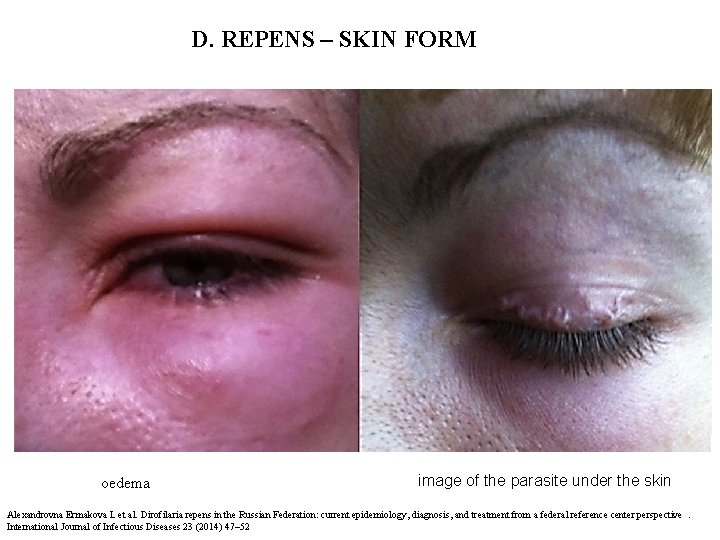
D. REPENS – SKIN FORM oedema image of the parasite under the skin Alexandrovna Ermakova L et al. Dirofilaria repens in the Russian Federation: current epidemiology, diagnosis, and treatment from a federal reference center perspective. International Journal of Infectious Diseases 23 (2014) 47– 52
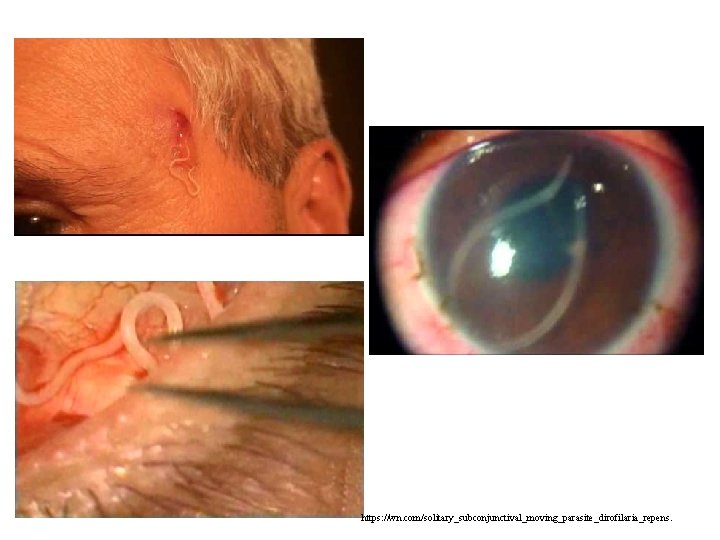
https: //wn. com/solitary_subconjunctival_moving_parasite_dirofilaria_repens.