Working With POULTRY World Egg Consumers 1 2





- Slides: 40
Working With POULTRY
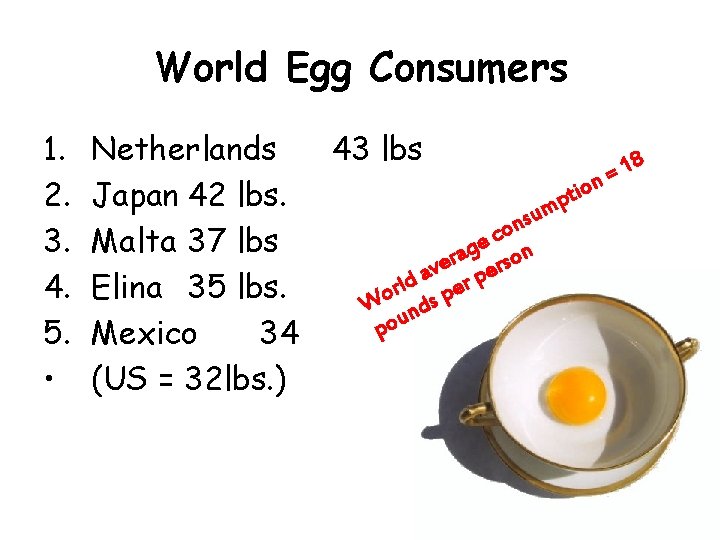
World Egg Consumers 1. 2. 3. 4. 5. • Netherlands Japan 42 lbs. Malta 37 lbs Elina 35 lbs. Mexico 34 (US = 32 lbs. ) 43 lbs 8 u s n co e ag rson r e v pe a rld per o W nds pou tio p m 1 = n
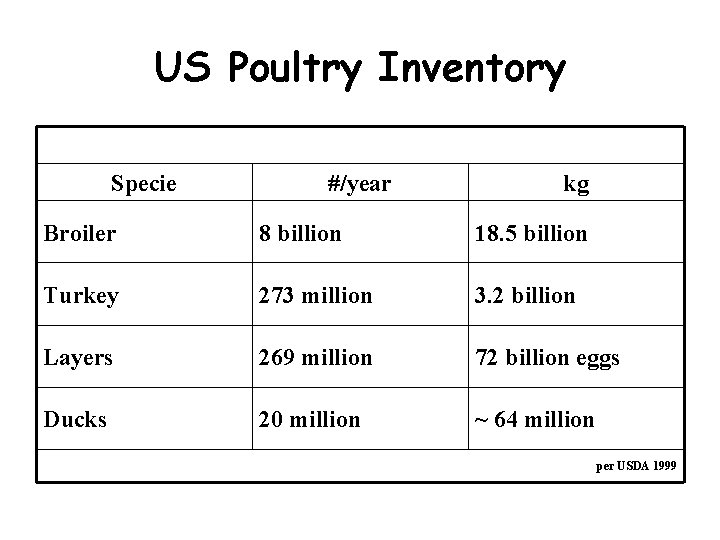
US Poultry Inventory Specie #/year kg Broiler 8 billion 18. 5 billion Turkey 273 million 3. 2 billion Layers 269 million 72 billion eggs Ducks 20 million ~ 64 million per USDA 1999
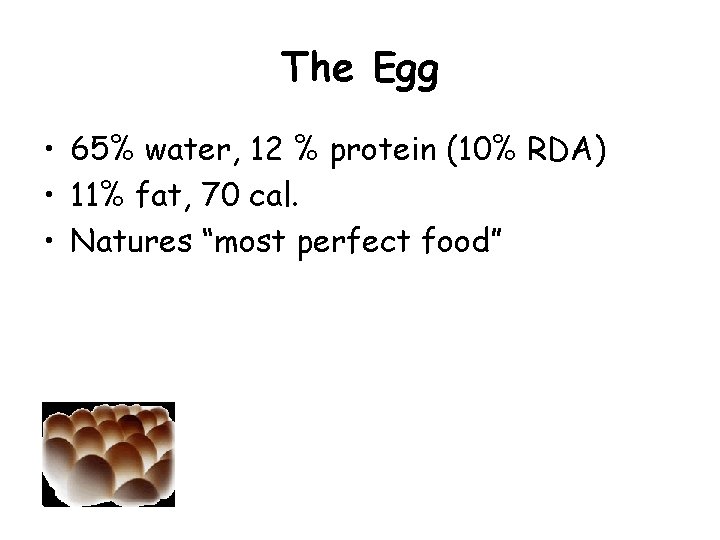
The Egg • 65% water, 12 % protein (10% RDA) • 11% fat, 70 cal. • Natures “most perfect food”
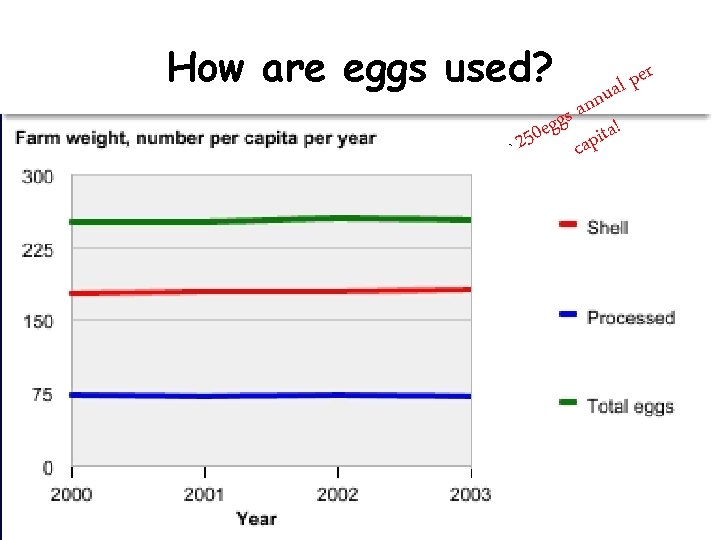
How are eggs used? r pe l a nu n a s g g ! e a 0 t i 5 p `2 ca
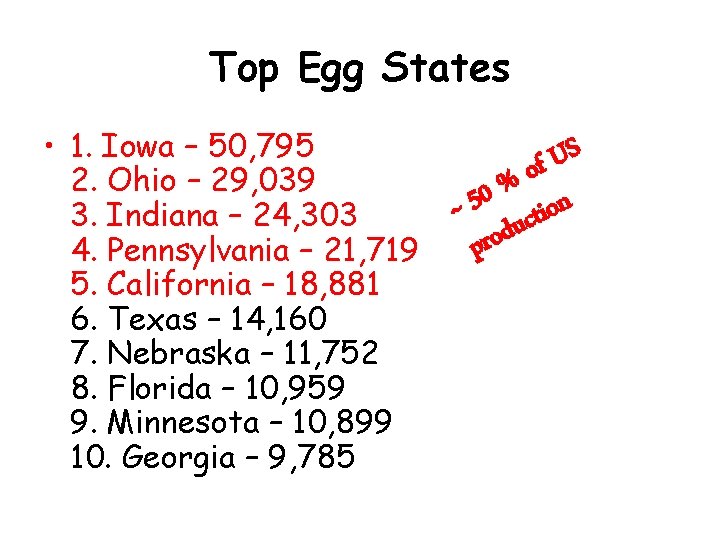
Top Egg States • 1. Iowa – 50, 795 2. Ohio – 29, 039 3. Indiana – 24, 303 4. Pennsylvania – 21, 719 5. California – 18, 881 6. Texas – 14, 160 7. Nebraska – 11, 752 8. Florida – 10, 959 9. Minnesota – 10, 899 10. Georgia – 9, 785 S U f o % 0 5 ~ uction d o r p
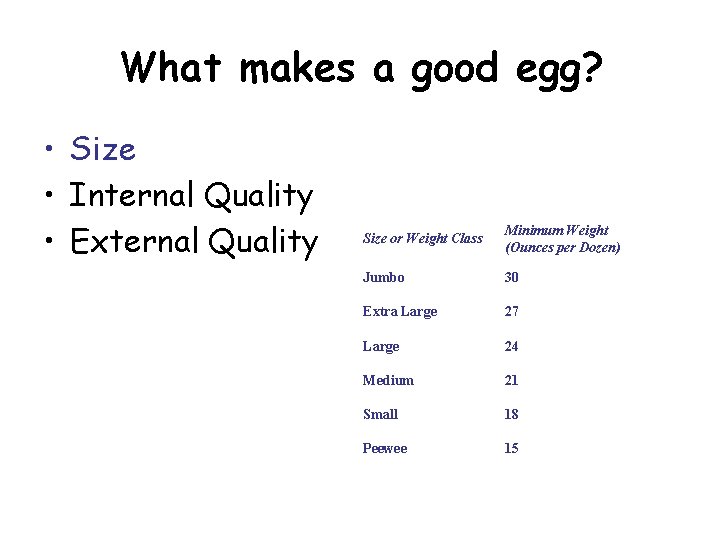
What makes a good egg? • Size • Internal Quality • External Quality Size or Weight Class Minimum Weight (Ounces per Dozen) Jumbo 30 Extra Large 27 Large 24 Medium 21 Small 18 Peewee 15
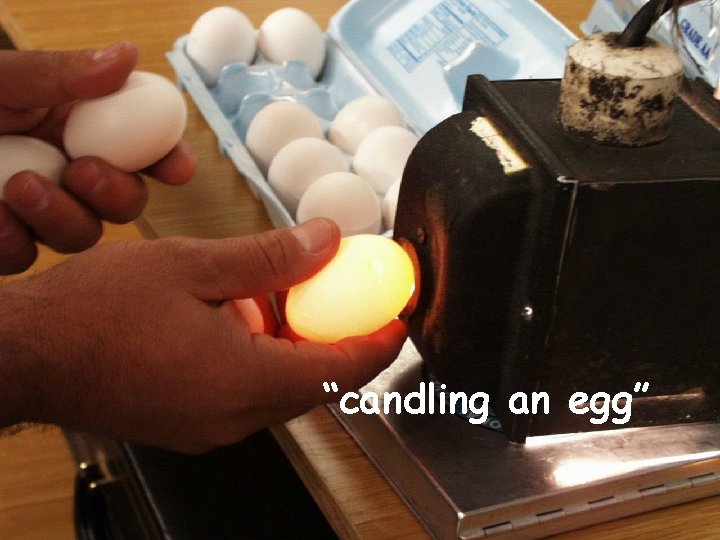
“candling an egg”
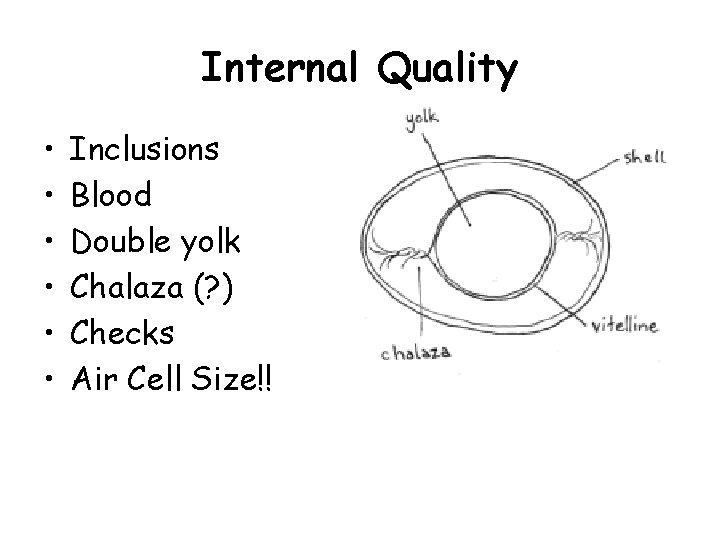
Internal Quality • • • Inclusions Blood Double yolk Chalaza (? ) Checks Air Cell Size!!
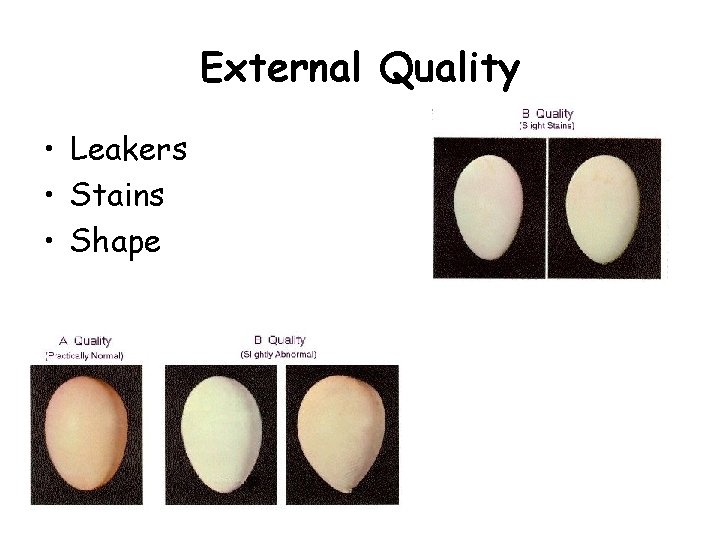
Examples: Grade A and B
External Quality • Leakers • Stains • Shape
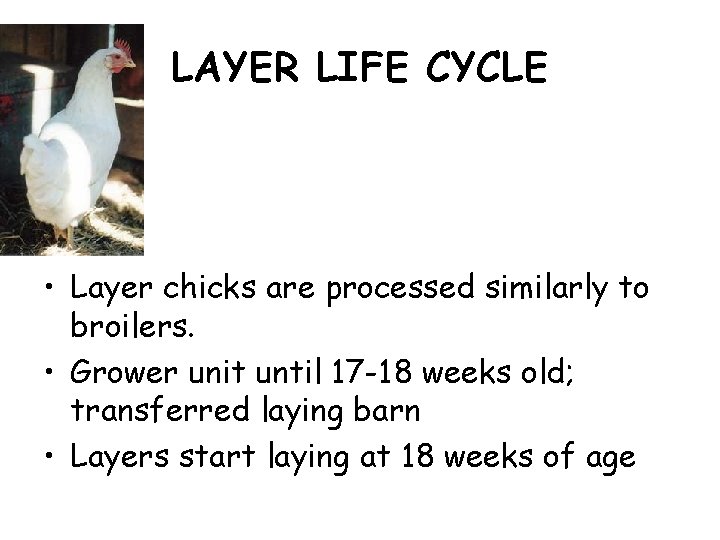
LAYER LIFE CYCLE • Layer chicks are processed similarly to broilers. • Grower unit until 17 -18 weeks old; transferred laying barn • Layers start laying at 18 weeks of age
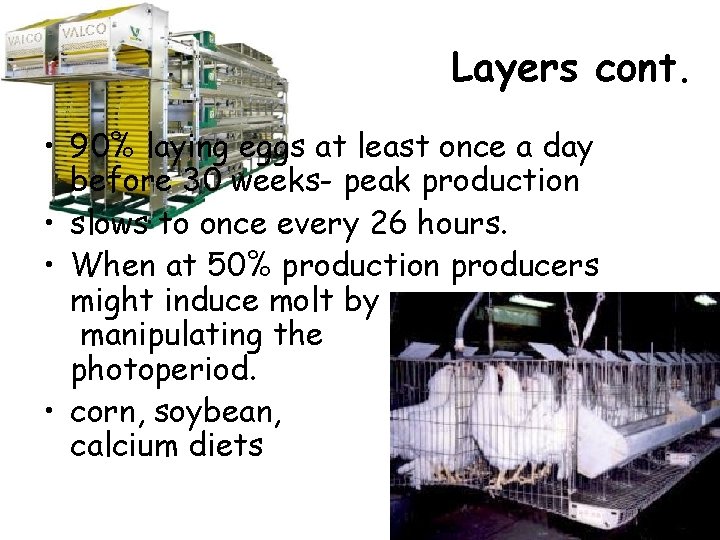
Layers cont. • 90% laying eggs at least once a day before 30 weeks- peak production • slows to once every 26 hours. • When at 50% production producers might induce molt by manipulating the photoperiod. • corn, soybean, calcium diets
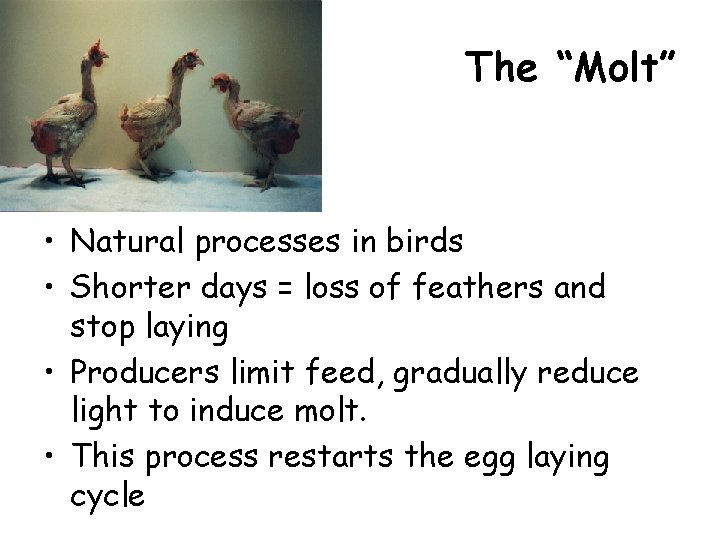
The “Molt” • Natural processes in birds • Shorter days = loss of feathers and stop laying • Producers limit feed, gradually reduce light to induce molt. • This process restarts the egg laying cycle
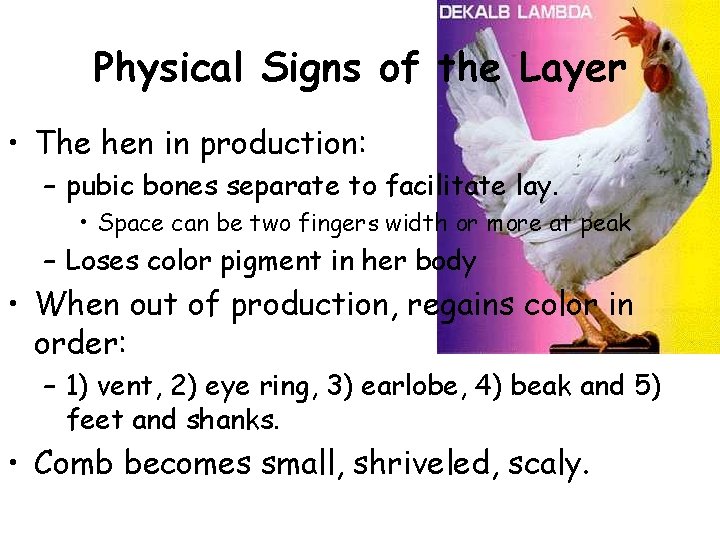
Physical Signs of the Layer • The hen in production: – pubic bones separate to facilitate lay. • Space can be two fingers width or more at peak – Loses color pigment in her body • When out of production, regains color in order: – 1) vent, 2) eye ring, 3) earlobe, 4) beak and 5) feet and shanks. • Comb becomes small, shriveled, scaly.
Incredible Egg-Making Machine
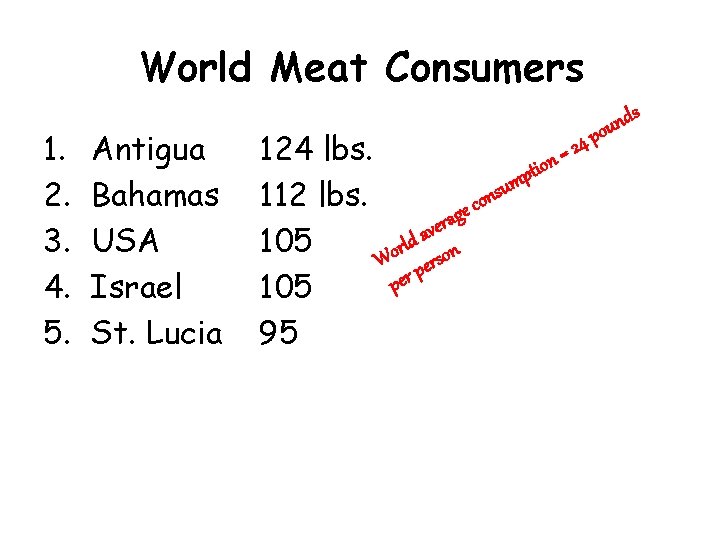
World Meat Consumers 1. 2. 3. 4. 5. Antigua Bahamas USA Israel St. Lucia 124 lbs. n o i t p m u ns 112 lbs. o c e g a r e v a 105 rld son o W per r e p 105 95 p 4 2 = s d n ou
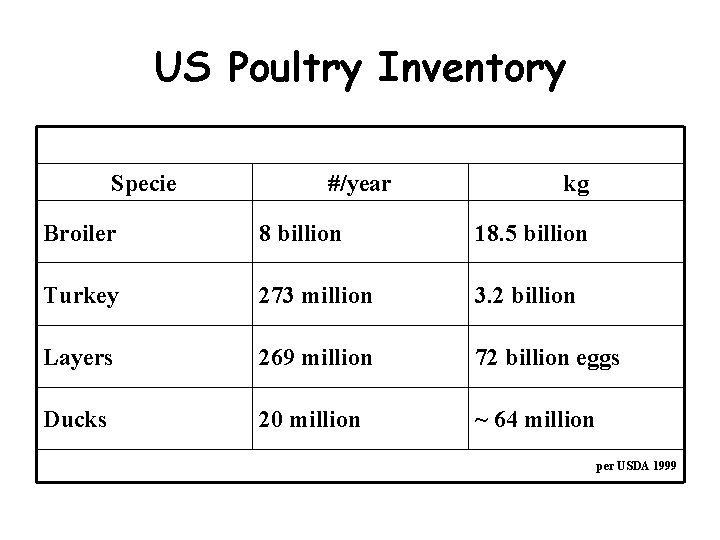
US Poultry Inventory Specie #/year kg Broiler 8 billion 18. 5 billion Turkey 273 million 3. 2 billion Layers 269 million 72 billion eggs Ducks 20 million ~ 64 million per USDA 1999
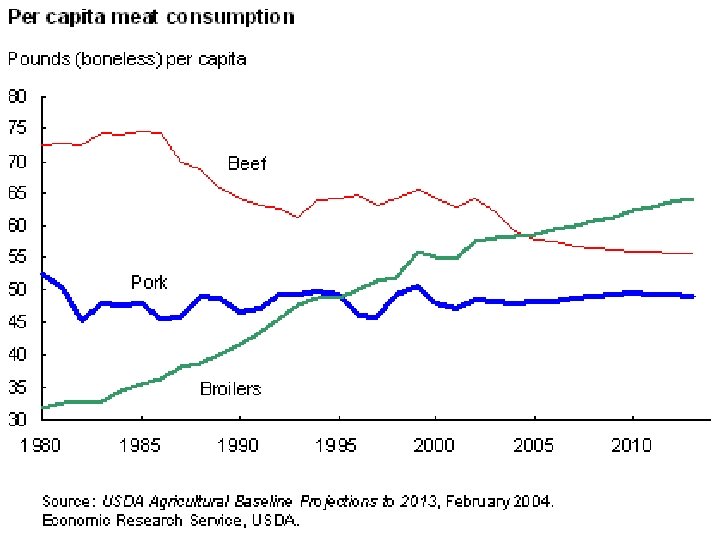
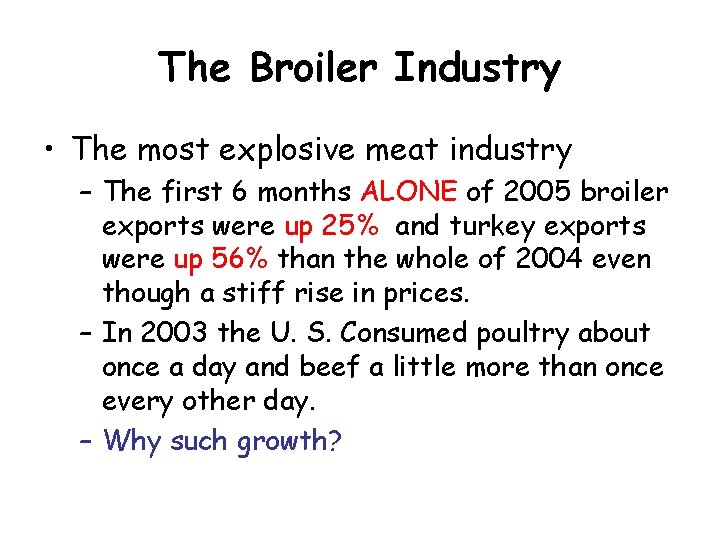
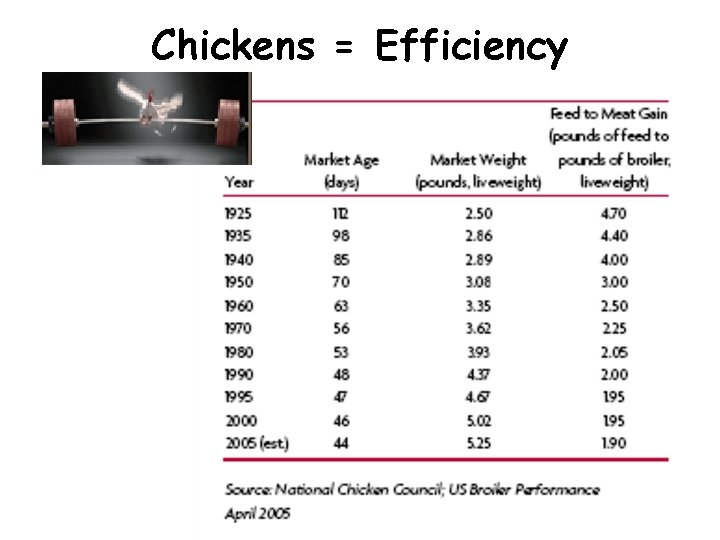
The Broiler Industry • The most explosive meat industry – The first 6 months ALONE of 2005 broiler exports were up 25% and turkey exports were up 56% than the whole of 2004 even though a stiff rise in prices. – In 2003 the U. S. Consumed poultry about once a day and beef a little more than once every other day. – Why such growth?
Chickens = Efficiency
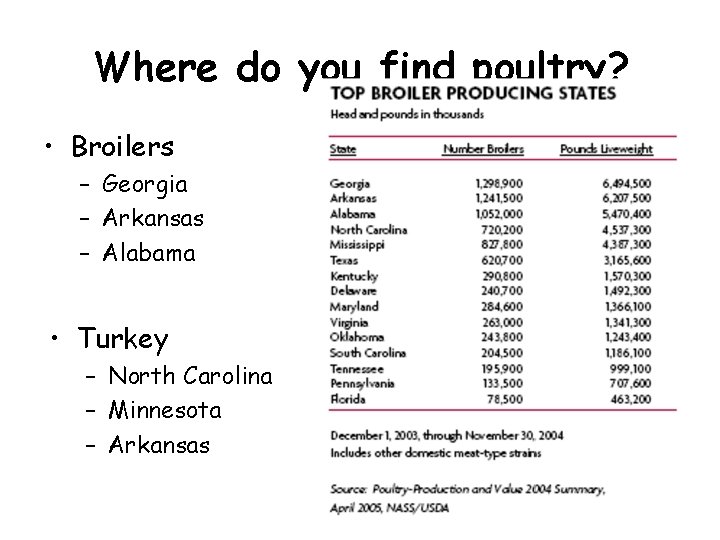
Where do you find poultry? • Broilers – Georgia – Arkansas – Alabama • Turkey – North Carolina – Minnesota – Arkansas
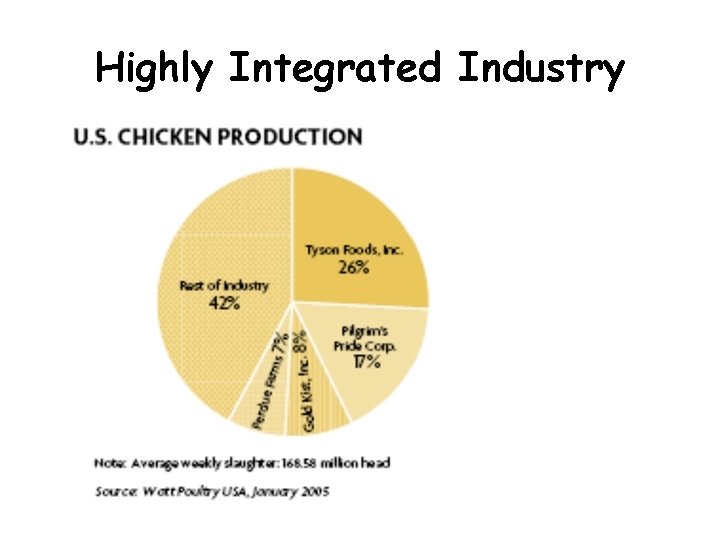
Highly Integrated Industry
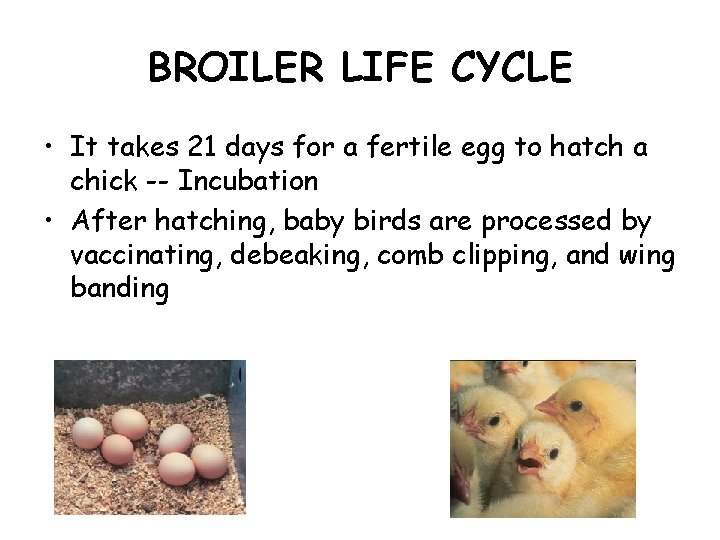
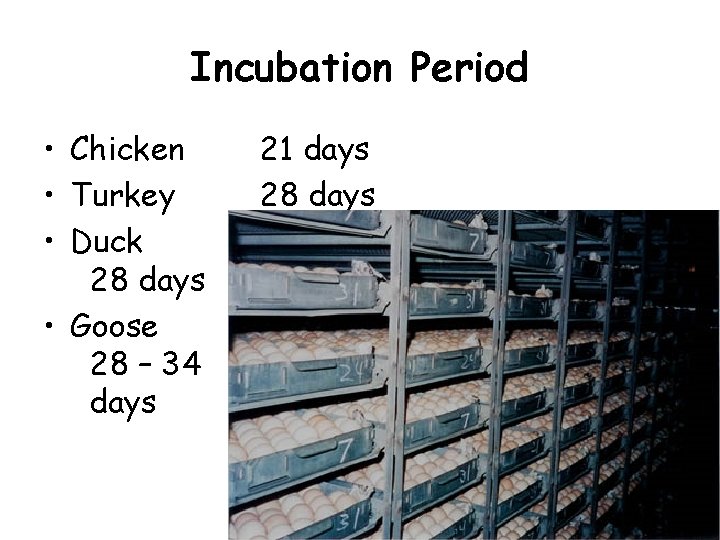
BROILER LIFE CYCLE • It takes 21 days for a fertile egg to hatch a chick -- Incubation • After hatching, baby birds are processed by vaccinating, debeaking, comb clipping, and wing banding
Incubation Period • Chicken • Turkey • Duck 28 days • Goose 28 – 34 days 21 days 28 days
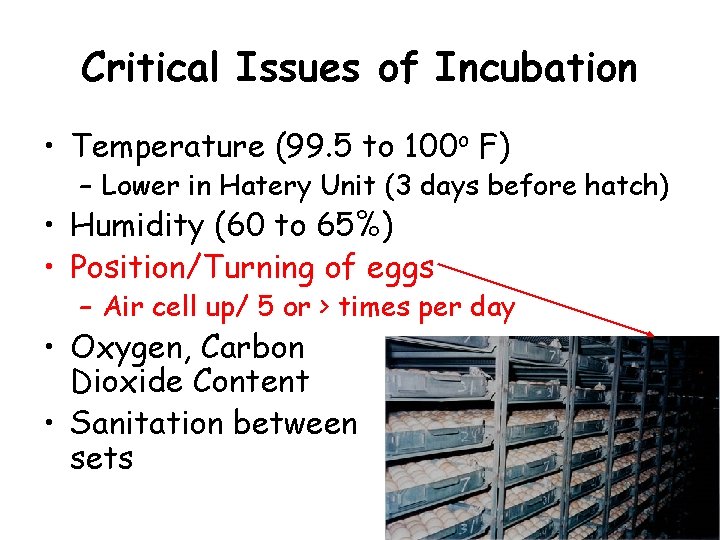
Critical Issues of Incubation • Temperature (99. 5 to 100 o F) – Lower in Hatery Unit (3 days before hatch) • Humidity (60 to 65%) • Position/Turning of eggs – Air cell up/ 5 or > times per day • Oxygen, Carbon Dioxide Content • Sanitation between sets
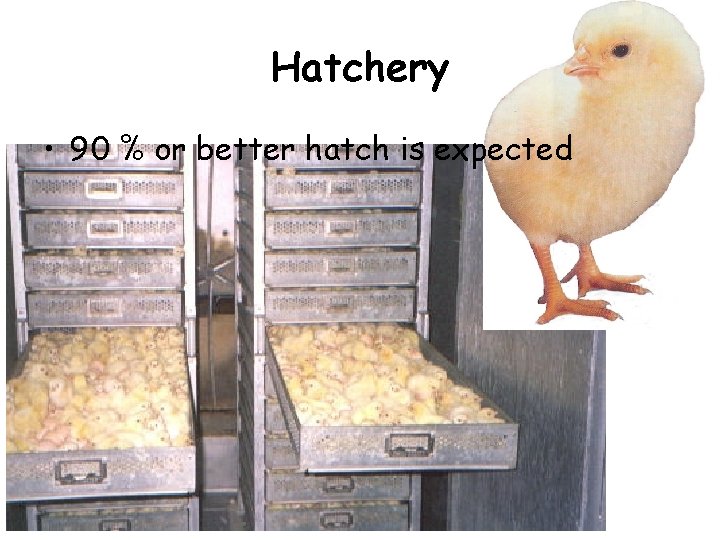
Hatchery • 90 % or better hatch is expected
Broilers • Harvested at 7 -9 weeks – Females take a little longer than Males to finish • Market Weight = 3 -5 pounds • Specialty meats – Harvesting at 5 weeks makes a Cornish Game Hen – Harvesting at 12 weeks makes a large Roaster – Males can be caponized at 3 -4 weeks and finishing to 18 weeks to Capon.
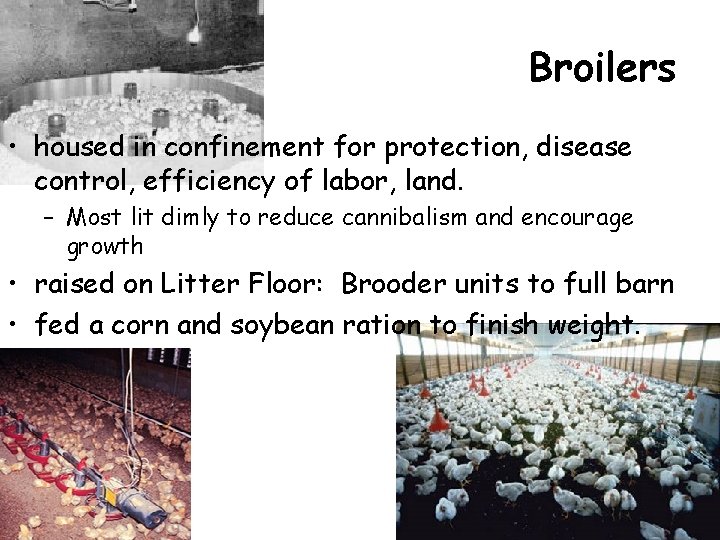
Broilers • housed in confinement for protection, disease control, efficiency of labor, land. – Most lit dimly to reduce cannibalism and encourage growth • raised on Litter Floor: Brooder units to full barn • fed a corn and soybean ration to finish weight.
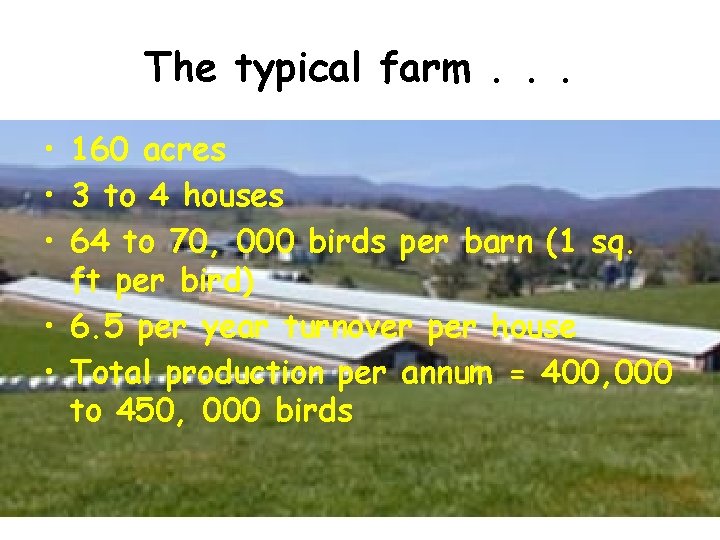
The typical farm. . . • 160 acres • 3 to 4 houses • 64 to 70, 000 birds per barn (1 sq. ft per bird) • 6. 5 per year turnover per house • Total production per annum = 400, 000 to 450, 000 birds
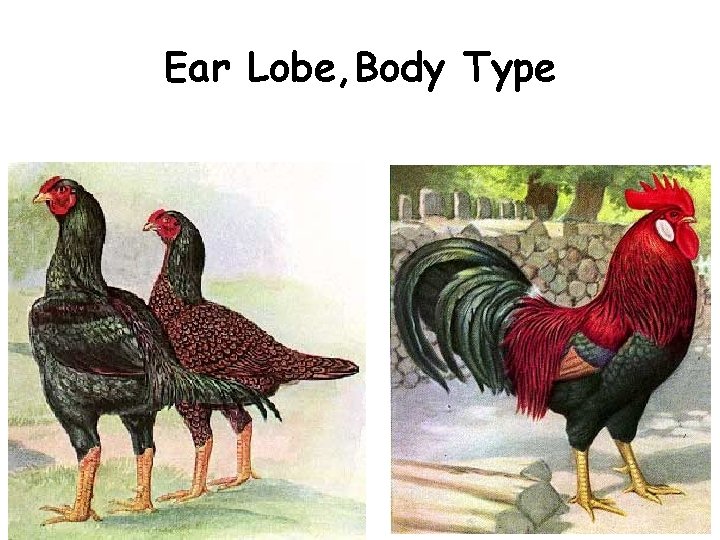
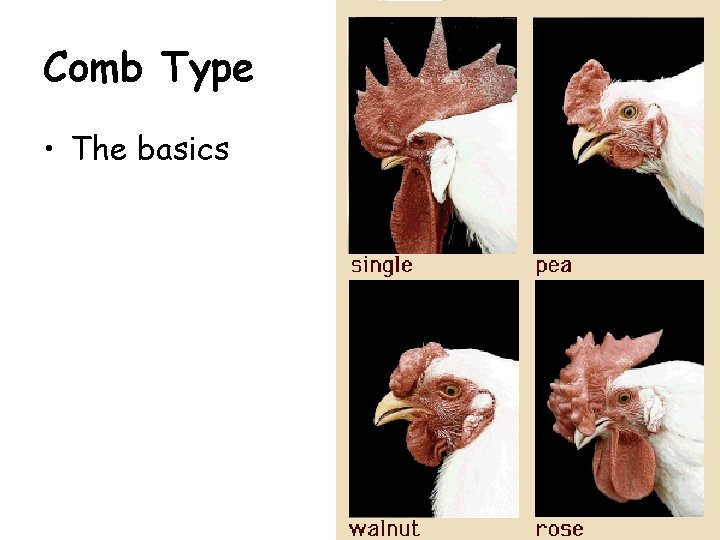
Breeds • Not so commercially significant (composites are used: • Classified by class, breed and variety • Four major classes: – American, Asiatic, English and Mediterranean • Note ear lobe, comb type, feather type and color, production purpose
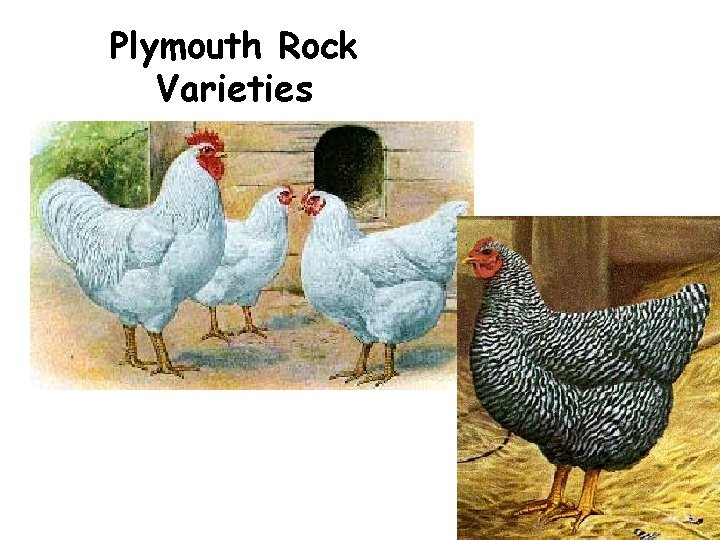
Plymouth Rock Varieties
Ear Lobe, Body Type
Comb Type • The basics
Vocab • Value Added – the extra labor or processing to increase the value or price of the item • Vertically Integrated- a person or company that owns the whole life cycle of the industry (e. g. Tyson owns the birds that breed boiler, the boiler houses, and the harvest facilities) • Hen- mature female chicken • Cock- mature intact male chicken • Cockerel- immature intact male • Pullet- immature female • Capon- castrated male • Bantam- miniature breed • Molt- the process of losing feathers
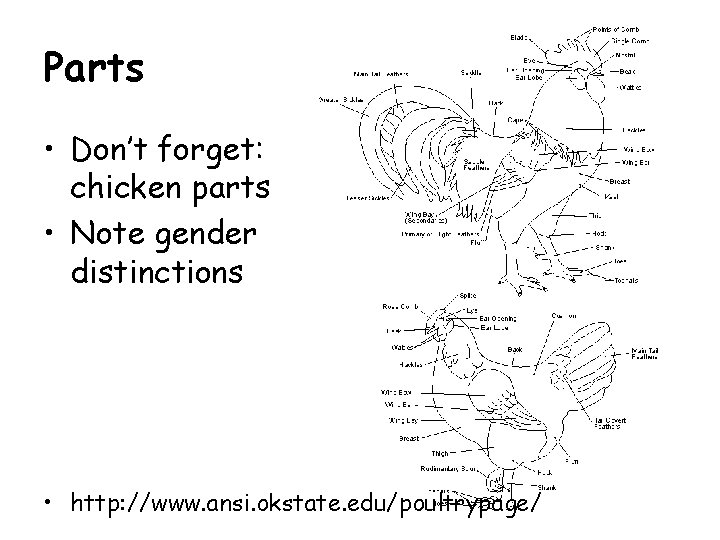
Parts • Don’t forget: chicken parts • Note gender distinctions • http: //www. ansi. okstate. edu/poultrypage/
TURKEY • Turkeys are the only meat animal to be domesticated in America (N or Central) • Turkeys are grown in confinements or on ranges • They are fed high protein ration until hens are 14 -16 weeks old (up to about 20 pounds) and toms are 19 -20 weeks old (up to around 30 pounds).
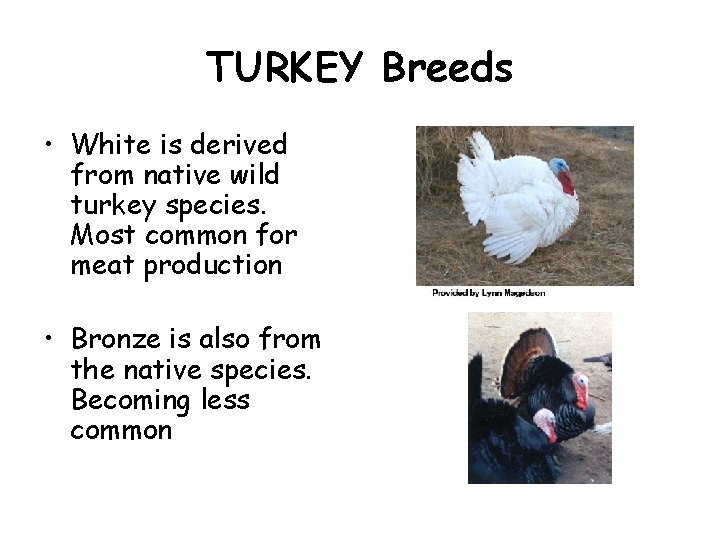
TURKEY Breeds • White is derived from native wild turkey species. Most common for meat production • Bronze is also from the native species. Becoming less common
Biosecurity • Bird Flu has been on the news recently • Keep facilities clean and separate • Don’t let the outside world inside