Wolford Glen Oaks SIOP Strategies Interaction Interact 1










- Slides: 65
Wolford & Glen Oaks SIOP Strategies Interaction
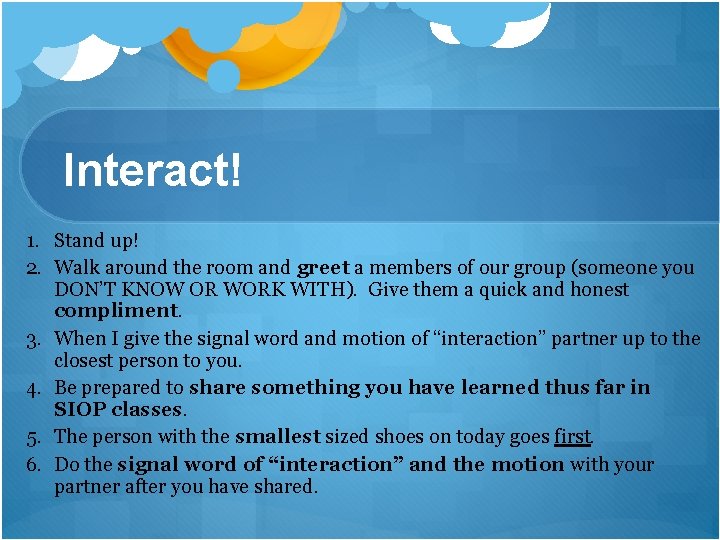
Interact! 1. Stand up! 2. Walk around the room and greet a members of our group (someone you DON’T KNOW OR WORK WITH). Give them a quick and honest compliment. 3. When I give the signal word and motion of “interaction” partner up to the closest person to you. 4. Be prepared to share something you have learned thus far in SIOP classes. 5. The person with the smallest sized shoes on today goes first. 6. Do the signal word of “interaction” and the motion with your partner after you have shared.
How have you been doing? • Lesson Preparation • Building Background • Comprehensible Input • Strategies
. . . d e t r a t s t e g e w e r o f Be ? W s l a i c e p ut s o b a t a h
r o f y r a s s e c e n P O I ? S s l s I a i spec
r o f y r a s s e c e n P O ? s l Is SI a i c e p s ya r a s s e ec N ! s e Y all r o f s ice t c a r s p t t n s e e d b u st nd are
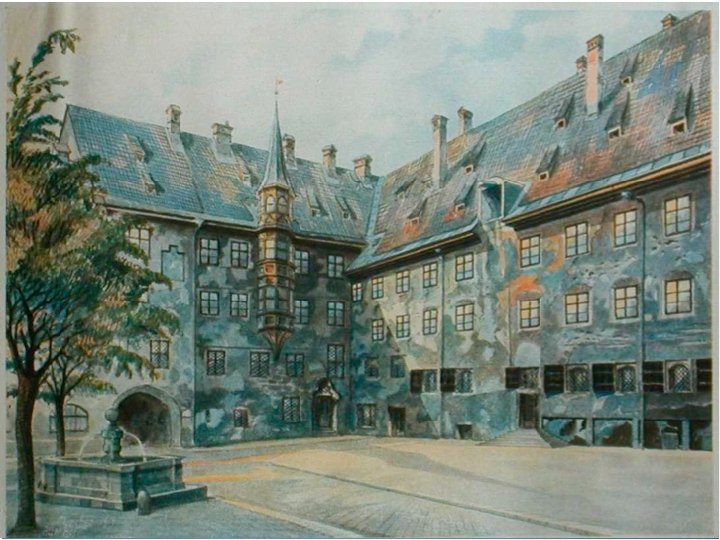
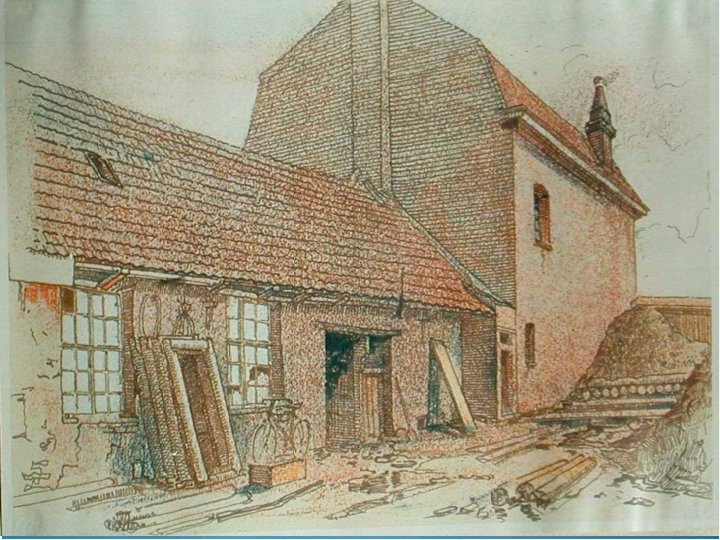
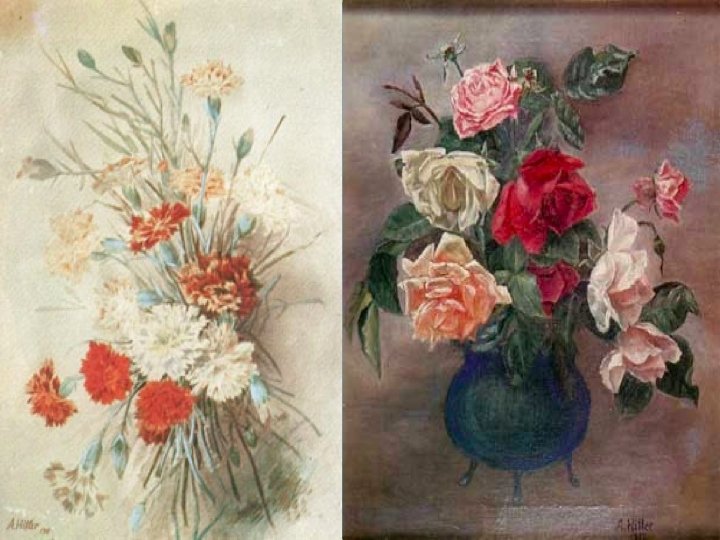
Imagine thepact potential im that Specianlsd Fine teachers aers Arts teach have? Someone had a dream to get a degree in art from the Vienna Academy of Fine Arts. Here are some of the attempts in painted art. . .
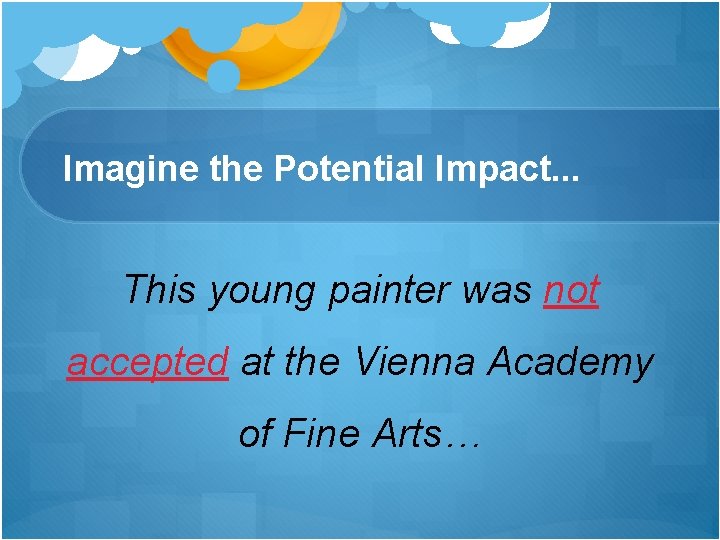
Imagine the Potential Impact. . . This young painter was not accepted at the Vienna Academy of Fine Arts…
Imagine the Potential Impact. . . Who was he?
Imagine the Potential Impact. . . He was. . .
Imagine the Potential Impact. . . He was. . . Adolph Hitler
You never know who you may be teaching. . . • On the other hand, our possible belief in them, acceptance, and sincere encouragement could lead to remarkable destinies • Specials Teachers & Fine Arts teachers may be the only people who see the potential in our LEP, SPED, 504, and low SES students • You can make an impact on their language development using SIOP • Specials Teachers & Fine Arts teachers taking the time to learn how to help students improve comprehension could be a life changing event! Whose life are you going to change?
SIOP Interaction
Background Studies have indicated that, in most classrooms, teachers dominate the linguistic aspect of the lesson, leaving students severely limited in terms of opportunities to use language in a variety of ways. Goodland, 1984; Marshall, 2000
Objectives • Content • Select from a variety of activities that promote interaction and incorporate into lesson plans. • Design grouping patterns that support lesson content and language objectives. • Identify techniques to increase wait time. • Identify resources to supprt student clarification in the native language.
Objectives • Language • Explain the purpose of student-student interaction for language development. • Describe techniques to reduce the amount of teacher talk in a lesson. • Practice asking questions that promote student elaboration of responses.
SIOP: Interaction Frequent Opportunities for Interaction and Discussion (use the language)
Benefits of Interaction • Increases use of academic language • Improves quality of student talk • Encourages elaborated responses • Provides “oral rehearsal” • Helps individualize instruction • Encourages reluctant learners to participate • Allows for written interaction with dialogue journals • Promotes a positive social climate
How do your students interact with language in your classroom? Reading? Writing? Listening? Speaking?
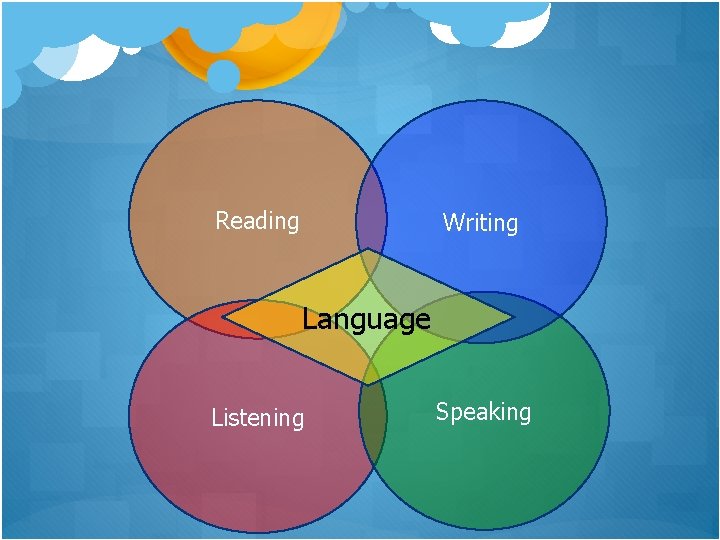
Reading Writing Language Listening Speaking
Interaction Language development is active, not passive. Language is the primary vehicle for intellectual development (Vygotsky, 1981).
Interaction Teachers must conscientiously plan for a variety of grouping arrangements during lessons. Instructional conversation is an effective approach for facilitating meaningful discussion.
Think about. . . • How can you encourage ELLs to participate in classroom discussion in a non-threatening way? • What are some specific techniques you use to encourage ELLs to elaborate on their responses and express their thoughts fully?
What is Instructional Conversation? What does it look like? What does it sound like? What does it feel like? Share at your table.
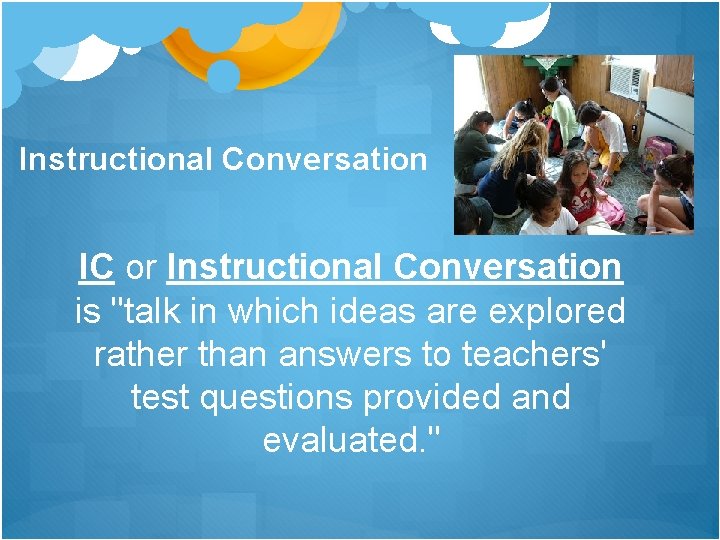
Instructional Conversation IC or Instructional Conversation is "talk in which ideas are explored rather than answers to teachers' test questions provided and evaluated. "
Instructional Conversations • Instructional conversations are like grand conversations except that they are about nonfiction topics, not about literature. • These conversations provide opportunities for students to talk about the main ideas they are learning in content-area units and enhance both students’ conceptual learning and their linguistic abilities
10 Elements of Instructional Conversation 5 Instructional elements 1. Thematic focus. The teacher selects a theme or idea to serve as a starting point for focusing the discussion and has a general plan for how theme will unfold, including how to "chunk" the text to permit optimal exploration of theme. 2. Activation and use of background and relevant schemata. The teacher either "hooks into" or provides students with pertinent background knowledge and relevant schemata necessary for understanding a text. Background knowledge and schemata are then woven into the discussion that follows.
10 Elements of Instructional Conversation 3. Direct teaching. When necessary, the teacher provides direct teaching of a skill or concept. 4. Promotion of more complex language and expression. The teacher elicits more extended student contributions by using a variety of elicitation techniquesinvitations to expand (e. g. , "tell me more about that"), questions (e. g. , "What do you mean? "), restatements (e. g. , "in other words, -), and pauses. 5. Elicitation of bases for statements or positions. The teacher promotes the students' use of text, pictures, and reasoning to support an argument or position. Without overwhelming students, the teacher probes for the bases of students' statements-e. g. , "How do you know? " "What makes you think that? " "Show us where it says that___. "
10 Elements of Instructional Conversation 5 Conversational elements 6. Fewer "known-answer" questions. Much of the discussion centers on questions and answers for which there might be more than one correct answer. 7. Responsivity to student contributions. While having an initial plan and maintaining the focus and coherence of the discussion, the teacher is also responsive to students' statements and opportunities they provide. 8. Connected discourse. The discussion is characterized by multiple, interactive, connected turns; succeeding utterances build upon and extend previous ones.
10 Elements of Instructional Conversation 5 Conversational elements 9. A challenging, but nonthreatening, atmosphere. The teacher creates a "zone of proximal development, " where a challenging atmosphere is balanced by a positive affective climate. The teacher is more collaborator than evaluator and creates an atmosphere that challenges students and allows them to negotiate and construct the meaning of the text. 10. General participation, including self-selected turns. The teacher encourages general participation among students. The teacher does not hold exclusive right to determine who talks, and students are encouraged to volunteer or otherwise influence to selection of speaking turns.
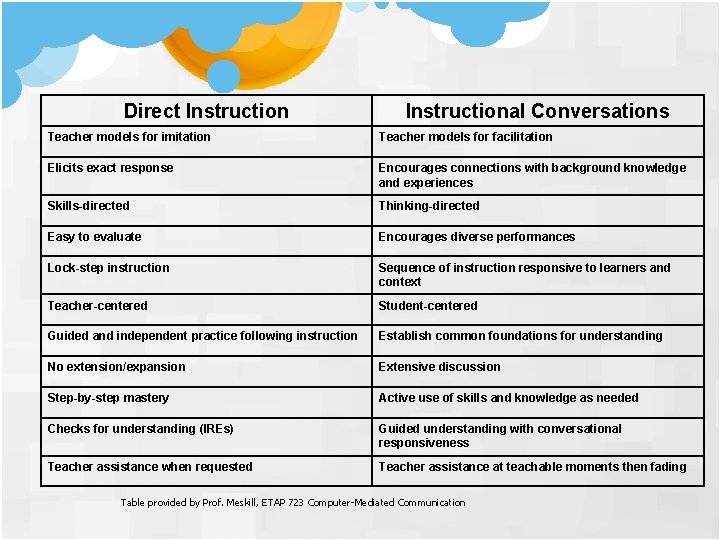
Direct Instruction vs. Instructional Conversation • Read the comparison chart • Discuss with a partner • Share your ideas with a partner • Draw a representation that shows the difference between the two • Share whole group
Direct Instructional Conversations Teacher models for imitation Teacher models for facilitation Elicits exact response Encourages connections with background knowledge and experiences Skills-directed Thinking-directed Easy to evaluate Encourages diverse performances Lock-step instruction Sequence of instruction responsive to learners and context Teacher-centered Student-centered Guided and independent practice following instruction Establish common foundations for understanding No extension/expansion Extensive discussion Step-by-step mastery Active use of skills and knowledge as needed Checks for understanding (IREs) Guided understanding with conversational responsiveness Teacher assistance when requested Teacher assistance at teachable moments then fading Table provided by Prof. Meskill, ETAP 723 Computer-Mediated Communication
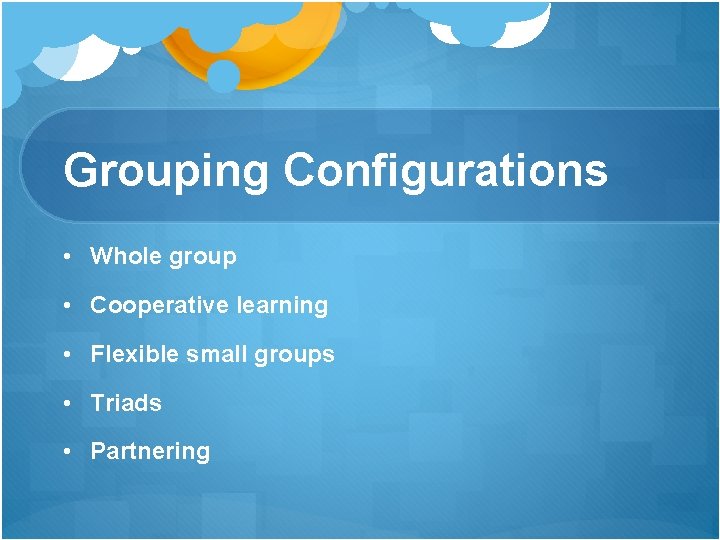
Grouping Configurations • Whole group • Cooperative learning • Flexible small groups • Triads • Partnering
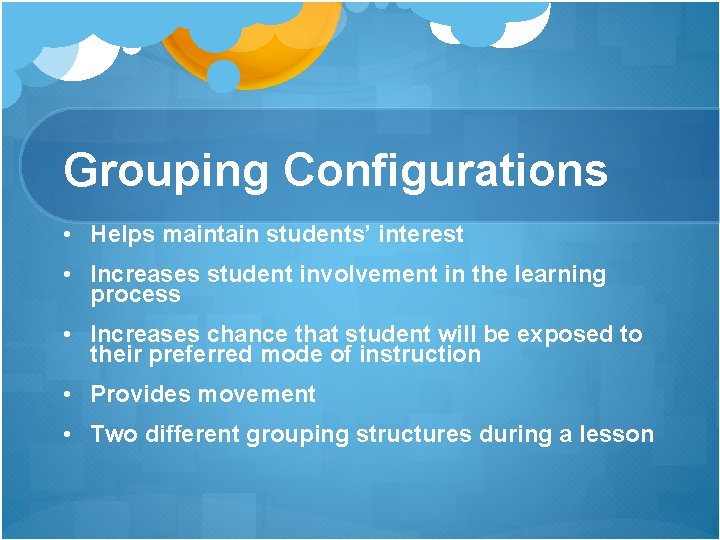
Grouping Configurations • Helps maintain students’ interest • Increases student involvement in the learning process • Increases chance that student will be exposed to their preferred mode of instruction • Provides movement • Two different grouping structures during a lesson
Grouping Configurations • Read through handout on flexible grouping • Discuss at your table • Choose one form • Discuss how you can incorporate it into your lessons • How can you share this technique with your team or school?
Sufficient Wait Time • Provided consistently • Increases student discourse • Find balance between wait time and moving lesson along • Sticky notes, 50 -50, phone a friend
Opportunities to Clarify in L 1 • Academic skills such as reading taught in the first language transfer to the second language. • All SIOP classrooms should have some resources in most of the students’ native languages
Summary • Teachers need to create ample opportunities for ALL students to practice using academic English, among themselves and with teachers. • Incorporation of varying grouping configurations facilitates the use of English to support lesson objectives.
& e c i t c a r P n o i t a c i l p p A l e d o M P SIO
Practice & Application • Content Objectives: • Identify a variety of ways for students to enhance learning through hands-on practice. • Create application activities that extend the learning in new ways and relate to language or content objectives.
Practice & Application • Language Objectives: • Identify activities that integrate different language skills as students practice new content knowledge. • Discuss the importance of linking practice and application activities to specific lesson objectives.
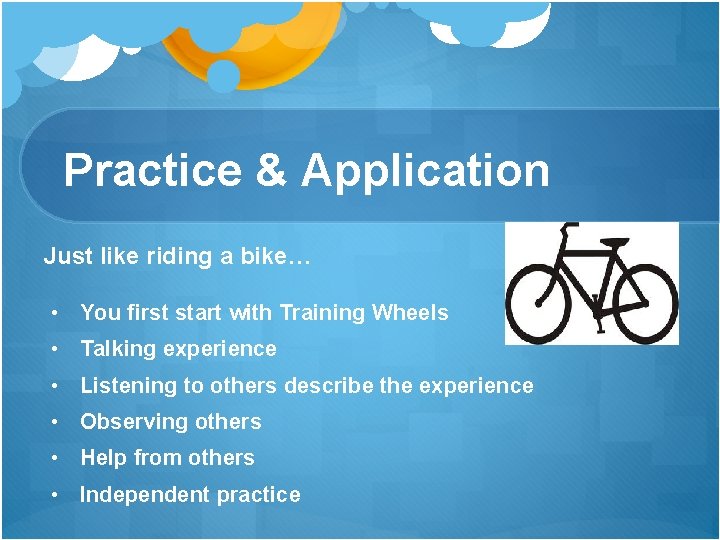
Practice & Application Just like riding a bike… • You first start with Training Wheels • Talking experience • Listening to others describe the experience • Observing others • Help from others • Independent practice
Practice & Application • Practice helps master skills • Reading • Writing • Listening • Speaking • Proficiency depends on opportunities for comprehensible input and targeted output
Practical Application One-Minute Pause provides a break in learning large sections of content Turn to a partner: • Summarize Key Ideas Thus Far Provides a chance for students to stop, reflect on the concepts and ideas that have just been introduced, make connections to prior knowledge or experience, and seek clarification. • Add your own thoughts • Pose clarifying questions
Practice & Application • Carefully choose activities in lesson • Activities must support students’ progress • Must target objectives • Differentiation
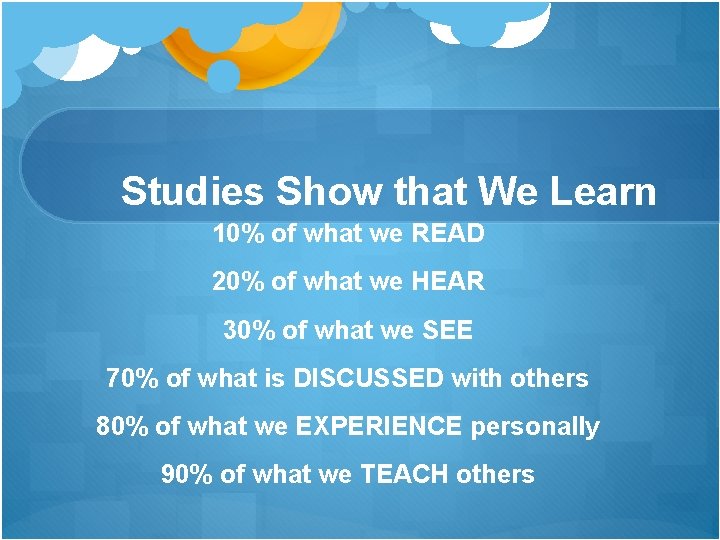
Studies Show that We Learn 10% of what we READ 20% of what we HEAR 30% of what we SEE 70% of what is DISCUSSED with others 80% of what we EXPERIENCE personally 90% of what we TEACH others
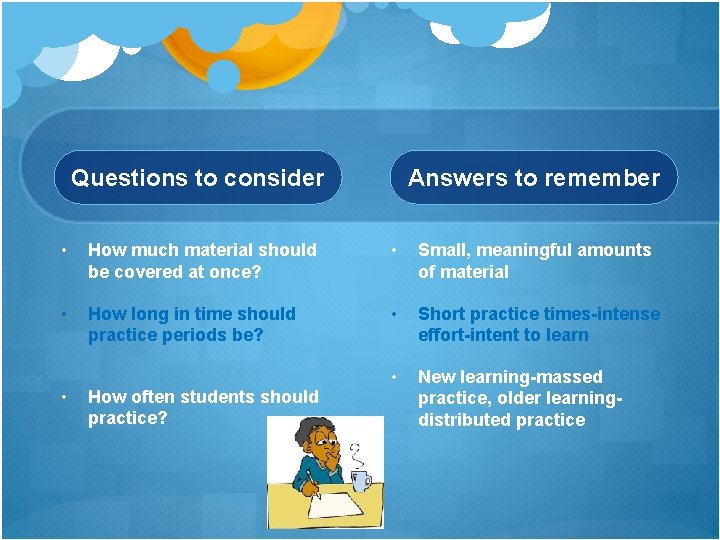
Questions to consider Answers to remember • How much material should be covered at once? • Small, meaningful amounts of material • How long in time should practice periods be? • Short practice times-intense effort-intent to learn • New learning-massed practice, older learningdistributed practice • How often students should practice?
What is meaningful practice…? Practice that is directly tied to a standard
Correcting and Scaffolding • Consider students’ language proficiency when deciding if correcting mistake • Some errors might be developmental • If errors impede communication, gently restate sentence in correct form. • Provide sentence stems for conversations • Utilize cloze activities
Conclusion • Integrate 4 language components • Practice & application are essential for mastery • Enhance with meaningful, engaging activities • Gently correct and scaffold language • Not all skills are linked to an objective
MORE FOLDABLE RESOURCES! Minibooks http: //jimmie. squidoo. co m/minibooks
Foldables • http: //rainbowswithinreach. blogspot. com/2012/03 /foldables-graphic-organizer-examples. html • Dinah Zikes (foldable guru): http: //www. scribd. com/doc/77370206/Foldables • http: //www. ateacherstreasure. com/2011/10/treasu red-tip-foldables-factory. html
Lapbooks • http: //www. homeschoolhelperonline. com/lapboo k_templates. shtml • http: //heartofwisdom. com/blog/sneak-peek-intonew-lapbooks/
Jacob’s Ladder Foldable • http: //www. pinterest. com/pin/76 70261836723490/
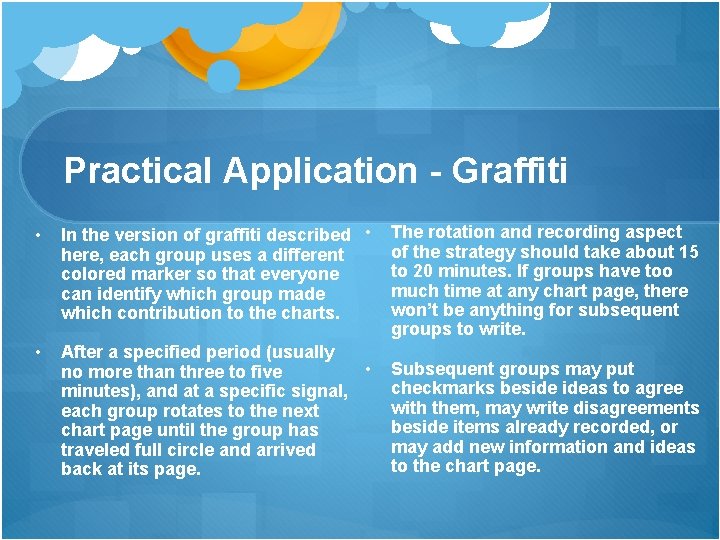
Practical Application - Graffiti • In the version of graffiti described • here, each group uses a different colored marker so that everyone can identify which group made which contribution to the charts. The rotation and recording aspect of the strategy should take about 15 to 20 minutes. If groups have too much time at any chart page, there won’t be anything for subsequent groups to write. • After a specified period (usually • no more than three to five minutes), and at a specific signal, each group rotates to the next chart page until the group has traveled full circle and arrived back at its page. Subsequent groups may put checkmarks beside ideas to agree with them, may write disagreements beside items already recorded, or may add new information and ideas to the chart page.
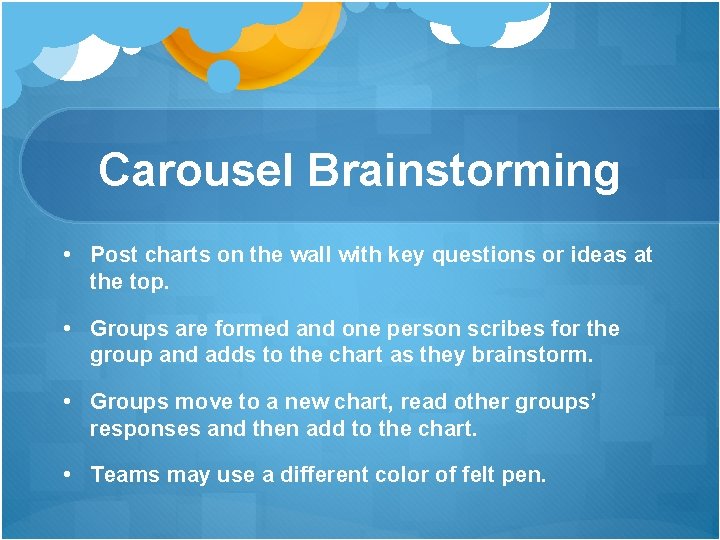
Carousel Brainstorming • Post charts on the wall with key questions or ideas at the top. • Groups are formed and one person scribes for the group and adds to the chart as they brainstorm. • Groups move to a new chart, read other groups’ responses and then add to the chart. • Teams may use a different color of felt pen.
Thank You, Wolford & Glen Oaks Elementary!