VISITING PROFESSORS Investigator Perspectives on Recently Approved and




- Slides: 60
VISITING PROFESSORS Investigator Perspectives on Recently Approved and Emerging Strategies in the Management of Breast Cancer An Interactive Grand Rounds Series Sara Hurvitz, MD Associate Professor of Medicine David Geffen School of Medicine at UCLA Director, Breast Cancer Clinical Research Program Co-Director, Santa Monica-UCLA Outpatient Oncology Practice Santa Monica, California
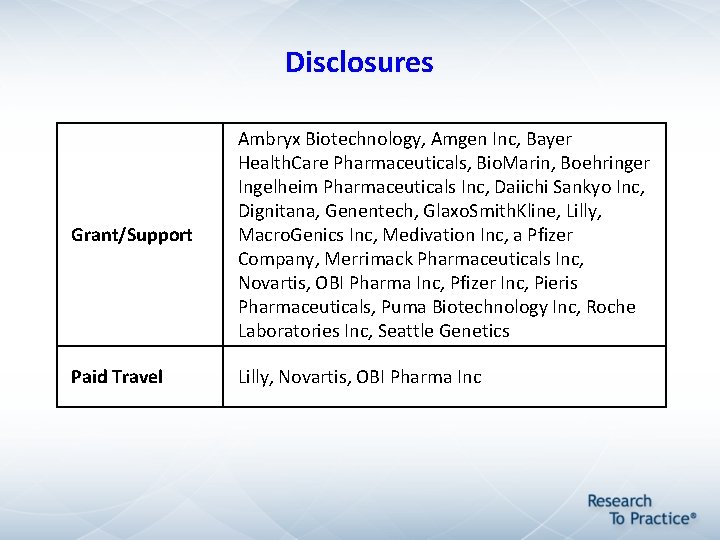
Disclosures Grant/Support Ambryx Biotechnology, Amgen Inc, Bayer Health. Care Pharmaceuticals, Bio. Marin, Boehringer Ingelheim Pharmaceuticals Inc, Daiichi Sankyo Inc, Dignitana, Genentech, Glaxo. Smith. Kline, Lilly, Macro. Genics Inc, Medivation Inc, a Pfizer Company, Merrimack Pharmaceuticals Inc, Novartis, OBI Pharma Inc, Pfizer Inc, Pieris Pharmaceuticals, Puma Biotechnology Inc, Roche Laboratories Inc, Seattle Genetics Paid Travel Lilly, Novartis, OBI Pharma Inc
Grand Rounds Program Steering Committee Harold J Burstein, MD, Ph. D Professor of Medicine Harvard Medical School Breast Oncology Center Dana-Farber Cancer Institute Boston, Massachusetts Charles E Geyer Jr, MD Deputy Director Houston Methodist Cancer Center Houston, Texas Erika Hamilton, MD Director, Breast and Gynecologic Research Program Sarah Cannon Research Institute Nashville, Tennessee
Grand Rounds Program Steering Committee Sara A Hurvitz, MD Associate Professor of Medicine David Geffen School of Medicine at UCLA Director, Breast Cancer Clinical Research Program Co-Director, Santa Monica-UCLA Outpatient Oncology Practice Santa Monica, California Joyce O’Shaughnessy, MD Celebrating Women Chair in Breast Cancer Research Baylor University Medical Center Director, Breast Cancer Research Program Texas Oncology US Oncology Dallas, Texas Rita Nanda, MD Director, Breast Oncology Associate Professor of Medicine Section of Hematology/Oncology The University of Chicago, Illinois Hope S Rugo, MD Professor of Medicine Director, Breast Oncology and Clinical Trials Education University of California, San Francisco Helen Diller Family Comprehensive Cancer Center San Francisco, California
Grand Rounds Program Steering Committee Sara M Tolaney, MD, MPH Associate Director, Susan F Smith Center for Women’s Cancers Director of Clinical Trials Breast Oncology Director of Breast Immunotherapy Clinical Research Senior Physician Breast Oncology Program Dana-Farber Cancer Institute Assistant Professor of Medicine Harvard Medical School Boston, Massachusetts Project Chair Neil Love, MD Research To Practice Miami, Florida
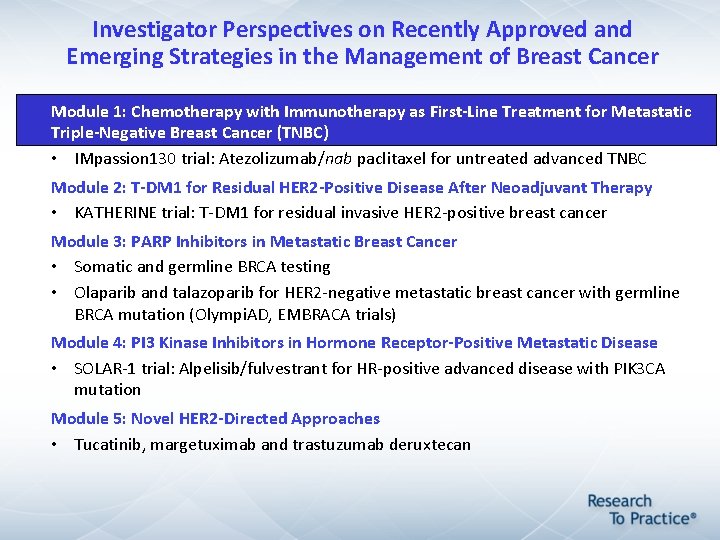
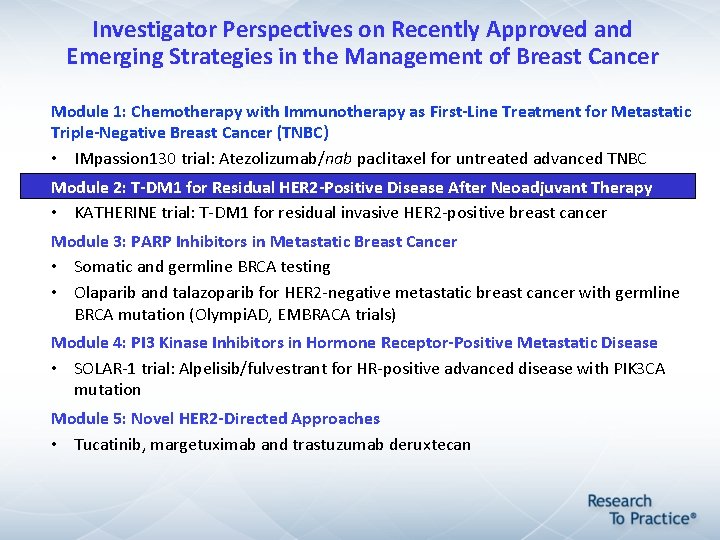
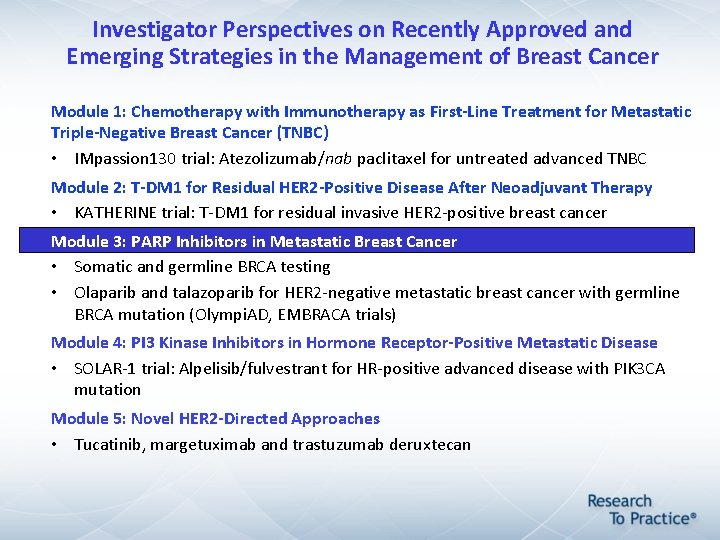
Investigator Perspectives on Recently Approved and Emerging Strategies in the Management of Breast Cancer Module 1: Chemotherapy with Immunotherapy as First-Line Treatment for Metastatic Triple-Negative Breast Cancer (TNBC) • IMpassion 130 trial: Atezolizumab/nab paclitaxel for untreated advanced TNBC Module 2: T-DM 1 for Residual HER 2 -Positive Disease After Neoadjuvant Therapy • KATHERINE trial: T-DM 1 for residual invasive HER 2 -positive breast cancer Module 3: PARP Inhibitors in Metastatic Breast Cancer • Somatic and germline BRCA testing • Olaparib and talazoparib for HER 2 -negative metastatic breast cancer with germline BRCA mutation (Olympi. AD, EMBRACA trials) Module 4: PI 3 Kinase Inhibitors in Hormone Receptor-Positive Metastatic Disease • SOLAR-1 trial: Alpelisib/fulvestrant for HR-positive advanced disease with PIK 3 CA mutation Module 5: Novel HER 2 -Directed Approaches • Tucatinib, margetuximab and trastuzumab deruxtecan
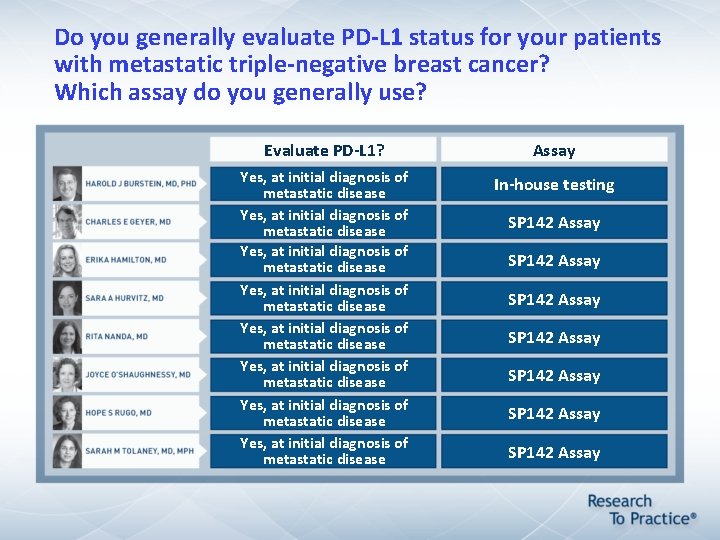
Do you generally evaluate PD-L 1 status for your patients with metastatic triple-negative breast cancer? Which assay do you generally use? Evaluate PD-L 1? Assay Yes, at initial diagnosis of metastatic disease Yes, at initial diagnosis of metastatic disease In-house testing SP 142 Assay SP 142 Assay
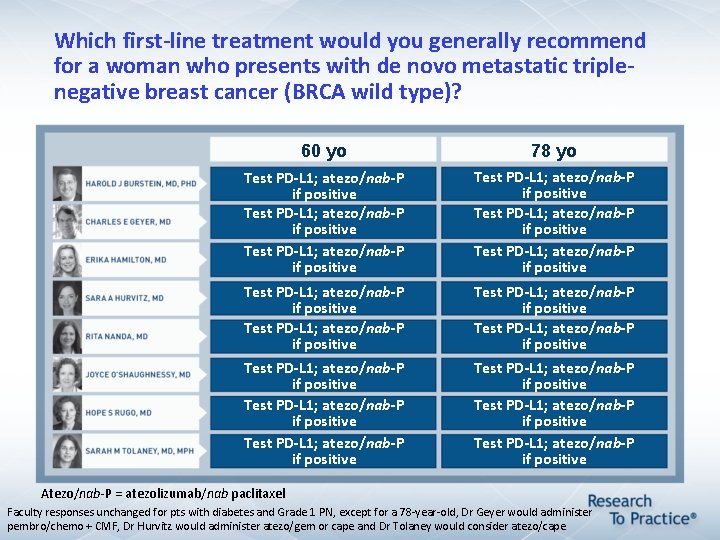
Which first-line treatment would you generally recommend for a woman who presents with de novo metastatic triplenegative breast cancer (BRCA wild type)? 60 yo 78 yo Test PD-L 1; atezo/nab-P if positive Test PD-L 1; atezo/nab-P if positive Test PD-L 1; atezo/nab-P if positive Test PD-L 1; atezo/nab-P if positive Atezo/nab-P = atezolizumab/nab paclitaxel Faculty responses unchanged for pts with diabetes and Grade 1 PN, except for a 78 -year-old, Dr Geyer would administer pembro/chemo + CMF, Dr Hurvitz would administer atezo/gem or cape and Dr Tolaney would consider atezo/cape
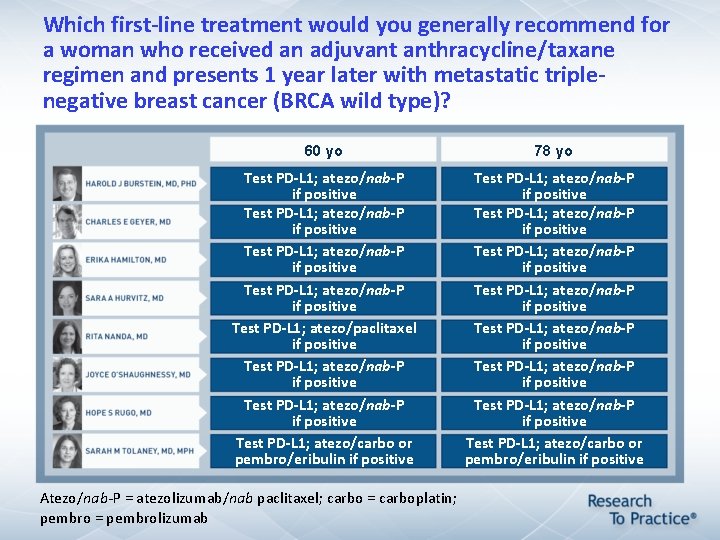
Which first-line treatment would you generally recommend for a woman who received an adjuvant anthracycline/taxane regimen and presents 1 year later with metastatic triplenegative breast cancer (BRCA wild type)? 60 yo 78 yo Test PD-L 1; atezo/nab-P if positive Test PD-L 1; atezo/paclitaxel if positive Test PD-L 1; atezo/nab-P if positive Test PD-L 1; atezo/carbo or pembro/eribulin if positive Test PD-L 1; atezo/nab-P if positive Test PD-L 1; atezo/nab-P if positive Test PD-L 1; atezo/carbo or pembro/eribulin if positive Atezo/nab-P = atezolizumab/nab paclitaxel; carbo = carboplatin; pembro = pembrolizumab
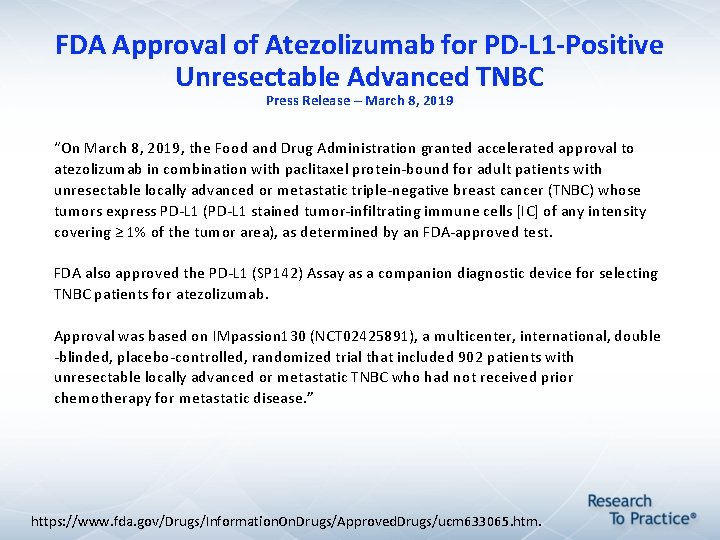
FDA Approval of Atezolizumab for PD-L 1 -Positive Unresectable Advanced TNBC Press Release – March 8, 2019 “On March 8, 2019, the Food and Drug Administration granted accelerated approval to atezolizumab in combination with paclitaxel protein-bound for adult patients with unresectable locally advanced or metastatic triple-negative breast cancer (TNBC) whose tumors express PD-L 1 (PD-L 1 stained tumor-infiltrating immune cells [IC] of any intensity covering ≥ 1% of the tumor area), as determined by an FDA-approved test. FDA also approved the PD-L 1 (SP 142) Assay as a companion diagnostic device for selecting TNBC patients for atezolizumab. Approval was based on IMpassion 130 (NCT 02425891), a multicenter, international, double -blinded, placebo-controlled, randomized trial that included 902 patients with unresectable locally advanced or metastatic TNBC who had not received prior chemotherapy for metastatic disease. ” https: //www. fda. gov/Drugs/Information. On. Drugs/Approved. Drugs/ucm 633065. htm.
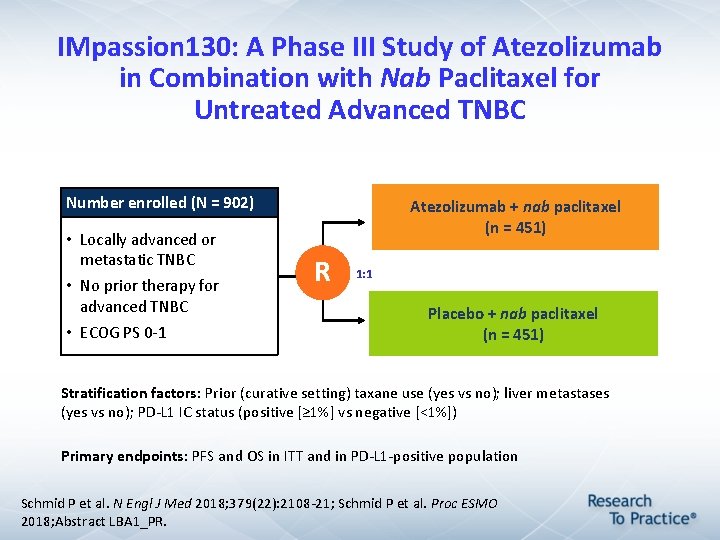
IMpassion 130: A Phase III Study of Atezolizumab in Combination with Nab Paclitaxel for Untreated Advanced TNBC Number enrolled (N = 902) • Locally advanced or metastatic TNBC • No prior therapy for advanced TNBC • ECOG PS 0 -1 Atezolizumab + nab paclitaxel (n = 451) R 1: 1 Placebo + nab paclitaxel (n = 451) Stratification factors: Prior (curative setting) taxane use (yes vs no); liver metastases (yes vs no); PD-L 1 IC status (positive [≥ 1%] vs negative [<1%]) Primary endpoints: PFS and OS in ITT and in PD-L 1 -positive population Schmid P et al. N Engl J Med 2018; 379(22): 2108 -21; Schmid P et al. Proc ESMO 2018; Abstract LBA 1_PR.
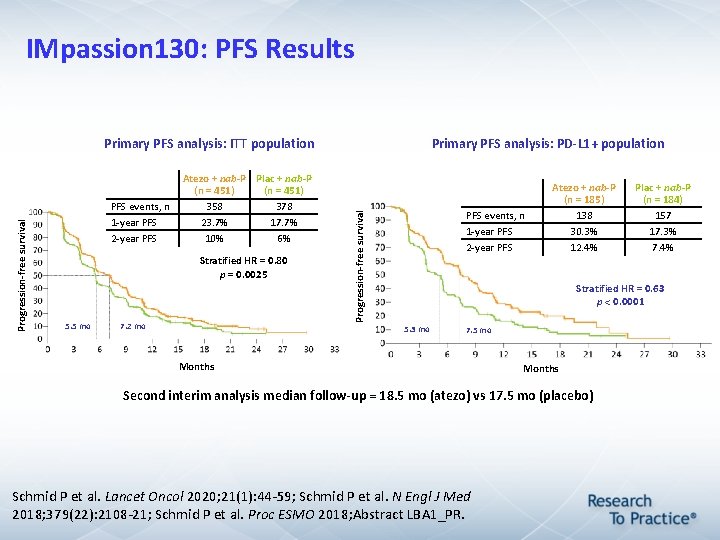
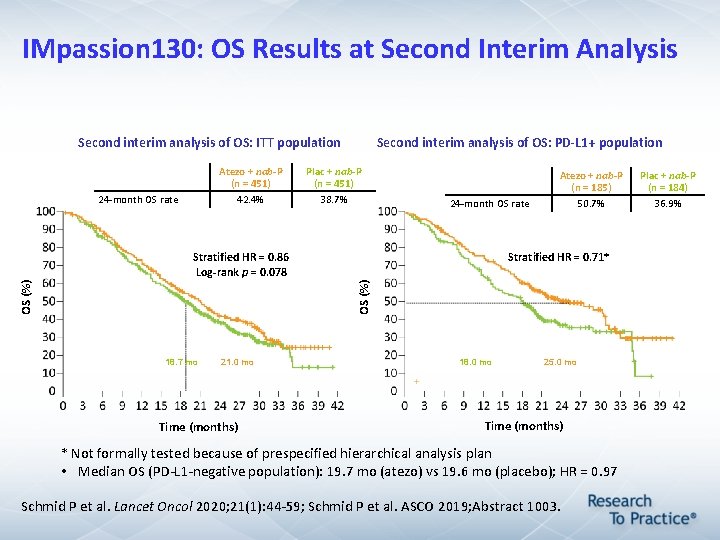
IMpassion 130: PFS Results PFS events, n 1 -year PFS 2 -year PFS Atezo + nab-P Plac + nab-P (n = 451) 358 378 23. 7% 17. 7% 10% 6% Stratified HR = 0. 80 p = 0. 0025 5. 5 mo 7. 2 mo Primary PFS analysis: PD-L 1+ population PFS events, n 1 -year PFS 2 -year PFS Progression-free survival Primary PFS analysis: ITT population Atezo + nab-P (n = 185) 138 30. 3% 12. 4% Plac + nab-P (n = 184) 157 17. 3% 7. 4% Stratified HR = 0. 63 p < 0. 0001 5. 3 mo 7. 5 mo Months Second interim analysis median follow-up = 18. 5 mo (atezo) vs 17. 5 mo (placebo) Schmid P et al. Lancet Oncol 2020; 21(1): 44 -59; Schmid P et al. N Engl J Med 2018; 379(22): 2108 -21; Schmid P et al. Proc ESMO 2018; Abstract LBA 1_PR.
IMpassion 130: OS Results at Second Interim Analysis Second interim analysis of OS: ITT population Atezo + nab-P (n = 451) 42. 4% 24 -month OS rate Second interim analysis of OS: PD-L 1+ population Plac + nab-P (n = 451) 38. 7% 24 -month OS rate Atezo + nab-P (n = 185) 50. 7% Stratified HR = 0. 71* OS (%) Stratified HR = 0. 86 Log-rank p = 0. 078 18. 7 mo 21. 0 mo Time (months) 18. 0 mo 25. 0 mo Time (months) * Not formally tested because of prespecified hierarchical analysis plan • Median OS (PD-L 1 -negative population): 19. 7 mo (atezo) vs 19. 6 mo (placebo); HR = 0. 97 Schmid P et al. Lancet Oncol 2020; 21(1): 44 -59; Schmid P et al. ASCO 2019; Abstract 1003. Plac + nab-P (n = 184) 36. 9%
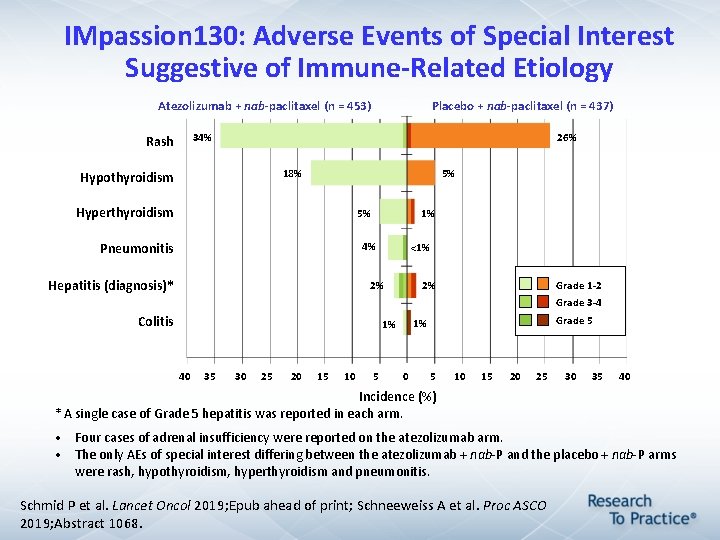
IMpassion 130: Adverse Events of Special Interest Suggestive of Immune-Related Etiology Atezolizumab + nab-paclitaxel (n = 453) Placebo + nab-paclitaxel (n = 437) 34% Rash 26% 18% Hypothyroidism 5% Hyperthyroidism 5% Pneumonitis 1% 4% Hepatitis (diagnosis)* <1% 2% 2% Grade 1 -2 Grade 3 -4 Colitis 40 35 30 25 20 15 10 5 Grade 5 1% 1% 0 5 10 15 20 25 30 35 40 Incidence (%) * A single case of Grade 5 hepatitis was reported in each arm. • Four cases of adrenal insufficiency were reported on the atezolizumab arm. • The only AEs of special interest differing between the atezolizumab + nab-P and the placebo + nab-P arms were rash, hypothyroidism, hyperthyroidism and pneumonitis. Schmid P et al. Lancet Oncol 2019; Epub ahead of print; Schneeweiss A et al. Proc ASCO 2019; Abstract 1068.
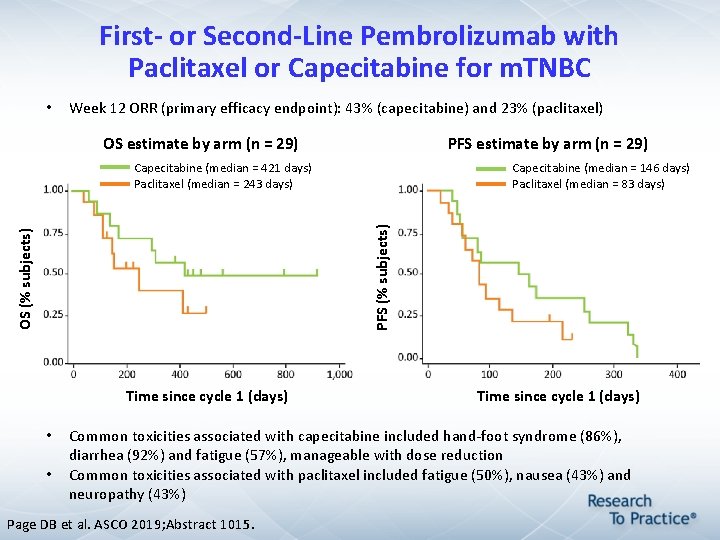
First- or Second-Line Pembrolizumab with Paclitaxel or Capecitabine for m. TNBC • Week 12 ORR (primary efficacy endpoint): 43% (capecitabine) and 23% (paclitaxel) OS estimate by arm (n = 29) PFS estimate by arm (n = 29) Capecitabine (median = 421 days) Paclitaxel (median = 243 days) OS (% subjects) PFS (% subjects) Capecitabine (median = 146 days) Paclitaxel (median = 83 days) Time since cycle 1 (days) • • Time since cycle 1 (days) Common toxicities associated with capecitabine included hand-foot syndrome (86%), diarrhea (92%) and fatigue (57%), manageable with dose reduction Common toxicities associated with paclitaxel included fatigue (50%), nausea (43%) and neuropathy (43%) Page DB et al. ASCO 2019; Abstract 1015.
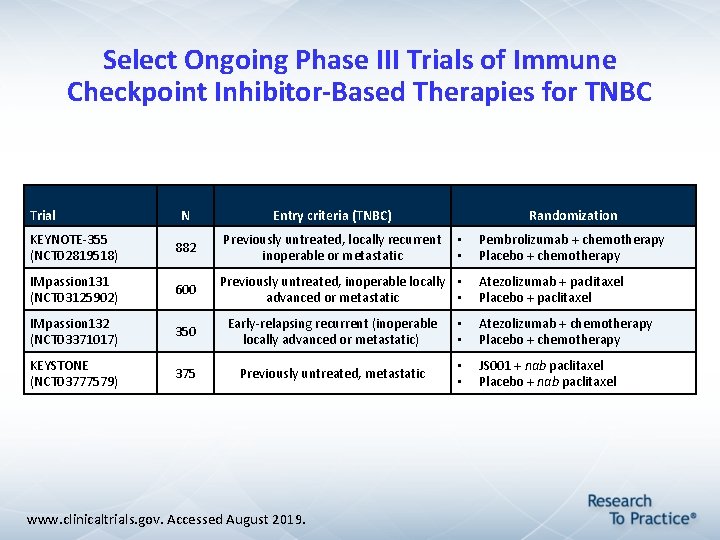
Select Ongoing Phase III Trials of Immune Checkpoint Inhibitor-Based Therapies for TNBC Trial N Entry criteria (TNBC) Randomization KEYNOTE-355 (NCT 02819518) 882 Previously untreated, locally recurrent • inoperable or metastatic • Pembrolizumab + chemotherapy Placebo + chemotherapy IMpassion 131 (NCT 03125902) 600 Previously untreated, inoperable locally • advanced or metastatic • Atezolizumab + paclitaxel Placebo + paclitaxel IMpassion 132 (NCT 03371017) 350 Early-relapsing recurrent (inoperable locally advanced or metastatic) • • Atezolizumab + chemotherapy Placebo + chemotherapy KEYSTONE (NCT 03777579) 375 Previously untreated, metastatic • • JS 001 + nab paclitaxel Placebo + nab paclitaxel www. clinicaltrials. gov. Accessed August 2019.
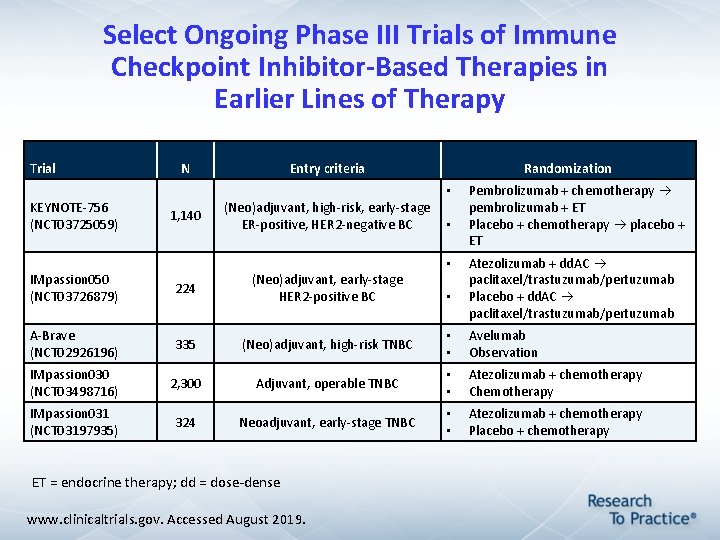
Select Ongoing Phase III Trials of Immune Checkpoint Inhibitor-Based Therapies in Earlier Lines of Therapy Trial N Entry criteria Randomization • KEYNOTE-756 (NCT 03725059) 1, 140 (Neo)adjuvant, high-risk, early-stage ER-positive, HER 2 -negative BC • • Pembrolizumab + chemotherapy pembrolizumab + ET Placebo + chemotherapy placebo + ET Atezolizumab + dd. AC paclitaxel/trastuzumab/pertuzumab Placebo + dd. AC paclitaxel/trastuzumab/pertuzumab IMpassion 050 (NCT 03726879) 224 (Neo)adjuvant, early-stage HER 2 -positive BC A-Brave (NCT 02926196) 335 (Neo)adjuvant, high-risk TNBC • • Avelumab Observation IMpassion 030 (NCT 03498716) 2, 300 Adjuvant, operable TNBC • • Atezolizumab + chemotherapy Chemotherapy IMpassion 031 (NCT 03197935) 324 Neoadjuvant, early-stage TNBC • • Atezolizumab + chemotherapy Placebo + chemotherapy ET = endocrine therapy; dd = dose-dense www. clinicaltrials. gov. Accessed August 2019. •
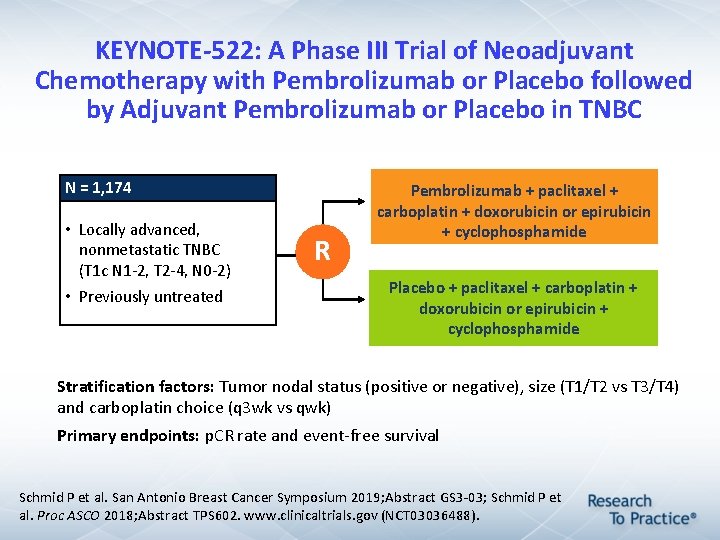
KEYNOTE-522: A Phase III Trial of Neoadjuvant Chemotherapy with Pembrolizumab or Placebo followed by Adjuvant Pembrolizumab or Placebo in TNBC N = 1, 174 • Locally advanced, nonmetastatic TNBC (T 1 c N 1 -2, T 2 -4, N 0 -2) • Previously untreated R Pembrolizumab + paclitaxel + carboplatin + doxorubicin or epirubicin + cyclophosphamide Placebo + paclitaxel + carboplatin + doxorubicin or epirubicin + cyclophosphamide Stratification factors: Tumor nodal status (positive or negative), size (T 1/T 2 vs T 3/T 4) and carboplatin choice (q 3 wk vs qwk) Primary endpoints: p. CR rate and event-free survival Schmid P et al. San Antonio Breast Cancer Symposium 2019; Abstract GS 3 -03; Schmid P et al. Proc ASCO 2018; Abstract TPS 602. www. clinicaltrials. gov (NCT 03036488).
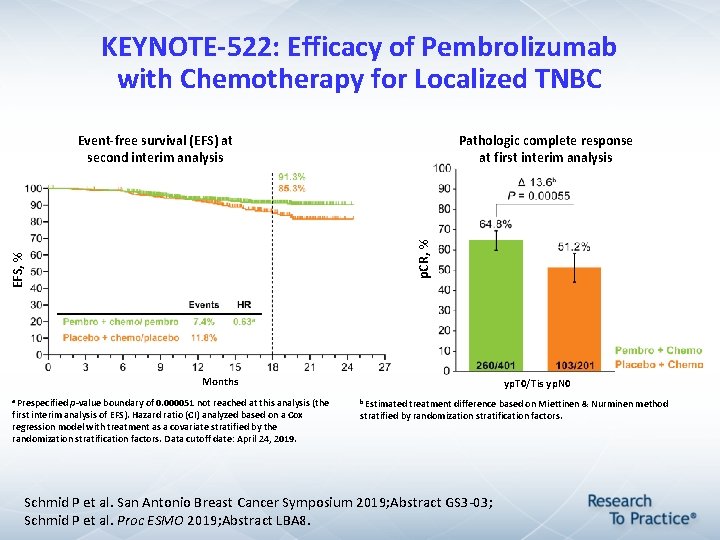
KEYNOTE-522: Efficacy of Pembrolizumab with Chemotherapy for Localized TNBC Event-free survival (EFS) at second interim analysis Pathologic complete response at first interim analysis EFS, % p. CR, % Months a Prespecified p-value boundary of 0. 000051 not reached at this analysis (the first interim analysis of EFS). Hazard ratio (CI) analyzed based on a Cox regression model with treatment as a covariate stratified by the randomization stratification factors. Data cutoff date: April 24, 2019. yp. T 0/Tis yp. N 0 b Estimated treatment difference based on Miettinen & Nurminen method stratified by randomization stratification factors. Schmid P et al. San Antonio Breast Cancer Symposium 2019; Abstract GS 3 -03; Schmid P et al. Proc ESMO 2019; Abstract LBA 8.
Investigator Perspectives on Recently Approved and Emerging Strategies in the Management of Breast Cancer Module 1: Chemotherapy with Immunotherapy as First-Line Treatment for Metastatic Triple-Negative Breast Cancer (TNBC) • IMpassion 130 trial: Atezolizumab/nab paclitaxel for untreated advanced TNBC Module 2: T-DM 1 for Residual HER 2 -Positive Disease After Neoadjuvant Therapy • KATHERINE trial: T-DM 1 for residual invasive HER 2 -positive breast cancer Module 3: PARP Inhibitors in Metastatic Breast Cancer • Somatic and germline BRCA testing • Olaparib and talazoparib for HER 2 -negative metastatic breast cancer with germline BRCA mutation (Olympi. AD, EMBRACA trials) Module 4: PI 3 Kinase Inhibitors in Hormone Receptor-Positive Metastatic Disease • SOLAR-1 trial: Alpelisib/fulvestrant for HR-positive advanced disease with PIK 3 CA mutation Module 5: Novel HER 2 -Directed Approaches • Tucatinib, margetuximab and trastuzumab deruxtecan
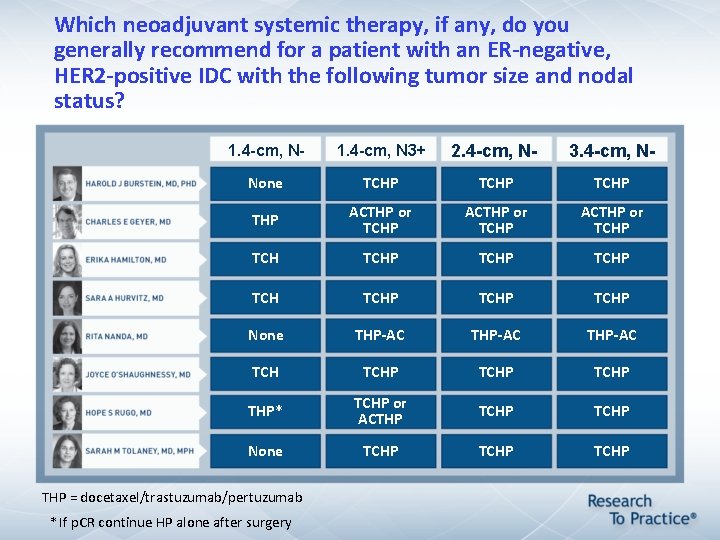
Which neoadjuvant systemic therapy, if any, do you generally recommend for a patient with an ER-negative, HER 2 -positive IDC with the following tumor size and nodal status? 1. 4 -cm, N- 1. 4 -cm, N 3+ 2. 4 -cm, N- 3. 4 -cm, N- None TCHP THP ACTHP or TCHP TCH TCHP TCHP None THP-AC TCHP THP* TCHP or ACTHP TCHP None TCHP THP = docetaxel/trastuzumab/pertuzumab * If p. CR continue HP alone after surgery
Scheeweiss A et al. Eur J Cancer 2018; 89: 27 -35.
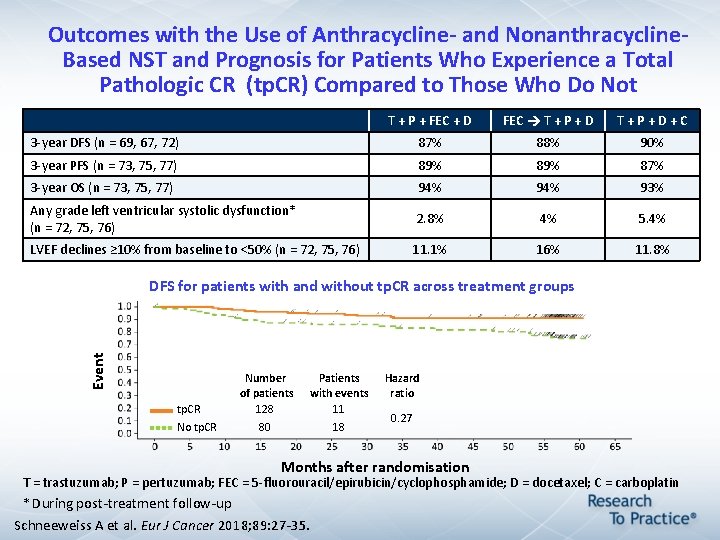
Outcomes with the Use of Anthracycline- and Nonanthracycline. Based NST and Prognosis for Patients Who Experience a Total Pathologic CR (tp. CR) Compared to Those Who Do Not T + P + FEC + D FEC T + P + D + C 3 -year DFS (n = 69, 67, 72) 87% 88% 90% 3 -year PFS (n = 73, 75, 77) 89% 87% 3 -year OS (n = 73, 75, 77) 94% 93% Any grade left ventricular systolic dysfunction* (n = 72, 75, 76) 2. 8% 4% 5. 4% LVEF declines ≥ 10% from baseline to <50% (n = 72, 75, 76) 11. 1% 16% 11. 8% Event DFS for patients with and without tp. CR across treatment groups tp. CR No tp. CR Number of patients 128 Patients with events 11 80 18 Hazard ratio 0. 27 Months after randomisation T = trastuzumab; P = pertuzumab; FEC = 5 -fluorouracil/epirubicin/cyclophosphamide; D = docetaxel; C = carboplatin * During post-treatment follow-up Schneeweiss A et al. Eur J Cancer 2018; 89: 27 -35.
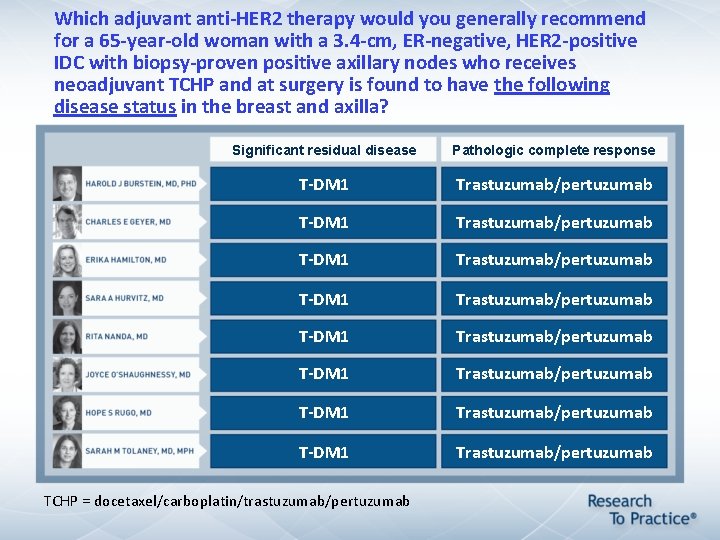
Which adjuvant anti-HER 2 therapy would you generally recommend for a 65 -year-old woman with a 3. 4 -cm, ER-negative, HER 2 -positive IDC with biopsy-proven positive axillary nodes who receives neoadjuvant TCHP and at surgery is found to have the following disease status in the breast and axilla? Significant residual disease Pathologic complete response T-DM 1 Trastuzumab/pertuzumab T-DM 1 Trastuzumab/pertuzumab TCHP = docetaxel/carboplatin/trastuzumab/pertuzumab
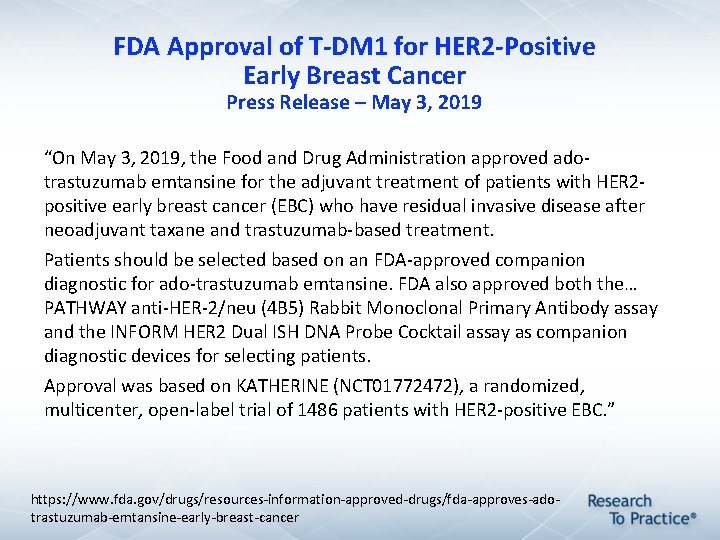
FDA Approval of T-DM 1 for HER 2 -Positive Early Breast Cancer Press Release – May 3, 2019 “On May 3, 2019, the Food and Drug Administration approved adotrastuzumab emtansine for the adjuvant treatment of patients with HER 2 positive early breast cancer (EBC) who have residual invasive disease after neoadjuvant taxane and trastuzumab-based treatment. Patients should be selected based on an FDA-approved companion diagnostic for ado-trastuzumab emtansine. FDA also approved both the… PATHWAY anti-HER-2/neu (4 B 5) Rabbit Monoclonal Primary Antibody assay and the INFORM HER 2 Dual ISH DNA Probe Cocktail assay as companion diagnostic devices for selecting patients. Approval was based on KATHERINE (NCT 01772472), a randomized, multicenter, open-label trial of 1486 patients with HER 2 -positive EBC. ” https: //www. fda. gov/drugs/resources-information-approved-drugs/fda-approves-adotrastuzumab-emtansine-early-breast-cancer
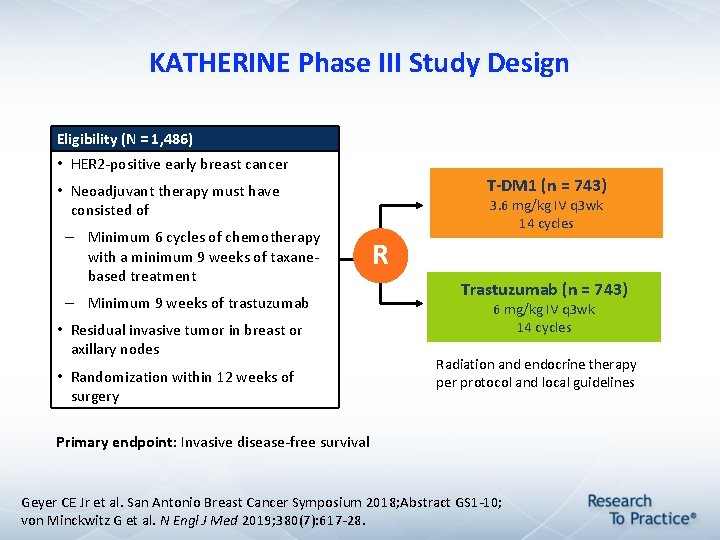
KATHERINE Phase III Study Design Eligibility (N = 1, 486) • HER 2 -positive early breast cancer T-DM 1 (n = 743) • Neoadjuvant therapy must have consisted of – Minimum 6 cycles of chemotherapy with a minimum 9 weeks of taxanebased treatment – Minimum 9 weeks of trastuzumab • Residual invasive tumor in breast or axillary nodes • Randomization within 12 weeks of surgery 3. 6 mg/kg IV q 3 wk 14 cycles R 1: 1 Trastuzumab (n = 743) 6 mg/kg IV q 3 wk 14 cycles Radiation and endocrine therapy per protocol and local guidelines Primary endpoint: Invasive disease-free survival Geyer CE Jr et al. San Antonio Breast Cancer Symposium 2018; Abstract GS 1 -10; von Minckwitz G et al. N Engl J Med 2019; 380(7): 617 -28.
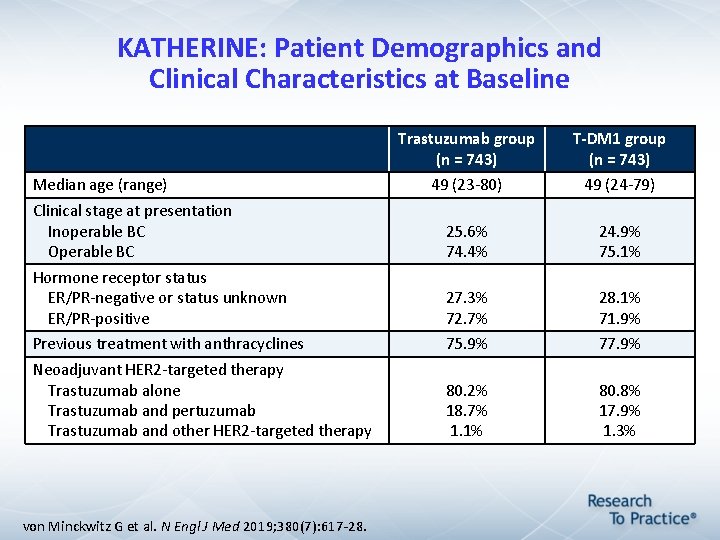
KATHERINE: Patient Demographics and Clinical Characteristics at Baseline Trastuzumab group (n = 743) T-DM 1 group (n = 743) 49 (23 -80) 49 (24 -79) Clinical stage at presentation Inoperable BC Operable BC 25. 6% 74. 4% 24. 9% 75. 1% Hormone receptor status ER/PR-negative or status unknown ER/PR-positive 27. 3% 72. 7% 28. 1% 71. 9% Previous treatment with anthracyclines 75. 9% 77. 9% Neoadjuvant HER 2 -targeted therapy Trastuzumab alone Trastuzumab and pertuzumab Trastuzumab and other HER 2 -targeted therapy 80. 2% 18. 7% 1. 1% 80. 8% 17. 9% 1. 3% Median age (range) von Minckwitz G et al. N Engl J Med 2019; 380(7): 617 -28.
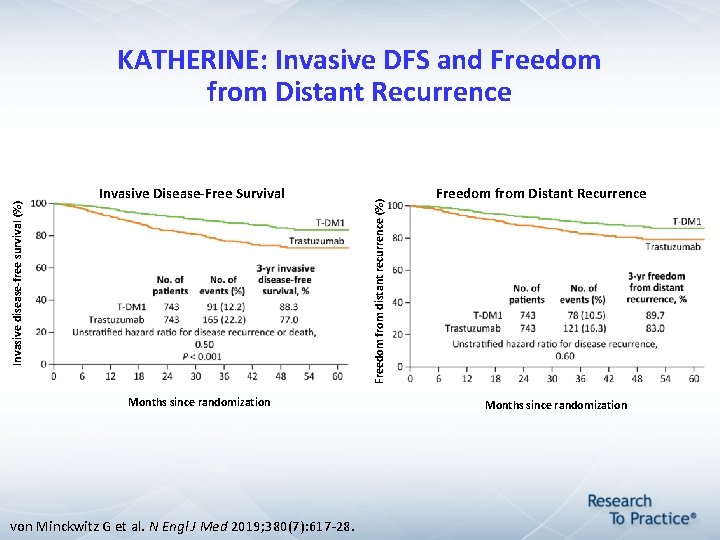
Invasive Disease-Free Survival Months since randomization von Minckwitz G et al. N Engl J Med 2019; 380(7): 617 -28. Freedom from distant recurrence (%) Invasive disease-free survival (%) KATHERINE: Invasive DFS and Freedom from Distant Recurrence Months since randomization
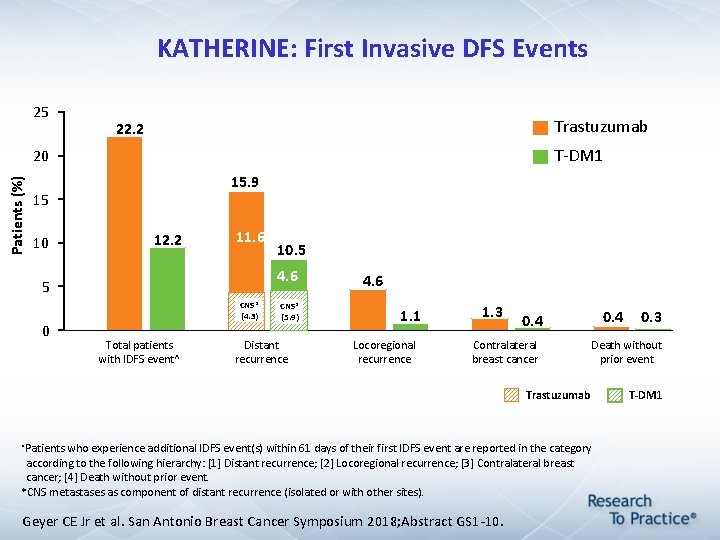
KATHERINE: First Invasive DFS Events 25 Trastuzumab 22. 2 T-DM 1 Patients (%) 20 15. 9 15 10 12. 2 11. 6 4. 6 5 0 10. 5 CNS* (4. 3) Total patients with IDFS event^ CNS* (5. 9) Distant recurrence 4. 6 1. 1 Locoregional recurrence 1. 3 0. 4 Contralateral breast cancer Death without prior event Trastuzumab ^Patients who experience additional IDFS event(s) within 61 days of their first IDFS event are reported in the category according to the following hierarchy: [1] Distant recurrence; [2] Locoregional recurrence; [3] Contralateral breast cancer; [4] Death without prior event. *CNS metastases as component of distant recurrence (isolated or with other sites). Geyer CE Jr et al. San Antonio Breast Cancer Symposium 2018; Abstract GS 1 -10. 0. 3 T-DM 1
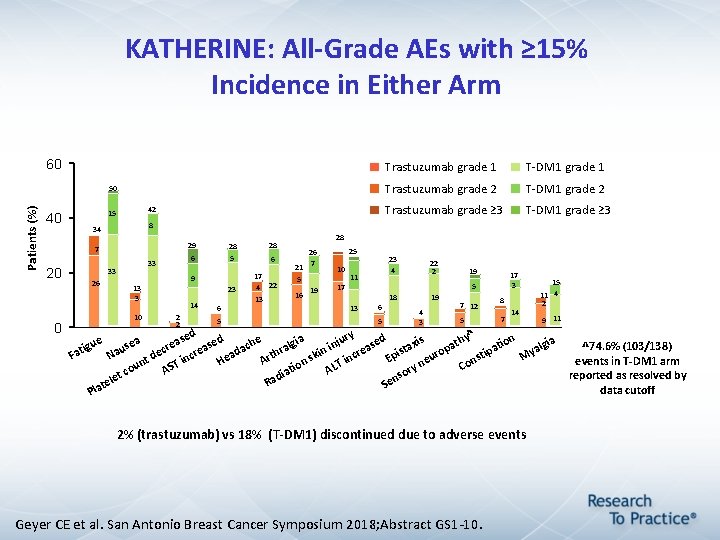
KATHERINE: All-Grade AEs with ≥ 15% Incidence in Either Arm 60 Patients (%) 50 42 15 40 29 7 9 13 3 10 0 Fa Trastuzumab grade 2 T-DM 1 grade 2 Trastuzumab grade ≥ 3 T-DM 1 grade ≥ 3 23 14 2 2 6 5 28 28 28 5 6 33 33 26 T-DM 1 grade 1 8 34 20 Trastuzumab grade 1 6 17 4 22 13 21 5 16 26 7 19 25 10 23 4 11 22 2 17 3 5 17 18 13 19 6 5 19 4 3 7 12 5 8 7 14 15 11 4 2 9 11 d ^ y n e hy ia a is jur ased ia ased t h g e x l n e tio a c s i a r a a a p t alg u c r e e n s p d o y a i i r e i r h r a t c t k c N u s M n Ep s t d Ar He on T in ne on un AST i L C i y o t r A c ia t so ad en ele R S t a l e u tig P 2% (trastuzumab) vs 18% (T-DM 1) discontinued due to adverse events Geyer CE et al. San Antonio Breast Cancer Symposium 2018; Abstract GS 1 -10. ^74. 6% (103/138) events in T-DM 1 arm reported as resolved by data cutoff
Investigator Perspectives on Recently Approved and Emerging Strategies in the Management of Breast Cancer Module 1: Chemotherapy with Immunotherapy as First-Line Treatment for Metastatic Triple-Negative Breast Cancer (TNBC) • IMpassion 130 trial: Atezolizumab/nab paclitaxel for untreated advanced TNBC Module 2: T-DM 1 for Residual HER 2 -Positive Disease After Neoadjuvant Therapy • KATHERINE trial: T-DM 1 for residual invasive HER 2 -positive breast cancer Module 3: PARP Inhibitors in Metastatic Breast Cancer • Somatic and germline BRCA testing • Olaparib and talazoparib for HER 2 -negative metastatic breast cancer with germline BRCA mutation (Olympi. AD, EMBRACA trials) Module 4: PI 3 Kinase Inhibitors in Hormone Receptor-Positive Metastatic Disease • SOLAR-1 trial: Alpelisib/fulvestrant for HR-positive advanced disease with PIK 3 CA mutation Module 5: Novel HER 2 -Directed Approaches • Tucatinib, margetuximab and trastuzumab deruxtecan
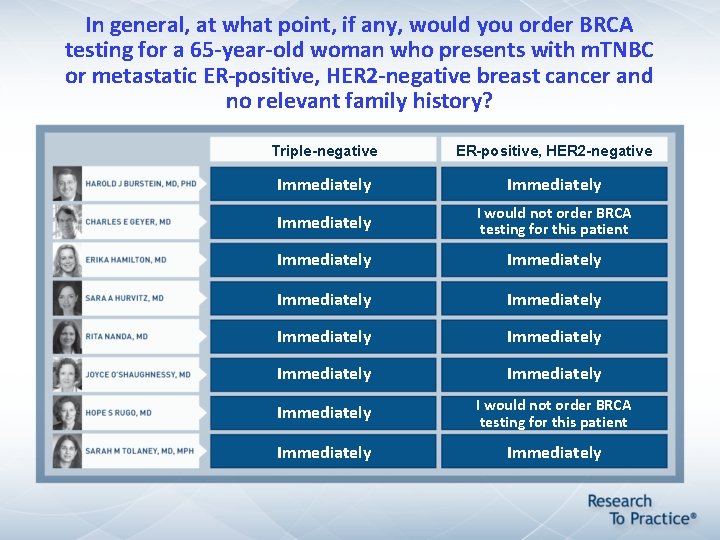
In general, at what point, if any, would you order BRCA testing for a 65 -year-old woman who presents with m. TNBC or metastatic ER-positive, HER 2 -negative breast cancer and no relevant family history? Triple-negative ER-positive, HER 2 -negative Immediately I would not order BRCA testing for this patient Immediately Immediately Immediately I would not order BRCA testing for this patient Immediately
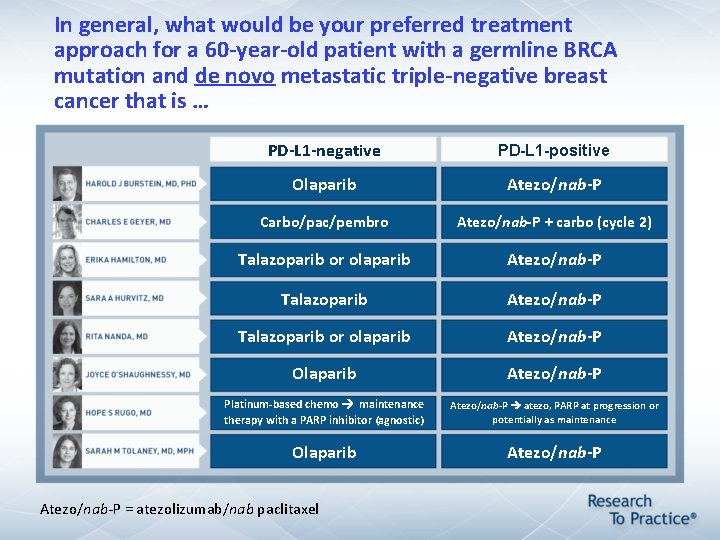
In general, what would be your preferred treatment approach for a 60 -year-old patient with a germline BRCA mutation and de novo metastatic triple-negative breast cancer that is … PD-L 1 -negative PD-L 1 -positive Olaparib Atezo/nab-P Carbo/pac/pembro Atezo/nab-P + carbo (cycle 2) Talazoparib or olaparib Atezo/nab-P Olaparib Atezo/nab-P Platinum-based chemo maintenance therapy with a PARP inhibitor (agnostic) Atezo/nab-P atezo, PARP at progression or potentially as maintenance Olaparib Atezo/nab-P = atezolizumab/nab paclitaxel
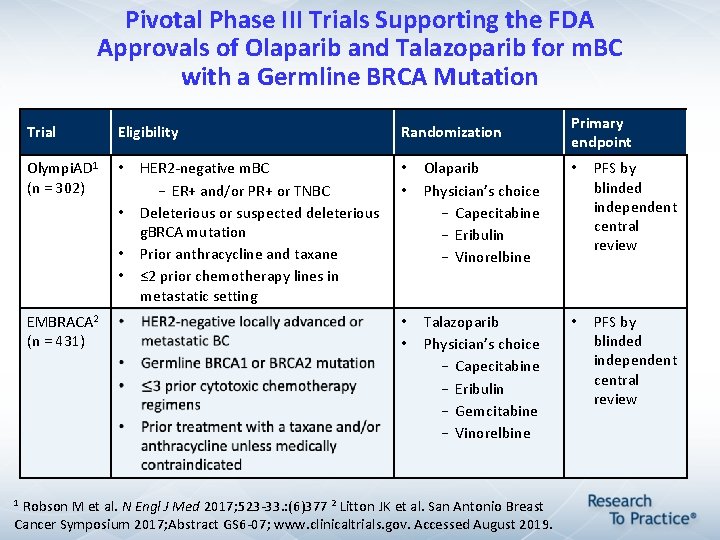
Pivotal Phase III Trials Supporting the FDA Approvals of Olaparib and Talazoparib for m. BC with a Germline BRCA Mutation Trial Eligibility Olympi. AD 1 (n = 302) • • EMBRACA 2 (n = 431) HER 2 -negative m. BC – ER+ and/or PR+ or TNBC Deleterious or suspected deleterious g. BRCA mutation Prior anthracycline and taxane ≤ 2 prior chemotherapy lines in metastatic setting Randomization Primary endpoint • • Olaparib Physician’s choice – Capecitabine – Eribulin – Vinorelbine • PFS by blinded independent central review • • Talazoparib Physician’s choice – Capecitabine – Eribulin – Gemcitabine – Vinorelbine • PFS by blinded independent central review 1 Robson M et al. N Engl J Med 2017; 523 -33. : (6)377 2 Litton JK et al. San Antonio Breast Cancer Symposium 2017; Abstract GS 6 -07; www. clinicaltrials. gov. Accessed August 2019.
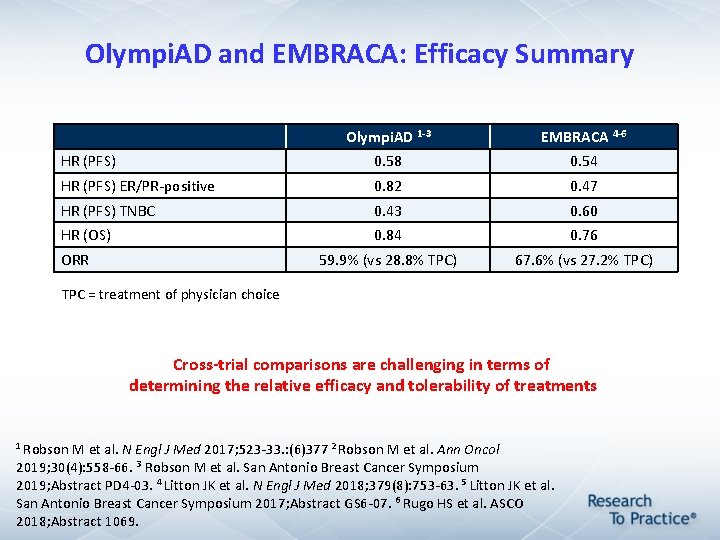
Olympi. AD and EMBRACA: Efficacy Summary Olympi. AD 1 -3 EMBRACA 4 -6 HR (PFS) 0. 58 0. 54 HR (PFS) ER/PR-positive 0. 82 0. 47 HR (PFS) TNBC 0. 43 0. 60 HR (OS) 0. 84 0. 76 59. 9% (vs 28. 8% TPC) 67. 6% (vs 27. 2% TPC) ORR TPC = treatment of physician choice Cross-trial comparisons are challenging in terms of determining the relative efficacy and tolerability of treatments 1 Robson M et al. N Engl J Med 2017; 523 -33. : (6)377 2 Robson M et al. Ann Oncol 2019; 30(4): 558 -66. 3 Robson M et al. San Antonio Breast Cancer Symposium 2019; Abstract PD 4 -03. 4 Litton JK et al. N Engl J Med 2018; 379(8): 753 -63. 5 Litton JK et al. San Antonio Breast Cancer Symposium 2017; Abstract GS 6 -07. 6 Rugo HS et al. ASCO 2018; Abstract 1069.
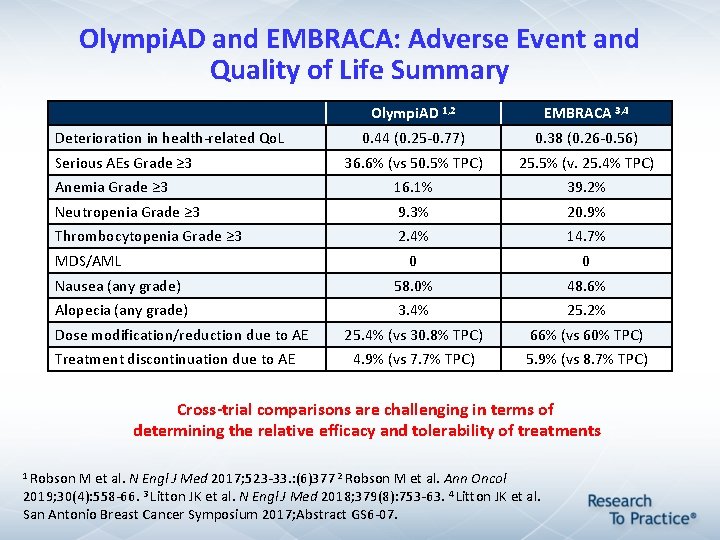
Olympi. AD and EMBRACA: Adverse Event and Quality of Life Summary Olympi. AD 1, 2 EMBRACA 3, 4 0. 44 (0. 25 -0. 77) 0. 38 (0. 26 -0. 56) 36. 6% (vs 50. 5% TPC) 25. 5% (v. 25. 4% TPC) Anemia Grade ≥ 3 16. 1% 39. 2% Neutropenia Grade ≥ 3 9. 3% 20. 9% Thrombocytopenia Grade ≥ 3 2. 4% 14. 7% 0 0 Nausea (any grade) 58. 0% 48. 6% Alopecia (any grade) 3. 4% 25. 2% 25. 4% (vs 30. 8% TPC) 66% (vs 60% TPC) 4. 9% (vs 7. 7% TPC) 5. 9% (vs 8. 7% TPC) Deterioration in health-related Qo. L Serious AEs Grade ≥ 3 MDS/AML Dose modification/reduction due to AE Treatment discontinuation due to AE Cross-trial comparisons are challenging in terms of determining the relative efficacy and tolerability of treatments 1 Robson M et al. N Engl J Med 2017; 523 -33. : (6)377 2 Robson M et al. Ann Oncol 2019; 30(4): 558 -66. 3 Litton JK et al. N Engl J Med 2018; 379(8): 753 -63. 4 Litton JK et al. San Antonio Breast Cancer Symposium 2017; Abstract GS 6 -07.
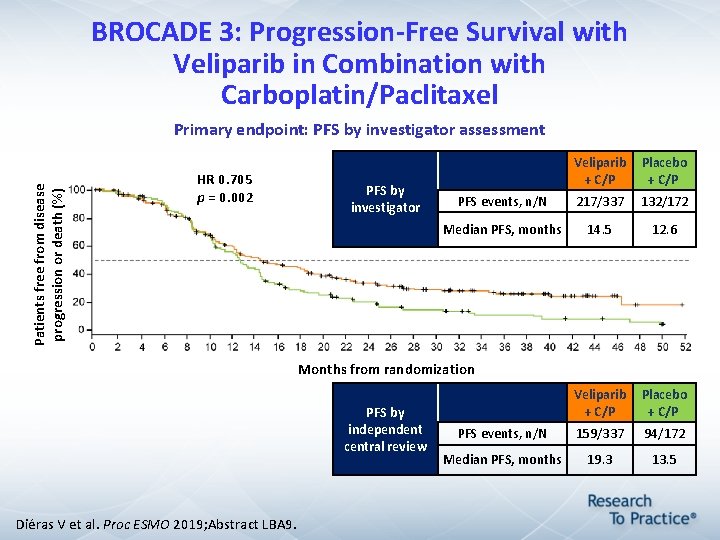
BROCADE 3: Progression-Free Survival with Veliparib in Combination with Carboplatin/Paclitaxel Patients free from disease progression or death (%) Primary endpoint: PFS by investigator assessment HR 0. 705 p = 0. 002 PFS by investigator Veliparib Placebo + C/P PFS events, n/N 217/337 132/172 Median PFS, months 14. 5 12. 6 Months from randomization PFS by independent central review Diéras V et al. Proc ESMO 2019; Abstract LBA 9. Veliparib Placebo + C/P PFS events, n/N 159/337 94/172 Median PFS, months 19. 3 13. 5
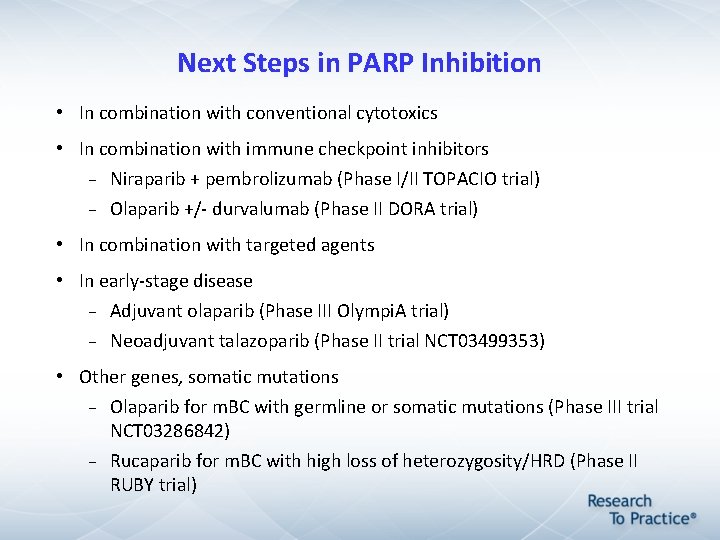
Next Steps in PARP Inhibition • In combination with conventional cytotoxics • In combination with immune checkpoint inhibitors Niraparib + pembrolizumab (Phase I/II TOPACIO trial) Olaparib +/- durvalumab (Phase II DORA trial) • In combination with targeted agents • In early-stage disease Adjuvant olaparib (Phase III Olympi. A trial) Neoadjuvant talazoparib (Phase II trial NCT 03499353) • Other genes, somatic mutations Olaparib for m. BC with germline or somatic mutations (Phase III trial NCT 03286842) Rucaparib for m. BC with high loss of heterozygosity/HRD (Phase II RUBY trial)
Investigator Perspectives on Recently Approved and Emerging Strategies in the Management of Breast Cancer Module 1: Chemotherapy with Immunotherapy as First-Line Treatment for Metastatic Triple-Negative Breast Cancer (TNBC) • IMpassion 130 trial: Atezolizumab/nab paclitaxel for untreated advanced TNBC Module 2: T-DM 1 for Residual HER 2 -Positive Disease After Neoadjuvant Therapy • KATHERINE trial: T-DM 1 for residual invasive HER 2 -positive breast cancer Module 3: PARP Inhibitors in Metastatic Breast Cancer • Somatic and germline BRCA testing • Olaparib and talazoparib for HER 2 -negative metastatic breast cancer with germline BRCA mutation (Olympi. AD, EMBRACA trials) Module 4: PI 3 Kinase Inhibitors in Hormone Receptor-Positive Metastatic Disease • SOLAR-1 trial: Alpelisib/fulvestrant for HR-positive advanced disease with PIK 3 CA mutation Module 5: Novel HER 2 -Directed Approaches • Tucatinib, margetuximab and trastuzumab deruxtecan
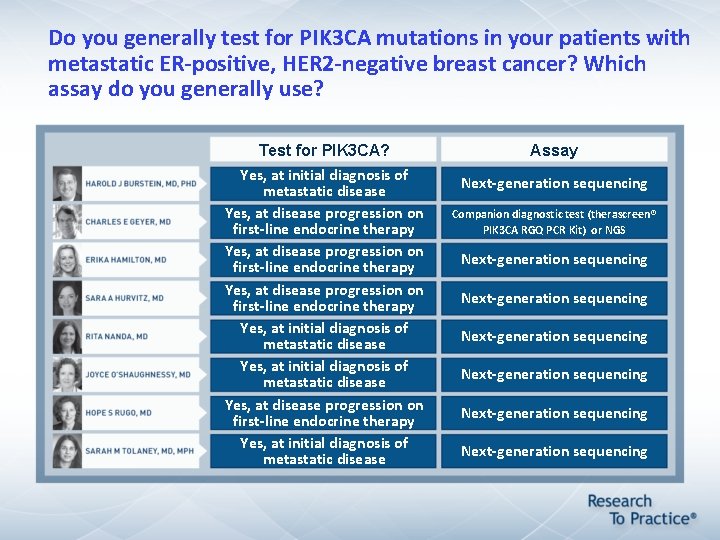
Do you generally test for PIK 3 CA mutations in your patients with metastatic ER-positive, HER 2 -negative breast cancer? Which assay do you generally use? Test for PIK 3 CA? Yes, at initial diagnosis of metastatic disease Yes, at disease progression on first-line endocrine therapy Yes, at initial diagnosis of metastatic disease Yes, at disease progression on first-line endocrine therapy Yes, at initial diagnosis of metastatic disease Assay Next-generation sequencing Companion diagnostic test (therascreen® PIK 3 CA RGQ PCR Kit) or NGS Next-generation sequencing Next-generation sequencing
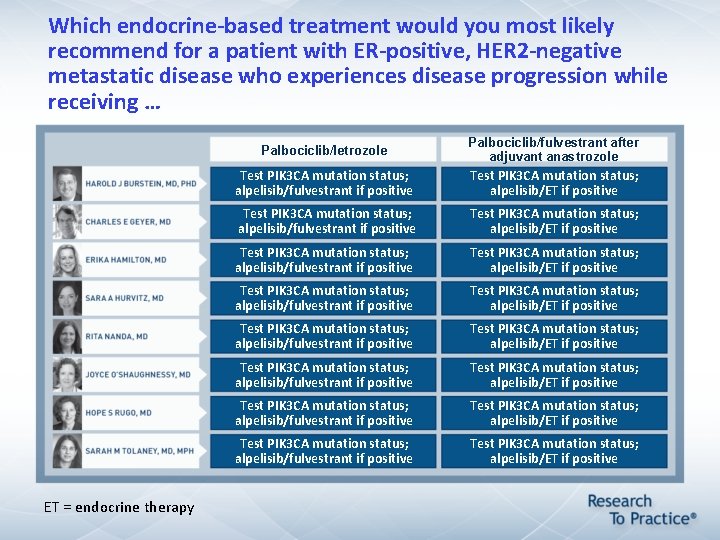
Which endocrine-based treatment would you most likely recommend for a patient with ER-positive, HER 2 -negative metastatic disease who experiences disease progression while receiving … ET = endocrine therapy Palbociclib/letrozole Palbociclib/fulvestrant after adjuvant anastrozole Test PIK 3 CA mutation status; alpelisib/fulvestrant if positive Test PIK 3 CA mutation status; alpelisib/ET if positive Test PIK 3 CA mutation status; alpelisib/fulvestrant if positive Test PIK 3 CA mutation status; alpelisib/ET if positive Test PIK 3 CA mutation status; alpelisib/fulvestrant if positive Test PIK 3 CA mutation status; alpelisib/ET if positive
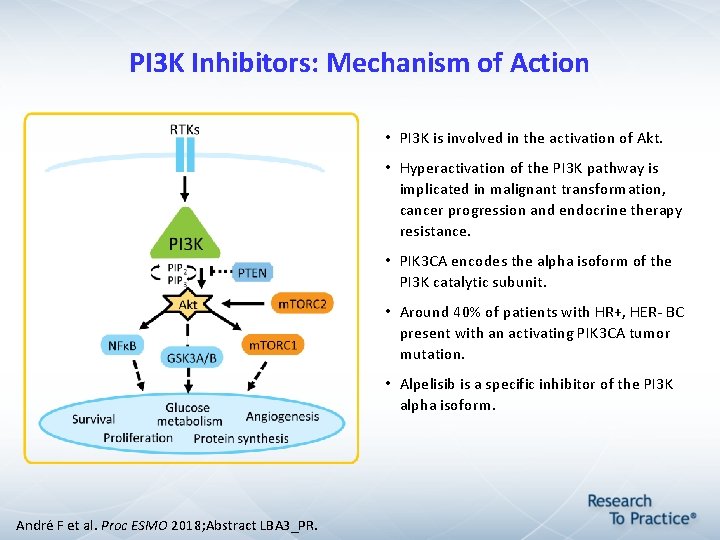
PI 3 K Inhibitors: Mechanism of Action • PI 3 K is involved in the activation of Akt. • Hyperactivation of the PI 3 K pathway is implicated in malignant transformation, cancer progression and endocrine therapy resistance. • PIK 3 CA encodes the alpha isoform of the PI 3 K catalytic subunit. • Around 40% of patients with HR+, HER- BC present with an activating PIK 3 CA tumor mutation. • Alpelisib is a specific inhibitor of the PI 3 K alpha isoform. André F et al. Proc ESMO 2018; Abstract LBA 3_PR.
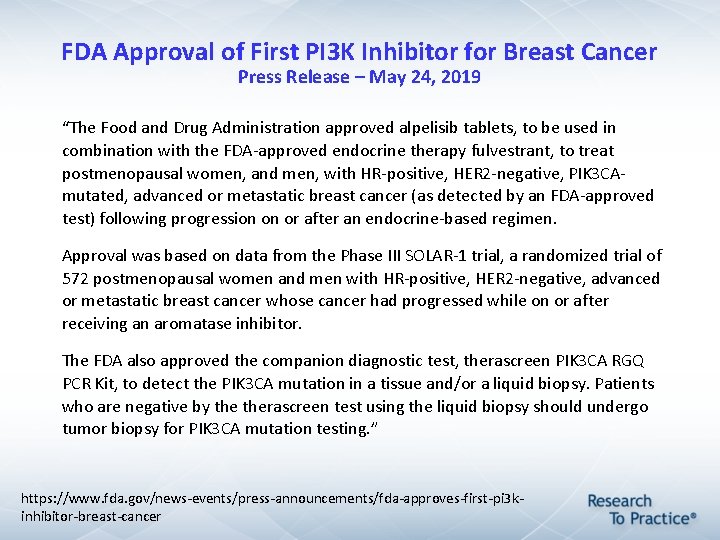
FDA Approval of First PI 3 K Inhibitor for Breast Cancer Press Release – May 24, 2019 “The Food and Drug Administration approved alpelisib tablets, to be used in combination with the FDA-approved endocrine therapy fulvestrant, to treat postmenopausal women, and men, with HR-positive, HER 2 -negative, PIK 3 CAmutated, advanced or metastatic breast cancer (as detected by an FDA-approved test) following progression on or after an endocrine-based regimen. Approval was based on data from the Phase III SOLAR-1 trial, a randomized trial of 572 postmenopausal women and men with HR-positive, HER 2 -negative, advanced or metastatic breast cancer whose cancer had progressed while on or after receiving an aromatase inhibitor. The FDA also approved the companion diagnostic test, therascreen PIK 3 CA RGQ PCR Kit, to detect the PIK 3 CA mutation in a tissue and/or a liquid biopsy. Patients who are negative by therascreen test using the liquid biopsy should undergo tumor biopsy for PIK 3 CA mutation testing. ” https: //www. fda. gov/news-events/press-announcements/fda-approves-first-pi 3 kinhibitor-breast-cancer
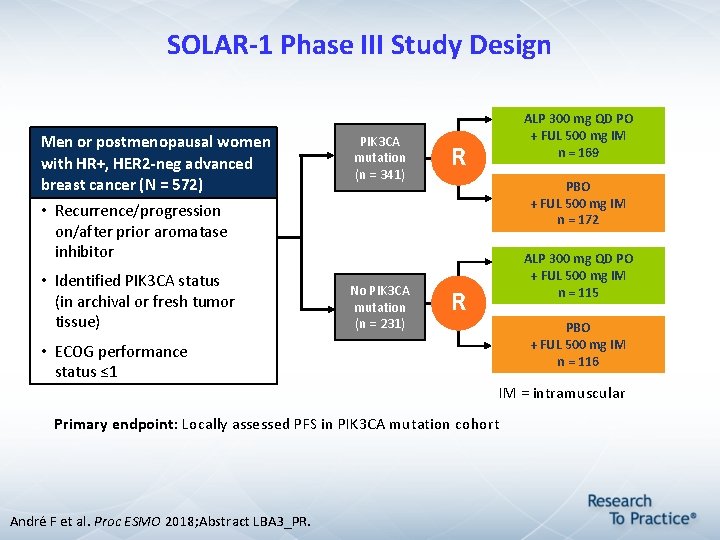
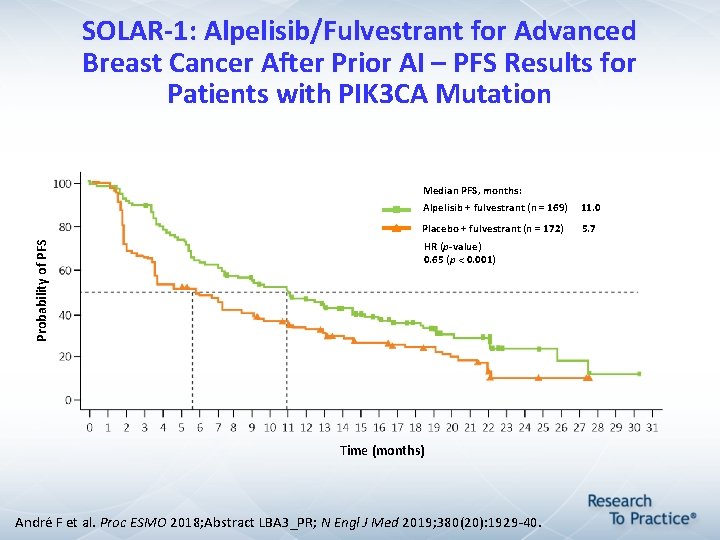
SOLAR-1 Phase III Study Design Men or postmenopausal women with HR+, HER 2 -neg advanced breast cancer (N = 572) PIK 3 CA mutation (n = 341) ALP 300 mg QD PO + FUL 500 mg IM n = 169 R PBO + FUL 500 mg IM n = 172 • Recurrence/progression on/after prior aromatase inhibitor • Identified PIK 3 CA status (in archival or fresh tumor tissue) No PIK 3 CA mutation (n = 231) ALP 300 mg QD PO + FUL 500 mg IM n = 115 R PBO + FUL 500 mg IM n = 116 • ECOG performance status ≤ 1 IM = intramuscular Primary endpoint: Locally assessed PFS in PIK 3 CA mutation cohort André F et al. Proc ESMO 2018; Abstract LBA 3_PR.
SOLAR-1: Alpelisib/Fulvestrant for Advanced Breast Cancer After Prior AI – PFS Results for Patients with PIK 3 CA Mutation Median PFS, months: Alpelisib + fulvestrant (n = 169) 11. 0 Probability of PFS Placebo + fulvestrant (n = 172) 5. 7 HR (p-value) 0. 65 (p < 0. 001) Time (months) André F et al. Proc ESMO 2018; Abstract LBA 3_PR; N Engl J Med 2019; 380(20): 1929 -40.
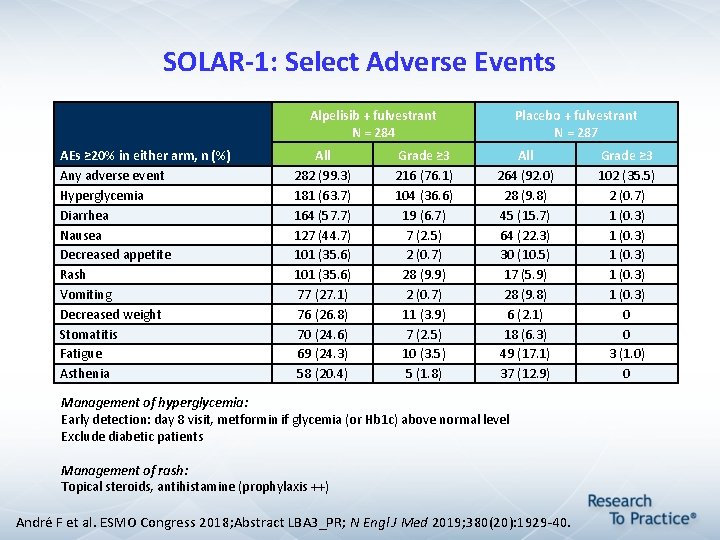
SOLAR-1: Select Adverse Events Alpelisib + fulvestrant N = 284 AEs ≥ 20% in either arm, n (%) Any adverse event Hyperglycemia Diarrhea Nausea Decreased appetite Rash Vomiting Decreased weight Stomatitis Fatigue Asthenia All 282 (99. 3) 181 (63. 7) 164 (57. 7) 127 (44. 7) 101 (35. 6) 77 (27. 1) 76 (26. 8) 70 (24. 6) 69 (24. 3) 58 (20. 4) Grade ≥ 3 216 (76. 1) 104 (36. 6) 19 (6. 7) 7 (2. 5) 2 (0. 7) 28 (9. 9) 2 (0. 7) 11 (3. 9) 7 (2. 5) 10 (3. 5) 5 (1. 8) Placebo + fulvestrant N = 287 All 264 (92. 0) 28 (9. 8) 45 (15. 7) 64 (22. 3) 30 (10. 5) 17 (5. 9) 28 (9. 8) 6 (2. 1) 18 (6. 3) 49 (17. 1) 37 (12. 9) Management of hyperglycemia: Early detection: day 8 visit, metformin if glycemia (or Hb 1 c) above normal level Exclude diabetic patients Management of rash: Topical steroids, antihistamine (prophylaxis ++) André F et al. ESMO Congress 2018; Abstract LBA 3_PR; N Engl J Med 2019; 380(20): 1929 -40. Grade ≥ 3 102 (35. 5) 2 (0. 7) 1 (0. 3) 0 0 3 (1. 0) 0
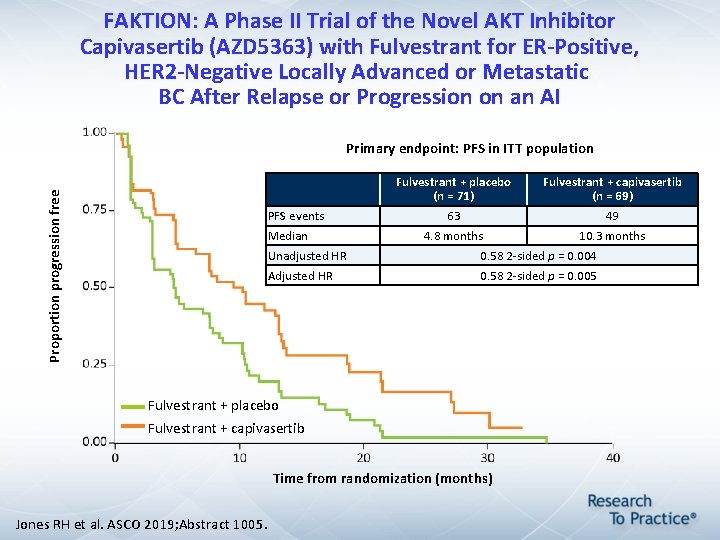
FAKTION: A Phase II Trial of the Novel AKT Inhibitor Capivasertib (AZD 5363) with Fulvestrant for ER-Positive, HER 2 -Negative Locally Advanced or Metastatic BC After Relapse or Progression on an AI Proportion progression free Primary endpoint: PFS in ITT population PFS events Median Fulvestrant + placebo (n = 71) Fulvestrant + capivasertib (n = 69) 63 49 4. 8 months 10. 3 months Unadjusted HR 0. 58 2 -sided p = 0. 004 Adjusted HR 0. 58 2 -sided p = 0. 005 Fulvestrant + placebo Fulvestrant + capivasertib Time from randomization (months) Jones RH et al. ASCO 2019; Abstract 1005.
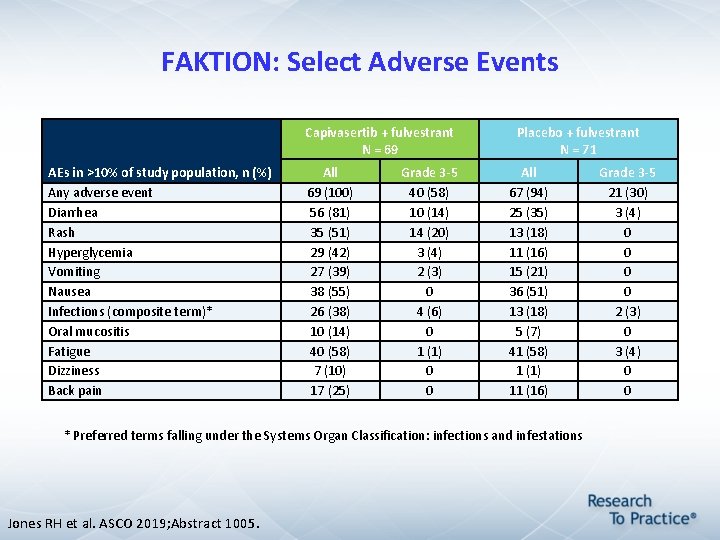
FAKTION: Select Adverse Events Capivasertib + fulvestrant N = 69 AEs in >10% of study population, n (%) Any adverse event Diarrhea Rash Hyperglycemia Vomiting Nausea Infections (composite term)* Oral mucositis Fatigue Dizziness Back pain All 69 (100) 56 (81) 35 (51) 29 (42) 27 (39) 38 (55) 26 (38) 10 (14) 40 (58) 7 (10) 17 (25) Grade 3 -5 40 (58) 10 (14) 14 (20) 3 (4) 2 (3) 0 4 (6) 0 1 (1) 0 0 Placebo + fulvestrant N = 71 All 67 (94) 25 (35) 13 (18) 11 (16) 15 (21) 36 (51) 13 (18) 5 (7) 41 (58) 1 (1) 11 (16) * Preferred terms falling under the Systems Organ Classification: infections and infestations Jones RH et al. ASCO 2019; Abstract 1005. Grade 3 -5 21 (30) 3 (4) 0 0 2 (3) 0 3 (4) 0 0
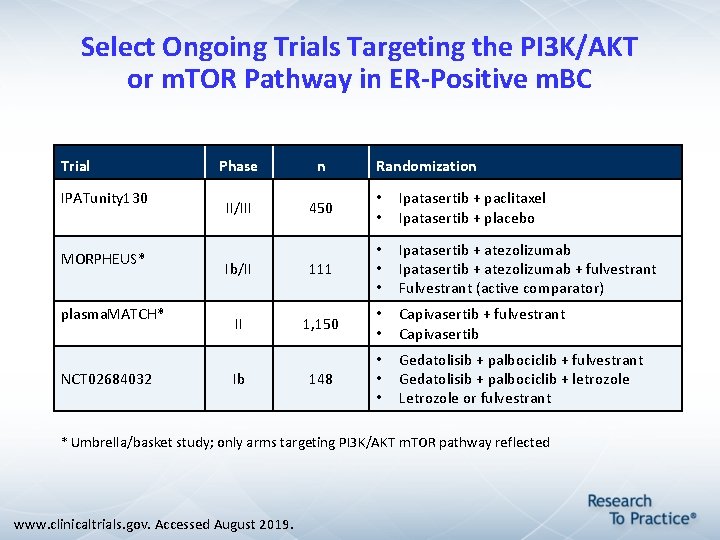
Select Ongoing Trials Targeting the PI 3 K/AKT or m. TOR Pathway in ER-Positive m. BC Trial IPATunity 130 MORPHEUS* plasma. MATCH* NCT 02684032 Phase n II/III 450 • • Ipatasertib + paclitaxel Ipatasertib + placebo Ib/II 111 • • • Ipatasertib + atezolizumab + fulvestrant Fulvestrant (active comparator) II 1, 150 • • Capivasertib + fulvestrant Capivasertib 148 • • • Gedatolisib + palbociclib + fulvestrant Gedatolisib + palbociclib + letrozole Letrozole or fulvestrant Ib Randomization * Umbrella/basket study; only arms targeting PI 3 K/AKT m. TOR pathway reflected www. clinicaltrials. gov. Accessed August 2019.
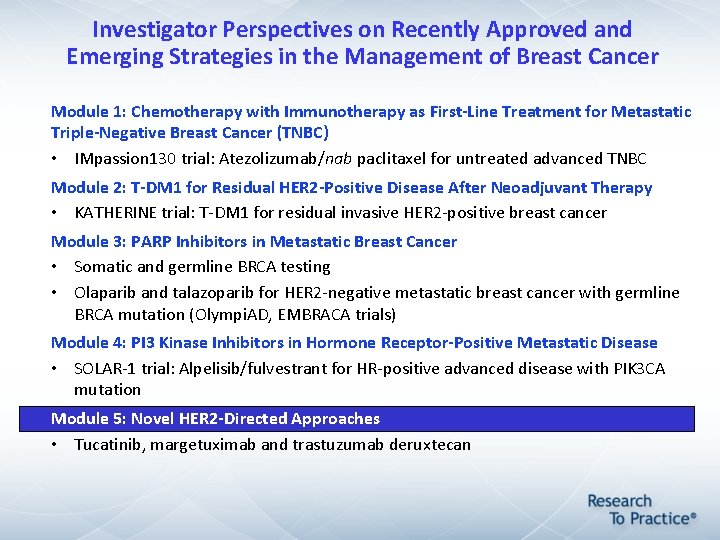
Investigator Perspectives on Recently Approved and Emerging Strategies in the Management of Breast Cancer Module 1: Chemotherapy with Immunotherapy as First-Line Treatment for Metastatic Triple-Negative Breast Cancer (TNBC) • IMpassion 130 trial: Atezolizumab/nab paclitaxel for untreated advanced TNBC Module 2: T-DM 1 for Residual HER 2 -Positive Disease After Neoadjuvant Therapy • KATHERINE trial: T-DM 1 for residual invasive HER 2 -positive breast cancer Module 3: PARP Inhibitors in Metastatic Breast Cancer • Somatic and germline BRCA testing • Olaparib and talazoparib for HER 2 -negative metastatic breast cancer with germline BRCA mutation (Olympi. AD, EMBRACA trials) Module 4: PI 3 Kinase Inhibitors in Hormone Receptor-Positive Metastatic Disease • SOLAR-1 trial: Alpelisib/fulvestrant for HR-positive advanced disease with PIK 3 CA mutation Module 5: Novel HER 2 -Directed Approaches • Tucatinib, margetuximab and trastuzumab deruxtecan
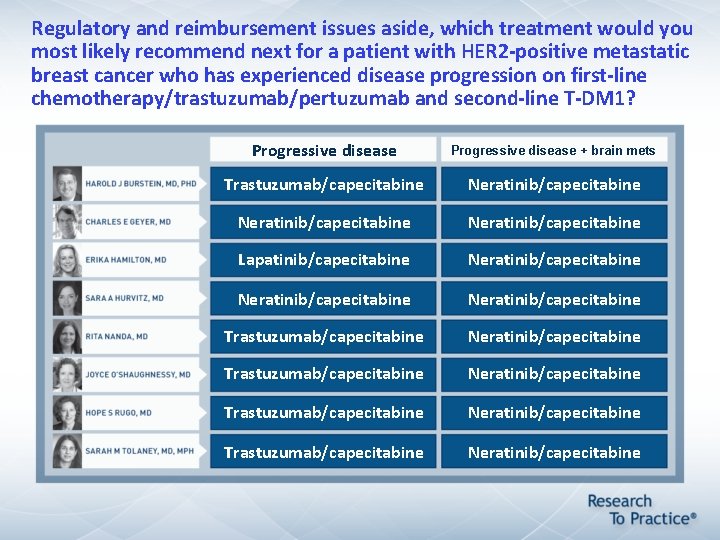
Regulatory and reimbursement issues aside, which treatment would you most likely recommend next for a patient with HER 2 -positive metastatic breast cancer who has experienced disease progression on first-line chemotherapy/trastuzumab/pertuzumab and second-line T-DM 1? Progressive disease + brain mets Trastuzumab/capecitabine Neratinib/capecitabine Lapatinib/capecitabine Neratinib/capecitabine Trastuzumab/capecitabine Neratinib/capecitabine Trastuzumab/capecitabine Neratinib/capecitabine
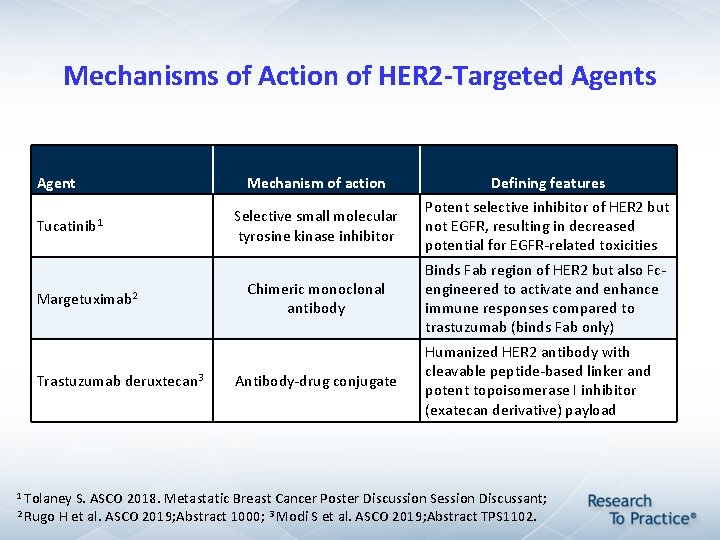
Mechanisms of Action of HER 2 -Targeted Agents Agent Tucatinib 1 Margetuximab 2 Trastuzumab deruxtecan 3 Mechanism of action Defining features Selective small molecular tyrosine kinase inhibitor Potent selective inhibitor of HER 2 but not EGFR, resulting in decreased potential for EGFR-related toxicities Chimeric monoclonal antibody Binds Fab region of HER 2 but also Fcengineered to activate and enhance immune responses compared to trastuzumab (binds Fab only) Antibody-drug conjugate Humanized HER 2 antibody with cleavable peptide-based linker and potent topoisomerase I inhibitor (exatecan derivative) payload 1 Tolaney S. ASCO 2018. Metastatic Breast Cancer Poster Discussion Session Discussant; 2 Rugo H et al. ASCO 2019; Abstract 1000; 3 Modi S et al. ASCO 2019; Abstract TPS 1102.
FDA Breakthrough Therapy Designation for Tucatinib in m. BC Press Release – December 18, 2019 “The Food and Drug Administration has granted Breakthrough Therapy designation to tucatinib, in combination with trastuzumab and capecitabine, for treatment of patients with locally advanced unresectable or metastatic HER 2 -positive breast cancer, including patients with brain metastases, who have been treated with trastuzumab, pertuzumab, and T-DM 1. The positive topline results of the pivotal HER 2 CLIMB clinical trial were announced in October 2019, and additional data were presented at the 2019 San Antonio Breast Cancer Symposium and were simultaneously published in the New England Journal of Medicine. This Breakthrough Therapy designation was based on data from the pivotal HER 2 CLIMB clinical trial, which compared tucatinib in combination with trastuzumab and capecitabine to trastuzumab and capecitabine alone in patients with locally advanced unresectable or metastatic HER 2 -positive breast cancer. Patients had previously received trastuzumab, pertuzumab and ado-trastuzumab emtansine (T-DM 1). ” https: //www. biospace. com/article/releases/seattle-genetics-announces-u-s-fda-grantsbreakthrough-therapy-designation-for-tucatinib-in-locally-advanced-or-metastatic-her 2 positive-breast-cancer/
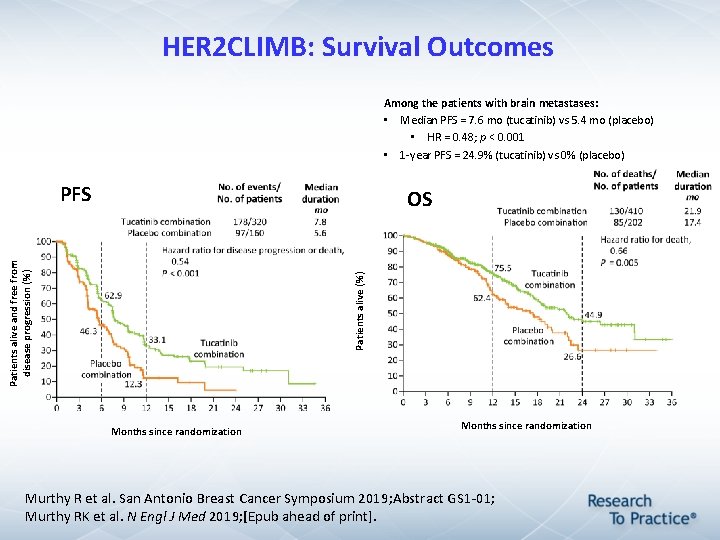
HER 2 CLIMB: Survival Outcomes Among the patients with brain metastases: • Median PFS = 7. 6 mo (tucatinib) vs 5. 4 mo (placebo) • HR = 0. 48; p < 0. 001 • 1 -year PFS = 24. 9% (tucatinib) vs 0% (placebo) PFS Patients alive (%) Patients alive and free from disease progression (%) OS Months since randomization Murthy R et al. San Antonio Breast Cancer Symposium 2019; Abstract GS 1 -01; Murthy RK et al. N Engl J Med 2019; [Epub ahead of print].
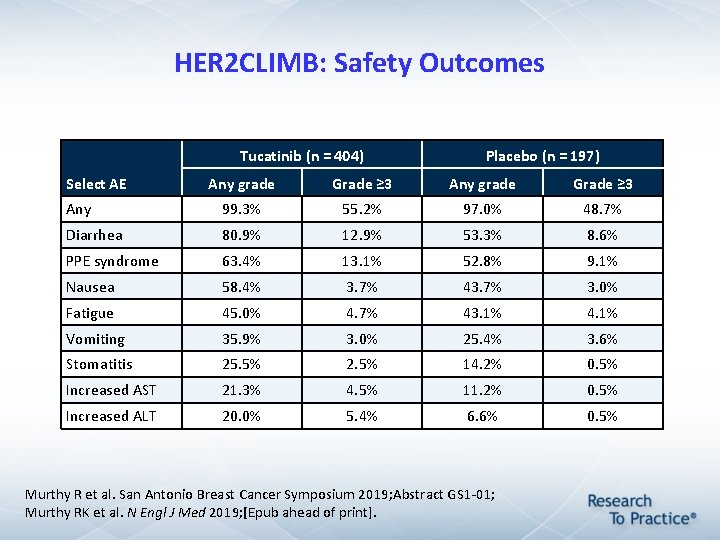
HER 2 CLIMB: Safety Outcomes Tucatinib (n = 404) Select AE Placebo (n = 197) Any grade Grade ≥ 3 Any 99. 3% 55. 2% 97. 0% 48. 7% Diarrhea 80. 9% 12. 9% 53. 3% 8. 6% PPE syndrome 63. 4% 13. 1% 52. 8% 9. 1% Nausea 58. 4% 3. 7% 43. 7% 3. 0% Fatigue 45. 0% 4. 7% 43. 1% 4. 1% Vomiting 35. 9% 3. 0% 25. 4% 3. 6% Stomatitis 25. 5% 2. 5% 14. 2% 0. 5% Increased AST 21. 3% 4. 5% 11. 2% 0. 5% Increased ALT 20. 0% 5. 4% 6. 6% 0. 5% Murthy R et al. San Antonio Breast Cancer Symposium 2019; Abstract GS 1 -01; Murthy RK et al. N Engl J Med 2019; [Epub ahead of print].
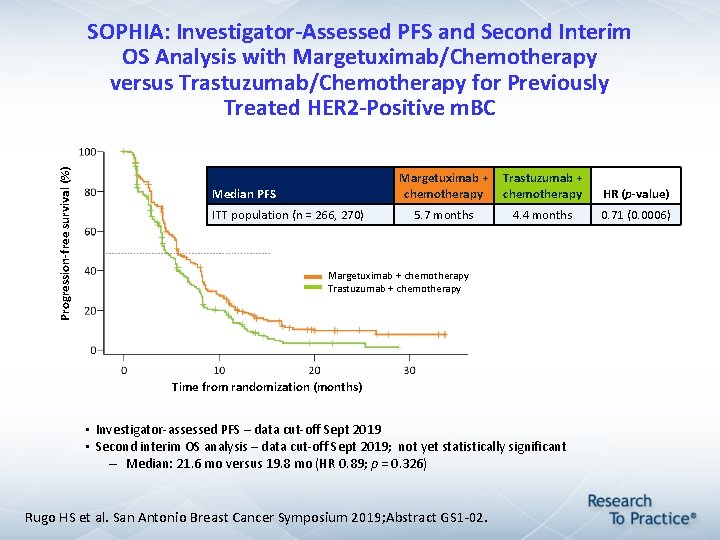
Progression-free survival (%) SOPHIA: Investigator-Assessed PFS and Second Interim OS Analysis with Margetuximab/Chemotherapy versus Trastuzumab/Chemotherapy for Previously Treated HER 2 -Positive m. BC Margetuximab + Trastuzumab + chemotherapy Median PFS ITT population (n = 266, 270) 5. 7 months 4. 4 months Margetuximab + chemotherapy Trastuzumab + chemotherapy Time from randomization (months) • Investigator-assessed PFS – data cut-off Sept 2019 • Second interim OS analysis – data cut-off Sept 2019; not yet statistically significant – Median: 21. 6 mo versus 19. 8 mo (HR 0. 89; p = 0. 326) Rugo HS et al. San Antonio Breast Cancer Symposium 2019; Abstract GS 1 -02. HR (p-value) 0. 71 (0. 0006)
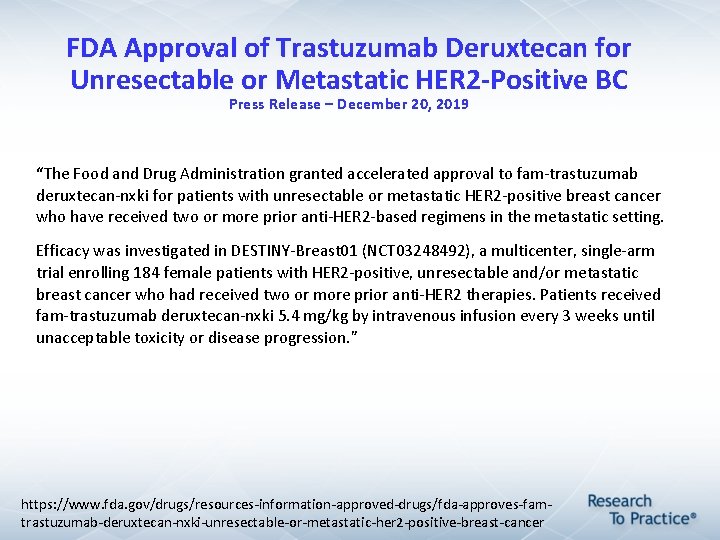
FDA Approval of Trastuzumab Deruxtecan for Unresectable or Metastatic HER 2 -Positive BC Press Release – December 20, 2019 “The Food and Drug Administration granted accelerated approval to fam-trastuzumab deruxtecan-nxki for patients with unresectable or metastatic HER 2 -positive breast cancer who have received two or more prior anti-HER 2 -based regimens in the metastatic setting. Efficacy was investigated in DESTINY-Breast 01 (NCT 03248492), a multicenter, single-arm trial enrolling 184 female patients with HER 2 -positive, unresectable and/or metastatic breast cancer who had received two or more prior anti-HER 2 therapies. Patients received fam-trastuzumab deruxtecan-nxki 5. 4 mg/kg by intravenous infusion every 3 weeks until unacceptable toxicity or disease progression. ” https: //www. fda. gov/drugs/resources-information-approved-drugs/fda-approves-famtrastuzumab-deruxtecan-nxki-unresectable-or-metastatic-her 2 -positive-breast-cancer
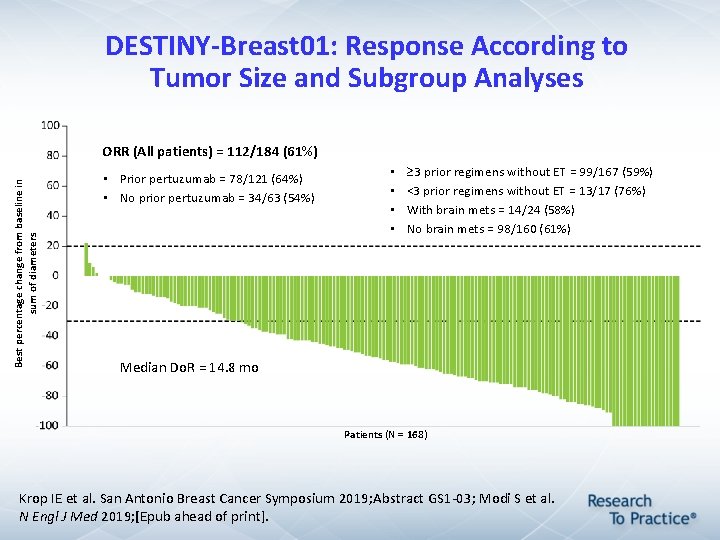
DESTINY-Breast 01: Response According to Tumor Size and Subgroup Analyses Best percentage change from baseline in sum of diameters ORR (All patients) = 112/184 (61%) • Prior pertuzumab = 78/121 (64%) • No prior pertuzumab = 34/63 (54%) • • 3 prior regimens without ET = 99/167 (59%) <3 prior regimens without ET = 13/17 (76%) With brain mets = 14/24 (58%) No brain mets = 98/160 (61%) Median Do. R = 14. 8 mo Patients (N = 168) Krop IE et al. San Antonio Breast Cancer Symposium 2019; Abstract GS 1 -03; Modi S et al. N Engl J Med 2019; [Epub ahead of print].
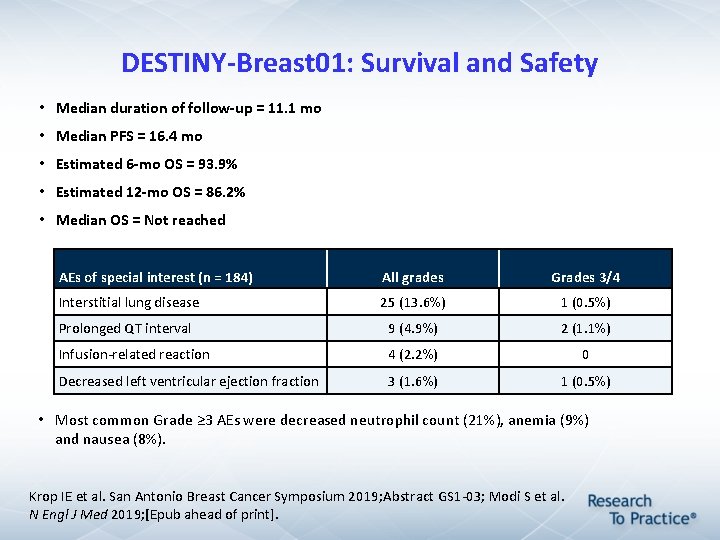
DESTINY-Breast 01: Survival and Safety • Median duration of follow-up = 11. 1 mo • Median PFS = 16. 4 mo • Estimated 6 -mo OS = 93. 9% • Estimated 12 -mo OS = 86. 2% • Median OS = Not reached AEs of special interest (n = 184) All grades Grades 3/4 Interstitial lung disease 25 (13. 6%) 1 (0. 5%) Prolonged QT interval 9 (4. 9%) 2 (1. 1%) Infusion-related reaction 4 (2. 2%) 0 Decreased left ventricular ejection fraction 3 (1. 6%) 1 (0. 5%) • Most common Grade ≥ 3 AEs were decreased neutrophil count (21%), anemia (9%) and nausea (8%). Krop IE et al. San Antonio Breast Cancer Symposium 2019; Abstract GS 1 -03; Modi S et al. N Engl J Med 2019; [Epub ahead of print].
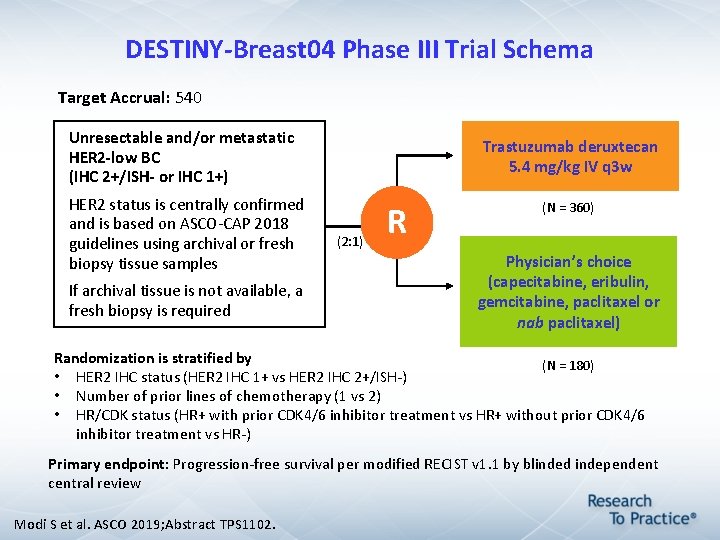
DESTINY-Breast 04 Phase III Trial Schema Target Accrual: 540 Unresectable and/or metastatic HER 2 -low BC (IHC 2+/ISH- or IHC 1+) HER 2 status is centrally confirmed and is based on ASCO-CAP 2018 guidelines using archival or fresh biopsy tissue samples If archival tissue is not available, a fresh biopsy is required Trastuzumab deruxtecan 5. 4 mg/kg IV q 3 w (2: 1) R (N = 360) Physician’s choice (capecitabine, eribulin, gemcitabine, paclitaxel or nab paclitaxel) Randomization is stratified by (N = 180) • HER 2 IHC status (HER 2 IHC 1+ vs HER 2 IHC 2+/ISH-) • Number of prior lines of chemotherapy (1 vs 2) • HR/CDK status (HR+ with prior CDK 4/6 inhibitor treatment vs HR+ without prior CDK 4/6 inhibitor treatment vs HR-) Primary endpoint: Progression-free survival per modified RECIST v 1. 1 by blinded independent central review Modi S et al. ASCO 2019; Abstract TPS 1102.