VA COOPERATIVE STUDIES PROGRAM Grant D Huang MPH


- Slides: 39
VA COOPERATIVE STUDIES PROGRAM Grant D. Huang, MPH, Ph. D VA Office of Research and Development Washington, DC
OVERVIEW • Program Overview • Study Processes & Roles • Study Personnel & Responsibilities
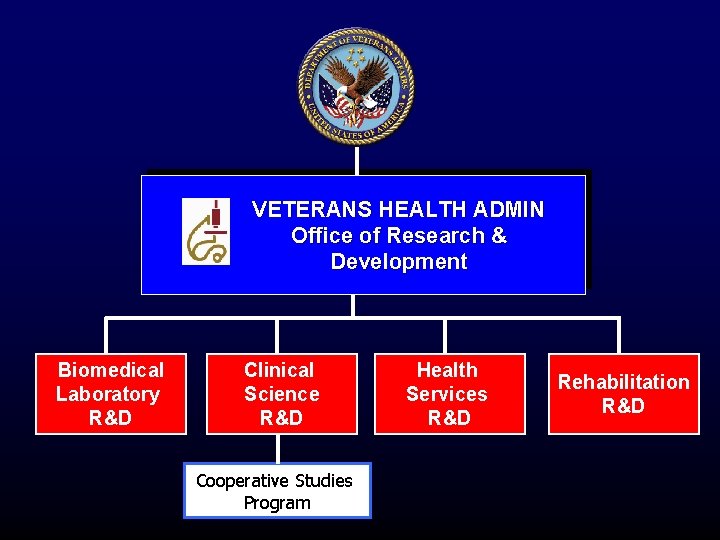
VETERANS HEALTH ADMIN Office of Research & Development Biomedical Laboratory R&D Clinical Science R&D Cooperative Studies Program Health Services R&D Rehabilitation R&D
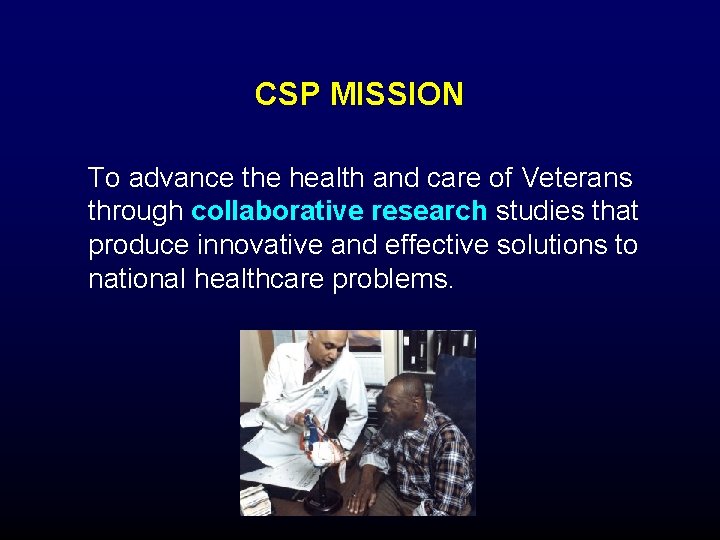
CSP MISSION To advance the health and care of Veterans through collaborative research studies that produce innovative and effective solutions to national healthcare problems.
COOPERATIVE STUDY • Facilitates accumulation of patients sufficiently large to provide definitive answer to a research question • Characteristics include: – investigators from 2 or more sites (e. g. , VAMCs) – agreement to study a question in a uniform manner – uses a common protocol and has central coordination
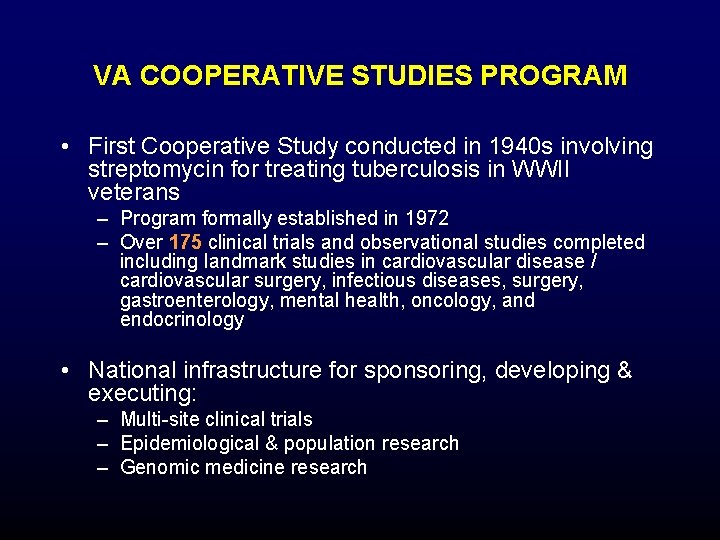
VA COOPERATIVE STUDIES PROGRAM • First Cooperative Study conducted in 1940 s involving streptomycin for treating tuberculosis in WWII veterans – Program formally established in 1972 – Over 175 clinical trials and observational studies completed including landmark studies in cardiovascular disease / cardiovascular surgery, infectious diseases, surgery, gastroenterology, mental health, oncology, and endocrinology • National infrastructure for sponsoring, developing & executing: – Multi-site clinical trials – Epidemiological & population research – Genomic medicine research
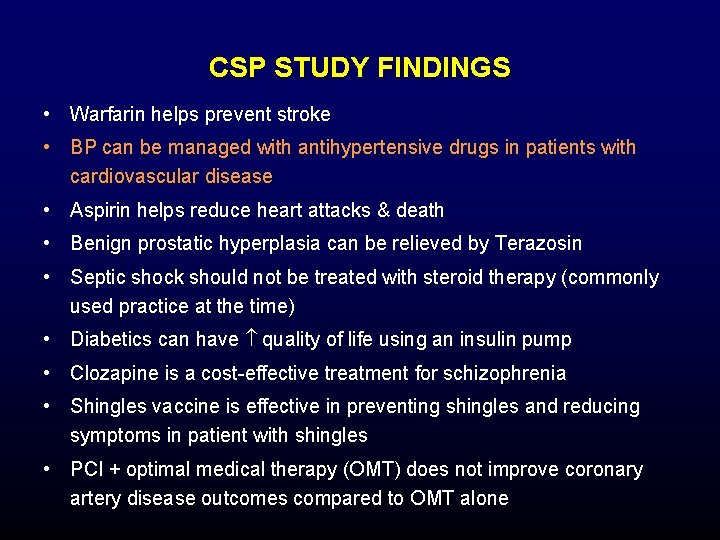
CSP STUDY FINDINGS • Warfarin helps prevent stroke • BP can be managed with antihypertensive drugs in patients with cardiovascular disease • Aspirin helps reduce heart attacks & death • Benign prostatic hyperplasia can be relieved by Terazosin • Septic shock should not be treated with steroid therapy (commonly used practice at the time) • Diabetics can have quality of life using an insulin pump • Clozapine is a cost-effective treatment for schizophrenia • Shingles vaccine is effective in preventing shingles and reducing symptoms in patient with shingles • PCI + optimal medical therapy (OMT) does not improve coronary artery disease outcomes compared to OMT alone
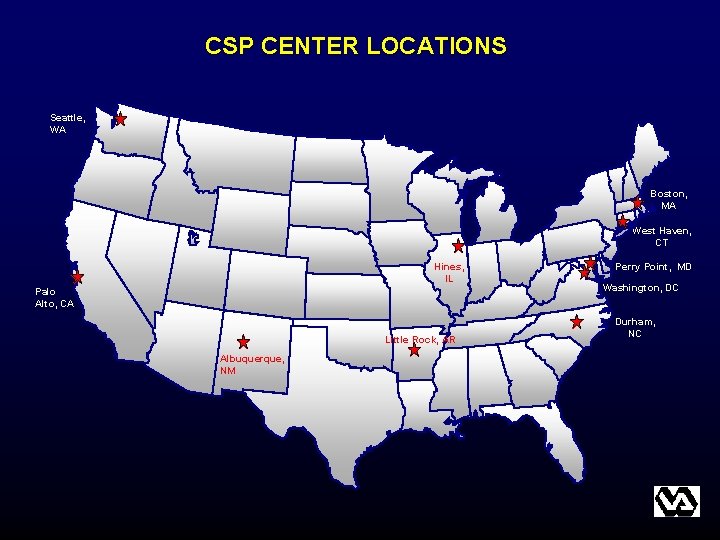
CSP CENTER LOCATIONS Seattle, WA Boston, MA West Haven, CT Hines, IL Palo Alto, CA Little Rock, AR Albuquerque, NM Perry Point, MD Washington, DC Durham, NC
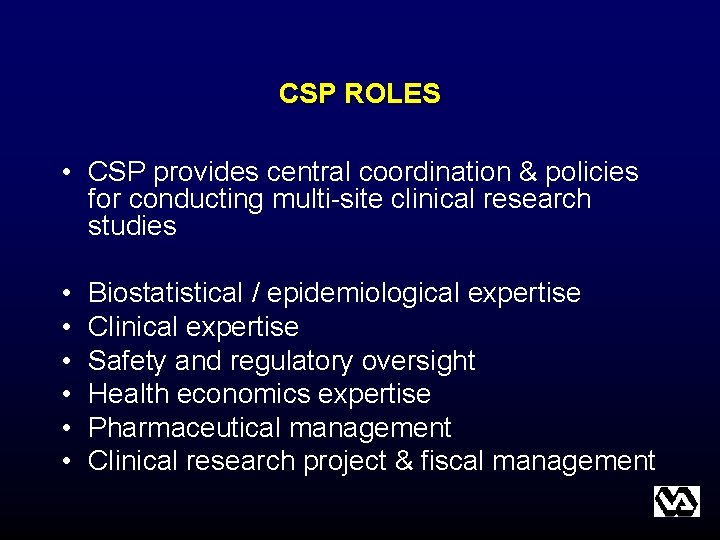
CSP ROLES • CSP provides central coordination & policies for conducting multi-site clinical research studies • • • Biostatistical / epidemiological expertise Clinical expertise Safety and regulatory oversight Health economics expertise Pharmaceutical management Clinical research project & fiscal management
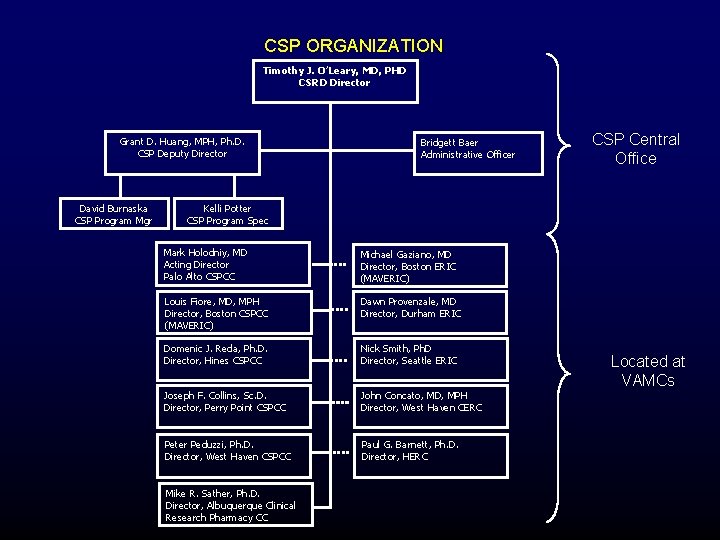
CSP ORGANIZATION Timothy J. O’Leary, MD, PHD CSRD Director Grant D. Huang, MPH, Ph. D. CSP Deputy Director David Burnaska CSP Program Mgr Bridgett Baer Administrative Officer CSP Central Office Kelli Potter CSP Program Spec Mark Holodniy, MD Acting Director Palo Alto CSPCC Michael Gaziano, MD Director, Boston ERIC (MAVERIC) Louis Fiore, MD, MPH Director, Boston CSPCC (MAVERIC) Dawn Provenzale, MD Director, Durham ERIC Domenic J. Reda, Ph. D. Director, Hines CSPCC Nick Smith, Ph. D Director, Seattle ERIC Joseph F. Collins, Sc. D. Director, Perry Point CSPCC John Concato, MD, MPH Director, West Haven CERC Peter Peduzzi, Ph. D. Director, West Haven CSPCC Paul G. Barnett, Ph. D. Director, HERC Mike R. Sather, Ph. D. Director, Albuquerque Clinical Research Pharmacy CC Located at VAMCs
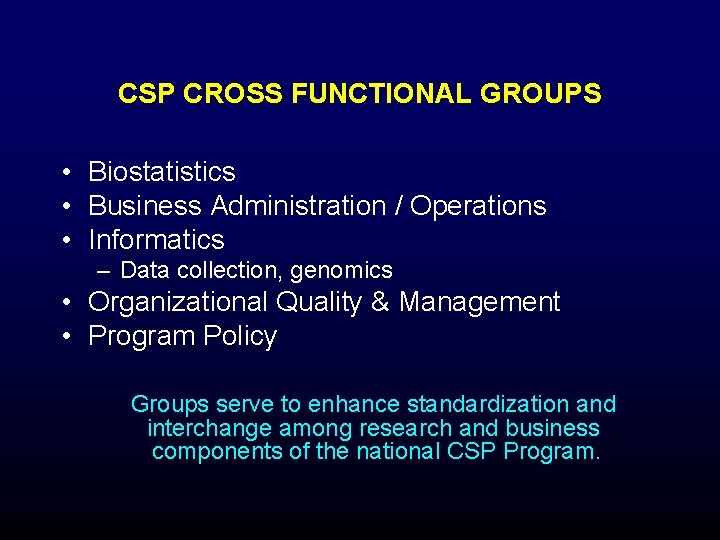
CSP CROSS FUNCTIONAL GROUPS • Biostatistics • Business Administration / Operations • Informatics – Data collection, genomics • Organizational Quality & Management • Program Policy Groups serve to enhance standardization and interchange among research and business components of the national CSP Program.
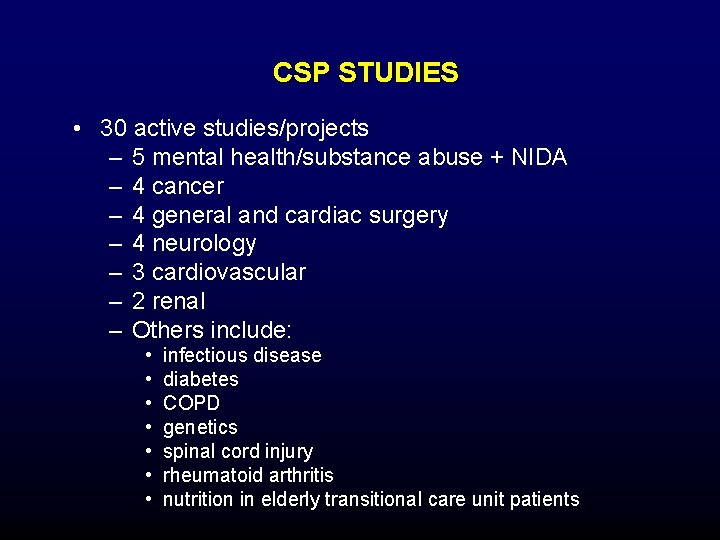
CSP STUDIES • 30 active studies/projects – 5 mental health/substance abuse + NIDA – 4 cancer – 4 general and cardiac surgery – 4 neurology – 3 cardiovascular – 2 renal – Others include: • • infectious disease diabetes COPD genetics spinal cord injury rheumatoid arthritis nutrition in elderly transitional care unit patients
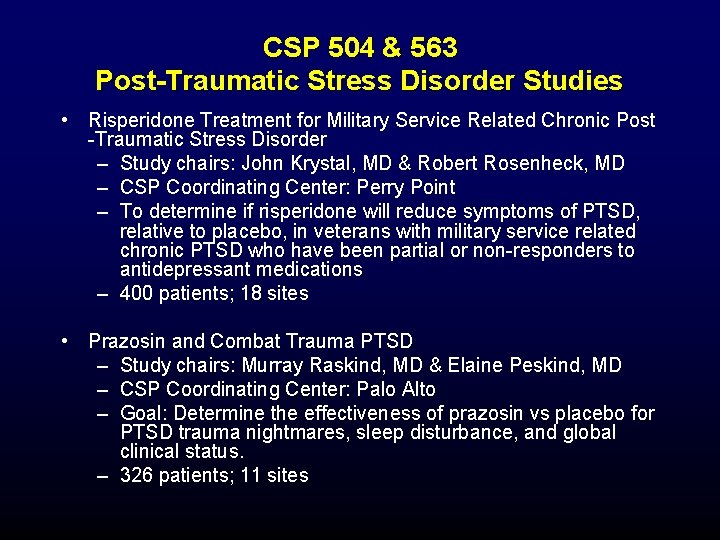
CSP 504 & 563 Post-Traumatic Stress Disorder Studies • Risperidone Treatment for Military Service Related Chronic Post -Traumatic Stress Disorder – Study chairs: John Krystal, MD & Robert Rosenheck, MD – CSP Coordinating Center: Perry Point – To determine if risperidone will reduce symptoms of PTSD, relative to placebo, in veterans with military service related chronic PTSD who have been partial or non-responders to antidepressant medications – 400 patients; 18 sites • Prazosin and Combat Trauma PTSD – Study chairs: Murray Raskind, MD & Elaine Peskind, MD – CSP Coordinating Center: Palo Alto – Goal: Determine the effectiveness of prazosin vs placebo for PTSD trauma nightmares, sleep disturbance, and global clinical status. – 326 patients; 11 sites
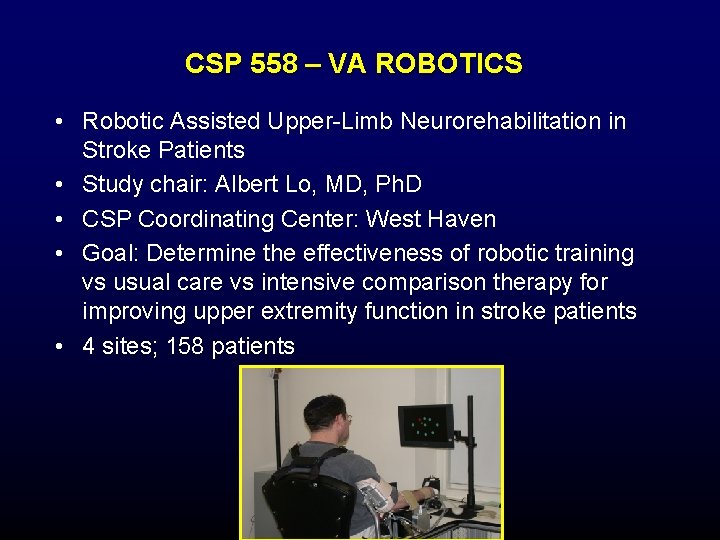
CSP 558 – VA ROBOTICS • Robotic Assisted Upper-Limb Neurorehabilitation in Stroke Patients • Study chair: Albert Lo, MD, Ph. D • CSP Coordinating Center: West Haven • Goal: Determine the effectiveness of robotic training vs usual care vs intensive comparison therapy for improving upper extremity function in stroke patients • 4 sites; 158 patients
CSP STUDIES • Studies conducted across 87 VAMCs – VA sites / study: 4 to 41 Avg VAMCs/study = 18 • Total budgets (VA only) = $2 – 16 Million • Duration = 3 – 15 years Does not include non-VA sites (university affiliate or international sites) Examples • CSP 424 (COURAGE) – 50 sites in US and Canada 2, 546 patients • Data coordinated at the West Haven CSPCC – $33. 5 M total budget – 8 year study • CSP 403 (Shingles Prevention Trial) – 22 sites (VA & university/NIH) over 38, 500 patients – $30 M total budget – 7 year study
COLLABORATIONS • National Institutes of Health – NIDA, NINDS, NIDDK, NCI, NIAMDS, NHLBI, NIMH, NIDCD • • Department of Defense Universities Industry International – Canadian Institutes of Health Research – United Kingdom Medical Research Council Mechanisms established to facilitate collaborations
Recent CSP Publications • CSP 468 – A randomized controlled trial of best medical therapy versus bilateral deep brain stimulation for patients with advanced Parkinson’s Disease (JAMA Jan 2009) • CSP 465 (VADT) - Glucose Control and Vascular Complications in Veterans with Type 2 Diabetes (NEJM Dec 2008) • CSP 530 (ATN) - Intensity of Renal Support in Critically Ill Patients with Acute Kidney Injury (NEJM May 2008) • CSP 453 (HOST) - Effect of homocysteine lowering on mortality and vascular disease in advanced chronic kidney disease and end-stage renal disease (JAMA Sept 2007) • CSP 424 (COURAGE) – Optimal medical therapy with or without PCI for stable coronary disease (NEJM March 2007) • CSP 410 (Fe. AST) – Reduction in iron stores and cardiovascular outcomes in peripheral artery disease (JAMA Feb 2007) • CSP 494 – Cognitive behavioral therapy for PTSD in women (JAMA Feb 2007)
CSP STUDY PROCESSES & ROLES
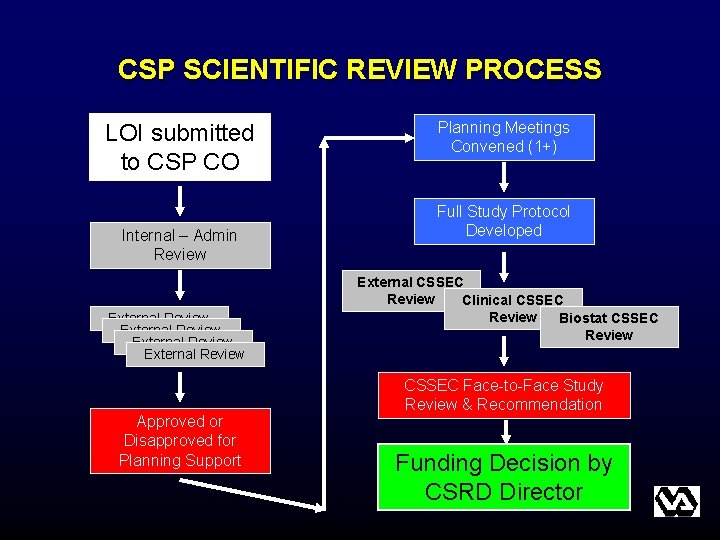
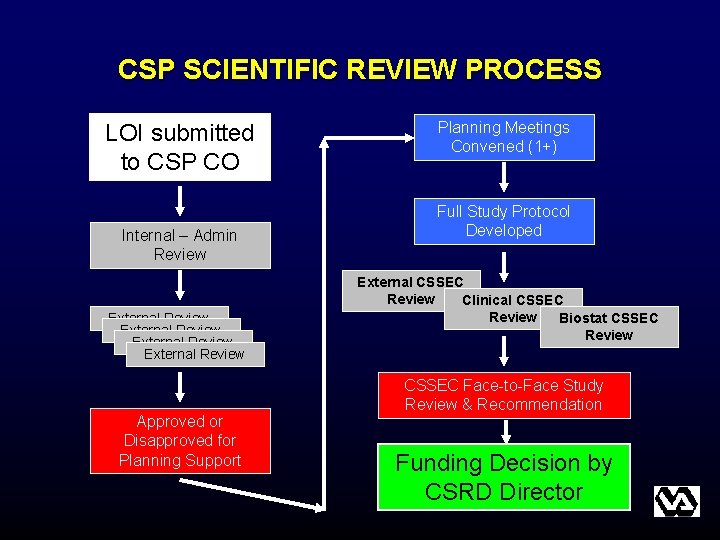
CSP SCIENTIFIC REVIEW PROCESS LOI submitted to CSP CO Internal – Admin Review External Review Approved or Disapproved for Planning Support Planning Meetings Convened (1+) Full Study Protocol Developed External CSSEC Review Clinical CSSEC Review Biostat CSSEC Review CSSEC Face-to-Face Study Review & Recommendation Funding Decision by CSRD Director
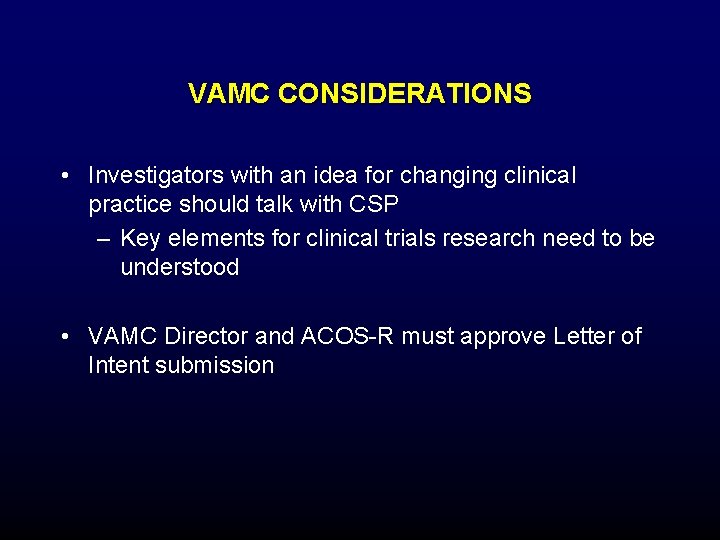
VAMC CONSIDERATIONS • Investigators with an idea for changing clinical practice should talk with CSP – Key elements for clinical trials research need to be understood • VAMC Director and ACOS-R must approve Letter of Intent submission
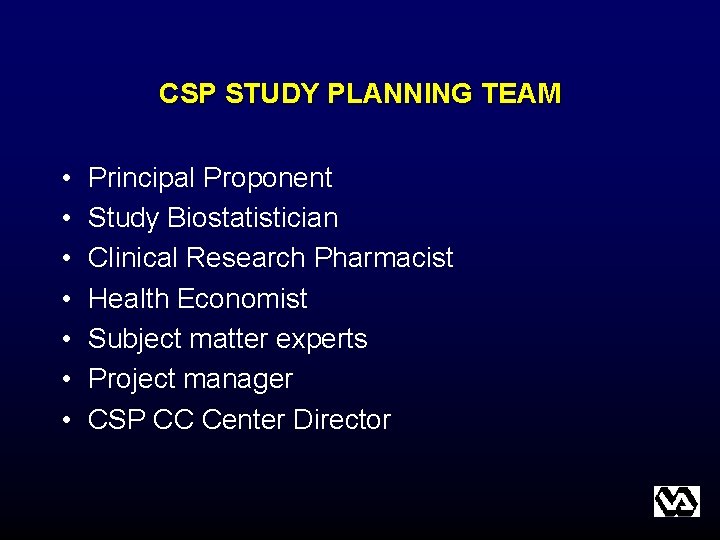
CSP STUDY PLANNING TEAM • • Principal Proponent Study Biostatistician Clinical Research Pharmacist Health Economist Subject matter experts Project manager CSP CC Center Director
CSP SCIENTIFIC REVIEW PROCESS LOI submitted to CSP CO Internal – Admin Review External Review Approved or Disapproved for Planning Support Planning Meetings Convened (1+) Full Study Protocol Developed External CSSEC Review Clinical CSSEC Review Biostat CSSEC Review CSSEC Face-to-Face Study Review & Recommendation Funding Decision by CSRD Director
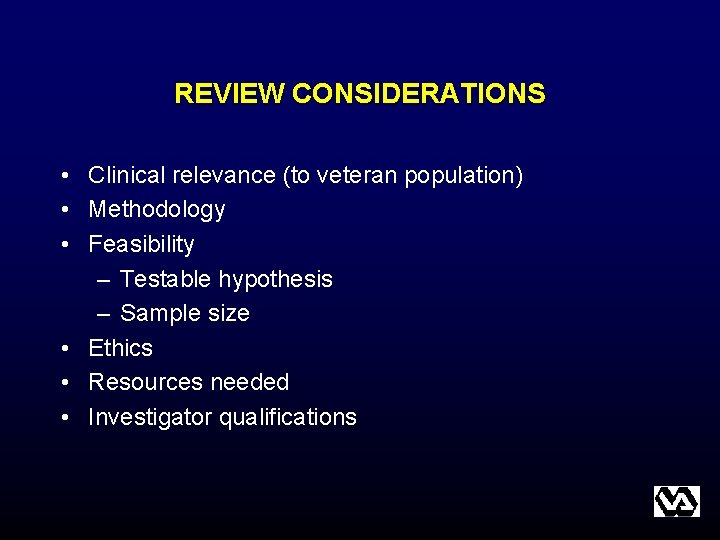
REVIEW CONSIDERATIONS • Clinical relevance (to veteran population) • Methodology • Feasibility – Testable hypothesis – Sample size • Ethics • Resources needed • Investigator qualifications
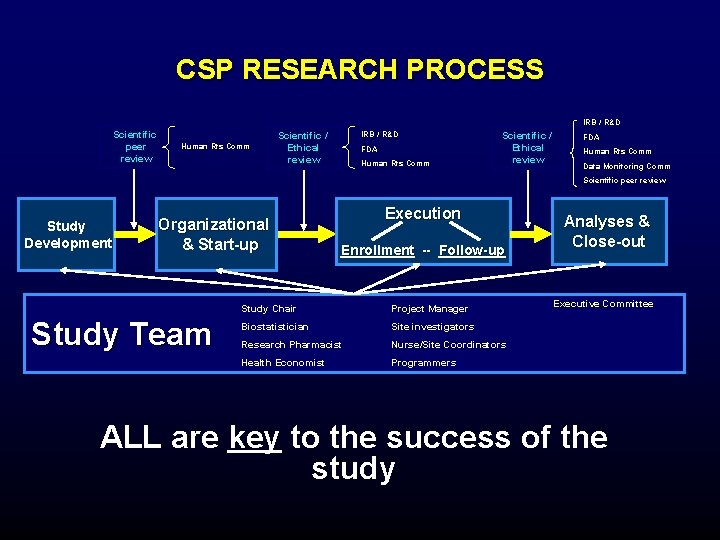
CSP RESEARCH PROCESS IRB / R&D Scientific peer review Human Rts Comm IRB / R&D Scientific / Ethical review FDA Human Rts Comm Data Monitoring Comm Scientific peer review Study Development Organizational & Start-up Study Team Execution Enrollment -- Follow-up Study Chair Project Manager Biostatistician Site investigators Research Pharmacist Nurse/Site Coordinators Health Economist Programmers Analyses & Close-out Executive Committee ALL are key to the success of the study
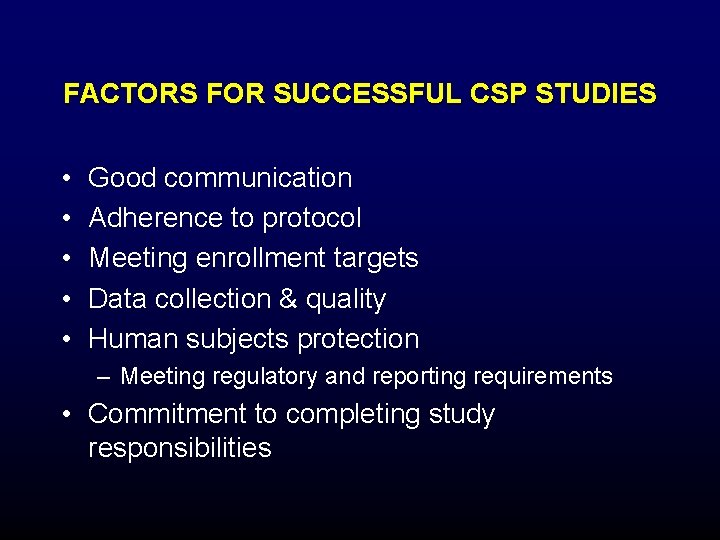
FACTORS FOR SUCCESSFUL CSP STUDIES • • • Good communication Adherence to protocol Meeting enrollment targets Data collection & quality Human subjects protection – Meeting regulatory and reporting requirements • Commitment to completing study responsibilities
CSP STUDY MANAGEMENT & POLICIES • Federal regulations / statutes (21 CFR) • VA / VHA policy documents CSP • VHA Directive 1205 – CSP policy • VHA Handbook 1205. 01 – CSP study processes & management • Guidelines - Policies and expectations for study investigators / chairs • Staff Operations Manual - Administrative handbook for CSP Center staff • Standard Operating Procedures - Program rules for handling CSP study and program processes • Study Operations Manual – Study protocol and procedures for conducting a CSP study
CSP TRAINING • CSP requires GCP training for site investigators and coordinators at Kick-off meetings – Formal commitments made on study conduct, reporting, records maintenance, management & oversight of study personnel • Proof of VA research training collected by CSP Coordinating Centers – – – HIPAA Privacy Human Subjects Protection Research Data security VA Cyber Security* * Boston CSPCC only
CSP CENTRAL OFFICE • Director, CSRD is responsible for CSP studies and related activities – All centers are managed by and report to CSPCO – Provides approvals on major activities related to: • • Funding Protocol changes Investigators / sites Program policies • Other key responsibilities include: – – – Scientific review Budgetary / fiscal management & reporting Program / center coordination Reporting to VA/VHA leadership Interactions with non-VA collaborators / stakeholders Program communications
CSP COORDINATING CENTERS • Provides statistical and administrative leadership for designing and conducting CSP studies – Each study assigned a biostatistician and project manager • Responsible for central management of CSP studies – – – Data collection / verification Maintaining study records & copies of some site records Managing study budgets / finances Monitoring site adherence to protocol Communicating with key parties Providing statistical analyses/reports
CSP PHARMACY COORDINATING CENTER • • Coordinate the acquisition of study drugs Package and ship study drugs Liaison with the FDA Prepare and maintain Investigational New Drug Applications (IND) with the FDA • Monitor studies for safety and regulatory purposes – Visits may be unannounced • Prepare AE and SAE reports for DMC and FDA reports – May send aggregate SAE reports to IRB if needed • Sends safety reports to site PIs with submission instructions to IRB – If SAE is serious, unexpected and reasonably attributable to the study intervention
CSP STUDY EXECUTIVE COMMITTEE • Comprised of ~ 6 -10 members – Study Chair, biostatistician, research pharmacist, national study coordinator, project manager, site investigators • Responsible for reviewing / approving – Protocol changes – Subprotocols – Use of study data / publications – Monitoring site progress / adherence to protocol – Actions on participating sites All subject to approval of Director, CSRD
DATA MONITORING COMMITTEES • Comprised of ~ 5 -8 members • Major responsibilities: – Considers if study should continue • Progress, safety, treatment efficacy – Review of biostatistical monitoring procedures – Performance of sites – Review / recommend protocol changes • Decisions presented as recommendations to Director, CSRD
CSP HUMAN RIGHTS COMMITTEES • Comprised of individuals from VHA and community – – 2 members must be non-VA 1 physician 1 non-physician scientist May include clergy, attorney, veteran and/or minority • Reviews protocol prior to submission to CSSEC (JIT may apply) • Meets with DMC at least once/year • Conducts site visits to participating study sites
CSP STUDY SITES • PI responsible for all study activities – Reporting & submitting all documents to IRB • VA Central IRB used for CSP studies – Files Serious Adverse Events (PCC may help prepare Safety Report) – Timely reporting to CSP Coordinating Center – Maintaining up-to-date and accurate study records • Facility director reports to ORO if needed (VHA Handbook 1058. 1)
VAMC CONSIDERATIONS • Site investigators (PIs) assume ultimate responsibility for study conduct at their site • Study PIs and coordinators form an essential team to the success of studies • Administrative and clinical/scientific support from VAMC is also key
ADVERSE & SERIOUS ADVERSE EVENTS • Adverse events & serious adverse events collected by all studies • Executive Committee and Study Management Team determines how adverse events (AE) and serious adverse events (SAE) are collected and monitored in a study • Site personnel are trained in the reporting procedures at the study’s kick-off meeting – Personnel need to understand how to work with CSP Coordinating Center
CONCLUSION • CSP is a unique VA infrastructure for conducting multi -site clinical research • Established scientific, operational, and management processes have contributed to key findings aimed at enhancing veteran health and care • Collaborative spirit and approach have been essential for enabling success – Site PIs and VAMC leadership play important roles
Contact Information Grant D. Huang, MPH, Ph. D. Deputy Director Cooperative Studies Program (125) 810 Vermont Ave, NW Washington, DC 20420 Phone: (202) 461 -1661 Fax: (202) 254 -0471 E-mail: grant. huang@va. gov Website: http: //www. csp. research. va. gov
QUESTIONS?