Unlocking Autism What is autism and how can
- Slides: 63
Unlocking Autism What is autism and how can you help? Rachel Comerford Lead for Communication & Interaction
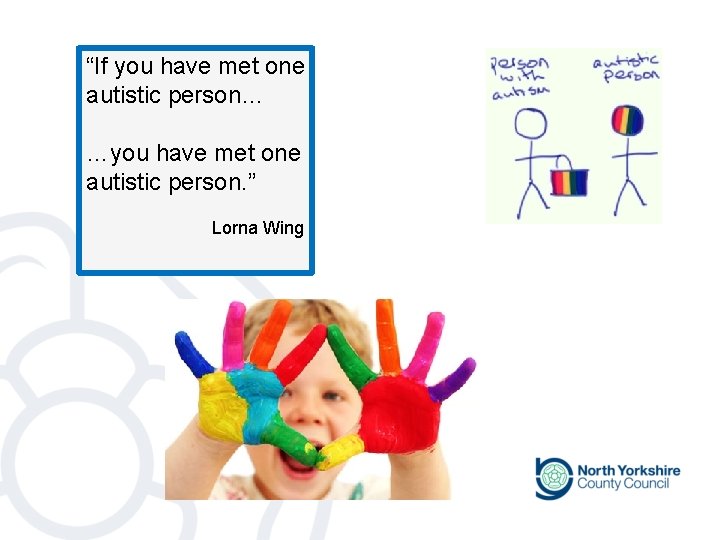
“If you have met one autistic person… …you have met one autistic person. ” Lorna Wing
What will we cover in this session? What is autism? What else might be going on? What can I do to help? Further training events What is autism? - National Autistic Society
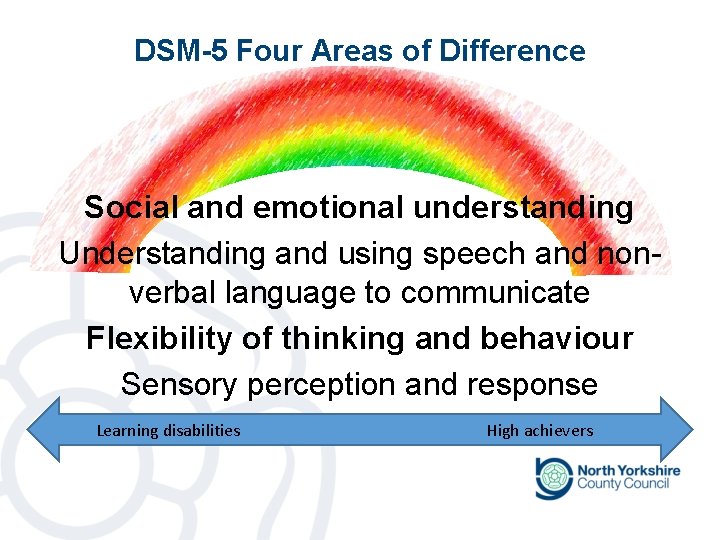
DSM-5 Four Areas of Difference Social and emotional understanding Understanding and using speech and nonverbal language to communicate Flexibility of thinking and behaviour Sensory perception and response Learning disabilities High achievers
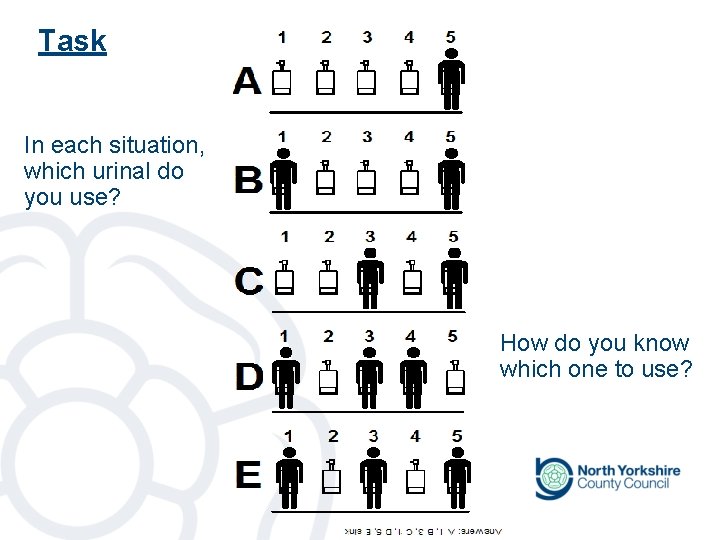
Task In each situation, which urinal do you use? How do you know which one to use?
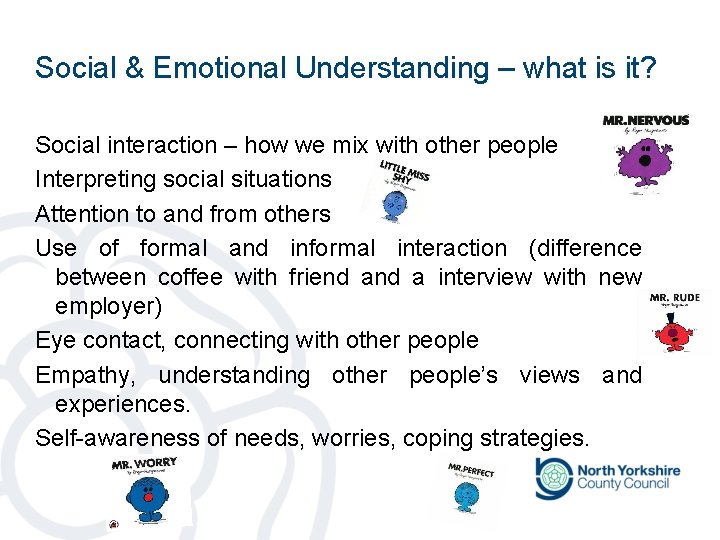
Social & Emotional Understanding – what is it? Social interaction – how we mix with other people Interpreting social situations Attention to and from others Use of formal and informal interaction (difference between coffee with friend a interview with new employer) Eye contact, connecting with other people Empathy, understanding other people’s views and experiences. Self-awareness of needs, worries, coping strategies.
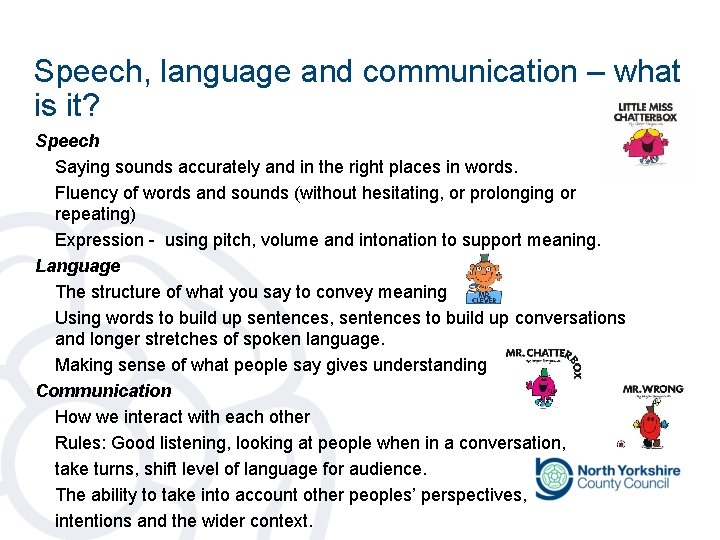
Speech, language and communication – what is it? Speech Saying sounds accurately and in the right places in words. Fluency of words and sounds (without hesitating, or prolonging or repeating) Expression - using pitch, volume and intonation to support meaning. Language The structure of what you say to convey meaning Using words to build up sentences, sentences to build up conversations and longer stretches of spoken language. Making sense of what people say gives understanding Communication How we interact with each other Rules: Good listening, looking at people when in a conversation, take turns, shift level of language for audience. The ability to take into account other peoples’ perspectives, intentions and the wider context.
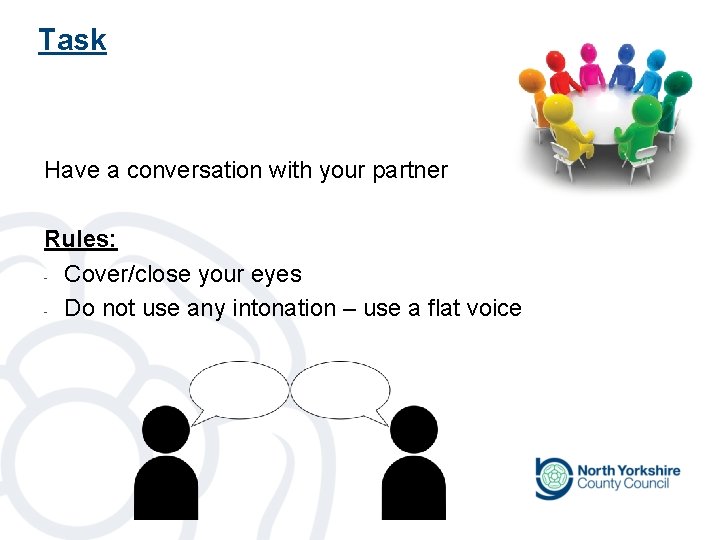
Task Have a conversation with your partner Rules: - Cover/close your eyes - Do not use any intonation – use a flat voice
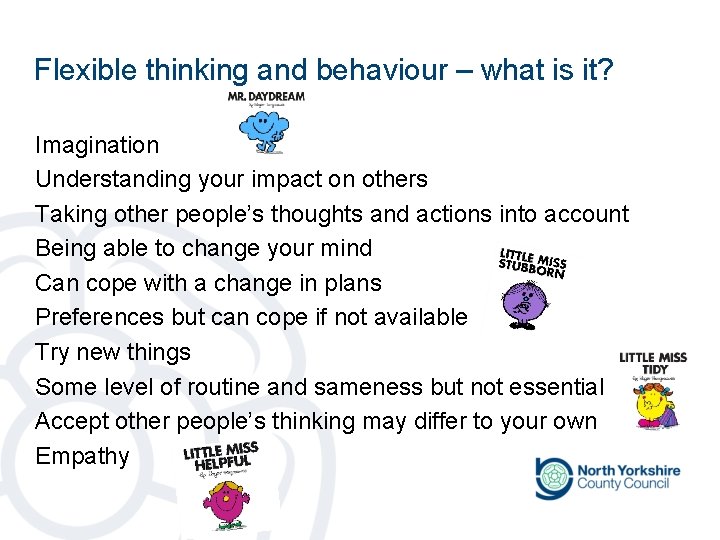
Flexible thinking and behaviour – what is it? Imagination Understanding your impact on others Taking other people’s thoughts and actions into account Being able to change your mind Can cope with a change in plans Preferences but can cope if not available Try new things Some level of routine and sameness but not essential Accept other people’s thinking may differ to your own Empathy
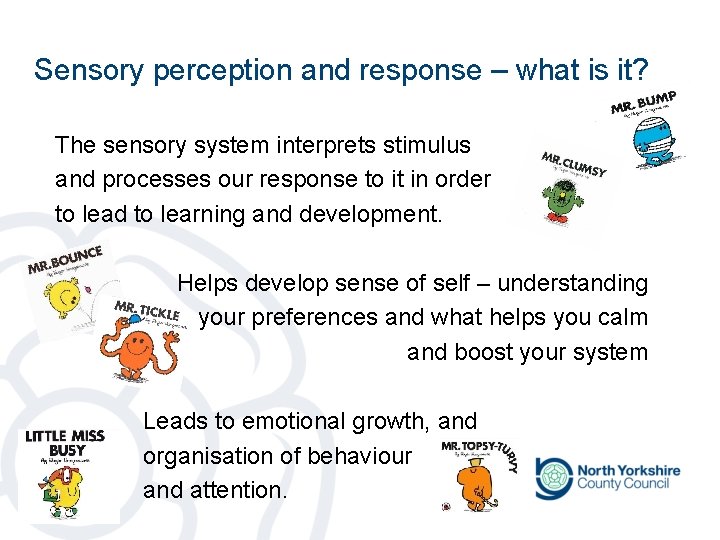
Sensory perception and response – what is it? The sensory system interprets stimulus and processes our response to it in order to lead to learning and development. Helps develop sense of self – understanding your preferences and what helps you calm and boost your system Leads to emotional growth, and organisation of behaviour and attention.
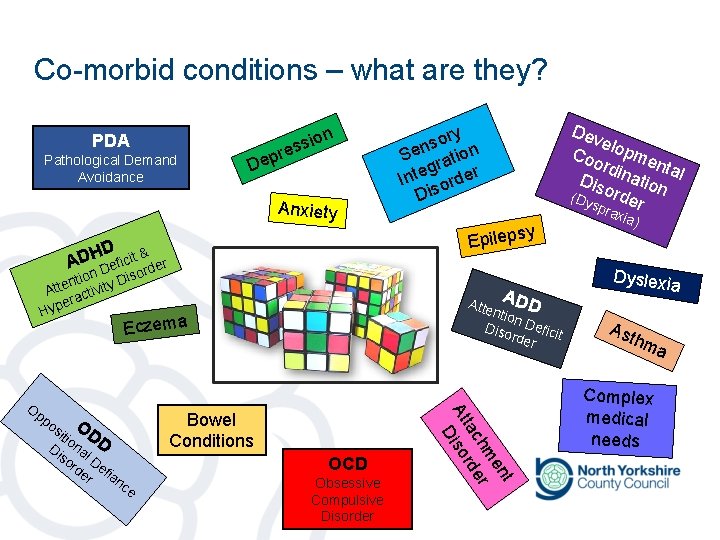
Co-morbid conditions – what are they? PDA Pathological Demand Avoidance n ssio re p e D Anxiety D & t i c i f r De isorde n o i nt D Atte activity er Hyp Atte OCD Obsessive Compulsive Disorder t en hm er tac rd At iso D Bowel Conditions ce ADD ntio n Diso Defici t rder Eczema sit OD io Di na D so l D rd ef er ia n y Epileps H AD Op po ry o s Sen ration g Inte order Dis Dev e Coo lopme rdin ntal Dis ation (Dy orde r spr ax ia) Dyslexi a Ast h ma Complex medical needs
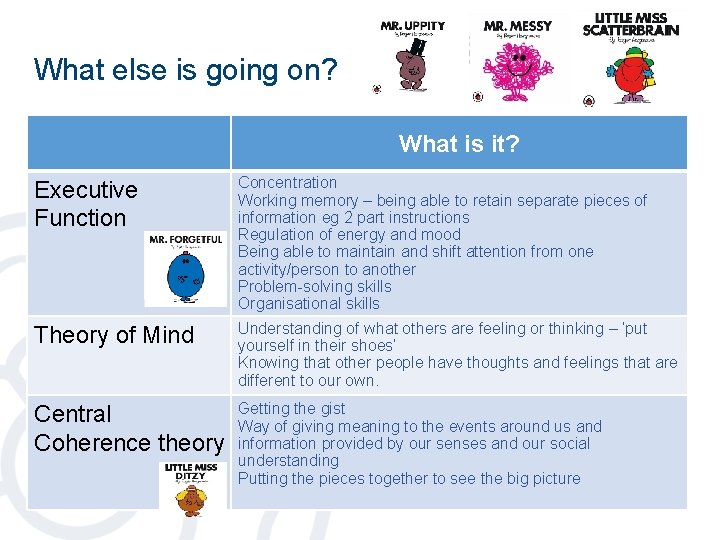
What else is going on? What is it? Executive Function Concentration Working memory – being able to retain separate pieces of information eg 2 part instructions Regulation of energy and mood Being able to maintain and shift attention from one activity/person to another Problem-solving skills Organisational skills Theory of Mind Understanding of what others are feeling or thinking – ‘put yourself in their shoes’ Knowing that other people have thoughts and feelings that are different to our own. Central Coherence theory Getting the gist Way of giving meaning to the events around us and information provided by our senses and our social understanding Putting the pieces together to see the big picture
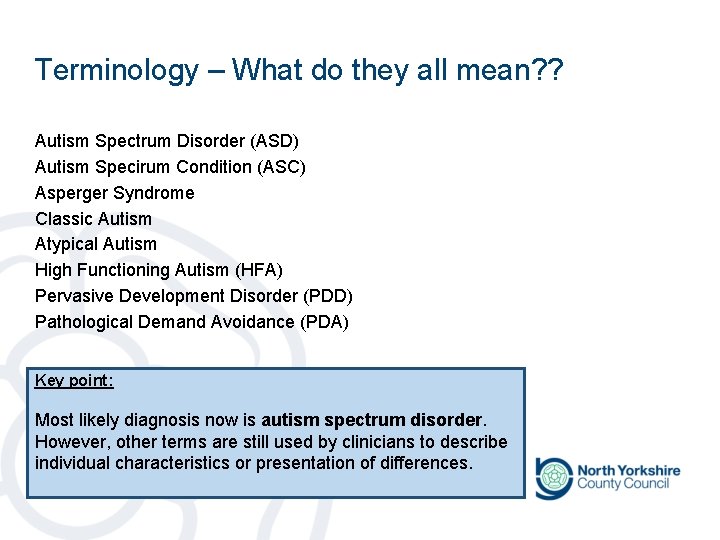
Terminology – What do they all mean? ? Autism Spectrum Disorder (ASD) Autism Specirum Condition (ASC) Asperger Syndrome Classic Autism Atypical Autism High Functioning Autism (HFA) Pervasive Development Disorder (PDD) Pathological Demand Avoidance (PDA) Key point: Most likely diagnosis now is autism spectrum disorder. However, other terms are still used by clinicians to describe individual characteristics or presentation of differences.
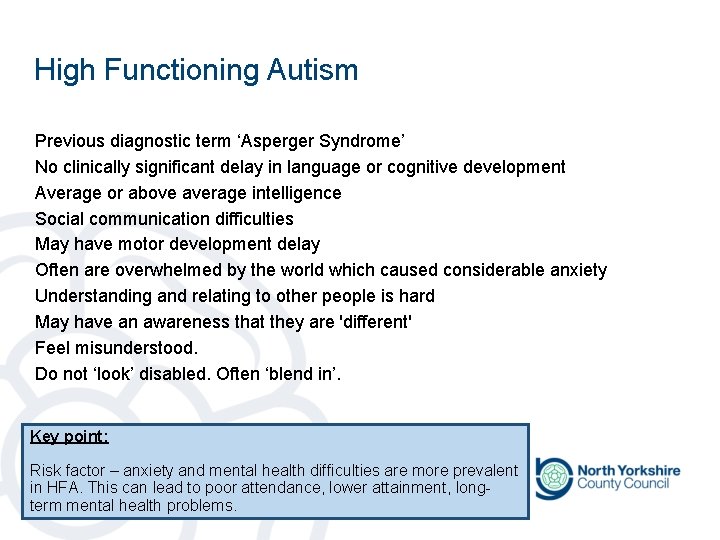
High Functioning Autism Previous diagnostic term ‘Asperger Syndrome’ No clinically significant delay in language or cognitive development Average or above average intelligence Social communication difficulties May have motor development delay Often are overwhelmed by the world which caused considerable anxiety Understanding and relating to other people is hard May have an awareness that they are 'different' Feel misunderstood. Do not ‘look’ disabled. Often ‘blend in’. Key point: Risk factor – anxiety and mental health difficulties are more prevalent in HFA. This can lead to poor attendance, lower attainment, longterm mental health problems.
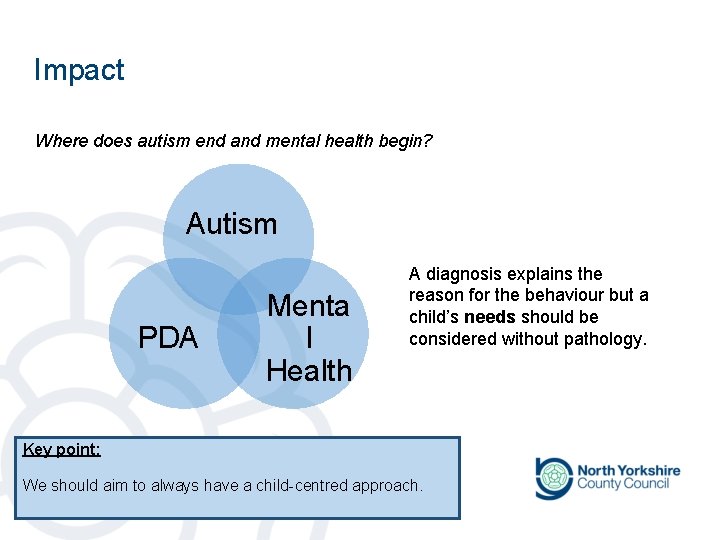
Impact Where does autism end and mental health begin? Autism PDA Menta l Health A diagnosis explains the reason for the behaviour but a child’s needs should be considered without pathology. Key point: child centred approach. We should aim to always have a child-centred approach.
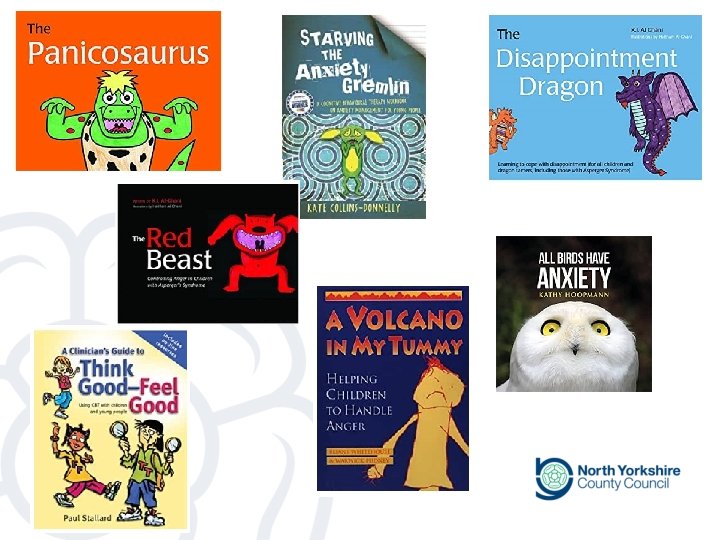
What can I do to help? - Iceberg principle STAR charts Visual support Other resources
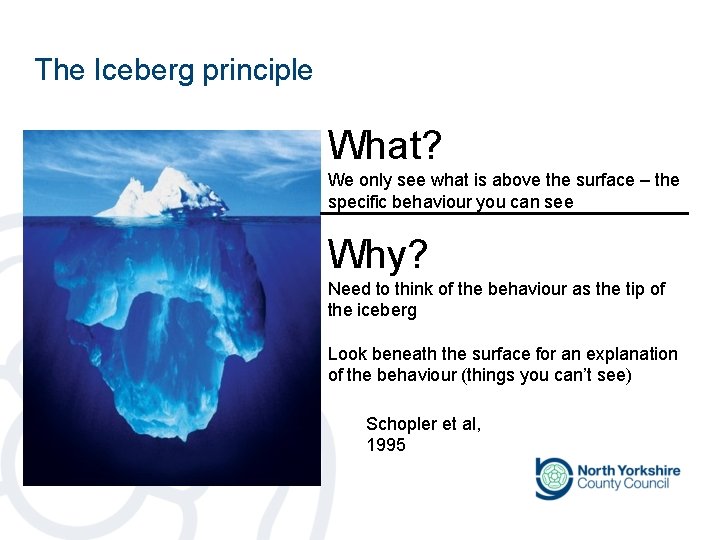
The Iceberg principle What? We only see what is above the surface – the specific behaviour you can see Why? Need to think of the behaviour as the tip of the iceberg Look beneath the surface for an explanation of the behaviour (things you can’t see) Schopler et al, 1995
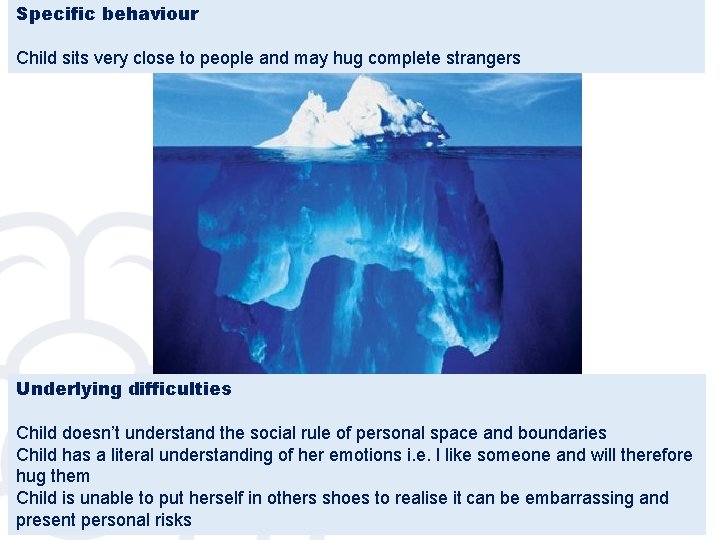
Specific behaviour Child sits very close to people and may hug complete strangers Underlying difficulties Child doesn’t understand the social rule of personal space and boundaries Child has a literal understanding of her emotions i. e. I like someone and will therefore hug them Child is unable to put herself in others shoes to realise it can be embarrassing and present personal risks
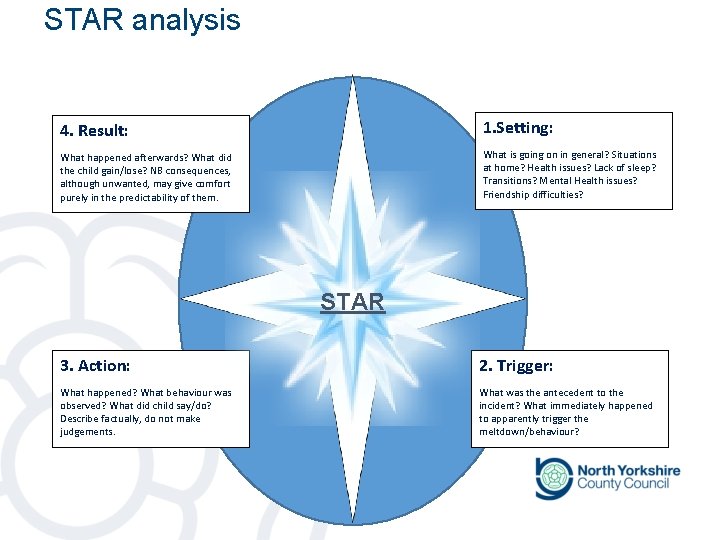
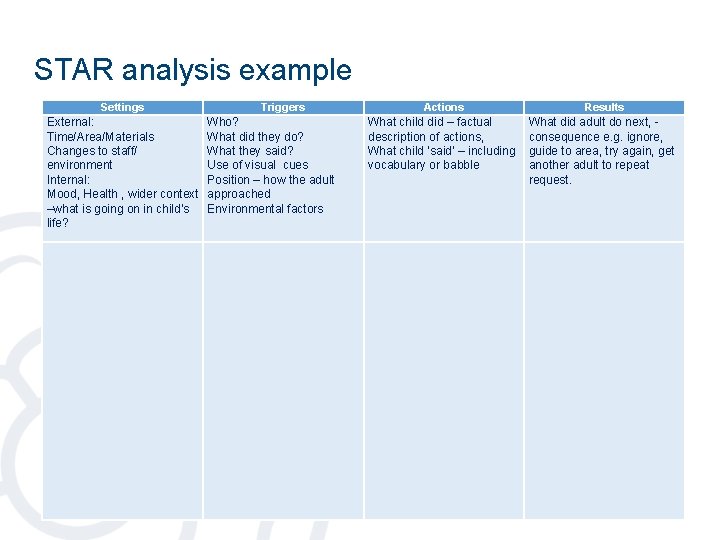
STAR analysis 4. Result: 1. Setting: What happened afterwards? What did the child gain/lose? NB consequences, although unwanted, may give comfort purely in the predictability of them. What is going on in general? Situations at home? Health issues? Lack of sleep? Transitions? Mental Health issues? Friendship difficulties? STAR 3. Action: 2. Trigger: What happened? What behaviour was observed? What did child say/do? Describe factually, do not make judgements. What was the antecedent to the incident? What immediately happened to apparently trigger the meltdown/behaviour?
STAR analysis example Settings Triggers Actions Results External: Time/Area/Materials Changes to staff/ environment Internal: Mood, Health , wider context –what is going on in child’s life? Who? What did they do? What they said? Use of visual cues Position – how the adult approached Environmental factors What child did – factual description of actions, What child ‘said’ – including vocabulary or babble What did adult do next, - consequence e. g. ignore, guide to area, try again, get another adult to repeat request.
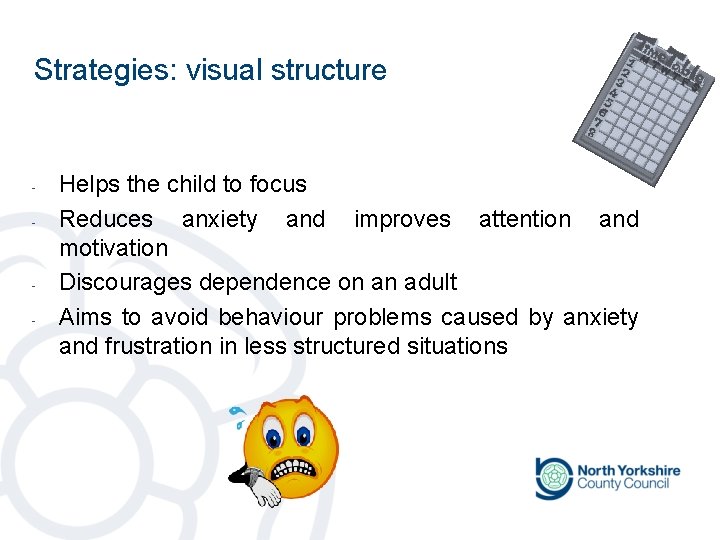
Strategies: visual structure - - Helps the child to focus Reduces anxiety and improves attention and motivation Discourages dependence on an adult Aims to avoid behaviour problems caused by anxiety and frustration in less structured situations
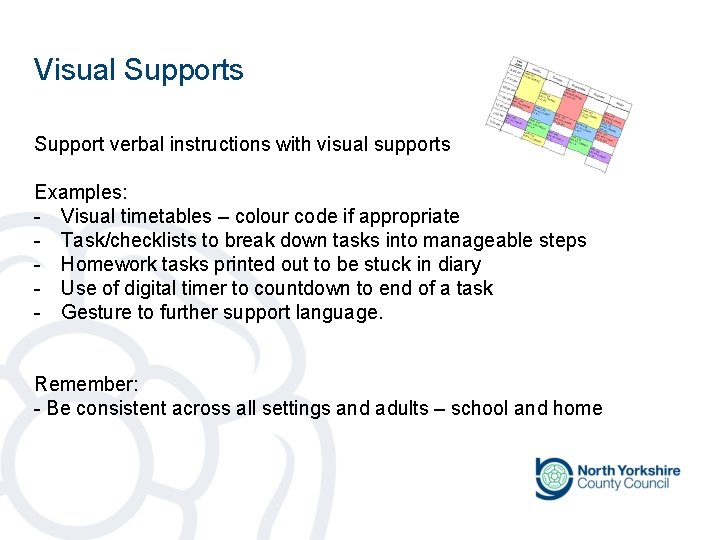
Visual Supports Support verbal instructions with visual supports Examples: - Visual timetables – colour code if appropriate - Task/checklists to break down tasks into manageable steps - Homework tasks printed out to be stuck in diary - Use of digital timer to countdown to end of a task - Gesture to further support language. Remember: - Be consistent across all settings and adults – school and home
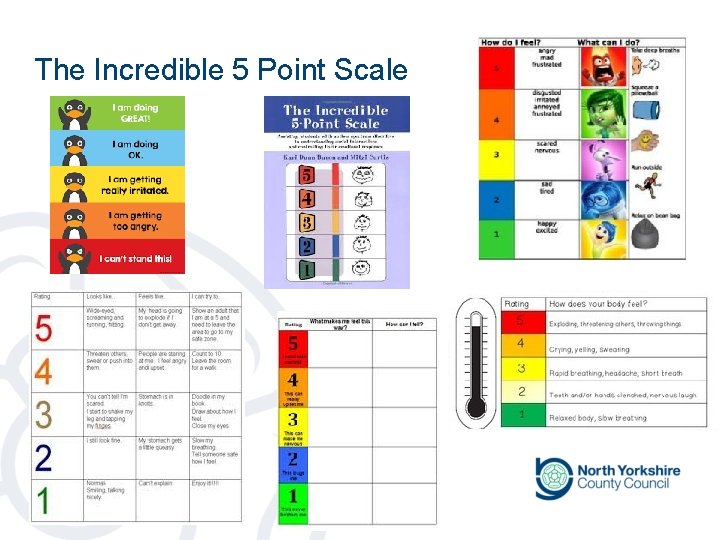
The Incredible 5 Point Scale
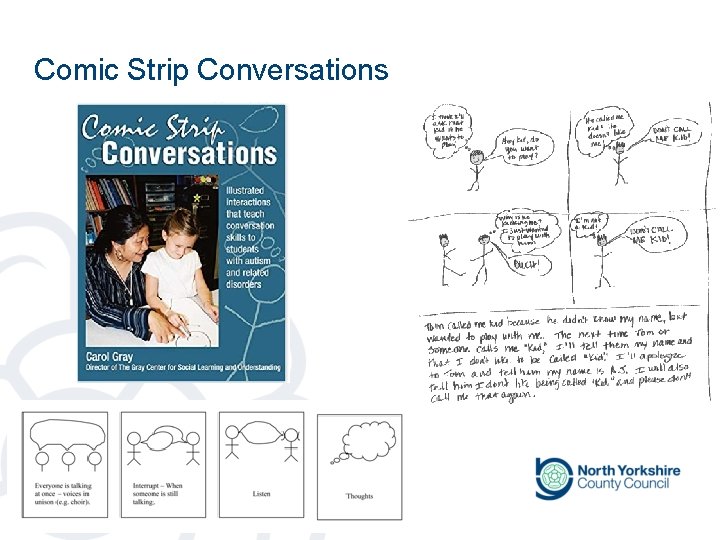
Comic Strip Conversations
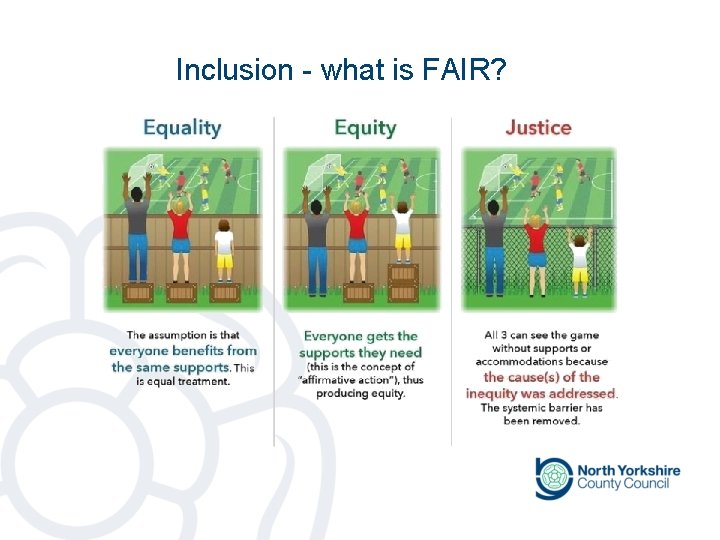
Inclusion - what is FAIR?
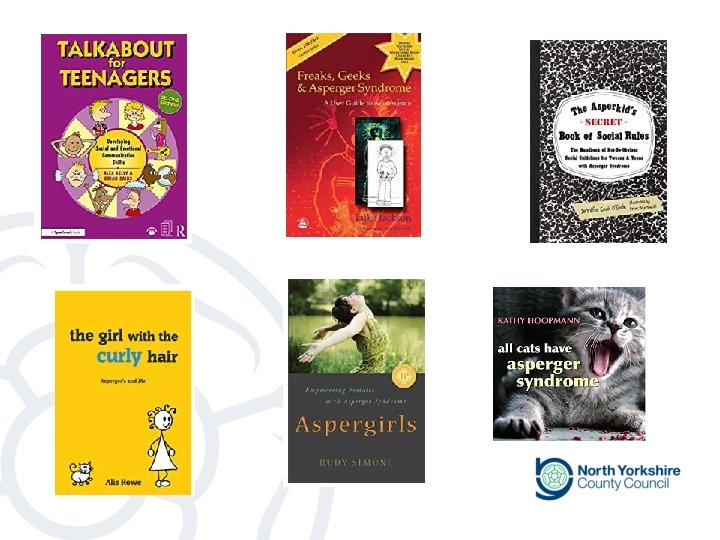
Further information Websites for ideas, resources, information and research http: //www. autism. org. uk http: //www. autismeducationtrust. org. uk
Spectrum Sessions and ‘How to’ workshops Rachel Comerford Lead for Communication & Interaction
Spectrum Sessions This open network training day is aimed at professionals working with children with communication & interaction needs. It consists of four individual sessions on the following: - Zones of Regulation - Sensory - Girls & Autism - PDA £ 80 person. Bookable through NYES.
‘How to’ This open network training day consists of two half day practical workshops: Social Scripts Lego Therapy - - Delegates will take part workshop to write their own social script for use with a child they work with. Delegates will learn how to deliver Lego Therapy. £ 80 person for a full day or £ 40 for half a day. Bookable through NYES.
ZONES OF REGULATION
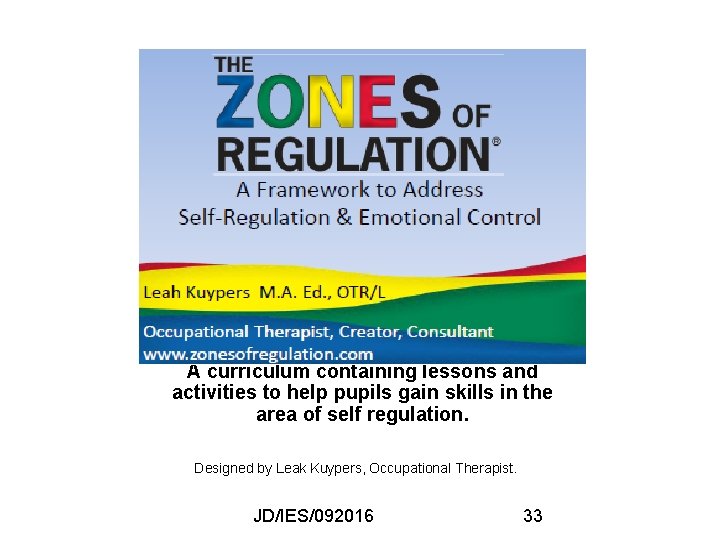
A curriculum containing lessons and activities to help pupils gain skills in the area of self regulation. Designed by Leak Kuypers, Occupational Therapist. JD/IES/092016 33
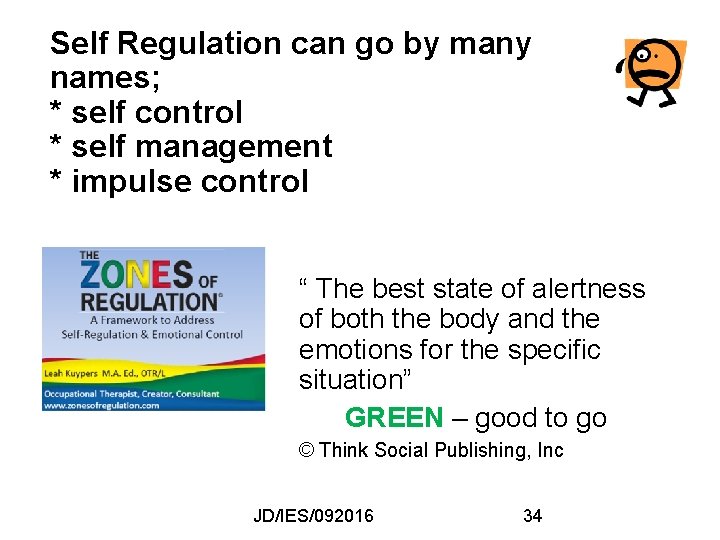
Self Regulation can go by many names; * self control * self management * impulse control “ The best state of alertness of both the body and the emotions for the specific situation” GREEN – good to go © Think Social Publishing, Inc JD/IES/092016 34
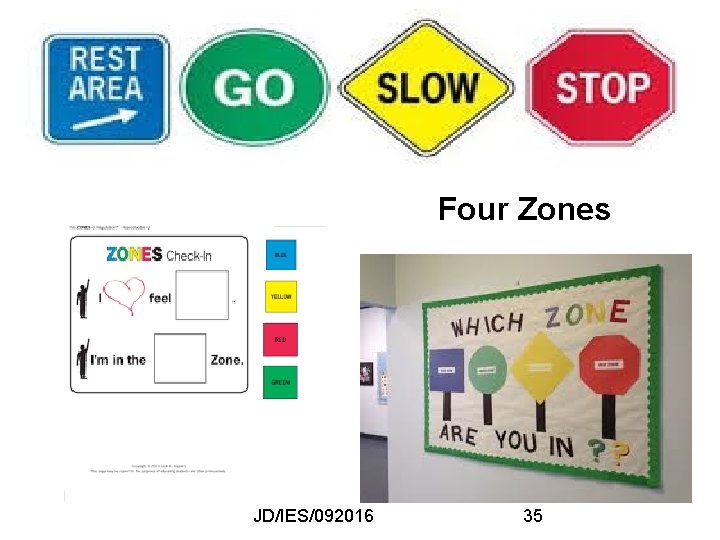
Four Zones JD/IES/092016 35
SENSORY
‘Unusual’ or sensory behaviour is not a characteristic of autism, it is the result of an unmet need 3 Golden Rules Is it doing the child harm? Is it doing someone else harm? Could it do harm in 10 years time?
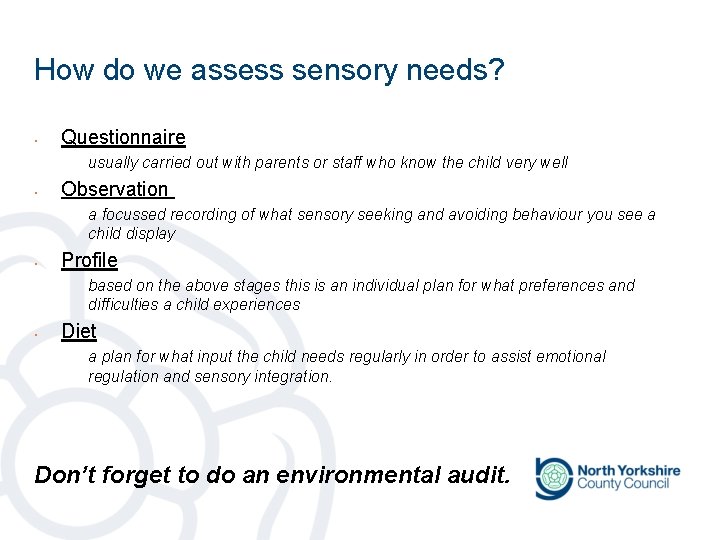
Achieving a Calm & Alert state In order to be ready to learn a child’s sensory needs must first be met To determine appropriate strategies: - observe the child, record the behaviour - interpret the behaviour - identify an alternate, appropriate strategy Consider: - is the child seeking or avoiding stimulation? - how are they meeting this need? - what alternative can I provide to enable them to meet this need?
How do we assess sensory needs? • Questionnaire usually carried out with parents or staff who know the child very well • Observation a focussed recording of what sensory seeking and avoiding behaviour you see a child display • Profile based on the above stages this is an individual plan for what preferences and difficulties a child experiences • Diet a plan for what input the child needs regularly in order to assist emotional regulation and sensory integration. Don’t forget to do an environmental audit.
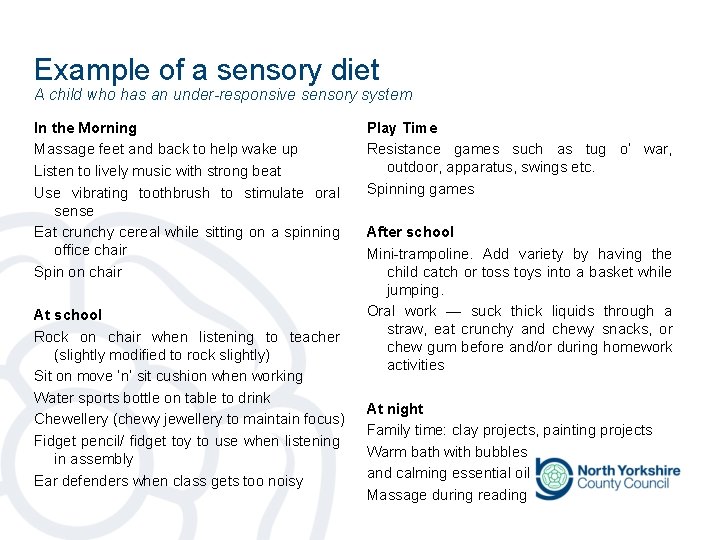
Example of a sensory diet A child who has an under-responsive sensory system In the Morning Massage feet and back to help wake up Listen to lively music with strong beat Use vibrating toothbrush to stimulate oral sense Eat crunchy cereal while sitting on a spinning office chair Spin on chair At school Rock on chair when listening to teacher (slightly modified to rock slightly) Sit on move ‘n’ sit cushion when working Water sports bottle on table to drink Chewellery (chewy jewellery to maintain focus) Fidget pencil/ fidget toy to use when listening in assembly Ear defenders when class gets too noisy Play Time Resistance games such as tug o’ war, outdoor, apparatus, swings etc. Spinning games After school Mini-trampoline. Add variety by having the child catch or toss toys into a basket while jumping. Oral work — suck thick liquids through a straw, eat crunchy and chewy snacks, or chew gum before and/or during homework activities At night Family time: clay projects, painting projects Warm bath with bubbles and calming essential oil Massage during reading
GIRLS ARE BETTER THAN BOYS
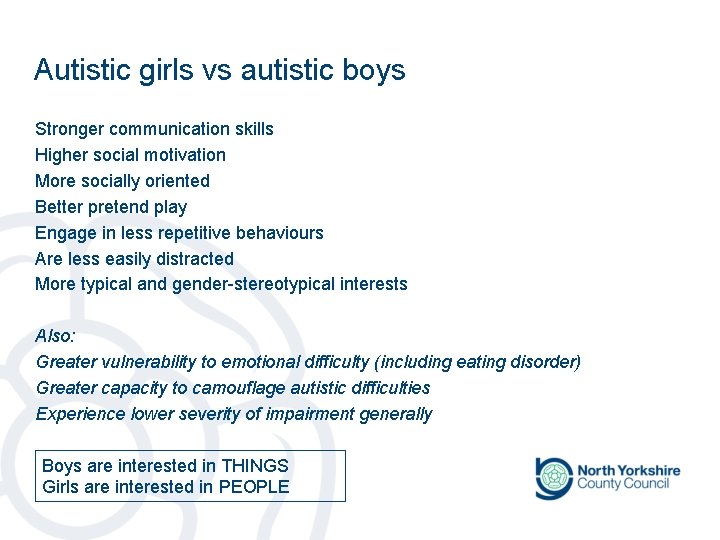
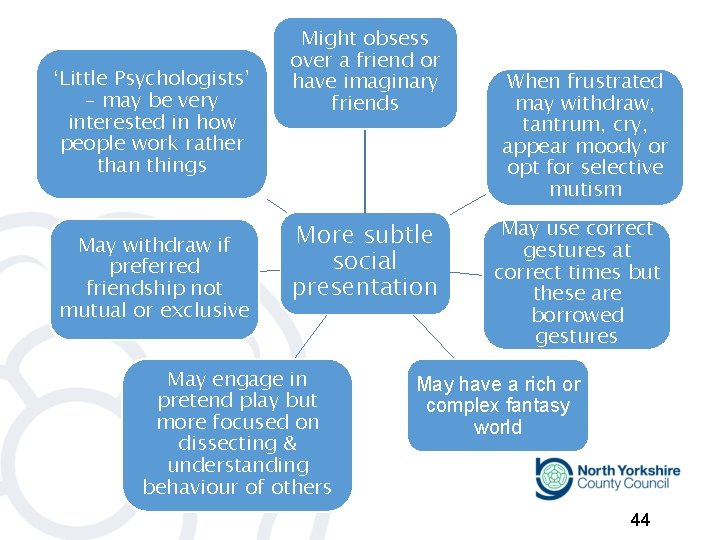
Autistic girls vs autistic boys Stronger communication skills Higher social motivation More socially oriented Better pretend play Engage in less repetitive behaviours Are less easily distracted More typical and gender-stereotypical interests Also: Greater vulnerability to emotional difficulty (including eating disorder) Greater capacity to camouflage autistic difficulties Experience lower severity of impairment generally Boys are interested in THINGS Girls are interested in PEOPLE
‘Little Psychologists’ – may be very interested in how people work rather than things May withdraw if preferred friendship not mutual or exclusive Might obsess over a friend or have imaginary friends More subtle social presentation May engage in pretend play but more focused on dissecting & understanding behaviour of others When frustrated may withdraw, tantrum, cry, appear moody or opt for selective mutism May use correct gestures at correct times but these are borrowed gestures May have a rich or complex fantasy world 44
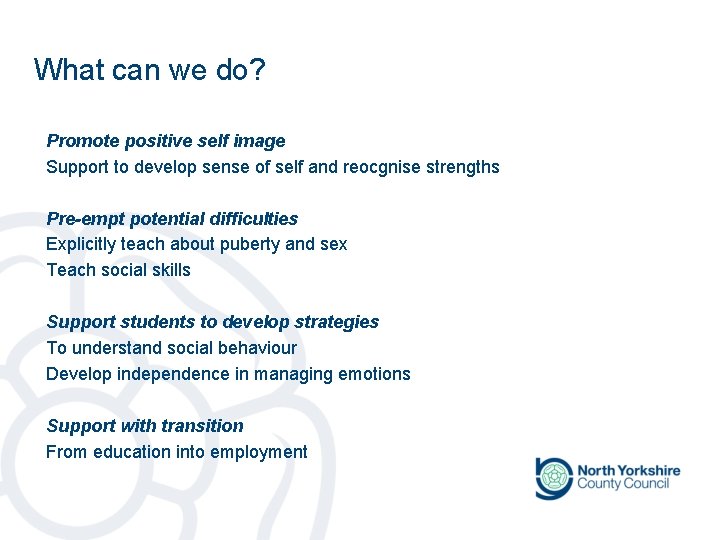
What can we do? Promote positive self image Support to develop sense of self and reocgnise strengths Pre-empt potential difficulties Explicitly teach about puberty and sex Teach social skills Support students to develop strategies To understand social behaviour Develop independence in managing emotions Support with transition From education into employment
PDA – Pervasive Demand Anxiety?
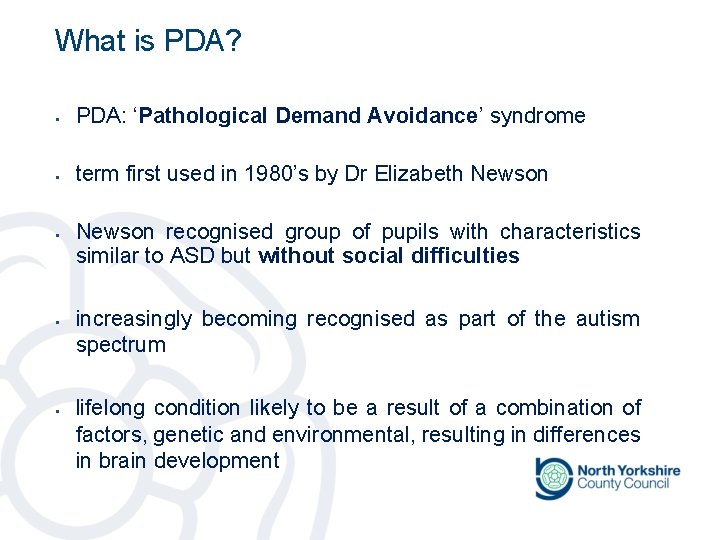
What is PDA? § PDA: ‘Pathological Demand Avoidance’ syndrome § term first used in 1980’s by Dr Elizabeth Newson § § § Newson recognised group of pupils with characteristics similar to ASD but without social difficulties increasingly becoming recognised as part of the autism spectrum lifelong condition likely to be a result of a combination of factors, genetic and environmental, resulting in differences in brain development
Pervasive Demand Anxiety? ? § Diagnosis is controversial…. . but PDA does exist Might be more helpful to think in these terms: § demonstrate extreme behaviours in order to avoid demands § avoidance driven by anxiety: experience significant anxiety unless in control however small demand may be Think of the NEEDS of the child rather than the DIAGNOSIS.
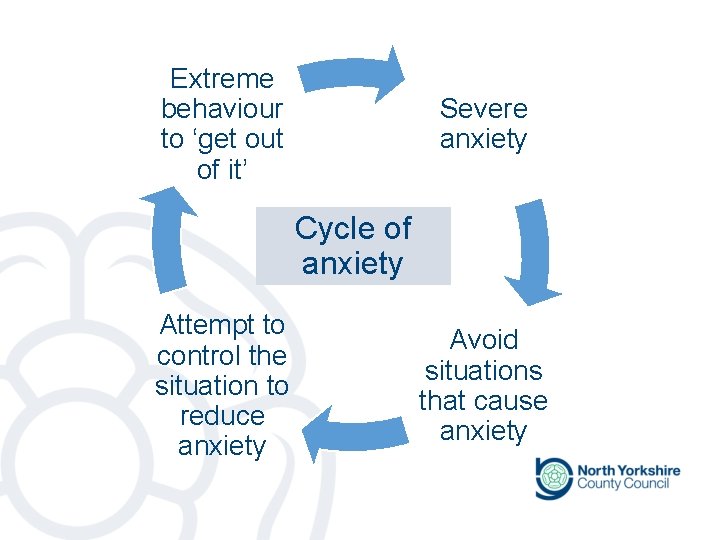
Extreme behaviour to ‘get out of it’ Severe anxiety Cycle of anxiety Attempt to control the situation to reduce anxiety Avoid situations that cause anxiety
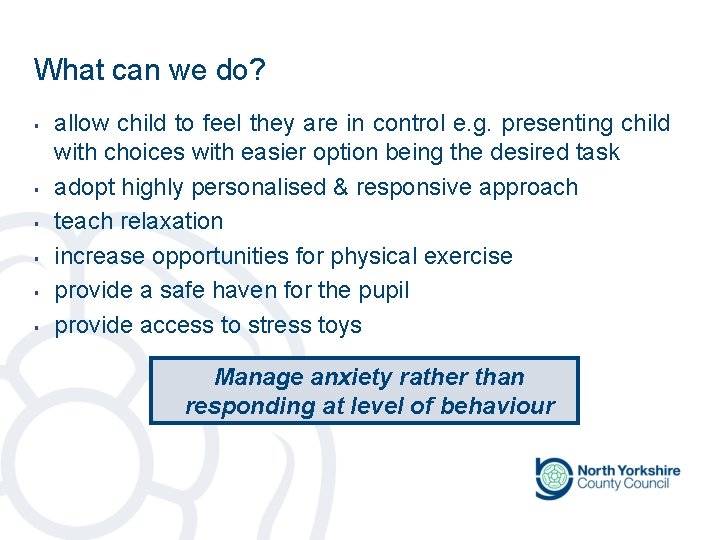
What can we do? § § § allow child to feel they are in control e. g. presenting child with choices with easier option being the desired task adopt highly personalised & responsive approach teach relaxation increase opportunities for physical exercise provide a safe haven for the pupil provide access to stress toys Manage anxiety rather than responding at level of behaviour
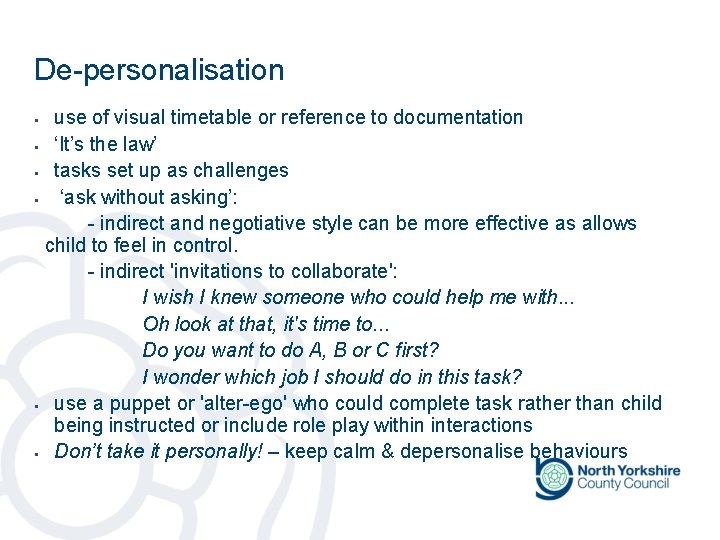
De-personalisation § § § use of visual timetable or reference to documentation ‘It’s the law’ tasks set up as challenges ‘ask without asking’: - indirect and negotiative style can be more effective as allows child to feel in control. - indirect 'invitations to collaborate': I wish I knew someone who could help me with. . . Oh look at that, it's time to. . . Do you want to do A, B or C first? I wonder which job I should do in this task? use a puppet or 'alter-ego' who could complete task rather than child being instructed or include role play within interactions Don’t take it personally! – keep calm & depersonalise behaviours
SOCIAL SCRIPTS
What are social scripts? • • • Based on Carol Gray’s “Social Stories™ A tool for teaching social skills to children with social communication difficulties They enable us to share accurate information in a reassuring manner that is easily accessible to the child or young person
Why use social scripts? • • • To reduce anxiety To prepare for change/new experiences To teach social understanding To teach socially acceptable responses To encourage consistent positive behaviour or responses
LEGO THERAPY
Aims of Social Lego Intervention • To help children and young people with communication and interaction difficulties through a structured, small-group activity • To develop communication & social skills • To promote self-esteem, confidence & motivation • To provide a basis for learning skills to be applied in other situations with support
History • Lego Therapy was developed by Le. Goff in Philadelphia. • Le. Goff found that children with autism and other neurodevelopmental and behavioural disorders appeared naturally attracted to Lego. • Le. Goff used this observation to develop the use of Lego therapeutically to naturally reinforce social behaviour
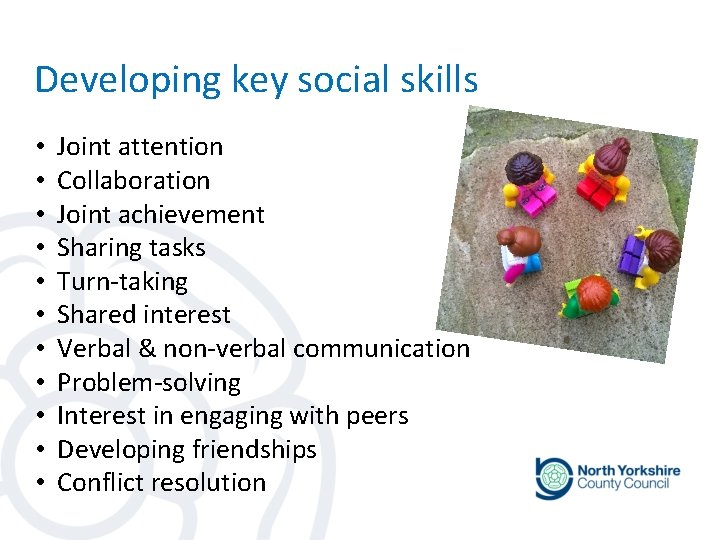
Developing key social skills • • • Joint attention Collaboration Joint achievement Sharing tasks Turn-taking Shared interest Verbal & non-verbal communication Problem-solving Interest in engaging with peers Developing friendships Conflict resolution
…lots of additional learning takes place • • • Descriptive language Positional & directional language Shape, space & measure Sorting & sequencing Creativity & imagination Fine motor skills Self-regulation Self-esteem & confidence Sense of belonging
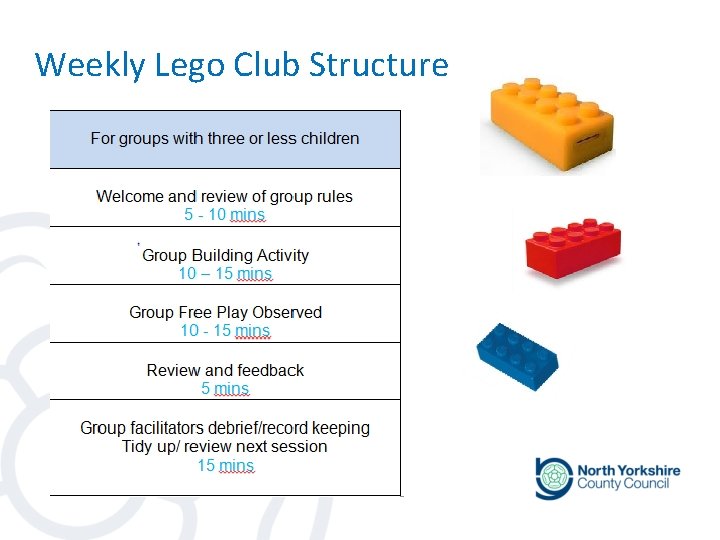
Weekly Lego Club Structure
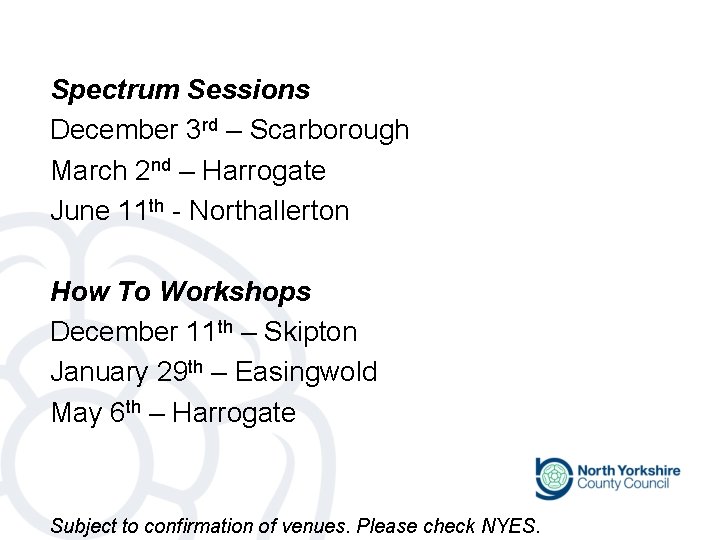
Spectrum Sessions December 3 rd – Scarborough March 2 nd – Harrogate June 11 th - Northallerton How To Workshops December 11 th – Skipton January 29 th – Easingwold May 6 th – Harrogate Subject to confirmation of venues. Please check NYES.
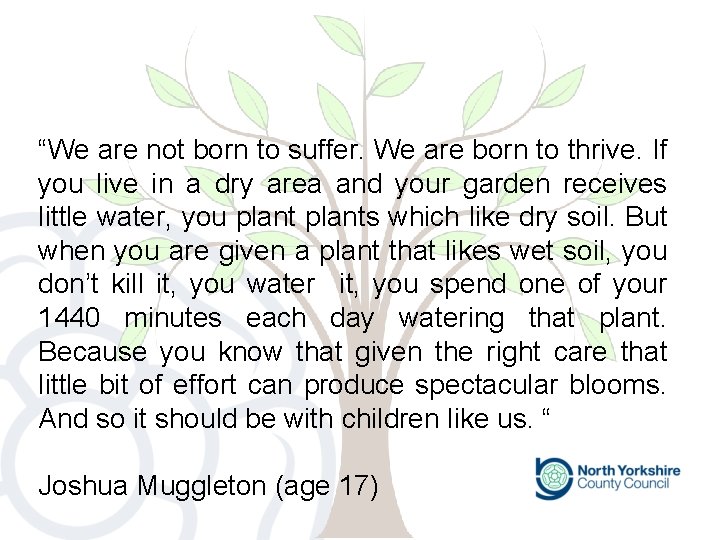
“We are not born to suffer. We are born to thrive. If you live in a dry area and your garden receives little water, you plants which like dry soil. But when you are given a plant that likes wet soil, you don’t kill it, you water it, you spend one of your 1440 minutes each day watering that plant. Because you know that given the right care that little bit of effort can produce spectacular blooms. And so it should be with children like us. “ Joshua Muggleton (age 17)
Rachel Comerford Lead for Communication & Interaction Inclusive Education Service North Yorkshire County Council County Hall Northallerton DL 7 8 AD Tel: 01609 798757 Mob: 07970 735525