Unit 3 Festivals Section C 3 Grammar 2


- Slides: 38
Unit 3 Festivals Section C 3
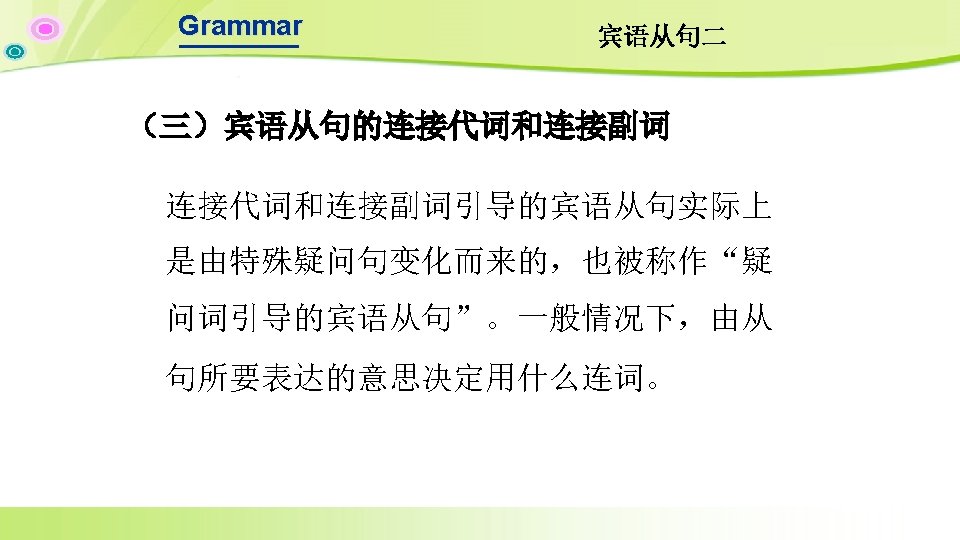
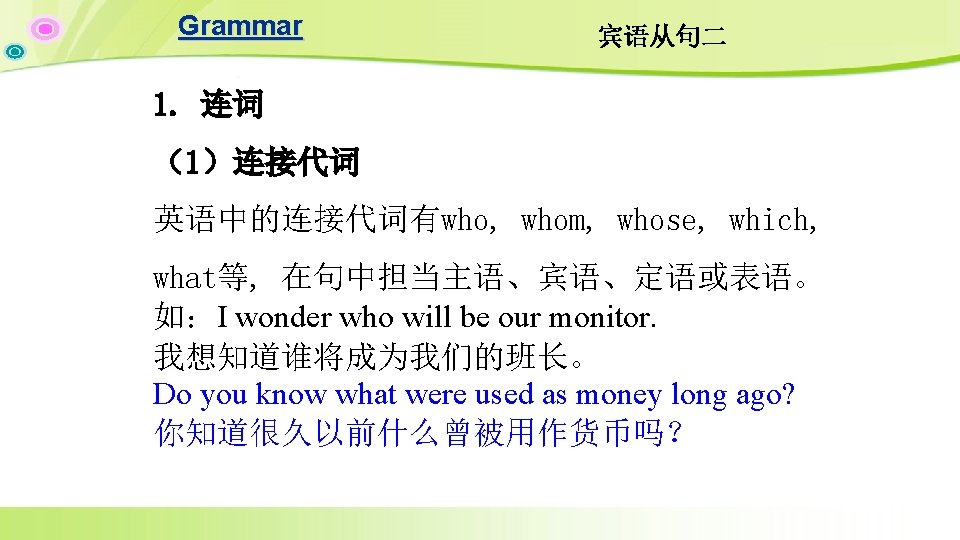
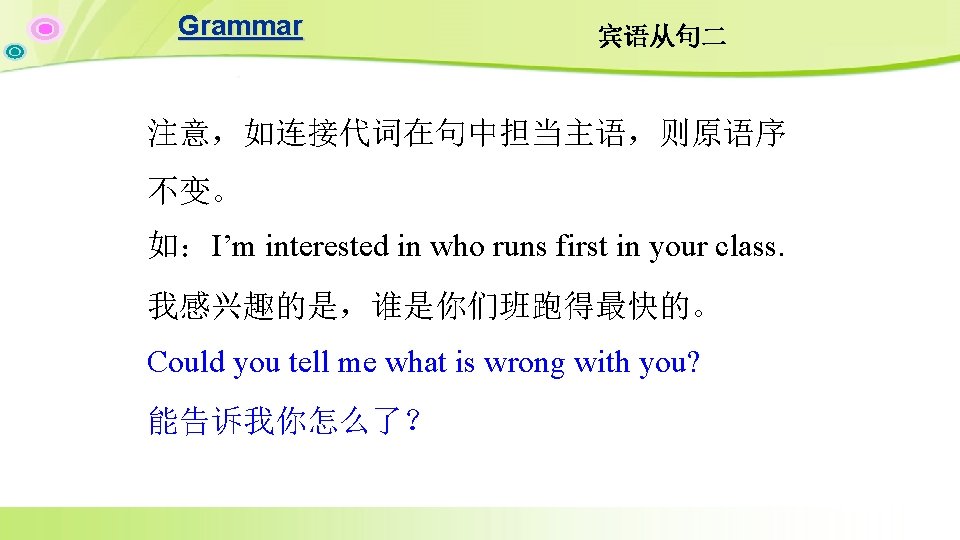
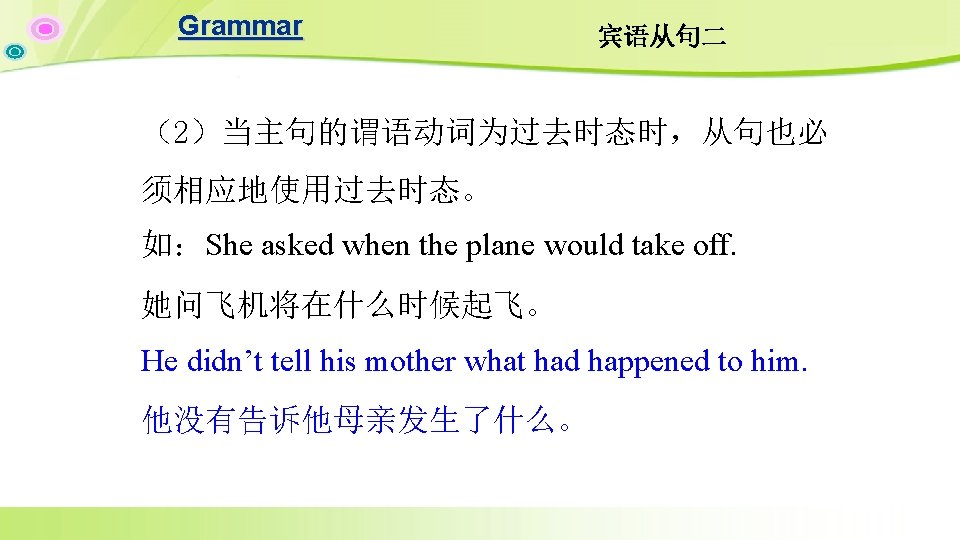
Grammar 宾语从句二 (2)连接副词 英语中的连接副词有when, where, why, how soon, how long, how much等,在句中担 当状语的成分。 如:None of us knows where he comes from. 没人知道他从哪里来。 He explained to me why he was absent from the meeting. 他跟我解释了缺席会议的原因。
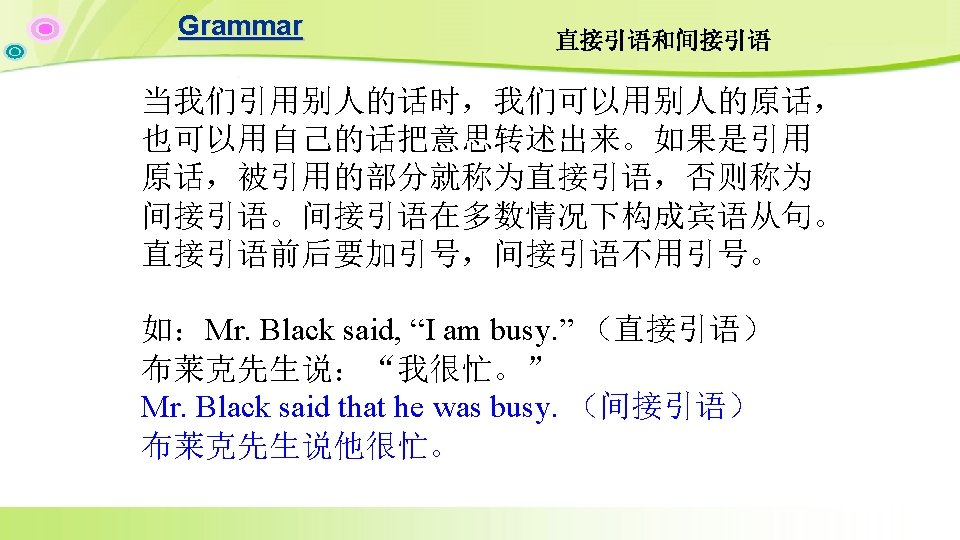
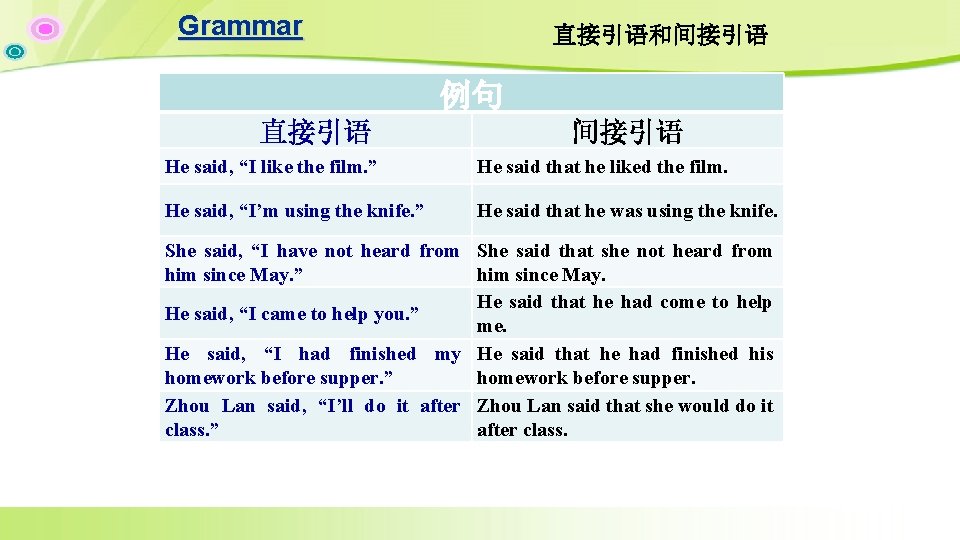
Grammar 直接引语和间接引语 例句 直接引语 间接引语 He said, “I like the film. ” He said that he liked the film. He said, “I’m using the knife. ” He said that he was using the knife. She said, “I have not heard from She said that she not heard from him since May. ” him since May. He said that he had come to help He said, “I came to help you. ” me. He said, “I had finished my He said that he had finished his homework before supper. ” homework before supper. Zhou Lan said, “I’ll do it after Zhou Lan said that she would do it class. ” after class.
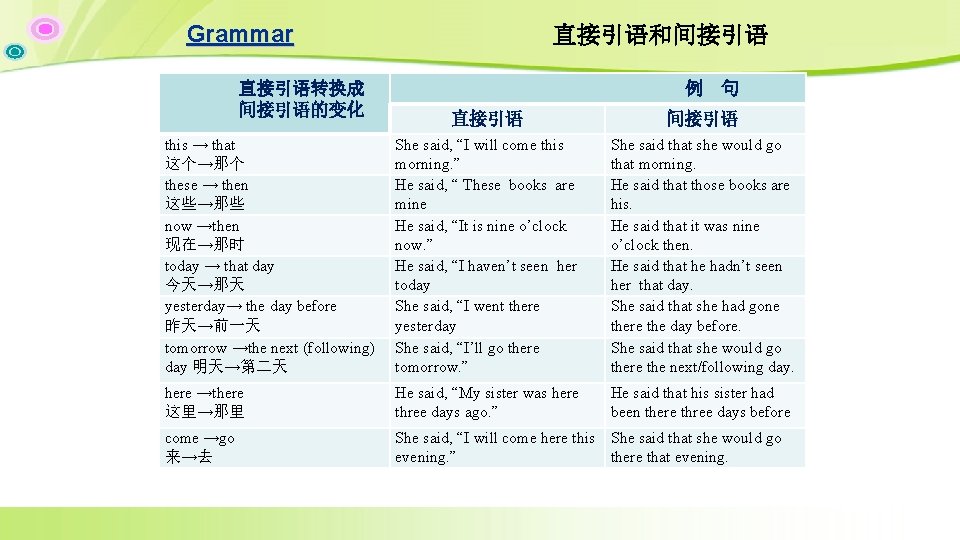
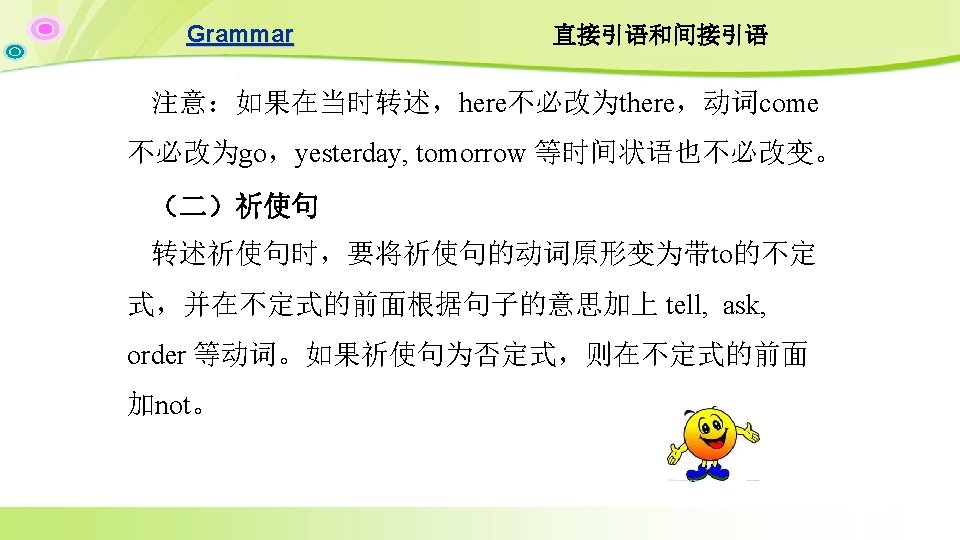
Grammar 直接引语转换成 间接引语的变化 直接引语和间接引语 例 句 直接引语 间接引语 this → that 这个→那个 these → then 这些→那些 now →then 现在→那时 today → that day 今天→那天 yesterday→ the day before 昨天→前一天 tomorrow →the next (following) day 明天→第二天 She said, “I will come this morning. ” He said, “ These books are mine He said, “It is nine o’clock now. ” He said, “I haven’t seen her today She said, “I went there yesterday She said, “I’ll go there tomorrow. ” She said that she would go that morning. He said that those books are his. He said that it was nine o’clock then. He said that he hadn’t seen her that day. She said that she had gone there the day before. She said that she would go there the next/following day. here →there 这里→那里 He said, “My sister was here three days ago. ” He said that his sister had been there three days before come →go 来→去 She said, “I will come here this She said that she would go evening. ” there that evening.
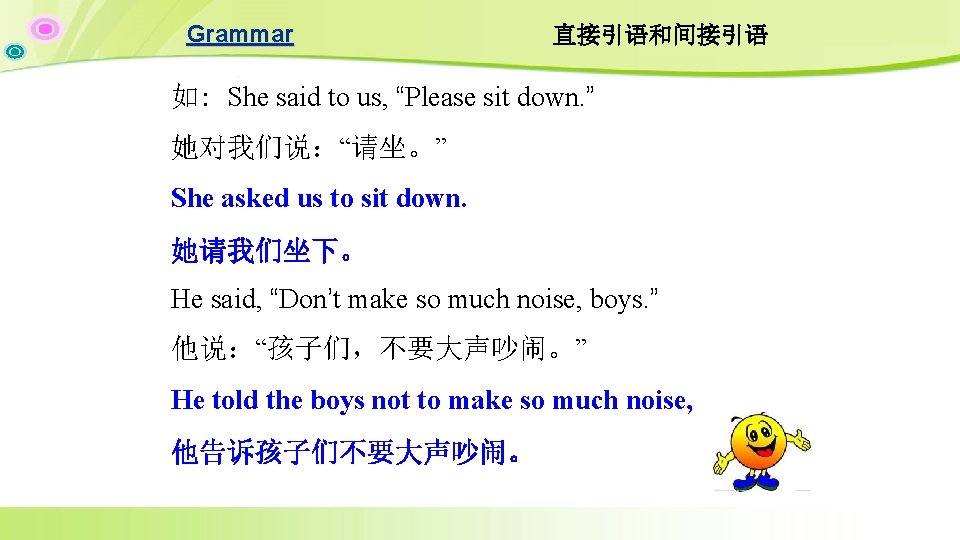
Grammar 直接引语和间接引语 如: She said to us, “Please sit down. ” 她对我们说:“请坐。” She asked us to sit down. 她请我们坐下。 He said, “Don’t make so much noise, boys. ” 他说:“孩子们,不要大声吵闹。” He told the boys not to make so much noise, 他告诉孩子们不要大声吵闹。
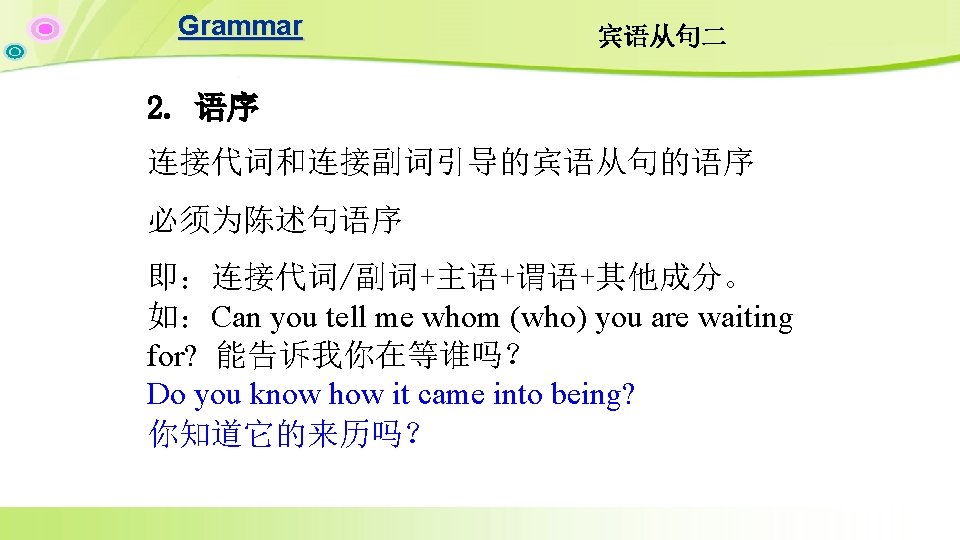
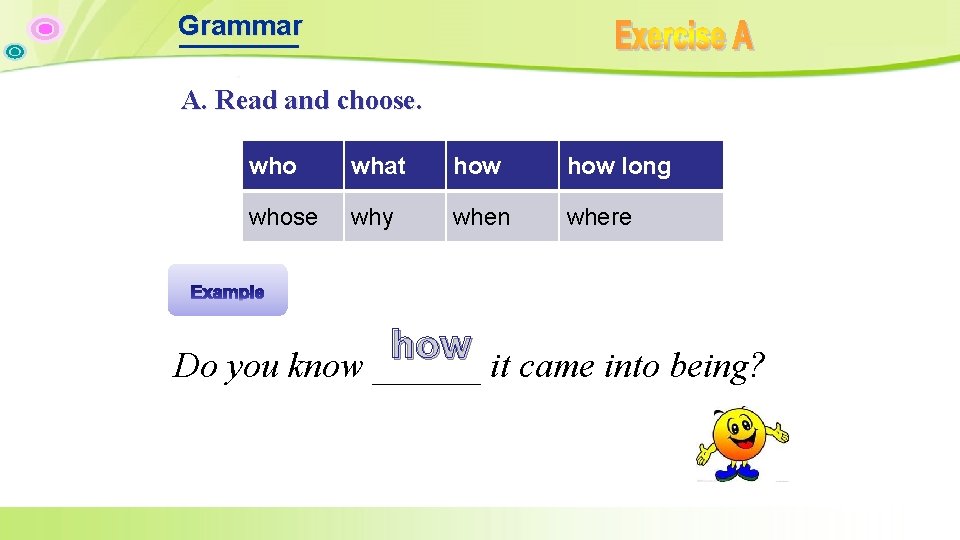
Grammar A. Read and choose. who what how long whose why when where how Do you know ______ it came into being?
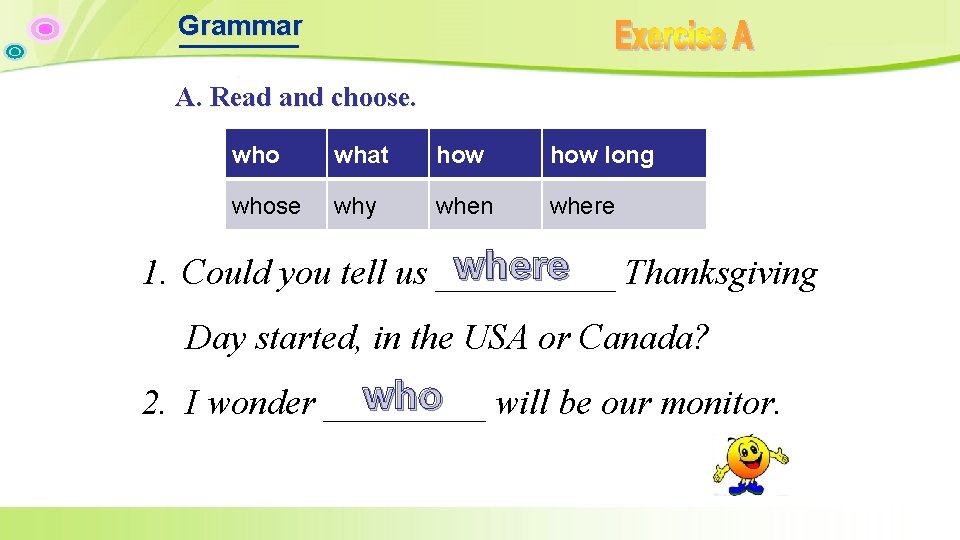
Grammar A. Read and choose. who what how long whose why when where Thanksgiving 1. Could you tell us _____ Day started, in the USA or Canada? who will be our monitor. 2. I wonder _____
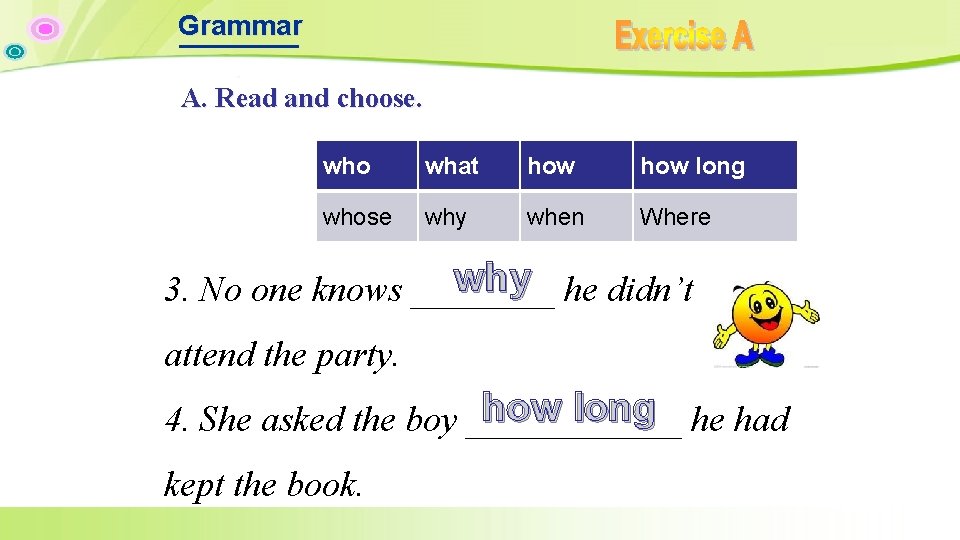
Grammar A. Read and choose. who what how long whose why when Where why he didn’t 3. No one knows ____ attend the party. how long he had 4. She asked the boy ______ kept the book.
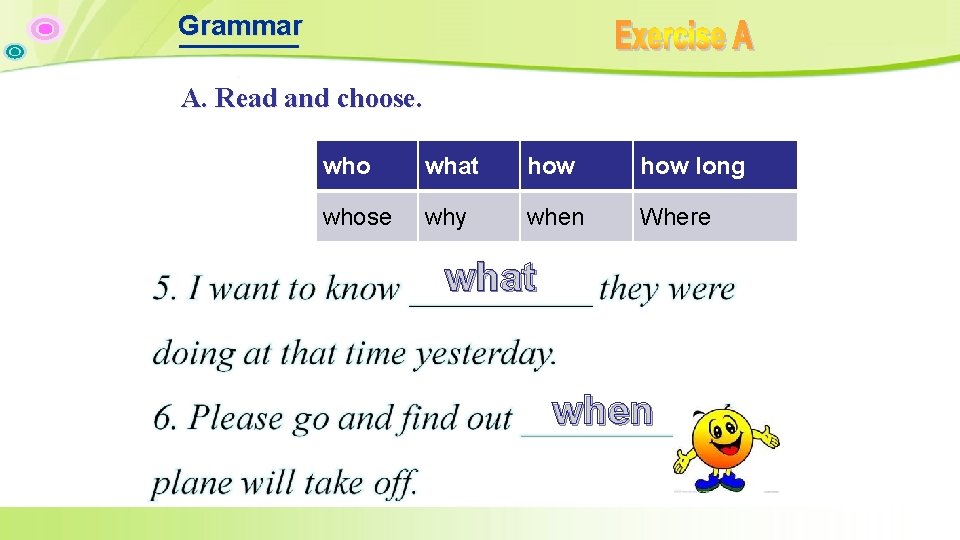
Grammar A. Read and choose. who what how long whose why when Where what when
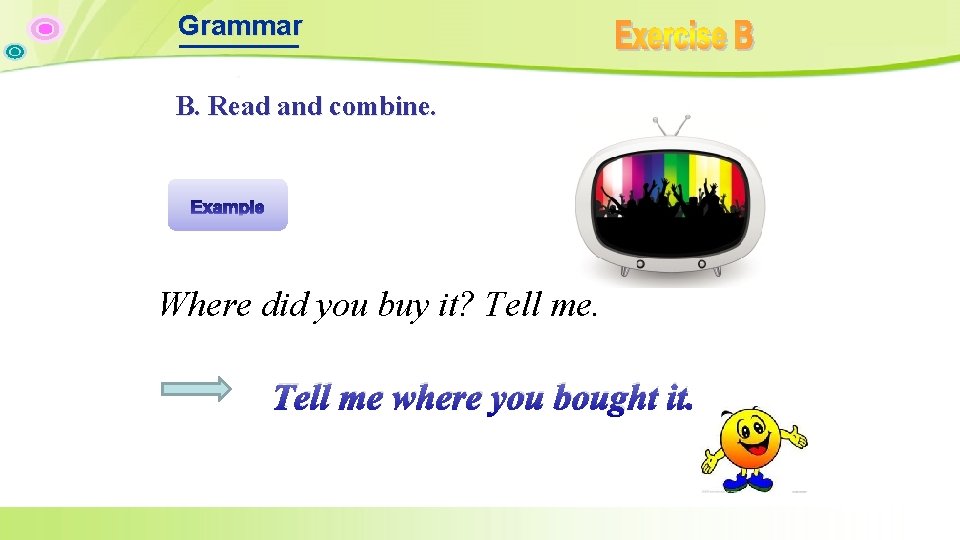
Grammar B. Read and combine. Where did you buy it? Tell me where you bought it.
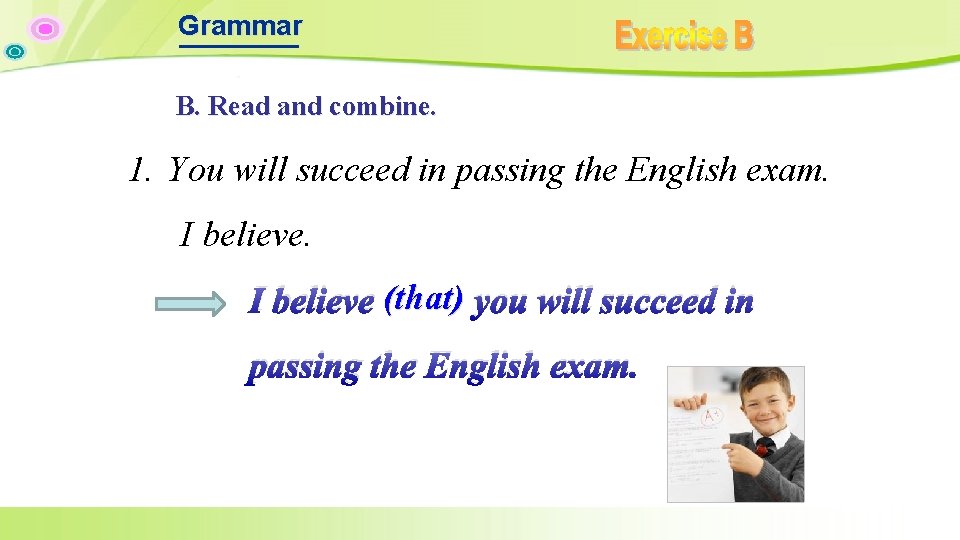
Grammar B. Read and combine. 1. You will succeed in passing the English exam. I believe (that) you will succeed in passing the English exam.
Grammar B. Read and combine. 2. What do you major in? Can you tell me what you major in?
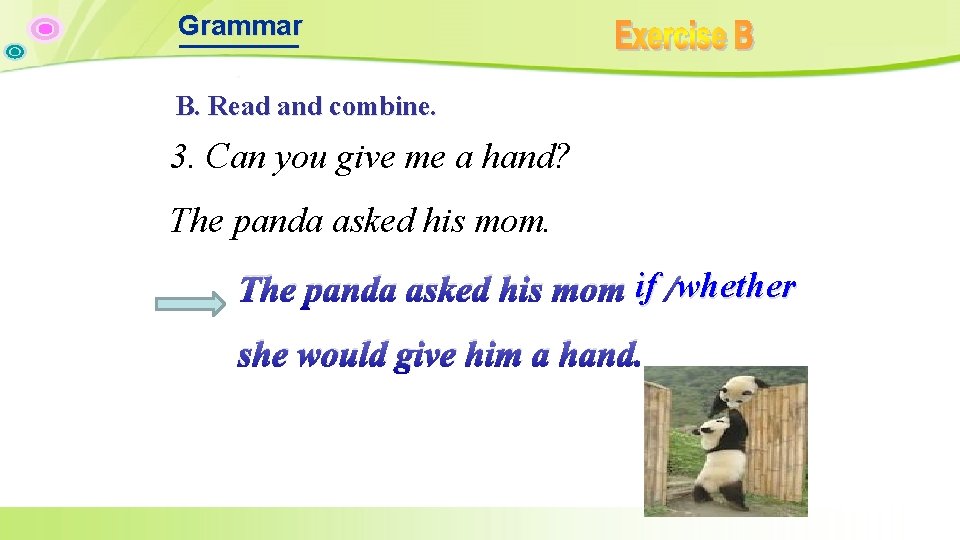
Grammar B. Read and combine. 3. Can you give me a hand? The panda asked his mom. whether The panda asked his mom if /whether she would give him a hand.
Grammar B. Read and combine. 4. Whose mobile phone is it? I’m interested in knowing whose mobile phone it is.
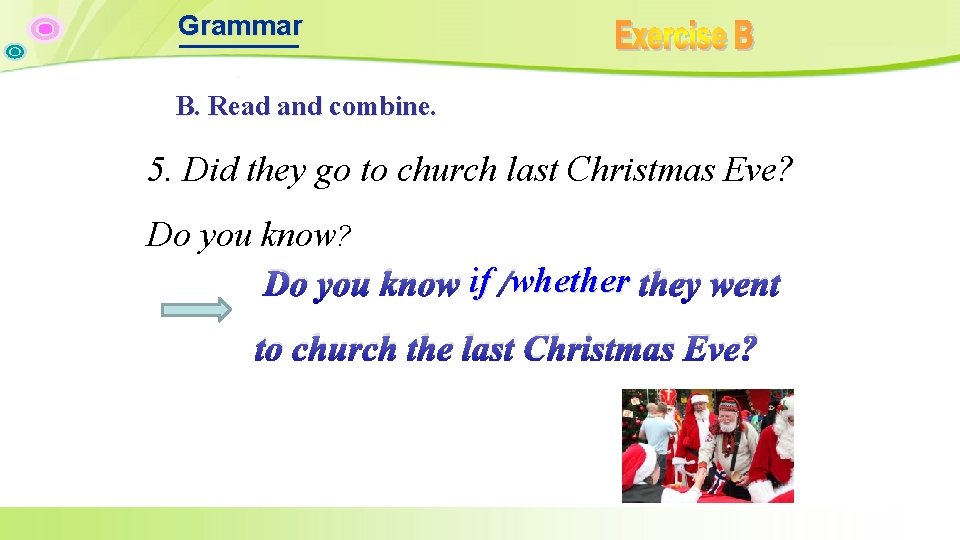
Grammar B. Read and combine. 5. Did they go to church last Christmas Eve? Do you know? whether they went Do you know if /whether to church the last Christmas Eve?
Grammar B. Read and combine. 6. How long has she had the notebook computer? He wondered. He wanted to know how long she had the notebook computer.
Grammar C. Read and decide. I don’t believe that Tom said. ( F ) Have you decided where you will go for a holiday? ( T )
Grammar C. Read and decide. 1. She said that she has been to the USA twice. ( F ) 2. I’m not interested in how much you paid for your mobile phone. ( T ) 3. I’d like to know if it will rain this weekend or not. ( F )
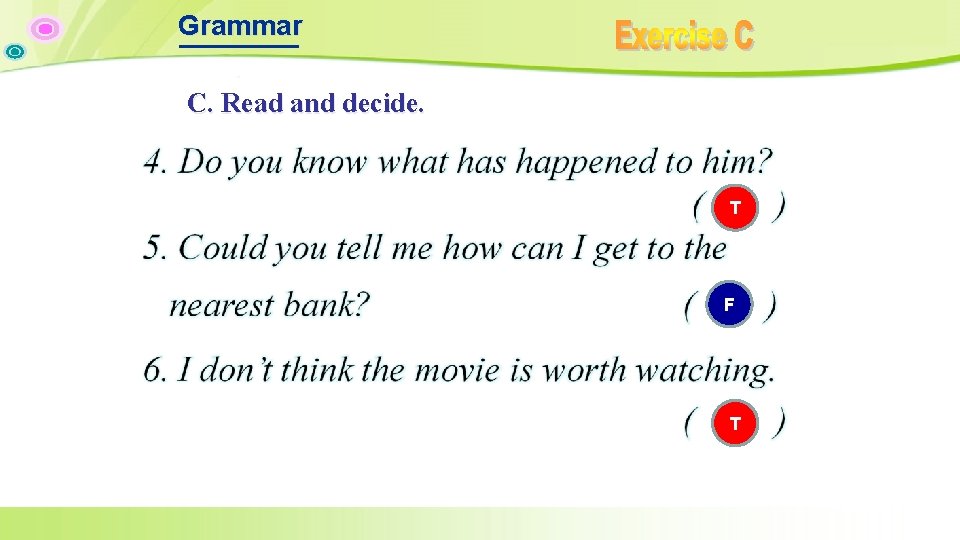
Grammar C. Read and decide. T F T
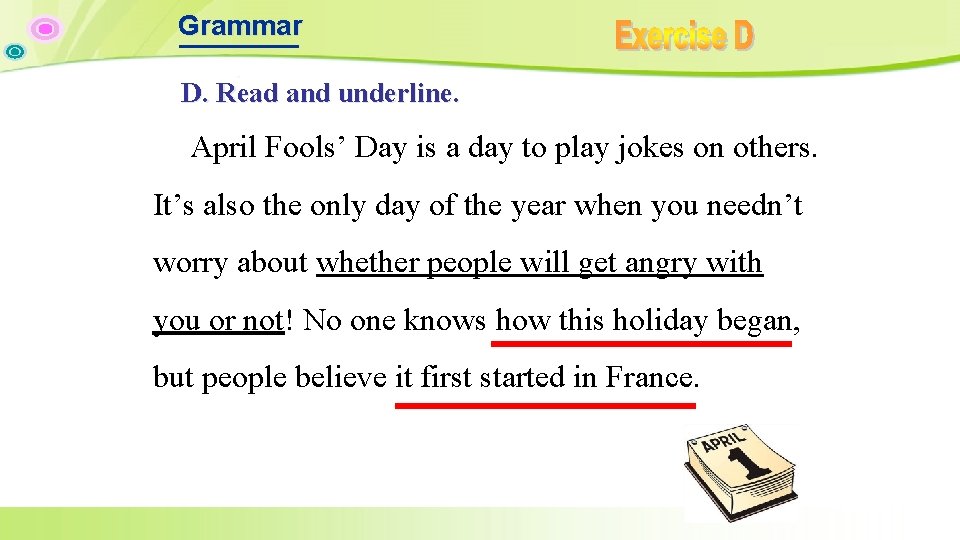
Grammar D. Read and underline. April Fools’ Day is a day to play jokes on others. It’s also the only day of the year when you needn’t worry about whether people will get angry with you or not! No one knows how this holiday began, but people believe it first started in France.
Grammar D. Read and underline. In the 16 th century, people celebrated New Year’s Day from March 25 th to April 1 st. In the mid-1560 s, King Charles IX declared that the celebration was on January 1 st. But some people still celebrated it on April 1 st, so others said they were April Fools.
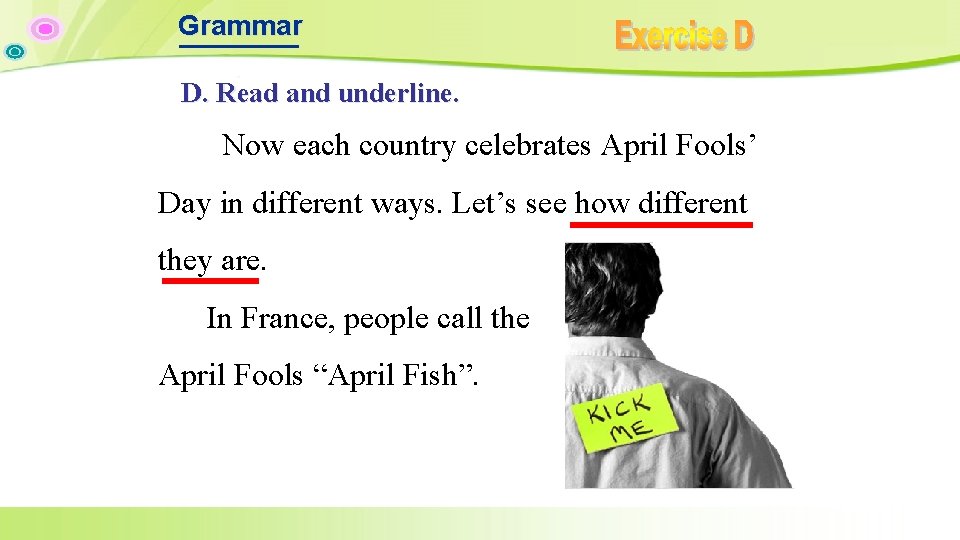
Grammar D. Read and underline. Now each country celebrates April Fools’ Day in different ways. Let’s see how different they are. In France, people call the April Fools “April Fish”.
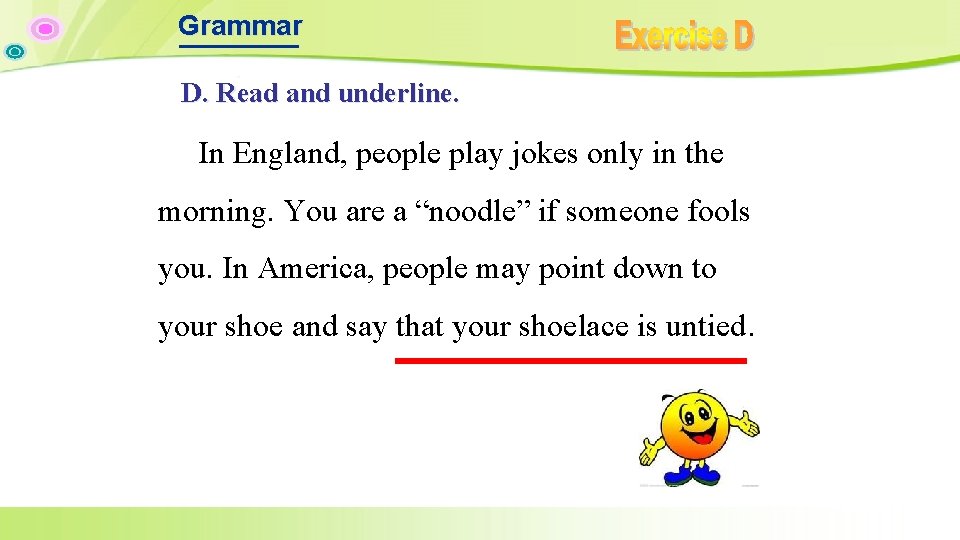
Grammar D. Read and underline. In England, people play jokes only in the morning. You are a “noodle” if someone fools you. In America, people may point down to your shoe and say that your shoelace is untied.
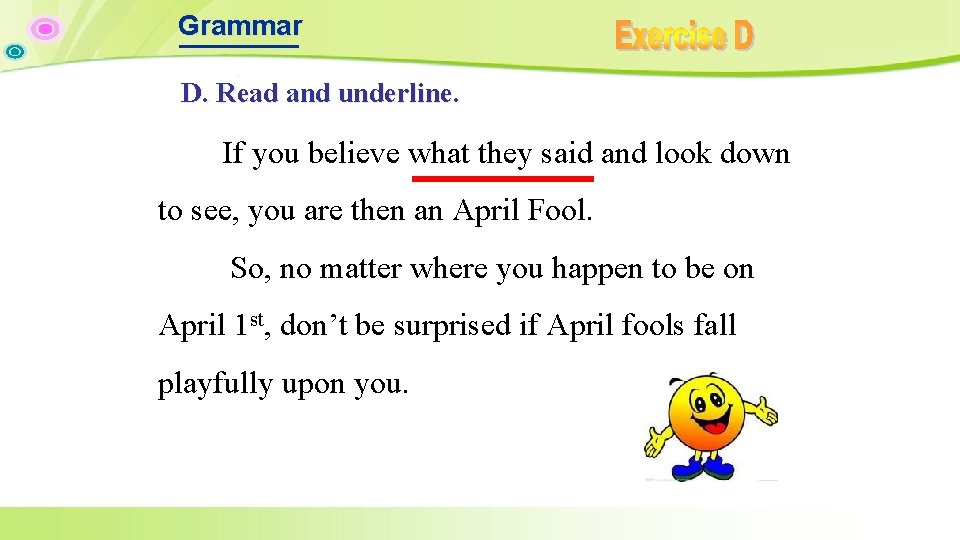
Grammar D. Read and underline. If you believe what they said and look down to see, you are then an April Fool. So, no matter where you happen to be on April 1 st, don’t be surprised if April fools fall playfully upon you.
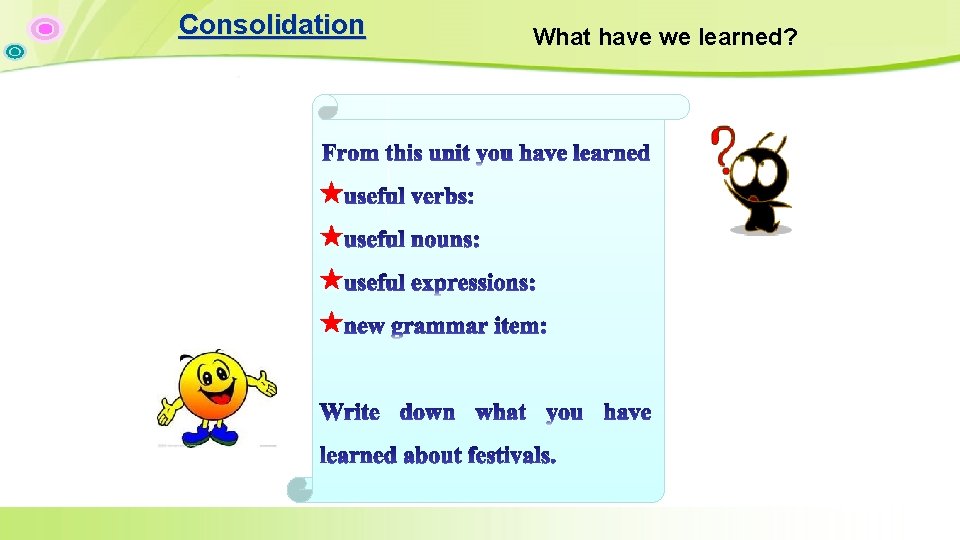
Consolidation ★ ★ What have we learned?
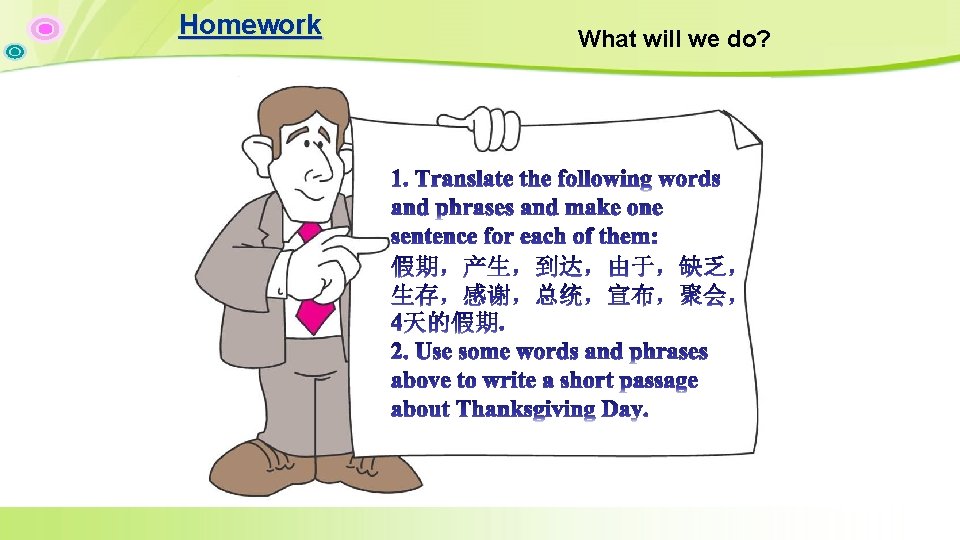
Homework What will we do?