
Grammar Unit 2 Past Simple Past Continuous Past
- Slides: 9
Grammar Unit 2 Past Simple Past Continuous Past Perfect Simple
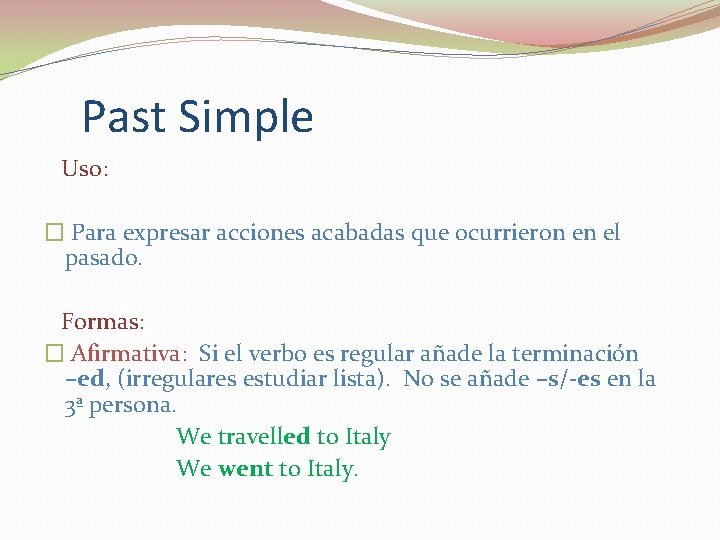
Past Simple Uso: � Para expresar acciones acabadas que ocurrieron en el pasado. Formas: � Afirmativa: Si el verbo es regular añade la terminación –ed, (irregulares estudiar lista). No se añade –s/-es en la 3ª persona. We travelled to Italy We went to Italy.
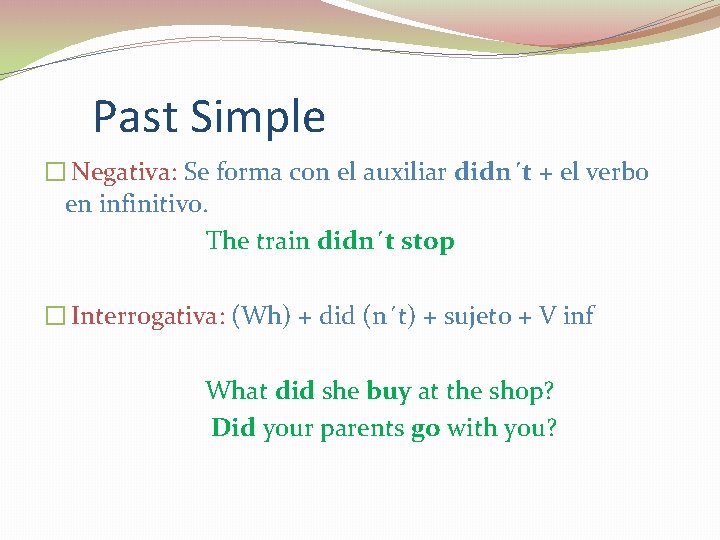
Past Simple � Negativa: Se forma con el auxiliar didn´t + el verbo en infinitivo. The train didn´t stop � Interrogativa: (Wh) + did (n´t) + sujeto + V inf What did she buy at the shop? Did your parents go with you?
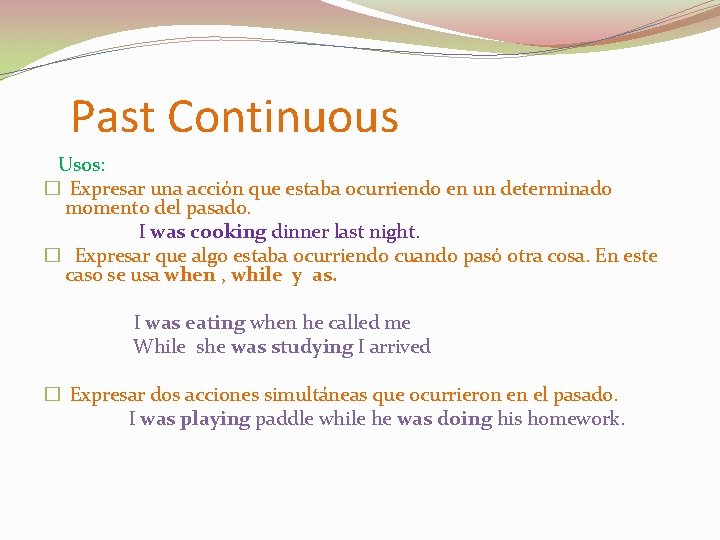
Past Continuous Usos: � Expresar una acción que estaba ocurriendo en un determinado momento del pasado. I was cooking dinner last night. � Expresar que algo estaba ocurriendo cuando pasó otra cosa. En este caso se usa when , while y as. I was eating when he called me While she was studying I arrived � Expresar dos acciones simultáneas que ocurrieron en el pasado. I was playing paddle while he was doing his homework.
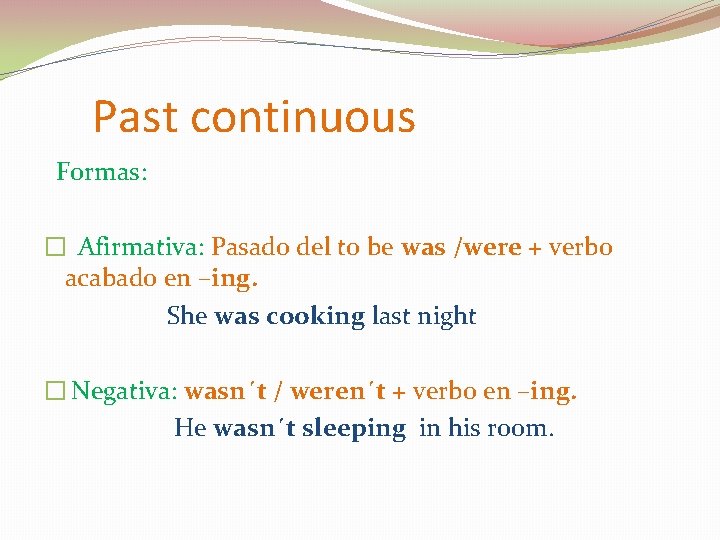
Past continuous Formas: � Afirmativa: Pasado del to be was /were + verbo acabado en –ing. She was cooking last night � Negativa: wasn´t / weren´t + verbo en –ing. He wasn´t sleeping in his room.
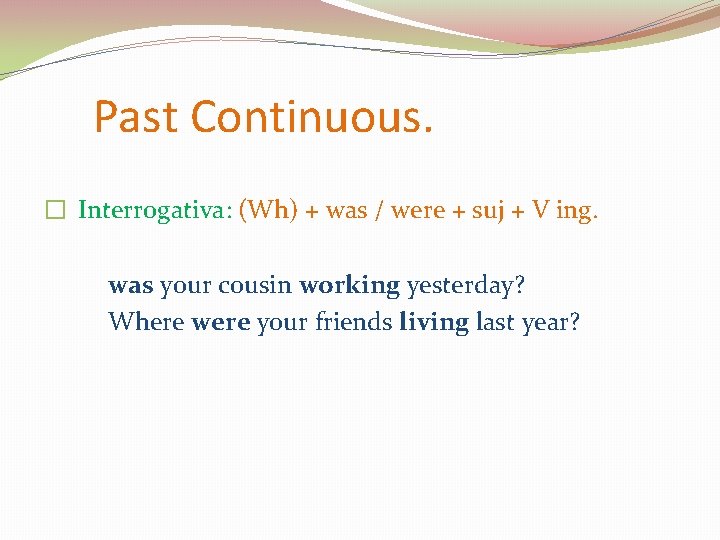
Past Continuous. � Interrogativa: (Wh) + was / were + suj + V ing. was your cousin working yesterday? Where were your friends living last year?
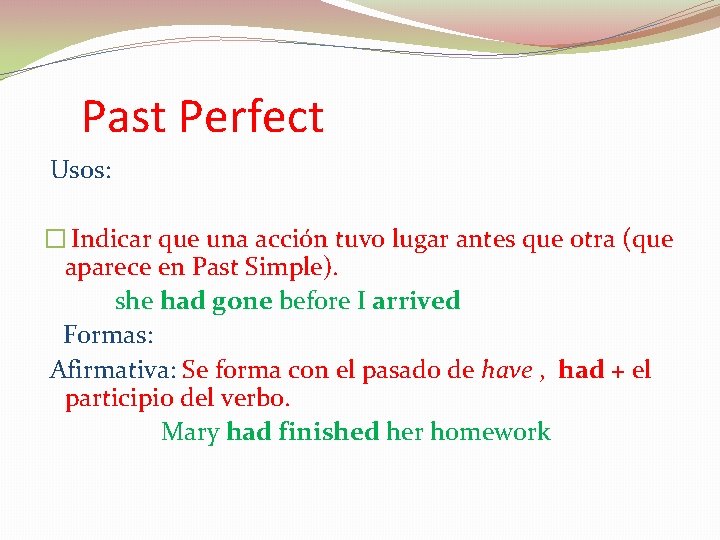
Past Perfect Usos: � Indicar que una acción tuvo lugar antes que otra (que aparece en Past Simple). she had gone before I arrived Formas: Afirmativa: Se forma con el pasado de have , had + el participio del verbo. Mary had finished her homework
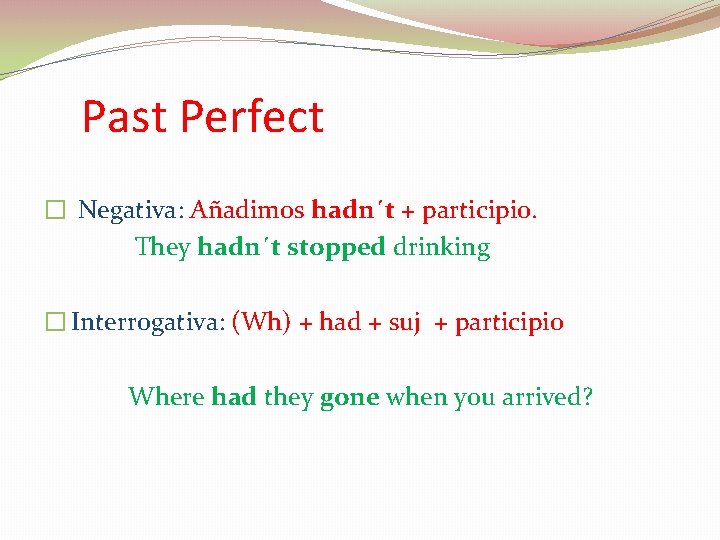
Past Perfect � Negativa: Añadimos hadn´t + participio. They hadn´t stopped drinking � Interrogativa: (Wh) + had + suj + participio Where had they gone when you arrived?
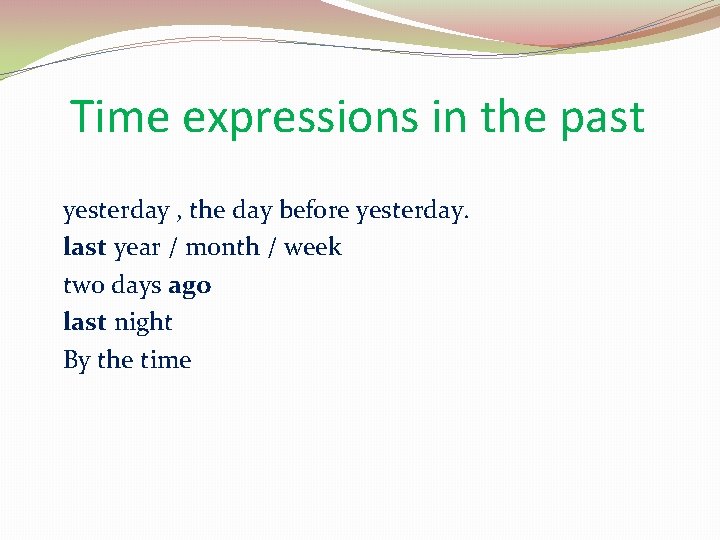
Time expressions in the past yesterday , the day before yesterday. last year / month / week two days ago last night By the time