UNESCO IHPHELP Centre for Water Law Policy Science
- Slides: 23
UNESCO IHP-HELP Centre for Water Law, Policy & Science Regional Training on Hydrodiplomacy & Negotiation Skills for IGAD Water Resources Protocol Negotiation Members 27 -28 February 2017 -- Addis Ababa, Ethiopia Water-energy security nexus: The Aral Sea basin case Sergei Vinogradov
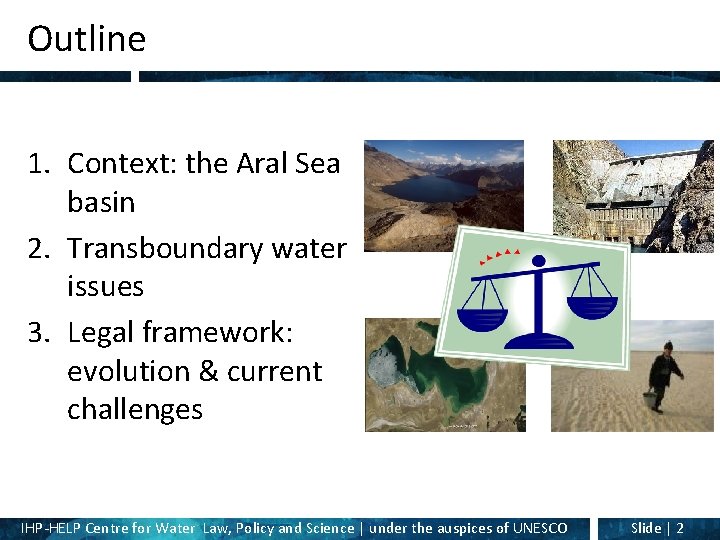
Outline 1. Context: the Aral Sea basin 2. Transboundary water issues 3. Legal framework: evolution & current challenges IHP-HELP Centre for Water Law, Policy and Science | under the auspices of UNESCO Slide | 2
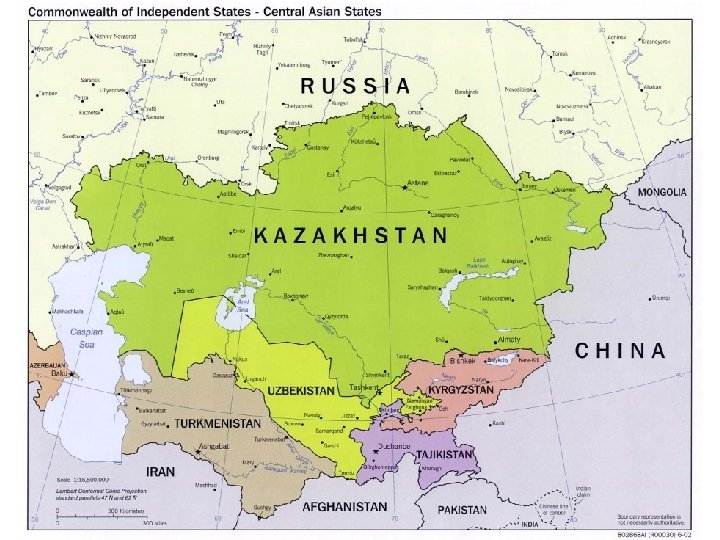
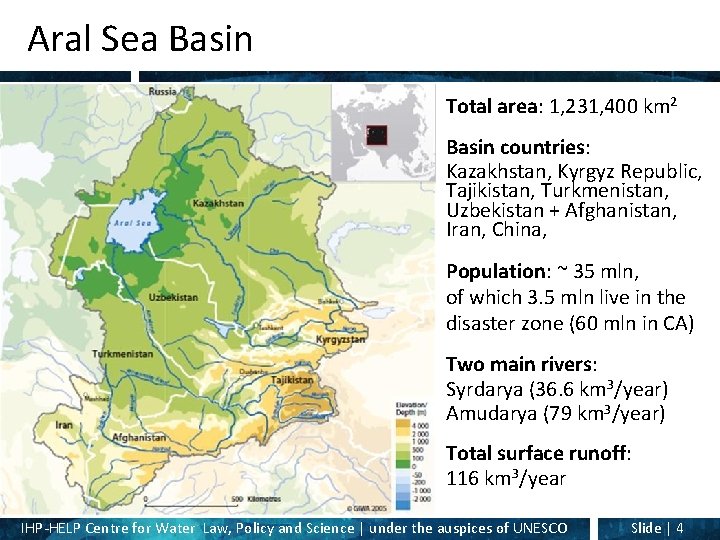
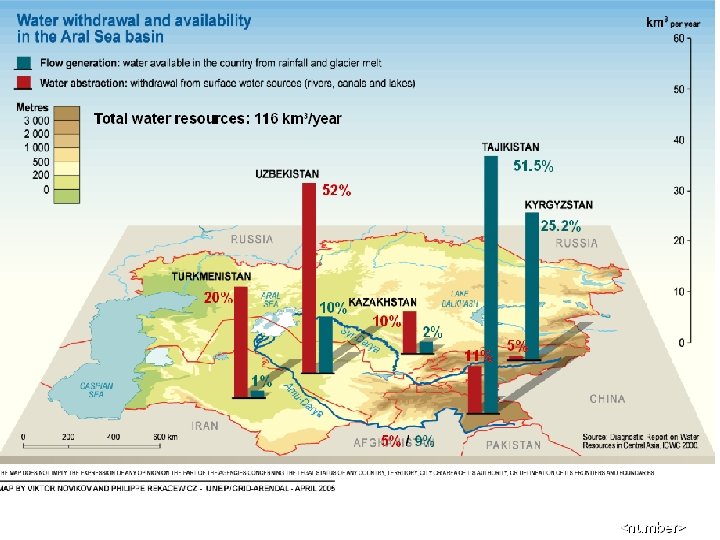
Aral Sea Basin Total area: 1, 231, 400 km 2 Basin countries: Kazakhstan, Kyrgyz Republic, Tajikistan, Turkmenistan, Uzbekistan + Afghanistan, Iran, China, Population: ~ 35 mln, of which 3. 5 mln live in the disaster zone (60 mln in CA) Two main rivers: Syrdarya (36. 6 km 3/year) Amudarya (79 km 3/year) Total surface runoff: 116 km 3/year IHP-HELP Centre for Water Law, Policy and Science | under the auspices of UNESCO Slide | 4
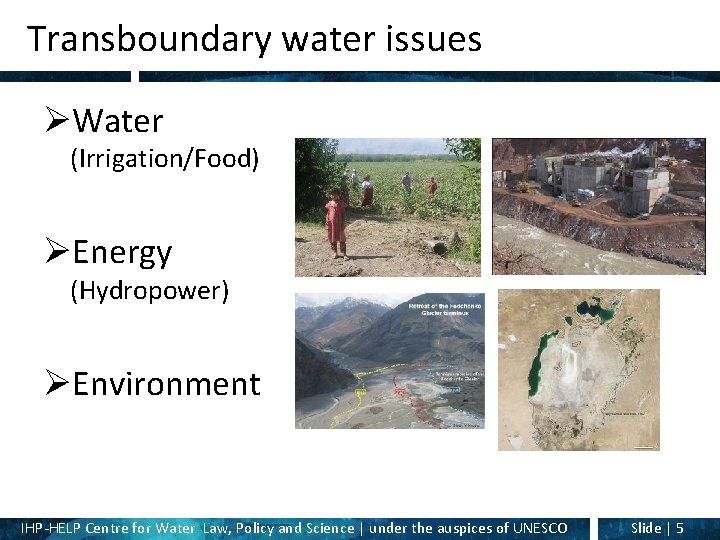
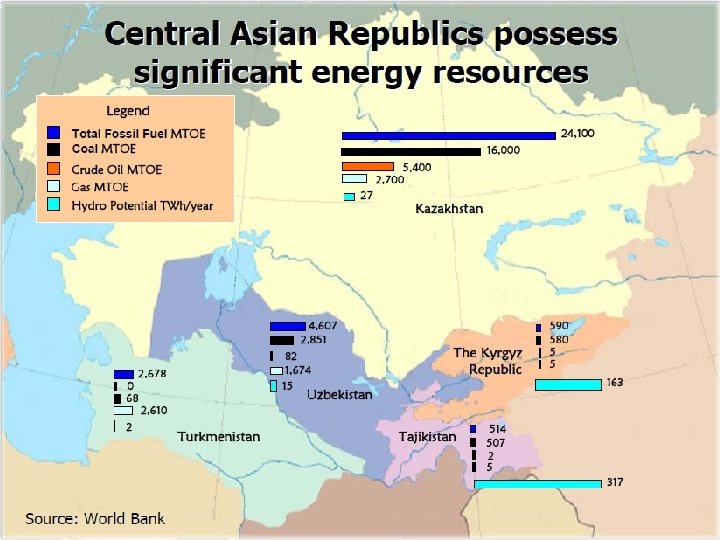
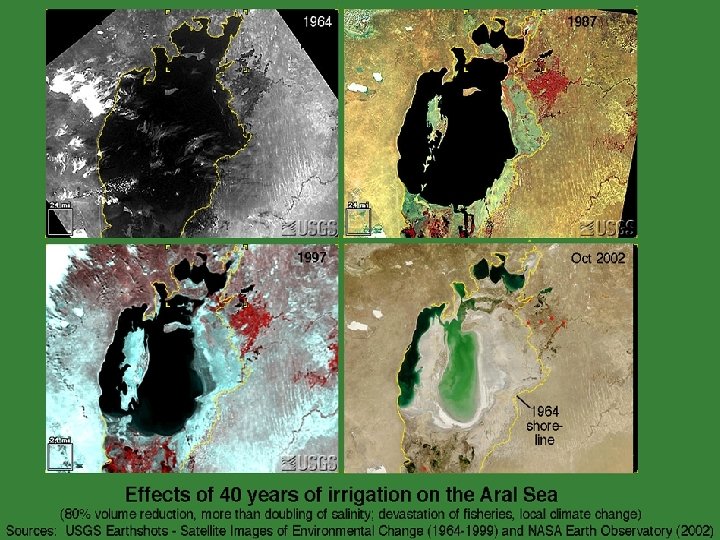
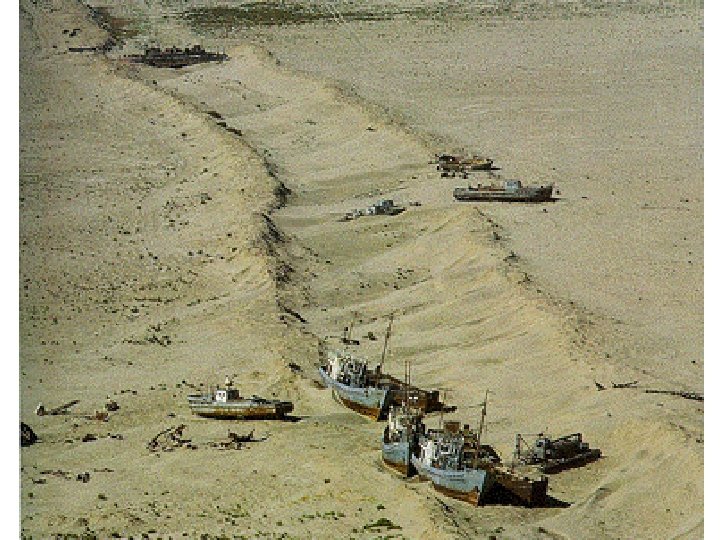
Transboundary water issues ØWater (Irrigation/Food) ØEnergy (Hydropower) ØEnvironment IHP-HELP Centre for Water Law, Policy and Science | under the auspices of UNESCO Slide | 5
Water-Energy-Environment
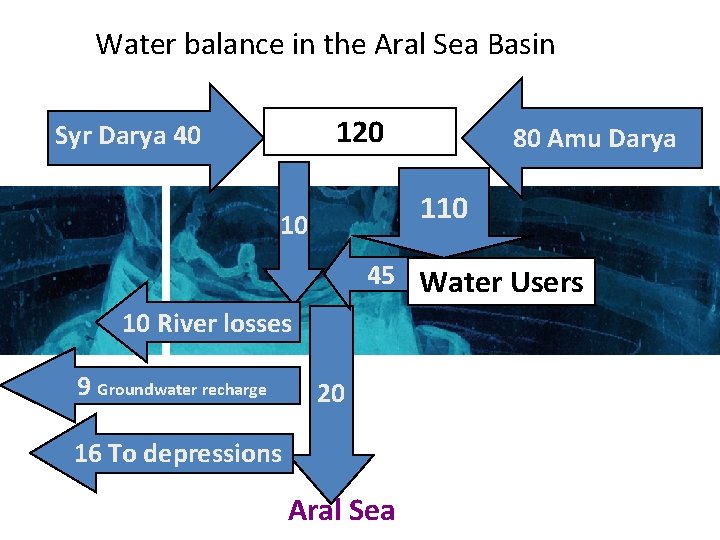
Water Balance in the Aral Sea Basin Water balance in the Aral Sea Basin (billion cubic meters) 120 Syr Darya 40 80 Amu Darya 110 10 45 Water Users 10 River losses 9 Groundwater recharge 20 16 To depressions Aral Sea
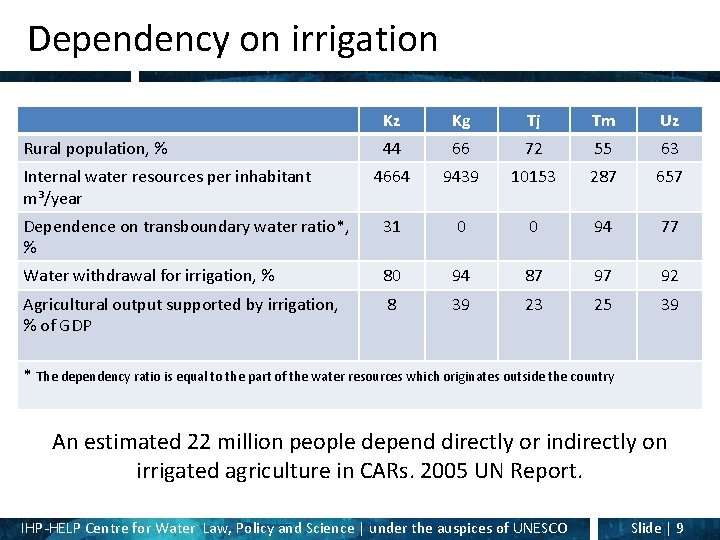
Dependency on irrigation Kz Kg Tj Tm Uz 44 66 72 55 63 4664 9439 10153 287 657 Dependence on transboundary water ratio*, % 31 0 0 94 77 Water withdrawal for irrigation, % 80 94 87 97 92 Agricultural output supported by irrigation, % of GDP 8 39 23 25 39 Rural population, % Internal water resources per inhabitant m³/year * The dependency ratio is equal to the part of the water resources which originates outside the country An estimated 22 million people depend directly or indirectly on irrigated agriculture in CARs. 2005 UN Report. IHP-HELP Centre for Water Law, Policy and Science | under the auspices of UNESCO Slide | 9
Water-Energy-Environment
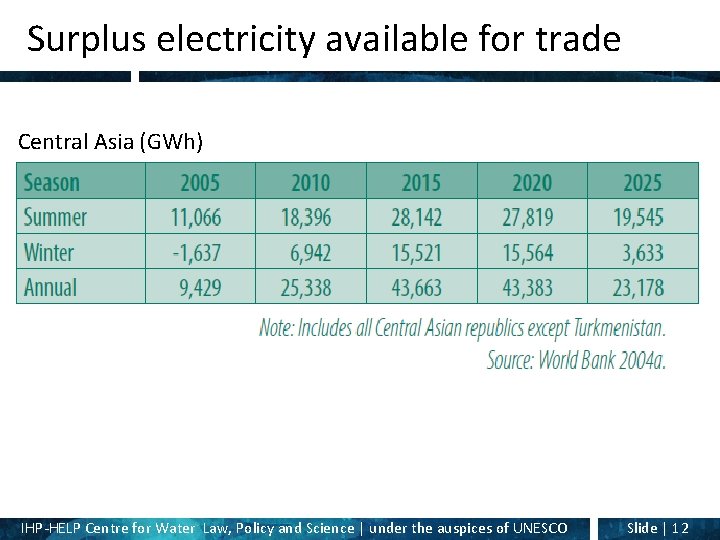
Surplus electricity available for trade Central Asia (GWh) IHP-HELP Centre for Water Law, Policy and Science | under the auspices of UNESCO Slide | 12
Water-Energy-Environment
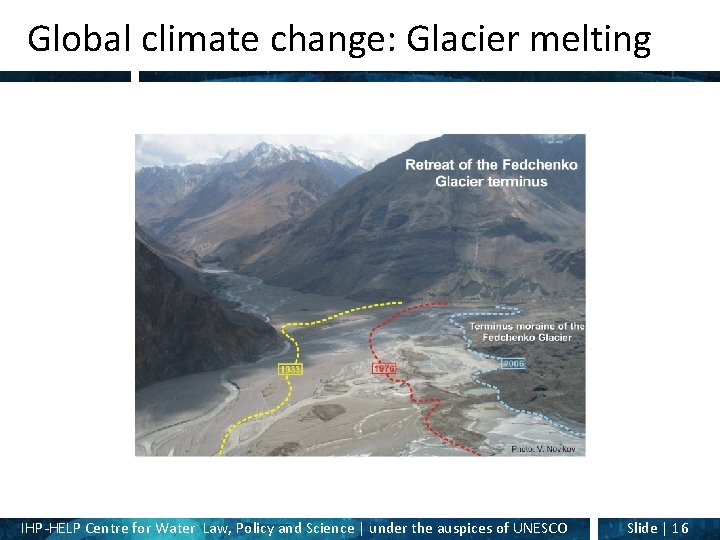
Global climate change: Glacier melting IHP-HELP Centre for Water Law, Policy and Science | under the auspices of UNESCO Slide | 16
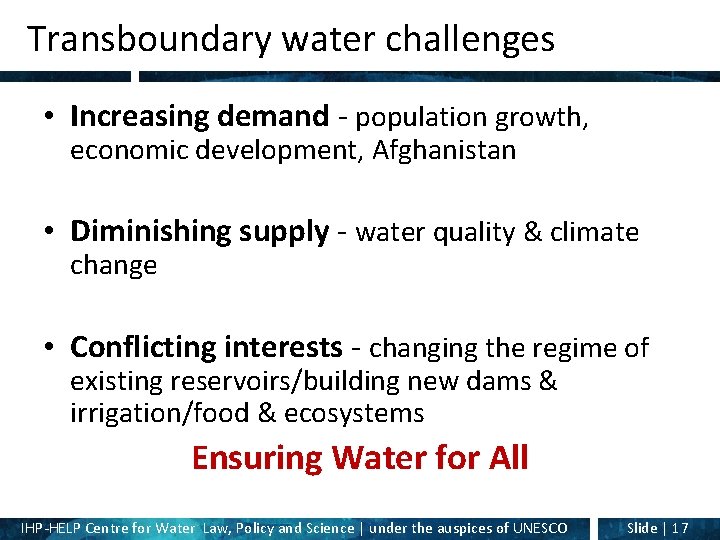
Transboundary water challenges • Increasing demand - population growth, economic development, Afghanistan • Diminishing supply - water quality & climate change • Conflicting interests - changing the regime of existing reservoirs/building new dams & irrigation/food & ecosystems Ensuring Water for All IHP-HELP Centre for Water Law, Policy and Science | under the auspices of UNESCO Slide | 17
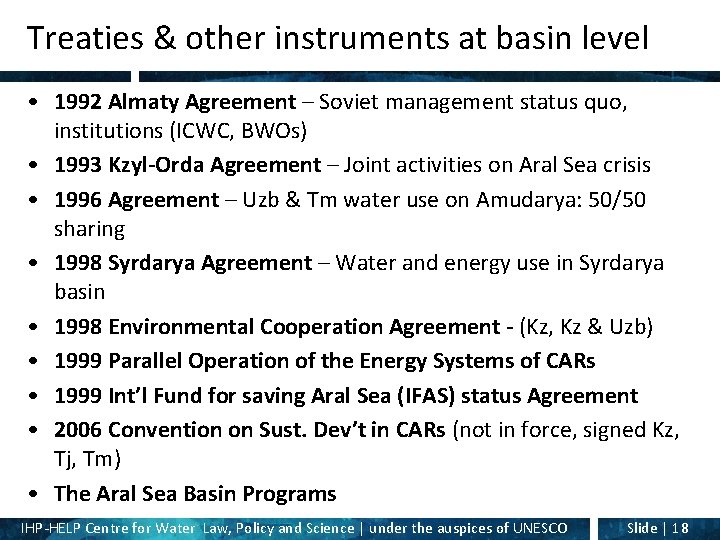
Treaties & other instruments at basin level • 1992 Almaty Agreement – Soviet management status quo, institutions (ICWC, BWOs) • 1993 Kzyl-Orda Agreement – Joint activities on Aral Sea crisis • 1996 Agreement – Uzb & Tm water use on Amudarya: 50/50 sharing • 1998 Syrdarya Agreement – Water and energy use in Syrdarya basin • 1998 Environmental Cooperation Agreement - (Kz, Kz & Uzb) • 1999 Parallel Operation of the Energy Systems of CARs • 1999 Int’l Fund for saving Aral Sea (IFAS) status Agreement • 2006 Convention on Sust. Dev’t in CARs (not in force, signed Kz, Tj, Tm) • The Aral Sea Basin Programs IHP-HELP Centre for Water Law, Policy and Science | under the auspices of UNESCO Slide | 18
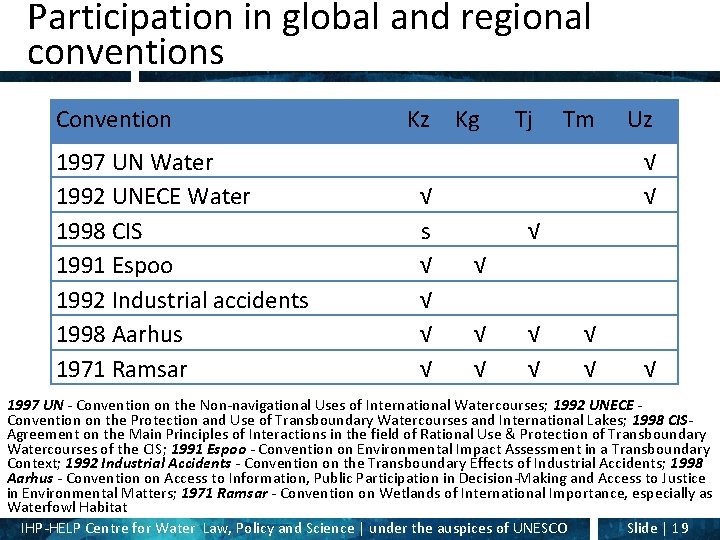
Participation in global and regional conventions Convention 1997 UN Water 1992 UNECE Water 1998 CIS 1991 Espoo 1992 Industrial accidents 1998 Aarhus 1971 Ramsar Kz √ s √ √ Kg Tj Tm Uz √ √ √ 1997 UN - Convention on the Non-navigational Uses of International Watercourses; 1992 UNECE Convention on the Protection and Use of Transboundary Watercourses and International Lakes; 1998 CISAgreement on the Main Principles of Interactions in the field of Rational Use & Protection of Transboundary Watercourses of the CIS; 1991 Espoo - Convention on Environmental Impact Assessment in a Transboundary Context; 1992 Industrial Accidents - Convention on the Transboundary Effects of Industrial Accidents; 1998 Aarhus - Convention on Access to Information, Public Participation in Decision-Making and Access to Justice in Environmental Matters; 1971 Ramsar - Convention on Wetlands of International Importance, especially as Waterfowl Habitat IHP-HELP Centre for Water Law, Policy and Science | under the auspices of UNESCO Slide | 19
The matters of scope in the Aral Sea Basin • Existing agreements do not cover all basin states • Groundwaters & ecosystems are not specified enough • No watercourse-specific agreements IHP-HELP Centre for Water Law, Policy and Science | under the auspices of UNESCO Slide | 20
Regional institutional mechanisms • International Fund for Saving the Aral Sea (IFAS) – - Executive Committee and 2 regional commissions: on water coordination and on sustainable development (environmental) - Lacks authority to resolve regional water-related problems • Interstate Commission for Water Coordination (ICWC) and Basin water management organizations (BWOs) • Lack mandate to monitor and control • No compliance review IHP-HELP Centre for Water Law, Policy and Science | under the auspices of UNESCO Slide | 21
Concluding remarks • Water is a matter of security at multiple levels: a source of livelihoods a vector of pathogens, a potent force behind extreme events and natural disasters, a mechanism for cooperation among governments and communities. The Asia Society’s Leadership Group on Water Security (2009) • Law provides a framework at multiple levels: – Transboundary watercourses treaties at basin, regional and global levels – Other relevant treaties (MEAs, energy, human rights, etc) and general international law IHP-HELP Centre for Water Law, Policy and Science | under the auspices of UNESCO Slide | 22
Concluding remarks: Legal framework in the ASB • A wide range of treaty and customary obligations • But indeterminacy & vagueness of basin treaty provisions, lack of monitoring & compliance mechanism, • lack or ineffectiveness of institutional & dispute settlement mechanism • Deteriorating cooperation IHP-HELP Centre for Water Law, Policy and Science | under the auspices of UNESCO Slide | 23