Typology Genetic Areal and Historical Linguistics Elly van







- Slides: 33
Typology, Genetic, Areal, and Historical Linguistics Elly van Gelderen
Origins and typology • Language Origins • Archeology • Genetics • Linguistics • Earliest records • IE > Gmc and reconstruction • Sounds • Grammar • Typology Grimm’s Law
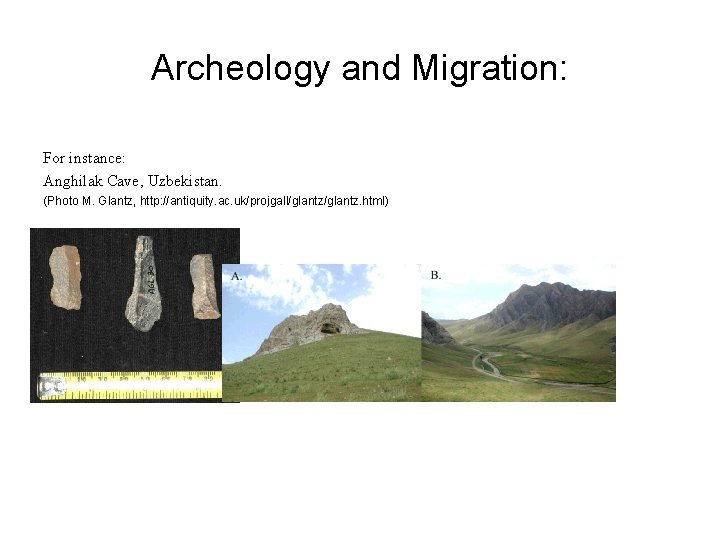
Archeology and Migration: For instance: Anghilak Cave, Uzbekistan. (Photo M. Glantz, http: //antiquity. ac. uk/projgall/glantz. html)
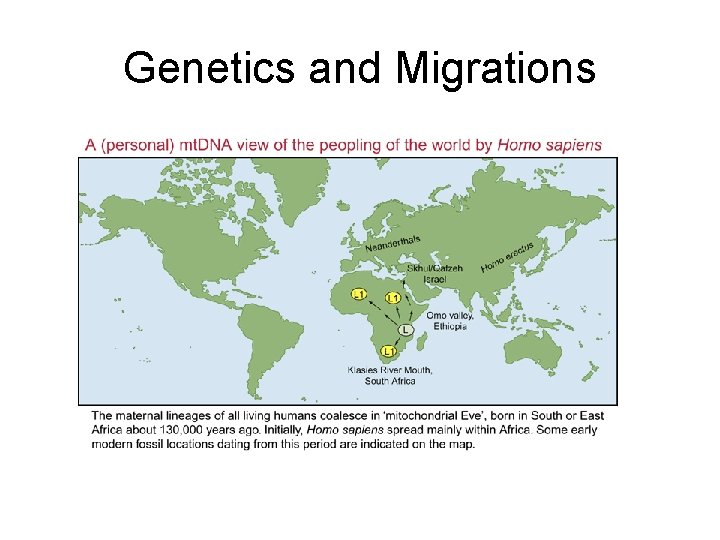
Genetics and Migrations
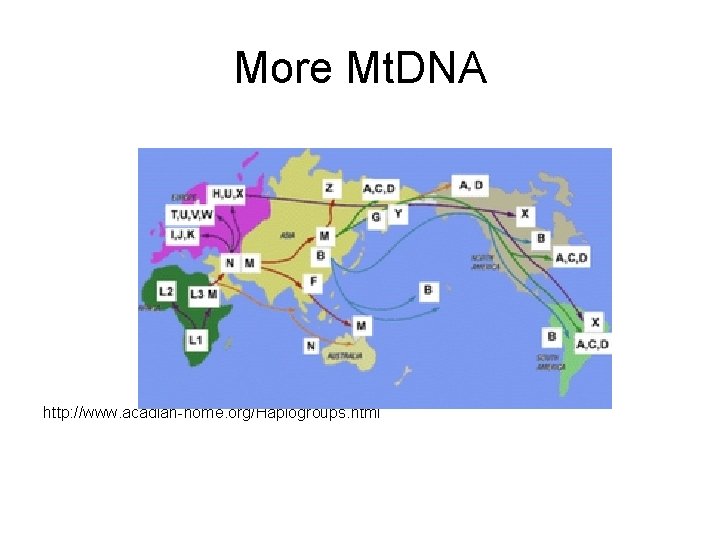
More Mt. DNA http: //www. acadian-home. org/Haplogroups. html
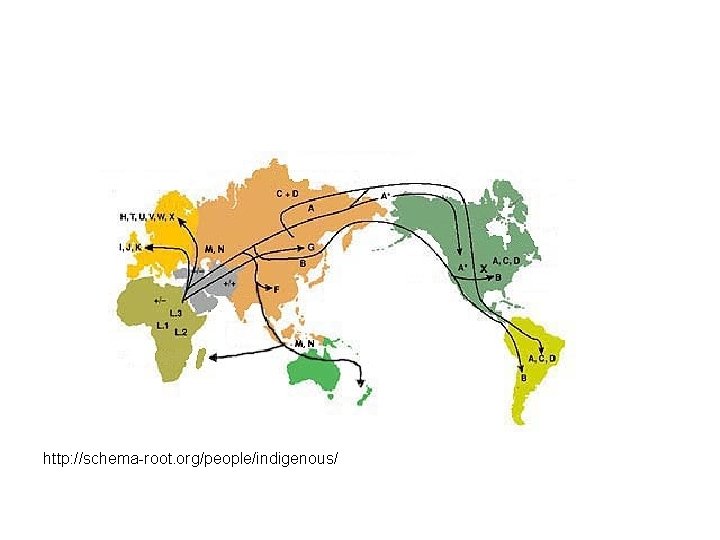
http: //schema-root. org/people/indigenous/
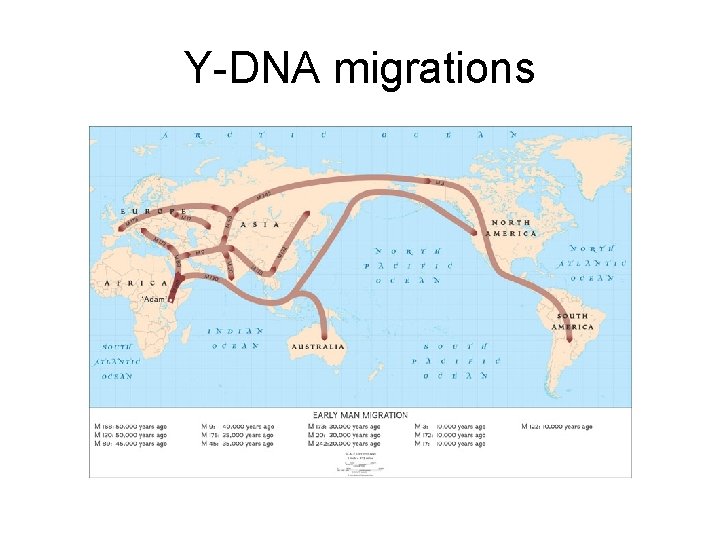
Y-DNA migrations
Can typology help?
Dryer’s map on Case
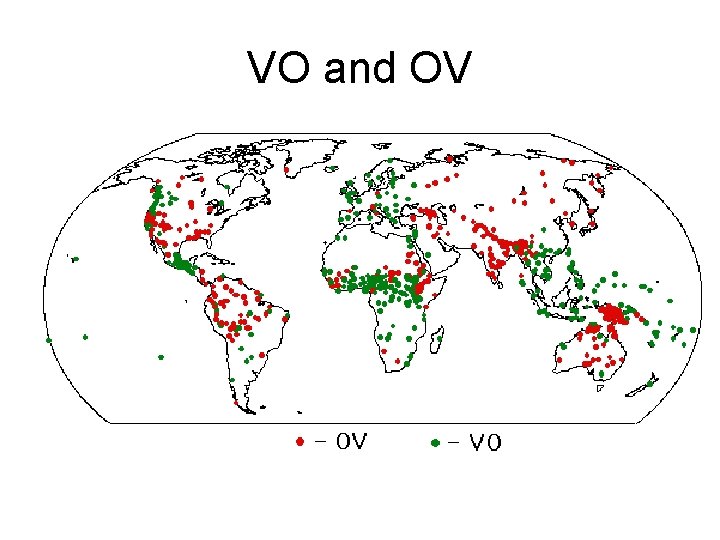
VO and OV
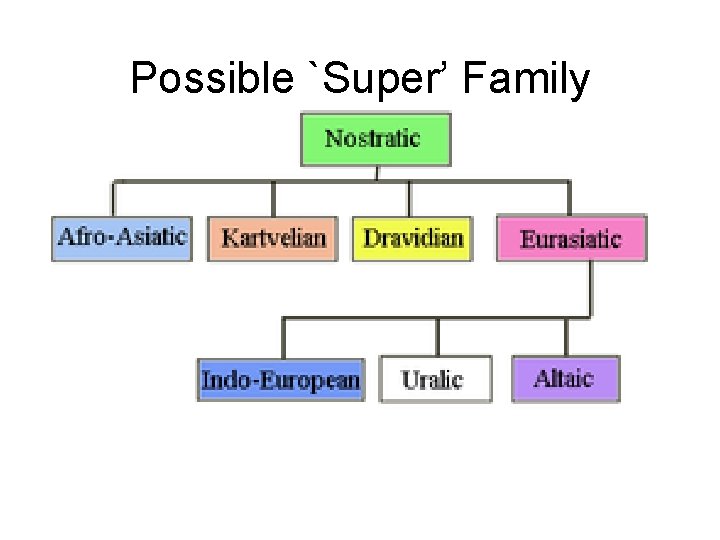
Possible `Super’ Family
Nostratic *gadi ‘kid, young goat’ Indo European *ghaid. Latin has haedus Explain how the Latin haedus corresponds to Old Norse geit and eventually Modern English goat.
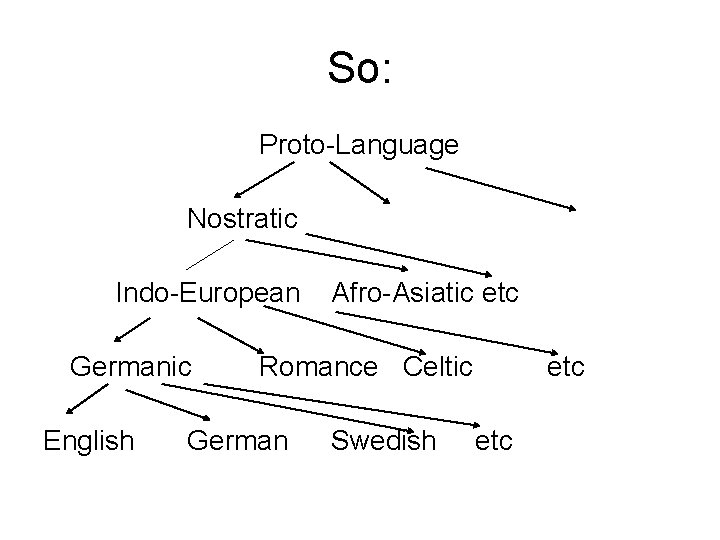
So: Proto-Language Nostratic Indo-European Germanic English Afro-Asiatic etc Romance Celtic German Swedish etc
Some hypotheses on Proto-Language • Newmeyer suggests that proto-languages may have been inflectional (2000: 385, n 4) • Bickerton 1990 fossils of proto-lg (aphasia/pidgin): no morphology; no PS • Jackendoff 2002 • Hauser, Chomsky, & Fitch 2002 FLB (CI-SM-Mechanisms for Recursion) – FLN (Recursion) • Chomsky 2005 Merge "`Great Leap Forward' in the evolution of humans"
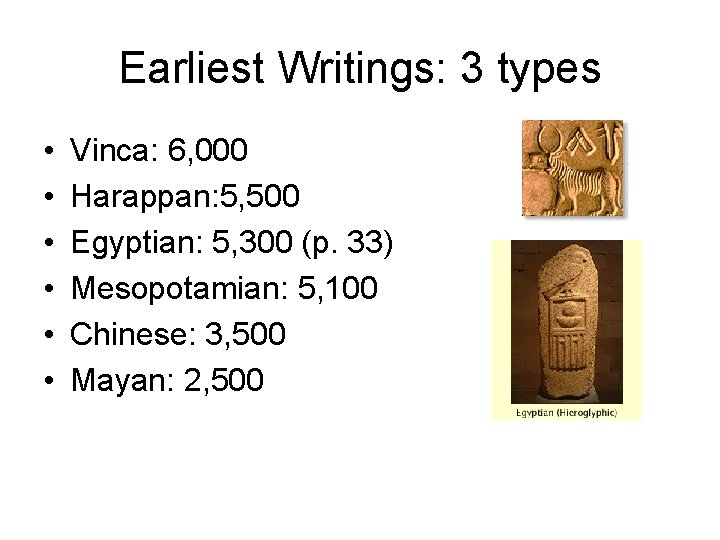
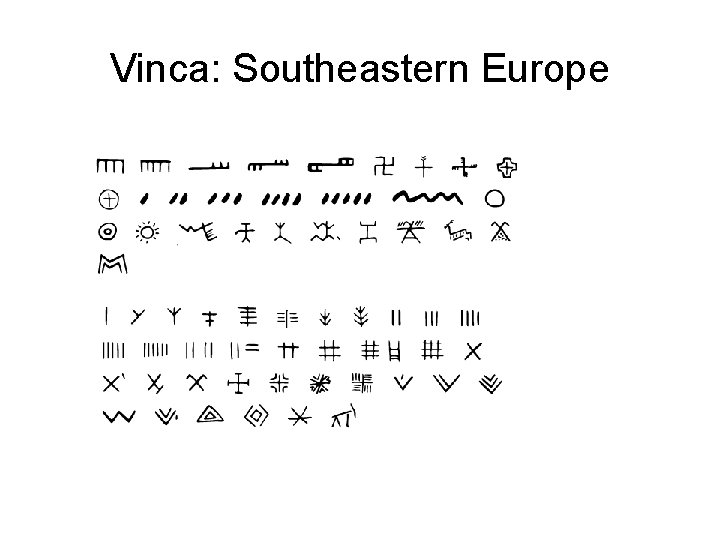
Earliest Writings: 3 types • • • Vinca: 6, 000 Harappan: 5, 500 Egyptian: 5, 300 (p. 33) Mesopotamian: 5, 100 Chinese: 3, 500 Mayan: 2, 500
Vinca: Southeastern Europe
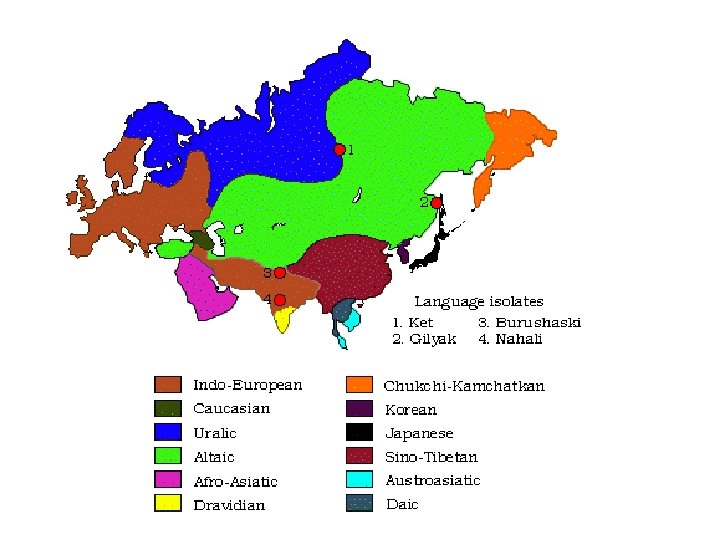
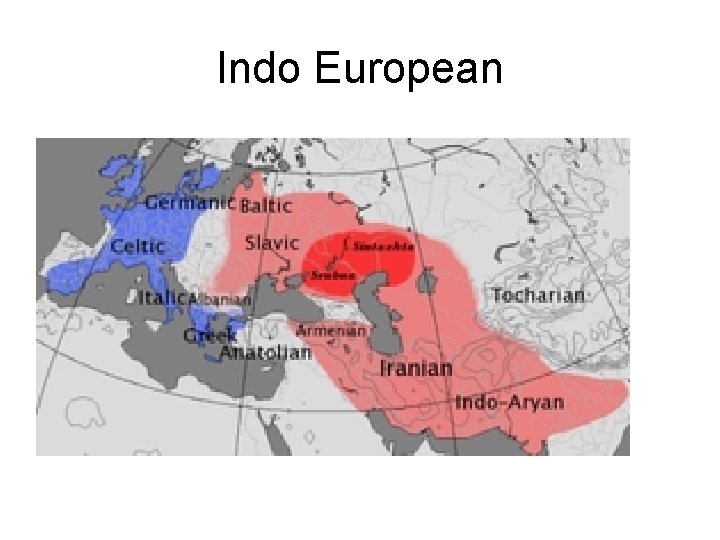
Indo European
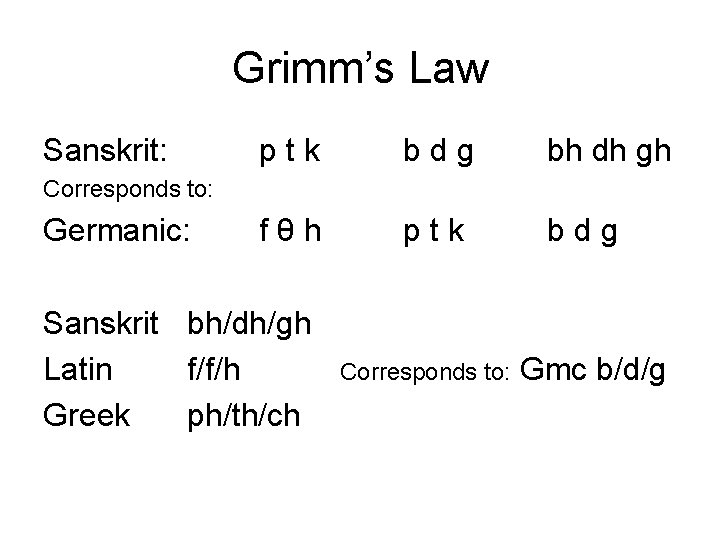
Grimm’s Law Sanskrit: ptk bdg bh dh gh fθh ptk bdg Corresponds to: Germanic: Sanskrit bh/dh/gh Latin f/f/h Greek ph/th/ch Corresponds to: Gmc b/d/g
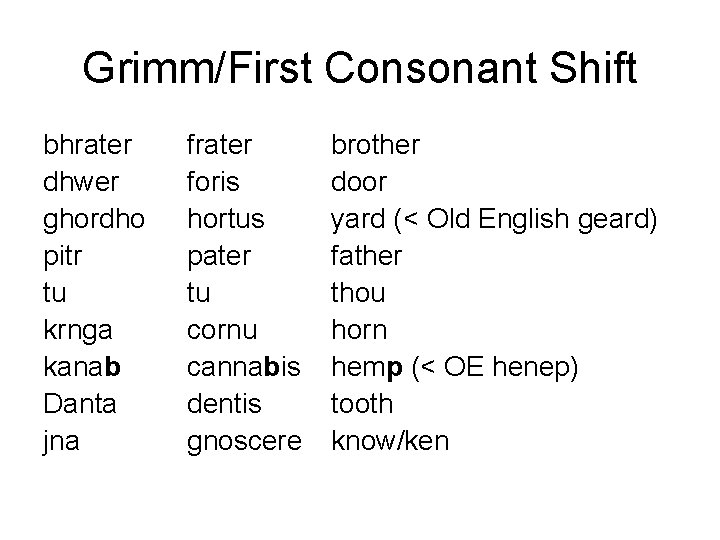
Grimm/First Consonant Shift bhrater dhwer ghordho pitr tu krnga kanab Danta jna frater foris hortus pater tu cornu cannabis dentis gnoscere brother door yard (< Old English geard) father thou horn hemp (< OE henep) tooth know/ken
Match: Sanskrit: bhar pitar pada trayas tvam Old English: þu þrie beran fæder fot
Match: Latin: Modern English: noctis gelu cannabis dentis gens tooth night kin glacial hemp
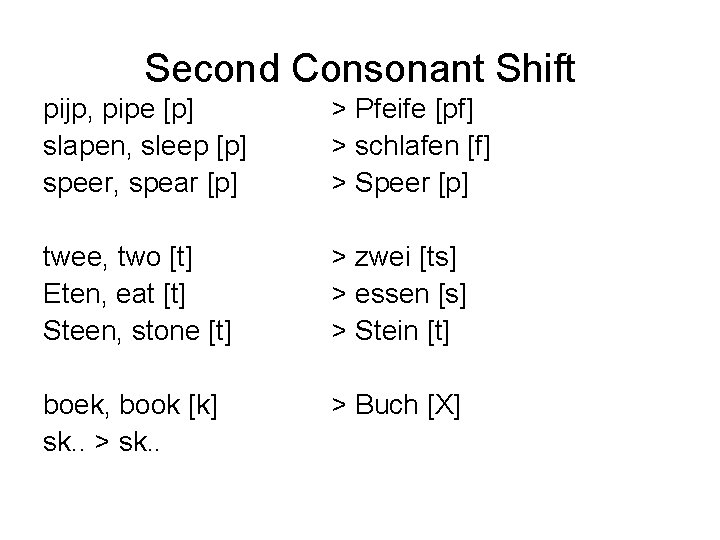
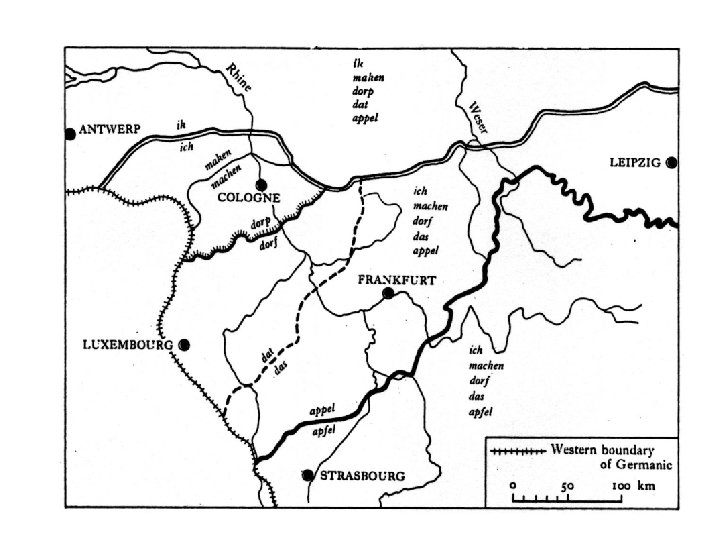
Second Consonant Shift pijp, pipe [p] slapen, sleep [p] speer, spear [p] > Pfeife [pf] > schlafen [f] > Speer [p] twee, two [t] Eten, eat [t] Steen, stone [t] > zwei [ts] > essen [s] > Stein [t] boek, book [k] sk. . > sk. . > Buch [X]
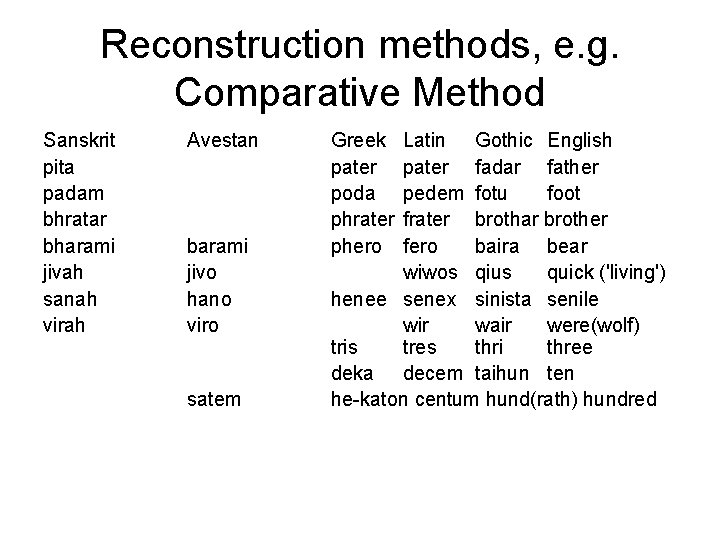
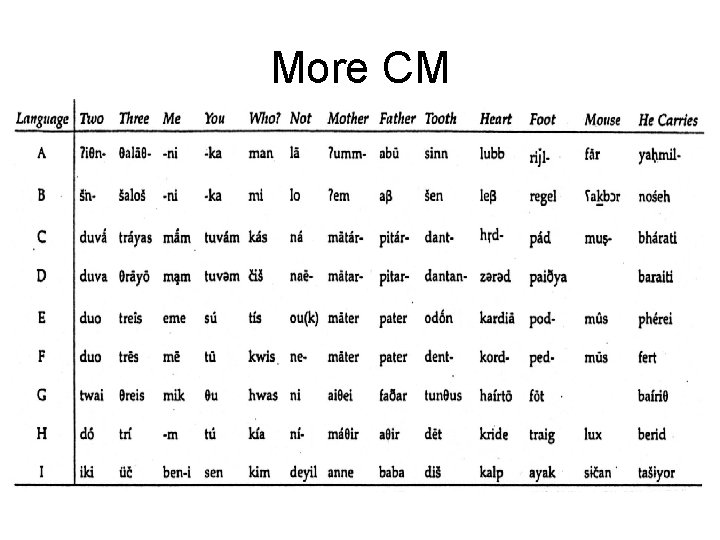
Reconstruction methods, e. g. Comparative Method Sanskrit pita padam bhratar bharami jivah sanah virah Avestan barami jivo hano viro satem Greek pater poda phrater phero Latin Gothic English pater fadar father pedem fotu foot frater brothar brother fero baira bear wiwos qius quick ('living') henee senex sinista senile wir wair were(wolf) tris tres thri three deka decem taihun ten he-katon centum hund(rath) hundred
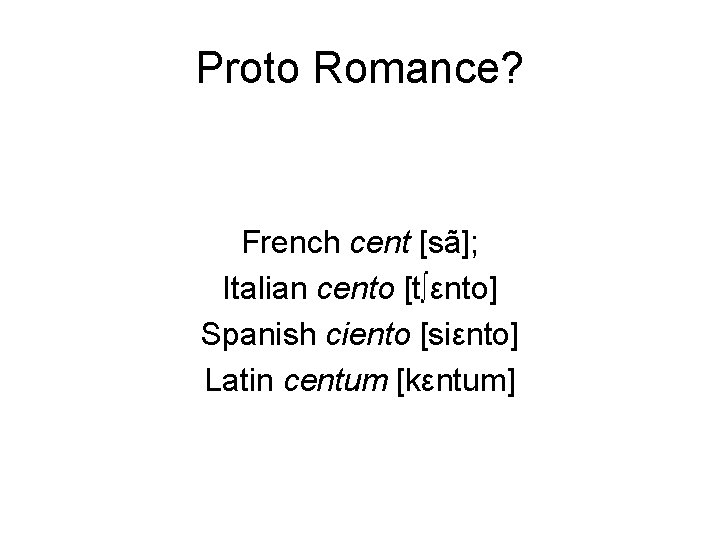
Proto Romance? French cent [sã]; Italian cento [t∫εnto] Spanish ciento [siεnto] Latin centum [kεntum]
More CM
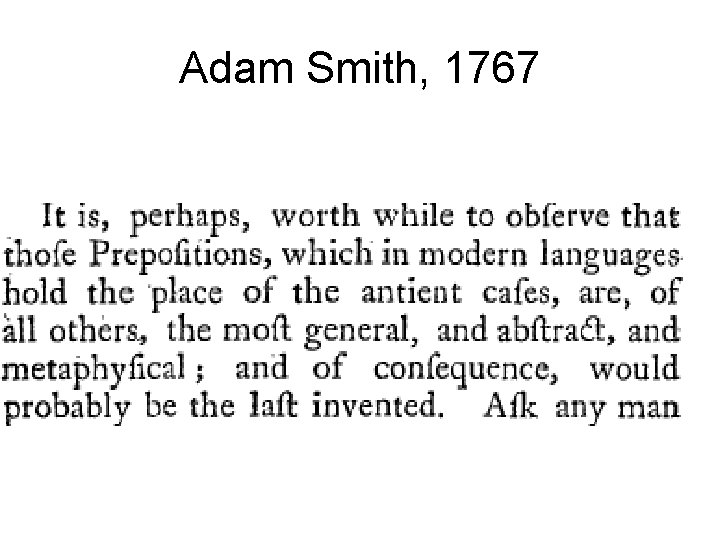
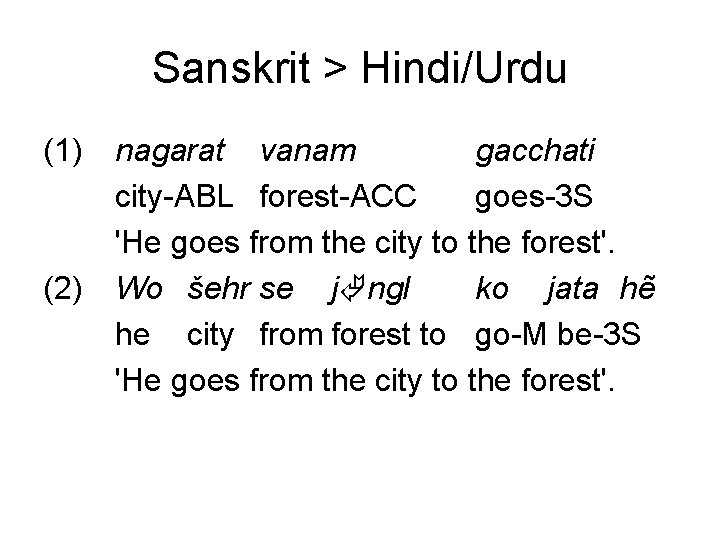
How to reconstruct Grammar? • Look at what happens in change you have evidence for. • Sanskrit nouns have endings representing eight different cases: nominative, genitive, dative, accusative, instrumental, ablative, locative, and vocative. (1) Ayodhya-yam vasa-ti Ayodhya-LOC lives-3 S 'He lives in Ayodhya'.
Adam Smith, 1767
Sanskrit > Hindi/Urdu (1) (2) nagarat vanam gacchati city-ABL forest-ACC goes-3 S 'He goes from the city to the forest'. Wo šehr se j ngl ko jata hẽ he city from forest to go-M be-3 S 'He goes from the city to the forest'.
Politics Aryan Myth Harappa? ? East Asia
Back to typology • Links between type and family?