TRANSACTIONAL ANALYSIS FSS 2008 Zdeka Vykoukalov Why TA

- Slides: 37
TRANSACTIONAL ANALYSIS FSS 2008 Zdeňka Vykoukalová
Why TA? • It may help you to o Recognize how you communicate with others o Consider your options for how you can communicate differently to improve the communications you are involved in o Improve effectiveness of your communication
Transactional analysis • Model of communication that can provide useful insights into ourselves and into how we communicate with others • The core idea is that we can think of ourselves as having three parts of our personality three ego states
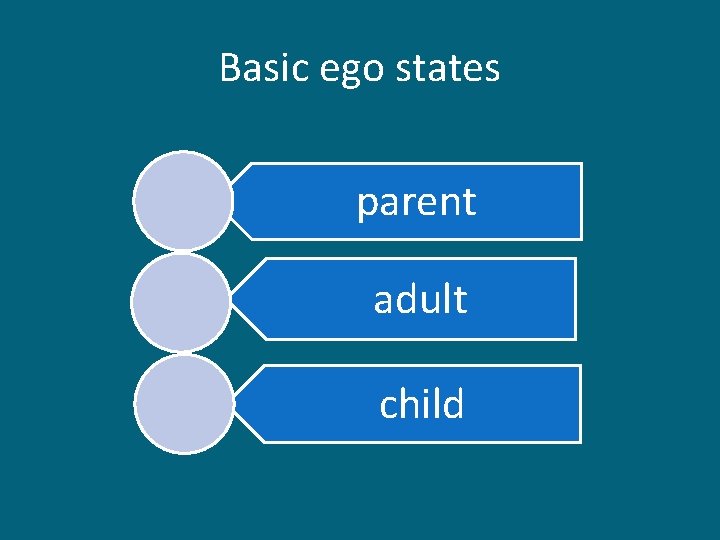
Basic ego states parent adult child
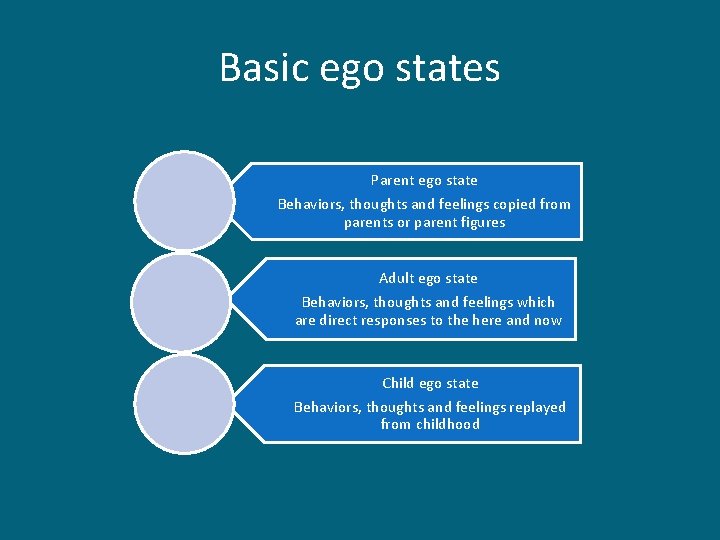
Basic ego states Parent ego state Behaviors, thoughts and feelings copied from parents or parent figures Adult ego state Behaviors, thoughts and feelings which are direct responses to the here and now Child ego state Behaviors, thoughts and feelings replayed from childhood
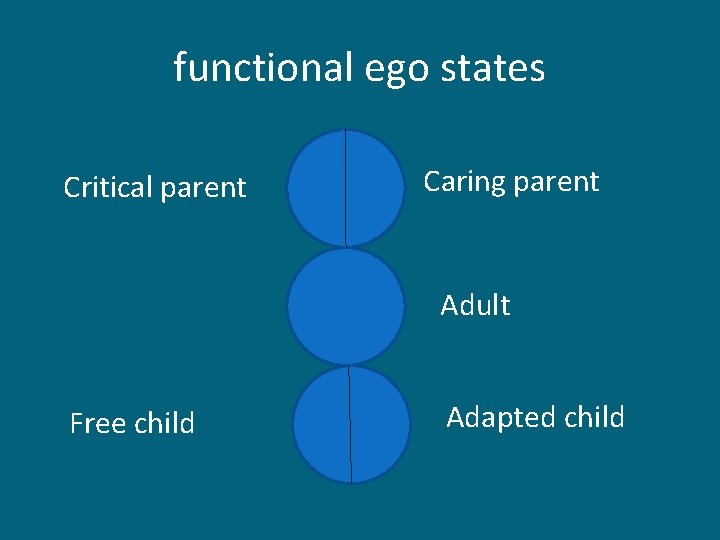
functional ego states Critical parent Caring parent Adult Free child Adapted child
transactions • Smallest unit of communication consisting of transactional stimulus and response • OR: exchange of strokes
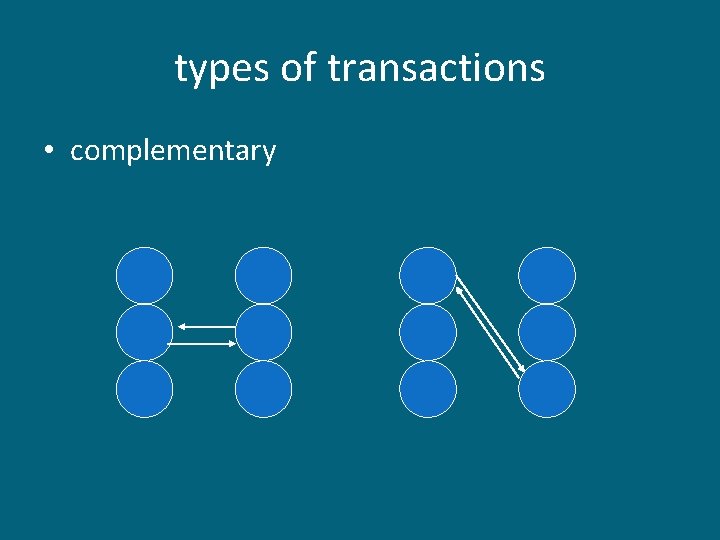
types of transactions • complementary
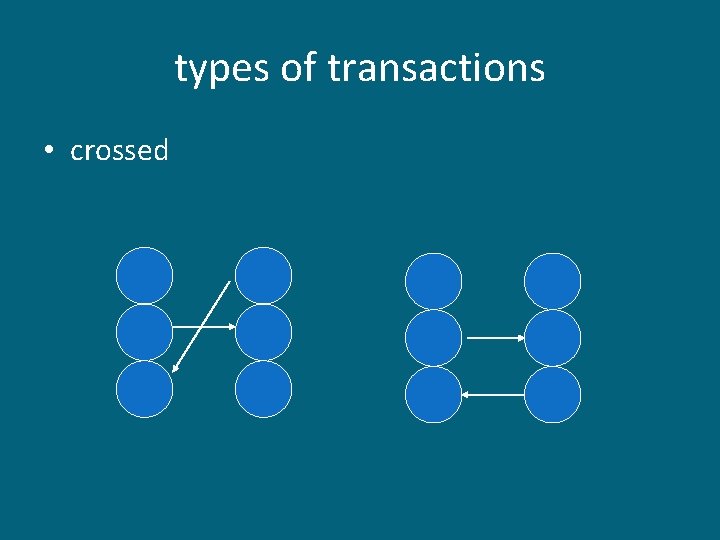
types of transactions • crossed
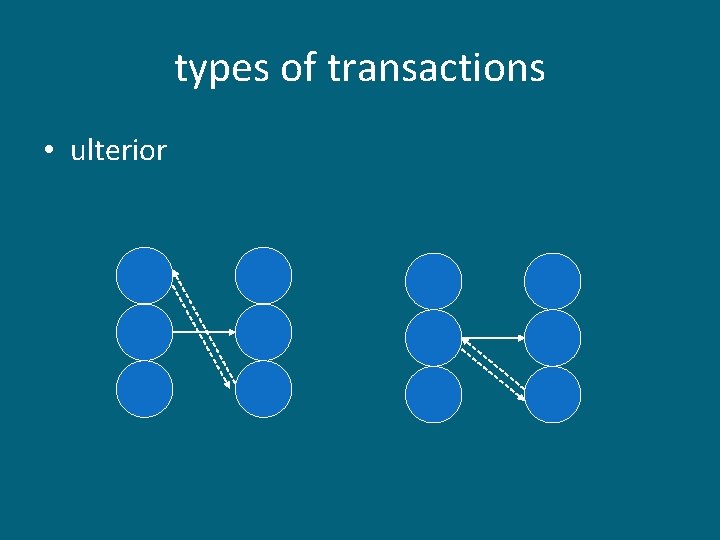
types of transactions • ulterior
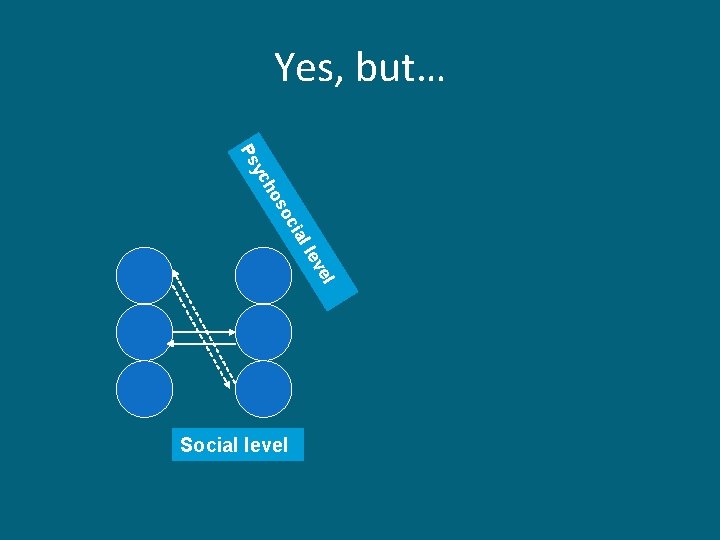
Communication rules • As long as transactions are complementary, communication can continue endlessly • In case of crossed transaction there is a change in communication • Result of ulterior transactions is based on psychological level
DRIVERS INJUNCTIONS ALLOWERS GAMES
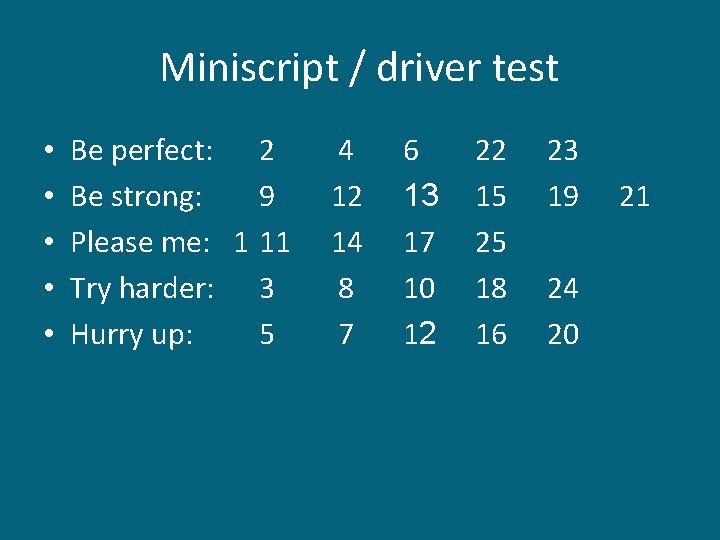
Drivers Taibi Kahler – transactional analyst who describes seven drivers / minispcripts that “drive” us throughtout our lives. They usually come as a result of our parents influence. • Mavis Klein – chose five drivers and worked with them. Made a test of drivers. •
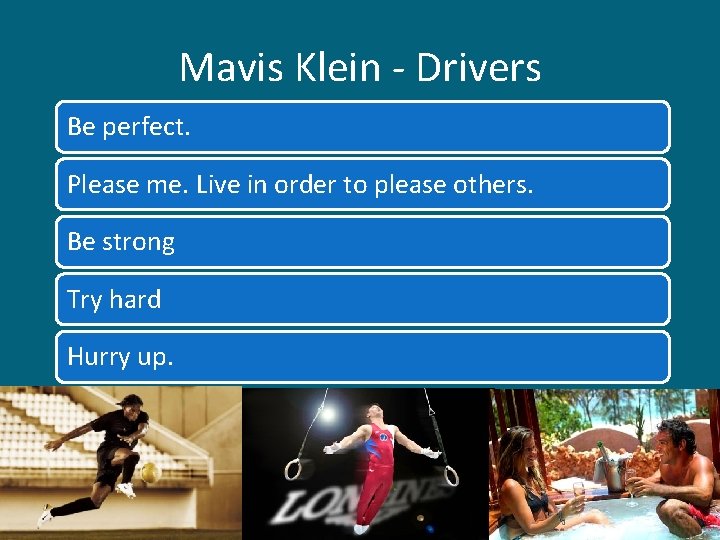
Mavis Klein - Drivers Be perfect. Please me. Live in order to please others. Be strong Try hard Hurry up.
Miniscript / driver test • • • Be perfect: 2 Be strong: 9 Please me: 1 11 Try harder: 3 Hurry up: 5 4 12 14 8 7 6 13 17 10 12 22 15 25 18 16 23 19 24 20 21
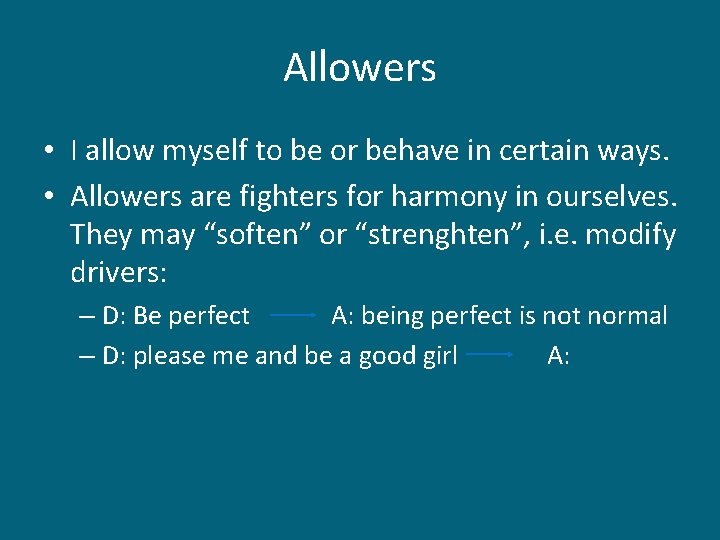
Allowers • I allow myself to be or behave in certain ways. • Allowers are fighters for harmony in ourselves. They may “soften” or “strenghten”, i. e. modify drivers: – D: Be perfect A: being perfect is not normal – D: please me and be a good girl A:
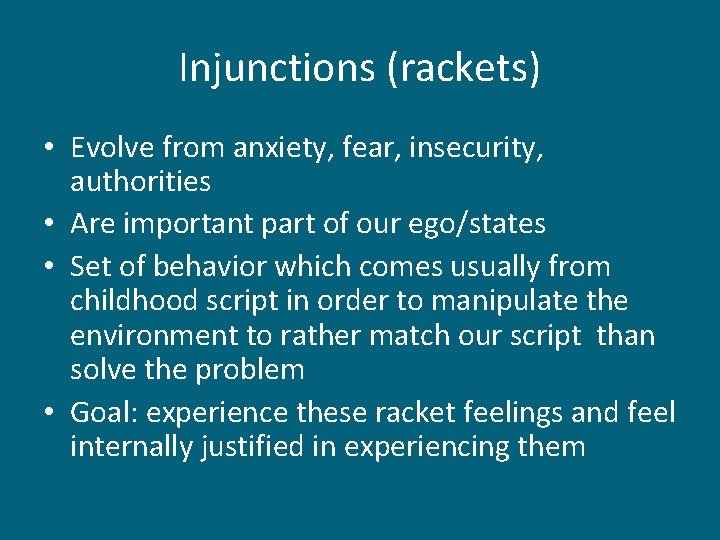
Injunctions (rackets) • Evolve from anxiety, fear, insecurity, authorities • Are important part of our ego/states • Set of behavior which comes usually from childhood script in order to manipulate the environment to rather match our script than solve the problem • Goal: experience these racket feelings and feel internally justified in experiencing them
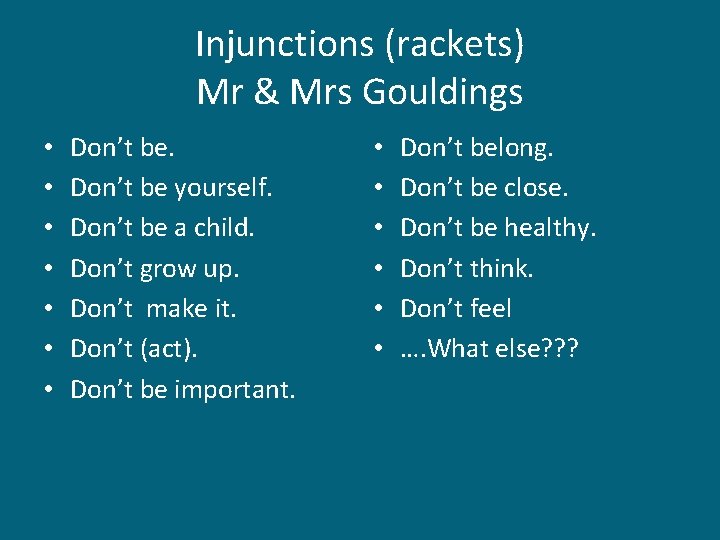
Injunctions (rackets) Mr & Mrs Gouldings • • Don’t be yourself. Don’t be a child. Don’t grow up. Don’t make it. Don’t (act). Don’t be important. • • • Don’t belong. Don’t be close. Don’t be healthy. Don’t think. Don’t feel …. What else? ? ?
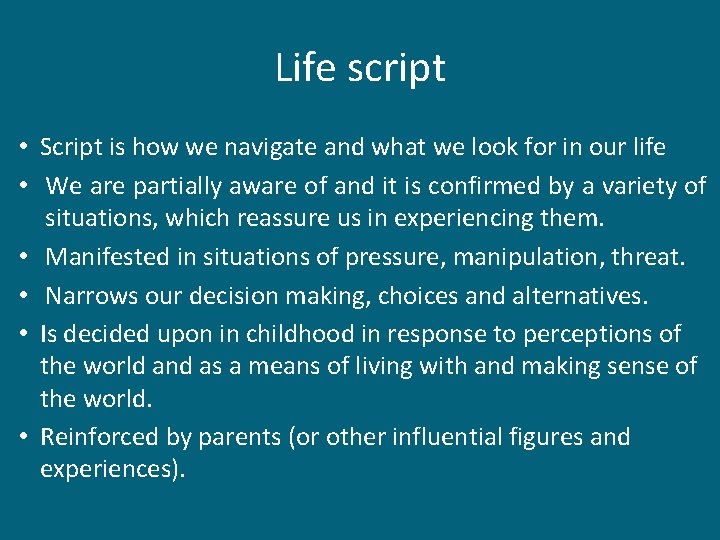
Life script • Script is how we navigate and what we look for in our life • We are partially aware of and it is confirmed by a variety of situations, which reassure us in experiencing them. • Manifested in situations of pressure, manipulation, threat. • Narrows our decision making, choices and alternatives. • Is decided upon in childhood in response to perceptions of the world and as a means of living with and making sense of the world. • Reinforced by parents (or other influential figures and experiences).
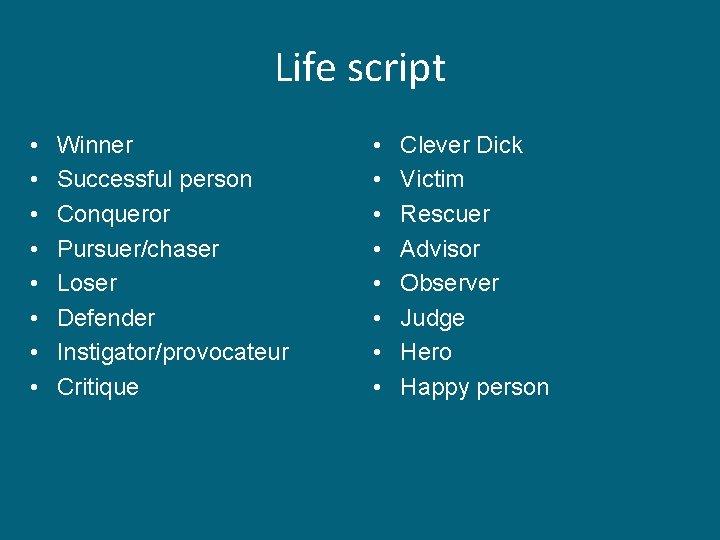
Life script • • Winner Successful person Conqueror Pursuer/chaser Loser Defender Instigator/provocateur Critique • • Clever Dick Victim Rescuer Advisor Observer Judge Hero Happy person
Eric Berne GAMES PEOPLE PLAY
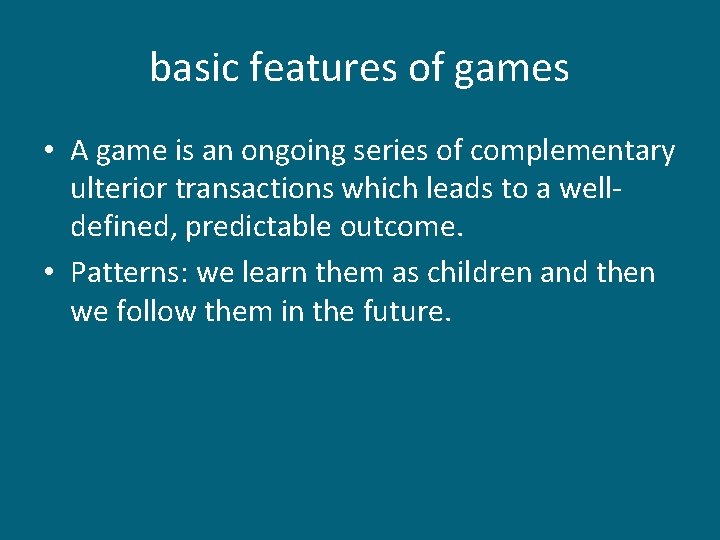
basic features of games • A game is an ongoing series of complementary ulterior transactions which leads to a welldefined, predictable outcome. • Patterns: we learn them as children and then we follow them in the future.
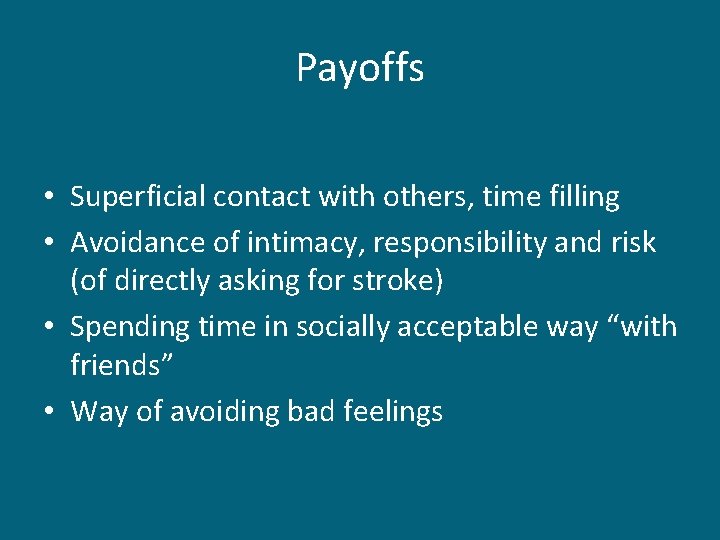
Payoffs • Superficial contact with others, time filling • Avoidance of intimacy, responsibility and risk (of directly asking for stroke) • Spending time in socially acceptable way “with friends” • Way of avoiding bad feelings
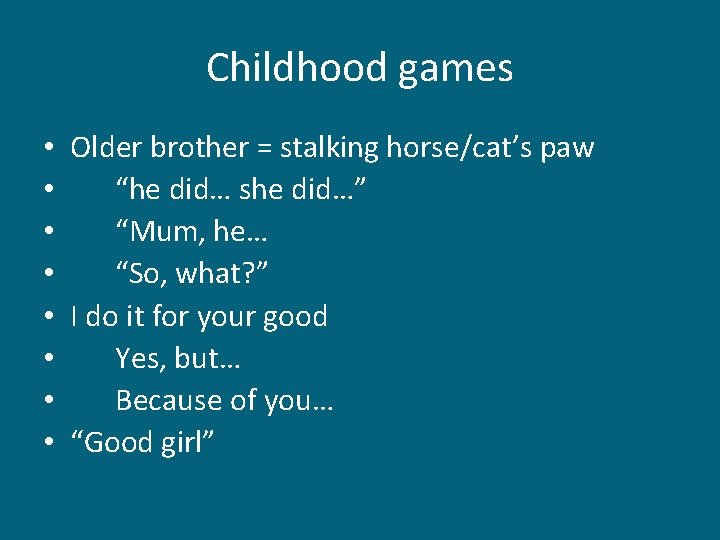
Childhood games • Older brother = stalking horse/cat’s paw • “he did… she did…” • “Mum, he… • “So, what? ” • I do it for your good • Yes, but… • Because of you… • “Good girl”
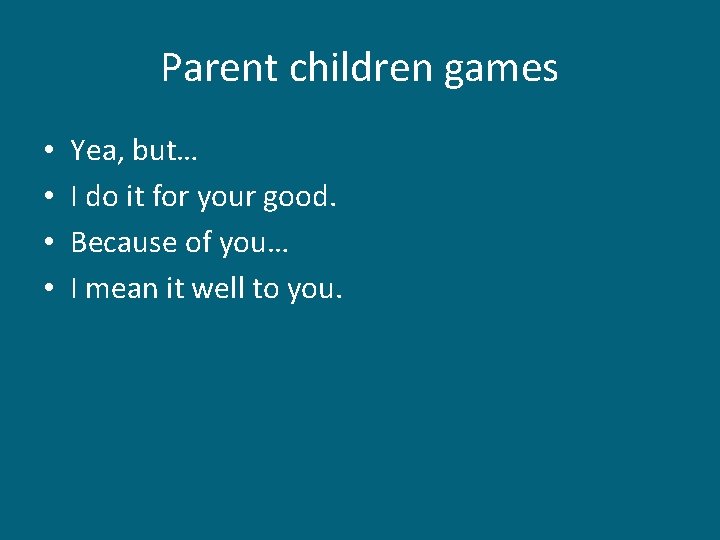
Parent children games • • Yea, but… I do it for your good. Because of you… I mean it well to you.
Adult games / with myself • ?
YES, BUT…
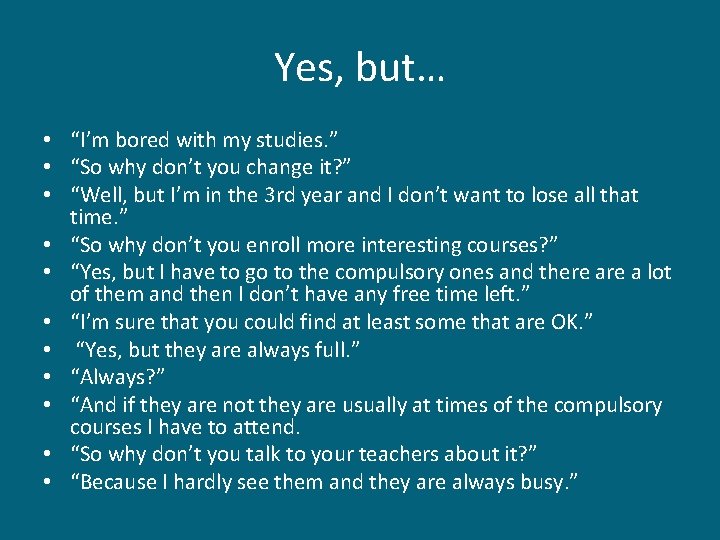
Yes, but… • “I’m bored with my studies. ” • “So why don’t you change it? ” • “Well, but I’m in the 3 rd year and I don’t want to lose all that time. ” • “So why don’t you enroll more interesting courses? ” • “Yes, but I have to go to the compulsory ones and there a lot of them and then I don’t have any free time left. ” • “I’m sure that you could find at least some that are OK. ” • “Yes, but they are always full. ” • “Always? ” • “And if they are not they are usually at times of the compulsory courses I have to attend. • “So why don’t you talk to your teachers about it? ” • “Because I hardly see them and they are always busy. ”
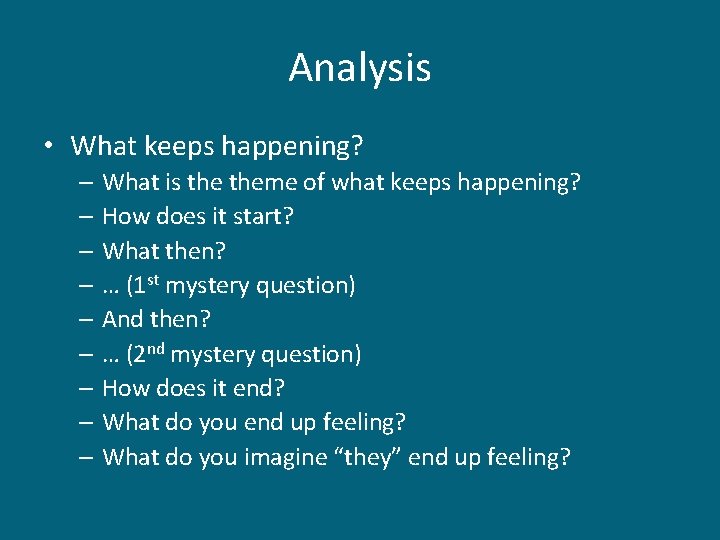
Analysis • What keeps happening? – What is theme of what keeps happening? – How does it start? – What then? – … (1 st mystery question) – And then? – … (2 nd mystery question) – How does it end? – What do you end up feeling? – What do you imagine “they” end up feeling?
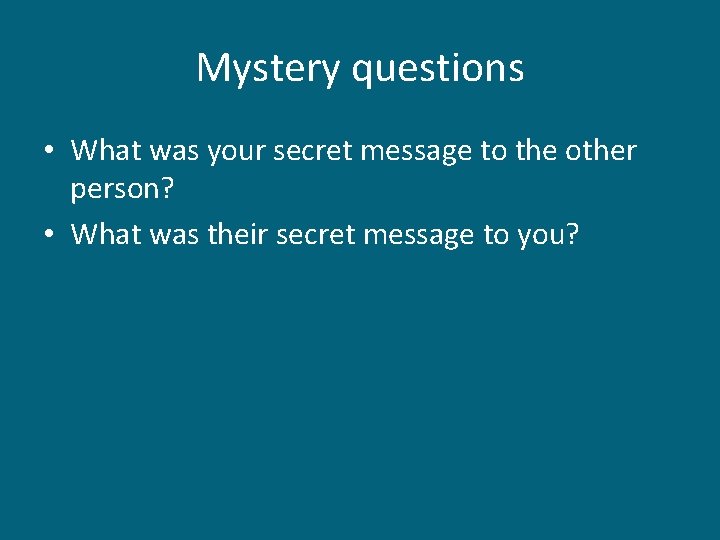
Mystery questions • What was your secret message to the other person? • What was their secret message to you?
Yes, but… Ps yc ho so ci a l le ve l Social level
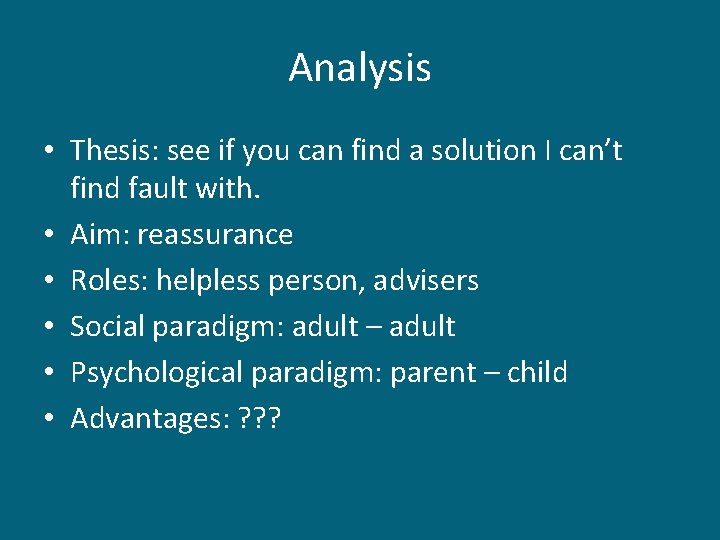
Analysis • Thesis: see if you can find a solution I can’t find fault with. • Aim: reassurance • Roles: helpless person, advisers • Social paradigm: adult – adult • Psychological paradigm: parent – child • Advantages: ? ? ?
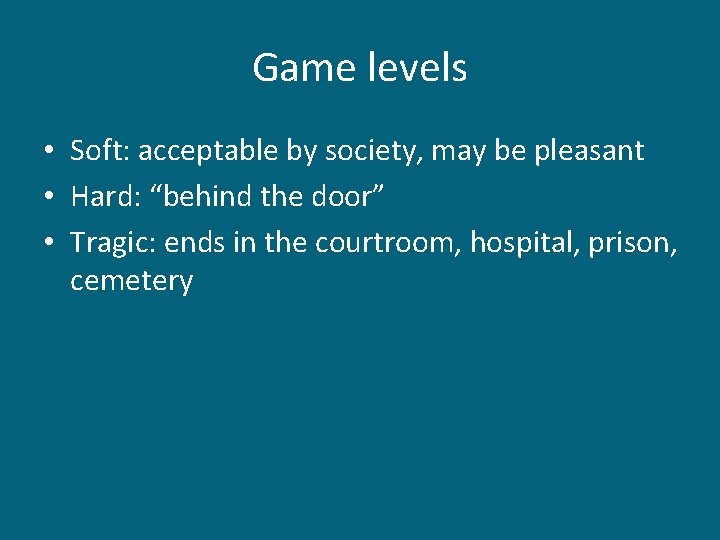
Game levels • Soft: acceptable by society, may be pleasant • Hard: “behind the door” • Tragic: ends in the courtroom, hospital, prison, cemetery
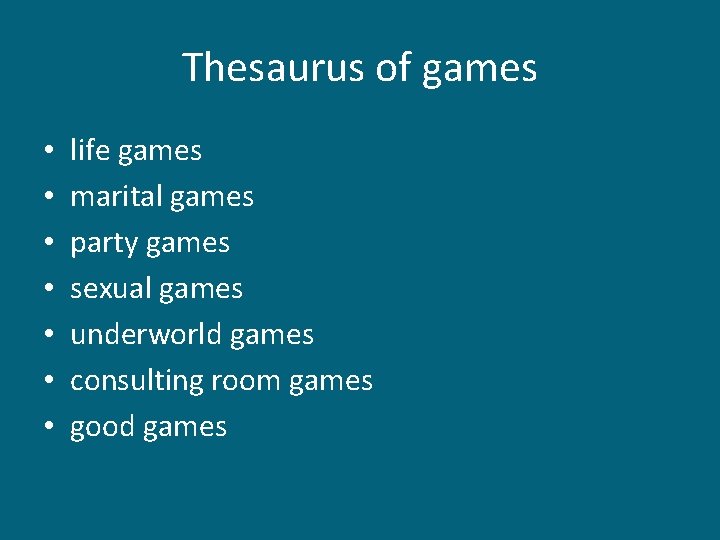
Thesaurus of games • • life games marital games party games sexual games underworld games consulting room games good games
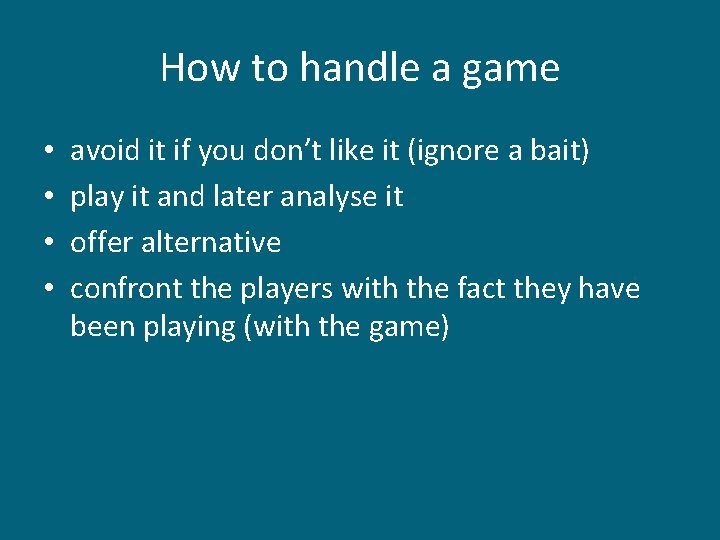
How to handle a game • • avoid it if you don’t like it (ignore a bait) play it and later analyse it offer alternative confront the players with the fact they have been playing (with the game)
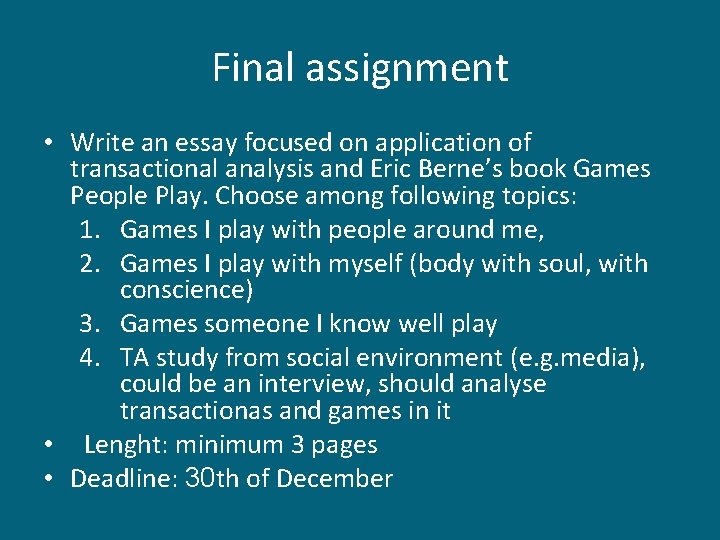
Final assignment • Write an essay focused on application of transactional analysis and Eric Berne’s book Games People Play. Choose among following topics: 1. Games I play with people around me, 2. Games I play with myself (body with soul, with conscience) 3. Games someone I know well play 4. TA study from social environment (e. g. media), could be an interview, should analyse transactionas and games in it • Lenght: minimum 3 pages • Deadline: 30 th of December
Good luck with your games! Zdenka Vykoukalová