
First Aid Nonaccidental Cases Mgr Zdeka Kubkov Bc
First Aid Non-accidental Cases Mgr. Zdeňka Kubíková Bc. Barbora Zuchová and others
Hearth attack Interrupted supply of oxygen to the heart muscle Symptoms: chest pain (typical gripping chest pain, spreading to the neck, upper limbs, abdomen) nausea, vomiting, sweating, restlisness, fear of death, breathlessness (dyspnoea)
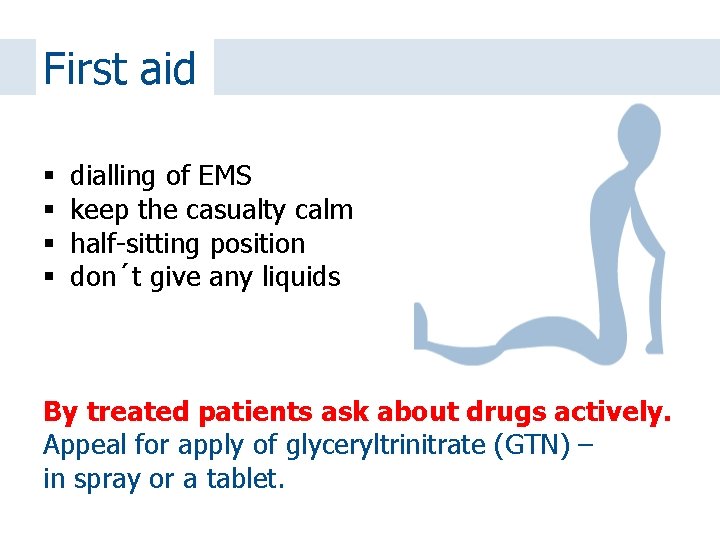
First aid dialling of EMS keep the casualty calm half-sitting position don´t give any liquids By treated patients ask about drugs actively. Appeal for apply of glyceryltrinitrate (GTN) – in spray or a tablet.
Cerebellar apoplexy (stroke) interrupted supply of blood into the brain – ischaemia hemorrhage involving a vessel of the brain various stages of relevance Symptoms: from confusion, paralysis of the part of body, aggravation of communication, dizzinesses, (reminds drunkenness) up to immediate death
First aid check on vital signs consciouss patient – absolute calmness, without motion!!! unconscious patient… immediate dialling of EMS 155

Asthmatic attack Asthma bronchiale is chronic inflammatory disease of airways, appearing by bronchiostenosis during attack Evocating factors: psychical stress, strain, external allergens, cold air, infection Symptoms: attacking breathlesness, elongated expiration with wheezing, insult to coughing First Aid: position, clothing, calmness relieve EMS 155 Appeal for apply of drugs – spray
Diabetes mellitus: Regulation failure of the level of sugar in blood (glycaemia). Patient applies insulin or takes drugs Every treated diabetic should have a warning card with himself! Hyperglycaemia not yet treated or worse treated patient coma within decades of hours and days Hypoglycaemia after apply of insulin the patient doesn´t eat or does the sport inadequately, eventually applies more quantity of insulin coma within decades of minutes!
First aid – Diabetes mellitus Symptoms: failure of consciousness, faint smell from the mouth, hunger, headache, weakness, motory distress, sweating, nausea First aid: we suppose hypoglycaemia conscious– sweet drink or sugar, eat after that! unconscious– check on vital signs EMS 155 NEVER GIVE INSULIN
Sudden abdominal incidence acute event of several causes Symptoms: planary or localized pain, often shocking boardy contractures of muscles of abdominal paries (not allways) vomiting, weaker pulse, progress of shock, diarrhoea, sometimes temperature
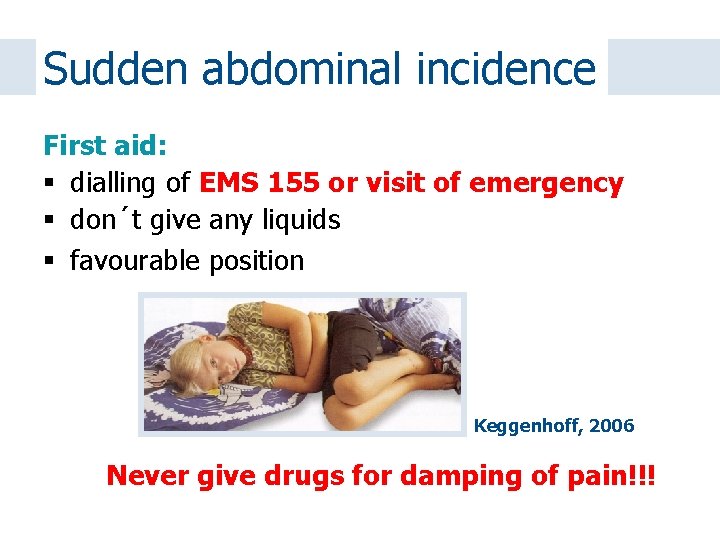
Sudden abdominal incidence First aid: dialling of EMS 155 or visit of emergency don´t give any liquids favourable position Keggenhoff, 2006 Never give drugs for damping of pain!!!
Convulsionary forms Epilepsy, hyperthermia of organism, head injuries, febrile spasmus, poisonings and others Symptoms: failure of consciousness, inability of communication during the great attack spasmus and subsultus of the whole body, high risk of general injury, possible of enuresis, defile and foam by mouth
Convulsionary forms First aid: avoid from accidental injuries – especially with head, without force. . ! don´t put anything into the mouth after attack– check on vital signs by febrile convulsions (children from 6 months to 5 years) reduce fever by tepid dressing. Apply in to groins and armpits. Never on the chest. Emergency Medical Service 155
Collapse – fainting sudden failure of consciousness coming up from the low level of blood in the brain from various causes – e. g. by fatigue, exhaustion, shock, rapid standing, dehydration etc.
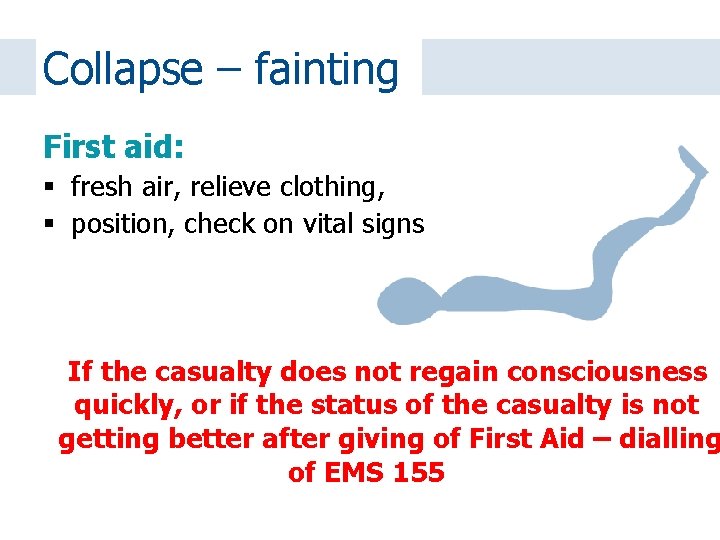
Collapse – fainting First aid: fresh air, relieve clothing, position, check on vital signs If the casualty does not regain consciousness quickly, or if the status of the casualty is not getting better after giving of First Aid – dialling of EMS 155
Allergic reaction after insects stings (bee, wasp), food and other allergies And by sensitive persons to allergies could occur closure of the airway with swelling Symptoms: breathlesness during inspiration, cough, then cyanosis, itching, nettle rash, nausea, anaphylactic shock First aid: Emergency Medical Service 155, cooling down Increases percentage of sensitive persons to allergies in overall population!!
Hyperventilation Cause: forms with rapid breathing, which leads into a loss of the carbon dioxide level and to characteristic convulsions (tetany) Symptoms: tingling in around the mouth, characteristic distortion of hands, distraughtnes First aid: sedation, breathing to a paper bag Hyperventilation is very dangerous under water level !!!
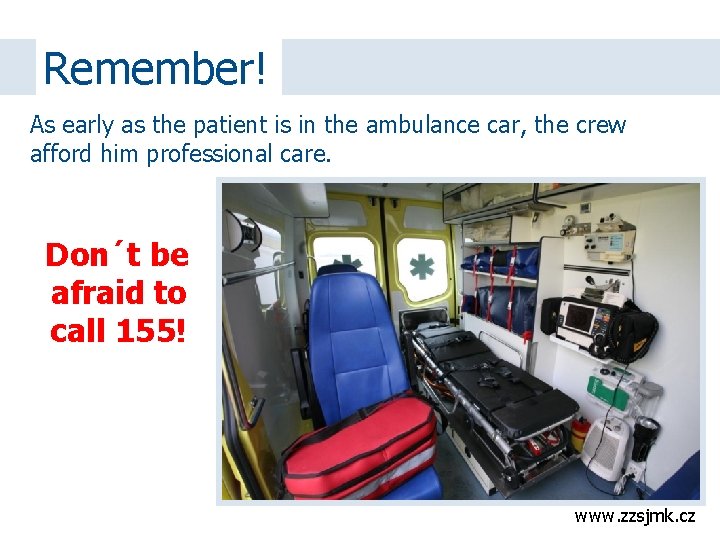
Remember! As early as the patient is in the ambulance car, the crew afford him professional care. Don´t be afraid to call 155! www. zzsjmk. cz
- Slides: 17