Training Module 19 Nature of C re A
- Slides: 45
Training Module 19 Nature of C re A T i V i T y
Introduction to the CEYS project (use dependent on context) • European Erasmus+ project • Partners in Belgium, Greece, Romania, UK • Continuation of the Creative Little Scientists project http: //www. creative‐little‐scientists. eu • Aims Ø Development of a teacher development course and accompanying materials Ø Promotion of the use of creative approaches in teaching science in preschool and early primary education (up to age of eight)
Links to Content Design Principles and Outcomes 1 4. Teacher education should promote understandings about the nature and framings of creativity, characteristics of creative teaching and learning, and how creativity is manifest in early years science. 4. 1 Teachers should be able to recognize how creativity is manifest in early years science and have knowledge of distinctions between features of creative teaching and creative learning. 5. Teacher education should provide knowledge about how children’s creativity development could be enhanced and assessed within science education. 5. 1 Teachers should have detailed knowledge about the synergies between inquiry and creativity, such as play and exploration, motivation and affect, dialogue and collaboration, problem solving and agency, questioning and curiosity, reflection and reasoning; and teacher scaffolding and involvement, to support children’s creative learning and advance their creativity within science education
Links to Content Design Principles and Outcomes 2 6. Teacher education should provide knowledge about early child development, the purposes and aims of science education, and their place in the early years curriculum. 6. 5 Teachers should be able to foster opportunities for children’s agency and creativity in learning in inquiry and problem solving – in particular the importance of children making their own decisions during inquiry processes, making their own connections between questions, planning and evaluating evidence, and reflecting on outcomes. 12. Teachers should have knowledge of the role of creativity in child development and in the field of science. 12. 3 Teachers should have knowledge of the role of creativity in child development and in the field of science. 12. 6 Teachers should be able to support the diverse interests and needs of young children in engaging creatively within the field of science.
Aims of the module • Introduce the concept, nature and role of creativity in (early years science) education • Offer guidance on the pedagogical similarities between creative development approaches and inquiry based science teaching in the early years • Explore the role of the teacher in supporting and fostering creativity in the classroom (teaching creatively and teaching for creativity) • Provide time for planning to foster creativity in early years science education
Module Outline 1. 2. 3. 4. Introduction Problem solving task Analysis of classroom examples Reflection on the teaching approaches and teacher role adopted in classroom examples 5. Consequences for your own planning 6. Reflection on what has been gained from the module
Introductions Introduce yourself to your neighbour What are you hoping to gain from the session? Write down any questions you may have.
Creativity and science education Creativity is seen as important for the development of the child and citizen • strengthening of creativity and innovation through education • empowering today’s students to become tomorrow’s creative citizens (European Commission, Education & Training 2020) Science education has the potential to promote creativity It is widely acknowledged that inquiry based science education promotes innovation and curiosity (Osborne and Dillon, 2008).
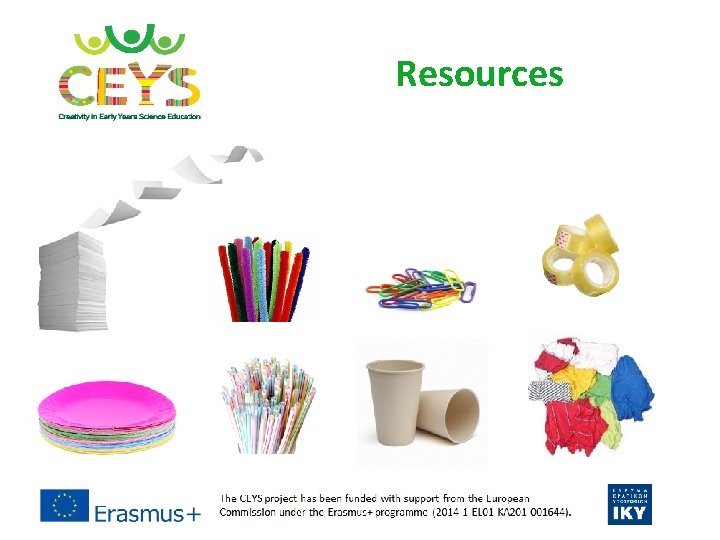
Problem solving task ➣ Highly creative, unique and intelligent beings from a different planet are coming to visit the Earth, among other planets, to choose where to settle and share their creativity, intelligence and overall ‘know‐how’ of how to live a happy, fulfilled life.
Problem solving task ➣ For 20 minutes examine the materials and make a novel response ‐ designing something that you can present to the visitors as ‘a welcome to Earth symbol’ of our human species that would help these creative, unique and intelligent beings choose Earth.
Resources
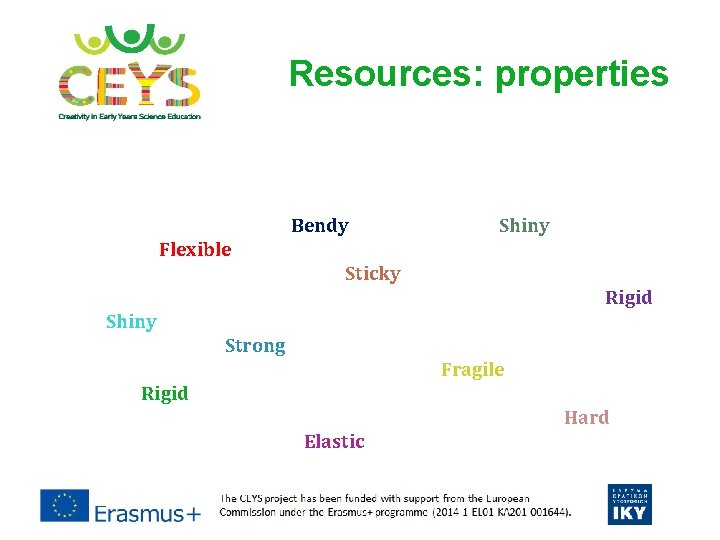
Resources: properties Bendy Shiny Flexible Sticky Rigid Shiny Strong Fragile Rigid Hard Elastic
Time for more creativity Ø Designing something as ‘a welcome to Earth symbol’ of our human species 20 min
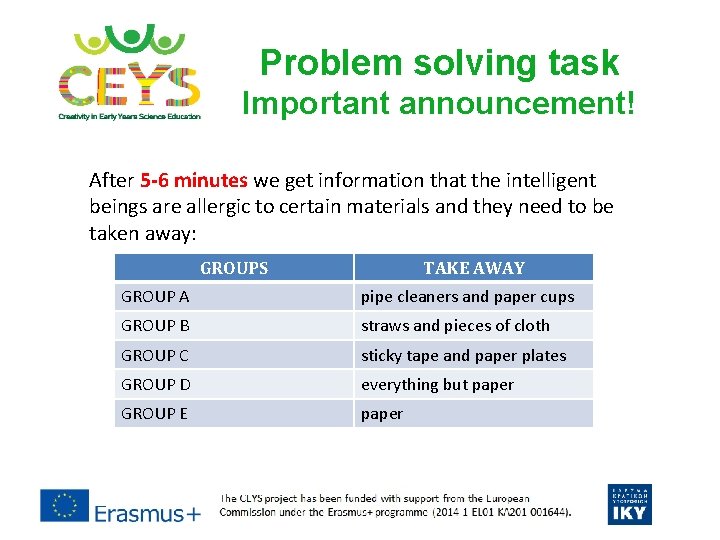
Problem solving task Important announcement! After 5 -6 minutes we get information that the intelligent beings are allergic to certain materials and they need to be taken away: GROUPS TAKE AWAY GROUP A pipe cleaners and paper cups GROUP B straws and pieces of cloth GROUP C sticky tape and paper plates GROUP D everything but paper GROUP E paper
Time for more creativity Ø Design something as ‘a welcome to Earth symbol’ of our human species (with limited resources) 13 min
Problem solving task Once 20 minutes are over, for 10 minutes: ‐ look at one another’s creations (rotation); ‐ present your creation/explain your choice (to the visitors from a different planet) in a creative and convincing way.
Time for more creativity Ø Two people from each group visit (rotate) other groups (2. 5 minutes per group) to hear their creative and convincing argument (2. 5 minutes per group, altogether 10 minutes)
Creativity Being creative is at the heart of being human and of all cultural progress … (Robinson, 2015). Creativity is recognised as both a process and state of mind involving the serious play of ideas and possibilities. Creativity is the generation of novel ideas.
Big-C and little-c creativity everyday creativity /“little‐c” can be found in nearly all people, personal creativity (Beghetto and Plucker, 2006; Craft, 2003; Runco, 2003) eminent creativity/ “Big‐C” can be found in ‘artists’, historical paradigm‐shifting creativity (e. g. Gardner, 1993; Csikszentmihalyi, 1996; Simonton, 1994)
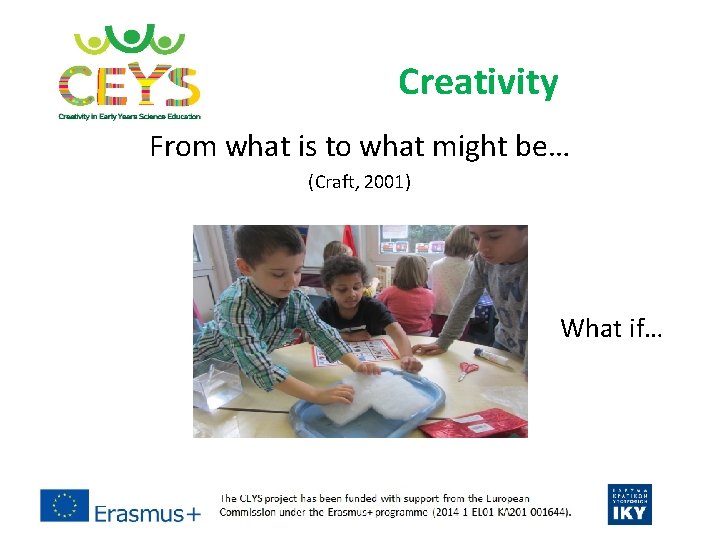
Creativity From what is to what might be… (Craft, 2001) What if…
Creativity in education? To teach creatively and/or To teach for creativity
Creativity in education? To teach creatively: ‘using imaginative approaches to make learning more interesting and effective’ (NACCE, p. 89) To teach for creativity: forms of teaching that are intended to develop young people’s/learners’ own creative thinking or behaviour
Creativity in education ‘Young people’s creative abilities are most likely to be developed in an atmosphere in which the teacher’s creative abilities are properly engaged’ (National Advisory Committee on Creative and Cultural Education – NACCCE, 1999, p. 90).
Early Years creativity • Children behave with intentionality, are selfdetermined and use imagination. They innovate and take risks and are immersed in the creative process. • Teachers provide an enabling environment, valuing children’s agency, standing back and offering children time and space, yet recognising when to engage playfully with children entering their narrative and imaginative worlds (‘meddling in the middle’ – Craft et al. , 2012).
Primary school creativity • Children have a sense of relevance in the experience they are engaged in, control over its articulation, a feeling of ownership over their learning, and opportunities to innovate (Jeffrey and Woods, 2003). • Wegerif (2005, 2010), Vass (2007), Rojas‐Drummond et al. , (2006) argue that dialogic engagement is necessary and inherent in everyday creativity in the classroom.
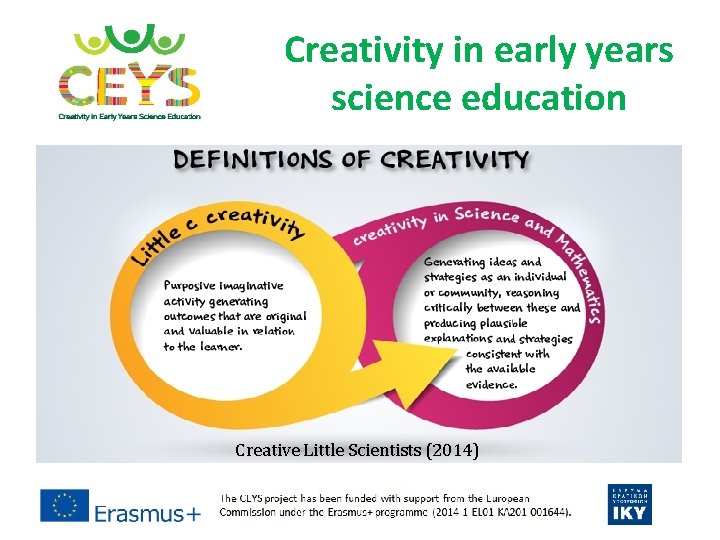
Creativity in early years science education Creative Little Scientists (2014)
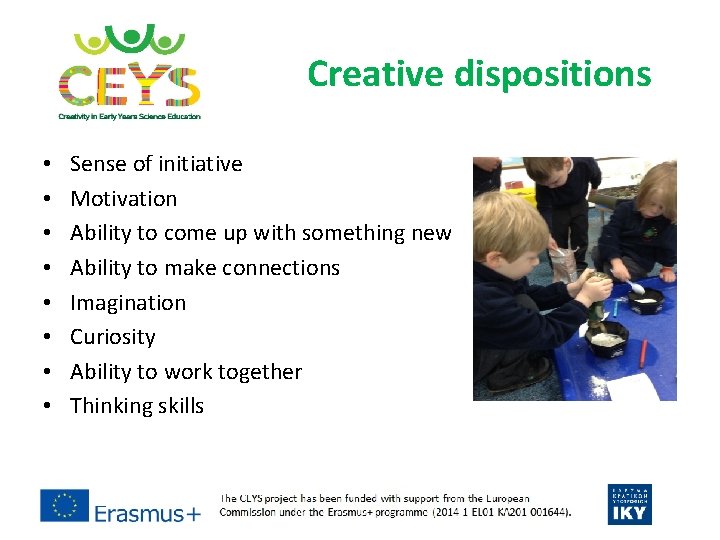
Creative dispositions • • Sense of initiative Motivation Ability to come up with something new Ability to make connections Imagination Curiosity Ability to work together Thinking skills
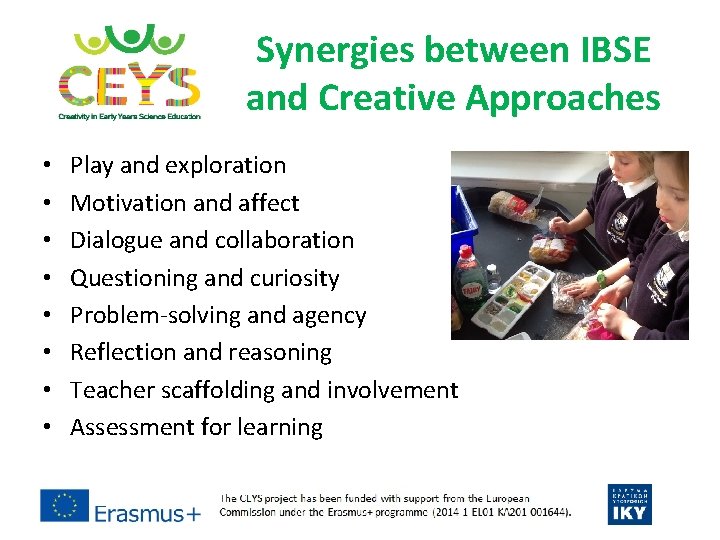
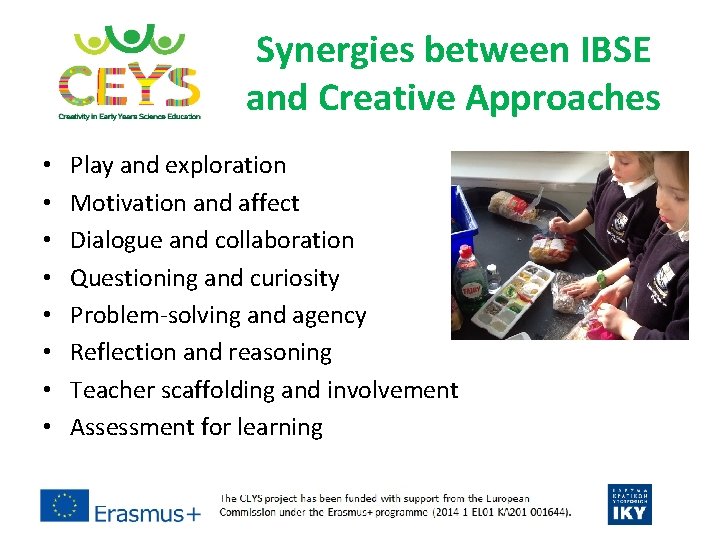
Synergies between IBSE and Creative Approaches • • Play and exploration Motivation and affect Dialogue and collaboration Questioning and curiosity Problem‐solving and agency Reflection and reasoning Teacher scaffolding and involvement Assessment for learning
Discussion • What happened? • How did you feel? • What issues arose? • What questions emerge?
Time for reflection Ø Where are the elements of creativity in the task? Ø Where are the elements of science in the task? 10 minutes
Synergies between IBSE and Creative Approaches • • Play and exploration Motivation and affect Dialogue and collaboration Questioning and curiosity Problem‐solving and agency Reflection and reasoning Teacher scaffolding and involvement Assessment for learning
Reflect on your practice • When do you feel you foster creativity in your classrooms (in general)? • When do you feel you foster creativity in your science‐based lessons? • Any issues/concerns? 15 minutes
Reflect on your practice Which of the synergies do you feel you practice already? Which synergies are more challenging ? 10 minutes
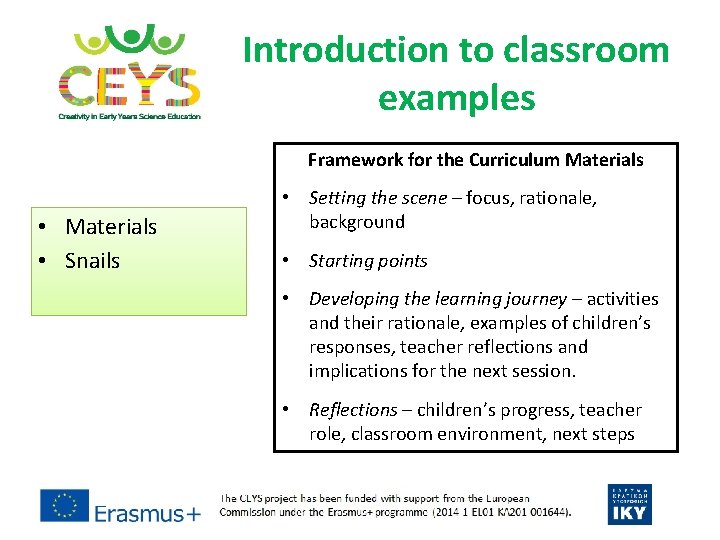
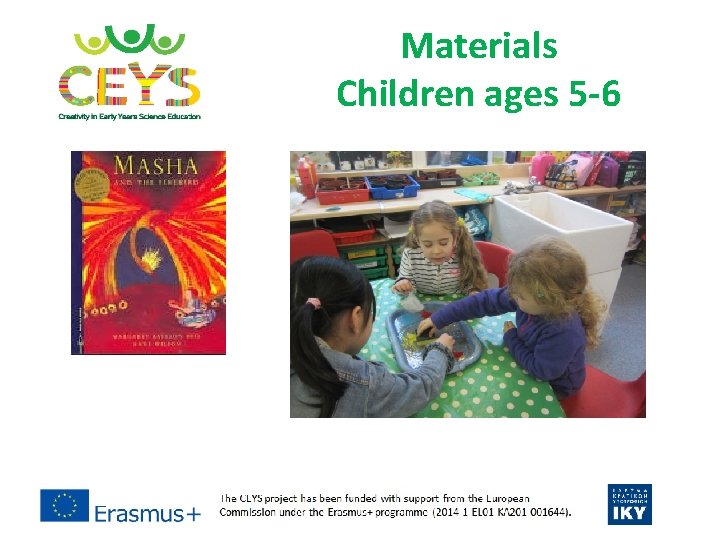
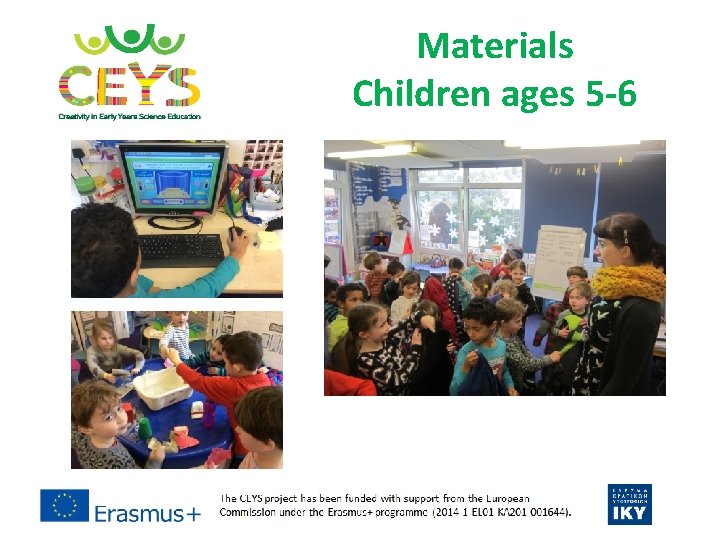
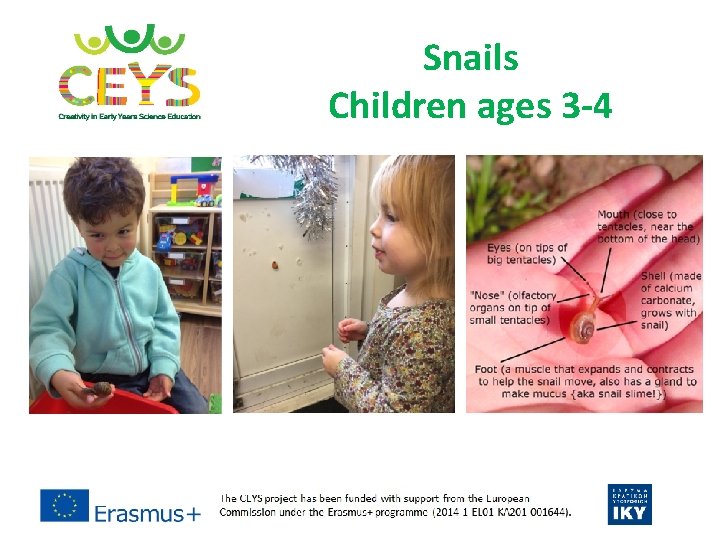
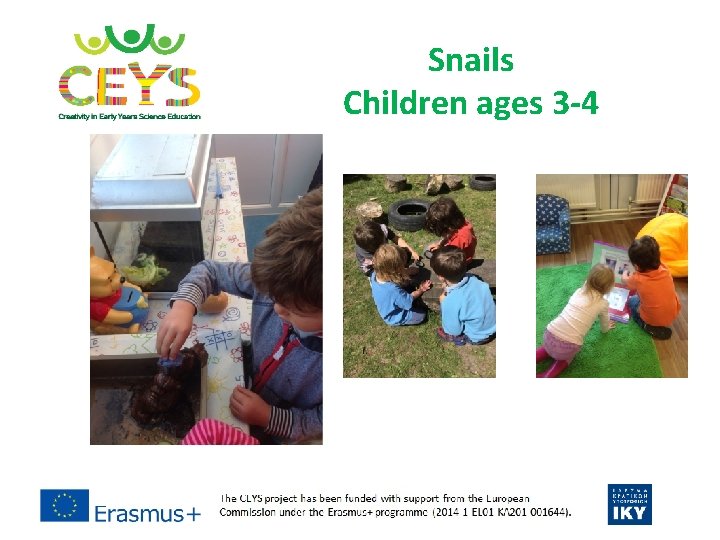
Introduction to classroom examples Framework for the Curriculum Materials • Materials • Snails • Setting the scene – focus, rationale, background • Starting points • Developing the learning journey – activities and their rationale, examples of children’s responses, teacher reflections and implications for the next session. • Reflections – children’s progress, teacher role, classroom environment, next steps
Materials Children ages 5 -6
Materials Children ages 5 -6
Snails Children ages 3 -4
Snails Children ages 3 -4
Analysing classroom examples Read through your example first to gain an overview of the learning journey Then consider the following questions: What synergies were the teachers working on? 12 minutes Where can you see evidence of opportunities for children’s creativity and impact on learning?
Creativity From what is to what might be… (Craft, 2001) What if…
Summary: Nature of Creativity Being creative is at the heart of being human and of all cultural progress … (Robinson, 2015) Creativity is recognised as both a process and state of mind involving the serious play of ideas and possibilities. Creativity is the generation of novel ideas.
Summary: Issues for teachers Teachers’ beliefs about creativity can help or inhibit children’s creativity. Teachers’ concerns about time and assessment can prevent both creative teaching and teaching for creativity. Teachers’ enthusiasm for novelty, risk taking, imagination, curiosity, making connections can promote both creative teaching and teaching for creativity.
Reflection and implications § How far have your questions at the start of the session been answered? § Note 2 actions you will take building on module content. § In what ways did the different activities support your developing thinking?
Further information Creative Little Scientists (FP 7 EU project 2011 – 2014) Design principles and exemplar materials based on fieldwork www. creative‐little‐scientists. eu Creativity in Early Years Science Education (Erasmus+ EU project 2014 – 2017) Curriculum Materials and Training Materials for teacher CPD to promote creative approaches to early years science www. ceys‐project. eu
THANK YOU! What if…