Topic 8 2 Photosynthesis Assessment Statements 8 2

- Slides: 45
Topic 8. 2 Photosynthesis
Assessment Statements 8. 2. 1 Draw and label a diagram showing the structure of a chloroplast as seen in electron micrographs. 8. 2. 2 State that photosynthesis consists of light-dependent and light independent reactions. 8. 2. 3 Explain the light-dependent reactions. 8. 2. 4 Explain photophosphorylation in terms of chemiosmosis. 8. 2. 5 Explain the light-independent reactions. 8. 2. 6 Explain the relationship between the structure of the chloroplast and its function. 8. 2. 7 Explain the relationship between the action spectrum and the absorption spectrum of photosynthetic pigments in green plants. 8. 2. 8 Explain the concept of limiting factors in photosynthesis, with reference to light intensity, temperature and concentration of carbon dioxide.
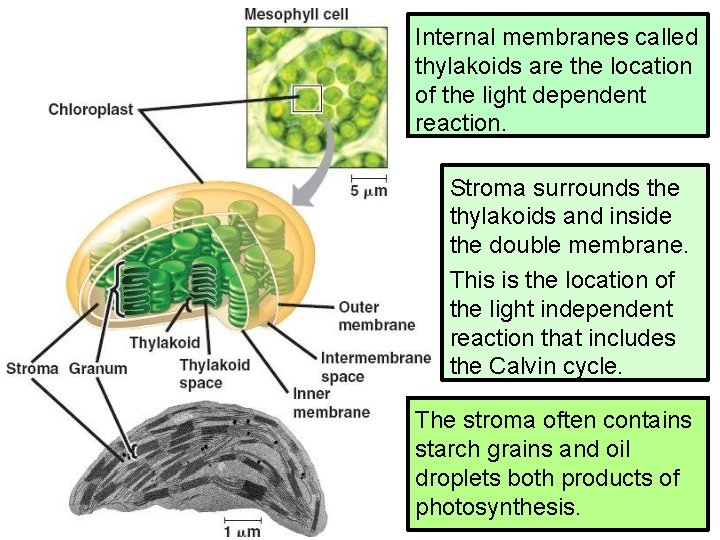
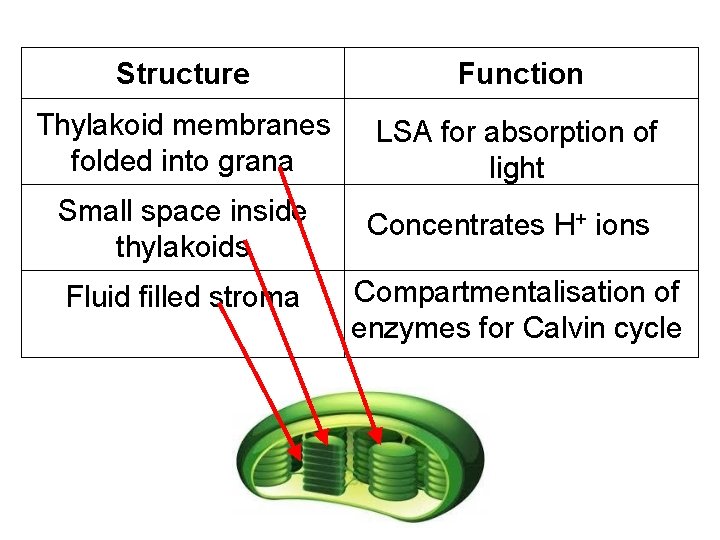
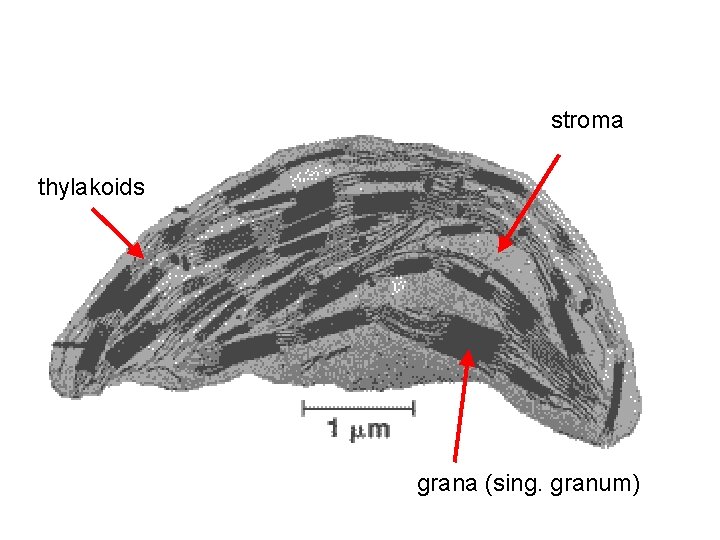
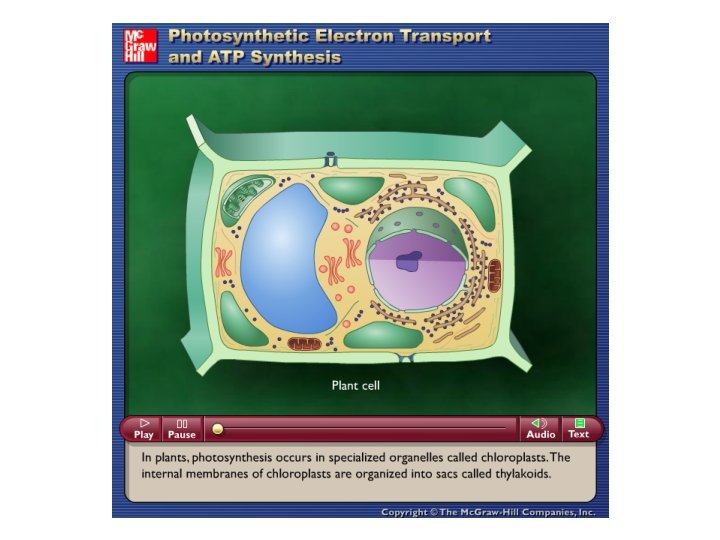
Chloroplast Internal membranes called thylakoids are the location Structureof the light dependent reaction. Stroma surrounds the thylakoids and inside the double membrane. This is the location of the light independent reaction that includes the Calvin cycle. The stroma often contains starch grains and oil droplets both products of photosynthesis.
Structure Function Thylakoid membranes folded into grana LSA for absorption of light Small space inside thylakoids Concentrates H+ ions Fluid filled stroma Compartmentalisation of enzymes for Calvin cycle
stroma thylakoids grana (sing. granum)
Stages of Photosynthesis
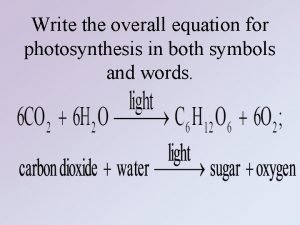
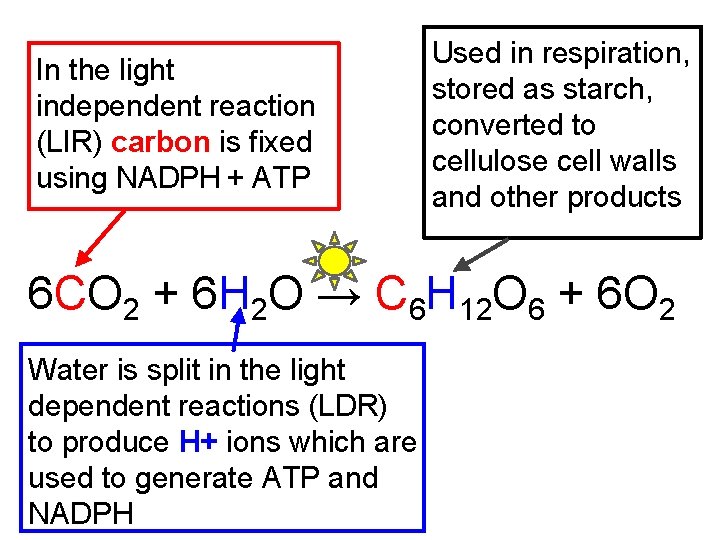
In the light independent reaction (LIR) carbon is fixed using NADPH + ATP Used in respiration, stored as starch, converted to cellulose cell walls and other products 6 CO 2 + 6 H 2 O → C 6 H 12 O 6 + 6 O 2 Water is split in the light dependent reactions (LDR) to produce H+ ions which are used to generate ATP and NADPH
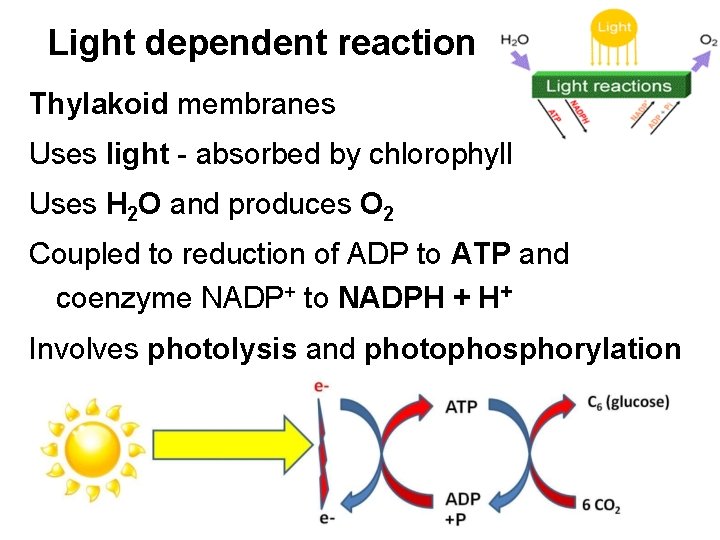
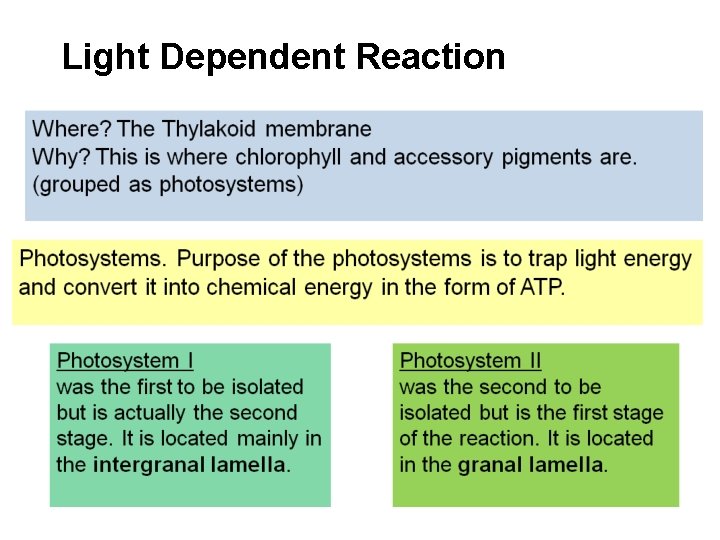
Light dependent reaction Thylakoid membranes Uses light - absorbed by chlorophyll Uses H 2 O and produces O 2 Coupled to reduction of ADP to ATP and coenzyme NADP+ to NADPH + H+ Involves photolysis and photophosphorylation
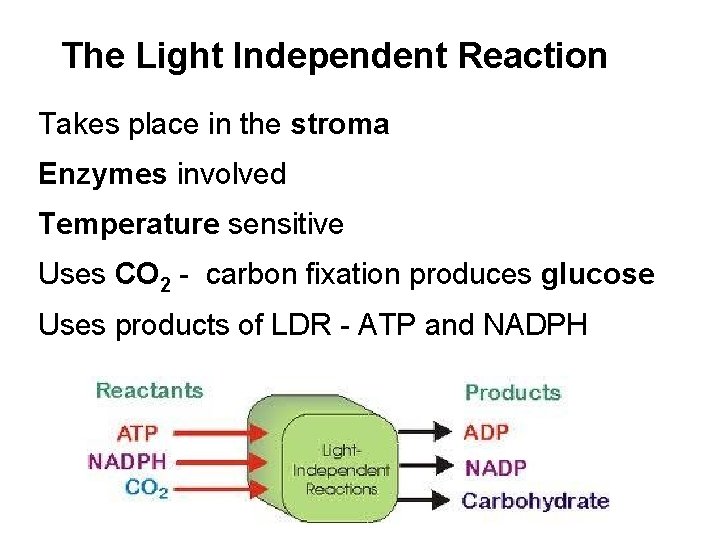
The Light Independent Reaction Takes place in the stroma Enzymes involved Temperature sensitive Uses CO 2 - carbon fixation produces glucose Uses products of LDR - ATP and NADPH
Light has four functions It excites the electrons, which then allows photophosphorylation to occur. It excites the electrons, which then allows the reduction of NADP to NADPH. It triggers the opening of the stomata so that CO 2 can enter. It initiates the photolysis of water.
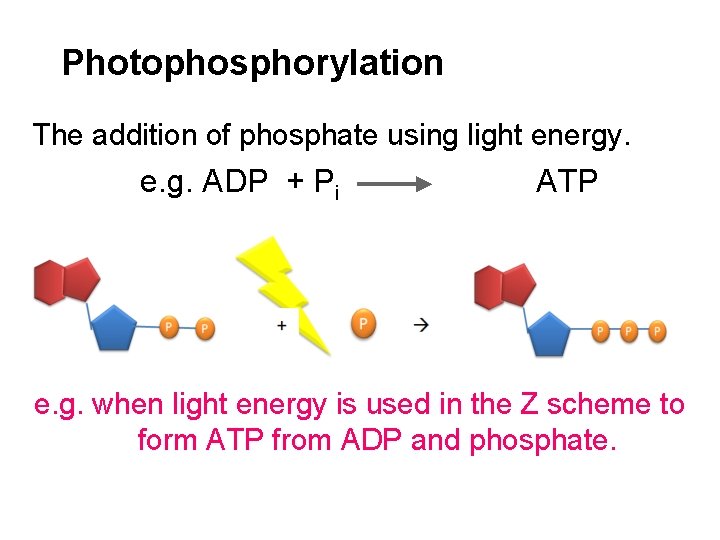
Photophosphorylation The addition of phosphate using light energy. e. g. ADP + Pi ATP e. g. when light energy is used in the Z scheme to form ATP from ADP and phosphate.
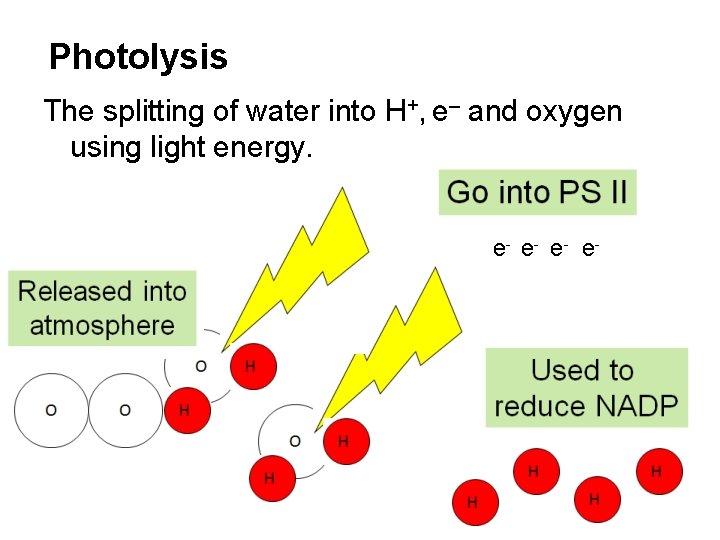
Photolysis The splitting of water into H+, e– and oxygen using light energy. e- e- e - e-
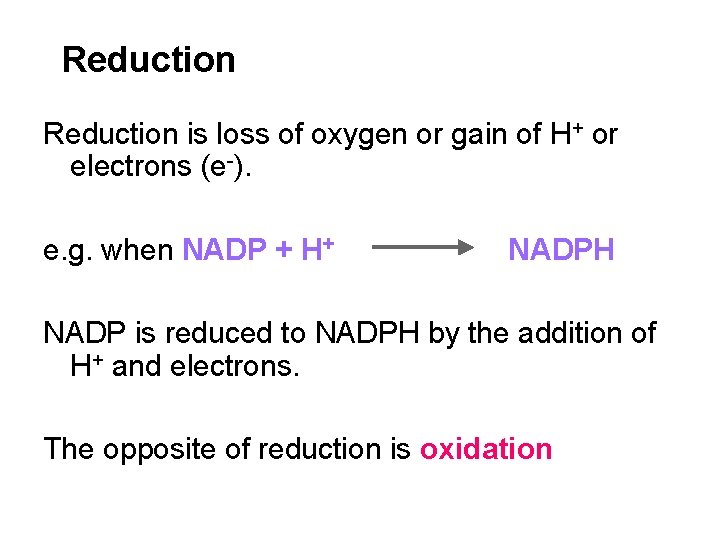
Reduction is loss of oxygen or gain of H+ or electrons (e-). e. g. when NADP + H+ NADPH NADP is reduced to NADPH by the addition of H+ and electrons. The opposite of reduction is oxidation
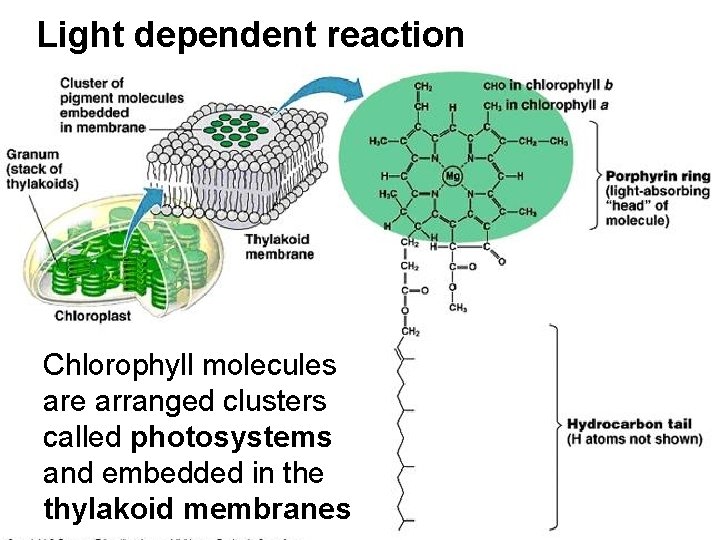
Light dependent reaction Chlorophyll molecules are arranged clusters called photosystems and embedded in the thylakoid membranes
Light Dependent Reaction
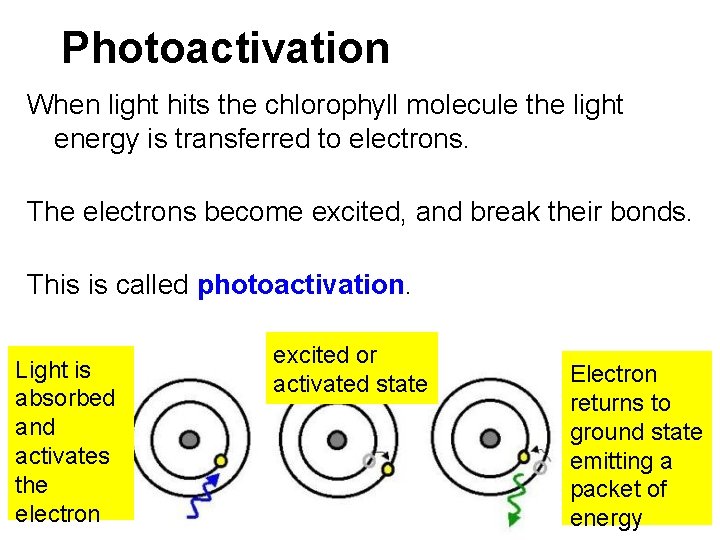
Photoactivation When light hits the chlorophyll molecule the light energy is transferred to electrons. The electrons become excited, and break their bonds. This is called photoactivation. Light is absorbed and activates the electron excited or activated state Electron returns to ground state emitting a packet of energy
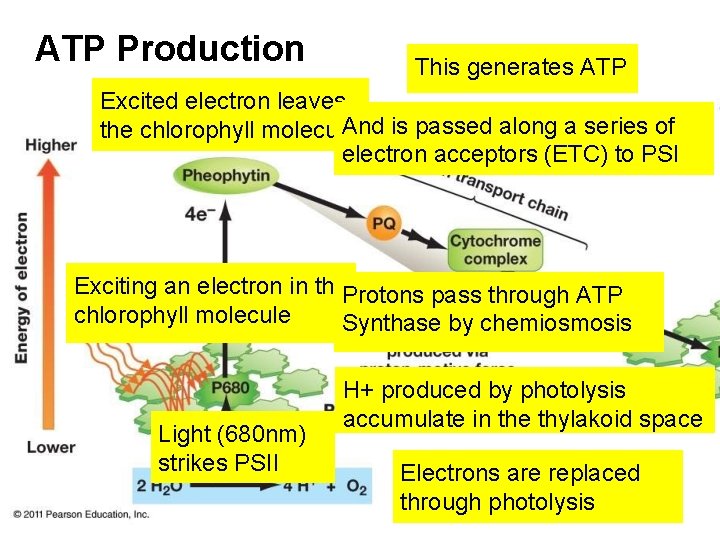
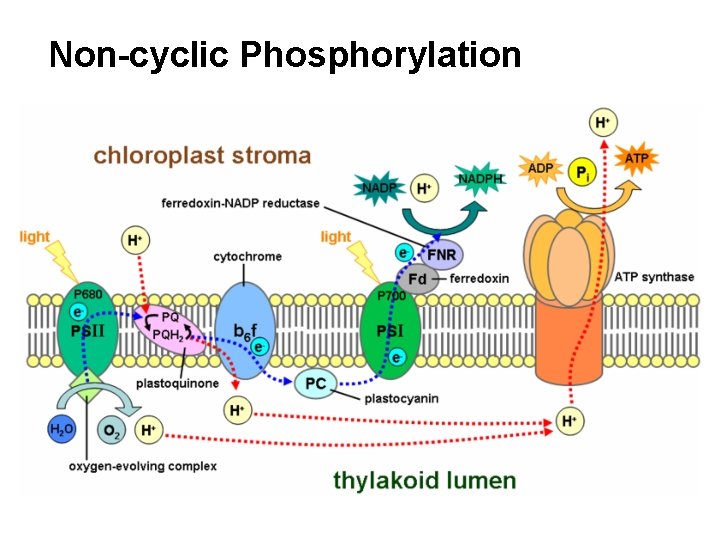
ATP Production This generates ATP Excited electron leaves And is passed along a series of the chlorophyll molecule electron acceptors (ETC) to PSI Exciting an electron in the. Protons pass through ATP chlorophyll molecule Synthase by chemiosmosis Light (680 nm) strikes PSII H+ produced by photolysis accumulate in the thylakoid space Electrons are replaced through photolysis
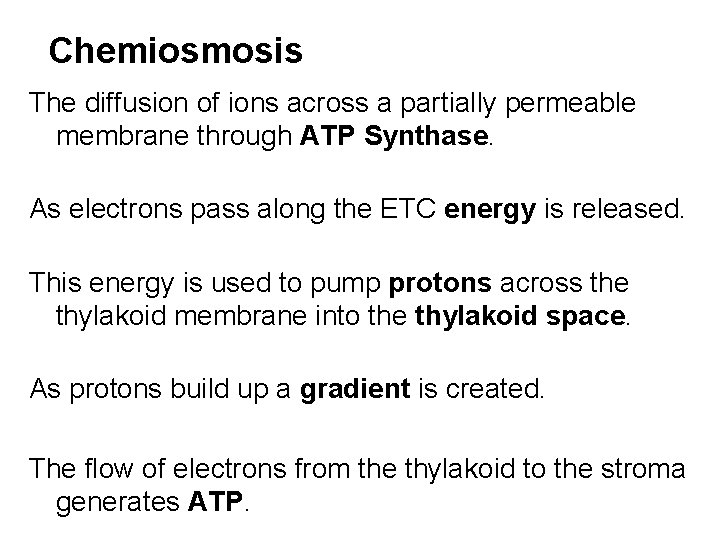
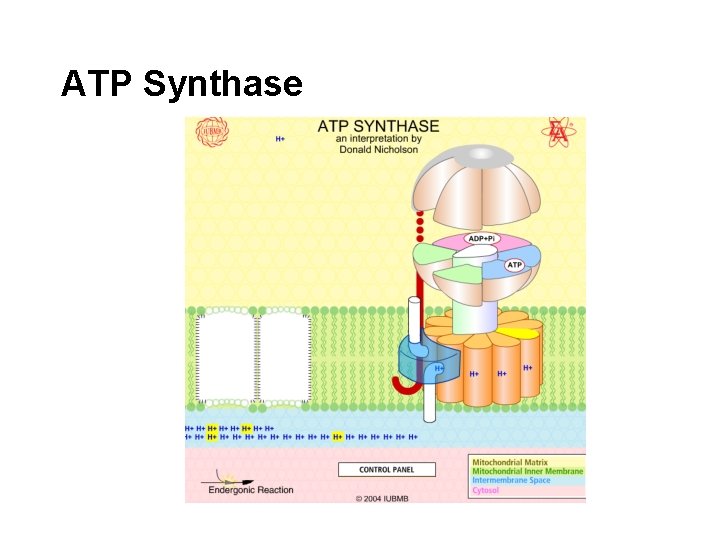
Chemiosmosis The diffusion of ions across a partially permeable membrane through ATP Synthase. As electrons pass along the ETC energy is released. This energy is used to pump protons across the thylakoid membrane into the thylakoid space. As protons build up a gradient is created. The flow of electrons from the thylakoid to the stroma generates ATP.
ATP Synthase
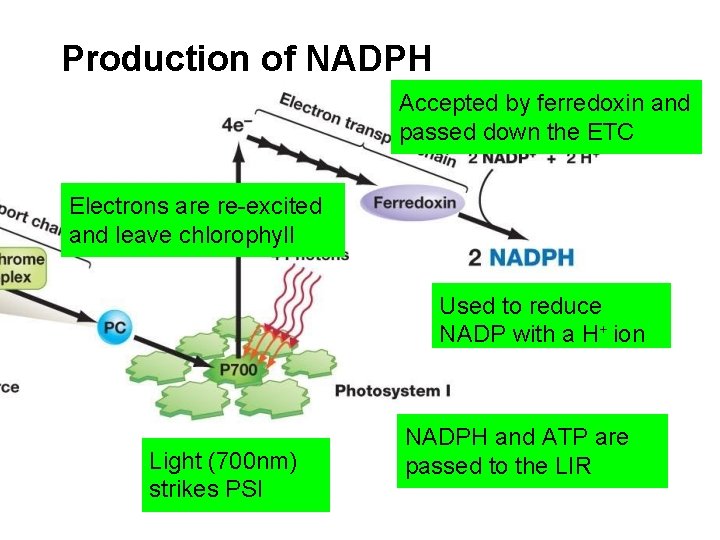
Production of NADPH Accepted by ferredoxin and passed down the ETC Electrons are re-excited and leave chlorophyll Used to reduce NADP with a H+ ion Light (700 nm) strikes PSI NADPH and ATP are passed to the LIR
Non-cyclic Phosphorylation
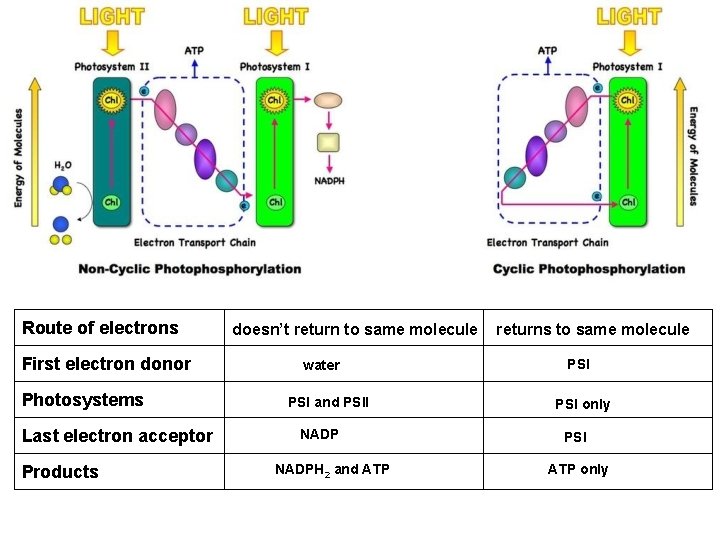
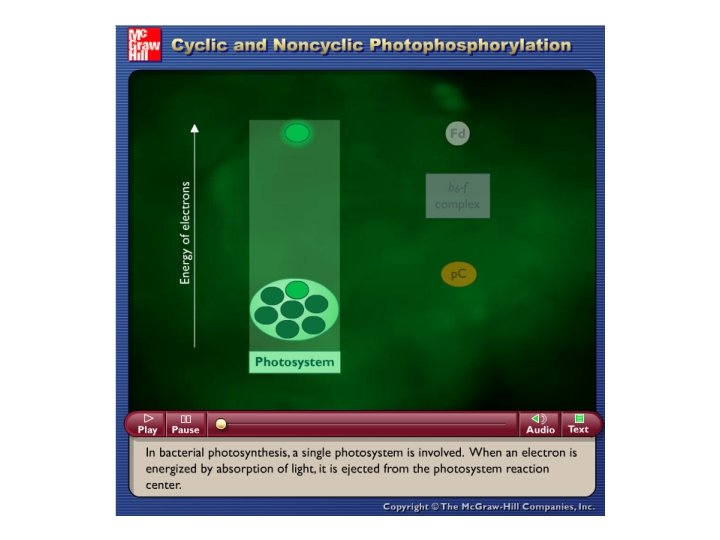
Non-cyclic phosphorylation makes ATP and NADPH (needed for the LIR) Cyclic phosphorylation only makes ATP You need more ATP than NADPH 2 for the LIR
Route of electrons First electron donor Photosystems Last electron acceptor Products doesn’t return to same molecule water PSI and PSII NADPH 2 and ATP returns to same molecule PSI only PSI ATP only
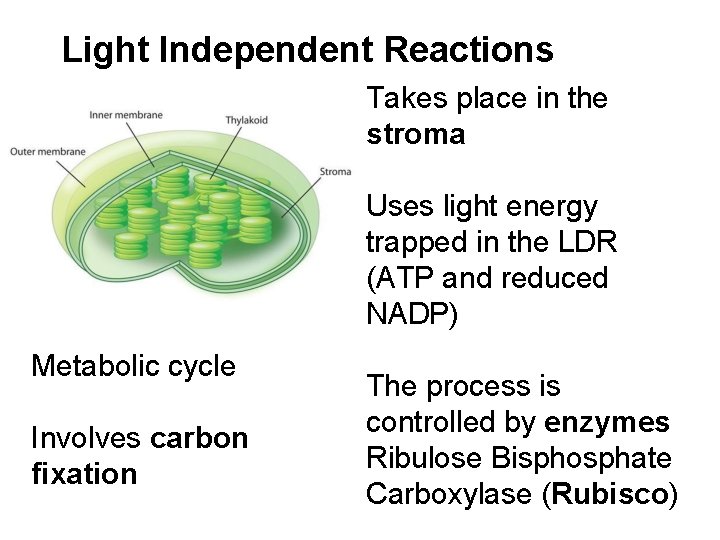
Light Independent Reactions Takes place in the stroma Uses light energy trapped in the LDR (ATP and reduced NADP) Metabolic cycle Involves carbon fixation The process is controlled by enzymes Ribulose Bisphosphate Carboxylase (Rubisco)
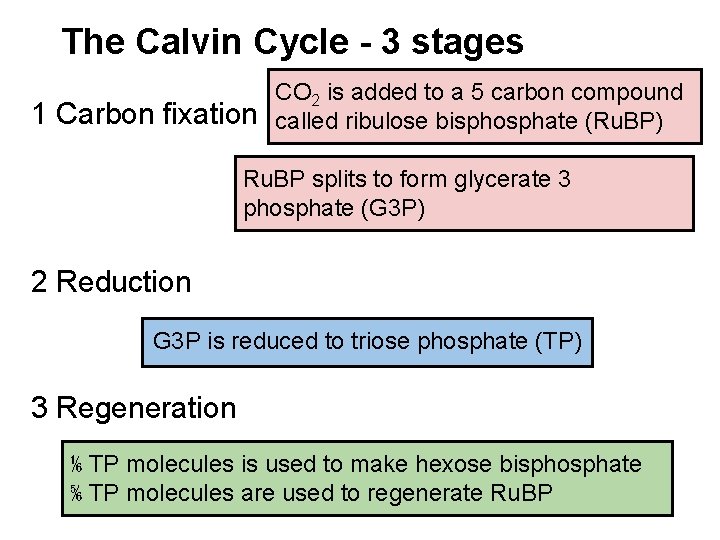
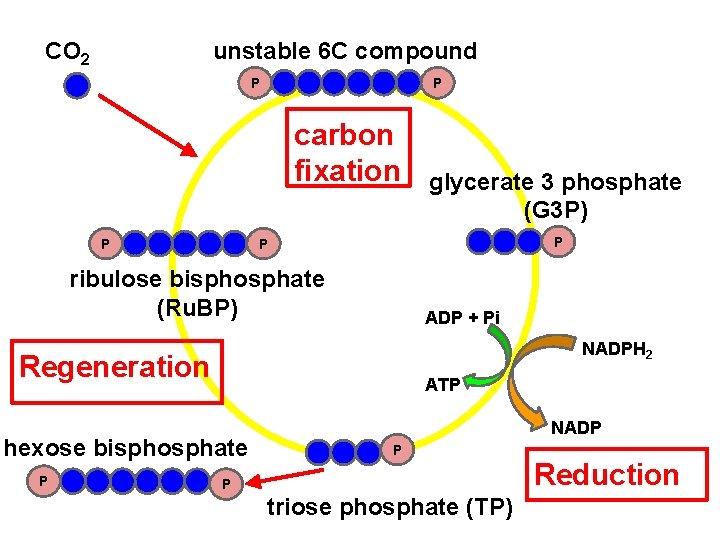
The Calvin Cycle - 3 stages 1 Carbon fixation CO 2 is added to a 5 carbon compound called ribulose bisphosphate (Ru. BP) Ru. BP splits to form glycerate 3 phosphate (G 3 P) 2 Reduction G 3 P is reduced to triose phosphate (TP) 3 Regeneration ⅙ TP molecules is used to make hexose bisphosphate ⅚ TP molecules are used to regenerate Ru. BP
CO 2 unstable 6 C compound P P carbon fixation P P P ribulose bisphosphate (Ru. BP) ADP + Pi NADPH 2 Regeneration ATP hexose bisphosphate P glycerate 3 phosphate (G 3 P) NADP P Reduction P triose phosphate (TP)
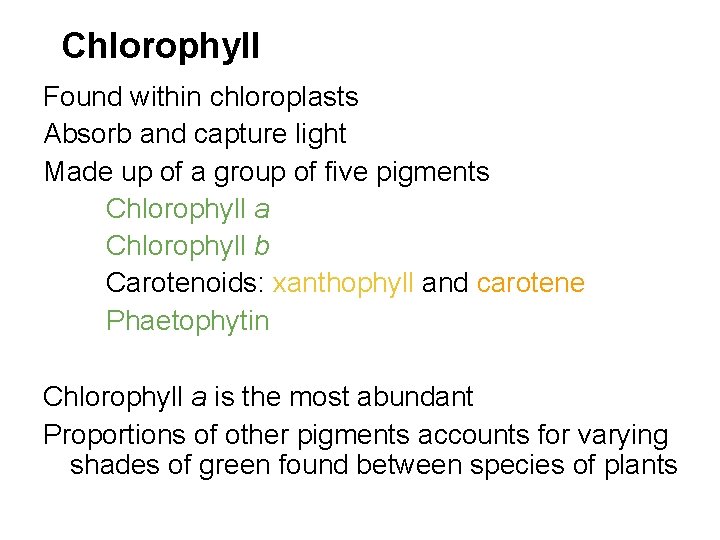
Chlorophyll Found within chloroplasts Absorb and capture light Made up of a group of five pigments Chlorophyll a Chlorophyll b Carotenoids: xanthophyll and carotene Phaetophytin Chlorophyll a is the most abundant Proportions of other pigments accounts for varying shades of green found between species of plants
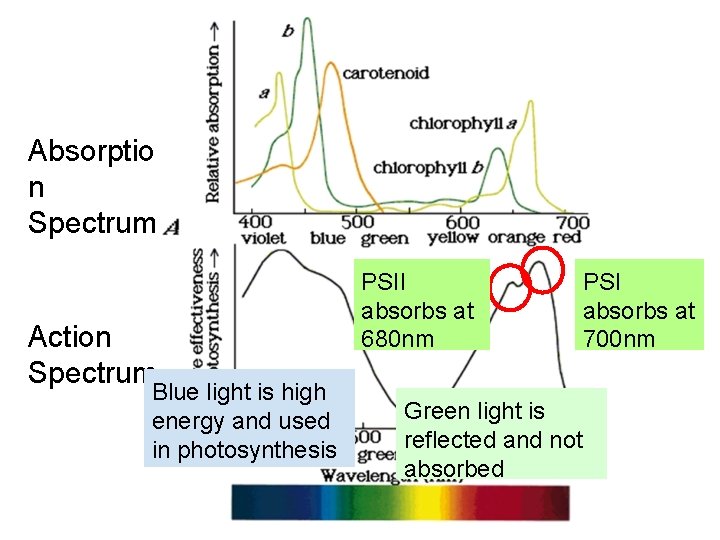
Absorptio n Spectrum Action Spectrum Blue light is high energy and used in photosynthesis PSII absorbs at 680 nm Green light is reflected and not absorbed PSI absorbs at 700 nm
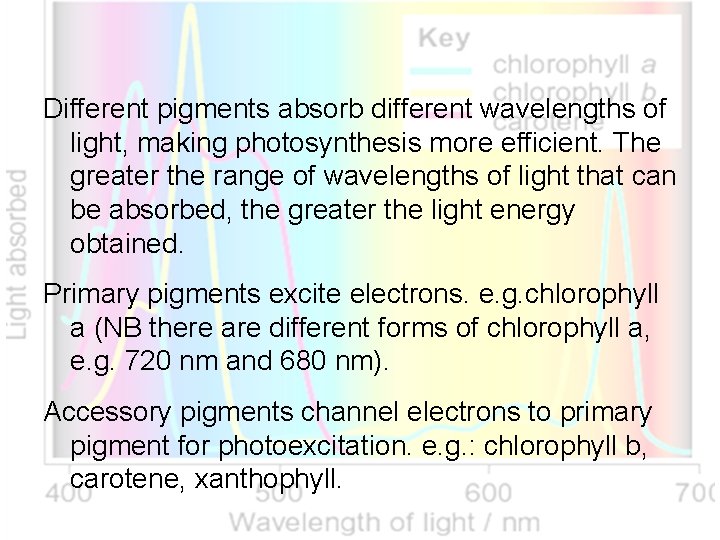
Different pigments absorb different wavelengths of light, making photosynthesis more efficient. The greater the range of wavelengths of light that can be absorbed, the greater the light energy obtained. Primary pigments excite electrons. e. g. chlorophyll a (NB there are different forms of chlorophyll a, e. g. 720 nm and 680 nm). Accessory pigments channel electrons to primary pigment for photoexcitation. e. g. : chlorophyll b, carotene, xanthophyll.
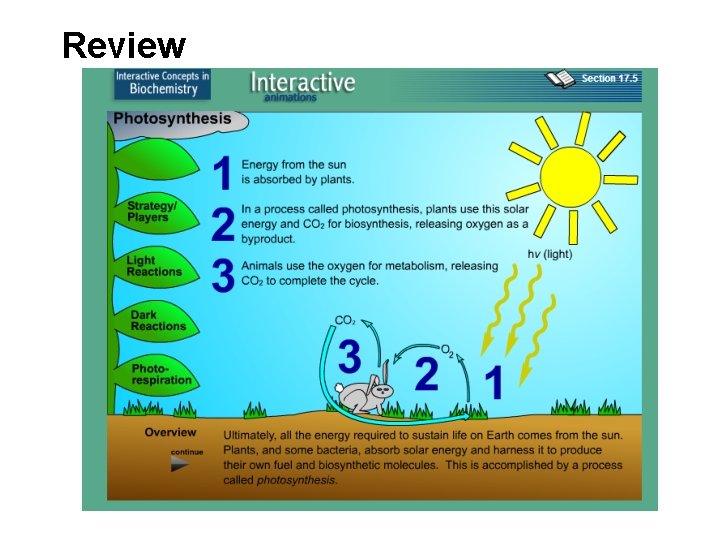
Review
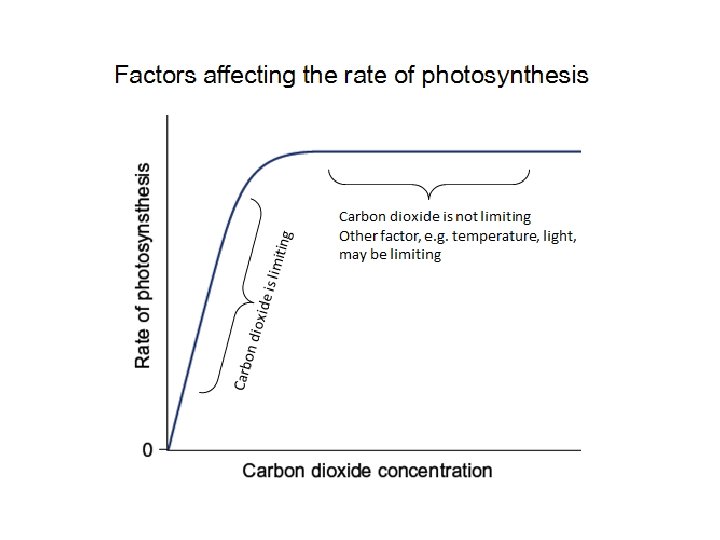
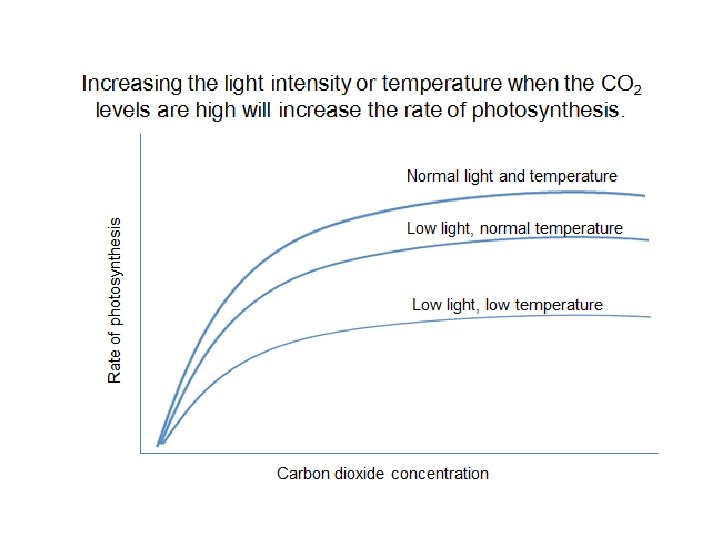
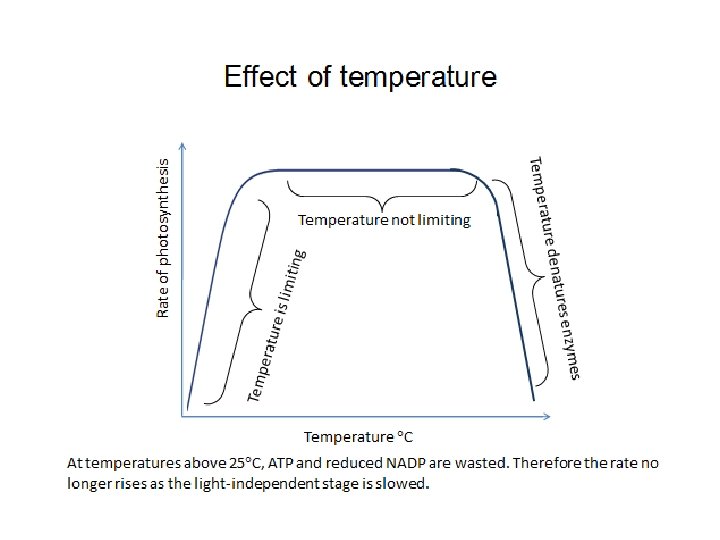
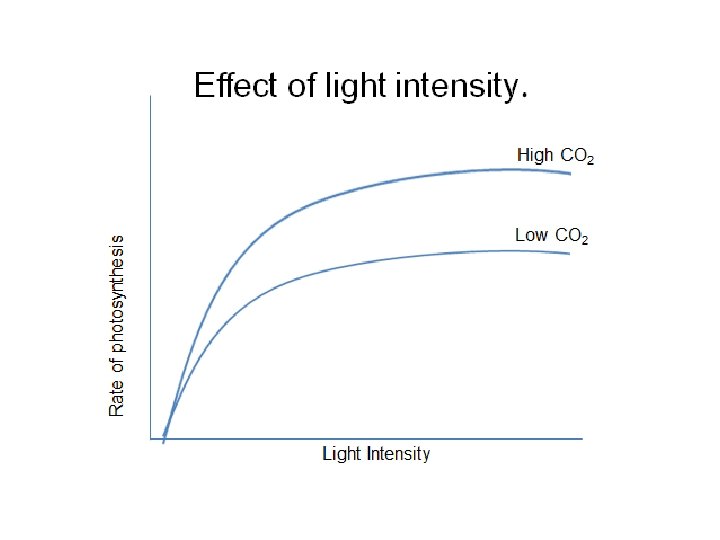
Limiting Factors The rate of photosynthesis is affected by light intensity, carbon dioxide concentration and temperature. Under a given set of conditions only one factor will affect the rate of photosynthesis this factor is at its minimum and is called the limiting factor The overall rate of photosynthesis is determined by the step that is proceeding most slowly (rate-limiting step). Each factor e. g. light, temperature etc. can become the limiting factor in any on the rate-limiting steps.
(a) Draw a labelled diagram of the structure of a chloroplast as seen with an electron microscope (4) Award [1] for each of the following clearly drawn and correctly labelled. double/inner and outer membrane/envelope—shown as two concentric continuous lines close together; granum/grana —shown as a stack of several disc-shaped subunits; (intergranal) lamella — shown continuous with thylakoid membrane; thylakoid — one of the flattened sacs; stroma; (70 S) ribosomes/(circular) DNA / lipid globules / starch granules /thylakoid space;
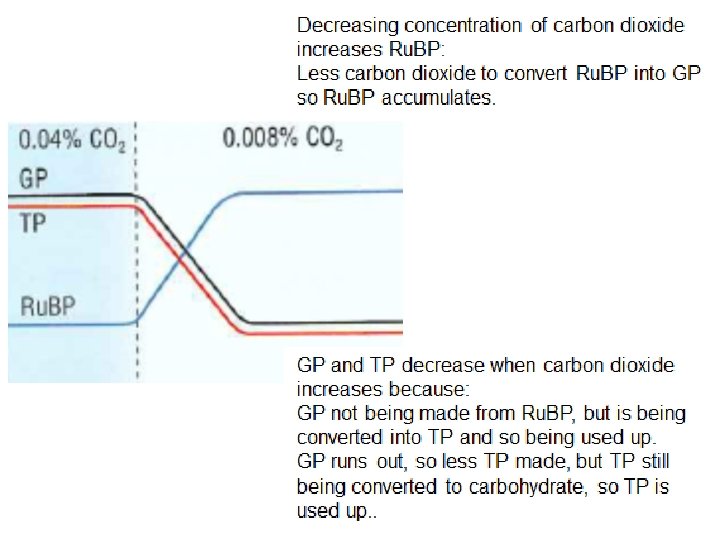
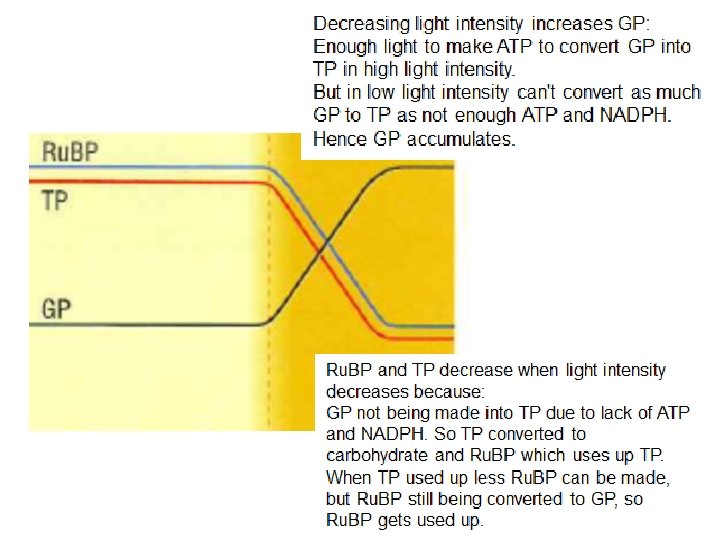
Effect on the concentration of TP, GP and Ru. BP Factor light intensity carbon dioxide concentration temperature Effect on TP Effect on GP Effect on Ru. BP
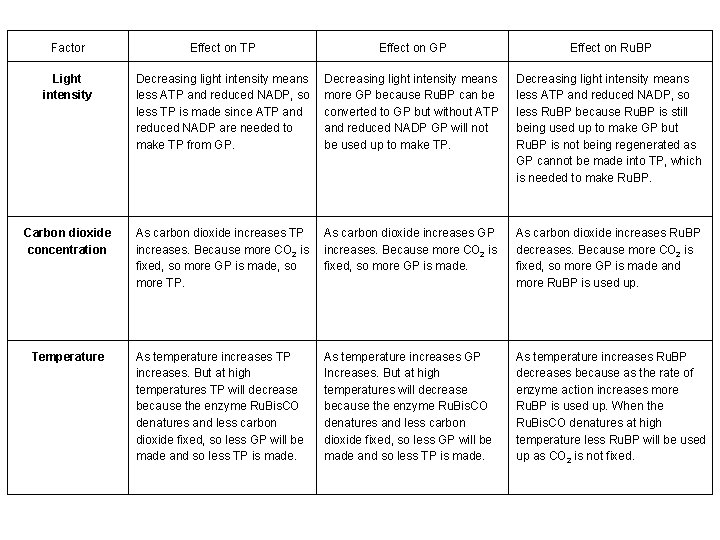
Factor Effect on TP Effect on GP Effect on Ru. BP Light intensity Decreasing light intensity means less ATP and reduced NADP, so less TP is made since ATP and reduced NADP are needed to make TP from GP. Decreasing light intensity means more GP because Ru. BP can be converted to GP but without ATP and reduced NADP GP will not be used up to make TP. Decreasing light intensity means less ATP and reduced NADP, so less Ru. BP because Ru. BP is still being used up to make GP but Ru. BP is not being regenerated as GP cannot be made into TP, which is needed to make Ru. BP. Carbon dioxide concentration As carbon dioxide increases TP increases. Because more CO 2 is fixed, so more GP is made, so more TP. As carbon dioxide increases GP increases. Because more CO 2 is fixed, so more GP is made. As carbon dioxide increases Ru. BP decreases. Because more CO 2 is fixed, so more GP is made and more Ru. BP is used up. Temperature As temperature increases TP increases. But at high temperatures TP will decrease because the enzyme Ru. Bis. CO denatures and less carbon dioxide fixed, so less GP will be made and so less TP is made. As temperature increases GP Increases. But at high temperatures will decrease because the enzyme Ru. Bis. CO denatures and less carbon dioxide fixed, so less GP will be made and so less TP is made. As temperature increases Ru. BP decreases because as the rate of enzyme action increases more Ru. BP is used up. When the Ru. Bis. CO denatures at high temperature less Ru. BP will be used up as CO 2 is not fixed.
Outline the light-dependent reactions of photosynthesis (6) (chlorophyll/antenna) in photosystem II absorbs light; absorbing light/photoactivation produces an excited/high energy/ free electron; electron passed along a series of carriers; reduction of NADP+ / generates NADPH + H+; absorption of light in photosystem II provides electron for photosystem I; photolysis of water produces H+ / O 2; called non-cyclic photophosphorylation; in cyclic photophosphorylation electron returns to chlorophyll; generates ATP by H+ pumped across thylakoid membrane / by chemiosmosis / through ATP synthetase/synthase;
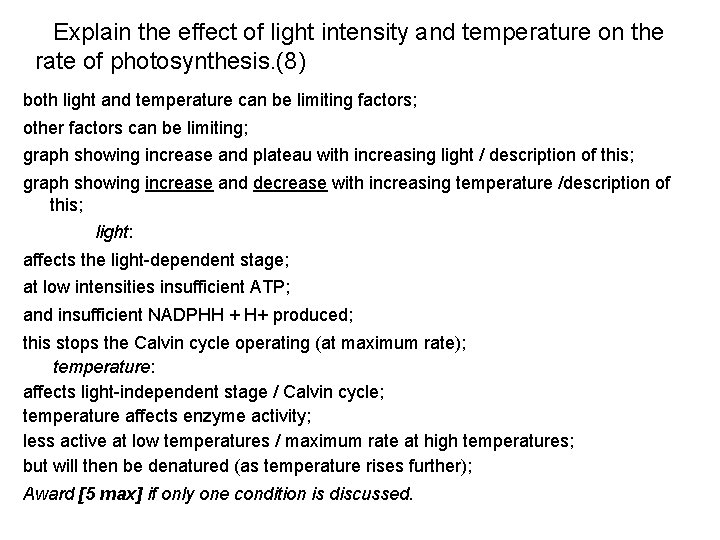
Explain the effect of light intensity and temperature on the rate of photosynthesis. (8) both light and temperature can be limiting factors; other factors can be limiting; graph showing increase and plateau with increasing light / description of this; graph showing increase and decrease with increasing temperature /description of this; light: affects the light-dependent stage; at low intensities insufficient ATP; and insufficient NADPHH + H+ produced; this stops the Calvin cycle operating (at maximum rate); temperature: affects light-independent stage / Calvin cycle; temperature affects enzyme activity; less active at low temperatures / maximum rate at high temperatures; but will then be denatured (as temperature rises further); Award [5 max] if only one condition is discussed.