
Photosynthesis Respiration WHAT DO PLANTS NEED FOR PHOTOSYNTHESIS















- Slides: 35
Photosynthesis & Respiration
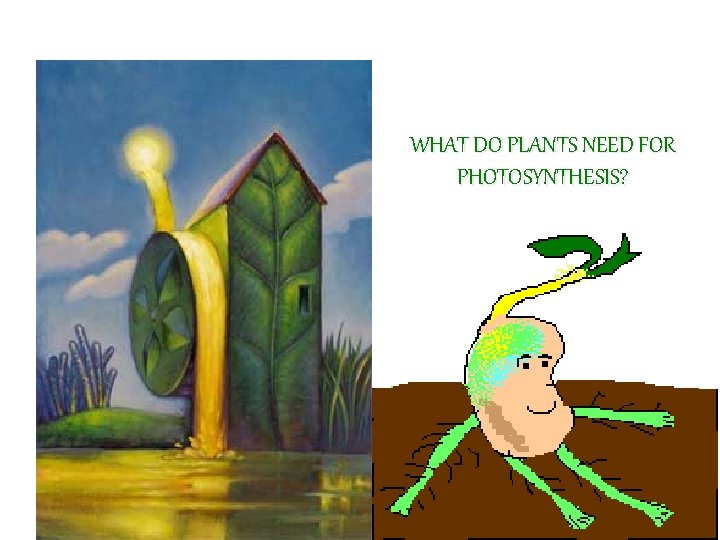
WHAT DO PLANTS NEED FOR PHOTOSYNTHESIS?
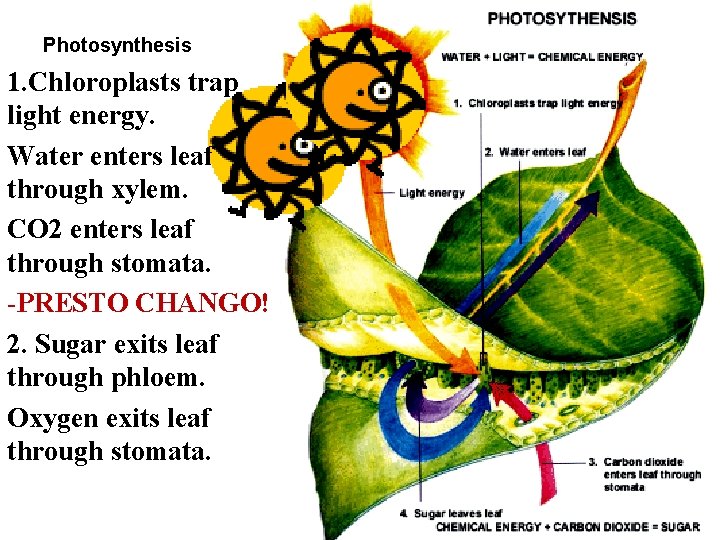
Photosynthesis 1. Chloroplasts trap light energy. Water enters leaf through xylem. CO 2 enters leaf through stomata. -PRESTO CHANGO! 2. Sugar exits leaf through phloem. Oxygen exits leaf through stomata.
Photosynthesis 1. Chloroplasts trap light energy. Water enters leaf through xylem. CO 2 enters leaf through stomata. -PRESTO CHANGO! 2. Sugar exits leaf through phloem. Oxygen exits leaf through stomata.
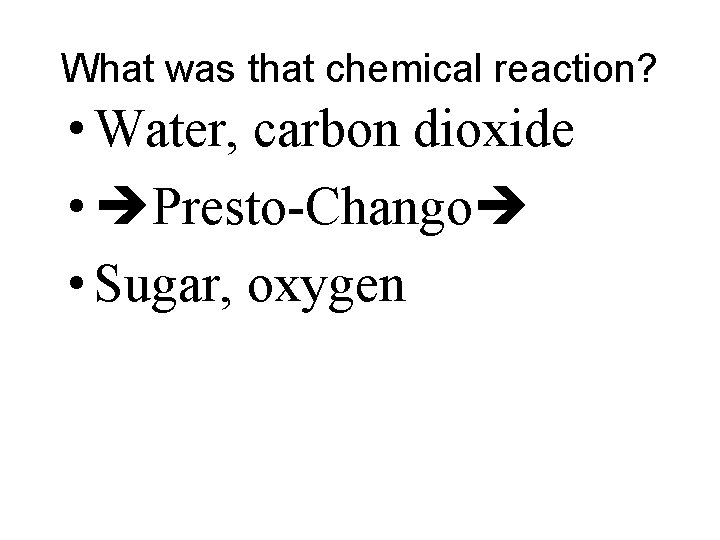
What was that chemical reaction? • Water, carbon dioxide • Presto-Chango • Sugar, oxygen
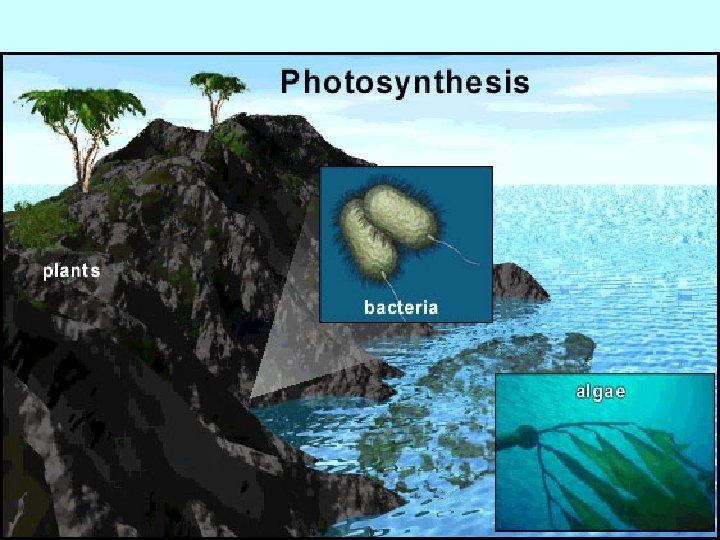
DOES ANYTHING ELSE MAKE ITS OWN FOOD USING PHOTOSYNTHESIS?
Note Set #1 1 What do plants need for photosynthesis? 2 What do plants make? 3 What traveled through stomata? 4 What traveled through vascular tissues? 5 What traveled through space? 6 What organisms photosynthesize?
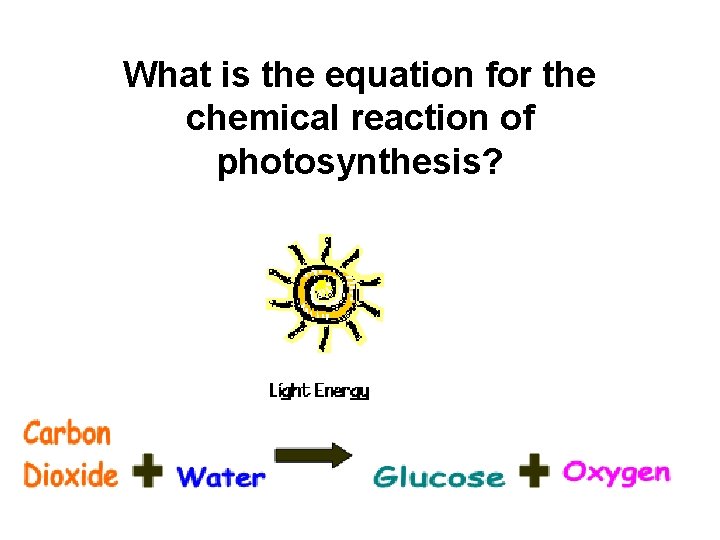
What is the equation for the chemical reaction of photosynthesis?
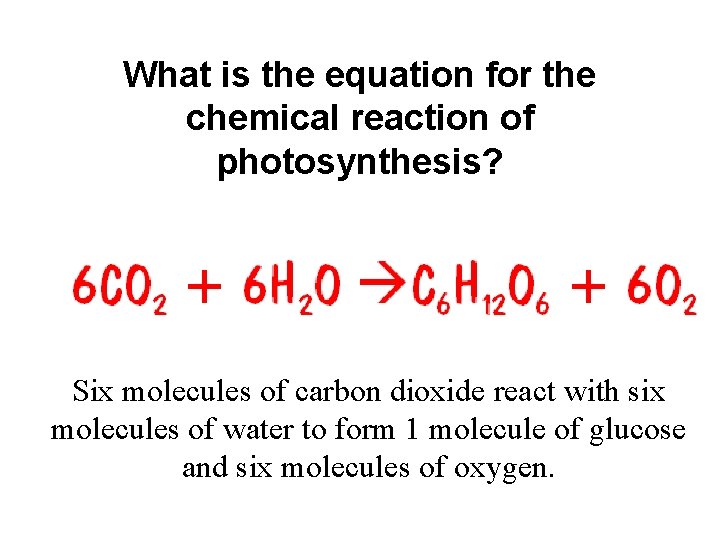
What is the equation for the chemical reaction of photosynthesis? Six molecules of carbon dioxide react with six molecules of water to form 1 molecule of glucose and six molecules of oxygen.
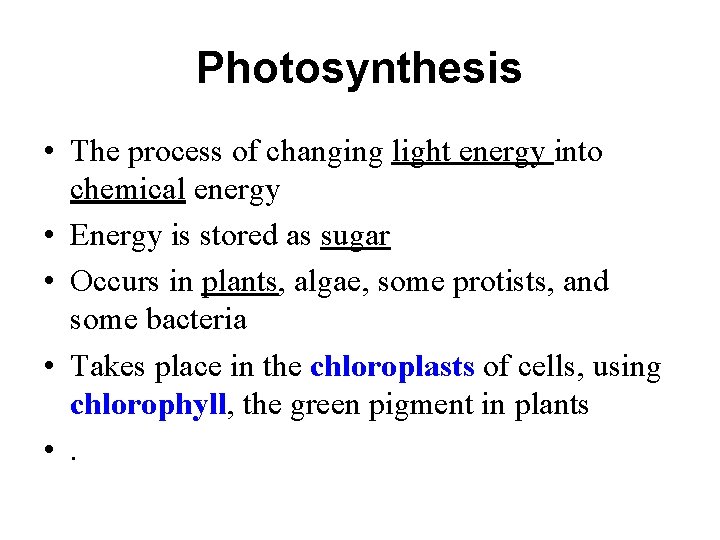
Photosynthesis • The process of changing light energy into chemical energy • Energy is stored as sugar • Occurs in plants, algae, some protists, and some bacteria • Takes place in the chloroplasts of cells, using chlorophyll, the green pigment in plants • .
What happens during photosynthesis? • Chlorophyll of plants captures light energy and use that energy to change molecules of carbon dioxide and water into glucose and oxygen
What happens during photosynthesis? • Carbon dioxide enters the leaf through holes called stomata. Oxygen goes out the same holes. • CO 2 combines with water through a chemical reaction to make glucose (a sugar) and oxygen (a waste product) • The sugar is moved through tubes (phloem) in the leaf to the roots, stems and fruits of the plants • Some of the sugar is used right away by the plant for energy; some is stored as starch; and some is built into plant tissue • .
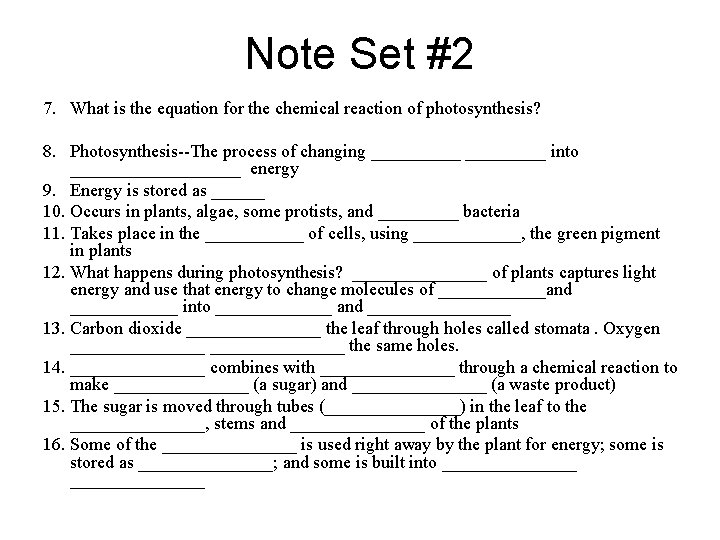
Note Set #2 7. What is the equation for the chemical reaction of photosynthesis? 8. Photosynthesis--The process of changing _____ into __________ energy 9. Energy is stored as ______ 10. Occurs in plants, algae, some protists, and _____ bacteria 11. Takes place in the ______ of cells, using ______, the green pigment in plants 12. What happens during photosynthesis? ________ of plants captures light energy and use that energy to change molecules of ______and ______ into _______ and ________ 13. Carbon dioxide ________ the leaf through holes called stomata. Oxygen _______________ the same holes. 14. ________ combines with ________ through a chemical reaction to make ________ (a sugar) and ________ (a waste product) 15. The sugar is moved through tubes (________) in the leaf to the ________, stems and ________ of the plants 16. Some of the ________ is used right away by the plant for energy; some is stored as ________; and some is built into _______________
Why is this important to us? • Plants are producers, the first step in the food chain. • We cannot make our own food; we must get our food from plants.
Why is this important to us? • The oxygen released during photosynthesis is necessary for almost all living things. • Oxygen enters the human through holes called mouth and nose. Carbon dioxide goes out the same holes. This can happen because. . . • Carbon dioxide enters the leaf through holes called stomata. Oxygen goes out the same holes.
More about stomata—Transpiration • Unfortunately for most plants, water vapor escapes from leaves through the stomata. This is called transpiration. • Guard cells surround the stomata and close them at times to prevent too much water loss.
So photosynthesis is required for respiration, and vice versa. Learn more about photosynthesis at: http: //www. ftexploring. com/me/photosyn 1. html
Note Set #3 17. Why is this important to us? Plants are ________, the first step in the food chain. 18. We cannot make our own food; we must get our food from ________. 19. The oxygen released during photosynthesis is necessary for _______________. 20. Oxygen ________ the human through holes called ________ and ________. Carbon dioxide _______________ the same holes. 21. This can happen because. . . Carbon dioxide ________ the leaf through holes called stomata. Oxygen _______________ the same holes. 22. So ________ is required for ________, and vice versa. Learn more about photosynthesis at: http: //www. ftexploring. com/me/photosyn 1. html
What is Cellular Respiration? The release of chemical energy for use by cells.
What is Cellular Respiration? • Once the energy that was in sunlight is changed into chemical energy (glucose) by photosynthesis, an organism has to transform the chemical energy into a form that can be used by the organism. • This process is cellular respiration. • We need respiration because we can’t use sunlight to move our cells and bodies. • .
Cellular Respiration • The breakdown of glucose molecules to release energy • Takes place in all organisms (though some organisms don’t use oxygen. You will study those in high school biology. ) • Respiration, like photosynthesis, is a step-bystep process. • .
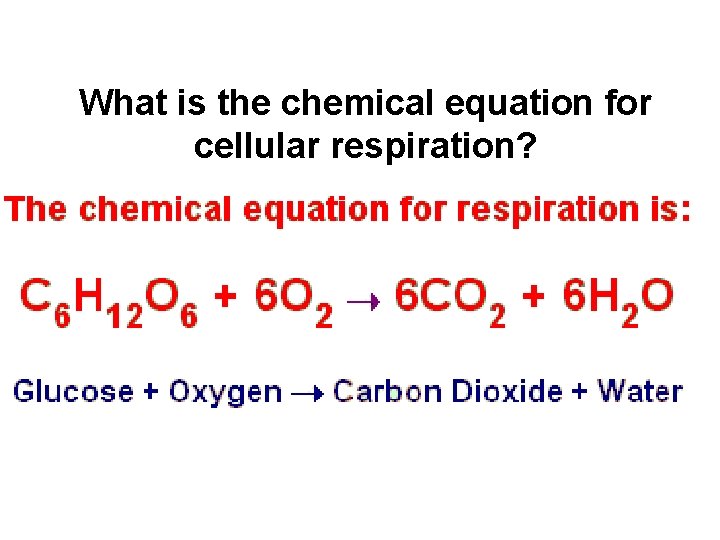
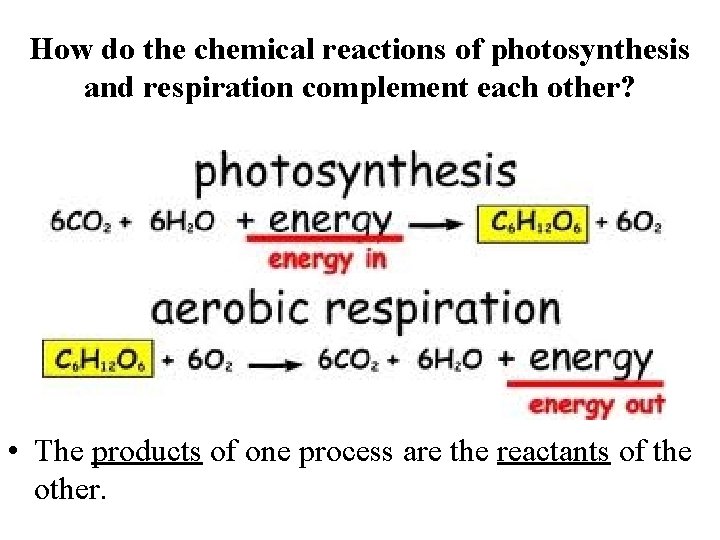
What is the chemical equation for cellular respiration?
Note Set #4 24. What is Cellular Respiration? The release of _______________ for use by ________. 25. What is Cellular Respiration? Once the energy that was in sunlight is changed into chemical energy (________) by ________, an organism has to transform the chemical energy into _______________ that can be used by the organism. 26. This process is _______________. 27. We need respiration because we can’t use sunlight to move our cells and bodies. 28. Cellular Respiration: The ________ of glucose molecules to ________ energy 29. Cellular respiration takes place in ________ organisms (though some organisms don’t use oxygen. You will study those in high school biology. ) 30. Respiration, like ________, is a step-by-step process. 31. What is the chemical equation for cellular respiration? (Use words or chemical symbols. )
How do the chemical reactions of photosynthesis and respiration complement each other? • The products of one process are the reactants of the other.
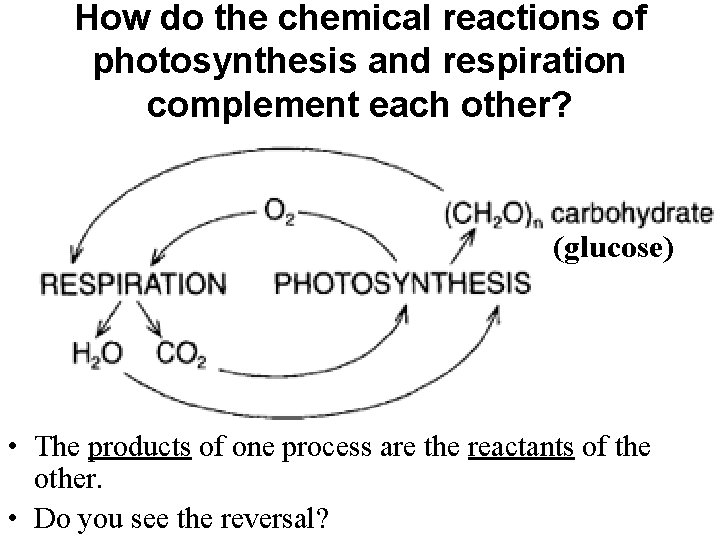
How do the chemical reactions of photosynthesis and respiration complement each other? (glucose) • The products of one process are the reactants of the other. • Do you see the reversal?
Note Set #5 –Review 32. How do the chemical reactions of photosynthesis and respiration complement each other? 33. The ________ of one process are the ________ of the other. 34. Do you see the reversal? 35. What related questions do you still have?