
Photosynthesis Identify the importance of photosynthesis Discuss the

- Slides: 31
Photosynthesis
• Identify the importance of photosynthesis • Discuss the structural unit where photosynthesis reaction occurs • Describe the process of photosynthesis • Identify factors that affect photosynthesis
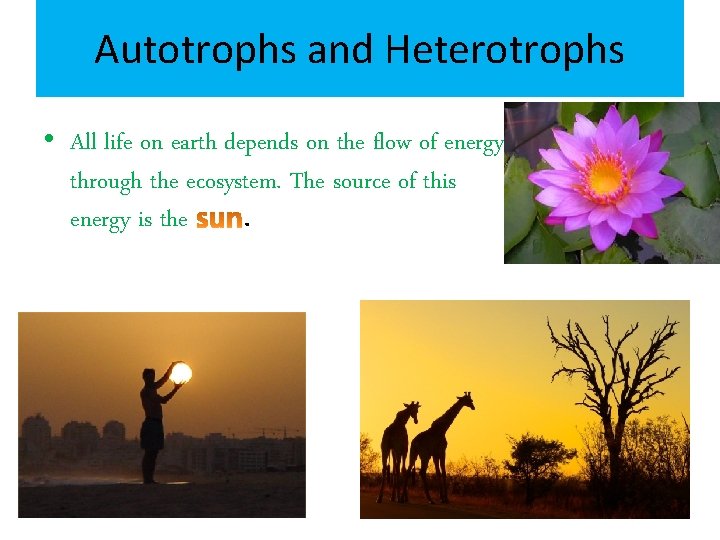
Autotrophs and Heterotrophs • All life on earth depends on the flow of energy through the ecosystem. The source of this energy is the.
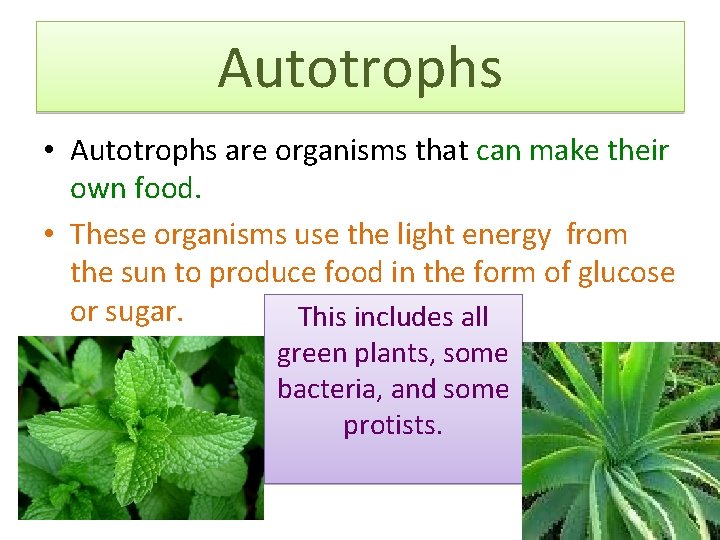
Autotrophs • Autotrophs are organisms that can make their own food. • These organisms use the light energy from the sun to produce food in the form of glucose or sugar. This includes all green plants, some bacteria, and some protists.
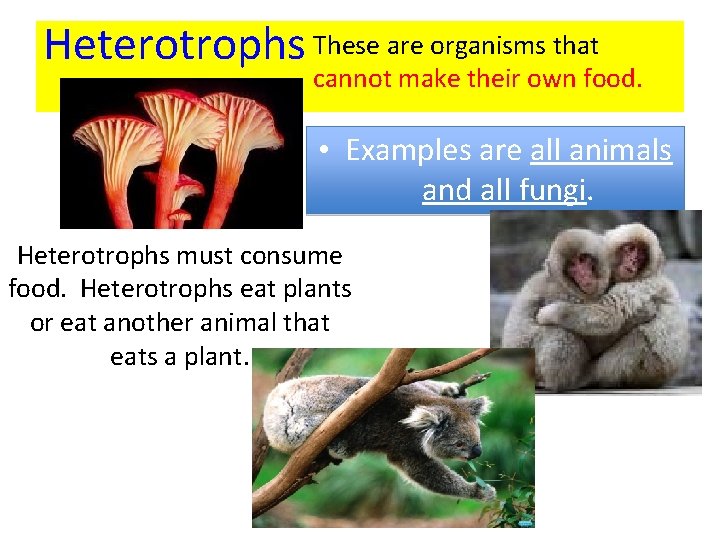
Heterotrophs These are organisms that cannot make their own food. • Examples are all animals and all fungi. Heterotrophs must consume food. Heterotrophs eat plants or eat another animal that eats a plant.
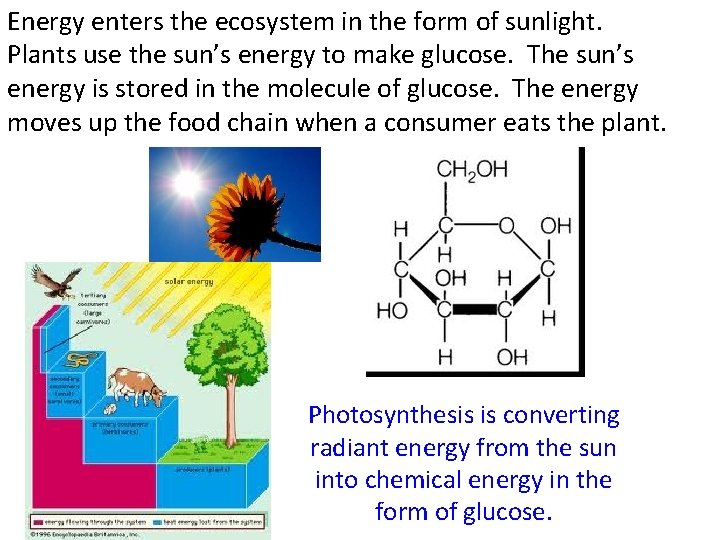
Energy enters the ecosystem in the form of sunlight. Plants use the sun’s energy to make glucose. The sun’s energy is stored in the molecule of glucose. The energy moves up the food chain when a consumer eats the plant. Photosynthesis is converting radiant energy from the sun into chemical energy in the form of glucose.
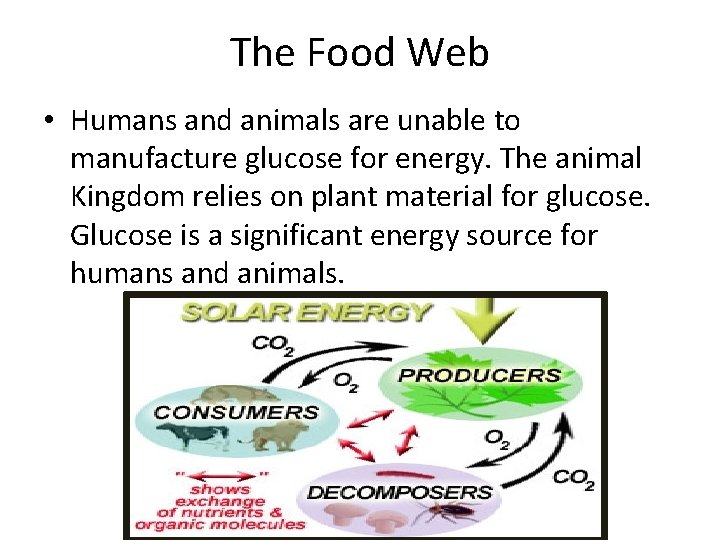
The Food Web • Humans and animals are unable to manufacture glucose for energy. The animal Kingdom relies on plant material for glucose. Glucose is a significant energy source for humans and animals.
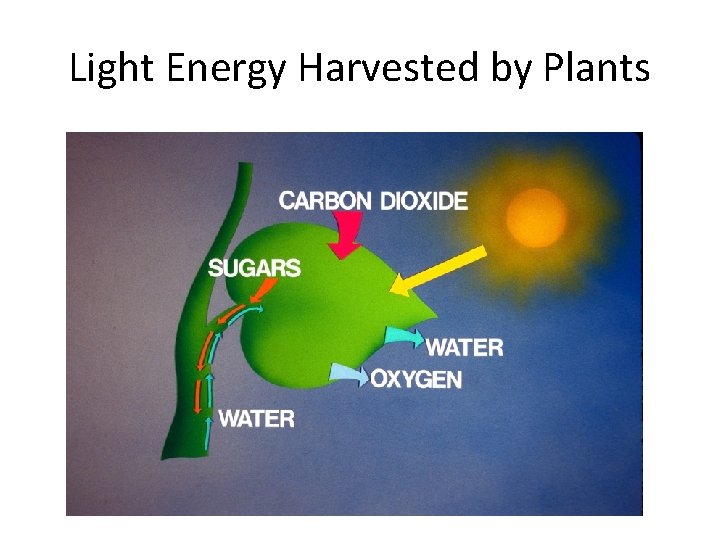
Light Energy Harvested by Plants
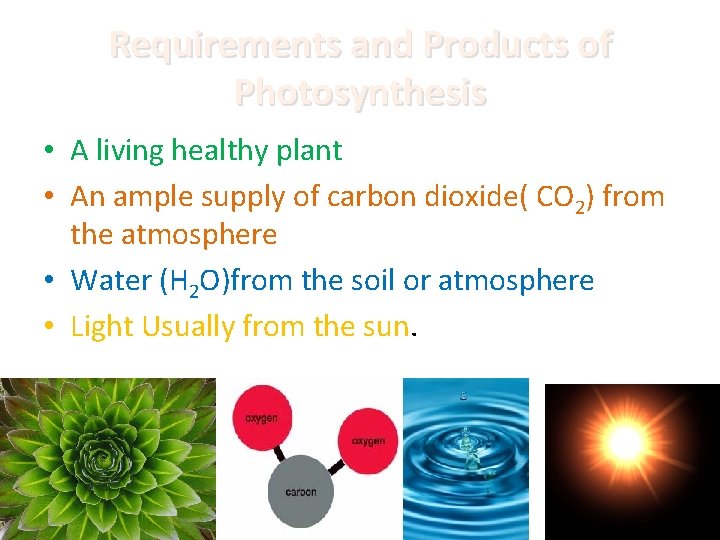
Requirements and Products of Photosynthesis • A living healthy plant • An ample supply of carbon dioxide( CO 2) from the atmosphere • Water (H 2 O)from the soil or atmosphere • Light Usually from the sun.
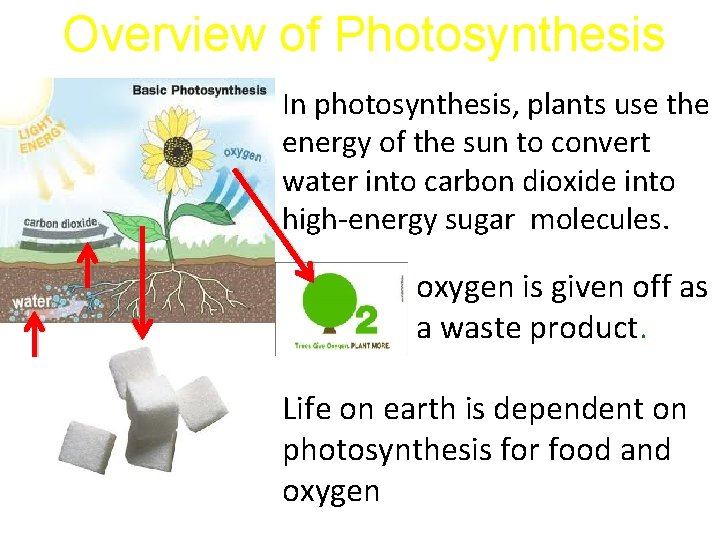
Overview of Photosynthesis In photosynthesis, plants use the energy of the sun to convert water into carbon dioxide into high-energy sugar molecules. oxygen is given off as a waste product. Life on earth is dependent on photosynthesis for food and oxygen
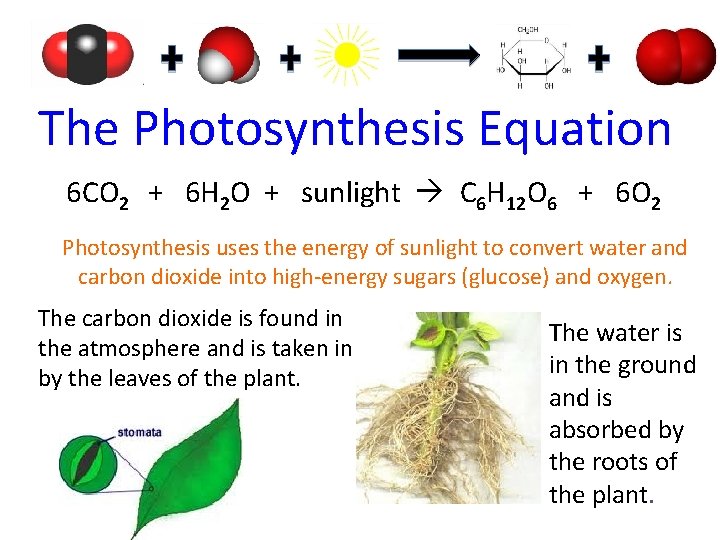
The Photosynthesis Equation 6 CO 2 + 6 H 2 O + sunlight C 6 H 12 O 6 + 6 O 2 Photosynthesis uses the energy of sunlight to convert water and carbon dioxide into high-energy sugars (glucose) and oxygen. The carbon dioxide is found in the atmosphere and is taken in by the leaves of the plant. The water is in the ground and is absorbed by the roots of the plant.
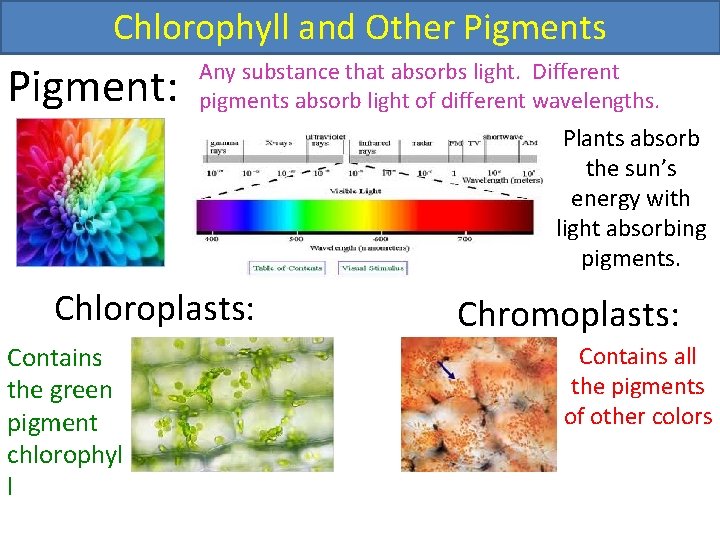
Chlorophyll and Other Pigments Pigment: Any substance that absorbs light. Different pigments absorb light of different wavelengths. Plants absorb the sun’s energy with light absorbing pigments. Chloroplasts: Contains the green pigment chlorophyl l Chromoplasts: Contains all the pigments of other colors
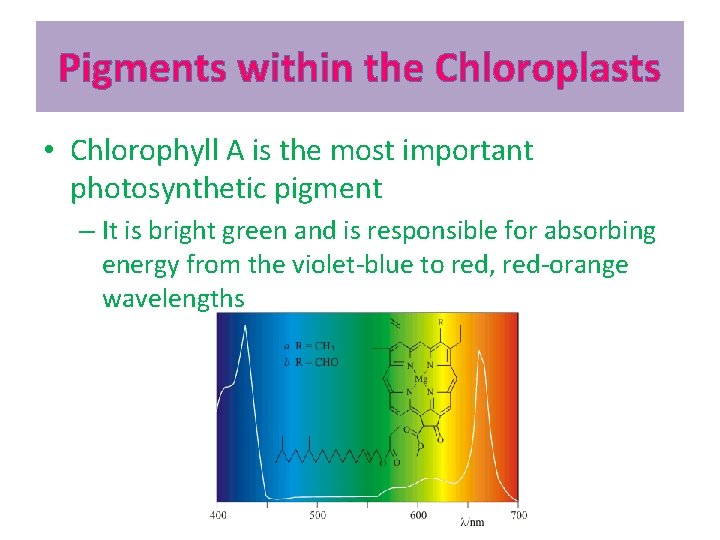
Pigments within the Chloroplasts • Chlorophyll A is the most important photosynthetic pigment – It is bright green and is responsible for absorbing energy from the violet-blue to red, red-orange wavelengths
Other Pigments • Chlorophyll B – Yellow-green absorbs different wavelengths of light • Supplementary yellow and orange pigments that absorb energy from greenyellow-orange wavelengths. • Energy absorbed can be transferred to chlorophyll a.
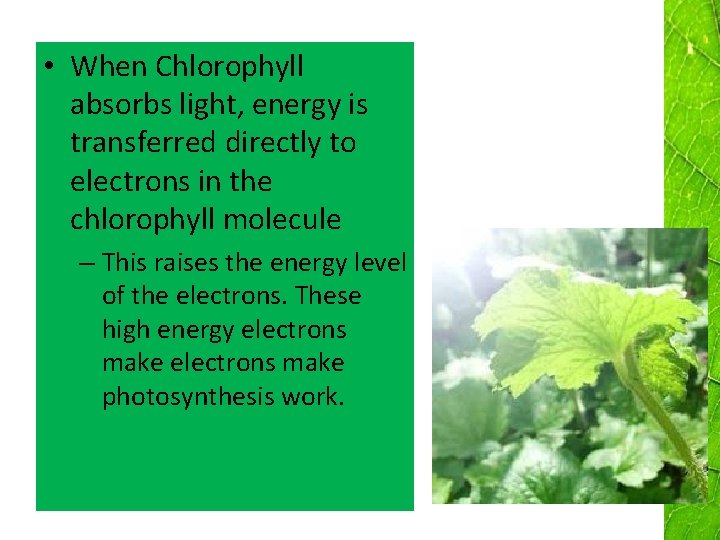
• When Chlorophyll absorbs light, energy is transferred directly to electrons in the chlorophyll molecule – This raises the energy level of the electrons. These high energy electrons make photosynthesis work.
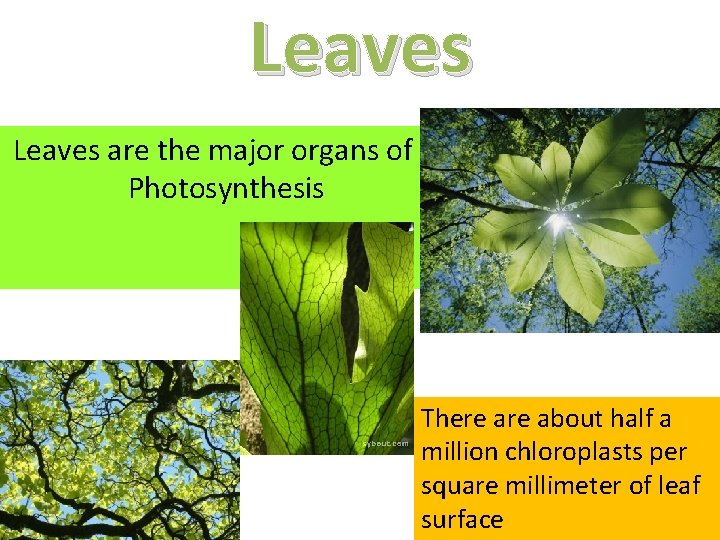
Leaves are the major organs of Photosynthesis There about half a million chloroplasts per square millimeter of leaf surface
Structure of the Plant Photosystem • Structures within the chloroplasts • thylakoid membrane – internal membrane arranged in flattened sacs – contain chlorophyll and other pigments – Organized into photosystems • Capture light and transfer energy (to pigment molecules) • grana – stacks of thylakoid membranes • stroma – semiliquid substance surrounding thylakoid membranes (houses the enzymes to make organic molecules)
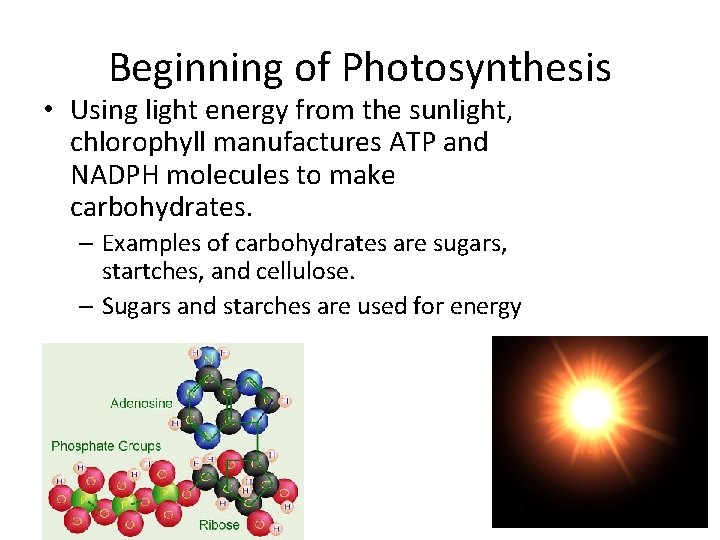
Beginning of Photosynthesis • Using light energy from the sunlight, chlorophyll manufactures ATP and NADPH molecules to make carbohydrates. – Examples of carbohydrates are sugars, startches, and cellulose. – Sugars and starches are used for energy
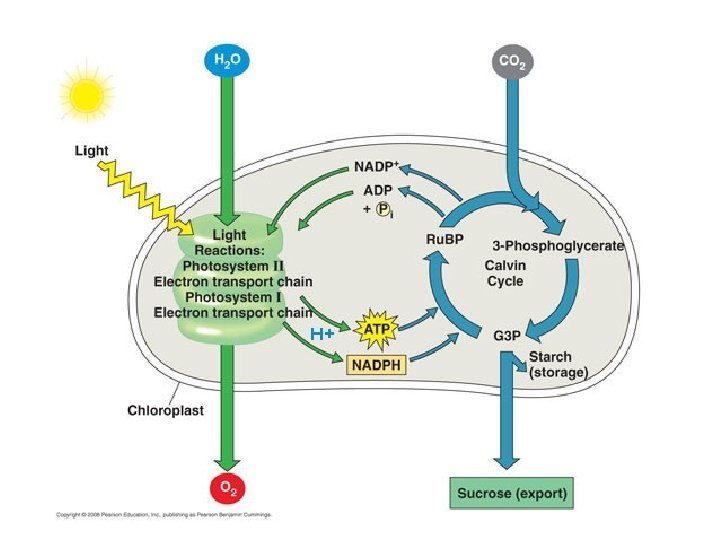
Stages of Photosynthesis • Light Dependent Process – Requires direct energy of light to make energy carrier molecules that are used in the second phase – Occurs in the grana of chloroplasts – Makes ATP • Calvin Cycle(Dark Reaction) – Occurs when the products of the light reaction are used to form carbon-to-carbon covalent bonds of carbohydrates. – use ATP and NADPH to synthesize organic molecules from CO 2 – Occurs in the stroma of chloroplasts
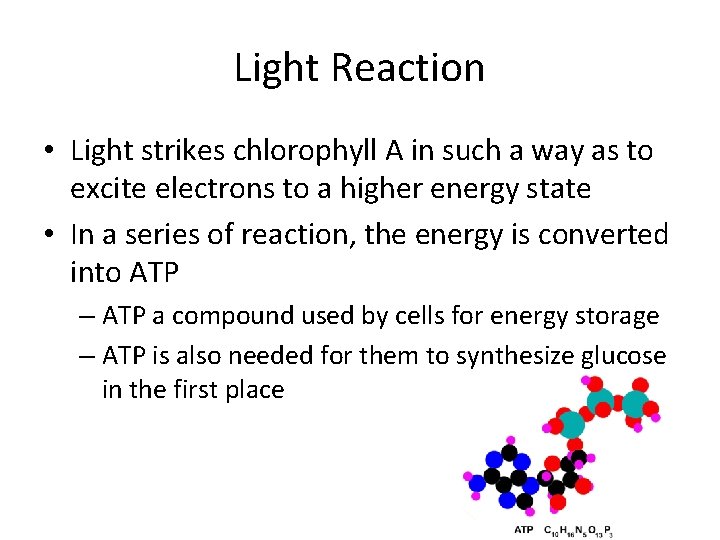
Light Reaction • Light strikes chlorophyll A in such a way as to excite electrons to a higher energy state • In a series of reaction, the energy is converted into ATP – ATP a compound used by cells for energy storage – ATP is also needed for them to synthesize glucose in the first place
In the light reactions, electron transport chains generate ATP, NADPH, & O 2 • Two connected photosystems collect photons of light and transfer the energy to chlorophyll electrons • The excited electrons are passed from the primary electron acceptor to electron transport chains – Their energy ends up in ATP and NADPH
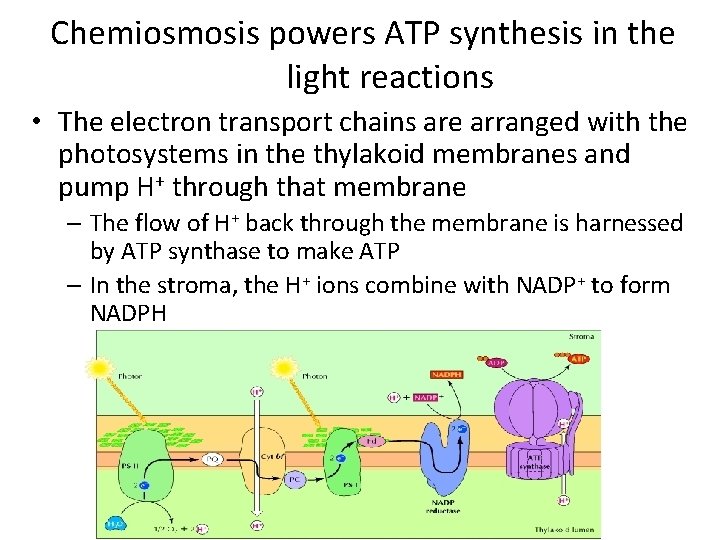
Chemiosmosis powers ATP synthesis in the light reactions • The electron transport chains are arranged with the photosystems in the thylakoid membranes and pump H+ through that membrane – The flow of H+ back through the membrane is harnessed by ATP synthase to make ATP – In the stroma, the H+ ions combine with NADP+ to form NADPH
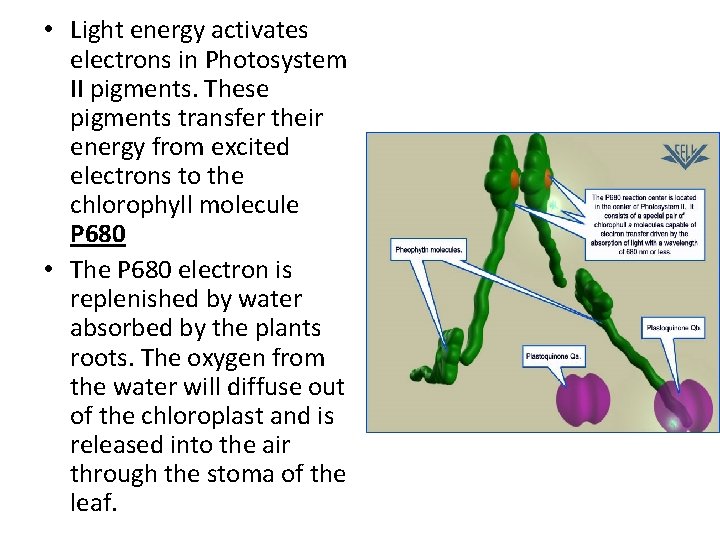
• Light energy activates electrons in Photosystem II pigments. These pigments transfer their energy from excited electrons to the chlorophyll molecule P 680 • The P 680 electron is replenished by water absorbed by the plants roots. The oxygen from the water will diffuse out of the chloroplast and is released into the air through the stoma of the leaf.
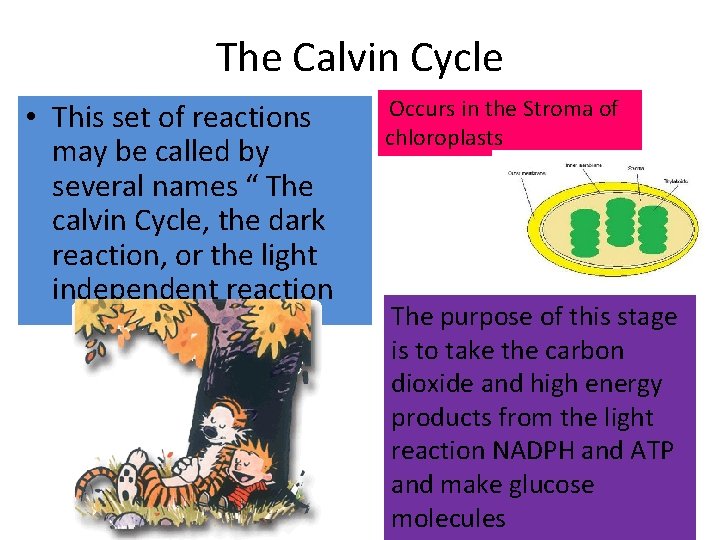
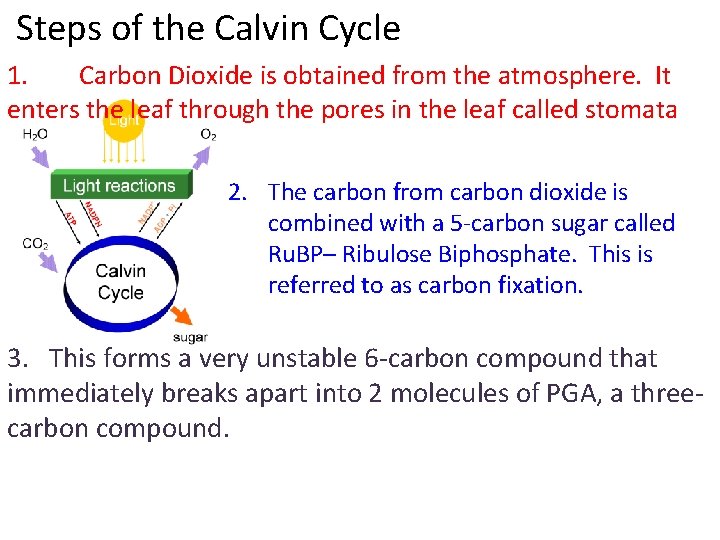
The Calvin Cycle • This set of reactions may be called by several names “ The calvin Cycle, the dark reaction, or the light independent reaction Occurs in the Stroma of chloroplasts The purpose of this stage is to take the carbon dioxide and high energy products from the light reaction NADPH and ATP and make glucose molecules
Steps of the Calvin Cycle 1. Carbon Dioxide is obtained from the atmosphere. It enters the leaf through the pores in the leaf called stomata 2. The carbon from carbon dioxide is combined with a 5 -carbon sugar called Ru. BP– Ribulose Biphosphate. This is referred to as carbon fixation. 3. This forms a very unstable 6 -carbon compound that immediately breaks apart into 2 molecules of PGA, a threecarbon compound.
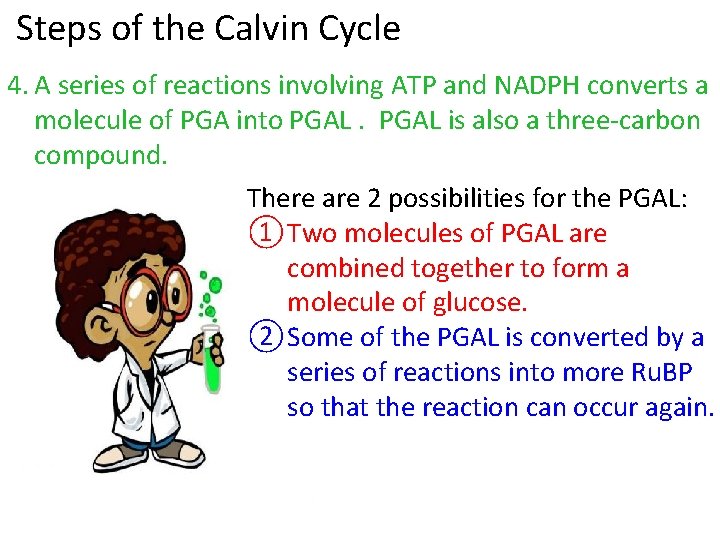
Steps of the Calvin Cycle 4. A series of reactions involving ATP and NADPH converts a molecule of PGA into PGAL is also a three-carbon compound. There are 2 possibilities for the PGAL: ① Two molecules of PGAL are combined together to form a molecule of glucose. ② Some of the PGAL is converted by a series of reactions into more Ru. BP so that the reaction can occur again.
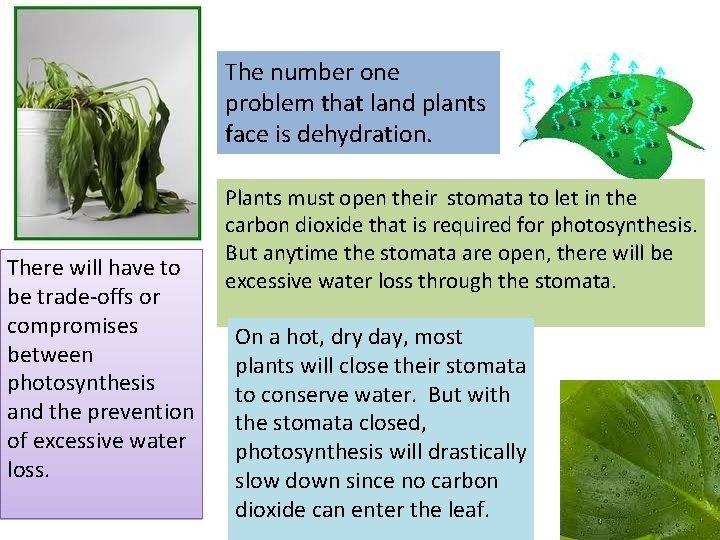
The Water Loss Dilemma The number one problem that land plants face is dehydration. There will have to be trade-offs or compromises between photosynthesis and the prevention of excessive water loss. Plants must open their stomata to let in the carbon dioxide that is required for photosynthesis. But anytime the stomata are open, there will be excessive water loss through the stomata. On a hot, dry day, most plants will close their stomata to conserve water. But with the stomata closed, photosynthesis will drastically slow down since no carbon dioxide can enter the leaf.
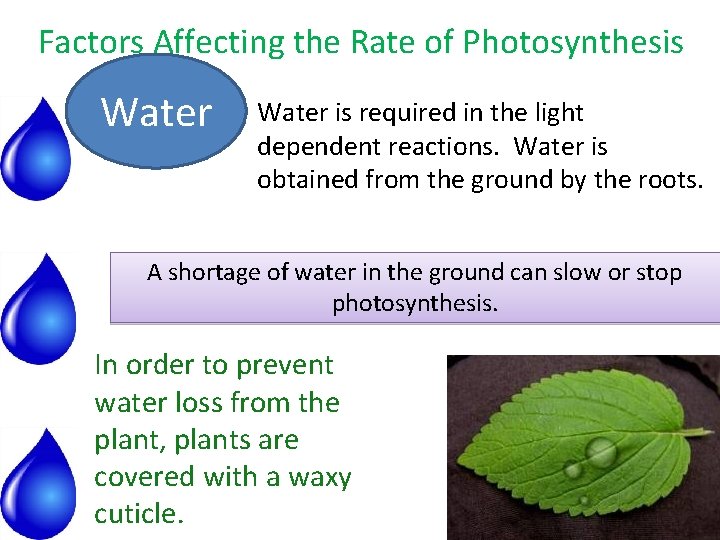
Factors Affecting the Rate of Photosynthesis Water is required in the light dependent reactions. Water is obtained from the ground by the roots. A shortage of water in the ground can slow or stop photosynthesis. In order to prevent water loss from the plant, plants are covered with a waxy cuticle.
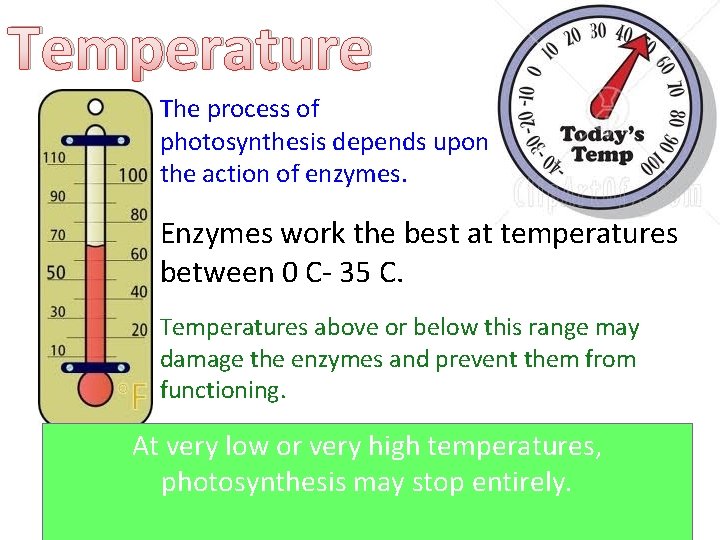
Temperature The process of photosynthesis depends upon the action of enzymes. Enzymes work the best at temperatures between 0 C- 35 C. Temperatures above or below this range may damage the enzymes and prevent them from functioning. At very low or very high temperatures, photosynthesis may stop entirely.
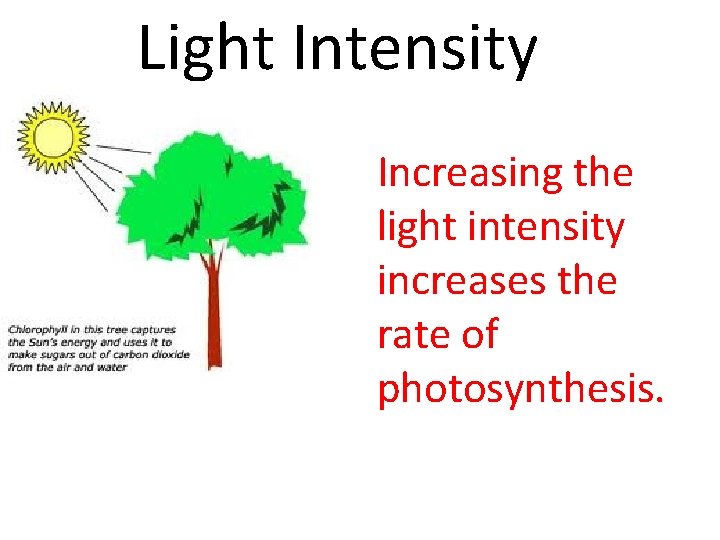
Light Intensity Increasing the light intensity increases the rate of photosynthesis.