The High Energy cosmic Radiation Detection HERD facility



- Slides: 23
The High Energy cosmic Radiation Detection (HERD) facility onboard China’s Space Station Shuang-Nan Zhang (张双南) zhangsn@ihep. ac. cn Center for Particle Astrophysics 粒子天体物理中心 Institute of High Energy Physics Chinese Academy of Sciences 1/23
2/23
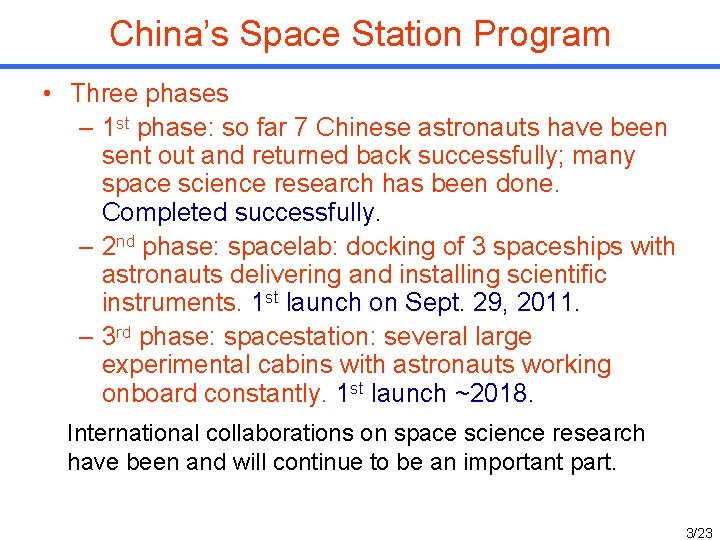
China’s Space Station Program • Three phases – 1 st phase: so far 7 Chinese astronauts have been sent out and returned back successfully; many space science research has been done. Completed successfully. – 2 nd phase: spacelab: docking of 3 spaceships with astronauts delivering and installing scientific instruments. 1 st launch on Sept. 29, 2011. – 3 rd phase: spacestation: several large experimental cabins with astronauts working onboard constantly. 1 st launch ~2018. International collaborations on space science research have been and will continue to be an important part. 3/23
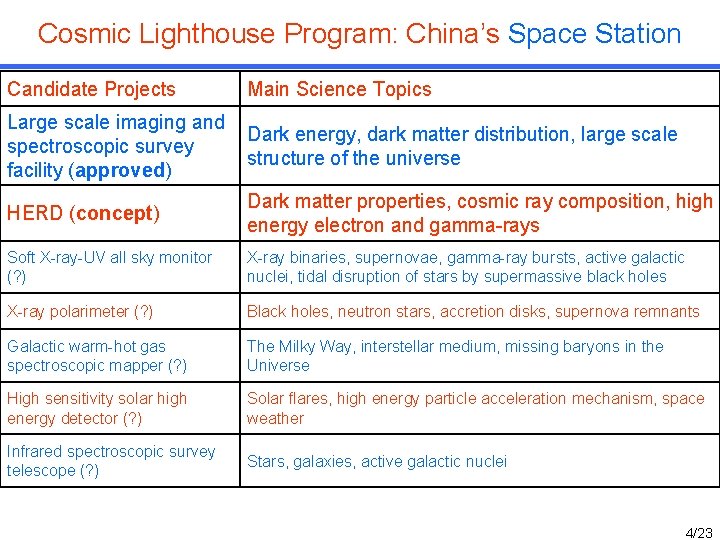
Cosmic Lighthouse Program: China’s Space Station Candidate Projects Main Science Topics Large scale imaging and Dark energy, dark matter distribution, large scale spectroscopic survey structure of the universe facility (approved) HERD (concept) Dark matter properties, cosmic ray composition, high energy electron and gamma-rays Soft X-ray-UV all sky monitor (? ) X-ray binaries, supernovae, gamma-ray bursts, active galactic nuclei, tidal disruption of stars by supermassive black holes X-ray polarimeter (? ) Black holes, neutron stars, accretion disks, supernova remnants Galactic warm-hot gas spectroscopic mapper (? ) The Milky Way, interstellar medium, missing baryons in the Universe High sensitivity solar high energy detector (? ) Solar flares, high energy particle acceleration mechanism, space weather Infrared spectroscopic survey telescope (? ) Stars, galaxies, active galactic nuclei 4/23
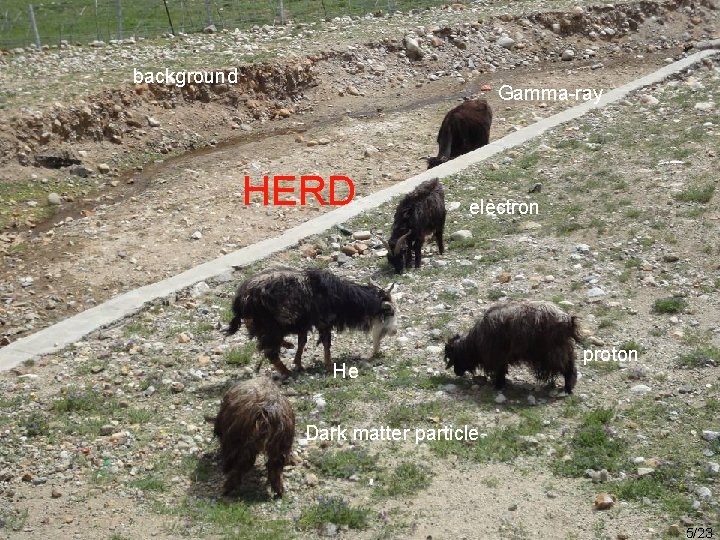
background Gamma-ray HERD electron He proton Dark matter particle 5/35 5/23
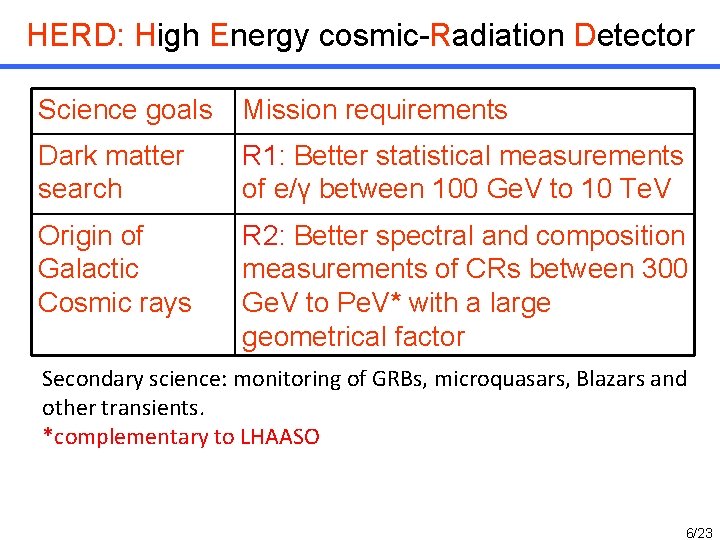
HERD: High Energy cosmic-Radiation Detector Science goals Mission requirements Dark matter search R 1: Better statistical measurements of e/γ between 100 Ge. V to 10 Te. V Origin of Galactic Cosmic rays R 2: Better spectral and composition measurements of CRs between 300 Ge. V to Pe. V* with a large geometrical factor Secondary science: monitoring of GRBs, microquasars, Blazars and other transients. *complementary to LHAASO 6/23
HERD Cosmic Ray Capability Requirement Model 2 Heavy Model 1 Light model Pe. V N(E>E 0; 2 yr) Detection limit: N = 10 events Pe. V HERD Te. V P (<A> ~ 1) He (<A> ~ 4) L (<A> ~ 8) M (<A> ~ 14) H (<A> ~ 25) VH (<A> ~ 35) Fe (<A> ~ 56) Except for L, up to Pe. V spectra feasible with GF~2 -3 in ~years: discriminate between models. 7/23
Baseline design of HERD 8/23
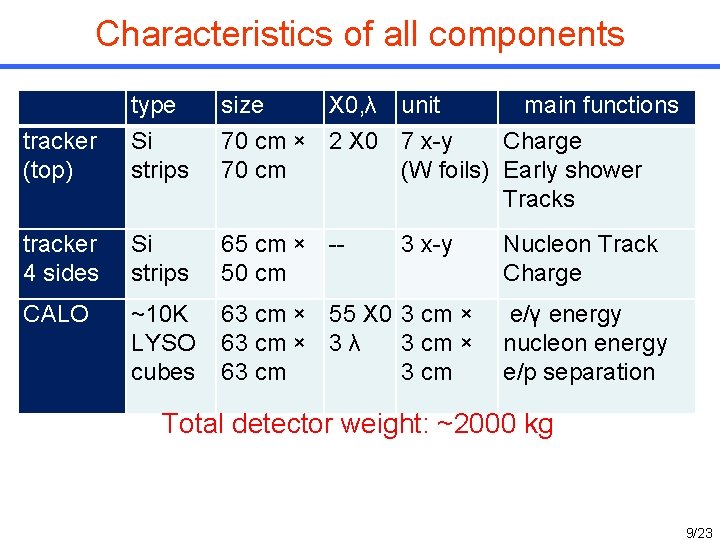
Characteristics of all components tracker (top) type Si strips size X 0, λ unit main functions 70 cm × 2 X 0 7 x-y Charge 70 cm (W foils) Early shower Tracks tracker 4 sides Si strips 65 cm × -50 cm CALO ~10 K 63 cm × 55 X 0 3 cm × LYSO 63 cm × 3 λ 3 cm × cubes 63 cm 3 x-y Nucleon Track Charge e/γ energy nucleon energy e/p separation Total detector weight: ~2000 kg 9/23
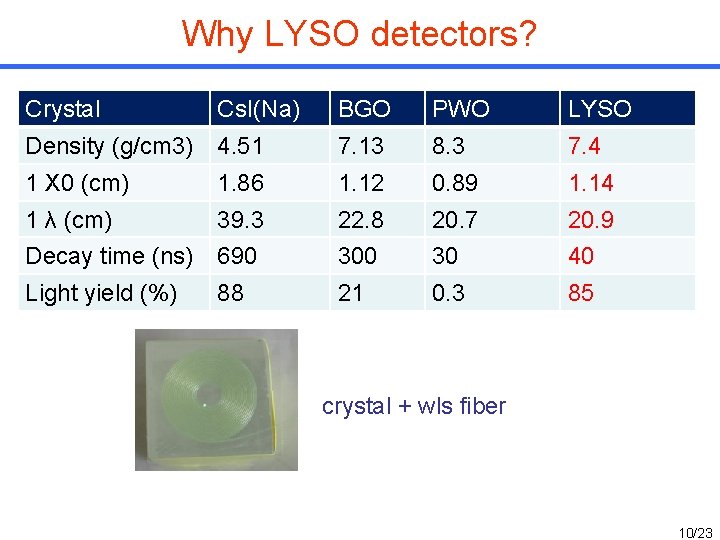
Why LYSO detectors? Crystal Cs. I(Na) BGO PWO LYSO Density (g/cm 3) 4. 51 7. 13 8. 3 7. 4 1 X 0 (cm) 1. 86 1. 12 0. 89 1. 14 1 λ (cm) 39. 3 22. 8 20. 7 20. 9 Decay time (ns) 690 30 40 Light yield (%) 88 21 0. 3 85 crystal + wls fiber 10/23
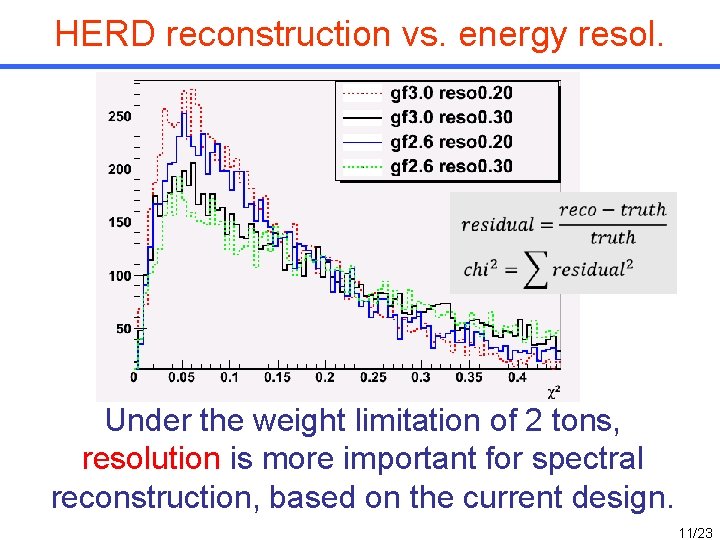
HERD reconstruction vs. energy resol. Under the weight limitation of 2 tons, resolution is more important for spectral reconstruction, based on the current design. 11/23
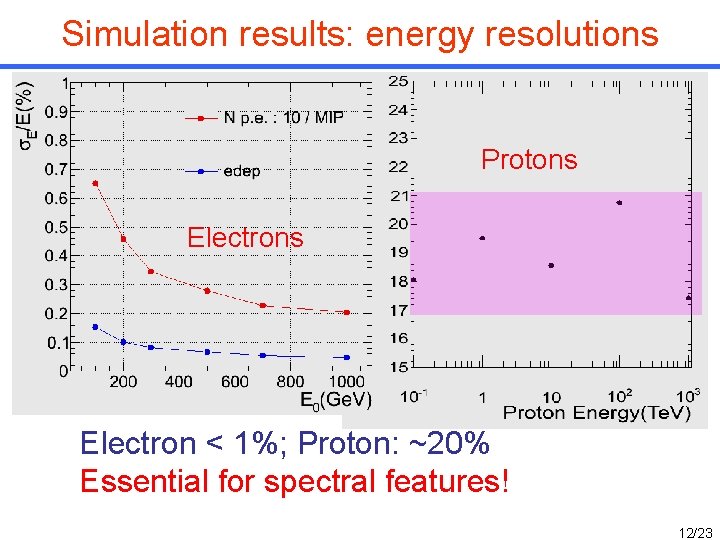
Simulation results: energy resolutions Protons Electron < 1%; Proton: ~20% Essential for spectral features! 12/23
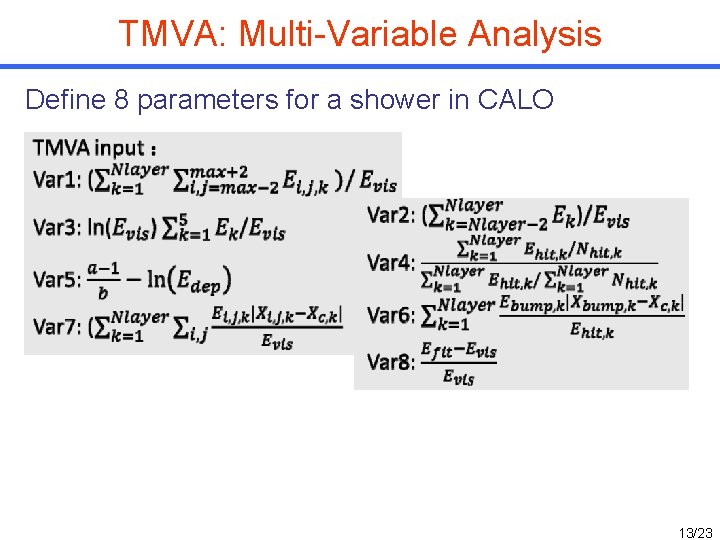
TMVA: Multi-Variable Analysis Define 8 parameters for a shower in CALO 13/23
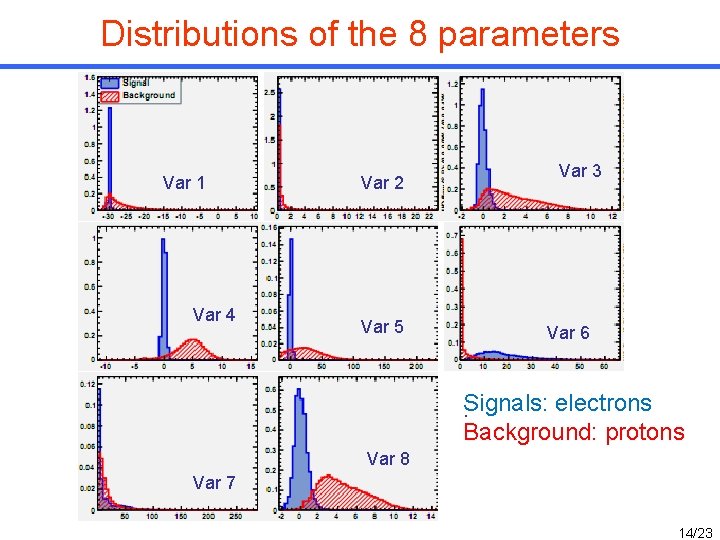
Distributions of the 8 parameters Var 1 Var 4 Var 2 Var 5 Var 3 Var 6 Signals: electrons. Background: protons Var 8 Var 7 14/23
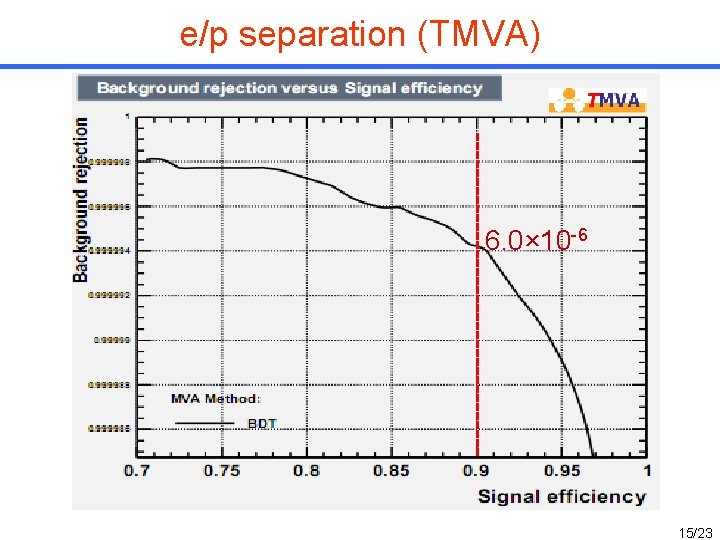
e/p separation (TMVA) 6. 0× 10 -6 15/23
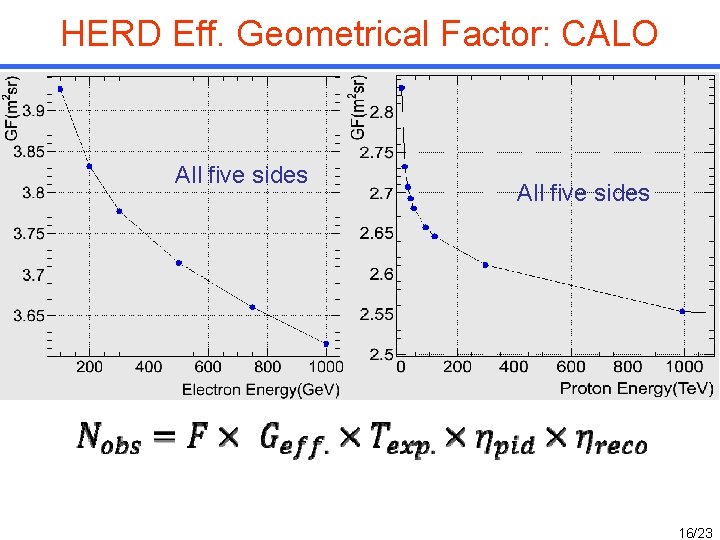
HERD Eff. Geometrical Factor: CALO All five sides 16/23
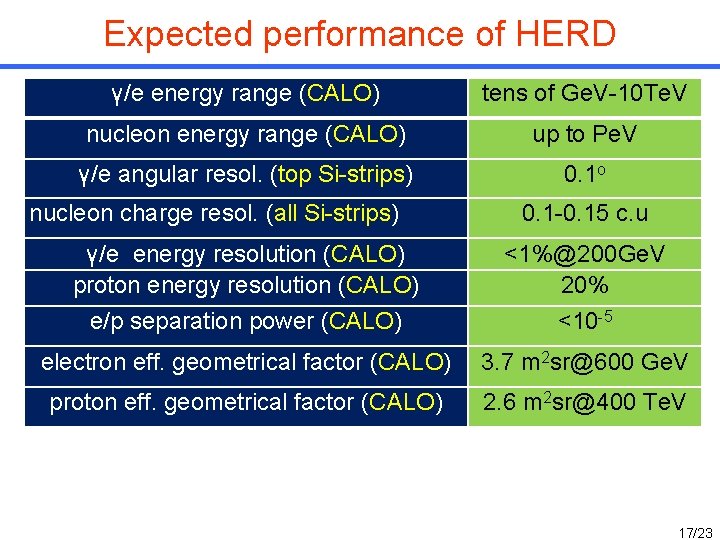
Expected performance of HERD γ/e energy range (CALO) tens of Ge. V-10 Te. V nucleon energy range (CALO) up to Pe. V γ/e angular resol. (top Si-strips) 0. 1 o nucleon charge resol. (all Si-strips) γ/e energy resolution (CALO) proton energy resolution (CALO) e/p separation power (CALO) 0. 1 -0. 15 c. u <1%@200 Ge. V 20% <10 -5 electron eff. geometrical factor (CALO) 3. 7 m 2 sr@600 Ge. V proton eff. geometrical factor (CALO) 2. 6 m 2 sr@400 Te. V 17/23
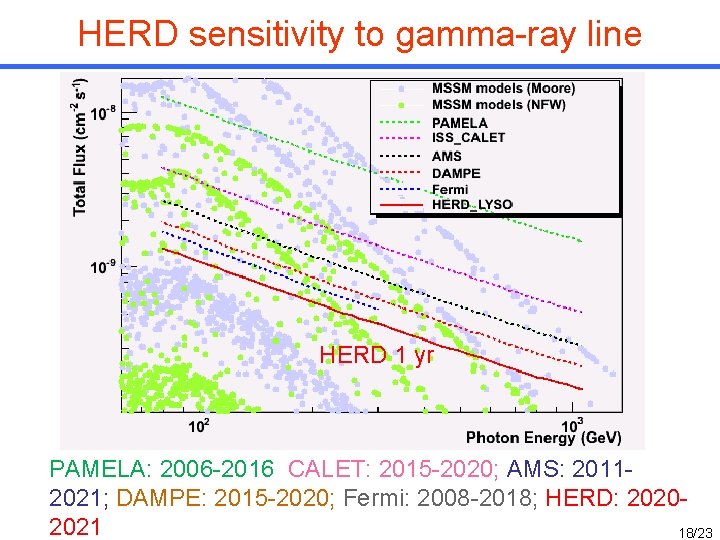
HERD sensitivity to gamma-ray line HERD 1 yr PAMELA: 2006 -2016 CALET: 2015 -2020; AMS: 20112021; DAMPE: 2015 -2020; Fermi: 2008 -2018; HERD: 20202021 18/23
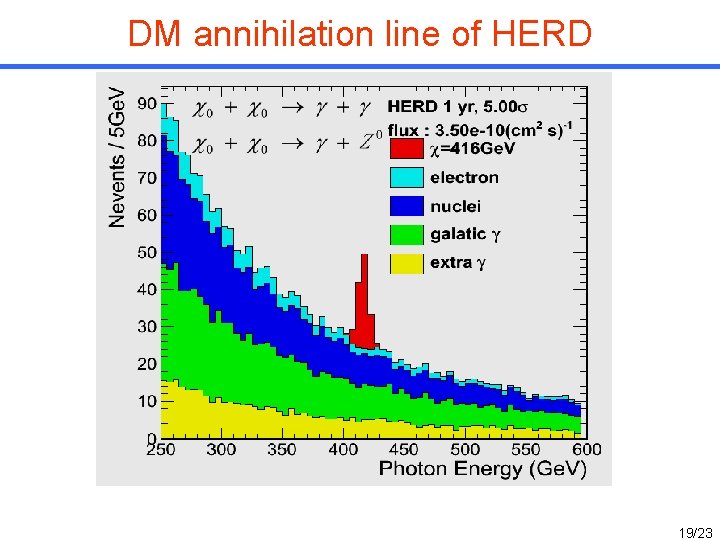
DM annihilation line of HERD 19/23
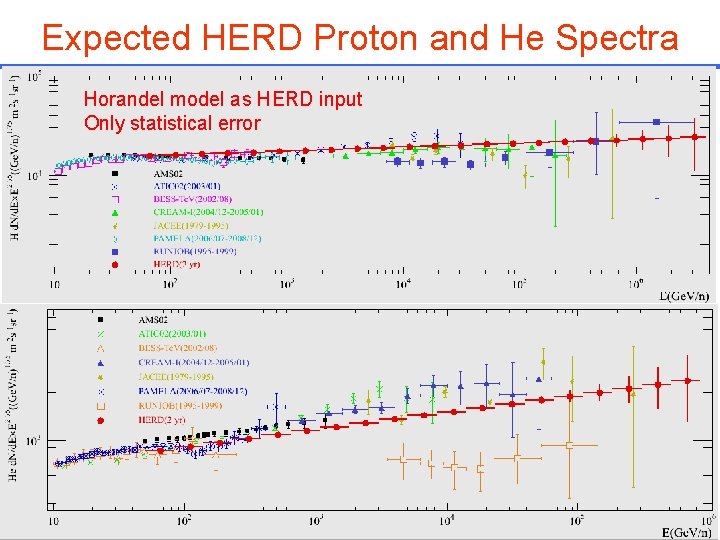
Expected HERD Proton and He Spectra Horandel model as HERD input Only statistical error
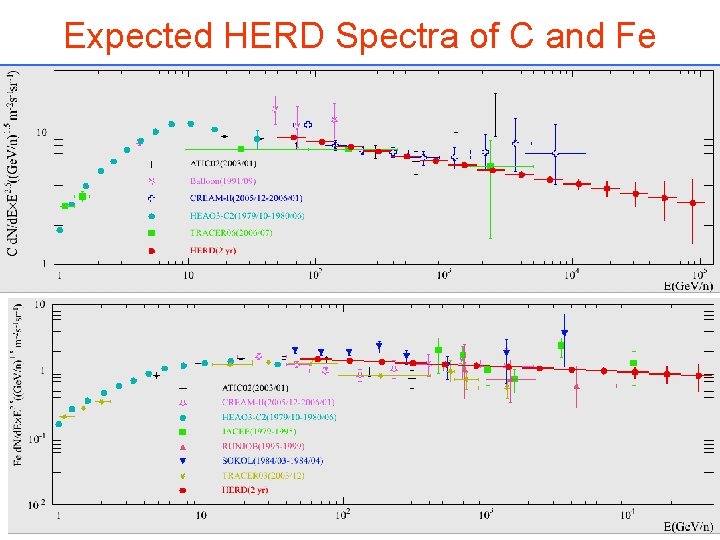
Expected HERD Spectra of C and Fe
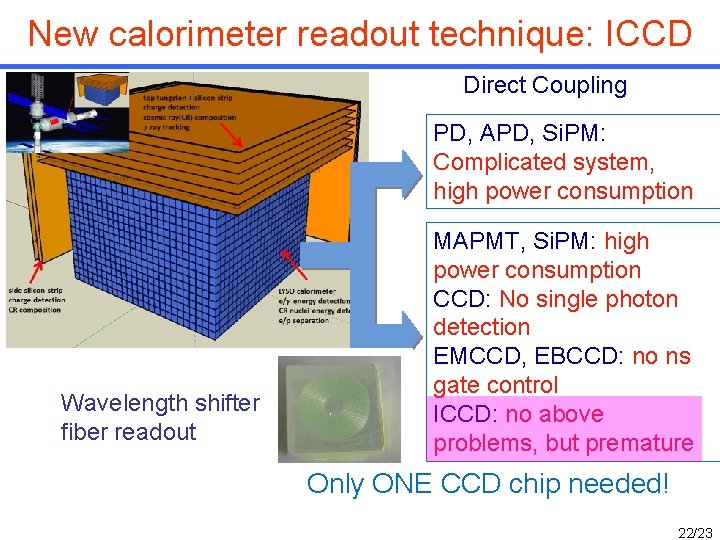
New calorimeter readout technique: ICCD Direct Coupling PD, APD, Si. PM: Complicated system, high power consumption Wavelength shifter fiber readout MAPMT, Si. PM: high power consumption CCD: No single photon detection EMCCD, EBCCD: no ns gate control ICCD: no above problems, but premature Only ONE CCD chip needed! 22/23
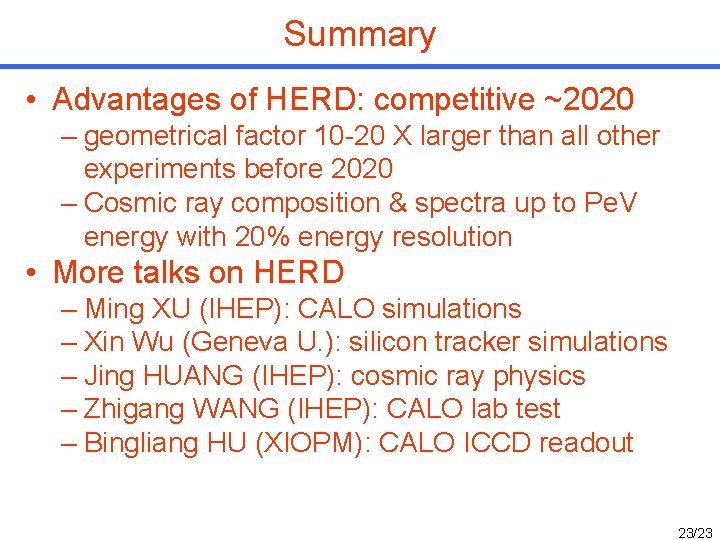
Summary • Advantages of HERD: competitive ~2020 – geometrical factor 10 -20 X larger than all other experiments before 2020 – Cosmic ray composition & spectra up to Pe. V energy with 20% energy resolution • More talks on HERD – Ming XU (IHEP): CALO simulations – Xin Wu (Geneva U. ): silicon tracker simulations – Jing HUANG (IHEP): cosmic ray physics – Zhigang WANG (IHEP): CALO lab test – Bingliang HU (XIOPM): CALO ICCD readout 23/23