Teacher Education Strategic Initiatives TESI Steering Committee Meeting

- Slides: 23
Teacher Education Strategic Initiatives (TESI) Steering Committee Meeting - #1 Tuesday, October 6, 2015 1 – 4 pm 1
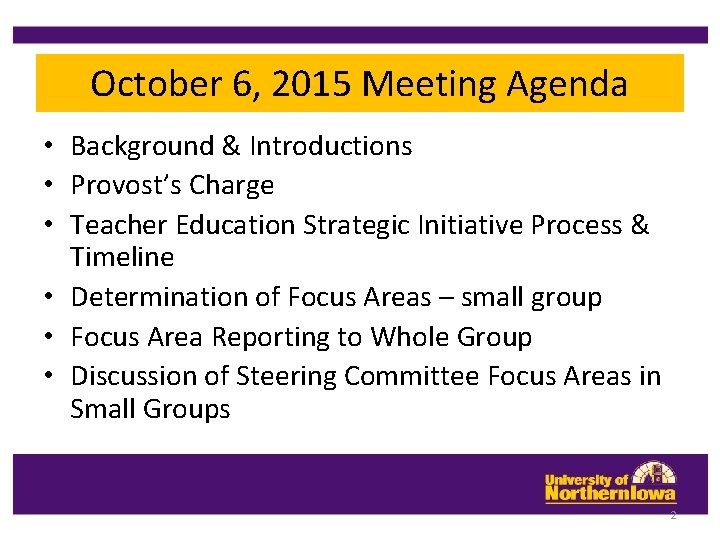
October 6, 2015 Meeting Agenda • Background & Introductions • Provost’s Charge • Teacher Education Strategic Initiative Process & Timeline • Determination of Focus Areas – small group • Focus Area Reporting to Whole Group • Discussion of Steering Committee Focus Areas in Small Groups 2
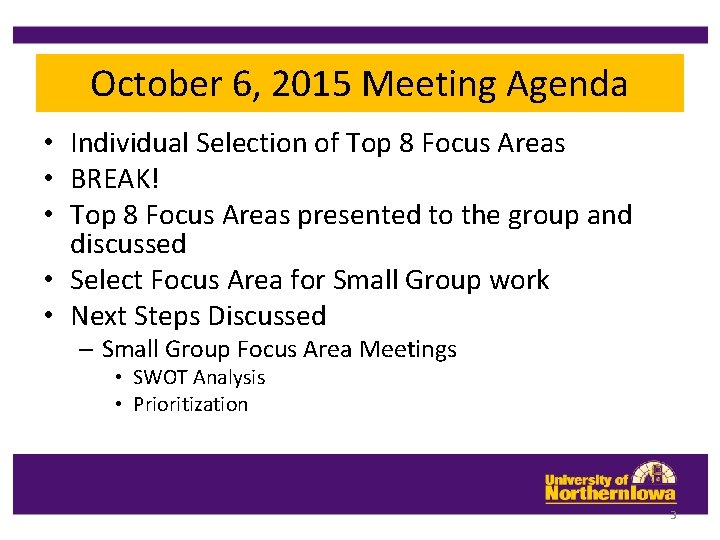
October 6, 2015 Meeting Agenda • Individual Selection of Top 8 Focus Areas • BREAK! • Top 8 Focus Areas presented to the group and discussed • Select Focus Area for Small Group work • Next Steps Discussed – Small Group Focus Area Meetings • SWOT Analysis • Prioritization 3
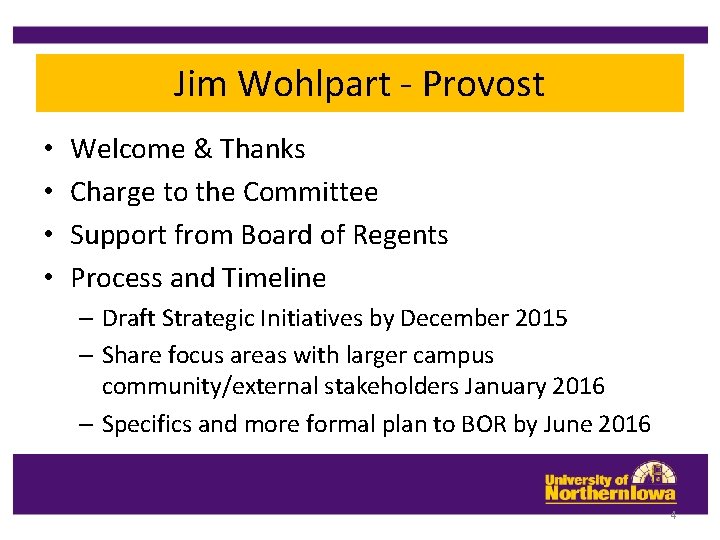
Jim Wohlpart - Provost • • Welcome & Thanks Charge to the Committee Support from Board of Regents Process and Timeline – Draft Strategic Initiatives by December 2015 – Share focus areas with larger campus community/external stakeholders January 2016 – Specifics and more formal plan to BOR by June 2016 4
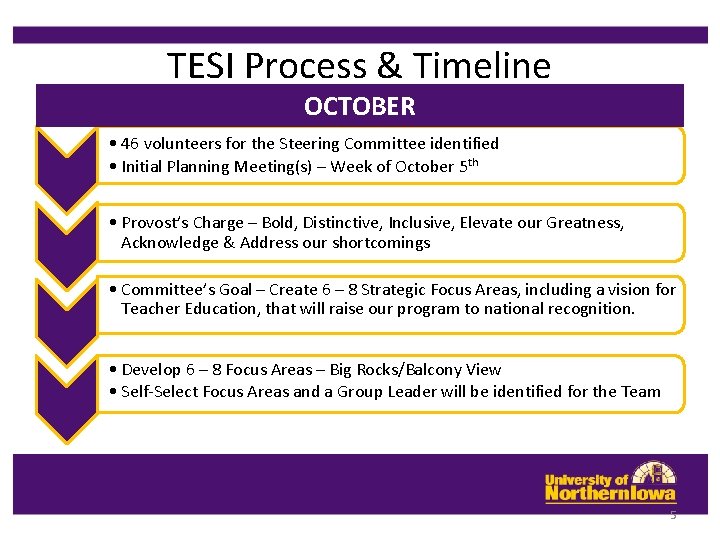
TESI Process & Timeline OCTOBER • 46 volunteers for the Steering Committee identified • Initial Planning Meeting(s) – Week of October 5 th • Provost’s Charge – Bold, Distinctive, Inclusive, Elevate our Greatness, Acknowledge & Address our shortcomings • Committee’s Goal – Create 6 – 8 Strategic Focus Areas, including a vision for Teacher Education, that will raise our program to national recognition. • Develop 6 – 8 Focus Areas – Big Rocks/Balcony View • Self-Select Focus Areas and a Group Leader will be identified for the Team 5
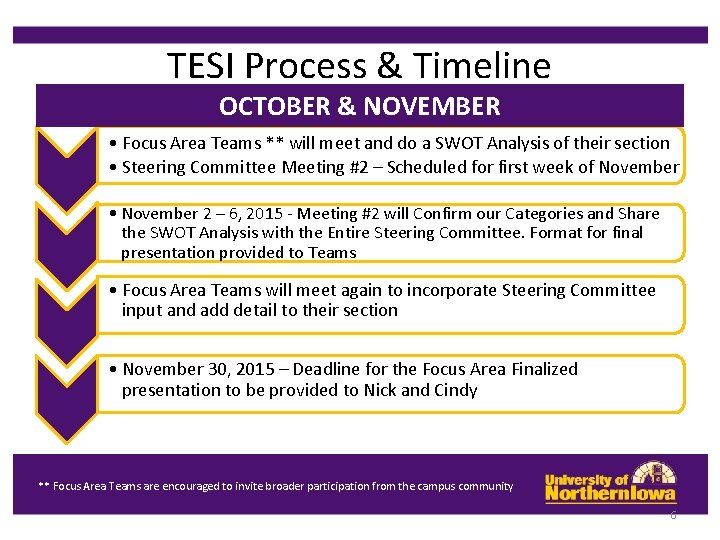
TESI Process & Timeline OCTOBER & NOVEMBER • Focus Area Teams ** will meet and do a SWOT Analysis of their section • Steering Committee Meeting #2 – Scheduled for first week of November • November 2 – 6, 2015 - Meeting #2 will Confirm our Categories and Share the SWOT Analysis with the Entire Steering Committee. Format for final presentation provided to Teams • Focus Area Teams will meet again to incorporate Steering Committee input and add detail to their section • November 30, 2015 – Deadline for the Focus Area Finalized presentation to be provided to Nick and Cindy ** Focus Area Teams are encouraged to invite broader participation from the campus community 6
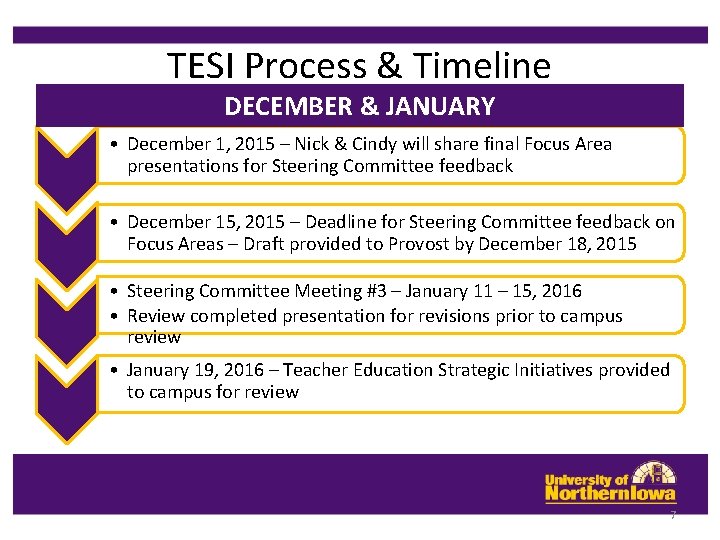
TESI Process & Timeline DECEMBER & JANUARY • December 1, 2015 – Nick & Cindy will share final Focus Area presentations for Steering Committee feedback • December 15, 2015 – Deadline for Steering Committee feedback on Focus Areas – Draft provided to Provost by December 18, 2015 • Steering Committee Meeting #3 – January 11 – 15, 2016 • Review completed presentation for revisions prior to campus review • January 19, 2016 – Teacher Education Strategic Initiatives provided to campus for review 7
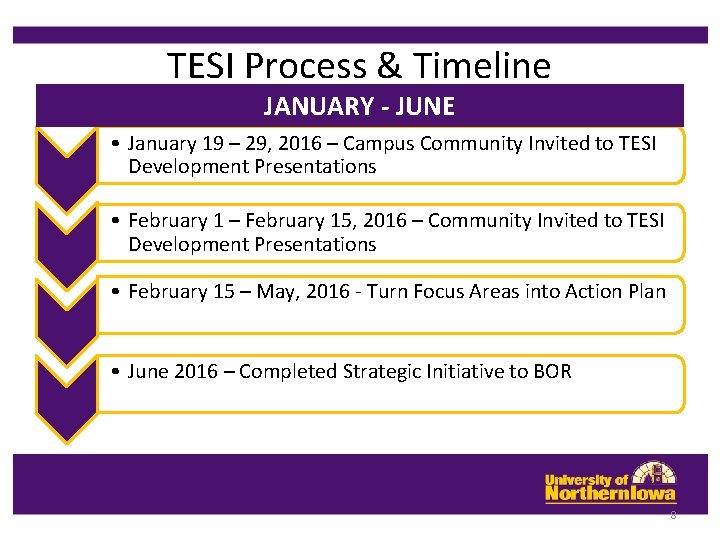
TESI Process & Timeline JANUARY - JUNE • January 19 – 29, 2016 – Campus Community Invited to TESI Development Presentations • February 1 – February 15, 2016 – Community Invited to TESI Development Presentations • February 15 – May, 2016 - Turn Focus Areas into Action Plan • June 2016 – Completed Strategic Initiative to BOR 8
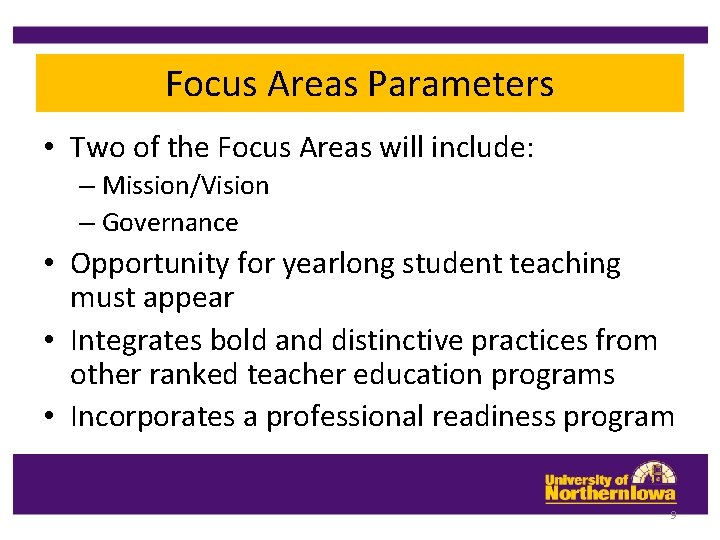
Focus Areas Parameters • Two of the Focus Areas will include: – Mission/Vision – Governance • Opportunity for yearlong student teaching must appear • Integrates bold and distinctive practices from other ranked teacher education programs • Incorporates a professional readiness program 9
10
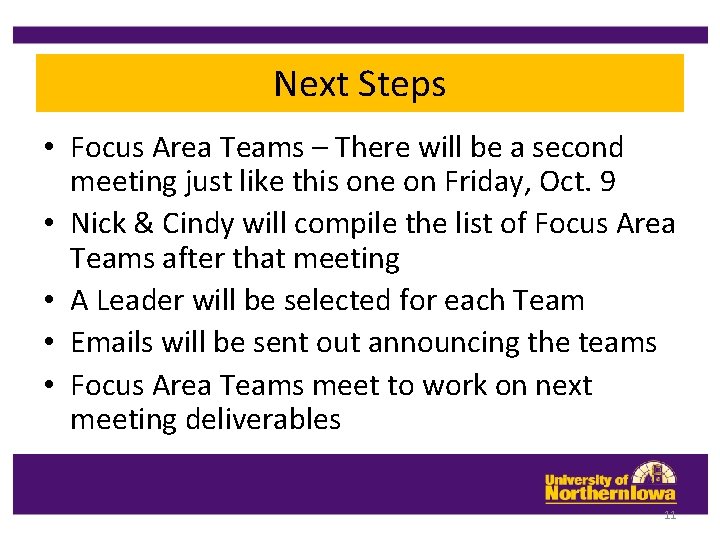
Next Steps • Focus Area Teams – There will be a second meeting just like this one on Friday, Oct. 9 • Nick & Cindy will compile the list of Focus Area Teams after that meeting • A Leader will be selected for each Team • Emails will be sent out announcing the teams • Focus Area Teams meet to work on next meeting deliverables 11
Deliverables for November Meeting • Focus Area Groups Provide 2 things for next meeting: • SWOT Analysis • Focus Area Questions to Answer 12
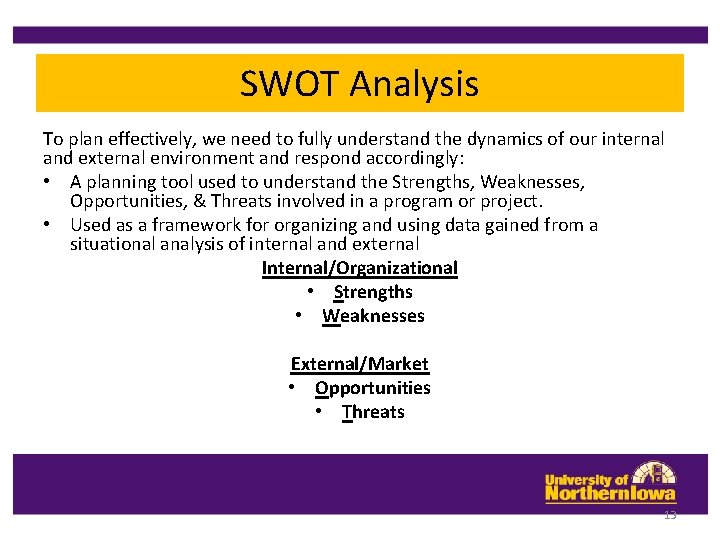
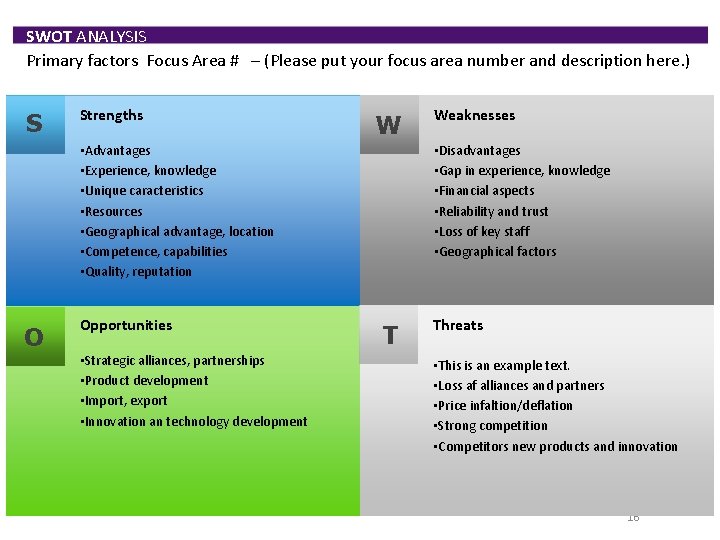
SWOT Analysis To plan effectively, we need to fully understand the dynamics of our internal and external environment and respond accordingly: • A planning tool used to understand the Strengths, Weaknesses, Opportunities, & Threats involved in a program or project. • Used as a framework for organizing and using data gained from a situational analysis of internal and external Internal/Organizational • Strengths • Weaknesses External/Market • Opportunities • Threats 13
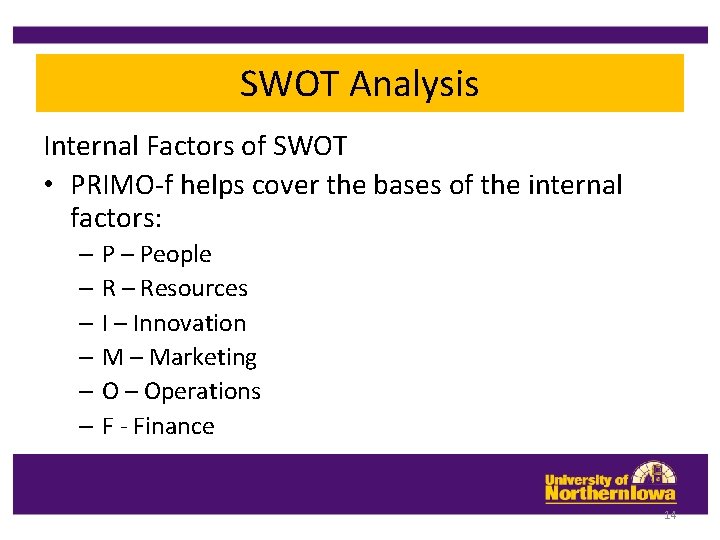
SWOT Analysis Internal Factors of SWOT • PRIMO-f helps cover the bases of the internal factors: – People – Resources – Innovation – Marketing – Operations – F - Finance 14
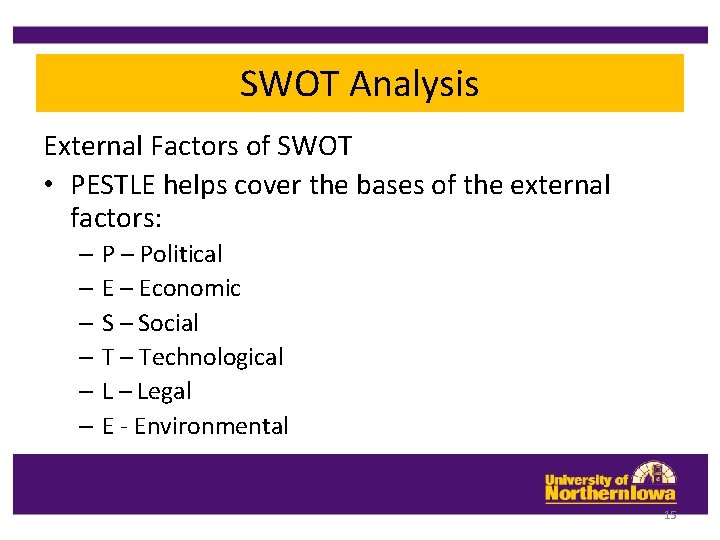
SWOT Analysis External Factors of SWOT • PESTLE helps cover the bases of the external factors: – Political – Economic – Social – Technological – Legal – E - Environmental 15
SWOT ANALYSIS Primary factors Focus Area # – (Please put your focus area number and description here. ) S Strengths W • Advantages • Experience, knowledge • Unique caracteristics • Resources • Geographical advantage, location • Competence, capabilities • Quality, reputation O Opportunities • Strategic alliances, partnerships • Product development • Import, export • Innovation an technology development Weaknesses • Disadvantages • Gap in experience, knowledge • Financial aspects • Reliability and trust • Loss of key staff • Geographical factors T Threats • This is an example text. • Loss af alliances and partners • Price infaltion/deflation • Strong competition • Competitors new products and innovation 16
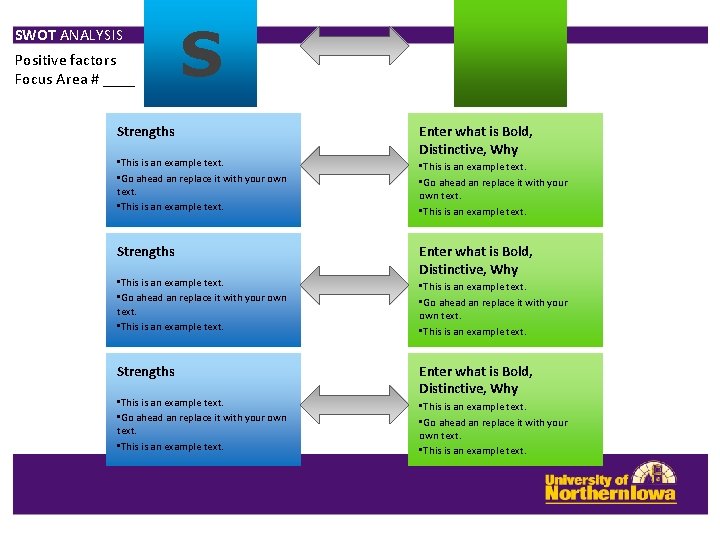
SWOT ANALYSIS Positive factors Focus Area # ____ S Strengths • This is an example text. • Go ahead an replace it with your own text. • This is an example text. Enter what is Bold, Distinctive, Why • This is an example text. • Go ahead an replace it with your own text. • This is an example text.
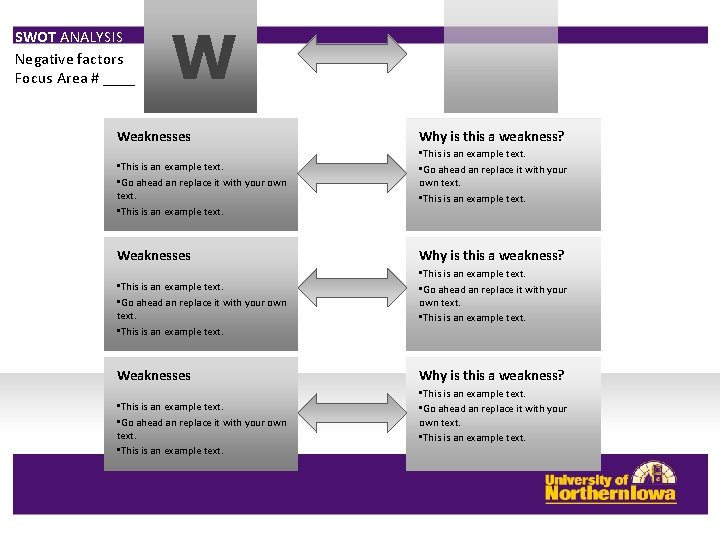
SWOT ANALYSIS Negative factors Focus Area # ____ W Weaknesses • This is an example text. • Go ahead an replace it with your own text. • This is an example text. Why is this a weakness? • This is an example text. • Go ahead an replace it with your own text. • This is an example text.
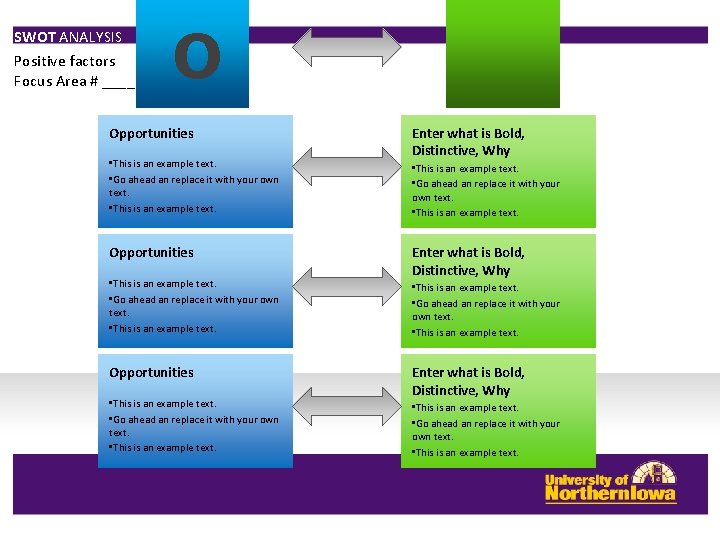
SWOT ANALYSIS Positive factors Focus Area # ____ O Opportunities • This is an example text. • Go ahead an replace it with your own text. • This is an example text. Enter what is Bold, Distinctive, Why • This is an example text. • Go ahead an replace it with your own text. • This is an example text.
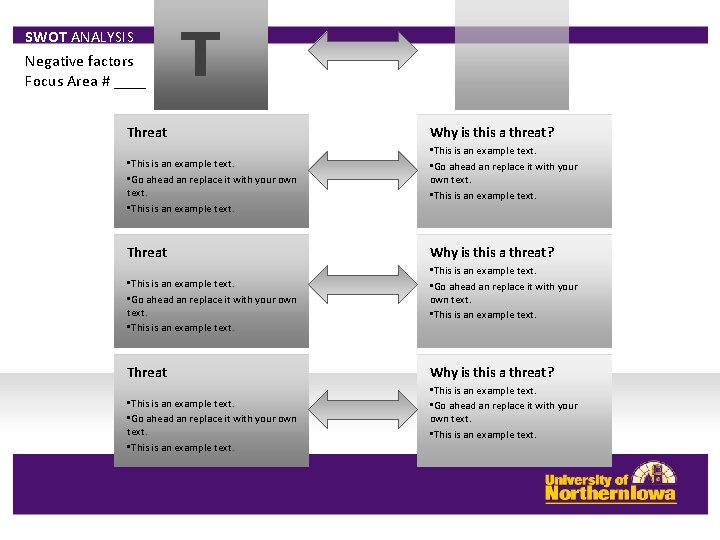
SWOT ANALYSIS Negative factors Focus Area # ____ T Threat • This is an example text. • Go ahead an replace it with your own text. • This is an example text. Why is this a threat? • This is an example text. • Go ahead an replace it with your own text. • This is an example text.
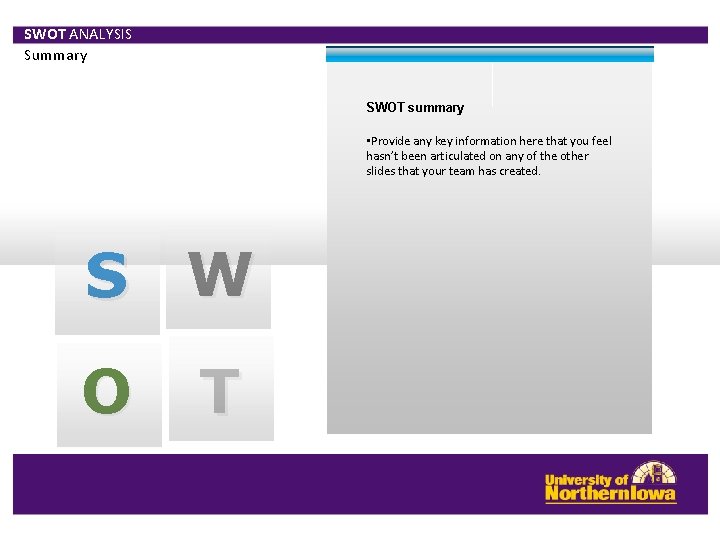
SWOT ANALYSIS Summary SWOT summary • Provide any key information here that you feel hasn’t been articulated on any of the other slides that your team has created. S W O T
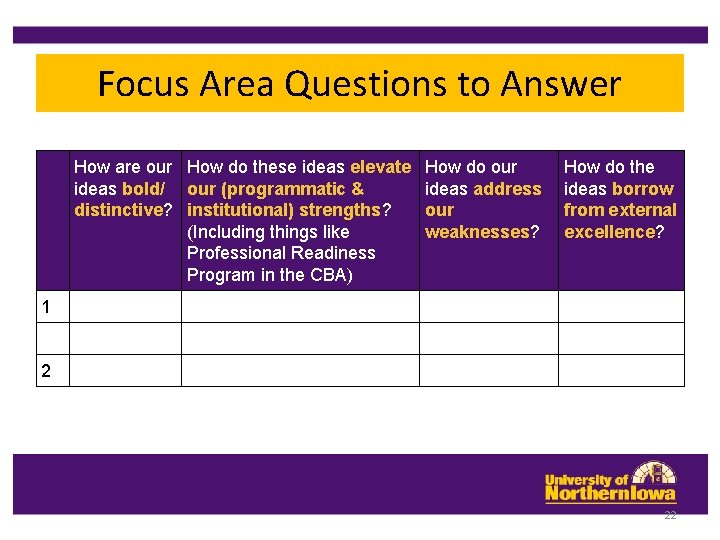
Focus Area Questions to Answer How are our How do these ideas elevate ideas bold/ our (programmatic & distinctive? institutional) strengths? (Including things like Professional Readiness Program in the CBA) How do our ideas address our weaknesses? How do the ideas borrow from external excellence? 1 2 22
Teacher Education Strategic Initiatives (TESI) Questions? Need Resources? Want us to Attend Focus Area Team Meetings? Nick Pace Nick. pace@uni. edu Cindy Diehl Yang Cindy. diehlyang@uni. edu 23