Surrealism The Surreal Eye Surrealism a 20 thcentury




- Slides: 22
Surrealism The Surreal Eye
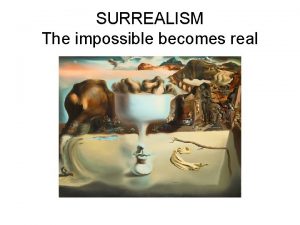
Surrealism • a 20 th-century art form in which an artist or writer combines unrelated images or events in a very strange and dreamlike way
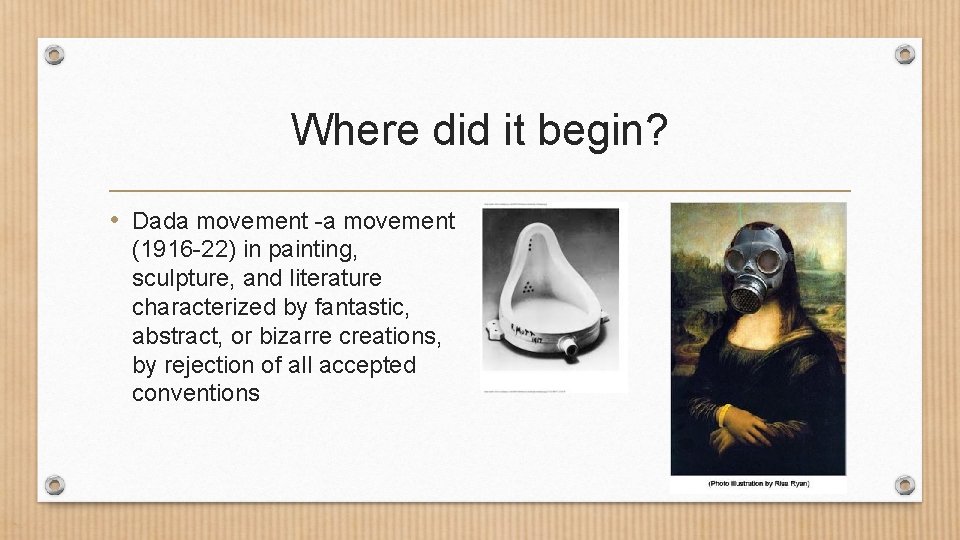
Where did it begin? • Dada movement -a movement (1916 -22) in painting, sculpture, and literature characterized by fantastic, abstract, or bizarre creations, by rejection of all accepted conventions
Characteristics of Surrealism • • • Association Juxtaposition The unconscious Dream and Fantasy Irrational
Association • Another stylistic strategy that the Surrealists are known for, which is related to their use of juxtaposition and automatic writing, is association. "Association" refers to the connections that we make between different thoughts, ideas, or images. Sometimes these associations are really bizarre, which, according to our Surrealist buddies, makes them that much better.
Juxtaposition • One of the defining stylistic characteristics of Surrealism is the juxtaposition of imagery. The Surrealists like to put together crazy things that we wouldn't normally associate with one another. They might compare a head to a shoe, or a door to a snake, or a cup to a tree.
The Unconscious • Ahh… the spooky, spooky unconscious. That deep, dark place beneath our conscious minds, where all that stuff from our childhood is buried, as well as all our fears and neuroses. The Surrealists were very interested in the unconscious mind for a couple of reasons. First of all, they were interested in it because the unconscious is the source of the irrational (and the Surrealists loved the irrational). Second of all, the unconscious is also a source of creativity.
Dream & Fantasy • We knew this one was coming. After all, if the Surrealists are interested in the unconscious mind and the irrational, how could they not be interested in dreams and fantasies? Dreams and fantasies are often the means through which our unconscious selves, and our irrational drives, find expression.
Irrational • The Surrealists thought that Western society placed too much emphasis on rationality. The problem with rationality, according to them, is that there is a whole realm of experience that exists outside of the rational mind. After all, we often behave in irrational ways, don't we? We might argue with our boyfriend or girlfriend about something silly, even if we know that isn't the right (or the rational) thing to do. We might eat a lot of junk food, even if we know rationally that junk food isn't good for us.
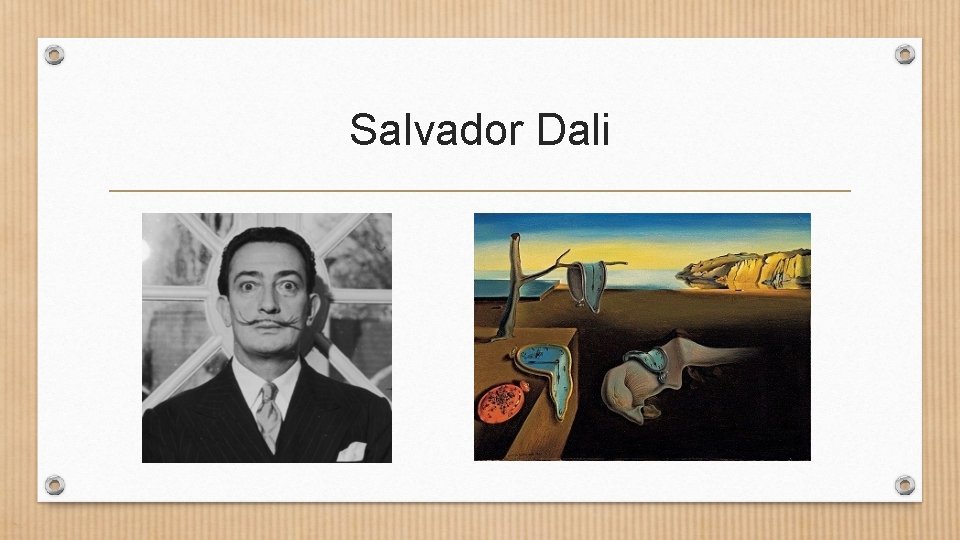
Salvador Dali
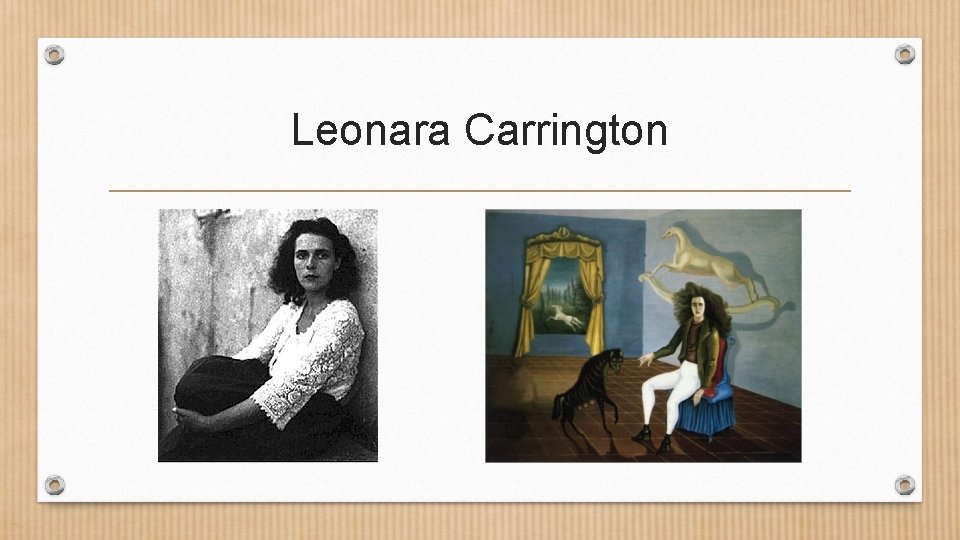
Leonara Carrington
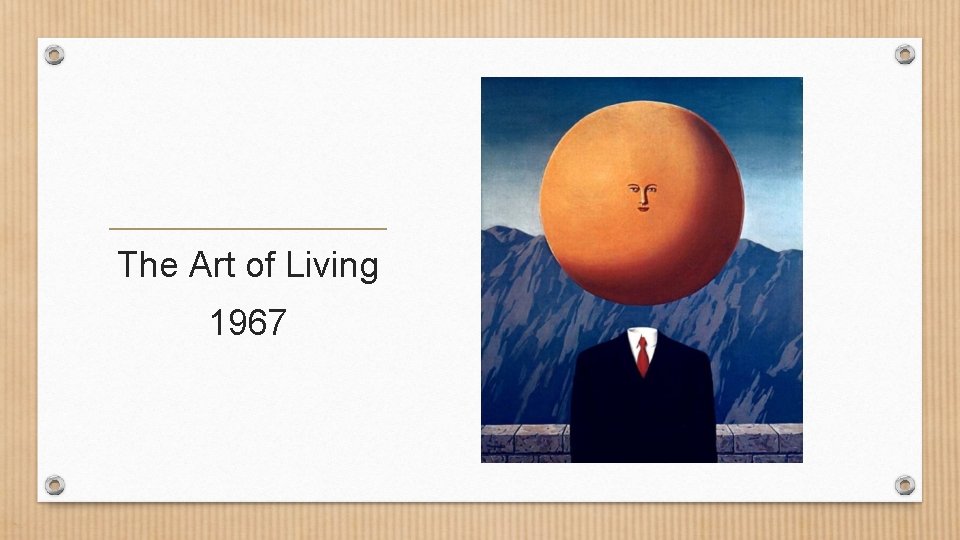
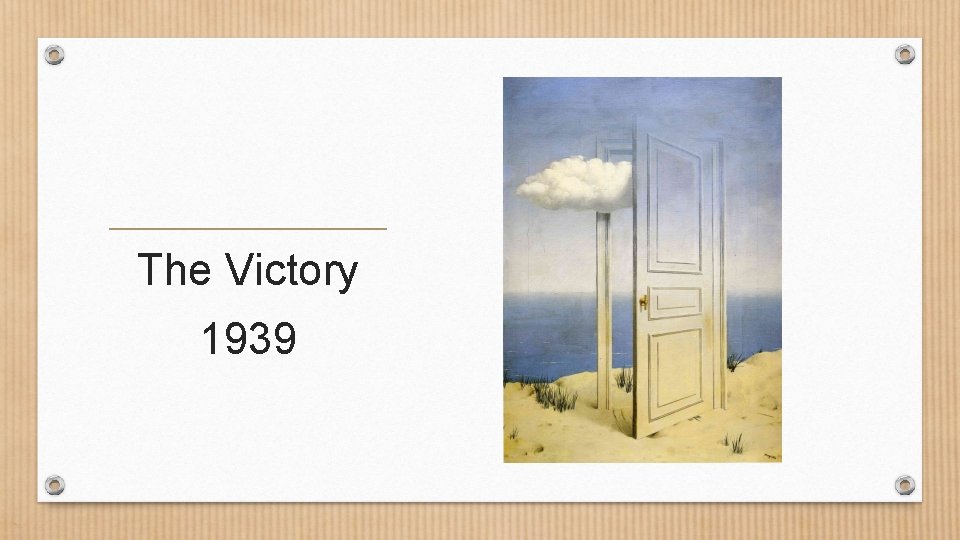
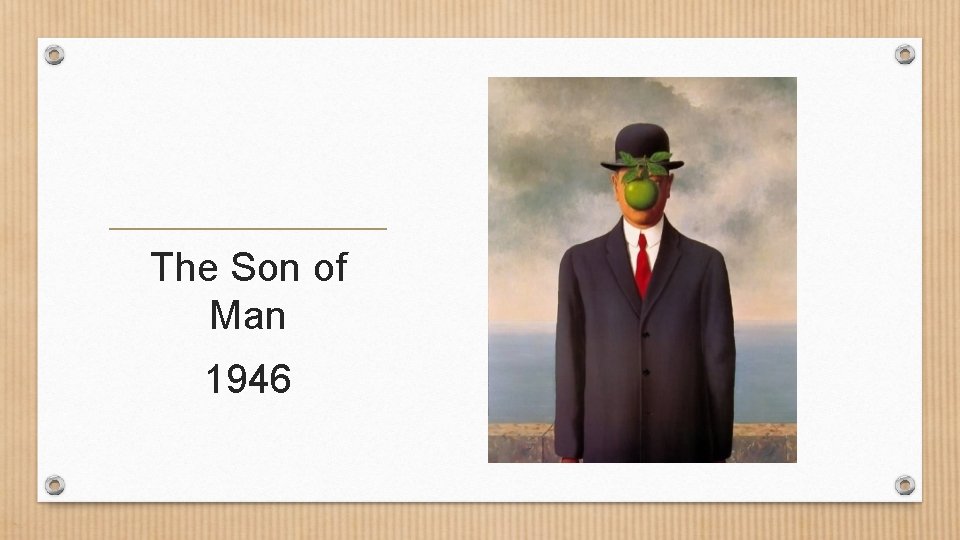
All about Rene Magritte • Born November 21, 1898 in Belgium • Died August 15, 1967 in Belgium • His work is characterized by everyday objects juxtaposed with objects or scenes not associated with them. • His choice of combining different objects, along with his ability to paint realistically with dream like elements made his paintings intriguing to the viewer • Some common objects found in his paintings: apples, bowler hats, transforming figures and repetition • Video
The Art of Living 1967
The Victory 1939
The Son of Man 1946
The False Mirror 1972 The False Mirror is an eye in which you see out but also look in. Magritte loved creating images that were windows for the viewer to look into. The painting is now found at the Museum of Modern Art in NYC. It was owned by another Surrealist Man Ray from 1933 - 36.
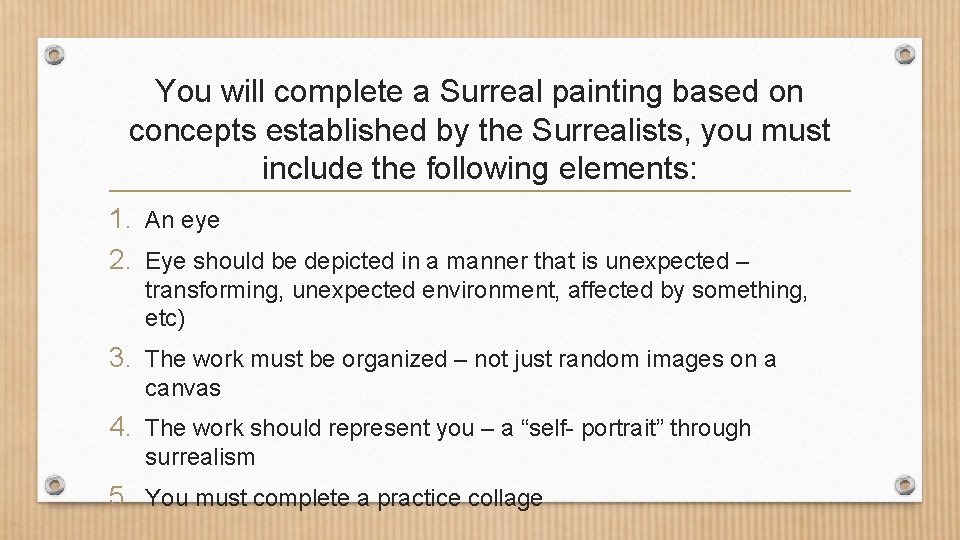
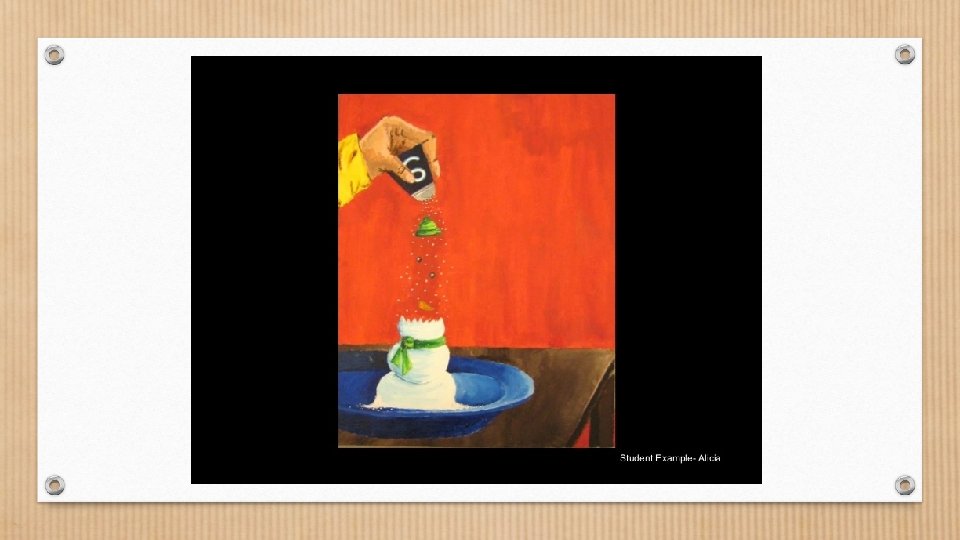
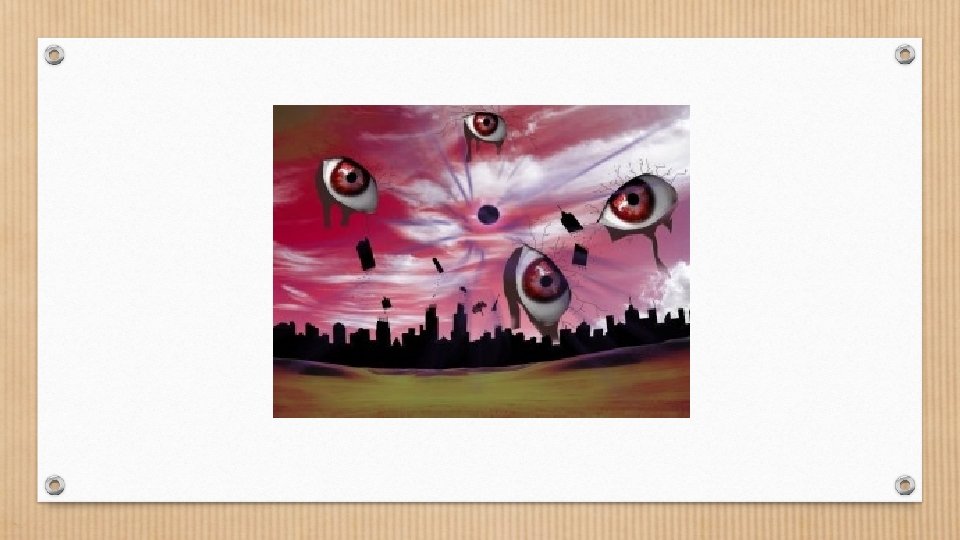
You will complete a Surreal painting based on concepts established by the Surrealists, you must include the following elements: 1. An eye 2. Eye should be depicted in a manner that is unexpected – transforming, unexpected environment, affected by something, etc) 3. The work must be organized – not just random images on a canvas 4. The work should represent you – a “self- portrait” through surrealism 5. You must complete a practice collage
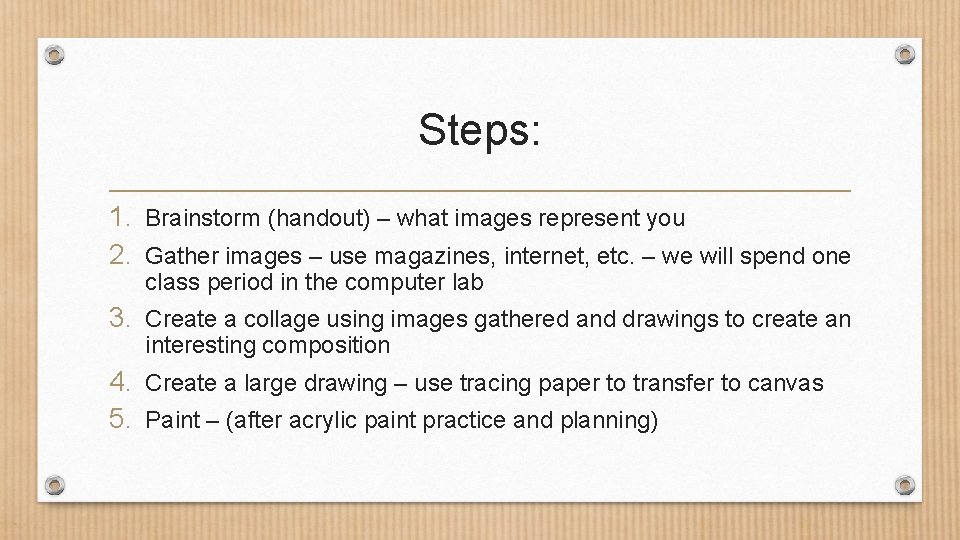
Steps: 1. Brainstorm (handout) – what images represent you 2. Gather images – use magazines, internet, etc. – we will spend one class period in the computer lab 3. Create a collage using images gathered and drawings to create an interesting composition 4. Create a large drawing – use tracing paper to transfer to canvas 5. Paint – (after acrylic paint practice and planning)