Supply Chain Finance SCF Lecture 1 Jan H

- Slides: 36
Supply Chain Finance (SCF) Lecture # 1 Jan H Jansen E-mail: jansen@han. nl
A short video from CITI Bank https: //www. citibank. com/tts/sa/videos/supply_chain_case_study. html Introduction to your exam case study: SCF platform Basware https: //www. basware. com/en-gb
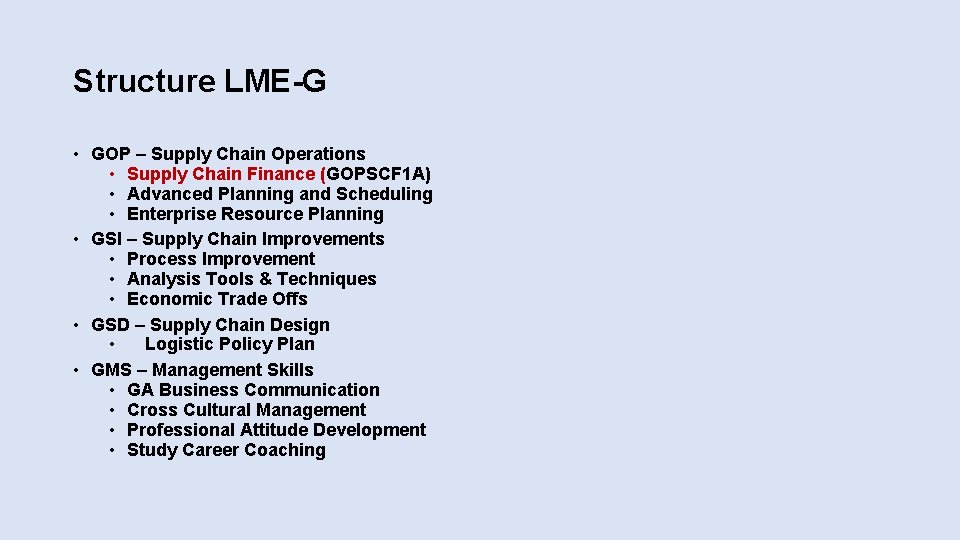
Structure LME-G • GOP – Supply Chain Operations • Supply Chain Finance (GOPSCF 1 A) • Advanced Planning and Scheduling • Enterprise Resource Planning • GSI – Supply Chain Improvements • Process Improvement • Analysis Tools & Techniques • Economic Trade Offs • GSD – Supply Chain Design • Logistic Policy Plan • GMS – Management Skills • GA Business Communication • Cross Cultural Management • Professional Attitude Development • Study Career Coaching
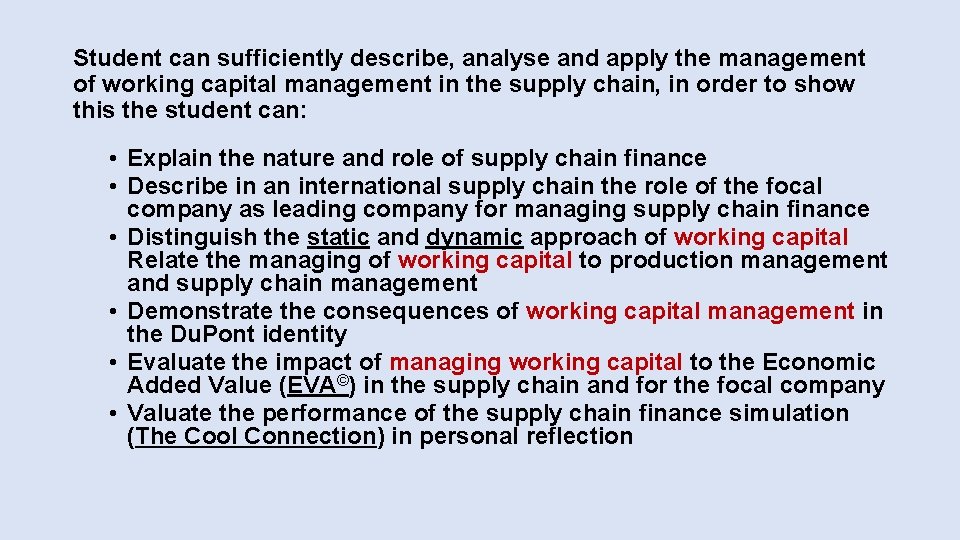
Student can sufficiently describe, analyse and apply the management of working capital management in the supply chain, in order to show this the student can: • Explain the nature and role of supply chain finance • Describe in an international supply chain the role of the focal company as leading company for managing supply chain finance • Distinguish the static and dynamic approach of working capital Relate the managing of working capital to production management and supply chain management • Demonstrate the consequences of working capital management in the Du. Pont identity • Evaluate the impact of managing working capital to the Economic Added Value (EVA©) in the supply chain and for the focal company • Valuate the performance of the supply chain finance simulation (The Cool Connection) in personal reflection
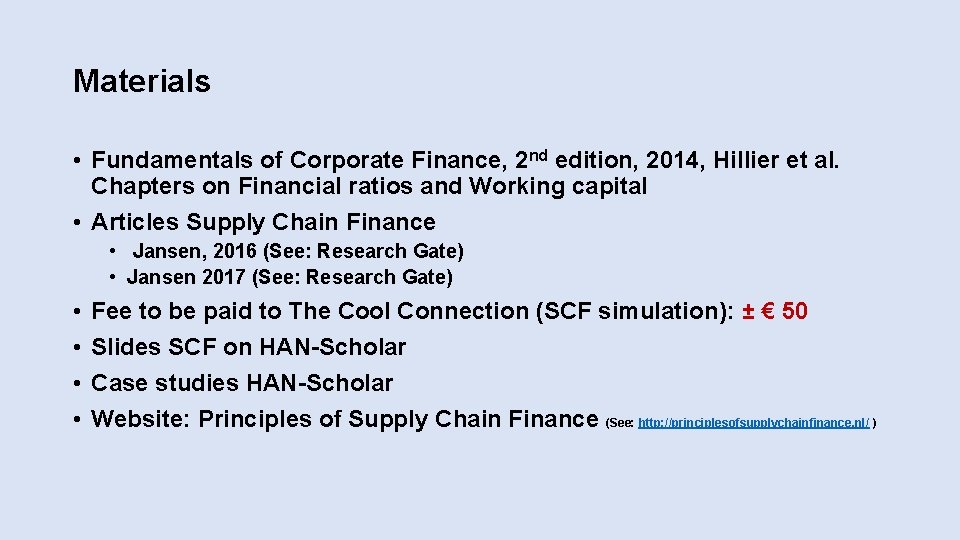
Materials • Fundamentals of Corporate Finance, 2 nd edition, 2014, Hillier et al. Chapters on Financial ratios and Working capital • Articles Supply Chain Finance • Jansen, 2016 (See: Research Gate) • Jansen 2017 (See: Research Gate) • • Fee to be paid to The Cool Connection (SCF simulation): ± € 50 Slides SCF on HAN-Scholar Case studies HAN-Scholar Website: Principles of Supply Chain Finance (See: http: //principlesofsupplychainfinance. nl/ )
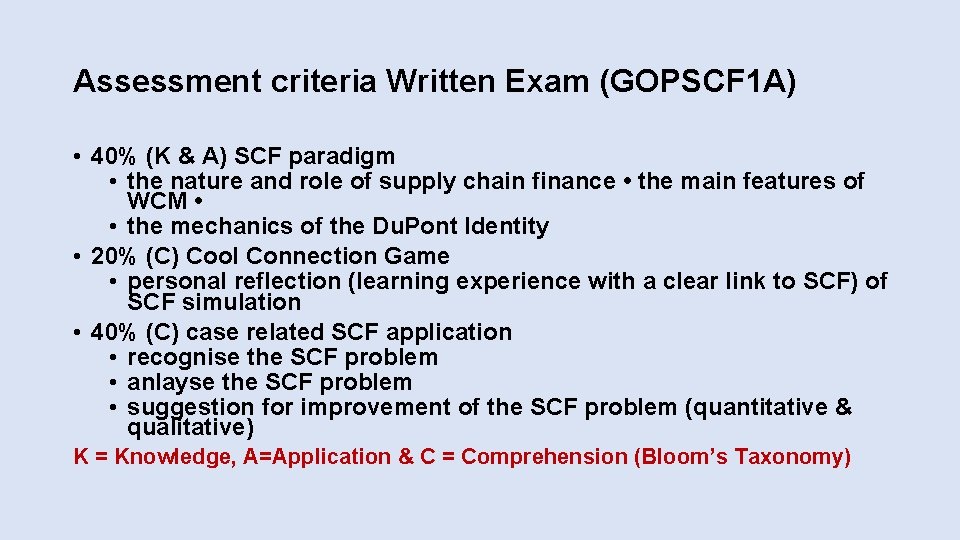
Assessment criteria Written Exam (GOPSCF 1 A) • 40% (K & A) SCF paradigm • the nature and role of supply chain finance • the main features of WCM • • the mechanics of the Du. Pont Identity • 20% (C) Cool Connection Game • personal reflection (learning experience with a clear link to SCF) of SCF simulation • 40% (C) case related SCF application • recognise the SCF problem • anlayse the SCF problem • suggestion for improvement of the SCF problem (quantitative & qualitative) K = Knowledge, A=Application & C = Comprehension (Bloom’s Taxonomy)
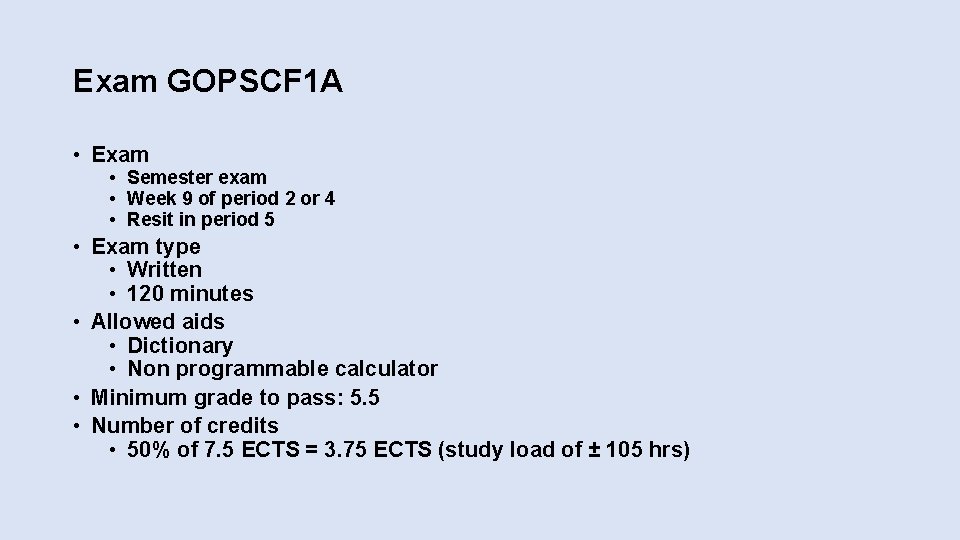
Exam GOPSCF 1 A • Exam • Semester exam • Week 9 of period 2 or 4 • Resit in period 5 • Exam type • Written • 120 minutes • Allowed aids • Dictionary • Non programmable calculator • Minimum grade to pass: 5. 5 • Number of credits • 50% of 7. 5 ECTS = 3. 75 ECTS (study load of ± 105 hrs)
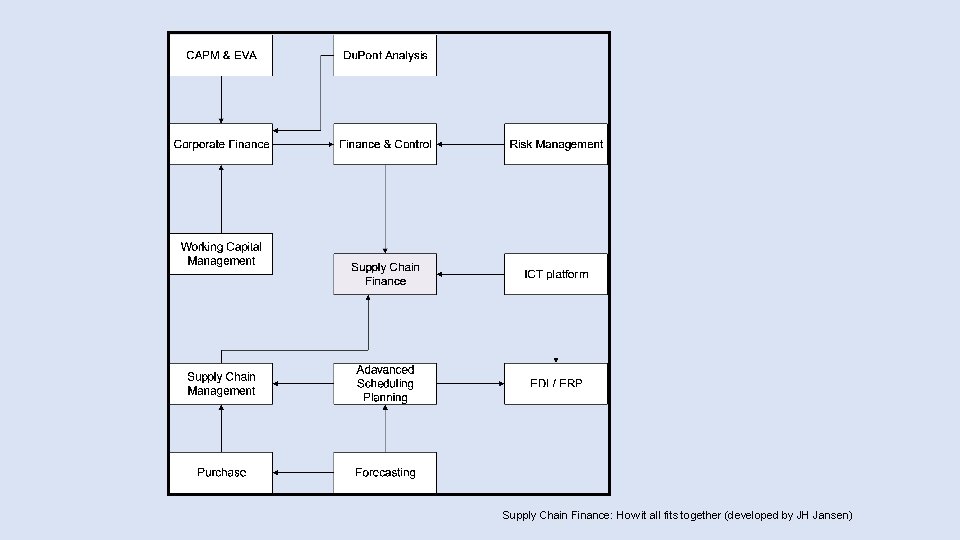
Supply Chain Finance: How it all fits together (developed by JH Jansen)
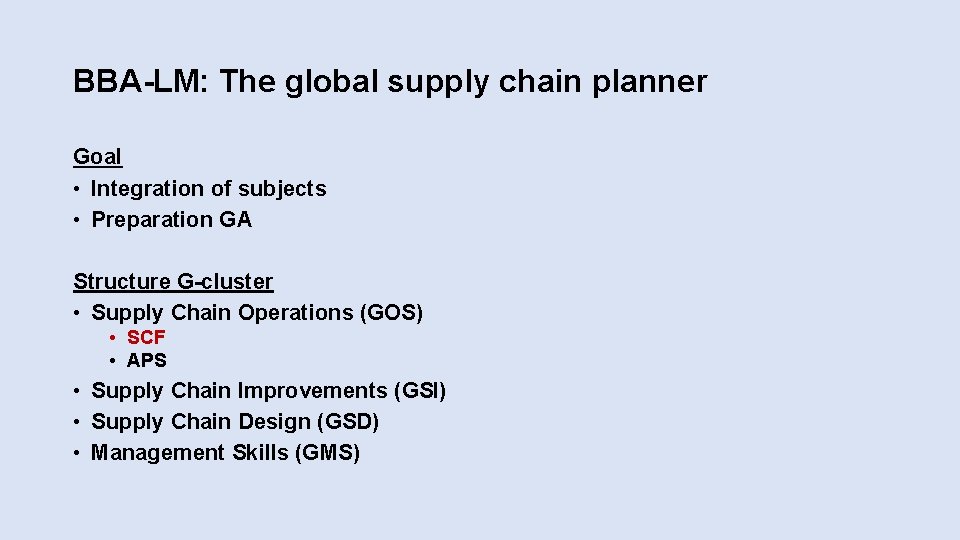
BBA-LM: The global supply chain planner Goal • Integration of subjects • Preparation GA Structure G-cluster • Supply Chain Operations (GOS) • SCF • APS • Supply Chain Improvements (GSI) • Supply Chain Design (GSD) • Management Skills (GMS)
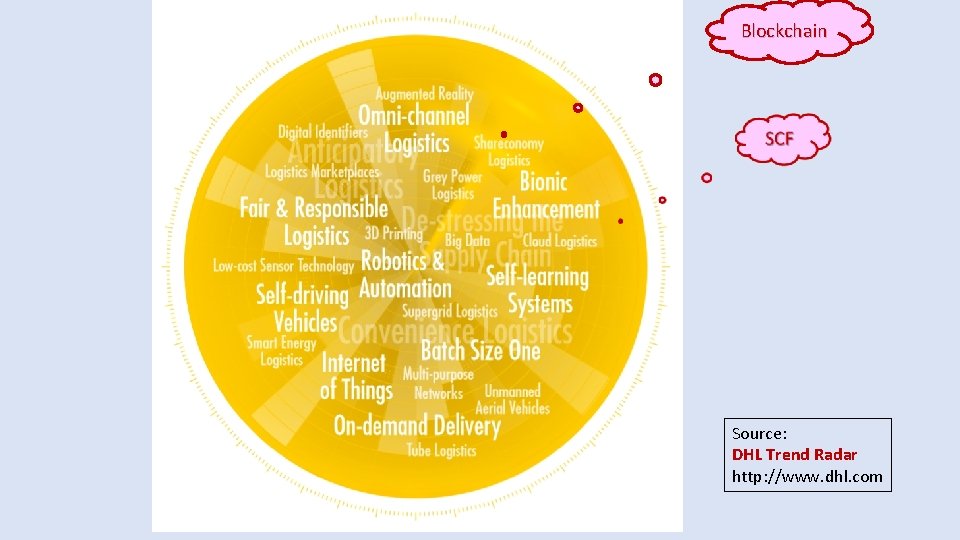
Blockchain Source: DHL Trend Radar http: //www. dhl. com
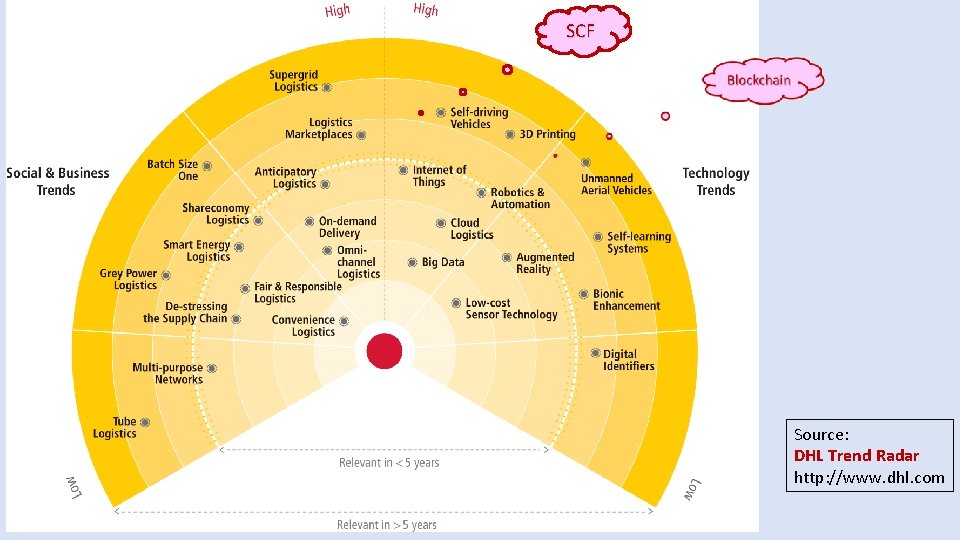
SCF Source: DHL Trend Radar http: //www. dhl. com
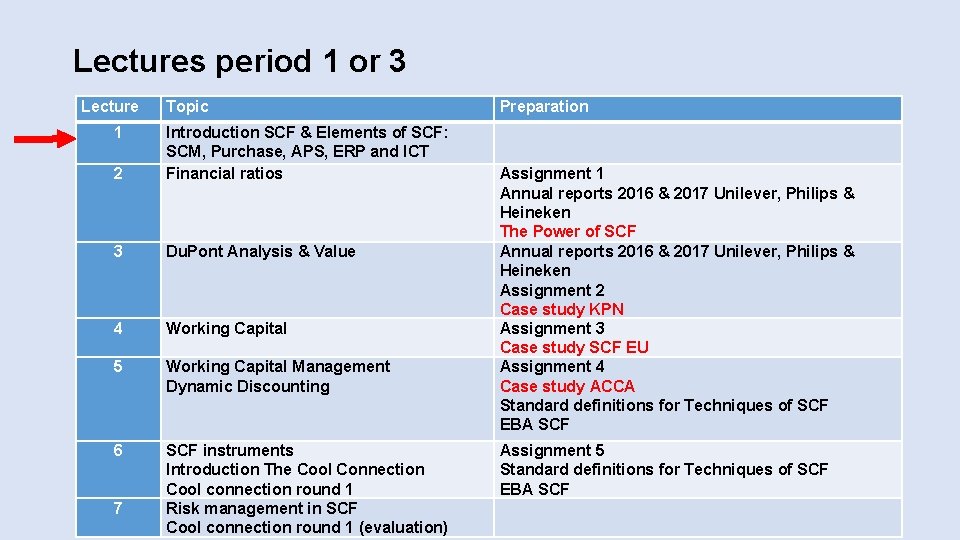
Lectures period 1 or 3 Lecture 1 Topic 2 Introduction SCF & Elements of SCF: SCM, Purchase, APS, ERP and ICT Financial ratios 3 Du. Pont Analysis & Value 4 Working Capital 5 Working Capital Management Dynamic Discounting 6 SCF instruments Introduction The Cool Connection Cool connection round 1 Risk management in SCF Cool connection round 1 (evaluation) 7 Preparation Assignment 1 Annual reports 2016 & 2017 Unilever, Philips & Heineken The Power of SCF Annual reports 2016 & 2017 Unilever, Philips & Heineken Assignment 2 Case study KPN Assignment 3 Case study SCF EU Assignment 4 Case study ACCA Standard definitions for Techniques of SCF EBA SCF Assignment 5 Standard definitions for Techniques of SCF EBA SCF
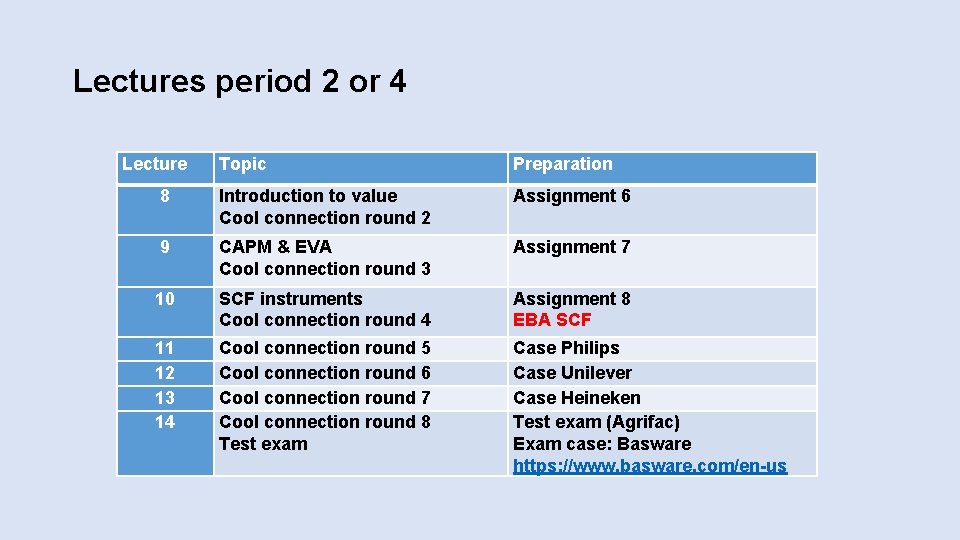
Lectures period 2 or 4 Lecture Topic Preparation 8 Introduction to value Cool connection round 2 Assignment 6 9 CAPM & EVA Cool connection round 3 Assignment 7 10 SCF instruments Cool connection round 4 Assignment 8 EBA SCF 11 12 13 14 Cool connection round 5 Cool connection round 6 Cool connection round 7 Cool connection round 8 Test exam Case Philips Case Unilever Case Heineken Test exam (Agrifac) Exam case: Basware https: //www. basware. com/en-us
Lecture 1
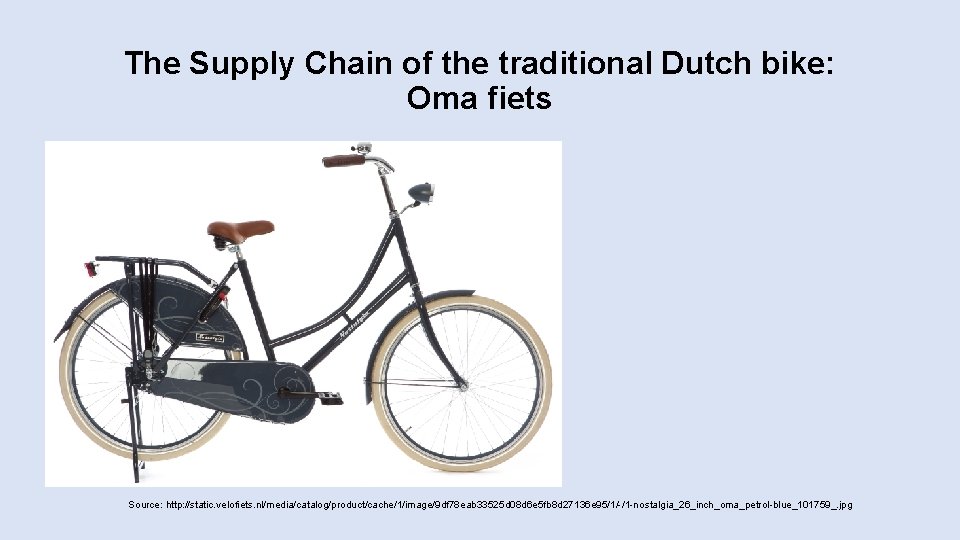
The Supply Chain of the traditional Dutch bike: Oma fiets Source: http: //static. velofiets. nl/media/catalog/product/cache/1/image/9 df 78 eab 33525 d 08 d 6 e 5 fb 8 d 27136 e 95/1/-/1 -nostalgia_26_inch_oma_petrol-blue_101759_. jpg
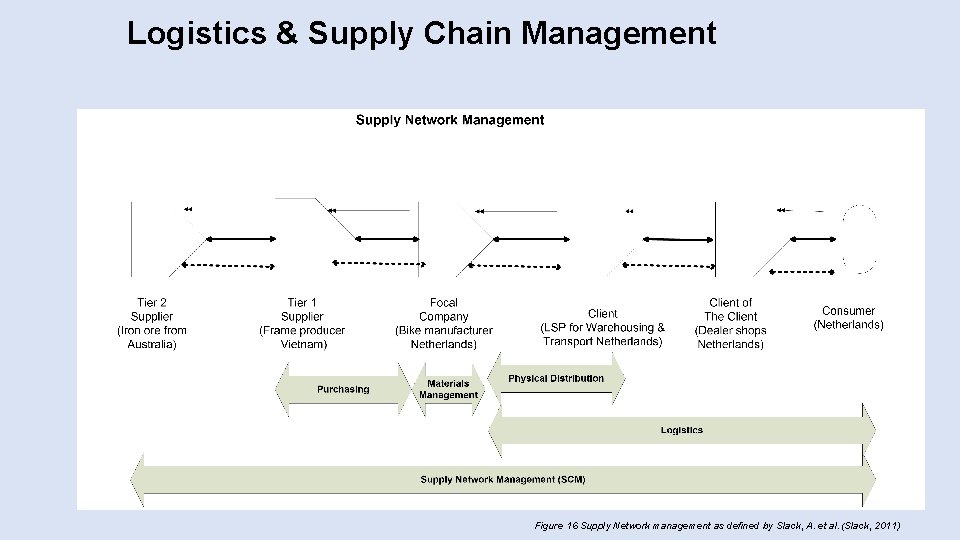
Logistics & Supply Chain Management Figure 16 Supply Network management as defined by Slack, A. et al. (Slack, 2011)
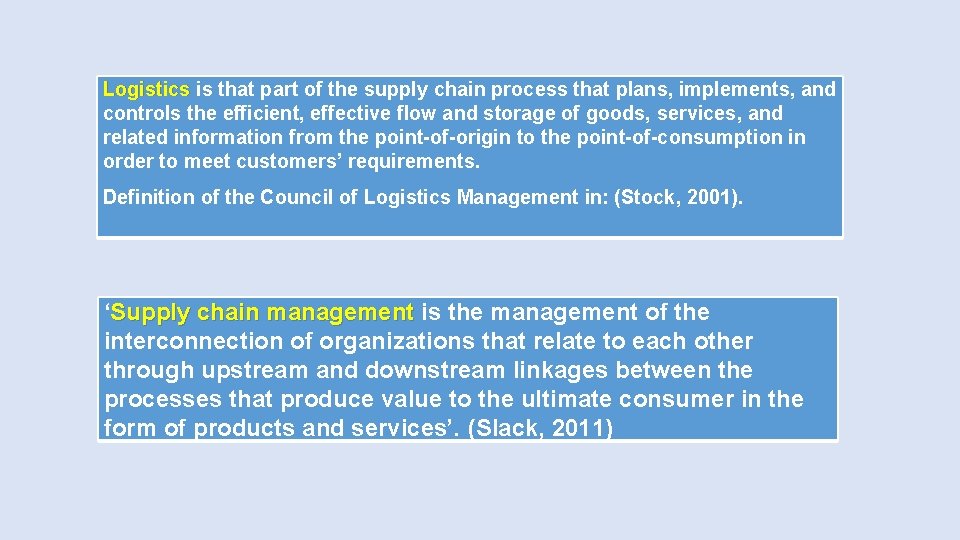
Logistics is that part of the supply chain process that plans, implements, and controls the efficient, effective flow and storage of goods, services, and related information from the point-of-origin to the point-of-consumption in order to meet customers’ requirements. Definition of the Council of Logistics Management in: (Stock, 2001). ‘Supply chain management is the management of the interconnection of organizations that relate to each other through upstream and downstream linkages between the processes that produce value to the ultimate consumer in the form of products and services’. (Slack, 2011)
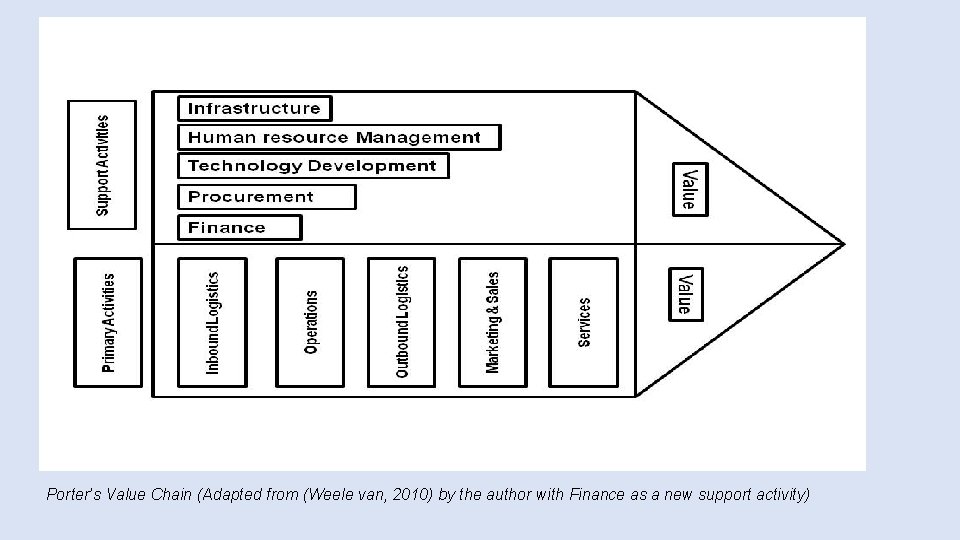
Porter’s Value Chain (Adapted from (Weele van, 2010) by the author with Finance as a new support activity)
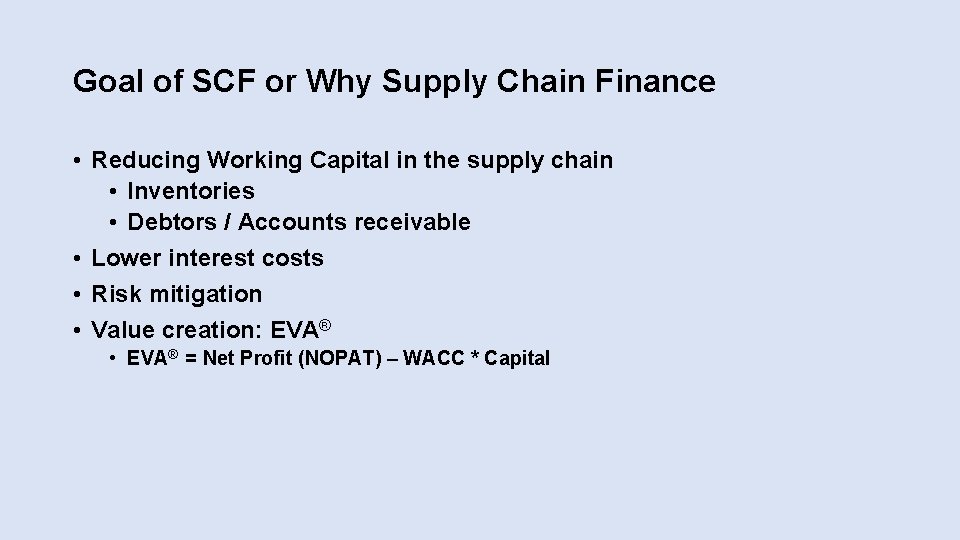
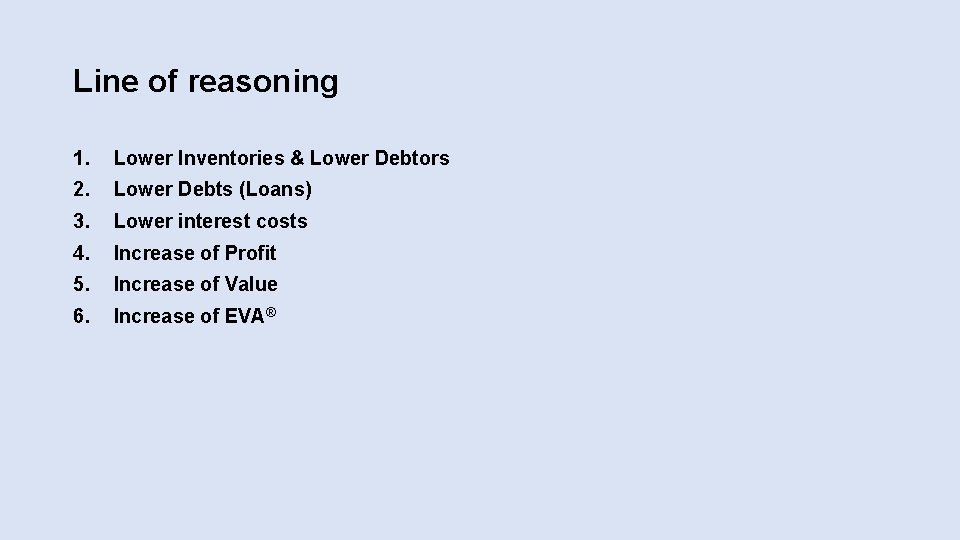
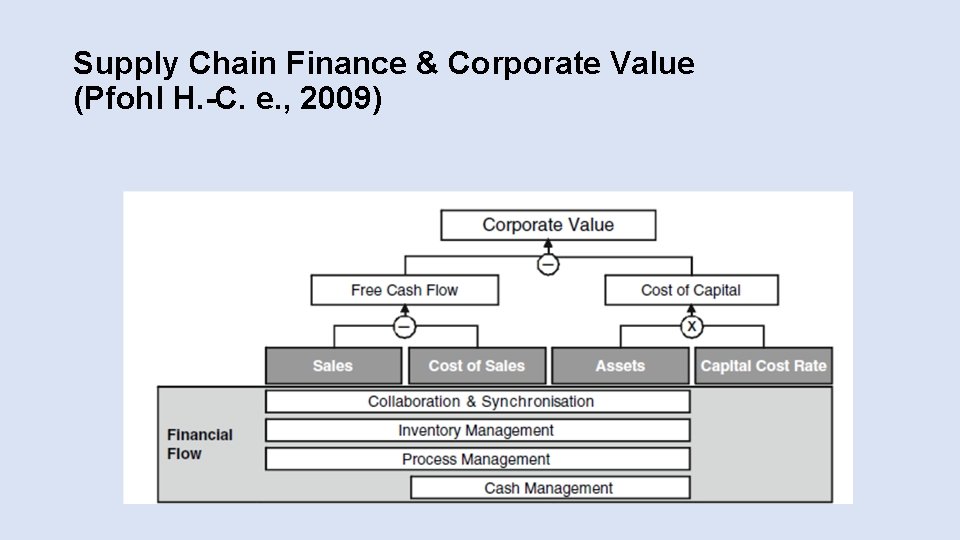
Goal of SCF or Why Supply Chain Finance • Reducing Working Capital in the supply chain • Inventories • Debtors / Accounts receivable • Lower interest costs • Risk mitigation • Value creation: EVA® • EVA® = Net Profit (NOPAT) – WACC * Capital
Line of reasoning 1. Lower Inventories & Lower Debtors 2. Lower Debts (Loans) 3. Lower interest costs 4. Increase of Profit 5. Increase of Value 6. Increase of EVA®
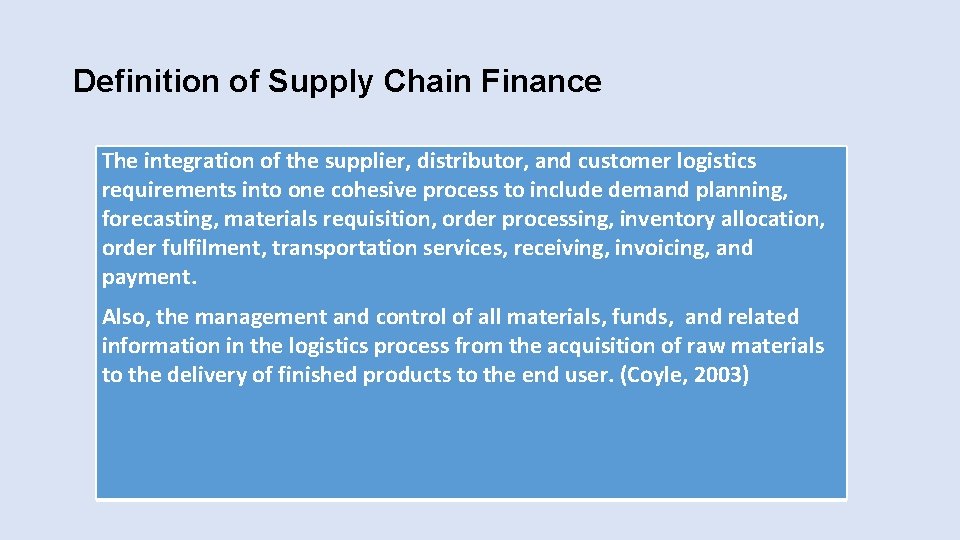
Definition of Supply Chain Finance The integration of the supplier, distributor, and customer logistics requirements into one cohesive process to include demand planning, forecasting, materials requisition, order processing, inventory allocation, order fulfilment, transportation services, receiving, invoicing, and payment. Also, the management and control of all materials, funds, and related information in the logistics process from the acquisition of raw materials to the delivery of finished products to the end user. (Coyle, 2003)
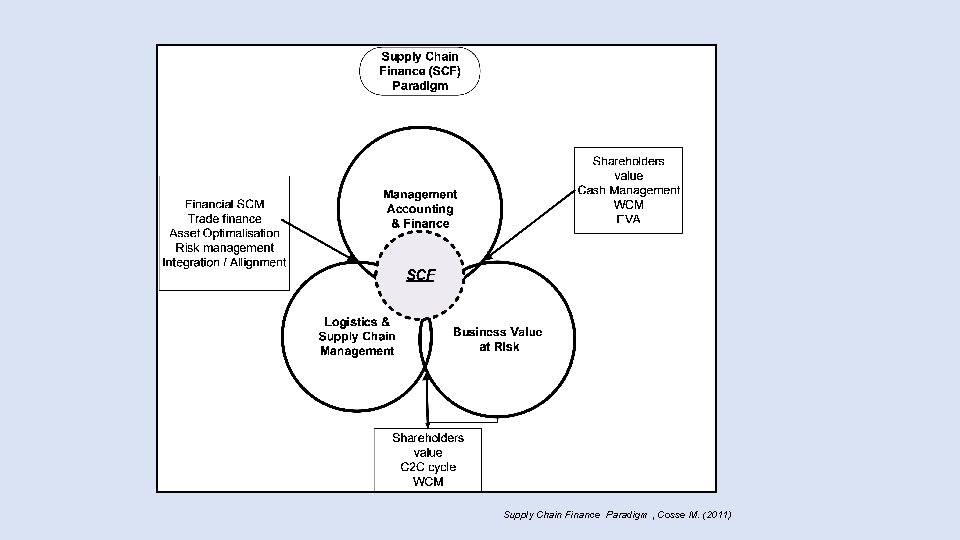
Supply Chain Finance Paradigm , Cosse M. (2011)
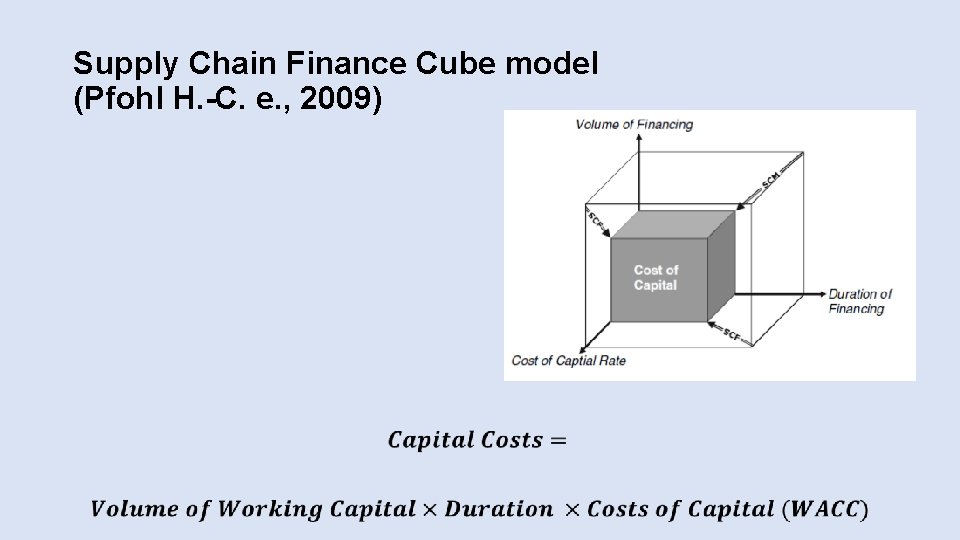
Supply Chain Finance Cube model (Pfohl H. -C. e. , 2009)
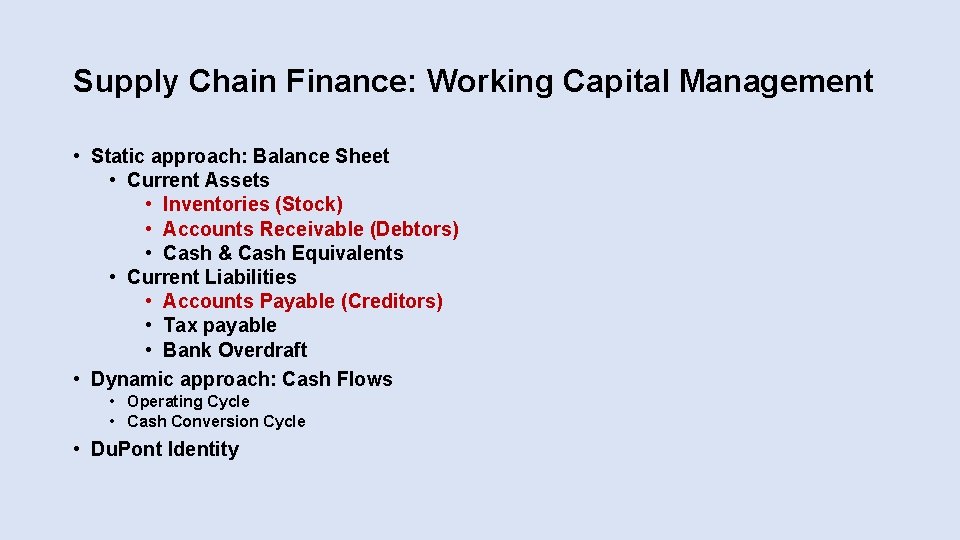
Supply Chain Finance: Working Capital Management • Static approach: Balance Sheet • Current Assets • Inventories (Stock) • Accounts Receivable (Debtors) • Cash & Cash Equivalents • Current Liabilities • Accounts Payable (Creditors) • Tax payable • Bank Overdraft • Dynamic approach: Cash Flows • Operating Cycle • Cash Conversion Cycle • Du. Pont Identity
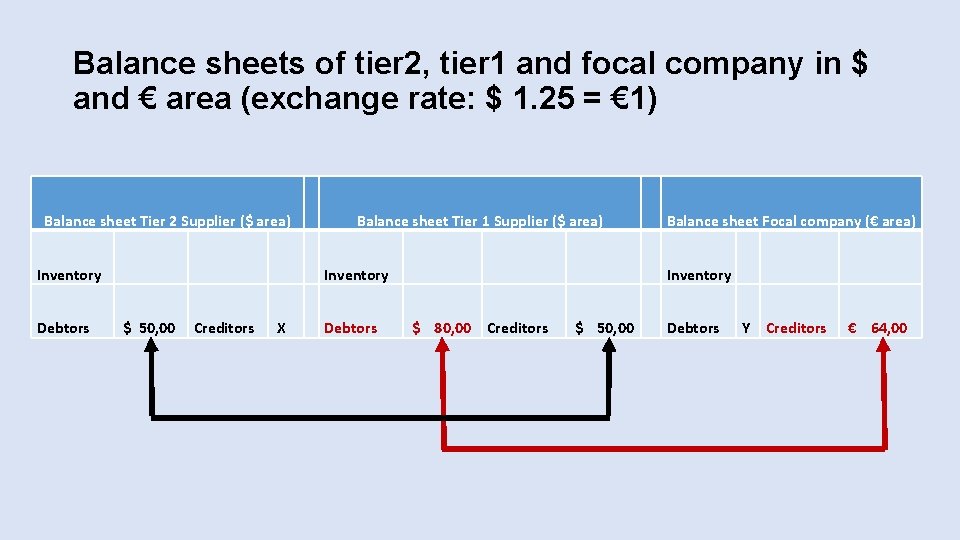
Balance sheets of tier 2, tier 1 and focal company in $ and € area (exchange rate: $ 1. 25 = € 1) Balance sheet Tier 2 Supplier ($ area) Inventory Debtors $ 50, 00 Creditors Balance sheet Tier 1 Supplier ($ area) Inventory X Debtors $ 80, 00 Creditors Balance sheet Focal company (€ area) Inventory $ 50, 00 Debtors Y Creditors € 64, 00
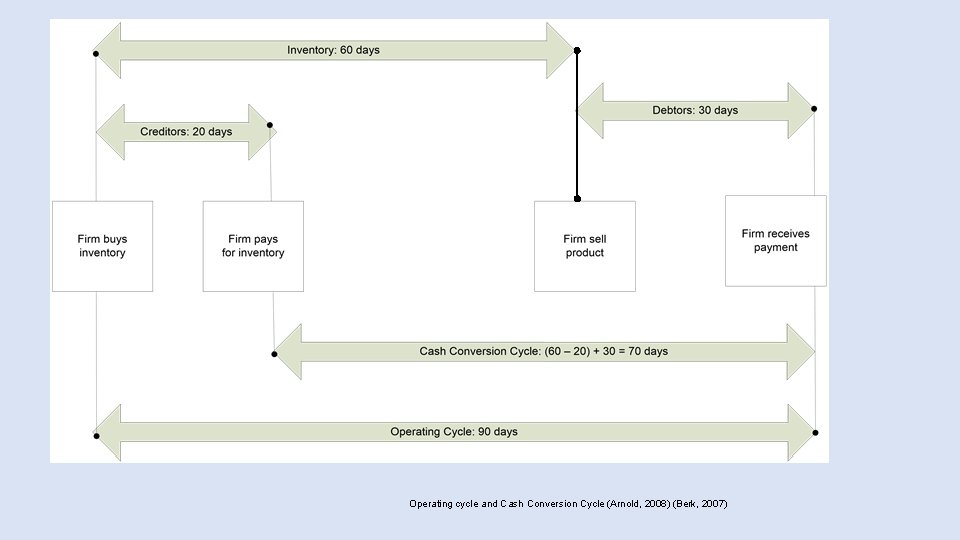
Operating cycle and Cash Conversion Cycle (Arnold, 2008) (Berk, 2007)
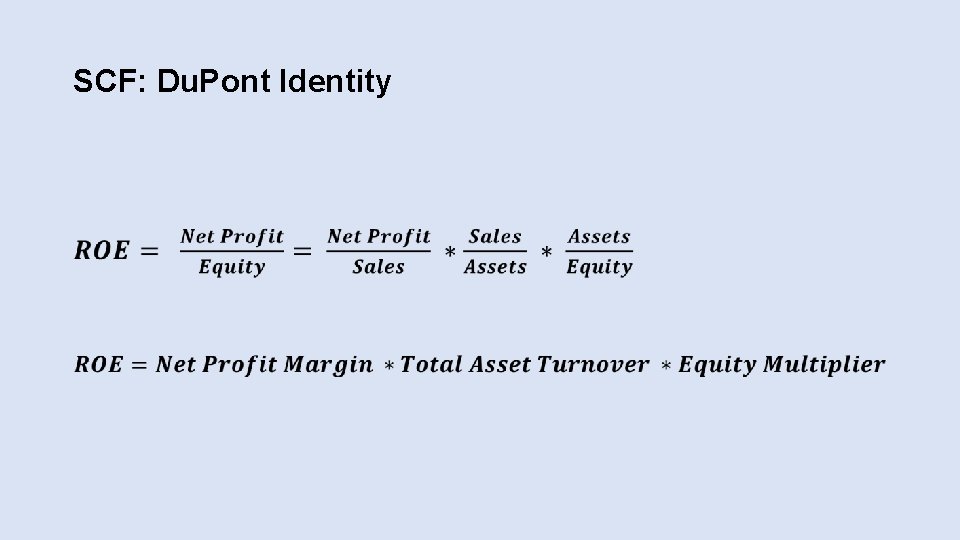
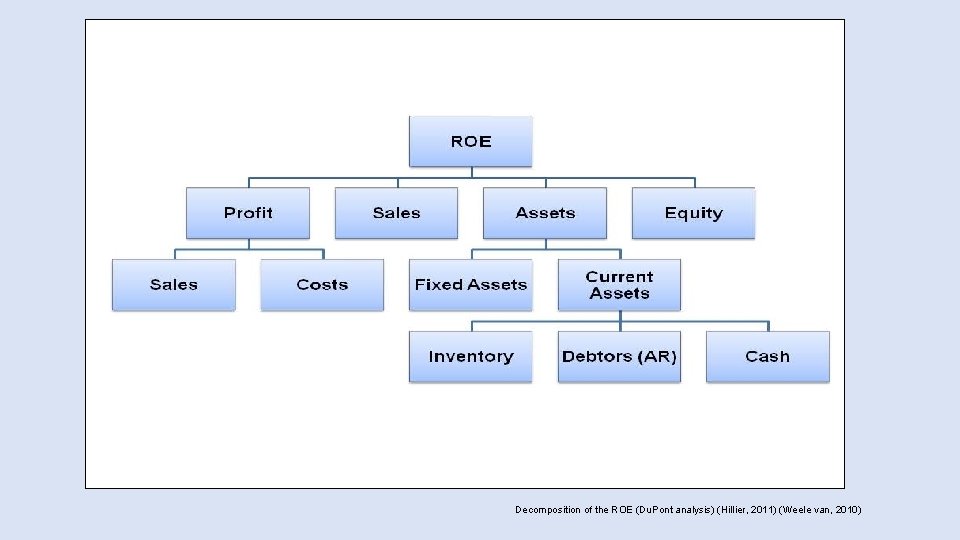
SCF: Du. Pont Identity •
Decomposition of the ROE (Du. Pont analysis) (Hillier, 2011) (Weele van, 2010)
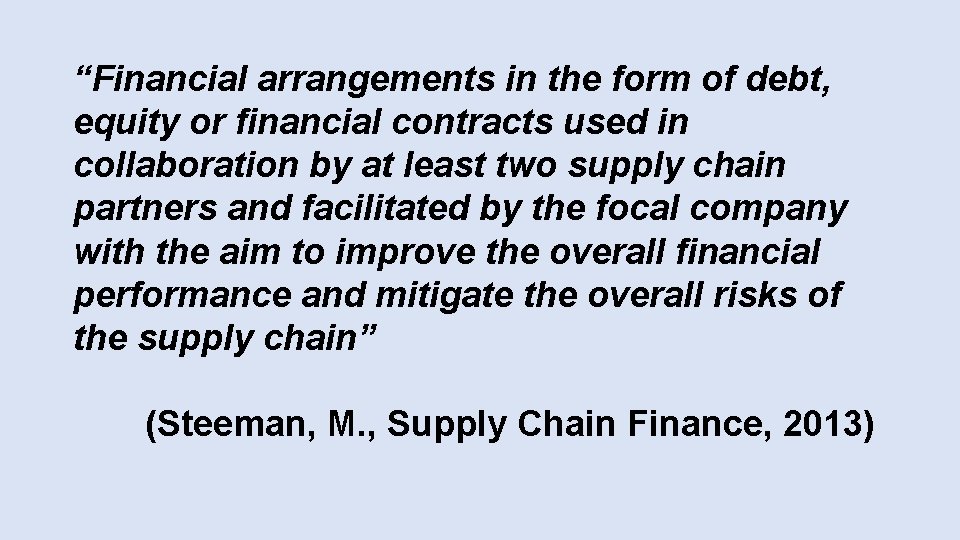
“Financial arrangements in the form of debt, equity or financial contracts used in collaboration by at least two supply chain partners and facilitated by the focal company with the aim to improve the overall financial performance and mitigate the overall risks of the supply chain” (Steeman, M. , Supply Chain Finance, 2013)
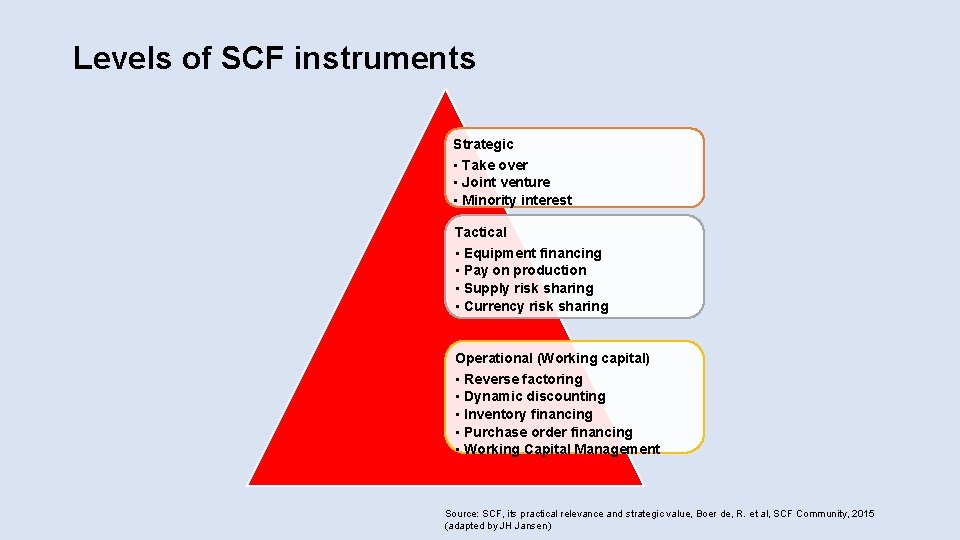
Levels of SCF instruments Strategic • Take over • Joint venture • Minority interest Tactical • Equipment financing • Pay on production • Supply risk sharing • Currency risk sharing Operational (Working capital) • Reverse factoring • Dynamic discounting • Inventory financing • Purchase order financing • Working Capital Management Source: SCF, its practical relevance and strategic value, Boer de, R. et al, SCF Community, 2015 (adapted by JH Jansen)
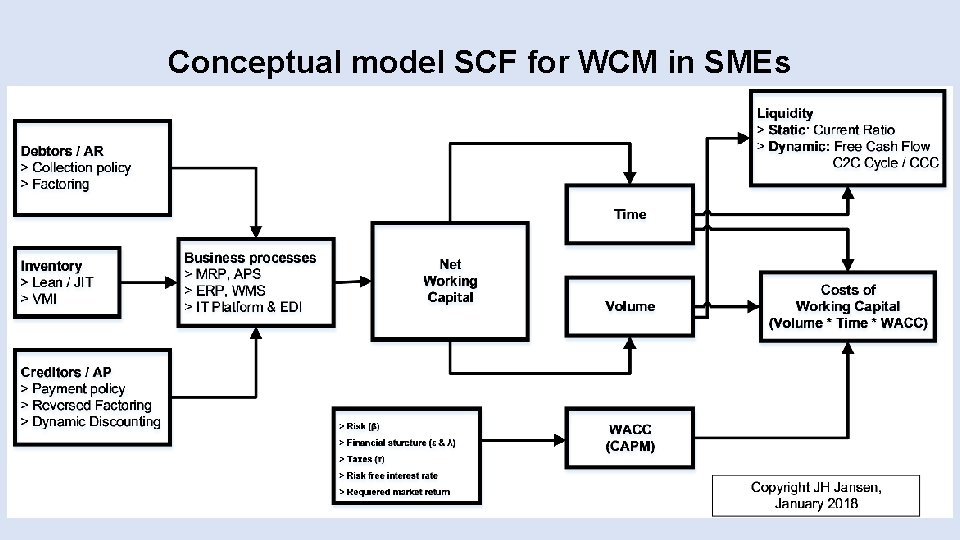
Conceptual model SCF for WCM in SMEs
Supply Chain Finance & Corporate Value (Pfohl H. -C. e. , 2009)
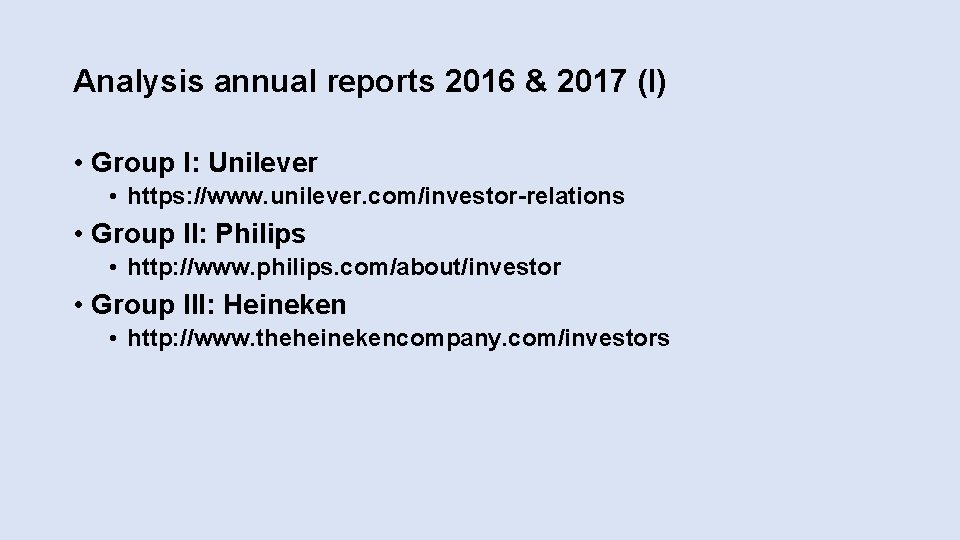
Analysis annual reports 2016 & 2017 (I) • Group I: Unilever • https: //www. unilever. com/investor-relations • Group II: Philips • http: //www. philips. com/about/investor • Group III: Heineken • http: //www. theheinekencompany. com/investors
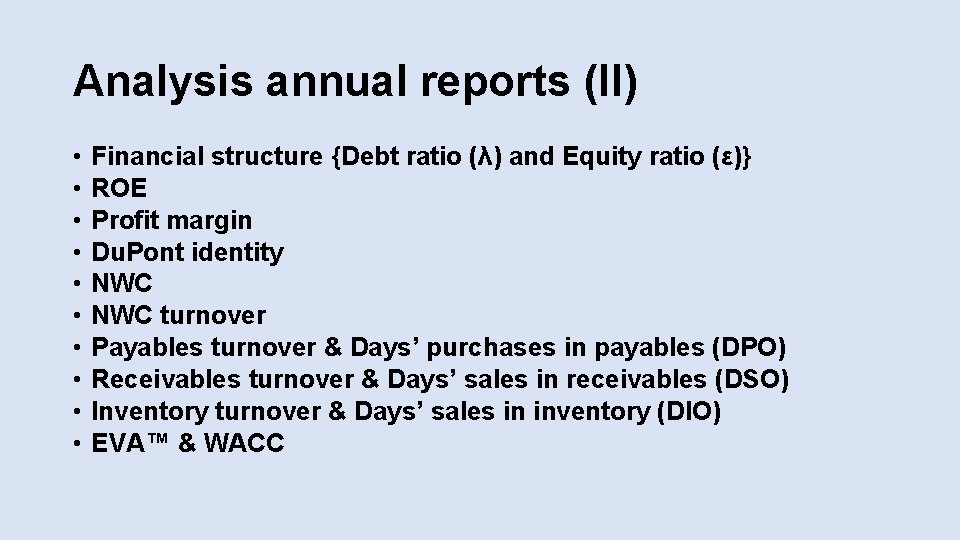
Analysis annual reports (II) • • • Financial structure {Debt ratio (λ) and Equity ratio (ε)} ROE Profit margin Du. Pont identity NWC turnover Payables turnover & Days’ purchases in payables (DPO) Receivables turnover & Days’ sales in receivables (DSO) Inventory turnover & Days’ sales in inventory (DIO) EVA™ & WACC
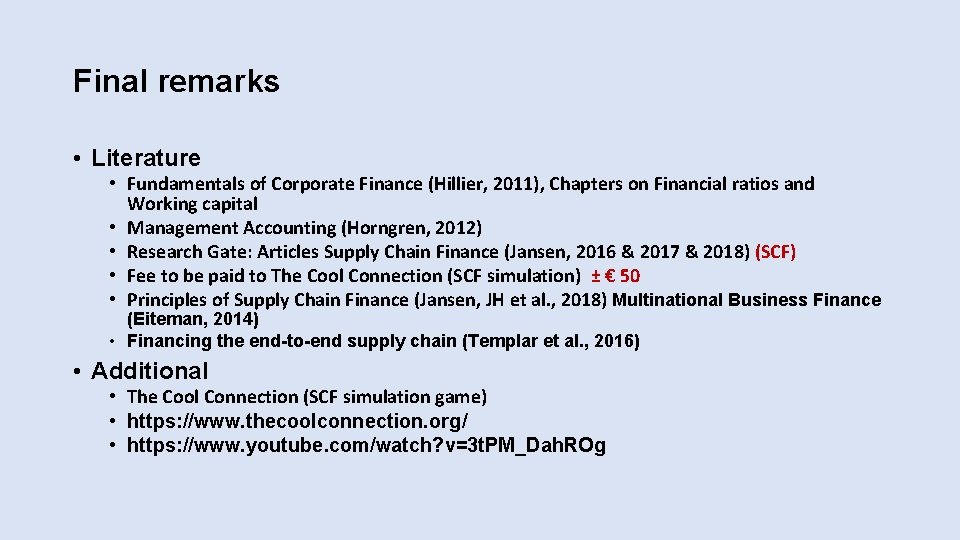
Final remarks • Literature • Fundamentals of Corporate Finance (Hillier, 2011), Chapters on Financial ratios and Working capital • Management Accounting (Horngren, 2012) • Research Gate: Articles Supply Chain Finance (Jansen, 2016 & 2017 & 2018) (SCF) • Fee to be paid to The Cool Connection (SCF simulation) ± € 50 • Principles of Supply Chain Finance (Jansen, JH et al. , 2018) Multinational Business Finance (Eiteman, 2014) • Financing the end-to-end supply chain (Templar et al. , 2016) • Additional • The Cool Connection (SCF simulation game) • https: //www. thecoolconnection. org/ • https: //www. youtube. com/watch? v=3 t. PM_Dah. ROg
To read for lecture 2 ! Source: http: //www. windesheim. nl/onderzoek/deskundigen/michiel-steeman/