Strategic Planning Made Easy Dr Penny Quinn VP
- Slides: 28
Strategic Planning Made Easy Dr. Penny Quinn, VP Barton Community College NISOD 2013
Brief Experience with Strategic Planning • Involved with redesign of college strategic plan • 3 institutions in 3 states • Employment • In HE 23 years • Predominantly in public community colleges • Positions • Faculty Member, Department Chair, Program Director, Dean, & VP
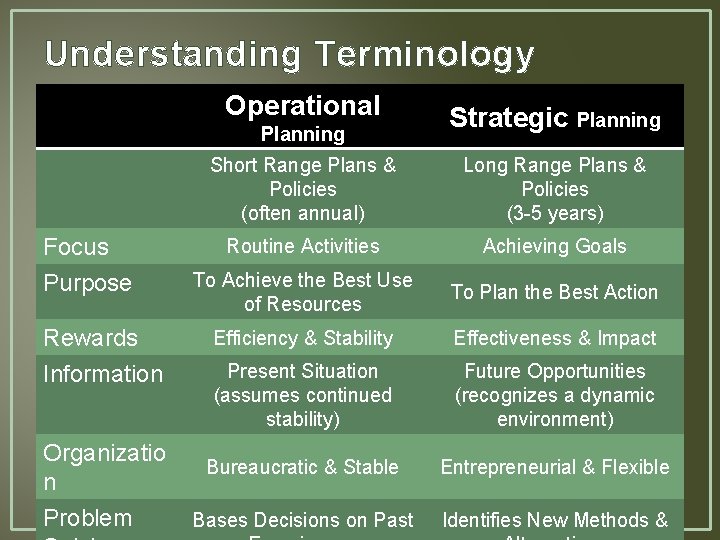
Understanding Terminology Operational Planning Strategic Planning Short Range Plans & Policies (often annual) Long Range Plans & Policies (3 -5 years) Routine Activities Achieving Goals To Achieve the Best Use of Resources To Plan the Best Action Rewards Efficiency & Stability Effectiveness & Impact Information Present Situation (assumes continued stability) Future Opportunities (recognizes a dynamic environment) Bureaucratic & Stable Entrepreneurial & Flexible Bases Decisions on Past Identifies New Methods & Focus Purpose Organizatio n Problem
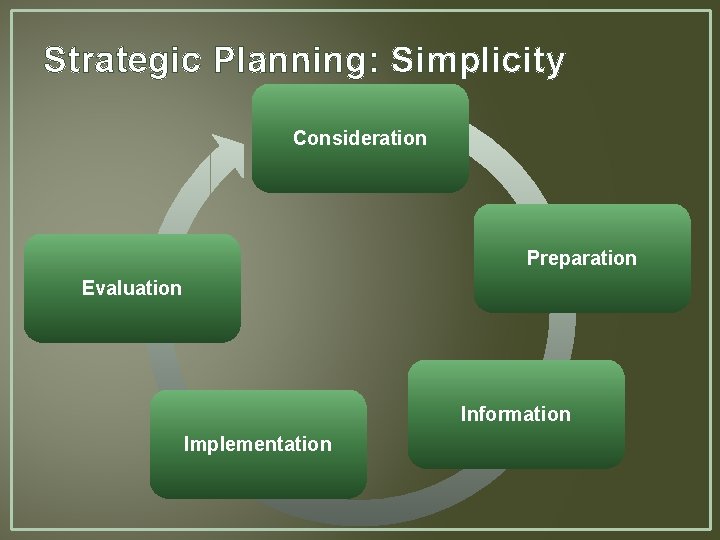
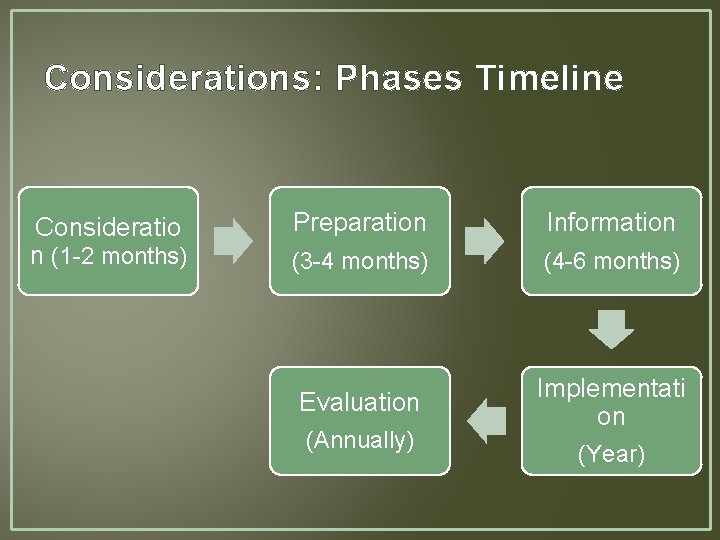
Strategic Planning: Simplicity Consideration Preparation Evaluation Information Implementation
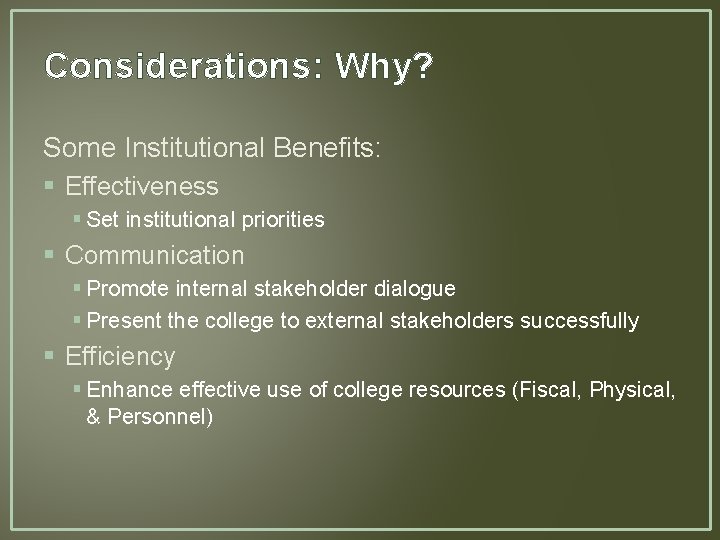
Considerations: Why? Some Institutional Benefits: § Effectiveness § Set institutional priorities § Communication § Promote internal stakeholder dialogue § Present the college to external stakeholders successfully § Efficiency § Enhance effective use of college resources (Fiscal, Physical, & Personnel)
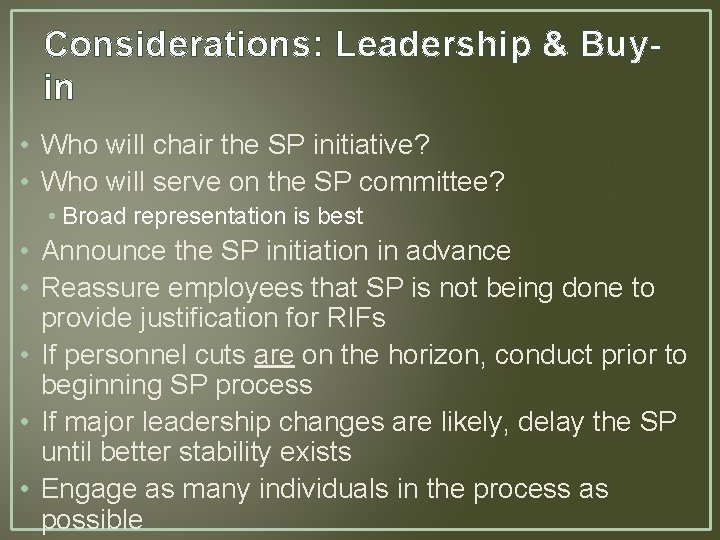
Considerations: Leadership & Buyin • Who will chair the SP initiative? • Who will serve on the SP committee? • Broad representation is best • Announce the SP initiation in advance • Reassure employees that SP is not being done to provide justification for RIFs • If personnel cuts are on the horizon, conduct prior to beginning SP process • If major leadership changes are likely, delay the SP until better stability exists • Engage as many individuals in the process as possible
Considerations: Existing College Docs § Review college planning documents to ensure Vision, Mission, & Values (etc. ) truly represent the college § All must be clear and accurately reflect the institution as they will serve to guide college direction § ‘Core Values’ § ‘Vision’ § ‘Mission’
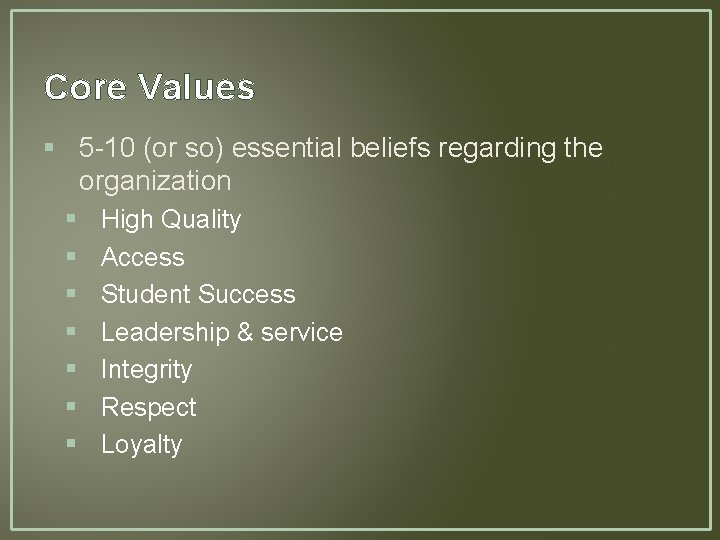
Core Values § 5 -10 (or so) essential beliefs regarding the organization § § § § High Quality Access Student Success Leadership & service Integrity Respect Loyalty
Vision Statement § Identifies what the college aspires to become § What is the ideal future state of the organization? § Based on the Core Values § Often include “Will be…” or “Aspires to…” phrasing
Mission Statement § Summarizing statement of the general principles guiding the organization § Who are we? § What is our purpose? § What is our philosophy? § How do we meet stakeholder expectations? § What makes us unique?
Considerations: Phases Timeline Consideratio n (1 -2 months) Preparation Information (3 -4 months) (4 -6 months) Evaluation Implementati on (Annually) (Year)
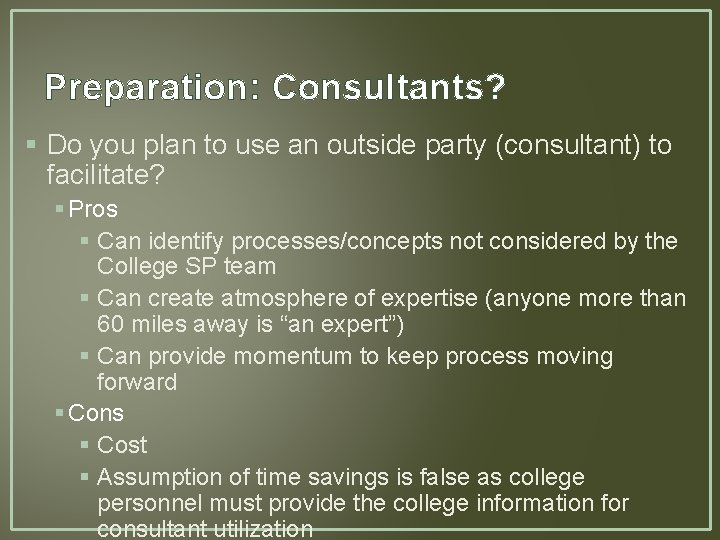
Preparation: Consultants? § Do you plan to use an outside party (consultant) to facilitate? § Pros § Can identify processes/concepts not considered by the College SP team § Can create atmosphere of expertise (anyone more than 60 miles away is “an expert”) § Can provide momentum to keep process moving forward § Cons § Cost § Assumption of time savings is false as college personnel must provide the college information for consultant utilization
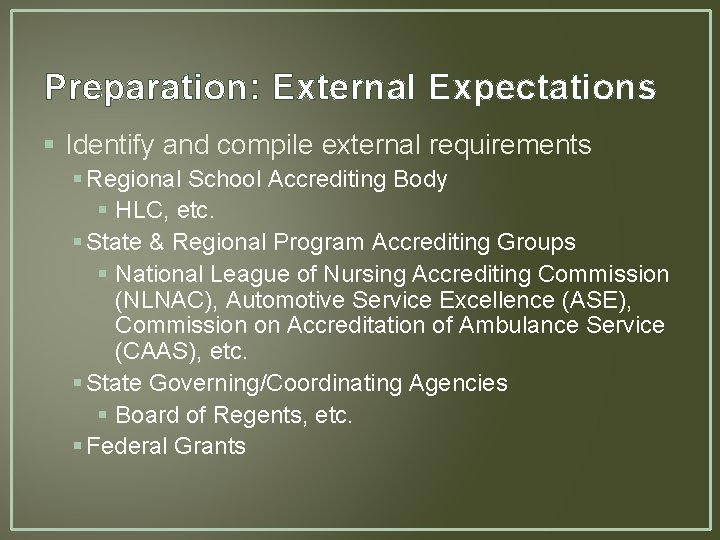
Preparation: External Expectations § Identify and compile external requirements § Regional School Accrediting Body § HLC, etc. § State & Regional Program Accrediting Groups § National League of Nursing Accrediting Commission (NLNAC), Automotive Service Excellence (ASE), Commission on Accreditation of Ambulance Service (CAAS), etc. § State Governing/Coordinating Agencies § Board of Regents, etc. § Federal Grants
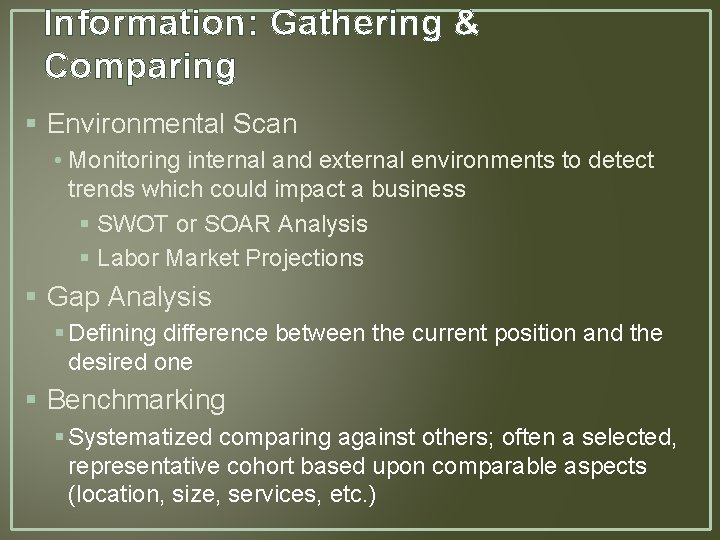
Information: Gathering & Comparing § Environmental Scan • Monitoring internal and external environments to detect trends which could impact a business § SWOT or SOAR Analysis § Labor Market Projections § Gap Analysis § Defining difference between the current position and the desired one § Benchmarking § Systematized comparing against others; often a selected, representative cohort based upon comparable aspects (location, size, services, etc. )
Information: Focus Group • To gather in-depth info from a large population • Select 6 -12 individuals with common characteristics • Define questions to be used for all groups • Facilitator led, with scribe (doesn’t interact with group) • 60 -90 minutes in length • Pros • Quick & relatively easy • Group dynamic can provide more quality info • Cons • Facilitator bias possible • Conversation can be biased by strong personalities • Data analysis can be time consuming
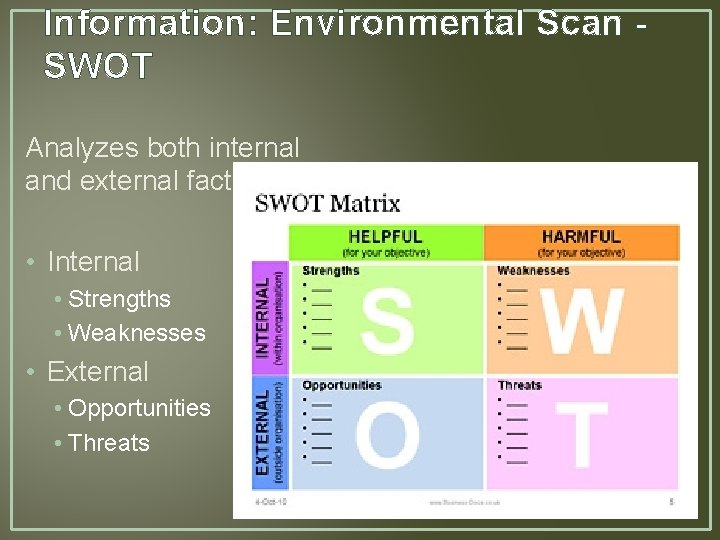
Information: Environmental Scan SWOT Analyzes both internal and external factors • Internal • Strengths • Weaknesses • External • Opportunities • Threats
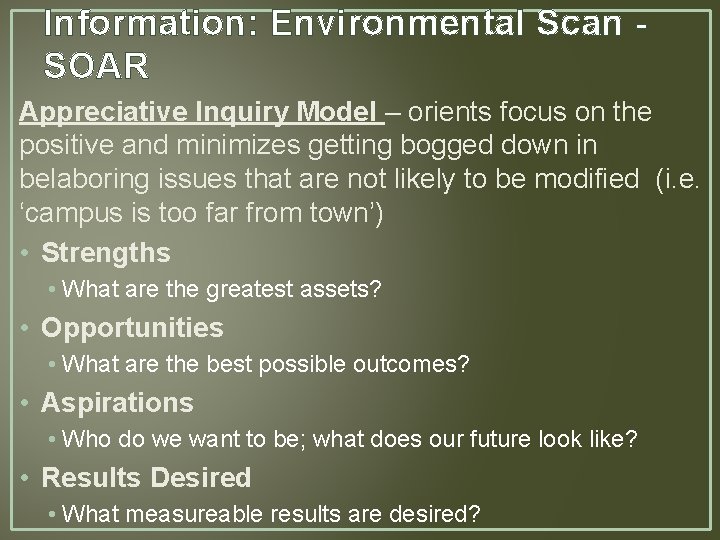
Information: Environmental Scan SOAR Appreciative Inquiry Model – orients focus on the positive and minimizes getting bogged down in belaboring issues that are not likely to be modified (i. e. ‘campus is too far from town’) • Strengths • What are the greatest assets? • Opportunities • What are the best possible outcomes? • Aspirations • Who do we want to be; what does our future look like? • Results Desired • What measureable results are desired?
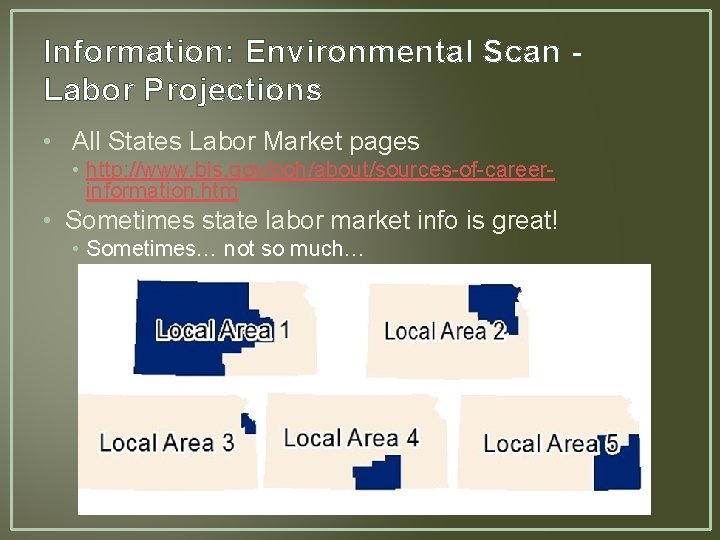
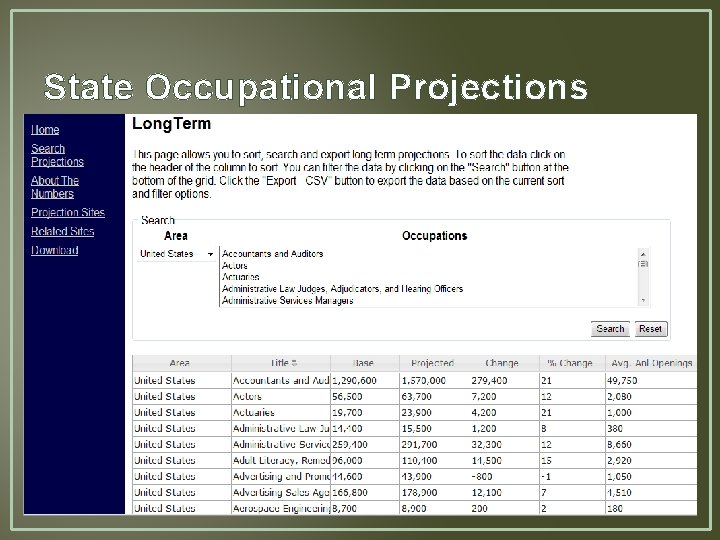
Information: Environmental Scan Labor Projections • All States Labor Market pages • http: //www. bls. gov/ooh/about/sources-of-careerinformation. htm • Sometimes state labor market info is great! • Sometimes… not so much…
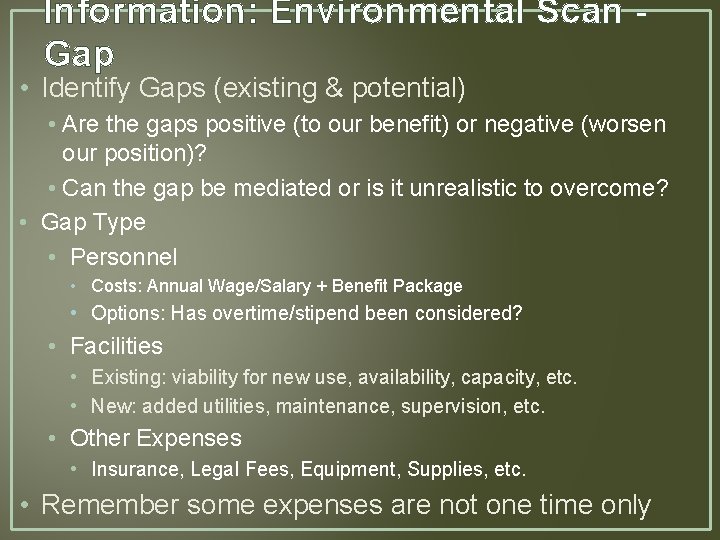
Information: Environmental Scan Gap • Identify Gaps (existing & potential) • Are the gaps positive (to our benefit) or negative (worsen our position)? • Can the gap be mediated or is it unrealistic to overcome? • Gap Type • Personnel • Costs: Annual Wage/Salary + Benefit Package • Options: Has overtime/stipend been considered? • Facilities • Existing: viability for new use, availability, capacity, etc. • New: added utilities, maintenance, supervision, etc. • Other Expenses • Insurance, Legal Fees, Equipment, Supplies, etc. • Remember some expenses are not one time only
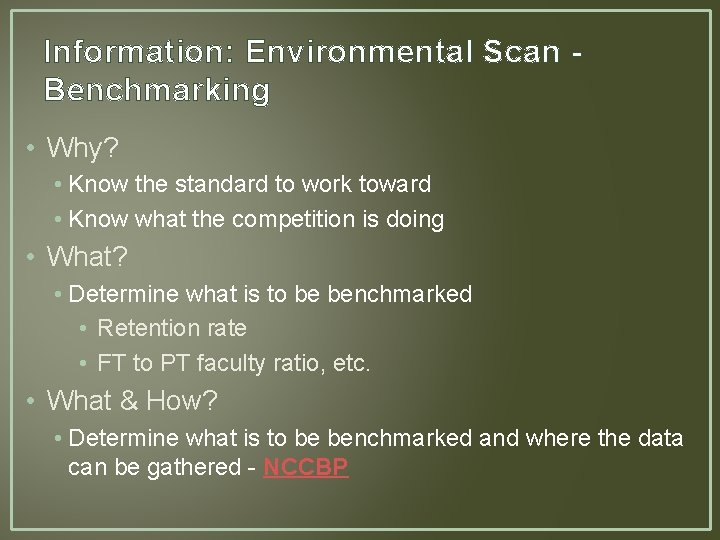
Information: Environmental Scan Benchmarking • Why? • Know the standard to work toward • Know what the competition is doing • What? • Determine what is to be benchmarked • Retention rate • FT to PT faculty ratio, etc. • What & How? • Determine what is to be benchmarked and where the data can be gathered - NCCBP
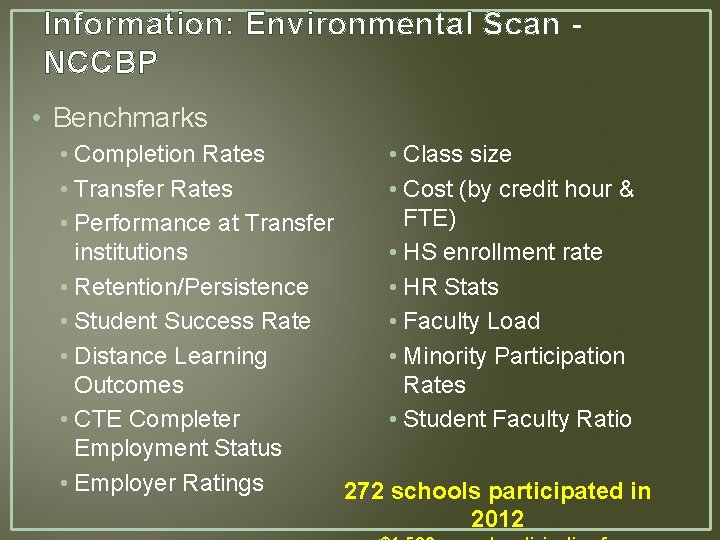
Information: Environmental Scan NCCBP • Benchmarks • Class size • Completion Rates • Cost (by credit hour & • Transfer Rates FTE) • Performance at Transfer • HS enrollment rate institutions • HR Stats • Retention/Persistence • Faculty Load • Student Success Rate • Minority Participation • Distance Learning Rates Outcomes • Student Faculty Ratio • CTE Completer Employment Status • Employer Ratings 272 schools participated in 2012
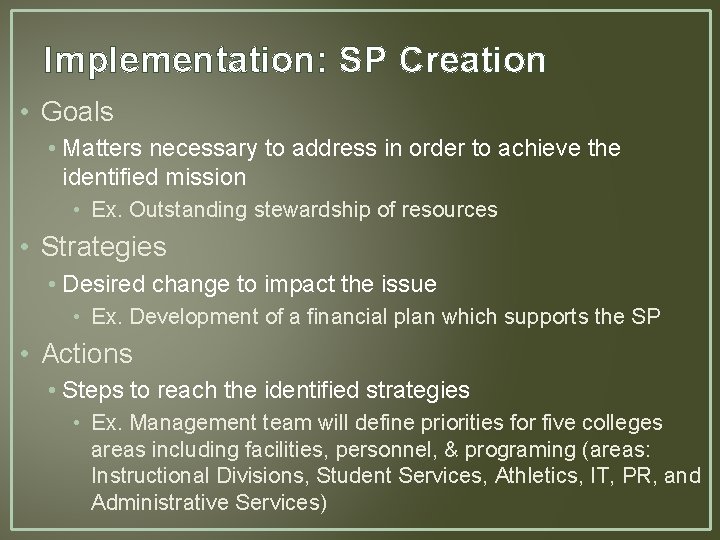
Implementation: SP Creation • Goals • Matters necessary to address in order to achieve the identified mission • Ex. Outstanding stewardship of resources • Strategies • Desired change to impact the issue • Ex. Development of a financial plan which supports the SP • Actions • Steps to reach the identified strategies • Ex. Management team will define priorities for five colleges areas including facilities, personnel, & programing (areas: Instructional Divisions, Student Services, Athletics, IT, PR, and Administrative Services)
Implementation: Final Stage • The Strategic Plan serves as the foundation upon which the budget is developed to meet the identified expectations as efficiently as possible • Publication of the SP • Identification of the key internal leaders for the various initiative identified • Determination of the communication methods and plans which will be utilized
Evaluation § Recognition that SP must remain flexible – it is a conceptual framework not a rigid hierarchy § Consistent results tracking § Annual review § Modification of strategies as necessary § Recognition of emergent strategies § Consistent communication regarding strategic actions and results § Presidents Council and other campus committees § Presidential Email § College Newsletter § Webpage Notification
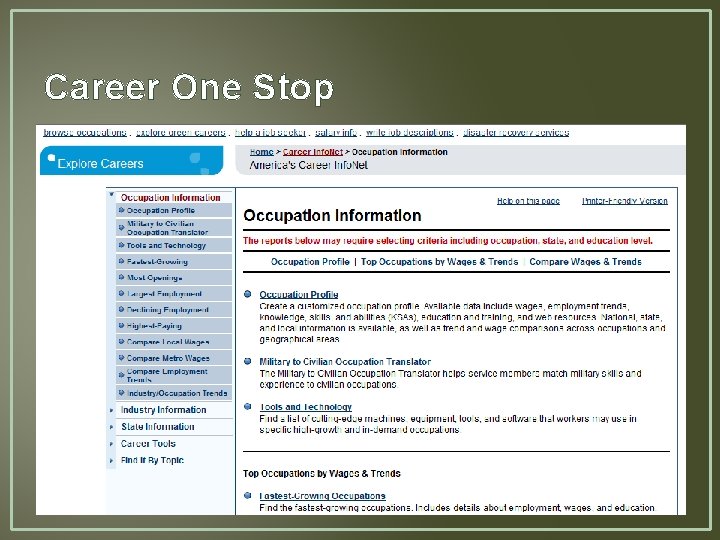
Resources • NCCBP – National Community College Benchmarking Project • www. nccbp. org • Occupational Outlook Handbook • http: //www. bls. gov/ooh/About/Projections-Overview. htm • Projections Central (State Occupational Projections) • http: //www. projectionscentral. com/ • Career One Stop • http: //www. careerinfonet. org/Occ_Intro. asp? id=1, &nodeid=1
State Occupational Projections
Career One Stop
Questions? Dr. Penny Quinn Vice President Barton Community College Quinn. P@Barton. CCC. edu Office #620 -792 -9303 Power. Point Available: http: //bartonccc. edu/administration/is/staff/perki nsc/quinnnisod. html