Strategic Choices 8 International Strategy Learning Outcomes 1
- Slides: 26
Strategic Choices 8: International Strategy
Learning Outcomes (1) £ Assess the internationalisation potential of different markets, sensitive to variations over time £ Identify sources of competitive advantage in international strategy, both through global sourcing and exploitation of local factors embodied in Porter’s Diamond £ Distinguish between four main types of international strategy Exploring Corporate Strategy 8 e, © Pearson Education 2008 8 -2
Learning Outcomes (2) £ Rank markets for entry or expansion, taking into account attractiveness, cultural, and other forms of distance and competitor retaliation threats £ Assess the relative merits of different market entry modes, including joint ventures, licensing, and foreign direct investment Exploring Corporate Strategy 8 e, © Pearson Education 2008 8 -3
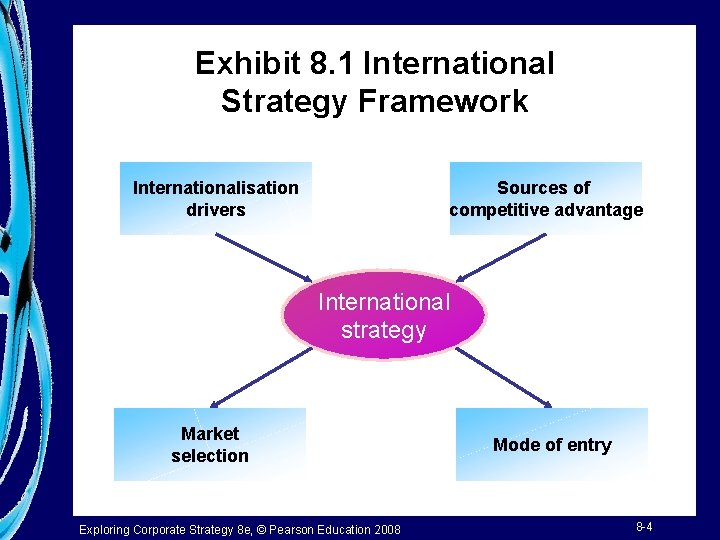
Exhibit 8. 1 International Strategy Framework Internationalisation drivers Sources of competitive advantage International strategy Market selection Exploring Corporate Strategy 8 e, © Pearson Education 2008 Mode of entry 8 -4
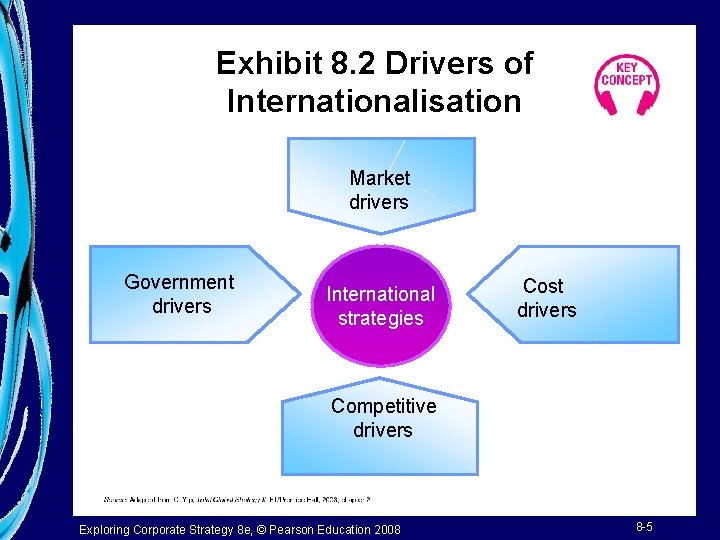
Exhibit 8. 2 Drivers of Internationalisation Market drivers Government drivers International strategies Cost drivers Competitive drivers Exploring Corporate Strategy 8 e, © Pearson Education 2008 8 -5
Deutsche Post’s International Diversity £ What were the internationalisation drivers associated with DPWN’s strategy? £ Evaluate the pros and cons of both a multidomestic strategy and a global strategy for DPWN. Exploring Corporate Strategy 8 e, © Pearson Education 2008 8 -6
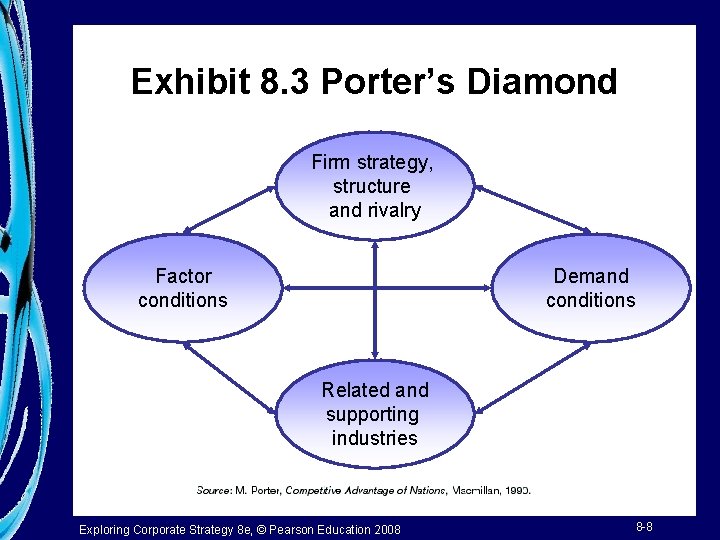
What is Porter’s Diamond? Porter’s Diamond suggests that there are inherent reasons why some nations are more competitive than others, and why some industries within nations are more competitive than others. Exploring Corporate Strategy 8 e, © Pearson Education 2008 8 -7
Exhibit 8. 3 Porter’s Diamond Firm strategy, structure and rivalry Factor conditions Demand conditions Related and supporting industries Exploring Corporate Strategy 8 e, © Pearson Education 2008 8 -8
What is Global Sourcing? Global sourcing refers to purchasing services and components from the most appropriate suppliers around the world regardless of their location. Exploring Corporate Strategy 8 e, © Pearson Education 2008 8 -9
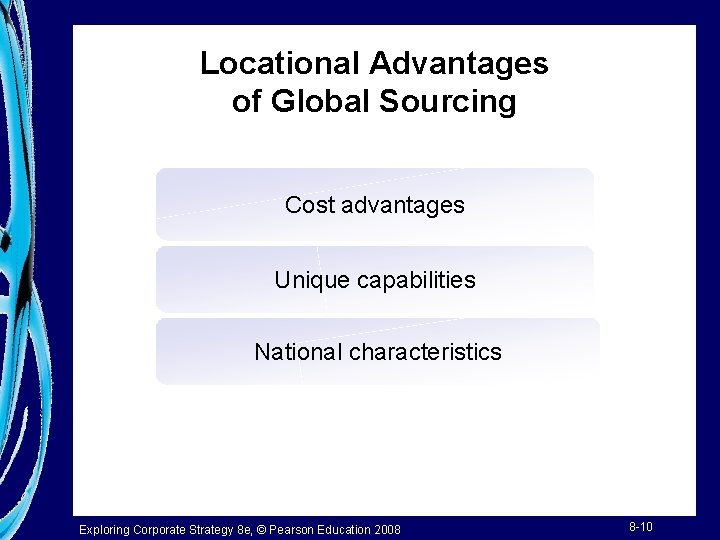
Locational Advantages of Global Sourcing Cost advantages Unique capabilities National characteristics Exploring Corporate Strategy 8 e, © Pearson Education 2008 8 -10
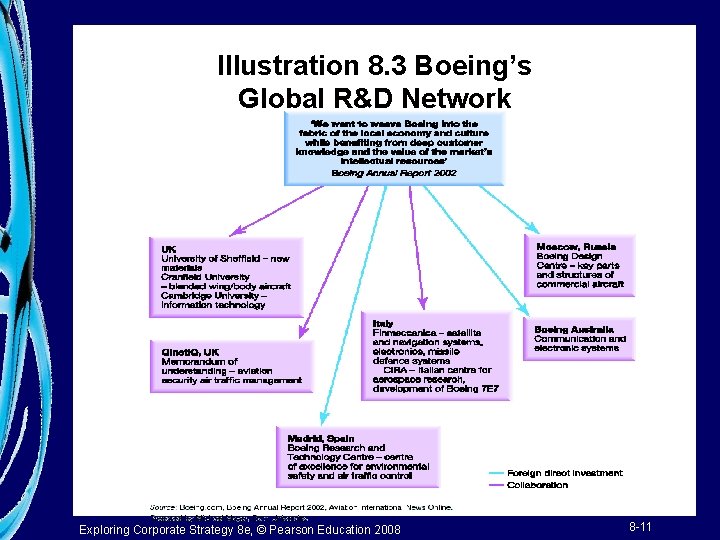
Illustration 8. 3 Boeing’s Global R&D Network Exploring Corporate Strategy 8 e, © Pearson Education 2008 8 -11
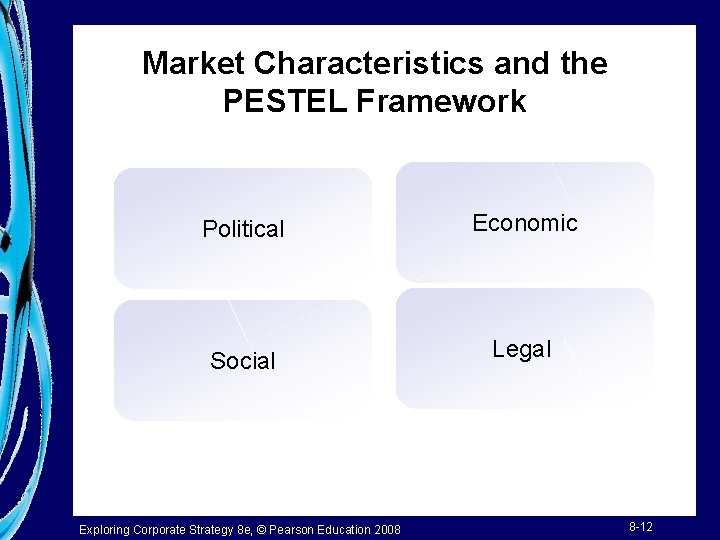
Market Characteristics and the PESTEL Framework Political Economic Social Legal Exploring Corporate Strategy 8 e, © Pearson Education 2008 8 -12
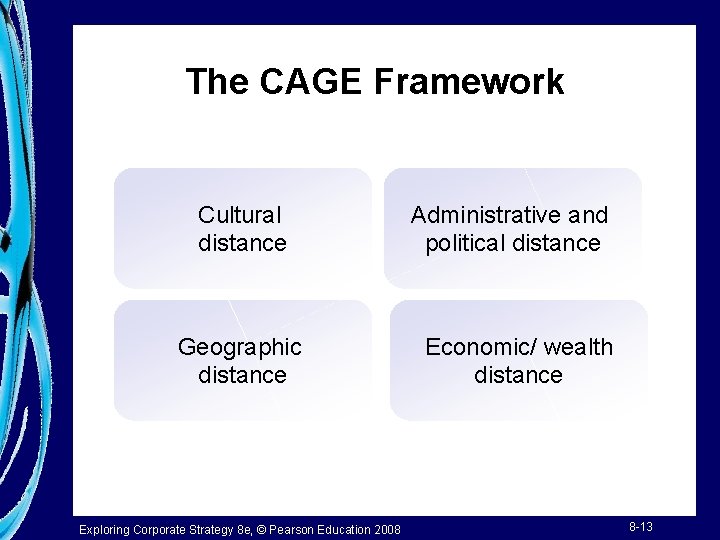
The CAGE Framework Cultural distance Geographic distance Exploring Corporate Strategy 8 e, © Pearson Education 2008 Administrative and political distance Economic/ wealth distance 8 -13
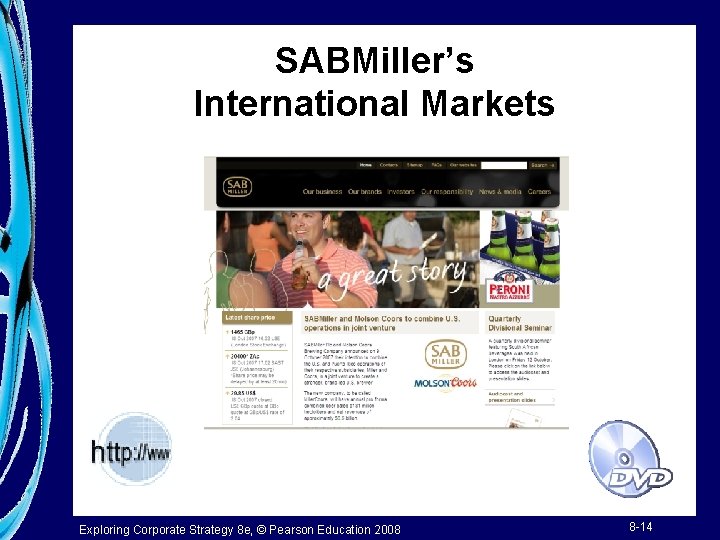
SABMiller’s International Markets Exploring Corporate Strategy 8 e, © Pearson Education 2008 8 -14
Hindustan Lever Ltd £ What challenges are faced by multinationals in developing global brands while encouraging local responsiveness? £ What are your views on the ethical dimensions to Hindustan Lever’s activities? Exploring Corporate Strategy 8 e, © Pearson Education 2008 8 -15
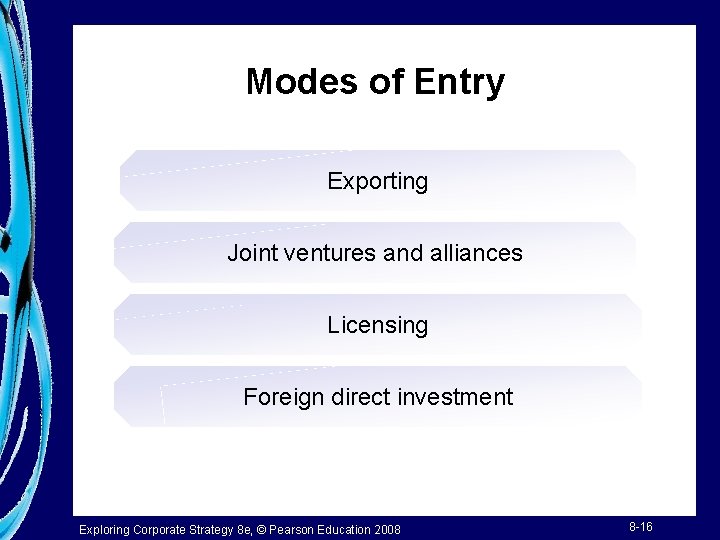
Modes of Entry Exporting Joint ventures and alliances Licensing Foreign direct investment Exploring Corporate Strategy 8 e, © Pearson Education 2008 8 -16
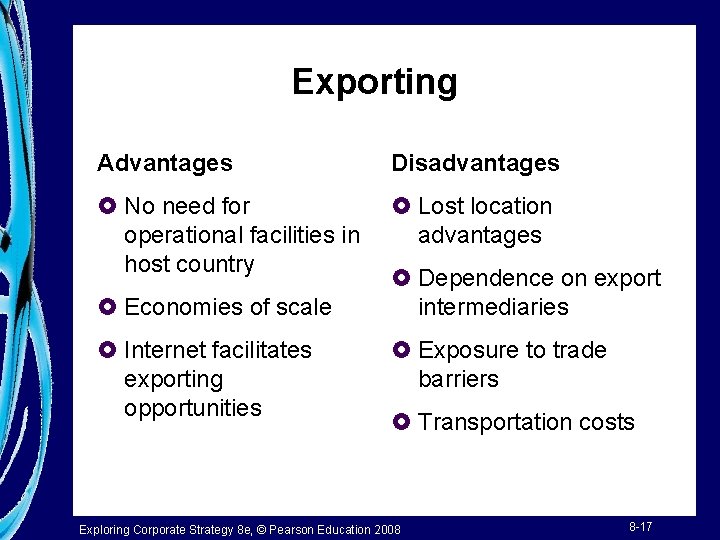
Exporting Advantages Disadvantages £ No need for operational facilities in host country £ Lost location advantages £ Economies of scale £ Internet facilitates exporting opportunities £ Dependence on export intermediaries £ Exposure to trade barriers £ Transportation costs Exploring Corporate Strategy 8 e, © Pearson Education 2008 8 -17
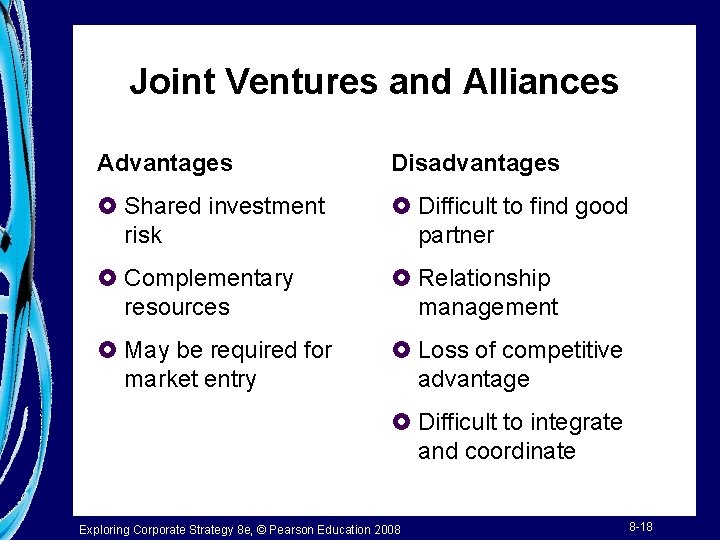
Joint Ventures and Alliances Advantages Disadvantages £ Shared investment risk £ Difficult to find good partner £ Complementary resources £ Relationship management £ May be required for market entry £ Loss of competitive advantage £ Difficult to integrate and coordinate Exploring Corporate Strategy 8 e, © Pearson Education 2008 8 -18
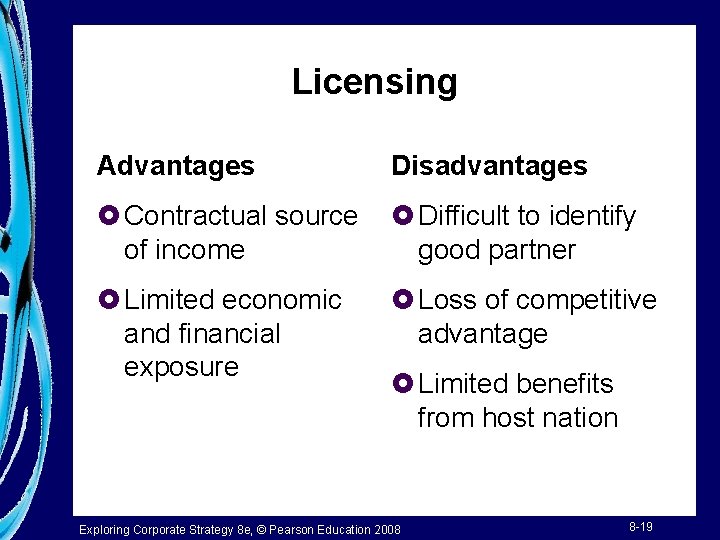
Licensing Advantages Disadvantages £ Contractual source of income £ Difficult to identify good partner £ Limited economic and financial exposure £ Loss of competitive advantage £ Limited benefits from host nation Exploring Corporate Strategy 8 e, © Pearson Education 2008 8 -19
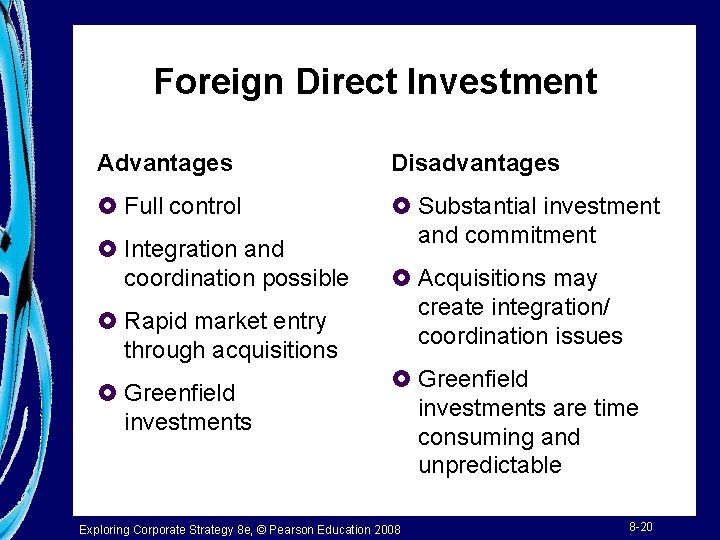
Foreign Direct Investment Advantages Disadvantages £ Full control £ Substantial investment and commitment £ Integration and coordination possible £ Rapid market entry through acquisitions £ Greenfield investments £ Acquisitions may create integration/ coordination issues £ Greenfield investments are time consuming and unpredictable Exploring Corporate Strategy 8 e, © Pearson Education 2008 8 -20
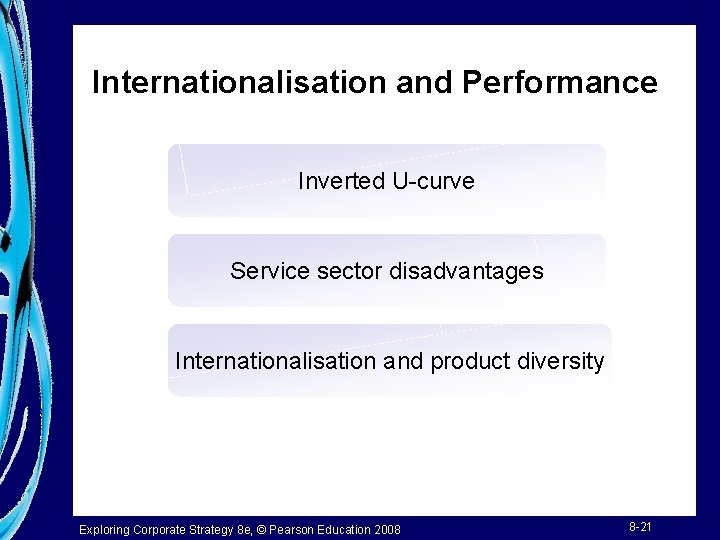
Internationalisation and Performance Inverted U-curve Service sector disadvantages Internationalisation and product diversity Exploring Corporate Strategy 8 e, © Pearson Education 2008 8 -21
Chapter Summary (1) £ Internationalisation potential in any particular market is determined by four drivers: market, cost, government, and competitors’ strategies. £ Sources of advantage can come from global sourcing through the international value network and national sources of advantage £ The main types of international strategy vary according to extent of coordination and geographical configuration: simple export, complex export, multidomestic, and global Exploring Corporate Strategy 8 e, © Pearson Education 2008 8 -22
Chapter Summary (2) £ Market selection for international entry should be based on attractiveness, multidimensional measures of distance and expectations of competitor retaliation £ Modes of entry into new markets include export, licensing, joint ventures, and foreign direct investment £ Internationalisation has an uncertain relationship to financial performance Exploring Corporate Strategy 8 e, © Pearson Education 2008 8 -23
Key Debate: Global, Local, or Regional? £ Make a list of products and services which are getting more ‘global’ over time. £ Now make a list of products and services which are getting less global. £ How many countries in the world have you visited in your lifetime? How many countries had your parents visited by the same age? Exploring Corporate Strategy 8 e, © Pearson Education 2008 8 -24
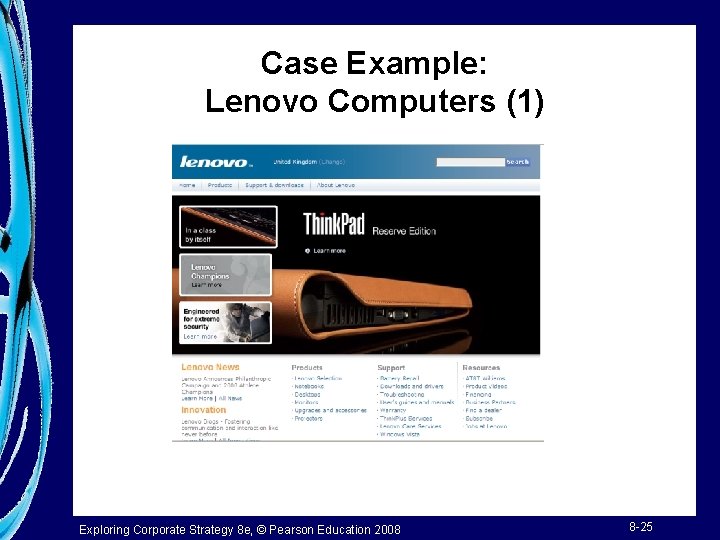
Case Example: Lenovo Computers (1) Exploring Corporate Strategy 8 e, © Pearson Education 2008 8 -25
Case Example: Lenovo Computers (2) £ What national sources of competitive advantage might Lenovo draw from its Chinese base? £ In the light of the CAGE framework, comment on Lenovo’s entry into the American market. £ What type of generic international strategy should Lenovo pursue now? Exploring Corporate Strategy 8 e, © Pearson Education 2008 8 -26