Spirochetes and Neisseria Gram negative Lecture 36 Faculty



- Slides: 44
Spirochetes and Neisseria (Gram negative) Lecture 36 Faculty: Dr. Alvin Fox 1
Key Words • • • Spirochete Axial filament Treponema pallidum Syphilis Chancre Primary lesion Darkfield microscopy Secondary Lesion Tertiary Lesion Anti-cardiolipin antibodies Anti-treponemal antibodies • • • Borrelia burgdorferi Lyme disease Relapsing fever (other borrelia) Leptospira (leptospirosis) Neisseria Thayer Martin agar Oxidase test N. gonorrhoeae Gonorrhea N. meningitidis Meningitis 2
SPIROCHETES Treponema, Borrelia and Leptospira 3
Spirochetes • Gram negative • long, thin, helical, motile • axial filaments – locomotion – between peptidoglycan layer/outer membrane * runs parallel 4
www. orl. cz/choroby/ustni/jazyk/zanet/1 Histology: Treponema pallidum - testis infected rabbit 5
Treponema pallidum • transmission – genital/genital – in utero or during birth 6
Syphilis • chronic • slowly progressive 7
• Secondary (2 -10 weeks later) - systemic spread - flu-like symptoms - skin, particularly - many organisms - Highly infectious 8
• Tertiary – several years later – rare – skin – central nervous system – delayed hypersensitivity – few organisms * control by immune response 9
Microbiological diagnosis • not culturable • dark field microscopy – actively motile organisms – brightly lit against dark backdrop – light shines at an angle – reflected from thin organisms – enters objective • conventional light microsrcopy – light shines through – NOT visualized 10
• fluorescence microscopy – antibody staining 11
Secondary and Tertiary Syphilis - serology • screening method • antibodies to cardiolipin • specific diagnosis • antibodies to treponemal antigen 12
Autoimminty • cardiolipin – self antigen 13
• no vaccine • antibiotics (e. g. penicillin) – effective 14
Other treponemal diseases • bejel, yaws and pinta – extremely rare in US 15
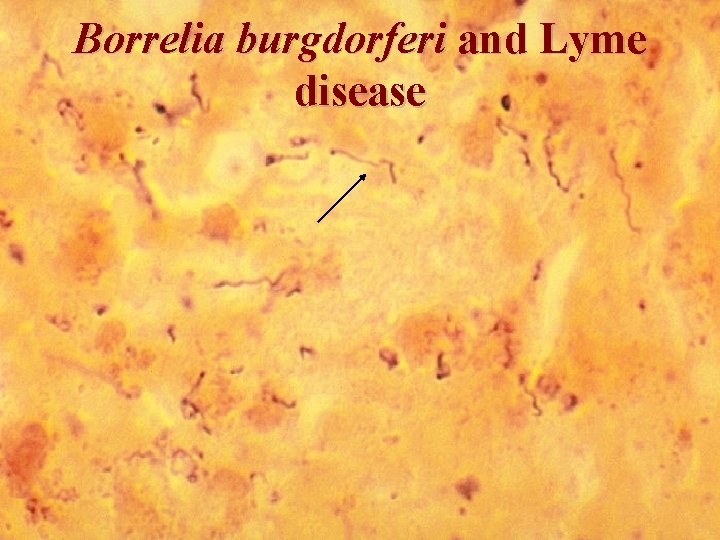
Borrelia burgdorferi and Lyme disease 16
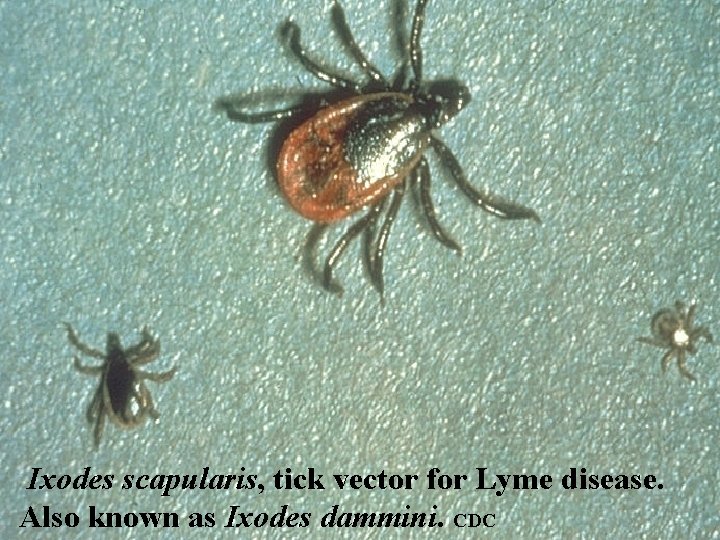
Ixodes scapularis, tick vector for Lyme disease. 17 Also known as Ixodes dammini. CDC
Lyme disease - symptoms • bacteremia – acute • arthritis • cardiac • neurologic – chronic * weeks, months later 18
Therapy • early antibiotic therapy – * * curable penicillin tetracycline • late antibiotic administration – ineffective 19
Diagnosis • serum antibodies to B. burgdorferi • laboratory strains – grow extremely slowly – tissue culture media – not bacteriological media • patient body fluids/tissue sample – almost never growth 20
A physicians dilemma • acute – responds to antibiotic –antibodies not detectable • late diagnosis – not curable – antibodies detectable 21
Lyme Disease -etiology • reactive arthritis similar to – Reiter's syndrome – rheumatic fever • resembles rheumatoid arthritis 22
Relapsing fever • <100/ per year in US • transmission –tick-B. hermsii * rodent, primary host – lice-B. recurrentis * human, primary host 23
“Relapsing” fever • immune response develops – disease relapses • new antigens expressed – no immunity – disease reappears 24
Diagnosis • no culture • no serological test • detected - blood smear 25
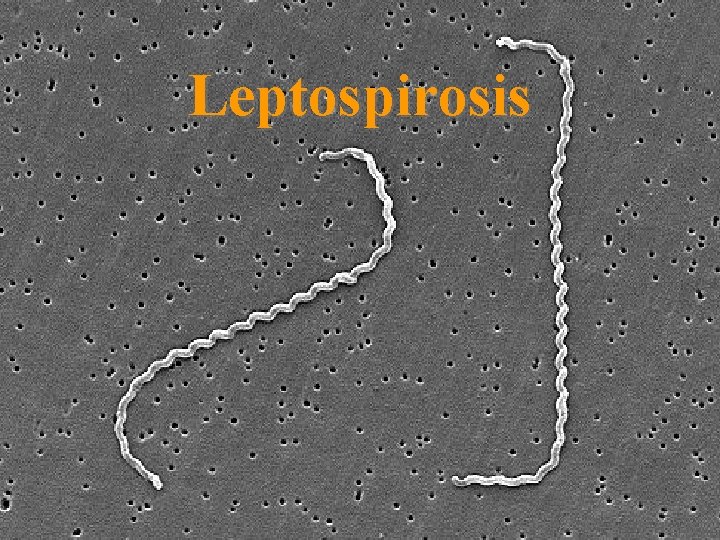
Leptospirosis 26
Leptospirosis • <100 cases per year in US • symptoms –flu-like –severe systemic disease * kidney * brain * eye 27
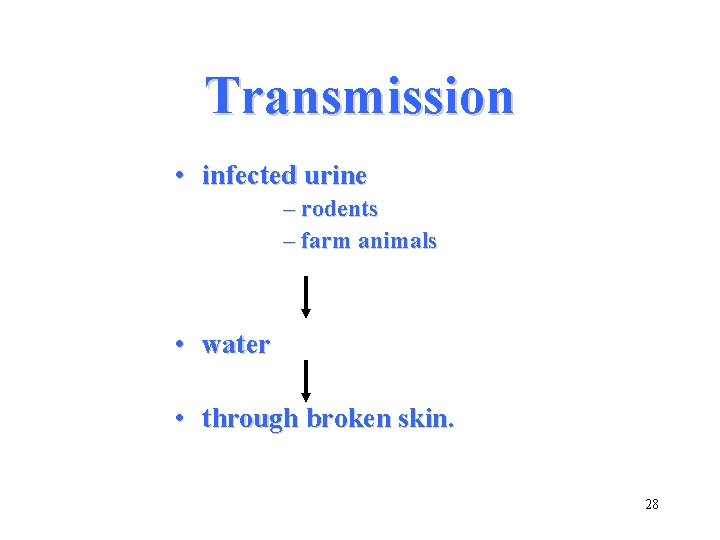
Transmission • infected urine – rodents – farm animals • water • through broken skin. 28
Laboratory Diagnosis • serology • most readily culturable of spirochetes – culture still extremely difficult 29
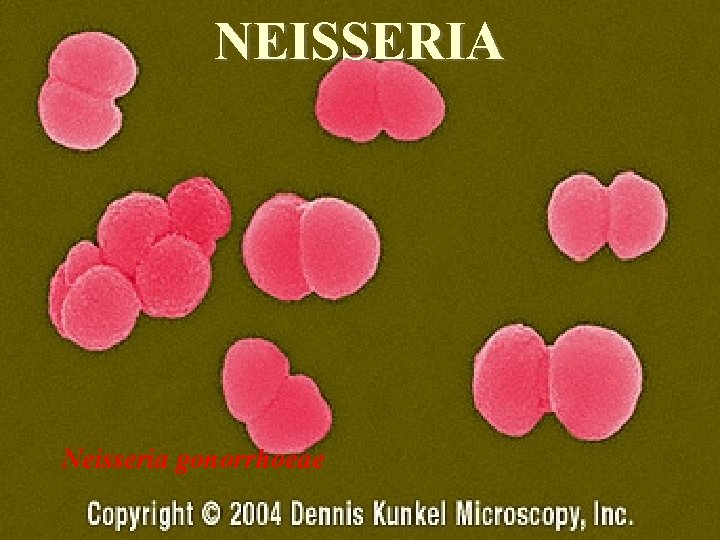
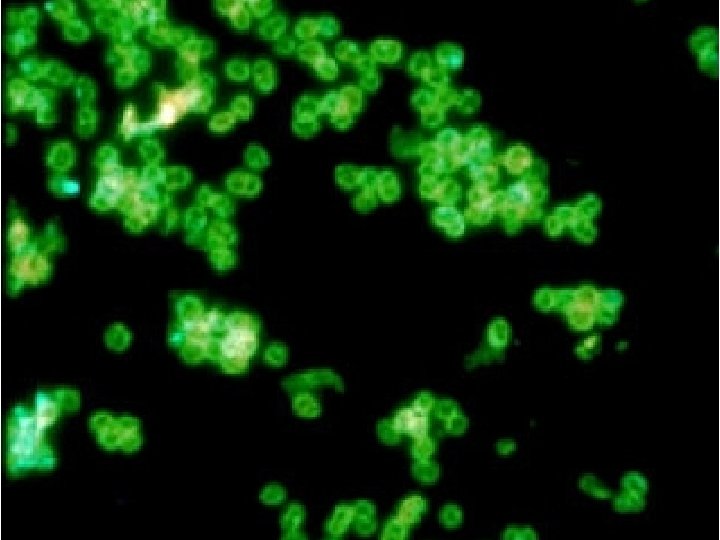
NEISSERIA Neisseria gonorrhoeae 30
31
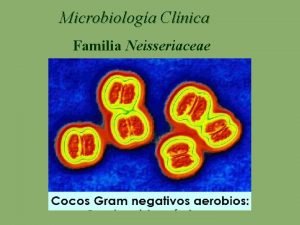
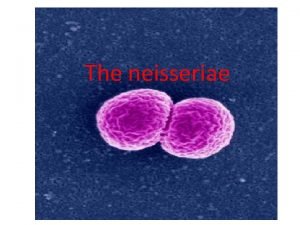
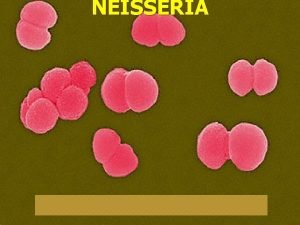
Neisseria • • • Gram negative diplococci (pairs of cocci) oxidase positive • culture • Thayer Martin. – selective – chocolate agar * heated blood (brown) 32
N. gonorrhoeae the “Gonococcus" • found only in man • gonorrhea • second most common venereal disease 33
Smear • polymorphonuclear cell • Gram negative cocci – many in cells 34
Dissemination -gonococci • gonoccocal arthritis – “septic” arthritis • dermatitis 35
Antibiotic therapy • β lactamase-resistant cephalosporin – e. g. ceftriaxone • resistant strains – common – produce β lactamases – destroy penicillin 36
Pathogensis • adhesion to genital epithelium – outer membrane – pili *Antigenicity highly variable among strains • no vaccine • Ig. A protease – also N. meningitidis 37
N. gonorrhoeae • Tissue injury – lipopolysaccharide – peptidoglycan 38
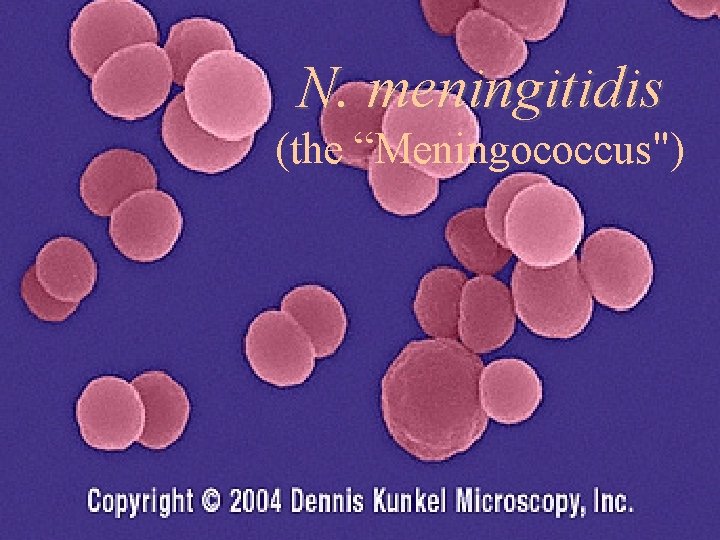
N. meningitidis (the “Meningococcus") 39
N. meningitidis • resides in man only • usually sporadic cases – mostly young children • outbreaks – adults – crowded conditions *e. g. army barracks, dorms 40
Neisseria meningitidis upper respiratory tract infection – adhesion pili bloodstream brain 41
Meningococcal meninigitis • second most common meningitis – pneumococcus, most common • fatal if untreated • responds well to antibiotic therapy – penicillin 42
Laboratory Diagnosis • spinal fluid – Gram negative diplococci within polymorphonuclear cells – meningococcal antigens • Culture – Thayer Martin agar 43
Capsule • capsule – inhibit phagocytosis • anti-capsular antibodies – stop infection • antigenic variation – sero-groups • vaccine –multiple sero-groups 44