Speech Production SOMAYEH SHAHSAVARANI 89123 Language Speech Painting



- Slides: 28
Speech Production SOMAYEH SHAHSAVARANI 89/1/23
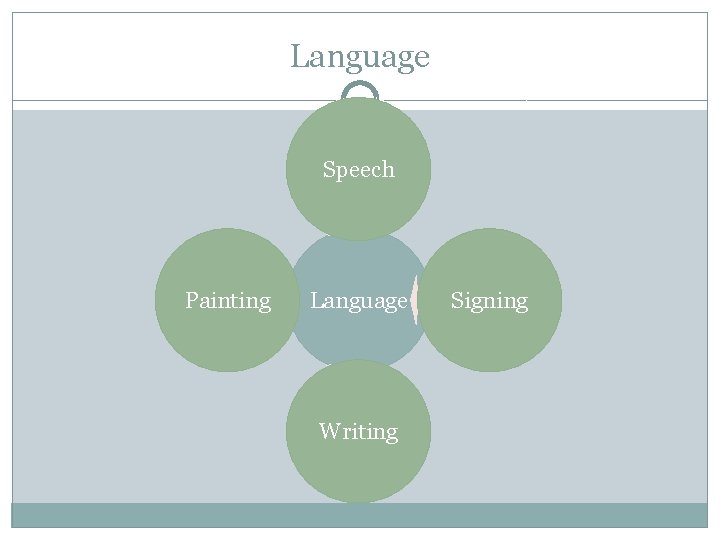
Language Speech Painting Language Writing Signing
Studying Methods �Classical Methods (Invasive) Surgery Operation �Modern Methods (Non-invasive) MRI FMRI PET-Scan (Positron Emission Tomography)
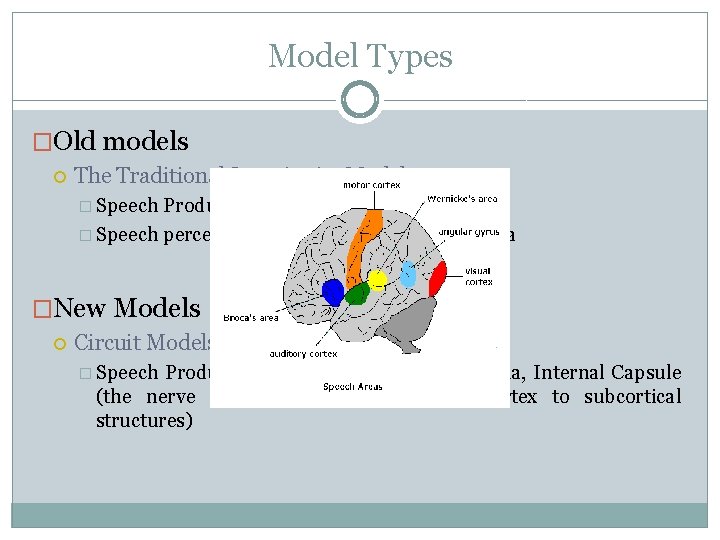
Model Types �Old models The Traditional Locationist Model � Speech Production, Grammar: Broca’s Area � Speech perception, Dictionary: Wernicke’s Area �New Models Circuit Models � Speech Production: Broca’s Area, Basal Ganglia, Internal Capsule (the nerve fibers that connect the neocortex to subcortical structures)
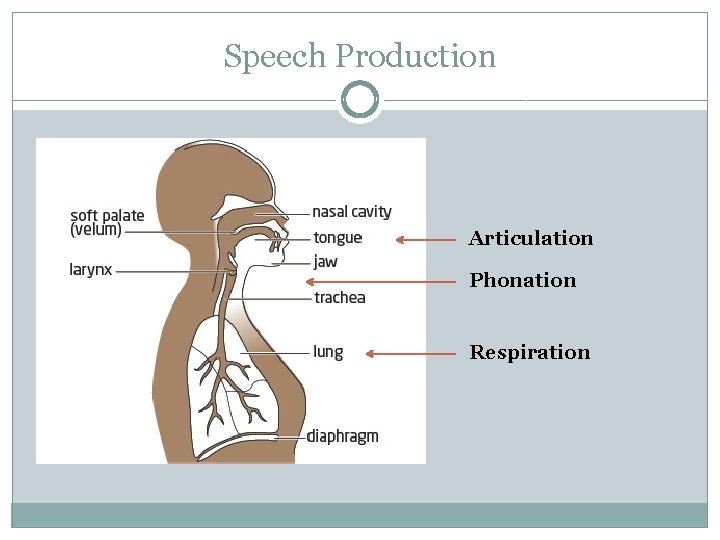
Speech �Speech Production Speech Perception Speech Signal Processing �Speech Production Respiration Phonation Articulation
Speech Production Articulation Phonation Respiration
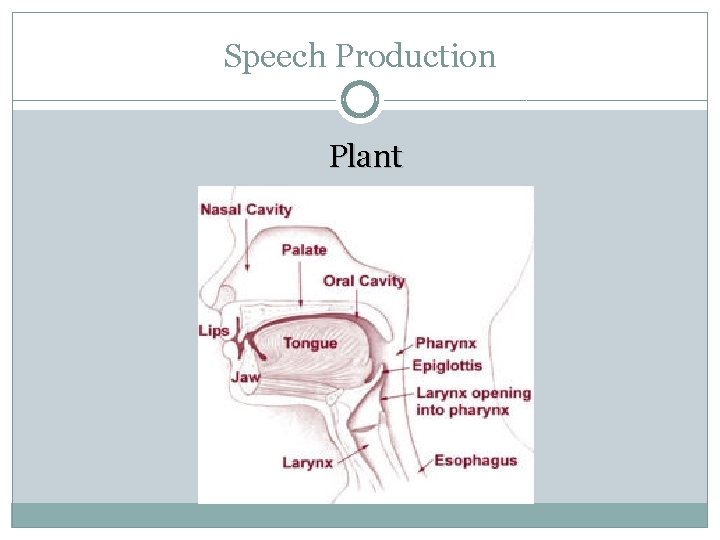
Speech Production Plant
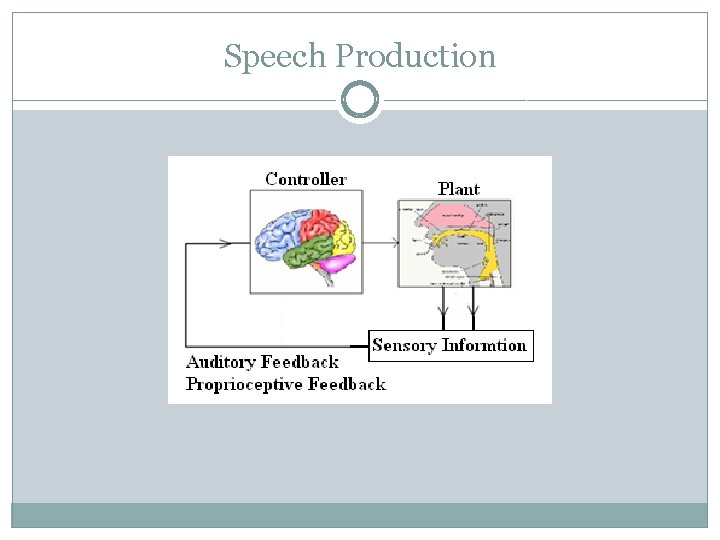
Speech Production
Speech Sounds �The speech phonemes are generally divided into two groups: Vowels � The vowels are produced by open mouth � The sound which is produced by vocal cords (vocal folds) vibration is the source of vowels. The vocal tract that is located over the vocal cords filters the sound. Different configurations of vocal tract lead to different vowels. Consonants � consonants are produced by nearly closed mouth � Consonants are produced by the air passing through the oral cavity and oral nasal. Different configurations of tongue, teeth and gum lead to different consonants.
Fundamental Frequency and Formant Frequencies �Fundamental Frequency: Vowel sounds are produced by vocal cords vibrations. The vibrations produce an alternating wave. Any alternating wave has a fundamental frequency and a number of harmonics. These harmonics are the integer multiples of the fundamental frequency. The fundamental frequency of the alternating wave produced by vocal cords vibration is related to vocal cords vibration speed. For example, for a fundamental frequency, 100 Hz, vocal cords open and close 100 turns per a second. It is important to be mentioned that the vowels are not distinguished by fundamental frequency. A vowel may be produced with different fundamental frequency. On the other hand, at a specific frequency, some different vowels may be produced.
Fundamental Frequency and Formant Frequencies �Formant Frequencies : Different vowels are distinguishable by their formant frequencies. The vocal tract which is located over the larynx acts as a filter. It strengthens some harmonic frequencies and attenuates some others. The harmonics which are strengthened are called formant frequencies. Different vowels have different formant frequencies.
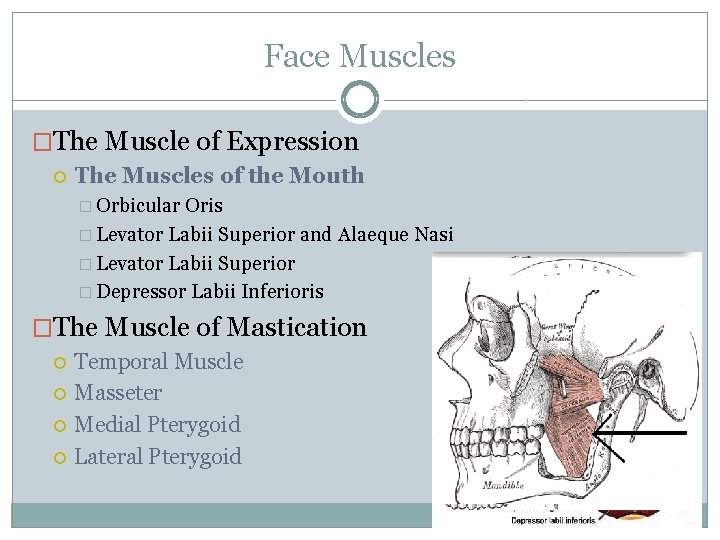
Face Muscles �The Muscle of Expression The Muscles of the Mouth � Orbicular Oris � Levator Labii Superior and Alaeque Nasi � Levator Labii Superior � Depressor Labii Inferioris �The Muscle of Mastication Temporal Muscle Masseter Medial Pterygoid Lateral Pterygoid
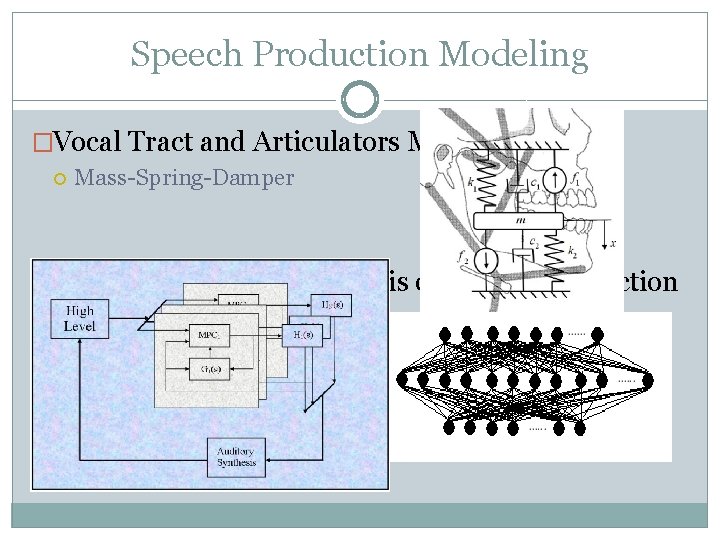
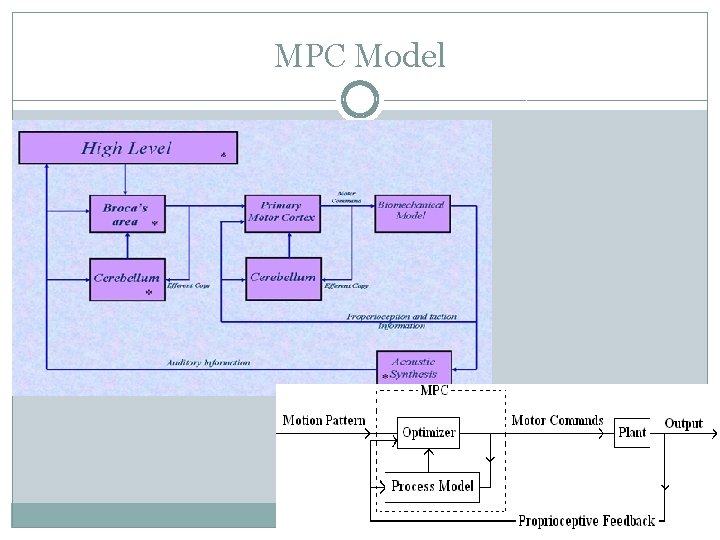
Speech Production Modeling �Vocal Tract and Articulators Modeling Mass-Spring-Damper �The Underlying Neural Basis of Speech Production and Learning Modeling Artificial Neural Networks Model-Predictive Control
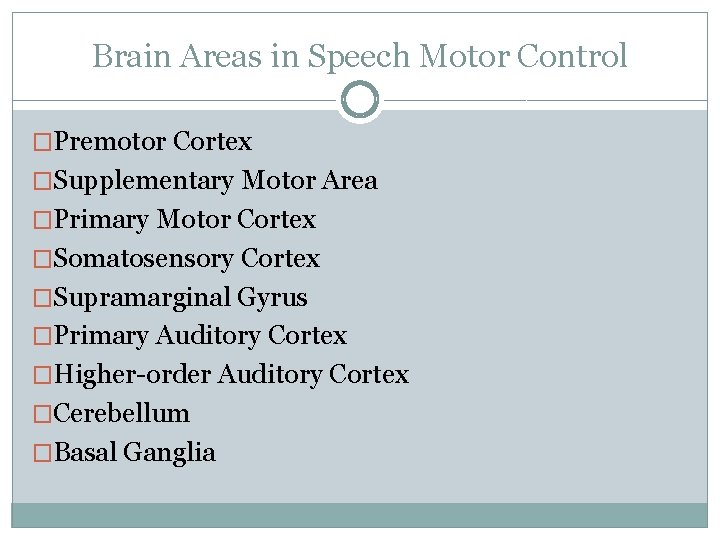
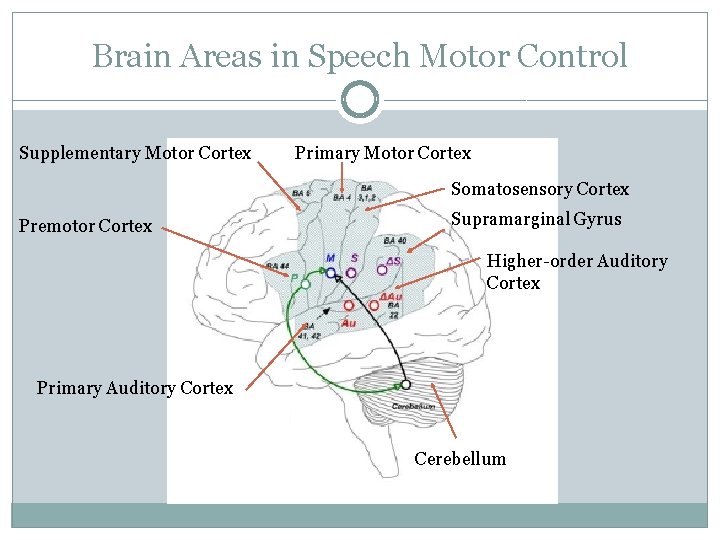
Brain Areas in Speech Motor Control �Premotor Cortex �Supplementary Motor Area �Primary Motor Cortex �Somatosensory Cortex �Supramarginal Gyrus �Primary Auditory Cortex �Higher-order Auditory Cortex �Cerebellum �Basal Ganglia
Brain Areas in Speech Motor Control Supplementary Motor Cortex Primary Motor Cortex Somatosensory Cortex Premotor Cortex Supramarginal Gyrus Higher-order Auditory Cortex Primary Auditory Cortex Cerebellum
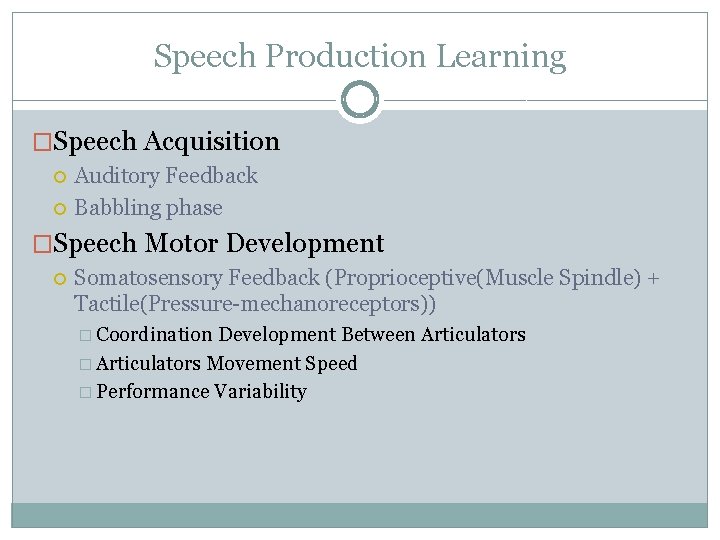
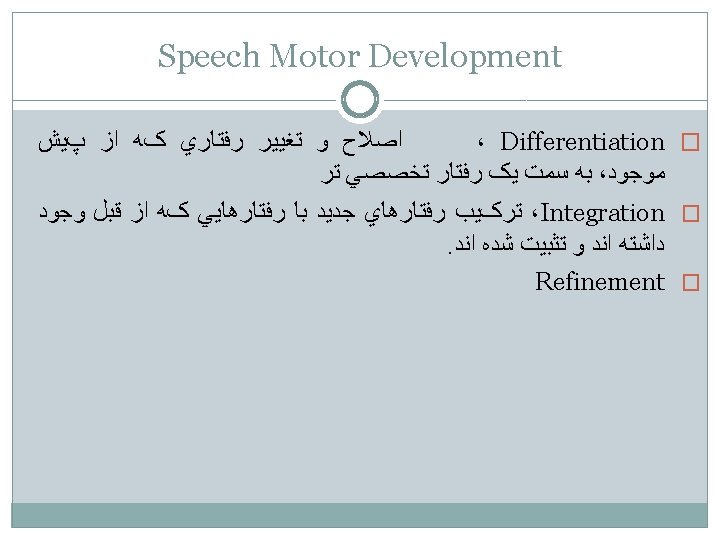
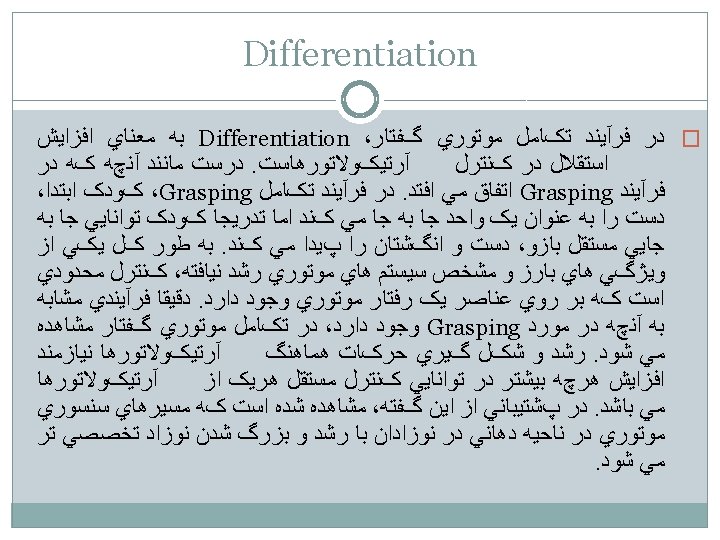
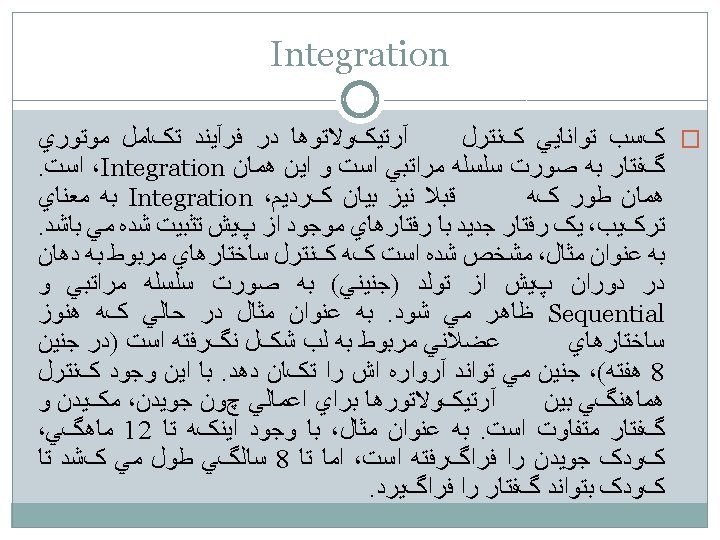
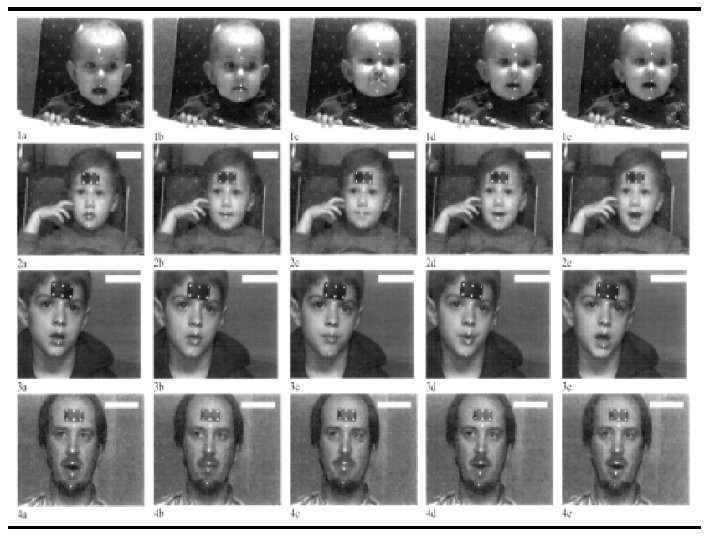
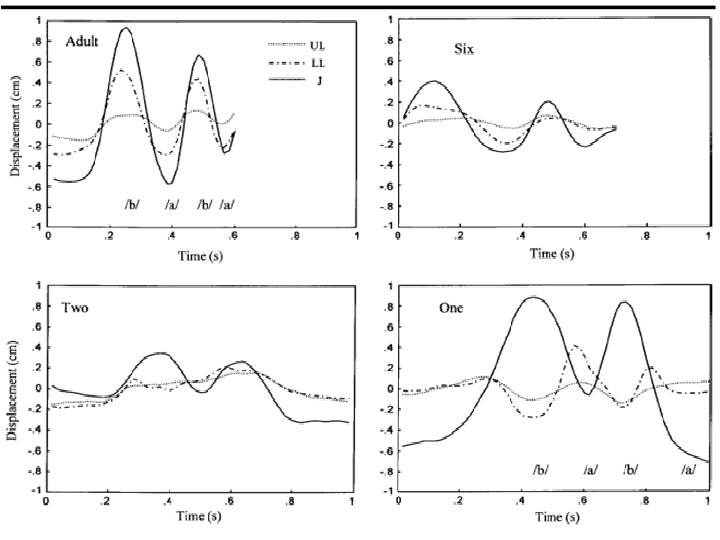
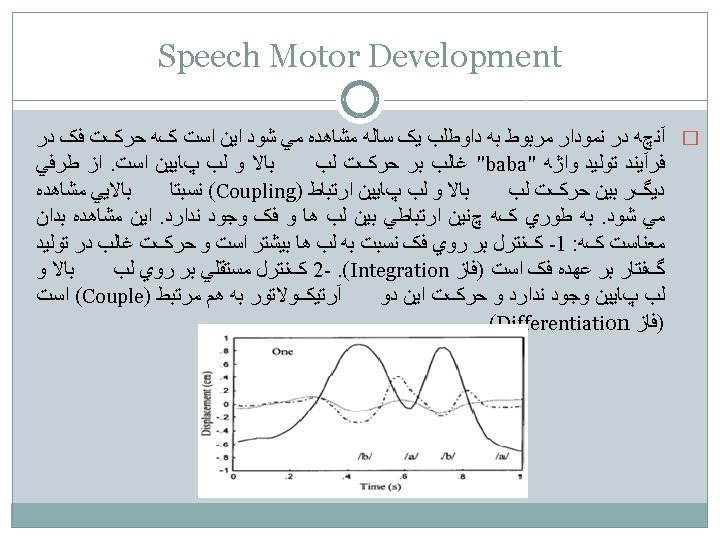
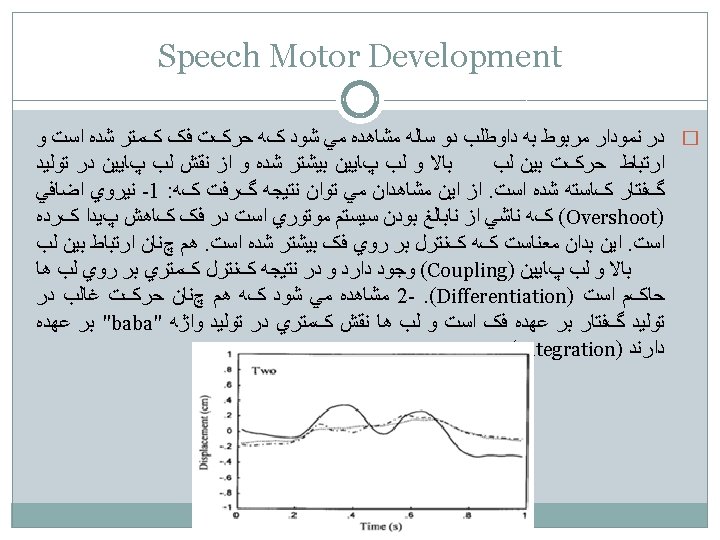
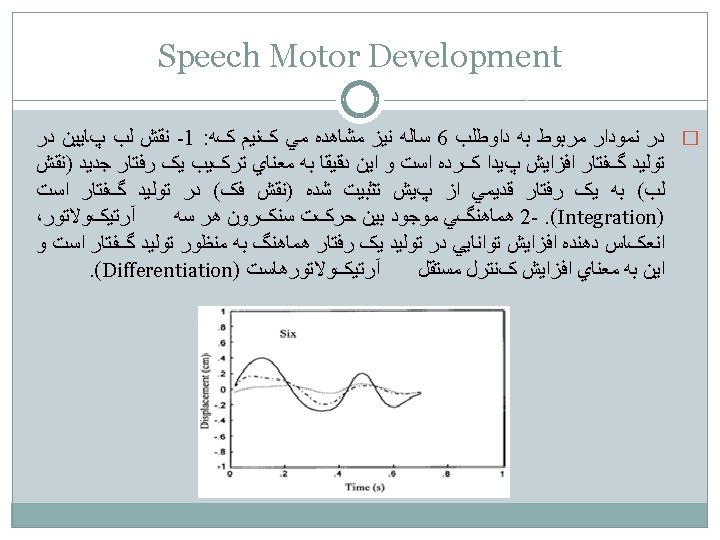
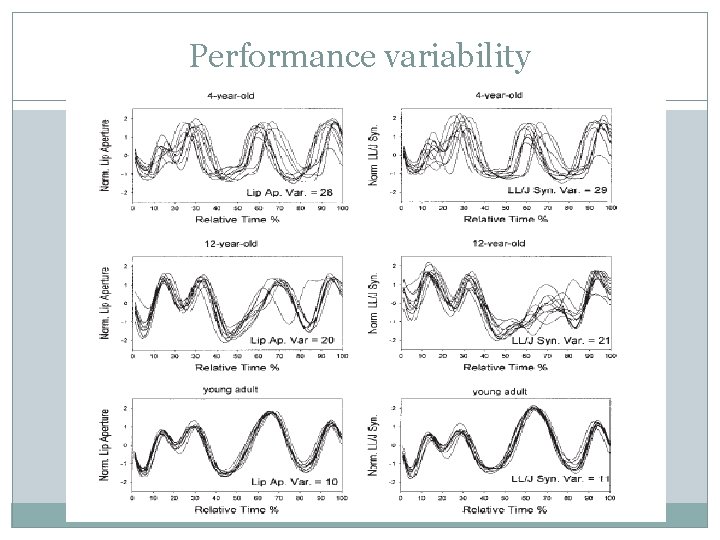
Speech Production Learning �Speech Acquisition Auditory Feedback Babbling phase �Speech Motor Development Somatosensory Feedback (Proprioceptive(Muscle Spindle) + Tactile(Pressure-mechanoreceptors)) � Coordination Development Between Articulators � Articulators Movement Speed � Performance Variability
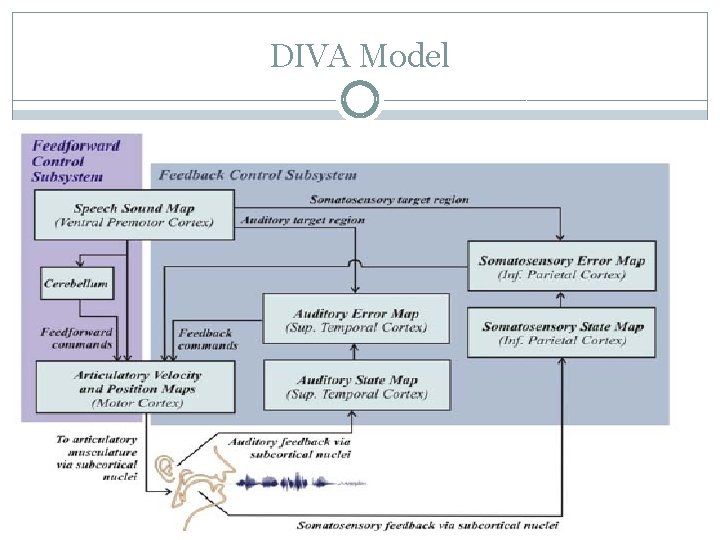
DIVA Model
MPC Model
Performance variability
Thank You