Spectrum Identification of Peking as a Part of


- Slides: 22
Spectrum Identification of Peking as a Part of Traditional Instrument of Gamelan Muhammad Arif Maula Electrical Engineering Universitas Islam Indonesia
outline ü Introduction ü Method and result analysis ü Conclusion 2
1 Introduction 3
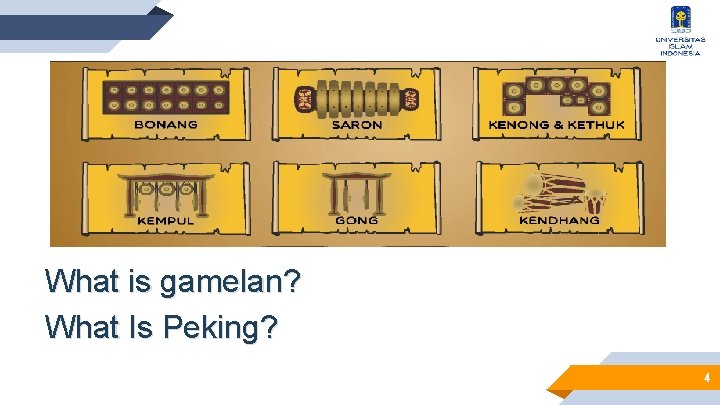
What is gamelan? What Is Peking? 4
§ § § How about Frequency Standart? How about Tunning System? How about The Gamelan in Future? 5
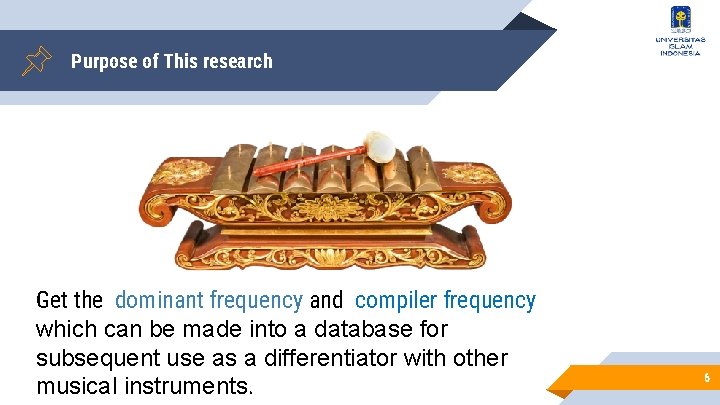
Purpose of This research Get the dominant frequency and compiler frequency which can be made into a database for subsequent use as a differentiator with other musical instruments. 6
2 Method dan Result Analysis 7
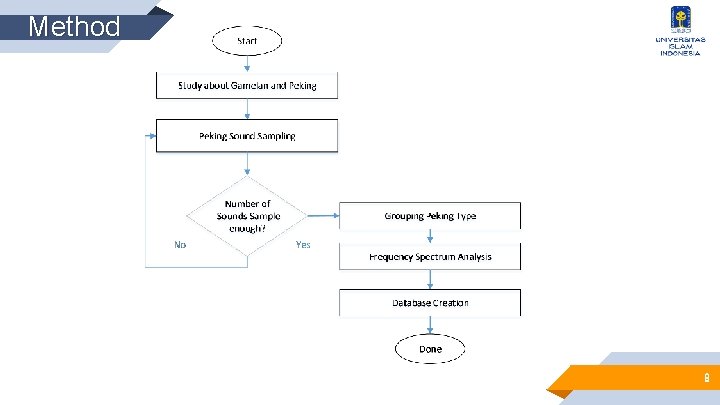
Method 8
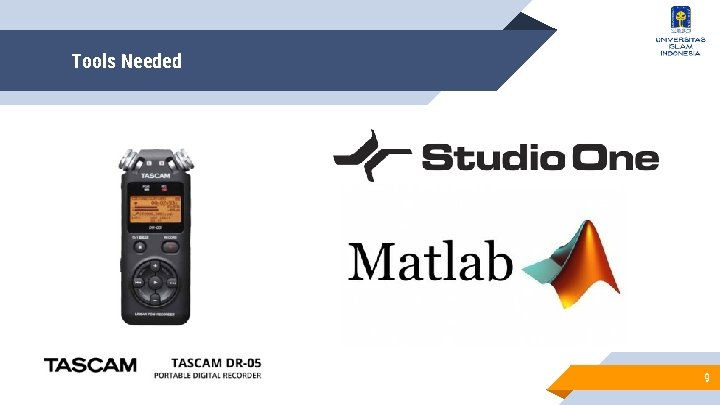
Tools Needed 9
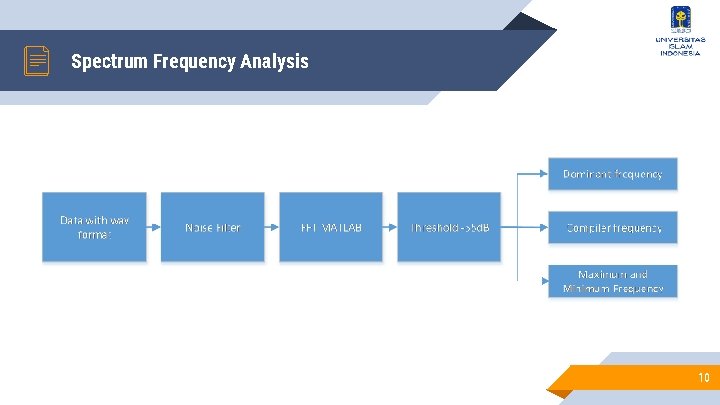
Spectrum Frequency Analysis 10
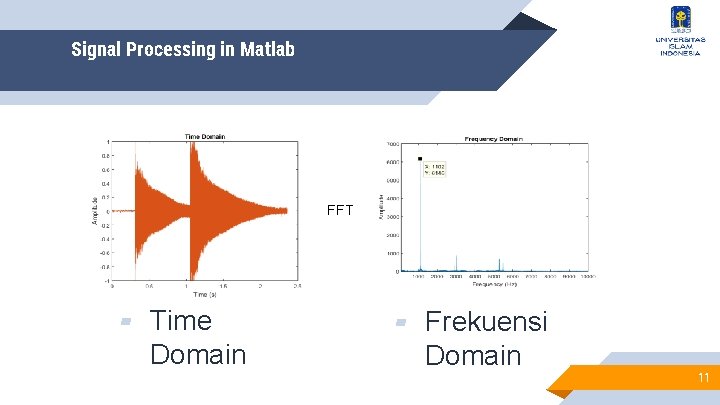
Signal Processing in Matlab FFT ▰ Time Domain ▰ Frekuensi Domain 11
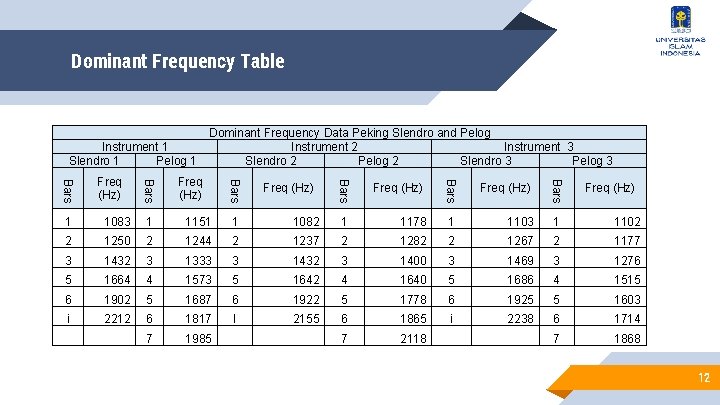
Dominant Frequency Table Instrument 1 Slendro 1 Pelog 1 Freq (Hz) Bars Bars Freq (Hz) Dominant Frequency Data Peking Slendro and Pelog Instrument 2 Instrument 3 Slendro 2 Pelog 2 Slendro 3 Pelog 3 Freq (Hz) 1 1083 1 1151 1 1082 1 1178 1 1103 1 1102 2 1250 2 1244 2 1237 2 1282 2 1267 2 1177 3 1432 3 1333 3 1432 3 1400 3 1469 3 1276 5 1664 4 1573 5 1642 4 1640 5 1686 4 1515 6 1902 5 1687 6 1922 5 1778 6 1925 5 1603 i 2212 6 1817 I 2155 6 1865 i 2238 6 1714 7 1985 7 2118 7 1868 12
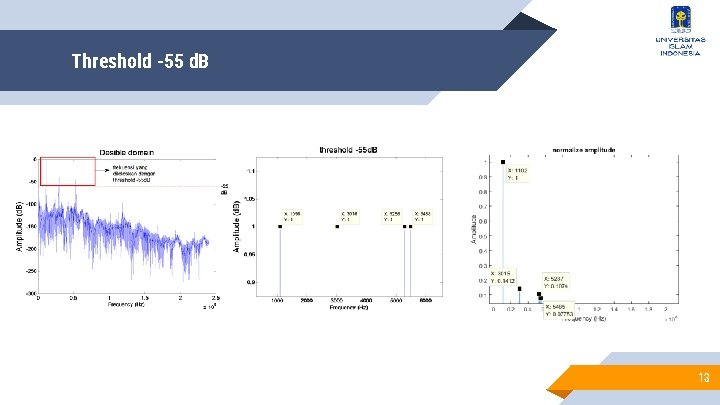
Threshold -55 d. B 13
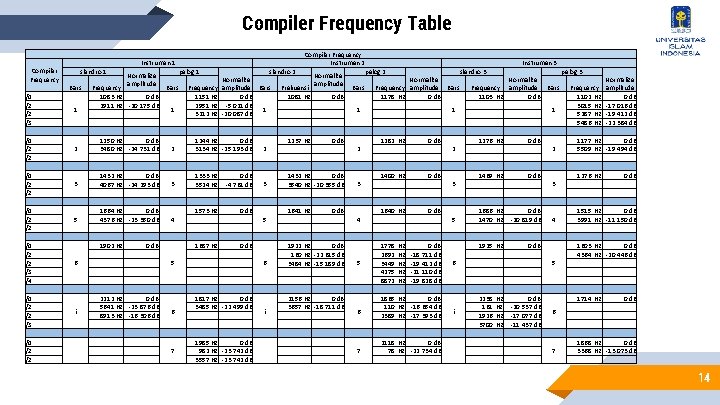
Compiler Frequency Table Instrumen 1 Compiler Frequency f 0 f 1 f 2 f 3 f 0 f 1 f 2 f 3 f 4 f 0 f 1 f 2 f 3 f 0 f 1 f 2 slendro 1 Bars 1 2 3 5 6 i Normalize amplitude Frequency Bars 1083 Hz 0 d. B 2911 Hz -20. 175 d. B 1 1250 Hz 0 d. B 2 3480 Hz -24. 731 d. B 1432 Hz 0 d. B 3 4067 Hz -24. 293 d. B 1664 Hz 0 d. B 4 4376 Hz -23. 350 d. B 1902 Hz 0 d. B 5 2212 Hz 0 d. B 5641 Hz -23. 876 d. B 6 8913 Hz -16. 306 d. B 7 pelog 1 Normalize amplitude 0 d. B -5. 021 d. B -20. 087 d. B Frequency 1151 Hz 2951 Hz 3212 Hz 1244 Hz 0 d. B 3134 Hz -25. 193 d. B 1333 Hz 0 d. B 3524 Hz -4. 761 d. B 1573 Hz 0 d. B 1687 Hz 0 d. B 1817 Hz 0 d. B 3485 Hz -22. 499 d. B 1985 Hz 0 d. B 982 Hz -23. 742 d. B 3557 Hz -23. 742 d. B Compiler Frequency Instrumen 2 slendro 2 pelog 2 slendro 3 Normalize amplitude Bars Frekuensi Bars Frequency amplitude Bars Frequency 1081 Hz 0 d. B 1178 Hz 0 d. B 1103 Hz 1 1 1 1237 Hz 0 d. B 1282 Hz 0 d. B 1276 Hz 2 2 2 1432 Hz 0 d. B 1400 Hz 0 d. B 1469 Hz 3 3540 Hz -20. 355 d. B 1641 Hz 0 d. B 1640 Hz 0 d. B 1686 Hz 5 4 5 1470 Hz 1922 Hz 0 d. B 1778 Hz 0 d. B 1925 Hz 160 Hz -22. 615 d. B 2692 Hz -18. 711 d. B 6 5 3484 Hz -15. 189 d. B 3449 Hz -19. 412 d. B 6 4275 Hz -21. 110 d. B 8872 Hz -19. 828 d. B 2156 Hz 0 d. B 1865 Hz 0 d. B 2238 Hz 3657 Hz -18. 711 d. B 110 Hz -16. 654 d. B 161 Hz i 6 i 2389 Hz -17. 393 d. B 1926 Hz 3700 Hz 2118 Hz 0 d. B 7 78 Hz -22. 734 d. B Instrumen 3 Normalize amplitude Bars 0 d. B pelog 3 Frequency 1102 Hz 3015 Hz 5287 Hz 5486 Hz 1 0 d. B 2 0 d. B 3 0 d. B -20. 819 d. B 4 0 d. B 5 0 d. B -20. 537 d. B -17. 077 d. B -11. 437 d. B 6 7 Normalize amplitude 0 d. B -17. 016 d. B -19. 412 d. B -22. 384 d. B 1177 Hz 0 d. B 5509 Hz -19. 494 d. B 1276 Hz 0 d. B 1515 Hz 0 d. B 3991 Hz -11. 150 d. B 1603 Hz 0 d. B 4364 Hz -20. 446 d. B 1714 Hz 0 d. B 1868 Hz 0 d. B 3368 Hz -13. 073 d. B 14
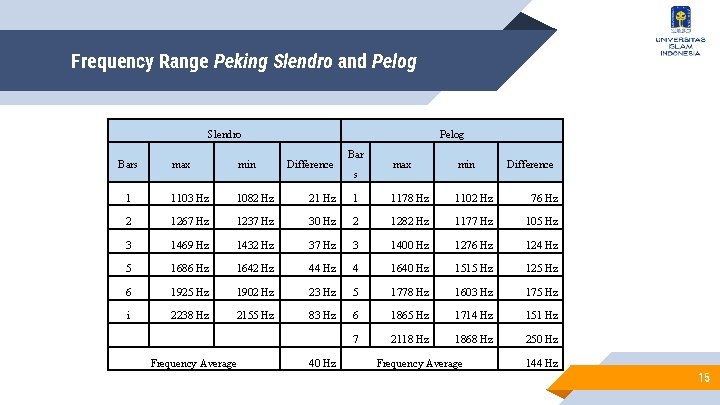
Frequency Range Peking Slendro and Pelog Slendro Bars Pelog max min 1 1103 Hz 1082 Hz 21 Hz 2 1267 Hz 1237 Hz 3 1469 Hz 5 Bar max min 1 1178 Hz 1102 Hz 76 Hz 30 Hz 2 1282 Hz 1177 Hz 105 Hz 1432 Hz 37 Hz 3 1400 Hz 1276 Hz 124 Hz 1686 Hz 1642 Hz 44 Hz 4 1640 Hz 1515 Hz 125 Hz 6 1925 Hz 1902 Hz 23 Hz 5 1778 Hz 1603 Hz 175 Hz i 2238 Hz 2155 Hz 83 Hz 6 1865 Hz 1714 Hz 151 Hz 7 2118 Hz 1868 Hz 250 Hz Frequency Average Difference 40 Hz s Frequency Average Difference 144 Hz 15
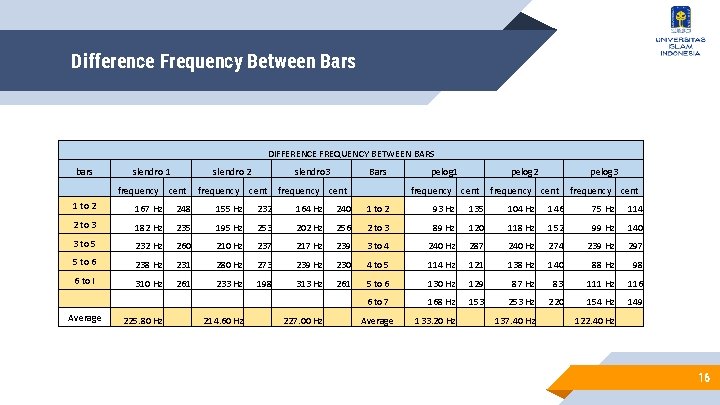
Difference Frequency Between Bars DIFFERENCE FREQUENCY BETWEEN BARS bars slendro 1 frequency slendro 2 cent frequency cent slendro 3 Bars pelog 1 pelog 2 pelog 3 frequency cent 1 to 2 167 Hz 248 155 Hz 232 164 Hz 240 1 to 2 93 Hz 135 104 Hz 146 75 Hz 114 2 to 3 182 Hz 235 195 Hz 253 202 Hz 256 2 to 3 89 Hz 120 118 Hz 152 99 Hz 140 3 to 5 232 Hz 260 210 Hz 237 217 Hz 239 3 to 4 240 Hz 287 240 Hz 274 239 Hz 297 5 to 6 238 Hz 231 280 Hz 273 239 Hz 230 4 to 5 114 Hz 121 138 Hz 140 88 Hz 98 6 to I 310 Hz 261 233 Hz 198 313 Hz 261 5 to 6 130 Hz 129 87 Hz 83 111 Hz 116 6 to 7 168 Hz 153 253 Hz 220 154 Hz 149 Average 225. 80 Hz 214. 60 Hz 227. 00 Hz Average 133. 20 Hz 137. 40 Hz 122. 40 Hz 16
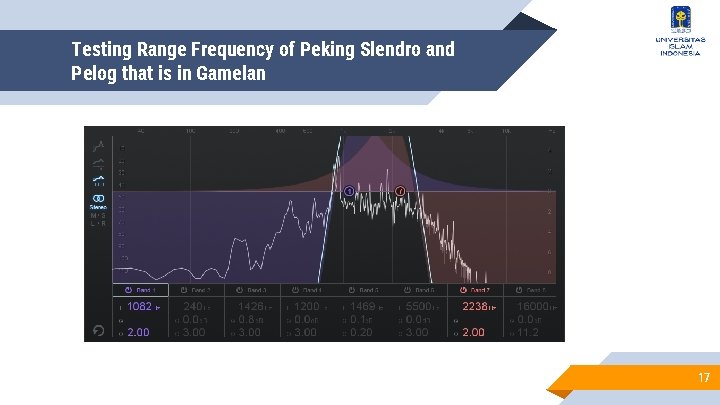
Testing Range Frequency of Peking Slendro and Pelog that is in Gamelan 17
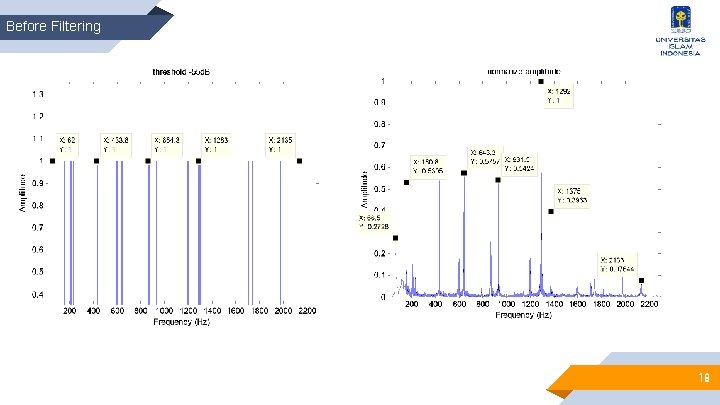
Before Filtering 18
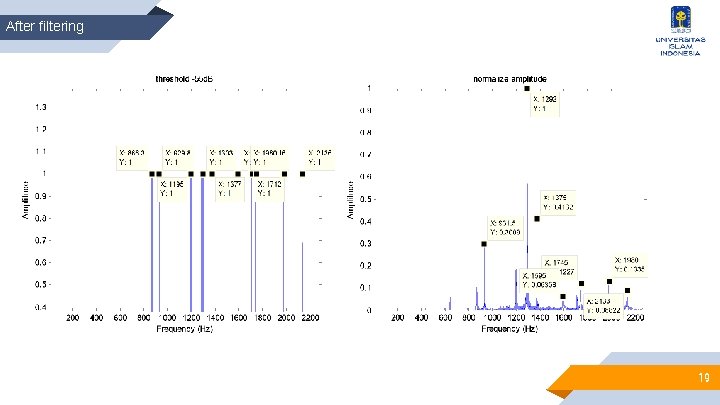
After filtering 19
3 conclusion 20
1. In general there are two types of peking in Yogyakarta, namely peking slendro and pelog. Peking slendro has a frequency range between 1082 Hz - 2238 Hz and pelog peking has a frequency range between 1102 Hz - 2118 Hz. 2. The dominant frequency of Peking Slendro in Yogyakarta is in strips 1, 1082 - 1103 Hz, bars 2, 1237 - 1267 Hz, bars 3, 1432 - 1469 Hz, bars 5, 1642 - 1686 Hz, bars 6, 1902 - 1925 Hz, bars i, 2155 - 2238 Hz. As for Peking Pelog is on the slats 1, 1102 - 1178 Hz, bars 2, 1177 - 1282 Hz, bars 3, 1276 - 1400 Hz, bars 4, 1515 - 1640 Hz, bars 5, 1603 1778 Hz, bars 6, 1714 - 1865 Hz, bar 7, 1868 - 2118 Hz. 3. The variation of the compiler frequency on each bar of the peking instrument is one to five variations of frequency on each bar with intervals that can not be formulated. 4. The interval on the slendro tone has an average of about 240 cent and is according to what Dr. Jaap Kunts and for pelog tones have different tone intervals on each tone. 5. The database that has been created can be used as a differentiator of peking instruments with other instruments by looking at the frequency areas. 21
THANKS! Muhammad Arif Maula arivemolla@gmail. com 22