
Signal R on Oldschool Servers Clients When some



- Slides: 38
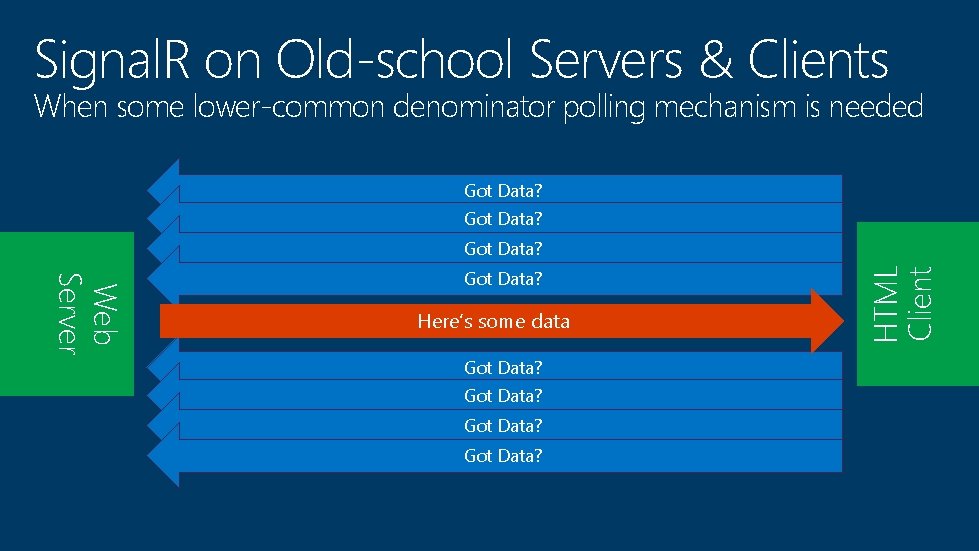
Signal. R on Old-school Servers & Clients When some lower-common denominator polling mechanism is needed Got Data? Web Server Got Data? Here’s some data Got Data? HTML Client Got Data?
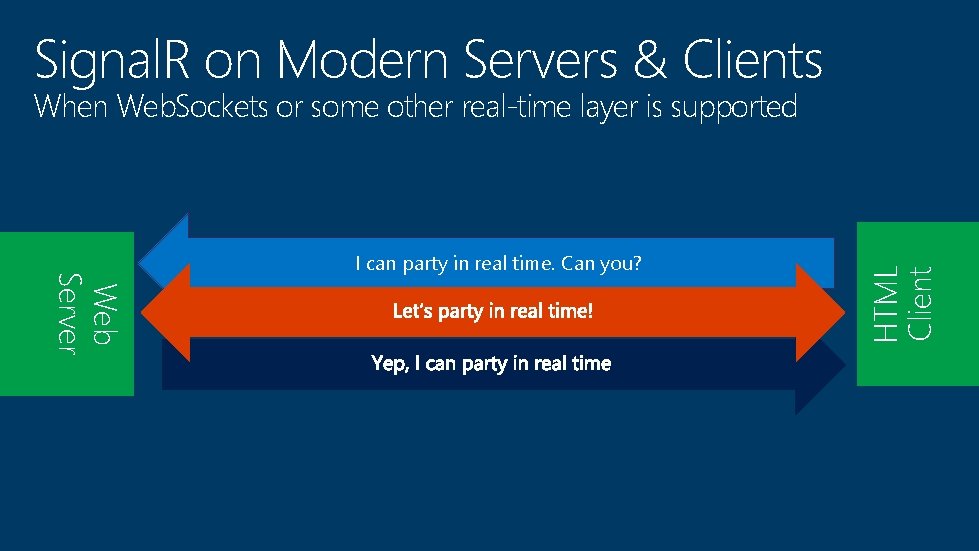
Signal. R on Modern Servers & Clients Web Server I can party in real time. Can you? HTML Client When Web. Sockets or some other real-time layer is supported
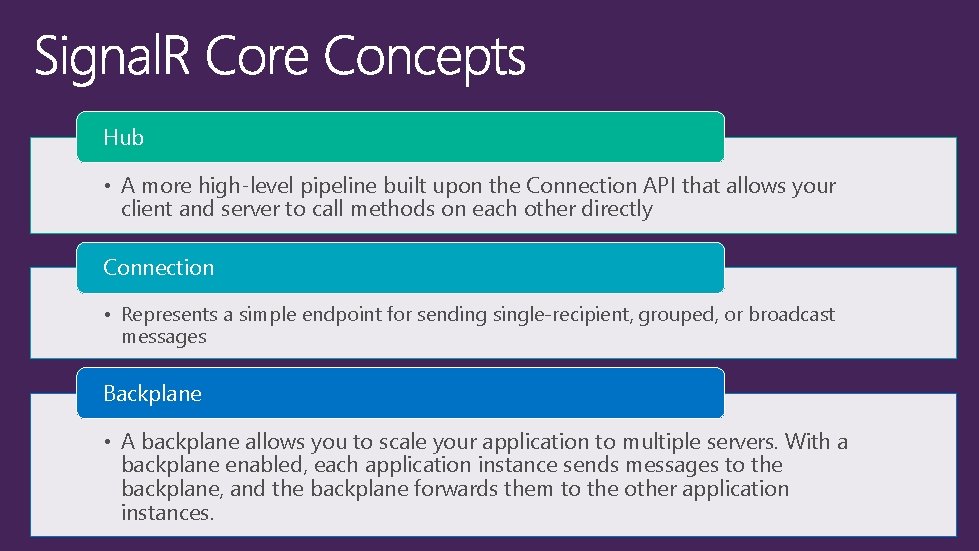
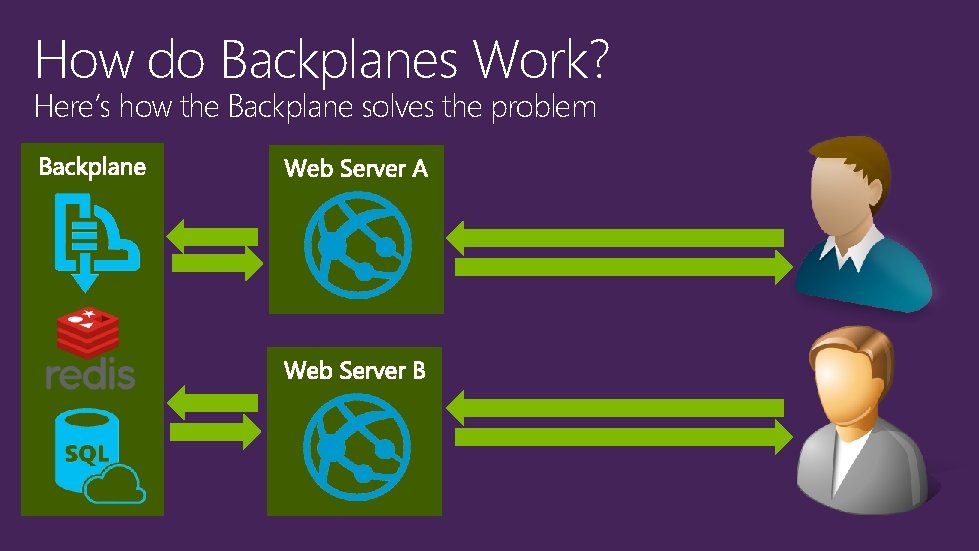
Hub • A more high-level pipeline built upon the Connection API that allows your client and server to call methods on each other directly Connection • Represents a simple endpoint for sending single-recipient, grouped, or broadcast messages Backplane • A backplane allows you to scale your application to multiple servers. With a backplane enabled, each application instance sends messages to the backplane, and the backplane forwards them to the other application instances.
Any sufficiently advanced technology is indistinguishable from magic - Arthur C. Clarke
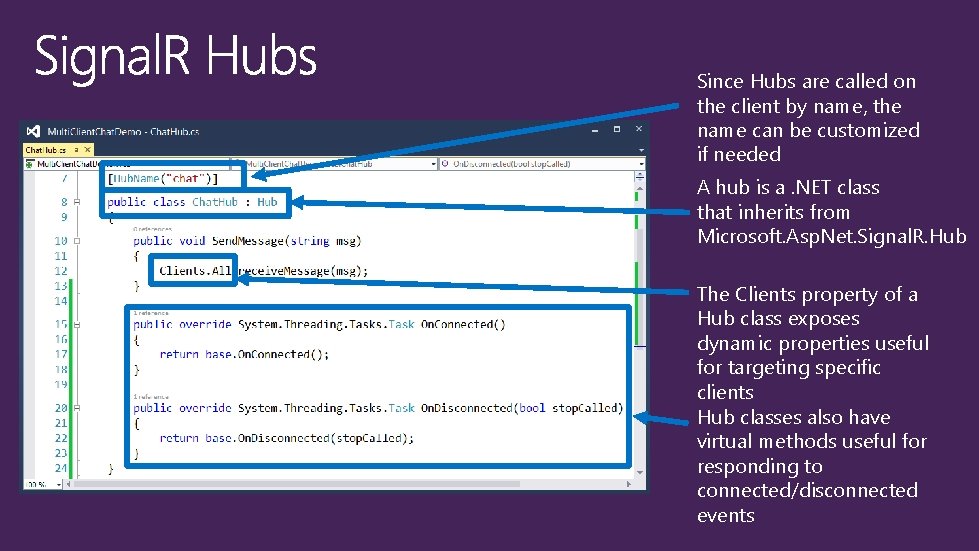
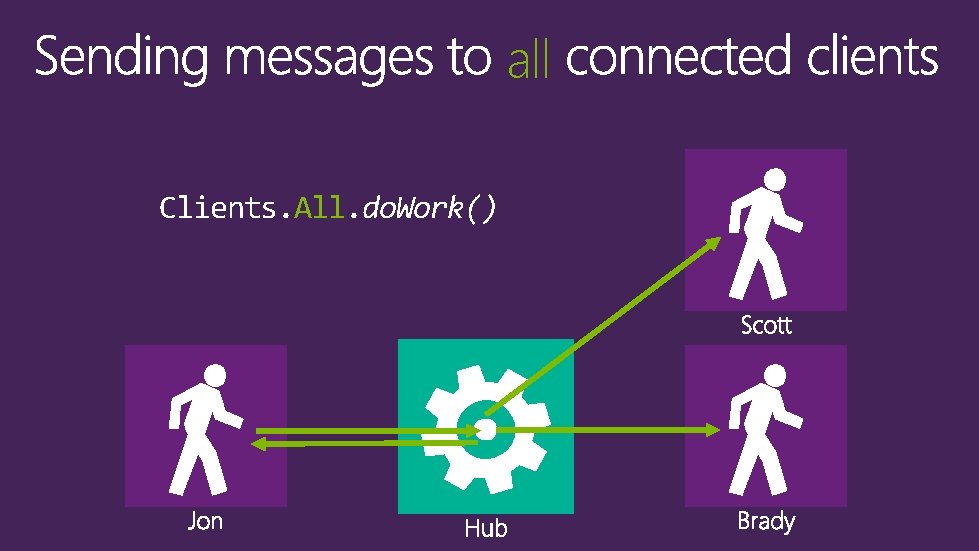
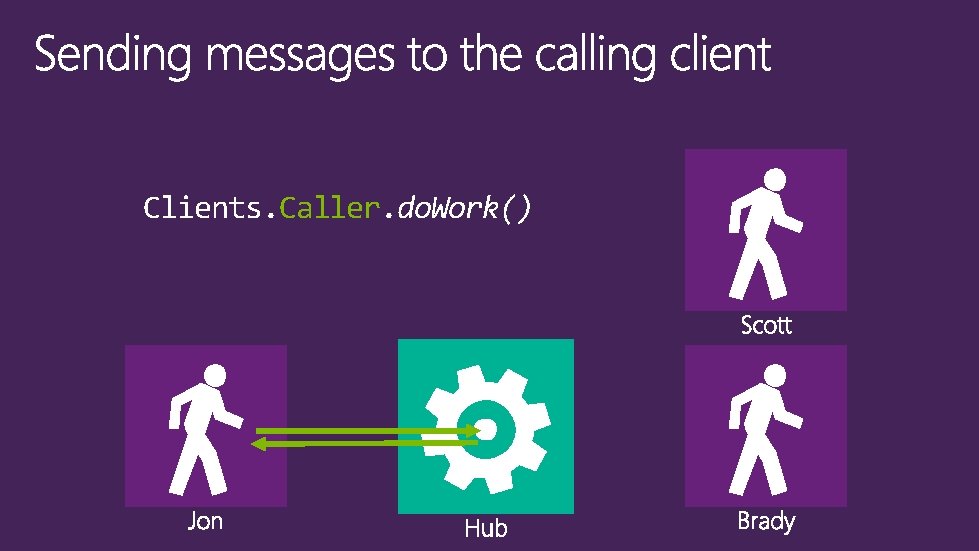
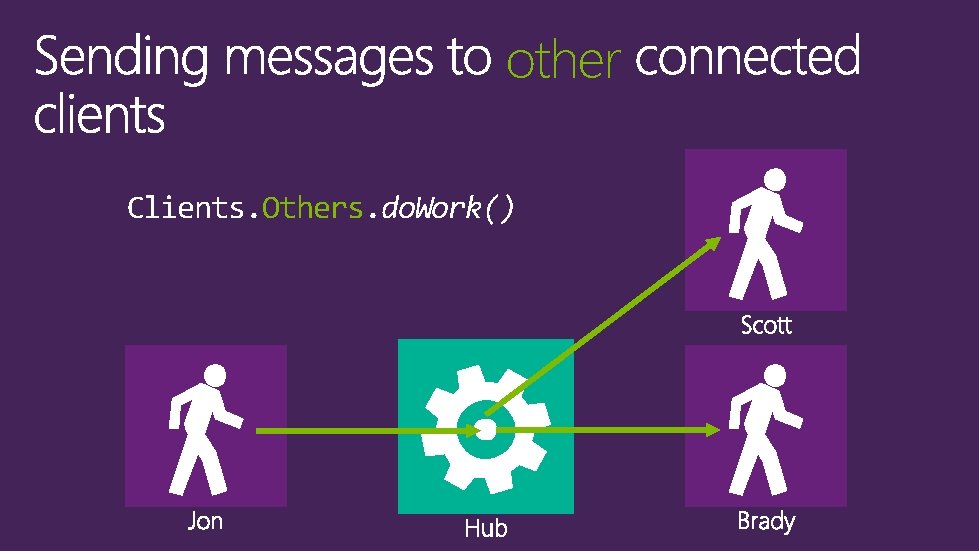
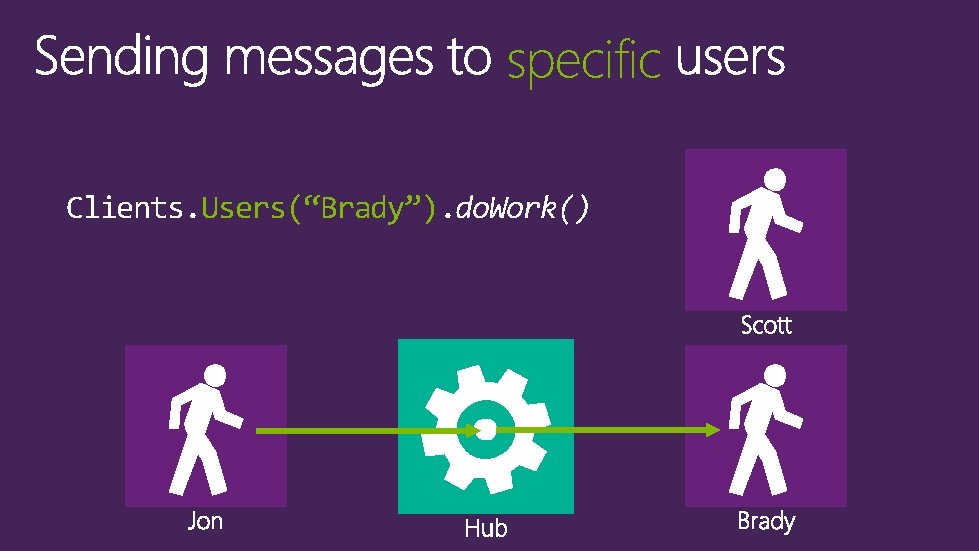
Since Hubs are called on the client by name, the name can be customized if needed A hub is a. NET class that inherits from Microsoft. Asp. Net. Signal. R. Hub The Clients property of a Hub class exposes dynamic properties useful for targeting specific clients Hub classes also have virtual methods useful for responding to connected/disconnected events
all Clients. All. do. Work()
Clients. Caller. do. Work()
other Clients. Others. do. Work()
specific Clients. Users(“Brady”). do. Work()
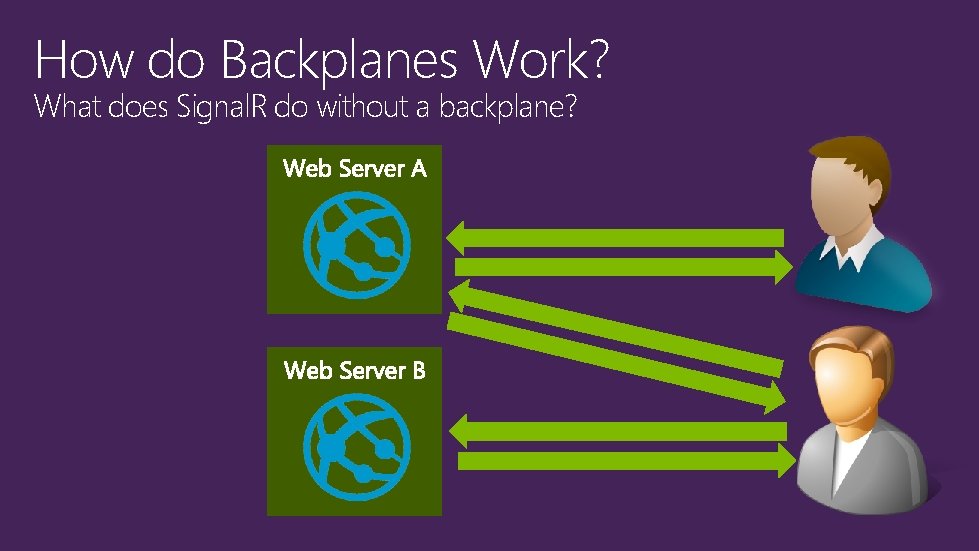
How do Backplanes Work? What does Signal. R do without a backplane?
How do Backplanes Work? Here’s how the Backplane solves the problem
http: //channel 9. msdn. com/Events/Tech. Ed www. microsoft. com/learning http: //microsoft. com/technet http: //developer. microsoft. com