SESI 01 Introduction to Management Information Systems Dosen
- Slides: 41
SESI 01 Introduction to Management Information Systems Dosen : Agus Prayitno
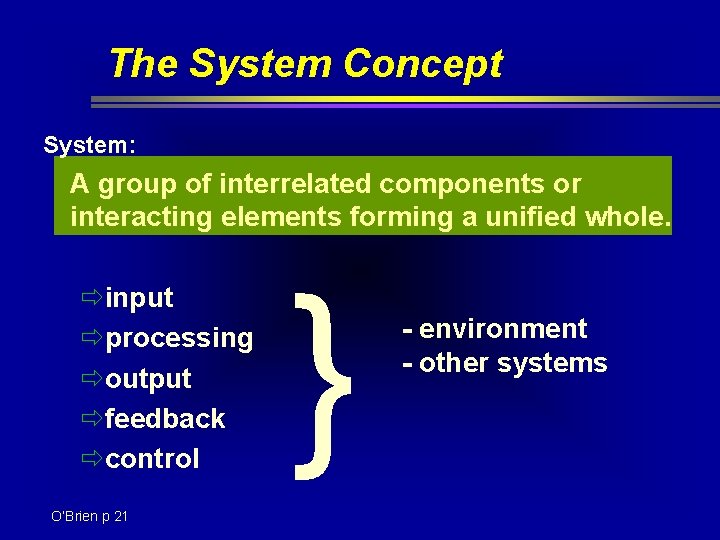
The System Concept System: A group of interrelated components or interacting elements forming a unified whole. ðinput ðprocessing ðoutput ðfeedback ðcontrol O’Brien p 21 } - environment - other systems
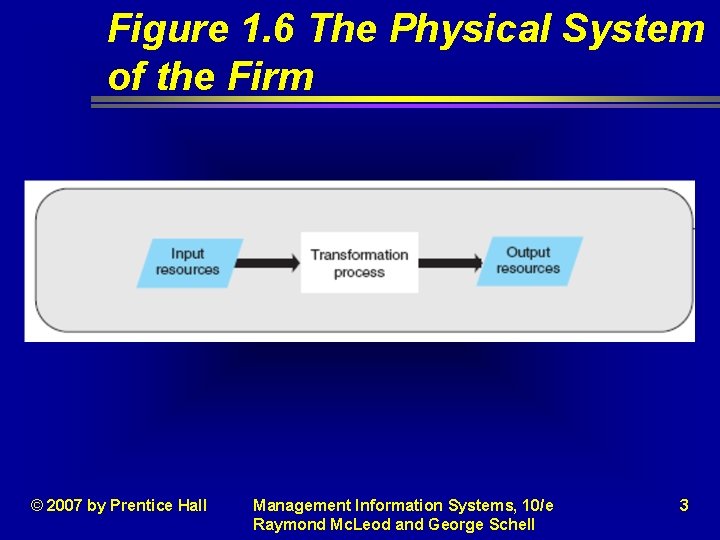
Figure 1. 6 The Physical System of the Firm © 2007 by Prentice Hall Management Information Systems, 10/e Raymond Mc. Leod and George Schell 3
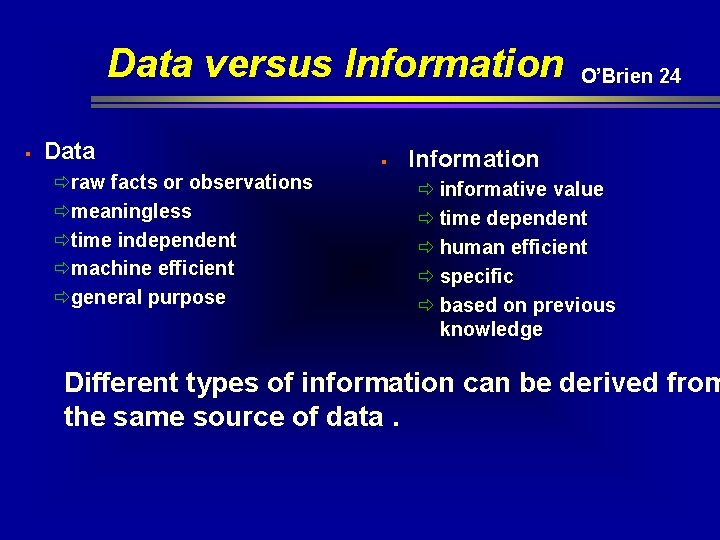
Data versus Information § Data ðraw facts or observations ðmeaningless ðtime independent ðmachine efficient ðgeneral purpose § O’Brien 24 Information ð informative value ð time dependent ð human efficient ð specific ð based on previous knowledge Different types of information can be derived from the same source of data.
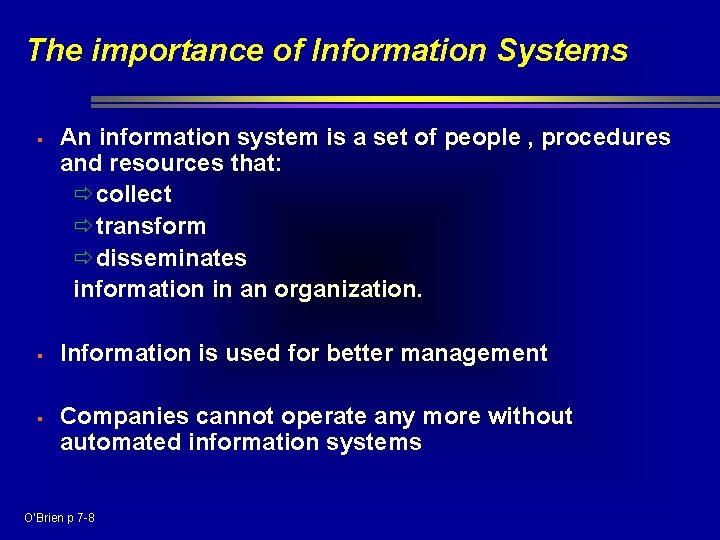
The importance of Information Systems § § § An information system is a set of people , procedures and resources that: ðcollect ðtransform ðdisseminates information in an organization. Information is used for better management Companies cannot operate any more without automated information systems O’Brien p 7 -8
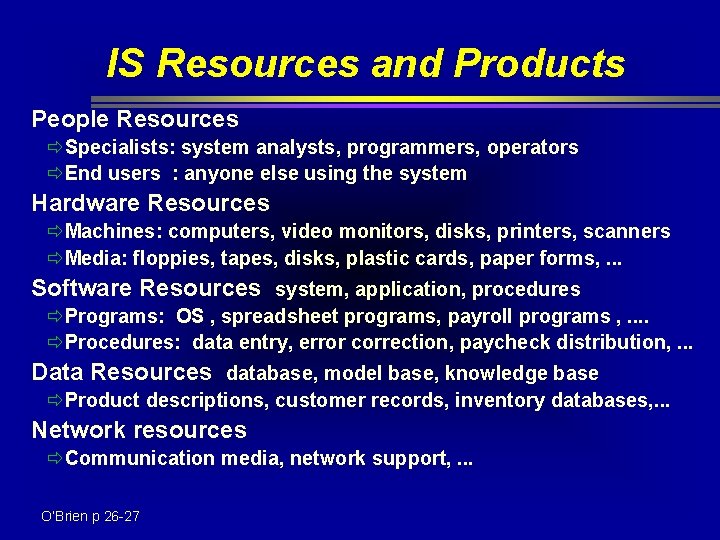
IS Resources and Products People Resources ðSpecialists: system analysts, programmers, operators ðEnd users : anyone else using the system Hardware Resources ðMachines: computers, video monitors, disks, printers, scanners ðMedia: floppies, tapes, disks, plastic cards, paper forms, . . . Software Resources system, application, procedures ðPrograms: OS , spreadsheet programs, payroll programs , . . ðProcedures: data entry, error correction, paycheck distribution, . . . Data Resources database, model base, knowledge base ðProduct descriptions, customer records, inventory databases, . . . Network resources ðCommunication media, network support, . . . O’Brien p 26 -27
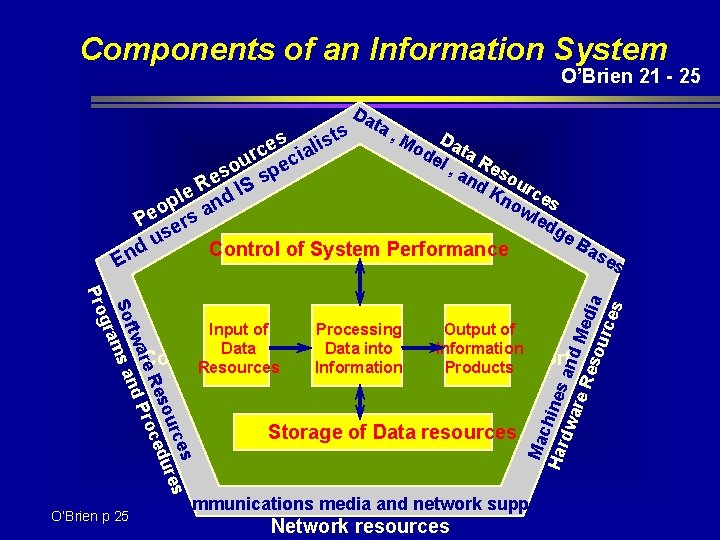
Components of an Information System O’Brien 21 - 25 Da s es es urc r eso cedu ro re R twa nd P Sof ms a gra Pro Input of Processing Data into Communications media and Resources Information O’Brien p 25 Ma c Har hines dw are and M e Res our dia ces E ta : s , M t Da s lis e o de ta R rc cia u l, o pe an eso s s e d K urc R S I no es ple and wl o ed Pe ers ge s u Ba Control of System Performance se nd Output of Information network support Products Storage of Data resources Communications media and network support Network resources
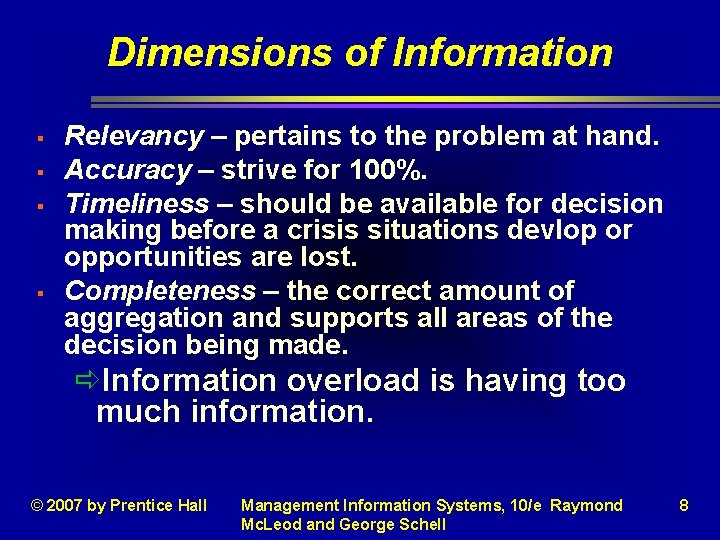
Dimensions of Information § § Relevancy – pertains to the problem at hand. Accuracy – strive for 100%. Timeliness – should be available for decision making before a crisis situations devlop or opportunities are lost. Completeness – the correct amount of aggregation and supports all areas of the decision being made. ðInformation overload is having too much information. © 2007 by Prentice Hall Management Information Systems, 10/e Raymond Mc. Leod and George Schell 8
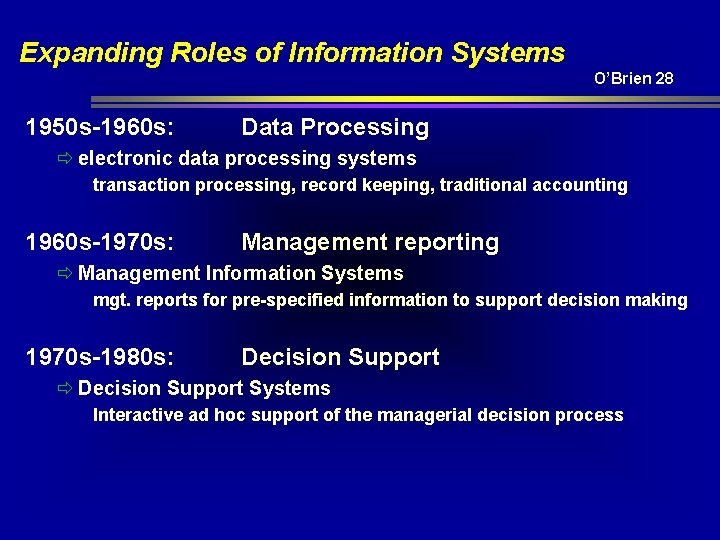
Expanding Roles of Information Systems O’Brien 28 1950 s-1960 s: Data Processing ð electronic data processing systems transaction processing, record keeping, traditional accounting 1960 s-1970 s: Management reporting ð Management Information Systems mgt. reports for pre-specified information to support decision making 1970 s-1980 s: Decision Support ð Decision Support Systems Interactive ad hoc support of the managerial decision process
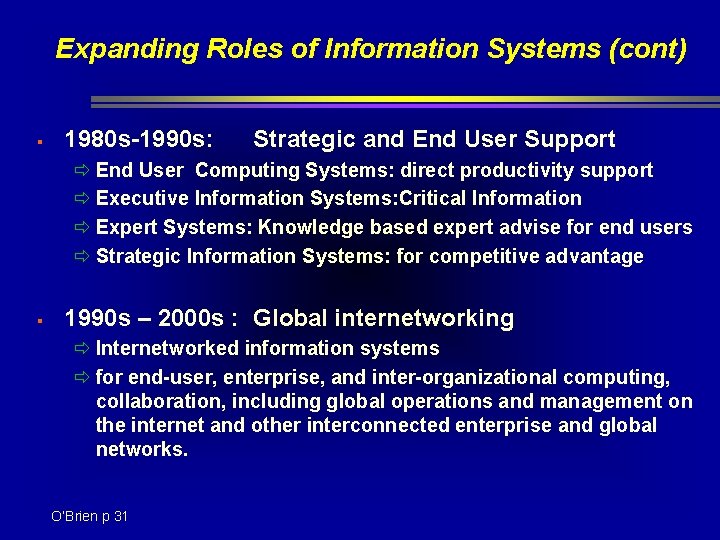
Expanding Roles of Information Systems (cont) § 1980 s-1990 s: Strategic and End User Support ð End User Computing Systems: direct productivity support ð Executive Information Systems: Critical Information ð Expert Systems: Knowledge based expert advise for end users ð Strategic Information Systems: for competitive advantage § 1990 s – 2000 s : Global internetworking ð Internetworked information systems ð for end-user, enterprise, and inter-organizational computing, collaboration, including global operations and management on the internet and other interconnected enterprise and global networks. O’Brien p 31
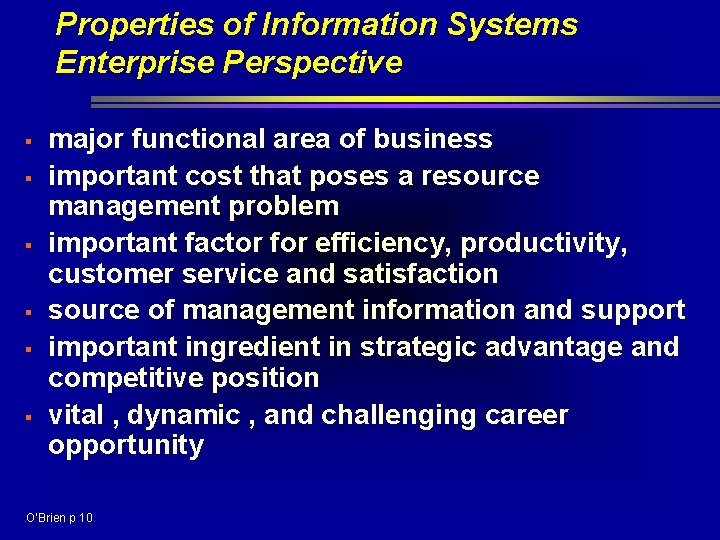
Properties of Information Systems Enterprise Perspective § § § major functional area of business important cost that poses a resource management problem important factor for efficiency, productivity, customer service and satisfaction source of management information and support important ingredient in strategic advantage and competitive position vital , dynamic , and challenging career opportunity O’Brien p 10
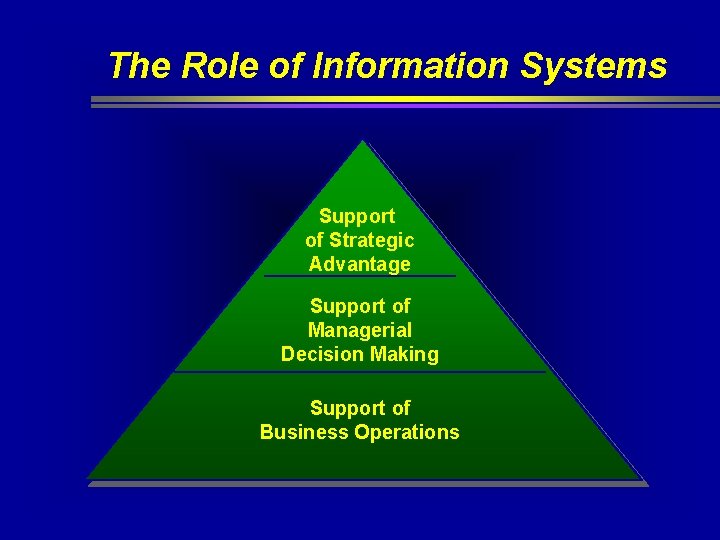
The Role of Information Systems Support of Strategic Advantage Support of Managerial Decision Making Support of Business Operations
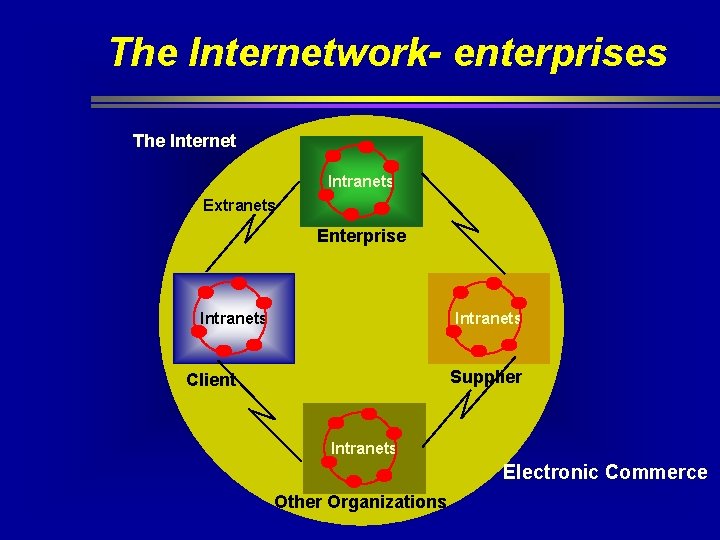
The Internetwork- enterprises The Internet Intranets Extranets Enterprise Intranets Supplier Client Intranets Electronic Commerce Other Organizations
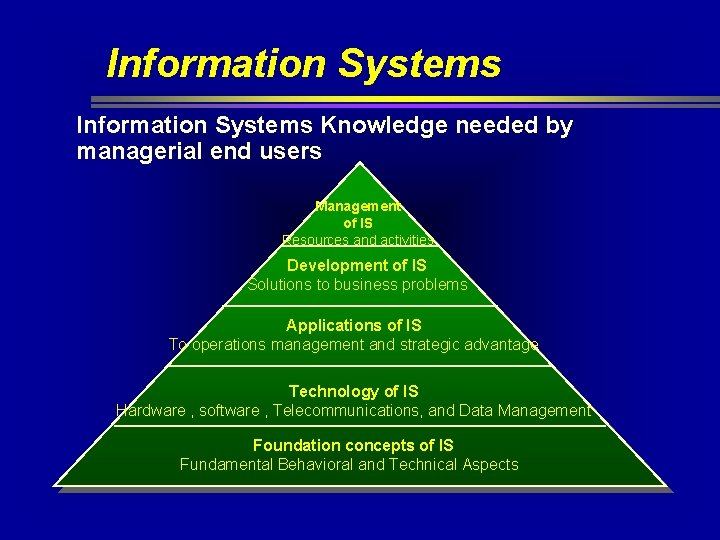
Information Systems Knowledge needed by managerial end users Management of IS Resources and activities Development of IS Solutions to business problems Applications of IS To operations management and strategic advantage Technology of IS Hardware , software , Telecommunications, and Data Management Foundation concepts of IS Fundamental Behavioral and Technical Aspects
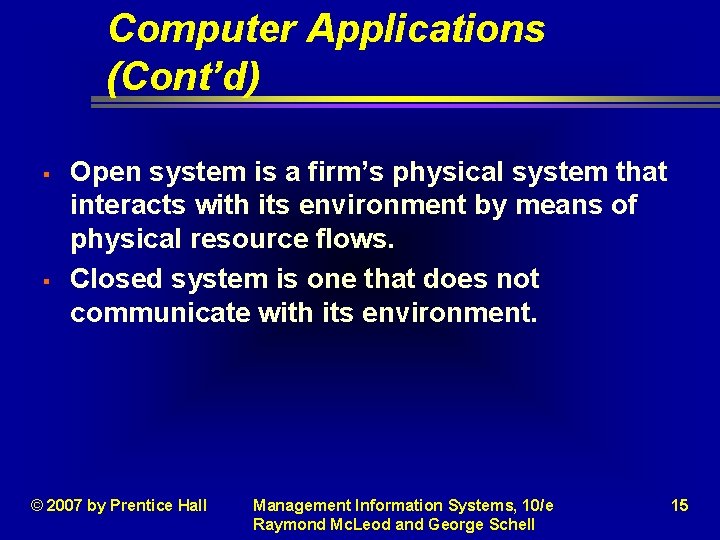
Computer Applications (Cont’d) § § Open system is a firm’s physical system that interacts with its environment by means of physical resource flows. Closed system is one that does not communicate with its environment. © 2007 by Prentice Hall Management Information Systems, 10/e Raymond Mc. Leod and George Schell 15
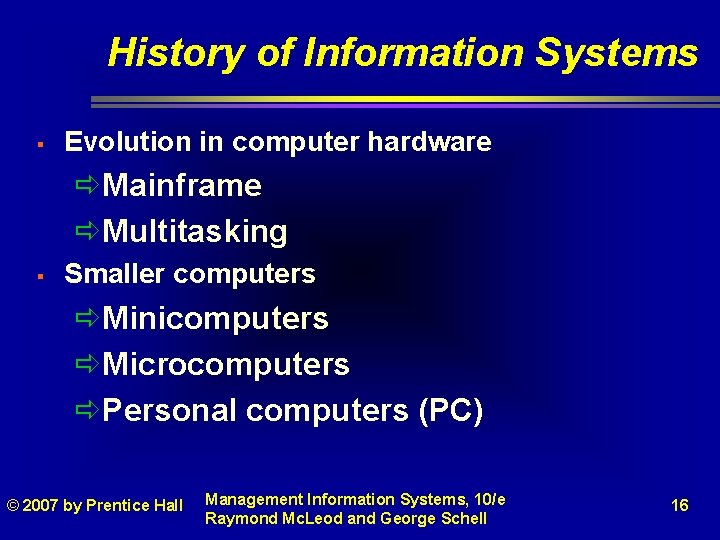
History of Information Systems § Evolution in computer hardware ðMainframe ðMultitasking § Smaller computers ðMinicomputers ðMicrocomputers ðPersonal computers (PC) © 2007 by Prentice Hall Management Information Systems, 10/e Raymond Mc. Leod and George Schell 16
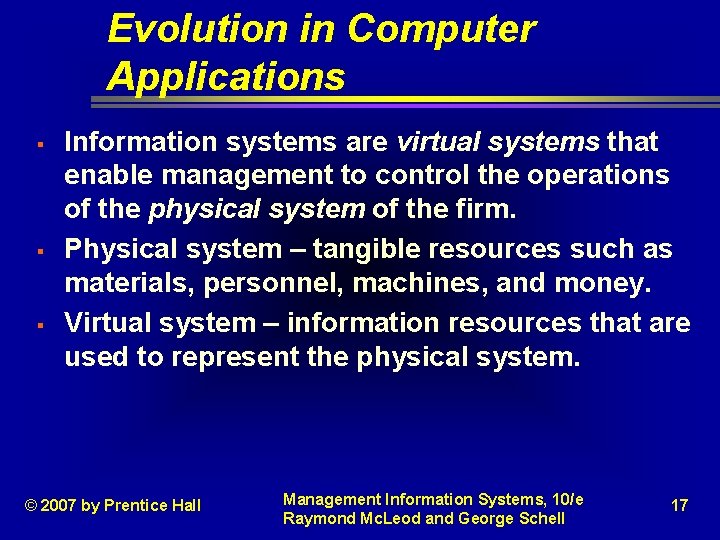
Evolution in Computer Applications § § § Information systems are virtual systems that enable management to control the operations of the physical system of the firm. Physical system – tangible resources such as materials, personnel, machines, and money. Virtual system – information resources that are used to represent the physical system. © 2007 by Prentice Hall Management Information Systems, 10/e Raymond Mc. Leod and George Schell 17
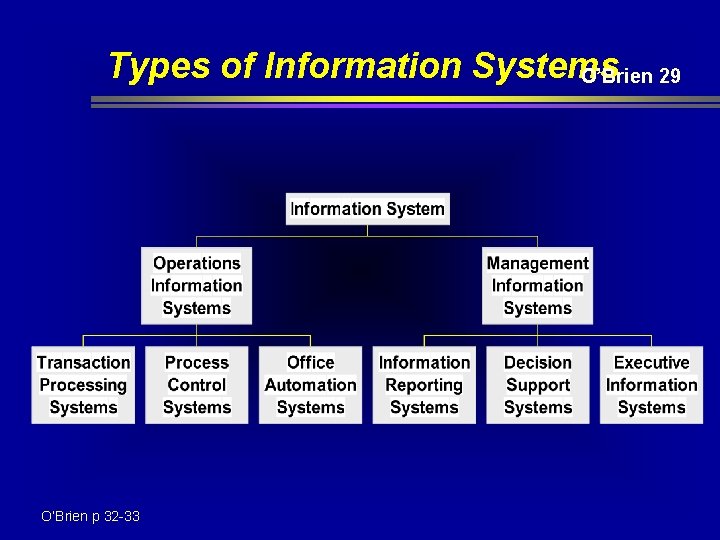
Types of Information Systems O’Brien 29 O’Brien p 32 -33
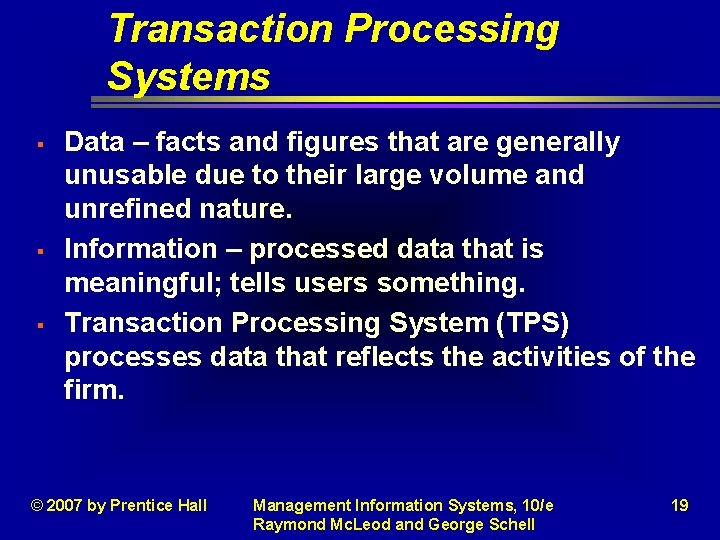
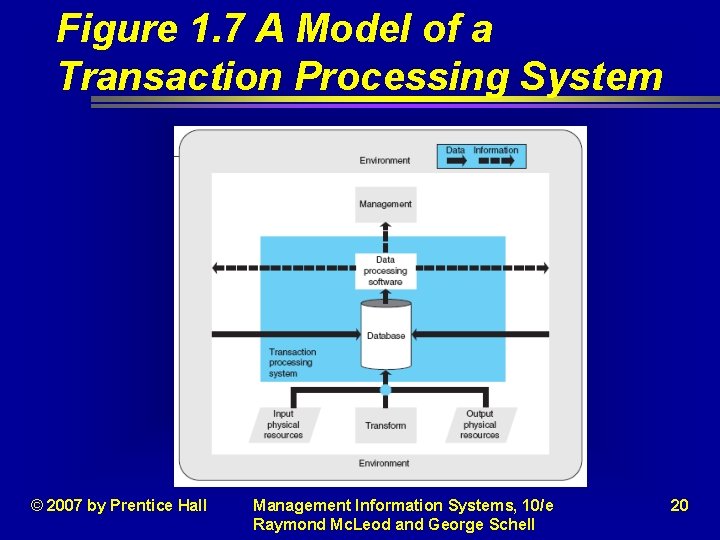
Transaction Processing Systems § § § Data – facts and figures that are generally unusable due to their large volume and unrefined nature. Information – processed data that is meaningful; tells users something. Transaction Processing System (TPS) processes data that reflects the activities of the firm. © 2007 by Prentice Hall Management Information Systems, 10/e Raymond Mc. Leod and George Schell 19
Figure 1. 7 A Model of a Transaction Processing System © 2007 by Prentice Hall Management Information Systems, 10/e Raymond Mc. Leod and George Schell 20
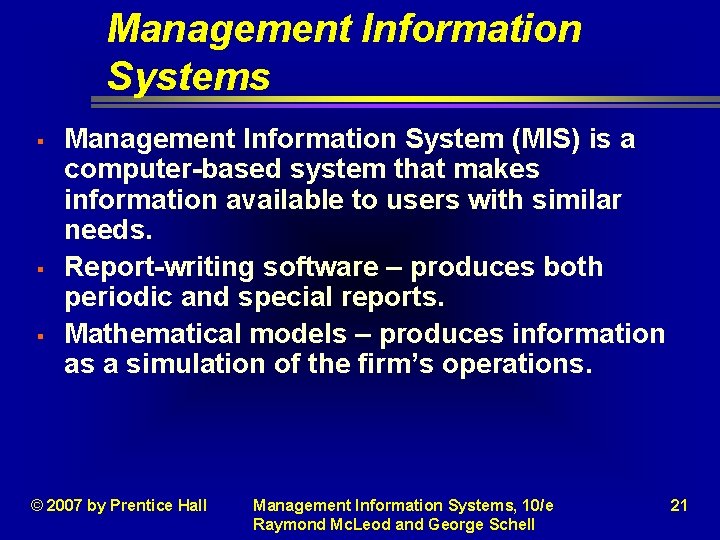
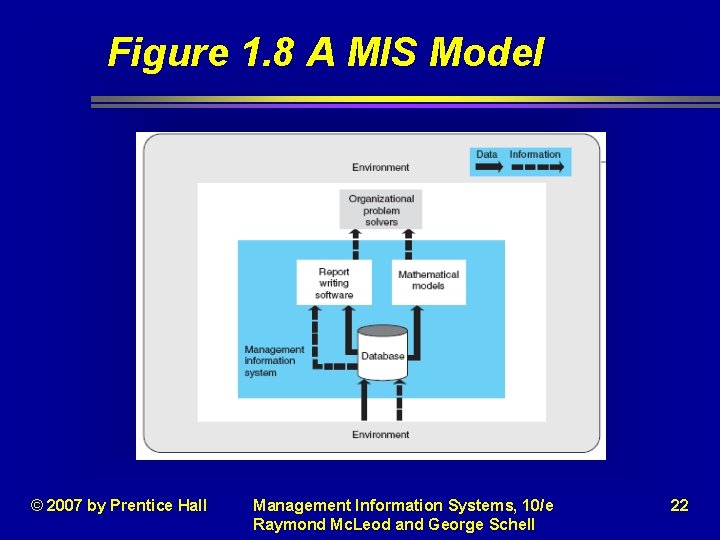
Management Information Systems § § § Management Information System (MIS) is a computer-based system that makes information available to users with similar needs. Report-writing software – produces both periodic and special reports. Mathematical models – produces information as a simulation of the firm’s operations. © 2007 by Prentice Hall Management Information Systems, 10/e Raymond Mc. Leod and George Schell 21
Figure 1. 8 A MIS Model © 2007 by Prentice Hall Management Information Systems, 10/e Raymond Mc. Leod and George Schell 22
MIS (Cont’d) § Information provided by MIS describes the firm or one of its major systems. ðWhat has happened in the past. ðWhat is happening now. ðWhat is likely to happen in the future. § Interorganizational information system (IOS) – is formed when a firm interacts with others, such as suppliers. © 2007 by Prentice Hall Management Information Systems, 10/e Raymond Mc. Leod and George Schell 23
Virtual Office Systems § § § Office automation – use of electronics to facilitate communication. Personal productivity systems – use technology to self-manage clerical tasks such as calendars, address books, etc. Virtual office – performing office activities independent of a particular physical location. © 2007 by Prentice Hall Management Information Systems, 10/e Raymond Mc. Leod and George Schell 24
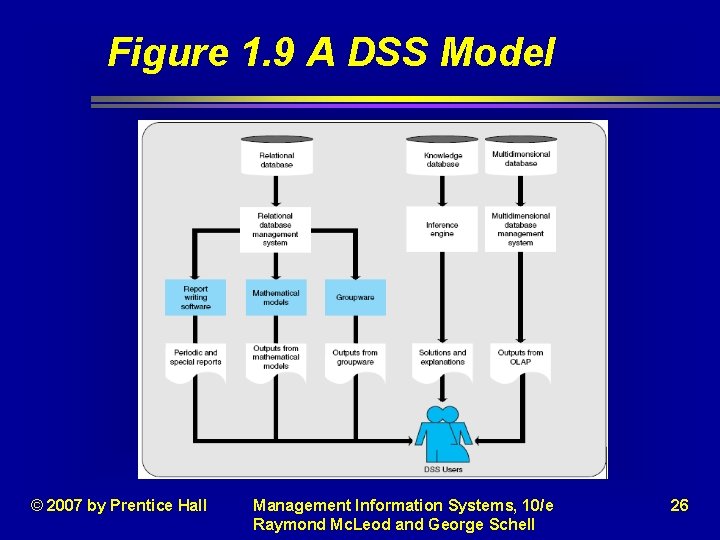
Decision Support Systems § § Decision Support System (DSS) – assists management in solving a problem. Groupware – group-oriented software. Group decision support system (GDSS) combines groupware and the DSS. Artificial intelligence (AI) – the science of providing computers with human intellegence. © 2007 by Prentice Hall Management Information Systems, 10/e Raymond Mc. Leod and George Schell 25
Figure 1. 9 A DSS Model © 2007 by Prentice Hall Management Information Systems, 10/e Raymond Mc. Leod and George Schell 26
Enterprise Resource Planning Systems § Enterprise Resource Planning System (ERP) is a computer-based system that enables the management of all of the firm’s resources on an organization-wide basis. ðY 2 K complaint ðSAP – ERP Provider © 2007 by Prentice Hall Management Information Systems, 10/e Raymond Mc. Leod and George Schell 27
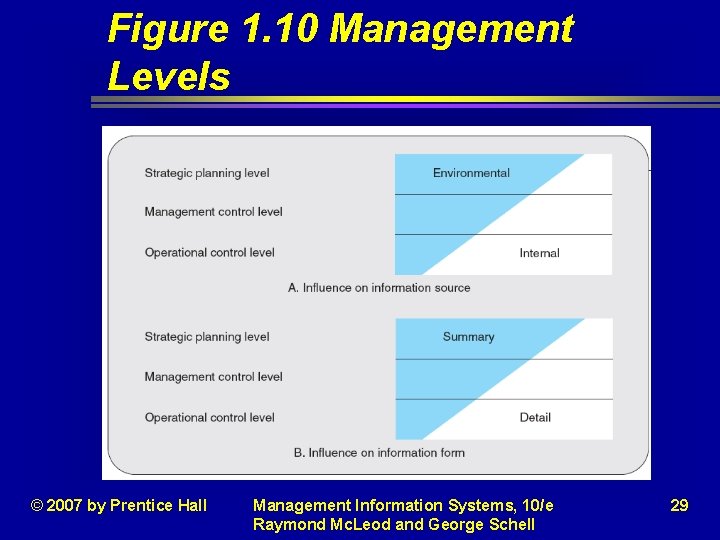
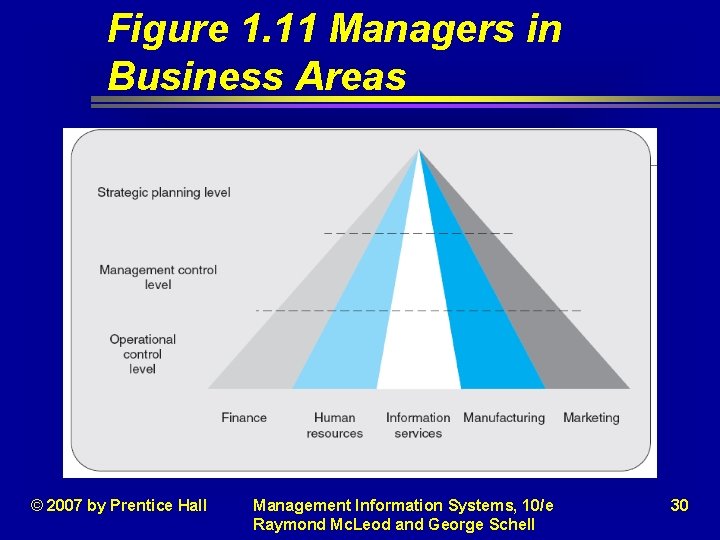
Information System Users § § § First users were clerical users on TPSs. MISs added problem-solvers as users. Managerial Levels ðStrategic planning level ðManagement control level ðOperational control level © 2007 by Prentice Hall Management Information Systems, 10/e Raymond Mc. Leod and George Schell 28
Figure 1. 10 Management Levels © 2007 by Prentice Hall Management Information Systems, 10/e Raymond Mc. Leod and George Schell 29
Figure 1. 11 Managers in Business Areas © 2007 by Prentice Hall Management Information Systems, 10/e Raymond Mc. Leod and George Schell 30
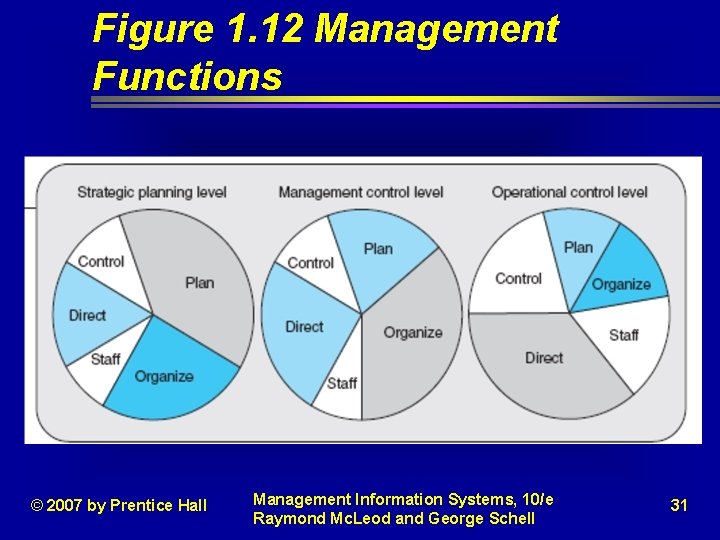
Figure 1. 12 Management Functions © 2007 by Prentice Hall Management Information Systems, 10/e Raymond Mc. Leod and George Schell 31
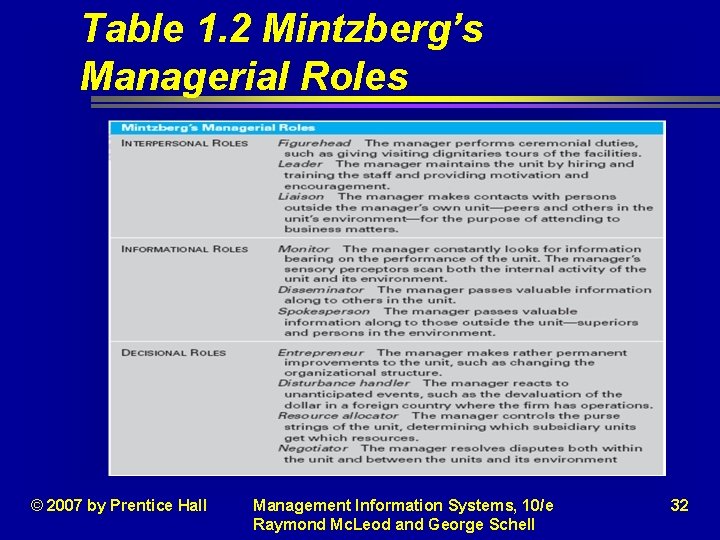
Table 1. 2 Mintzberg’s Managerial Roles © 2007 by Prentice Hall Management Information Systems, 10/e Raymond Mc. Leod and George Schell 32
Problem Solving & Decision Making § § § Problem – a condition or event that is harmful or potentially harmful to a firm or that is beneficial or potentially beneficial. Solution – outcome of the problem-solving activity. Decision – a particular selected course of action. © 2007 by Prentice Hall Management Information Systems, 10/e Raymond Mc. Leod and George Schell 33
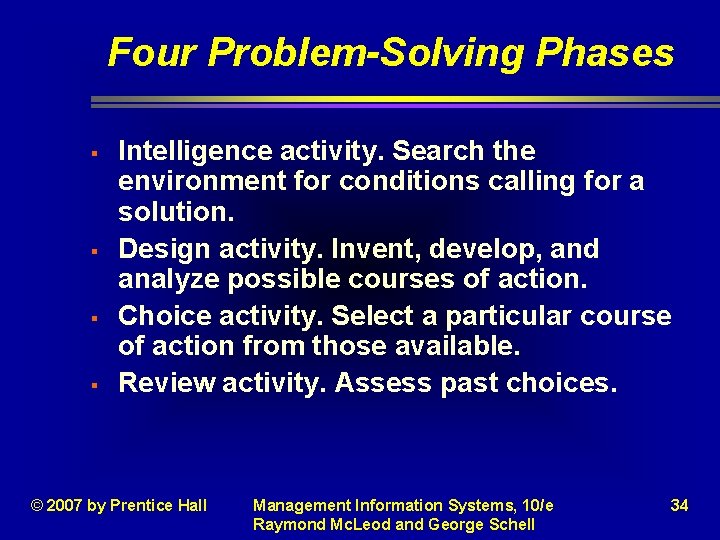
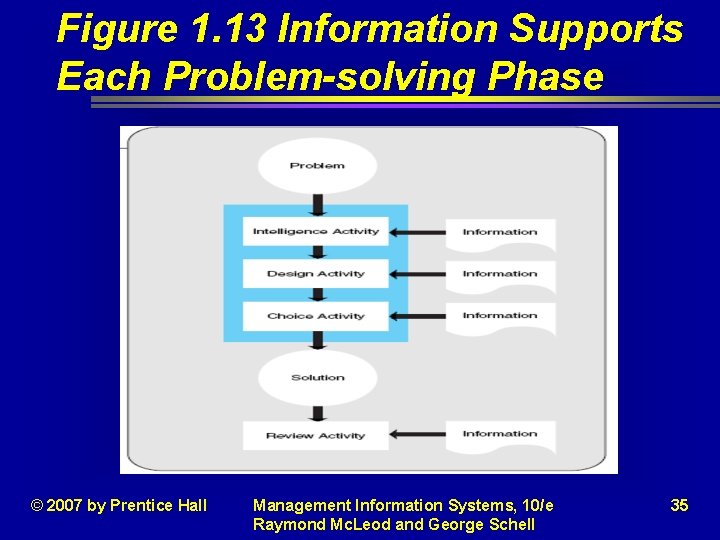
Four Problem-Solving Phases § § Intelligence activity. Search the environment for conditions calling for a solution. Design activity. Invent, develop, and analyze possible courses of action. Choice activity. Select a particular course of action from those available. Review activity. Assess past choices. © 2007 by Prentice Hall Management Information Systems, 10/e Raymond Mc. Leod and George Schell 34
Figure 1. 13 Information Supports Each Problem-solving Phase © 2007 by Prentice Hall Management Information Systems, 10/e Raymond Mc. Leod and George Schell 35
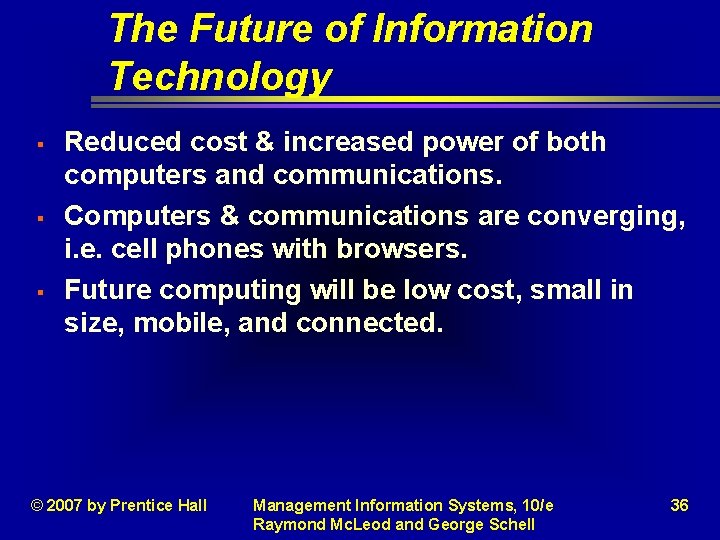
The Future of Information Technology § § § Reduced cost & increased power of both computers and communications. Computers & communications are converging, i. e. cell phones with browsers. Future computing will be low cost, small in size, mobile, and connected. © 2007 by Prentice Hall Management Information Systems, 10/e Raymond Mc. Leod and George Schell 36
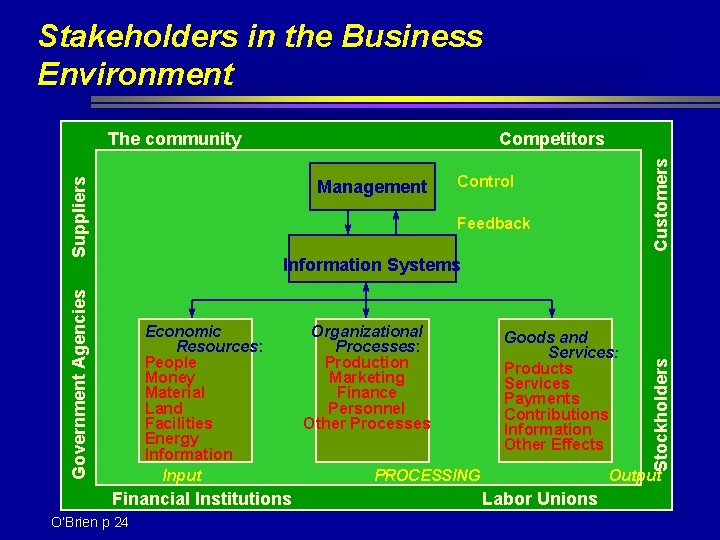
Stakeholders in the Business Environment Competitors Management Customers Suppliers The community Control Feedback Economic Resources: People Money Material Land Facilities Energy Information Input Financial Institutions O’Brien p 24 Organizational Processes: Production Marketing Finance Personnel Other Processes Goods and Services: Products Services Payments Contributions Information Other Effects PROCESSING Stockholders Government Agencies Information Systems Output Labor Unions
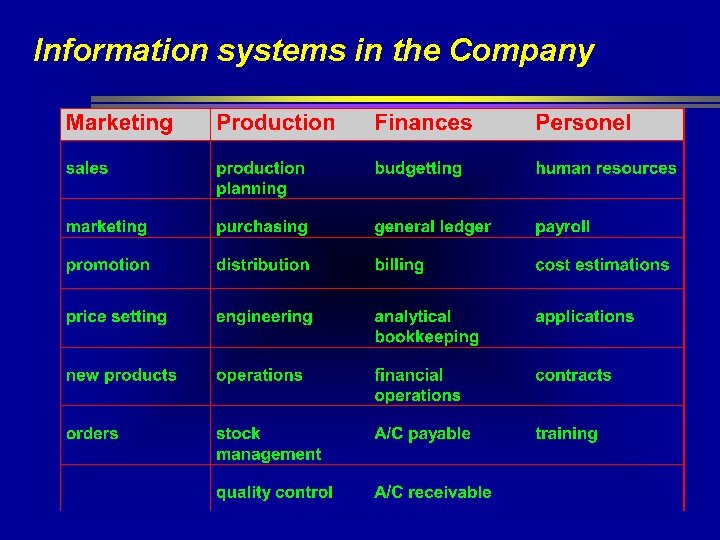
Information systems in the Company
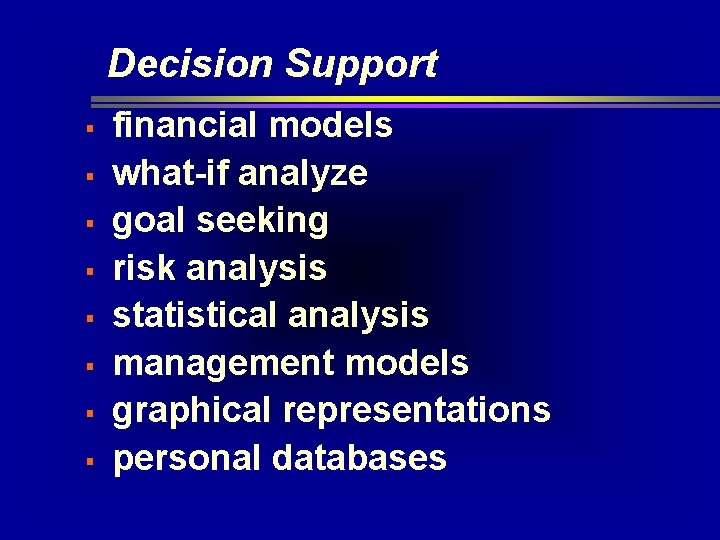
Decision Support § § § § financial models what-if analyze goal seeking risk analysis statistical analysis management models graphical representations personal databases
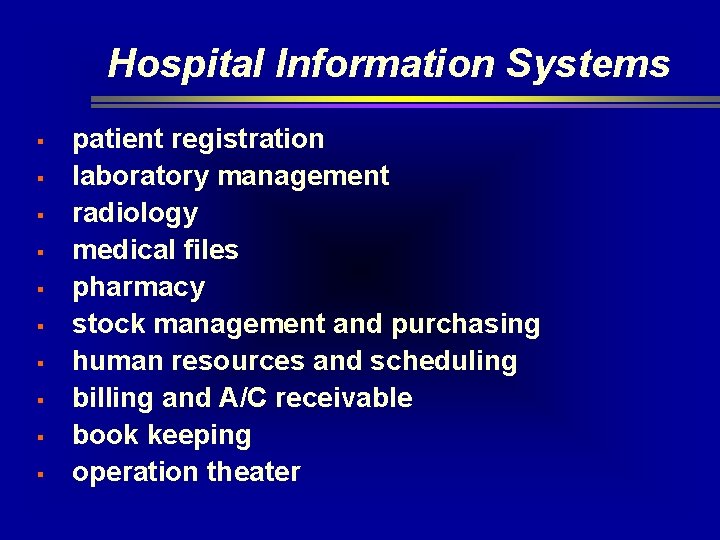
Hospital Information Systems § § § § § patient registration laboratory management radiology medical files pharmacy stock management and purchasing human resources and scheduling billing and A/C receivable book keeping operation theater
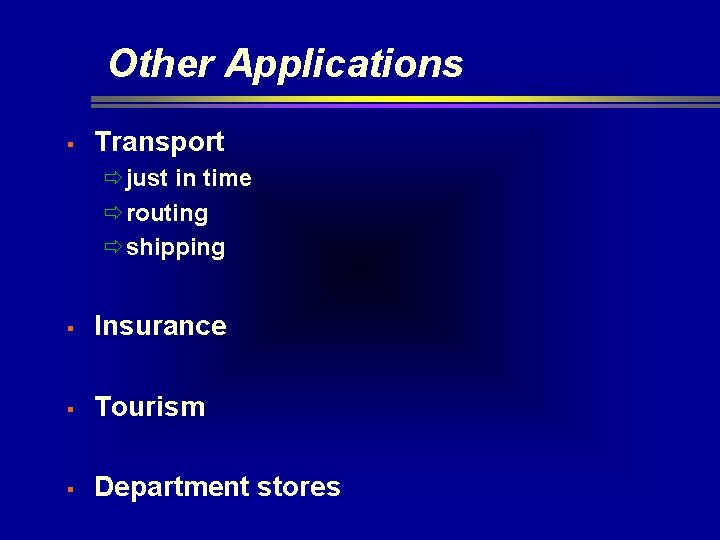
Other Applications § Transport ðjust in time ðrouting ðshipping § Insurance § Tourism § Department stores