SelfOptimizing Control of the HDA Process Outline of


- Slides: 20
Self-Optimizing Control of the HDA Process • Outline of the presentation – – Process description. Self-optimizing control procedure. Self-optimizing control of the HDA process. Concluding remarks.
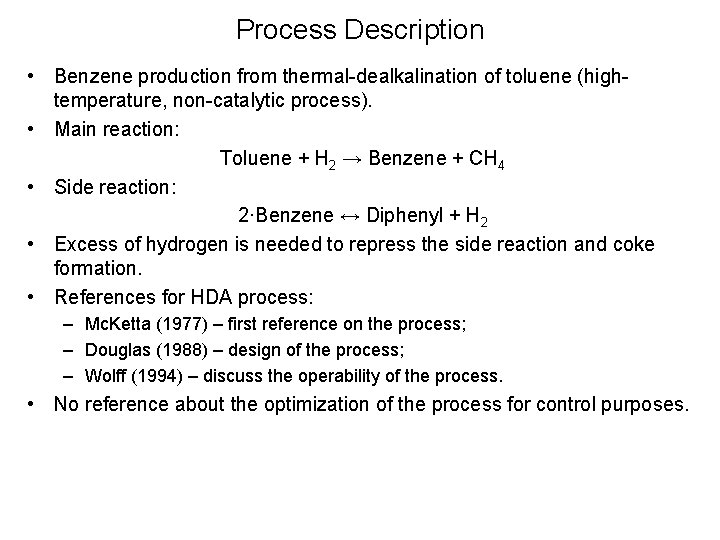
Process Description • Benzene production from thermal-dealkalination of toluene (hightemperature, non-catalytic process). • Main reaction: Toluene + H 2 → Benzene + CH 4 • Side reaction: 2·Benzene ↔ Diphenyl + H 2 • Excess of hydrogen is needed to repress the side reaction and coke formation. • References for HDA process: – Mc. Ketta (1977) – first reference on the process; – Douglas (1988) – design of the process; – Wolff (1994) – discuss the operability of the process. • No reference about the optimization of the process for control purposes.
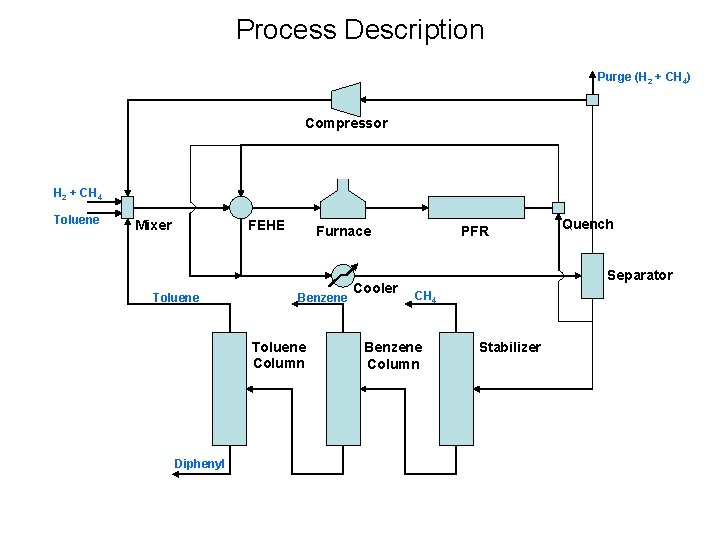
Process Description Purge (H 2 + CH 4) Compressor H 2 + CH 4 Toluene Mixer FEHE Toluene Furnace Benzene Toluene Column Diphenyl Cooler PFR Quench Separator CH 4 Benzene Column Stabilizer
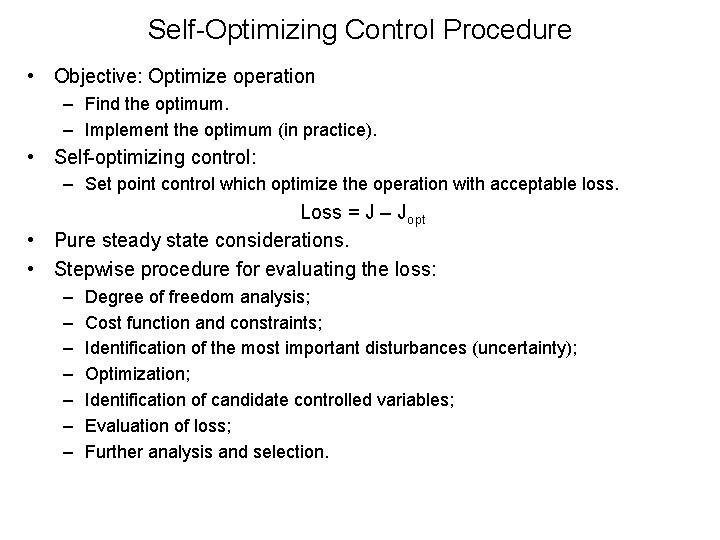
Self-Optimizing Control Procedure • Objective: Optimize operation – Find the optimum. – Implement the optimum (in practice). • Self-optimizing control: – Set point control which optimize the operation with acceptable loss. Loss = J – Jopt • Pure steady state considerations. • Stepwise procedure for evaluating the loss: – – – – Degree of freedom analysis; Cost function and constraints; Identification of the most important disturbances (uncertainty); Optimization; Identification of candidate controlled variables; Evaluation of loss; Further analysis and selection.
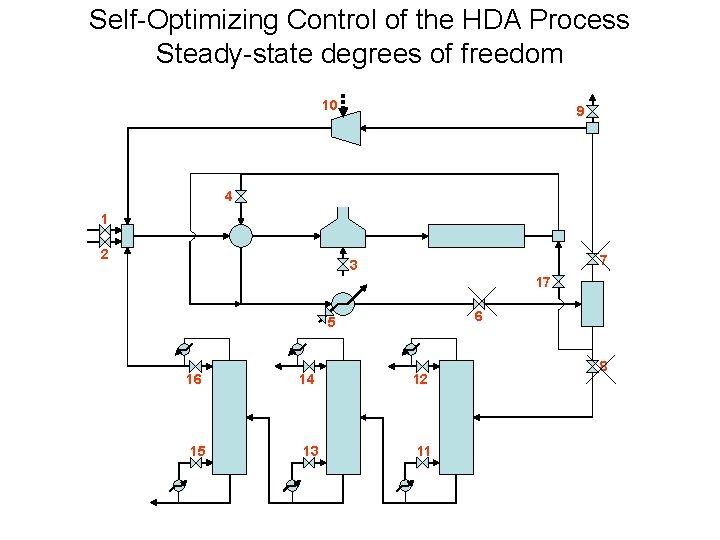
Self-Optimizing Control of the HDA Process Steady-state degrees of freedom 10 9 4 1 2 7 3 17 6 5 16 14 12 15 13 11 8
Self-Optimizing Control of the HDA Process Cost Function and Constraints • • The following profit is maximized (Douglas’s EP): (-J) = pben. Dben – ptol. Ftol – pgas. Fgas – pfuel. Qfuel – pcw. Qcw – ppower. Wpower - psteam. Qsteam + Σ(pv, i. Fv, i), i = 1, …, nc. Where: – Qcw = Qcw, cooler + Qcw, stab + Qcw, ben + Qcw, tol; – Qsteam = Qsteam, stab + Qsteam, ben + Qsteam, tol; – Fv, i = Fpurge + Dstab, i + Btol, i, i = 1, …, nc. • Constraints during operation: – – – – – • Production rate: Hydrogen excess in reactor inlet: Bound on toluene feed rate: Reactor pressure: Reactor outlet temperature: Quench outlet temperature: Product purity: Separator inlet temperature: + some distillation recovery constraints Manipulated variables are bounded. Dben ≥ 265 lbmol/h. FH 2 / (Fben + Ftol + Fdiph) ≥ 5. Ftol ≤ 300 lbmol/h. Preactor ≤ 500 psia. Treactor ≤ 1300 °F. Tquencher ≤ 1150 °F. x. Dben ≥ 0. 9997. 95 °F ≤ Tflash ≤ 105 °F.
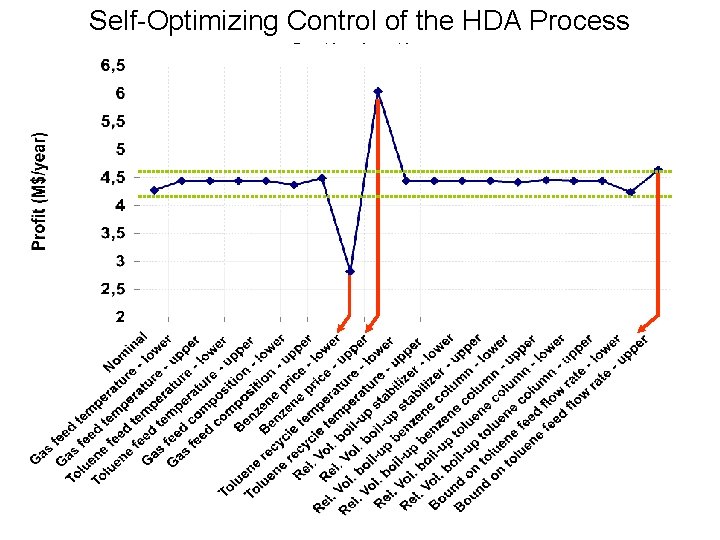
Self-Optimizing Control of the HDA Process Identification of the Most Important Disturbances Disturbance Nominal Lower Upper 1 - Gas feed temperature 100 80 112 2 - Toluene feed temperature 100 80 120 3 - Gas feed composition 0. 95 0. 90 1. 00 4 - Benzene price 9. 04 8. 34 9. 74 5 - Toluene recycle temperature 212 202 230 6 - Relative volatility boil-up stabilizer 36 32. 4 39. 6 7 - Relative volatility boil-up benzene column 2. 67 2. 41 2. 94 8 - Relative volatility boil-up toluene column 10 9 11 9 - Upper bound on toluene feed flow rate 300 285 315
Self-Optimizing Control of the HDA Process Optimization
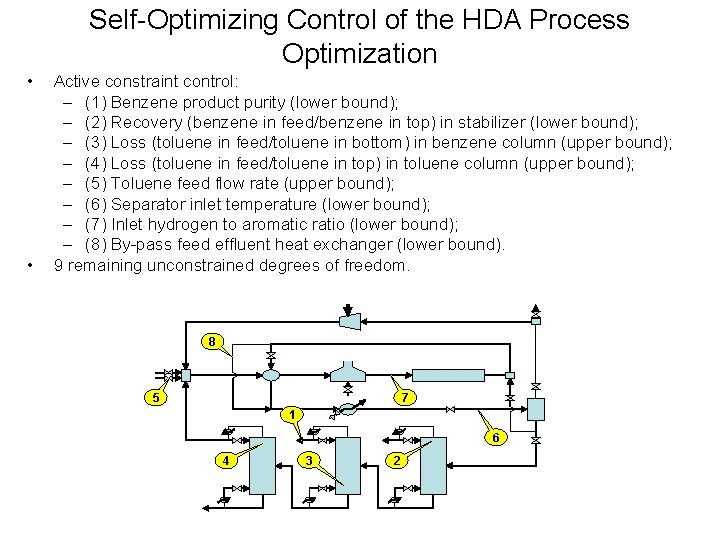
Self-Optimizing Control of the HDA Process Optimization • • Active constraint control: – (1) Benzene product purity (lower bound); – (2) Recovery (benzene in feed/benzene in top) in stabilizer (lower bound); – (3) Loss (toluene in feed/toluene in bottom) in benzene column (upper bound); – (4) Loss (toluene in feed/toluene in top) in toluene column (upper bound); – (5) Toluene feed flow rate (upper bound); – (6) Separator inlet temperature (lower bound); – (7) Inlet hydrogen to aromatic ratio (lower bound); – (8) By-pass feed effluent heat exchanger (lower bound). 9 remaining unconstrained degrees of freedom. 8 5 7 1 6 4 3 2
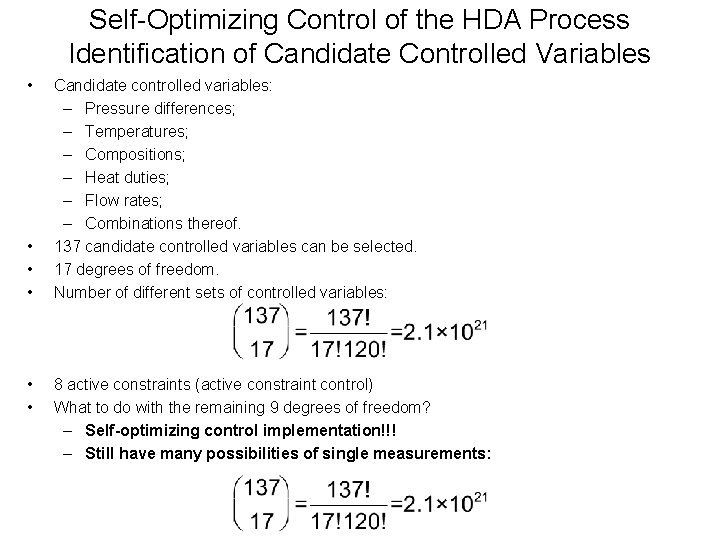
Self-Optimizing Control of the HDA Process Identification of Candidate Controlled Variables • • • Candidate controlled variables: – Pressure differences; – Temperatures; – Compositions; – Heat duties; – Flow rates; – Combinations thereof. 137 candidate controlled variables can be selected. 17 degrees of freedom. Number of different sets of controlled variables: 8 active constraints (active constraint control) What to do with the remaining 9 degrees of freedom? – Self-optimizing control implementation!!! – Still have many possibilities of single measurements:
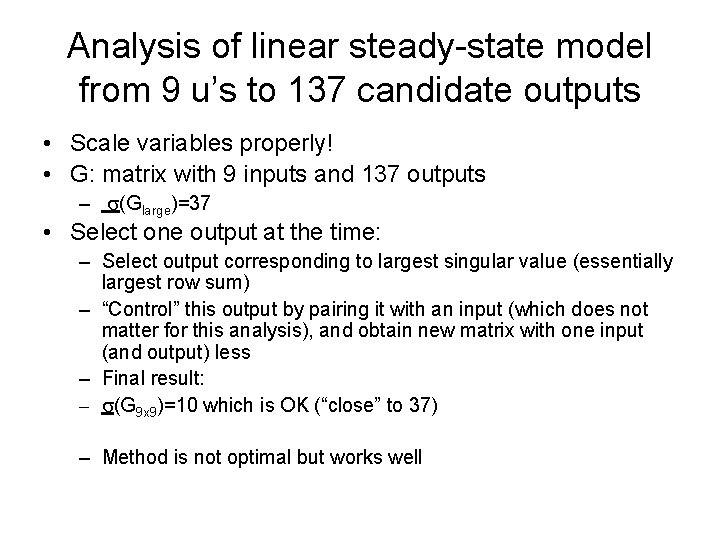
Analysis of linear steady-state model from 9 u’s to 137 candidate outputs • Scale variables properly! • G: matrix with 9 inputs and 137 outputs – (Glarge)=37 • Select one output at the time: – Select output corresponding to largest singular value (essentially largest row sum) – “Control” this output by pairing it with an input (which does not matter for this analysis), and obtain new matrix with one input (and output) less – Final result: – (G 9 x 9)=10 which is OK (“close” to 37) – Method is not optimal but works well
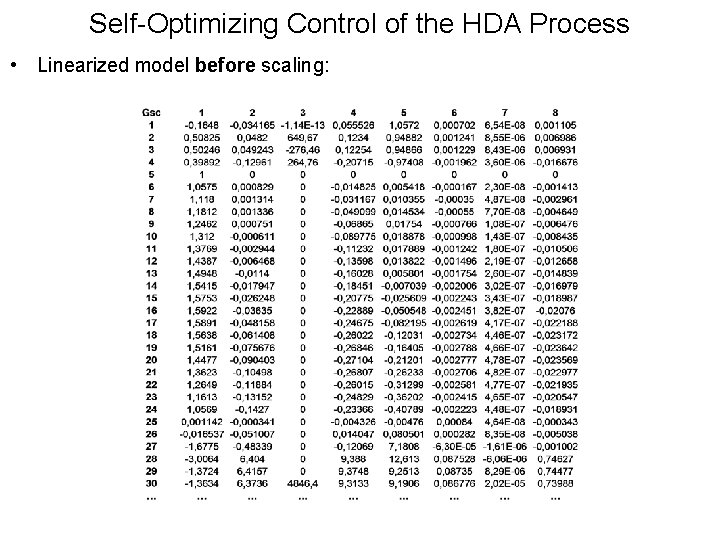
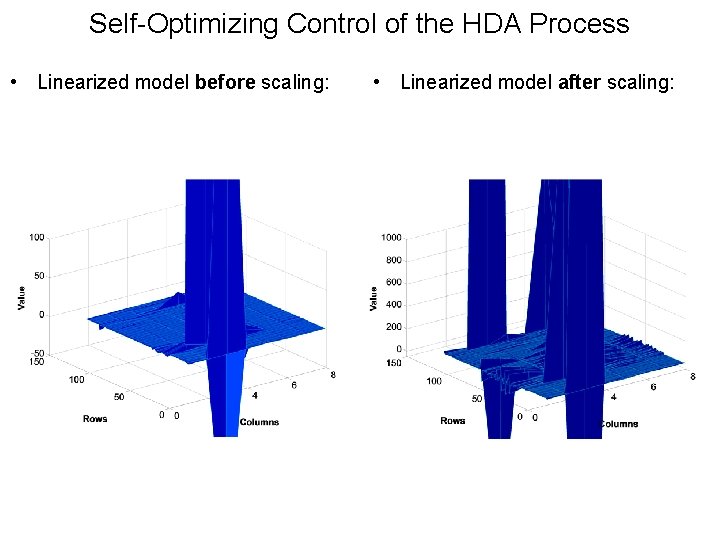
Self-Optimizing Control of the HDA Process • Linearized model before scaling:
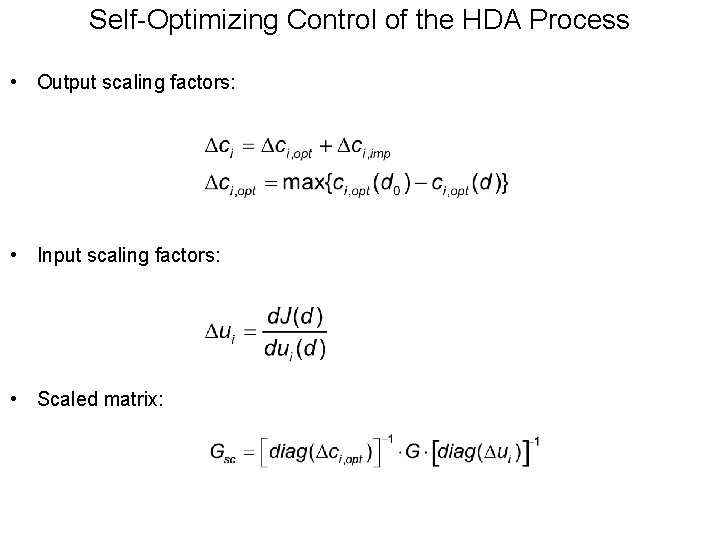
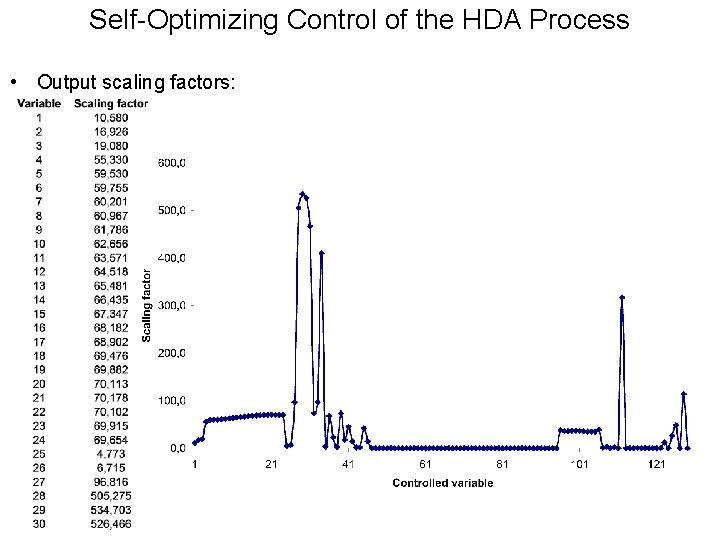
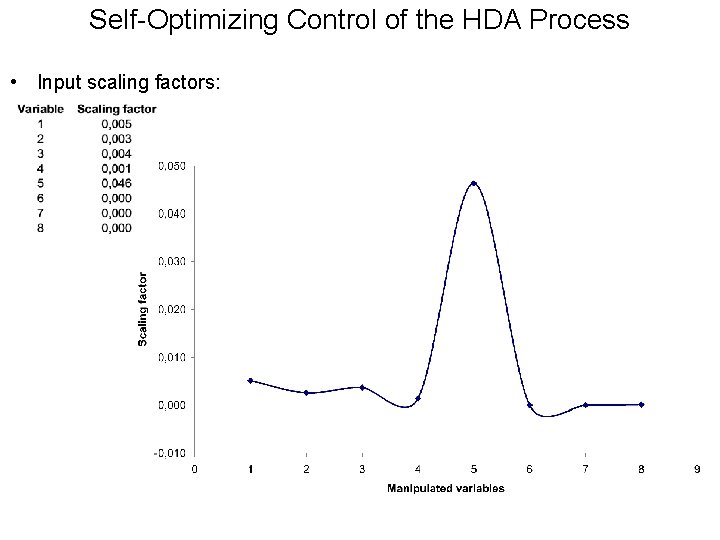
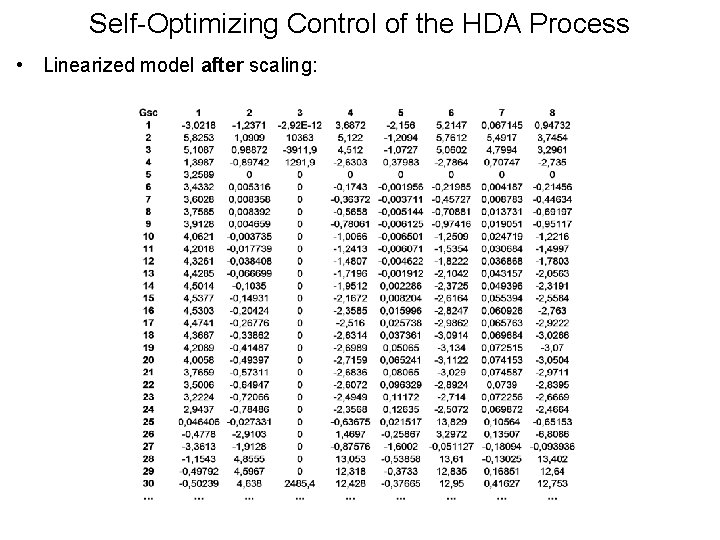
Self-Optimizing Control of the HDA Process • Output scaling factors: • Input scaling factors: • Scaled matrix:
Self-Optimizing Control of the HDA Process • Output scaling factors:
Self-Optimizing Control of the HDA Process • Input scaling factors:
Self-Optimizing Control of the HDA Process • Linearized model after scaling:
Self-Optimizing Control of the HDA Process • Linearized model before scaling: • Linearized model after scaling:
• more details in here about results • and also present RGA-method. . .
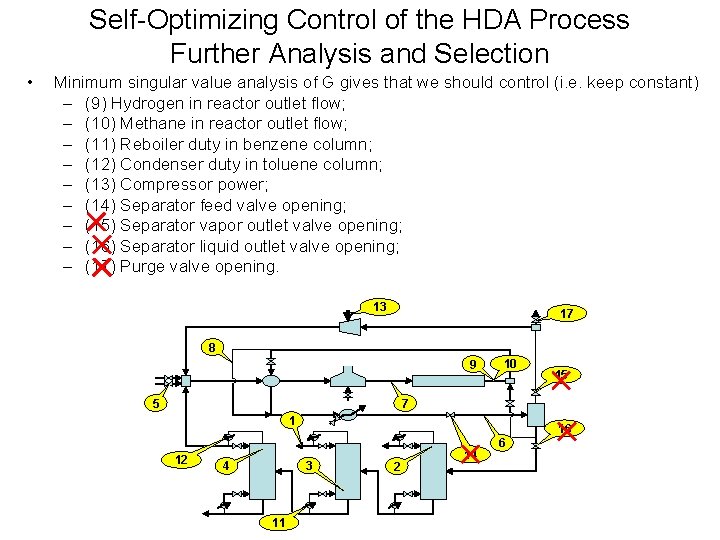
Self-Optimizing Control of the HDA Process Further Analysis and Selection • Minimum singular value analysis of G gives that we should control (i. e. keep constant) – (9) Hydrogen in reactor outlet flow; – (10) Methane in reactor outlet flow; – (11) Reboiler duty in benzene column; – (12) Condenser duty in toluene column; – (13) Compressor power; – (14) Separator feed valve opening; – (15) Separator vapor outlet valve opening; – (16) Separator liquid outlet valve opening; – (17) Purge valve opening. 13 17 8 9 5 10 15 7 1 12 16 3 4 11 2 14 6
Self-Optimizing Control of the HDA Process Concluding Remarks • Demonstration of a self-optimizing procedure. • The economy in the HDA process is rather insensitive to disturbance in the process variables. • A set of controlled variables is found from an SVD screening of the scaled linearized model.