SEITER CORRECTIONS AN INTRODUCTION 4 E Chapter 1




- Slides: 43
SEITER, CORRECTIONS: AN INTRODUCTION, 4 E Chapter 1 The History of Crime and Corrections 1 © 2014 by Pearson Higher Education, Inc Upper Saddle River, New Jersey 07458 • All Rights Reserved
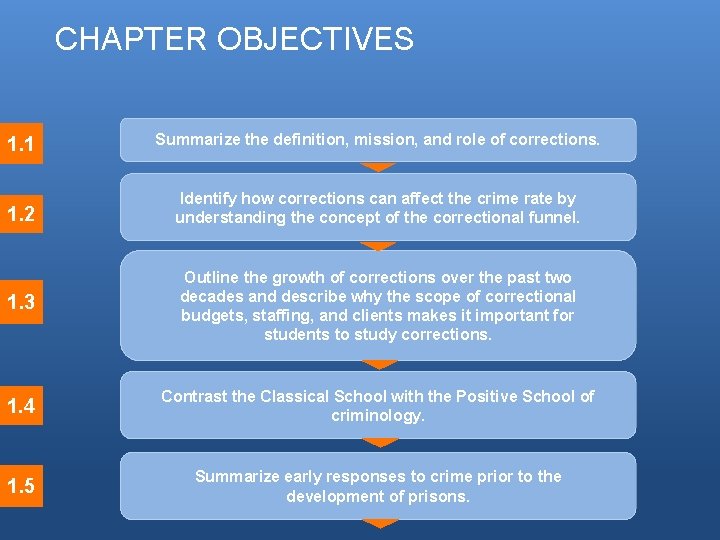
CHAPTER OBJECTIVES 1. 1 Summarize the definition, mission, and role of corrections. 1. 2 Identify how corrections can affect the crime rate by understanding the concept of the correctional funnel. 1. 3 Outline the growth of corrections over the past two decades and describe why the scope of correctional budgets, staffing, and clients makes it important for students to study corrections. 1. 4 Contrast the Classical School with the Positive School of criminology. 1. 5 Summarize early responses to crime prior to the development of prisons. © 2014 by Pearson Higher Education, Inc Upper Saddle River, New Jersey 07458 • All Rights Reserved
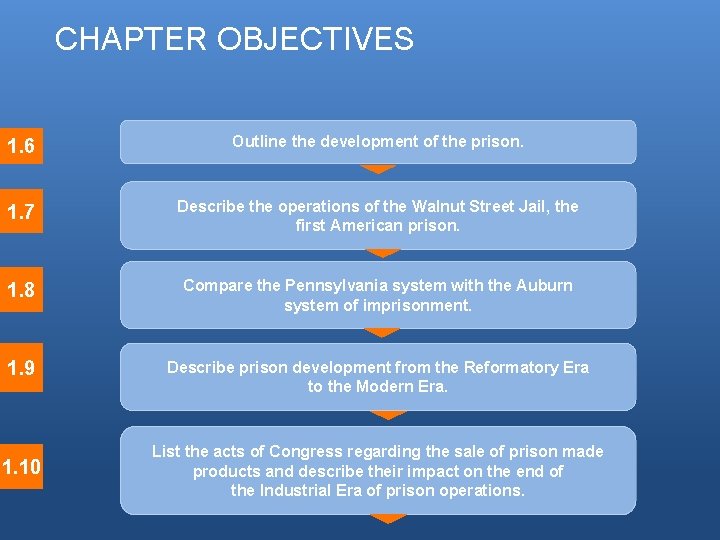
CHAPTER OBJECTIVES 1. 6 Outline the development of the prison. 1. 7 Describe the operations of the Walnut Street Jail, the first American prison. 1. 8 Compare the Pennsylvania system with the Auburn system of imprisonment. 1. 9 Describe prison development from the Reformatory Era to the Modern Era. 1. 10 List the acts of Congress regarding the sale of prison made products and describe their impact on the end of the Industrial Era of prison operations. © 2014 by Pearson Higher Education, Inc Upper Saddle River, New Jersey 07458 • All Rights Reserved
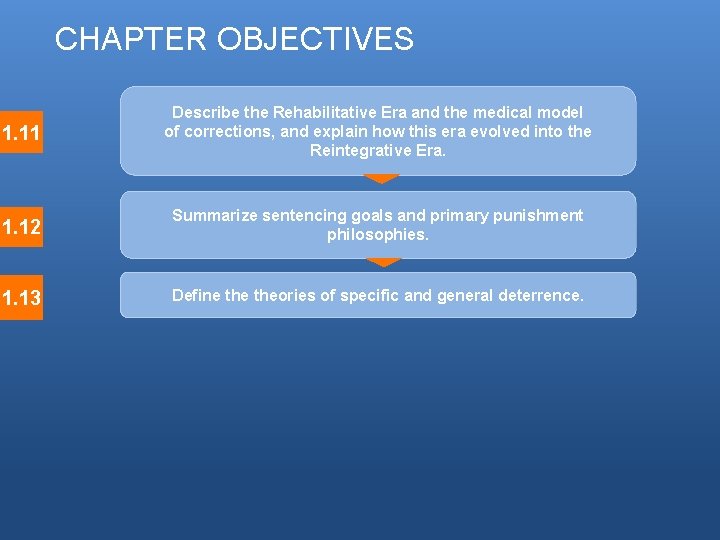
CHAPTER OBJECTIVES 1. 11 Describe the Rehabilitative Era and the medical model of corrections, and explain how this era evolved into the Reintegrative Era. 1. 12 Summarize sentencing goals and primary punishment philosophies. 1. 13 Define theories of specific and general deterrence. © 2014 by Pearson Higher Education, Inc Upper Saddle River, New Jersey 07458 • All Rights Reserved
Learning Objectives After this lecture, you should be able to complete the following Learning Outcomes 1. 1 Summarize the definition, mission, and role of corrections.
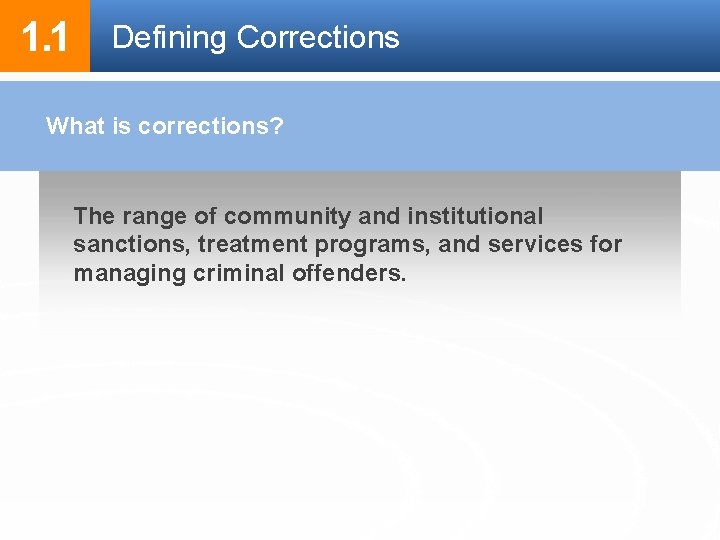
1. 1 Defining Corrections What is corrections? The range of community and institutional sanctions, treatment programs, and services for managing criminal offenders.
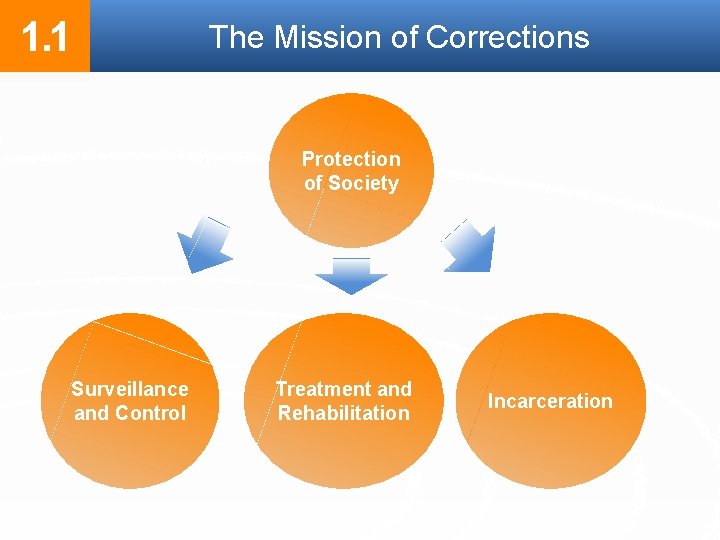
1. 1 The Mission of Corrections Protection of Society Surveillance and Control Treatment and Rehabilitation Incarceration
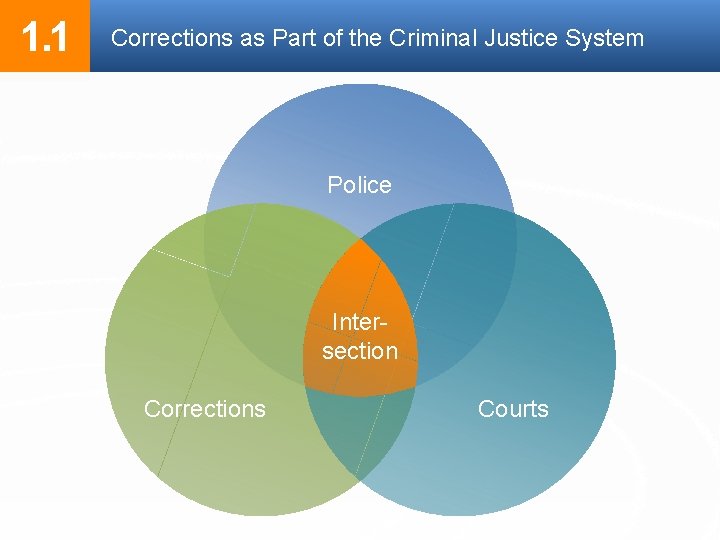
1. 1 Corrections as Part of the Criminal Justice System Police Intersection Corrections Courts
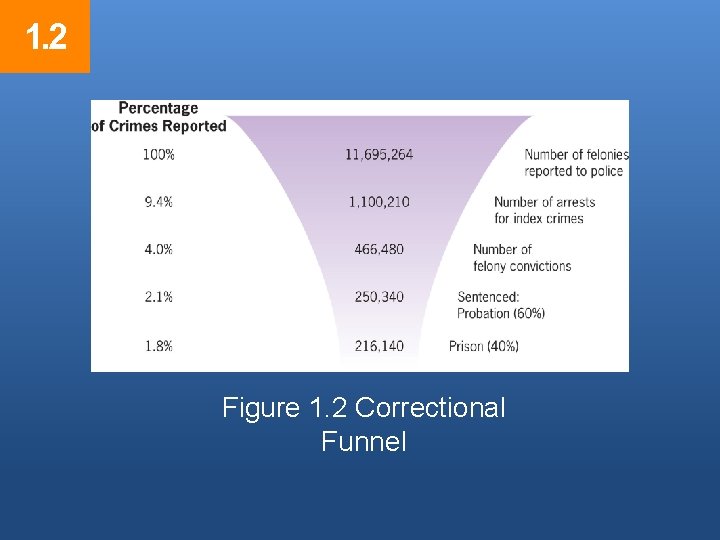
Learning Objectives After this lecture, you should be able to complete the following Learning Outcomes 1. 2 Identify how corrections can affect the crime rate by understanding the concept of the correctional funnel.
1. 2 Figure 1. 2 Correctional Funnel © 2014 by Pearson Higher Education, Inc Upper Saddle River, New Jersey 07458 • All Rights Reserved
Learning Objectives After this lecture, you should be able to complete the following Learning Outcomes 1. 3 Outline the growth of corrections over the past two decades and describe why the scope of correctional budgets, staffing, and clients makes it important for students to study corrections.
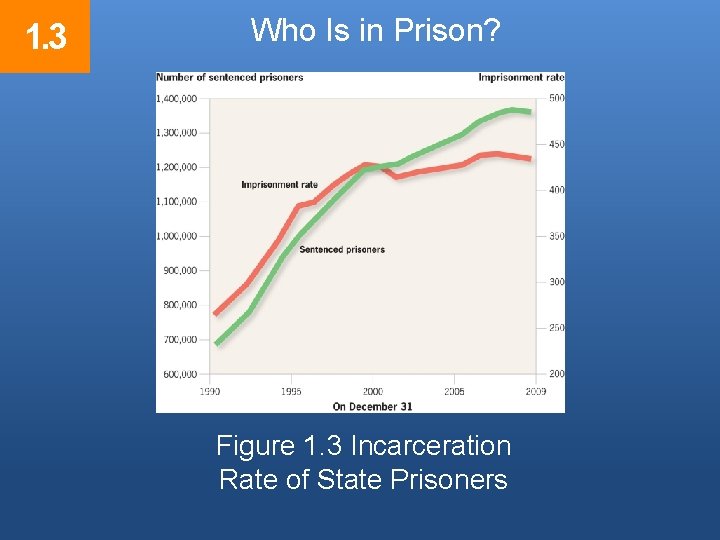
1. 3 Who Is in Prison? Figure 1. 3 Incarceration Rate of State Prisoners © 2014 by Pearson Higher Education, Inc Upper Saddle River, New Jersey 07458 • All Rights Reserved
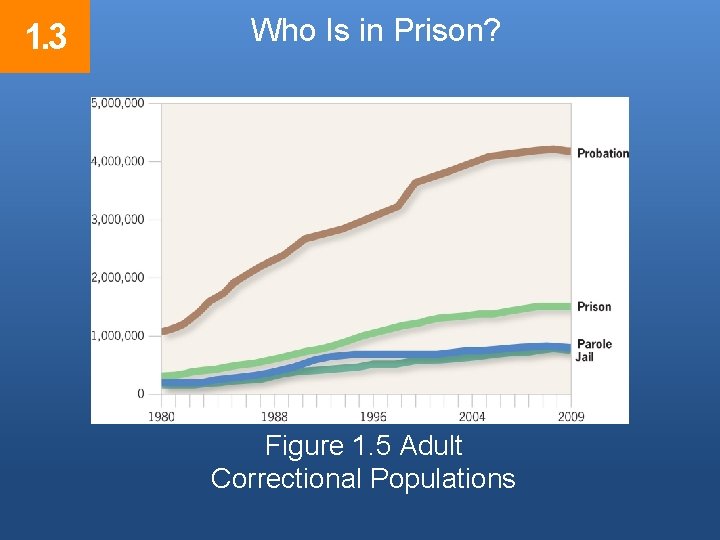
1. 3 Who Is in Prison? Figure 1. 5 Adult Correctional Populations © 2014 by Pearson Higher Education, Inc Upper Saddle River, New Jersey 07458 • All Rights Reserved
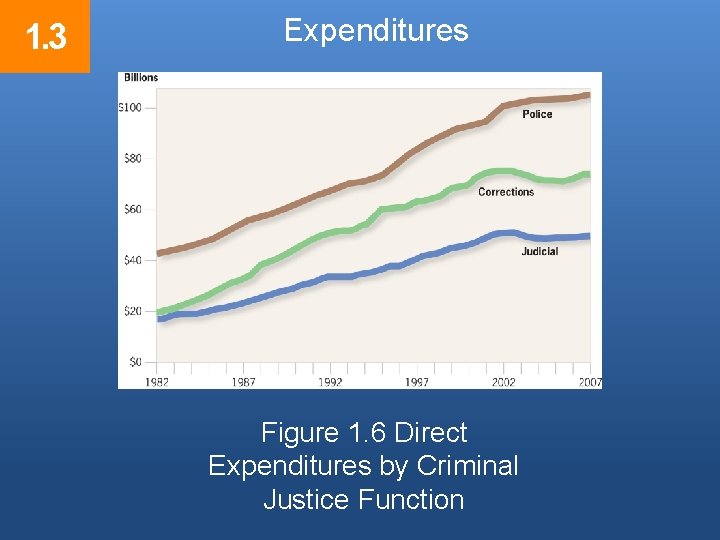
1. 3 Expenditures Figure 1. 6 Direct Expenditures by Criminal Justice Function © 2014 by Pearson Higher Education, Inc Upper Saddle River, New Jersey 07458 • All Rights Reserved
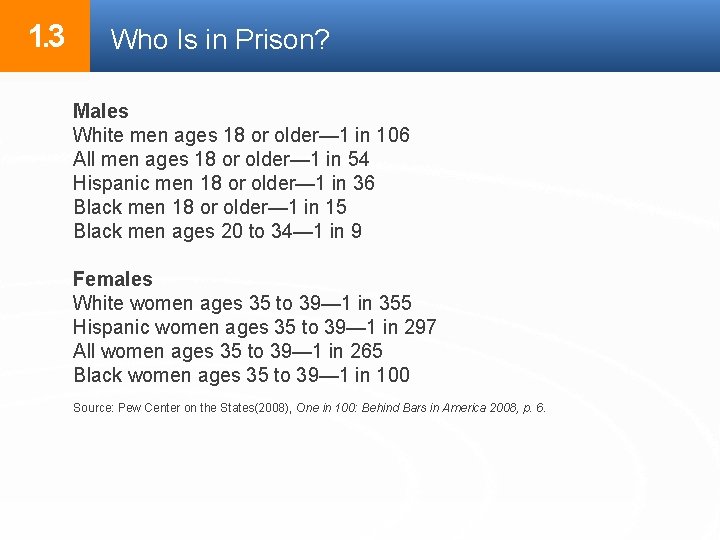
1. 3 Who Is in Prison? Males White men ages 18 or older— 1 in 106 All men ages 18 or older— 1 in 54 Hispanic men 18 or older— 1 in 36 Black men 18 or older— 1 in 15 Black men ages 20 to 34— 1 in 9 Females White women ages 35 to 39— 1 in 355 Hispanic women ages 35 to 39— 1 in 297 All women ages 35 to 39— 1 in 265 Black women ages 35 to 39— 1 in 100 Source: Pew Center on the States(2008), One in 100: Behind Bars in America 2008, p. 6.
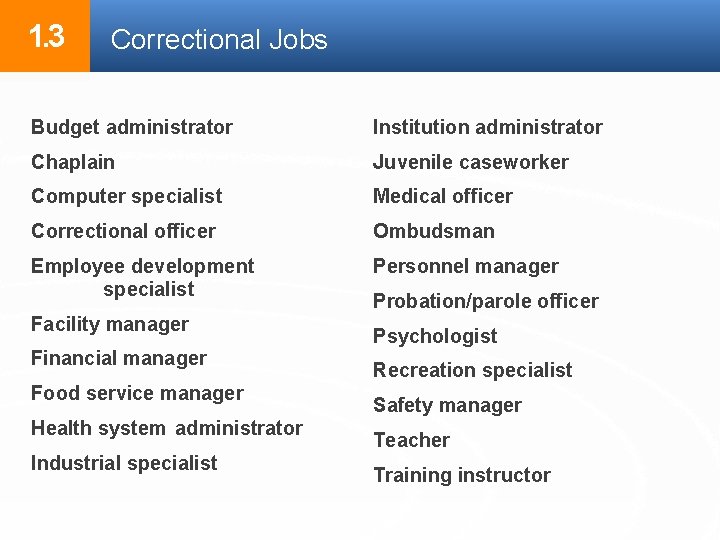
1. 3 Correctional Jobs Budget administrator Institution administrator Chaplain Juvenile caseworker Computer specialist Medical officer Correctional officer Ombudsman Employee development specialist Personnel manager Facility manager Financial manager Food service manager Health system administrator Industrial specialist Probation/parole officer Psychologist Recreation specialist Safety manager Teacher Training instructor
Learning Objectives After this lecture, you should be able to complete the following Learning Outcomes 1. 4 Contrast the Classical School with the Positive School of Criminology.
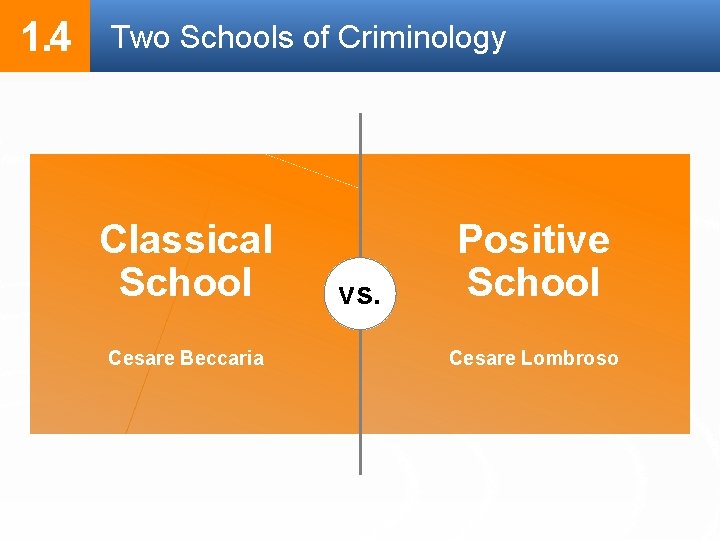
1. 4 Two Schools of Criminology Classical School Cesare Beccaria vs. Positive School Cesare Lombroso
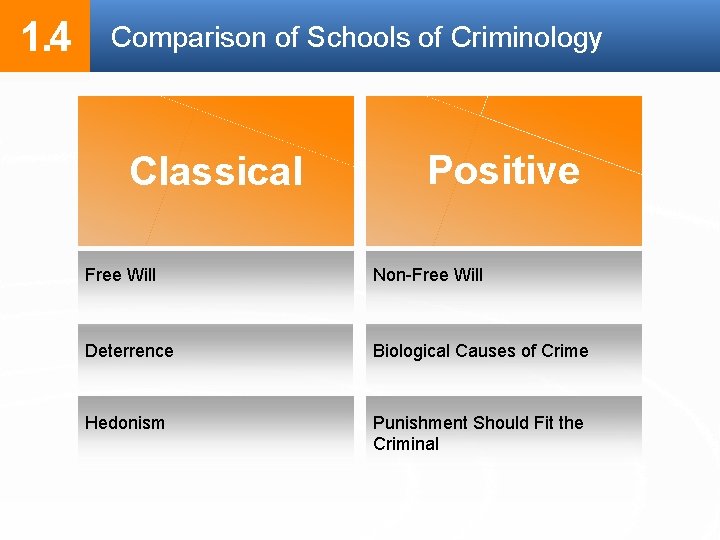
1. 4 Comparison of Schools of Criminology Classical Positive Free Will Non-Free Will Deterrence Biological Causes of Crime Hedonism Punishment Should Fit the Criminal
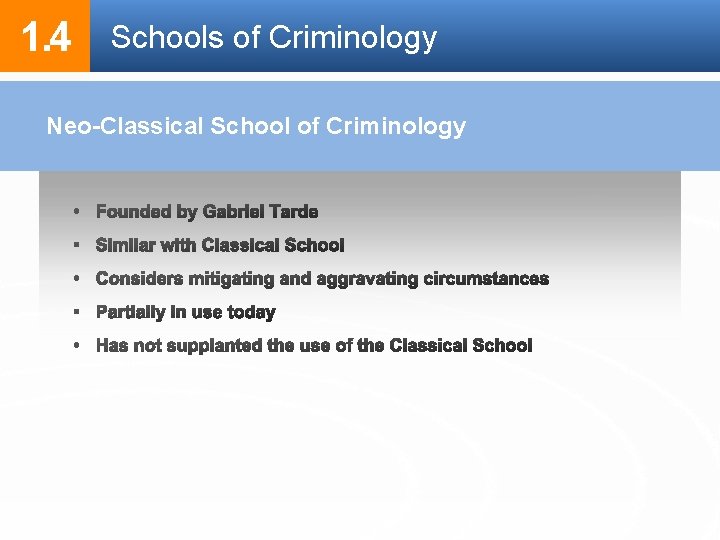
1. 4 Schools of Criminology Neo-Classical School of Criminology
Learning Objectives After this lecture, you should be able to complete the following Learning Outcomes 1. 5 Summarize early responses to crime prior to the development of prisons.
1. 5 Early Responses to Crime Early Punishments in the English system
Learning Objectives After this lecture, you should be able to complete the following Learning Outcomes 1. 6 Outline the development of the prison.
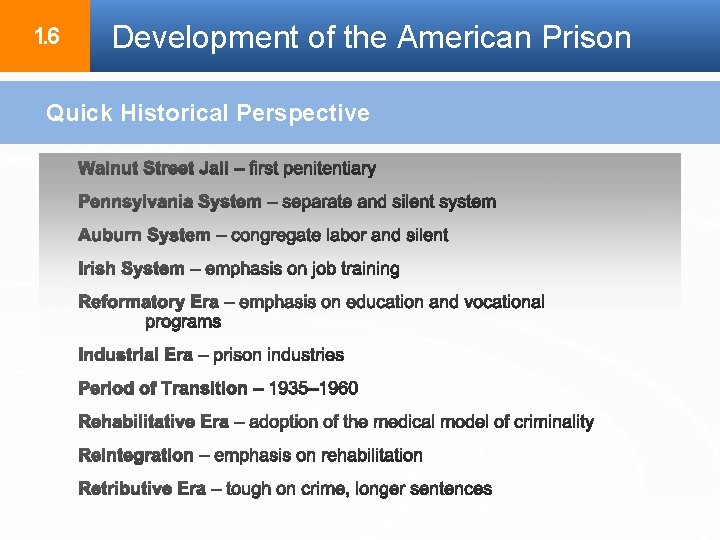
1. 6 Development of the American Prison Quick Historical Perspective
Learning Objectives After this lecture, you should be able to complete the following Learning Outcomes 1. 7 Describe the operations of the Walnut Street Jail.
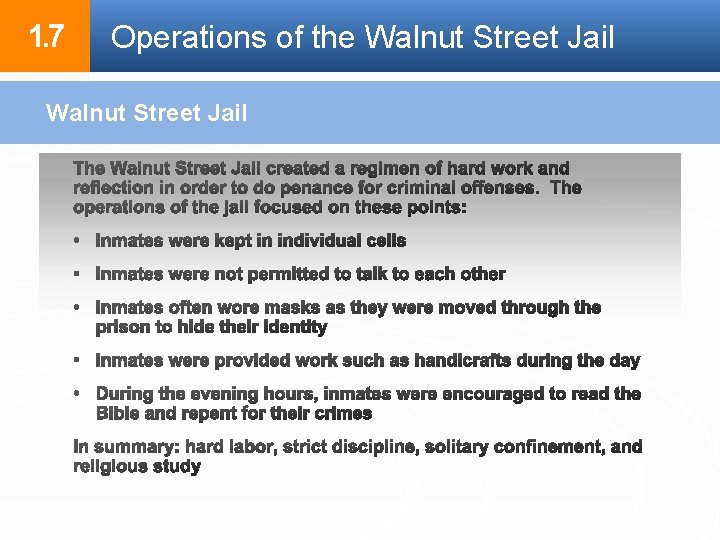
1. 7 Operations of the Walnut Street Jail
Learning Objectives After this lecture, you should be able to complete the following Learning Outcomes 1. 8 Compare the Pennsylvania and Auburn prison systems.
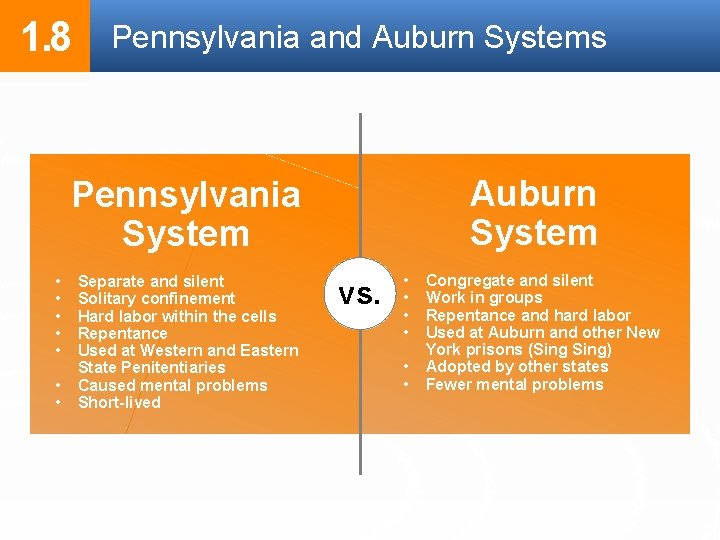
1. 8 Pennsylvania and Auburn Systems Auburn System Pennsylvania System • • Separate and silent Solitary confinement Hard labor within the cells Repentance Used at Western and Eastern State Penitentiaries Caused mental problems Short-lived vs. • • • Congregate and silent Work in groups Repentance and hard labor Used at Auburn and other New York prisons (Sing) Adopted by other states Fewer mental problems
Learning Objectives After this lecture, you should be able to complete the following Learning Outcomes 1. 9 Describe prison development from Reform Era to the Modern Era.
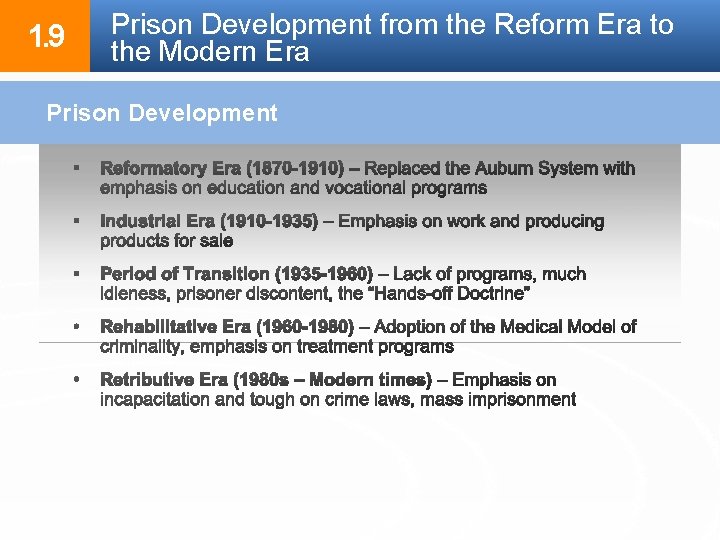
1. 9 Prison Development from the Reform Era to the Modern Era Prison Development
Learning Objectives After this lecture, you should be able to complete the following Learning Outcomes 1. 10 List acts of Congress regarding prison industries.
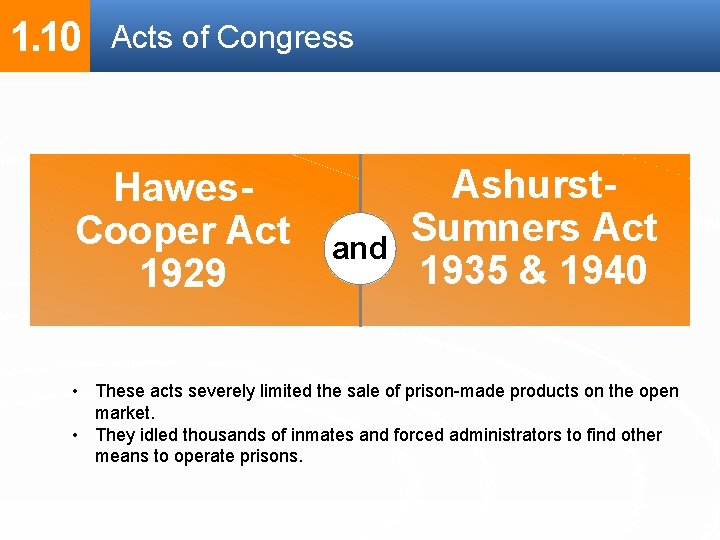
1. 10 Acts of Congress Hawes. Cooper Act 1929 and Ashurst. Sumners Act 1935 & 1940 • These acts severely limited the sale of prison-made products on the open market. • They idled thousands of inmates and forced administrators to find other means to operate prisons.
Learning Objectives After this lecture, you should be able to complete the following Learning Outcomes 1. 11 Describe the Rehabilitative Era and the Medical Model of Corrections, and explain how this era evolved into the Reintegrative Era.
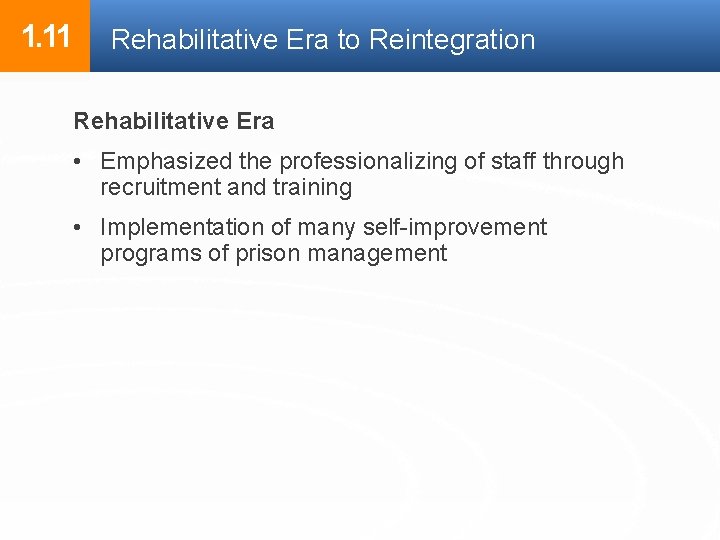
1. 11 Rehabilitative Era to Reintegration Rehabilitative Era • Emphasized the professionalizing of staff through recruitment and training • Implementation of many self-improvement programs of prison management
1. 11 Rehabilitative Era to Reintegration Medical Model • Offenders are sick, inflicted with problems that caused their criminality, and need to be diagnosed and treated • Rehabilitative programs would resolve offenders’ problems and prepare them for release into the community able to be productive and crime-free
1. 11 Rehabilitative Era to Reintegration • After offenders complete their treatment in prison they need transitional care, and the community must be involved in their successful return to society
Learning Objectives After this lecture, you should be able to complete the following Learning Outcomes 1. 12 Summarize sentencing goals and primary punishment philosophies.
1. 12 Sentencing Goals of Corrections
Learning Objectives After this lecture, you should be able to complete the following Learning Outcomes 1. 13 Define theories of specific and general deterrence.
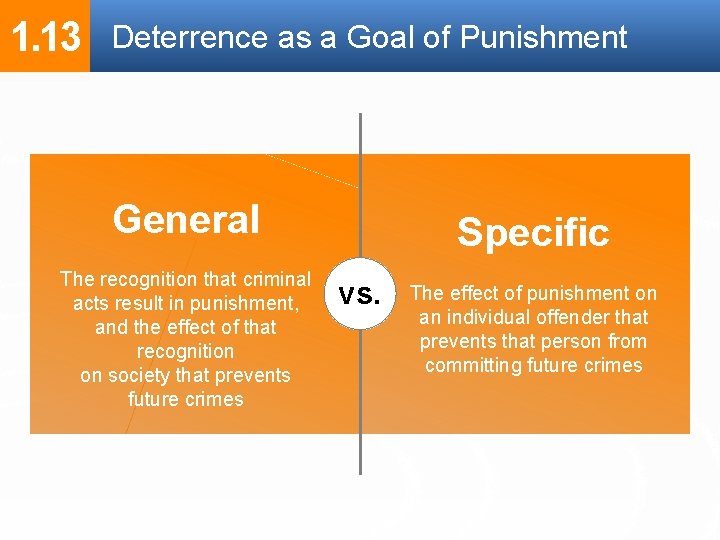
1. 13 Deterrence as a Goal of Punishment General The recognition that criminal acts result in punishment, and the effect of that recognition on society that prevents future crimes Specific vs. The effect of punishment on an individual offender that prevents that person from committing future crimes
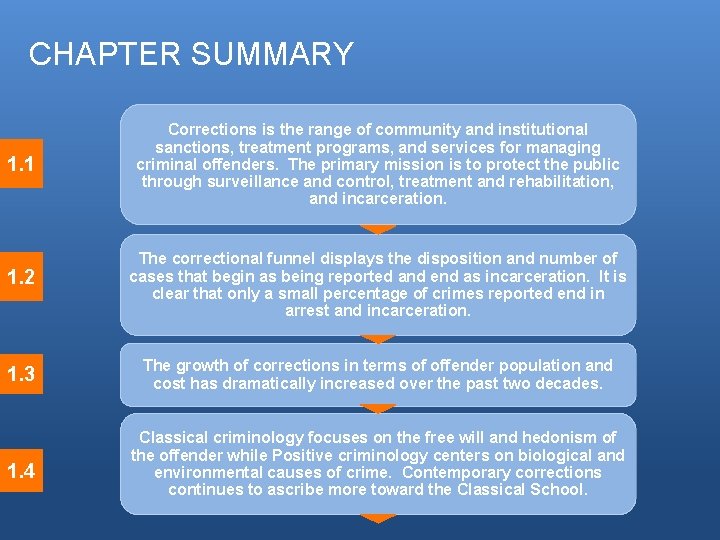
CHAPTER SUMMARY 1. 1 Corrections is the range of community and institutional sanctions, treatment programs, and services for managing criminal offenders. The primary mission is to protect the public through surveillance and control, treatment and rehabilitation, and incarceration. 1. 2 The correctional funnel displays the disposition and number of cases that begin as being reported and end as incarceration. It is clear that only a small percentage of crimes reported end in arrest and incarceration. 1. 3 The growth of corrections in terms of offender population and cost has dramatically increased over the past two decades. 1. 4 Classical criminology focuses on the free will and hedonism of the offender while Positive criminology centers on biological and environmental causes of crime. Contemporary corrections continues to ascribe more toward the Classical School. © 2014 by Pearson Higher Education, Inc Upper Saddle River, New Jersey 07458 • All Rights Reserved
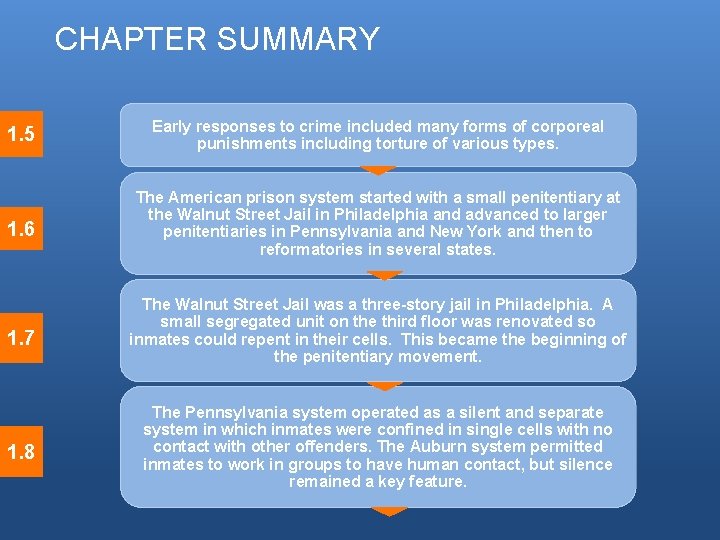
CHAPTER SUMMARY 1. 5 Early responses to crime included many forms of corporeal punishments including torture of various types. 1. 6 The American prison system started with a small penitentiary at the Walnut Street Jail in Philadelphia and advanced to larger penitentiaries in Pennsylvania and New York and then to reformatories in several states. 1. 7 1. 8 The Walnut Street Jail was a three-story jail in Philadelphia. A small segregated unit on the third floor was renovated so inmates could repent in their cells. This became the beginning of the penitentiary movement. The Pennsylvania system operated as a silent and separate system in which inmates were confined in single cells with no contact with other offenders. The Auburn system permitted inmates to work in groups to have human contact, but silence remained a key feature. © 2014 by Pearson Higher Education, Inc Upper Saddle River, New Jersey 07458 • All Rights Reserved
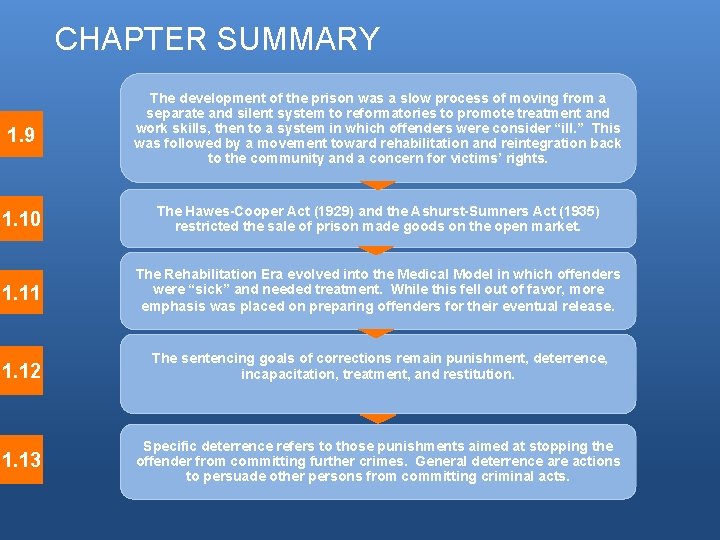
CHAPTER SUMMARY 1. 9 The development of the prison was a slow process of moving from a separate and silent system to reformatories to promote treatment and work skills, then to a system in which offenders were consider “ill. ” This was followed by a movement toward rehabilitation and reintegration back to the community and a concern for victims’ rights. 1. 10 The Hawes-Cooper Act (1929) and the Ashurst-Sumners Act (1935) restricted the sale of prison made goods on the open market. 1. 11 The Rehabilitation Era evolved into the Medical Model in which offenders were “sick” and needed treatment. While this fell out of favor, more emphasis was placed on preparing offenders for their eventual release. 1. 12 The sentencing goals of corrections remain punishment, deterrence, incapacitation, treatment, and restitution. 1. 13 Specific deterrence refers to those punishments aimed at stopping the offender from committing further crimes. General deterrence are actions to persuade other persons from committing criminal acts. © 2014 by Pearson Higher Education, Inc Upper Saddle River, New Jersey 07458 • All Rights Reserved