Sediments Geologic Oceanography What are Sediments Particles entering

- Slides: 55
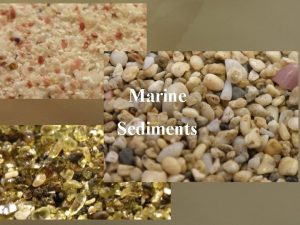
Sediments Geologic Oceanography
What are Sediments? • Particles entering the ocean • Accumulate – Rapidly on continental margin (neritic) – Slowly in the deep ocean (pelagic) • Reflect ocean history
Types of Marine Sediments • Sediment may be classified in two ways: – By grain size – By origin
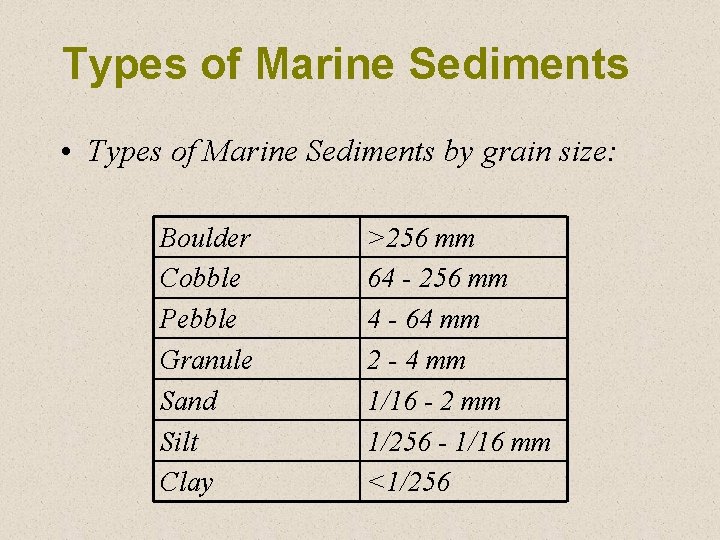
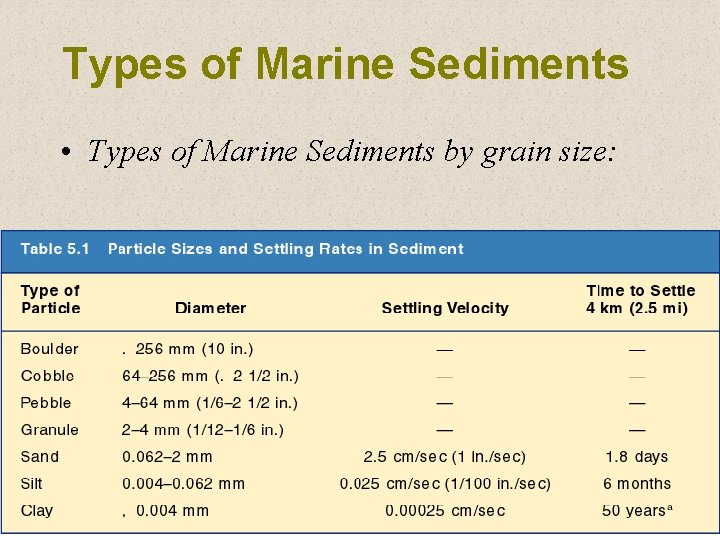
Types of Marine Sediments • Types of Marine Sediments by grain size: Boulder Cobble Pebble Granule Sand Silt Clay >256 mm 64 - 256 mm 4 - 64 mm 2 - 4 mm 1/16 - 2 mm 1/256 - 1/16 mm <1/256
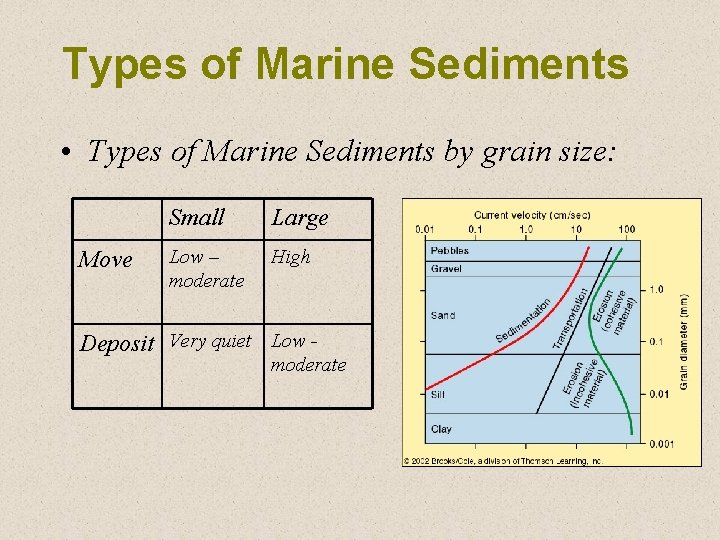
Types of Marine Sediments • Types of Marine Sediments by grain size: Move Small Large Low – moderate High Deposit Very quiet Low - moderate
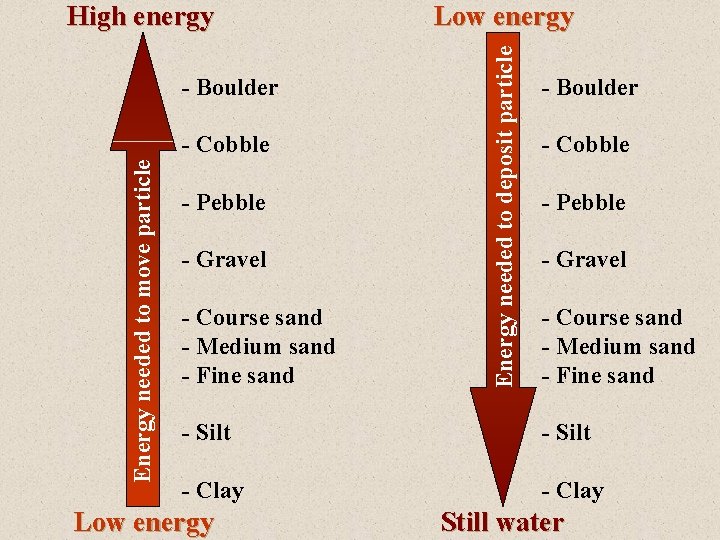
- Boulder Energy needed to move particle - Cobble - Pebble - Gravel - Course sand - Medium sand - Fine sand Low energy Energy needed to deposit particle High energy - Boulder - Cobble - Pebble - Gravel - Course sand - Medium sand - Fine sand - Silt - Clay Low energy Still water
Types of Marine Sediments • Types of Marine Sediments by grain size:
Types of Marine Sediments • Sediment can also be classified according to its source. – Lithogenous – Biogenous – Hydrogenous / Chemical precipitates – Cosmogenous
Types of Marine Sediments • Lithogenous Sediments – Sediments from terrestrial (land) sources – Includes • Sands and muds from continental margins • Glacial deposits • Clays
Types of Marine Sediments • Lithogenous Sediments – Red Clay • Found in low productivity areas • Low sedimentation rates • Wind-blown sediment
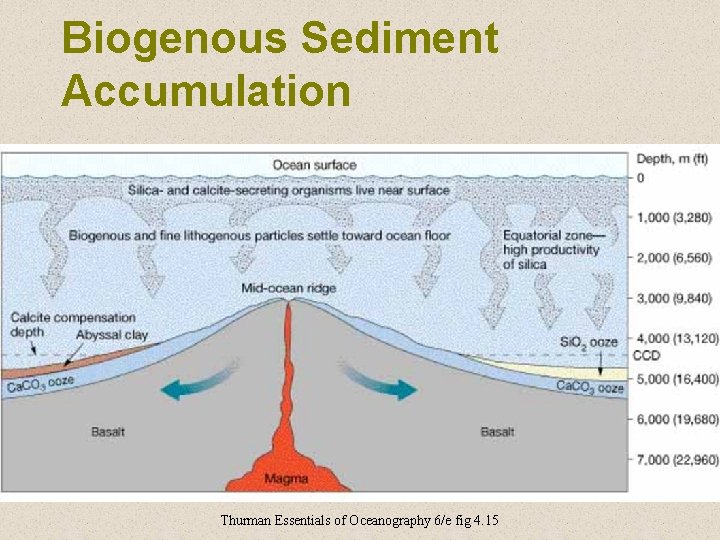
Types of Marine Sediments • Biogenous Sediments – particles derived from hard parts and soft tissues of organisms – Ooze = greater than 30% biogenous sediment – Distribution related to: • sediment supply • rate of dissolution • and sediment dilution
Biogenous Sediment Accumulation Thurman Essentials of Oceanography 6/e fig 4. 15
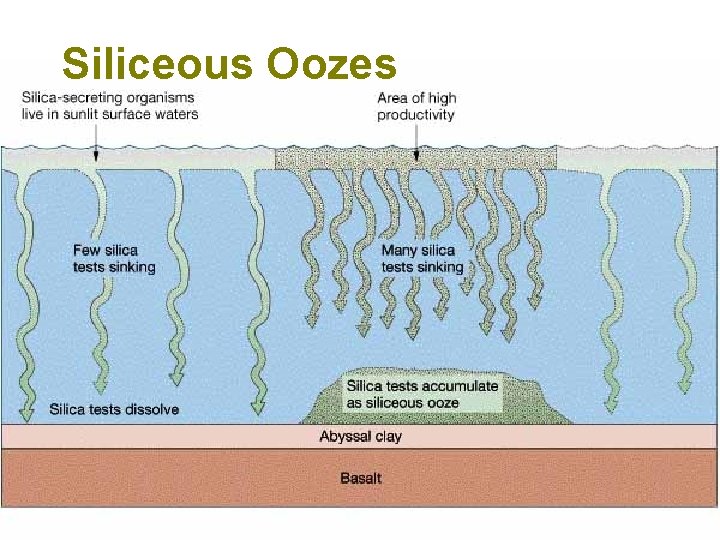
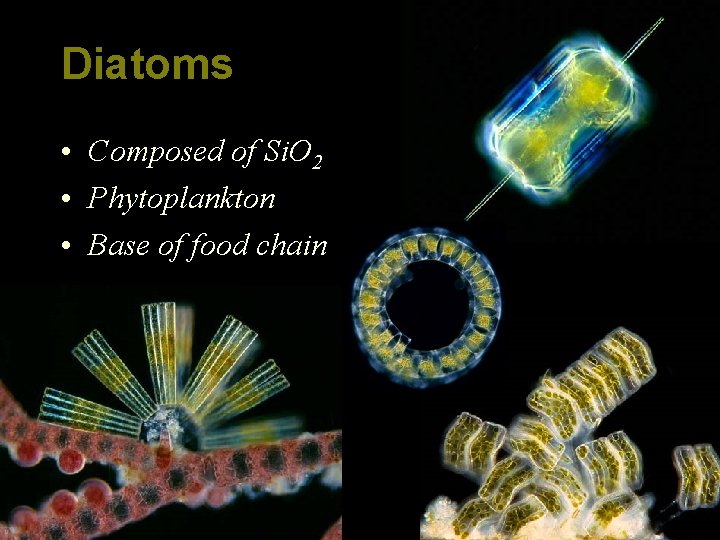
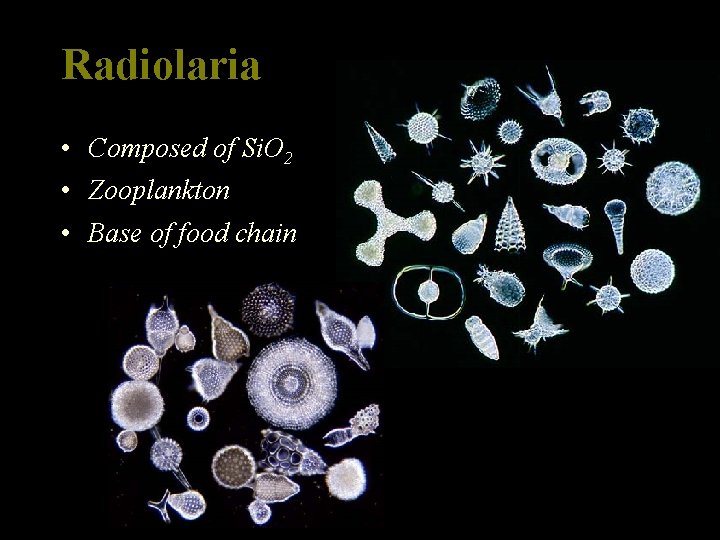
Types of Marine Sediments • Biogenous Sediments – Siliceous Oozes • Fine-grained pelagic deposit • Composition: – 30% siliceous (Si. O 2) material of organic origin – Diatoms (phytoplankton) and Radiolaria (zooplankton) • Siliceous particles dissolve more slowly than calcareous particles
Siliceous Oozes
Diatoms • Composed of Si. O 2 • Phytoplankton • Base of food chain
Radiolaria • Composed of Si. O 2 • Zooplankton • Base of food chain
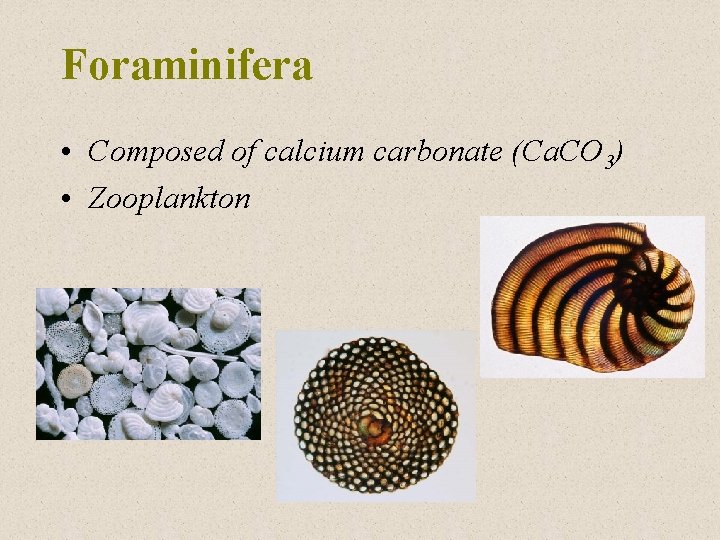
Types of Marine Sediments • Biogenous Sediments – Calcareous Oozes • Wide-spread in relatively shallow areas of the deep sea • Ca. CO 3 particles dissolve at “Carbonate Compensation Depth” = (CCD) – Atlantic: ~ 4, 000 m – Pacific: ~ 500 - 1, 500 m
Foraminifera • Composed of calcium carbonate (Ca. CO 3) • Zooplankton
Types of Marine Sediments • Hydrogenous sediments – Minerals that crystallize directly from seawater – Most common types include • Manganese nodules • Calcium carbonates • Metal sulfides • Evaporites © 2002 Brooks/Cole, a division of Thomson Learning, Inc.
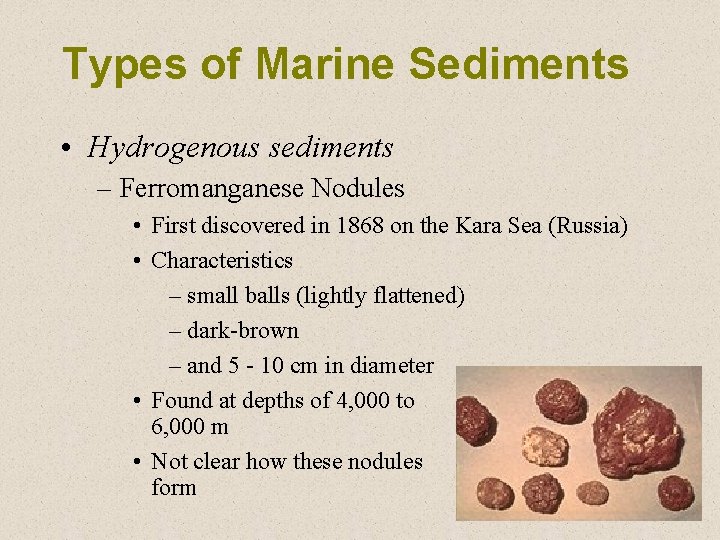
Types of Marine Sediments • Hydrogenous sediments – Ferromanganese Nodules • First discovered in 1868 on the Kara Sea (Russia) • Characteristics – small balls (lightly flattened) – dark-brown – and 5 - 10 cm in diameter • Found at depths of 4, 000 to 6, 000 m • Not clear how these nodules form
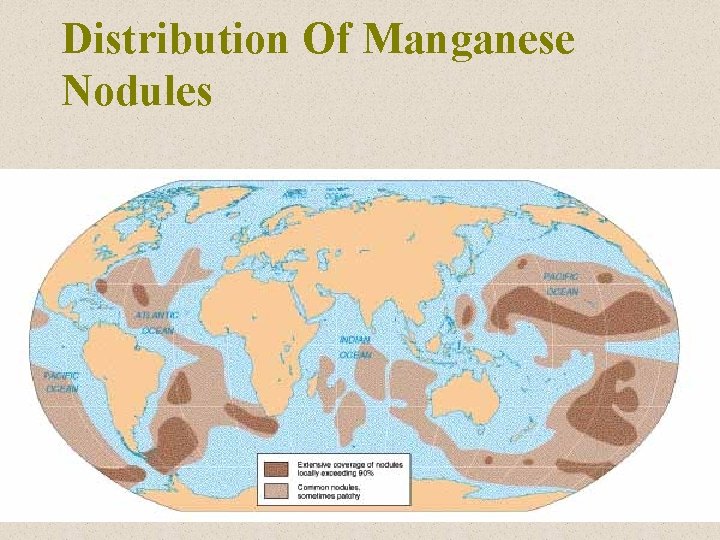
Distribution Of Manganese Nodules
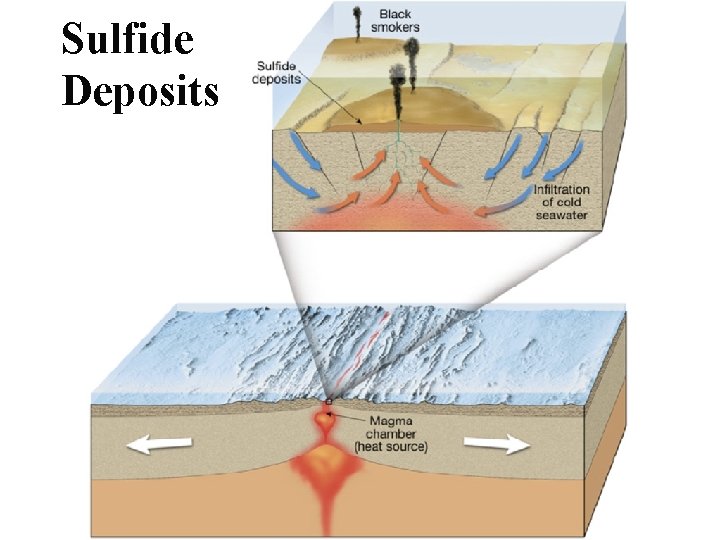
Sulfide Deposits
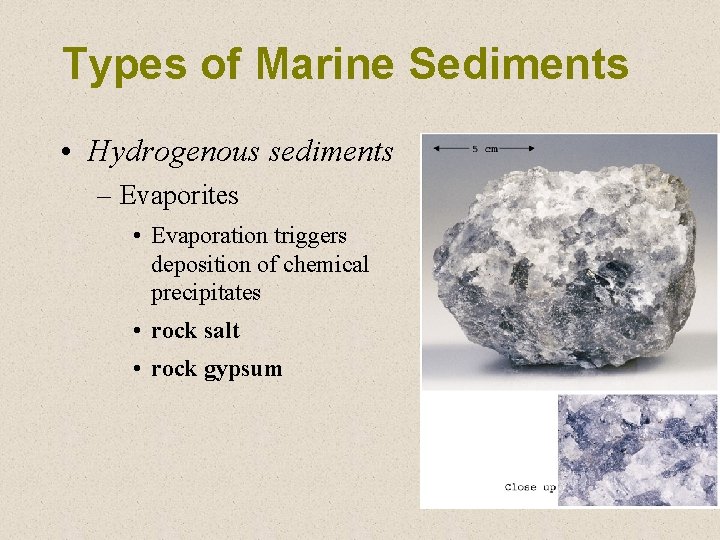
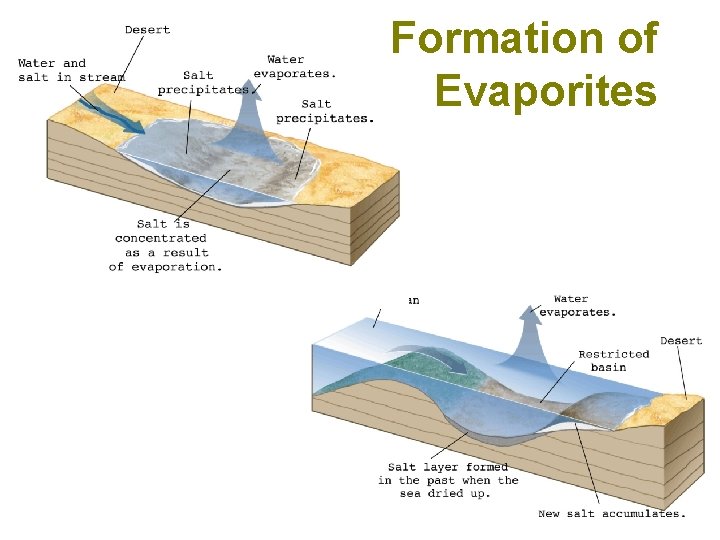
Types of Marine Sediments • Hydrogenous sediments – Evaporites • Evaporation triggers deposition of chemical precipitates • rock salt • rock gypsum
Formation of Evaporites
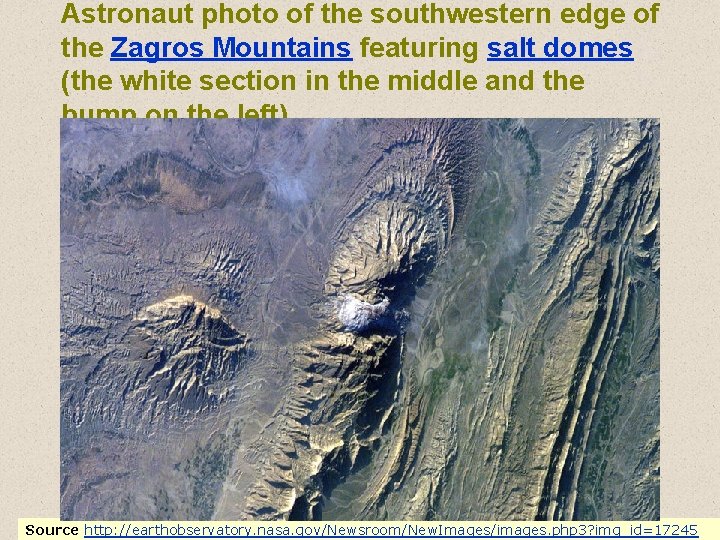
Astronaut photo of the southwestern edge of the Zagros Mountains featuring salt domes (the white section in the middle and the bump on the left). Source http: //earthobservatory. nasa. gov/Newsroom/New. Images/images. php 3? img_id=17245
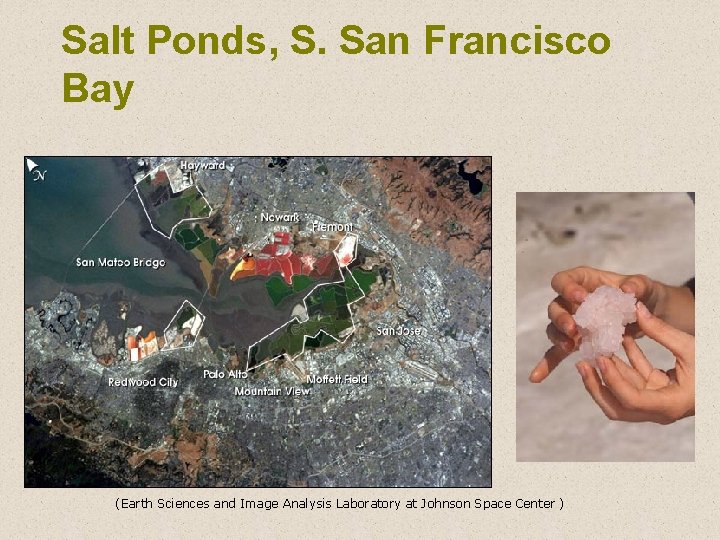
Salt Ponds, S. San Francisco Bay (Earth Sciences and Image Analysis Laboratory at Johnson Space Center )
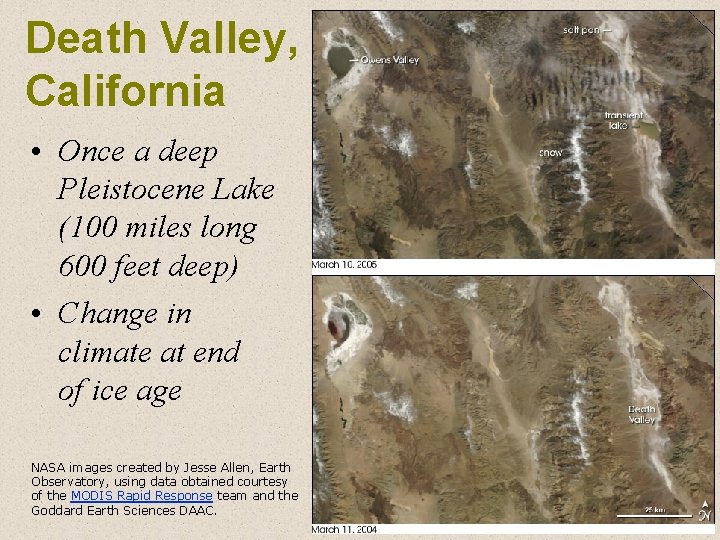
Death Valley, California • Once a deep Pleistocene Lake (100 miles long 600 feet deep) • Change in climate at end of ice age NASA images created by Jesse Allen, Earth Observatory, using data obtained courtesy of the MODIS Rapid Response team and the Goddard Earth Sciences DAAC.
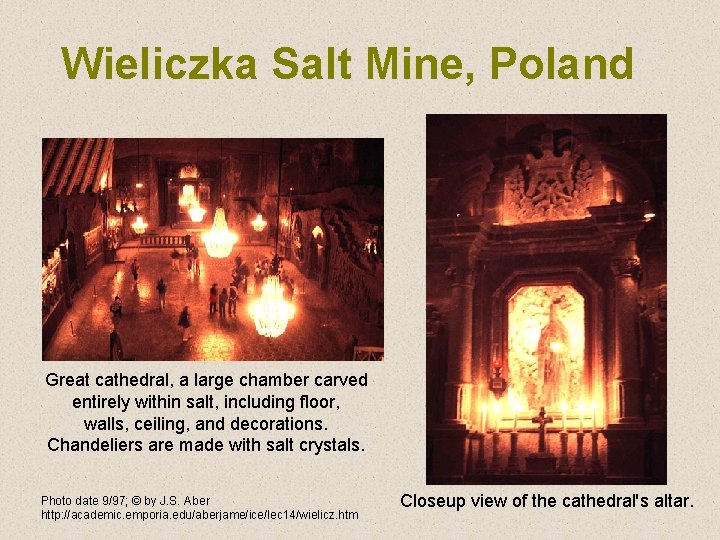
Wieliczka Salt Mine, Poland Great cathedral, a large chamber carved entirely within salt, including floor, walls, ceiling, and decorations. Chandeliers are made with salt crystals. Photo date 9/97; © by J. S. Aber http: //academic. emporia. edu/aberjame/ice/lec 14/wielicz. htm Closeup view of the cathedral's altar.
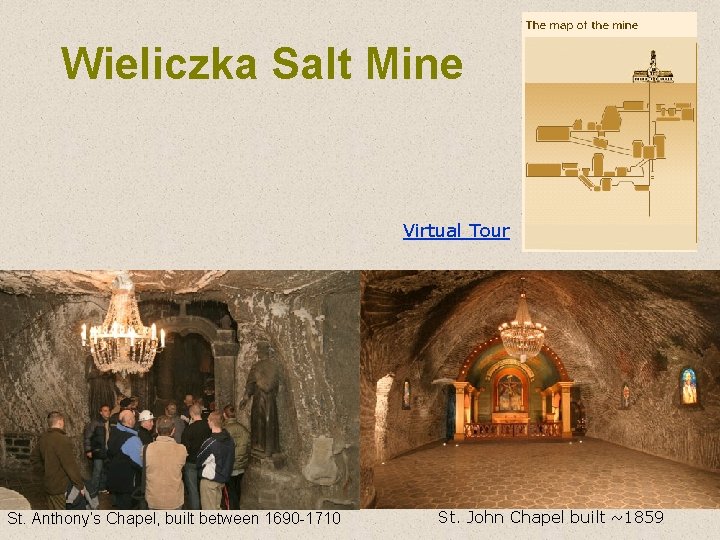
Wieliczka Salt Mine Virtual Tour St. Anthony’s Chapel, built between 1690 -1710 St. John Chapel built ~1859
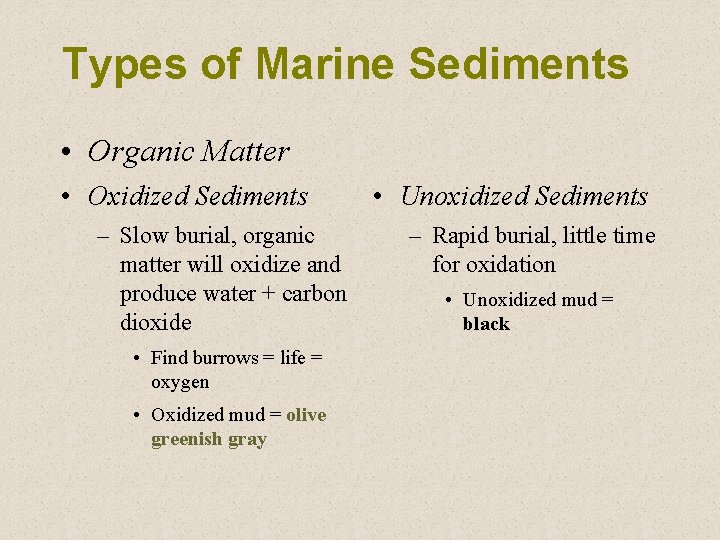
Types of Marine Sediments • Organic Matter • Oxidized Sediments – Slow burial, organic matter will oxidize and produce water + carbon dioxide • Find burrows = life = oxygen • Oxidized mud = olive greenish gray • Unoxidized Sediments – Rapid burial, little time for oxidation • Unoxidized mud = black
Types of Marine Sediments • Organic Matter – Weight of overlying sediment plus increase temperature - cook organic matter = petroleum • Usually if black have lots of organic matter
Sediment distribution • Sand – Closer to shore, on margins of continents – Brought to margins by by rivers – Sand requires high energy to transport • Waves rework sand along coast to form our beaches – Some sand makes it to deep ocean through submarine canyons
Sediment distribution • Clays & Silts – Finer sediments are suspended in water – Carried by the currents until they settle out of the water – Found in deep ocean, low energy environments
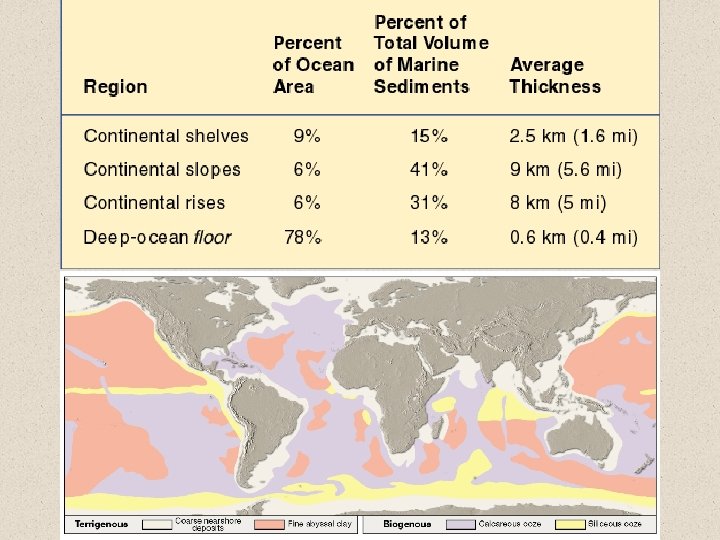
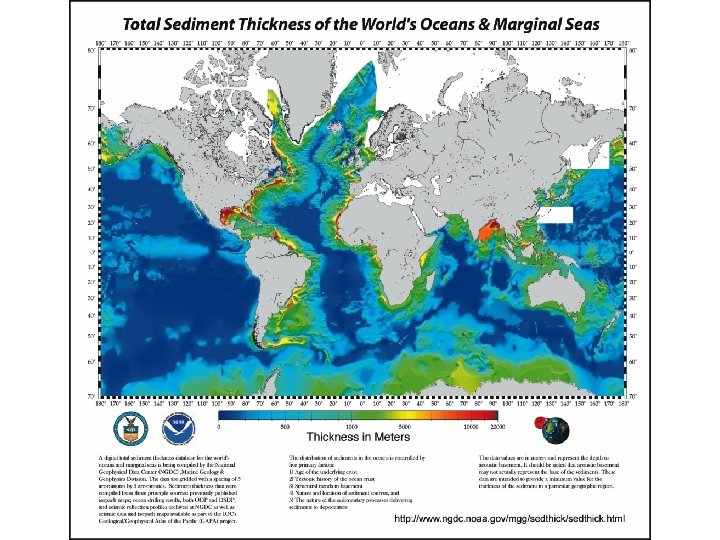
Sediment distribution • Where are sediments the thickest? – Thickest in trenches—Accumulations may approach 10 kilometers – Basins • Pacific Ocean—About 600 meters or less • Atlantic Ocean—From 500 to 1000 meters thick – Thinnest along spreading centers • Mud is the most common sediment on the deep-ocean floor
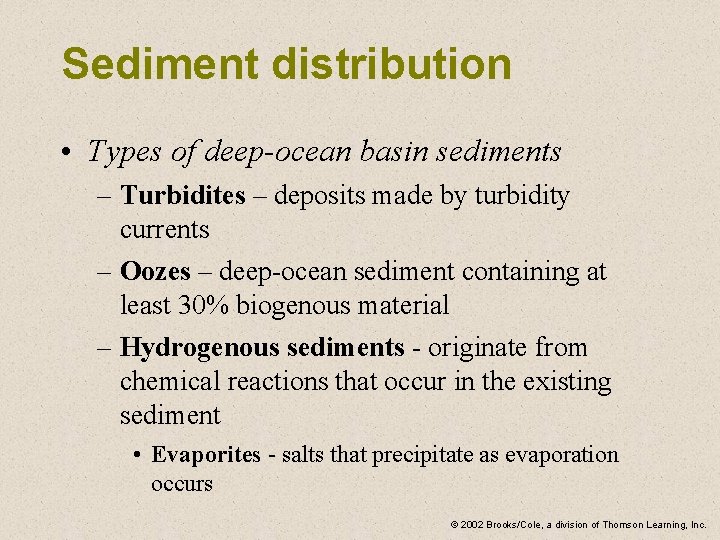
Sediment distribution • Types of deep-ocean basin sediments – Turbidites – deposits made by turbidity currents – Oozes – deep-ocean sediment containing at least 30% biogenous material – Hydrogenous sediments - originate from chemical reactions that occur in the existing sediment • Evaporites - salts that precipitate as evaporation occurs © 2002 Brooks/Cole, a division of Thomson Learning, Inc.
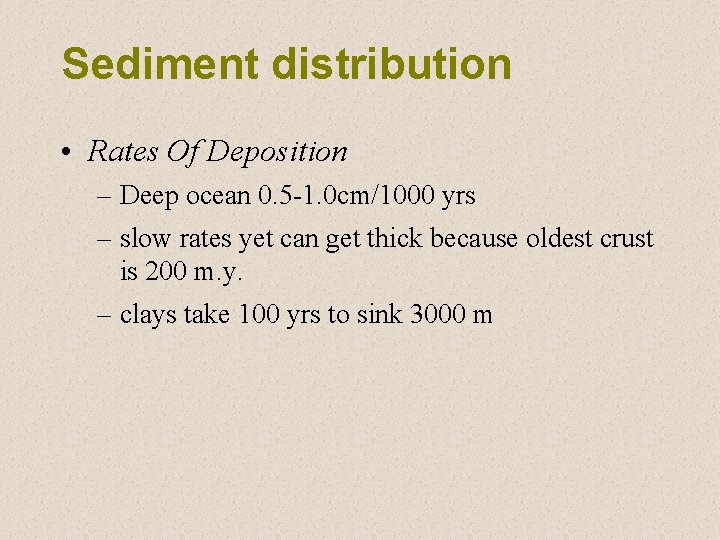
Sediment distribution • Rates Of Deposition – Deep ocean 0. 5 -1. 0 cm/1000 yrs – slow rates yet can get thick because oldest crust is 200 m. y. – clays take 100 yrs to sink 3000 m
Studying Sediments • How do scientists study sediments? – Deep-water cameras – Clamshell samplers – Dredges – Piston Corers – Core libraries – Seismic profilers © 2002 Brooks/Cole, a division of Thomson Learning, Inc.
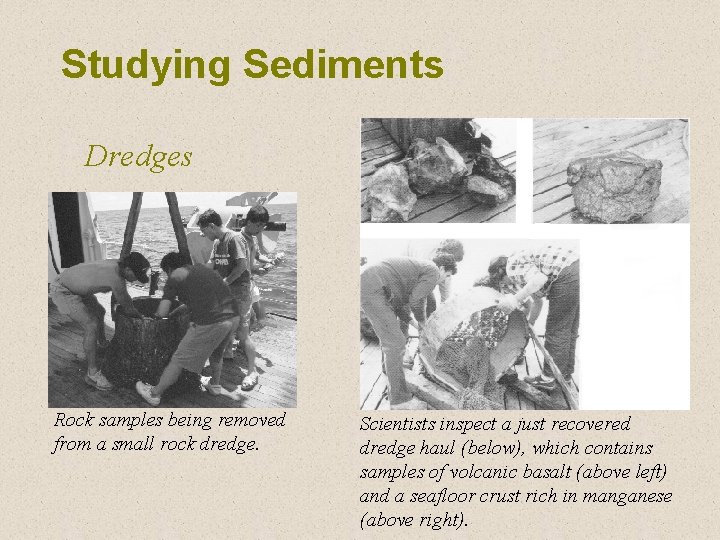
Studying Sediments Dredges Rock samples being removed from a small rock dredge. Scientists inspect a just recovered dredge haul (below), which contains samples of volcanic basalt (above left) and a seafloor crust rich in manganese (above right).
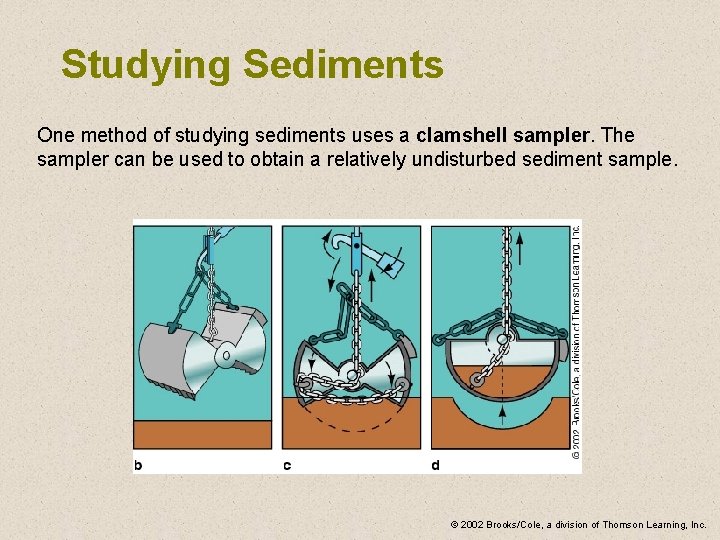
Studying Sediments One method of studying sediments uses a clamshell sampler. The sampler can be used to obtain a relatively undisturbed sediment sample. © 2002 Brooks/Cole, a division of Thomson Learning, Inc.
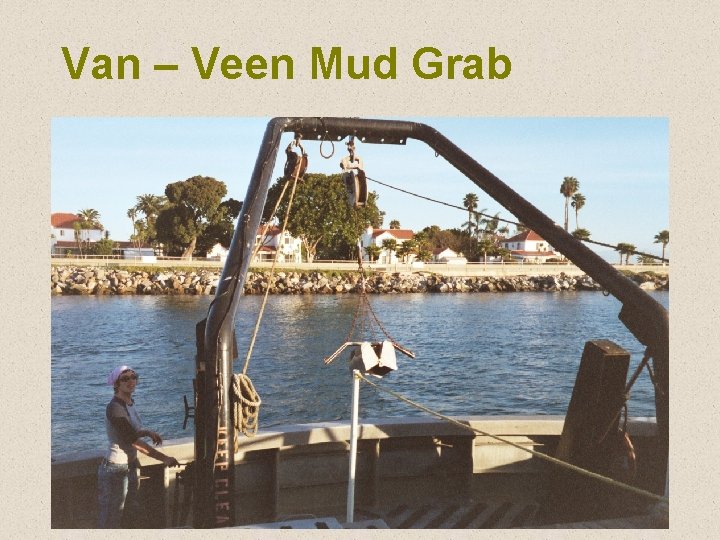
Van – Veen Mud Grab
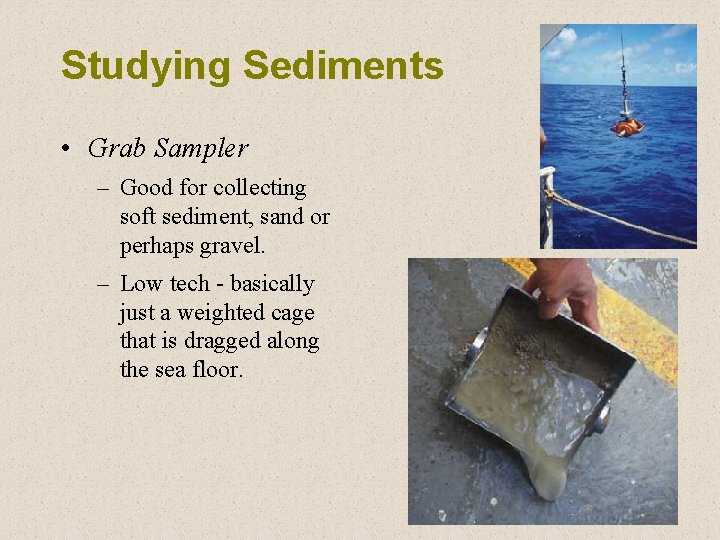
Studying Sediments • Grab Sampler – Good for collecting soft sediment, sand or perhaps gravel. – Low tech - basically just a weighted cage that is dragged along the sea floor.
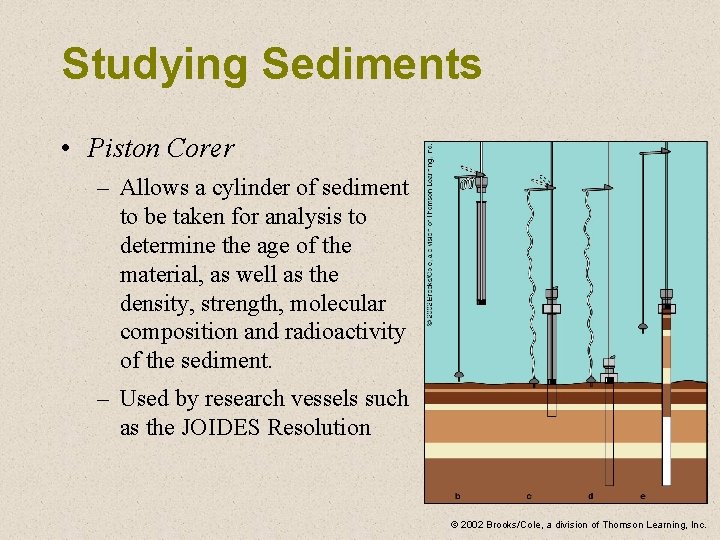
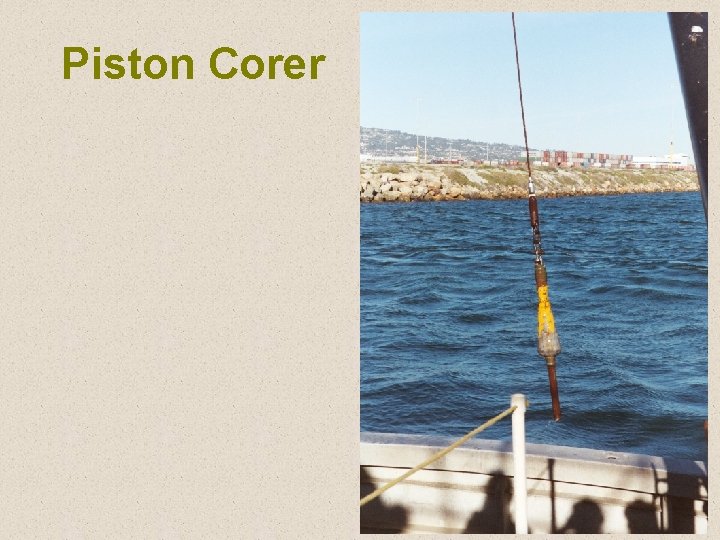
Studying Sediments • Piston Corer – Allows a cylinder of sediment to be taken for analysis to determine the age of the material, as well as the density, strength, molecular composition and radioactivity of the sediment. – Used by research vessels such as the JOIDES Resolution © 2002 Brooks/Cole, a division of Thomson Learning, Inc.
Piston Corer
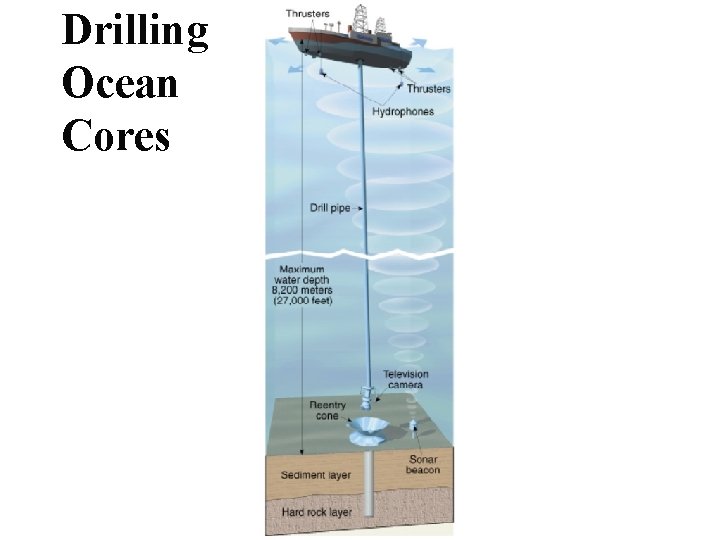
Drilling Ocean Cores
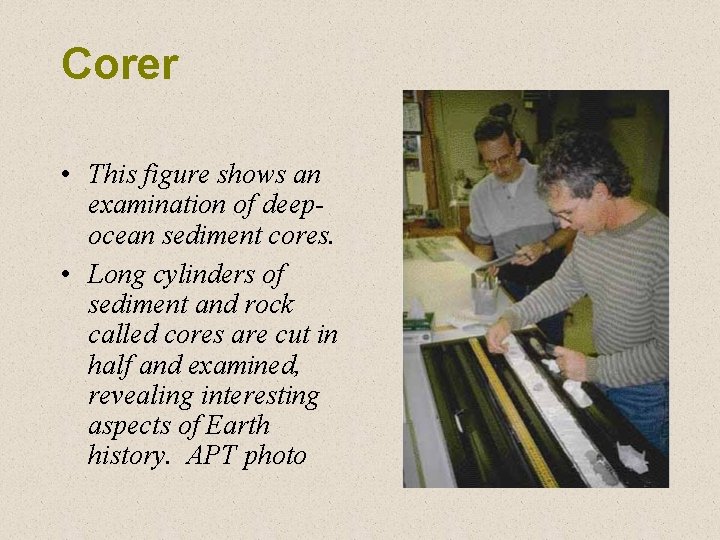
Corer • This figure shows an examination of deepocean sediment cores. • Long cylinders of sediment and rock called cores are cut in half and examined, revealing interesting aspects of Earth history. APT photo
Studying Sediments • What can scientists learn by studying sediments? – Historical information – Location of natural resources, especially crude oil and natural gas © 2002 Brooks/Cole, a division of Thomson Learning, Inc.
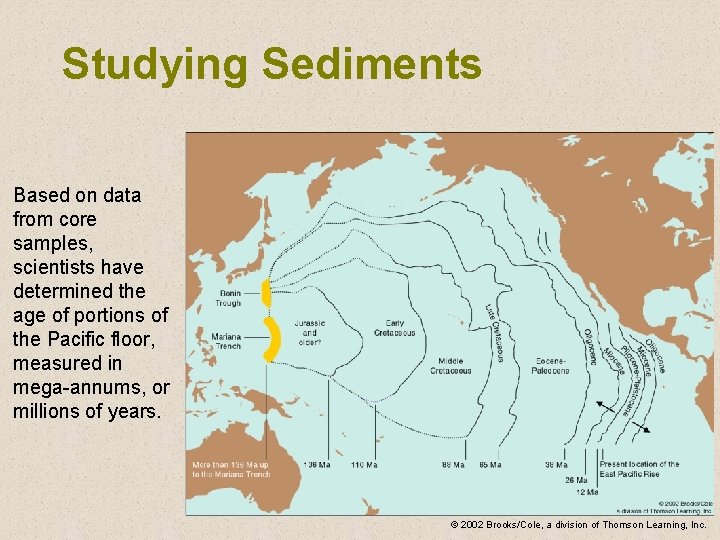
Studying Sediments Based on data from core samples, scientists have determined the age of portions of the Pacific floor, measured in mega-annums, or millions of years. © 2002 Brooks/Cole, a division of Thomson Learning, Inc.
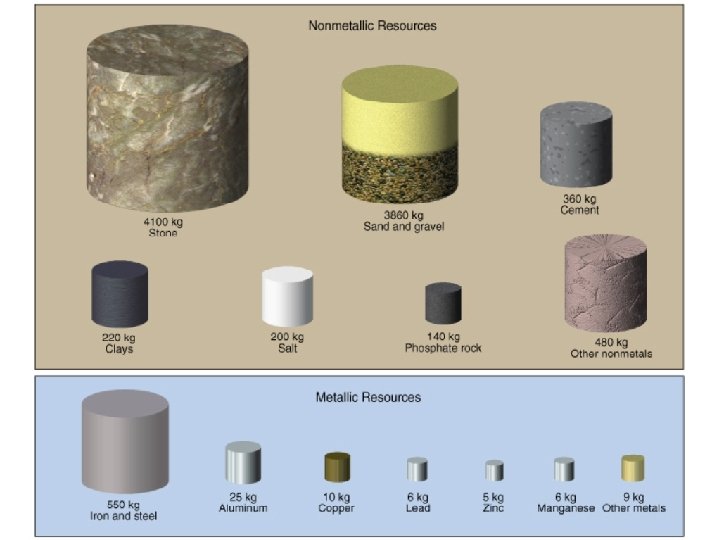
Seabed Resources • Depletion of onshore resources - need alternatives • Sand & Gravel • Phosphorite • Sulfur • Coal • Oil and Gas
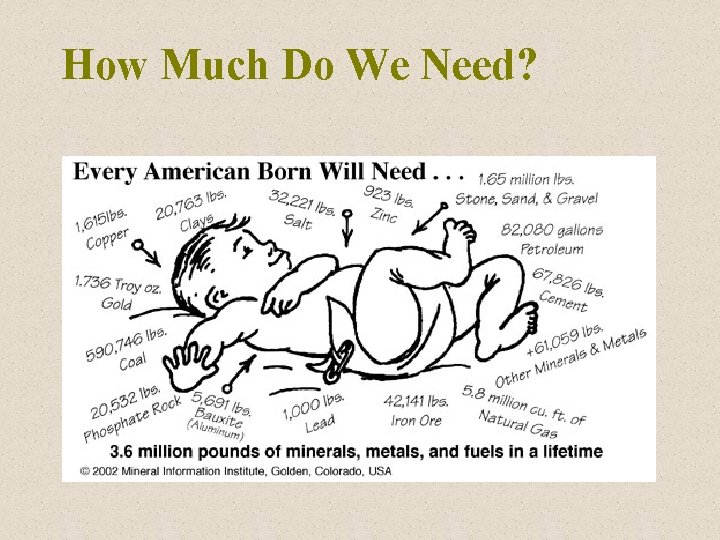
How Much Do We Need?
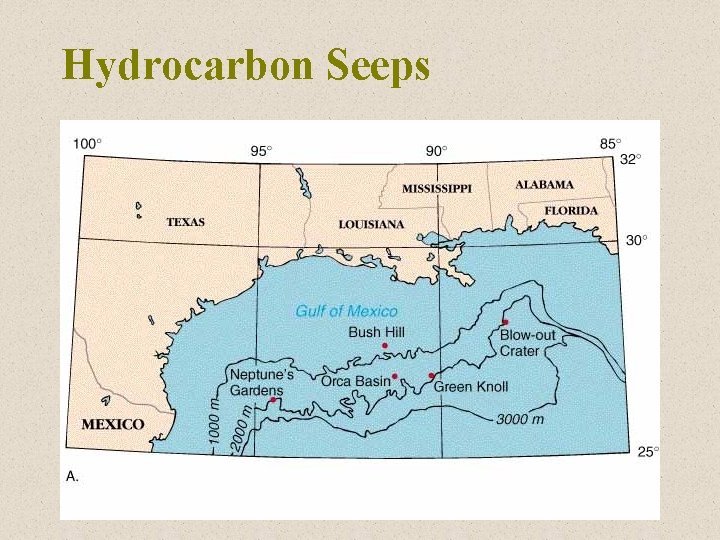
Hydrocarbon Seeps
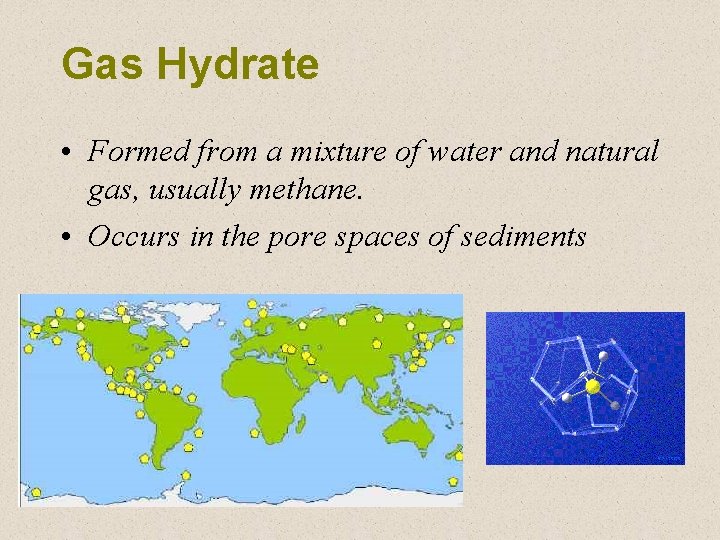
Gas Hydrate • Formed from a mixture of water and natural gas, usually methane. • Occurs in the pore spaces of sediments
~ End ~